Shit Happens


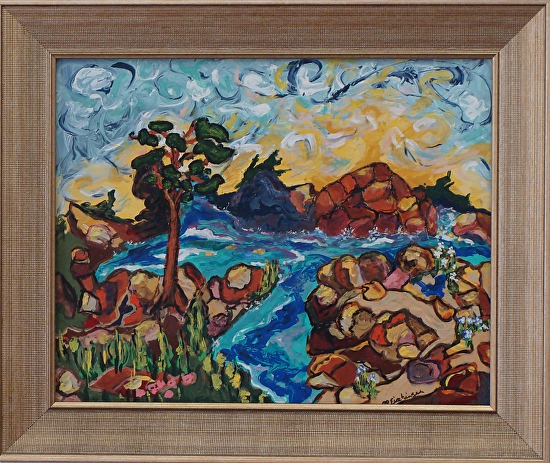
Rock Creek Awakens


A place of happiness and serenity


Shit Happens

We like to think we’re in control, yet much of the time we’re not. Even with precautions we move into the unknown in a search for opportunity. New challenges provide the spark that makes life interesting.

Uncertainty starts at birth, for we are born with risk.  Modern medicine has made tremendous advances to protect the health of mother and newborn child, but complications still occur. According to the Centers for Disease Control, as many as 15-20 percent of all U.S. pregnancies end in miscarriage, with 24,000 terminating in stillbirth and roughly the same number  of infants die in the first year of life. Shit happens.

As we age, we skin our knees on the playground, fall off of bicycles and scooters, suffer sports injuries and get whiplash in auto accidents. Yet, we continue to get on the horse after being thrown on the ground. We ride our cars to the store, J-walk across busy streets, play contact sports and hunt in the woods by ourselves.  We engage in activities that we know are dangerous.  And, we hear many tales of disasters that occur to other risk takers.

Twenty-four hour news outlets inundates with natural and man made catastrophes that cause people to lose homes, livelihood and families.  Calamities can potentially affect each and everyone of us, no matter our income or location. It makes me wonder how I would react if adversity does affect my life. How would I handle it so that it wouldn’t destroy me?

Some people are energized by tragedy and are called to action while others bury their heads in fear and isolation.  There are those who will stoically hide their grief while others will let everyone know how stress and unhappy they are.

Trauma can certainly lead to nightmares and the inability to carry on. The ramification of PTSD are not easy to overcome, and though sufferers say they become changed, most eventually return to having a productive, happy life.  I am fascinated by those who overcome loss and trauma and wonder what make e them so resilient. How do they keep a  positive outlook?

For a while, I explored genetic research into positivism, eventually concluding that the evidence is inconclusive. Many explorations are focused on depressive disorders, with most results claiming there is an inherited predisposition for depression. However, that does not necessarily mean that the person with a genetic bias towards depression will become depressed. Much depends on their environment which has the ability to alter genes that trigger genetic predisposing. The research articles I read covering depression and its opposite, positivity, remains speculative with blurred conclusions. I would never choose a mate based on a genetic predisposition to depression or positivity.

I would, however, choose to be surrounded by those who have a positive outlook on life, the glass is half-full type of people. The negative ones can wear you down, which is especially hard for empathetic people who feels the pain of others.  One of the reasons I chose not to stay working with mentally ill patients is that I ingested their unhappiness. I brought their sadness home to my family and friends. Instead, I chose to focus on people and activities that could bring beauty and joy into my life.

Seth, our young wheelchair bound son, is an example of the power of positive thinking. When first diagnosed as a quadriplegic, he would not tolerate visitors who pitied him, expressed negative concern about his future or thought that he wasn’t capable of overcoming his disability. I overheard him ask a person to leave his hospital room unless he could speak in a more positive way. Watching this critically disabled young man take control of his environment and observing how he willed himself forward by affirming what is good, was inspiring. Despite his inability to move, he smiled, joked and put others at ease. As a result, his resilient behavior made people want to help him through his ordeal. Today Seth prospers with days busy with new activities and a close circle of caring friends.

There are many others who also handle diversity well. I’ve seen seniors blossom after losing love ones they have lived with for fifty years and observed unhappy divorced men and women become more independent, compassionate adults as they struggle to reinvent themselves. I’ve decided that the ability to overcome trauma, grief and despair is partly a matter of choice. People can chose to embark on healing journeys even when they don’t feel like it. They do so because of their belief that in the long run all will be OK. Positivity leads them forward. As a result of a life time of observations I developed a to-do list to follow when immersed in tragedy.

Surround yourself with positive, comfort giving people. None of us is an island standing alone. We are part of a community of care givers and care receivers. We can be both. In time of need, take control by asking for help when you want it and requesting privacy when it is essential. 

Overcoming trauma, grief, illness and death is by its nature a private affair. No one can really feel what you are feeling or know what you are thinking, but it helps to have someone hold your hand. Opening your heart to let them in and swallowing your pride by admitting vulnerability is a step towards healing.

Visit your happy place, a location that gives great comfort. It may be in nature, at the beach, the woods, on the water or a garden retreat. It may be in the bustle and hustle of crowds or in a car you drive through the countryside. Happy places are where you feel safe when alone, with friends, a puppy, a kitten or even a horse. I have two  happy places, one is my art studio and the other is in Central Oregon. They where I feel relaxed and my mind does not wander to anything except the beauty I see before me. Guilt about for what I can or should be doing is not allowed this y place that helps center me.

Exercise regularly and eat a healthy diet. Don’t let your body atrophy and don’t give yourself an excuse to gain or lose  excessive weight. Comfort food is not comforting in the long run. This may take will power, but being conscious of what you eat and how you move can help you regain control of your life.

One of my mottos is, “ never worry twice.” Once is enough. Turn off the “what if” button of negative thoughts until the worry is real. Don’t spend time imagining something horrible that may never come to pass. Meditation or mindfulness practices can help focus the brain and control unwanted thoughts and bad recurring images.

Speak to those who have experienced a similar tragedy. It helps to realize that you are not alone and to learn how others have coped. Friends and family often  harbor timelines about how long it should take you to get over grief or trauma. Recovery doesn’t usually work the way these well meaning friends believe it should. Trauma and grief don’t disappear overnight, though their frequency and intensity does subside. Over time, agony becomes a less piercing pain and enables the victim to find comfort.

Yes, shit happens, but you don’t need to wallow in it. By putting one foot before the other and believing that you will evolve, makes it possible to rediscover purpose and happiness.

References.

Pearson, C. (2013) Miscarriage Causes, rates Widely Misunderstood.Huff Post. retrieved from https://www.huffpost.com/entry/miscarriage-cause_n_4116712

Stillbirth web page (2018) Facts about Stillbirth. Centers for Disease Control and Prevention. retrieved from https://www.cdc.gov/ncbddd/stillbirth/facts.html

Eldridge, L. MD (2018) What it Means to Have a Genetic Predisposition to Cancer. Verywell.  retrieved from https://www.verywellhealth.com/genetic-predisposition-2249105
Love: The Romantic Kind

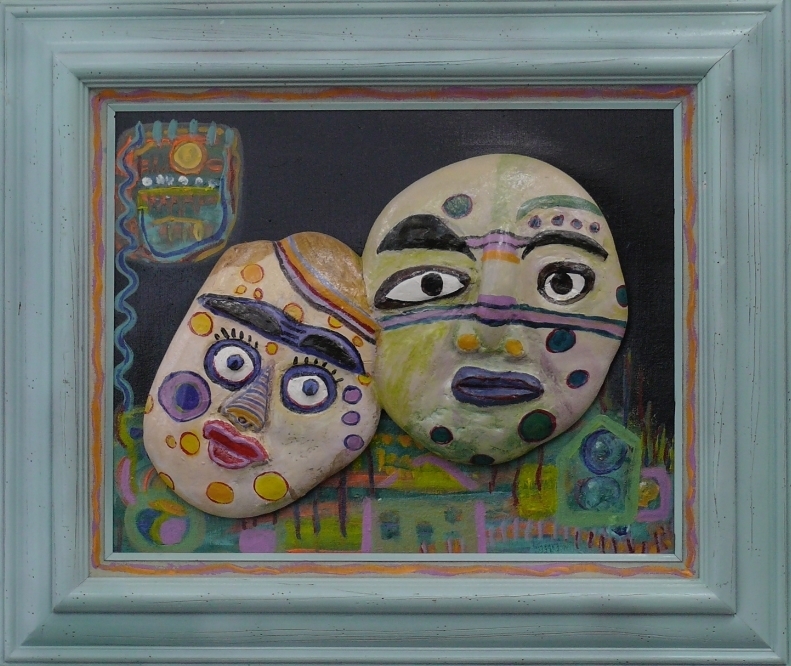
Richard and Marilyn

Mixed media on canvas/ framed/ 24”x 28” x 2” /  $ 450

Love: The Romantic Kind

My first romantic encounter happened when I was in sixth grade. While\a safety crossing guard at a slow intersection, a good looking classmate named Ralph stopped every morning to keep me company. I don’t remember what we talked about, but I do know that we had a lot to say to each other. The attraction blossomed to the point of organizing a mock wedding complete with bridesmaids and rabbi. During my basement rec. room reception, we ate cookies and played spin the bottle. The bottle never stoped  my way to give us a chance to kiss, but it was soon obvious that one of the bridesmaids was more attractive to Ralph than me. That was the end of our romance, love affair and marriage.

Years later, when my future husband first kissed me goodnight on the lips, it was only a peck, but electricity soared through my body. Though the moment lasted a second, the memory of that kiss lasted a lifetime. I wondered what was happening to my body and why I felt weak all over. We hardly knew each other, so I didn’t pretend to be in love, but he certainly captured my attention and I wanted to get to know him better. We spent the next many months romancing each other.

An explanation of the difference between love and romance that I read on-line says, “Romance is the expressive and pleasurable feeling from an emotional attraction towards another person often associated with sexual attraction. And love in best defined as a variety of different feelings, states, and attitudes that ranges from interpersonal affection to pleasure.”

Romance is at its peak in the preliminary stage of a relationship, when people go out of the way to make gestures of fondness. It is not until they understand each other and learn to compromise that love can deepen and take over.  Romance is important for it brings the couple closer to explore boundaries. Though a time of wishful thinking, flirtation, and lust, it can also produce fake and unrealistic yearnings. It’s only when small daily acts of consideration and kindness occur that the carpet unfurls a path t\ leading to love.

I have loved. More than once I’ve been romanced and then loved. And, though there were several liaisons that ended with us going separate ways, feelings of love for the person have endured to this day.  I acknowledge how each relationship provided me with strength to tackle the challenges I faced at the time.

This summer, when I ran my  “Do You Need a Mother” booth at Shift Festival, many young visitors asked for advice of the heart. What I noticed is that they are impatient. They long for a love partner without wanting to go through the romance and relationship building phase. Unfortunately it doesn’t work that way. It takes a long time to build enough trust to communicate honestly. Romantic wooing is part of the deal and it stays as part of the formula of those in long term relationships. For love needs to be nurtured as much as a plant requires fertilizer.

I look back fondly to memories of romance—the time I was a newlywed in Europe, sharing a delicious meal accompanied by enough wine to let my husband and I dance, hug and kiss our way back to our hotel though deserted Parisian streets. —or when I was in Monte Carlo, hoping to cheer my injured husband by dancing before him to an orchestra that was playing in an empty restaurant. —or when the clock struck 12 on New Year’s Eve,  2000, and dressed in finery, my fiancé and I were at the top of the Seattle’s Space Needle watching fireworks exploding below.

Romances are pleasures and shared moments that propel us into deeper love. It is a tool that prolongs and reinforces the bond between two people. Taking time to reaffirm your appreciation and acknowledge how special your partner is, will only strengthen your relationship. Though love may deepen over time, it can also be lost if taken for granted. It is important to periodically renew your commitment, to  play, to laugh and to share special experiences that remind you why you fell in love in the first place.

Do share some of your most romantic remembrances on my blog site below.

Art is always for sale at marilynne@eichingerfineart.com.

Reference

Difference Between Love and Romance. retrieved from https://www.quora.com/What-is-the-difference-between-love-and-romance

Education in a divided America

Fractured America

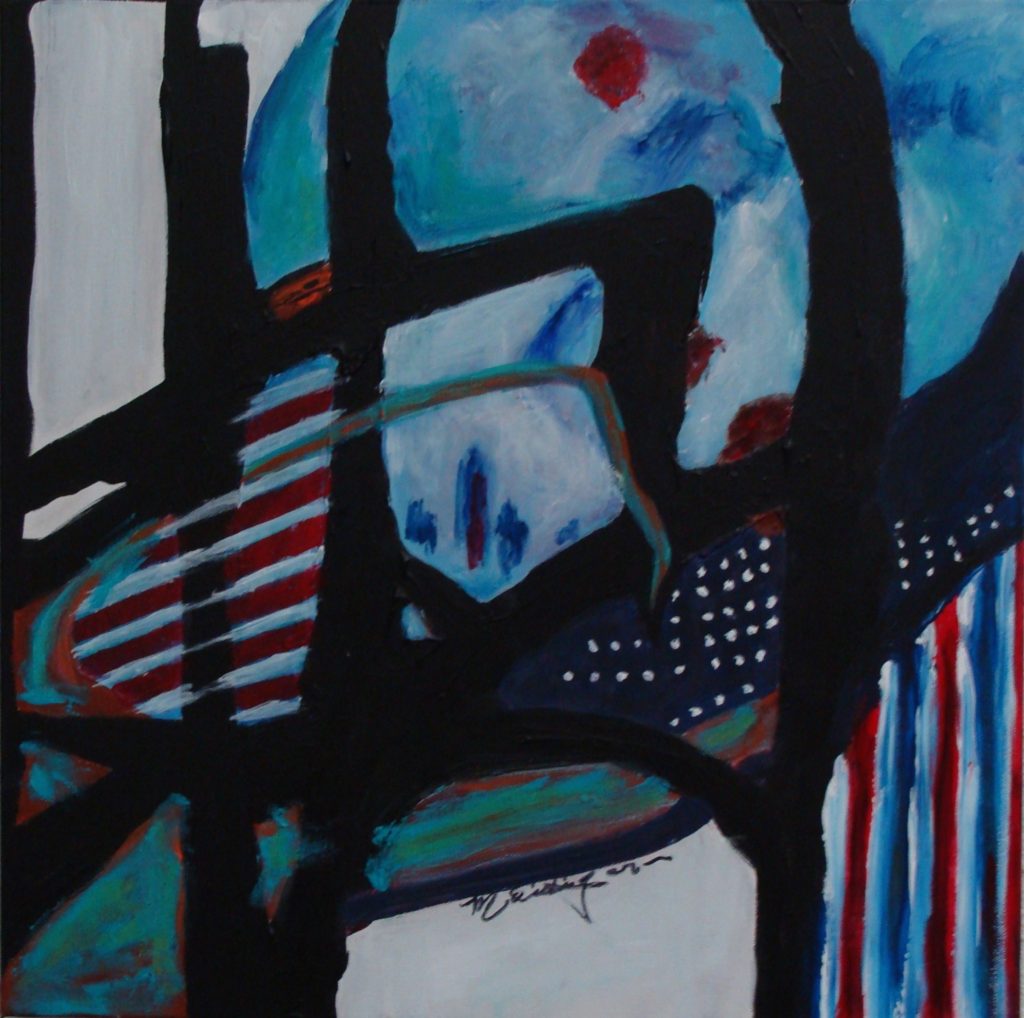
This picture is shared again because it depicts our fractured country. There are many ways we are divided, but the one at the

top of my list is education.

Acrylic on wide canvas/ 24″ by 24″/$ 450

Education in a Divided America

Last week, I had a conversation with an African-American man about problems facing the nation. As is commonly done, he stratified the population by economic divisions (lower, middle and upper class) and made suggestions accordingly.

There are many ways to look at our citizenry. I explored one method when writing about generational differences brought about by technological and economic change. Generational stratifications include 1901-1926), Mature/Silents; (1926-1945) Baby Boomers, Flower Children ; (1946-64) Generation X, Lost Generation; ( 1965-80); Xennials, Sandwich Generation; ( 1977- 1983) Millennials, Narcissistic Tech Gurus; (1984-2000) Generation Z, The Boomlets (2001 +) .This method does  partial insight.

Divisions by race, religion, residence and culture also help us understand society. Each system presents a microcosm of the whole. Yet, all factors (which is difficult to do) must be taken into account when analyzing an individual. It is why I like Anatole Frances’ saying, ”Even a little dog is the center of his own universe.”

However, it is not possible to rule a country that appeals to each person’s unique vision, so societies adopt systems for governing by way of democratic, autocratic, theocratic and consensus models. Economies are primarily traditional (close ties to farming), command  (centralized power), market ( firms and households act in self-interest) and mixed systems (cross between command and market economy. The United States governs in a pluralist country with democratic intentions and a mixed economic system that leans toward a market economy.

But to rule well , another stratification has to be taken into account – that of education. An enlightened populace is imperative when governing a democratic country with a mixed economic system.

Unfortunately, most people are not well enough educated to understand the the ramifications of learning which is making a mockery of our country among other civilized nations. Academic achievement divides the United States in unsettling ways. People with stratified educational backgrounds are targeted through information delivery systems (CNN vs Fox), ways of communicating (authoritarian vs consensus) and methods of settling differences (arms vs. non-violence).

The Brooking Institute says that the United States is ruled by a power elite composed of approximately 250 people with military, business and congressional backgrounds. For the past forty years, they have followed directives of Think Tanks, which have become To Do tanks with political agendas. Though independent research organizations continue to operate, the new breed of Advocacy Think Yanks puts a spin on pure research. They are policy, partisan and ideological organizations that couple themselves with salesmanship. Their influence is massive, yet they remain hidden behind the doors of most minds.

A quote from a Brookings publication,The Fifth Estate ,“According to some scholars, right- wing think tanks have benefited strongly from a proactive approach to collectivizing and organizing their search for funding. Conversely, left – wing think tanks have suffered because, historically, progressive individuals and foundations have been more reluctant to provide financial support for policy research. Further, conservative donations have been more integrated than progressive donations, simultaneously supporting conservative think tanks, academic programs that sponsor conservative thinkers, conservative-friendly media, powerful lobbies, and a strong Republican Party. These various elements work together successfully to implement conservative policy.”

People are commonly divided by academic achievement. We speak of the uneducated, poorly educated, well educated, and those with advanced learning. In addition the being able to read and write, a schooled individual hopefully gains a grasp of social, spiritual, sanitary and behavioral customs. In addition, he or she will acquire workplace skills. Think tanks are staffed by those with advanced degrees. Partisan organizations influence their research in order to target and manipulate people by how well educated they are.

In the United States, 32 million illiterate people (over 720 million worldwide) remain at the bottom of the economic and social ladder with limited employment opportunity. Illiteracy costs the global economy about $ 1.19 trillion a year and plays havoc in democratic societies. The poorly educated are easily controlled by dictators and fear mongers.

In 2016, Donald Trump told supporters in Nevada that he credited his poorly educated supporters as part of the reason he won. Spoken by a man with a college degree and a 158 IQ (according to Reuters), he said, ”I love the poorly educated.”

Why would that be? The President describes the highly educated as the smartest people and the poorly schooled as the most loyal. According to Trumpism, the poorly educated are willing followers and not snooty.  By telling less informed people that they are valued, he let them know that their votes count. All they had to do is believe in his wisdom. What Trump did so brilliantly, was develop a way to reach less informed people through plainspoken, short Twitter feeds. He calls on their trust rather than their understanding. Those who follow his dictates have no need to fact-check, analyze data or delve into complex issues. His is a faith based rule.

In the last election, education, not income was the best predictor of who would win. Of the 981 U.S. counties with 50,000 or more people, Hillary Clinton ’s margin surged over Obama’s wins in the 50 most-educated counties. These counties were otherwise economically and socially diverse. Trump won in the 50 least-educated counties. Though there was a small correlation between income and education, in general, the amount of money a person has was not the determining factor.  Education was. To check these statistics go to Silver’s article mentioned in the reference section.

In 2015, 88 percent of the U.S. population had attained a high school diploma or GED.  33 percent held a bachelor’s degree, and 12 percent an advanced degree. Within these categories are variations by race, age, sex, disability and country of origin. But overall, what does it mean?

The political cleavage caused by education is so significant that unless concerned politicians find ways to speak to less informed voters and bring more of them into the educated category, they will not win in large swarths of the country. Without realizing that they have been taken advantage of, under-educated people will continue to lose their rights to the power elite. They blindly vote against their best interests by remaining ignorant of the interplay of economic and environmental factors in global affairs.

No longer is the United States a lone player separated by oceans. We are tied to the rest of the world by high speed internet and the ease of travel. Decisions depend on a deep understanding of issues. Democracy and a mixed economic economy depend on enlightened, informed voters.

There have always been greedy people with personal agendas. This is why we have to pay attention to knowledge brokers. Politicians need  non-biased information to rule. Concerns of social and physical scientists with advanced learning should be intelligently examined and questioned. Motivation must be taken into consideration. We can not trust the media or politicians to do our job for us. I am uncomfortable with ignorant people going to to poles to decide my fate. Aren’t you?

References:

Novak,J. (2018) The Six Living Generations in America. University of Phoenix, Texas A & M University. retrieved from http://www.marketingteacher.com/the-six-living-generations-in-america/

Reynolds,H.(2097)The Power Elite. University of Delaware. American Political Systems.https://www1.udel.edu/htr/Psc105/Texts/power.html

Ranney, M. (2015) 8 startling facts about illiteracy you might not know. Mashable.retrieved information from World Literacy foundation, 2015 at https://mashable.com/2015/09/08/project-literacy-makeathon/#CkPTiAfEcaqA

Hafner,J. (2016) Donald Trump loves the ‘poorly educated’ — and they love him.  USA Today. retrieved from https://www.usatoday.com/story/news/politics/onpolitics/2016/02/24/donald-trump-nevada-poorly-educated/80860078/

Silver,N. (2016) Education, Not Income, Predicted Who Would Vote For Trump. FiveThirtyEight.retrieved from https://fivethirtyeight.com/features/education-not-income-predicted-who-would-vote-for-trump/

Galston,W & Hendrickson,C. (2016)The Educational rift in the 2016 election. Brookings institute. retrieved from https://www.brookings.edu/blog/fixgov/2016/11/18/educational-rift-in-2016-election/

Wiarada,H. Think Tanks and Governance in the United States. Brookings Institute. retrieved by https://www.brookings.edu/wp-content/uploads/2016/06/chapter-one_-the-fifth-estate.pdf

Agarwal,P, (2017) The Four Types of Economics. Intelligent Economics, retrieve from https://www.intelligenteconomist.com/types-of-economies/

Art works are always for sale. Contact me at marilynne@eichingerfineart.com.

Are Children a matter of White Privilege?

The Next Generation
Acrylic on Canvas/26″ by 20″/ $

Are Children a Matter of White Privilege?

Last week I wrote that 15 percent of American women do not have children and that 1.8 was the average birthrate for those who did. In 2016, that number represented an all time low, and if not for immigrants, the country’s population would be in decline. I also discussed reasons couples chose not to have a family and shared the pleasure I had from raising my brood of 5 and later, an adopted street youth.

Though most people said they liked the article (it was upbeat) and found the statistics interesting, one person surprised me. A woman I greatly respect said she didn’t enjoy the blog at all and that it sounded like white privilege. What? Her comment startled me and  filled my thoughts the following week.  So… I investigated further.

I started lookin at racial differences. In 2016, White and Asian women birthed fifty-one infants for every thousand women. Native Hawaiian, American Indian and Alaska Natives bore sixty per thousand, Hispanic women, fifty-eight  and African-American fifty-four per thousand. During the past couple years birth rates fell among certain ethnic groups. Non-Hispanic white women gave birth to three percent fewer children. A two percent decline was seen among Hispanic and Asian women while the birthrate among Black, Native American and Hawaiian women didn’t change.

White, Hispanic and Asian women chose to have fewer children which made me wonder why. Do they view children as a burden or is something else going on? If the choice of whether to have children or not is influenced by wealth, age and education, why do those who can least afford children have larger families?

A majority of 20 year-olds working towards advanced degrees say they desire children but plan to wait until they are economically secure. They hope to finish school, establish a career, acquire a modicum of financial security, including access to good healthcare, and be able to live in a safe neighborhood before beginning a family. They’d like to travel and afford to pay for babysitters and preschool care.

Yet, by the time they’re in their thirties they’ve changed their minds. They like their independence, are immersed in their jobs and social activities, and are more reluctant to undertake the responsibility of parenthood. They mention childcare as being a major concern if both parents work. Those deciding to raise children are likely to be older and have fewer children than in past generations.

Surprisingly, minority, low-income and less educated twenty-year-olds are less likely to wait for financial security.  Young adults living in low income neighborhoods have poor health care and limited income potential.  Since they are in a continuous state of economic insecurity, they experience a high degree of stress due and a weak support network. It is not uncommon for young women to find themselves pregnant out of wedlock and wind up abandoned.

Their needs are great, yet they lack political representation in congress to help them out of poverty.  Most couples can’t afford $10-$15 an hour for babysitting services, though all parents need relief to maintain sanity. I began to wonder if couples are happier with or without children and was pleased to find that researchers have looked at this very question.

According the the Washington Post, eight first world countries report couples with children as being happier than those without. They include Portugal, Hungary, Spain, Norway, Sweden, Finland, France and Russia (just barely). Eleven countries find childless couples happier. They are Ireland, Greece, Britain, New Zealand, Switzerland, Poland, Israel and four more, with the United States being last. On average, American parents are 12 percent less happy than childless couples. The reasons are obvious. Unlike European countries, we provide little assistance to families with young children. Raising children through high school is outrageously expensive ($284,570 on average). Wealthy couples paying for summer camps, college tuitions, and family vacations spend a great deal more.

  In general, what I discovered is that though parenthood does not bring happiness, it does provide a sense of purpose, gives meaning to life, and stimulates social connections. The amount of pleasure a parent gets from their children is directly influenced by privilege.  Countries that report couples as happier with children have paid parental leave, mandatory paid sick and vacation days, subsidized childcare, work-schedule flexibility. They provide an environment conducive to childrearing.

I now understand why touting the pleasures of parenthood might seem like I was promoting white privilege. Being a happy parent is not a matter of race, but it is a matter of education and economic stability which favor those who are white.

  I was privileged to have adequate resources with which to raise my brood of kids. They continue to provide me with pleasure and comfort as I age. I would like this gift to be available to all who wish to bring a child into the world. To do so will take voters who value children and are willing to insure that every child has a good life.

Research:

Swanson, A. (2016) Many parent will say kids made them happier. They’re probably lying. Washington Post. retrieved from  https://www.washingtonpost.com/news/wonk/wp/2016/07/06/many-americans-will-tell-you-having-kids-made-them-happier-theyre-probably-lying/?utm_term=.1c878a9c565d

Do You Need a Mother?

Training for Independence

As a young mother, I read the latest child rearing books, became a Montessori parent and enrolled my children in every imaginable enrichment program I could find to stimulate their curiosity. They danced, learned karate, did gymnastics, played instruments, studied art, and became computer literate well before computers were routinely used in schools. I thought of myself as “supermom.” I was determined to insure that nothing hurt my children while on my watch.  I was 100 percent satisfied driving them from activity to activity, baking cookies and washing up after them.  It was just part of the deal of being Mom.

If they struggled reading—we read out-loud until they did so with ease. When a daughter was bullied—an older child was sent to accompany her to school. I coddled, pushed, pampered and protected them in every way I could. You might imagine my surprise when they became teens and started to push back. Seemingly overnight their friends became more important, and I was marginalized.

As the decades passed, my family was challenged by unexpected occurrences. Cancer, accidents, mental episodes, divorce and a handicapped child created worries beyond imagination. When I was  involved in their difficulties, nothing else mattered. But as they aged and became more independent, I began to be relegated to the role of helpless bystander.  Being on the edges I found to be difficult, for I’m a problem solver. My nature is that of a fixer who makes everything right.

  Two weeks ago I bought a t-shirt that says, “O My Gosh, My mother really does know everything.” I bought it to wear to Shift Festival, a music fair my youngest son has been running for the past few years  n Central  Oregon. He asked me to rset up a booth called, “Do You Need A Mother?”, I said yes. and  immediately bought a t-shirt saying, OMG MY MOTHER WAS RIGHT ABOUT EVERYTHING. Along with conversation and relaxation on soft sofas and chairs there will be a craft table so visitors can let out their inner child. Spiked ice tea will also be served with strong doses of motherly advice available.

But, as I began preparing for the event I started to question whether adults still need their mothers. My adult children like me but they certainly don’t need me. They are surrounded by spouses, friends and children who enrich their lives. What they appear to want from me is an occasional listening ear, a companion when it’s convenient, and someone to brag to when they or their children reach a milestone achievement. They want me to be a proud mother, which is easy. I have a Garrison Keiller type family “where the women are strong, the men are good-looking, and all the children are above average.” 

I asked a thirty-year-old festival  attendee if she needs a mother? Her response was, “All I need are hugs.” Five other young adults sat nearby shaking their heads in agreement. Then my son told me something that rang true. He said that the reason he was able to take  risks was because he knew that his father and I would be there to pick him up if he failed. His trust that our love would never disappear enabled him to be an entrepreneur and to inspire a community of friends interested  in art and technology.

I’ve come to acknowledge the unpredictability of life. There are good parts and bad, ups and downs. I can not protect my children from all harm and realize they deserve to try things on their own, even if it is dangerous. They have the right to make mistakes. So, I bought another t-shirt to wear at the festival, “JUST BE YOU.”  I see now that the only gift I can give is that of love—unconditional, unshakable love.


However,  I can also be a tree with many branches. Roots will hold me firm so that my children know where to find me when they want to But I know they will not stay. They will swing free of my branches and fly off to test themselves and discover just who they are. They were trained to survive without depending on their parents.   

If they have  problems that worry me—ones outside of my control, I know exactly what to do. l relax and wear my latest shirt, HEAVILY MEDITATED. That works.


How  do you interact with your adult children?  Do they need you? Enjoy your company? Ask for your advice?

I look forward to your comment below


Dig It

Into the John Day Fossil Beds                                                            

Dig It

Summer is a time to inspire youth and renew your own craving for adventure. For mystery lovers, it does not get any better than going on a big dig! Paleontology and archaeology sites around the world present some of the best ways to satisfy curious minds. So put on that pith helmet and take off for the experience of your life.

You are never too old.  Last week I drove to Fossil, Oregon with my eldest son. We went behind the High School with shovels and pails and dug for treasures, finding 30 million year plant fossils.  A nearby trail through the John Day National Monument pointed out  environmental changes over a 50 million year period. The above painting was my way of documenting the change.

Imagine the excitement of finding an dinosaur bone sticking out of the earth in Texas, Montana or even China? You will immediately be transported back 65 million years to when these colossal creatures walked the earth. If you participate in the painstaking job of exposing these heavy fossilized bones, you will have plenty of time to wonder how huge creatures managed to forage for food and raise their young. You might question why they went extinct and which mammals, birds or amphibians today are distant relatives. Fossil digs take perseverance and careful adherence to strict research rules often in uncomfortable environments. But it is fun to be part of a team which is why so many families sign up to go on volunteer expeditions.

Museums are great places to go to become inspired. The Fort Worth Museum of Science and History has an outdoor dino-pit so children can get the feel of a dig. The Science Museum of Minnesota and the Oregon Museum of Science and Industry, installed labs where visitors can watch scientists work uncovering and assembling fossils. There may even have a fossil for you to excavate. In front of the world famous Natural History Museum of Los Angeles County, the La Brea Tar Pits bubbles where specimens were trapped thousands of years ago. the museum has a display of many of their discoveries.

If you don’t have the time to go on a dig, you certainly can live vicariously through. videos and movies. Dr. Stefano Piccini, inspired as a youngster, went on to study Geological and Paleontological Science from the University of Bologna. He now travels the world uncovering fossil and mineral deposits and employing the latest techniques for restoration and display. He shares his excitement with the public through television presentations, lectures and installations of geological and paleontological specimens in museums and private collections.

What gives a child the impetus to want a career in geology or paleontology? It often starts with a gift by a relative.  An educational dinosaur dig toy, a visit to a museum, a book or exposure to a fossilized tooth may be enough to ignite the spark to ignite curiosity. Small beginnings can lead to large discoveries. It worked for me. As a child I visited museums in Philadelphia with my parents. The Franklin Institute, with its hands-on approach to learning, and the Natural History Museum inspired me to pursue a career as a museum executive.

It is a good time to have a job as a paleontologist. New imaging devices and global warming have exposed an unprecedented number of fossils. According the Bureau of Labor Statistics, geoscientists, which include paleontologists, earn an average of $106,390 annually.  Though universities and museums are experiencing difficulty getting funding for research projects, industry jobs are expanding. Infrastructure laws for highways, gas and oil drilling and pipelines, electric and phone lines have become more restrictive when it comes to collecting and preserving fossils. This has led to the expanding field of environmental consulting.

But industry is not the only  place vertebrate paleontologists are found. It may surprise you to know that medical and dental universities use them because of their knowledge at the cellular level. Science journalism, artists and special effects workers are also in demand as are governmental jobs with the Bureau of Land Management, The National Park and Monuments, and the National Forest Service.. 

Whether seeking a career or a volunteer position it is key opening to take off blinders and  open yourself to previously unimagined  opportunities. The world is a intriguing planet to explore above and below the surface.

A Fractured World


Fractured America
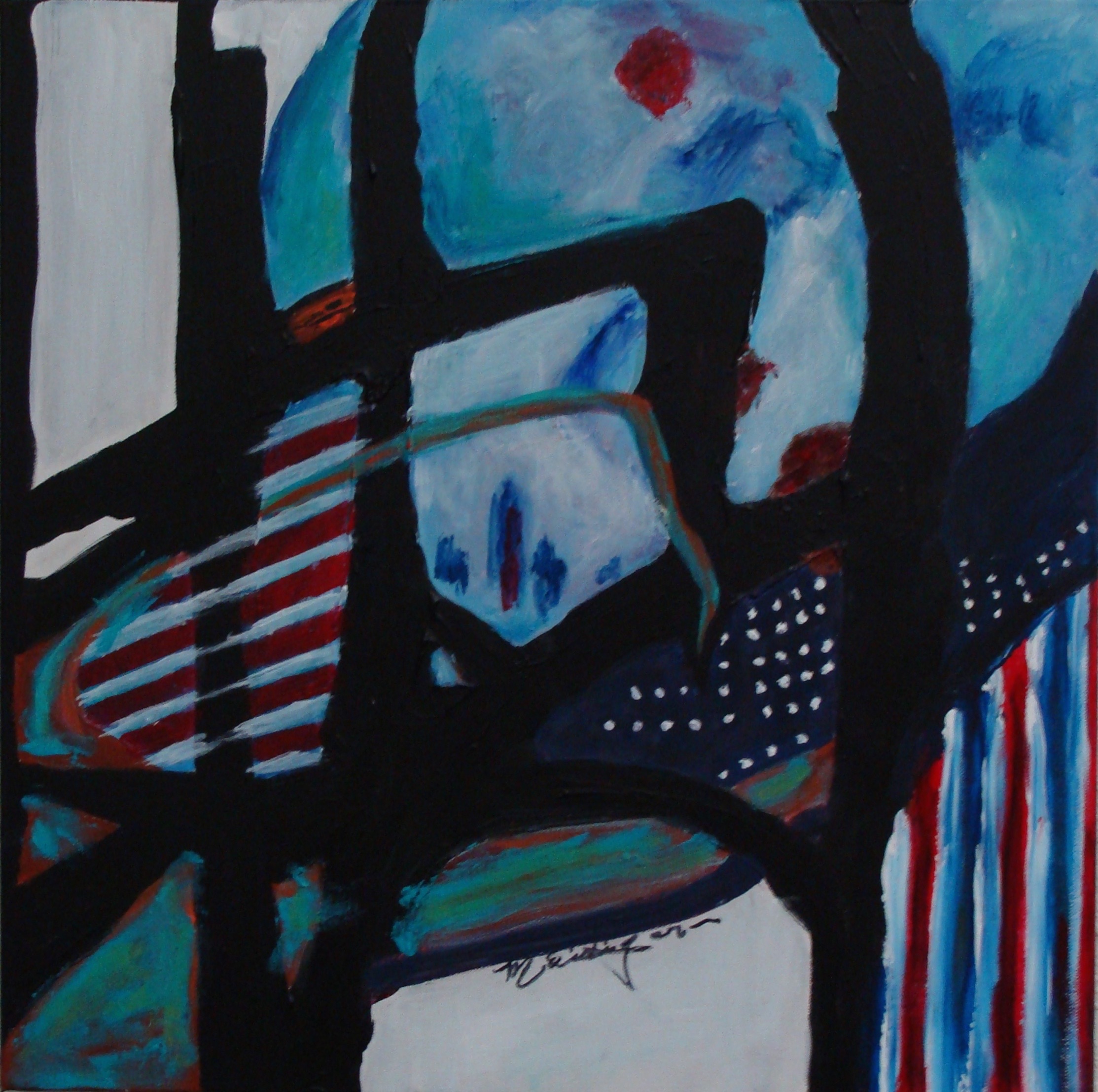
acrylic on canvas/ 24”by 24”/ $ 450

Healing a Fractured System
The other day I overheard two childhood friends embroiled in a shouting match about illegal immigrants that was so hateful that I doubt they will ever speak to each other again. They inspired me to search for a way to overcome the fractional divisions that plague our country.

The values I was taught as a child that made America unique and great are now in question. Due process of law, the presumption of innocence, and freedom of speech are suspect. The right to privacy has been eliminated. There is no control over the way our taxes are spent, so we drive on streets and highways dangerously flawed by pot holes, bearing signs covered with untrimmed shrubbery.

Hypocrites speak of virtue yet vote for known bullies, harassers, and sex offenders. Anti-abortionists cling to family values yet are unwilling to provide health care for children born into poverty. Hunters believe endangered species laws should be eliminated. When one party controls all of government they are quick to forget that they are there to govern on behalf of all Americans. Compromise and consensus are two important words that have been eliminated from our vocabulary.

The Statue of Liberty has little meaning for we are not willing to do as it says:
“Give me your tired, your poor,
Your huddled masses yearning to breathe free,
The wretched refuse of your teeming shore.
Send these, the homeless, tempest-tossed to me,
I lift my lamp beside the golden door!”

Have we lost the way? It seems to me that both Republicans and Demarcates have gone haywire, holding extremist ideals that make compromise untenable. Yet it is bargaining in good faith that brings about a balanced society.

Newt Gingrich escalated the political breakdown in 1995 when he changed the congressional calendar to mid-week meetings and encouraged new delegates to go home for the weekend rather than reside in Washington and befriend members on the opposite side of the isle. Without socializing to build cross-party relationships a bitter culture developed. Simultaneously, the seniority system for selecting committee chairs was eliminated. Leadership was free to assign positions based on party loyalty, making it difficult for independent thinkers who were not willing to tow the party line.

The introduction of cable TV and internet enabled viewers to seek out hundreds of partisan stations rather than put their trust into commonly watched commentators like Walter Cronkite. Today it is rare for someone to take the time to seek evidence that confirms or denies the truth of the information they receive. The generation, shaped by Vietnam, participated in a culture war that was divisive. Baby boomers marched and fought against the establishment, and as lies about the war escalated, distrust in the media and government grew. The high cost of campaigning also contributed to fracturing the the political structure. Politicians who spend two to three hours on the phone each day fundraising instead of governing are afraid to offend party donors.

What are we left with? Hatred, class war, manipulation by power elites? It makes us wonder if it is possible to revamp the way Washington works. Haidt and Abrams suggest improving the social and political functioning of congress by encouraging after hour get togethers and by bringing congressional families back to Washington. We citizens could demand that politicians stop the blame game and labeling the other party as evil. We are in this together and thankfully most lawmakers have good intentions.

Excellent suggestions were made in 2014 by the Commission on Political Reform. Members from both sides of isle, like Tom Daschle and Trent Lott, were challenged to find ways to improve congressional working relationships. Starting with policymakers focused on solving problems rather than getting elected, they offer 60 ideas ranging from improving the electoral system, increasing voter turnout and addressing gerrymandering to congressional reform that is less hyper-polarizing. They suggest engaging young adults in service, reinstating a five day congressional work week, and limiting time for debate.

Their findings, referenced below, are interesting to read and make me believe that a more civilized way of ruling is possible. Lets begin by not dissolving long term friendships over political differences but use our heads and hearts for the benefit of all who reside in this wonderful land.

Reference:
Commission on Political Reform 2014. Governing in a Polarized America: A Bipartisan Blueprint to Strengthen our Democracy.Bipartisan Policy Center retrieved from https://bipartisanpolicy.org/library/governing-polarized-america-bipartisan-blueprint-strengthen-our-democracy/

Fractured America


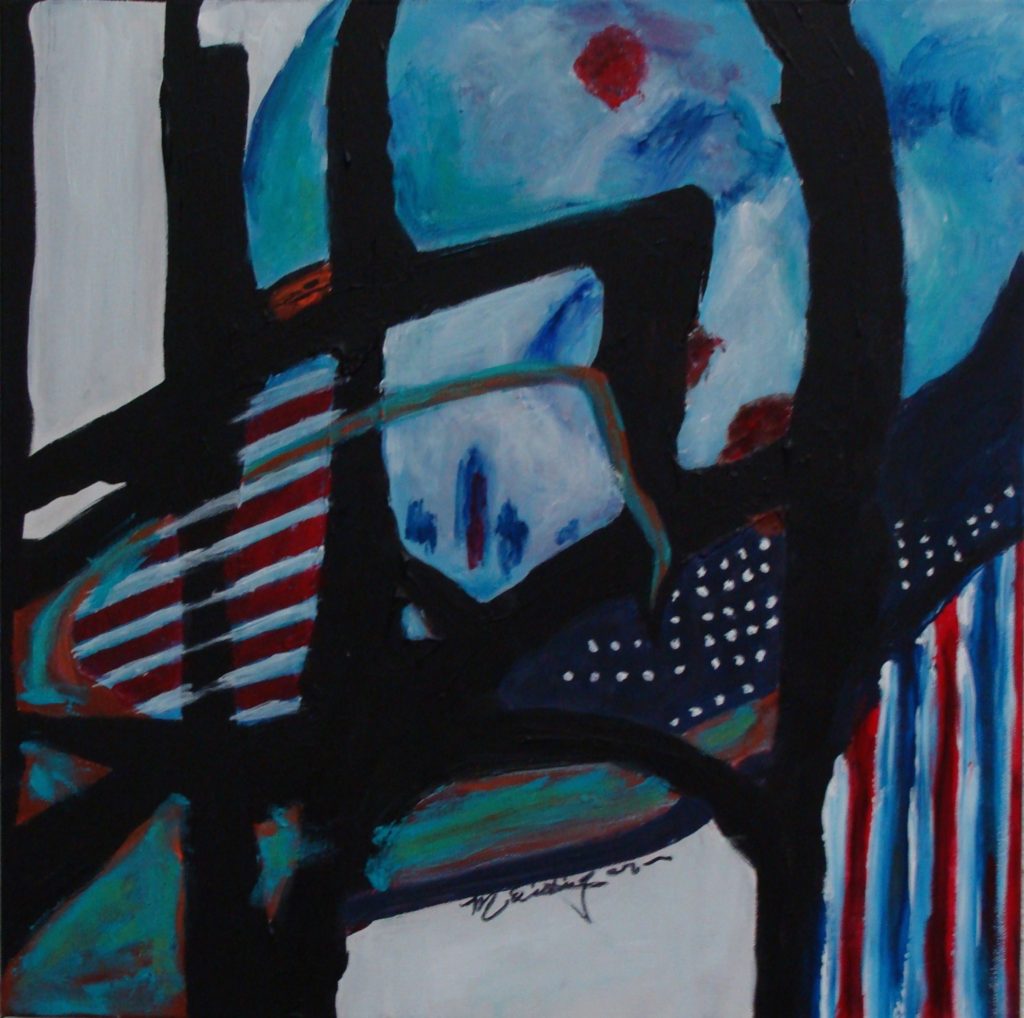
Fractured America  – painting by Marilynne Eichinger

acrylic on canvas/ 24”by 24”/ $ 450

Those supporting either right or left wing agendas agree on one thing—that America’s political system is fractured. Partisan discussions can easily destroy once solid relationships that were built over many years. The other day I overheard two childhood friends embroiled in a shouting match about illegal immigrants that was so hateful that I doubt they will ever speak to each other again. They inspired me to search for a way to overcome the fractional divisions that plague our country.

The values I was taught as a child that made America unique and great are now in question. Due process of law, the presumption of innocence, and freedom of speech are suspect. The right to privacy has been eliminated. There is no control over the way our taxes are spent, so we drive on streets and highways dangerously flawed by pot holes, bearing signs covered with untrimmed shrubbery. The homeless (25% are mentally ill, 40% are under 18) are permitted to sleep on sidewalks, intimidate bystanders, and urinate on street corners because no one wants to pay for their care.

There are those of us who would get rid of the first Amendment which protects political speech and others who want it suppressed when words are unsettling to sensitive persons or groups. Hypocrites speak of virtue yet vote for known bullies, harassers, and sex offenders. Anti-abortionists cling to family values yet are unwilling to provide health care for children born into poverty. Hunters believe they are better at preserving the environment and endangered species than a bureaucracy. When the wind blows towards one party controlling the three branches of government, the party in power is fast to forget beliefs held by half of the country’s citizens. Compromise and consensus are two important words that have been eliminated from our vocabulary.

The Statue of Liberty has little meaning for we are not willing to do as it says:

“Give me your tired, your poor,                                                                                                                                      
Your huddled masses yearning to breathe free,
                                                                                                              The wretched refuse of your teeming shore.
                                                                                               Send these, the homeless, tempest-tossed to me,                                                                                         
I lift my lamp beside the golden door!”

Have we lost the way? It seems to me that both Republicans and Demarcates have gone haywire, holding extremist ideals that make compromise untenable. Yet it is bargaining in good faith that brings about a balanced society.

According to the Haidt and Abrams of the Washington Post, between 1930 and 1980, voters in both parties were centrists. It was later that Americans became purists, changing the way they dress, take vacations, drink, and read. It intensified the divide that separated urban and rural dwellers since before the Civil War. The Democratic Party, located historically in the agrarian South, became an urban party focused on the concerns of city dwellers. Rural areas shifted towards the GOP which became more religious, patriotic, and family-oriented.

Newt Gingrich escalated the political breakdown in 1995 when he changed the congressional calendar to mid-week meetings and encouraged new delegates to go home for the weekend rather than reside in Washington and befriend members on the opposite side of the isle. Without socializing to build cross-party relationships a bitter culture developed. Simultaneously, the seniority system for selecting committee chairs was eliminated. Leadership was free to assign positions based on party loyalty, making it difficult for independent thinkers who were not willing to tow the party line.

As immigration grew in the 1970s and 80s, the parties became heavily divided by race, with the Republican party becoming more white. The introduction of cable TV and internet enabled viewers to seek out hundreds of partisan stations rather than put their trust into commonly watched commentators like Walter Cronkite. Today it is rare for someone to take the time to seek evidence that confirms or denies the truth of the information they receive. Most people do not look beyond articles that confirm their own biased theories. Adding to our confusion is a polarized media which makes it difficult for politicians to work across the isle without setting themselves up to be backstabbed by one newscaster or another.

The high cost of campaigning also contributes to our country’s political fractures. Because it is so expensive to run for office, politicians are afraid to offend party donors. They are compelled to spend two to three hours on the phone each day fundraising instead of governing.

When the two world wars and cold war dominated America, national interests were put above partisan politics. People were more or less afraid but they perceived common enemies and were united in supporting their politicians. The following generation, shaped by Vietnam, participated in a culture war that was divisive. Baby boomers marched and fought against the establishment, and as lies about the war escalated, distrust in government grew.

So, what are we left with? Hatred, class war, manipulation by power elites? It makes us wonder if it is possible to revamp the way Washington works. Haidt and Abrams suggest improving the social and political functioning of congress by encouraging after hour get togethers and by bringing congressional families back to Washington. We citizens could demand that politicians stop the blame game and labeling the other party as evil. We are in this together and thankfully most lawmakers have good intentions.

Excellent suggestions were made in 2014 by the Commission on Political Reform. Members like Tom Daschle and Trent Lott, were challenged to find ways to improve congressional working relationships. Starting with having policy makers focus on solving problems rather than getting elected they offer 60 ideas ranging from improving the electoral system, increasing voter turnout and addressing gerrymandering to congressional reform that is less hyper-polarizing. They suggest engaging young adults in service, reinstating a five day congressional work week, and limiting time for debate.

Their findings, referenced below, are interesting to read and make me believe that a more civilized way of ruling is possible. Lets begin by not dissolving long term friendships over political differences but use our heads and hearts for the benefit of all who reside in this wonderful land.

__________________

Don’t forget to share your thoughts below.. Many readers are interested in what you have to say.

Art is always for sale. Contact me at marilynne@eichingerfineart.com.

References:

HUD. 2016. Annual Homeless Assessment Report to Congress. The U.S. Department of Housing and Urban Development . retrieved from https://www.hudexchange.info/resources/documents/2016-AHAR-Part-1.pdf

Demote Sr.,C. 2018, Repairing our Fractured Politics, National Review. retrieved fromhttp://www.nationalreview.com/article/455330/fix-americas-broken-politics-balanced-budget-amendment-filibuster-abolition

Haidt, J and Abrams, S.2015. The top 10 reasons American politics are so broken. The Washington Post. retrieved from https://www.washingtonpost.com/news/wonk/wp/2015/01/07/the-top-10-reasons-american-politics-are-worse-than-ever/?utm_term=.ac85eec6918a

Commission on Political Reform 2014. Governing in a Polarized America: A Bipartisan Blueprint to Strengthen our Democracy.Bipartisan Policy Center retrieved from https://bipartisanpolicy.org/library/governing-polarized-america-bipartisan-blueprint-strengthen-our-democracy/

The Best of Times, The Worst of Times

Best of Times, Worst of Times

Summer Night’s Dream
Acrylic on Canvas/ 26” by 32”/ $ 498
Is it the best or worst of times? Surely we are living through confusing times.

On December 27th, President Obama was interviewed by Prince Henry and asked what he sees for the future. He responded by saying, ” If you had to choose a moment in history in which you’d choose to be born, you’d choose today because the fact is that the world is healthier, wealthier, better educated and more tolerant, more sophisticated and less violent.” His comment made me wonder if his words rang true and thought that a bit of fact checking was appropriate at the start of a New Year.   After hours of research, a have come to realize that fact checking  gives complex results.  I will share what I discovered in the next two newsletters.  Part I follows.

Part I

Last on Obama’s list is violence which I thought was a good starting place given the events of 2017.  Articles about gangs, drug cartels, Middle Eastern wars, and gun violence led me to believe that we live in more, not less violent times. However, some studies say otherwise. According to evolutionary psychologist Nigel Barber, the world is a lot less violent than at any other time in history. It is the constant diet of media reporting that turns killers into instant celebrities, and readers into empathetic dispensers of sympathy for victims, stirring a sense of danger that is out of proportion to threat. This is one man’s view based on an evolutionary time line. However, when I explored a shorter period of time, I came across a Forbes magazine article report of the latest Global Peace index published by the Institute of Economics and Peace in June, 2017. As well as full-blooded conflicts, the index takes into account everything from the level of government weapons purchases to homicide rates, incarceration rates, perceptions of criminality, political repression and suppression of free speech.

Over the past year, 93 countries were identified as being more peaceful, while 68 were considered to be less so. Improvements occurred in countries where state sponsored terrorism declined or because of a reduction of US forces, such as in Afghanistan. A disproportionate amount violence exists in Syria, Afghanistan, Iraq, South Sudan and Yemen. Fractionalized politics over the past four years is a major reason peacefulness declined in certain countries. Internal divisiveness leading to the election of Donald Trump, the Brexit vote, terrorist atrocities in France and Belgium, increasing inequality, rising perceptions of corruption and a decline in freedom of the press are contributing factors. The Unites States fell to the 114th spot, below Rhonda, Algeria and Belarus. Yet, despite these declines, internationally, there has been improvement. The most peaceful country is Iceland with New Zealand, Portugal, Austria and Denmark not far behind. Europe is still the most peaceful part of the world claiming 8 of the top ten countries.

What about health? The World Health Organization (WHO) collects statistics for 194 countries. In 2017 it compiled information around 100 indicators such as child care, sanitation, traffic injuries, infant mortality, communicable diseases and life expectancy. Overall, adult mortality rates declined in most wealthy parts of the world. Life expectancy at age 15 increased 2 to 3 years over the last 20 years with the exception of Africa where it decreased by nearly 7 years and the United states which is down 2 years due to opioids. The major causes of deaths among adults is due to noncommunicable diseases, injuries among males, and violence due to war. Causes vary significantly by region. About half the world lacks access to health services and over 100 million people are put into extreme poverty due to health expenses. WHO President Dr. Jim Yong Kim advises that that if we are serious about improving health we must end poverty and urgently provide universal health coverage.

Obama believes that people are more tolerant. In the past year hate crimes rose significantly in the United States according to a 2016 report by the FBI. Rising Islamophobia and anti- Semitism are on the rise, not only in the U.S., but in many European countries. A Huffpost article concurs that “there are strong signs that the modern West is, indeed, becoming less tolerant.” In analyzing tolerance we have to ask, compared to what? Do we look at Spain during the Inquisition, ISIS and their many beheadings or do we compare ourselves to 50 years ago. If we consider more recent society at home, since the Civil Rights movement Americans have become more racially tolerant. People are careful about what they say publicly about Black and Asian Americans and no longer poke fun at Pollocks or the Irish. A 2015 study published in the journal of Social Forces confirms increasing tolerance towards those with differing lifestyles and views. Americans bare more willing to accept of those who divorce, unwed mothers, and the LGBTQ community. Youth continue an upward trend of accepting opinions and lifestyles that differ from their own.

A recent Pew Research study reports that Americans are also more tolerant of religious groups than just a few years ago. Even with negativity around the election, people report greater acceptance of all religious groups with Jews and Catholics receiving the warmest reactions with Muslims and atheists receiving the coolest, though neutral ratings. The concept of “other” focuses on Latino immigrants and Muslims. Hopefully that designation will not last forever for intolerance is not an option for a democratic society.

Max Fisher, professor of ethnicity, compiled a map of world tolerance that shows Anglo and Latin countries to be the most tolerant while India and Jordan are the least. Wide variations exist across Europe where immigration and national identity are major challenges. The large numbers of economic migrants that go for work to countries like Egypt and Saudi Arabia are at risk, though a slight a improvement was registered. Racial tolerance is low in many Asian Countries and especially so in South Korea. Pakistan is surprisingly tolerant despite areas of sectarian violence. The United Nation reports discrimination, marginalization, injustice and violence to be the most common indicators of intolerance. Better education is needed to fight against intolerances which are recipes for conflict disaster and war. Tolerance is a “treasure that enriches us all.”
Do join me next week for Part II, a look at wealth and education.

References:

1. Wintour, P. 2017. Obama tells Prince Harry: Leaders Must Stop Corroding Civil Discourse. The Guardian. retrieved from https://www.theguardian.com/us-news/2017/dec/27/barack-obama-tells-prince-harry-leaders-must-stop-corroding-civil-discourse

2.Barber, N. 2016. Is the Modern World More Violent. Psychology Today. retrieved from https://www.psychologytoday.com/blog/the-human-beast/201506/is-the-modern-world-more-violent

3. Dudley.D/ 2017. Most of the World is Becoming More Peaceful but the US and the Middle
East are Bucking that Trend. retrieved from https://www.forbes.com/sites/dominicdudley/2017/06/01/most-of-the-world-is-becoming-more-peaceful-but-the-u-s-and-the-middle-east-are-bucking-that-trend/#3d8c3fda22e1

4. World Health Organization Web Site. 2017. retrieved from http://www.who.int/gho/en/

5. Marglin,J.2016. Are we Getting More or Less Tolerant, And Does it Matter? Huffpost. retrieved from https://www.huffingtonpost.com/jessica-marglin/are-we-getting-more-or-le_b_8833514.html

6. Perry, S. 2015. Americans have become more tolerant with each generation, Study finds. MINNPOST. retrieved from https://www.minnpost.com/second-opinion/2015/03/americans-have-become-more-tolerant-each-generation-study-finds

7. Williams, W. 2017. Americans are becoming more tolerant of many religious groups, survey finds. The Christian Science Monitor. retrieved from
https://www.csmonitor.com/USA/Society/2017/0215/Americans-are-becoming-more-tolerant-of-many-religious-groups-survey-finds

8. Fisher, M. 2013. 5 insights on the racial tolerance and ethnicity maps, from an ethnic conflict professor. The Washington Post. retrieved from https://www.washingtonpost.com/news/worldviews/wp/2013/05/17/5-insights-on-the-racial-tolerance-and-ethnicity-maps-from-an-ethnic-conflict-professor/?utm_term=.8a7df968ab1c

9 United Nations Educational, Scientific, and Cultural Organization, 2017. Learning to Live Together. UNESCO . http://www.unesco.org/new/en/social-and-human-sciences/themes/fight-against-discrimination/promoting-tolerance/

______________________________________________________________________
Please comment on my blog site below.

Art is always for sale. Contact me at marilynne@eichingerfineart.com for costs and shipping information.

Changing Sexual Mores

FACES
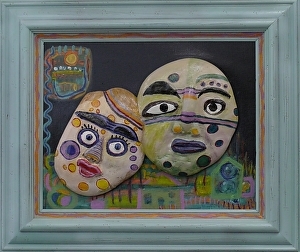
mixed media on canvas / 24 x 29” x 2” / $ 450
Good relationships are trick and must be nurtured. They survive because of respect and caring. Violence and rape have no place.

Changing Mores Sexual

The outcry over sexual abuse and harassment has finally been heard throughout the country. “Let it not let it happen again,” is the mantra. And, so old wounds of the past are now willingly being dragged through the media to be relived in the hope of putting this ugliness to bed. Hopefully the actions of brave speaking victims will have a lasting effect, though I must admit to having doubts around power politics. Some predators manage to hold on to their positions despite their despicable behaviors while others, who acknowledge wrong doings with humility and have changed have had to step down.

Are we doing democracy a service by holding so many men accountable in the court of public approval rather than the judicial system? I realize that none of the claims can not be ignored, and that most may be justified . . . but not all. Should those acting in accord with the mores of their adolescent years and have since mended their ways receive equal punishment with rapists, pedophiles, and those using power positions to seduce the young?

Do we treat men who patted a fanny, groped a breast, or kissed an unwilling face as we do one who drugged, molested children, or raped? Not long ago our men lived in a society that ignored these types of behaviors. Old men like George Bush Sr. were seen as harmless when they pinched their nurse. As children they had been taught that chauvinism was simply a manly way to tease those they desired. Sexual harassment and the way men and women acted towards Black Americans was on an equal par.

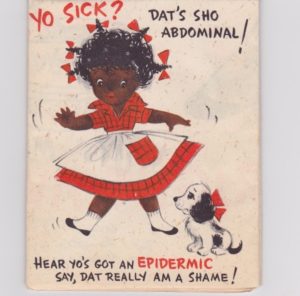
Last week, I found a get well card buried in a box of letters that were mailed to me in the late 1950s. The card had an image of a young black girl speaking in a way that would horrify anyone today. However, during that pre-civil rights era, such pictures were socially acceptable. Should the person who sent this card be judged by today’s standards? Should he lose his job? face consequences because of the way white society thought in the past? Should I, as receiver, have been insulted? Are either of us bad today for having seen the message sent in ’58 as cute? I do not believe we are terrible people, for once the damage caused by such images was explained, we became sensitized. No longer would such a card be an acceptable. This new awakening was then carried forward to the next generation. Culturally acceptable norms were changed.

So too, in matters of sexual harassment. In 1953 Playboy Magazine featured Marilyn Monroe in its first issue. Hugh Hefner and his clubs were popular places for both men and women to go for a drink and entertainment. Hefner was considered a visionary editor accepted by much of society. The 1960’s was a period of profound societal changes in a growing sexual revolution. With the spread of birth control pills and penicillin to fight diseases like syphilis, attitudes towards sex became increasingly permissive, even weakening marriage boundaries.

Though the era also heralded in the women’s movement, men and as well as women were confused about their roles. The revolution had negative as well as positive features for though promised sexual freedom and liberation, women increasingly found themselves victims of rape and oppression. Some men, feeling emasculated, tried to assert their claim to being the strong, superior bread winner to whom the weaker sex owed allegiance. Having lived through these times, I can attest to the fact that it was exciting yet confusing, flirtatious yet risky. It is not surprising that many women became victims for we did not know how to act.

As we consider important steps taken on behalf of traumatized victims, let us proceed wisely. Rape, drugs, violence, pedophilia can never be tolerated. But there are gray areas that impel us to move cautiously to not wreck a good person’s career. Once the individual has acknowledged past mistakes and demonstrated change there can be room for forgiveness. It behooves us to teach young women and boys about predatory ways, so they are not naive and can firmly, politely and swiftly put an end unwanted approaches. Though difficult, we need to have conversations with our children to help them better evaluate flirtations and to know behavioral boundaries so that one person’s will will not be forced on another.

Consequences from abuse make victims feel vulnerable and insecure, two emotions that can last a lifetime. I know this well, for I too was raped by a powerful man. Fortunately, the current turmoil is a chance to grow and learn better ways for men and women to communicate. Let’s not turn the past into a political travesty that backfires but move forward by changing minds.