Why Love Feels Like Madness

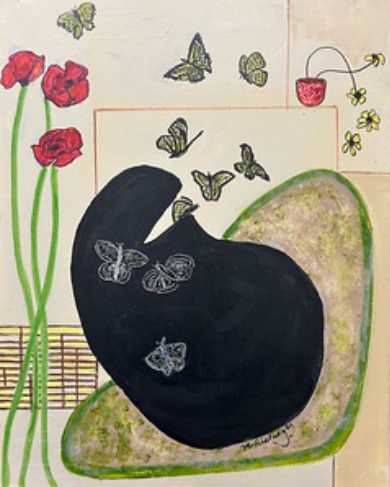
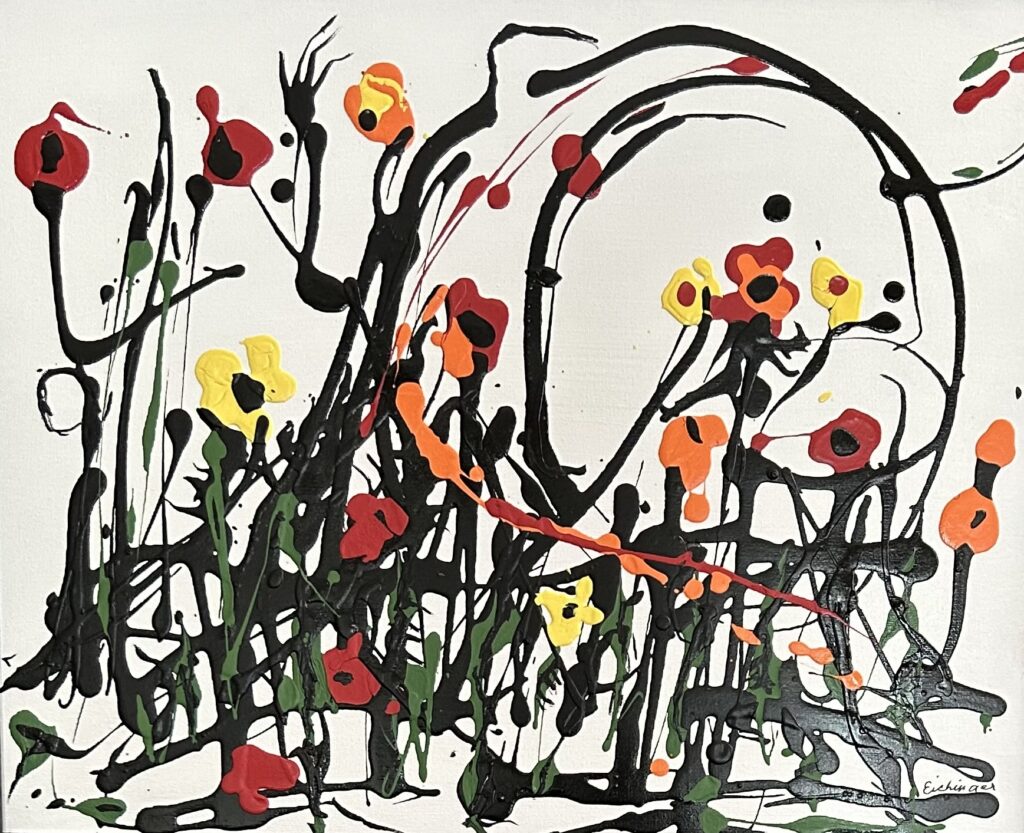
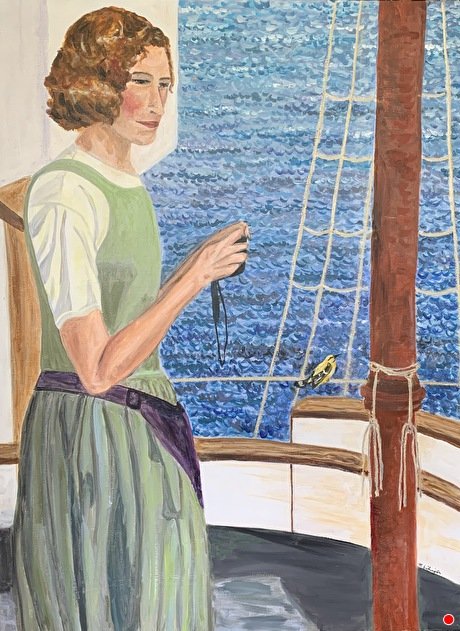
WELCOMING SPRING

Spring has sprung
Out come garden tools
Butterflies fly free
Love creates new fools

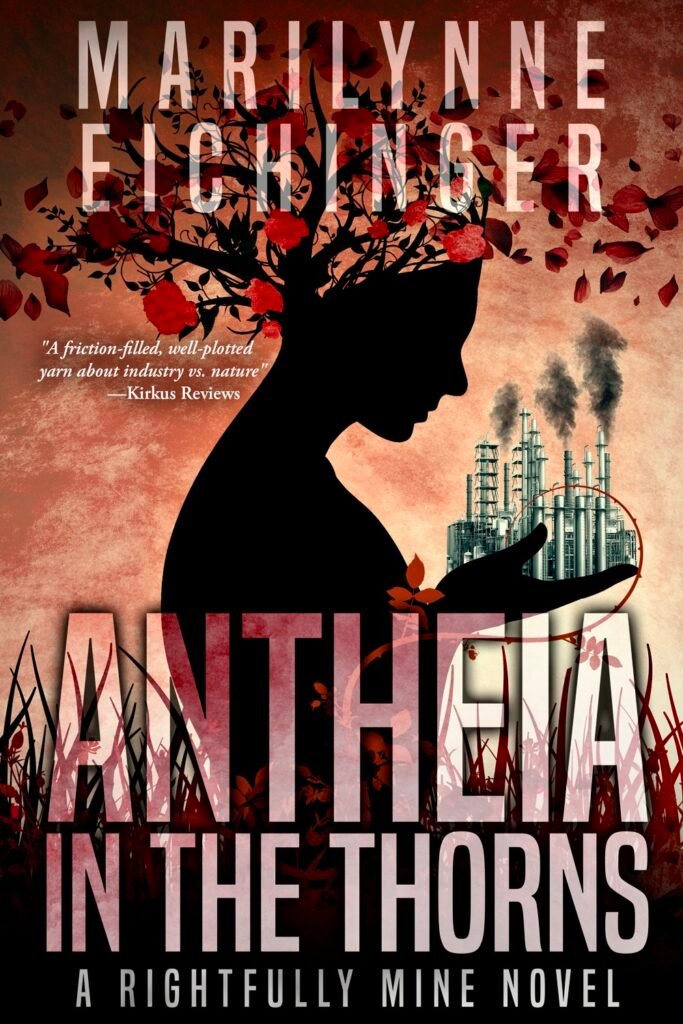
In Antheia in the Thorns, after the loss of her baby, Jennifer Russo falls into a deep depression that leads to the destruction of her marriage. Grief leaves her emotionally numb, isolated, and unable to imagine a future worth wanting. Over time, however, she finds reasons to live again—a social justice cause, meaningful work, and eventually, someone new to love.

As I wrote her journey, I became curious about what might actually be happening inside her body. Why does love feel so powerful? Why does heartbreak feel physically painful? Why can the loss of love leave someone feeling as if they are unraveling?

Social, economic, biological, and psychological forces all shape human relationships. Romantic love is deeply studied, yet it remains one of the least understood human behaviors. Researchers Richard Schwartz and Jacqueline Olds spent years examining how love begins, how it changes, and why it sometimes collapses.

One of the best-known brain imaging studies of romantic love, led by biological anthropologist Helen Fisher and her colleagues, used MRI scans to study people who described themselves as intensely in love. The scans showed increased activity in dopamine-rich regions of the brain associated with reward, motivation, and focused attention—particularly the same neural systems involved in pursuing food, pleasure, and survival.

Dopamine is often called the brain’s “reward chemical,” but it is really more about motivation than happiness. It pushes us to pursue what we desire. In early romantic love, that desire becomes intensely focused on another person.

This reward circuit is ancient. It has always linked humans with pleasure and survival behaviors such as eating, bonding, and reproduction. Just as now, when they fell in love, the brain flooded with chemicals that triggered emotional and physical responses: racing hearts, sweaty palms, flushed cheeks, excitement, anxiety, and obsessive thoughts.

During the early stage of romantic love, the body also behaves a little like it is under stress. Cortisol, the stress hormone, often rises, while serotonin levels may lower, shifting in ways that bring on the obsessive thinking seen in infatuation. This helps explain the intrusive thoughts taking over during early love, the constant replaying of conversations, wild hopes, and the fear of rejection that can make it feel both exhilarating and exhausting.

This may be why people say love is blind: in deep attachment, we often soften our critical judgment and feel emotionally safer with the person we love. Yet, as relationships deepen, chemicals such as oxytocin help strengthen feelings of trust, calm, and attachment. The intense panic experienced at first usually settles into something quieter but stronger.

If all goes well, a lasting pair bond forms. Passion does not necessarily disappear, but the emotional chaos of early romance usually calms. Cortisol returns to normal. The brain no longer treats love like a crisis. Instead, the relationship itself becomes a buffer against stress.

Long-term love is different from infatuation once the fireworks quiet. Couples may become distracted by work, children, aging parents, and ordinary life, yet affection and desire can still be reawakened. A weekend away together, uninterrupted conversation, or renewed intimacy can reactivate the same reward pathways that first drew them together.

Pair bonding is not limited to one cultural model. Some bonds begin with sudden romantic attraction, while others grow slowly through compatibility, trust, and shared life. Even arranged marriages, without an initial romantic spark, can develop into strong emotional partnerships if affection, respect, and intimacy grow over time.

But when love breaks, the pain is real. Though some say they have a broken heart, their heartbreak is a neurological not a heart event. Brain imaging shows that rejection activates some of the same regions involved in physical pain, craving, and addiction. The attachment system does not simply switch off. The part of the brain that still longs for connection remains active, even when the relationship is over.

That is why breakups can feel unbearable. People replay memories, crave contact, and struggle with withdrawal much like addiction. The emotional pain can feel physical because, in many ways, the brain processes it that way.

With the honeymoon phase fading and the pressures of real life returning, bonding hormones such as oxytocin may lessen, and the brain becomes less idealizing. The small quirks once seen as charming can begin to feel irritating. People stop focusing only on their partner and begin thinking more about their own unmet needs, frustrations, and goals.

Some relationships survive that shift. Others do not.

The hopeful part is that the brain can heal. Neural pathways change. Grief softens. New joy becomes possible. Therapy, friendship, purpose, and time all help rebuild the nervous system’s sense of safety and connection. Most people do not recover by waiting passively. Healing usually begins with small acts—getting out of bed, answering the phone, taking a walk, saying yes to help.

Jennifer Russo moves through all of these stages: grief, emotional collapse, a dissolving marriage, and eventually the renewal of life through love and action. She does not recover by staying home in a catatonic state. She heals because she pushes herself forward, even in tiny steps, and because someone cares enough to walk beside her.

Love may begin as chemistry, but recovery is often a choice.


I look forward to hearing your stories of love in the comment section of my blog at https://www.eichingerfineart.com/blog/206245/why-love-feels-like-madness

Art is always for sale through my website. Welcoming Spring is a 20″ by 16″ acrylic painting on canvas. To purchase, go to https://www.eichingerfineart.com/workszoom/6493159/welcoming-spring#/


Resources


The Rightfully Mine Series will help you better understand this world and how humans care for it. They are fact-based thrillers that will keep you page-turning.

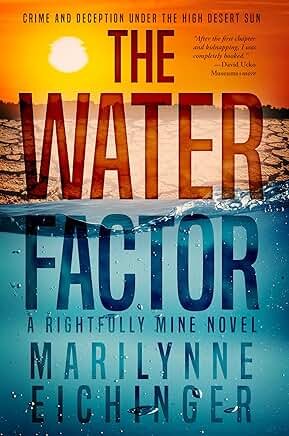
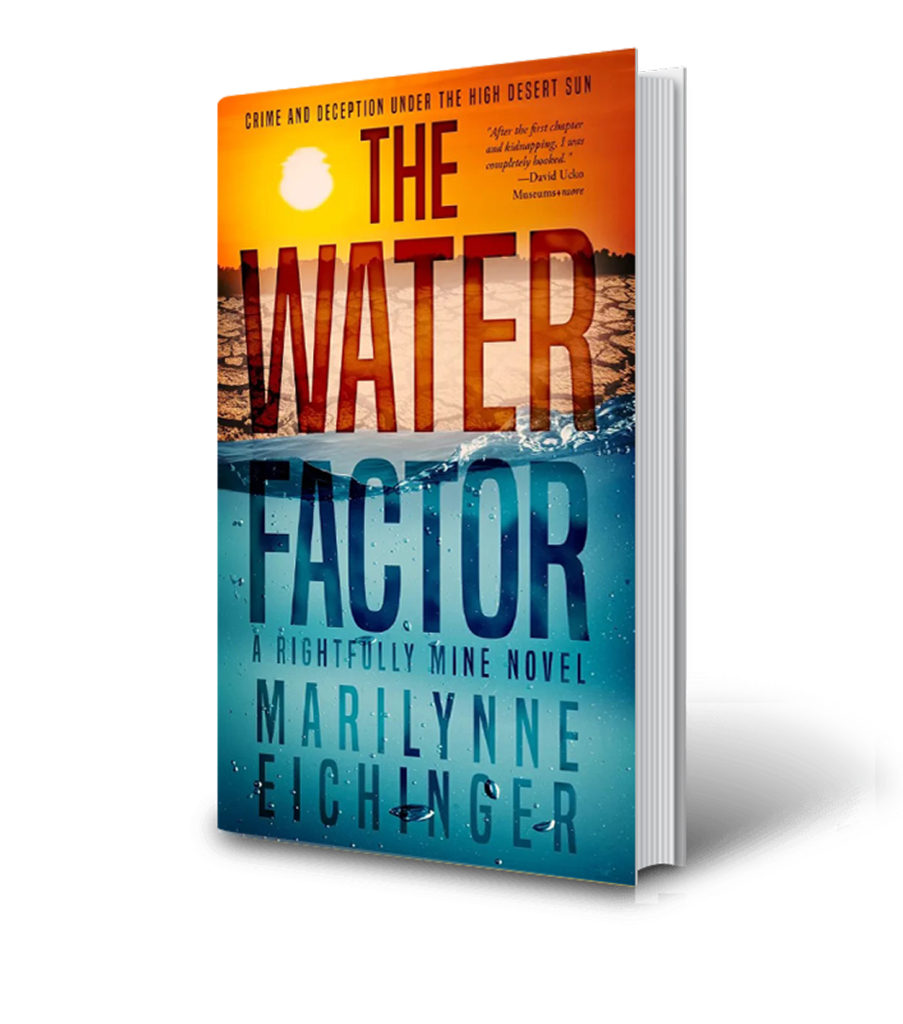
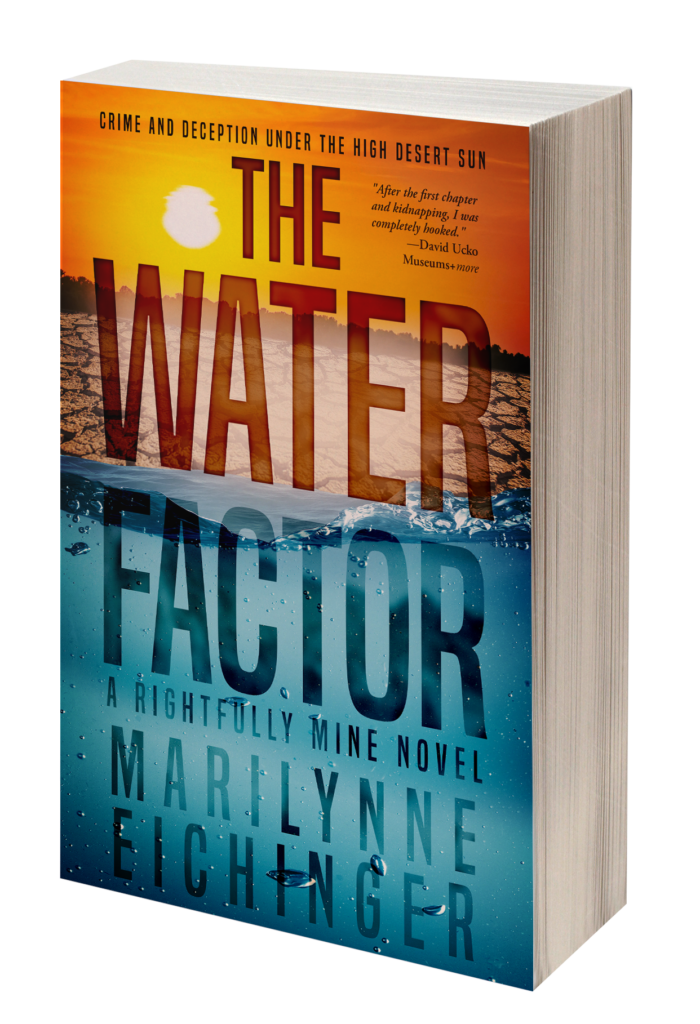
  • The Water Factor follows the plight of a Native American Reservation that contracted with a corporation that steals their water, and the young man who takes it upon himself to do something about it.
  • Antheia in the Thorns follows a woman who emerges from depression after the loss of her child, fighting for the right to clean air and an unpolluted ocean.

Eichinger books are available on AMAZON.

Are We Wiser Than Our Ancestors?

OPUS


Given all that humanity has learned and discovered, one might expect the world to be in a better place. We have unprecedented access to knowledge, technological advancements capable of transforming entire societies, and a global awareness of crises like climate change, economic inequality, and political instability. Yet progress in information has not consistently led to progress in wisdom.

Perhaps the question is not whether we are smarter than our ancestors, but whether we are better at applying what we know. Sophocles, who wrote in the 5th century BCE, endures not because he offered solutions, but because he revealed patterns of human behavior that repeat across time.

We still see Antigone’s dilemma play out when individuals challenge unjust laws or systems—whistleblowers exposing corporate misconduct, journalists risking their careers to bring truth to light, and environmental activists placing themselves in harm’s way to protect forests, water, and communities. Protests over pipelines, old-growth logging, and land use continue across North America, as communities push back against decisions they believe prioritize short-term profit over long-term stewardship. The question remains the same: when authority demands silence, what does conscience require?

We see Oedipus in our relentless pursuit of knowledge without always considering its consequences. Artificial intelligence advances faster than the ethical frameworks needed to guide it. Social media platforms, designed to connect us, are also used to spread misinformation, deepen division, and influence elections. We gather vast amounts of data about human behavior, yet often use it to manipulate attention rather than promote understanding. Like Oedipus, we seek answers—sometimes only to discover that knowledge alone does not protect us from harm.

Philoctetes lives on in those society casts aside—the unhoused in our cities, the workers displaced by automation or global supply chains, and the communities left to deal with polluted land and water long after industries have moved on. In places affected by industrial runoff or abandoned extraction sites, residents often carry the burden of contamination for generations. His story asks whether we are capable not just of recognizing suffering, but of responding to it with empathy and responsibility.

And Ajax is present wherever pride overrides judgment. We see it in political leaders who refuse to concede mistakes, in corporations that deny environmental damage despite mounting evidence, and in public discourse that rewards certainty over reflection. Pride fuels polarization, making compromise feel like defeat and dialogue feel impossible.

These patterns are not distant or theoretical. They appear in legislative gridlock where urgent issues, like climate policy, infrastructure resilience, or wildfire management, stall amid partisan conflict. They are visible in the widening gap between scientific consensus on climate change and the pace of meaningful action, even as wildfires intensify across the American West, drought reshapes agricultural regions, and coastal communities face rising seas. They show up in continued debates over fossil fuel expansion even as renewable alternatives become more viable.

We are not lacking in knowledge. We are struggling with judgment, with humility, and with the will to act on what we already understand.

This tension—between knowledge and action, between power and responsibility—sits at the heart of my Rightfully Mine series. Through these stories, I explore the same enduring questions Sophocles raised centuries ago: What do we owe the earth that sustains us? When does obedience become complicity? How do we confront injustice when it is embedded within powerful systems?

The characters in these novels navigate environmental degradation, corporate overreach, and the quiet moral compromises that allow both to continue. Like Antigone, they must decide when to stand against authority. Like Oedipus, they confront truths that are unsettling and transformative. Like Philoctetes, they wrestle with abandonment and the possibility of healing. And like Ajax, they face the consequences of pride—both their own and that of the world around them.

If Sophocles teaches us anything, it is that wisdom is not a natural byproduct of time or progress. It must be chosen—through justice, through humility, and through compassion. It requires us not only to ask difficult questions, but to live with the answers.

That was true in ancient Greece. It is true now. And it may be the most important challenge we face: not how much we know, but what we are willing to do with it.


References


P.S. — For Those Who Like the Classics

A reminder of Sophocles’ plots:

Antigone: After a civil war, King Creon declares that one of Antigone’s brothers, labeled a traitor, must remain unburied as punishment. Antigone defies the order, believing divine law and moral duty outweigh human authority. She buries her brother and accepts the consequences, even death. The play explores the conflict between individual conscience and state power, asking when it is right to resist unjust laws. Like Antigone, who chose conscience over compliance, we are still confronted with moments when doing what is right means standing against authority. Antigone’s defiance reminds us that justice is not always defined by law—and that moral courage often comes at a cost.

Oedipus at Colonus: An older, blind Oedipus, once king of Thebes, wanders in exile after discovering he unknowingly killed his father and married his mother. In this final stage of his life, he reflects on suffering, fate, and responsibility. Rather than a story of downfall, this play is about transformation: Oedipus gains wisdom through hardship and ultimately finds a kind of peace and redemption. It emphasizes that true understanding often comes late and at great cost. Oedipus’s journey suggests that knowledge alone is not wisdom; it is what we do with hard truths that defines us. In Oedipus, we see the danger of pursuing answers without reflection—and the possibility of growth when we finally confront them.

Philoctetes: Philoctetes, a skilled archer, is abandoned by his fellow Greeks on a remote island because of a foul-smelling, unhealed wound. Years later, the Greeks realize they cannot win the Trojan War without him and return to retrieve him, initially through deception. The play centers on pain, betrayal, and moral choice, ultimately arguing that honesty and compassion are more powerful than manipulation or expedience. Philoctetes reminds us how easily society abandons those who suffer, and how essential compassion is to restoring what has been broken. His story asks whether we will choose expedience or empathy when faced with another person’s pain.

Ajax: Ajax, a great warrior of the Trojan War, feels dishonored when another soldier is awarded Achilles’ armor. Consumed by rage and wounded pride, he plans revenge but is driven into madness by the gods. When he regains his senses and realizes what he has done, he is overwhelmed by shame and takes his own life. The tragedy examines the destructive power of pride and the danger of tying identity too tightly to status and recognition. Ajax stands as a warning that pride, when left unchecked, can undo even the strongest among us. In Ajax, we see how the refusal to admit failure can lead not to strength, but to collapse.


I look forward to your comments on my blog site at https://www.eichingerfineart.com/blog/206367/are-we-wiser-than-our-ancesters

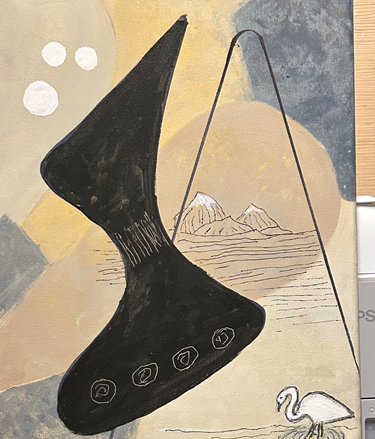
Art is always for sale. OPUS 4 is part of a series that goes easy on your pocketbook. To purchase and have it delivered without cost in the continental U.S., visit: https://www.eichingerfineart.com/workszoom/6505490/opus-4#/


The Rightfully Mine Series will help you better understand this world and how to care for it. They are thrillers based on facts that will keep you page turning.

  • The Water Factor follows the plight of a Native American Reservation who contracted with a corporation that steals their water, and the young man who takes it upon himself to do something about it.
  • Antheia in the Thorns follows a woman who emerges from depression after the loss of her child, fighting for the right to clean air and an unpolluted ocean.

Eichinger books are available on AMAZON.

Truth or Consequences

Truth or Consequences

Several days ago, I received a text meant for someone named Sophie. The sender asked to meet for dinner after work. I replied that she had the wrong number. She apologized, and then, unexpectedly, invited me to coffee.

That wasn’t possible, of course. She lived in New York; I live in Oregon. Still, something about the exchange felt harmless, even charming. A small mistake, a moment of connection. We began to text. I told myself I had stumbled into a modern version of a pen pal—someone to perhaps meet if I ever found myself in Manhattan.

Then I mentioned it to a friend. Her response was immediate: This is a scam. She sent me an article describing a growing scheme, one that begins exactly this way. A wrong number. A polite apology. A slow, friendly conversation. Trust is built over days or weeks. And then, eventually, comes the pivot: an investment opportunity, often involving cryptocurrency or insider access.

I went back to my messages with a different eye. The woman had told me she was a financial advisor at Citibank, working with wealthy clients. Yet when I asked for her last name or a professional email, she deflected. She preferred to keep our conversation on WhatsApp. She was friendly, attentive—and just evasive enough.  The relationship suddenly felt less like chance and more like design.

I realized I was standing at a quiet threshold: on one side, curiosity and connection; on the other, the possibility of manipulation. If she was genuine, I risked losing a budding friendship. If she wasn’t, the consequences could be far worse. 

It wasn’t a difficult decision, but it was a disappointing one. I ended the exchange. What lingered was not fear, but sadness—that something as simple as a mistaken text can no longer be taken at face value.

Scams like this are not confined to the United States; they are a global phenomenon, increasingly sophisticated and disturbingly effective. While the details vary from country to country, the underlying strategy is strikingly consistent: establish trust, then exploit it.

Older adults are particularly targeted, for reasons that cross cultures:

  • The likelihood of savings or home equity
  • A tendency to trust authority or extend politeness
  • Less familiarity with rapidly evolving technology
  • Social isolation, which makes genuine-seeming connection more powerful

The forms these scams take are familiar: impersonations of government officials or banks, frantic calls from a “grandchild in trouble,” romance scams, tech support fraud—and, increasingly, investment schemes like the one I may have narrowly avoided.

In countries like the United States and the United Kingdom, the problem is widely reported, with significant financial losses tied to phone, email, and online fraud. Public awareness campaigns have grown, and banks are becoming more proactive in flagging suspicious transactions. Still, scammers evolve just as quickly, refining their methods to match our habits.

What has changed most is not just the technology, but the emotional terrain. Scams no longer rely solely on urgency or fear—they often begin with something far more disarming: friendliness. A simple text. A small mistake. An opening.

And that may be the hardest consequence of all—not the money lost, but the uneasy realization that trust, once given freely, now comes with hesitation. It is this tension that lies at the heart of my Rightfully Mine novels. These stories explore corporate scams, hidden agendas, and the quiet deceptions carried out in the name of profit. What at first feels like a nice connection becomes “I can’t trust this anymore.” The damage is not always visible, but it is deeply felt by those caught in the fallout, people whose lives are altered not by violence, but by betrayal.

In both life and fiction, the cost of deception is the same: the erosion of trust. And trust, once lost, is not easily restored. I believe individuals, businesses, and nations are strongest when trust is honored—when leadership is grounded in integrity rather than exploitation. It is what allows people to sleep at night and wake with the clarity to face the day ahead. Without it, we are left second-guessing even the simplest human connection.

Have you ever been a victim of a scam?  Share your experience on my blog site to make other readers aware.

Art is always for sale. See All is an acrylic painting on a 24” by 48” deep canvas. For information and to purchase go to https://www.eichingerfineart.com/workszoom/5558644/see-all#/

In a world where water is quietly being bought and sold, one question rises to the surface: what happens when profit controls survival?
Available on AMAZON

Tapped out & Running Low

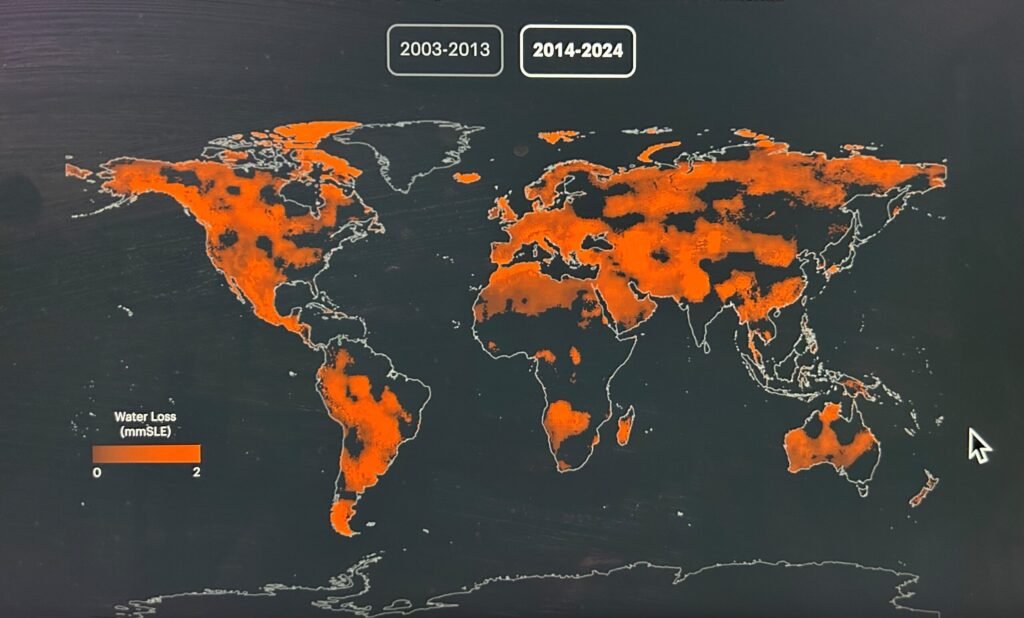
Data collected by NASA’s Gravity Recovery and Climate Experiment, published last week in the journal Science Advances, reveals a sobering trend. Scientists investigated the impact of groundwater loss on global water availability. What they found is alarming: fresh water has been disappearing at an accelerating rate for years, and the drying of Earth is speeding up dramatically.

Nearly six billion people—three-quarters of humanity—live in the 101 countries identified in the study as facing a net decline in water supply. This portends enormous challenges for food production and increases the risk of conflict and political instability.

Their research confirms what we already see on the news daily: droughts and extreme precipitation are growing more intense. Although parts of the planet are becoming wetter, those areas are shrinking, while dry zones are expanding. The study—which excludes the ice sheets of Antarctica and Greenland—concludes that “Earth is suffering a pandemic of continental drying in lower latitudes.”

As the climate warms and vast swaths of land dry rapidly, humanity’s supply of fresh water is under serious threat. In the far northern Arctic regions, the loss stems from melting glaciers and drying subarctic lakes. But in southern, more densely populated regions, the primary cause is the overextraction of groundwater from aquifers, faster than nature can replenish them. Unregulated pumping by farmers, cities, and corporations accounts for a staggering 68% of total freshwater loss in areas without glaciers.

Seventy percent of the world’s fresh water is used for agriculture. As droughts intensify, more of that water comes from underground reserves. Yet only a small portion of it seeps back into aquifers. Most of the water runs off into rivers and streams, eventually reaching the oceans, where it becomes undrinkable salt water. That water can only be recovered through industrial desalination or if it returns as rainfall. But due to climate change, many of these same drying regions are receiving less and less rain.

Across the globe, regions are already suffering severe water scarcity, with devastating consequences for communities, ecosystems, and economies. In India, particularly in states like Maharashtra and Rajasthan, extracting groundwater for agriculture has caused wells to run dry, forcing entire villages to rely on water tankers. In the Middle East, countries like Jordan and Yemen face chronic shortages, with per capita water availability far below the threshold for scarcity.

California’s Central Valley, one of the world’s most productive agricultural regions, has seen groundwater levels plunge due to prolonged drought and excessive pumping. Sub-Saharan Africa faces a growing crisis as erratic rainfall and high temperatures reduce the reliability of both surface and underground water sources, fueling migration and conflict. In parts of Chile and Peru, copper mining and industrial agriculture have drained aquifers, leaving Indigenous communities without reliable access to clean water. These hotspots are not isolated—they are early warnings of a global crisis that is fast becoming unmanageable.

Wake up, America. Enough with the silence. Enough with pretending that climate change isn’t affecting our daily lives. Water loss is already a major driver of poverty, displacement, and desperation. As we’ve seen in Gaza and elsewhere, water scarcity has even become a weapon of war.

If you’re not inclined to read scientific papers, read The Water Factor instead. It’s a novel with twists and turns that will keep you on the edge of your seat, while also opening your eyes to the global water crisis.

                                                        Water Depletion Worldwide

Resources:

 Buechner, (Lack of Safe Water Far Deadlier than Violence. UNICEF report. Retrieved from https://www.unicefusa.org/stories/unicef-report-lack-safe-water-far-deadlier-violence?gclsrc=aw.ds&gad_source=5&gad_campaignid=22789033677&gclid=EAIaIQobChMIhsCaiNvsjgMVrSGtBh0uwjevEAAYASAAEgLEY_D_BwE

Website US News. (2023) Countries with the Worst Drinking Water. UNICEF report. Retrieved from: https://www.usnews.com/news/best-countries/slideshows/countries-with-the-worst-water-supply

Website,2025.They Drying Planet. ProPublica. Retrieved from PLANET

__________________

Art is always for sale at www.eichingerfineart.com

Start the conversation. Please comment on my blog site. Sign up for my mailing list if you have not already done so. ______________________________________________________________________________

 According to the UN, water is at the center of the climate crisis. THE WATER FACTOR, A RIGHTFULLY MINE NOVEL, is your chance to peer into the near future to a time of water scarcity controls by corporate criminals.  The story is a gripping tale of water scarcity and corporate wrongdoing. The Water Factor is a Firebird International Award winner for best dystopian novel and a Literary Titan recipient for best thriller.  It is available in ebook, paperback, and audio formats. It can be purchased on AMAZON, Barnes and Noble, and as an audiobook on Amazon, Audible, and iTunes. Locally, it can be purchased at Annie Bloom’s Books and Powell’s Books.  


The Air Shouldn’t Require Purifiers

The Air Shouldn’t Require Purifiers

When people hear the phrase human rights, they often picture courtrooms, war zones, and political speeches. But human rights aren’t abstract. They’re practical, personal, and of everyday concern. Britannica defines human rights as rights that belong to an individual simply by virtue of being human. The United Nations took it further in the Universal Declaration of Human Rights, recognizing the “equal and inalienable rights of all members of the human family” as the foundation of freedom, justice, and peace.

It’s a powerful statement. But here’s the question that haunts me: What happens when someone’s profit depends on your rights being violated? The answer lies in the details where the struggles of real-world human rights live. The first book in the Rightfully Mine series, The Water Factor, explores whether water, an essential of life, should be treated as a human right or as a commodity, bottled and traded on Wall Street.

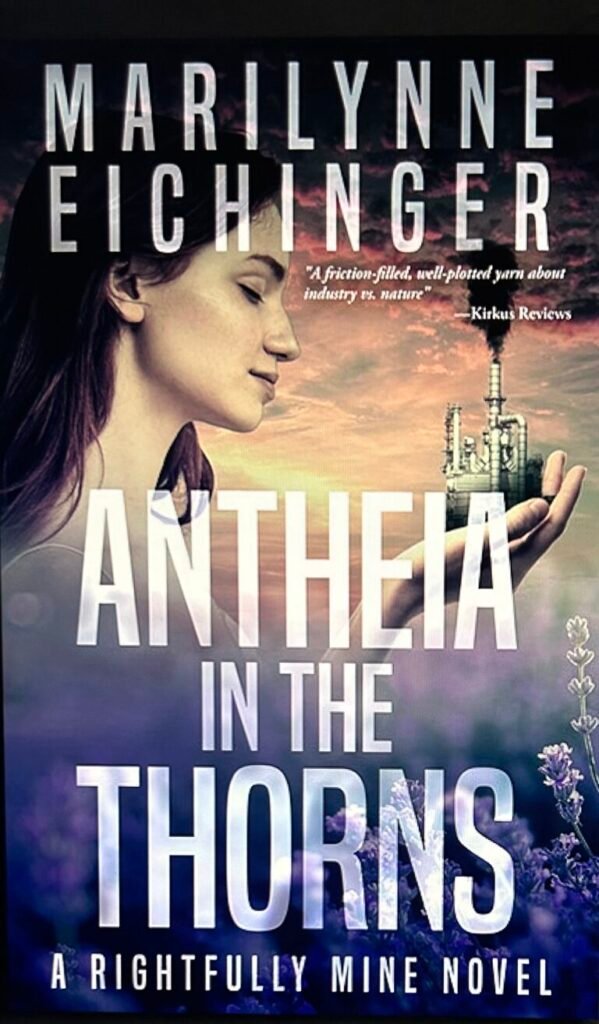
In the newly released novel Antheia in the Thorns, the focus shifts to something we rarely think about until it’s taken from us–the air we breathe. In the novel, anthropologist-turned-housewife, Jennifer Russo, and an Antheia activist, Brian Adakai, fight a toxic threat most people have never heard of: Petroleum coke (petcoke)–a dirty byproduct of oil refining. Though rarely used in the U.S., petcoke often replaces coal in energy plants because it’s cheaper to produce and burns at a higher BTU. It’s also more polluting. Petcoke is shipped around the world, where it’s stored in dusty piles that affect air quality. U.S. refineries are the largest producers of petcoke, yet it is treated by Congress as someone else’s problem.

The damage doesn’t show up on corporate balance sheets. It shows up in smog and in people with asthma, allergies, chronic coughs, and in children who can’t run without wheezing or fall into ash piles to die while playing. It devastates communities that don’t have the political power to stop it. That is why petcoke isn’t just an environmental issue. It’s a human rights issue.

If the right to life means anything, shouldn’t it include the right to breathe air that won’t harm you? If freedom means anything, doesn’t it include freedom from pollution you never consented to? And if justice means anything, doesn’t it require environmental laws so corporations can’t hide behind loopholes and legal intimidation? Weakening the EPA and FDA is a travesty we shouldn’t allow.

In Antheia in the Thorns, Jennifer and Brian aren’t fighting a vague evil. They’re fighting against people with names. Oil entrepreneur Abdul Hammed Dillinger has built an empire on profit-first thinking. He has a legal shield in his attorneys, Amy Stuart and her lover, Jennifer’s husband, Jason Russo. They don’t need to win on truth. They only need to win by exhausting their opponents. To do so, they delay, threaten, and bury their opposition in paperwork. They manipulate the system until those fighting back are broke, discredited, or afraid.

This is how human rights are defeated in the modern world. It’s not always with violence, but more often with strategy. And that’s why I wrote this book. Because beneath the legal maneuvering and corporate shields is something more intimate: betrayal, grief, and the moment a woman realizes she has nothing more to lose. Jennifer isn’t a superhero. She’s a wife, a mother, a woman who trusted the wrong people. But when the air itself becomes dangerous, she discovers that courage isn’t about strength. It’s about the refusal to be silenced. “No! Our lungs are not negotiable.”

If you believe clean air shouldn’t require a purifier, if you’ve ever felt outmatched by systems designed to wear people down, if you’ve ever wondered what it takes to stand up when standing up costs everything, then this story is for you.

The ebook and paperback versions of Antheia in the Thorns are currently on Amazon at an introductory price. An audiobook will follow in a few months. If you decide to delve into the story, an honest review helps more than most people realize. It’s the most powerful way to help the truth reach new readers.

_________________________________________________________________

Art can be purchased on my website and shipped free throughout the continental U.S. Contact me at marilynne@eichingerfineart.com with questions.

The World Transformed Keeps its Heart

What is life?

Seventy-one percent of the Earth is covered in water, a substance that takes many forms without ever ceasing to be itself. When heated, it becomes steam; when frozen, it expands and hardens as ice. It falls as snow that children pack into snowmen, then melts and runs into rivers where fish, amphibians, and waterfowl make their homes. It rains onto fields, sinking into soil, nourishing seeds that become food for you and me.

Yet for all its abundance, very little of Earth’s water is available to us. Most freshwater is locked away in glaciers and ice caps. What remains in rivers, lakes, and accessible groundwater is a narrow margin upon which all terrestrial life depends. Water is generous, but it is not infinite.

The human body is a fragile vessel, flesh framed by bone,  holding water that makes up more than half of what we are. It carries oxygen and nutrients, regulates body temperature, and allows cells to communicate. When we die, that water does not vanish. It returns to the earth, moving into soil, plants, air, and other bodies. No matter how many times it transforms or mingles with other fluids, it does not disappear. It remains water.

This is life itself.

We are born, and we spend our days responding to pressures: loss, love, labor, illness, and joy. Each experience reshapes us, just as water reshapes stone into something inspiring or forgettable.  We move forward one step at a time, intersecting with others who are following their own paths. Sometimes those paths converge. A handful moving in the same direction becomes a stream, a stream becomes a current, and occasionally thousands move together, forming something powerful enough to alter the course of history.

Yet when we step back and look at history from a distance, there are familiar patterns. Empires rise and fall. Technologies change. Ideologies replace one another. What endures beneath it all is the same living system, still dependent on water that cycles endlessly through land, air, and body. Progress does not erase that dependency. It only disguises it.

Our mistake is believing that our actions evaporate and that what we take, pollute, or discard simply goes away. But nothing does. Like water, it changes state. Toxins settle into soil and bloodstreams. Carbon lingers in the atmosphere, trapping heat. Decisions made for convenience today resurface as a crisis tomorrow. We are not separate from the world we alter; we are one of its phases.

A single drop seems insignificant. So does a single life, or a single choice. But drops gather. They find low places. Over time, they carve valleys that create Grand Canyons. Movements are watersheds, formed by countless lives shaped by pressure and guided, consciously or not, toward a common direction.

A better future does not depend on conquering nature or outgrowing it. It depends on remembering what never retreats. How we care for water, how we care for the Earth, determines what kind of world our transformations will leave behind.

One day, the water that makes up our bodies will move on without us. It will pass through roots, clouds, rivers, and mouths we will never know. Long after our names fade, that water will still carry the imprint of how it was treated while it passed through our hands. The world will remain. 

The question is what condition we leave it in as we move through it.

_______________________________________________________________________________________

Art is always for sale. Surf’s Up can be purchased through my website at https://www.eichingerfineart.com/workszoom/2277455/surfs-up#/ and shipped to you at no cost in the continental U.S.

I look forward to your comments in English.

Companies worldwide are engaged in a high-stakes poker game around access to clean water. The Water Factor will open your mind and make you ask questions. Available in ebook, paperback, and audio formats. It can be purchased on AMAZONBarnes and Noble, and as an audiobook on Amazon, Audible, and iTunes. Invite me to tune into your book club discussion.  

Antheia in the Thorns, the second eco-thriller in the Rightfully Mine Series, has a February 20th launch date. I hope you will help me launch sales in style. More information will be shared over the following weeks.

Countdown to publishing

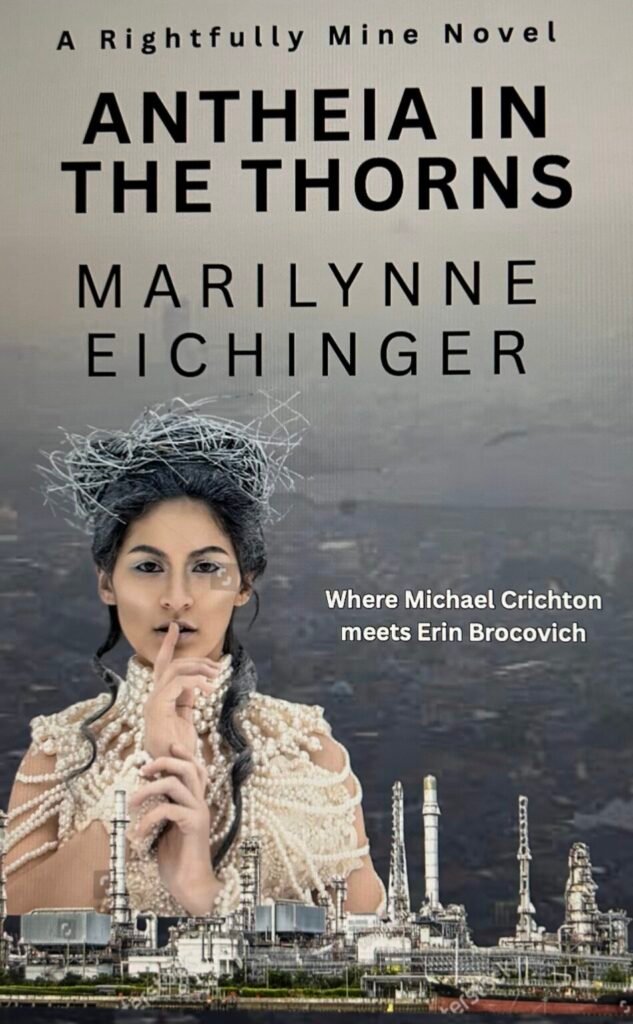
Part of writing a book is finding the right title and cover design, and Antheia in the Thorns, going on sale at the end of February, is no exception. Its early working title was The Cave, but after discovering dozens of books with the same name, I set out to find something more distinctive.

That search led me to Antheia, the Greek goddess of gardens and love. Imagining her caught in thorns felt like the perfect metaphor for an approaching environmental reckoning. Does it make you wonder what happened?

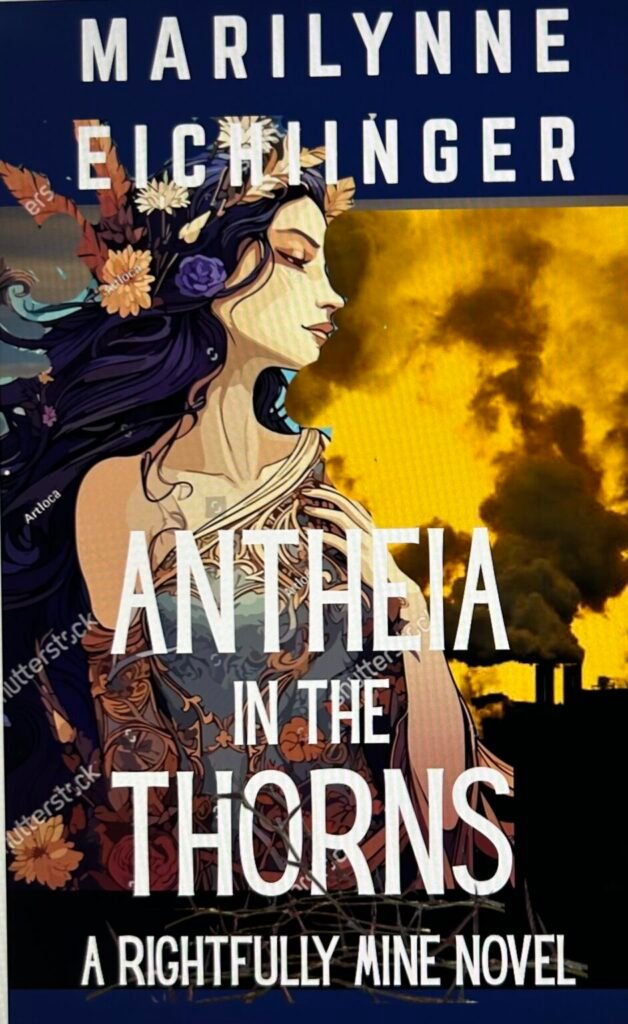
Below are four early cover designs that didn’t make the cut. The final design, created by Streetlight Graphics, will be unveiled next week. Between now and February 22, I hope to whet your appetite for the story behind the thorns.

A Scene Behind Antheia in the Thorns:When I began writing Antheia in the Thorns, I didn’t start with a thesis. I started with a scene.

In the chapter titled “Dying Embers,” the protagonist, Bear Stanton, sits on a curb in the early morning hours, watching smoke rise from what had once been Antheia’s headquarters. Firefighters are packing up their hoses. Reporters circle, microphones extended, eager for outrage or accusation. Somewhere inside the charred building are lost hard drives, children’s artwork, handwritten notes from tribal elders—things that will never make the news crawl.

What struck me as I wrote that scene wasn’t the fire itself, but the silence afterward. The way catastrophe becomes ordinary once the cameras leave. The way destruction is framed as spectacle rather than consequence.

That moment on the curb is fictional, but its emotional truth is not.

As I mentioned in my previous post,  I watched a NOVA program detailing how warming temperatures are destabilizing the Arctic, releasing methane, sinking cities, and accelerating flooding across the globe. These aren’t distant projections or worst-case scenarios. They are unfolding now, quietly, incrementally, often out of sight. When disaster doesn’t arrive with a single dramatic explosion, it’s easier to ignore.

In Antheia in the Thorns, the fire is not just an act of violence—it’s a message. It’s meant to intimidate, to erase evidence, to remind ordinary people how fragile their work is when it challenges powerful interests. That dynamic plays out repeatedly in real life, whether through lawsuits, regulatory pressure, misinformation campaigns, or the slow erosion of public trust in science.

Fiction allows me to place a human face on those forces. To show what it feels like to lose not only a building, but a sense of safety. To ask what happens when the cost of telling the truth becomes personal—and whether it’s still worth paying.

I don’t expect novels to change the world on their own. But I do believe stories can slow us down long enough to feel what headlines encourage us to skim past. If Antheia in the Thorns does anything, I hope it helps readers connect the data we’re shown every day to the lives quietly affected by it—and to the choices still within our control.

Sometimes, the most dangerous fires aren’t the ones that burn buildings, but the ones we pretend not to see.

The Water Factor, the first book in the Rightfully Mine Series, questions whether water should be considered a commodity, as it is now, or a human right. Antheia in the Thorns raises a similar question about air quality. The novel is available in ebook, paperback, and audio formats. It can be purchased on AMAZON, Barnes and Noble, and as an audiobook on Amazon, Audible, and iTunes.

Writing a book is a drawn-out process that includes searching for the right title and cover design. The following discusses a few of my blips on the way to releasing Antheia In The Thorns by February 22. https://www.eichingerfineart.com/blog/204684/countdown-to-publishing I hope you will help spread the word when it is released.

Countdown to Publishing

Part of writing a book is finding the right title and cover design, and Antheia in the Thorns, going on sale at the end of February, is no exception. Its early working title was The Cave, but after discovering dozens of books with the same name, I set out to find something more distinctive.

That search led me to Antheia, the Greek goddess of gardens and love. Imagining her caught in thorns felt like the perfect metaphor for an approaching environmental reckoning. Does it make you wonder what happened?

Below are four early cover designs that didn’t make the cut. The final design, created by Streetlight Graphics, will be unveiled next week. Between now and February 22, I hope to whet your appetite for the story behind the thorns.

A Scene Behind Antheia in the Thorns:When I began writing Antheia in the Thorns, I didn’t start with a thesis. I started with a scene.

In the chapter titled “Dying Embers,” the protagonist, Bear Stanton, sits on a curb in the early morning hours, watching smoke rise from what had once been Antheia’s headquarters. Firefighters are packing up their hoses. Reporters circle, microphones extended, eager for outrage or accusation. Somewhere inside the charred building are lost hard drives, children’s artwork, handwritten notes from tribal elders—things that will never make the news crawl.

What struck me as I wrote that scene wasn’t the fire itself, but the silence afterward. The way catastrophe becomes ordinary once the cameras leave. The way destruction is framed as spectacle rather than consequence.

That moment on the curb is fictional, but its emotional truth is not.

As I mentioned in my previous post,  I watched a NOVA program detailing how warming temperatures are destabilizing the Arctic, releasing methane, sinking cities, and accelerating flooding across the globe. These aren’t distant projections or worst-case scenarios. They are unfolding now, quietly, incrementally, often out of sight. When disaster doesn’t arrive with a single dramatic explosion, it’s easier to ignore.

In Antheia in the Thorns, the fire is not just an act of violence—it’s a message. It’s meant to intimidate, to erase evidence, to remind ordinary people how fragile their work is when it challenges powerful interests. That dynamic plays out repeatedly in real life, whether through lawsuits, regulatory pressure, misinformation campaigns, or the slow erosion of public trust in science.

Fiction allows me to place a human face on those forces. To show what it feels like to lose not only a building, but a sense of safety. To ask what happens when the cost of telling the truth becomes personal—and whether it’s still worth paying.

I don’t expect novels to change the world on their own. But I do believe stories can slow us down long enough to feel what headlines encourage us to skim past. If Antheia in the Thorns does anything, I hope it helps readers connect the data we’re shown every day to the lives quietly affected by it—and to the choices still within our control.

Sometimes, the most dangerous fires aren’t the ones that burn buildings, but the ones we pretend not to see.

The Water Factor, the first book in the Rightfully Mine Series, questions whether water should be considered a commodity, as it is now, or a human right. Antheia in the Thorns raises a similar question about air quality. The novel is available in ebook, paperback, and audio formats. It can be purchased on AMAZON, Barnes and Noble, and as an audiobook on Amazon, Audible, and iTunes.

Writing a book is a drawn-out process that includes searching for the right title and cover design. The following discusses a few of my blips on the way to releasing Antheia In The Thorns by February 22. https://www.eichingerfineart.com/blog/204684/countdown-to-publishing I hope you will help spread the word when it is released.

Sanity in an Era of Upheaval

WaterFactor 3D ALT ANGLE Bookcover Transparent Background

THE WATER FACTOR, A RIGHTFULLY MINE NOVEL, lets you peer into the near future to a time of water scarcity controls by corporate criminals.  The story is a gripping tale of water scarcity and corporate wrongdoing. The Water Factor is a Firebird International Award winner for best dystopian novel and a Literary Titan recipient for best thriller.  It is available in ebook, paperback, and audio formats. It can be purchased on AMAZON, Barnes and Noble, and as an audiobook on Amazon, Audible, and iTunes. Ask your bookstore to order a copy from Ingram. Please leave a review. 

She will enter the workforce wide-eyed and ready to give her all. What will she get in return?

Whatever happened to loyalty?

Wharton Business School aptly dubs the decline of loyalty, ’Shock and Awe for American Workers.’ There was a time when business owners didn’t escort employees out with a guard minutes after delivering news of their dismissal. If laid off for economic reasons, you would be rehired as soon as the economy bounced back. A symbiotic relationship fostered a social contract between management and workers. Skilled laborers who remained faithful to employers throughout their working years earned a decent wage and a pension in return for their hard work.

These fortunate people came of age after World War II when the collective mindset of ‘we’ was crucial to winning the war and dominating world trade. Job hopping was considered a taboo practice and a red flag for recruiters. Businesses encouraged employees to build lifelong relationships.

When you converse with a young worker today, you’ll notice their mindset is different. It primarily focuses on ‘I” rather than the collective. Youth prioritize individual rights, giving less thought to the broader society. They are engaged in a workforce that has doubled since 1970 because it now takes two earners to support a family, and older adults remain in the workforce longer. The shift in mindset had its seeds in the 1970s when economic issues led to widespread downsizing, forcing workers to compete for scarce job opportunities. It was a pivotal time, leading to a breakdown in the relationship between employees and employers. The result was reduced salaries, retirement benefits, healthcare, and other perks.

The rise in automation, technology, and globalization, coupled with the decline of unions, bolstered corporate power. In the new landscape, stockholders began to take precedence over other stakeholders, including customers and workers. The downsizing wave of the ‘70s escalated in the 1980s and 90s, with employers showing little interest in rehiring when the economy rebounded.

In today’s economy, new hires hesitate to commit themselves to a company, fearing the potential hurt it will cause when let go. They constantly  worry that each day might be their last and receive low salaries and minimal benefits under incompetent leaders who don’t recognize their accomplishments. Unsurprisingly, the American workforce is on the move, seeking greater flexibility in work schedules, more caring managers, and a better work-life balance.

The average number of jobs an individual has during their lifetime has skyrocketed to twelve, with twenty-nine percent changing fields completely. The change in the work environment since 1950 is dramatic. American workers are older, better educated, and more diverse in race and gender. Employment opportunities shifted to higher-skilled occupations, making it difficult for those with lower levels of education to find jobs. A staggering thirty-nine percent of college students are over twenty-five, further highlighting the instability in the job market and the search for meaning in work. When younger workers change careers, they look for more than a pay raise. They seek jobs that benefit the world, such as dealing with environmental concerns, healthcare, or helping underprivileged communities.

I worry about my grandchildren and whether they feel valued and if they will live fulfilling lives. Will they find challenges that will help them grow? Do they think their employment is worthwhile, and can they see how it fits into the fabric of human endeavors? Is their job stable enough to purchase and maintain a car and home without fear of losing them? And, will their salaries allow them to save enough to retire comfortably?

As shareholders pour money into AI, Robotics, and other advanced technologies, they should consider how the typical worker will manage in a world that doesn’t need them. Will it lead to more people without jobs living on the streets, and who will support them?

As a consumer, I wonder how long it will take before customers rebel at messages like,”We are experiencing a longer than usual wait time; go to our website for answers.” I am tired of being told to dial one for new service, two for parts, three for hours of operation, until ten when I’m directed to go online and talk to a chat operator. When fortunate enough to speak to a human being after waiting a half hour. In that case, the voice is heavily accented, incomprehensible, or the person doesn’t know the answer to my question.

How dehumanizing can businesses get? These practices certainly aren’t a way to retain a loyal customer, yet workers and consumers let it happen and accept impersonal treatment in the workplace and while shopping. Is more of this all we have to look forward to in a future with AI, or is it time to speak up and put an end to it?

________________________

Art is always for sale. Ellen: Wide Eyed and Ready is an acrylic on canvas painting, 20” x 16” x 2”,  Available for $ 495, includes shipping in the continental U.S. Purchase on my website or contact me at marilynne@eichingerfineart.com

Please share your experience about workplace loyalty in the comment area below.

WaterFactor 400x600 1
WaterFactor 400×600 1

In The Water Factor, the protagonist rejects his parents’ advice to study medicine or law. He attends a job fair, where he is convinced that water is the future growth industry,  and access to it will be the most significant issue his generation will confront. When he takes a job as a truck driver, delivering water to rural communities, he sees how far corporations will go to deprive people of a resource that was rightfully theirs. Young graduates would do well to examine the ramifications of the work they sign up to do.

The Water Factor is a Firefly International Award-winning novel in paperback, ebook, and audiobook versions on AMAZON, Barnes and Noble, Audible, and iTunes.


References:

Podcast (2017) The End of Loyalty: Shock and Awe for Many American Workers. Knowledge at Wharton. Retrieved from https://knowledge.wharton.upenn.edu/podcast/knowledge-at-wharton-podcast/the-end-of-loyalty-shock-and-awe-for-many-american-workers/

Website (2024) 17 Remarkable Career Change Statistics to Know. Apollo Technical. Retrieved from https://www.apollotechnical.com/career-change-statistics/

Naranjoy, A. & Vizcaino, J. (2017) Shifting Times: The Evolution of the American Workplace. Federal Reserve Bank of St. Louis. Retrieved from https://www.stlouisfed.org/publications/regional-economist/fourth-quarter-2017/evolution-american-workplace

Website (2024) Employment Trends by Generation: How Often Do People Change Jobs? PeoplePath. Retrieved from https://peoplepath.com/blog/employment-trends-by-generation-how-often-do-people-change-jobs/

Lisa, A. (2019) 60 Ways the Workforce has Changed in 50 Years. Stacker. Retrieved from https://stacker.com/business-economy/50-ways-workforce-has-changed-50-years