Creating Passion in the Next Generation

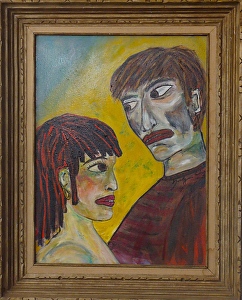
Last Night’s Dream
  Discovering your dreams and making them come true develops a power that comes from living with purpose. 

Creating  Passion in the Next Generation

When my grandson was seven, his main interest was around Star Wars. That year his parents gave him a Star Wars themed party which was attended by children ready to fight duels with their laser swards. Though every gift he opened had something to do with Star Wars, no two were alike.  By the end of the day he had enough props to set up his own movie studio and enough themed science kits to turn him into a space scientist.

Observing him become immersed in something he loved to do made me happy for it indicated that he would become an engaged adult. Feeling passion is addictive, similar to being on drugs without negative consequences. My grandson’s commitment provided a focus for learning. It required him to read, to concentrate, to create, and to communicate.  I believe that an important job of parenting involves helping your child find passion by becoming totally hooked on something that has “legs.” By that I mean inspiring a willingness to tackle an engrossing, challenging activity. I don’t think it makes much difference what the project is as long as it is an absorbing one.

In my grandson’s case, interest in Star Wars improved his skills in reading. He was too impatient to wait for his parents to read to him so he pushed himself to learn more on his own. Neighborhood children used to meet in his basement conceiving plots that insured the future of planetary peace. Before performing for their parents and siblings, they had to sequence  stories, memorized parts, and practice speaking to an audience. They also made scenery and  handed out advertising leaflets. I could not have designed a better learning experience if I had been hired to do so. 

Passion is a gift that combines spirit, mind and body enabling life to be experienced in all of its richness. It involves setting goals around something important. Having passion helps overcome obstacles and draws attention to what should be and what can be done. There will always be highs and lows in working towards a goal, but when you are passionate about what you’re doing you’ll look past the dull days and become more likely to conceive creative ways to move on.

Passion is not something to fear, though for a variety of reasons many people do. It’s easy to become overwhelmed and check out before beginning a journey, so it’s important to when starting to set incremental goals, to manage time strategically, and to maintain balance. I’ve known people who never pursued their dreams because they feared the time commitment. I know others who were afraid of failure and some who were fearful  of how success might change them.

Embracing passion is engaging in adventure. It’s opening your mind to let sparks fly. Finding an interest and intensifying your involvement in it is the best way to dissipate fear. Doubts can’t be fed for they will smother fires that glow within. Talk you doubts, write them down and investigate where they came from to help them go away. 

As parent and educator, I’ve always believed that helping children find and develop passion will aid society in the long run.  Finding cures for debilitating diseases, writing a new symphony, fighting global warming and taking political action involves giving time, energy and soul to a cause. Passionate people make things happen. As adults, we can provide our children with engrossing opportunities that engender excitement and give pleasure so as adults they will crave to arouse similar feelings throughout their lives.

References: 

Harmer, S. (2-19) 10 Reasons why Following Your Passion is More Important than Money. Lifehack. retrieved from https://www.lifehack.org/articles/money/10-reasons-why-following-your-passion-more-important-than-money.html

Carver,<. (2019) Why you Need Passion to Reach Your Goals. The Chopra Center. retrieved from https://search.yahoo.com/yhs/search;_ylt=AwrWpywK7FZd3DUAAB8PxQt.;_ylu=X3oDMTEza3NiY3RnBGNvbG8DZ3ExBHBvcwMxBHZ0aWQDBHNlYwNwYWdpbmF0aW9u?p=Achieving+passion&type=cl_appfocus531_cr&fr2=sb-top&hspart=adk&hsimp=yhs-adk_sbnt&param1=20190624&param2=fb58e1e6-408c-4546-bdb7-f62c02cea1da&param3=classifieds_%7EUS%7Eappfocus531&param4=4847-bb9%7EChrome%7Ebrian+norris+about+passion+flower%7E7B1F017D4CDFA6D6A9BB35F8264A536C&fr=yhs-adk-adk_sbnt&b=11&pz=10&bct=0&xargs=0

Carter,S (2013) The Power of Passion. Psychology Today. retrieved from https://www.psychologytoday.com/us/blog/high-octane-women/201304/the-power-passion

Flaxington,B.  (2018) Finding Your Passion. Psychology Today. Retrieved from https://www.psychologytoday.com/us/blog/understand-other-people/201806/finding-your-passion

Art is always for sale. Contact me at marilynne@eichingerfineart.com

Last Night’s Dream:  Acrylic on Canvas, 26” x 32” /$498 

I look forwrad to seeing your comments below. 

#Militaryspending: A Political No No

NRA Lobbying expenditures are a hot topic of political contention, but there’s a more powerful group of lobbyists that politicians rarely mention. The NRA’s $1,690.000 annual outlay is dwarfed by the amount spent by military contractors to influence members of congress. Until this week, I never paid attention to details and ramifications of the military’s budget, though I’ve often heard soundbites about its magnitude. The U.S. spends 10 times more for defense than any other country. We have approximately 800 bases in 80 countries which doesn’t include troops stationed at embassies and missions (Russia has 26-40, The UK, France, and Turkey have 10 each).  There are real concerns we need to address such as terrorism, cyberattacks, media lies, and drugs, but I wonder how effective allocated funds are at keeping us out of harms way and free from manipulation. Newspapers are full of the explosions caused by unsavory individuals.

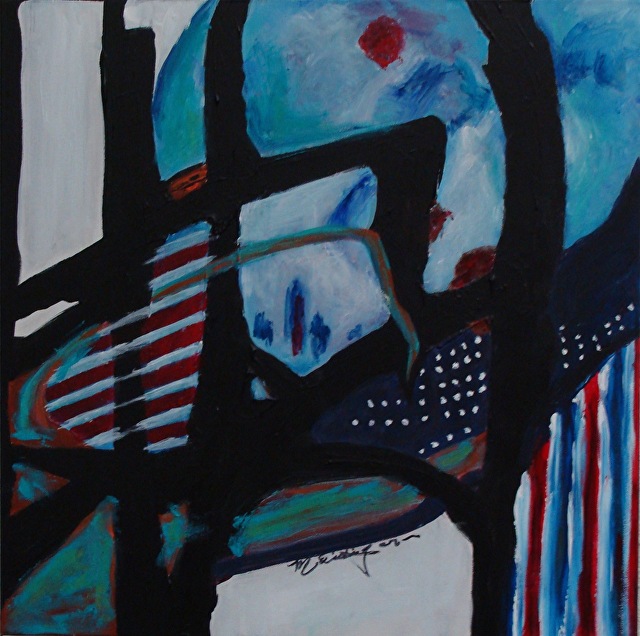
Heaven and Beyond
The universe, earth and human kind are similar in that explosions and collisions occur frequently without end.

A few facts and then a few questions:

The military budget for 2019 is $989 billion dollars. It is the second largest item in the federal budget, after Social Security. We spend more on defense than the next nine countries combined. $576 billion goes to the base budget of the Department of Defense (DoD), $ 174 billion goes to DoD in overseas contingency operations to fight the Islamic State Group. The remainder goes to agencies that protect the nation— $93.1 billion to Veterans affairs, $51.7 billion to Homeland Security, $42.8 billion to the State Department, $16.5 billion to the National Nuclear Security Administration, and $26.1 billion for FBI and cybersecurity. 

The base budget pays for day-to-day operations at DoD while Overseas Contingency Operations pays for wars and overseas operations. The overseas contingency is not an official part of the budget and therefore not subject to sequestration. It paid for the War on Terror including the wars in Iraq and Afghanistan and our involvement in Syria and Yemen.

 Since 2003 when the war in Iraq started, nearly 5,000 U.S. service members died and 32,226 were wounded.  The war George Bush started, caused the death of approximately 405,000 civilians with many more maimed. It is difficult to get an exact count, but it is estimated that 6 in 10 civilian deaths were at the hands of coalition forces due to airstrikes. It is difficult to say what good was accomplished by the war. 

There is significant growth in the use of private military companies to fight wars though their actions are poorly supervised. The United States and The U.K are the only nations not to sign the U.N. Mercenary Convention. We hire private contractors to train armed forces of developing nations, provide armed security for government agencies, administer food services, and logistics, provide insurance, medical service, and intelligence and conduct research into military related technologies. 

Mercenary armies are beholden to shareholders first and to the governments that employ them second.  There are “no standards of conduct” for mercenaries because  the companies they work for are not forced to abide by regulations set by the governments that employ them.  Mercenaries can come from any country. They are usually paid lower salaries than the men and women in our military. The United States complains about manufacturing going to countries willing to pay low salaries, yet I hear little about the way private military contractors take away jobs from US citizens.

Private military contractors do not recognize United Nations Agreements or the Geneva Convention. Their militias cause conflicts all over the globe. Companies like Blackwater (today known as Academi) is well known for committing atrocities and for their involvement in CIA death squads.  Military contractors use black mail to get what they want and conduct shady diamond dealings. They are involved with gold mining, the drug trade, and oil drilling. They abuse civilians and freely act above the law. 

According to the American Conservative, nearly half the Pentagon budget ($304 billion  in 2017) goes to Private Contractors. When the budget comes before congress each year, arguments ignore that fact. They are simply told that more money is needed to support our troops despite the fact the budget increases increases likely go to line the pockets of company executives, useless overhead, cost overruns on weapons systems and military hardware that is not needed and often performs poorly.  The presidents of 5 companies were paid over $96 million dollars last year. Private companies spend excessive amounts on political contributions. In 2017, the defense sector spent $64,564,985 on lobbying according to the Center for Responsive Politics.

My readings about the military, raised many questions. I hope you will respond and provide insight with your answers. 

  1. How much of o the money awarded to military contractors is actually used to defend the country as opposed to filling private bank accounts?
  2. Is a robust military the best way to create jobs or would money the money we spend on defense create more jobs by fixing and maintaining our infrastructure?
  3. Why hire private contractors for food and logistics services rather than use our own recruits?
  4. Are private contractors the predators that President Dwight D. Eisenhower warned us about?
  5. Does it concern you that countries like Peru,Ethiopia and other third world countries provide many of the mercenaries fighting on our behalf?
  6. Are you dismayed that private contractors don’t adhere to the international laws of military engagement agreed to by sovereign nations?
  7. Lastly, please let me know what good came out of the wars the US participated in after WWII.

It is time to bring details of the military budget into the political debates. The subject should not be taboo nor should financial obligations be hidden. Imagine what we could accomplish by cutting 15 percent ($45.6 billion) of the military contracts awarded private companies. 

Resources:

National Rifle Assn. OpenSecrets.org .retrieved from https://www.opensecrets.org/lobby/clientsum.php?id=d000000082

Slater, A. (2018) The US Has Military Bases in 80 Countries. The Nation. https://www.thenation.com/article/the-us-has-military-bases-in-172-countries-all-of-them-must-close/

Number of U.S.Soldiers killed int eh Iraq War. Statistics. https://www.statista.com/statistics/263798/american-soldiers-killed-in-iraq/

Amadeo,K. (2019) US Military Budget Components, Challenges, and Growth. The Balance. retrieved from https://www.thebalance.com/u-s-military-budget-components-challenges-growth-3306320

Private Military Companies. Mercenary Jobs.  retrieved from http://www.mercenaryjobs.org/private-military-companies.html

Poisuo, p (2014) 10 Frightening Facts about Private Military Companies. Listverse. retrieved from https://listverse.com/2014/01/07/11-frightening-facts-about-private-military-companies/

Hartung, W.(2017) Nearly Half the Pentagon Budget goes to The American Conservative . retrieved from  https://www.theamericanconservative.com/articleW. 

Mashal, Mujib. (2019) Afghan and U.S. Forces Blamed for Killing More Civilians This Year Than Taliban Have. The New York Times. retrieved from https://www.nytimes.com/2019/07/30/world/asia/afghanistan-civilian-casualties.html

Bump, P. (2008) 15 years after the Iraq War began, the death toll is still murky. Washington Post. retrieved from https://www.washingtonpost.com/news/politics/wp/2018/03/20/15-years-after-it-began-the-death-toll-from-the-iraq-war-is-still-murky/?utm_term=.c7f9a1071a9f

Art is always for sale. Contact me at marilynne@eichingerfineart.com.

Heaven and Beyond

Acrylic on Canvas, Black wood frame/ 20” x 24”/ $ 399

I look forward to your comments.

Festival Wisdom

#Festivalwisdom. People attend festivals for relaxation and a refreshing escape from daily activities. Some attend hoping for a miracle that provides insight and direction.
Eastern Oregon Contemplative
Oregon’s High Desert is a special blend of plains and mountains. I never tire of traveling through it’s ever changing beauty. Last week I spent four days partying on a ranch near Grass Valley. Mount Hood formed a distant backdrop to our activities.

#FestivalWisdom

After four days of frolicking, dancing, swimming and talking to visitors in my “Do You Need A Mother Booth?” I returned home from Shift Festival impressed with the dreams, creativity, and desires young adults have to live purposefully in a loving community. Approximately 1300 science, engineering and art buffs who enjoy techno music and electrified art attended. They were well educated, multi-generational, culturally diverse adults who averaged thirty-five years.  Most are happily employed, but a surprisingly large number are upset about the direction their journey is taking them.

My “Mother Booth” was a magnet for those trapped by a reality they want to shed. It attracted dreamers not knowing how to attain their goals and college graduates unable to find jobs in their fields. I met those struggling to overcome the trauma of war and of losing a job or love one to illness or divorce. I heard confused voices worried by overpopulation, environmental degradation, nationalist hatred and greed. 

College debt forced many graduates to take employment with Uber, Lift or Amazon. Some became barristers at coffee shops or served tables in restaurants. It was not what they wanted to be doing. At thirty they gave up on marriage and bringing children into a world in disarray. Instead they seek escape from what they are doing by floating from concert to party to festival where they take drugs in a search for community and meaning. 

I left the festival saddened after listening to bright, intelligent people with so little hope for their future and realized what a difficult a struggle they do have before them. They face a different world than my friends and I did as young adults. We were a white privileged class who married during our twenties and raised children who along with our jobs, defined our purpose. Family provided meaning and kept us employed in work we grew with over the years. We were employed long enough to develop friends and lived in neighborhoods that contributed to our sense of belonging.

It wasn’t until the sixties and seventies that we became aware of social inequalities and decided to do something about it.  Working to change the status quo added to the purpose of our lives. We joined the civil rights and women’s movements and boycotted grapes to help farm workers. We marched against the Vietnam war and held rallies for a woman’s right to choose. We were loving, fought for justice and were empowered by our ability to bring about change. Most of all, we were passionate and alive with ambition and purpose.

I look into the eyes of young adults, today, hoping to see determination and desire to improve humanity. All too often I see apathy, fear and burn-out from trying to survive. Even those with adequate salaries falter in mid-life to ask why continue to work at hollow endeavors. Yet, though they speak of injustice, they don’t take action for change. They continue to be underpaid teachers, social workers, nurses, waiters, farmers, and scientists and crave to be part of the the 1 percent of high paid lawyers, developers, bankers and media executives. During free hours they escape to social media sites and entertainment while complaining that their existence has no purpose. 

Well . . . too bad. Bringing about change means getting involve and grappling with the problems of our time. In a world of automation, overpopulation, and robots there may never be enough “meaningful’ jobs for everyone. However, that does not mean there are not plenty of opportunities to leave your mark and find purpose. There is much that needs to be done by those willing to put in the time an effort to bring about change.

I believe that three undertakings give life meaningful. The first involves  staying curious and continuing to learn, grow and try new things. Second is to work for social justice and to leave the world a better place that it was when you arrived. Third is to be kind, compassionate, and willing to help family, friends and neighbors. Those following these precepts will never be lonely but will continue to dream, feel connected and maintain purpose throughout their lives. They will know life as a journey and enjoy its many rewards.

Eastern Oregon Contemplative by Marilynne Eichinger

Acrylic on Canvas / Gold Frame / 21’ by 25” / $389 

Works of art are always for sale. Contact me at marilynne@echingerfineart.com

Words! Words! #CurseWords!

First Fight

First Fight                                    

  People  curse when angry yet use the same words trying to be funny. 

“What’s in a name? that which we call a rose

  By Any Other Name would smell as sweet”

         By William Shakespeare

When I was a young child, my mother washed my mouth with soap whenever I uttered a curse word. We lived in a lower-class neighborhood, and according to Mom, only lowlife used obscenities. Therefore, I never used profanities, and when I heard others doing so, I thought poorly of them. Those I associate with don’t curse publicly, though they may do so in the privacy of their own homes. 

Another lesson learned when first married,  was that words slung in anger, become imbedded in the target’s memory. Hurts and stings are difficult to erase and be forgotten. I remember having a discussion about fighting with a psychologist friend who was also newly married. He believed spouses should express anger fully, in every dimension short of hitting. Shouting, cursing and slinging hurtful half-truths was healthy as far as my friend was concerned.  I, argued the opposite, believing that words said in anger can’t be taken back. It wasn’t long before he and his wife divorced. Today, an increasing number of people participate in non-violent communication classes to learn ways to argue productively.

I am currently writing my first fictional novel with characters from many walks of life. In my writer’s critique group, members suggest I use expletives in my dialogues to express anger. I find this difficult to do since curse words do not come naturally.

I never understood why audiences laugh when comedians say fuck or shit. To me it seems like a cheep excuse for a joke by performers who do not know how to laugh cleverly at life’s foibles.

Children say “naughty” words as a way of showing their friends that they know something they aren’t supposed know. They find it fun to fool their parents, a feeling that stays with them into adulthood. And so, as they age, they continue to react as youngsters who laugh bathroom jokes and forbidden language. Laughter disguises their embarrassment with natural bodily functions.

Over the centuries, thousands of words have been coined to disguise body parts and functions considered private. Following are a few of the hundreds of words that disguise penis, vagina, buttocks, and where babies come from.

Penis —Doodle, Spindle, Fiddle, Pin, Bollocks, Knick-Knack, Child-getter, Bayonet, Cracksman, Cuckoo, Bush-whacker, Majesty, Charmer, Tickle-Faggot, Dingle, Cob, Pencil, Hot member, Nightstick, Joystick, Dingbat, Tiny Tim, Jurassic Pork, Dora the explorer, Tuna torpedo, Cave hunter, Woody Womb Pecker.

Vagina —Cunt, Pussy, Twat, Clit, House, Casse, Pie-corner, Porridge, Coffer,  Mrs. Fubbs’ parlor, Thatched cottage, Lady’s low toupee, Nature’s treasury, Nub, Canal, Her essence, Slit, Wet curls, Scabbard, Mons, Sheath, Sperm bottle, Goop chute, Cookie, Penis glove, Muff, Fish Lips, Beaver, Kitty, Pink panther, Banana basket, Coin purse, Hot pocket, Funny Furnace, Golden Palace, Holiest of holies.

Buttocks —Bottom, Behind, Butt, Booty, Fanny keister, Tush, Tail, Buns, Caboose, Posterior, Sit-upon, Steam bum, Arse, Duff, Heinie, Ass, Prat.

Ever wonder where babies come from? They come from places I never thought possible.

 a) Babies are made when mommies and daddies have too much love. When it overflows, God gives the family a baby to love.

b) We wanted a baby so mommy grew one in her belly.

c) Babies grows in the mom’s bellybutton and the doctor cuts the baby out.

d) When two people love each other the dad buys a pumpkin seed and gives it to the mom. Then her stomach gets big like a pumpkin.

e) The doctor brings the baby to the front door.

f) Babies come from apple seeds.

g) Babies come when mommies and daddies kiss for a very, very long time.

h) Babies come from eggs that pop out of a mommy’s butt.

It’s difficult not to laugh at some of these answers and think them “cute.” Yet, it is not a good idea to lead children astray with false answers. A truthful straightforward response, is the healthier way to go.

Children need to know the correct names of body parts. An abused child should be able to explain accurately what happened to a trusted adult. Children who use pet names can confuse medical care givers. They are less credible witnesses when  justice is pursued through the courts.  A child who says, “Stop! Don’t touch my vagina!” signals to a potential abuser that he or she is empowered with body safety knowledge. Pedophiles are wary of children who use anatomical names because they know that their parents will not dismiss a touch to private parts as harmless fun. 

Speaking openly and accurately about the body, teaches children they have ownership over it. Knowledge provides a positive boost to self image, increases confidence, and demonstrates that parents are trustworthy, easily approachable sources of information about sensitive issues. When a child who knows anatomically correct names, suddenly starts using pet terms, it becomes a red flag causing adults to investigate.  

Today’s parenting classes, child development books, and pediatricians encourage parents to teach anatomically correct words to their children. The practice is so wide spread that according to several classroom teachers I know, children no laugh when they’re used. Honest language, along with anti-bullying and non-violent communication programs in schools discourage use of foul language. They promote effective ways of disagreeing that hopefully will impact their generation.  I imagine comedians of the future are going to have to come up with novel ways , other than cursing to get a laugh from their audiences. 

     References:

A Rose by any Other Tame. (43-44, Act-II, Scene-II of Romeo and Juliet). Literary Devices. retrieved from https://literarydevices.net/a-rose-by-any-other-name/

     Body Parts: Find Nicknames : https://www.findnicknames.com/blog/nicknames-for-body-parts/

     Sanders, J (2017)Eight Reasons Not to Cally Your CHild’s Genitals ‘Pet’ Names. Huffpost.com, retrieved from   https://www.huffpost.com/entry/8-reasons-not-to-call-your-childs-genitals-pet-names_b_58743186e4b0eb9e49bfbec3

Art Work is always for sale. Contact me at Marilynne@eichingerfineart.com.

     The Fight : Acrylic on canvas/ 36” x 25”/ $ 325

Fractured America

Fractured America

Last year I painted Fractured America to share with my followers on July 4th. At the time, I wrote about worrisome trends plaguing the nation.  This weekend, I looked back to see if the fractures I spoke of started to heal.. Unfortunately, what I saw was not good. Political divisions are wider and deeper than ever.

Fractured America. . . Still?

What is America? Is it a dream, a figment of our imagination? What do Americans stand for? Are our values shared? Does society still cherish free speech and applaud investigative reporters? 

As a child I sang America the Beautiful and This Land is Your Land with gusto. I honored the words written on the Statue of Liberty welcoming those yearning to be free, believed in democracy and embraced ideals written into the Constitution and Bill of Rights . . .a nd I still do. Though my parents were divided in their political leanings, I was never pushed in either direction. Their differences helped me think through issues of the day and come to my own conclusions. My parents believed in compromise, in working across the isle to make the American experiment succeed. Everyone knew that integrating immigrants from different countries, religions, racial identities, customs and culinary preferences was not an easy task. But we believed it could be done. The idea of a melting pot was strong, and many us strived to make it a reality.

That’s not to say that twentieth century America was perfect… far from it. However, most people espoused the idea of a free press and trusted accounts by investigative reporters. They kept us abreast of the fight for racial equality, Japanese internment camps, and the excesses of war. They taught us about the Mafia and gangs controlling the sex trade, gambling, and the free flow of drugs. We lived through political upheaval caused by men like J. Edgar Hoover and McCarthy, excesses in the labor movement, and  growth of the military-industrial complex.  Americans dropped nuclear bombs on foreign soil and became afraid the same thing would happen to them. Fear and greed spurred an arms race, built a society based on oil, clearcut forests, polluted waterways, overfished rivers, and built gated mega mansions for the wealthy.  

But though we did terrible things to the environment and fellow human beings, a tide of activists realized that what we were doing was unsustainable and began to change the status quo. They supported affordable housing and a safety net through social security, medicaid for the poor, medicare for seniors, workers compensation and unemployment benefits. Isolationism was abandoned as we took our place on the world stage and formed the United Nations. We designed the Marshall plan to help war torn countries become strong in their own right. The United States participated in NATO, formed coalitions to fight the Taliban in Afghanistan, and developed treaties around trade and disarmament. Americans applauded the nations who joined together to solve the ozone crisis and build an international space station. We came to the aid of bereft countries decimated by natural disaster and war and helped returning vets purchase property and attend college so that they would prosper. Our citizens cared about ordinary people.

I grew up believing the dream. I thought by working hard, raising good children, living according to the commandments, and accepting personal responsibility for those less fortunate, that my life would have meaning. I trusted that I was one among many improving the world for future generations. 

Over the past few years, my beliefs (not my hopes) shattered. The values that built this great nation, my country, went into hiding. My America was suddenly allowing bullies, bigots, white supremacists, narcissists and a power elite to take over center stage. Audience became immune to poverty, mental illness, homelessness, and children separated from parents running from war, violence, and hunger with the  hope of providing them with a better life. 

This new American willingly ignores scientific evidence about climate crisis and overpopulation. Fourteen of its states passed laws against abortion yet made no plans to pay for the 2.5 million unwanted children likely to be born if abortion becomes legal. There’s little mention of the  reenergized the arms race or talk of a president who befriends dictators while alienating our allies. It allowed fascism (corporate socialism) to replace social welfare, and permit companies too big to fail to rule the economy. It permits televangelists who preach miracles and Armageddon to thousands to become obscenely wealthy off the backs of the poor and working class. 

This July 4th we are more fractured than ever by partisan politics.  And though divisiveness has intensified, a majority of people continue to turn their heads away from the reality of the times.  They choose not to investigate what’s going on behind the rhetoric that comes out of Washington. Ignorance is preferred over worry and activism which demands picketing, speaking out and protesting. We no longer live in America the Beautiful. It’s flooding, burning down losing its coastline. This land is no longer my land, nor is it your land. ($80 for an America the Beautiful Pass to National Parks, mega dollars for property taxes and homeowner fees that make difficult for the middle class to own a house. Chinese investors spent $300 billion purchasing property between 2010 and 2015.) 

We can not afford to stay apathetic if we want America to stay great. We were given the right to come out of hiding, to share viewpoints and to vote, but if people don’t use that right, it is meaningless. But, we must listen to each other’s concerns, help one another succeed, and be willing to compromise.  Fractures have widened and deepened over the past year,increasing the risk that poor and middle class people will fall in.

Following is Martin Neimier’s poem written after WWII.

First they came for the socialists, and I did not speak out—

     Because I was not a socialist.

Then they came for the trade unionists, and I did not speak out—

     Because I was not a trade unionist.

Then they came for the Jews, and I did not speak out—

Then they came for me—and there was no one left to speak for me.

     Because I was not a Jew.

Don’t let this happen here.  Speak out!

References:

Martin, J (2015) Making Money Off Miracles: the Gospel of Televangelists. retrieved from https://gawker.com/making-money-off-miracles-the-gospel-of-televangelists-1725330875

Berman, N ( 2016) Dissecting the Multi Billion Dollar Business of Televangelism. Money Inc. retrieved from  https://moneyinc.com/dissecting-multi-billion-dollar-business-televangelism/

MacKinnon, A. (2019) What Actually Happens when a Country Bans Abortion. Foreignpolicy.com.  retrieved from https://foreignpolicy.com/2019/05/16/what-actually-happens-when-a-country-bans-abortion-romania-alabama/

Reuters (2016) Chinese Investors have spent $300 billion on US property, Study fFnds. retrieved from  https://www.cnbc.com/2016/05/16/chinese-investors-have-spent-300-billion-on-us-property-mbs-rosen-study-finds.html

The 2.5 million unwanted children (over ten years) likely to be born if abortion becomes legal came from multiplying our current population (approximately 329 million ) with information out of  Romania, a country of nineteen million people that made abortion illegal for a period of ten years. 

Art is always for sale. Contact me at Marilynne@eichingerfineart.com

Fractured America, Oil on deep canvas, 24” x 24”/ $425.

Please comment below.


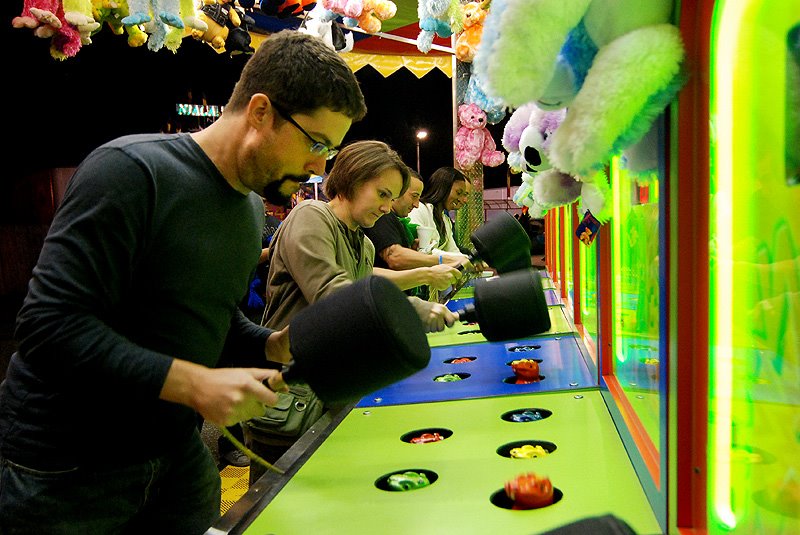
Whack a mole

Whack a mole

  View from a Bridge 
What good is beautiful landscape, great architecture, and city design if the people who walk the street trash the environment?

Wham! Bam! Don’t you wish it was that easy to get rid of decisions you thought were decided forever? I am continuously surprised watching society revisit the same issues over and over again without making progress. I keep thinking we’re moving forward only to see well considered ideas erode to push us backwards. The following are a few items I that were once behind us.

Trashing Neighborhoods. Whack! There was a time when the streets of our cities was littered with trash. People thought nothing of throwing cigarette and gum wrappers on the ground and out car windows. And then, in 1965, came Lady Bird Johnson with a campaign to clean up America. She started working on beautifying D.C. before taking her mission nationwide. She believed that a cleaner, more beautiful country would calm people and bring them together. Her efforts had some success, and for years people picked up after themselves. Now there is a new wave of litterers who trash and mar our streets, reminding me of third world country slums. Bam! Hit it down! Let’s restore Johnson’s original goal and beautify our cities, clean up trash, and border roadways with natural vegetation.. 

Abortion.  Whack!  I thought that topic was put to rest 50 years ago. Our citizens agreed that women had rights to make decisions about their own bodies. It wasn’t up to the government to interfere in conversations that belonged in the doctor’s office and family living rooms.The current rush to pass abortion bills and revisit the issue, reverses years of discussion, research and agreement. It returns women to seeking back room abortions, abandoning thousands of unwanted infants wto a life of poverty and crime. It divides the nation by putting us on vitriolic sides, that makes neighbors  hate each other. Bam! Hit it down.

Low income housing. Whack! There was a time when poor people didn’t wander  the streets of America? Through HUD and other social services we made sure \all citizens received a subsidy insuring they were housed. Over the last two years, the White House has directly attacked our efforts to house the poor. They are now calling for a 10.25 billion dollar reduction in funds for public housing assistance, partnership programs, housing for persons with disabilities and the elderly.  These budget cuts follow on last year’s push to slash eighteen percent of HUD’s budget despite studies, like one done by the University of North Carolina, showing it is significantly cheaper to house the homeless than leave them on the streets. Bam! Hit it down!

Nuclear Proliferation. Whack! Though not perfect, international steps were made to reduce nuclear weapons. Treaties with Russia and Iran were hailed a milestones. Stopping North Korea from atomic prowess was a high priority. Over the last two years we’ve pulled out of agreements with Russia and Iran and are playing footsie with a North Korea dictator. We have begun a new arms race. I remember years of fear when schoolchildren were taught to take shelter under their desks in case of a nuclear attack. Why is that nonsense happening again?  Bam! Hit it down!

Prison Reform. Whack!  Since our country’s beginning, prison reformers have struggled with how to punish criminals while preserving their humanity, how to protect the public while allowing prisoners to renter society and how to satisfy the desire of victims for justice and revenge. Americans view incarceration as just punishment. It takes away personal freedoms while protecting the public.The problem is that strict punishment and long sentences don’t stop people from committing crimes. It does not increase public safety but it does cost society money. The three strikes and you’re out crime law has blossomed prisons with low level criminals (mostly marijuana smokers) who were disproportionately African American. When released they remain a burden to society. Bam! Hit it down! The current administration is trying to bring about reform by placing prisoners closer to their families, reducing unfair sentences, giving federal judges more discretion in low-level cases and limiting some mandatory minimum sentences. It is a beginning, but the federal system accounts for only 10 percent of the prison system as a whole. Let’s start working on reforms within the states and get rid of private companies managing prisons. Bam! Hit it down! Fight for decarceration.

Climate Change and Global Warming. Whack!  When did our citizens adopt such uneducated, uncaring and destructive outlooks about the environment. For years scientists spoke of the disaster humankind was bringing on itself through carbon emissions and other pollutants released in the atmosphere. Nations of the world came together to get rid of chloroflourocarbons and close the Ozone hole. Why can’t we do the same to solve global warming. The Paris Climate accord was an excellent beginning, yet the United States pulled out. Deniers are either lazy, greedy or uneducated. Bam! Hit it down! Human beings were given a brain. We’re made to think, solve problems, and preserve the planet and our very existence.

There are many other subjects that see-saw their way into the news and family discussions. Please share a few on my blog site that bother you.  

References

(2019) No New Housing:Impact of the Trump 2020 HUD Budget. Affordable Housing, retrieved from https://affordablehousingonline.com/fy20-hud-budget-cuts

McKay, T (2014) Study Reveals it Costs Less to Give the Homeless Housing Than Leave Them on the Street. MIC. Retrieved from https://www.mic.com/articles/86251/study-reveals-it-costs-less-to-give-the-homeless-housing-than-to-leave-them-on-the-street

Gale,T (2007) Prison Reform Movement. Encyclopedia.com. retrieved from https://www.encyclopedia.com/social-sciences/news-wires-white-papers-and-books/prison-reform-movement

Berger, D. (2019) “Prison Reform” Is Not Enough. In 2019 Let’s fight for Decarceration. Trending. retrieved from https://truthout.org/articles/prison-reform-is-not-enough-in-2019-lets-fight-for-decarceration/

Global Climate Change. (2019() NASA. retrieved from website at  https://climate.nasa.gov/

Lady Bird Johnson. Portrait of a First Lady. OPB. retried from  https://www.pbs.org/ladybird/shattereddreams/shattereddreams_report.html

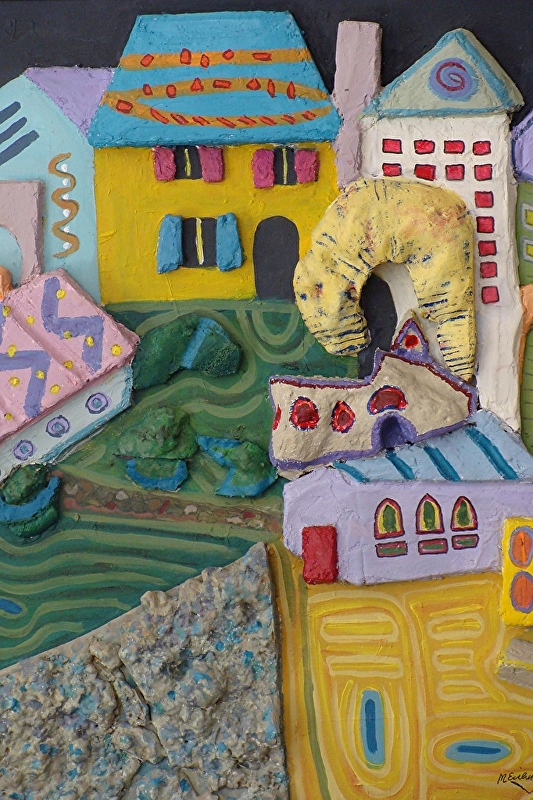
Art is always for sale. Contact me at Marilynne@eichingerfineart.com.      View from a Bridge     mixed media 32″ x 22″ x 3 D picture$599.00 USD

The Happiness Business

For Portland area bookworms: Mark your calendar and join me on June 14th.  

  Adapted from Lives of Museum Junkies

The Happiness Business: Playful Learning is Good

What is the secret of life? This question is an easy one for me to answer: happiness, of course. I am not talking about giddy-happy like you might feel if you won the lottery but rather calm-happy, producing a general sense of well-being.  The Greeks described happiness as the joy we feel moving towards our potential. It is a process and not an end in itself.

Museum professionals are in the happiness business. Parents too are in the happiness 2013 article in the Huffington Post, Carolyn Gregoire reported on a seventy-five-year-old Harvard study that explored secrets to a fulfilling life. What researchers discovered was that most people rated love first and happiness a close second to finding fulfillment. Yet experiencing  joy requires making connections and finding challenges that provide new perspectives. The process is one of problem solving, a creative activity that produces feelings of well-being. What researchers learned may seem obvious, but it doesn’t make it less true.

 Philosophers as ancient as Aristotle, as contemporary as the Dalai Lama, and as scientific as University of California professor, researcher, and author Sonja Lyubomirsk wrote in The How of Happiness: A Scientific Approach to Getting the Life You Want all agree that happiness and contentment are primary goals to work towards for life to have meaningfu. Learning how to do reach this state of well being should start early with good parenting.

It begins when children are given opportunities to play freely, letting their imaginations flow. When my children were young, they loved to dress up. I salvaged a cardboard washing machine box and filled it with old nightgowns, prom dresses, suits, ties, scarves, swords, hats and crowns, stethoscopes, homemade armor and makeup. As many as eight youngsters would assemble in our garage to don costumes before parading around the neighborhood feeling like royalty, Hollywood sirens, or superheroes. This type activity, with no rules or regulations, provided a pleasurable way to engage in creative storytelling. 

Imaginations ran the gamut as they put together dramas and comedies in our garage and playroom. I was often surprised when their acting parroted adult conversations they overheard in our kitchen or when they engaged in behaviors witnessed at home or in school. My children and their friends were practicing the life they thought they would be living as adults. They were analyzing the world as they knew it and presenting it back for their friends and parents  to see. It made my husband and I careful about what we said and how we said it.

 Negotiating for parts in their dramas was also an intense spectacle to observe. They often played school, assuming the role of teacher, student or lunch supervisor. Their reading and math sessions are often quite difficult. My younger children definitely benefited from the strict instruction they received at the hand of an older brother or sister. If real teachers behaved as they did, I am sure angry parents would be knocking at their doors. However, despite rigid rules, I never heard a complaint coming out of play-school when a child was put in a corner with a dunce hat on his or her head. 

My child actors were happy and intense as they practiced being part of adult society. Later in life, when counseling mentally ill clients, I couldn’t help but wonder if they had a chance when younger to be spontaneous and feel wonderment. So many of my clients did not know how to be playful. Those raised in a strict household had a particularly difficult time finding a happiness as an adult. Part of my job as counselor was to loosen them up so they could  laugh, shout, and let their imagination fly.

Melinda Wenner wrote for Scientific American that “free, imaginative play is crucial for normal social, emotional and cognitive development. It makes us better adjusted, smarter and less stressed.”  She discussed investigations of twenty-six convicted Texas murderers by Stuart Brown at Baylor College of Medicine in Houston. He found two things that the killers shared in common,  they came from abusive families and they never played imaginatively as kids.

Many parents sign their children up to play competitive sports. They also buy them computer games, take them to music lessons, and put them in structured play-groups leaving little time for unsupervised activities. Though a psychologist like Anthony Pellegrini, from the University of Minnesota believes structured game rules are a wholesome source of social learning and group coherence, he also says that, play, without a priori rules, brings about more creative responses. “This freedom challenges the developing brain much more that following predetermined rules.

The many benefits for free-play start with the development of strong social skills. It teaches proficiencies that come through interacting with peers, practicing fairness, and sharing equipment. Since imaginative play sparks fantasies, it puts children in situations that require them to learn to negotiate and to be persistent without getting frustrated. Games play an important role in language development for to keep them flowing requires the ability to communicate. Even play-fighting can improve problem-solving skills. It is practice for the unexpected.  As a stress relieving activity, play is critical for emotional health no matter the age.

Since, playful learning creates happiness, we all benefit when we loosen up and let the good times flow? Free time, play time is good time, important time. Parents shouldn’t worry if every minute of their child’s day isn’t scheduled.  This brings me back to the way contemporary science centers and children’s museums operate today. 

Museums are entertainment centers first, education centers second. If visitors don’t have a good time they’ll not want to return. In the early days, when hands-on science centers were evolving, we used to study how Disney integrated entertainment with education at Epcot Center. We experimented with ways to involve visitors in problem solving activities and thought about how to make learning joyful. Our centers transformed from behind the glass,  push button, hands-off artifact-filled spaces to ones of curiosity and challenge. Our methods worked. It is why millions of people visit each year. I invite you to spend time in a science museum this summer. It is never too late to let your imagination run wild. 

Lives of Museum Junkies is available on line and in bookstores in e book and paperback format. To keep track of speaking engagements check the Secrets of a Museum Junkies homepage from time to time.

Check out Over the Peanut Fence, also in paperback and e-book format. A parenting book that tells the story of homeless and runaway youth.

#Loveahug?

Seeking Perfection  The colors caress each other, snuggling close, feeding off of neighbors in their search for warmth, love, and fulfillment.

Loveahug?

Hugging – a sensitive expression of caring in a culture consumed with fear of being abused. It would be nice not to worry about hugs being taken the wrong way. Unfortunately, they often are.

This morning I watched a smiley three-year-old boy stand at the end of a walkway waiting for his giggling little brother to run into his outstretched arms.The brothers were having a wonderful time playing, and I felt fortunate to observe such unbounded expressions of love and happiness. They reminded me of my childhood.

My parents and grandparents were loving people who easily embraced their children. They kissed tears away when we fell down and planted kisses on our cheeks before we went to bed. Their willingness to touch, however, was reserved for  family members, not acquaintances. Visitors were greeted with an outstretched hand and a hearty shake. I followed their lead and stuck my hand forward when welcoming guests until I got married. It was during my hippy years  in Cambridge that customs changed. The normal way to greet acquaintances became a hug and occasional kiss on the cheek. 

I had a difficult time adapting to the new norm, for I was not used to being touched by those outside of my immediate circle. Since I did not want to appear to be a“cold fish,” I forced myself to go with the flow. After a while, I enjoyed hugging with the best of my friends. It was the expected way to act.

When traveling abroad, I observed different types of salutations being used. Europeans often met each other by planting a kiss on each cheek, moving from right to left. In Morocco I saw men hug their friends and kiss them on both cheeks. Similar contact between the sexes was forbidden and considered obscene. The handshakes between men were weak and didn’t last long. Russians, however, shook hands regular and with gusto.  Close male friends and women commonly kissed each other, again on each cheek.I t is to learn these customs before spending an extended period of time in a foreign country. 

Psychologists say that hugs are good for you. They help build trust and provide a sense of safety for the recipient. Hugs boost oxytocin levels which heal feelings of being alone. They strengthen the immune system and improve self-esteem by demonstrating that you are lovable. During a hug, muscles relax and your, nervous system responds with changes in skin moisture, temperature and heart rate.  Caresses teach us to let go, to enjoy the moment, and to give and receive. They becomea visible investment in a relationship. 

Despite the good that comes from being held, I am more nervous about hugging than I used to be. No longer is it the ‘60s with the love generation in full rage. The MeToo movement makes me cautious. I read that Vice President Pence is afraid to have a meal with a woman if his wife is not present. I assume he’s afraid that his intentions will be misunderstood. And I heard accounts of Joe Biden touching Lucy Flores’ shoulders and kissing her hair while she was preparing for a stump speech in Nevada. Many voters chastised him immediately. His actions, considered unwanted today, was typical of the behavior I expected (before a speech and in public) when I was a young adult. It signaled friendliness and encouragement for the task I was about to undertake. 

Because of today’s queasiness with being touched, I’ve had to learn to think before I hug. I try to be more careful before wrapping someone in my arms. I still make mistakes, though. I can feel when a friend stiffens and pulls back. I went so far as to look to the exports.  Following are suggestions found in Psychology Today that serve as my guide.

  • People who hug without thinking need to pause a minute to assess the other person’s body language before lunging. If the individual stands straight and doesn’t lean toward you, it is best to stretch out your hand instead of offer a hug.
  • Stop to consider if your acquaintance might think a hug offensive. A 2014 study found that women not in a heterosexual relationship were reluctant to be hugged by men. Age also played a factor in their willingness to be held.
  • European researchers determined that older adults rate touch more positively than younger ones. They tend to be more welcoming, especial if the caress is slow and gentle—but not always, so sensitivity to the individual is important. It’s definitely smart to be more cautious when hugging a younger person.
  • Hugging a colleague at work is a no-no due to the growing concern about sexual harassment. Leave hugs for special occasions, such as when someone leaves the company or retires.
  • Observe how other people treat the situation you are in. For instance, a graduation or birthday hug is usually acceptable when everyone else is doing so. A hug at a funeral or other emotionally charged event may be seen as a sign of caring. A longer caress can given safely to a person who is grieving or emotionally hurting if you know the individual fairly well.
  • Though you may not be a huggy type, there are times when others may consider you standoffish for being unwilling to receive their affection. That was the case with me before I learned to hug. However, if you are bothered by touch, germs, or body odor, turn to the side and extend your hand or stiffen and and pull back to avoid contact. If it happens often, explain to the individual that you are not much of a hugger but do enjoy their company.  Honesty is often the best way to explain that you do not love to be hugged.

Society’s norms never remain constant, though it would be easier if they did. Since change is inevitable it is important to pay attention to the sensibilities of the object of your affection. 

References

Felicetti,M ( 10 Reasons Why We Need at Least 8 Hugs a Day. mbgrelationships. retrieved from https://www.mindbodygreen.com/0-5756/10-Reasons-Why-We-Need-at-Least-8-Hugs-a-Day.html

Whitbourne, Ph.D.(2016) Seven Basic Rules of Hugging. Psychology Today. retrieved from  https://www.psychologytoday.com/us/blog/fulfillment-any-age/201603/7-basic-rules-hugging

McGann,(2019) Lucy Flores isn’t alone. Joe Bien has a long history of touching women inappropriately. VOX. retrieved from   https://www.vox.com/policy-and-politics/2019/3/29/18241598/joe-biden-lucy-flores-touching-women-media-history-explaine

By a Relocation Expert (2-11)Greeting Customs Around the World, DIversity Resources. retrieved from https://www.diversityresources.com/greeting-customs-around-the-world/

Works of art are always for sale. Contact me at marilynne@eichingerfineart.com.

Seeking Perfection/ Acrylic on Canvas/  20” x 24” / $ 399

#Overpopulation – It’s Complicated

South Slough, Coos Bay, Oregon

The South Slough Reserve, where fresh water mixes with ocean water, includes 4,771 acres of protected land and waterways. Visitors travel through temperate rainforests freshwater swamps, salt marshes, eel grasses and mud flats. Its abundant wildlife includes crabs, herons, bald eagles fish, river otters, elk, beavers and oysters and more. With so much talk about global warming, I started wondering what will happen to the reserve as oceans rise and bring more salt inland, as deep water dredging builds channels for ships that cause oil slicks, as coal trains increasing in number sprinkle toxic dust as they travel, as businesses like Georgia-Pacific continue polluting even when fined, and as housing is built on adjacent lands?

It’s Complicated

I recently mentioned to a friend that I rarely hear people talk about overpopulation as they did in the 60s. His answer was, “Oh boy, that’s complicated.” Of course it is, but that doesn’t mean that the subject should be ignored. It seems obvious to me that population growth is a major cause of environmental degradation and global warming.

The young people I know seem more willing to tackle difficult topics than my friends. Thirty-year-olds say they don’t want to get married or have children because of society’s inability to deal with critical issues. They express concern for global warming, lack of health care, pollution, the high cost of housing, and an education system that leaves them in debt. Many tell me they work two jobs to make ends meet. I’ve also heard some say that don’t feel safe. They worry about armed shooters when attending concerts and shopping at malls. And, they express concern about school and church shootings.

Do you ever wonder if there are too many people for the earth to support? I do. I’ve been told that we have the ability feed and house everyone on earth. There should be no starvation. If this is so, then why aren’t we? Global warming is slowly changing where humans congregate around the globe. Those who live in coastal areas or in arid, hot climates are starting to seek shelter elsewhere. Unfortunately for them, environmental migrants are not welcome newcomers in most countries. High density cities become overburdened and unable to cope with demands for services, housing, and jobs. Cultural differences cause conflicts.

Understanding what is happening is not complicated. There is a wealth of factual information at our fingertips. Last month was the second warmest March (+2.23 degrees F) since records started to be kept 140 years ago. And, though we hear little about population growth, the world’s population as of last Sunday was 7,644,919,317. It is projected to reach 9.8 billion in 2050 and 11.2 billion in 2100 according to the United Nations Department of Economic and Social Affairs.

Population growth is not evenly distributed around the globe. Half the gain will occur in a small number of countries-India, Nigeria, the Democratic Republic of the Congo, Pakistan, Ethiopia, the United Republic of Tanzania, Uganda, Indonesia and surprisingly the United States. Countries in Europe and Japan with lower fertility rates are faced with problems caused by an aging population. 25% of the people alive today are over 60 with that number expected to reach 35% by 2050. Though the US birthrate is now 1.7.  Immigrants, the baby boomers, and better healthcare are the main reasons our population continues to expand.

Over one billion people around the globe go to bed hungry every day. Many live in arid countries where they can’t raise crops. Water scarcity forces them to go elsewhere. Rising sea levels (over 8 in. since 1880, 3 in. since 1993) also are making residents of South Pacific Islands to relocate. With more than 40 percent of the world’s population lives in high density coastal areas where infrastructure, oil and gas wells, power plants and water supplies are threatened, thousands of coastal residents will eventually be forced to move inland.

There’s no doubt that population growth accelerates global warming. More people mean greater demand for electricity, automobiles, heat and food that send Co2 and methane into the atmosphere. Food production that uses fertilizers and hormone fed animals adds problems to overburdened health systems.

I suggest that it’s time to talk about the two subjects-overpopulation and climate-in the same breath. We need to have practical discussions around around birth control and abortion. We need to consider where we will house people who will have to move because their land is inhabitable. Think for a moment about what will happen to thousands of people when Manhattan is under water. What about the Hawaiian Islands? the Everglades? Lawmakers in Hawaii, Florida, and Louisiana are already seeking millions of dollars for coastline protection from rising sea levels. 

The United States isn’t ready to deal with the millions of Americans who will have to relocate because of climate change. With a large influx of people, once habitable cities could easily become disaster zones too. Portland and Seattle are already seeing climate induced migrants and it is not a pretty site. Congestion and homelessness abound on our streets.

Let’s start using scientific information we have on hand and involve social scientists and city planners to discuss how we are going to handle the future. Too many people I know say, “The next generation is in trouble, but I can’t worry about. I’ll be dead before it happens or it’s God’s will.” Nonsense. We were born with brains. It is our responsibility to leave the world a better place than we were born into. Our cities and society will require restructuring. Let’s get going. Understanding the facts is not complicated. Knowing what to do about them, is. We need to talk.

References

United Nations Department of Economic and social Affairs, retrieved from web site https://www.un.org/development/desa/en/news/population/world-population-prospects-2017.html

Population Institute, Why Population Matters, Retrieved fromhttps://www.populationinstitute.org/resources/whypopulationmatters/

Nunez, C (2019) Sea level rise, explained. National Geographic. retrieved from  https://www.nationalgeographic.com/environment/global-warming/sea-level-rise/

Lindsey,R (2018) Climate Change: global Sea Level. Climate.gov. retrieved from https://www.climate.gov/news-features/understanding-climate/climate-change-global-sea-level

Jones, C. (2019) Hawaii lawmakers seek millions for coastline protection from rising sea levels. The Washington Times. retrieved from https://www.washingtontimes.com/news/2019/apr/21/waikiki-beach-flooding-prompts-hawaii-seek-coastli/

Schultz,c. (2014) Climate Change Is already Causing Mass Human Migration. Smithsonian. retrieved from https://www.smithsonianmag.com/smart-news/climate-change-already-causing-mass-human-migration-180949530/

Holdeman,E (2018) Global Warming and USA Migration. Government Technology. retrieved from https://www.govtech.com/em/emergency-blogs/disaster-zone/global-warming-and-usa-migration.html

South Slough National Estuarine research Reserve. Retrieved from website at https://www.oregon.gov/dsl/SS/Documents/South%20Slough%20508C%20Handout.pdf

Art is always for sale. Contact me at marilynne@eichingerfineart.com.

A Sneak Preview

Last week I announced the launch of Over the Peanut Fence: Scaling Barriers for Homeless and Runaway Youth. It is a hopeful book about  adolescents  overcoming childhood abuse and about professionals and volunteers who help street youth  succeed. Following is a sneak preview from The Story of Zach, Chapter I.

Getting around

The Story of Zach

Cory and I are life partners, sharing a home in Portland, Oregon. In 2011, I owned and operated Museum Tour, a national education supply catalog and Cory was employed in a handful of ventures that used his engineering and carpentry skills. Under our house in the woods, he set up a shop and outdoor area to carve totem poles and Northwest coast masks, which he sells to a burgeoning clientele. When not at work, I spent my hours painting in a sunlit studio located on the lower floor of our contemporary seven-level house. The two of us had few encumbrances as we freely traveled, worked and made art. 

All that changed one blustery November day when Cory noticed a youth pass in front of his car while waiting for the light to change. When the boy stumbled, he caught Cory’s full attention, for he recognized Zach, whom he knew as a child from a troubled family who lived in his old neighborhood. Pulling over to greet the youth, Cory immediately saw that the lad was ill. Fearing pneumonia, he phoned me and after a short conversation we invited Zach for dinner in order to assess his well-being. Within an hour of his arrival and learning that he lived in shelters, we suggested he stay for a few days to be nursed back to health. 

Zach quickly improved after sleeping in a comfortable warm bed and eating nutritious meals and by the end of the week was ready to return to the streets. Winter started early that year, the weather was wet and bitterly cold, and we were reluctant to send 

him back only to become ill again. Zach appeared to be such a young, lost and confused youth that I felt tenderness for him. 

It was an emotional week, for Cory and I were uncertain as to the role we wanted to play in his future. Friends feared for our safety and were quite worried about us getting deeply involved. A few neighbors watched Zach moving about our yard and called to warn us of a vagrant trespassing on our property, advising us to call the police. 

Zach certainly looked like a street transient. I must admit to my middle-class bias in that I did not like his appearance. He wore ragged clothing and had plugs in his ears. His reddish hair was greasy, straggly and unkempt, and he gave off a strong body odor. He walked hunched over, with a shifty look in eyes that never seemed to focus. Zach’s appearance spoke emphatically of a downtrodden boy. Speaking softly when queried, his responses were a short yes, no, or I don’t know. Though we certainly tried, it was difficult to get a complete sentence out of him. 

Knowing that he came from a family that pilfered from one another, we feared he might steal so when we decided to let Zach stay we kept a constant vigil as he moved about the house, insisting he go to his room when we went to bed. My purse was always stored safely in our bedroom at night. This decision proved wise, for we suspect he took money one time when it was unguarded. 

Once Zach agreed to our conditions, which required a haircut and removing the plugs in his ears, we let him remain for the winter. Zach was not happy to lose his straggly locks, but we insisted that if he was going to live with us he had to look like he belonged to our family. We took him to Goodwill and Ross Dress for Less to be outfitted from his feet up. Zach needed everything from undergarments to jeans, a warm coat, gloves and hat. 

House rules included a daily shower, cleaning his room, and making the bed. As time went by, a daily exercise routine was added, and Zach was occasionally asked to help with chores such as shoveling snow and chopping wood. Our goal was to break up the hours he spent lounging aimlessly around the house or watching television. 

One activity he participated in without being asked pleased us greatly—he continued to attend a drug rehab program. Thankfully, Zach had never been addicted to opioid drugs but was a light pot, molly, meth and occasional shroom (psychedelic mushrooms) user. While he was enrolled in the drug program, we never worried about him backsliding, and our trust has since been rewarded. We were concerned about his finances, however, because he had a large fine for possession of marijuana that had to be paid to a municipal district, and we wondered how Zach was going to meet his obligation without an income. 

We decided to lend him money to keep the judicial system from compounding interest, but he needed to find employment. Fortunately, I was able to help, for my catalog company was in the middle of its busy retail season, and we needed workers to ship warehouse products. It was easy to provide a six-week seasonal job, though to keep it, Zach had to pass a drug test and prove he could do the work. He was somewhat concerned about the test. When we discovered there was a pill he could take that would purge his body of narcotics, we took him to a head shop to purchase it. Before we spent a lot of money, the proprietor suggested Zach be tested and thankfully the results showed that he was clean. I was especially glad of the outcome because I was uncomfortable with the idea of helping him disguise an addiction. In addition to becoming an enabler, I would have been a hypocrite for ignoring my own employment requirements. to read on . . .

Why do some youth overcome abusive childhoods while others do not?

Currently available on Amazon in paperback and Kindle. Go to AMAZON.

Please rate on Amazon after reading to bring attention to the plight of homeless youth.

Internationally in bookstores and other internet sites April 22nd.

For speaking engagements contact eichingerbooks@gmail.com.