Will You Be My Friend?

     Family and Friends                

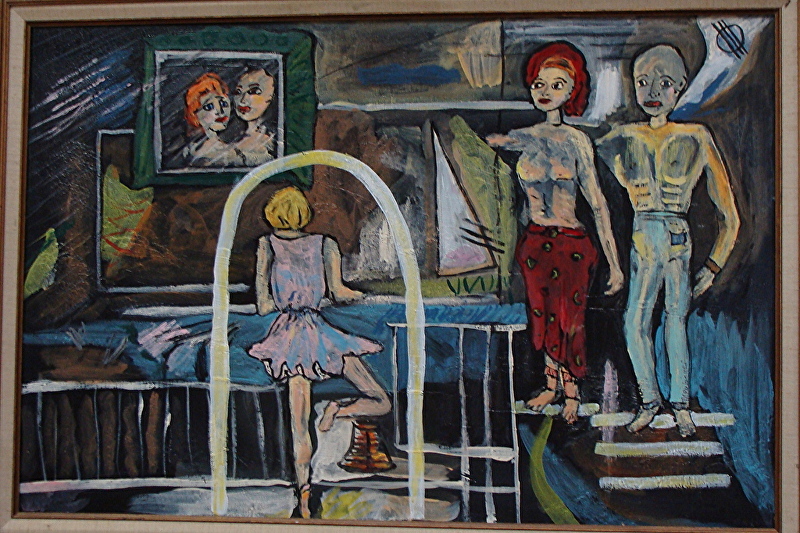
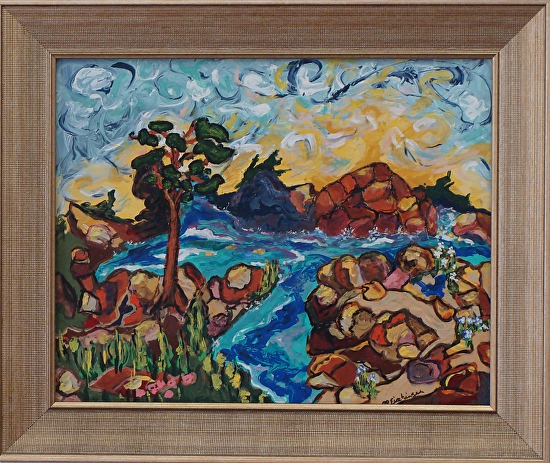
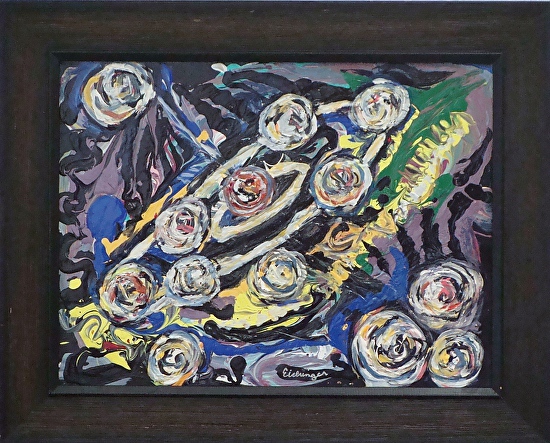
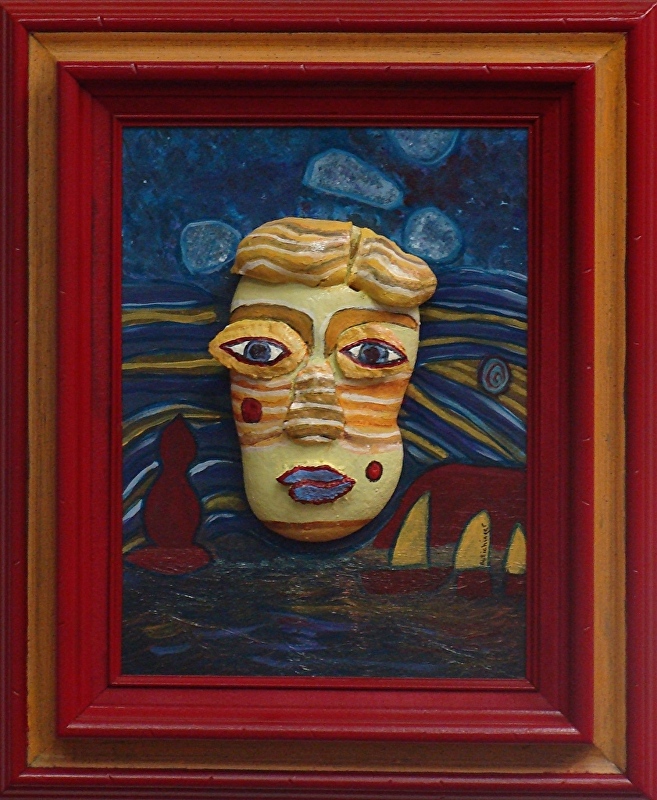
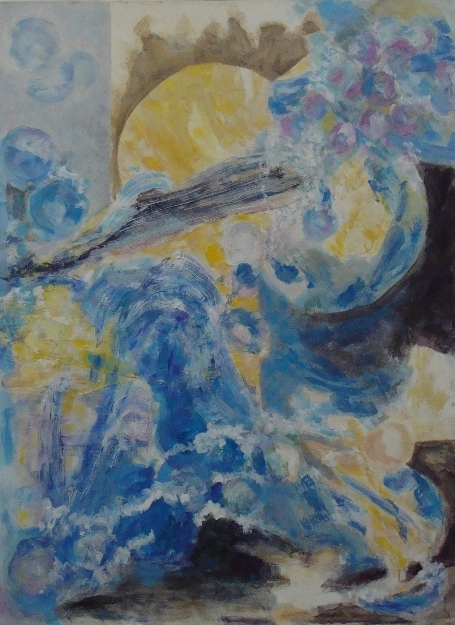
Friends of different backgrounds, time and place open vistas to enrich your world.   acrylic on deep canvas/ 20” by 16” $399

Will you be my friend?

A Michigan acquaintance used to say “it takes twenty years to make a friend.” I think of his words often.  Moving across the country made me wonder if I would ever have friends who will withstand the test of time. I respect my youngest son who decided to stay living in Portland, and I am impressed by the rich circle of companions he continues to accumulate. They surround him with love. 

Though moving great distances deprived me of many of my close acquaintances, changing jobs also contributed to lost relationships. Several times when leaving a position, I was asked to refrain from contact with previous employees so they were free to bond with their new boss.

Anais Nin wrote “Each friend represents a world in us, a world possibly not born until they arrive, and it is only by this meeting that a new world is born.” Her words make me aware of wonderful friendships that opened vistas that changed my life.  For instance, a woman I cherish showed me what it’s like to live her talk.  She is passionate about community and environment. Most people I know acknowledge that human beings are abusing the earth, but few are willing to make a lighter footprint. My friend is an exception. She built a 1,200 sq. ft. home with thick walls that college volunteers helped insulate with straw and mud. She spends little on frivolities, grows vegetables and  participates in the governance of a co-housing community of like minded environmentalists. Residents share workshop space, art studio and community kitchen for their large gatherings. For the forty years I’ve known this woman she has lived consistently with her values. She continues to make a difference and part of me tries to emulate her. 

According to Psychology Today, strong friendships can decrease anxiety, bolster against loneliness and even improve physical health. The article reminds us that quality of time spent together is much more important than the quantity. Psychology researcher, Sarah Cavanaugh, writes of concentric friendship circles. Forty percent of a person’s time is allocated to just five people since it takes time and energy to maintain close relationships. Much effort goes towards what Dr. Cavanaugh calls mentalizing, mentally envisioning the landscape of the other person’s mind. I think of it as empathizing. She writes that when one person leaves this intimate circle another person in is usually added in to take his or her place. I feel she speaks for me, for when I moved, remarried  and befriended my children as they became adults, my group of five changed. 

The second tier or circle of friends are those we care about deeply and can rely on when support is needed. These are the people we let into our innermost thoughts, desires and feelings. I think often of a woman in this circle who helped me through an operation. Due to a genetic defect, I was hospitalized for over a week when I had my aortic valve replaced. For eight nights various family members were by my side at all hours.  One night, however, no one could make it. I would have been alone, when a friend volunteered to sleep on a cot by my side. I will never forget her kindness, and I will do anything for her in return. She is a friend who has been through the trenches with me and I have warm thoughts when thinking of her.

Looking further afield to the next circle are thirty-five close acquaintances. The one following maximizes out at about 150 contacts.  These are the people we call occasionally, send Christmas cards to and share a meal from time to time. Using technology, we stay in touch through instagram, facebook and text messages. We may call them friends though they don’t usually climb to the top of our friendship ladder. Social media, does however, keep these distant relationships going and many people feel connected and less lonely than they might otherwise be. I consider emails to be a better platform for sharing intimacies than social media sites. I know of a romance that started in a chat room, continued through emails and ended in marriage. 

In general, the circle comprised of 150 people belongs more in the category of close acquaintances than friends. They may share pictures of the food they eat, their children and send selfies while traveling but their emotions are expressed through emojis and by “liking” rather than with hugs, conversations and shared activities. The likelihood they will be available to help you move, to care for you when ill or to be there if you lose a loved one, is slight. 

Young people brag about the number of on-line friends they have, but I question their definition of friendship. Those who don’t invest in face-to-face contacts or share experiences and intimacies, tend not to deepen their relationships.  And, if friendship circles aren’t replenished when depleted due to moves or job changes, there’s a strong likelihood that their old age will be lonely. Men who allow marriage and work to occupy all of their hours are especially vulnerable in retirement. They need to maintain same sex friendships throughout their lives as most women do.

 It doesn’t have to take twenty years to make a friend but it certainly does take time. When counseling elderly people, I notice differences between those who added and maintained friendships and those who let their circle of intimates become depleted. I see seniors who are frightened, lonely and unwilling to leave their homes and encourage them to trust the company of others.  It is a way to enrich life as Anais Nin suggested, for each new friend invites us to enter a world that never existed before we met them. Isn’t that worth the effort?

Cavanagh, S. (2017) Friendship by the Numbers, Psychology Today. retrieved from https://www.psychologytoday.com/us/blog/once-more-feeling/201712/friendship-the-numbers

Clark,J. (2018) Social Media is Killing your Friendships. Healthline. retrieved from   

https://www.healthline.com/health/how-social-media-is-ruining-relationships#8

Do comment on my blog site below.

Art is always for sale. Contact me at marilynne@eichingerfineart.com

A Life Well Lived

Nurturing

  Does art give meaning to life? Does it influence the way you think and act? The painting depicts a devastated earth and is a reminder that when we nurture the land we can bring it back to  life. 

A Life Well Lived

The New Year is a time to take stock of your past and plan for the future. Are you pleased with the way you live or do you want to make changes?  When contemplating this my life, I began to wonder what it means to live well. This question is one philosophers have debated since ancient times. What is happiness? Does human life have a purpose? There are times I think that life could not possibly be better. But, then there are instances when it feels like my actions are for naught and I wonder why I roam the earth.  I decided to seek help from the sages.

Aristotle wrote, “Happiness is the meaning and purpose of life, the whole aim and end of human existence.” He believed the highest goals to strive for are personal well being and happiness.  I wonder if he would say that today after reading news clips of politicians and mobsters who act for personal gain and happiness at the expense of others. 

Martin Heidegger from Germany went a bit further than Aristotle and wrote that it wasn’t possible to live a good life if you weren’t living authentically. By that he meant, happiness could only be obtained by directing life on your own terms rather than the expectations of others. His thought rings a bell with me, though after watching anarchists and libertarians in action, I wonder if this is the way.

French existentialist, Jean Paul Sartre, considered freedom to be life’s highest goal. He said, “Freedom is what you do with what’s been done to you.” His thinking is meaningful when I think about the homeless youth I’ve been investigating. Impacted in  childhood by abuse, they run to the streets search of freedom. It’s not long before they realize they are not free. Strings of their past hold them tight, making it difficult for them to evolve and prosper. They usually need professional help before they can participate in adult society.

I remain fascinated by the early American Transcendentalists. Ralph Waldo Emerson bade us to take each day in stride and not to be burdened by worries about past or future. “You have done what you could; some blunders and absurdities have crept in; forget them as soon as you can. Tomorrow is a new day; you shall begin it serenely and with too high a spirit to be encumbered with your old nonsense.” Emerson was a Unitarian, as am I. At the end of each Sunday service the minister reminds congregants, “This is the day you have been given. Go in peace, practice love.”  It does feel good to start with a clean slate.

And then there is French philosopher and novelist, Albert Camus. He warned against over-thinking and over-analyzing. He thought life, in general, to be absurd and didn’t  believe people can be happy if they’re always searching for meaning in everything they do.  Simply put, Camus would enjoin us to just live, take things as they come and enjoy our days. 

To fully enjoy life, though, and to experience happiness, Epicurus the Hellenic philosopher, believed that “most important was the acquisition of friends.” He wrote that friendship more than anything else contributed to a healthy and fulfilling life. 

German philosopher Nietzche, was prolific in his teachings. He wrote about morality, religion, good and evil, antisemitism and nationalism. His thoughts about art interests me for he wrote that creation and enjoyment of art are the things that make life worth living. “We should consider every day lost on which we have not danced at least once,” and, “the creative powers of the individual could overcome social, cultural and moral contexts to develop new values and aesthetic health.” I don’t think my paintings impact society but I do try.  Occasionally I send a message for others to consider. (see above)

A great many philosophers, psychologists and educations bring insight to this topics. American philosopher, William James spoke of a will to believe. He wrote, “Be not afraid of life. Believe that life is worth living, and your belief will help create the fact.” And, French philosopher, Simone de Beauvoir, believed life got its meaning from caring for others. She rings a bell close to my heart. 

New Criterion columnist and best selling author, Emily Esfahani Smith makes a distinction between a happy life and a meaningful one. She explored psychological studies and concluded that happiness is an emotion of the moment that fades rapidly. Meaning, however, is enduring and connects the past to the present to the future. Smith writes, “meaning comes from giving part of oneself away to others, from making a sacrifice on behalf of the overall group, from investing oneself in something bigger than oneself.”  

Through the years I’ve moved from one philosophy to the next. Today I am most attuned to Emily Smith’s ideas. Perhaps its a sign of

The New Year is a time to take stock of your past and plan for the future. Are you pleased with the way you live or do you want to make changes? Before analyzing your present situation, it’s important to decide what it means to live well. This raises questions philosophers have debated since ancient times. What is happiness? Does human life have a purpose? There are times I think that life could not possibly be better. But, there are instances when it feels like my actions are for naught and I wonder why I roam the earth. I decided to seek help from the sages.

Aristotle wrote, “Happiness is the meaning and purpose of life, the whole aim and end of human existence.” The highest goals to strive for are personal well-being and happiness. I wonder if Aristotle would say that today after contemplating politicians and mobsters who act for personal gain and happiness at the expense of others. 

Martin Heidegger from Germany went a bit further than Aristotle and wrote that it wasn’t possible to have a good life if you weren’t living authentically. By that he meant, happiness could only be obtained by directing life on your own terms rather than the expectations of others. His thought rings a bell with me, though after watching anarchists and libertarians in action, I wonder if this is the way.

French existentialist, Jean Paul Sartre, considered freedom to be life’s highest goal. He said, “Freedom is what you do with what’s been done to you.” His thinking is meaningful when I think about the homeless youth I’ve been investigating. Impacted in childhood by abuse, they run to the streets in search of freedom. It’s not long before they realize they’re not free. Strings from their past hold them tight, making it difficult for them to evolve and prosper. They usually need professional help before they can participate in adult society.

I remain fascinated by the early American Transcendentalists. Ralph Waldo Emerson , for instance, bade us to take each day in stride and not to be burdened by worries about past or future. “You have done what you could; some blunders and absurdities have crept in; forget them as soon as you can. Tomorrow is a new day; you shall begin it serenely and with too high a spirit to be encumbered with your old nonsense.” Emerson was a Unitarian, as am I. At the end of each Sunday service the minister reminds congregants, “This is the day you have been given. Go in peace, practice love.”  It does feel good to start with a clean slate.

And then there was French philosopher and novelist, Albert Camus. He warned against over-thinking and over-analyzing. He thought life in general to be absurd and didn’t  believe people could be happy if they’re always searching for meaning in everything they do. Simply put, Camus would enjoin us to just live, take things as they come and enjoy our days. 

To fully enjoy life, though, and to experience happiness, Epicurus the Hellenic philosopher, concluded that “most important was the acquisition of friends.” He wrote that friendship, more than anything else, contributed to a healthy and fulfilling life. 

German philosopher Nietzche, was prolific in his teachings. He wrote about morality, religion, good and evil, antisemitism and nationalism. His thoughts about art interest me. He wrote that creation and enjoyment of art are the things that make life worth living. “We should consider every day lost on which we have not danced at least once,” and, “the creative powers of the individual could overcome social, cultural and moral contexts to develop new values and aesthetic health.” I don’t think my art has much of an impact on society. but I do try.  Occasionally , my paintings carry a message for viewers to contemplate. (see above)

A great many philosophers, psychologists and educations reflected on the meaning of life.  American philosopher, William James spoke of a will to believe. He wrote, “Be not afraid of life. Believe that life is worth living, and your belief will help create the fact.” And, French philosopher, Simone de Beauvoir, wrote that life got its meaning from caring for others. Her words ring bells close to my heart. 

More recently, New Criterion columnist and best selling author, Emily Esfahani Smith makes a distinction between a happy life and a meaningful one. She explored psychological studies and concluded that happiness is an emotion of the moment that fades rapidly. Meaning, however, is enduring and connects the past to the present to the future. Smith writes, “meaning comes from giving part of oneself away to others, from making a sacrifice on behalf of the overall group, from investing oneself in something bigger than oneself.”  

Through the years I’ve moved from one philosophy to the next. Today I am most attuned to Emily Smith’s ideas. Perhaps it’s because I’ve been blessed with a wonderful life that I enjoy spending hours helping others. 

lived a wonderful life that I desire spending hours helping others. 

What about you? Join the conversation and share what you think a it means to live well. Respond on my blog site below

References:

Gregoire, C. (2017) Living Well, According to Some of the Wisest People Who Ever Lived.  Life.  https://www.huffpost.com/entry/the-truest-things-ever-sa_n_3798034

Friedrich Nietzsche. Stanford Encyclopedia of Philosophy. retrieved from https://plato.stanford.edu/entries/nietzsche/

Smith, E.E. ( 2017) The Power Of Meaning: Crafting a Live that Matters. Crown Publishing Group, a division of Penjuin Random House LLC, New York. ISBN 9780553419993

________________

Art is always for sale. Nurturing is acrylic on board / gold metal frame / 43” x84” / $1,100

To make arrangements contact me at marilynne@eichingerfineartcom.marilynne@eichingrfineart.com

Dance to Life


                                                                                 The Studio                                                                                                                                               Acrylic on canvas/ $ 399 / framed                                                               “It’s not enough to have lived. We should be determined to live for something.” ―Winston S. Churchill

Dance to Life

When four-years-old, Mother took me to my first dance class. She enrolled me young because I tripped over my feet when walking. She thought my clumsiness would be helped by engaging in an activity that stresses balance. Mom never realized that those classes would teach me a great deal more than dance.  Though I still have a difficult time balancing, dance lessons guided me through the years.

As a mother of five with a full time job, I was, as the saying goes, “up to my ears in alligators.” I dealt with one challenge after another at work and at home. My daily diet was responding to situations like, “So-and-so hit me. What’s for dinner?” to “Earnings are down. Should we lay people off?”  Following is how dance guided me.

BALANCE: To manage a demanding schedule stress-free, I had to make sure that work and playtime were balanced. This was not always easy to accomplish, for I often wanted to bury myself in what I work or artistic endeavors.  Instead, I carved out time to spend with for friends and family, to take flute lessons, and to vacation with and without children. I retreated to a quiet place to meditate daily and get away from noise and chaos. Today, my situation is reversed, for in retirement, I’m able to vacation year-round if I want to. But that is boring so I’ve added a bit of chaos by volunteering, painting and writing.

GRACE:  Dancers learn to move with grace, a skill that guides daily interactions. The way I connect with others is important for developing friendships, creating business collaborations and insuring loving relationships. Graceful people understand the struggles between good and evil, yes and no, kindness and hostility and ignorance and knowledge.  They use their knowledge to waltz, tango and spin through illnesses, conflicts, anger and loss. Moving gracefully requires a calm, firm center that can glide delicately through the mist.

FLEXIBILITY: Body and mind become expansive when limber and stretchable. Flexibility is required when facing challenges that can’t be overcome by ordinary means. Its opposite, rigidity can turn you into an uncompromising has-been who may as well be dead. Flexibility allows for adaptation to change upon change. One truth I value knowing is that society and individuals are in constant states of transformation.

“The only way to make sense out of change is to plunge into it, move with it, and join the dance.”  ― Alan Wilson Watts

PRACTICE:  “Try again until you get it right,” was a mantra drilled into me as a child. Without developing the gifts we are born with, our talents may as well not be there. Once you discover what they are, they have the potential of providing great joy. It takes effort to overcome inertia and requires energy to train. Dancers prepare by practicing for hours each day—as do doctors, artists, basketball players, teachers, plumbers and many more. Perfected skills enable them to perform their craft with competency, ease and grace.

CONCENTRATION: Staying focused, being mindful and remaining centered reduces stress. Dancers whose minds wander while executing a leap or turn may get hurt. Those who can’t memorize their routines are unable to perform. When fully engaged in what you are doing, there is little room for worry. When in control of your mind, you are able to turn off unwanted thoughts and fears. Learning to concentrate in the moment, is an acquired skill that enables relaxation when walking through storms.

PERSEVERANCE:  Muscles and toes ache from hours of practice. Not giving up and remaining committed are difficult when in pain. When a ballerina falls, she is taught to get up and finish the performance. Similarly, mishaps occur throughout life, yet we must continue on. Failure becomes a teaching moment when it is accepted as a lesson in how to improve and not make the same mistake twice.  Perseverance requires overcoming embarrassment, remembering the goal and acknowledging small steps taken in the right direction.

STRENGTH: Moving effortlessly requires strength and stamina. Dancers learn to be aware of the weak parts of their bodies and to work diligently to make them stronger. Strength does not happen overnight. Recognizing faults is the first step towards growth. The second involves hours of hard work to overcome them. With strength comes the ability and courage to make clear headed decisions even in the face of opposition.

RISK: Dancers accept that there is a certain amount of risk in their art. Though not as bad as football, where players are prone to getting concussions, ballerinas get bloody, misshapen toes, and suffer from sprains, broken bones and back injuries that may last a lifetime. But, life is uncertain and, at times, dangerous. Walking across a street, riding a bicycle, putting money in the stock market, purchasing a house, starting a new business, getting married, accepting a challenging job, though risky, are also full of possibility.  Risk needs to be analyze, understood, and consciously accepted. Dance thought me not to be foolish and leave life to chance.

When balance, flexibility, concentration, gracefulness and strength come together,  dancers say they are “in the flow” or “in the zone.” It’s a moment of full engagement directed towards purpose and provides feelings of unabashed joy and wellbeing. Flow is motivating for it awakens a desire to achieve the next level of excellence. Once a person experiences what it is like to be ”in the zone,” a craving develops to be there again.

Several times during over the course of my life, I was fortunate enough to experience “flow.” In my twenties and thirties, when my body was young and under my control, strength, flexibility, concentration, grace and balance allowed me to dance with rapture. Another time was when I was exiting a supermarket with four children bouncing around my cart. For some reason, when I looked at them that day, an overwhelming feeling of contentment enveloped me. I was a supermom assure of my purpose at the moment. More recently, the feeling of being in the zone occurs when painting or writing.  There are times I become so engrossed in what I am doing that the outside world fades away. Being at one with my art is like being struck with lightning. I am lit and alive with aspiration, peacefulness and contentment.

Studying dance has taught me how to live. Yet, there is much more to know and I remain a willing student.

“The heart of human excellence often begins to beat when you discover a pursuit that absorbs you, frees you, challenges you, or gives you a sense of meaning, joy, or passion.” ―Terry Orlick

______________________________________________________________________

““`Annual  HOLIDAY ART SALE ““`

30 % off works of art thru December 21st     

All paintings – find what you want on  eichingerfineart.com

Contact marilynne@eichingerfineart.com to arrange for payment and shipping
Shit Happens


Rock Creek Awakens


A place of happiness and serenity


Shit Happens

We like to think we’re in control, yet much of the time we’re not. Even with precautions we move into the unknown in a search for opportunity. New challenges provide the spark that makes life interesting.

Uncertainty starts at birth, for we are born with risk.  Modern medicine has made tremendous advances to protect the health of mother and newborn child, but complications still occur. According to the Centers for Disease Control, as many as 15-20 percent of all U.S. pregnancies end in miscarriage, with 24,000 terminating in stillbirth and roughly the same number  of infants die in the first year of life. Shit happens.

As we age, we skin our knees on the playground, fall off of bicycles and scooters, suffer sports injuries and get whiplash in auto accidents. Yet, we continue to get on the horse after being thrown on the ground. We ride our cars to the store, J-walk across busy streets, play contact sports and hunt in the woods by ourselves.  We engage in activities that we know are dangerous.  And, we hear many tales of disasters that occur to other risk takers.

Twenty-four hour news outlets inundates with natural and man made catastrophes that cause people to lose homes, livelihood and families.  Calamities can potentially affect each and everyone of us, no matter our income or location. It makes me wonder how I would react if adversity does affect my life. How would I handle it so that it wouldn’t destroy me?

Some people are energized by tragedy and are called to action while others bury their heads in fear and isolation.  There are those who will stoically hide their grief while others will let everyone know how stress and unhappy they are.

Trauma can certainly lead to nightmares and the inability to carry on. The ramification of PTSD are not easy to overcome, and though sufferers say they become changed, most eventually return to having a productive, happy life.  I am fascinated by those who overcome loss and trauma and wonder what make e them so resilient. How do they keep a  positive outlook?

For a while, I explored genetic research into positivism, eventually concluding that the evidence is inconclusive. Many explorations are focused on depressive disorders, with most results claiming there is an inherited predisposition for depression. However, that does not necessarily mean that the person with a genetic bias towards depression will become depressed. Much depends on their environment which has the ability to alter genes that trigger genetic predisposing. The research articles I read covering depression and its opposite, positivity, remains speculative with blurred conclusions. I would never choose a mate based on a genetic predisposition to depression or positivity.

I would, however, choose to be surrounded by those who have a positive outlook on life, the glass is half-full type of people. The negative ones can wear you down, which is especially hard for empathetic people who feels the pain of others.  One of the reasons I chose not to stay working with mentally ill patients is that I ingested their unhappiness. I brought their sadness home to my family and friends. Instead, I chose to focus on people and activities that could bring beauty and joy into my life.

Seth, our young wheelchair bound son, is an example of the power of positive thinking. When first diagnosed as a quadriplegic, he would not tolerate visitors who pitied him, expressed negative concern about his future or thought that he wasn’t capable of overcoming his disability. I overheard him ask a person to leave his hospital room unless he could speak in a more positive way. Watching this critically disabled young man take control of his environment and observing how he willed himself forward by affirming what is good, was inspiring. Despite his inability to move, he smiled, joked and put others at ease. As a result, his resilient behavior made people want to help him through his ordeal. Today Seth prospers with days busy with new activities and a close circle of caring friends.

There are many others who also handle diversity well. I’ve seen seniors blossom after losing love ones they have lived with for fifty years and observed unhappy divorced men and women become more independent, compassionate adults as they struggle to reinvent themselves. I’ve decided that the ability to overcome trauma, grief and despair is partly a matter of choice. People can chose to embark on healing journeys even when they don’t feel like it. They do so because of their belief that in the long run all will be OK. Positivity leads them forward. As a result of a life time of observations I developed a to-do list to follow when immersed in tragedy.

Surround yourself with positive, comfort giving people. None of us is an island standing alone. We are part of a community of care givers and care receivers. We can be both. In time of need, take control by asking for help when you want it and requesting privacy when it is essential. 

Overcoming trauma, grief, illness and death is by its nature a private affair. No one can really feel what you are feeling or know what you are thinking, but it helps to have someone hold your hand. Opening your heart to let them in and swallowing your pride by admitting vulnerability is a step towards healing.

Visit your happy place, a location that gives great comfort. It may be in nature, at the beach, the woods, on the water or a garden retreat. It may be in the bustle and hustle of crowds or in a car you drive through the countryside. Happy places are where you feel safe when alone, with friends, a puppy, a kitten or even a horse. I have two  happy places, one is my art studio and the other is in Central Oregon. They where I feel relaxed and my mind does not wander to anything except the beauty I see before me. Guilt about for what I can or should be doing is not allowed this y place that helps center me.

Exercise regularly and eat a healthy diet. Don’t let your body atrophy and don’t give yourself an excuse to gain or lose  excessive weight. Comfort food is not comforting in the long run. This may take will power, but being conscious of what you eat and how you move can help you regain control of your life.

One of my mottos is, “ never worry twice.” Once is enough. Turn off the “what if” button of negative thoughts until the worry is real. Don’t spend time imagining something horrible that may never come to pass. Meditation or mindfulness practices can help focus the brain and control unwanted thoughts and bad recurring images.

Speak to those who have experienced a similar tragedy. It helps to realize that you are not alone and to learn how others have coped. Friends and family often  harbor timelines about how long it should take you to get over grief or trauma. Recovery doesn’t usually work the way these well meaning friends believe it should. Trauma and grief don’t disappear overnight, though their frequency and intensity does subside. Over time, agony becomes a less piercing pain and enables the victim to find comfort.

Yes, shit happens, but you don’t need to wallow in it. By putting one foot before the other and believing that you will evolve, makes it possible to rediscover purpose and happiness.

References.

Pearson, C. (2013) Miscarriage Causes, rates Widely Misunderstood.Huff Post. retrieved from https://www.huffpost.com/entry/miscarriage-cause_n_4116712

Stillbirth web page (2018) Facts about Stillbirth. Centers for Disease Control and Prevention. retrieved from https://www.cdc.gov/ncbddd/stillbirth/facts.html

Eldridge, L. MD (2018) What it Means to Have a Genetic Predisposition to Cancer. Verywell.  retrieved from https://www.verywellhealth.com/genetic-predisposition-2249105

Fearing Fear Itself

                                                                                                                                     Last Night’s Dream                                                                                        Fear can fill dreams with chaotic thoughts and worrisome images, producing                                                                           lasting feelings of disquiet.

                                acrylic on canvas/ 32” x 26 “/ gold painted wood frame/ $498

Fear Itself

In his first inaugural address, President Roosevelt said, “The only thing we have  to fear is fear itself.”  This comment holds true today when the public is frightened by those using fear as a method of control. Their system is working. Last week I heard an elderly woman say she was afraid to leave her house because of mass shootings and immigrant terrorists.  Churches, synagogues, mosques and schools are moved to develop active shooter plans.

The U.S. does have a staggeringly high number of active and mass shooter incidents compared to other developed nations. In 2017 there were 29 such events. Andy, yes, the number of incidents has risen steadily since 2000 when there were four. Once again a record. will be set in 2018. This week’s tragedy brings the horror of terrorism to the surface.  However, as terrible as these incidents are, they are nothing compared to the number of fatalities on our highways. And, though 37,133 people were killed in motor vehicle traffic crashes in 2017, driving does not elicit the same fear as imagining yourself as the next victim of a mass shooting. Why do you think that is?

We are told that illegal immigrants commit more crimes than American born citizens. Yet, when Alex Nowrasteh with the Cato Institute analyzed Texas Data to make a comparison he found that “The arrest rate for illegal immigrants was 40 percent below that of native-born Americans” and the homicide arrest rate for native-born Americans was “about 46 percent higher than the illegal immigrant homicide arrest rate.” National statistics were similar. ” Illegal immigrants are 47 percent less likely to be incarcerated than natives and even less likely to be in jail or prison.” Other studies reported in the Journal of Criminology supports these finding as well.

Interesting statistics.

  • You are  35,079 times more likely to die from heart disease than a terrorist attack.
  • You are 4,706 times more likely to drink yourself to death than from terrorism.
  • You are 2,059 times more likely to kill yourself than die at the hand of a terrorist.
  • You are 452 times more likely to die from risky sexual behavior than terrorism.
  • You are more likely to die of lightning than a terrorist attack and 6,000 more likely to    die from a fall.

The list goes on and on.  So why the hype? Why the fear?

It might may one wonder about the exorbitant amount of money spent on protecting ourselves from unlikely scenarios. Funds would be better spent on monitoring highways  and heart research.

In 2016, Donald Trump said “People are scared.” He got that right, for they are. According the the Atlantic, Americans are afraid of crime, though rates are down, of a terrorist attacks,  and of frightened unarmed immigrants. Politicians are masters at invoking fear in abstract ways to improve their chances of winning.

The Atlantic goes on to say that according to social scientists, “It (fear) makes people hold more tightly to what they have and regard the unfamiliar more warily. They crave protection. The fear reaction is a universal one to which everyone is susceptible. History shows it has the power to bring people to the polls to vote out of their usual way.  I see  fearful people  as people looking for  “Daddy” a strong individual who promises security though there is no threat. And, I see politicians as a play actors protecting their flock from the imaginary giants they created in the first place.

I witnessed this behavior pattern when I was president of OMSI.  One year we brought an animated dinosaur exhibit to the museum that frighted some of our younger visitors. Many parents, rather admit their child was too young for the exhibit, held them in their arms and forced them face the monsters saying,”Don’t worry, I’ll protect you. No need to be afraid.”  Through some children were terrorized, their parents thought their fear to be cute and funny.  It gave them an opportunity to be protectors who saved their youngsters from imaginary demons. 

“The Politics of Fear” by  Frank Fured  begins, “Fear is the most powerful enemy of reason. Both fear and reason are essential to human survival, but the relationship between them is unbalanced. Reason may sometimes dissipate fear, but fear frequently shuts down reason.” 

Fear has often been employed for political gains. After 9/11 fear was used to rally support for the illegal invasion of Iraq, and to sanction use of waterboarding. In the 1990’s Clinton didn’t want to be called soft on crime so he spoke of “super-predator”criminals, stirring a fear fueled by sensational media which pushed mass incarcerations. McCarthy incited fear over communism that caused thousands of innocent people to lose their jobs.

This past year, however, we have seen the use of fear tactics elevated to epic proportions to scare people into submission. The latest one is about citizenship. The idea that children born in the United States to immigrant families will be denied citizenship is ludicrous. If we take that idea back far enough, the only remaining people left to populate our country will be Native Americans.

During the mid-term election, ads called Kyrsten Senima in Arizona “soft on prostitution.” Where did that come from?  Numerous advertisements claimed their opponents were dealing in drugs, the cause of crime waves and the spread of gangs such as MS-13.  We are told to fear black people , proud people, Muslims, and gay people. We should fear Jews, violent crimes ( a quarter of what it was in the 1990’s). Democrats should fear Republicans and  long time neighbors if they are Democrats’ And, oh yes, we should all fear the media.

Unfortunately, fear is used so often and in such a Machiavellian way that it’s destroying the fabric of our country.I am surprised people don’t see through these fear tactics and ask themselves who benefits by your fear. Who maintains power? Who becomes wealthy?

This blatant a bid for power keeps people trembling until they fall in line. Followers will do the fear monger’s bidding like approve tax cuts for billionaires, ruin the environment for the benefit of oil and timber companies. They will put up with bad air quality, poor water and polluted oceans. They will cut entitlement programs and health care for middle and low income people. They’ll permit the sale of ammunitions to our enemies, makings millions more for the billionaires.

Whatever happened to “Love they neighbor as thyself?”  When did we stop believing in the common good, the melting pot, an American dream for all?  It is time to ignore  divisive rhetoric and return to rational thinking and behavior. When you hear fear talk, ask yourself who benefits because you are afraid?

Let’s heed Roosevelt’s words and stop fearing fear itself.

References:

University of Alabama (2016) Pubic Mass Shooters and Firearms: A Cross-National Study of 171 Countries. PubMed. Retrieved from https://www.ncbi.nlm.nih.gov/pubmed/26822013.

Alertfind (2018) Active shooters in 2018: Key Stats and Facts. Disaster Recovery Journal. retrieved from https://www.drj.com/myblog/active-shooters-in-2018-key-stats-and-facts.html

Traffic Safety Facts (2018) 12017 Fatal Motor Vehicle Crashes: Overview.  U.S. Department of Transportation. retrieved from https://crashstats.nhtsa.dot.gov/Api/Public/ViewPublication/812603

Farley, R. (2018) Is Legal Immigration Linked to More or Less Crime? FactCheck.org a project of the Annenberg Public Policy Center.  retrieved from  https://www.factcheck.org/2018/06/is-illegal-immigration-linked-to-more-or-less-crime/

McClatchy, (2011)  The Terrorism Statistics Every American Needs to Hear. Center for Research on Globalization. retrieved from http://www.globalresearch.ca/the-terrorism-statistics-every-american-needs-to-hear/5382818

Ball, M. (20116) Donald Trump and the Politics of Fear. The Atlantic. retrieved from https://www.theatlantic.com/politics/archive/2016/09/donald-trump-and-the-politics-of-fear/498116/

Abramsky, S.(2018) Trump’s GOP is running harder than ever on the politics of fear. Los Angeles Times. retrieved from http://www.latimes.com/opinion/op-ed/la-oe-abramsky-trump-politics-of-fear-midterms-20180923-story.html

Life is Sweet


Bursting Forth  –  There is beauty all around when we open our eyes to see.

Acrylic on Canvas/  Wood Frame/ 37” x 31” / $ 599

“Oh, What a Beautiful Morning, Oh, what a Beautiful Day”

The words from the Oklahoma musical, ring true if we let them.  Life is sweet and it is ours to relish every moment. It’s time to remember that there is good in the world.  No matter how riled up we get because of politics, violence or economic uncertainty, there are moments of beauty and kindness that need our attention and appreciation. No mater what the outcome of the election, no matter how serious the illness, no matter how great the loss, the sun will still rise tomorrow, the earth turn on its axis and two rovers will send signals back from Mars.  November is the month of Thanksgiving. Let’s cherish it and encourage what is good.

The other day I watched a newborn child and thought how fortunate she was to be welcomed into the arms of loving parents. Warmth, security  and encouragement will most likely be there to help this child prosper. Looking at the tiny body, I imagined the first real smile (not from gas) she will bestow on her caregivers and the bonds that are forming forming in her first days alive.  I wanted to reach out and feel the soft fuzz sleeping eyes and a perky little mouth that occasionally moved a while she slept as though dreaming of milk.

I recently organized a group of women in my exercise facility to open hearts and purses to help a locker room attendant. The aide was a courageous Ethiopian immigrant who, along  with her Somalian husband, settled in the U.S. seven years ago. Due to an injured knee, this hard working helper lost several months of work, adding to the burden of her struggling family. The love and kindness exhibited by generous donors reminded me of how people in small towns come together to help neighbors. Americans can be very benevolent and compassionate, not like the media occasionally depicts us.

Struggling through misfortune is not easy, but if the day’s challenges are met with positiveness and zeal, it is possible to climb over and around obstacles. Not being ashamed or reluctant to ask for help and being available to aid friends and neighbors when needed, creates community. It brings people closer together and enables them to get through the rough spots and return to a state of balance.

My experience, however, is that most people, don’t want to stay very long in quiet equilibrium. Surprisingly, to avoid boredom, they insert barriers that shake things up a bit.  Having a child, attending college, accepting increased work responsibilities, challenging athletic times, sailing in rough weather, making a happy home are burdens we choose to stimulate our minds, develop meaning and create wealth. Self-inflicted problems within our control usually add to a sense of well being. 

a baby crying for hours can create unexpected headaches. Illness, accidents, job loss, housing evictions and violence builds huge fences that have to be scaled. How does one face bullying or terrorism without being permanently traumatized?

It’s certainly not easy . . . but it is doable. There is a choice. The afflicted person can wallow in self-pity or seek ways to climb out of the quicksand. Meditation, mindfulness, positive thinking and hard work are learned pursuits that lead back to balance. Remaining active even when you don’t feel like it and accepting small challenges when life feels insurmountable, provides bounce-back.

I watched my adopted boy, Seth, thrive despite experiencing a debilitating accident. He is a constant reminder of how resilient humans can be. His twenty-eight years have always been difficult. Born into an unstable family, living on the streets for four years, training to be a journeyman industrial painter, surviving a workplace accident and coping as a quadriplegic required him to invent and reinvent himself many times.  Two weeks ago, out of 2,000 injured patients from throughout the country, Seth received a national award for transforming his life so well. He lives independently in a new city, drives a car with hand controls, enjoys go-Kart racing, is on a wheelchair rugby team and volunteers two days a week as a mentor to those worse off than he. Best of all, he has developed friendships. He surrounds himself with those who share positive outlooks and stays away from constant complainers.  His cup is always half full.

I invite you to join me in a month-long wallowing in beauty, joy and thanksgiving. Look around to find good and tap into as soon as you can,  Enjoy the sunset, feel the rain, study the birds feeding at feeders or flying south in formation and see —really see each snow flake when they start to fall. Remind that there is beauty even in the midst of sadness, that there are births in the midst of deaths. This November. 

References:

NASA,(2018) Mars Exploration Rovers. Jet Propulsion Laboratory, California Institute of technology.  retrieved from NASA’s Jet Propulsion Laboratory web site https://mars.nasa.gov/mer/overview/

A Way Out of Madness

         Solar Systems

We live in the same universe and share the same planet. Can’t we live on it in peace?

Acrylic on Canvas/ 16” x 20”/ $ 299

A Way Out of Madness

People are concerned about how our country is going to heel the current political divide before it leads to a full fledged civil war. If you don’t think  that scenario is possible they say, look at Syria. It used to be a vibrant country of 22 million that was considered a political and military heavyweight in the region. It’s rich history is both complex and diverse. Before the war, it boasted bustling marketplaces in Damascus and Aleppo with an innovative IT industry despite economic sanctions imposed by the west. It was known for having a sophisticated literary tradition, film industry, supermarkets and modern shopping centers to go along with the old. Friends and family gathering around tables for celebrations welcomed all who knocked on their door. It was a melting pot of religion and ethnicities, allowing for mixed marriages between Christians and Muslims. Syria was a cradle of civilization in the Middle East. Are we headed in this direction? Is this image from Syria a possibility for us?

A friend told me how upset she was because her conservative brother-in-law made demeaning and nasty comments on Facebook about her  liberal leaning brother. She said she now understands how families, split over political beliefs, were devastated by the Civil War. Looking back, hopefully, most people can see that war is not the way forward.

Wars benefits ammunition dealers, financiers and this hungry for power. They rarely help citizens who are instead used as fodder. They kill thousands of ordinary people, destroy homes, and leave families and friends destitute and bitter. As with our own Civil War, some people never heal and put the conflict behind them. PTSD and long lasting grudges spill into future generations.  Is war the training we want to give our children?

Who will stop the madness taking over America? It has to be tackled on many fronts but I look to our children. They view the world differently than their elders, are more accepting of differences and better educated in environmental issues. However, the quality of their schooling is not evenly distributed. Our job as adults is to change that trajectory and insure that everyone receives a comprehensive education. Perhaps they will them be able to help us stop this madness.

Let’s start with bullying, a problem that can make a young person afraid to attend classes. Programs to eliminate bullying are now part of curriculums nationwide.They begin in the elementary years and continue through twelfth grade. My hope is that graduates will not stand for the type of name calling and bulling that now invades the highest levels of government.

I was taught that  “sticks and stones will break my bones but names will never harm me.” Unfortunately, that’s not true. Labeling people horseface, Pocahantus, bimbo, dumb as a rock, sophomoric, beggar, clown , sleepy-eyes and dumpy-political-pundit is not only hurtful and ugly but is childish. Most parents don’t support this type of rhetoric at home or in their schools.  Upset parents are the reason schools now emphasize compassionate communication and bully free zones.  With this type of early training, I anticipate  our children will lead in more civilized ways.

The study of history provides ways to learn from the past, but only if it is presented in honest, complete and unbiased ways. Reading textbooks that are slanted towards the white race at the expense of other groups will not heel our country’s divide. Subjects need to be included that are often glossed over such as the Indian Wars of the late 1800s, the growth and suppression of labor unions and the racially motivated immigration laws of the early 1990s.  By understanding both sides of issues we learn to open our hearts so we can hear divergent concerns. Studying the past enables youth to see what worked and what didn’t so that they can better deal with the world they find themselves in today.

It is important that students learn how to search for truth, but even more important that teachers inspire them to want to do so.  Encouraging curiosity is the greatest of tasks.  There are consequences to complacency and ignorance. From an early age on, questioning should be encouraged. If a parent or teacher does not have an answer then the two should challenge themselves to discover what it is.  Parents can inspire curiosity when visiting national monuments like the Liberty Bell, the Statue of Liberty or the Capital. If the budget doesn’t allow for travel, then videos, books and local museums can provide material for discussion. In either case, there is no substitute for talking to children about what is seen. Exploring deeply will prepare them to be thinkers and intelligent voters. 

With the exception of a few states, most school curriculums cover environmental issues around global warming. The teens I speak to are knowledgeable and concerned, often more aware of the human influence on climate change than older adults. It is good that they understand the science but it would also be helpful if economic factors were brought into discussions for they are at the crux of congress’s unwillingness to act. Combatting warmer temperatures requires people to change the way they live, what they eat, and how they move.

Learning where money flows, who benefits and who sacrifices tells a lot about the political debate. It is a subject that should not be glossed over if we want our children to get us out of the mess we’re in. Recognizing that there are winners and losers and debating the pros and cons of various economic, religious and political systems is challenging but also interesting to most young minds. A place to start could be a discussion of  “the common good,” for it is at the base of many political and economic beliefs. 

My bicycle riding neighbor stop me, “ I don’t believe in the common good. I believe people should sink or swim on their own merits. I started out dirt poor. I’m a self made man. It wasn’t easy, but I was determined. Anyone who works hard can do the same.  I probably will wind up living in a gated community.”

This man of color pulled himself out of poverty.  He is intelligent, college educated, earned a pile of money that allowed him engage in entrepreneurial ventures. Unfortunately, most people do not have his skills nor the support that helped him become an NBA player. Thousands fall through the cracks of poverty, poor schooling and parental ignorance. 

Public education has the potential of being the great equalizer. But adults need to insure schools have resources and teachers who are willing and able to reach out and encourage  students to express concerns, to think for themselves and to problem solve. They need to learn when they’re being duped and how to analyze fake news. Collecting  and considering information is something curious people do

Public education is under attack and we can not let that happen. The move to use public money for private schooling through vouchers will exasperate the divide. Religious indoctrination doesn’t belong in public education. Integrating schools in the aggregate, works. Giving marginal students extra help, works. Funding pre-schools works. Providing school meals for the hungry, works. Special education for those with disabilities, works. Subsidizing college tuitions, works. Fair programs will allow our children to heal the social divid and make America great again.

I’m not hopeful about our country right now. I don’t like being marginalized and told I’m not a true patriot. We are all Americans and need to work together to keep democracy working. Seemingly we don’t have the ability to get over our differences, so let’s make sure our children do. Five them the tools to govern more rationally.

  References:

Saleh,S. (2014) Five things you never knew about Syria before the war. news.com.au. retrieved from https://www.news.com.au/world/five-things-you-never-knew-about-syria-before-the-war/news-story/50aee87307f613edcd8505f7bce12d0b

Krueger, H., Hardiman, K., Kelly, C. (2015)Trump’s most notable insults. The Hill. retrieved from https://thehill.com/blogs/ballot-box/249102-trumps-most-notable-insults

Lynn,R & Vanhanen,T., (2010)All Countries: What is the Average I! in the United Sates? IQ Research. retrieved from https://iq-research.info/en/average-iq-by-country/us-united-states


Art is always for sale. Contact marilynne@eichingerfineart.c

Population Growth: Still a Concern?

                                                                                   Surf’s Up                                                                                                                                        Acrylic on Canvas/ 48” by 36” / $ 699.00

Six of the Solomon Islands have disappeared due to rising seas and erosion. Their destroyed villages forced residents to relocate. Other islanders are negotiating for a place to lgo when their land is no longer inhabitable. The Solomon Islands, with a population of 640,000, lie 1,000 north-east of Australia.

Population Growth: Still a Concern?

The main stream press and top politicians cover many of the world’s problems, but I rarely hear talk, as in the 70s, of overpopulation as a root cause. The other day I got into a discussion with my oldest son about whether population is still is an issue of concern. Our conversation ended by my agreeing to look into the issue.

An article in Scientific American about sustainability started me thinking. It said that slowing the rise in human numbers is essential for the planet, but doesn’t require population control.  It  also said that the jury is out as to whether growth of human population is a positive factor or a dominant ill spelling environmental and social catastrophe.  What do they mean?

I find current statistics, which take into account birth and death rates, to be staggering. In the 1950s, according to the World Health Organization, U.S. women expected to live to 71and men to 66 years. This was quite a rise from 1900 when the numbers were 48 for women and 46 years for men. Fast forward to today and we find that expectancy is 79 for women and 74 years for men.

As population increases, however, people do not spread out over the planet. Instead they move to cities causing congestion, crime and difficulties with sanitation, clean water and access to health care. Overpopulation is primarily a problem of high density cities. In the U.S. 62 percent of the population live in cities, but they occupy only 3.5 percent of land area. Don’t want to be crowded? Move to Sitka, Alaska where there are only 3.1 people per square mile.

Growth in human population has had a devastating effect on plants and animals. It has caused approximately 27,000 species to become extinct each year. Adding to this problem is overconsumption which is outpacing overpopulation, causing natural resources to dwindle at an alarming rate. Global consumption of raw materials increased by 17 times during the 20th century.  Toxic rain and  acidifying rivers, ocean dead zones, melting polar caps, ozone destruction, top soil erosion, the Great Pacific Garbage Patch and vanishing lakes are caused by out-of-control population growth over-consuming.

Until population stops growing, the need to squeeze each person’s consumption of fossil fuels and other natural resources will continue. Billions of people living in the developing world would like to consume as Americans do. Population growth pushes consumption levels higher, adding to environmental degradation.

Those who enjoy individual freedom will be concerned as well. Freedom to travel and spend time in areas rich in natural resources are increasingly affected by hordes of visitors. Locals in cities like Berlin, Prague and Barcelona complain about the growing number of visitors wandering their streets. As they are outnumbered by foreigners, they fear the loss of identity. Countries worldwide are putting limits on tourist housing to control noisy visitors who degrade their towns and destroy sites of natural beauty.

Democracy too is affected, for governments are less representative as population increases. Two senators for each state has remained constant even as population shifted and increased. And, the 435 House members represent and  growing number of constituents. It is no wonder that so many voters feel disenfranchised from their government. It is difficult to get through to overburdened congressmen.

Around the world, growing and grazing areas are victims of global warming. Water shortages, fires and floods push people to abandon their lands, and because wars over energy resources destroy communities, pressure from immigrants will continue to plague wealthier countries. What would you do if your livestock died and vegetable garden shriveled in 120 degree temperatures? What if you lived in Australia where summer temperatures hover at 117 degrees and fire turns forests into carbon dioxide? What if you were terrorized by war lords fighting over oil and water rights? Where will people go if the ocean covers Amsterdam, Venice, Miami or Manhattan? What if your family lived with the fear of being kidnapped for ransom?

I know I would do everything in my power to protect my loved ones. I would leave. If I had to steal for food, I would. If I had to sneak into a country with greater opportunities, I would—for what other choice would I have?  Immigration is a bitter debate, but it’s a losing one for temperate climate countries if population growth and consumption does not slow down.

Can the situation be turned around? Will a downshift in population growth put us on a more sustainable path. The answer is no, that will not be enough. We also have to change consumptive behavior dramatically.

Demographers estimate that at the time of Christ there were 300,000 people on earth. Today’s world population clock shows 7.7 billion people. So far this year (as of October 10th) there were 108,887.272 births, 45,145,885 deaths, making the growth to date is 63,851,559. The largest countries by population in descending order are China (1.5 billion), India (1.35 billion) and much to my surprise the U.S.A. (327,413.377). Indonesia, Brazil, Pakistan, Nigeria, Bangladesh and Russia follow.

World Population Forecast (2020-2050)

Year

(July 1)

Population

Median 

Age

Fertility 

Rate

Density 

(P/Km²)

Urban

Pop %

2020

7,795,482,309

31

2.47

52

55.6%

2025

8,185,613,757

32

2.43

55

57.5%

2030

8,551,198,644

33

2.39

57

59.2%

2035

8,892,701,940

34

2.35

60

60.7%

2040

9,210,337,004

35

2.31

62

62.1%

2045

9,504,209,572

35

2.27

64

63.5%

2050

9,771,822,753

36

2.24

66

64.9%

World Population by Region

#

Region

Population

(2018)

1

Asia

4,545,133,094

2

Africa

1,287,920,518

3

Europe

742,648,010

4

Latin America and the Caribbean

652,012,001

5

Northern America

363,844,490

6

Oceania

41,261,212

Some people believe that population rates will decline when third world countries become more developed. One UN estimate predicts declines starting by 2100 while another estimate predicts an increase. Confused? It is difficult to say which way the global population pendulum will swing in future centuries or if the environment will still be able to provide sustenance for earth’s residents.

You decide. Is overpopulation a matter for concern? Is it at the root of poverty, homelessness, migration, war and global warming?

Please share your comments on my blog site below.

Art is always for sale. Contact me at marilynne@eichingerfineart.com.

Resources:

Engelman,R. (2009) Population and Sustainability: Can We Avoid Limiting the Number of People? Scientific American. retrieved from https://www.scientificamerican.com/article/population-and-sustainability/ 

10 Lively Facts about Population Growth. (2018) Postconsumers. retrieved from https://www.postconsumers.com/2014/04/09/10-facts-overpopulation/

Current World Population Clock.  Worldometers.  retrieved from website http://www.worldometers.info/world-population/.

Wooldridge, F.(2017)  What Constitutes Overpopulation in America? Too Many People! Denver Post. retrieved from http://denver.yourhub.com/Denver/Blogs/Your-Voice/Blog~896810.

Earth Talk.(2017) Is it true that human overpopulation isn’t such a big issue anymore, as numbers are expected to start declining in a few decades?. Scientific American’s Environmental Magazine. retrieved from https://www.scientificamerican.com/article/human-overpopulation-still-an-issue-of-concern/

United States Census Newsroom (2015) U.S. Cities are Home to 62.7 Percent of the U.S. Population but Comprise Just 3.5 Percent of Land Area. U.S. Census. retrieved from https://www.census.gov/newsroom/press-releases/2015/cb15-33.html

Me Too? You Too? Not My Kids!!


“Searching for Truth”   Truth will eventually emerge. Lies will be uncovered. There are always consequences.

24” x 18”x1.5”/ acrylic on Canvas/ $350/

Me too? You Too? Not My Kids

The number of women seeking counseling for sex abuse increased 400 percent last week. I was reminded of the clients I assisted when I worked as a mental health professional. They also made me think of the women I helped later in my career as business woman.  A great many suffered from abuse.  It was hard to their stories and difficult to advise them how stop unwanted advances before becoming a monumental problem. The world of work carries its own challenges.

For instance, a thirty-seven-year old woman r opened a consulting firm that was making headway in a national market. She had a few contracts with major conglomerates and was on call 24 hours a day to help them handle difficult personnel issues. She gave speeches at conventions, wrote a book and made the right moves to be recognized as an expert. Standing in her way, however, was  a competitor, a well established older man who threatened to blackball her if she did not sleep with him. The woman was happily married with two children and had no desire to attend to the mans sexual needs, yet she needed his support to further her business goals. She wasn’t sure how to maintain a working relationship without giving in to his demands. What would you do?

I advised her to confront him head on— to tell him how much she enjoyed his attention but that she was happily married and not interested in an affair. I suggested she then flatter him for his knowledge of the field and ask if he would be willing to provide advice from time to time. They went on to have an collegial relationship built on mutual business interests.

Another woman was a department head in a small business funded primarily by men who formed the company’s board of directors. The woman was tall and blond, and attracted the attention of the director of a fortune 500 company who invested $200,000 in the start up.  At the end of a late meeting, the man offered to walk the woman to her car. As she opened the door, he grabber her, planted a wet French kiss on her lips and asked to meet for dinner the following week. The woman, was disgusted and did not want to go near the man again. Unfortunately her position required them to interact occasionally. She decided the best thing to do was be direct. She explained she was married, not interested in an affair but flattered by his attention. The president of the start up, made aware of what happened, assure her that she  would never seated near him again.

I had several experiences as well. personal  At a meeting with a newly elected board chairman, I was asked to define our future relationship. He wanted to know if  the right to join me in bed went along with the job as chair. At the time, I thought he was joking. He wasn’t. He was serious, but at least he asked. I told him no, that especially since he was in a leadership position we could not have an affair. My goal was to keep him actively involved with the organization without damaging his ego or my privacy. I am still amazed that he thought his position entitled him to my body.

All of the women mentioned were shocked at being considered a sex toy. In similar situations, many women freeze and get in trouble because they are unable to respond quickly fearing they will lose their livelihood if they don’t comply. As children they were never told that someone might try to abuse them and as young adults the subject remained taboo. When I was younger, girls and boys were not taught about their legal rights, how to respond to abuse or how to fight back. Thank goodness the these issues have come to the forefront and hope they will not be ignored by future generations.

Many children are sexually abused in childhood. Girls have a 1 in 4 chance and boys a 1 in 6 chance of being molested before the age of 18. Those with disabilities are 2.9 times more likely to be abused than children without a disability. Most children do not report their abuser. My parents never talked to me and I was shocked and ill prepared to faced “Me Too” events. And, though I taught my children about sex, respect and what makes a good relationship, it never crossed my mind to discuss abuse. The “Me Too” movement changed my thinking and I now suggest that abuse become a topic for family discussion.

Parents who routinely teach their children traffic safety rules need to add sex abuse discussions to the docket. They need to start when their children are young      (4 year olds are often molested) and teach them the names of private parts (no cute names) when they are taught to say ears, nose and toes. They need to be able to communicate clearly to you, teachers, and a doctor when necessary. If they learn a pet name (like my kit-cat) the adult may not know what they’re talking about.

It is important for children to feel loved and their parents want to keep them safe. They should know that their private parts are theirs to control. They need to learn that no one should touch them even if they’re promised that it will make them feel good. Bathroom or stall doors should be closed, public restrooms locked, and nudity restricted to bedroom or bathroom.  As soon as possible children should be taught to clean their private parts by themselves.

Parents should not force children to kiss or hug anyone they don’t want to and children need to understand that secrets are not kept from parents. He or she must be told they will be believed know matter what is said, and that the truth will never get them in trouble.  The them that some people threaten children by saying something bad will happen to them or their parents if they say tattle. Those who are abused feel vulnerable, powerless and conflicted. Talking calmly, answering questions and demonstrating that the subject is not taboo is a pathway for open communication.

As children enter high school, alcohol, bullying, and date abuse can be added to the conversation. Many schools have sex ed classes though not all discuss abuse. Even if they do, these conversations  belong in the home as well. Topics should touch on verbal consent before sex and the importance of developing a caring relationship. Sex should not be seen as a route for popularity as it is for many teens.

Workplaces are also fraught with abuse and harassment. Many, but not all, companies have policies in place to deal with inappropriate behavior.  Equal opportunity laws such as the Civil Rights Act, Americans with Disabilities Act and the Age Discrimination Act prohibit harassment, abuse and discrimination in the workplace are the basis for most policies. Even so, abuse occurs. Young adults will avoid pitfalls if their parents willingly discuss workplace abuse. The more a youth knows about the ways predators act, the less likely he or she will freeze and respond inappropriately.

It is impossible to be prepared for every scenario, nor do we want to raise fearful children. Most people are good, but some are not, and being naive does not help when faced with evil.  I recommend that high school girls and boys take classes in self defense, karate or Judo. Students can learn to assess threats and sharpen reaction times.

I am glad that the subject of abuse is out in the open. The time to learn respect for one another is now.

Kim,S. (2014) 10 ways to Talk to Your Kids  About Sexual Abuse. Every Day Feminism Magazine. retrieved from https://everydayfeminism.com/


Art is always for sale. Contact me at marilynne@eichingerfineart.com.

Potty Mouths

The Gossips

What are they saying? Are they cursing, bullying, sharing sordid stories or tales of beauty?

Acrylic on Canvas/ 12” x 36” x 1.5 “ $285

Potty Mouths

When did it become OK to curse in public? As a child living in a lower middle-class neighborhood, I was exposed to cursing on the streets. At home, however, mother treated profanities ruthlessly by washing my mouth with soap if I uttered one of the evil words. She taught me effectively for I never curse, nor do my friends, family, business associates or social acquaintances. So—who utters obscenities besides stand-up comedians?

I was surprised when when my writers group suggested I have characters in a novel I’m writing, swear to show strong emotions. Uttering fuck or shit does not come naturally to me, though I do realize that for many people they are common place. Words like “Knucklehead” or “Damn” are considered whining instead of cursing.

Why is contemporary society willing to accept crude a words as the norm?   What happened to “good” manners and polite conversation? 

Strong language has always been part of the voice of most cultures. In every country, swearing or profanity in known to erupt from an explosion of emotion, often aimed at upsetting another person. But anger isn’t the only reason people use crude words. James Harbek of the BBC speaks of five different ways people swear.  For example one can say,  “descriptively (Let’s fuck), idiomatically (It’s fucked up), abusively (Fuck you…!), emphatically (This is fucking amazing), and cathartically (Fuck!!!).” These are not necessarily meant to annoy.

Some words are taboo, but whether they are considered considered swearing varies from culture to culture. For instance, in some South African tribes, it is not OK for a woman to say her father-in-law’s name or any word that sounds like it, but if she does, it doesn’t turn it into a curse word if said accidentally.

Genitalia are commonly used in strong language, but again not always. In one Philippine language buray ni nanya (mother’s vagina) is heard as regularly as I would say, “Nuts!” Calling someone a ‘whore’ is also an international term, but usually refers to someone other than a wife. The most aggressive curse used by most cultures is naming a sexual act against someone’s mother. “Motherfucker” comes to mind.

Among Christian cultures, devil, hell, and Satan were turned into evil words by missionaries. Contemporary American society considers “damn” and “hell” to be moderate curse words in the middle of the spectrum. Potty words also get mixed attention depending on the country.  In Sweden, for instance, you might say Skif (Shit) if annoyed, but it is not a very considered a powerful curse and can be said in front of your Grandmother without repercussion. Poor health bothers the Dutch. Calling someone a “cancer sufferer”is a bad phase to use in Holland. In Mandarin, guītóu, or turtles head, is a veiled reference to penis and a strong curse.

Contemporary society is embroiled in a culture face-off between moralists and modernists. Moralists see swearing as a collapse of civility and sign of America getting coarser. They trace rampant cursing back to civil rights and Vietnam demonstrators shouting curses at rallies in the 60’s. Since then, Hollywood films, rock music and hip hop have made them commonplace. Moralists believe society has lost all sense of shame. They believe increased use of profanities escalates anger and supports bullying  that is disruptive to civilized communication.

Cromplaining about unchecked profanity is not new. In the 1920s, society railed around ‘slummers’, well-bred young people who emulated course language heard at the docks. In the 40s, a profanity came sailing home from the wars in Europe and Asia, along with returning GIs.  But, during those periods, cursing didn’t not overwhelm common language as it does today.  According to NPR, curse language has increased exponentially in recent years. They report that since the 1970s, causal vulgarity became more commonplace as informality expanded.

Modernists consider “dirty” words to be so ordinary that they are no longer profane. They’re simply colorful, though most agree that kids should be taught not to use them at inappropriate times. I’ve even heard someone say that, “potty mouths are like potholes, just another of life’s little inconveniences.”

To many, however, they are much worse than potholes. They see curse words and gutter talk indicating a lack of having class. Most citizens want their leaders to refrain from cursing. No one is interested in hearing a political say “Twat”, “Bitch” ,“Cock” or “Wanked” on national TV.

Apparently, I am one a of dwindling few who find vulgarness troubling, and don’t enjoy hearing people swear in public. I don’t even find it funny when comedians spout curse words and see their use as a crutch and poor substitute for cleverness.

When it comes to raising children, three-quarters of the population say parents should teach them that cursing is never right.  Strangely enough, 85% of the same population poled, say they curse from time to time.

Uttering profanities vividly demonstrates that your emotions got the better of you. When I hear people swear in anger, I tend to judge them badly for they are out of control even if they are justified to be upset.  I don’t want to be around them until they calm down. Swearing does not explain the cause of their anger and it gets in the way of the ability to problem solve.

Modernists need moralists if their curses are to mean anything. Foul mouths will lose power If everyone in society casually accepts profanity, for without prudes like me who are shocked by vulgarness, curse words will become meaningless.

I would love to hear your take on the use of profanity in common parlance. Please comment below.

References:

Harbeck, J. (2015) Mind your language! Swearing around the world. BBC Culture. retrieved from http://www.bbc.com/culture/story/20150306-how-to-swear-around-the-world

Nunberg,G.(2012) Swearing: A long and 3%@&$ History. NPR – Fresh Air Opinion. retrieved from https://www.npr.org/2012/07/24/156623763/swearing-a-long-and-history

My art is aways for sale. Contact me at marilynne@eichingerfineart.com.