#agoodlife

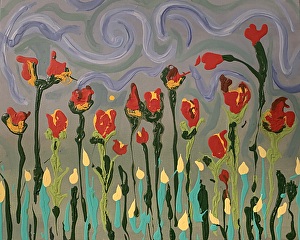
Spring Burst

In the middle of a pandemic, life continues with its challenges, excitements, and disappointments. It gives us time focus on what is important and what is not, and to realign proprieties to coincide with what we consider meaningful.  

What Makes Life Meaningful? From a distance of six feet, I conversed with a neighbor who confessed  retiring from a lucrative career she never enjoyed. For forty years she went to her law office rather than risk a cut in salary to do something more meaningful. The woman remained trapped in a self-made cage, with little time for anything else. Now that she no longer works, she travels and takes  walks, but her wonderings are unfocused. She stays in a meaningless vacuum while the world spins around her.

There are people who search for meaning throughout  life and never find it. One reason is that they stay focused on what they think is missing rather than what really matters to them.  I’ve counseled men and women who are bored at work, yet rather get involved in meaningful activities during their leisure time, they escape to computer games and YouTube videos. By equating how they earn a living with the essence of who they are, they remain unfulfilled. The two are not the same. 

It is only in the last fifty years that the question of life’s meaning became a distinct field of philosophy. Some philosophers needed a definition. “What are you talking about?” they wanted to know, while others immediately began asking if meaning comes from achievements, a moral character or having loving relationships? They were curious about the role of creativity, of God, and of a willingness to accept the situation you find yourself in.

Some investigated spirituality while others delved into existentialism which provides greater license to follow desires? They asked if meaning involves satisfying sexual yearnings or does it only have do with procreation? To live meaningfully do you focus on personal goals or those of family and society? Answering these questions these takes thought. It seems bizarre that it takes a pandemic to gift us the time to think about  profound subjects.

Many seekers believe “meaning” changes with age and maturity causing the need for periodic queries to take place throughout life. Meaning may not be the same for a twenty-year-old starting a career as it is for a seventy-year-old ending one. For others, like my father, there is a consistency that never varies. Though my father did not attend religious services as an adult, he was a deeply religious man who always acted with a sense of moral obligation.

The Stanford Encyclopedia of Philosophy organizes  thoughts about the meaning of life by describing four ways contemporary philosophers approach the subject. Though the digest that follows lacks many of the pro and con discussions, it gives a taste of what they say.

 a)  The meaning of “meaning” (getting consensus around the word “meaning” has not been easy. Is it best understood biologically? Psychologically? Are some periods during your life more meaningful than others? Happiness, purpose, and worthwhileness are good endeavors to have, but see them as distinct from what is meaningful.)                        

 b)  Supernaturalism – Relationship with spiritual realm  

b1–Soul-centered relationships (how you live outlives your death: If life is to be meaningful then do something worth doing that makes a difference to the world. Justice rather than wickedness must flourish. Most see having a soul as being immortal.)

b2–God-centered relationships (where God is an all knowing: God is all-good, an all-powerful spiritual being grounding the physical universe with a purpose. The meaning in life is to fulfill God’s purpose.) 

c) Naturalism –  Science

c1–Subjectivism (science is within the mind: Meaning of life varies from person to person. Live has meaning if you believe something, seek it out, and reach your goal. Becoming engrossed in whatever you are doing provides meaning ) or 

c2–Objectivism (views science from a physical perspective independent of the  mind: Meaning comes from morality and creativity with out the need for a God’s direction. Without a worthwhile project there is no meaning.  If you take up a worthwhile project and don’t care about it then it too is meaningless.)

 d)  Nihilism (pessimism) – (Life’s meaning can not be obtained and does not exist:

People are inherently dissatisfied. For a life to matter we must add value to the                                   world but we can’t, for everything in the physical world already has value and  nothing we do will make a difference. The universe is millions of years old, so  what does our 75 or so years matter. Bringing people into existence is immoral   if it would harm them.         

The struggle people have finding meaning can be helped by exploring the above paths. Once you understand where you fall on the spectrum, the rest falls more easily into place. For instance, an in-law of mine was a God-centered man who put everything on the shoulders of a supernatural being instead of himself. No matter what he did, whether he like it or not, he was at peace in knowing he lived within God’s plan. He remained stress free through economic hardships, times of war, and illness, certain he was in the hands of a loving creator.


A  taxi driving friend is a subjective scientist type who found meaning in a different way. He sees himself in the center of the universe looking out at life through a prism of what he knows and experienced. He is fascinated by his customer’s stories, because they also see through a unique lens. He tries to get inside their heads so he can add their insights to his understanding of life. My friend meditates daily to control his involuntary nervous system in order to bend it to his will.

On a trip to Kenya, I roomed with a soul-centered Hindu. This lovely young woman grew up reading the Bhagavad Gita as her source of wisdom. She believes in reincarnation, and engages in good deeds, confident she will be reborn in a higher realm in the next life. Without using threats, promises, or coercion her religion enjoins her to act as she thinks best, which she does with grace and compassion. She meditates to find center so she will know herself before reaching out to others.

My Niahlist friends who say there is no meaning to life, agree that there can be purpose and say that we are better off creating our own. Nazi concentration camp survivor, Viktor Frankl wrote form his observations that people are not motivated by pleasure as Freud thought or power, as Adler believed, but by meaning. “The point,” said Frankl, ‘”is not what we expect from life, but rather what life expects from us.”  He advises people to   1) Experience reality by interacting authentically with the environment and with others.  2) Give something back to the world through creativity and self-expression, 3) Change your attitude when faced with a situation or circumstance that you cannot change.

My thoughts about the topic continue to evolve. When younger, I was God-centered and at another stage, I was a Nihalist. Today I’m more of an Objective Naturalist. It is why it is easier for me to research and write a non-fiction book than a fictional one. As a housewife scrubbing toilets, mother comforting my child’s hurt, hostess serving friends, or business woman closing deals, I felt what I did had meaning when I was fully engaged in doing my best. As an activist, author, and a-whatever-else, I consciously try to make the world around me better. I strive to understand complexity in society, workings of the physical world, and to grasp psychological and biological aspects of the mind. But, meaning only comes from doing something with the information I accumulated.  At this stage in life, I find meaning when transfering what I’ve learned to the next generation.

I wrote this article because of the seekers who visited my “Do You Need a Mother Booth” at Shift Music Festival, for clients who came to my office wanting to end their lives, and for older friends and stay-at-home parents who say they are bored and live a meaningless existence.  Living without meaning can be as stressful as having fears caused by a pandemic. If you are the type of person who finds that being alone with your thoughts feels like too much to bear, try to go a little deeper within to ask yourself why. You’ve been given the gift of time to find the answer and to reorient your goals in a meaningful way.

References:

Metz, T. (2013) The Meaning of Life. The Stanford Encyclopedia of Philosophy. retrieved from  https://plato.stanford.edu/entries/life-meaning/

Burton, N. (2018) What is the Meaning of Life? Psychology Today.  retrieved from  https://www.psychologytoday.com/us/blog/hide-and-seek/201803/what-is-the-meaning-life

What’s Next? Blue Laws?

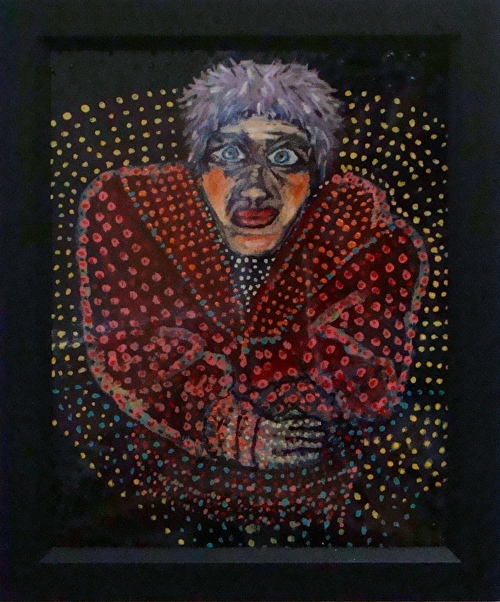
Personal Space

What’s Next? Blue Laws?

The way families have adapted to staying home, remind me of the Blue Laws ruling Pennsylvania when I was young. Each day parents and their offspring hop, run, and walk by the side of the road while chatting as though the world depends on what they have to say. Without the worry of cars whizzing by, the father and children next door shoot baskets from the street into a hoop near his house. Neighbors say they limit screen time and spend afternoons assembling puzzles, experimenting with recipes, and playing games. My guess is that monopoly, scrabble, and charades are favorites. 

Restrictive Sunday laws were first enacted in America in 1682 a year after William Penn established a government in the colony that later became Pennsylvania. The term Blue Lawdidn’t come into common use until1781 when a  document printed on blue paper in Puritan, New Haven was circulated. It listed regulations that forbid regular work, buying, selling, traveling, public entertainment or sports on Sunday. The word “Blue” was also used disparagingly in the 18th century to mean “rigidly moral.” Most colonies had similar laws but, in general, they lapsed after the revolution. Still, statutes remain on the books in numerous states, especially in defining hours for selling alcohol (prohibited all day in Mississippi). 

Some existing laws of interest: A few counties in Florida limit the number of hours alcohol and sex toys can be sold on Sundays. Hunting remains illegal in Maine and Pennsylvania with an exception in Pennsylvania allowing for foxes, crows, or coyotes to be killed. Michigan, Illinois, Oklahoma, and Maryland (except for three counties) don’t allow motor vehicles of any kind to be bought or traded. It took until 2016 for Fort Smith, Arkansas to repeal a law banning dancing on Sundays. Bergen, New Jersey is the only county in the country that still practices Sunday closing laws. A vote to repeal them regularly appears on the ballot only to be overwhelmingly shot dow. In Bergen,  the only open conveniences are grocery stores, pharmacies, hotels, and restaurants.

Originally put in place by religious organizations, Blue Laws are what economic historians call a “moral economy” while secular minded people see them as a violation of church-state separation. Labor unions have historically supported the concept of a rest day to carve time away from work and to give working people a chance to engage in civic duties like voting. Labor sees Blue Laws as protection for large swaths of working-class service employees from arbitrary scheduling and seven-day workweeks. Unions also express concern for white-collar workers who find their time invaded by emails, demanding immediate answers. A law restricting nonessential businesses from functioning one day a week would eliminate the creeping take over of work into every waking hour.  

I remember a time when all stores in Philadelphia, including grocers, were closed on Sundays. The day was given over to all sorts of family activities.  Teens and young adults picnicked, hiked, joined recreational sport teams, and partied in parks and each other’s homes. Grandparents, aunts, uncles, and cousins came together in multi-generational gatherings. 

Our family enjoyed long road trips to view fall foliage and spring blossoms. We purposely got lost and made a game out of finding our way home without a map (there was no GPS at the time). During the summer, New Jersey beaches offered a break from the city’s stifling heat (no air-conditioning either). We piled into our Buick with a trunk loaded with blankets, buckets, towels and a change of clothes. It was hard sitting still during the two hour drive, when the thrill of riding and ocean waves and digging holes to China was before us. As the afternoon waned, shedding bathing suits for shorts, we went for dinner and a walk on the boardwalk. Before the casinos took over, the boardwalk was lined with family friendly shops and carnival like entertainment. Feeling mellow after a day in the fresh air, we drove home glued to Mystery Theater, Father Knows Best, and the Green Hornet.

These excursions didn’t happen every Sunday. Some days were spent in the garden or making household repairs. Other times we visited relatives. Occasionally we’d attend an afternoon baseball game. I knew the name and number of every Phillies player and cheered them on. In those days ticket prices were reasonable for a family of six, and kids stood outside hoping to catch a home run ball to use as their entrance to the park.

One spring afternoon, we went to a farm to look at the newborn goats and sheep. I will never forget my ten year old brother climbing a billy goat enclosure only to get butted in the you-know-where. I laughed while he cried, his pride being hurt more than his derriere. New Hope, a pretty tourist town in Bucks County, was a favorite destination of my parents. While most of us wandered galleries and gift shops, Dad headed to the barber shop for a haircut and to hear town gossip. The barber was the elected mayor and his shop the meeting place for politicians and businessmen.  

Designating a day of the week off from work so that families and friends can spend time together is something all political parties should embrace. The pandemic certainly requires too much of us, but it is good to realize we are communal beings who need to spend time with each other.  Shopping may be inconvenient for some, but with the ability to order on-line that should not be an inhibiting factor. A day of rest and recreation improves health, lowers blood pressure and cortisol levels, decreases stress, and increases creativity. It helps us become better at our jobs, more available in our relationships and more energetic with our families. Life, in general, becomes more enjoyable with time to relax and think. 

Let’s save what we found to be good from the pandemic by starting a movement to retain a day of the week for the country to slow down so people can be together with family, friends, or simply alone in solitary peace. 

I’ve been thinking about what to name our day.  The world Blue has too many religious undertones for those who want a more secular day. Rainbow, Pink or Green might have worked but they too have connotations that are not inclusive. How about putting on your thinking cap and sharing suggestions of what to call it?

Meeting and Greeting During a Pandemic

I look forward to your comments on my blog site below.

Art is always for sale. Contact me at marilynne@eichingerfineart.com

Personal Space – acrylic on deep canvas / 20” by 16” / $ 299 

References:

The Editors (2020) Blue Law American History. Encyclopedia Britannica. retrieved from https://www.britannica.com/topic/blue-law.

Stone,L. (2018) Why we need “blue laws,” the religious tradition that sanctifies life outside of work. Vox. retrieved from https://www.vox.com/the-big-idea/2018/10/2/17925828/what-were-blue-laws-labor-unions

Scott,E.(MS) (2019)How to take a Break From Work (Why You Need It). Verywellmind. retrieved from https://www.verywellmind.com/why-you-should-take-a-break-3144576

Muschick,P .(2020) Pennsylvania blue laws: It’s illegal to play ball on Sundays on most towns. How that once cost a 23-year-old man his life. The Morning Call. retrieved from https://www.mcall.com/opinion/mc-opi-pa-blue-laws-baseball-football-muschick-20200124-2ypbs6u4k5cmfar5weir6xpndm-story.html

#Solace in the woods

Woods outside my house

Life continues. Just as 2019 gave birth to Covid-19, so does spring burst with new life. The woods adjacent to my home hold great wisdom – one just has to pay attention to its cycles. There are days when I move quickly past the trees, demanding my muscles move in harmony with my breath. But there are times when I meander slowly and try to understand what the plants and birds whisper in my ears. 

My path is lined with trillium warmed by the early spring sun. Though its bloom lasts only a short while, it marks the change of seasons. Its flower is extremely fragile yet the plant provides food. At maturity the base and core of the ovary turns soft and spongy, producing small fruits. Ants take them to their nest where they eat the fruit and discard the seeds in their “garbage,” where they germinate, providing beauty for those passing by.

Trillium

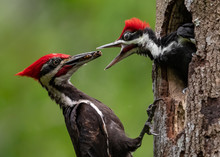
 I heard the persistent tat, tat tat sounds of a pileated woodpecker’s drumming, and noticed an old snag he most likely perches on when people aren’t around. Years ago tiny holes dotted the trunk when I hiked past. Today, they have expanded into small caverns. Though it the tree appears dead, nature’s supermarket has full shelves and continues to nurture its patrons.

An old lady holding her head watched me as I turned a bend and continued up the path. She warned me to be careful so as not to fall. Though a downed tree made a convenient bridge to shorten my walk, I heeded her advice and took the long way round.

I miss the children I befriended, American citizens from an Etheopian and Samali immigrant family. Wednesday mornings were my day to take the four year old on trips to the library and river to feed ducks. I passed this wonderful tree and was sad knowing that she and her older sister would enjoy nature’s play structure. Now they have to wait until it is safe to go out.

Nature’s Playground

There is much death in the woods, but that is not bad.  As trees age and fall, slowly returning to soil, they nurture new life. New trees grow from their bellies and mushrooms flourish on their bark.

Even young and strong varieties have symbiotic relationships allowing vegetation to share its vitality, though invasive species like English Ivy, often smother the life force from its limbs.

I like it all – the deep earthy smells, the sounds of song sparrows drowned by loud cackling crows, and the frogs jumping in the creek at the bottom of the hill. Nature can show itself to be lovely and gentle but also as rough and brutal. I am driven to seek out beauty that propels life forward but understand that the dark side is also a part of the cycle.

#Caronavirusfear

The Garden
Think spring, welcome the sun, plant for the future and push back anxieties. 
“Is it useful to feel fear, because it prepares you for nasty events, or is it useless, because nasty events will occur whether you are frightened or not?” Lemony Snicket

Facing Fear in a Pandemic

It is human nature to fear. Fear allows us to increase our supply of adrenaline and react quicker when things happen around us. It allows us to realize that there are things out there that can hurt us and take the proper precautions.

Fear can be a good thing. It has been saving our ancestors butts since the time that they  hunted Wooly Mammoths with nothing but stone weapons and atladls (look it up). It has an important place in our lives, but it can also hold us back. Unlike in caveman times, we do not need to live in a constant state of fear. Too much, converts to stress and anxiety, making our lives more troublesome. Dealing with stress can turn into a health issue tat is worse that the thing we actually fear. 

I believe that it’s never worth worrying twice. Take precautions for sure – but then relax, for the event may or may not occur. While waiting, manage anxiety so you will be able to act calmly and intelligently if the situation does become critical. A few ideas follow.

Proven Ways to Relieve Stress

1. Drink Tea Chamomile tea has been noted to be a sleep aid.

2.Go for a Walk – it decreases stress by pumping your brain’s feel good receptors and lowers depression and anxiety. It can give you a feeling of control over your own body.

3.Reduce/eliminate Coffee and/or Caffeine – caffeine exaggerates and prolongs stress. 

4. Eat more Ginger – it has long been deemed as a homeopathic stress reliever. 

5. Disconnect from technology – Don’t watch the news all day to hear the latest coronavirus figures or stock  market dip. Once daily will keep you informed.

6. Get a good night’s sleep – try that tea before bedtime.

7.  Avoid process foods that are rich in refined sugars and white flour. They skyrocket insulin levels. No to junk food, fired foods, and food with preservatives.

8. Take Flax-seed Oil.  It reduces blood pressure, constipation, cholesterol, inflammatory diseases, anxiety.

9. Practice breathing techniques – deep breathing – inhale a larger than normal volume of air, hold it in your lungs for five seconds and exhale slowly over five seconds. Repeat 10 times.

10. Try mindful meditation. According to Harvard University it has a positive effect on stress and anxiety.

11 – Listen to soothing music, music that makes you happy. It can also help you think more clearly. 

12. Take a break to do something you enjoy.  Read (fiction is particularly beneficial at reducing stress )  Paint. Sew. Chop wood. Watch a funny TV show, Call a friend. Do a jig.(With added time on  my hands, I’m planning to paint.)

13. Write it down – Journaling is an effective stress management technique.

14. Roll you way to health with a foam roller. It can reduce stress.

15.  Cater to your sense of smell – aromatherapy using essential oils, especially lavender, have a positive effect on stress reduction.

16.  Smile – It is difficult to be anxious when smiling. Smile at friends to help them feel good. Force one on your face even if you don’t feel like it.  Smile at yourself in the mirror. You’ll be surprised at how the simple act of smiling can make you feel better. 

Proven Ways to Relieve Your Stress can be found at Develop Good Habits.  https://www.developgoodhabits.com/dealing-with-stress/  

Foam Roller

You gain strength, courage and confidence by every experience in which you really stop to look fear in the face. You are able to say to yourself, ‘I have lived through this horror. I can take the next thing that comes along.’ You must do the thing you think you cannot do.”Eleanor Roosevelt

____________________________

Are there special tricks you use to overcome anxiety and fear? Do share them on my blog site so all can benefit.

Art is always for sale. contact me at marilynne@eichingerfineart.com

The Garden – acrylic on heavy board, gold metal frame, 37’ x 37” – $ 699

Steve Johnson – Hopscotching Through the Age of Bots

The Estate (NFS) 
While I created homes on my easel, Steve Johnson built structures on his computer. Our hobbies evolved and we began selling our creations.

Steve Johnson – Hopscotching Through the Age of Bots

He discovered his passion, not once, not twice, but many times over the course of his 62  years. What fascinates me is how Steve Johnson, former NBA All-Star, grabbed on to his dreams and turned enthusiasm into paying ventures.  

Being the third of six children in a family headed by a disabled vet on disability and a school bus driving Mom was not easy. Poverty led them to a cinderblock  apartment house in Watts, California, with bars on the windows and the sound of gunshots outside the front door. Fortunately, they moved to San Bernardino one year before the Watts riots. 

Mom was a Seventh Day Adventist who insisted the children attend private Adventist schools and attend prayer meetings several evenings a week. Dad buried himself in their garage practicing for hours in his music studio though, according to Steve, he never managed to play one song all the way through.  He insisted the children play an instrument and though Steve could play several horned instruments by ear, unlike his brother, he never took to it. He had other things on his mind, especially after discovering his first passion.

At the age of fourteen, his father took him to watch his cousin in a practice basketball game in L.A.  At the end of the session he was introduced to the man who later become his coach. That evening his cousin joined the family for dinner. The boys went to a playground afterwards to shoot baskets. His cousin showed him a few moves and advised him to learn the hook shot, advice that made him unstoppable on the court. By the end of that eventful day, Steve knew what his future would be. 

Academically he was an underachiever. School didn’t interest him so he struggled. But, he was a thinker and a planner capable of developing goals in his early teens. They were;

  1. Get to a public school
  2. Get noticed in high school and receive a scholarship to college
  3. Become an All American
  4. Be a first round NBA draft pick
  5. Become an All Star.

His first goal was the most difficult to achieve. Since Adventists didn’t play team sports, he had to battle his parents over leaving school for an out of district public education. He ran away several times hoping to establish residency but failed repeatedly. He wasn’t successful until the summer before his senior year when the high school coach introduced him to a man who let him stay in a condemned house he owned.  Steve used a coat hanger to enter. To eat, he pilfered food and other items he could sell for cash. He avoided prostitutes and the gambling room at the back of his house, and convinced the board of education to let him transfer in despite a ruling that kept seniors from doing so.

That fall, without ever having played on a team, the coach took a risk and let the 6’10” athlete join. Half way through the season, the starting center was hurt. Steve played in his place, made 25 points, and earned a permanent spot in the game. During the rest of the season he stacked up enough points for six colleges were interested in giving him a scholarship. He chose Oregon State University and played basketball for four years under Naismith Hall of Fame coach, Ralph Miller. There, as a record breaking athlete, he became All-American and PAC-10 Player of the Year in 1981, eventually being inducted into the Oregon Sports Hall of Fame.

Playing for the Blazers

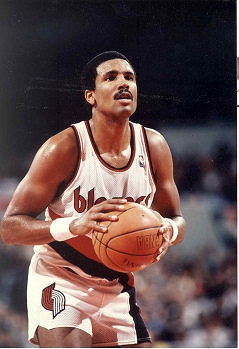
Upon graduation, Steve was the seventh pick in the first draft of the NBA. Over the course of his career he played for Kansas City Kings, The Chicago Bulls, San Antonio Spurs, Seattle Supersonics and The Portland Trail Blazers. Ten years later Steve was ready to retire after living with the pain caused by years of wear and tear on his feet.

In retirement he undertook several entrepreneurial ventures, that flourished and sputtered in the recession of 2008. He remained self-confident and driven and stayed focused on the idea of being successful-this time, as a businessman. His present undertaking fascinates me for it shows what a person can do who is willing to take a calculated risk and embrace change. His passion started with a computer came he played for fun. He became as absorbed in this new hobby as he did playing basketball.

Not a strong reader, Steve relies on YouTube Videos to teach him what he wants to know. He sees himself as a self-taught natural problem solver who knows how to mine and analyze social media for data. He is a planner and a goal setter who doesn’t give up.

The Sims is a computer game that allows players to explore a digital world where they buy property, design and build houses, and furnish them to their taste. When the game became internet connected, players could communicate and share information but The Sims had drawbacks. Steve’s son introduced him to Second Life, a more sophisticated game offering better tools and a marketplace for players to sell their designs. One day, with the help of his Avatar, Steve took a world tour and discovered a man building virtual boats. Rather than pay $40 to purchase the design, Steve started building his own yacht. When the president of Christensen Yachts discovered similarities to their boats, Steve was given permission to use their name. His virtual yachts sold for $175.

Millions of dollars are spent and made on  simulation games. Some players move on to well paying jobs in the real world. Virtual players become racers, drone and robot operators, marketers and fashion designers. Many tech companies are attracted to entry-level job candidates who cite playing or developing video games as a hobby. According to Ashley Deese of the Smithsonian Institution’s science education center in D.C., “They (gamers) tend to be problem solvers, organized, and adaptable.”  Law student Aylmer Wang, said gaming taught him “leadership, entrepreneurialism, dedication and organization.” Gamers are motivated and determined says Christopher McKenna, head of a student recruiting for the law firm Bennett Jones LLP.

During the 2008 recession Steve realized that when the economy returned, yachting would not be the same. New customers with money would come from high tech, yet they were unaware of yachting. Rather than purchase boats, Steve imagined them more willing to charter them. The going rate to charter a 100 to 160 foot yacht is between $100,000 and 300,000 a week, plus expenses. There was money to be made and he wondered how to turn his hobby into a lucrative business in the real world.

Under the name of Monaco Yachts, Steve created virtual experiences for potential customers by placing them on yachts and take them to places they might visit on a chartered boat. Final contracts are often signed at yachting conventions taking place around the world. His web site, yachtinglifestyle365 is basically a marketing brochure–a very successful one that writes about the yachting lifestyle.

Steve’s story is an example of why our current system of education needs to be improved to help students survive in the age of bots. Workers of the future will need to be flexible, team oriented, determined and confident of their ability to learn on their own. They will skills that enable them to adapt to change and hopscotch across occupations.

A goal of the education system should be to help students find their passion. To do so, vocational options, exercise, crafts, the arts, and computer games need to be blended with academics to insure graduates develop meaningful leisure time activities. High school students should leave with enough self-esteem to enable them to shift confidently as the economy changes. Letting students pursue activities they passionately embrace, teaches them what is involved in setting goals, acquiring skills, and achieving a modicum of success.

Resources:

Needleman S. (2019) When a Passion for Videogames Helps Lad a Job. Wall Street Journal. retrieved from https://www.wsj.com/articles/when-a-passion-for-videogames-helps-land-that-job-11551888001

Molloy,D.(2019) How playing video games could get you a better job. BBC News. retrieved from https://www.bbc.com/news/business-49317440

#Hobbies

Cool Daddy
My son painted this picture when he was younger and I enhanced it several yeas ago. We won a $100 award at an art festival and enjoyed a fine meal afterwards.

Hobbies in an Age of Bots

This is the third in a series of newsletters about survival in the age of bots. It is time to tune into the likelihood of millions of workers being laid off because of advances in robotics, automation, and artificial intelligence. The labor force’s participation rate has steadily declined, forcing unemployed people to occupy their time in some way. What do they do? The chart below from the Bureau of Labor Statistics shows only 63 percent of working age people employed, a drop from 67.4 percent 11 years ago. The one that follows show unemployment rates by educational attainment.

Civilian Labor Force Rates
Unemployment by educational attainment.

To live contentedly though the next 50 years, youth will need far-reaching ways to think about work. The jobs they take as graduates may not give them the satisfaction they crave nor provide them with a purpose for going to work each day. Being passionately engaged in a leisure time activity may be what is needed to keep depression and drugs at bay. Hobbies are not only satisfying, they can lead to employment that has nothing to do with college courses or training undertaken earlier.

I’ve spoken to people whose hobbies changed the course of their work lives. It is fascinating to discover how their early experiences built self-esteem, enabling them to develop into flexible adults capable of changing direction. Last week I wrote of Dan Stueber, a drummer turned archeologist specializing in stone tools. This week my youngest son Talik gave me permission to share the unusual path he is on.

Brendan Talik Eichinger

To supplement grade school teachings, Talik was given piano lessons and participated in gymnastics, joining a team in middle school. During the summer he attended robotics and computer camps with like minded boys hooked on networked gaming. Before internet was common, we mothers had to drive our sons with their heavy computers to a home where a LAN (local area network) was set up. The boys spent the next several days engaged in fantasy and role playing games, eating pizza (boxes and boxes of it) and sleeping at random hours on the floor or sofa.

Since he was a hands-on learner, we enrolled Talik at Benson High, a vocational school with a strong computer programming and assembly component. Augmenting the academic curriculum were practical offerings like metalworking, woodworking and small engine repair. He was introduced to electrical wiring, electronics and fabrication. After school, he rock climbed, a skill requiring focus, and late nights he joined drumming circles held in parks distant from those trying to sleep.

Programming computers in high school and OSU led to his first job as an IT specialist. After several years he left to start Mezr, Inc, a web design company employed by large businesses such as Jack-in-the Box. Though he and his employees work diligently, it is his after work activities I find most unusual.

Burning Man’s art/science festival motivated Talik to become a contributing participant. He moved into a vacant transmission shop, carved out living quarters, and filled the remainder of the space with tools, welding equipment, and large work tables. Wednesday evenings were designated as craft night.  Twenty to forty people came to work on their own projects as well as communal ones for the festival. He attracted artists, electronic, light and sound specialists, electricians, welders, designers, woodworkers, and computer programers. There were also a sprinkling of marketers, organizers, accountants and lawyers. They came for inspiration and to build community These gatherings reminded me of my early days of starting a science museum with volunteer help in Michigan.

Hobbies have a way of evolving. Tectonic was born when Talik and friends designed, sewed, and assembled a large colorful tent with fire spewing from thirty foot center poles. The tent surrounds a stage where DJs add their effects and mix recorded music and where bands can play before gyrating crowds. Light sculptures, laser shows, fire dancers, and acrobats provide additional entertainment. When more powerful speakers were needed, they were built in-house. If not needed for festivals, they are rented to events that hire Tectonic to manage sound.

After accumulating a mountain of equipment, the logical next step was to organize a summer event of his own. Shift Festival, now in its fifth year, takes place in July south of the Dalles. It has grown steadily, yet prudently. Advertising is primarily by word of mouth to discourage drunken ya-ya party-goers. Having attended for several years, I can attest that it is a well managed, artistically interesting, musically immersive venue with safety of great importance.

Talik’s hobby was started in part to counterbalance hours of sitting in front of a computer. This winter Mezr moved into a new 10,000 square foot warehouse in an industrial park. Its subsidiary, Tectonic,  set it up as a place for private parties and music events. An opening bash for Shift 2020 is scheduled for March 13th to launch ticket sales.

The festival and music part of Talik’s business has expanded so rapidly that it may overtake the internet design company. What was a hobby is now a second job, causing him to work and worry ’round the clock. There are employees and volunteers to supervise. Thankfully, they passionately share his burden and help maintain a vision of building a community that inspires creativity. 

Each child and every working adult will have to grow up able to bend, twist, and change direction as the economy and world changes.  Educators and parents can help children think more creatively, learn to take reasonable risks, and encourage them discover a passion. A broad liberal arts education, vocational options and leisure time hobbies will go a long way to ensure the next generation survives in the age of bots.#Ho

References:

Civilian labor force participation rate (2020)  U.S. Bureau of Labor Statistics. retrieved from web site at https://www.bls.gov/charts/employment-situation/civilian-labor-force-participation-rate.htm

Yang,A. (2018) The War on Normal People. Hachette Book Group.  ISBN 978-0-316-41424-1, New York, NY.

#FutureOfWork

Oregon City Falls
Oregon City, located at the end of the Oregon Trail, was the first city west of the Rocky Mountains to be incorporated. It also boasts being the site where the first long distance electricity was sent over wires, traveling 14 miles to Portland. It takes a boat ride to fully see how the area has changed. Mills that used to line the river are abandoned and buildings look dilapidated. Change is a constant in everyone’s life. Are you ready for it?

Preparing for Work-Part 1

Following is the first of a series of newsletters discussing education and employment opportunities for working age people. This blog provides background information that will feed into stories about how to adapt in an era where rapid changes in the economy, political climate, technology, and environment are the norm.

Parents often direct their high school graduates to enter fields that pay well in today’s marketplace. As a result, students register for college classes that are narrowly targeted towards careers they may or may not be interested in. Though current research shows that attaining a higher education leads to a better job, only 58% of those starting college graduate according to the National Student Learning House Research Center. This means that only 6 out of 10 enrolled students will receive a degree by the end of six years. Those leaving early can be so weighted down with debt that they will never have the earning potential to pay it off. 

In 2019, postsecondary enrollments decreased by 1.3 percent, though the completion rate did rise a piddling amount. Business, marketing, health related professions, and general studies are among the most popular majors for entering freshmen.

Colleges increasingly find it difficult to make ends meet, causing them to  become more inventive.  They lure students in with degree or certificate granting programs in such fields as casino management, cybersecurity, sports communication and business, eSports, competitive video gaming, food studies, hip-hop studies, social entrepreneurship and aging, beer fermentation, wine and viticulture technology, and manufacturing. There are masters degree offerings in peace education, political campaign management, and embodiment studies (Goddard College describes this as “honoring the intelligence of the body and its capacity for insight and liberation with respect to lived bodies, social bodies, and the living earth.” Some, but not all of these programs are good bets.

Technology has had a major influence on the way classes are taught. The number of students enrolled fully online increased dramatically during the last few years. In the past, work and family obligations were typical reasons given for distance learning, but today a growing number of students (34 percent) say they prefer to learn this way. Those under 45 years are likely to use mobile devices to complete course related activities.

Most college students work, but the type of work they do and the hours employed differs for low and high income students. Low-income students are more likely to have full-time jobs than those with financial resources. Unfortunately, students working 15 or more hours per week have C grade point averages or lower. Those employed less than 15 hours a week attain B average and higher grades. In general, lower income students enroll in associate degree and certificate programs while those with higher incomes aim for bachelors degrees. 

The greatest difference between the poor and the wealthy is that low-income students work to feed and house themselves while their more privileged colleagues work in order to make connections for long-term professional and academic reasons. This disparity tends to “compound social inequity” according to Lindsay Ahlman at the Institute for College Access and Success. In other words, all too many students, have to choose between studying or working for their food and shelter. 

Student homelessness has been on a steady rise. Approximately 1.5 million public school students experienced homelessness during the 2017-18 school year. Among college students the situation is reaching crisis proportions. The Hope Center for College, Community and Justice found that 18% of two-year college enrollees and 14% of those in four year institutions are essentially homeless. They live in cars, couch surf occasionally with friends and stay in overnight shelters. Insecurity affects their emotional stability, creating doubts about their future. 

Not everyone is college bound, but a stigma still exists in choosing a trade school over college. This is especially true for youth living in households where their parents consider college to be the only true path to success. 

Despite this disdain, trade-school enrollment is up from 9.6 million students in 1999 to 16 million in 2014. This follows a decline in the 80’s and 90’s that left the country with a shortage of skilled workers and trades people. Many vocational jobs, though, requires four or more years training that includes attaining computer skills. Businesses like general motors and Intel work have joined forces with colleges and unions to offer a mix of on-the-job-training with academics. Half of the secondary school students in Europe are enrolled in vocational programs. It ’s time to get rid of the college-for-all narrative in the U.S.. 

The next fifty years are going to be quite different than those of the boom years following the second world war. Computers and robots have already assumed jobs previously held by people. Drones and driverless trucks will deliver packages. Legal research, accounting, computer programming, web design, and call center systems are being managed by people in distant countries like India. 

Youth are going to have to develop the mental aptitude and flexibility to thrive in a chaotic altered landscape. What a person studies in college may not be related to their employment twenty years later. Being curious, having a broad perspective, and the ability to problem solve is apt to prove more valuable than a narrowly defined expertise.  

Since this is likely the situation students will face, what do they need to know to be able to move-within-the-flow of uncertainty?  Let’s think about this question and consider it more fully over the next few weeks.

Next week – Preparing for the Future: Part II – The Path Least Taken

References: 

Nadworny,E. (2019) College Completion Rates are Up, but the numbers will Still Surprise You. NPR. retrieved from https://www.npr.org/2019/03/13/681621047/college-completion-rates-are-up-but-the-numbers-will-still-surprise-you

Marcus,J ( 2018)Panicked universities search of students are adding thousands of new majors. The Hechinger Report. retrieved from https://hechingerreport.org/panicked-universities-in-search-of-students-are-adding-thousands-of-new-majors/

current statistics  (2019)  Term of Enrollment Estimates, National Student Clearinghouse Research Center. retrieved from  https://nscresearchcenter.org/report-search/

Lederman,D. (2019) Online College Studenets.  Inside Higher Ed. retrieved from   https://www.insidehighered.com/digital-learning/article/2019/06/05/annual-survey-shows-online-college-students-increasingly

St.Amour,M. (2019). Working College Students. Inside Higher Ed.  https://www.insidehighered.com/news/2019/11/18/most-college-students-work-and-thats-both-good-and-bad

Zaveri,M. (2020) Number of Homeless Students Rises to New High, Report Says. New York Times. retrieved from https://www.nytimes.com/2020/02/03/us/Homeless-students-public-schools.html

Jones,C (2019) Homeless in College: Students sleep in cars, on couches when they have nowhere else to go. USA Today. retrieved from https://www.usatoday.com/story/money/2019/06/10/homelessness-among-college-students-growing-crisis/3747117002/

St-Esprit,M (2019) The Stigma of Choosing Trade School Over College. The Atlantic. retrieved from https://www.theatlantic.com/education/archive/2019/03/choosing-trade-school-over-college/584275/

_________________

Art is always for sale. Contact me at marilynne@eichingerfineart.com

Oregon City Falls– Acrylic on canvas – 36” x 48” – $ 1,100

#transformations

You Decide

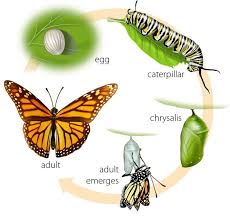
“We delight in the beauty of the butterfly, but rarely admit the changes it has gone through to achieve that beauty.”  Maya Angelo 

Maya Angelo made me think about how I’ve changed over the past one hundred and ten active years (I wish).

Metamorphosis of a Butterfly

The Beauty of a Butterfly

Developmental psychologists have differing ideas about of the number and kind of transformations human beings experience in a life time.  In the mid-1900s, German-American Psychoanalyst, Erik Erikson, coined the word identity crisis which brought about changes that occurred in childhood, adolescence, and emerging adulthood. And, he spoke of eight stages of virtues people acquire throughout their lives.

Dr. Thomas Armstrong, Executive Director of the American Institute for Learning and Human Development, says their are twelve developmental stages.  Developmental psychologist, Piaget, noted four childhood stages.  Rudolf Steiner extended Piaget’s thinking into adulthood and added three more. My head whirls with competing ideas of how often transformation takes place, but in, general they, they all focus on cycles of learning, changing, and transforming to attain beauty. 

A question raised by psychologists is whether human development is a continuous or discontinuous process.  Most agree that failure to successfully complete a stage can result in an unhealthy personality and unrealistic sense of self, but they disagree about the stages need to be completed in an age order progression. I happen to believe that there is no set age for a transformation to be complete. 

Dr. Armstrong writes, “Since each stage of life has its own unique gift to give, humanity needs to do whatever we can to support each stage and to protect each stage from attempts to suppress its individual contribution to the human life cycle.” What does this mean? It means we need to be careful not to apply undo pressure to preschoolers to achieve academic success, that parents need to be taught to support and recognize their child’s developmental stages, and that the wisdom of seniors needs to be acknowledged and protected from elder abuse. It also means giving everyone the care and assistance needed to blossom to the fullest degree possible.. 

I like the way Armstrong discusses the stages and why completing each one successfully is important in later life. A synopsis follows.

  1. Prebirth:  Potential – Parents dream. The child who has not yet been born could become anything – a Michelangelo, a Shakespeare, a Martin Luther King.
  2. Birth:  Hope – A newborn instills a sense of optimism that this new life may bring something new and special into the world.  
  3. Infancy (Ages 0-3):   Vitality – The infant is a vibrant and seemingly unlimited source of energy.  
  4. Early Childhood (Ages 3-6):  Playfulness, innovation, transformation – Young children at play recreate the world anew to combine what is possible with what has never been seen before. 
  5. Middle Childhood (Ages 6-8): Imagination – The sense of an inner subjective self developing for the first time serves as a source of creative inspiration in later years.
  6. Late Childhood (Ages 9-11): Ingenuity – Acquiring social and technical skills enables children to develop strategies and inventive solutions for dealing with the pressures society places on them. Ingenuity lives on, helping adults seek ways to solve practical problems and cope with responsibilities.
  7. Adolescence (Ages 12-20):  Passion –  Puberty unleashes powerful changes reflecting sexual, emotional, cultural, and/or spiritual passion. It remains a touchstone for adults seeking to reconnect with their inner zeal for life.
  8. Early Adulthood (Ages 20-35):  Enterprise – Young adults become entrepreneurial in order to find a home and mate, establish a family and/or circle of friends, and get a good job.  Enterprise helps young adults go out into the world to make their mark.
  9. Midlife (Ages 35-50):  Contemplation – People in midlife commonly take a break from worldly responsibilities to reflect upon the deeper meaning of their lives. Contemplation is a resource to draw upon for enrichment at any age.
  10. Mature Adulthood (Ages 50-80): Benevolence – Mature adults contribute to the betterment of society through volunteerism, mentorships, and philanthropy.  Humanity benefits from their benevolence. 
  11. Late Adulthood (Age 80+): Wisdom – Elders can help younger people avoid the mistakes of the past while reaping the benefits of lessons learned throughout life.
  12. Death & Dying:  Life – Those who are dying, or who have died, teach us about the value of living and remind us not to take our lives for granted.

Where I am? Did I complete each stage successfully or do I still have some work to do to transform fully. I do wonder if the wisdom I believe I acquired is relevant. The world is not the same as it was when I was a child. Technology, population increases, methods of communication, and environmental degradation add dimensions to my childhood experiences.  

Young adults aren’t interested in listening to dinosaurs who live in the past. They want to explore life on their own. The enjoyable challenge of being alive is partaking in the process of discovery. They willingly risk making mistakes in order to learn on their own. This is why historians find missteps in governance, war and social order are repeated many times over. 

China’s dynastic tradition presents a good, though oversimplified, example. Enlightened rulers were followed by generations who inherited positions of power. Successive rulers became lazy and greedy, causing ordinary citizens to suffer until the leadership was overthrown, bringing about dynastic change which started the process again. Through the past 5000 years, China watched numerous dynasties collapse and new ones gain in strength. Yet, societal transformation was slow, falling into five major stages— Primitive, Slave, Feudal, Semi-feudal and semi-colonial, and Socialist. 

The wisest thing this butterfly can do before flying away, is to hold her tongue and not tell people how to live their lives, but help them learn to think so that they will grasp nuances and changes in the social and physical environment. Youth needs to know how to gather a range of information, to consider it honestly and critically before making decisions. They need to listen to the news and dig for the truth on their own rather than rely on others to tell them what to believe. Instead of answers, elders should spread their wings over the next generation while they question preconceived values and ideas and integrate their findings with the world as it is today and the way they want it to be tomorrow.  

References:

Armstrong, T. ( 20201 )The Human Odyssey: Navigating the Twelve Stages of Life. American Institute for Learning and Human Development. retrieved from website at https://www.institute4learning.com/resources/articles/the-12-stages-of-life/

McLeod,S. (2018)Erik Erikson’s Stages of Psychosocial Development. Simply Psychology. retrieved from https://www.simplypsychology.org/Erik-Erikson.html

History of China, Travel China Guide. retrieved from their web site at https://www.travelchinaguide.com/intro/history/

————————-

Art is always for sale. Contact me at marilynne@eichingerfineart.com

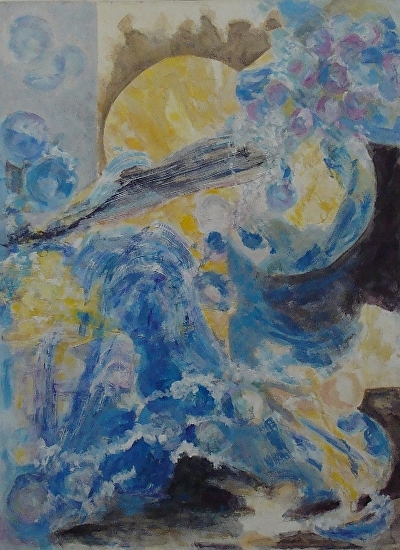
You Decide – Acrylic on deep canvas – 16” x 40” – $ 385

I look forward to your comments on my blog site.

#activeshooter

Eastern Oregon Contemplative 

Remaining calm, aware and ready to act in the face of adversity is a practice that can be learned. 

Active Shooter Preparedness

I don’t think of myself as an alarmist, but do believe active shooter preparedness is necessary for people living in a politically divided, trigger happy country that provides inadequately for those suffering from mental illness, permits extremists to threaten church goers, is unwilling to tackle gun control legislation, and has replaced “pardon me” and “I’m sorry” with “fuck you” and “shit.” 

How people acted in the wild west in the seventeen and eighteen hundreds was more restrictive than now. Tombstone, Dodge City and many other towns required visitors to disarm when they entered, either at a hotel or a lawman’s office. Saloons had the right to bar guns from their establishments and criminals were run out of town. Today, we live next to people who take the right to bear arms as a right to invoke fear and act independent of the law. 

As a member of a center city church that emphasizes the commandment to “love thy neighbor as thyself,” I don’t like to think badly of others. But we were tested when extremists blocked the entrance, shouting obscenities and bible passages condemning us to hell. Choir and congregants handled it well by surrounding the agitators and serenading them with songs of love and peace. The UU church in Washington, DC had a similar experience just two weeks ago. They found the experience frightening. 

Over the years, a great many intimidating situations threatened my equanimity. 

  • My physician father, his office nurse, and a patient were made to lie on the floor at gunpoint by a patient looking for drugs. After the incident was over, he installed dozens of security buzzers throughout. 
  • A close friend was held hostage by men hoping to receive a disgracefully large amount of ransom money. The woman had composure enough to push an alarm alerting the police. 
  • 3) My sleep was shaken by men shouldering our door in an effort to break into our home at 2 am. While I cowered, my partner became instantly alert and was able to frighten them away. 
  • 4) On the East Coast, my cousin’s son, a psychiatrist, was shot by a mentally ill patient he was counseling. Thankfully he lived by knowing how to protect himself.
  • 5) While still a business owner, my facility was burglarized several times. Fortunately, guns were not used. One year, several men broke into my warehouse the day after Christmas and stole hundreds of toys.
  • 6) On another occasion, after being alerted by my security system, I drove in the middle of the night to find a semi truck without plates parked by the facility’s overhead doors. Fortunately, the incident was resolved without violence, but it was a close call.
  • A more violent incident occurred while president of OMSI. A manager fired an employee who instantly turned against the manager, punched him and continued beating him up. We were concerned about the disgruntled employee returning armed.
  • 8) My granddaughter traumatically surviving the horrible 2017 shooting at a music concert in Las Vegas took away the last remnants of my naivety. Thankfully, someone in the audience knew to shout commands of when to duck and later run. Without that person’s awareness, she and others might have remained frozen in place.

I am an ordinary woman who always lived and worked in “safe” neighborhoods without drugs or drive by shootings. Yet, my family and I were victims of the ugly side of human nature. I imagine many of you have similar stories you could share. 

People do not always abide by the laws of love, kindness and fair play that were instilled in me as a child. Recognizing this, I asked myself what I needed to know to respond appropriately to threatening situations, without becoming fearful or paranoid. What would help me think clearly if I found myself in such a setting? The federal government provides advice; “Remember during an active shooting to RUN. HIDE. FIGHT.”

Be Informed

Sign up for an active shooter training. If you see something, say something to an authority right away. Sign up to receive local emergency alerts and register your work and personal contact information with any work sponsored alert system. Be aware of your environment and any possible dangers.

Make a Plan

Make a plan with your family, and ensure everyone knows what they would do, if confronted with an active shooter. Look for the two nearest exits anywhere you go, and have an escape path in mind & identify places you could hide. Understand the plans for individuals with disabilities or other access and functional needs.

DURING, run and escape, if possible.

Getting away from the shooter or shooters is the top priority. Leave your belongings behind and get away. Help others escape, if possible, but evacuate regardless of whether others agree to follow. Warn and prevent individuals from entering an area where the active shooter may be. Call 911 when you are safe, and describe shooter, location, and weapons.

HIDE, if escape is not possible.

Get out of the shooter’s view and stay very quiet. Silence all electronic devices and make sure they won’t vibrate. Lock and block doors, close blinds, and turn off lights. Don’t hide in groups- spread out along walls or hide separately to make it more difficult for the shooter. Try to communicate with police silently. Use text message or social media to tag your location, or put a sign in a window. Stay in place until law enforcement gives you the all clear. Your hiding place should be out of the shooter’s view and provide protection if shots are fired in your direction.

FIGHT as an absolute last resort.

Commit to your actions and act as aggressively as possible against the shooter. Recruit others to ambush the shooter with makeshift weapons like chairs, fire extinguishers, scissors, books, etc. Be prepared to cause severe or lethal injury to the shooter. Throw items and improvise weapons to distract and disarm the shooter.

After

Keep hands visible and empty. Know that law enforcement’s first task is to end the incident, and they may have to pass injured along the way. Officers may be armed with rifles, shotguns, and/or handguns and may use pepper spray or tear gas to control the situation. Officers will shout commands and may push individuals to the ground for their safety. Follow law enforcement instructions and evacuate in the direction they come from, unless otherwise instructed.

Take care of yourself first, and then you may be able to help the wounded before first responders arrive. If the injured are in immediate danger, help get them to safety. While you wait for first responders to arrive, provide first aid. Apply direct pressure to wounded areas and use tourniquets if you have been trained to do so. Turn wounded people onto their sides if they are unconscious and keep them warm.

Consider seeking professional help for you and your family to cope with the long-term effects of the trauma

To these lists I add;

Run over scenarios in your mind, imagining the best way to respond. Envision yourself remaining calm, alert, and looking for an opportunity to escape and call for help. This exercise will help you react rather than remain frozen in passivity if you find yourself in a real situation. 

Make sure doors and windows at home have locks and each night check that they are in place. 

When walking alone be aware of your surroundings. Keep your distance from people who might threaten your safety. Look in the back of your car before entering, ensuring that it’s empty.

Thinking of possibilities in advance and deciding how to react strangely enough is a calming activity. Worry stops and muscle memory steps in if you are prepared. No one wants to live in constant fear. If you do, you would never step into a car or plane again.

To deny that we live in unstable times, is foolish . . . to be prepared as best one can, is wise. My assumption is that most people are kind, helpful, and well meaning. My hope is that with tenderness even the most difficult hearts can be reached. I send these thoughts with love and caring for your safety this Valentine season. 

Resources:

Jancer,M. (2018) Gun Control is as Old as the Old West. Smithsonian Magazine. retrieved from https://www.smithsonianmag.com/history/gun-control-old-west-180968013/

Disasters and Emergencies, Ready. retrieved from the web site at  https://www.ready.gov/active-shooter

RUN. HIDE. FIGHT.® Surviving an Active Shooter Event – English (video)

Please share your thoughts on my blog site. 

______

Art is always for sale. Contact me at marilynne@eichingerfineart.com.

Eastern Oregon Contemplative Acrylic on Canvas/ 21’ by 25/ gold frame – $ 389