Following your ancestral trail through DNA is a fascinating way to feel connected to all of humanity.
Continue reading
Following your ancestral trail through DNA is a fascinating way to feel connected to all of humanity.
Continue reading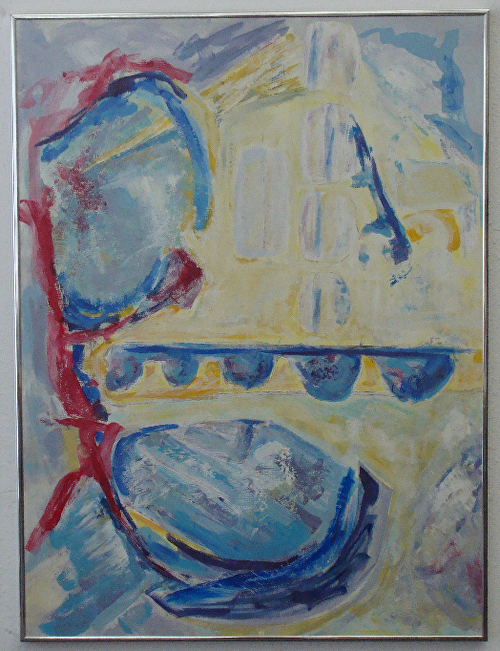
To Look, To See, to Envision.
What does it mean to see well, to see the world clearly, as it is, and to envision the future? A newborn discovers her hands and spends hours fascinated by their shape and movement. A mother turns a switch on a mobile above her sons crib so it will rotate to the sound of a lullaby that helps him fall asleep. As the days go by, a fog lifts slowly from the children’s eyes. The mother’s features sharpen as the infants study her closely while held against the warmth of her body.
Several years later, those same infants are thrust into the reality of every day life in a poor household. They move through their small home, admonished not to wake their father who is sleeping, exhausted from a demanding night job. The mother, absent by day, returns late afternoon after spending eight hours on her feet cleaning houses. She too would like to rest and be left alone.
These parents love their children and work diligently to provide for their offspring. They cope by lowering the shades, turning off lights and allowing the glow of children’s programs to permeate their living area. Television is the third parent in the room. It raises their children by keeping them safe at home though mindlessly occupied and physically inert. Cartoon images flash and high voices babble twenty-four-seven, maintaining a continuous backdrop of sound that put them sleep and greets them awake.
I’ve been observing the household for several yeas and can understand how tight finances can create a visual handicap. The children look but don’t really see. They are not asked to do anything no presented with opportunities to try, fail, persevere, and succeed. They are learning to give up easily.
Interacting with them mades me think about the difference between looking, seeing, testing, and envisioning. Given this background, I wonder how to inspire them to be curious and to search for details in the objects of their curiosity.
My childhood mentors helped me stretch my vision. One demonstrated the scientific method and demonstrated how to bring what observations into the microcosm of my soul. Another coached me to recognize edges. I studied a drop of dew on a leaf, learned to visualize rainbow colors in flash of sunlight, and to smell the perfumes of everyday objects. A third, showed me subtleties of nature, to notice the movements of animals and birds against a background in camouflage. I became aware that wisdom of evolves with stops, starts, twists and turns, influencing how I envision the future. He helped me notice that the rocks we stand on, the homes we build, the air we breathe, and the people we love are an interconnected part of nature.
I’ve been wondering what presents I can bestow on the youth who cross my path. I decided it is not money or material things they need most but rather twin gifts of vision and curiosity. If I can influence them to look beyond the surface, to search for truth, to see details and nuances, they will never be bored. If they can gain courage to try, to fail, and to try again, they will be content. And, as they assimilate what they see and learn, they will envision a future filled with opportunity.
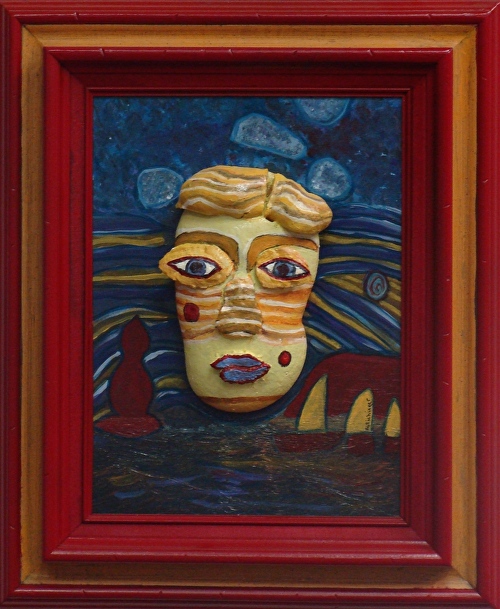
What is an Educated Person?
Schools teach, and students presumably learn. When I interact with recent graduates, however, I wonder how well educated they are. I realize that notions of what makes an educated person have changed through the ages and that I have to “get with the new,” but it is not easy to do.
The Sparatican Greeks considered the gymnasium as essential to Greek culture. They saw the purpose of education to develop well rounded warriors. They made education available to males and non-slaves through public schools and private tutors who included music and dance as ways of enhancing maneuverability as soldiers. Youth learned poetry and musical lyrics to focus attention on beauty, nobility, harmony and rhythm. Children were taught to read and write with a stylus on wax-covered boards and made to memorize and recite legends of old. By the time a boy reached adolescence formal education ended and human experience took over.
It was not until about 420 BC that higher education emerged in Athens where philosophers and teachers like Socrates holding forth. Intellectual attainment began to be held in higher regard than physical capacity. It was a democratic city subject to the votes of adult male citizens. The Athenians believed that education should develop the whole man. To that end, studies included mathematics, astronomy, harmonics and dialectic. They thought it important to learn rhetoric and techniques of persuasion to get the assembly to act as they desired. Skill training and academic subjects came later. The goal of learning was to develop philosophical insight, a necessary tool for using knowledge within a framework of logic and reason. Does that makes sense to you? It does to me.
Society’s needs have changed, and notions of what makes an educated person is fraught with factionalism. Eleanor Dickey Professor of classics at the University of Reading, “Spartan king Agesilaus once said that what matters in education is that children must learn the skills they will use when they grow up.” Though still quoted, public schools don’t design curricula with that purpose in mind.
Several years ago students at Harvard were warned that professional credentials will count for less when measured against real world training. They compiled a list of the skills they thought were needed.
Josh Kaufman, noted author of the Personal MBA, added to this compilation a list of what he calls “Core Human Skills.”
Not to be outdone, Princeton University also made list. Though it incorporates much of the above, it is more philosophically nuanced.
I especially like Princeton’s #8, “the ability to distinguish the important from the trivial, the enduring from the ephemeral.”
Do you agree with the above lists and if so, do you think our classrooms are designed to produce educated children? Do we train them in ways to impact positively to the world positively or is their education aimed at boosting the economy. Do they graduate knowing how to participate in a democracy, to be inventive, to think independently and to evaluate the overwhelming onslaught of information they are subject to.
I talk to students studying for higher degrees who think of themselves, but give little thought to how their studies will benefit the broader society. I observe many youth living hermitic lives, spending untold hours playing computer games, communicating trivia to friends, and forwarding unanalyzed tweets as fact. They do the world little good.
My notion of an educated person includes the expectation that knowledge should be applied to improve civilization. I envision youth learning to recognize right from wrong, truth from lies, and be able to evaluate shades in-between. I would hope they treat their peers well and competently handle personal finances, their job, and relationships.
As the Spartans believed, educated people need to be physically fit, mentally alert and able to recognize beauty. But to society demands much more. It needs emotionally stable people to step forward assuming inspirational roles that use what they learned to impact others positively. Being grounded in the arts and history will help students climb on the shoulders of previous giants, understand their successes and failures, enabling them to see the way forward.
References:
Marelisa,F *(201920) 50 Characteristics of an Educated Person. Daring to live Fully, retrieved from https://daringtolivefully.com/educated-person
kaufman,J. (2020) What Must and Educated Person Know? Harvard University and Prinscton’s list. retrieved from https://joshkaufman.net/what-must-an-educated-person-know/
Fineman, J. (2016) What really Makes Someone an ‘Educated’ Person? Odyssey, University of California Santa Cruz, retrieved from https://www.theodysseyonline.com/what-makes-someone-an-educated-person
Education in ancient Greece. Wikipedia. retrieved from their web site at https://en.wikipedia.org/wiki/Education_in_ancient_Greece
Dickey,E (2014)The ancient Greeks and the importance of education. Being Human. Retrieved from https://beinghumanfestival.org/ancient-greeks-importance-education/
Though you think you are dealing well with curve balls thrown by life, stress can creep up when you least expect it.
Continue reading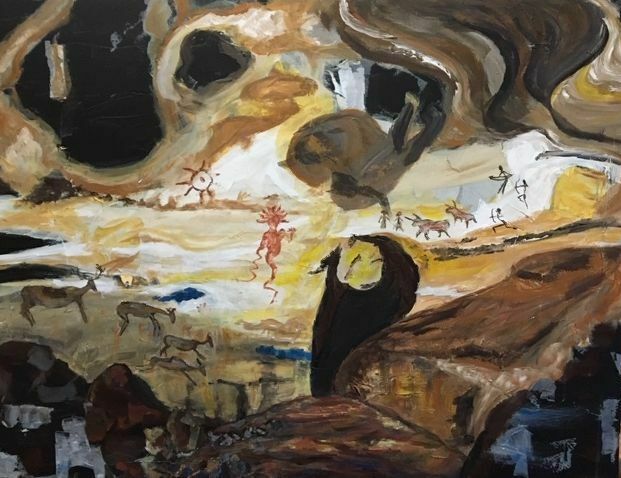
We exist in outer and inner worlds, enjoying the beauty and intrigue of everyday life while experiencing a see-saw of buried emotions. Bringing to light hidden feelings from within and integrating them into your daily routine creates the person known as YOU, a cause for celebration.
I am so glad you are part of my tableau and wish you joy, adventure, and good health during the holidays and coming year.
What exactly is Happiness?
It’s the holidays. We smile, say Merry Christmas, and are expected to emote joy and contentment even if you don’t really feel that way. Scientists call this awareness “the subjective well-being.” It’s your response to how you feel and how satisfied you are with life? It’s a recognition that you have more positive emotions than negative ones. And, it’s realizing that your existence is worthwhile and has meaning.
According to researcher Sonja Lyubomirsky, happiness is a fleeting emotion consisting of two components, positive emotions ( love, joy, contentment, excitement ) and having a sense of satisfaction with your life. Yet, these two sentiments don’t always coincide. For instance, there were long periods of time when I was totally content with my job and family. I could not imagine having more meaningful and rewarding ways to fill the days. Unfortunately, I wasn’t always happy. The stress of moving between two very different orbits put me on edge. I rarely had time for myself.
Perceptions of happiness are also affected by culture. When analyzing perceptual differences between Americans and Russians , Lybomirsky noticed that Americans equated happiness with concrete obtainable things such as a job, success, money, fun, and family, while Russians mentioned more spiritual ideals like beauty, mutual understanding among people, spiritual salvation, and world of peace.
“Joy has nothing to do with material things, or with man’s outward circumstance…A man living in the lap of luxury can be wretched, and a man in the depths of poverty can overflow with joy.” ~ William Barclay
Numerous magazines provide guidelines on how to have a blissful, contended life. They print articles telling readers the best way to raise happy children. They present the latest research showing that happy people pursue goals and overcome obstacles, keep connections with friends, and stave off physical and mental ailments. These articles make us feel guilty if we don’t stay in a perpetual state of cheerful bliss.
After reading many euphoric write-ups, I started wondering if being happy is always good and found that many social scientists have explored this very question. Following are four ways in which being happy may not be appropriate.
1. Too much happiness may be a bad thing. It is related to your creativity quotient and may actually have adverse effects on inventiveness. I know many artists who say they do their best work when struggling. Those with intense and overwhelming amounts of happiness (or too little) often become less flexible and lose their creative edge when facing new challenges. People in happiness overdrive, take risks they wouldn’t ordinarily engage in. For instance, there are gamblers who visit casinos when they are happy and stay away when sad. Believing that luck is finally with them, they gamble away savings they worked years to accumulate.
2. Happiness tends to be situational. A psychologist once asked me why I smiled when I told him of unhappy childhood experiences. I wasn’t able to feel loss by letting my sadness come out. An emotion such as anger is useful when you have to overcome obstacles. Fear mobilizes fight and flight actions that help with survival. Though working towards a goal can add to your happiness, it is not an appropriate emotion in every situation. Finding enjoyment from watching another person suffer is far from normal. It a signal of having a major emotional disorder.
3. Some forms of happiness are good for you while others are not. Feeling happy can make us more energetic, feel closer to other people, and more generous. Having success after working hard leaves us feeling proud. However, according to researcher June Gruber, feelings of pride without merit can lead towards aggressiveness and antisocial behavior. Excessive pride can hinder a person’s ability to empathize with others.
4. The pursuit of happiness as its own goal, makes most people unhappy. Those focused on happiness as an end in itself, according to a study conducted by Iris Maus, are likely to set such high standards that they can’t be met. The more a person tries to be happy, the more difficult it is to achieve. This, in turn ,can lead to severe depression. It is not the search for happiness that makes people happy but rather the process of working for and attaining self-set goals. When goals are realized, they create moments of pure happiness and joy. But, over time, the high and intense feelings subside and new new challenges have to be set.
“Happiness is a journey, not a destination; happiness is to be found along the way not at the end of the road, for then the journey is over and it’s too late. The time for happiness is today not tomorrow.” ~ by Paul H Dunn
Happiness is a matter of emotional balance that occurs at a specific time and place. Context and situation matter, and being grounded in reality is critical. Unfortunately, the process that brings about a happy state of mind often involves times of discomfort. It is by pushing through real or perceived barriers that an environment is created to let joy flow.
Happy people find satisfaction in small pleasures. They get absorbed in challenging activities, set and work to meet goals, maintain close social ties, and find purpose beyond themselves. They engage in physical challenges that promote good health. And they learn to understand and accept their emotions, strengths and weaknesses. This makes them strong and able to reach out to others with compassion and kindness.
“Life is made up of small pleasures. Happiness is made up of those tiny successes. The big ones come too infrequently. And if you don’t collect all these tiny successes, the big ones don’t really mean anything.” ~ Norman Lear
References:
Lyubomirsky, S. (2019) What is Happiness? Greater Good Magazine, U.C.Berkely. retrieved from https://greatergood.berkeley.edu/topic/happiness/definition
Davis, Tchiki. (2019)Happiness. Psychology Today. retrieved from https://www.psychologytoday.com/us/basics/happiness
Gruber, J. (2012 Four Ways Happiness can Hurt Your. Greater Good Magazine, U.C.Berkely. retrieved from https://greatergood.berkeley.edu/article/item/four_ways_happiness_can_hurt_you
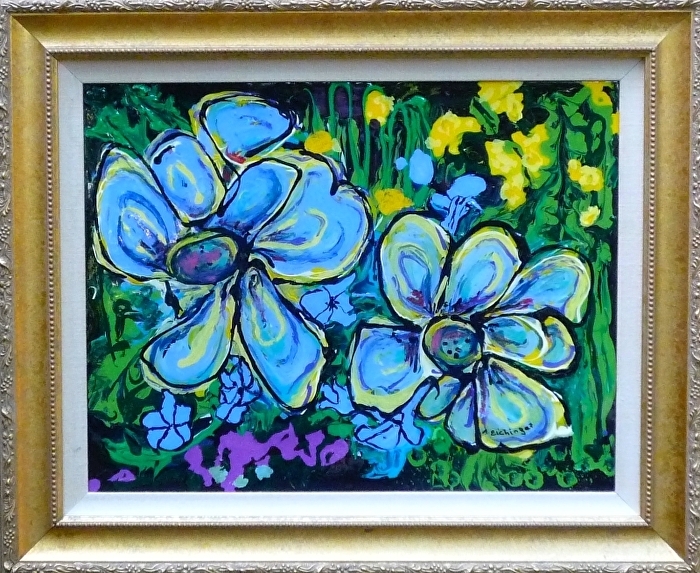
Art work is always for Sale. Applauding the Blues is Acrylic on canvas/ 19.25” by 23.50 “ / $ 495.00 contact me at marilynne@eichingerfineart.com
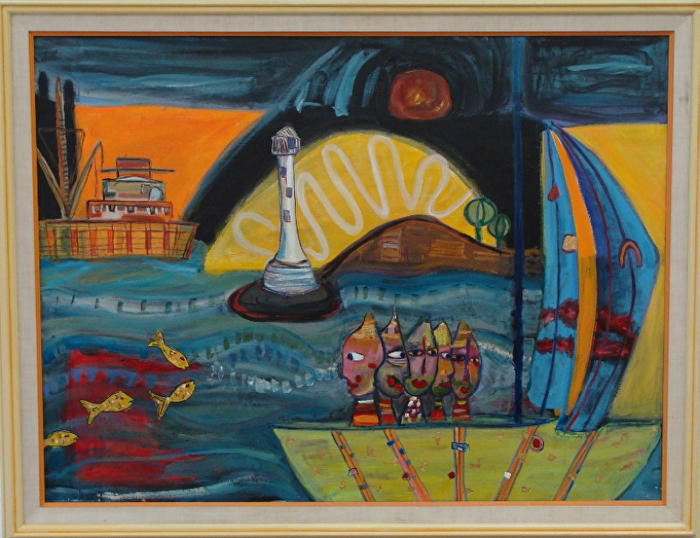
Impossible Dreams
Do you remember the lyrics from The Impossible Dream? The first two verses of Mitch Leigh’s song from Man of La Mancha go like this—
“To right the unrightable wrong
To love pure and chaste from afar
To try when your arms are too weary
To reach the unreachable star
This is my quest to follow that star
No matter how hopeless, no matter how far
To fight for the right without question or pause
To be willing to march into Hell for a heavenly cause”
I’ve often asked myself how far I would be willing to go for a cause. Leigh’s song reminds me of how powerful dreams can be for those willing to act on the insights they provide. During the Vietnam and civil rights movements, thousands of 18 to 24 year olds marched, rode on freedom busses, and burned draft cards. They fought for a cause that affected them personally. Many faced jail or left the country because they believed the war unjust.
The next two lines of the song are-
“This is my quest to follow that star
No matter how hopeless, no matter how far
To fight for the right without question or pause
To be willing to march into Hell for a heavenly cause”
Making dreams come true takes courage and perseverance. To be the-best-you-can-be at what you choose to do, to find a mate, to embrace a healthy lifestyle, and to stay informed takes time and determination. It requires staying physically active and mentally calm.
I’m reminded of the story of Siddhartha by Hermann Hesse. It’s a tale of self-discovery and explains life’s passages well. Siddhartha travels on a path rich with experiences that eventually lead him to understand the meaning of human existence. He moves from practical goal oriented activities to a more enlightened state as he starts grasps the fullness of life. He comes to realize that every truth has its opposite, and urges his readers to love the world in its entirety. His directive is to reach out to those most unlike us and learn from them. This is a message our politicians need to take to heart.
Young adults face a serious dilemma. Their survival requires them to be self-centered and focused on basic needs, and yet, to do so, they have to take into account what is happening to the environment. The economic and political situation they find themselves in today, is brutal. Many youth work two jobs and carry the burden of student debt into their fifties. With the rising cost of housing, food, and transportation, and the scarcity of family wage jobs, all too many live in survival mode.
They won’t go through life as easily as our generation did for they face an overwhelming crisis—that of a warming planet. It is a cause that will influence them more than the draft that led so many to die in Vietnam. Rising temperatures will affect their health, access to food, water, and housing due to pressure from mass migrations. It will require massive expenditures to fight fires, floods and infestations of insects. It will cause wars due to desertification of vast tracks of land.
Psychologist, Abraham Maslow construed another way to depict human development. His pyramid shaped ladder shown below, explains why young adults are self-centered. They have to be. Most twenty-year-olds are on the bottom rung of the pyramid, trying to satisfying physiological needs. Maslow reserves the apex for self-actualized people who are spontaneous, creative, moral, lack prejudice, accept facts and engaged in problem solving.
People have to have to feel that their need has been satisfied before moving to the next higher rung. It tales courage to climb, for it requires a new dream and resetting goals. But most try, for we are driven by an innate curiosity that makes us want more and thus follow the path we call life. It is a self-absorbing journey, risky and at times scary, yet somehow satisfying. Striving to reach one’s full potential, to-be-everything-one-can-be, is reward in itself.
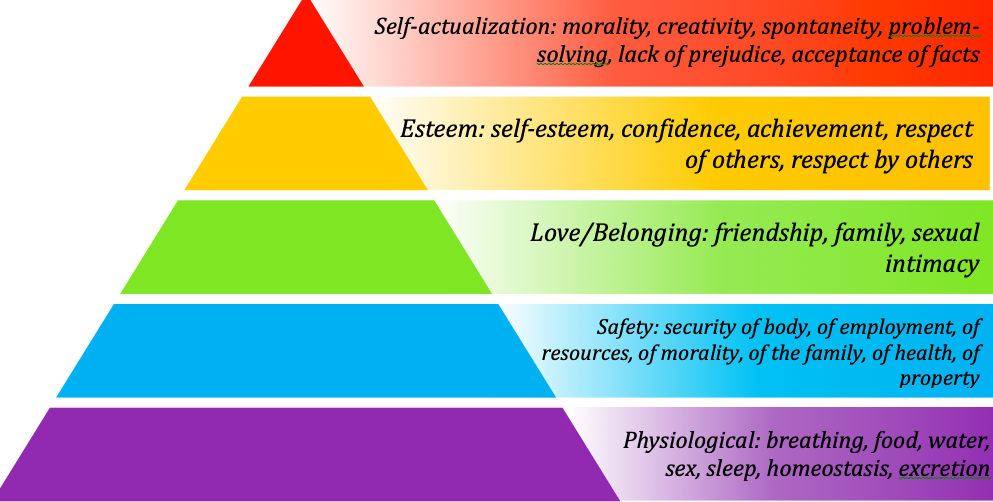
Those at the bottom of the pyramid will be highly affected by climate crisis. They will have to take rising temperatures into account as they struggle to meet their most basic needs. And, to get by, they’ll have to think more broadly than did past generations. Their ability to flourish individually is connected to how people throughout the world grapple with the crisis. It will require coming together to solve problems affect all of humanity. It is a worthwhile quest for everyone to undertake.
Imagine what would happen if each of us pushed to reach a higher rung on the ladder. Our communities would be filled with compassion, creativity, and beauty. Artificially set boundaries and self-serving biases would be left behind. Diversity and innovation would be welcome.
It is not a quest to be undertaken by sissies, but rather it is one for the strong—an adventure worth embracing with passion.
“And I know if I’ll only be true to this glorious quest
That my heart will lie peaceful and calm when I’m laid to my rest
And the world will be better for this
That one man(woman) scorned and covered with scars
Still strove with his last ounce of courages
To reach the unreachable star.”
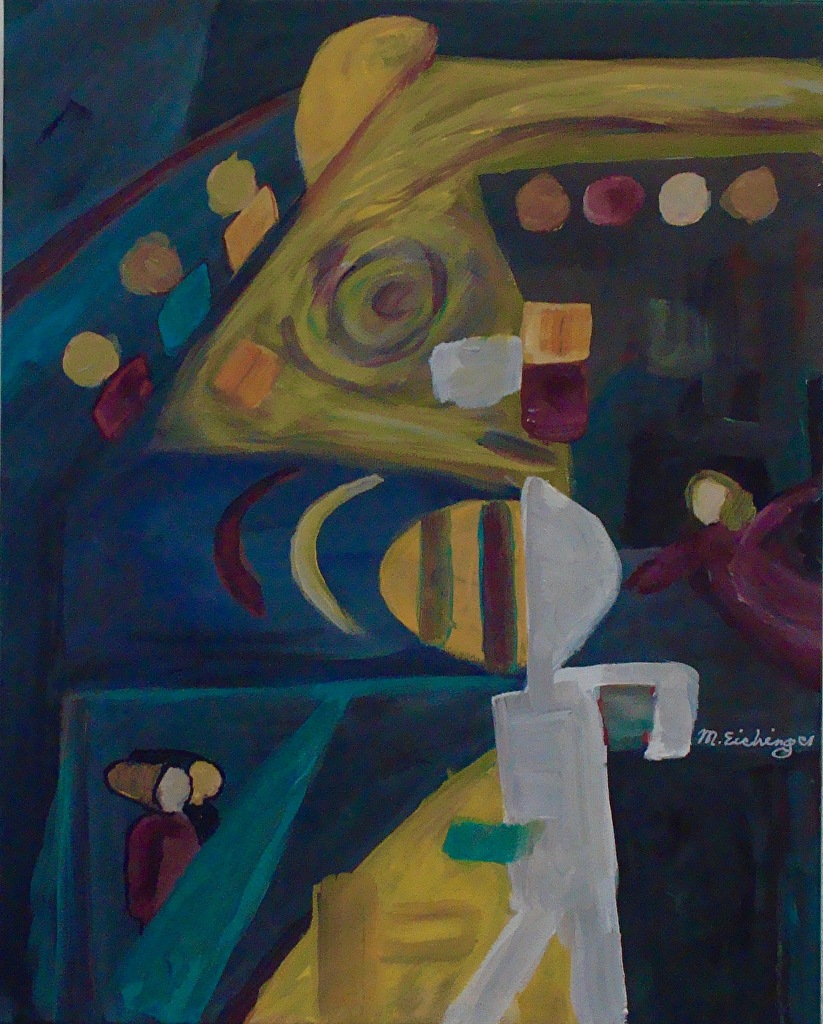
There are a number of ways to seed conversations and avoid having impeachment hearings, football scores or Aunt Matilda’s sciatica take center stage during your holiday meal. To generate topics that appeal to everyone and to insure lively discussions ask guests to jot down on a piece of paper a question they would like discussed other than health, politics or sports. Put suggestions in a bowl or hat and circulate during dinner. Take turns choosing a paper from the container and reading what it says aloud. Go around the table asking everyone to comment on the subject.
Some of the suggested topics that made the rounds at my dinner parties were, “What’s the most enjoyable trip you’ve ever taken? When was the first time you were kissed? Do you believe in ESP? When did your family immigrate to the U.S.? What’s the worst (or best) thing you ever did in elementary school?” I never had anyone get sleepy-eyed after dinner or heard them complain about participating. It’s a wonderful way to get to know your friends and family better.
When you feel like stretching rather than stay seated, try a more physically active parlor game. They can also stimulate conversation and and create good feelings.
Human Sculpting (Four or more participants) This is a nonverbal activity. The host or hostess selects one or two people to stand aside. One is designated the pointer and the second the observer. A piece of tape, paper or object is put in the middle of the floor to indicate the center of the sculpture. The remaining people stand or sit in a circle a distance from the center until called.
The pointer selects a person to go to the center and strike a pose. The pointer then selects the next person, continuing on until all have added their bodies to the sculpture. The choice of whether to touch another person or not is up to them. When complete, the observer (with assistance from the pointer) gives the sculpture a title and the two describe the relationships they see between players. (Who is posed next to whom? Are they intertwined or distant? Do they look comfortable, trusting, ridged or clownish? that sort of thing.) —Take a photo. It will be good for laughs for years to come.
The activity can be repeated with variations, such as having people make a noise as they approach the sculpture to join it (helps to be more spontaneous about positioning). As a person adds his or her body to the sculpture invite them to say who or what they are.“I’m a butterfly landing gently on your big toe.” or” I’m the wind and will blow your butterfly away.” These statements help create a shared story.
“What Are You Doing? (Five or more participants) Everyone stands in a circle; one person starts by miming an activity (e.g., brushing their teeth), the person standing next to them asks “ Jennifer (Name of person)) what are you doing”? Jennifer responds by saying she is doing something completely different from what she is acting out (e.g., fishing). This next person now begins acting out fishing, and the person next to them asks them what are they doing. This process continues around the circle several times; it often takes at least one go-around for everyone to get on board as to how it all works.
If you’re concerned about people suggesting inappropriate activities, establish rules (or set them up in advance )— like no bathroom or sex talk. This game can lead to a discussion of how people’s actions don’t always match their word. When the game is over share true occurrences from your lives. My father told me of the time he put on a record of a violinist so his mother would think he was practicing his violin. Instead he crawled out his bedroom window to play baseball. Instead he crawled out a window to play baseball. Of course he was caught since records didn’t play for very long in those days. When I was twelve I got into a towel fight with my brother while washing dishes. My acting must have been stellar, for I pretended being hurt and got out of going to Hebrew school. What are you Doing, is a great game to play for getting at the truth with laughs and bonding.
Whatever you do, no matter where you are, smile and be thankful. Have a happy, tasteful Thanksgiving.
________________________________________________________________________
Art is always for sale, Contact me at marilynne@eichingerfineart.com
Friends and Family is 20” x 12” deep canvas Acrylic painting . $ 299 – We need to cherish and care for those who are close to us. There will come a time when they need our help or we need theirs.

Trees fascinate me, but Douglas Furs in particular catch my imagination. They are full of life and remind me of my own journey with its many branches and diversions, yet it continues to grow straight and tall. I marvel at how the forest appears simultaneously wild and serene. It’s unorthodox. Nothing about it is understandable, but everything about it flows into a cohesive whole that provides summer shade, perches for birds, structures for children to test their climbing skills, and places for lovers to read poetry while marveling at nature’s beauty.
This tree is old and gnarled, having had to twist and turn to accommodate itself to the unsuspecting ups and downs that occurred during its lifetime. If you look closely you will see many wounds, yet they eventually healed and allowed the tree to continue to grow. It reaches out for light yet hovers near the ground within reach of all who chose to learn from its wisdom. I imagine its roots growing deep, allowing it to communicate to the other organic organisms living nearby.


Unfortunately, too many hillsides that should be richly covered with trees are dead or dying. The Santiam Pass painting to the left depicts one of many devastating burns occurring all too often throughout the planet. It is what land looks like in the Jefferson National Forest in Oregon after fire brought devastation, and burned 40,418 acres. It took 2,300 fire personnel and $38 million to contain the damage. A heating planet is making this scenario a common one throughout the globe.
The painting to the right is of the Pearl District in Portland, and is representative of many cities that have eliminated their forests to make way for paved streets and high rise apartments. Dwellers unwittingly replaced fresh clean air living with dirt and pollution that blackens their lungs.


Malheur Sunset depicts dusk in eastern Oregon where trees provide a place for song birds to rest from their daily search for food and water. Unfortunately, this wildlife reserve suffers from drought. Over the past twenty years, the number of migrating birds that stop for water along their way north have greatly diminished.
The Tree, to the right is a 3 D rendition of a rich Pennsylvania landscape. It demonstrates what can be when people take care of their land rather than strip it dry. The tree and surrounding farmland supported generations of Amish farmers who farm organically. Trees create oxygen for them to breathe deeply without fear of being poisoned, while carrying away carbon dioxide and other toxins that might ruin their lungs.
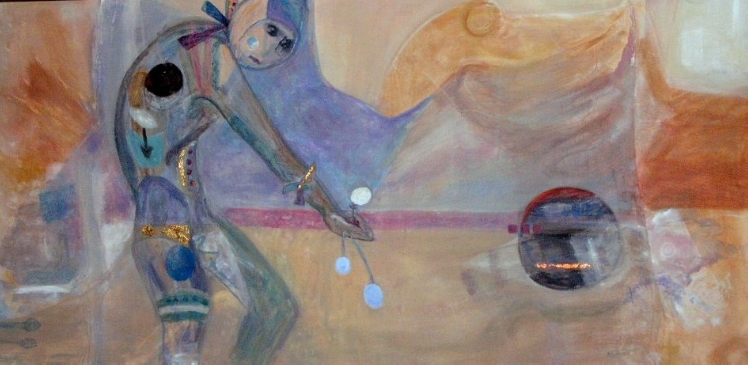
Each of us has a responsibility to care for the land that sustains us. To date, human beings have not done a very good job. But, by changing habits and nurturing one small seedling, we can overcome centuries of destruction caused by the naive, uncaring people who put the earth in crisis mode. Today, we know better. Scientific information provides us with data that tells us what to do. It’s time to take care of planet earth and replant the Garden of Eden.
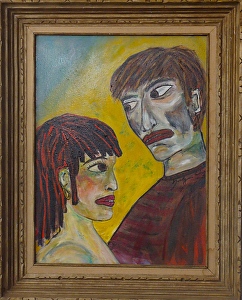
I painted the above picture several years ago. It reminds me that disagreements are natural, and it takes courage to end arguments without leaving bitter feelings behind.
How do you talk to people you vehemently disagree with? It s not easy, especially during holidays when you are forced to sit next to relatives and friends who bring political opinions to the dinner table. It could be fun and make for a lively conversation, yet such conversations are often stressful and don’t end well.
Most of us want to be accepted, not antagonized. We like being heard and understood for who we are and what we value. But at social functions we hold back, not saying what’s on our minds for fear the event may dissolve into a fight. What’s wrong with this picture? Why can’t we talk to one another about difficult topics?
As a child, I was taught that democracy was strong enough to allow for freedom of expression. I learned that the United States is a melting pot of cultures that comprise “one nation, indivisible with liberty and justice for all (under God was added in 1954). The American experiment requires us to learn from one another rather than dismissing contrary opinions. Our teachers told us to listen with open ears and an open heart. Todays political climate makes this especially difficult, but not impossible.
At my exercise club, I occasionally cycle next to a man whose political leanings are at odds with mine, yet we ket a kick out of telling each other how we would rule if we held positions of power. Like many voters, we pretend to know how to run the country better than our elected politicians. Both of us are well r read, though our information comes from different sources. We are both economically secure, though he is a great deal wealthier. Our religious belief in predestination and notions of the hereafter differ as well. No matter – we respect each other’s opinions and truly like each other.
The best part of our relationship is that we are not afraid to say what is on our mind and don’t look for agreement. Debating, cajoling, and sharing ideas is a search for ways to bridge our political differences in order to solve social and economic problems.
How we arrive at our utopian solutions is at the crux of our arguments. We discuss trickle down and bottom up solutions in minutia. We don’t lecture, get angry, raise our voices or try to overpower the other person. Discussions are reasoned and backed up with what we most recently read, which isn’t always accurate. It is not unusual to call a statement misinformed and fact check for the truth.
We communicate well because of the many values we do share. We both believe in family, in education, in peace over war, in working hard, and in economic prosperity for all. We realize that the world has changed and that young people have a different set of problems to overcome than we did. And, we know there will always be people who need our support.
Political discussions can be entertaining and enlightening if you set and adhere to ground rules for your debate. A few suggestions follow:
The goal is not to convince but to listen and learn. Remember that everyone sees the world from his or her own center. Though the person sitting opposite you at table may be your sister, her experiences were never the same as yours. The best you can do is try to understand. And, though you may disagree with Uncle Rudy’s politics, he is still worthy of a your love and the gift of a smile.
References.
Leahy,R. (2018) Talking Politics During the Holidays. Psychology Today. retrieved from https://www.psychologytoday.com/us/blog/anxiety-files/201812/talking-politics-during-the-holidays
Waters,L (2018) Being with politics during the holidays. Daily Record. retrieved from https://www.dailyrecordnews.com/scrapbook/being-with-politics-during-the-holidays/article_a7ac3a60-62d5-5cfc-95f5-c84426a8dbfa.html
Art is always for sale. contact me at marilynne@eicingerfienart.com.
First Fight – 26” x 36” / acrylic on Canvas / framed / $326