#Homewithkids

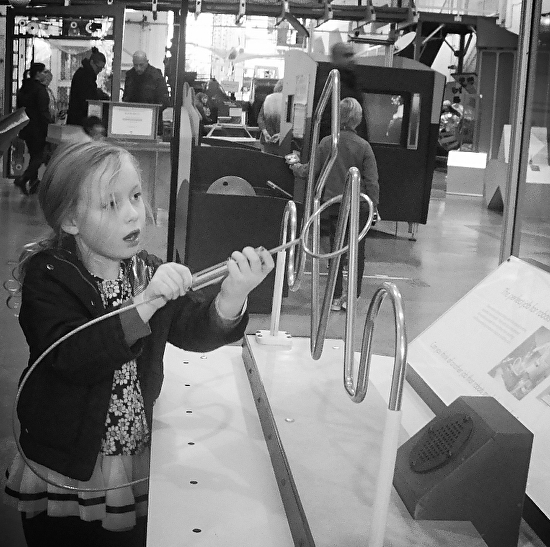
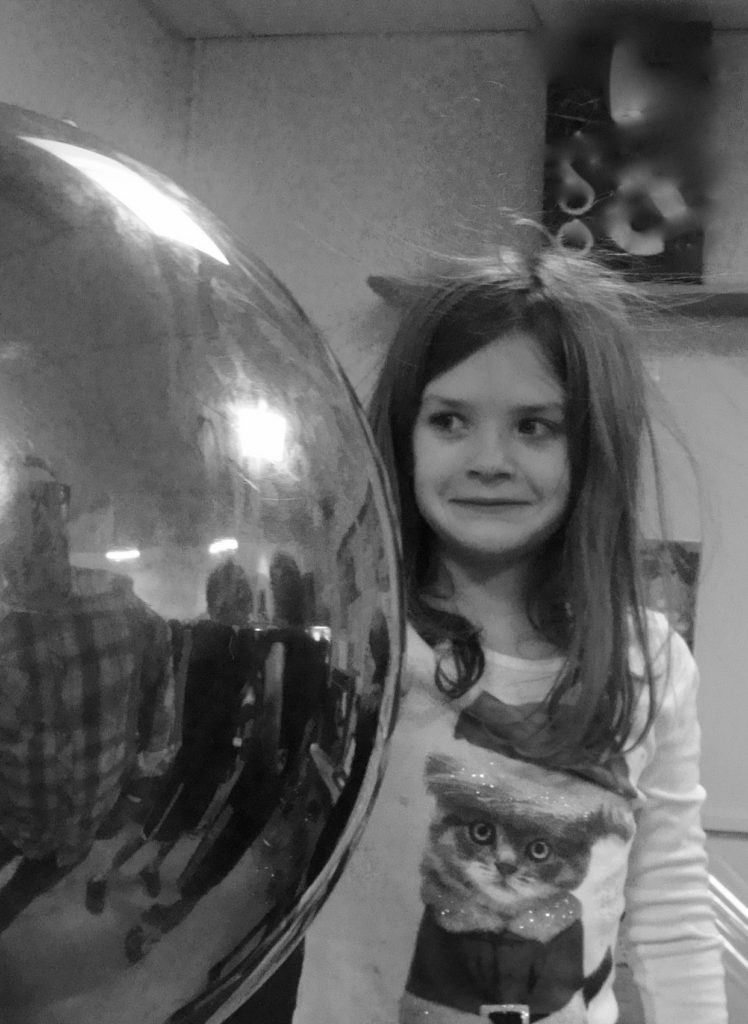
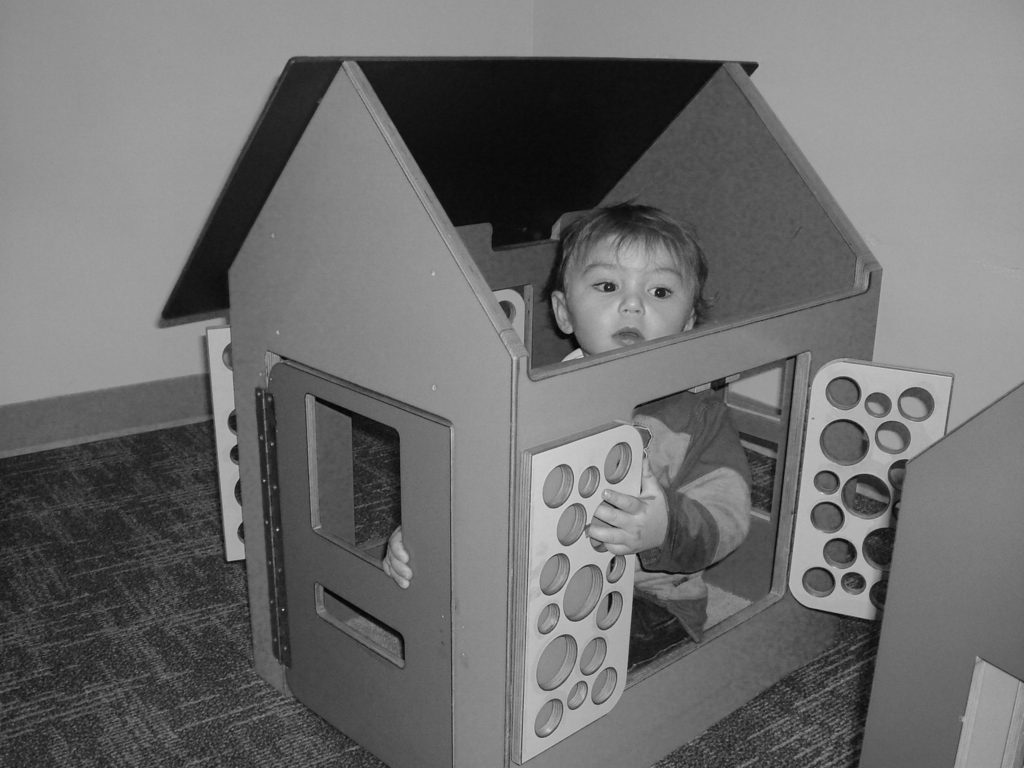
Oregon Museum of Science and Industry

Starting a museum in my home inspired me to a career managing science museums. Since Covid-19 makes it difficult for children to explore them at will, it may be time to think about doing something similar for your young ones.

Home with Kids?

Taking care of children is not easy at any time but with school closed and unlikely to reopen full time in September it is a particularly stressful time for parents. Those who work from home balance schedules with frequent interruptions that vary from, ” I’m bored,” to ” I scraped my knee and it’s bleeding,” to ” Gillie stole my green nail polish and won’t give it back. She’s impossible. You’ve got to punish her.”

A system that helped me when four rowdy children were under foot was to turn a part of the house into a children’s museum. I was fortunate to have a basement play room, but a child’s bedroom can work just as well. According to The American Association of Children’s Museums, “A children’s museum is defined as an institution committed to serving the needs and interests of children by providing exhibits and programs that stimulate curiosity and motivate learning.”

That definition fit the way my husband and I arranged furnishings when the children were young. We lived quite a distance from a hands-on museum, which is why we decided to convert our home into one. The main challenge was one of organization, so I applied a hybrid Montessori method to our basement playroom.

Maria Montessori, a 19th century physician turned educator, developed Casa dei Bambini, a school for low-income children in Italy. As she experimented with curriculum and classroom design “she began to see independence as the aim of education and the role of the teacher as an observer and director of children’s innate psychological development.” Dr. Montessori believed young children were sensitive to order, enjoyed repetitive activities and were happiest doing practical things. She developed a kid-sized environment where materials were within a child’s reach and could easily put back when the child finished with then. Over the years many sophisticated materials were designed to be used by teachers specifically trained in Montessori methodology. The well crafted materials are quite expensive and made to withstand use by hundreds of children. Over the last twenty-five years, toy manufacturers duplicated most Montessori materials and made them available to parents at more reasonable prices.

I did not have the training or money to set up a Montessori school, but I was able to organize a child-sized, child-centered environment. I assembled a wall of bookshelves and designated locations to hold subject specific toys. There were shelves for construction toys, a place for math manipulatives, a book nook, and a language and writing area. We had a puppet stage with a place to store puppets and backdrops, an area for many types of puzzles, dress-up stations and a craft center. A carpentry bench placed next to my husband’s workbench held safe tools that let children take apart discarded machines and pound nails into pieces of wood. In the living room we installed a music pole and attached clips to hold percussion instruments.

Part of the secret to a successful home museum is introducing toys (activities) one at a time, challenging the next skill level. It took time to show the children how to use the toys properly. After demonstrating how a product was used, I observed to see how well my directions were followed. Children were encouraged to master the way the toy was designed to be used before exploring other options for using the material. The goal was for the child to master an activity, feel good by being successful, and become motivated to take on the next challenge.

 Toys had to be returned to their proper location before a child was allowed to take another toy. Training children to put items away is accomplished effortlessly if taught to do so when young. Keeping areas clear for the next project makes cleaning up manageable and provides space for the child to focus on what he or she is doing. 

Planning for a hands-on museum takes time, but once it’s operational, the time required by the parent to oversee the endeavor decreases because the system put in place promotes independence. Children are free to select what they want to do. When they take their work to a clean location they are able to concentrate on the task at hand, progressing to increasingly complex activities as skills are acquired. Independence is the goal.

A home museum can be arranged for a child as young as two-and-a-half years. It is best to start with a few toys that are within the child’s reach so it can be fetched and returned without an adult assisting. When several children use the same space, each child is taught which items he or she has earned the right to use. The system works well for older children, though they are likely to branch out and use the materials more creatively. Older siblings who’ve mastered activities should be taught to help their younger brothers and sisters.

A hundred years ago, such a Montessori approach would not have been necessary because families taught children while doing daily chores.  I read of a ten-year-old boy in a pioneer family who homesteaded in Colorado in the 1800s. He assisted his father build their house in the prairie, fed the pigs, helped raise the barn, built fences and sheds, and assisted digging a well. His sister worked in the garden with her mother and was taught which plants to gather in the woods to cure illnesses. She practiced fractions and measuring when sewing, cooking and a cutting pies into enough slices to feed the household and their guests. These children didn’t need to play with blocks, toy sized stoves, or puzzles since helping the family survive  was challenging enough. Construction and household skills were passed down from parent to child. Those who experimented were rewarded by figuring out a way to make things easier.

To reinforce hands-on play it helps to observe people engaged in physical work. My kids and grandchildren loved visiting construction sites, and I still find it fascinating to watch cranes hauling supplies sixty stories in the air. As they aged they enrolled in physics and chemistry classes and went to science camps each summer.

Though I am not a physicist, I enjoyed high school physics classes because they gave me a basic understanding of mechanical advantage and how machines operated. They peaked my curiosity. We also visited farms, went into restaurant kitchens, saw how pizzas were flung in the air, and watched hot air balloons lift off from fields. The experiences they had created a lifelong love of learning. 

Barry Eichinger, past exhibit director at Charlotte’s Discover Place, raised creative children by encouraging them to look closely at the world around them. While walking in the woods, Barry encouraged his children to explore, wander, and wonder. He talked animatedly to his offspring as pointed things out sow they noticed the impact they had on the environment and took stock of what they saw. On excursions they returned with rocks, insects, and samples of stream water to view under microscopes. Local flora and fauna stimulated hours of discussion after their journey. The trips were informal, intuitive, and without structure and incorporated inquiry-based learning as they went. Though this children did not grow up to be scientists, they use the scientific method at work to problem solve.

When I ran the Museum Tour catalog I organized it like my home playroom. Each page represented a subject specific section of shelves holding a range of materials to educate mind and body and to stimulate the senses. My goal was to make it effortless for parents to set up a museum for children in their homes. It is easy to purchase toys that are downsized versions of exhibits found on the floors of science centers and children’s museums. Designing your own museum is much easier to do than when my children were young.

Art is always for sale. Contact me at marilynne@eichingerfineart.com.

#Opinion-mine matters too

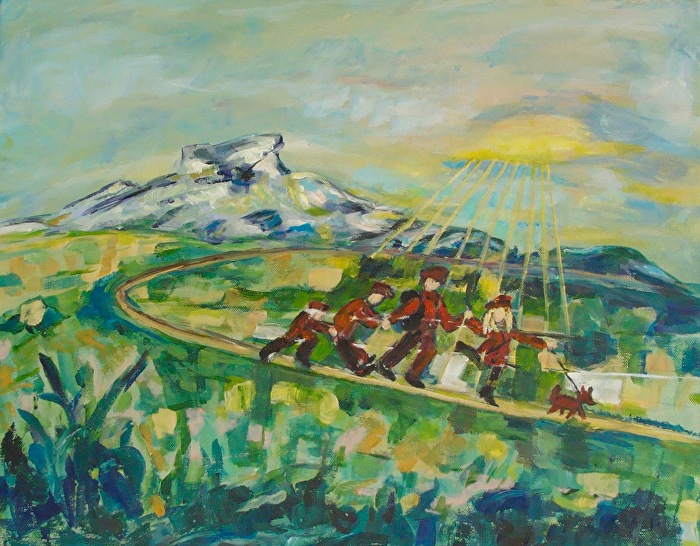
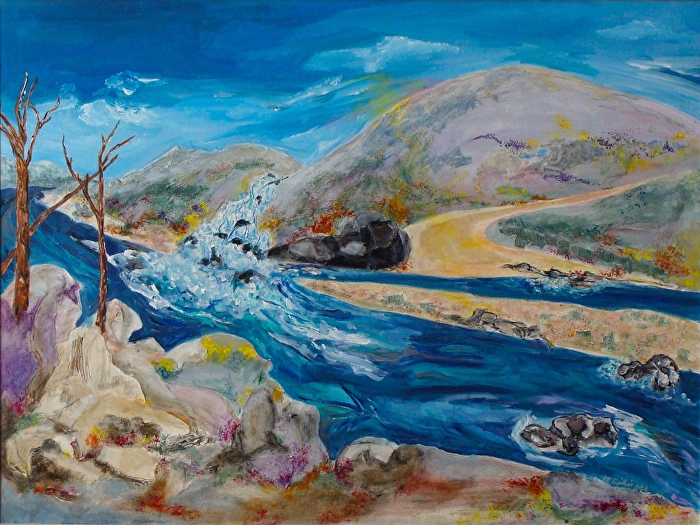
High Desert Sunset

The sixth painting in my Coronavirus series. In the face of protests, illness, isolation, political devisions and withdrawing from world organizations, walks though natural settings calm me. I marvel at the way it changes with the seasons and appears different as daylight turns to dusk. The atmosphere is contemplative and peaceful away from news. Meandering the hills of Oregon’s High Desert is purifying , returning me to center. I come home refreshed and ready to step into the rhythm of my daily routine.  (Sorry, but the painting is spoken for) 

OPINIONS-MINE MATTERS TOO

On July 7th, Harper’s Magazine posted communication online titled— A Letter on Justice and Open Debate.  It will appear in print in the letters section of the magazine’s October issue. The letter is a wake-up call to people who are quick to judge, act and react without debate.  Though the writer’s concerns had been bubbling in conversation for some time, the letter was sent in the midst of unrest caused by the killing of George Floyd and Rayshard Brooks  and the unease of sequestering, job loss, illness, and uncertainty.

It acknowledges the importance of ongoing protests calling for social justice and racial equality but segues to the growing intolerance for disparate views. The authors are especially critical of liberals unwilling to hear any voice but their own. Though they mention the call for police reform and “greater equity and inclusion,” they argue that the way we are proceeding bans opposition and weakens the norms for “open debate and toleration of differences in favor of ideological conformity.” 

They remind us that the free exchange of information and ideas is the lifeblood of a liberal society and that censorship that used to be assigned to the radical right comes more frequently from the left as well. Liberals, they say, are blind sighted by their ideas of what is morally right and give “swift and severe retribution in response to perceived transgressions.”  They use moral certainty to shame and ostracize questioning people who want to take a deeper look at issues. There is mention of recent dissidents fired for expressing opinions contrary to current public sentiment, for publishing controversial articles, and for circulating peer reviewed research with outcomes that don’t support popular beliefs. Teachers have been let go for quoting literature that might make students think critically and broadly about a subject.

The writers conclude that we are creating a stifling, intolerant atmosphere, one in which democracy will suffer.  Intellectuals need room to experiment, take risks, and make mistakes without fear of reprisal. The letter is signed by 153 well known scholars, journalists, and artists including such luminaries as Norm Chomsky, David Brooks, Salman Rushdie, Gloria Steinem, and J.K. Rowling. 

Adding to the debate over intolerance and freedom of speech is the criticism directed at Facebook, Twitter, Tik Tok, and other social media platforms. It is difficult to decide if Edward Snowdon is a hero or traitor for stepping forward. Complaints abound from right and left leaning voices, politicians, social clubs, welfare, organizations, and religious groups. They come at a time when hate speech is rampant at campaign rallies and conspiracy theories abound turning men like Bill Gates into a pariah by linking him to the onset of Covid-19. Malicious rumors spread like lightning through the internet leaving people angry, afraid, confused and harmed. Scientists are distrusted while the anti vaccine  and flat earth movements grow.

We watch while residents in countries like Hong Kong lose their rights, making many of us wonder if we will be next. Our right to privacy is all but gone.  I can’t think of a more important and timely discussion to have than one centered on open-mindedness and the limits to be placed free expression.   

To deepen this discourse, I copied excerpts from an article about the letter to Harper’s that was written by Jennifer Schuessler and Elizabeth Harris for The New York Times on July 7, 2020. 

“The debate over diversity, free expression and the limits of acceptable opinion is a long-burning one. But the letter, which was spearheaded by the writer Thomas Chatterton Williams, began taking shape about a month ago, as part of a long-running conversation about these issues with a small group of writers including the historian David Greenberg, the writer Mark Lilla and the journalists Robert Worth and George Packer. . . 

“He said there wasn’t one particular incident that provoked the letter. But he did cite several recent ones, including the resignation of more than half the board of the National Book Critics Circle over its statement supporting Black Lives Matter, a similar blowup at the Poetry Foundation, and the case of David Shor, a data analyst at a consulting firm who was fired after he tweeted about academic research linking looting and vandalism by protesters to Richard Nixon’s 1968 electoral victory. . . (Do click on these links. They are illuminating.)

Such incidents, Mr. Williams said, both fueled and echoed what he called the far greater and more dangerous “illiberalism” of President Trump.

“Donald Trump is the Canceler in Chief,” he said. “But the correction of Trump’s abuses cannot become an overcorrection that stifles the principles we believe in.”

“What concerns me is a sense that a lot of people out there seem to think open argument over everything is an unhealthy thing,” he said. “I’ve spent my whole life having vigorous arguments with people I disagree with, and don’t want to think we are moving out of this world.”

I too am concerned about the issues raised above, and experienced them first hand on July 4th.  As we do every year, we flew the Betsy Ross flag to commemorate the country’s independence from England but this was the first time we had people stop at our house and ask us to take it down. The recent protests had made them aware that there was slavery in the thirteen original colonies and that we took land from Native Americans, but  rather than accept our history and decry that part of it, they wanted to wipe the slate clean as though it never happened. As they watch fireworks they forget the struggle for freedom from a foreign power, that thirteen colonies united as states under a constitution, and that Betsy Ross’s flag flew over the new nation. What they did not perfect, but the country they formed were an improvement over monarchy.

It is important to know history and to understand it within the context of the period about which it was written. It allows for reasonable discussions that can help us decide what changes we want to make and the best way to do so.  There is an advantage to listening to scientists,  historians, thinkers and dreamers  for they help us grow and get better. They lead the way for America to become great.

You can read the letter in its entirety:  Titled “A Letter on Justice and Open Debate,” and signed by 153 prominent artists

Check out the article from The New York Times and other papers by Googling:

“Artists and Writers Warn of an ‘Intolerant Climate.’ Reaction Is Swift.”

If you have not done so before, do respond to this article below. Your opinion matters for it can change the way people think.

#Independence Day

Family Outing

It’s Up to Us

Since childhood, July 4th was a time for picnics, hikes, and evenings spent watching fire works to celebrate the founding of a nation, the coming together of thirteen independent states to form a synergistic whole stronger than the individual parts. In hibernation I’ll miss my friends and family and won’t celebrate as  before. I’ll sit home watching televised fireworks and listen to newscasts about our fractured nation. So instead of a family outing, I decided to take an outing of the mind to consider the past and where  we should go from here. It will take one race, the human race, our race to set things straight.

What was clear to those who signed the Declaration of Independence for the country’s 2.5 million residents is no longer obvious to the 331million who currently reside within our borders. It is time to put away divisions that cause paranoia and prepare for the emergencies we know will come to affect rich and poor alike. Raising a family taught me the truth of Robert Burns words, “The best laid schemes o’ mice an’ men/ Gang aft a-gley.” (often go awry.)

Paranoia – One night, around two in the morning when my daughter was in a deep sleep after caring for three active children all day, the phone startled her awake. She answered to the stern voice of a bomb squad officer who fired off questions about a package mailed to her. He wanted to know what was in it (she didn’t know), if she knew the sender (her sister) and whether they were on good terms (they were). On the line for nearly an hour, she answered in confusion, for the problem was never described. Simultaneously, her sister in California was called and asked similar questions though she knew what was inside. But when asked to describe the electronics she claimed no knowledge. She had mailed a box of outgrown children’s clothing and toys that seemed harmless. 

My daughter was later told that a ticking sound was heard when her package arrived at the post office causing several hundred people to be evacuated and the bomb squad alerted.They x-rayed it, saw it contained electronics and took the package to an empty field where a robot was deployed to open it. Inside it uncovered a toy airplane with its propeller rotating due to a switch that had jostled to an on position during shipping. The electronics were in the noses of reindeers on Christmas masks. 

Lessons from the past and thoughts from today:

a) Don’t send toys through the mail with batteries inside. 

b) Their calls occurred shortly after the Unabomber was apprehended. Police were on alert. But if it happened today, I imagine they would be paranoid and rather than make phone calls, militarized police would knock down my daughter’s doors and haul them off to jail.

c) Today’s officers not only react, they over-react. The cost of emptying out the post office and calling in the bomb squad must have been high. The cost to George Floyd was his life. There’s no excuse for killing a person for cashing a twenty-dollar bill that he may or may not have known was counterfeit. There is no excuse for shooting Rayshard Brooks in the back because he was drunk at Wendy’s.

d) As children weare taught to trust the police. We are told to seek their help if something bad happens. As an adult, I’m shocked by behavior that negates that trust. Shouting, offensive, bigoted officers make the country understandably angry. In school we’re taught that people are innocent until proven guilty which means that everyone deserves to be treated respectfully, even when under arrest. There is a court system to deal with those creating problems for society.  

Emergencies: During the 1989 California earthquake my newborn granddaughter rested contentedly in a bouncy chair next to her mother. When widows started rattling and the furniture shook, the baby jiggled and giggled gleefully. Knowing her infant was fine, my daughter wasn’t concerned until she tried opening the door to her apartment. The frame was twisted and the door wouldn’t budge, trapping Mother and daughter inside. Fortunately, it wasn’t long before her husband, bounded up the stairs as a superhero, pushed the door open and rescued his family. The event took place several blocks from where the Oakland Bridge collapsed.  

Lessons from the past and thoughts from today:

a) Children see life as an adventure. They trust adults to keep them safe.

b) Natural disasters occur in every part of the country. COVID-19 is a wake up call as to why it is important to heed advice and prepare for potential crises. (I store supplies in my car and house in case I’m stranded by a snowstorm or earthquake.) 

c) Though I chair an emergency committee at a Unitarian Church, we never considered a pandemic and the effect it would have on the congregation.The CDC, however, warned the nation of its possibility and had a plan they were putting into effect until funding was eliminated by a short-sighted administration. Scientists warned that global warming is a  contributor to the rise in pandemics. We need to listen to geologists, environmentalists, and epidemiologists rather than imagine we can pray disasters away. I realize it’s not fun to plan for a crisis that may never happen in our lifetime, yet we must.

This Independence Day can we agree to rid ourselves of paranoia and bigotry and plan instead for handling emergencies judiciously? Will you join me in taking an outing of the mind, one that considers the good and bad parts of  history to learn from rather than erase because of shame ?

I don’t think the past should be cut from memory, for it is a platform to tell us how well we are doing in bringing about change. Art speaks to specific time periods in history and tells stories that can’t be denied. Symbols on flags and sculptures removed from high pedestals and relocated in museums can be studied and explained. Knee jerk reactions are rarely good.

My mind’s been touring the history of slavery, learning how police are trained and how they became militarized. I wonder about the best way to  deal with road rage, a drug and alcohol abusive society, high rates of wife and child abuse, arsonists, thieves, and people harboring weapons. How should law enforcement react to criminals? Is it their job to see to the  homeless and mentally disturbed people wandering the streets? Should they be responsible for pushing back migrants  forced to leave their homes because of climate change? These are difficult questions that have to be thought through carefully. Understanding is imperative if we are to make changes and live without warfare.

An outing that explores the good, bad, ugly and beautiful parts of America might help us to do better. There are a few references below to get you started. What you learn might surprise you.

Betsy Ross Flag of 1777

Reference:

Berry,D (2017) American slavery: separating fact from myth. The Conversation. Academic rigor, journalistic flair. retrieved from https://theconversation.com/american-slavery-separating-fact-from-myth-79620
Roberts,S. (2005). More Africans Enter U.S. The in Days of Slavery. The New York Times. retrieved from https://www.nytimes.com/2005/02/21/nyregion/more-africans-enter-us-than-in-days-of-slavery.html

Thiele,R.(2020) How Climate Change Increases Our Rest for Pandemics. NPR. retrieved from https://www.wfyi.org/news/articles/how-climate-change-increases-our-risk-for-pandemics

___________________________________

Art is always For sale. Contact marilynne@ecihingerfineart.com

Family Outing/ acrylic on deep canvas/ 16 “ x 20 “ / $ 399

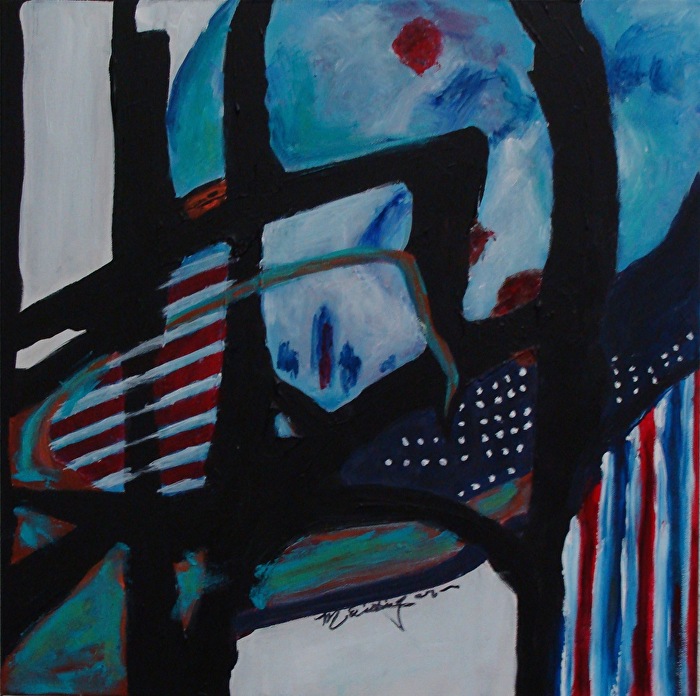
Fractured America / acrylic on deep canvas / 24″ x 24″ $ 425

#Happy in a Time of COVID

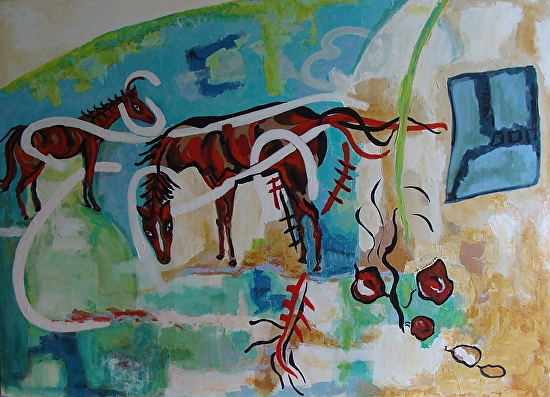
Painting of Wild Mustangs

Now that I’m a better writer, I’m reediting my first book “Lives of Museum Junkies.” This week I read the section titled, “The Happiness Business: Playful Learning is Good.” The following two paragraphs are from the chapter.

“What is the secret of life? This question is an easy one for me to answer,  happiness, of course. I am not talking about the giddy-happy feeling you might get by winning the lottery but rather a calm-happy, having a general sense of well-being. The Greeks described happiness as the joy we feel moving towards our potential. They saw it as a process and not an end in itself.

“Museum professionals are in the happiness business, parents are in the happiness business, and managing life puts you in the happiness business. In an article in the Huffington Post, Carolyn Gregoire reported on a seventy-five-year-old Harvard study that looked at the secrets to having a fulfilling life. The characteristic people identified as most important to their well-being was love, with happiness a close second.  From joy we get a sense of satisfaction that comes from connections and challenges. Without supportive, loving relationships people aren’t, happy. And though they may seem important at the moment, acquiring more money and power doesn’t correlate to greater happiness in the long run either. In terms of achievement, the only thing that matters is that you be content at your work. The more ways you can make connections, the better off you will be.  What the study said may seem obvious, but as the article said, ‘It doesn’t make it less true.’ 

After reading what I wrote several years ago, I decided, in was time to practice what I preach and get happy in the time of COVID. I needed to stay connected with nature so out I went and got in my Subaru. Heading west to back country roads I traveled without a destination in mind.It wasn’t long before I passed tilled fields with plants sprouting like soldiers in manicured rows. My spirits rose and I felt my heart quicken.

I came to an abrupt halt before a particularly lush farm planted with nut trees on one side of their driveway and grape vines on the other.  Deciding to turn in, a workman stopped his tractor to tell me to say I was at Scholls Valley Lodge, a pat of the Vail Family Farm that couples book for weddings. Unfortunately, I was told that five June bookings were canceled because of the virus and the reservations remainder of the summer were bleak.  He invited me to tour the grounds that looks out  over rolling green hills. I’ll keep the place in mind for the next celebratory occasion.

Across the way was  an alpaca farm. I pulled into their parking lot and got out to study about fifty animals in a fenced in meadow.  Quite a few were newly born alpacas  feeding alongside their moms. They walked on spindly legs and stared at me curiously with their big dark eyes.

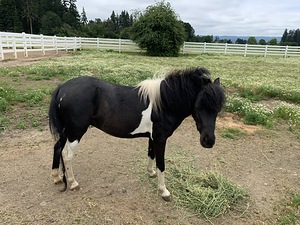
 A mile down road was a horse farm that specialized in breeding mini-horses originally brought to the Americas from England. People purchase these gentle animals for pets and for show. The horses are quite strong for their size and can pull a small cart four times their weight, but as with many miniature species, they have health issues caused by selective breeding.

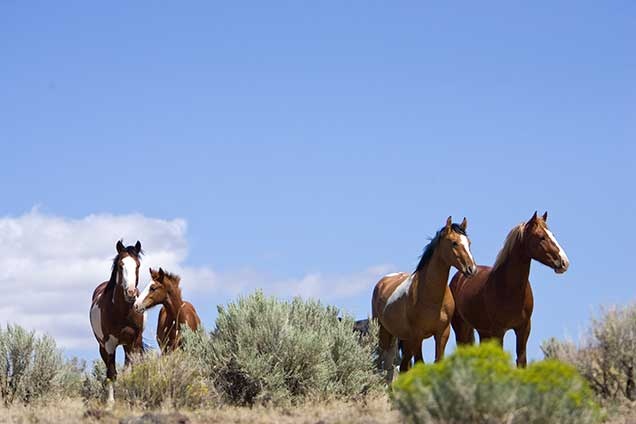
They certainly were different from the wild Mustangs I saw when traveling through the Steen’s Mountain several summers ago. There were no fences to corral the herd as it roamed through vast wilderness tracts set aside for their use. Scientists believe that the ancestors of today’s horses evolved in North America 3.5 million years ago. You can see their skeletal remains in the Thomas Condon Paleontology and Visitor Center in the John Day area in Central Oregon.  They became extinct at least 11,000 years ago, and it wasn’t until the early sixteenth century that Spanish explorers and missionaries reintroduced horses into the American West. Within a hundred years, wild horses again populated the plains. Modern breeds eventually diluted or replaced most of the Spanish strains. Today BLM manages 17 areas with an estimated 4,682 wild horses and 49 wild burrows roaming near the Steens. They are a site to see. 

Oregonians have a beautiful state worthy of exploring. City folk are fortunate to be able to leave their homes and in a half-hour be on open country roads. An afternoon is all that it takes to return home with a light step and  a twinkle in your eyes.

What makes you happy? Do share some of the things you are doing during the age of COVID to keep a smile on your face. Add it to my BLOG SITE below so others can read what you have to say. 

References:

Gregoire,C.(2013) The 75-Year Study that Found the Secrets To a Fulfilling Life. Huffington Post.retrieved from https://www.huffpost.com/entry/how-this-harvard-psycholo_n_3727229

Wild Horses in Oregon. The Oregon Encyclopedia. Project of the Oregon Historical Society. retrieved from  https://oregonencyclopedia.org/articles/wild_horses_in_oregon/

Art is always for sale: contact me at marilynne@eichingerfineart.com to discuss shipping.

Grazing / acrylic on cavas  / 52” x 60” / $1300 

Behind Closed Doors

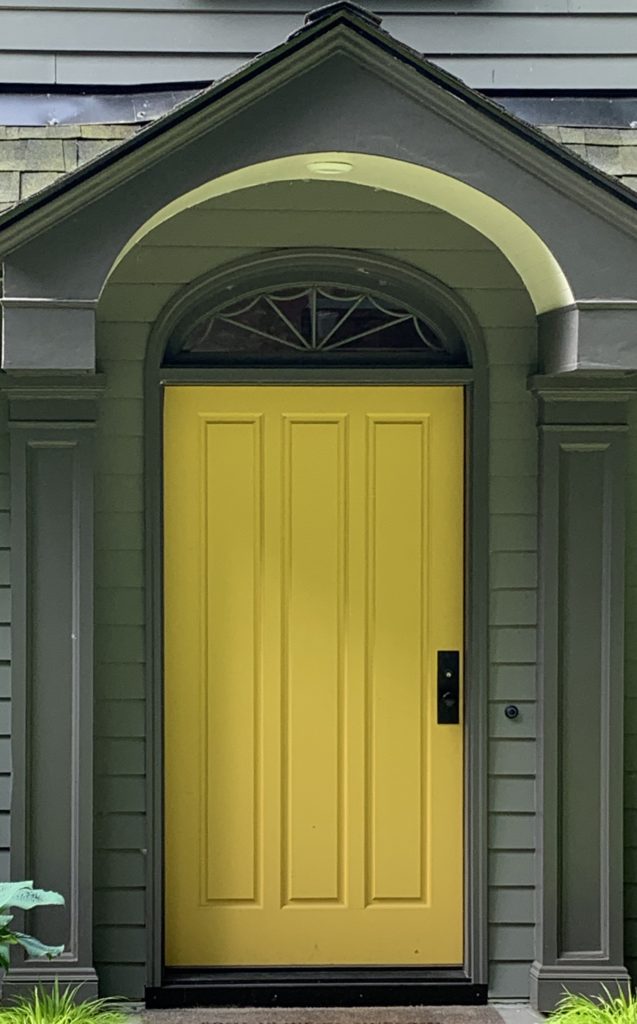
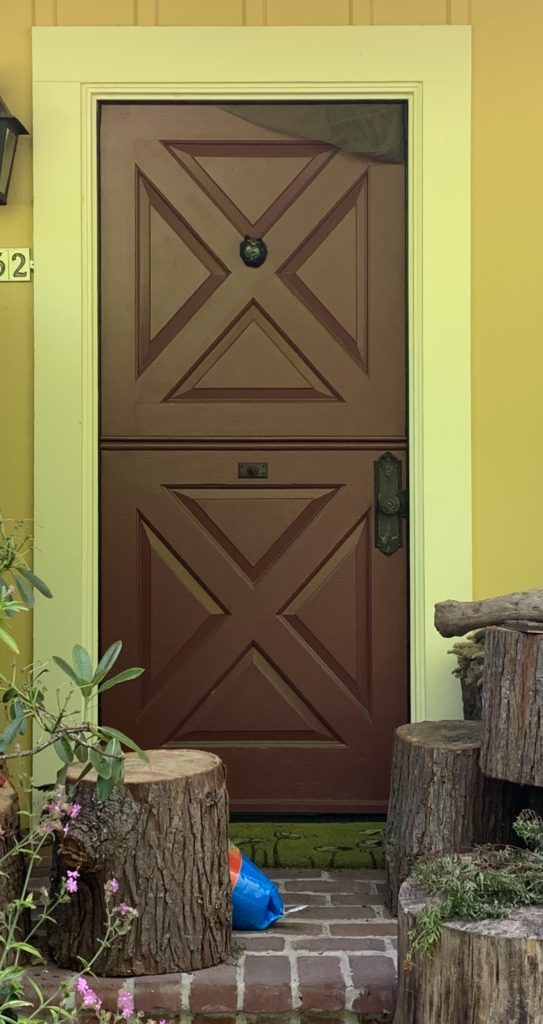
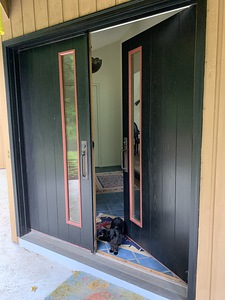
Today’s walk took me past many doors, no two alike.  They made me curious about those inside, what they thought and how were they doing in a pandemic exacerbated by racial discord. My musings reminded me of Anatole France’s saying, “Even a little dog is the center of his own universe.” On the other side of each doorway I imagined a universe of its own.

 I knocked on the door of an elderly neighbor who came out to say she was on an emotional see-saw. She missed seeing her family and berated herself for naively believing that the world was getting better. She thought the United Nations would bring about world peace and that global problems would be solved through dialogue rather than war.  I heard the pain in her voice and listened to her choked cry as I stood behind six feet away behind my mask. 

A parent with young children stood before her door as I walked by. She complained of the difficulty of working from home, juggling childcare while staying sane. She’s challenged by keeping her rowdy kids occupied when on the computer doing research and writing reports? She shouts more often than usual and pushes them away in the middle of calls to important customers? Her five and seven-year-olds don’t understand why she doesn’t want them around when they’re ready to show off a puppet show they put together. 

Behind another door I pass is a furloughed father who worries about not being able to pay for food and the possibility of being being kicked out of his apartment.  Not used to staying home with nothing to do, he watches hours of news and sleeps over twelve hours leach day, leaving his kids to fend for themselves. His depression is severe but he has no one to talk to and would not think of contacting a mental health worker for help.

 I rang the bell on the door of my adopted African-American family for an afternoon of diversion. They have their two children, a five and an eight-year-old. We stayed outside in the sun attempting to maintain social distance while drawing pictures, playing with clay, running around and reading books.  Staying six feet apart is not achieved easily with young ones. They are a loving, immigrant family who came to the United States to escape violence only to find themselves thrust into it again. Their television is tuned to the protests with videos of George Floyd and other racially caused deaths flooding their living space. The eight-year-old is afraid her parents will be killed because of the color of their skin. She does not feel comfortable talk to them about her concerns so she buries her worry inside.

 I walked past the door of a couple who married two weeks before the city was sequestered and wondered what it was like to be newlyweds without being able to take breaks or being able to see old friends. Sex is a great diversion but if you are not on solid footing it can turn sour.  I’ve read that the pandemic is putting a wedge between many people living in close quarters, dissolving relationships before they’ve matured. It takes courage and  fortitude to live with a mate day in and day out.  There has to be open and honest communication along with along with flexibility. Hopefully they will work things out between them.  That neither has taken to excess drink or drugs to solve their problems is a hopeful sign.

Those living alone behind closed doors have their own difficulties. We are social animals who can talk to the walls just so long. Spending hours on Zoom or connecting on Facebook is not the same as being held in someone’s arms or hugging a child. Apartment dwellers find it especially difficult, for though there may be many people in the same building they often don’t know one another. To distance themselves they have to wait a long time for empty elevators. City dwellers out for a walk are less likely to pass someone they know than those who live in neighborhoods where they greet one another while dog walking, weeding the garden or taking early morning hikes.  

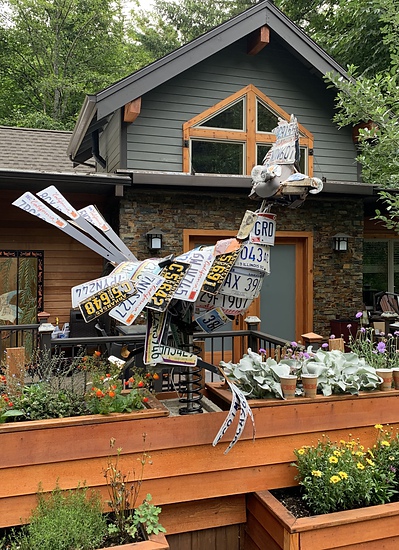
A few houses down from me is a door I pass regularly. It opens to the home of an emergency room doctor whose hours were  reduced because of Covid-19. He wasn’t home long before music and strange sounds started coming from his garage making neighbors curious as to what was going on. Finally a day came the door flew open to astonish those who thought they new him well. Instead of cars, his garage was filled with tools and welding supplies that in his hands produced a wildly inventive sculpture.

Roadrunner now stands in flower boxes guarding his house.

My door opens to the same universe I lived before the pandemic. My cat cries to go out so she can catch a live mouse to bring home as a gift that Ray and I have to chase down.  I exercise daily, write, read, paint and counsel people on the phone and through Zoom. Ray and I still talk, fight, make up and are more grateful than ever that we have each other. I miss going to the gym but will stay away until I feel it is safe, convinced the virus will return with a vengeance,  believing it’s more important to be diligent now than before. I’m delighted at the peaceful protests and knowing young people want to bring about change in a world that dumps misery on the poor. I hope they can make it a gentler, kinder , fairer world. 

In the midst of Covid-19, racial tensions, and demands to demilitarize the police, I hope we don’t forget that global warming remains the major issue of the times. If we don’t do something about it now, what we currently experience will remain a kindergarten lesson. The chaos and hardship that a warming planet will bring will be much worse. 

In this energized climate I feel hope, for our youth see a different universe than the one my contemporaries evolved. Through their eyes and effort I believe that the world can be changed for the better. 

Welcoming

#Celebrations of Hope

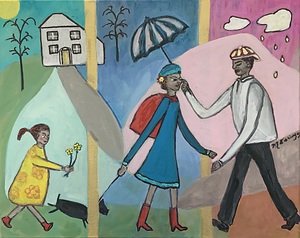
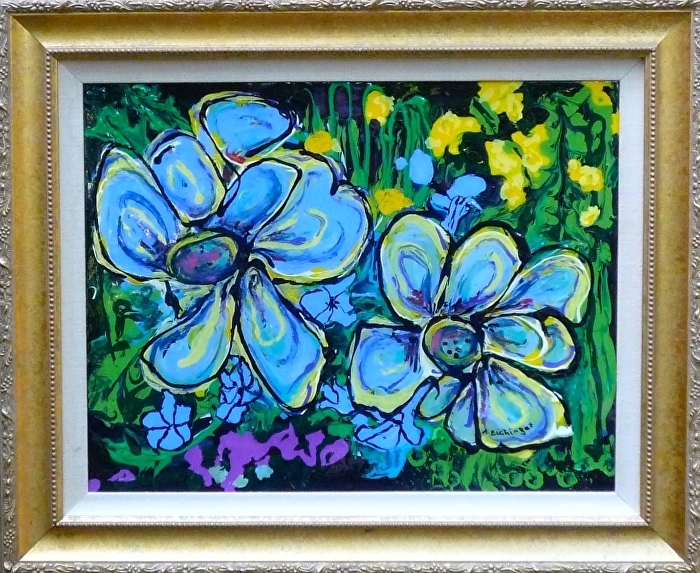
  Life Rolls on with Hope
The man helps the woman stay dry while clouds of tears rain on them. Their child follows, carrying flowers of hope for justice and sun filled days. She is their future.

Time never stops. Our lives continue on despite a pandemic, protests, riots, hurricanes, and election politics. We are an inventive people who, under difficult circumstances have found ways to maintain and reenergize old relationships while learning to use our hours productively to fight adversity and injustice. We share, laugh, and cry in harmony with one another.

Being sequestered lets us think about our commonalities. Most of us want to live in a community free of financial worries and concerns about health care. Being isolated made us find ways to connect, mark holidays and celebrate life passages. It also made us aware of economic inequities, health care and racial issues, police brutality and individual rights, to name a few.  There are many decision we are going to have to make to set things right. Yet, despite being sad, burdened, and worried much of the time, happiness abounds as we look to the future. We envision a time of change for the better. We celebrate that which is good.

A few days ago, hundreds of children in cars festooned with balloons blowing in the wind and horns beeping wildly crept through winding neighborhood streets to mark the end of the of the school year. Signs were placed in doorways and on lawns to proudly announce that a 2020 graduate lived there. TV tributes, online ceremonies and internet parties are occurring all over the country to honor the accomplishment of thousands of high school and college students. Educated citizens are our hope for the future. ( According to U.S. Census Bureau: Ninety percent of the U.S. population age 25 and older has completed high school. Thirty-four percent of the population has a four year college degree.)

I was invited to a driveway party that occurred over two days to insure social distancing. Guests were lured there with pastries and the opportunity to extend wishes to a birthday boy (late 70s) to let him know he was not forgotten. On walks I watched other celebrants serenaded from decorated cars and witnessed people singing happy birthday outside of apartment building windows.  A train of cars stopped by a ninety year old man’s house with honking horns and shouts of well-wishes. Filled with emotion he cried tears of joy. Compassion is the way of the future.

Banners and balloons adorned a yard up the street for a child’s ninth birthday. Friends came on bicycles to pass gifts over her fence. Her mother baked cupcakes and lit candles while distant family members watched on ZOOM as she blew them out. They made sure the youngster knew she was important and recognized by a caring family. Her party was different than the one she expected, though not likely to be forgotten. Over the past months she had to get used to school on a computer, being bored, and not having playdates with friends. The world as she knew it changed rapidly making her grow up more quickly. Holding children close will be a challenge of the future.

Alex, the medical student who lives downstairs will marry this weekend. Her father flew into town to witness the couple’s nuptials along with a handful of friends. The bride’s face glowed all week and she will look lovely in her white wedding dress. Since the party is small, the gift from her family is a month long road trip in a rented RV they will embark on later this summer. What a wonderful way to start their future together.

During Passover, Easter, Ramadam, Mother’s Day, and recent graduations, celebrations never stopped. Online services reached out to thousands of worshippers. Celebrants, families and friends stayed connected through media outlets that let them sing, tell jokes, share stories and eat ritual foods together. Unable to touch physically, they touched each other’s souls and reminded them that much that is in the future remains with the past.

Saturday was graduation day for Sanna, my fourth granddaughter. Her university conducted a virtual ceremony and the family brought paper, pencils and drinks to a happy hour Zoom celebration to mark the end of four years of study. I thought about what to say as she begins her career, but was at a loss for words. I’m worried. Where will she find a job? How will she support herself through the economic downturn facing a country that’s become rancid and divisive. She is perky, energetic and full of optimism, yet compassionate and feels deeply for those treated unjustly. She and her classmates will face numerous challenges if they wish to combat climate change and create a just and equitable future for all. Yet, what a fascinating time to be alive!

Despair and gloom may flow over us in waves, yet we still find ways to be happy. And though we are adapting to today’s reality, being sequestered makes us yearn for physical contact with friends and family. It makes us better able to understand the cruelty of isolation in prisons. Human beings like many in the animal kingdom are not meant to live alone. There’s a reason geese find mates and stay paired for life. Being coupled or residing in a household with other caring individuals provides support through the emotional ups and downs of the time. Of course, when forced to live with an abuser, the outcome can be disastrous and a reason to seek other arrangements.

As Marge Piercy wrote in her poem “The Low Road,”

“Two people can keep each other sane

can give support, conviction,

love, massage, hope, sex.

Three people are a delegation

a cell, a wedge.

With four you can play games

and start a collective.

With six you can rent a whole house

have pie for dinner with no seconds

and make you own music.”

Yes, time never stops and life rolls on. Let us live in a society that shares warmth and good wishes. Give our children bright flowers of hope to carry forward.

___________________________________

Art is always for sale. Life Rolls On with Hope is 20 x 16 inch acrylic painting. $ 399 For Information about shipping contact me at marilynne@eichingerfineart.com

#Protest and Change

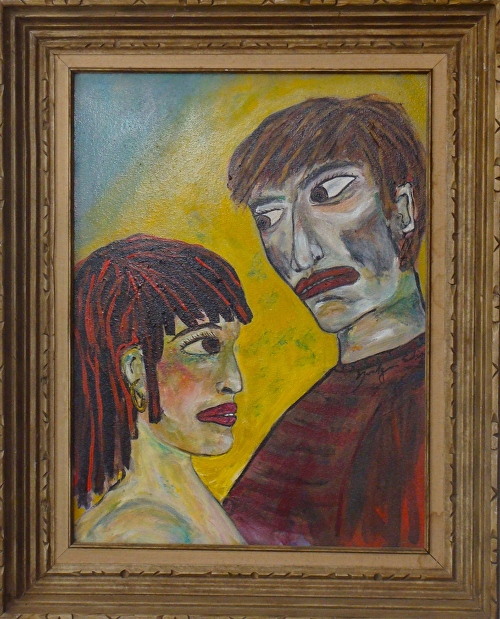
First Fight

The couple above are not happy. That was me and my partner twenty-five years ago after our first fight. At the time, I was an inexperienced painter, but the emotion of the moment comes through loud and clear. Somehow, we managed to stay together over twenty-five years, which gives me hope for the nation. Expressing anger is an important part of getting along. It is unreasonable to expect people to share the same house, community or country without disagreements. Couples unwilling to argue, likely have a hidden part bubbling dangerously underneath their exterior show of harmony. The inability to express feelings or beliefs may indicate fear — fear of reprisal, of being harmed or belittled or of not being taken seriously. It may explode in shouting, violence,   or as in the current national situation, protests and riots.

As in boxing matches, fighting to communicate is a learned art form. It starts at the family level with members developing non-violent ways to express themselves honestly.  A public protest is a sensible way to express opinions affecting people who believe they are not being heard through traditional communication channels. Protests attract the media and reach those who have never considered their viewpoint to engage in meaningful debate. 

Fringe elements often join the fray violently to further their political agendas. Their aim is to push legitimate messages aside and get police to respond forcefully. By escalating emotions they cause ordinary citizens to retreat into preconceived notions fanned reinforced through social media. Photos and video clips move the public from from listening to social issues to responding to violence. Extremists divide the nation to further civil unrest, showing power as might equals right. They do not want an equitable society. 

Unfortunately, protests also attract a true criminal element, those who destroy property, loot and steal. That group is lawless and should be subject to intervention, but we need to look long and hard at ways to stop generational crime.


Our country is an experiment, founded a belief that all men (and women) are created equal and a hope that we will respect each other.  As a child, I pointed the the Statue of Liberty with pride and quoted its sign welcoming “the tired and poor, those yearning to be free.” I also believed in the ten commandments, still do, and take them seriously.  All who reside in the U.S., including native people, immigrated to the “new world” and placed on a rich playground with a plethora of multicultural ideals. It brought misunderstanding and conflict but also the dream that a melting pot of races and cultures would make a better society. And, despite conflicts and ugliness plastered in headlines, I still think that way.

Living in harmony requires each of us to want the American experiment to succeed. Rather than knock-outs, it means finding ways to leave parties standing. Allowing for  freedom of thought, religion, and expression is not an easy undertaking. It calls for fairness and justice and acting morally in the face of conflict. It provides room to err and to recover and grow from adversity. We can not keep attacking people (or politicians) for mistakes they made twenty to thirty years ago without recognizing that they may have changed.

Fighting fairly starts with being open-minded and not ruled by artificial biases before the contest begins. It requires focusing on the topic under discussion and not on past grievances. For example, at a national level, unrelated items tacked on to bills to garner congressional votes do the country a disservice. They hold the majority hostage, by allowing legislation to pass without discussion and agreement. Cooperation, the goal of winning the fight together rather than winning by competing, is the only way to go. There are ground rules for dealing with emotionally charged issues. 

1. Observe without judging.  Notice and express information without evaluating in terms of right or wrong.  Notice that there is no evaluation, just factual observation, no time for taking cheep shots.

2. Express feelings. Hidden emotions are usually at the heart of failed communication. They often disturb and sabotage communication from within and cannot be addressed and solved because they are  not known to your communication partner. Express your emotions in a considerate way, without judgment. 

3. Express and clarify needs. Communication requires understanding the needs of the parties. The need to feel safe and not belittled. The need to have the other party give you their undivided attention.

4. Express specific requests based on your feelings and needs. After clarifying your emotions and needs, finish by making a clear request (what specifically does the other person have to do so that you can feel your needs have been met? You would say all of this in an open, honest and fair tone – without any mockery or aggression.

Since George Floyd’s murder, we’ve witnessed peaceful protests by a large majority of our population, violent actions by a minority who hold extremist beliefs, and unfortunately watched people who are looters. Peaceful protesters make it easy to understand their pain, absorb their feelings, to hear requests to eliminate choke holds, to demilitarize the police, eliminate racial profiling, and to improve the economic situation for those at the bottom of the pyramid.  Those engaged in disruptive actions do not.

When issues come to the forefront, after fair analysis, in a democracy, we vote our way forward. Though the outcome may not please everyone , it will benefit the majority based on the information at hand provided everyone has the opportunity to vote and express his or herself,. This is what makes a thriving people able to live in harmony, even among those with whom we disagree.

References:

Sepi, A, (2014) The 4 Steps of Nonviolent Communication. Intercultural Communication Solution. retrieved from https://yourtranscreator.com/2014/07/11/the-4-steps-of-nonviolent-communication/

Brenner MD, G. (2018) The 4 Keys to Fighting Fair. Psychology Today. retrieved from https://www.psychologytoday.com/us/blog/experimentations/201811/the-4-keys-fighting-fair

___________________________________________________________________________

Art is always for sale. Contact me at marilynne@eichingerfineart.com to discuss shipping.

First Fight – 35” x 25” / Acrylic on Canvas framed / $325

I look forward to hearing your comments on my blog site.

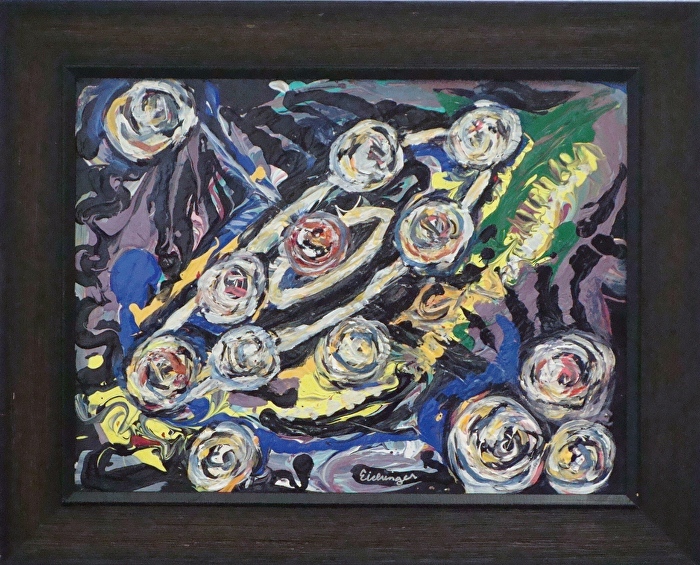
Saga of the Big Bang

It began with an explosion that no one heard. It was the start said German priest, astronomer and physics professor, Georges Lemaitre in 1927. It was the creation said the bible. Dust, particles and chemicals swirled and coalesced in wind storms as the void expanded from a single atom until it was impossible to see the end or the beginning. A multitude of galaxies with stars, planets and moons were formed including the planet I stand on now.

Over the course of millions of years, mountains and seas were created, minerals deposited, and land became fertile on planet earth.

Trees grew tall, flowers bloomed and plants produced nuts, berries, fruit, tubers and green leaves in abundance, making it possible to support organisms on land and not only in the sea. 

Creatures of every type covered the earth and multiplied. Animals joined the plants to pave the way for human beings to evolve by providing what was needed to  nourish, clothe, and shelter them.  

Men, women, children evolved to stand upright, walk on two feet, and hold tools with their hands. Their presence was but a whisper on the land for they dwelled in caves, followed the herds and left little behind. They prospered as the years went by, multiplied, and spread over the globe. 

They searched for meat, learned to farm and with the aid of boats and beasts, traveled by land and sea. There were more of them. They saw more and wanted  more.

Seeking unoccupied land and hunting grounds they trekked from Asia across the Bering Straits, then south, spreading their seed throughout a new land.

Years later they were met by wagon trains rumbling through from the east filled with loggers and settlers determined to farm their land and tame their wilderness. They cut down the trees.   

Others built dwellings in jungles, finding medicinal plants that let them live longer and allowed them to multiply again and again. They cut down the trees. 

Yes, they cut down more trees and replaced them with towering structures in grand cities filled with apartment houses, stores and entertainment centers.  

The wealthy erected mega-mansions in suburbs with garages large enough for the two and three cars needed to transport them to centers of industry, finance and law. 

There came a divide between the haves and have-nots. Those with wealth stayed locked inside giant carved gates where they were surrounded by greenery, inspiration, and like minded neighbors, while “the others” were relegated to barren lands, broken down buildings and hard concrete sidewalks, not knowing a way to climb over the fence. 

And still the population grew, demanding more power for their homes, greater warmth for their businesses, and the ability to operate their automobiles and machinery faster and for longer periods of time.

The temperature got warmer, fires burned forests, trees died, houses collapsed. It became harder to breathe, difficult to see crisp hillsides and mountains through the thick haze. Hurricanes, tornadoes, and floods were more violent. Asthma increased and children became ill. 

Trash was thrown in the streets, waste spilled into streams. Fish numbers declined. Those living wild in the ocean ingested mercury, drinking water had to be filtered and treated. To feed earth’s people, animals were herded into pens and fed hormones to make them fat. The ground was drench with fertilizers and insecticides affecting everyone’s health.

Birds decreased in numbers, leaving one where before there were flocks.     Young men and women fought in wars over water, land, oil and mineral rights.  Hundreds of thousands died.  

Then. . . while people were sleeping, there was another bang, a gigantic explosion that no-one heard. It flared up from a virus multiplying faster than they,  making them sick while the earth became bright. Those who paid attention were reminded what it was like to breathe in clean air, see fish through sparkling waters, and highways uncluttered by trash. They smelled the perfume of the flowers, marveling at their vibrant colors. They were calmed by the quiet, felt safe with less crime, and had fewer accidents. 

And. . . it dawned on them that it was their job to care for the earth.

Art is always for sale. For information go to my art website at eichingerfineart.com. Go to the works section to find pieces or contact me at marilynne@eichingerfineart.com

Waves of Fear

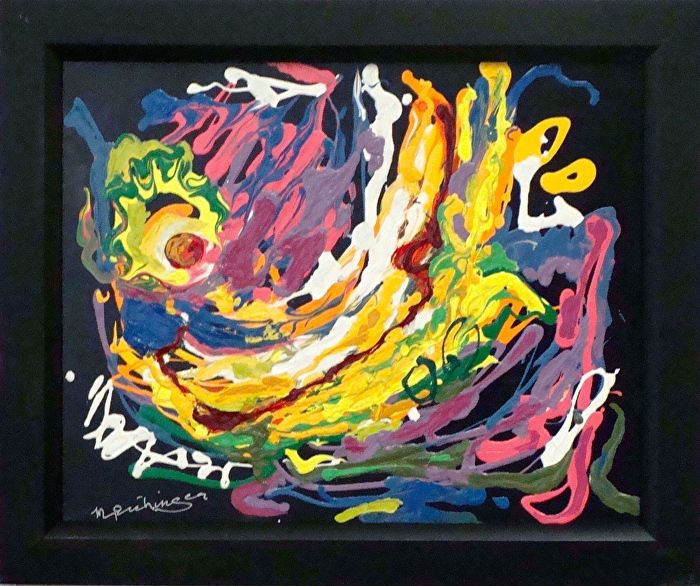
Surf’s Up
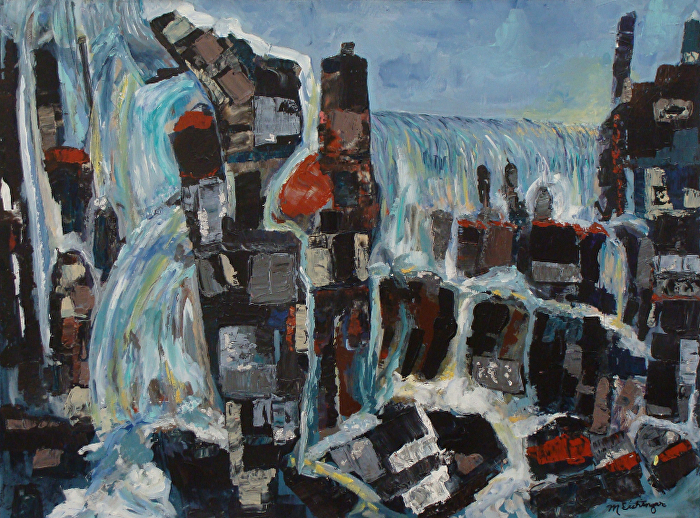
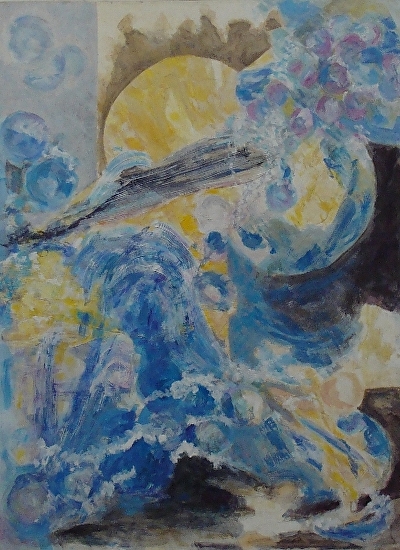
The surf is definitely up and emotions churn wildly with the ebb and flow of restricted lives.

Waves of Fear

When first sequestered I was asked to call forty people and ascertain how they were feeling and if they had special concerns that needed to be addressed. Most all responses were upbeat. I was told they were fine, establishing a routine, and enjoying the quiet of being home. Some worried about the future but not very much for it was difficult to image the country falling apart. Now, two months later, I contacted the same people to see if they were still OK. This time I received descriptions how fear washed over them in waves. They are tired of being alone, find it hot wearing a mask, scared shitless about lack of employment and lost savings, and crave warm hugs from friends and family. Some experience bouts of moodiness while others are fighting depression. The elderly, faced with how a two year pandemic will affect them, are grieving.

I spoke to several mental health counselors during those initial weeks, curious to know if they were inundated with calls. No, they said, their clients were coping and less stressed being home. Their calendars were wiped clean. That changed as the weeks passed, and being isolated started to take its toll. Fear creeped in as people dealt with the reality of their lives, imagining bleak years ahead. Suicide hot lines began responding to a 900 percent increase in calls, and counselors became busy conducting on-line mental health sessions. The way people are coping makes me think of the ocean.

 Just as waves hit the shore and retreat, so does panic roll over us before slowly retreating.  Eight weeks ago we were soothed by statements like “we are in this together,” and trusted health care professionals and government leaders to assess the pandemic and keep the sea calm. But as deaths rose, as unemployment reached unimaginable highs and as food became scarce for the poor, the ocean began to churn violently. Those stuck at home began to feel like they were drowning and started flailing wildly to stay afloat.  

Parents working at home with children under foot were faced with rolling waves that have to be continuously jumped over. It’s sometimes fun, but often exhausting, at times aggravating, but doable. But, when someone returns from work after caring for the ill, delivering mail or working in a food market, tidal waves of fear beat the door of those at home wondering if the virus is coming with them. Seniors who floated serenely on retirement rafts months earlier shake when realizing that country will open for those under 60, but exclude them. If they don’t remain isolated on their rafts they risk being toppled off by the next wave of viruses.

It is the uncertainty of how and when the pandemic will end that causes anxiety. Imagine yourself on a rowing team challenging the ocean. Just as your team establishes a rhythm, you are hit by a wild wave and thrown off balance. Sneaker waves like the stock market’s rise and fall on speculation adds to your instability. It doesn’t help when the coxswain throws off your rhythm with lies, false statistics, and harmful medical advice. When a boat is steered poorly, the rowers fall overboard.

Most Americans are  stressed, anxious, fearful, sad and lonely  . . . but not all the time. And though people with mental health disorders can slip into serious depression, few of us will.  Strategies of self-care can lower stress so you can take charge of your life and dilute height of the swells. Now that we are two months into the pandemic, ask yourself if you are following self-care practices consistently?

It will take time for the waters to calm when the pandemic ends, and many will suffer from post traumatic stress (PTSD). It is the time to imbed self-care practices so strongly in your psyche and everyday practice that you’ll have strength to cope with and enjoy the challenges that lie ahead.

Remember to get enough sleep, participate in physical activity, eat healthy, avoid tobacco, alcohol and drugs, limit screen time, and find time to relax.

Care for you mind by keeping a regular routine, limit exposure to news media, stay busy, focus on positive thoughts, set priorities, learn something new, and draw strength from your moral compass and spiritual life.

Strengthen relationships through connections on phone, or on-line, help others, and support family members or friends who are isolated through notes, or phone calls.

Get help if you need it. Stress is normal but COVID-19 pandemic can easily push you beyond your ability to cope. If you feel helpless, sad, angry, irritable, anxious or afraid. If you have trouble concentrating on typical tasks, your body aches, have trouble sleeping or eating, or if you struggle to face routine tasks for several days in a row, you may need help. Don’t be embarrassed to ask for it. It is not a weakness. It is a stressful Pandemic, not of your making. 

Contact a close friend or loved one, someone in your faith community, your primary care provider, or a mental health professional.  Organizations such as the National Alliance on Mental Illness (NAMI)  or the Substance Abuse and Mental Health Services Administration (SAMHSA)  800-985-5990 offer help and guidance. If you feel suicidal contact the suicide prevention Lifeline at 1-900-273-8255. If you are a victim of Domestic violence call 1-800-799-7233 .

References:

CDC staff (2020) cCoronavirus Disease 2019 (COVID-19) Outbreaks can be stressful. Center for Disease Control. relieves from https://www.cdc.gov/coronavirus/2019-ncov/daily-life-coping/managing-stress-anxiety.html

Mayo Clinic Staff (2020) COVID-19 and your mental health. Mayo Clinic. retrieved from https://www.mayoclinic.org/diseases-conditions/coronavirus/in-depth/mental-health-covid-19/art-20482731

NIMH staff (2020) Supporting Mental Health During the COVID-19 Pandemic, National Institute of Mental Health. retrieved from https://www.nimh.nih.gov/news/science-news/2020/supporting-mental-health-during-the-covid-19-pandemic.shtml

Art is always for sale. Contact me at marilynne@eichingerfineart.com

Surf’s Up  

Acrylic on Canvas/ 48” x 36”/ gold frame / $699

Waves of Fear

Surf’s Up
The surf is definitely up and emotions churn wildly with the ebb and flow of restricted lives.

Waves of Fear

When first sequestered I was asked to call forty people and ascertain how they were feeling and if they had special concerns that needed to be addressed. Most all responses were upbeat. I was told they were fine, establishing a routine, and enjoying the quiet of being home. Some worried about the future but not very much for it was difficult to image the country falling apart. Now, two months later, I contacted the same people to see if they were still OK. This time I received descriptions how fear washed over them in waves. They are tired of being alone, find it hot wearing a mask, scared shitless about lack of employment and lost savings, and crave warm hugs from friends and family. Some experience bouts of moodiness while others are fighting depression. The elderly, faced with how a two year pandemic will affect them, are grieving.

I spoke to several mental health counselors during those initial weeks, curious to know if they were inundated with calls. No, they said, their clients were coping and less stressed being home. Their calendars were wiped clean. That changed as the weeks passed, and being isolated started to take its toll. Fear creeped in as people dealt with the reality of their lives, imagining bleak years ahead. Suicide hot lines began responding to a 900 percent increase in calls, and counselors became busy conducting on-line mental health sessions. The way people are coping makes me think of the ocean.

 Just as waves hit the shore and retreat, so does panic roll over us before slowly retreating.  Eight weeks ago we were soothed by statements like “we are in this together,” and trusted health care professionals and government leaders to assess the pandemic and keep the sea calm. But as deaths rose, as unemployment reached unimaginable highs and as food became scarce for the poor, the ocean began to churn violently. Those stuck at home began to feel like they were drowning and started flailing wildly to stay afloat.  

Parents working at home with children under foot were faced with rolling waves that have to be continuously jumped over. It’s sometimes fun, but often exhausting, at times aggravating, but doable. But, when someone returns from work after caring for the ill, delivering mail or working in a food market, tidal waves of fear beat the door of those at home wondering if the virus is coming with them. Seniors who floated serenely on retirement rafts months earlier shake when realizing that country will open for those under 60, but exclude them. If they don’t remain isolated on their rafts they risk being toppled off by the next wave of viruses.

It is the uncertainty of how and when the pandemic will end that causes anxiety. Imagine yourself on a rowing team challenging the ocean. Just as your team establishes a rhythm, you are hit by a wild wave and thrown off balance. Sneaker waves like the stock market’s rise and fall on speculation adds to your instability. It doesn’t help when the coxswain throws off your rhythm with lies, false statistics, and harmful medical advice. When a boat is steered poorly, the rowers fall overboard.

Most Americans are  stressed, anxious, fearful, sad and lonely  . . . but not all the time. And though people with mental health disorders can slip into serious depression, few of us will.  Strategies of self-care can lower stress so you can take charge of your life and dilute height of the swells. Now that we are two months into the pandemic, ask yourself if you are following self-care practices consistently?

It will take time for the waters to calm when the pandemic ends, and many will suffer from post traumatic stress (PTSD). It is the time to imbed self-care practices so strongly in your psyche and everyday practice that you’ll have strength to cope with and enjoy the challenges that lie ahead.

Remember to get enough sleep, participate in physical activity, eat healthy, avoid tobacco, alcohol and drugs, limit screen time, and find time to relax.

Care for you mind by keeping a regular routine, limit exposure to news media, stay busy, focus on positive thoughts, set priorities, learn something new, and draw strength from your moral compass and spiritual life.

Strengthen relationships through connections on phone, or on-line, help others, and support family members or friends who are isolated through notes, or phone calls.

Get help if you need it. Stress is normal but COVID-19 pandemic can easily push you beyond your ability to cope. If you feel helpless, sad, angry, irritable, anxious or afraid. If you have trouble concentrating on typical tasks, your body aches, have trouble sleeping or eating, or if you struggle to face routine tasks for several days in a row, you may need help. Don’t be embarrassed to ask for it. It is not a weakness. It is a stressful Pandemic, not of your making. 

Contact a close friend or loved one, someone in your faith community, your primary care provider, or a mental health professional.  Organizations such as the National Alliance on Mental Illness (NAMI)  or the Substance Abuse and Mental Health Services Administration (SAMHSA)  800-985-5990 offer help and guidance. If you feel suicidal contact the suicide prevention Lifeline at 1-900-273-8255. If you are a victim of Domestic violence call 1-800-799-7233 .

References:

CDC staff (2020) cCoronavirus Disease 2019 (COVID-19) Outbreaks can be stressful. Center for Disease Control. relieves from https://www.cdc.gov/coronavirus/2019-ncov/daily-life-coping/managing-stress-anxiety.html

Mayo Clinic Staff (2020) COVID-19 and your mental health. Mayo Clinic. retrieved from https://www.mayoclinic.org/diseases-conditions/coronavirus/in-depth/mental-health-covid-19/art-20482731

NIMH staff (2020) Supporting Mental Health During the COVID-19 Pandemic, National Institute of Mental Health. retrieved from https://www.nimh.nih.gov/news/science-news/2020/supporting-mental-health-during-the-covid-19-pandemic.shtml

Art is always for sale. Contact me at marilynne@eichingerfineart.com

Surf’s Up  

Acrylic on Canvas/ 48” x 36”/ gold frame / $699