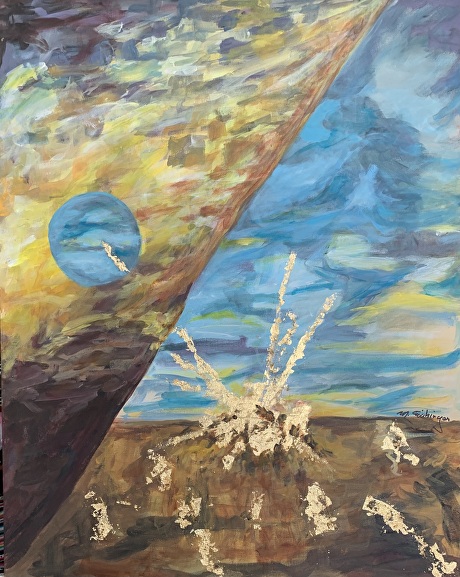


Oh, Rats!

Limitless Possibilities

So many people, so many ways, and so many paths. Which one to take isn’t clear.  Should we use our minds to set boundaries or depend on biological instincts to lead the way?

Oh, Rats!

    Is the human species so messed up that we’ve started to mimic rats in overcrowded cages? Considering that we are biological animals, it isn’t surprising that the aggressive and deviant behaviors we see on the street are responses that mimic rat behavior in crowded situations. The world’s population grew dramatically since Thomas Malthus wrote his 1798  Essay of the Principle of Population. He thought the problems Industrial European society suffered from ——poverty, malnutrition, and disease were all attributable to overpopulation. If growth were left unrestricted, the population would grow at an exponential rate, exceeding its ability to produce resources to support itself.  He cautioned that if action wasn’t taken, the growing population would self-correct through war, famine, and disease. Social scientists say his prediction didn’t come true because humans have the foresight and the ability to plan for the future.  New agricultural technologies put Malthus’ theories on the back burner for the next two-hundred years.

The conversation returned to the forefront when Stanford University Professor Paul Ehrich wrote The Population Bomb with environmental issues part of the discussion. In 1968, 3.55 billion people occupied the globe, increasing by 2.09 percent a year.  Ehrich was an optimist though. He too thought that human foresight and emerging Ag technologies would keep the population safe from disaster. After revisiting his predictions fifty years later, he said that the most serious flaw in his writing was that it was too optimistic about the future. Fresh water is one of the greatest limitations facing the world. Today there are over 8 billion people on the globe, and though the rate of increase has dropped to less than 1 percent, the base number is high. The UN predicts that in seven years the earth will have to support 600 million more people. 

Rats! Where will they all go? What will happen to the United States? An estimated 83 percent of the population already resides in urban areas, increasing urban land by 15 percent. That’s up from the 64 percent recorded in 1950. By 2050, metropolitan occupancy is expected to reach 89 percent, causing double the need for urban land by 2060. More than 300 urban areas today have a population of over 100,000. The average urban population density is 283 people per square mile. New York, a city with 8.8 million inhabitants, has 27,012 people in every square mile.

Back in 1962, animal ecologist John Calhoun foresaw a future of overcrowded cities and devised a population experiment by introducing five pregnant rats in a quarter-acre pen that could accommodate as many as 5000. The animals were given adequate food, water, and shelter. To his surprise, the rat population grew rapidly at first, but over time subsided and leveled off at 150.  Following is a description of what he saw.

“Dominant males became aggressive, some moving in groups, attacking females and the young. Mating behaviors were disrupted. Some became exclusively homosexual. Others became pansexual and hypersexual, attempting to mount any rat they encountered. Mothers neglected their infants, first failing to construct proper nests, and then carelessly abandoning and even attacking their pups. In certain sections of the pens, infant mortality rose as high as 96%, the dead cannibalized by adults. Subordinate animals withdrew psychologically, surviving in a physical sense but at an immense psychological cost. They were the majority in the late phases of growth, existing as a vacant, huddled mass in the centre of the pens. Unable to breed, the population plummeted and did not recover. The crowded rodents had lost the ability to co-exist harmoniously, even after the population numbers once again fell to low levels. At a certain density, they had ceased to act like rats and mice, and the change was permanent.”

Since Calhoun’s experiment, social scientists and biologists in the fields of ecology and mental health continued studying issues around urban crowding. They investigated prisons, mental health hospitals, refugee camps, and slums. Recent research focuses on destination communities where the quality of life for the residents plummeted as tourism increased.  

Though there is some variation in results, overall studies show that crowded conditions increase the risk of the spread of infectious diseases, cause stress, and create mental health problems and sleep disorders. Home injuries multiply since many crowded areas are in poor repair. And, urban sprawl brings traffic congestion, air and water pollution and in some cases flooding. The demand for energy rises and water quality decreases. An urban heat effect from so much cement and high- rise buildings, causes temperatures to rise and greenhouse gas emissions to get trapped in the atmosphere. The average annual temperature in metropolitan areas is 1-7 degrees higher than in rural regions.

Given these conditions, it is not surprising that there are so many mass shootings, suicides, and unsheltered people. Wealthy families reside in dwellings with adequate per-person space. They live near parks and shop in neighborhoods that are relatively safe. Since the pandemic, they’ve taken even more control over their lives by demanding their employers let them work from home on flexible work schedules.   

The majority of the population is not so fortunate. Their wages are low and they have little control over their hours and work week.  They arrive at their jobs stressed by living in crowded apartments in crowded neighborhoods.  Some become disturbed and exhibit behaviors like those in Calhoun’s experiments. They self-medicate with drugs and alcohol, become aggressive drivers, develop deviant sexual behaviors, commit suicide, join gangs, steal, riot, and murder. Their aggression crosses neighborhood boundaries to impact others who live and work in the city. They create fear throughout the nation and sometimes the world.

Human brains are capable of designing housing and community areas for dense populations. Theoretically, we should be able to build livable cities that don’t impact the environment. We should understand the impact eight billion people have on global resources and the psychological problems that occur when it is too crowded.  

We should, but we don’t. The wealthy don’t want to foot the bill to make cities equitable for all. And, I don’t see our citizens as having the will to tackle problems caused by urban living. I don’t see them making the leaps needed to protect the environment. 

I am always hopeful that we’ll wake up and change.  Since the world’s population is still growing and ever more people are migrating to urban areas, cities will become more dysfunctional, putting more pressure on residents to remain sane. 

I enjoy hearing from you. Your opinions matter. Please share them on my blog site at www.eichingerfinart.com/blog

Art is always for sale. For information about Limitless Possibilities contact me at marilynne@eichingerfineart.com

Books by Marilynne Eichinger are available online and in bookstores in paperback and ebook formats. To purchase on Amazon go to AMAZON.

Drumming for CHange

Climate Man, a totem pole carved by Ray Losey, is a call for action. His drumming is loud and clear and must be heeded now. There is no time to wastefor

 Over 200 countries attended COP26m the international climate conference that took place in 2021. Its main goal was to keep a maximum of 2.7 degrees Fahrenheit of global warming within reach by mid-century. The conference held promise and excitement about the urgency of stronger emissions reduction targets. Vulnerable countries were already experiencing dwindling crop yields and devastating storms. They called for financial help from richer nations to help them adapt to the effects of climate change. By the end, 151 resubmitted climate plans that slashed emissions. It was the first time countries agreed to shift away from coal and fossil fuel subsidies. Diplomates left with their hopes alive—but just barely.

The COP27 climate summit reconvened last November in Sharm el-Sheikh Egypt. the conference was framed as a battle for survival. A key outcome was establishing a loss and damage fund for nations vulnerable to the climate crisis. The money will be used for everything, including building sea walls and creating drought-resistant crops. This agreement was important, but when it came to moving away from Fossil fuels, the summit failed miserably. Reports that showed no progress was being made were bad news for our warming planet. The reports painted a bleak picture with no credible path to a 2.7-degree Fahrenheit limit. For the first time, a pavilion was devoted to children and youth, the generations to suffer most. Unfortunately, the policies in place point to a temperature rise bringing catastrophic consequences by the end of the century.

The war in Ukraine hasn’t helped. Countries dependent on Russian oil restarted polluting coal-operated plants. According to a BBC report, the war has led to 33 million tons of greenhouse gases being emitted into the Earth’s atmosphere. Rebuilding Ukraine will release upwards of 49 million tons of carbon dioxide. 

No community in the United States is immune to the effects of a warming climate. If yours isn’t affected by radical weather, it is likely to become overrun with climate migrants. In my backyard, my partner and I are afraid to leave our home for extended periods of time. During the summer, we fear fire whipping through the small canyon below our house. The smoke from California, Oregon, and Washington forest fires keeps us inside during the most beautiful time of the year. 

During the other nine months, we fear mudslides from torrential rains and trees trees and power lines falling down from windstorms .s. In the summer, it is too hot to be outside. For forty years I’ve never needed air-conditioning, but now I do. A 150-foot tree landed on our house a few years ago, one totaled a car in the drive, and this Christmas our roof just missed getting speared through by a branch. We live seven miles from the center of Portland, in an area considered stable.  

ONE SEED AT A TIME

It’s incumbent upon every person to take action. Energy-efficient electric appliances, washing laundry with cold water, and hanging clothes to dry instead of using a dryer are a few of the many ways to save energy at home. Stop complaining about bike lanes, we need them. Walking, biking, and using public transport improve health and fitness as well as the planet. Bundle trips to the store when going by car. We see people drive by our home five and six times daily to complete one small task at a time. Eat more vegetables and less meat. Plant-based food results in fewer greenhouse emissions. Generate less waste.

But, the really big changes have to come from Industry. Large-scale tree plantings, donations to energy-green projects, and preserving rainforests are at the top of the list. Car manufacturers need to increase the efficiency of our cars and homes. Employees should be encouraged to work remotely if possible so the freeways are less rounded and big commercial offices can be downsized. Businesses should reconsider the way travel is conducted. Can employees travel by train instead of a plane? Can they conference by Zoom? They can use climate-conscious vendors for supplies and services and donate to climate-related causes. The public is responsible for holding corporations accountable for their impact on the planet.

The push will come from peer pressure. “We’re going carbon neutral, why aren’t you?” are words that should ring from everyone’s lips. Old values have to be challenged to inspire real change. How many mega-floods or blazing fires have to be experienced before the nation is shaken to its core? The time will come when insurance rates will be too high to afford. Eventually, families will be forced to move from coastal regions, floodplains, and forested areas. In time, people will realize that increasing the gross domestic product is less important than caring for the environment. 

CLIMATE CHANGE IS THE MAIN ISSUE OF OUR TIME. Best not to look at it with horror, but with curiosity. This is an exciting time to be challenged by possibility. By planting one seed at a time we can build a movement that tackles our problems with force. The United States can be an inventive, flexible, and caring country. Let’s not let it be stupid and lazy.

United Nations Climate Action (2021) Together for our planet. retrieved from https://www.un.org/en/climatechange/cop26

Summary Report 6-10 November 2022 COP27. Earth Negotiations Bulletin. retrieved from https://enb.iisd.org/sharm-el-sheikh-climate-change-conference-cop27-summary

Rannard, . (2022)  COP27: War causing huge release of climate warming gas, claims Ukraine. BBC. https://www.bbc.com/news/science-environment-63625693

Ali. M (2022) 10 ways companies can do more to fight climate change. Hotjar, retrieved from https://www.hotjar.com/blog/ten-ways-companies-can-help-fight-climate-change/

What are you doing to lower your carbon footprint? Do you care? Do share your thoughtS below.

Art is always for sale. Contact marilynne@eichingerfinearet.com. Offers considered.

Climate Man by Ray Losey is a 7’ 4” tall and 19” wide cedar pole. Available for $5,800.

One Seed at A time, Mixed Media on Panel 44” x 84” metal frame. available for $ 2,900.

Mental Health Conundrum

Over 20 Percent of the general population suffers from mental illness. Could one of these women be afflicted?

Mental Health Conundrum

In the1960s, I was part of a Lexington, Massachusetts research project to train volunteers to help empty state mental health facilities. After nine months of training, our group of twelve was assigned patients. Our mission was to reintroduce them to the world. The forty-year-old woman in my charge had been in a locked ward for most of her life. Her mother resided in the same hospital.

State mental hospitals were horrible places where inmates had no rights. Their dormitories were overcrowded, attendants poorly trained, and the grounds were a fenced-in prison. I saw one woman nearly catatonic after having a lobotomy. The ward my patient was confined to held severely ill people. One wall was lined with women staring into space while tied to their chairs. Two others were talking to the wall as they turned in circles. While waiting to meet my patient, a woman wandered into the nurse’s station and started choking me. It took several nurses to ply her hands from my neck.

The situation I found myself in, started as a response to prison conditions in the mid-1800s where psychotic inmates were “chained, naked, beaten with rods, and lashed into obedience.” After witnessing these deplorable conditions, Dorothea Dix of Massachusetts lobbied for states to create asylums. By 1955, half a million people were in state-run psychiatric facilities. They were set up to be safe, therapeutic places where people could live productive lives. Many put patients to work in small-scale agricultural farms, others had laundries or bakeries. By the mid-1980s the number had dropped to 100,000 and incarcerations grew.

By the 1950s, Mental health professionals were lobbying to abandon the hospitals and treat patients at community mental health centers instead. They believed that erratic behavior could be controlled by medications making it possible for mentally ill people to lead normal lives. Unfortunately, that is not what happened.

More patients moved in and the facilities outgrew their capacity. Staffing became even more critical during WWII when doctors and nurses were drafted. It wasn’t long before these hospitals resembled the earlier prisons.

In 1954, FDA approval was given to the antipsychotic drug known as Thorazine. It introduced the idea that mental illness could be cured with medication and state mental institutions were no longer needed. President John F. Kennedy sighed a law in 1963 to replace custodial mental institutions with community health centers. Medicate, created in 1965 accelerated the shift by not paying for inpatient care.

What happened is that few mental-health centers were built and Thorazine, the miracle drug, had serious side effects. Research shows that a simple drug can’t cure conditions like bipolar disorder and schizophrenia. Those who benefited, often couldn’t manage their medications. Community-based care turned out to be a failure.

Mental health crises today are usually dealt with by law enforcement. These officers are poorly trained to deal with such emergencies, and the laws intended to protect civil liberties made it easy to arrest disturbed people but difficult to hospitalize them against their will. According to a Washington Post database, nearly half the people in jail and more than a third in prisons are diagnosed with a mental illness. One-quarter of fatal police shootings involve a person with mental illness. Suicide among this population is high, and care is inadequate for incarcerated prisoners. The mental hospitals of the past and the prisons of the present are shockingly similar.

The shift from hospital to prison created other differences. State hospital patients were primarily composed of men and women middle-aged or older. Today’s incarcerated patients are largely young, male, and not white. These numbers grew along with the 1972 to 2009 War on Drugs where the prison population grew 700 percent. Many mentally ill people self-medicate with illegal drugs, making them especially vulnerable to incarceration.

In Oregon, a judge recently called for the release of 100 patients from our overcrowded state hospital. At the same time, there are calls in the community for new treatment facilities to separate the mentally ill from the prison population. Throughout the nation, Crisis Intervention Teams are being formed to respond to psychiatric calls, yet there is no evidence that a few hours of instruction will overcome use-of-force practices.

Other alternatives to prison are being tried. Over 300 mental-health courts oversee people who agree to treatment, medicine, and regular check-ins with a judge. But without a real system of mental health care, it remains likely that more people will enter the criminal justice system. Forty percent of the homeless suffer from mental health issues.

Overall, twenty percent of the population suffers from mental health issues. How to help is a conundrum. Do we let them wander through life without hope or do we step to the plate and change the way their treatment is handled? Mental conditions are complex and require a personalized approach, but imagine how much better our communities would be if this problem was tackled straight on. Right now, we lack an effective system of mental care.

There continues to be a demand for good residential treatment facilities. My hope is that the mental help system will be rebuilt with compassion and that services will be within reach of the general public, not confined to the wealthy. There are wonderful private facilities that serve as an example of the kind of programs that should be available to all.

References:

Torrey, F.( 2013) Ronald Reagan’s shameful legacy: Violence, the homeless, mental illness. retrieved from https://www.salon.com/2013/09/29/ronald_reagans_shameful_legacy_violence_the_homeless_mental_illness/

Lyons, R. (1984) How Release of Mental Patients Began. New York Times. retrieved from https://www.nytimes.com/1984/10/30/science/how-release-of-mental-patients-began.html

Roth,A. (2021) THE truth About Deinstitutionalization. The Atlantic. retrieved from https://www.theatlantic.com/health/archive/2021/05/truth-about-deinstitutionalization/618986/

Sheppard Pratt website. Care and Service that change lives. retrieved from https://www.sheppardpratt.org/care-services/

Do you have a friend or family member suffering from a mental disease? Do comment below.

Art is always for sale. The Three Sirens is a 36″ by 12″ acrylic painting on a wide canvas. Available for $495 including shipping in the continental US. Purchase on my website or contact me at marilynne@eichingerfineart.com

Books by Marilynne Eichinger are available in bookstores and online in paperback and ebook formats. To purchase with ease, you can go to AMAZON

Today’s Educated Person

Eastern Oregon Contemplative

Traveling east from Portland reminds me that nothing stays the same. Seasons change along with the landscape. The city gives way to fields and the cliffs turn into mountains. As I ride east, I question my preference for open quiet spaces as opposed to high-rise apartments, shops, museums, and honking cars. Where should I live the rest of my life? I’m bothered by housing encroaching on nature and homeless tents cluttering city streets. Swimming through the thorny issues of the century is not easy.

Today’s Educated Person

Happy New Year Folks! I am sorry not to have wished you good tidings last week, but I’ve been in bed with the flu. Gratuitously, it gave me time to think.

The Times They Are A-Changin’ were words written by Bob Dylan in a song released in 1964. The first and third stanzas follow:

1.

Come gather ’round people

Wherever you roam

And admit that the waters

Around you have grown

And accept it that soon

You’ll be drenched to the bone

If your time to you is worth savin’

And you better start swimmin’

Or you’ll sink like a stone

For the times they are a-changin

3.

Come senators, congressmen

Please heed the call

Don’t stand in the doorway

Don’t block up the hall

For he that gets hurt

Will be he who has stalled

The battle outside ragin’

Will soon shake your windows

And rattle your walls

For the times they are a-changin’

There is a lot of wisdom in Dylan’s lyrics. He warns that parents who don’t keep up with the times should get out of the way of their children. He tells prophets not to speak too soon, for the losers of today may be winners in the future.

With this in mind, how does one stay abreast of change as we age? As we continue to learn, will we evolve with the times so that we don’t become dinosaurs? In an epoch where information is available at the click of a button, one might imagine it would be easy. Unfortunately, the click can lead to misinformation or partial truths that must be sorted through. More than ever, we are required to be actively involved in the learning process. The information we read or listen to has to be sifted through filters before it becomes meaningful. People like you and me may have the skills but lack the fortitude to examine our personal attitudes and values before passing judgment on what is new. It is a way to stay motivated and open to change so we won’t wallow in the past.

Most of my readers are lifelong learners. If they miraculously returned to high school, their teachers would help them adapt to a life of change by showing them how to explore connections along with factual information. Today’s educators see the physical, emotional, and intellectual well-being of their students as important factors in the search for meaningful relationships with others, ideas, and the environment. They view the education process as an ecosystem composed of complex parts that impact one another.

It begins with having a positive sense of identity that is connected to the land, language, cultures, and values before exploring the impact of technology and the environment on the future. Self-understanding provides context as research and information are evaluated. It empowers the student to examine how they fit into the new world order.

Change in the political climate, brain research, genetic engineering, and artificial intelligence won’t make sense if you can’t understand how it will affect you. and your family. Adaptation requires thinking outside the box. It may mean reevaluating social justice issues and innovative technologies to see if they are in line with your values and perceptions. If they aren’t, you will find yourself under a great deal of stress until you change your thinking or move to a community more compatible with your beliefs. Society will not return to the way it was when you were a child. Those who can’t change to meet the present are burdened. Their complaints add stress to their days.

My way through turmoil is to embrace the notion of continuous self-exploration. I have values that I hold sacrosanct and use to evaluate the new world order. When they conflict, I shift my thinking a bit left or right and become involved with like-minded people who want change that will work for a burgeoning population with shifting needs due to climate change. An educated person is challenged to return balance to his or her thoughts while living out his or her days. Doing so is like undertaking a jigsaw puzzle. It is fun if there aren’t too many pieces to overwhelm you.

Do share your thoughts below.

Art is always for sale. Contact me at marilynne@eichingerfineart.com

Eastern Oregon Contemplative/ 21″by 25″ framed acrylic painting/ $485 shipped free in the continental U.S.

References:

The Times They Are A-Changin’ I The Official Bob Dylan Site. retrieved from https://www.bobdylan.com/songs/times-they-are-changin/

ECE website, Reasons for Change. Education, Culture and Employment. retrieved from https://www.ece.gov.nt.ca/en/services/renouveau-en-education-aux-tno/reasons-change

Teaching for Change website. retrieved from https://www.teachingforchange.org/about/what-we-do

To Move A Mountain

LAST NIGHT’S DREAM

To Move a Mountain

“The man who moves a mountain begins by carrying away small stones.” This 2,500-year-old quote is attributed to the philosopher Confucius. It remains true for anyone with a goal and entrepreneurial spirit. Yet, we make resolutions to follow our dreams but are slow to follow through. Why is getting started so difficult?

Procrastination doesn’t help a person begin, but neither does motivation work without the energy to engage. Brain scientists say that a sufficient amount of dopamine has to be released in the brain for people to move ahead with their plans. This is especially hard for those who have difficulty focusing. They wait until the last minute for an impending consequence (reward or negative outcome) to heighten the brain so it will release dopamine.

Some people have interest-based rather than value-based (importance-based) nervous systems. Those who do are challenged to get close to the task. Their best path forward is to break their goal into achievable parts. Let’s say, the goal is to fix your snow blower but don’t do it because you don’t know where to get it repaired. If you change the task from fixing the blower to finding a repair shop, it is easier to get started. With the first task complete, the next goal is to call for an appointment. In other words, smaller tasks are the pebbles that get you to the starting line.

Unconscious negative emotions can hinder motivation, making it difficult to tackle even simple, straightforward projects. Waiting for external pressure to build a sense of urgency is a slippery slope that can lead to disaster. People who wait until the last minute can become sleep deprived, do mediocre work, and make mistakes.

If your hesitance is due to a lack of confidence, reaching a goal can feel like an overwhelming task. The way forward is to execute a plan with a timeline, small attainable parts, and a reward system that kicks in after each task is complete. Rewards can be as simple as taking a break for a cup of hot chocolate or a walk around the block. Whatever it is, it is important to recognize progress by patting yourself on the back. But don’t forget a contingency plan. Having one strengthens confidence and eliminates unwarranted fear.

A warm-up routine helps some people get you going. I remember my husband sharpening a dozen pencils before delving into a math assignment without the aid of a computer. He went through the motions daily even though most of the pencils were sharp. Self-talk can also work. When I was in high school found it hard to focus on school assignments so I bargained with myself. I agreed that if I concentrated on homework for a half-hour, I was entitled to daydream for 10 minutes. The method helped me through many difficult assignments.

Lack of financial security is a major hindrance to starting. Living month-to-month isn’t good enough to launch a big project. Depending on the project, it’s best to have a six-month to a year reserve before starting. But money isn’t the only thing to consider. Time management skills are also essential. You may have to trade away TV hours if your project is to succeed.

Self-confidence is a sticky wicket, especially for perfectionists When analyzing my business, I looked at annual rather than weekly trends. I found that perfectionists couldn’t take the stress of multi-year goals that aim for an imaginary pinnacle. I found it best to inch my way forward and celebrate small winnings rather than sit on the sidelines to work out every detail. Of course, that wouldn’t be a good idea if launching a spacecraft or new pharmaceutical.

If you have too much on your plate, lighten the load and find distraction-free space. You need to talk to family and friends to get emotional support and respect for your needs as you pursue your dream. But if you stall because you don’t know enough to implement the project, take time off to learn about it rather than let your dreams die.

A surprising number of people hesitate due to the fear of success. What will happen if you pull your dream off? Will you be treated differently? Will more be expected of you? It may seem irrational, but the fear of success can be as paralyzing as the fear of failure. It helps to visualize the future so you can avoid an unwanted outcome.

Whatever your dream, no matter your age, you have one life, so make the most of it. I started painting in my fifties and was a published author in my seventies. Gladys Burrill was a marathon runner at 92 years. Julia Child became a success at 50. Toni Morrison won a Nobel prize at 62. Ray Kroc was 52 when he founded the McDonald’s chain. At the age of 69, Hubert Jones started the Boston Children’s Choir. Vera Wang was a figure skater until entering the fashion industry after 40.

This coming year, why not resolve to follow your dream? Set goals, take a risk, and start to move one pebble at a time.

Reference:

Pandey, S. (2018) Things That are Stopping You from Pursuing Your Dream Career. Careerindia. retrieved from https://www.careerindia.com/tips/things-that-are-stopping-you-from-pursuing-your-dream-career-022785.html

Wax, D. What’s stopping You from Getting Started (and What to Do About It) Forbes Magazine. retrieved from https://www.lifehack.org/articles/featured/whats-stopping-you-from-getting-started-and-what-to-do-about-it.html

Cummins, M. (2022) Do You Know the 2 Reasons You Have Trouble Starting Tasks. Marla Cummins website. retrieved from https://marlacummins.com/trouble-starting-tasks-adults-with-adhd/

Do you have trouble getting started? Please share your thoughts below.

Art makes a wonderful holiday gift. Peruse www.eichingerfineart.com

and click on the works tablet at the top to see available pieces.

For questions, contact me at marilynne@eichingerfineart.com

Books are also a wonderful way to say happy holiday. Over the Peanut Fence, about homeless and runaway youth, and Lives of Museum Junkies- second edition, a behind-the-scenes look at museums, are available in bookstores and online. For fast delivery try Amazon.

Interpreting Art with Rorschach

What does this image say to you?

“I try to apply colors like words that shape poems, like notes that shape music. “Joan Miró

Interpreting art

Anatole France once wrote, “Even a little dog is at the center of his own universe.” There is no single reality. We interpret the world in different ways because our experiences are different. Not only do our pasts differ, but the cones and rods in our eyes also are not the same. And the notes we hear at a concert, like fingerprints, are uniquely our own.

When I paint, I use bold colors and shapes that are influenced by how my eyes see and my ears hear. They are also expressions of past experiences mixed with a little bit of mystery. My pictures tell stories that viewers interpret in their own way. When the paintings are abstract, I am always surprised by the feedback I get. Listening to such varied comments makes me wonder how interpreters of Rorschach tests would analyze the responses.

In a clinical setting, Rorschach tests provide information about healthy emotions. It is a way for people to gain insight into their psyche. The test also helps diagnose diseases like schizophrenia. Assuming most of us are not psychotic, I thought it would be interesting to look at my artwork as though interpreting an inkblot. It might be a way to get to know yourself better.

When shown an image, some patients respond by seeing it in its entirety, while others look at parts. Some focus on the white space, others on color, and still others on the details. When looking at parts of the image, interpretations tend to be more similar. Psychiatrists pay special attention to the uncommon details people see.

Art patrons and clinical patients alike vary in cognitive abilities and perceptual accuracy. They attend viewings with different goals, interests, flexibility of ideas, and emotions. Some come seeking order whereas others find chaos. Following are a few of my abstract pieces. They are labeled by number rather than by name. With a Rorschach test in mind, I’d like to know what you make of them. If you want to know how I labeled them please go to my website under works. You’ll find them in the abstract section. Please comment below.

To see a full selection of art go to www.eichingerfineart.com

and click on works or contact me at marilynne@eichingerfineart.com

Books are available in bookstores and online in paperback and kindle formats. You can find them on Amazon by going to Marilynne Eichinger books https://www.amazon.com/Marilynne-Eichinger/e/B01AON2M4O/ref=dp_byline_cont_pop_book_1

Reference:

Frothingham,B.( 2021) Rorschach Inkblot Test: Definition, History & interpretation. Simply Psychology. retrieved from https://www.simplypsychology.org/what-is-the-rorschach-inkblot-test.html

State of the Forests

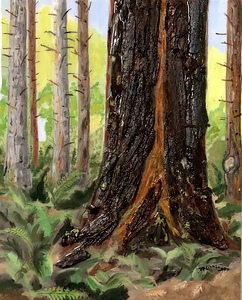
Redwood Tree

Reminder! Get your orders in for Canvas Tree Art today for delivery by the holidays. $99 is all it takes to get there. 

To see the entire canvas print collection go to https://www.eichingerfineart.com/collections/182747 and purchase online.  Original art available at www.eichingerfineart.com

State of the Forests

In 2022, 140 countries pledged to tackle the environmental crisis through green recovery. This means improving biodiversity and reducing forest loss by 2030, seven years away. The three pathways to achieving these goals are; halting deforestation and keeping remaining forests, restoring degraded lands and expanding agroforestry, and sustainably using forests.

To keep the global temperature increase below 1.5 °C, we have to act now. To reduce the risk of future pandemics, and ensure food security for all; to eliminate poverty, frequency of violent storms, and rising oceans; to offer hope for the future, there is no time to wait.

Why be concerned? Can Trees and forests help with the recovery of sustainable economies in badly affected regions of the world?

Climate change has already increased economic and conflicts. It has degraded water and land use and created a health crisis, especially in rural areas. If the U.S. wants to stop immigrants from around the world from seeking asylum, we have to look to the source of their flight. If your family lost everything they had and was starving, wouldn’t you do all you could to find shelter in a climate more favorable to survival? 

Population passed the 8 million person mark. We don’t have to look further than our country to see what happens when so many people consume irreplaceable fossil fuels, metals, and minerals. Increased production, consumption, and waste has led to a degrading way of life. We face a crisis we don’t tackle head-on. Nations of the world set priorities and goals without meeting them. The climate continues to warm. 

There is a way forward if we look to sustainable resources. We have only to grasp their potential and hang on. By not doing so, deforestation and forest degradation will continue. Nearly 90 percent of deforestation between 2018 and 2018 was related to agriculture. Forests cover 31 percent of the world’s land surface, but the area is decreasing, especially in the tropics. Forests protect most of the earth’s terrestrial biodiversity. They are a buffer against invasive species and diseases that wipe out monoculture plantings and cause illness. 

Millions of people get their food from wildlife and plants growing in forested areas, especially in rural and indigenous communities. Each clearcut puts thousands more at risk of starvation. They take to the roads, fill refugee camps, and come knocking on First World doors.  They risk disease; the Ebola virus that killed over 11,000 people between 2014-2015 attaches two years after deforestation. The increase in dengue fever, malaria, and yellow fever are also associated with deforestation.

About one-third of global forest loss is fire-related. I too live in fear of the park by my home going up in flames to engulf my house. Though my house is only three miles from the center city, it is at risk. If the temperature keeps rising, the entire city is vulnerable. Most people reside in wood-framed homes. 

There are ways to change the situation.

  • Halting deforestation is a cost-effective action for slowing climate change.
  • Have a more efficient, sustainable agrifood system that reduces the need for land.
  • Reduce illegal wildlife trade by increasing surveillance.
  • Public and private initiatives promoting sustainable land-use
  • 7 percent of deforestation is due to oil-palm plantations that trade internationally. reduce its use and find alternatives.
  • Increase financing in forest investment so climate targets can be met by 2050.
  • Improve the regulatory rules to avoid the harmful impacts of deforestation. 
  • Develop coherent policies that are scalable.

References

Website. The State of the World’s Forests 2022. retrieved from https://www.fao.org/3/cb9360en/online/cb9360en.html

You Tube. A Tree Talk by Ewald Rametsteiner

I look forward to your comments below.

Art is always for sale. For information go to my website or contact me at marilynne@eichingerfineart.com

A Forest to Cherish

Sale:

Add a forest to your home. Affordable, quality 20″ x 16 ” deep canvas prints will provide your home with the peacefulness of nature. Only $99 each. Purchase several and walk in the woods whenever you want. To see the entire selection of 28 paintings go to eichingerfineart.com/collections/182747 and purchase online. Order as a gift or for yourself and beat the holiday rush. Free delivery in approximately three weeks. email your questions or for ask prices if you desire a larger canvas. Contact me at marilynne@eichingerfineart.com.

Laugh and the World Laughs with you

Gold Static

The positive thinker sees the invisible, feels the intangible, and achieves the impossible.    — Winston Churchill

Ho ho, hee hee, ha ha – oh!

It’s well established that humans possess an intrinsic instinct for mimicry. Frown at someone, and they will most likely glower back. Smile and there’s a good chance you’ll inspire a reciprocal grin. Laugh and others will laugh with you.

A similar capability is at work in positive thinking. Our bodies respond instinctively when we consciously choose to introduce positive thoughts into our minds. It’s a way we gain power over negative events life throws our way and gives us the strength to face adversity. When the mind signals that all is well, a switch is turned on in the body that makes us more confident and content. It creates a positive feedback cycle that can be quite powerful. With low points viewed as normal fluctuations we all experience, we’re better able to focus on the positive, and help ourselves to move toward the goals we want to achieve.

Positive thinking is often used interchangeably with positive psychology, but it is not the same. Positive thinking is about maintaining optimism and looking at things from a positive point of view. It is about setting an intention and being open to possibilities. 

Positive psychology studies the causes and effects of optimism and when it is good to use. Research findings show that positive people have a higher sense of meaningfulness in life and more resilience when faced with difficult events. They are more likely to exercise, avoid smoking, eat a healthy diet, and get quality sleep. They develop coping skills, are less depressed, healthier, and live longer.

Laughter can help get you there. No thinking is required…and it’s good for your health. See what happens when you fake a smile, then giggle. Laugh slowly gradually increasing the tempo and volume. I bet it tickles your funny bone. For a hearty laugh, spread your arms up and direct laughter to come from your heart. Bring your arms down and try it again. Try saying silly words and making gibberish sounds, laughing while doing it. Sing a funny karaoke song, dance like crazy while nude in your bedroom, or watch a funny movie.

Laughter relaxes the whole body, relieves physical tension and stress, and boosts the immune system. It triggers the release of endorphins that make you feel good. 

Whether striving for a gold medal, aiming at a big promotion, volunteering for a non-profit, or working tirelessly to raise a happy family, staying on the bright side does more than just benefit you. It has a positive effect on those around you as well. As J.M, Barries wrote in Peter Pan, “Just think happy thoughts and you’ll fly.”

Try as much as possible to be wholly alive, with all your might, and when you laugh, laugh like hell. — William Saroyan

With that in mind—Did you hear about the mathematician who’s afraid of negative numbers?  He’ll stop at nothing to avoid them.

And then there’s the woman in labor who suddenly shouted, “Shouldn’t! Wouldn’t! Couldn’t Didn’t, Can’t!” Her doctor responded calmly, “Don’t worry. Those are just contractions.”

Ever wonder why scientists don’t trust atoms? Because they make up everything.

We are living through hard times yet need to stay involved. It is more important than ever to maintain a positive attitude and not drop out. Hope is our future. 

Have a good laugh on me !

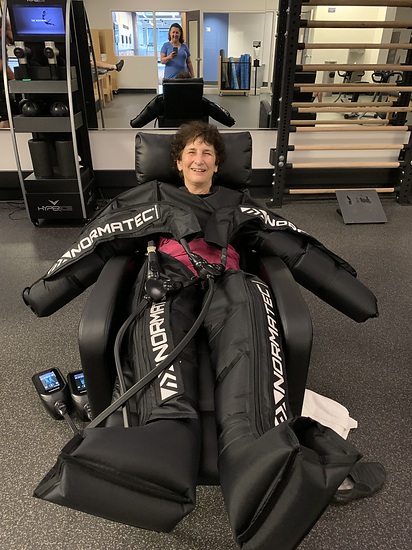
Day at the Spa

References:

Cherry, K. (2022) What is Positive Thinking? Verywellmind. retrieved from https://www.verywellmind.com/what-is-positive-thinking-2794772#

Quotes about positive thinking: 

https://www.inspiringquotes.com/13-quotes-on-the-power-of-positive-thinking/YTD0f4T5EQAH_Ism?utm_source=top-content&utm_medium=email&utm_campaign=1561566189

Ripoli, Ramon (2017)Simulated Laughter Techniques for therapeutic Use in Mental Health. MedCrave. retrieved from https://medcraveonline.com/JPCPY/simulated-laughter-techniques-for-therapeutic-use-in-mental-health.html 

website. (2022) Laughter is the Best Medicine. HelpGuide. retrieved from https://www.helpguide.org/articles/mental-health/laughter-is-the-best-medicine.htm

Wading through Complexity

The Oregon Museum of Science and Industry
The riverfront museum I spearheaded opened thirty years ago.
 Impression 5, in Michigan, celebrated its fiftieth year.  It is hard to believe.

Wading Through Complex Thoughts

Analyzing your way through complex situations is not easy. On a rainy day in 1972, I was in Lansing, Michigan with four rowdy children and challenged with keeping them from tearing the house apart. So, I started a science museum in my basement. At the time there were only twelve science centers in the United States. Exhibits were push-button displays that mixed chemicals and asked yes and no questions. Fanciful walk-through hearts on Oregon, descent in into the depths of a coal mine in Chicago, fighter jets, and locomotives in Philadelphia covered the floors. What they lacked were interactive activities that called on visitors to experiment and think. A white paper was written pointing fingers at how the Chicago Museum of Science and Industry was a pawn of corporate America.

Public education was also under attack for the way children were held hostage for hours each week. Being pinned to their seats and made to memorize historical facts and formulas was not the way to inspire minds to greatness.John Holt, Howard Gardner, Piaget, and A.S. Neil were among those promoting child-centered ways, age-appropriate ways of teaching.

The table-top exhibits built in the basement of my home with my son recognized that children were not little adults but instead were youngsters with unique ways of learning. Science, engineering, and psychology professors at Michigan State University contributed exhibits and guided me through the learning process. The scientific method became my platform for conceiving interactive displays. 

Scientists approach problems through a seven-step process: make an observation, ask a question, from a hypothesis or testable explanation, make a prediction based on the hypothesis, test the prediction, and use the results to make new hypotheses or predictions. It is the way research progresses.

This way of thinking made sense to me and today is embedded in my psyche as a way to tackle life’s problems and idiosyncrasies. When ASTC, the Association of Science and Technology Centers started, science centers exploded throughout the world. I suddenly had company and reached out to seven small museums, including OMSI and the Pacific Science Center to secure a National Science Foundation grant to study visitor interaction with displays that required them to solve problems. We built exhibits that traveled to each other’s sites. Our staffs met to study hands-on education philosophies and to critique how  we tackled interactive construction techniques. 

We, and the other science centers introduced visitors to computers, technological innovations, and discoveries in genetics, and bio-engineering. What we learned by experimenting with hands-on learning techniques, was incorporated into the teacher education and outreach programs. Our museums became a model for the free school movement. They were places where visitors moved freely through displays, learning in their own way, at their own pace.  

You might ask, why I am saying something about this now. I am still involved with the education of young children and am more concerned than ever. The reliance on the computer for teaching has gone ballistic. Children no longer see that moss prefers to grow on North-facing surfaces. They don’t know how to use a hammer and nails to build a birdhouse. They don’t know how to change the oil in their car or sew a seam that burst on a dress. They don’t have the patience to build a balloon-powered card using cardboard and bottle caps to see how far it will go. They are too hyper to start a grow box and watch the way seeds turn into plants. They would rather play computer games than construct a solar oven to cook marshmallows while exploring thermal energy, reflection, and convection. 

All of our activities were designed to help young experimenters question and think. They require patience, dexterity, and a willingness to try and at times fail.  These are basic needs that adults as well as children need as they conduct their lives. 

When I moved to Oregon to run a science museum with greater resources, I was more determined than ever to show visitors how the scientific method is useful when tackling everyday problems. We built a new waterfront museum where people could satisfy their curiosity by conducting experiments on the floor of our exhibit halls. When designing Busy Town for young children, for example, we included a component for parents that focused them on observing their children so they could question their preconceived ideas about the way they learned.

As the world grapples with environmental change, economic challenges, and pandemics, we need clear minds, and a citizenry willing to dig into issues and think problems through. Analyzing these issues can be great fun if we put our heads to it. It calls for more feet on the ground stomping through communities and parks—putting more hands on binoculars, hammers, saws, needles, and thread as a complement to eyes on the computer screen. It requires reading, discussing, arguing, and coming to conclusions you are willing to test. The scientific method provides a way to proceed. Practice solving little problems so the large ones will fall into place.

For a behind-the-scene look at science centers and how they influenced education read Lives of Museum Junkies.

Art is always for sale. Check out my new cart-enabled website eichingerfineart.com to purchase the painting of OMSI or any other that tickles your fancy. 

Please share your thoughts below. What do you do when you escape the computer and remember that the physical world is filled with beauty?