Awe: Isn’t it awesome?

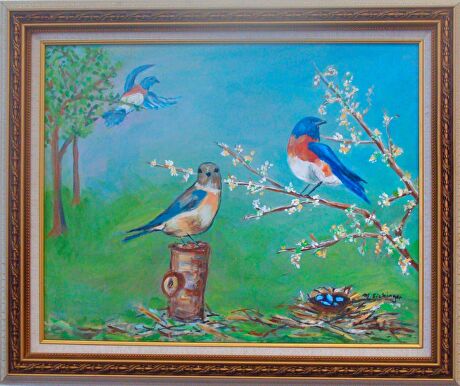
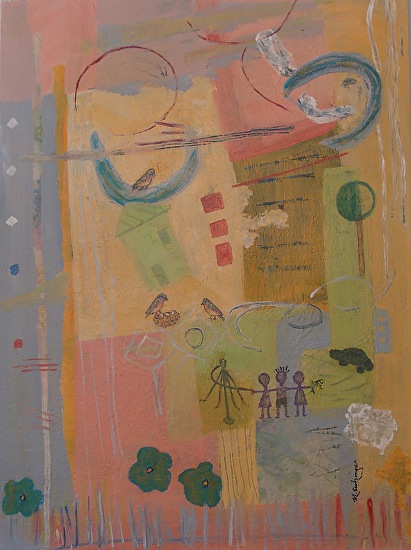
BLUE BIRDS

The smell of fresh-cut grass, bluebirds nesting in a nearby tree, and cherry blossoms floating in the wind against a bright blue sky are things that inspire awe,  giving joy for the majesty of the earth.

Awe: Isn’t it awesome?

Awe is an emotion, a feeling you get in the presence of the vast unknown. Hard to describe, the feeling challenges your understanding of the universe. Awe, a mixture of fear and wonder, can fill you with respect for mystery. Eliciting an ecstasy sparked by music, art, and nature, it is experienced by infants as well as seniors on their death bed. Developmental scientists like Allison Gopnik, author of The Philosophical Baby, believe that children feel awe more often than their parents. Adults become adept at eliminating awe-inspiring experiences from their lives.


I still remember the expression on my six-month-old son’s face when seeing his first snowfall. His eyes lit up, becoming round like saucers as snowflakes fell silently around him. His mouth opened round as he reached out from my husband’s arms, trying to grasp a flake. Though many parents don’t think infants as having the capacity for awe, recent scientific investigations show the opposite. Infants are aware, thoughtful, and constantly analyzing all that they see.

I like being around young children. Their explorations allow me to relive the wonder and experience surprise, shaking me from complacency. When my three-and-a-half-year-old grandchild was upset after noticing the tires on my car were scarred with deep cuts, her observation led to an inspection of dozens of tires on cars in the lot adjacent to her apartment. Because I was there to witness the moment, I grabbed onto her curiosity and helped it evolve into something more. I learned a lot about tires that day.


Awe is mainly viewed as positive emotion, as it was the time I stood on the rim of the Grand Canyon–but that isn’t always the case. One stormy night, while driving on the New Jersey Turnpike, lightning struck a few feet in front of my windshield. It sounded like the crack of a whip, followed by a luminescent, blinding light that left me shaking in fear of its power. It wasn’t the first time I had seen lighting up close. The Franklin Institute in Philadelphia sparks lighting in a controlled environment. The demonstration was interesting, but not as awe-inspiring as it was on the turnpike.

We humans are unique in our capacity to experience awe. It awakens our minds, stirring intellectual and philosophical thoughts. We may speak of these events as being transformative, sometimes spiritual. While it may make you feel small in relation to the universe, it can also give purpose to life. Religious leaders are known to find their calling after an awe-inspiring experience.

As an expansive emotion, awe is good for our health. It takes us out of self-interest, letting us become more willing to engage with people. Awe inspires musicians, artists, philosophers, and inventors willing to share the insights gained from their mastery. They may be humbled by their achievements, but their skills can also make them strong, open-minded, and generous. And wonderment coming from admirers can inspire others to follow in their footsteps.

We would do well to put ourselves in situations that stimulate awe. Medieval cathedrals, synagogues, and mosques with stained glass windows were designed to do that for people paying homage to God. The Taj Mahal, an Ivory-white marble mausoleum in India commissioned in 1631 by Shah Jahan, was built so that visitors would feel awe at the love he had for his wife. Visits to national parks and other places of beauty stimulate wonderment for the mystery of being alive and love for the people close to us.

Hiking through natural areas, viewing a night sky that’s not dulled by city lights, hearing a virtuoso musician, and watching an olympian athlete perform are things that take us outside of ourselves. They help put our days in perspective. I challenge you this spring to seek out those precious moments that inspire feelings of awe rather than dwell in the gutter of negativity that looms incessantly on newscasts throughout the nation. 

References:

Keltner. D., 2021. What is Awe? Greater Good Magazine, retrieved from Berkeley

Omary, A. 2022. The Awesome Psychology of Awe. Psychology Today. retrieved from https://www.psychologytoday.com/us/blog/natured-nurture/202207/the-awesome-psychology-awe

Art is always for sale. Bluebirds is an acrylic on canvas painting, 20.5″ by 24.5″/ available framed for $425. Shipped free within the continental U.S. Send questions to mariynne@eichngerfineart.com

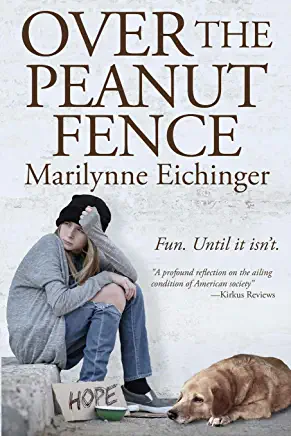
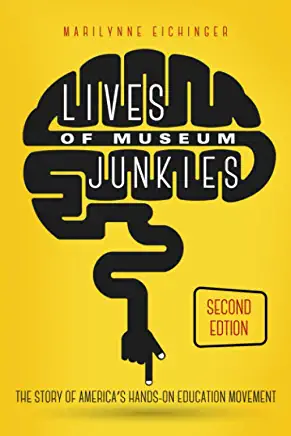
Over the Peanut Fence, about homeless and runaway youth and Museum Junkies, giving a behind-the-scenes look at museums, are autobiographical and biographical accountings of unusual experiences. Books can be purchased at  AMAZON

Please share a few of your awsome experiences below.

A Utopian Dream for Earth Day

Don’t be Fooled

Earth Mother: Is a Utopian Future Possible?

Don’t be fooled! The human species has flung the planet into an era propelled by human behavior rather than biological evolution. They have reshaped the map into urban areas, croplands, and rangelands rather than the woodlands, rainforests, savannas, and tundras spanning the globe in the past. With 9.5 billion people expected to populate the earth by 2050, can our natural resources can keep up with this increase? It is naive to imagine there are enough life-giving resources available to sustain an infinite amount of growth.

Predicting the maximum number of species our environment can support is difficult for ecologists to calculate. How people reproduce, consume resources, and interact with the environment varies from place to place and country to country. Ecologists evaluate the carrying capacity of the earth by comparing how natural resources are consumed and how waste is managed. According to World Population Resources, “Today, our global footprint is in overshoot. It would take 1.75 Earths to sustain our current population. If current trends continue, we will reach 3 Earths by the year 2050.” No wonder Elon Musk’s utopian vision is to establish colonies in outer space.

Environmental naysayers believe that technology will change these dire projections. Other folks advocate for slowing population growth, while still, others seek rational ways of changing global culture to improve decision-making. I fall into the latter category. Mathematical biologist, Joel Cohen, writes that all three approaches are necessary, though they may not be enough. His call is to promote access to contraceptives, develop third-world economies, empower women, and educate all.

At this moment in history, the United States is heading in the opposite direction. The offshoot of urban growth is increased poverty, homelessness, pollution, and gun violence. Recent actions to eliminate abortion, ban books, and bastardize the LGBTQ community are pushing countrymen into a pit to be consumed by lions.

Is the situation hopeless as many think? I’m not sure. Population growth in the past was controlled by epidemics and wars. Today’s medical establishment controls mass extinctions. Though 6,845,412 died of COVID during the last three years, it was a drop in the bucket compared to approximately 420 million births occurring during the same period. There are four births every second of every day with more than half taking place in Asia with twenty-five million births in India and sixteen million in China alone every year.

Though the global trend of live births has decreased since 1950, it is still not low enough In 1950 the average birth rate per thousand in a year was 37. In 2050 it is expected to drop to 13 which still creates an increase when you consider how long people live. With global warming added into the formula, mass migrations out of equatorial countries and from coastal areas will continue pushing inward and north.

In prehistoric times, life expectancy at birth is estimated to have been 33 years. By 1950 it rose to 48 years globally. Global expectancy in 1922 was 72.98 years. Kaare Christens of the Southern University of Denmark predicts that a Danish woman born today will live to be over 100 years and that the first person to reach 150 is already alive. The United States is in the middle of the pack with a life expectancy for males to be 74.5 years, well under Hong Kong’s (82.9 years, Iceland’s (81.7 years), and Japan’s (81.6 years). Life expectancy for women in the U.S. is 80.2 years. In addition to hormonal differences between men and women, the discrepancy is due to the toll of gun violence, risky male behaviors, smoking, and drug usage among the male population.

A Utopian Solution

“Among all species, it is perhaps only humans who create habitats that are not fit to live in.” – Stephen Marshall

Healing the earth has neither an easy nor welcoming solution. Controlling population growth, changing morality, and doing what is necessary to protect the human species from extinction requires a worldwide consensus to do the right thing. The solutions won’t be pleasant for first-world countries used to independent thinkers controlling their own destinies. Our mega-cities are pollution centers crowded with vehicles that cause road rage. Carbon emissions continue to climb and rising sea levels affect coastal cities around the world. Many individual privileges will have to be curtailed to obtain clean water and air, an adequate food supply, universal healthcare, and education for the masses.

My thinking is that it will only happen if an organization like the United Nations is given increased power to control population, pollution, migration, resource development, and usage in a shared economic vision for the planet. This means lowering the autonomy of national governments and requiring local authorities to implement changes that evolve from a consensus of nations. Neither capitalism nor communism would be the end-all economic solution, but rather a blending of social programs and innovative technologies will be aimed at improving the quality of life for all.

Future cities will have to embrace approaches that allow for adjustment to ongoing change. I believe that a more sustainable model of urban development will need to evolve to let cities adapt more easily to continuous change across multiple parameters. Urban planners will have to pay attention to the soil, the importance of plant diversity, its role in water and nutrient cycles, and its reserve of carbon. City governments will have to account for how extreme weather brings down power lines and the way rising seas affect wildlife as well as urban dwellings. Long-range city plans already take into account the fact that climate change increases the risk of extreme wildfires, droughts, and floods. Physicians have been responding to allergy seasons that have become more intense. Fossil-fuel-reliant governments are slowly looking for more earth-friendly sources of power.

Our shared vulnerability may be the key to change. Dwindling natural resources affect everyone regardless of wealth and status. A step forward could be to promote intergenerational involvement in climate change, gun laws, and housing. The world appears different for graduating youth than it did in my day. As a result of changing demographics, they are more tolerant of sexual and racial diversity, live in apartments with smaller footprints, and are more connected to each other through technology. They don’t desire a large family and look to friends to provide emotional and physical support.

To plan for the future, our children will need to study how nature continues to adapt. They will have to get ready for the next pandemic, wean themselves off of petroleum-driven engines, and create social structures that are supportive of diverse cultural norms. It is a great challenge, but I believe our youth are up to it. My twenty-year-old grandchildren already live and talk differently than I did at their age. They are more aware of global issues, are less acquisitive, and find pleasure in nature, friendships, exercise, and things that can easily be enjoyed without a huge expense.

My utopian dream is based on hope for the next generation to do what is right. I see my role as a supportive one that provides youth with the tools they need to analyze the complex issues of their day. They will find it easier to adjust to the realities of the day than folks like me, nearing the end of my time on earth.

I look forward to your comments below.

References:

Nevozhai, D. (2021) Farewell the utopian city. The Converstation. retrieved from https://theconversation.com/farewell-the-utopian-city-to-cope-with-climate-change-we-must-learn-from-how-nature-adapts-157878

PRB website.  Gemder Disparities in Health and Mortality. retrieved/from https://www.prb.org/resources/gender-disparities-in-health-and-mortality/

World Population Counts website.  retrieved from https://www.theworldcounts.com/populations/world/births

Worldometer web site.  Coronavirus Death Toll. retrieved from https://www.worldometers.info/coronavirus/coronavirus-death-toll/

World Population History Website.  How Many People Can Our World Support? retrieved from POPULATION. https://worldpopulationhistory.org/carrying-capacity/#:~:text=Today%2C%20our%20global%20footprint%20is,to%20sustain%20our%20current%20population

Art is always for sale. Earth Mother is a 30″ x 24″ deep canvas acrylic painting. available for $645. For information contact me at marilynne@eichingerfineart.com

Lives of Museum Junkies, second edition is available on Amazon for $14.95. Now is your chance for a behind-the-scenes look at museums and to see how a naive mother became the director of a major science center. Go to AMAZON

Covid Hits!

Spring Snow on Oak Trees

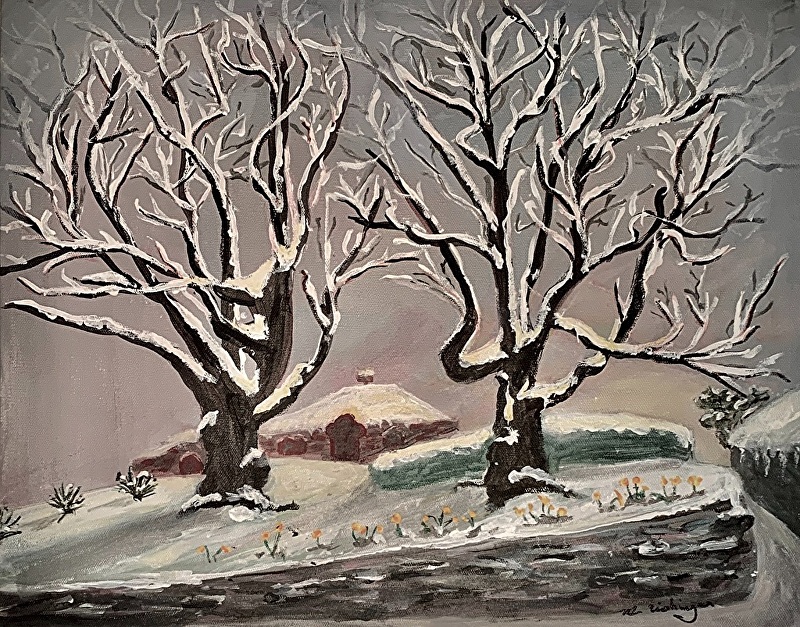
Portland residents were sequestered in March three years ago. It snowed that day with jonquils peeking through to remind me that life is cyclical. As did many of my friends, I expected the pandemic to be over by the summer.  What a surprise when it continued year after year.  While people were sick and dying around me, I became healthier than ever. I took long walks through the neighborhood and arboretum, painting and writing about my observation. The air was clean and I had nary a sniffle. I was at peace with the universe and myself.

By the time most people stopped wearing masks, I was convinced I was one of the lucky ones who would never get COVID. What a surprise when that myth was shattered two weeks ago. Not only did I become ill, but I brought COVID to friends and family who also thought they were immune. Fortunately, we didn’t have to face the worst of the storm. With medicine available to reduce the severity of the disease, we languished at home rather than in a hospital.

My case was pretty mild, and though I remained tired for two weeks, I slept much of the day away. Unfortunately, my daughter and my partner experienced the full fury of COVID. Though they are on the mend, they taught me that it’s not something to mess with.

Please excuse me if I don’t wow you this week with statistics and insights into the human condition. I count myself among the lucky millions who now have antibodies to protect them for a while. I wish you well until next Saturday when I plan to return full steam ahead.

Reminder!

A Walk in the Woods with thirty paintings from my COVID collection remains at Lake Oswego Library through the month of April. To purchase canvas prints delivered to your door for $99 go to https://www.eichingerfineart.com/collections/182747

Questions? Contact me a marilynne@eichingerfineart.com

Springtime Slavery

Spring holidays abound worldwide. It’s the time when Farmers plow in anticipation of spring plantings. Jewish people gather for Passover, an eight-day holiday celebrating the cycle of life. It is also a reminder of surviving slavery in Egypt. WHether this is true or not is open for discussion.

Passover begins on a full moon in the spring. It was at sundown on April 5th this year. Families and friends gathered around the Seder table to read from the Haggadah, the story of the exodus from Egypt. My gathering takes place tonight, this Saturday. 

The Last Supper celebrated by Jesus, was a service and meal similar to today’s meal. The Seder plate holds unleavened bread symbolizing that there wasn’t time for the bread to rise before the escape. A roasted egg recognizes spring and the cycle of life. Parsley dipped in salt water is a reminder of the tears shed during slavery. Bitter Herbs are for the bitterness of Egyptian slavery, Charoset, a mixture of apples, nuts, and wine is symbolic of the mortar Hebrew slaves used to build the pyramids. A lamb shank bone completes the platter, representing the Passover sacrifice made in biblical times.

The story elicits conversations that continue through the night. One question that occasionally arises, is whether the tale is true or a myth. And, if a myth, what does that mean to those who participate in the service? As a woman of Jewish heritage, I celebrate Passover because of its cultural and historic significance. The holiday brings my family together but is also a reminder of the horror of slavery. Unfortunately, it still exists, and though it isn’t legal anywhere, it happens everywhere.

According to Anti-Slavery International, modern slavery is “when an individual is exploited by others, for personal or commercial gain. Whether tricked, coerced, or forced, they lose their freedom. This includes human trafficking, forced labor, and debt bondage.” Estimates are that globally, 49.6 million people, half of them women in forced marriages, live in involuntary labor conditions. A quarter of the victims are children. Approximately, 6.3 million are trapped by commercial sexual exploitation, another 4 million are captives of government labor camps and prisons, with another 17.3 million in private-sector forced labor situations.

A study conducted at the Britain’s University of Nottingham concludes that the average modern-day slave (worldwide) is sold for $90 -$100, a price much lower than was in the 1800s. Though the price may seem low, slaves are easy to acquire, especially in countries like Nepal where parents sell children to sex traffickers for $10. In 2017, sex traffickers worldwide received an average of $660 per person. The purchaser reaps between $4,000 and $50,000 annually, depending on the country, the U.S. being on the high end.

It surprised me to read that women make up the largest proportion of traffickers. Their motive remains one of money. Globally, human traffickers make an estimated $150 billion in profits. In an effort to thwart slavery, our government partners with private businesses. For example, traffickers use banks to deposit and launder earnings. They use planes, buses, and taxis to transport victims and book hotel rooms. They are active users of social media to recruit and advertise the services of their victims.

United Kingdom, the first country to abolish slavery (1833), it also established a slave owner compensation fund that lasted until 2015. The government paid out £20m ($49.6) in bonds to 40,000 slave owners. In today’s money, the distribution amounts to £16.5bn ($20.46 bn). The accumulated interest made certain families in the UK exceedingly wealthy. Similar reparations were given to slave owners in Denmark, the Netherlands, Sweden, Argentina, Colombia, Paraguay, Venezuela, Peru, and Brazil.

In 1862, President Lincoln signed the District of Columbia Compensation Emancipation Act giving $300 ($8000 today’s value) to 900-odd slaveholders ( for 3,100 slaves) to free their slaves and stay loyal to the Union. In 1864 and 1866, two acts of Congress allowed the owners of slaves who enlisted or were drafted in the military to file a claim against the Federal government for loss of their slave’s services. The compensation for slaves who enlisted was $300 with $100 paid for drafted slaves.

An 1862 government census held before the Civil War counted 3,853,700 slaves. Their descendants make up nearly 50 million  U.S. citizens. After the war, an emigration incentive of $100 ($2,683 today) was offered to formerly enslaved people who agreed to leave the country. No payments were made to the enslaved.

There is a growing movement in the United States to compensate slave families. The estimate is that it will cost $10 to $12 trillion or roughly $800,000 per person to compensate eligible Black households. There are numerous arguments for and against reparation that I won’t get into here. This Passover, I’ve been thinking about how slavery and human trafficking in the U.S. remains rampant and cause such suffering.

In the United States, an estimated 17,5000 foreign nationals and 400,000 American citizens have trafficked annually with women and children making up 70 percent. At-risk communities include children in foster care, people of color, LGBTQ individuals, and migrants-people in plain sight. Slaves may be working on your roof, in your parent’s nursing home, in a restaurant you frequent, or in a sweatshop supplying clothes bought for the holiday. With the demand for slaves high, traffickers find it relatively easy to find victims to force into slavery.

Five states have slavery on the ballot this year. Citizens are deciding whether to close loopholes allowing convicted labor as an exception to slavery. Twenty states have constitutions that permit slavery and involuntary servitude. There is a push against incarcerated people being forced to work without recompense. Still, in those states where they do receive pay, the amount is piddling. If a prisoner doesn’t want to participate, he/she is denied phone calls, visits with families, and even parole.our

This brings me back to the question of whether Jews were slaves in Egypt or whether the Passover story is a myth. Ancient Egyptians kept slaves, most of whom were war captives. The extent they were important to the economy is unknown because slavery was never codified into law. The old kingdom lasted from 2649 to 2130 B.C. The middle kingdom was more active as a slave culture with peasants obliged to work in the fields.

The Bible talks of the Jewish people being enslaved three hundred years after the 1750 B.C. completion date of the pyramids. There is no archeological evidence, state records, or primary sources to prove that Jews were enslaved in Egypt. Not one shred of pottery, of Hebrew writing, or mention in Egyptian records points to the sudden migration of 600,000 families (one-quarter of Egypt’s population at the time) crossing the Sinai. 

Still, Passover remains an important family gathering and a reminder of the burdens carried by slaves. Symbols of the seder plate are worth remembering. To rebuild trust and maintain peace, Jewish people have to let go of their prejudices against Arabs just as Americans have to do when it comes to the Black/White divide. If we want to build a better world, each person has to bend to accommodate and celebrate our differences. 

References: 

Anti Slavery. website What is Modern Slavery. retrieved from https://www.antislavery.org/slavery-today/modern-slavery/

Kimberfee, K  (2022) For Five U.S. States, Slavery is Back on the Ballot. retrieved from 

https://www.yahoo.com/video/five-u-states-slavery-back-005858747.html

Hartmann, M. (2018) Does Slavery Exist in America Today? The Exodus Road.

Merican Reparations Commission. retrieved from https://reparationscomm.org/reparations-news/britains-colonial-shame-slave-owners-given-huge-payouts-after-abolition/

Hadavi, T (2020) Support for a program to pay reparations to descendants of slaves is gaining momentum, but could come with a $12 trillion price tag. CNBC. retrieved from https://www.cnbc.com/2020/08/12/slavery-reparations-cost-us-government-10-to-12-trillion.html

Niethammer, C. (2020) Business of Human Trafficing. retrieved from TRAFFICING. https://www.forbes.com/sites/carmenniethammer/2020/02/02/cracking-the-150-billion-business-of-human-trafficking/?sh=367d6d3c4142

website Guide to Cvcil l War Slave Compensation Claims from Compiled Military Service Records. Set. Louis County Library. retrieved from https://www.slcl.org/content/guide-civil-war-slave-compensation-claims-compiled-military-service-records

Facts and Details website.  Slavery in Ancient Egypt. retrieved from https://factsanddetails.com/world/cat56/sub404/entry-6151.html

Mintz, J.  (2017) Were Jews Ever Really Slaves in Egypt, or is Passover a Myth? Jewish World. retrieved from https://www.slcl.org/content/guide-civil-war-slave-compensation-claims-compiled-military-service-records

Art is always for sale. Dreamu is a 16″by 20 ” acrylic, deep canvas painting, available for $390 through my website at www.eichingerfineart.com/works

Or contact me at marilynne@ eichingerfineart.com.

Spring has Sprung – Again

 This is a busy time of year for me. I just installed thirty arboretum paintings at the Lake Oswego Library’s Gallery and am finalizing edits of Rightfully Mine: the Water Factor to be published later this year. The paintings will be on display throughout April, so stop by to see them if you are in Oregon. 

With jonquils and hyacinths pushing through the earth, and chrysanthemums blooming in my yard, I have renewed energy and am ready for action. Some things are constant reminders of spring, like grabbing a light jacket from its peg by the back door and being reminded of the poem I recited as a child.

Spring has sprung  the grass is riz I wonder where my jacket is.

The words pop into my mind as soon as the first flowers push through the ground. When I looked into who wrote the verse, I came up with a big zero. Though often attributed to Ogden Nash or ee cummings, the poem has roots that go back to an anonymous author centuries before.

Spring is sprung, the grass is riz, I wonders where the birdies is. They say the birds is on the wing. Ain’t that absurd? I always thought the wing was on the bird.

And then there is my favorite adaptation in Arnold Silcock’s Verse and Worse.

The Budding Bronx 

Der spring is sprung  Der grass is riz I wonder where dem boidies is?  Der little boids is on der wing,  Ain’t dat absoid?  Der little wings is on de boid!

And then – attributed to Ogden Nash, though I can’t find proof.

Spring has newly sprung the hills are full of grass and along comes a billy-goat sliding on his overcoat down the summer pass. 

Whatever the words, the poems carry the joy, beauty, and energy of the season, a time of rebirth. Spring is a gift that propels me to begin anew and focus on ways to realize my dreams. As Passover, Easter, and May Day pass I am reminded that much of life is cyclical. But after participating in the festivities, I see that the celebrations are not identical to the one I went to the previous year. Though the earth circled the son to complete its cycle, I’m not the same either. All I have to do is look in the mirror to find a few more wrinkles and gray hairs.

The universe that surrounds us is so vast, it is easy to forget that it is in a constant state of transition. Why should we be any different? Within the universe is our solar system, beginning 4.6 billion years ago as a collapsing cloud of gas and dust. It took 600 million years for the sun and the planets to form. And even longer for the oceans on earth to be created by the impact of comets rich in water ice. Microscope bacteria evolved into plants and animals to form our present environment. The oldest known fossils are only from 3.8 million years ago. 

As human brains evolved, sapiens focused on survival and immediate pleasures, not thinking about the universe and all its creatures are in a constant state of transition. The earth travelling around the sun each year brings changes with each revolution. A NASA study published in March 2021 found that Earth’s axis has been shifting drastically since 1995, speeding the movement of the poles and changing its direction. The reason behind the shift is melting glaciers, a contributor to climate change.

Since the earth will be here long after I’m gone, I can only hope that wise land stewards will take the helm from those who remain with their heads in the sand or are only motivated by instant gratification. Pollution, population growth, and a warming planet are long-range issues that must be taken seriously if our great-grandchildren are to enjoy the boidies and see that the grass is riz each spring. 

Your thoughts? please respond on my blog at eichingerfineart.com/blog

___________________________

April Art show of 30 paintings at Lake Oswego Library’s gallery. in Oregon. 706 4th avenue
Lake Osweho 97034


Art is always for sale. Canvas prints of the paintings are available for $99, shipping included. Purchase through web sited or contact me at
marilynne@eichingerfineart.com

Resources:

NASA Website. Planets Grow and Change OVer time. https://www.nasa.gov/sites/default/files/files/YOSS_Act_14.pdf

POEM– sources for “pring has sprung”

P

__________

Your thoughts? please respond below. Your comments are always welcome.
Art is always for sale. Contact me at
marilynne@eichingerfineart.com

The arts. A waste of mone?

Why waste money on the arts?

The government boasts that between federal, state, and local appropriations approximately $1.85 billion dollars went to the arts in FY2022. Within this total, the National Endowment for the Arts received $ 207 million in appropriations, bringing the overall increase up by seven percent. Much of the increase came from special COVID funding to help struggling institutions restart. Unfortunately, the amount allocated for the arts did not keep up with inflation that topped eight percent last year. If you count inflation, federal funding decreased by nineteen percent over the past twenty years. State appropriations were cut by thirty-three percent and local funding by fourteen percent.

Now, on the brink of a recession, funding for the arts is expected to decrease significantly once more. The devaluation of the dollar combined with population growth makes for a dismal outlook for next year’s programs. States have not only reduced funding for the arts, but they’ve also eliminated it as part of the school curriculum along with eliminated field trips, closing doors on an important part of childhood education.

Too bad you may say. Why does it matter?

Studies over the past thirty years show that young people who regularly participate in arts programs are:

  • 4 times more likely to be recognized for academic achievement
  • 3 times more likely to be elected to class office within their schools
  • 4 times more likely to participate in a math and science fair
  • 3 times more likely to win an award for school attendance
  • 4 times more likely to win an award for writing an essay or poem

Students of the arts show improved scores on ACT and SAT tests, are more likely to graduate from college and have better analytical skills than those who don’t participate. The arts are not fluff in developing an educated person. They are as important as reading and writing when it comes to developing a strong workforce.

I give a testament to the way the arts helped me throughout my life. Mother made sure I was well exposed to all forms of art through classes and attendance at museums and live performances. I took ballet classes from pre-school through high school and piano lessons for nearly as long. At the age of e eleven, Mom enrolled me in an oil painting class at the Philadelphia Art Museum. After class, I roamed the halls of that magnificent structure, though sometimes went to the natural history and science museums a few streets away. These museums opened my young eyes to a world of intrigue and possibility. They made me a curious person with a thirst for knowledge. Schools in my day required students to study art. These classes and summer camp provided rich programming in all types of crafts as well as fine art. They sealed my fate as an artist, entrepreneur, and writer. They became a way to communicate emotions and share the fruits of my labor, gifts from my world as seen through my eyes.

“Even a little dog is the center of his own universe,” said Anatole France. What I see and express to others comes from my soul, something no one can take from me. They helped me when my son was diagnosed with cancer and provided solace when sequestered during COVID. During stressful situations, there is no better place to throw frustrations to the wind than my studio. Putting thoughts on paper helps as well. Though I rarely read them, I still store a box of childhood diaries filled with embarrassing moments.

For some people, the arts mean music, for others it’s acting, dance, or carpentry. Whatever the preference, developing visual, auditory, and kinesthetic senses will increase brain synapses and expands the way you think. It gives you more pathways to analyze problems and see solutions you may not have thought of before

It is interesting to note, that though public funding for the arts has decreased, private funding has not. The difficulty is that donors tend to fund the major institutions, not the small ones that introduce less wealthy people to the arts. When I started Impression 5 Science Museum in Michigan, I received a $5,000 grant to have a dimensional tableau of Guernica made so blind visitors could experience what Picasso had to say about the war in Spain. At the time, our museum had less than $50,000 to its name. Today, such a grant would never be awarded to an institution with such limited resources.

The Helicon Collaborative of artists reported in Not Just Money that two percent of all cultural institutions receive sixty percent of contributed revenue. Those fortunate non-profits boast annual budgets over five million dollars. Private foundation grants are given to those institutions that emphasize western culture, making the winners richer and the losers poorer.

According to the Economic Policy Institute, by 2032, people of color will make up the majority of the workforce, making it important that we balance the playing field. Equity has to be achieved if we want a creative, thriving society. It makes sense from a dollars and cents perspective. Bloomberg reports that the arts and culture contributed more than $800 billion annually to the U.S. economy. Prosperity depends on having a thriving art community. When creativity is boosted, entrepreneurship blossoms, social connections are made, and jobs increase.

So friends, don’t dis art and cultural organizations as being unimportant when they are. Instead, open yourself to the future and consider adopting Sweden’s public policy lauding the arts. “Culture is to be a dynamic, challenging, and independent force based on the freedom of expression. Everyone is to have the opportunity to participate in cultural life. Creativity, diversity, and artistic quality are to be integral parts of society’s development.”

References:

Grantmakers in the Arts website. Public Funding for the Arts in 2022. retrieved from https://reader.giarts.org/read/public-funding-for-arts-and-culture-in-2022#:~:text=2022%20Funding%20Levels,per%20capita%20investment%20of%20%245.49

Americans for the Arts Website. Why Public Funding for the Arts Matters. retrieved from https://www.americansforthearts.org/blog-feed/why-public-funding-for-the-arts-matters

Ragsdale, D. (2017) Tackling an inequitable arts fund system. Jumper on what the arts do and why. retrieved from https://www.artsjournal.com/jumper/2017/07/tackling-an-inequitable-arts-funding-system-a-response-to-the-report-not-just-money/

PBS News Hour website (2022)  3 ways that the U.S> population will change over the next decade. retrieved from https://www.pbs.org/newshour/nation/3-ways-that-the-u-s-population-will-change-over-the-next-decade

It is always a pleasure to hear from you. Do comment below.

Art is always for sale at eichingerfineart.com

Banning Books? not again!

Though there are stories of rape in Lives of Museum Junkies and Over the Peanut Fence explains what happens when LGBTQ youth are sent from their homes, these books aren’t yet banned. You can find them in bookstores and on Amazon in paperback and ebook formats. You might want to purchase them before it’s too late.

Book Burning? “Who kills a man kills a reasonable creature…but he who destroys a good book, kills reason itself-” John Milton, author of Paradise Lost wrote in his 1644 book Areopagitica.

Oh, no–not again! Banning books has a long dark history, spanning every continent. Still, it is surprising to see it happening again. Unfortunately, Florida, Texas, and other conservative states are doing just that. Totalitarian regimes throughout history are the ones that target culture. I fear the United States is headed in that direction. White and Christian nationalism has spurred action that belies the founding documents that assure us freedom of speech, the press, and worship.

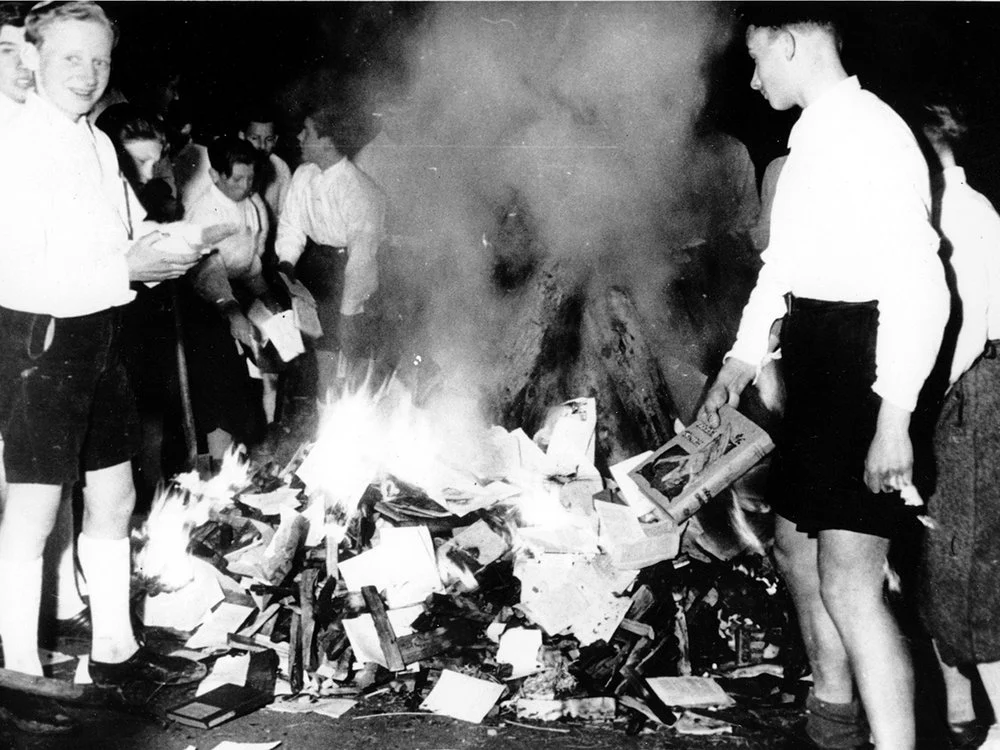
In Germany, the Nazi German Student Association declared war on the Un-German Spirit, and in 1933 initiated public purges by fire. Under a symbol of intolerance and censorship, works of Jewish, liberal, and leftist writers went up in flames. Joseph Goebbels gave a speech shouting! No to decadence and moral corruption! Yes to decency and morality in a family state!” Among those on their blacklist were Ernest Hemingway, Karl Marx, Bertolt Brecht, Thomas Mann, Jack London, Helen Keller, and Theodore Dreiser.


  Hitler Youth members burn books, 1938 – (Smithsonian Magazine)

Over thousands of years, libraries and books have been targeted by all ethnicities. This wasn’t the first time books were burned in Germany. In 1817 students got rid of anti-national and reactionary texts and literature they too thought to be “Un-German.” Years later, in 2012, al-Quida Islamists invaded Malii and then Timbuktu, destroying priceless manuscripts. Thankfully Abdel Kader Haidara and others risked their lives smuggling out 350,000 manuscripts.

To gain greater control over his people, the Chinese emperor, Qin She Huang, ordered a bonfire of books. Poetry, philosophy, and history went up in flames so a comparison wouldn’t be made between him and other rulers. When Mao Zedong took power, the cultural revolution destroyed books that didn’t conform to party propaganda. Australia banned books like Brave New World and Lady Chatterley’s Lover.

A long list of emperors and leaders threatened by the ideas of others felt themselves to be victims of malicious writings. In Livy’s History of Rome, he writes that Bacchanalia (200-150 BC) outlawed writings to prevent disorder and the spread of foreign customs. The Catholic church burned books and manuscripts along with heretics who attacked church doctrine and practices like indulgences and cosmological readings. More recently (1981), the Jaffna Public Library of Sri Lanka, home to 100,000 rare books of Tamil history and literature, was burned by Sinhalese Buddhists. Though they outnumbered the Tamils, the Buddhists felt their beliefs were under threat by the Hinduism of the Tamils.

Unfortunately, many of today’s leaders are too weak to allow divergent viewpoints to circulate. They feel threatened and compelled to wipe writing they disagree with from the historical record. Over the past century, To Kill a Mockingbird, The Autobiography of Benjamin Franklin, Bury My Heart At Wounded Knee, and A Separate Peace have all been subject to bans. So have the works of children’s authors J.K. Rowling and Judy Blume.

Under President George W. Bush, EPA libraries were threatened with closure. In 2014, Canadian Prime Minister Stephen Harper locked away or destroyed scientific research documents. Scientists working for Fisheries and Oceans were prevented from doing science. Their knowledge was purposefully taken from the public.

Power is scary when it allows someone to negate others’ beliefs and put into effect their own logic as though they were a god. Historian, Barbara Tuchman, warned in her 1980 address at the Library of Congress, “Books are the carriers of civilization. Without books, history is silent, literature dumb, science crippled, and thought and speculation at a standstill. Without books, the development of civilization would have been impossible.”

Today’s bans are aimed at the LGBTQ community and race. States like Florida are prohibiting teachers to discuss black history before 1965. Gay, lesbian, and transvestite issues are not to be mentioned. Florida is not alone in negating history and biology. There were 2,532 instances of book bans across the nation between July 2021 and June 2022 and over 100 bills were initiated at the state level to censor them.

Book bans are devastating to authors and gay teens who see the community treat them as being abnormal. Banning denies students the right to receive a culturally and biologically relevant education. Youth need to be given a broad spectrum of information and learn how to analyze issues that are raised. They are our future lawmakers and their minds have to be open to change. By 2040, white people will no longer account for the majority of the U.S. population. White supremacy is bound to fail in the end. Whether it will do so without bloodshed remains to be seen.

The first amendment guarantees freedom of thought and expression. If you advocate for this freedom, speak out and fight against censorship tactics. If you hear of censorship, contact the local press to write about it. Show up at meetings where decisions are being made. It may be a PTA meeting, a school board, or a public event. Whatever you do, make your voice heard. People, including students, need a balanced perspective to make objective decisions. Books are a way to unite us in freedom, while censorship is divisive.

Suggestions to combat censorship: Read a banned book. Speak out publicly. Host a banned books party. Volunteer at your local library. Join your library or school board so you’ll have a seat at the table. Contact the press and let the public know what is happening.

Isn’t this supposed to be the land of the free and the home of the brave?                                                                               _________

For those interested in knowing more, the following information was taken from an article in The Daily Beast.

Five Book Ban Trends to Watch in 2023

1. Laws to limit access to information. Since the summer of 2022, Florida schools have been removing books with LGBTQ+ content under threat of punishment from what critics have dubbed the “Don’t Say Gay” law. In Missouri and Utah, new laws concerning the distribution of material deemed “harmful to minors” have led schools and librarians to cull their collections, scuttling away books with any nudity or sexual content

2. Changed policies making book banning easier. One Pennsylvania district passed vague rules last summer about what kinds of books can be purchased. In the fall, a Texas district passed a prohibition on all books that discuss “gender fluidity.” In Florida and South Carolina, districts have suspended access to slates of books when challenged, then rewritten their policies to justify such bans retroactively. And in Tennessee, a politically-appointed commission will soon have the power to ban books across the state’s schools, and some commission members do not want to have to read the books before banning them.

3. Activists are equating all sexual content with pornography. The pressure to root out such content appears to be working, as some schools and librarians have determined that even classic works like The Handmaid’s Tale or The Bluest Eye, or books about puberty like It’s Perfectly Normal, are somehow indecent materials that lack value for minors because they have sexual content. This dragnet is sweeping up memoirs and works of fiction that might teach young adults about consent, sexual assault, or date rape-and parallel new efforts in some states to censor education about abortion.

4. Censorship efforts are intensifying at public libraries. Though schools are at the epicenter of a movement it is spreading to public libraries. In numerous states libraries have been facing demands to remove lists of books, and to ban LGBTQ-themed books, displays, and content in children’s sections. When one Michigan library refused to ban a handful of LGBTQ+ books, local citizens mounted a campaign and voted to stop funding it.

5. Proposals to regulate books are getting more extreme. The city council in League City, Texas, for example, recently voted to prohibit purchasing, displaying, or stocking books with certain content from any public library. In doing so, they are empowering local governments to dictate what books all citizens can freely access. Likewise, in Texas and Oklahoma, bills recently introduced would require new age ratings for books, which would be used to strictly police their public availability. Unlike rating systems for movies or music which are industry-driven, the Texas proposal would give the state new authority to set and enforce these ratings. Publishers that don’t comply would lose access to the state’s public school market entirely.

References:

Oliver, D. (2023) What happens to our culture when books are banned: ‘A chilling effect’. USA Today. retrieved from https://www.usatoday.com/story/life/health-wellness/2023/02/22/book-bans-what-happens-culture/11262643002/

Holocaust Museum website. (2-23) Book Burning. Holocaust Encyclopedia. retrieved from https://encyclopedia.ushmm.org/content/en/article/book-burning

Boissoneault, L. (2017) A Brief History of Book Burning, From the Printing Press to Internet Archives. Smithsonian Magazine. retrieved from https://www.smithsonianmag.com/history/brief-history-book-burning-printing-press-internet-archives-180964697/

Rogerson, K. ( 2023) The State of Book Bans in the US win 2023. Lit Reactor. retrieved from https://litreactor.com/columns/more-the-state-of-book-bans-in-the-us-in-2023

Friedman, J. (2023) Here are 5 book Ban Trends to Watch in 2023. Daily Beast. retrieved from https://www.thedailybeast.com/here-are-five-book-ban-trends-to-watch-in-2023

Kuabo, Rakuten, (2023) Banned Books Week: 18 Ways to Help & Advocate (2023) retrieved from https://www.goodgoodgood.co/articles/banned-books

Who’s Lucky Now?

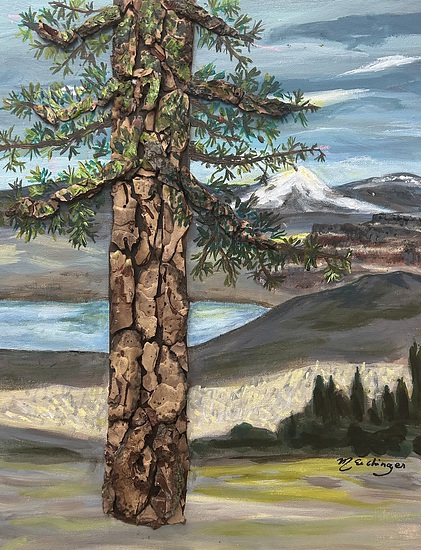
Ponderosa Pine

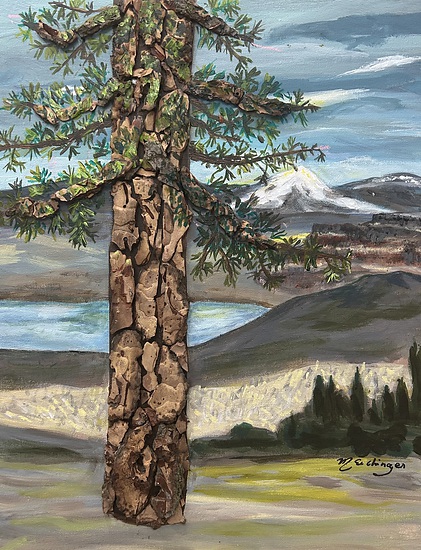
An overnight trip to central Oregon inspired me to paint this Ponderosa Pine. It was early morning, with the sun rising to illuminate Mount Hood and cover the landscape with a soft blanket.

An overnight trip to central Oregon inspired me to paint this Ponderosa Pine. It was early morning, with the sunrise illuminating Mount Hood and covering the landscape with a soft blanket.

Who’s Lucky Now?

Do some people have more luck than others? Without a doubt, no one is lucky all the time, but some appear to have more good fortune than most. Is that fair and random or is it due to the way these individuals look at life? According to Dr. Margie Warrell, founder of Global Courage, there are six things lucky people do that others don’t. They know bad luck is inevitable but they plan for the future and create good fortune.

What do lucky people do?

  1. First, they trust their intuition. They do their homework and analyze the pros and cons of a decision, then ask themselves if it feels right. They don’t overanalyze big decisions for that lowers the odds of making the right one. With that in mind, don’t ignore your next hunch. “Like everyone else, scientists have intuitions. Indeed, hunches and flashes of insight–the sense that something is true even if you can’t prove it–have been behind countless breakthroughs.” Philip E. Tetlock, Superforecasting: The Art and Science of Prediction
  2. Luck depends on a willingness to take risks. Courageous action that focuses on what you have to gain rather than lose will move you forward. Risk-averse people have a tendency to stay miserable in a secure situation rather than embrace the unknown. Going outside your comfort zone is a good thing, it broadens your horizon. I won’t get upset at you about a mistake. I’ll get upset at you for the next mistake that comes from still thinking about the last mistake.” -Doc Rivers
  3. By expecting good things, you’ll find that more good things do happen. Help others and you will be rewarded, not every time, but in the end. “When you give joy to other people, you get more joy in return.” -Eleanor Roosevelt. When you put out and work hard, you’ll enjoy your days more.If you are working on something that you really care about, you don’t have to be pushed. The vision pulls you.” – Steve Jobs
  4. Optimism-seeing the glass as half full propels you to look for opportunity where there is a setback. It takes an open mind to be accessible to lucky chances. Negative thinking is bound to dampen your spirit and make it more difficult to try new things. Mark Twain once advised, “Stay away from those people who try to disparage your ambitions. Small minds will always do that, but great minds will give you a feeling that you can become great too.”
  5. Failure is inevitable, so embrace it. Everyone has setbacks, and whining about them won’t help. Remember that adversity and failure are seeds for your next success. if something bad happens, don’t let yourself be victimized and dwell on it. It’s essential to change your mindset as fast as you can to the positive and move on. “Success is not final; failure is not fatal: It is the courage to continue that counts.” -Winston S. Churchill
  6. Lucky people associate with other lucky people. Confidence, ambition, and optimism instead of fear and pessimism are critical emotions for creating luck. No matter what happens to you, put on a cheerful face in the presence of others and help them achieve their goals when you can. If they become successful, you will know you’ve done a good deed and can take pleasure in their luck. “Nature has given us all the pieces required to achieve exceptional wellness and health, but has left it to us to put these pieces together.”-Diane McLaren

I’ll add one more to the list. To get out of a rut, do something out of the ordinary. Spend the day in a park, visit the zoo, stop by a skateboard park, try food not tasted before, or take a bike ride. Open your mind to the things outside the artificial boundary you created for yourself.

Do I follow my own advice? Yes, indeed I try to. I tend toward the optimistic side, a trait that sometimes drives my partner crazy. I find it difficult to see the world as good or bad, black or white. When I fail, which I do often, I study my failure so I grow from the experience and try not to make the same mistake twice. When stuck for inspiration, I take drives on back country roads, go for a hike, or spend time painting in my studio. Relaxing and taking my mind off the problem, puts me on the road to solving it. Brainstorming and coming up with outrageous ideas that must be narrowed down later also helps.

I recently joined a non-fiction club that gets me to read books I wouldn’t usually select. The readings and discussions broaden my outlook, giving me tools to use as I go through my days. These tricks I’ve accumulated over years help me stay creative and engaged. The world is beautiful to those who make the most of it.

References:

Chu, M. ( 2017)This Researcher Reveals How Lucky People Doffer From Unlucky People. Inc.Daily DIgest for Entrepreneurs and Business Leaders. retrieved from https://www.inc.com/melissa-chu/want-to-become-luckier-heres-what-you-need-to-do-a.html

Warrell, M. ( 2015) Six Things Lucky People Do That Others Don’t. Forbes. retrieved from https://www.forbes.com/sites/margiewarrell/2015/03/17/create-the-luck-youve-been-wishing-for/?sh=1b3efacb4ace

Art is always for sale. Contact me for questions at marilynne@eichingerfineart.com Ponderosa Pine — original acrylic painting with bark, $595. Canvas Print —$99. booth are 16” x 20”. 

For comments, please do so below.

The four-day workweek

 Diamond Crater

Julie Anderson sings about her favorite things in the Sound of Music. Do you have time to enjoy yours.

The Four-day Workweek.

Two days ago, ten inches of snow fell by my home in the hills of Portland. The forecast is for more snow next week. It took double the time and triple the effort to shovel my drive than it did last year. I found it to be invigorating. As I worked, I stopped to chat with the dozens of men and women walking dogs or carrying sleds by my house. The best hill in my neighborhood is across from my property. Yesterday, the hill rang with the screams and laughter of children. I too was counted as one of the crazies, speeding downhill.

Without having to work, fathers and mothers were having fun with their families. Gone was fear and worry that the pandemic wasn’t over.  The world was as it should be with people having a good time.

I was reminded of a trial conducted in the U.K.  It tested the four-day workweek where employees received the same pay for a thirty-two-hour week as for forty-eight hours. The results were so positive that most of the sixty-one firms involved say they will continue the policy. Fifteen percent of supervisors and employees agreed that no amount of money could convince them to return to a five-day workweek.

Contrary to expectations, corporate revenue increased and absenteeism and resignations fell. Participant well-being registered high on the list of reasons. With less fatigue and more time to spend with children and elders, people felt less stressed. They had fewer guilt feelings from being away from their children. People who worked in nonprofits and professional services spent more of their free time exercising. Those in construction and manufacturing jobs reported declines in burnout and sleep problems. Having a better work-life balance was the main reason sighted for the trial’s success.

After reading anthropologist, Yval Noah Harari’s book, Sapiens, I thought about how work-life balance was an advantage for prehistoric foraging groups. According to Harari, hunter-gatherers worked fewer hours than people do today. Foragers had more nutritious varied diets, stronger immune systems, and more time for leisure. It wasn’t until the agricultural revolution that diets became limited due to the variety of crops that could be successfully farmed. Agriculture ushered in a need for permanent housing that in turn affected population growth and the spread of disease.

Growing out of a desire to make life easier, farming had the opposite effect. Planting crops and harvesting them was hard to do and less nutritious than foraging. Female foragers breastfed children until four or five years, limiting how often they were conceived. Village and city women weaned infants earlier, giving birth annually. They needed the labor. The need to feed, clothe, and shelter large families, required more work hours than before.

The industrial revolution didn’t make life easier. Most laborers worked twelve-hour days. In 196, Illinois became the first state to pass a law for an eight-hour workday. It didn’t get much traction elsewhere until Henry Ford adopted the eight-hour, 5-day work week for his employees in 1926. Ford touted that workers need time to spend with their families. It took another twelve years for labor unions, advocates, and lobbyists before President Roosevelt signed the Fair Labor Standards Act, requiring employers to dispense overtime pay for working more than 40 hours a week.

Despite current laws on the books, a 2022 Gallup World Poll shows that the average worker spends 41.36 hours per week on the job. Those who switched to remote work, spend even more hours working. Clever employers find ways to get around the law by classifying employees as exempt or independent contractors not entitled to be paid overtime pay. Other tricks include; working off the clock, averaging hours over a two or four-week pay period, and misclassifying workers by calling them salaried. Many immigrants and illegal migrants, work dawn to dusk, six or seven days a week–some two several jobs to do so.

Long hours are common for executives as well. Thinking they will work hard and retire at thirty-five, executives are surprised when mortgages, cars, and college tuition don’t allow that to happen. Harvard Business Review reports the fifty to seventy-hour workweek to be common, though a slippery slope that can lead to disaster. The U.S. has fewer days off for vacations and holidays than any first-world county.

Following is a list of professions that tend to require long hours; Health care providers, corporate executives, sales managers, commercial hunting and fishing workers, teachers, lawyers, truck drivers, firefighters, water transportation workers, construction workers, derrick operators, agricultural workers, mining and extraction workers. Feeling the pinch of extended work hours, and on their way to burnout, many are asking, “Is this all there is to life?”

The thirty-two-hour workweek is being discussed worldwide. But will it work in the U.S.? It was tried in Iceland to great success, the Spanish government will shortly start a three-year trial run. Belgium’s new reform package, entitling workers to a four-day, thirty-eight-hour workweek, gives workers the right to turn off devices and ignore work-related messages after hours without fear of reprisal. Maryland’s legislature is considering a bill incentivizing 32 hours, and California has a stalled one in its state legislature. Does it make sense?

From 1979 to 2020, the productivity of the typical U.S. worker increased sixty-two percent, while the average pay only increased seventeen percent. Company profits weren’t shared with most employees. Instead, profits went into the salaries of the top 20 percent, and to shareholders who make money from owning company stock. It is why the young people I speak to, are redefining what they want from life. I hear, “If I’m not seeing the benefit of increased productivity, what motivation is there to keep putting in 40 hours a week?”  They may have a point. What do you think?

My Favorite Things

composed by Richard Rodgers and Oscar Hammerstein II for The Sound of Music, 

Raindrops on roses and whiskers on kittens

Bright copper kettles and warm woolen mittens

Brown paper packages tied up with strings

These are a few of my favorite things

Cream-colored ponies and crisp apple strudels

Doorbells and sleigh bells and schnitzel with noodles

Wild geese that fly with the moon on their wings

These are a few of my favorite things

Girls in white dresses with blue satin sashes

Snowflakes that stay on my nose and eyelashes

Silver-white winters that melt into springs

These are a few of my favorite things

When the dog bites

When the bee stings

When I’m feeling sad

I simply remember my favorite things

And then I don’t feel so bad…

References:

Jernandes, J. (2023) Dozens of U.K. companies will keep the 4-day workweek after a pilot program ends. NPR. retrieved from https://www.npr.org/2023/02/21/1158507132/uk-study-companies-four-day-workweek

Tiimsit, A. (2023) A four-day workweek pilot was so successful most firms say they won’t go back. The Washington Post. retrieved from https://www.washingtonpost.com/wellness/2023/02/21/four-day-work-week-results-uk/

Hewlett, S & Luce, C. (2006) Extreme Jobs: the Dangerous Allure of the 70-hour Workweek.Harvard Business Review. retrieved from https://hbr.org/2006/12/extreme-jobs-the-dangerous-allure-of-the-70-hour-workweek

Harari, Yuval Noah, Sapiens – Harper Collins Publishers. copyright © 2015 by Yuval Noah Harari. ISBN: 978-0-06-231609-7

Ward, M. & Llebowits, S. (2023) Maryland considers a bill incentivizing the 4-day workweek. Insider. Retrieved from WORK.

Update on Trees

An Update on Trees

I love trees, especially old-growth ones with limbs twisted and knarled like elders. I was even more enthralled after discovering they communicate for protection against insects and nurture young seedlings. I’ll go out of my way to walk past maritime pines with bark like the plates on an armadillo. I’m fascinated by the holes woodpeckers make in rings around pawpaw trees. How do they manage to keep them in line?

Forests are calming, unique places to go to view the variety in nature and to be filled with inspiration. I become upset when returning home and read they are being decimated. I decided to dig into the current state of tree growth worldwide. What I discovered surprised me.

The United States accounts for 8-10 percent of the world’s forests, with approximately 228 billion trees. According to the North American Forest Commission, that number is two-thirds the amount here in 1600. As cities grew and acreage was added to their boundaries, farmlands and forested areas were converted to cement and asphalt pavings and housing. With 89 percent of the population projected to live in urban areas by 2030, it is likely that urban forests will be decimated by then.

The east coast began adding back forests in the 1940s where woodlands had been heavily logged. Reforesting succeeded when the forest department gained control over how much timber could be cut annually. Designating national parks played a role in preserving woodlands teeming with biodiversity. Though the U.S. replants its forests, the story worldwide is different.

Dr. Thomas Crowther, while a fellow In Forestry and Environmental Sciences at Yale (2015), organized crews to count trees in given geographic locations around the globe. He compared the information his team collected with satellite imaging and came up with the best survey known to date. His estimates show approximately 3.04 trillion trees on the planet today, half as many as when homo sapiens first appeared.

Though Dr. Crowther’s numbers make it seem like there are a lot of trees worldwide, there’s a huge catch. Demand for wood is continuing to grow along with the population. We currently harvest 15 billion trees annually but only re-plant five billion. With a net loss of 10 billion a year, our forests will be gone within the next 300 years. Deforestation is one of the greatest challenges facing humanity as agricultural expansion in the tropics swallows up vast parts of the rainforest.

Climate change, however, is allowing trees to grow in places previously too cold for their survival. Russia added 790,000 square kilometers of trees and China 324, helping to balance the number lost in Brazil if you ignore biodiversity. Foresters remove eight or more species in clear cuts but replant with a single species. Their methods erode the ecosystem, degrade soil, and make forests susceptible to disease and fire. Activists label monoculture tree plantations to be “green deserts.” Such plantations have expanded fivefold since 1980, killing the flora and fauna in tropical forests and savannas forever.

Trees grow faster as global temperatures rise and growing seasons lengthen –not good news. A study of central Europe’s forests shows that pollution and higher temperatures make wood weaker. The trees break more easily in storms, the lumber produced is less dense and less durable, and the amount of CO2 given off drops. Trees are soaking up less CO2 from the atmosphere each year.

Oregon lost 1.1 million acres of trees in 2022 due to drought and extreme heat. At first, it was thought that the deaths were due to fungi and insect infestations. Scientists now agree it’s because of climate change. Though more obvious in fir trees where they die from the tip of their leaves and roots inward, all species show signs of stress. The western red cedar’s range will soon disappear at lower elevations west of the Cascades and western Washington and move north. Forest entomologist, Christine Buhl warns to start shifting expectations of what tree species to plant in the state. for those common in California will move to our region.

It is a lot to take in, but the following are a few additional tidbits of information.

a) Trees are the world’s longest-living species. Some of California’s giant sequoias and Bristlecone pines are between 3,000 and 5000-years-old.

b) Planting trees in urban areas lower vandalism, graffiti, and littering.

c) The earth will receive an additional 260 million tons of oxygen and remove 10 million tons of CO2 by planting 20 million trees.

d) Trees that grow in the sun have thicker bark than those in the shade.

e) Patients with a view of green trees from their hospital bed, spend 8% less time in the hospital than those who don’t.

f) Customers spend more money in shopping districts with trees. They stay longer and perceive products and stores as being of higher quality.

g) Tree limbs are not exactly spherical. They feature an upper (compression) and lower (tension) side that allows them to sustain their own weight as well as the weight of the leaves, nuts, or fruits dangling in mid-air.

h) Utah is home to the world’s oldest clonal tree cluster. According to DNA tests, the Pando group of quaking aspens is roughly 80,000 years old, wishing over 6,000 tons. . It features over 40,000 stems that are branches of a single tree. It is only the world’s oldest living creature but also the biggest.

i) A 2022 threat assessment of 881 native tree species in the U.S. shows that 11-16% are threatened with invasive pests and diseases. The most threatened are Oaks and Hawthorns.

j) The tallest in Redwood Mountain Grove is as tall as a 31-story building, the Widest is in Kings Canyon National Park with a circumference the length of two Toyota Priuses, and the Biggest Tree in Sequoia National Park weighs the same as 107 elephants.

Please share your observations of trees in your area and let followers of this newsletter know about your favorite parks. Comment on my blog below.

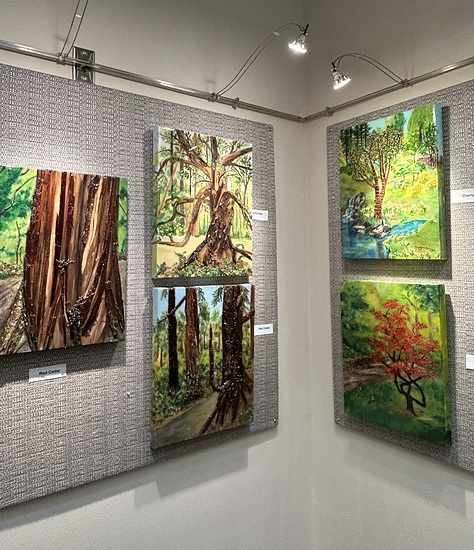
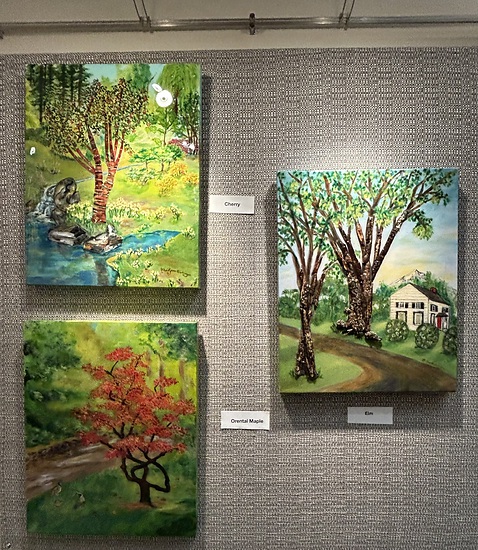
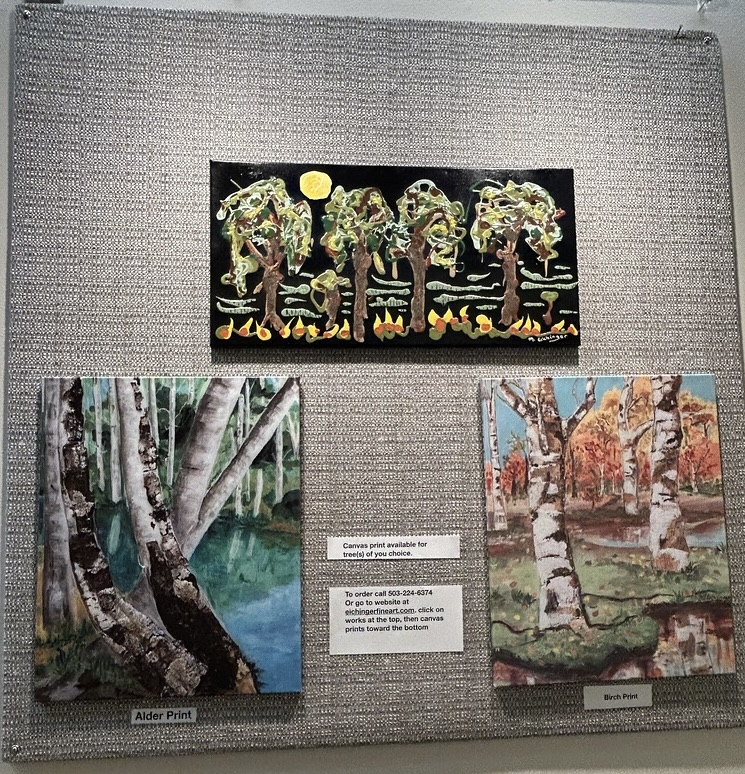
I do hope you find time to enjoy outings to national and state parks and forests. If the weather is too cold or wet, you are invited to “Walk in the Woods with me this April at Lake Oswego Library. Twenty-six of my tree paintings will be on display during the Arbor Month exhibit.


16″ X 20″ Canvas prints of the originals are on sale and delivered to your door for $99. Choose your favorites to make your own forest walk. Go to https://www.eichingerfineart.com/collections/182747. Click on the ones you like. Purchasing is easy.

References:

How Many Trees are in the World Today vs 1000 Years Ago? retrieved from The Environmentor.https://blog.tentree.com/fact-check-are-there-really-more-trees-today-than-100-years-ago/#:~:text=Changes%20in%20the%20Last%20Hundred,had%20in%20the%20year%20160

Supriya, L. (2018) Climate change is making trees big, but weaker. Science. 

Earth-has more trees than it did 35 years ago- but there’s a huge catch.  World Economic Forum . retrieved from https://www.weforum.org/agenda/2018/08/planet-earth-has-more-trees-than-it-did-35-years-ago/

Firmageddon” Researhers find 1.1 million acres of dead trees in Oregon.News. retrieved from https://www.nbcnews.com/science/environment/firmageddon-researchers-find-11-million-acres-dead-trees-oregon-rcna59671

Kilgore, G. (2022) How Many trees Are in the United States? Shocking Stats. RForestry, Trees, and Tree Planting. retrieved from https://8billiontrees.com/trees/how-many-trees-are-in-the-united-states/

NatureSuErve website. (2022) Researchers complete first comprehensive threat assessment of all U.S. trees. retrieved from https://www.natureserve.org/news-releases/researchers-complete-first-comprehensive-threat-assessment-all-us-trees

Hance, H. (2008) Monoculture tree plantations are “ green deserts” not forests, say Activists.Mongabay; news and inspiration from Nature’s Frontline. retrieved from https://news.mongabay.com/2008/09/monoculture-tree-plantations-are-green-deserts-not-forests-say-activists/