Birthing Knowledge

1353332xl

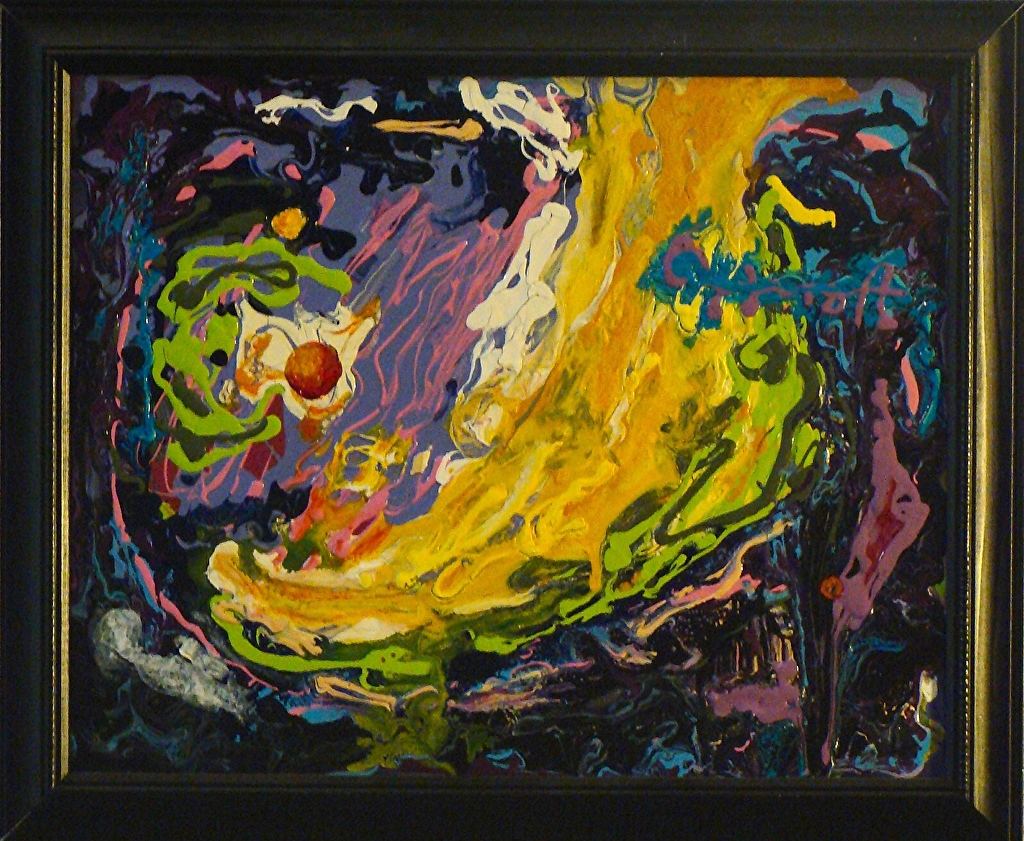
Cosmos – Birth of a Star

Birthing Knowledge
Studies of the brain are spurring a revolution in education for young and old alike. Using a variety of research techniques, scientists are better able to observe how the brain learns, thinks and remembers. Understanding the brains of babies is the first step to developing a concept for a life of learning for they are masters at absorbing new concepts.

It used to be that scientists thought of infants as defective adults, egocentric, irrational and unable to understand cause and effect. Research is proving these theories wrong. At the forefront is Dr. Alison Gopnick, professor at UC Berkeley, and a leader in the study of children’s learning. She claims that children “possess a great deal of knowledge, literally from birth and grown ups are designed to unconsciously teach the young the very things they need to know.” She also believes that adults would do well to maintain, throughout their lives, the flexible exploration methods used by infants.

A July 2010 Scientific American article titled How Babies Think discusses the findings of Dr. Gopnick who lectures that children become acquainted with the world much as scientists do, conducting experiments, analyzing the results and forming intuitive theories or hypotheses. She suggests that brains are a kind of computer designed by evolution and programmed by experience .

I will never forget watching my son learn how to maneuver the stairs of my sunken living room. Over and over he crawled up the five carpeted steps. My husband or I would turn our toddler around at the top so he could back down only to start the process over again. He was relentless until he mastered the task, showing his displeasure by crying when we tried to pull him away. Our son was a young experimenter at work.

Babies are engineered to learn. Harried parents may call the mess they make getting into everything , but to the child all that they do is one big experiment. I watched a video of one of Dr. Gopmick’s test subjects and was impressed with how brilliant the pre-school boy appeared to be. When directed to solve a puzzle that would light up a box he develop hypotheses after hypothesis, testing each one before discarding it and going on to the next. In two minutes, five different pathways were taken in quick succession before successfully completing the challenge.

Infants are able to take in and process a great deal of information all at once from a wide variety of sources. Their consciousness appears to be expansive. They are not as good as adults at narrowing attention to a single detail which is needed to develop careers and master concepts. However, we do have a lot to learn from the wide-ranging approach of infants. As grown ups we often cut off information lines too early and make problem solving more difficult than need be.

An example close to home comes from watching my grandchildren try to correct a computer bug. Even when they do not know what is wrong they feel confident in their poke and try repair method. It always surprises me that their trial and error technique usually works. I, on the other hand, approach computer issues with purpose and timidity. My single minded approach is much less playful and filled with frustration. I recently resolved to change and decided to copy their bravado. Much to my amazement I have been rewarded with occasional successes. Yea! I pat myself on the back.

This brings me to my New Years resolution for 2015 . . . Don’t be afraid of failure. Take in as much information as possible and try . . .try . . . try. I am reminded that babies are the fast learners, so I plan to follow their example and keep on plugging away.

Happy New Year Everyone! May your dreams and wishes come playfully true.

To comment go to https://secretsofamuseumjunkie.com

For more information go to:

The Scientist in the Crib: What early Learning Tells Us About the Mind by Alison Gopmick, Andrew N. Meltzoff, Patricia K. Kuhl.

The Philosophical Baby: What Children’s minds Tell Us About Truth, Love, and the Meaning of Life by Alison Gopnik

http://www.ted.com/talks/alison_gopnik_what_do_babies_think?language=en – Video about What do Babies Think Filmed July 2011

A Grove of Totem Poles


eagle-totem-close-upA Grove of Totems                                                                                                                                              My home is in a grove of totems. Five large poles and many small ones surround me with stories that speak of trickster and bear. Joining eagle, raven and most recently thunderbird I imagine soaring high above our chimney to survey life’s possibilities. At times I watch beaver chopping trees to provide firewood for winter warmth.
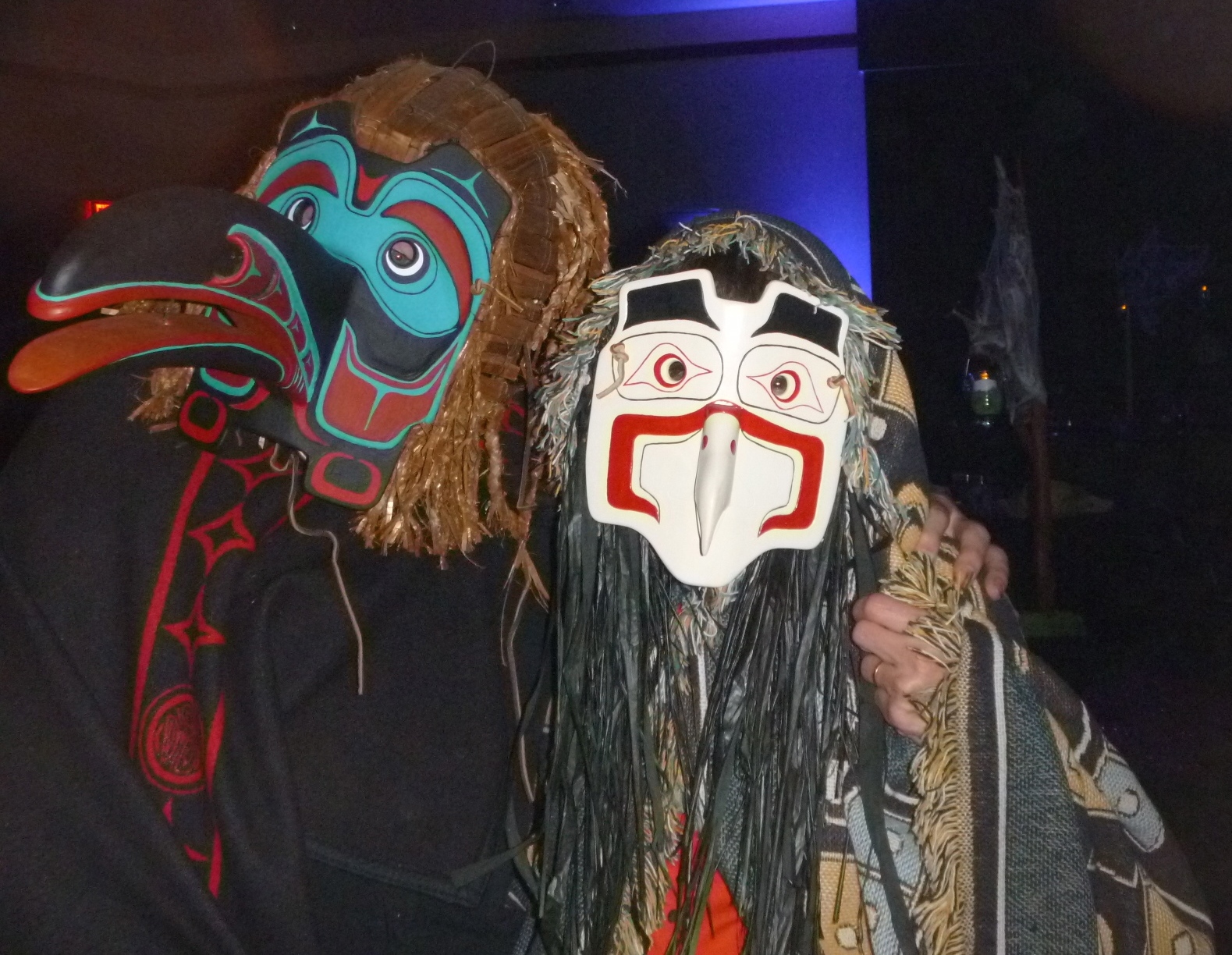


In theatrical performances I have been known as fishhawk, and am called to use my keen eyes to spot whales far out at sea. Shouting “caw . . caw” I tell the people waiting patiently on land the location of these graceful behemoths. Great excitement is always displayed when my voice rings true, and those on the beach mimic me with raised shouts mingled with drumming and preparation. When I appear, a magnificent wooden whale glides forth to greet me. His large toothy mouth opens and closes in deep drumming rumble while his tail flaps silently as he moves.

Whale Mask At Kahn Gallery DSCN0036_1 My partner of nineteen years, Ray Losey, is the master carver whose chopping and hammering sounds emanate rhythmically from under the house. Ray grew up surrounded by the art, and as a child helped his father carve and paint the huge poles that now reside in parks and private residences. His dad had been given the right to carve by Chief Joseph in Kake Alaska ,and he in turn passed the gift on to his son. With mixed native blood lines on both sides of his family, Ray’s DNA tells of ancestors who came from Oceana over 10,000 years ago.

The cedar poles and smaller masks are carved in his studio that overlooks the green lush canopy of our surrounding woods. The smell of the oily wood with its deep brown luster when polished give me a feeling of warmth and contentment. I particularly like looking at the long narrow sisiutls gracing our walls. Originally serving as decorative lintels placed over entrance doorways, sisiutl designs are thought to hark back to 1421 when the Chinese visited America leaving dragon-aced coins behind. Often carved with two outward facing creatures protecting a central humanoid face, the planks are primarily used as fanciful wall art today.

2007_0219Sisuitl0002

Northwest coastal natives lived comfortable lives. Rivers were stocked with fish, land was abundant with deer and beaver, berries and plants were plentiful, and though wet, the weather was not excessively cold. During long winter months there was time to carve, tell stories, and hold potlatches that drew family and friends together in celebration. The custom of the entire family making blankets, baskets, cooking utensils, and carvings to be given away during these festivities tied the community together. If your clan gave everything away during a potlatch then the recipients were obligated to your future well being, and you were considered wealthy. Just as in our own holiday celebrations food, music an dance add to the liveliness of the gathering.

Totem Watchman P1000223poles at our home are displayed as non-tribal specific pieces dedicated to myths and legends of a time past. Made of rot-resistant cedar and carved to represent characters in stories, they primarily serve as a functional pieces to welcome visitors to our home. In the old days the carving was limited because of stone tools but once contact was made with white man and metal tools were introduced an thriving trade developed. Some early settlers mistakenly thought that there was religious meaning to the carvings and unfortunately these ignorant missionaries burned hundreds of artifacts in false assumption that they were being worshiped. They primarily had been constructed as a way of identifying lineage. The pole to the left is of watchman protecting the home.

Some of Ray’s works are memorial pieces that tell stories, as is the case of the Survival Pole recently erected at the Oregon Zoo. It speaks loudly of the ways contemporary man is destroying animal habitat. Owl looks out with a missing an eye, and eagle hesitantly holds up a bent wing. Poor beaver has a broken tooth and bear, quite sadly is missing the lower part of fingers that were caught in a trap. Other poles are carved to celebrate life by becoming a repository for a loved relative’s ashes. Serving as mortuary vessels, a few have cavities large enough for an entire family to mingle in death.

I liken Christmas festivities to those potlatches held by native people. We too give gifts, proclaiming our love and connectedness to family and friends. There is even a sense of obligation that binds us as we weave a web of giving. The pleasure that comes from reaching out is an ancient one that can bind us together and make us feel whole.

With this in mind Ray and I wish you a most wonderful holiday with your family and friends.

P1000410

To see more of Ray’s work go to www.raylosey.com.

Savannah Odyssey


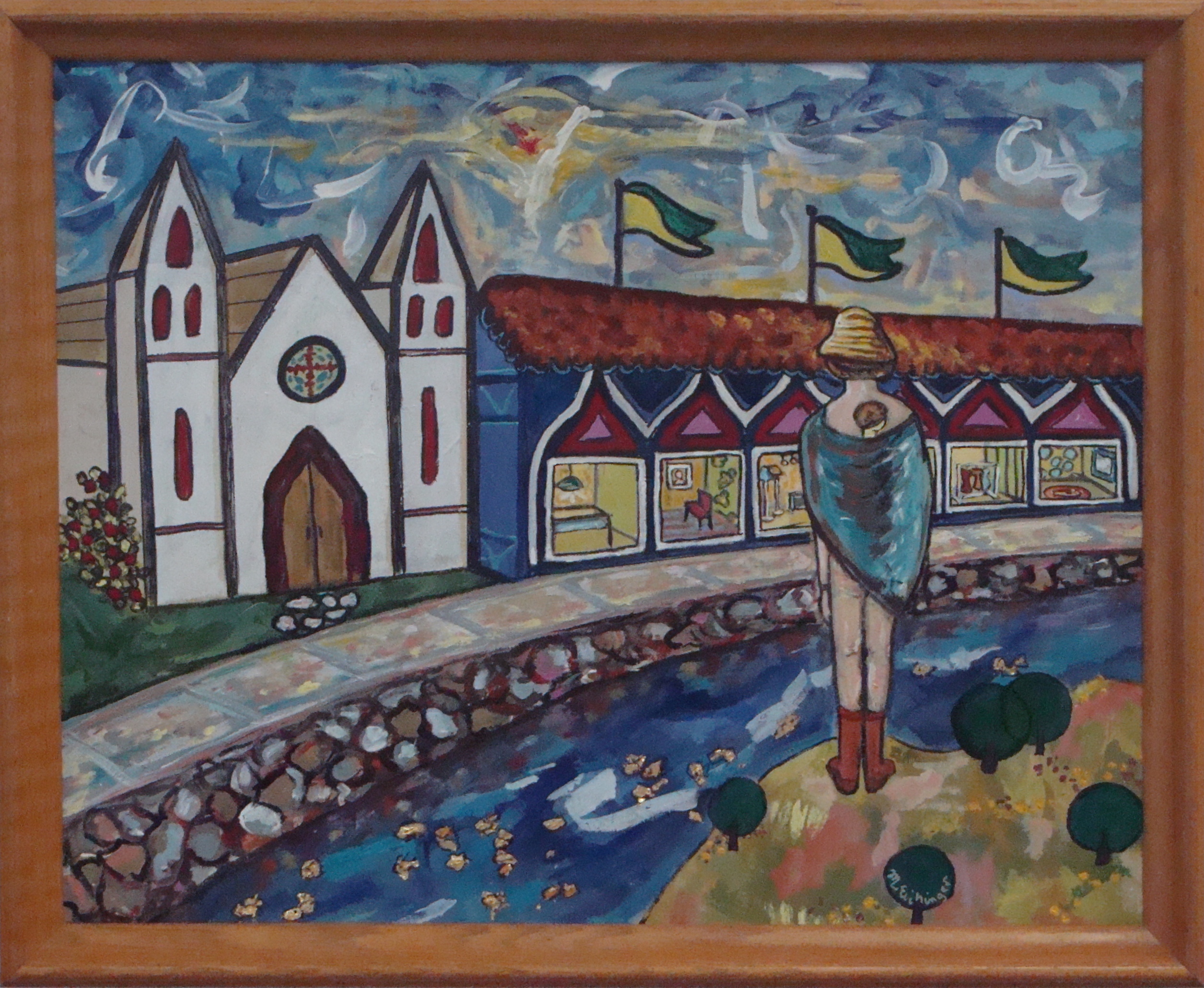
DSC04477Revisiting Savannah                                                                                                                                       What does this Native woman think as she looks over the Savannah River at a mid-eastern styled shopping center adjacent to an aging church?

A Savannah Odyssey                                                                                                                                     This blog is being written because of the plethora of racial issues plastered over the news media.  A recent trip to Savannah, Georgia provided  me a way to peek under the surface of racial tension. Savannah has approximately 143,000 inhabitants, down from its civil war high of over 200,000. As an outsider it was easier to probe this small eastern city than Portland where I live and have a vested interest in the status quo

I wanted to visit the deep south ever since I read The Prince of Tides by Pat Conroy, and finally got a chance to do so. Last fall, in shared celebration of our birthdays, my cousin Elaine and I ventured forth. My before image was filled with antebellum mansions, wrought iron gates, cotton plantations, trees laden with sphagnum moss and graceful women with lilting southern accents.

It surprised me wP1010649hen most of those visions were shattered. Trees dripping with moss were certainly amazing. Big gnarly Oak branches made me want to age regress to a more limber childhood when climbing could be done with ease. I conjured images of being gracefully perched on a long-roped swing while my beau gently pushed me to and fro. The city plan established in 1733 by its founder James Oglethorpe is unique in that streets in the central area are organized around 24 squares or parks, each surrounded by eight blocks for living and shopping. Though the parks no longer are used for grazing cattle, they do offer areas for strolling and listening to folk artists under broad-leafed trees. Rows of closely built homes are embellished with fanciful wrought iron banisters and fences, and churches of every denomination are liberally sprinkled throughout. Those walking the streets were for the most part white and came from all parts of the world, so the southern accents I listened for were sparse. People of color lived in poor ghettos on the outskirts of town.

P1010596There are no plantations in Savannah, and there never were any. The invention of the cotton gin by Eli Whitney made it easy to remove seeds from cotton fiber, and that innovation along with new manufacturing techniques led to a flourishing cotton trade. When steamships became practical in the early 1800s the city blossomed as an export and importing hub.

In 1861 the white ruling class celebrated the state’s decision to secede from the Union. They were determined to maintain their lifestyle by keeping just under half of the population enslaved. Four grueling years ended in 1864 when Sherman captured Savannah. White and black alike welcomed an end to the carnage that wrecked their lives and killed their sons and husbands. The power elite adapted easily to the end of slavery by planning a new economy that maintained the status quo. For over one hundred years the white population managed to keep control and stave off ambitions of black residents who had fought so bitterly for their rights.

Tourism videos describe Savannah as racially integrated, and several museums and historical houses proudly display exhibitions of art produced by black artists. “Great,” I thought, “ a city with an appreciation for color.” Orgelthorpe did not like slavery, and early on Georgia actually banned the trade. But before long there was not enough manpower to clear the land and do the work, so slaves were imported from South Carolina. With the repeal in 1750 of the anti-slavery law the local economy grew. Savannah become a major port for the slave trade, as well as an export site for cotton, rice and lumber. Interestingly, in 1798 the city again banned slavery, though costal Georgian waterways continued to be used for the trade until 1858.P1010697

Being curious, I asked people I met about race relations today. Those of color (making up 55% of the city) responded that everyone coexisted extremely well. With a bit more probing I discovered that men who succeeded, like Supreme Court Justice Clarence Thomas, were few and far between. Though schools and lunch counters are integrated, the 2010 US census shows a city that ranked 6th in the percentage (26%) of people living in poverty, and most of them are African-American. Our hotel workers and taxi cab drivers had told us what they thought we tourists would want to hear. A more honest assessment was given by a white guide who answered with rancor, “What do you expect? This is the south.”

Though the Food Network distanced itself from Paula Deen because of racial slurs made on national television, she still remains the queen of Southern cuisine and her restaurant flourishes. Political gains have not translated to economic equality, and white faces remain in tourist areas and in the nicer parts of town. Increases in violence, teen-age pregnancy and drug abuse are alarming to local residents. African-American business activity is collapsing and unemployment is twice that of the white population . . . just as it was in the 1960’s.

Change continues to visit the city in unexpected ways. Stores with middle eastern influences were erected on the main shopping street, breaking the historic feel of center city. There are a wide variety of ethnic restaurants to lure a hungry appetite, but fried chicken and macaroni and cheese remain supreme. I admit, they are delicious and a good excuse to stop calorie counting.

When the civil rights movement called for reform, colored and white-only bathrooms were finally eliminated. Yet in reaction to desegregated schools, 10,000 parents pulled their children out of the newly integrated system and sent them to private institutions. Today 18% of the county’s children do not receive a public education, a much higher number than in other Georgian counties. There are a smattering of hopeful signs within the school system, though. With the recent introduction of magnet schools, sections of the city are reversing the outgoing trend. An example is Ardsley Park that boasts a new Montessori magnet program.

Cities throughout the United States are bubbling with fermented hatred, and it takes a great amount of investigation to uncover truths. It is difficult to make sense of political manipulations, and very laborious to develop a plan that works for all. In my home town, I rarely talk to anyone about racial issues, though I would welcome a forum for doing so. Many our city’s racial problems are similar to those found in Savannah. Poverty, poor health, ghetto housing, drugs, lack of education and few employment opportunities rack most urban areas. If newscasters focused on these issues rather than give in to sensationalism, perhaps a more effective dialogue could be started, and we might end the cycle of shootings between police and racially profiled targets.

For more information go to:http://savannahnow.com/features/reseg/RESEG5/inside5/main5.html – White Flight

http://savannahnow.com/features/reseg/RESEG5/inside5/main5.html – Savannah schools

http://www.nytimes.com/1991/08/08/us/jim-crow-s-ghost-savannah-civil-rights-special-report-ways-older-south-linger.html – The segregated Savannah.

http://www.georgiaencyclopedia.org/articles/history-archaeology/atlantic-slave-trade-savannah – about Slavery in Savannah and Georgia.

http://www.examiner.com/article/4th-of-july-2013-and-notes-on-race-and-racism-savannah-georgia-part-3-of-3 – Race relations in Savannah.

http://www.ajc.com/news/business/deen-still-a-draw-in-savannah/nYYdJ/#__federated=1 – about Paula Dean.

http://www.ourdocuments.gov/doc.php?flash=true&doc=14 – Statistics

An Elephant Never Forgets


2007_0712Kenya0295 2

Startled Bull Elephant Chases our Land Rover.

An Elephant Never Forgets

A number of years ago I participated in an Earthwatch research project at Tsavo National Park in Kenya under the tutelage of Dr. Barbara McKnight. For several weeks I lived and breathed elephants, tracking from our rugged Land Rover a portion of the 11,600 behemoths still traveling through the 21,000 km preserve. Since the area also contained baboons, lions, wart hogs, giraffes, zebras, hippopotamus, enormous venomous snakes, and rhinoceros to name a few, we were confined to our vehicle, and even instructed to pee quickly behind the SUV.

Eight hours a day we followed these beautiful creatures as they lumbered in family groups, trailing the matriarch from watering hole to feeding ground. We documented the herds by recording their size, direction of travel, antics, postures, and eating habits. Ear notches and scars told us which animals were returning to various locations. We recorded plants, listed birds and creatures nearby, including goats and cattle illegally encroaching on the parkland.

2007_0712Kenya0319 2

Most fun was watching playful baby elephants piling one on top of another, rolling off to scamper around their resting site. If they roamed too far away they were firmly nudged back to their mothers by a nearby female. When the herd took their hour nap, calves were placed in the center of a ring of outward facing adult cows. Eventually the matriarch would signal it was time to continue marching over the land to cover as much as 50 miles a day.

During the birthing process the entire herd will surround the laboring cow. Once her calf is born they trumpet with joy, taking turns touching the newborn with their trunks in greeting. The entire herd then becomes responsible for the safety and education of the newborn. While traveling the baby is placed between the protective legs of its mother. In case of death, the cow morns for days by standing over her calf’s body, covering it with twigs and leaves while other members of the herd visit to give comfort. The depressed mother knows it has to leave to find food and water, but as she does so she carries a trail of sadness.

At times we observed young bull elephants, recently ejected from the herd, traveling closely behind their mothers. More often we came across older bulls foraging alone. Once when we accidentally startled a bull, our vehicle was charged, much to the great fear of Dr. McKnight who backed away as fast as she could. Not understanding the danger, I could see fear in her eyes and sweat dripping from her face. When I originally went on this adventure, I had expected to return as a zoo volunteer, but after observing elephants in the wild, I was horrified at their condition in captivity.

And…I learned, that elephants never forget. They live up to 60 years in the wild, and their amazing memory is the key to their survival. According to Scientific American, “scientists now have solid evidence that elephants are just as brilliant as they are big: They are adept tool users and cooperative problem solvers; they are highly empathic, comforting one another when upset; and they probably do have a sense of self.” Their 10.5 pound brain is used to encode survival details of alternative routes to use in case of drought. They recognize faces of other elephants they may have come in contact with during periodic multi-herd gatherings. Though their eyesight is fair their sense of smell and touch are strong. By smelling urine they notice unfamiliar elephants who could potentially cause trouble.

An elephant’s memory develops with age and experience, but unfortunately the older animals are the ones poachers are likely to kill, leaving the remaining herd at great disadvantage. Youngsters watch in horror when their families are slaughtered and remember forever the faces of perpetrators. What the herd loses is the matriarch’s memory of survival routes. 35,000 elephants are slaughtered by ivory poachers each year, and these mass killings can turn otherwise nonviolent elephants into dangerous animals.

In captivity elephants recognize their trainers and those who care for them. Many zoos involved in protecting the species are starting to see elephants from their own perspective. In Portland, the Oregon Zoo is expanding its elephant area to 6 acres, a pittance for their needs, but far better than before. Food dolled out randomly at multiple sites will compel the elephants to explore in order to find their next meal. I am excited by the new enclosure opening in spring of 2015. It is about time. Perhaps I will volunteer after all.

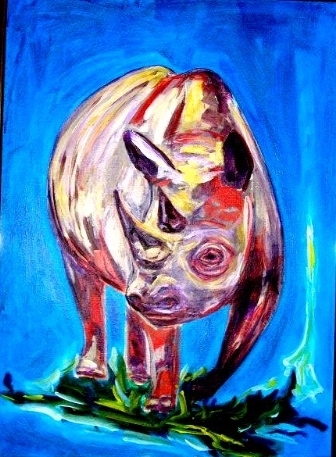
1353377lRhino Marching
Tsavo National Park had it all

I look forward to your comments.

For more information about Elephants:

http://www.scientificamerican.com/article/elephants-never-forget/ – Scientific American article Fact of Fiction?: Elephants Never Forget.

http://voices.nationalgeographic.com/2013/01/16/ivory-poaching-threatens-elephant-memory/ National Geographic – Ivory-poaching-threatens-elephant-memory

http://www.scientificamerican.com/article/the-science-is-in-elephants-are-even-smarter-than-we-realized-video/ Elephants Are Even Smarter Than We Realized.

http://mentalfloss.com/article/52381/it-true-elephants-never-forget – Mental Floss, About memory and Elephants.

http://www.wildize.org/projects/Wildlife-Security/Tsavo-Elephant-Research-TER-Dr-Barbara-McKnight/56 – About Research at Tsavo National Park.

Bio-feedback: A Case of Nerves

1339860l

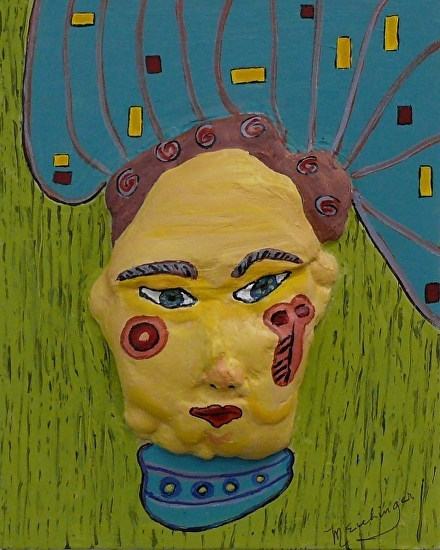
Mao
Do you use bio-feedback to control the electrical pathways emanating from your brain?     Bio-feedback; A Case of Nerves

The autonomic nervous system(ANS) has fascinated me ever since I watched a psychology movie of a person controlling an HO electric train set with his brain. Without conscious effort, the ANS sends impulses to organs of the body, and controls such things as heart rate, breathing rate, blood pressure, body temperature and other instinctive activities that maintain equilibrium. In the train experiment the subject had probes placed on two fingers and was told to make each digit a different temperature. Most participants were eventually able to make the toy train move. What the researcher had designed was a vivid use of bio-feedback as a way to teach the brain to move blood.

The film made such an impression on me that I decided to turn the experiment into an exhibit at the Oregon Museum of Science and Industry. A sound booth was built and placed adjacent to a circular HO train course. Visitors were directed to place two fingers on the temperature probes that were inside the glass booth that overlooked the course. Unfortunately, I was never successful in making the train move, perhaps because I did not spend enough time practicing. But I did observe others who were actually able to make one finger warmer than the other by directing different amounts of blood from their brain to each finger. Spectators were as amazed as I when the train started its slow journey around the track.

Commercial devices are now available that can translate the brain’s electrical patterns to make objects move, as well as alter sound waves. NeuroSky, a San Jose-based company, developed a toy that enables the player to turn the blades of an eight inch helicopter and make it soar. The participant experiences success by concentrating on a single thought, turning on electrical patterns inside his brain. The outcome not only makes the helicopter fly but changes his emotional state to produce a sense of calm and relaxation.

A number of years ago I observed a medical application of mind-body control being conducted in a Portland bio-feedback lab that helped those suffering from severe migraines. A patient was hooked up to electrical sensors and told to pay attention to the line on a monitor that responded to change in blood flow. The idea was to send the blood away from the head to body extremities such as hands or feet. With practice hot hands, as it is often called, can be an effective way to reduce headaches.

The Mayo clinic is one among many health centers active in training people to control such things as heartbeat, asthma, anxiety and muscles to reduce pain. Bio-feedback gives the patient power to control thoughts in mind and body in order to improve health and physical conditioning. Use of a bio-feedback machine does take time, however, and practice sessions may be costly. Relaxation techniques and meditation are a less expensive alternative.

Chemicals are more widely used to control parts of the brain. Everything from pain killers to sleeping aids are found in medicine cabinets throughout the country. In the 1960s and 70s my Boston friends were playing around with LSD. I remember one neighbor telling me that the idea behind acid was to gain insight into the brain’s possibilities so you could then work to achieve that state without drugs. The woman who spoke to me had experienced brilliant colors and sharp images while on an acid trip. She spent months afterwards meditating in order to relive the experience at will.

As an aside, I do not recommend that you try this chemically induced state. When I worked in a mental health center I observed patients who took LSD and could not come out of the experience. According to a 2013 Popular Science article, there is renewed interest among scientists in studying the use of pharmaceutical grade hallucinogenic drugs in psychiatry. Clinicians believe that it could help cure some of our most debilitating problems such as alcoholism, depression and PTSD. It will be interesting to see if their experiments turn out to be successful.

I have been meditating on and off for forty years and have found it to be most beneficial. Several years ago I had to undergo a series of operations and wanted to make sure that I would be a stress-free patient. Meditation did help me enter the hospital with a calmness of mind. Yogis say that once your realize that your body/mind is within you but you are not your body/mind everything changes.

Scientists have studied change by using magnetic resonance imaging (MRI) on meditators while they practiced two forms of meditation, one non-directive and the other concentrative. In an article published in the journal Frontiers in Human Neuroscience researchers under the direction of Svend Davanger at the University of Oslo in Norway found “that when participants practiced non-directive meditation, they had higher brain activity in areas associated with processing self-related thoughts and feelings than when they were resting. But when subjects practiced concentrative meditation, their brain activity was nearly the same as when they were resting.”

Dr. Davanger suggests that non-directive meditation “allows for more room to process memories and emotions than during concentrated meditation.” He was also surprised to learn that “a mental task like non-directive meditation results in even higher activity in this network than regular rest.”

Many people ask me how I can carve out time to meditate in a busy schedule and my answer surprises them. For every minute I spend mediating I reduce my need for sleep an equal amount or more. Meditation puts my brain waves into a relaxed state, and it has a creepy-crawly effect that expands to fill my mind throughout the day.

To review my art go to eichingerfineart.com.

For more information about the autonomic nervous system:

http://training.seer.cancer.gov/anatomy/nervous/organization/pns.html- about the peripheral nervous

system.http://www.npr.org/blogs/alltechconsidered/2014/01/21/263078049/brain-games-move-objects-with-your-mind-to-find-inner-calm – move objects with your brain.

http://www.mayoclinic.org/tests-procedures/biofeedback/basics/definition/prc-20020004- Bio-feedback and control of body functions.

http://www.ncbi.nlm.nih.gov/pubmed/19935987 – research on bio-feedback and migraines.

http://thelazyyogi.com/post/34377765370/meditation-why-what-and-how – about meditation.

http://www.medicalnewstoday.com/articles/276959.php- article in Medical News about how the brain works during meditation, May 19, 2014

The Unsung Revolution

1353420l

A Pretty How Town
How has technology changed the balance of power within the family? The above 3-D painting is based on ee cumming’s poem written in response to cookie cutter suburbs built in the early 60’s. Today another revolution is happening inside the homes of these Pretty How Towns.

The Unsung Revolution
When I hear the word revolution I am not thinking about the Arab Spring or Syria. Instead I am focused on a revolution occurring inside most of my neighbor’s homes. What I have observed is the shift of power from father, to mother, to child. According to Webster’s definition, revolution refers to a fundamental change in power. That transition has definitely occurred within families, for the young dominate the household.

My great-grandparents worked along side their elders on the family farm. After several poor harvests they moved from their rural community outside of Riga, Latvia to Philadelphia, a city teaming with immigrants. To make ends meet their children sold newspapers and shined shoes. Earned income was handed over to their parents to help support their multi-generational family.

My own parent’s changed that pattern by living as a small nuclear unit. My father worked long hours to pay for household expenses while Mom stayed at home, available to chauffeur me to activities around town so I could reach “my potential.” Her word was law when it came to most daily activities. The money I earned from babysitting or being employed as a camp counselor stayed in my hands and was not turned over to support my family.

I behaved in a similar way with my own kids. When my children were under foot my husband worked and I, as suburban mom, drove them to activities and play dates. I made sure that homework was completed on time and that sporting and cultural events were part of their diet. We spent a great deal of face-to-face time together.

Now my children and their friends are parents and they operate in a changed landscape. With single, same sex and two working-parent families their generation has ongoing pressure to juggle daily responsibilities. To keep in touch with their children they rely heavily on electronics, and it is their use of technology that has spurred the latest revolution. Cell phone, text messaging, YouTube and Facebook rule!!! Even email has become cumbersome.

Adults contribute to the technology boom by paying outrageous mobile phone bills and annually upgrading home tablets and computers. By doing so they have inadvertently changed the power structures within their family unit. This article is my way of saying “buyer beware!” Know what is happening with your kin and learn how to manage both good and bad consequences.

In a seminar conducted by anthropologist Jan English-Luck titled “Technology and Social Change: The Effects on Family and Community,” results he collected from interviewing Silicon Valley families were shared with the audience. A typical story he related is illustrated by Sharon, a mother who is in constant contact with her children through computer and mobile phone. Dr. English-Luk claims that Sharon’s children feel safer, stay out longer and are more independent than earlier generations since they are in constant contact. Yet the family no longer operates as a unit. The only time parent and children were physically together over a two week period was when the anthropologist visited their home for an interview.

Today’s youth text in short blips rather than communicate more fully by phone or in person. Since texting is limited, it is rare that the entire story gets through. Voices portray emotion and face-to-face encounters give non-verbal cues that transmit between-the-line messages. Through texting it is possible to discover the location of your child, assuming that he is truthful, but you will never know what he or she thinking. Full descriptions of situations and events are rarely given. Gone are opportunities to develop verbal communication skills needed for future employment. And because letter writing and now e-mails are also becoming obsolete, the written word is suffering as well.

Benefits of cell phone use are many . . . contact, entertainment, safety, wellness help, and photography. But the hazards are also many. With the introduction of smart phones, parents started working around the clock answering texts and emails. Instead of paying attention to their children while at home they often find their mind wandering to the latest business or social communication. Conversations between family members are interrupted by a constant stream of incoming calls and messaging.

Since technology is the root cause of this power shift it is not surprising that role reversal occurs when the child knows how to use a new gadget better than the adult. When parents do not fully understand a device’s potential they find it difficult to control it’s use and as a result are faced with a host of new problems.    I’ll mention a few:

Bullying and harassment: text messages increasingly are sent by bullies
Memory: Use of cell phones is destroying short term memory.
Eye strain and digital thumb stress: Heavy use puts children at risk for early myopia.
Bacteria – Devices are not cleaned and are crawling with germs.
Sleep disorders – Teens tend to keep their phone on and are awaked during the night by incoming text messages.
Reliance – Impacts daily routine.
Dishonesty (39% of users 18-29 are not always honest about their location) they find it easy to cheat on tests.
Cost – Parents have sticker shock.
Health risks – Question of brain damage still unresolved.

Yes, technology is great and not going away! It is wonderful to have a computer for researching papers, scheduling activities, staying in touch with the news, finding directions and even getting gossip through one minute news blasts. Mobile devices can be helpful additions if precautions about their use and costs are taken into account and rules of etiquette established.

But it is good to remember that educating a child and maintaining relationships with family members still requires personal interaction. Face-to-face communication can not be replaced by gadgetry. Electronic transfer of information does not take the place of a hug or chat in the warmth of your home.

Staying in control rather than being controlled by your children requires both time and patience. Keeping parental power is the main way to pass on your values. To be a respected boss it is important to be on the job.

For more information about children and cell phone use go to:

http://www.aboutourkids.org/articles/kids_cell_phones_staying_connected – kids and cell phone use.

Creativity: Nature or Nurture?

IMG_0082

Creativity:   Nature or Nurture?

Is creativity something that can be taught, or are a lucky few born with amazing talent? Are there genes that spark inventiveness or is imagination developed as a result of experience? These questions raise an age-old dilemma: nature or nurture?

While in my thirties, I took a class in creativity. It was designed to open minds to think inventively and to increase problem-solving abilities. For each session the instructor arrived with a packet of playful challenges and tests. One day, he brought in an old L’eggs stockings container that was shaped like an Easter egg with an opening in the middle. The class was instructed to close our eyes and imagine walking up and down the aisles of a supermarket as a stimulus for developing new uses for the plastic egg. Over eighty suggestions came bubbling forth, everything from using the container as a plant starter to making a musical rattle with dried peas inside.

The method our teacher so dramatically employed is known as Image Streaming (not to be confused with today’s computer use of the phrase). Behind closed eyelids it promotes the ability to recognize and describe mental images. To give it a try, start by concisely identifying a problem. Chose one where you understand all of the known surrounding facts. Now let your mind wander in and out of the problem by combining your subject with unrelated images. Lastly, find a place to relax and embrace your leisure time as an important part of the creative process. And voila!. . . you might be surprised at the outcome.

One of my university friends told me that when he gets stuck with a engineering problem he has a big lunch followed by an hour long nap. He claims that he usually opens his eyes to a new approach that leads around his obstacle. There are times when I like to take a trip in my car leading to nowhere in particular, letting my mind wander aimlessly while I pay attention to the road. On other occasions I set off for a long walk through the woods. Either activity suffices to give my ideas a boost.

MRI studies of grey matter structure show that during periods of relaxation, brains (especial those of creative people) are more active than previously imagined. In other words, your brain never really shuts down. Ferris Jabr, in a Scientific American article about why Your Brain Needs More Downtime writes, “Research on naps, meditation, nature walks and the habits of exceptional artists and athletes reveals how mental breaks increase productivity, replenish attention, solidify memories and encourage creativity.” These moments of relaxation are why so any people have their “ah ha” experiences while singing in the shower or shaving in front of a mirror. Putting concerns (and the computer) away and adding mental breaks to the day by walking in nature or meditating will add to your mental efficiency and ability to maintain attention.

Image streaming is generally practiced along with relaxation techniques for the purpose of challenging traditional thinking used in daily routines. We walk through a supermarket and buy food, never considering new uses for the products we see. Creative chefs do though. As they travel the isles their inner eye combines the herbs and produce they peruse in a never ending variety of palate pleasing mental images.

I am a strong believer that creative thinking processes can be learned or, at the very least, enhanced and am continually looking for tricks and practices to help me expand the visionary part of the formula. One game I have tried focuses on the mind’s ability to visualize. Over the holidays you might enjoy trying this exercise with your family. Start with closed eyes and imagine walking on hot coals. After a few minutes, describe the experience out loud, especially the sensory part of it. Then ask each person in turn act out what it is like to walk on hot coals. Have markers and paper nearby so everyone can draw a picture of the experience. These mental images are now captured for future contemplation.

Another goal of mine has been to improve my observation skills so that I have strong images to mingle when on a quest for a new idea. The following exercise works well with a mixed age group of children and adults. Place random objects in front of the participants and challenge them to look carefully at their shape, size and color. tell your party to ignore the original purpose of the objects and consider alternatives uses that can be silly and ridiculous, as well as practical. Anything goes when brainstorming. Children are very good at this exercise and often stimulate the adults to become more playful. Unfortunately, with age we find ourselves brainwashed by traditions that cause our minds to travel through narrow thought tunnels.

The arts provide a direct path to creativity. I once visited an art school in Cambridge, Massachusetts that held drawing classes for young children. For one exercise the staff made a large dark tunnel and placed it in the middle of the art studio. Each child was given a flashlight and asked to walk alone into the opening. Upon exiting, the student was immediately given a piece of paper and chalk and told to draw the experience. The images the children concocted were wonderful and varied, demonstrating how emotional experiences also influence outcome.

To help the young:  parents, grandparents and teachers can enrich the lives of their children by enrolling them in creative art programs. Employment opportunities of the future are likely to go to visionary individuals who have a flexible approach to thinking.

To stay inventive as an adult: take advantage of vacations or retirement as an opportunity for liberating your thinking processes so you are ready to pursue a new round of creative endeavors.

Want to know more?
http://www.scientificamerican.com -Why your Brain Needs More Downtime


It’s a no-brainer – Secrets of a Museum Junkie

1339829lThe Studio    

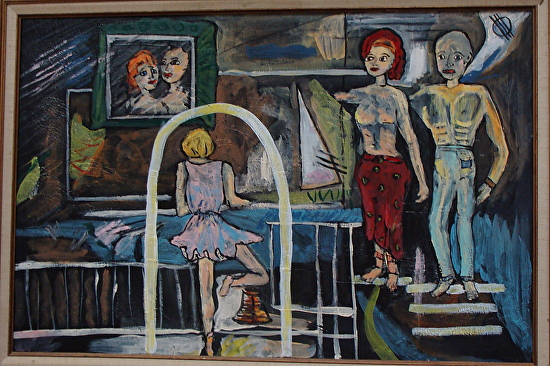
 A young girl innocently practices dancing while elders observe. Will her life embrace the grace and happiness she imagines? With age will her body remain supple? Her brain alert?

It’s a no-brainer

Since my retirement I have been engaged in new exercise classes and am enthralled. At the top of my list is Nia, a program that combines Martha Graham type modern dance with Tai Chi, Tai Kwan Do and mindfulness. Nia’s website claims that “it is a movement and well being program that connects body, mind, emotions and spirit by paying attention to sensation.” To get a better idea of this eclectic study, imagine yourself as a child, twirling gracefully with head thrown back to the falling leaves when a danger suddenly approaches. You stop, look around, tightening your body and prepare to run. Nia alternates a graceful flow that feels like you are moving in a bowl of jello with precision, balance, and speed. There is no room for a wandering mind as you move in preparation for the unexpected. As Mark Morris of the Mark Morris Dance Group says,
“ movement is like having a sixth sense, one that helps you understand your position in space.”

As a child I was clumsy and my mother was concerned because I tripped while walking so she enrolled me in dance classes. However, falling at a young age was not a worrisome condition since my body was close to the ground. Now that I am older, a fall could be quite serious, so coordination and balance are skills that I am inviting back into my life. But best of all, with this exercise regime I feel more spirited.

I started to wonder why I have the sensation of being more alert, and decided to do a bit of research about the influence of movement on the brain. What I discovered is that as I practice, signals are being sent from my motor cortex through 20 million nerve fibers in my spinal cord to my legs and arms, enabling me to go through my day with greater ease. A constant internal conversation is taking place between my muscles and my brain. Every small step or blink of the eyelid gives proof that the highway between between these two parts of my body are actively engaged. The brain directs our bodies much like an orchestra leader, telling it where and how to turn, tap, or flow through space. Resulting movement has the effect of improving mood and concentration.

The Cambridge Centre for Ageing and Neuroscience (Cam-CAN) refutes the popular view of aging as one of decline and decay. They say that “the brain remains flexible and adaptable across the lifespan.” Since most neuroscientists now claim that the brain can continue to expand its neural network, rather than sit lazily at home, we are advised to take on new challenges throughout life. “Change your job, try a new hobby, vary your exercise routine and socialize with others,” is the advice given for building new synapses.

My daily program also focuses on mindfulness, which according to Harvard neuroscientists can change brain structures after only eight weeks of practice. Their research suggest integrating mindful intention into all daily activities including walking, eating, sitting, making the bed, etc. The Harvard study revolved around 45 minutes of exercises that included yoga, sitting mediation and some sort of mindful movement. As a result, practitioners gained a sense of peacefulness and physical relaxation along with cognition and psychological benefits that lasted throughout the day. MRI scans confirmed that mindfulness increased gray matter in the areas of the brain involved in learning, memory, emotion regulation, sense of self, and perspective-taking (the ability to take the perspectives of others).

I had been fearful of retirement, imagining that without work I would start to wither. Instead, the opposite is happening and I have a sense that my mind and body are burgeoning. My participation in movement and mindfulness classes has led me to feel, energetic and happy to engage in new ventures.

It would be fun the hear what you are doing to keep your brain developing.
Click the URL at the bottom of this page and respond on the Blog site.

References:

http://www.brainfacts.org/sensing-thinking-behaving/movement/- discussion of movement and dancing and the brain.

Society for Neoroscience- reviewed May 2014 – Dancing and the Brain.

http://www.ascd.org/about-ascd.aspx – Curriculum development for mind-body links

https://nianow.com/practice – Information about Nia.

http://www.mindbodygreen.com/0-12793/how-meditation-changes-your-brain-a-neuroscientist-explains.html – Harvard study about mindful meditation.

http://www.cam-can.org – Cambridge Centre for Ageing and Neuroscience – Recent research on aging.

http://learn.fi.edu/learn/brain/exercise.html – Information about the brain from an exhibit at Philadelphia’s Franklin Institute.

Delilah the Do-Gooder

 Delila is delightful once you get past her serious exterior.
Delilah is delightful once you get past her serious exterior.  Acrylic painting  30″ by 24″.

Delilah the Do-Gooder     by Marilynne Eichinger

Managing a museum and running a household have a lot in common. You think you’re in control only to discover that you have more bosses than you care to consider. In a museum, government, bankers and board members are the ultimate bosses, but staff, consultants and even the public also have a say. To the director it seems like everyone knows the best way to do your job and they are not shy about telling you how to develop and market new programs, oversee the budget or supervise your staff. Disgruntled visitors are quick to use social media before contacting you and relish telling others about their dissatisfaction. Success is judged by attendance and the bottom line while being the first to create a blockbuster exhibit becomes a contest among the presidents of sister institutions. With tight budgets directors become timid about taking chances and refrain from bringing critical issues before the public.

In a family, there may be a spouse, partner parent or child who claims to understand you “better than you do yourself.” These relatives consider themselves to be Good Samaritans who are the knowledgeable gurus needed for your survival. My now deceased grandmother offers a perfect example of a well intentioned meddling do-gooder. When I was a teen, Grandma was not shy about sharing her opinions. She would sit in my room while I dressed for a date and tell me tales about the women she knew who ruined their reputation by engaging in pre-marital sex. Though Grandma never addressed the subject directly, through stories she did assertively make her opinions known along with her expectations of “good girl” behavior. She was relentless in her insistence that I pay close attention to her tales. I loved my grandmother and did not want to disappoint her but there are times I look back at her advice and wonder if it led to my eventual divorce.

Do-Gooders tend to be concerned individuals who do not like to witness sadness or incompetence. It is often hard for them to hold back what they perceive to be helpful words and actions because they are sure they know the way to improve your situation. I may be one of those caring people who want to jump into the difficulty and help immediately. I worry that I have a do-gooder gene that is similar to my grandmother’s. Now that my children have families of their own I find it difficult to sit on the sidelines and just watch them unfurl their lives.  I still feel protective and have a strong desire to share my life’s experiences through stories of my own. It is difficult to let go of control and just observe my child as she or he heads towards a pending disaster, especially when from time to time there is a return home for additional support. My husband has a standing joke that says, “when the children reach 60 they are on their own.”

I don’t think parents ever relinquish a sense of responsibility for their own children no matter how old they are. Without realizing what they are doing they often make their point known through a psychological concept known as magical thinking. They wind up using a process that applies unjustified reasons to a relationship between action and outcome. A funny example of magical logic can be found in a bowling ally where bowlers try to control outcome after the ball has been released by making movements with their bodies. It is humorous to watch them use hands and feet in an effort to bewitchingly guide the ball down the ally.

Magical thinking is often employed in subtle ways. When a brother-in-law of mine lost his job his father told him that his prayer group was going to pray for his success. His father made sure to keep his son informed of the group’s weekly intervention asking the Almighty for help. My brother-in-law was reminded regularly that quite a few people were thinking about him and acting on his behalf and that he had better progress towards solving his problem or his father would be disappointed in front of his friends. The psychological effect of the group was powerful and did have some effect in getting my brother-in-law motivated and moving in a useful direction. No one told this young man what to do but the message was clearly communicated that sitting around and feeling sorry for himself was not OK.

There are times when troubled family members become victims of gossip that at first appears to be malicious but may actually be helpful. When caring relatives pay attention to chatter that helps them better understand a dire situation it has a chance eo leading to positive action. Once a family gathers to share ideas about remediation, the group can work together in offering a beneficial intervention. Rather than having ten nagging voices, the relative in need is more likely to accept help that is given from a pool of love and respect.

Over the years I have learned that it is good to take the time to listen well and plan intercessions carefully. A short wait and see period gives me a moment to contemplate an appropriate response. I realize now that those in need of my assistance, want it given freely without strings attached, and though sometimes this is not possible, it does help to understand that the unhappy individual does not want another boss in his already confused life. A person in need does appreciate being heard but utmost tact must be used when giving advice, even if it has been requested.

One approach I’ve employed is to help a troubled friend or relative expand his or her thinking processes in order to become open to new ways of problem solving. In this way, the individual becomes empowered by skills that can used in finding solutions to a difficult situation. However, if there is the slightest hesitation created by this type of conversation then it is best to back off after explaining that you are available when the time is appropriate to continue the discussion. It is only when the individual is ready to hear suggestions that there is a chance of being an effective Do-Gooder.

My War on Terror

1353411l

Feeding Crow by Marilynne Eichinger
scavengers find military dog tags on a beautiful day

My War on Terror

A friend told me of a young girl who was alone at home dying of Ebola. Both her parents had succumbed to the disease which fortunately spared three of her siblings. Her closest relatives were grandparents who declined to help the sick child. My friend was horrified by their inaction, imaging herself in a similar situation. How could she let a grandchild die alone? My friend’s instinct from afar would be to go to her granddaughter’s bedside.

Aiding the young girl would most likely mean contracting the disease and spreading it to others. The child’s healthy siblings would then be deprived of their grandparent’s care. This story elicited immense terror for my sensitive friend for it presents an uncontrollable situation with what appeared to be closed-door options.

The “War on Terror,” was coined as a reaction to 9/11, and affected our country in much the same way as Ebola. Fear was especially poignant for those living in New York City and the country reacted with empathy, great sadness…..and perhaps overreaction. Fear is a lighting quick response that in primitive societies meant the difference between life and death. This reaction might be important if you are being mugged but responding to disasters like 9/11 or Ebola requires more thought before executing a response.

The War on Terror is a man made rebound of a military rather than political nature.
As a result we have been led into a costly killing spree that is now out of control for all parties involved.  It is difficult to know who the enemy is. The world’s reaction to Ebola, an unanticipated act of nature, also calls for international response, which has been made especially difficult because of poor medical conditions and ignorance in third world nations. Both tragedies are made more difficult because of of scarce water resources, oil, drugs, weapons, religion and control of the working poor. If nations of the world ever tackle those paramount issues perhaps terrorism will give way to reason.

What does it feel like to be under siege? I can imagine it but can not feel it in my gut. My moments of terror have been more imagined than real. As a child when my hand fell over the side of my bed I was terrified that it would be grabbed and eaten by a monster residing underneath. Thankfully my father arrived to rescue me and quiet my fears.

There was the time when my husband and I let our trusted babysitter take our toddler son to their cabin for the weekend. I had neglected to get the address of telephone number of their summer retreat and in those pre-cell phone days there was no way of getting in touch with the woman and her husband. Several hours after their expected return I became convinced that my son had been kidnapped. I knew the woman had been having trouble getting pregnant. I called the police who’s calm advice was to wait.

Even in those days the media was full of stories about waylaid kids. My blood pressure and adrenaline rose to unprecedented levels and I was ready to fight but what could I do? Finally the vacationers returned after having a wonderful time at their waterfront retreat. Roads were a bit crowded and caused the delay. I felt like a fool. Why had I suddenly turned on this woman and decided that she was deceiving me? What happened to rationality that made me ruled by emotions and unable to make good decisions?

In each personal case there were moments of immediate panic and fallacious reaction. It seemed not to make a difference if the threat was real or imagined once my involuntary nervous system took over. It made me wonder if there was a way to prepare my body to act calmly when faced with the unexpected? “People who are fearful can be quite limited..” writes psychologist Elisabeth Ovreberg. I wonder if our nation also has become limited because of an excessive barrage of horror stories.

Neither individuals nor society can function for long periods on high alert. It is not possible to be on guard all of the time because fatigue is bound to set in as the Secret Service experienced recently when a man climbed the fence, ran across the lawn and entered the White House. Were the guards dozing on the job, stunned into inaction, afraid? Has the Secret Service now overreact by instituting unnecessary spur of the moment precautions? Can they really prevent an intrusion by a person who is determined to gain access? Probably not.


Safeguards do need to be put in place, but impulsive responses are rarely helpful. We will never be able to account for all of the unknown occurrences that produce feelings of terror. There will be times when adrenaline spikes and blood pressure skyrockets and it is helpful to have a slowing down period to let body (and the country) smooth out its nerves.

Through mindfulness each of us could do our part to put out fires of panic before they reach the terror stage. To help meliorate stress, the press could become more moderate and thoughtful and politicians could stop treating every crisis as one to be seized for personal gain. Bloggers could help by becoming more investigative before passing judgement and spreading rumors. Imagine a world where well reasoned responses were fashioned to combat disease, issues of war, and personal problems.

For Further insight go to:

http://www.thenakedscientists.com/HTML/questions/question/1000023/ -Written by University of Cambridge on what happens when we become scared.

http://sciencenordic.com/your-fear-reaction-lightning-quick – Fear reaction is lighting quick

http://www.brettglass.com/immune.html – body’s response to terrorism by Brett Glass.