Unusual Family Vacation


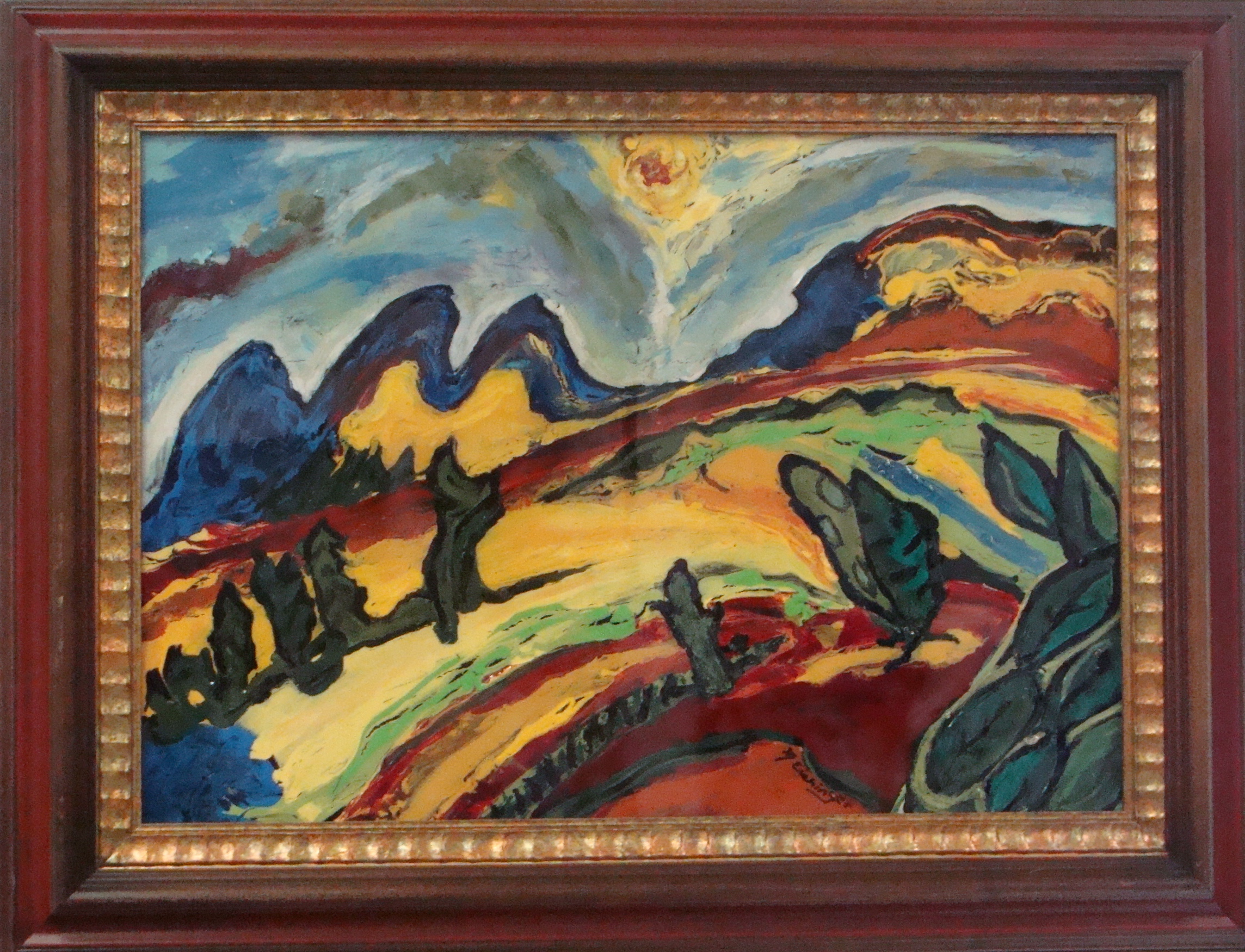
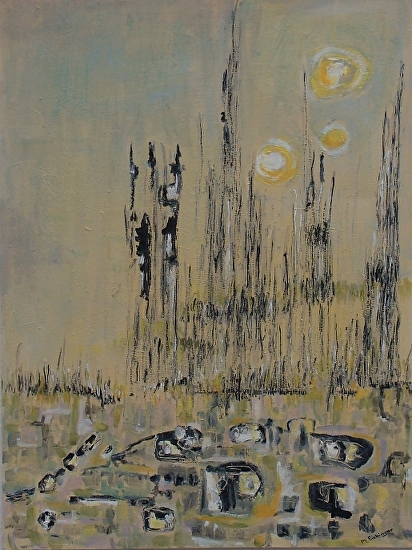
Is this they habitat that Rhinos lived in during the Miocene?
Is this they habitat that Rhinos lived in during the Miocene?   The Painted Desert by Marilynne


Rhinos lived 14.5 million years ago but were not there when the dinosaurs roamed.
Rhinos lived 14.5 million years ago but were not there when the dinosaurs roamed. Rhinoceros by Marilynne

Bones, dem Bones, dem Dino Bones.

Today’s Rhinoceros are relatively new animals in the evolutionary chain of events but similar to those that lived during the Miocene era 14.2 million years ago.  Though old, they are much at the same now as they were then and more related to human being than dinosaurs.  Dinosaur’s lived over 167,000 million years ago so fully understanding how they lived is still a mystery. There is a great deal of new research being conducted about dinosaurs, with mounting  evidence showing that their ancestors may be related to birds rather than mammals. People visit Zoos to see Rhinos. Why not visit a dino-dig to find ancient fossil treasures?

Wouldn’t it have been exciting to be the teenager who found a Duck-billed Hadrosaur mummy in North Dakota in 2007? Imagine discovering a dinosaur with skin so that scientists don’t have to guess about the outer covering of this great extinct mammal.

Dinosaur explorations often change our view of history. I always imagined myself on a dig-team, becoming famous for finding a missing link. When my children were young I thought it would be fun to take them on a dig to the Dakotas or Texas as part of our family’s vacation. I never followed through though, so now I have to be satisfied by visiting museums and reading about interesting discoveries.

When my granddaughters were still in elementary school I once took them on an excursion to the Burke Museum in Seattle. The girls were excited by the prospect, grabbing notebooks and pencils along with a small reference book for the trip. Once in the museum they traveled from display to display, writing down information and drawing a pictures just as their research father might have done. This visit made me realize how fearless, curious and participatory young children are when given a chance to explore. They often lead the way to learning.

Pre-history is interesting for young and old alike. A while ago I learned of a fossil mammal found in Europe that is connected to South Dakota suggesting that there was a trans-Atlantic route about 66 million or so years ago. The keen eyes of paleontologist Frans Smet of St. Mary’s College in California discovered a tiny marsupial mammal tooth embedded in rock in Maastricht, Netherlands. When it was scanned in an electron microscope, the connection was made to North America and the historical timeline as the world knew it changed by 50+ million years.

Paleontologists now believe that T-Rex was a lean, mean, warm-blooded hunter who only attacked large prey and was not a scavenger as previously thought. He was agile and used a lot of energy, meaning that he needed a lot of food. Other research shows that most dinosaurs were vegetarian rather than meat-eaters and my oh my… they were sexy. It is thought that flying dinosaurs actually had more elaborate mating displays than modern-day peacocks. The fin-backed Pterosaurs and Pelycosaurs developed elaborate headrests and sails in order to attract a mate.

Did dinosaurs die 65 million years ago because of an asteroid impact? New research suggests that a bad climate caused by a series of volcanic eruptions was slowly killing off the mammals. “The [asteroid] impact was the coup de grace,” Paul Renne, a geologist at the University of California, Berkeley, said in a statement for National Geographic. USC earth scientist David Bottjer confirms that the earth “just got sick” during the Triassic-Jurassic extinction and food became scarce. By looking at rare development of aragonite crystals on the ocean floor, he postulates that the slow dying period had something to do with the ocean’s chemistry. The coral reefs of that period are related to those in our oceans today and by understanding why they died we might learn more about the death that is now occurring in reef populations around the world. Is our earth getting “sick”? Will mankind die out as did the dinosaurs?

There are several dinosaur extinction theories but the most prevalent speaks of five major mass extinctions, the largest occurring 250 million years ago in the Permian-Triassic era. Almost 95% of all species were eradicated at that time. Some scientists say a comet or asteroid collided with earth, others postulate that a flood volcano causing oxygen loss in the seas was the reason. Some investigators have had theories about thinning atmospheric oxygen levels and now even this theory is questioned. Such are the twists of science where each discovery causes a new hypothesis to be made.
Can understanding geology and paleontology help us with current issues of global warming? Scientists look at these ancient creatures and how they lived, at changes in land mass and atmospheric and oceanic conditions for clues that can help in predicting the fate of the earth over the next millennium.

According to Peter Dodson at the University of Pennsylvania, there are great times ahead for dinosaur hunters. He claims that paleontology will be a good career because new discoveries are increasing by 10-20% a year. So…if those visits to museums, digging for dino-bones in toys, and reading books spark an interest in your child or grandchild, you may want to fan the flame. With summer quickly approaching, participating in a excavation might be the perfect vacation.

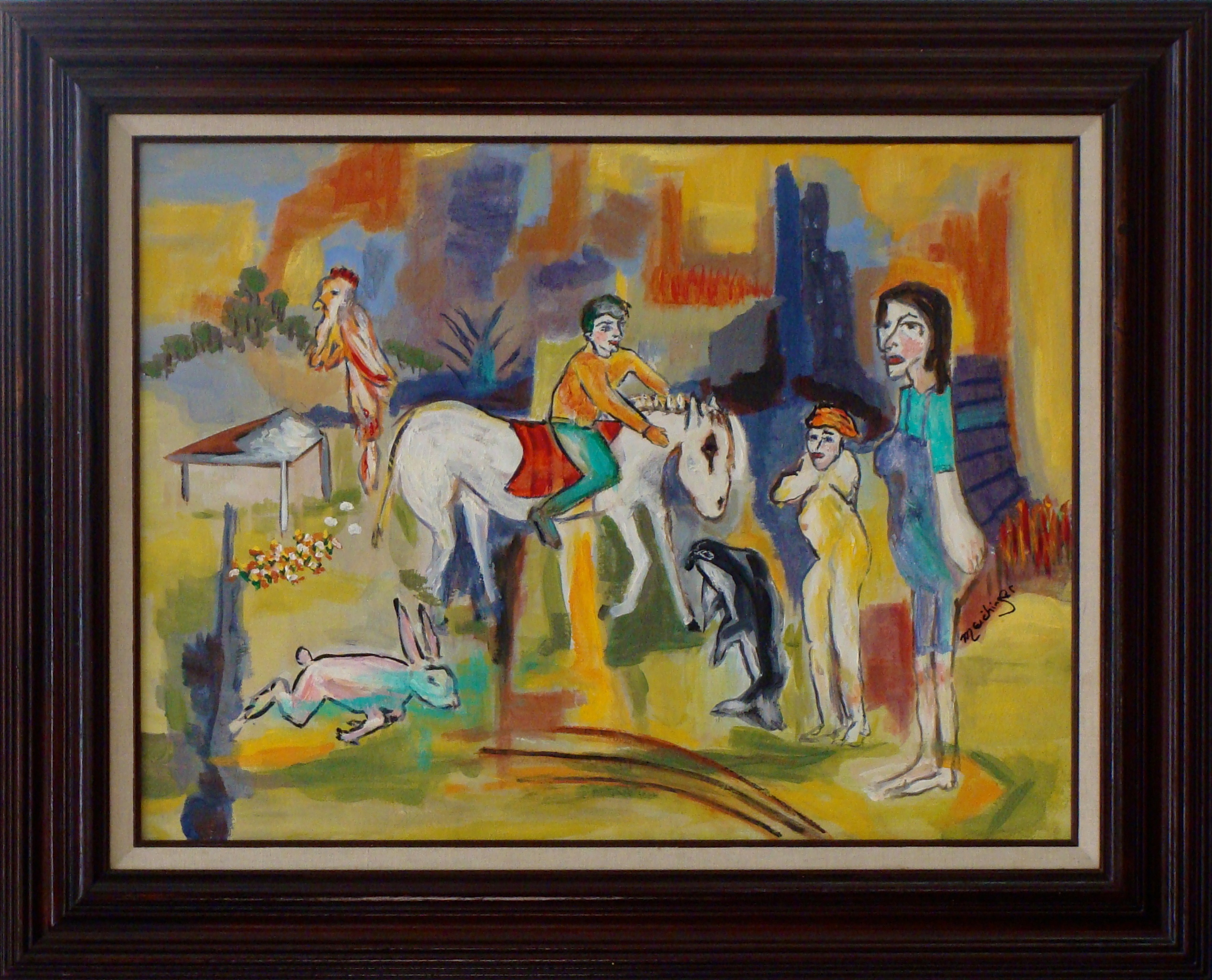
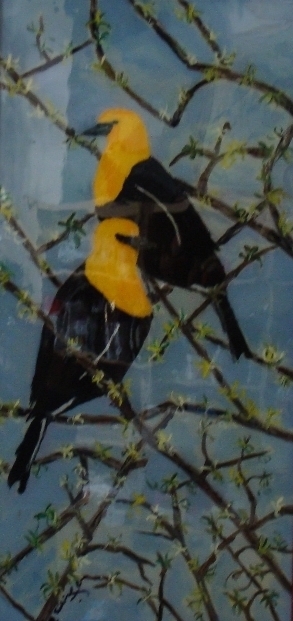
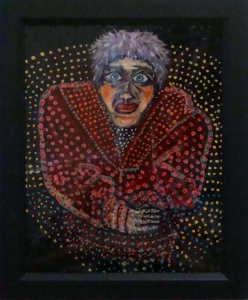
Art work is always for sale. Go to eichingerfineart.com for more information.
Want to know more? Go to:
http://www.sciencedaily.com/news/fossils_ruins/dinosaurs/ – for the latest research about dinosaurs.
http://www.ucmp.berkeley.edu/tertiary/miocene.php -Miocene era.
http://news.nationalgeographic.com/news/2013/13/130212--chicxulub-asteroid-dinosaurs-volcano-mass-extinction-environment-science/ – about dinosaur extinction.
https://www.museumofwesternco.com/dino-digs/ – for family expeditions in Colorado.
http://www.paleoadventures.com/dinosaur-dig-site-tours.html – for family expeditions in South Dakota.
http://www.wyodino.org/dig-site-tours/ – for family expeditions in Wyoming.
http://www.smithsonianmag.com/science-nature/dinosaurs-living-descendants-69657706/?no-ist=&page=4 – Dinosaur connection to birds.

Smiling Anger – a disconnect

First Fight First Fight by Marilynne Eichinger

Smiling Anger

When I was younger, I went to a counselor who asked me, “Why do you always smile when you are angry or sad?” I did not realize that I had such a disconnect between my emotions and expression of them. After observing myself over time, I started to see that I even giggled occasionally when I had to express a negative opinion. My smile was a way of taking back the argument that expressed my feelings because I was afraid of the reaction I would get. The result was that whoever I was talking to did not believe the intensity of my words, thinking I was joking, and therefore discounted my effort at honest communication. This disconnect between verbal and non-verbal cues made it difficult for even the most empathetic individual to interpret my intent.

It is only since the mid-1960s that non-verbal communication has come under academic scrutiny. The relation between these two emotional processes, the display and the perception of affect via verbal and non-verbal cues, are skills related to emotional intelligence according to an article written for the Journal of Personality and Social Psychology. This type of intelligence includes the ability to identify, use, understand, and manage emotions.

The capacity to display and perceive emotions is learned in childhood by those who are fortunate enough to have parents who are accurate perceivers and clear expressers of feelings. As part of their parenting responsibilities they teach their children the expressive skills. Unfortunately a great many parents act in an opposite manner and train their offspring to inhibit emotional expression. Though not demonstrative, their children may still be able to understand others and relate to subtle displays of emotion. For example, if a child observes abusive parents, he or she may be acutely attune to what is going on because his or her life depends on it. Since these children learn to be stoic and hide their emotions, they are not quite as successful at communicating their message to others.

Children raised in a highly expressive environment often do not need to hone their perception skills to the same level as others. The psychology article gives as a metaphor the following example, “If everyone is shouting then one does not need to hear very well to get the message, but if everyone is whispering then one needs to develop excellent hearing.”

Ideas and theories about perception and communication are quite complex and confusing. The intensity, implications and applications of the impassioned situation all play a part. My sister has severe emotional problems. She now faces a life threatening disease but is not upset or willing to acknowledge the seriousness of her situation. She does become angry at the young doctors whom she thinks are just out to get money or experience in the operating room. In some ways I envy her because her lack of fear is calming, her mood is positive. However, talking with her to discuss a medical plan of action is extremely difficult, and she becomes angry and even lies if anyone takes away her ability to make decisions. Independence is something that she is not willing to give up easily. She is reluctant to have anyone not see her in a weakened state.

There is a dilemma in how to interact with a person who is not in tune with their situation or able and willing to speak honestly of their concerns. Those who grow up being taught to live in a dispassionate manner have a handicap to overcome when older. Every person, at one time or other, will have a need to lean on another’s shoulder. Illness and aging are part of life’s processes that can be accommodated when systems are in place to deal with them. Building relationships based on giving and accepting a helping hand take a long time to develop. Those not internally aware and able to express their own emotions find this type of friendship difficult to obtain. Being able to voice concerns is making a statement that says, “ I am comfortable with myself at this moment in time, and not afraid to share my true feeling.” Overall happiness depends as much on emotional intelligence as it does on intellect.

Art work is always for sale at eichingerfineart.com.

Do you want to know more?

http://apps.olin.wustl.edu/faculty/elfenbeinh/ElfenbeinEisenkraft2010.pdf– Displaying and perceiving Nonverbal Cues.

http://www.helpguide.org/articles/emotional-health/emotional-intelligence-eq.htm – on Emotional Intelligence.

Tattoo Taboo

i-thought-i-knew-you

I Thought I Knew You: a contemporary totem by Marilynne Eichinger

Beaver TotemBeaver tattoo

                Beaver Totem by Ray Losey                                           Beaver Tattoo outline

Tattoo Taboo

Last year Ray made a totem pole for an Oregon sports club whose mascot was the beaver. One of their members was so impressed with the sculpture that he decided to have a tattoo of Ray’s design inked on the back of his calf. Above photos show the pole and the leg that will be colored over the next several months.

Though we felt honored by this gesture, tattoos represent quite a generational disconnect to me. As a child, my friends and I were fascinated by photographs in National Geographic displaying body art on Polynesian people. Those images were a curiosity that spoke of the exotic, but were labeled by my peers as belonging to a primitive culture, not to be duplicated. The process appeared to be agonizing and made us wonder why anyone would want to mar their body in that way.

Today, with new and less painful technology, many people wear tattoos. They are often quite artistically executed, but I continue to wonder why anyone would want such permanent body art. I prefer the option of being able to change my selections whenever I desire. I choose jewelry and scarfs to accompany my mood and clothing. Paintings on my walls are juxtaposed with nearby furniture in order to show the art off to its best advantage. Their attractiveness depends on placement, good lighting, and coordinated colors.

Body art needs be displayed with the same holistic approach as a painting, yet it is rare that clothing enhances the tattoo. I recently watched a bride walk across the far side of a hotel lobby wearing a beautiful white satin gown. Her bare arms were covered with blue/black tattoos. From a distance she looked dirty, and I wanted to wash away the smudges so she could glow. I wondered how she was going to enjoy her body in fifty years. Sagging, flappy old age skin will change the appearance of her carefully executed youthful designs. I questioned whether she will join the 60,000 people the American Society for Aesthetic Plastic Surgery say had tattoos removed in 2012.

Tattooing is an ancient art. There is evidence that it existed during the bronze age five thousand years. A frozen body known as otzi, the ice man discovered in the Alps was covered with fifty-seven tattoos. On every continent of the world there are examples of ancient people adorned with some form of body markings. In North American the Chickasaw decorated outstanding warriors, Iroquois tattoos were a recognition of rank, and Inuit women’s chins were decorated to indicate marital status.

Tattooing (known as tatau) in Polynesia began over 2000 years ago, and represents some of the finest work of its type. Rank and title were reflected by the tafutga (tattoo artist) who spent long hours perfecting designs. The pain of being tattooed was extreme carrying with it a high risk of infection. A person who aborted the process was considered incomplete and a coward.

It is Polynesian body art that has had the greatest effect on contemporary society. In the mid-1700s, explorers brought back reports about it from their travels. They described the elaborate body designs that made men look as though they were fully clothed. Their descriptive accounts fascinated the public, and the practice took hold on sailors and society’s fringes.

The practice declined, however, with the influx of Christian missionaries from the west. They vilified the custom as inhumane, barbaric and unholy. In most mission schools youth were forbidden to wear tattoos. Over time the missionaries did relax their attitude.

In the United States the first permanent tattoo shop was opened in 1846 in New York City. The practice grew with patriotic fervor as military men were drawn into body decorations during the World War II era. By the 1950s tattoos were more widely accepted, though they continued to be generally disdained by upper society. Today tattooing is considered an legitimate art form that appeals to both sexes. 21% of Americans have one or more tattoos according to a Harris Poll conducted in 2012. People get tattooed for social, political, and religious reasons. Some are applied as recognition of group affiliation, others are expressions of love, while many are forms of self-expression or fashion statements.

I find it interesting that 86% of tattooed people say they have never regretted getting it while those without tattoos hold strong opinions against the custom. One-quarter of those polled say that tattooed people are less intelligent, healthy or spiritual. 50% consider them to be rebellious, and two out of five think they are less attractive and less sexy.

People are more likely to get tattoos if their friends and family have them, and as the custom has grown it became better accepted by society. Even though I continue to stare with curiosity, I am no longer horrified. There are increasingly more people getting their tattoos removed. Though many are artistically executed there are a also great many mistakes . . . even by well paid professionals. Other reasons for removal are that the individual longer finds the design relevant, it is not perceived as appropriate for professionals, or it does not project the current image a person has of his or her self.

I would love to hear what you think of tattoos. Do respond on my blog.

Art work is always for sale. Go to eichingerfineart.com to learn more.

Want to know more ?

http://www.smithsonianmag.com/history/tattoos-144038580/?no-ist=&page=5 – history of tattoos

http://www.pbs.org/skinstories/history/ – history of tattoos

http://www.designboom.com/history/tattoo_history.html – history of tattoos

http://time.com/2826644/you-better-have-a-good-reason-for-that-tattoo/ – tattoos and regret

http://www.usatoday.com/story/news/nation/2014/05/21/tattoo-removal-laser-treatment/8892601/ – love/hate relationship with tattoos
http://www.vanishingtattoo.com/tattoo_facts.htm – tattoo facts.

On Being Real

1353336lTV Diva – Who is she?

On Being Real:   I just returned from a talk given by Tom Disrud about being real. It made me consider who I really am and who I want to be. Recently I have been told that I need a different moniker for my art work. My surname changed twice because of marriage, but I stayed with Eichinger because that is how I was known for twenty years, and Marilynne because that is all I ever knew myself to be. Each pseudonym, however, initiated a time of changed responsibilities as housewife, mother, museum president and finally company owner. Last year I sold my business in order to write and paint, and I asked myself if it was time for a new handle. And so I started to explore the meaning of my name.

The word Marilynne, according to baby name lists, conjures up sexy images, bringing to mind Marilyn Monroe. Its origin is a hodgepodge of English, Israeli, and Hebrew languages that blend Mary with Lynn. It is not a popular name today, as it was when I was born (there were three in my homeroom), but its popularity rank over the past two years has been rising again. The problem with this name is that I am now aging. Does sexy still describe me? In Zumba classes we put our hands above our heads pretending to be belly dancers one minute and hip-wiggling salsa dancers the next. A sidewards glance to the mirror had me in stitches when I tried to imitate the sexiest twenty-year old in the room.

My middle name is Hildegarde. Learning to write all of those letters was quite overwhelming when I young and had to sign my name as Marilynne Hildegarde. In Scandinavian mythology Hildegarde was a Valkyrie sent by Odin to escort battle heroes to Valhalla. In America the meaning is Battle, the name is all about war. My exercise program contains a smidgin of Tae Kwan Do and Tai Chi, so now I wonder if am I ready for battle? In front of the mirror I tried making my face fierce, disguising the smile crinkles in the corner of my eyes. “Ayee!!” I shouted. I failed abysmally.

Hildy, the name my grandfather gave me, according to Kabalarian Philosophy, is a person who has a desire to be of service to others, but practicality and attention to detail restricts her spontaneity. I am supposedly patient and will work hard to accomplish my endeavors.( true ) I tend to build a solid foundation of fact and logic ( yes ), but am not inclined to pursue inspirational or creative expression in music or the arts . . . (“uh oh!”) That statement stopped me immediately.) The article I read goes on to say that my ambitions are modest. (My friends would laugh at that one.) I do, however, appreciate a settled home environment that lets me show love for friends and family. It this who I am? Should I sign my art work Hildy?

To consider who I am, I had to divide myself into two parts, the physical being and the spiritual one. I started with the physical since it was easier to dissect.

Since retiring I have made some changes that I do like. My weight has come down to match what it was when in college. But instead of the tiny waist that my father used to wrap his hands around, five children have brought about a permanent increase in spread. Not bad though I can live with the reality of a slightly larger waistline. Exercise has made a big difference and I am stronger than I was a year ago. I can now do squats, kick my leg up to at least ninety-degrees and engage in jumping jacks with ease. Posture is now my bugaboo.

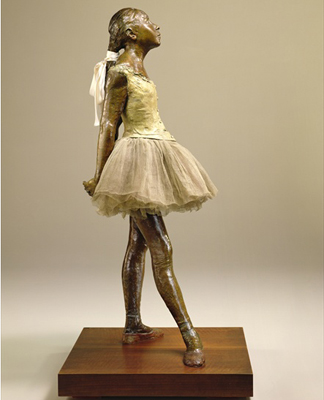
As a child dancer I was taught to stand in first position, and for years walked with toes turned outwards. If you have watched ballerinas you will often see them resting on one leg, the other slightly forward with toes out, belly protruding. (look at Degas sculpture of the Little Dancer.)

DEGAS STORY_339979After carrying babies on my hip, that position became exaggerated and my back suffered. Changing my stance to walk with feet in a parallel position has not been easy, but my back is much better. I feel great!

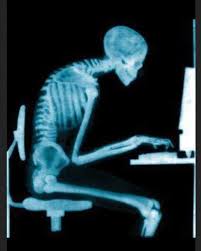
So why the shock when I looked into the mirror to find the real me? I suddenly noticed my bobbing computer head. “How did that get so bad,” I thought. Then I looked around the shopping mall and city streets to observe hundreds of heads dangling at the end of forward bent necks emanating from hunched shoulders. That description really fit me, and I did not like it. Was this just another part of the aging process, and was it something that could be corrected? With a computer head, I certainly could not keep my sexy Marilynne name or do battle as a Hildegarde. I still felt uncomfortable with a Hidly who was not involved in the arts.

I went online to discover something called computer neck. It is a common problem these days because children as well as adults sit at compuimagesters for hours at a time with poor posture. “Ouch!” This stance has made chiropractors wealthy. I learned that there are several things that can be done to get rid of computer neck. When sitting, with head in a neutral upright position, a line drawn straight out form your nose should intersect with the middle of the monitor. Forearms have to be positioned parallel with the floor with elbows close by each side. Feet should sit flat on the floor with thighs parallel to the floor as well while sitting slightly forward on a chair. To maintain the curve of my lumber spine, I decided to use a large chair-ball. Since it is slightly unstable it also forces me to use my core to maintain balance.

I am going to work on improving my stance and keep Marilynne as my name. I like the idea of staying a feisty, sexy woman. As to the spiritual side, well that is a whole other story.

Your thoughts about a name change? 

Artwork is always for sale. For Information explore eichingerfineart.com.

References:
http://orthoinfo.aaos.org/topic.cfm?topic=a0026 – How to sit at a computer.

http://www.kabalarians.com/Female/hildy.htm – meaning of hilly

www.sheknows.com/baby-names/name/marilyn – meaning of marilyn

A Collision in the Woods

1662376l

Twin Stars Colliding

Collision in the Woods
My home is in the forest near a parkland trail. Built on seven levels that are nestled onto a hillside, the back of the house is over 100 feet up in the air. I fondly think of my dwelling as a treehouse. Some of our guests get dizzy looking over the railing, but I love to peer over the side into the woods or sit back to watch the canopy birds attracted to our numerous feeders.

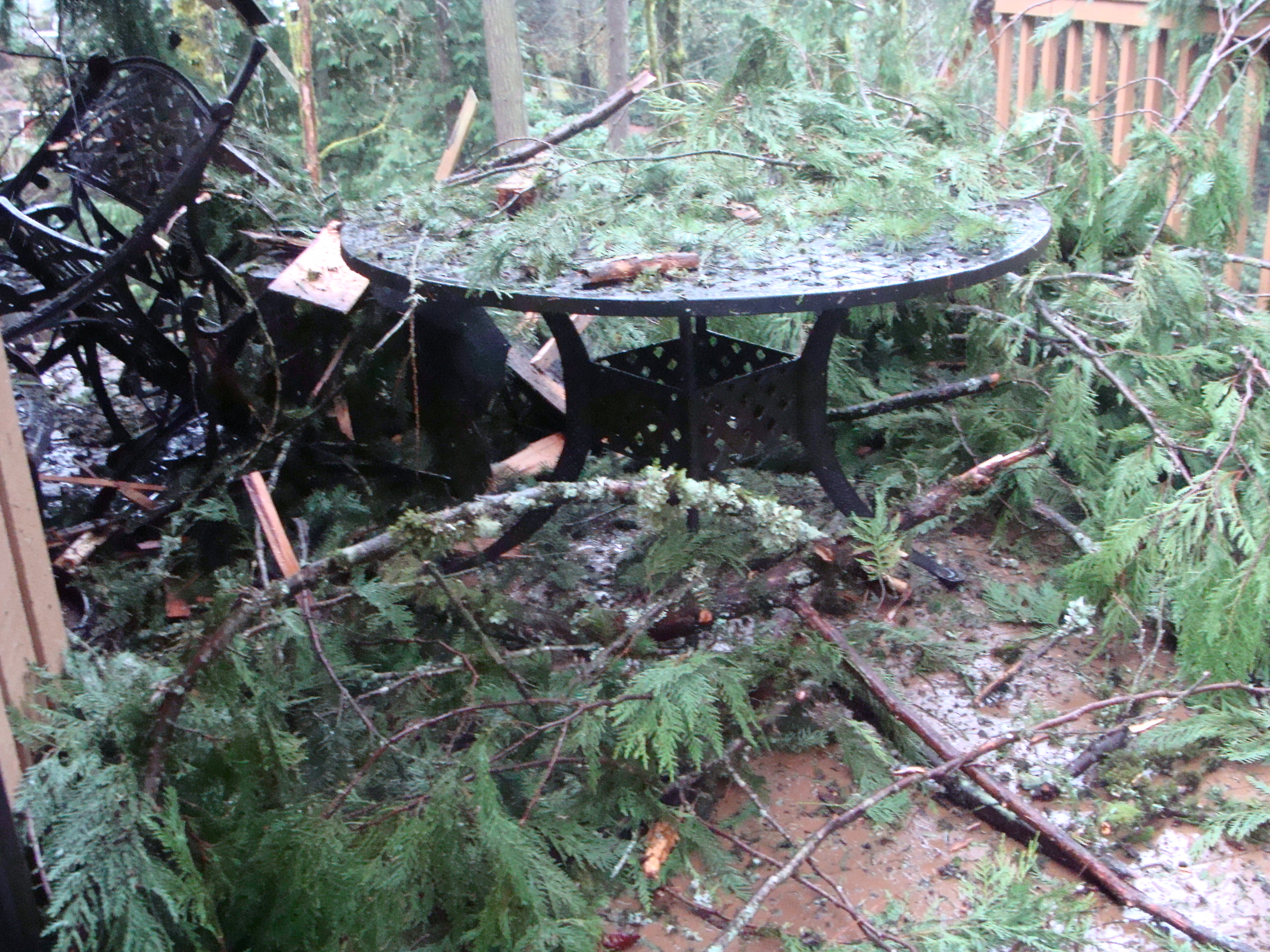
Last Monday, just past noon, while working quietly at my desk enjoying a occasional nod to the view from my window, of rain gently dripping from the Cedars and Douglas firs, I was startled by a loud crack. It sounded like a lightning bolt hit the roof colliding with a freight train. As my head to jerked to attention, I looked out the window to see the top half of a huge tree rocket to the ground. Ten seconds later an earthquake like blast shook the house, toppling pictures, breaking glass, and sending branches shooting through the skylight to puncture holes in the stairwell wall.

The first thing I noticed when I leaped to my feet was that my heart was pounding, adrenaline shooting skyward and my body shaking. Ray was shouting at me to come upstairs, and I kept thinking to myself, “Calm down. You are a meditator and are not supposed to get upset. Thankfully no one was hurt.” At that moment I was very glad that I was not alone in the house.

Taking the stairs two at a time, I ran up to the main floor to find shattered glass blocking my way. Stepping gingerly through an unbelievable mess, I worked my way to the back deck to discover it was half dissolved and no longer fenced in. Looking down from the remaining splintered boards, vowing not to become a statistic with a seventy-five foot fall, I tried to discern which tree was the culprit. I am possessive of my trees and was unhappy to lose even one. It was difficult to tell, but with a bit more investigation I was crestfallen to see the upturned ball of a magnificent 150 ft. Red Cedar. In totem terms the trunk could be used to make eight or nine poles.

It was then that I finally let out a laugh. Yesterday I had been speaking to the young man we mentor and had told him that, “Life is just a series of problems to be overcome.” I had been trying to make him realize that there is never such a thing as, happily ever after. “Overcoming difficulties makes life interesting.” I had said. He was in the house at the time the tree went down, so when he came bounding into the room I turned to him and said, “ Remember what we were talking about yesterday? Well, it looks like this problem is going to be a doozie!”

I have always been a preparation type of gal. After listening to lectures about earthquake probabilities in Oregon, I bought cases of bottled water, and for both work and home, purchased several sealed buckets containing enough dried meals to feed a family for twenty days. My car contains an emergency supply tub complete with a change of underwear. At work, I asked employees to bring extra clothing which I stored next to blankets, quilts, flashlights and batteries, ready to be accessed as needed. And our safety committee made sure we had first aide material in all parts of the building.

Since I lived in the woods, I was always concerned that a tree might come crashing down from the hill above. Ray and I pruned the branches on those nearby to make sure that the three and four foot diameter trunks were weighted away from the house. It never crossed my mind that one located eighty feet downhill on rain saturated ground could fall upwards causing damage. Acts of nature are full of surprises that send twists to planning documents.

This incident has made me realize that there are preparations for dealing with a disaster that are rarely mentioned. It is a good idea to have your doctor, insurance agent, and in case of a homeowner problem, an emergency response contractor’s number programmed into your cell phone. I also grasped the importance of doing exercises to help my body move swiftly and my mind to remain calm. Meditation and physical programs that push my brain to adjust to changes in rhythm and movement can provide me with solid grounding from which to take action. Core strength, balance and flexibility make cleaning up messes more manageable. With these insights, I added new goals to my New Year’s resolutions.

I hope a personal disaster never happens to you, but if it does remember that there are a lot of people ready to offer their support. Thank you Gary.

DSC04548 DSC04578

Art is for sale at eichingerfineart.com.

Think STEAM

DSC04438

The Barnyard
by Marilynne Eichinger

Think STEAM

Recently I read about a pioneer family that homesteaded in Colorado in the 1800sT. he book focused on the life of a ten-year-old who assisted his father erect their prairie home, complete with barn, fences, and sheds. As a youth he watched a dowser use two rods to locate water and then helped dig the family well. The boy had neither time nor need to play with blocks or science apparatus when practical objects had to be assembled and serviced. By living with nature, he became aware of cloud formations and the weather’s impact on planting and harvesting. Cycles of bird migration and birthing habits of lambs and other livestock were part of his domain. During the era of western settlement, construction and farm skills were passed down from father to son. Sewing, preserving, medical and cooking accomplishments went from mother to daughter. In both cases innovation was was a result of multi-generational cooperation.

My partner Ray grew up on the edge of a gravel pit that created similar experiences for him. Since his father owned quarry, at a young age he was taught to crush rocks, fix machines, and even drive tractors. Today he can repair most small engines and is a useful man to have around the house. When we hire contractors to do repairs, Ray watches them attentively, making sure that they do not cut corners and that the work is completed as promised. “Build it right the first time,” he instructs.

Town-raised children have little contact with farming or, as in Ray’s case, gravel mining. My father was a physician and had to trust tradesmen, who were not always trustworthy, to complete work around our house. The contractors my parents hired often had several jobs going at the same time, causing them to jump from one location to the next paying customer, trying to keep all of them satisfied. The company owners were often adept at doublespeak and disguised the limitations of their knowledge. In later years, it always surprised me, when faced with a similar situation, that their bill was rarely discounted. It often took me several years to notice imperfections that would not have been there if the contractor had been upfront about the company’s abilities.

The current generation of children will most likely face a worse situation. I, at least, studied physics, learned a bit about engines and mechanical advantage and was given some practical experience in household management. Home economics and shop courses were part of the curriculum in my day, and as a get in there and mess around type of person those subjects appealed to me.

Since parents are not qualified to pass on these skills to their offspring, it is time for schools to step in. Every child needs to receive a modicum of practical training. A rudimentary understanding of carpentry, electricity, plumbing, small engine repair, automotive care, and personal finances will make life smoother. Shop, art, home economics and music classes need to be added back to the curriculums for academic as well as vocational students. These subjects are intrinsically motivating and often serve as pathways to careers in engineering, the trades, or science, and they have a dual benefit of fostering creativity, curiosity, and problem solving.

So what happens if your offspring are not given a chance to learn these subjects in school? Though parents and grandparents may not be able to show their children how to build a home on the prairie, they can provide an area in their home filled with real tools, blocks, wooden planks, cardboard, pipes, glue and tape. They can give their children small engines, radios, and clocks for dismantling. Visits to construction sites and observing tradespeople at work and hands- on museums can go a long way to stimulate curiosity.

As adults we can encourage educators to think in terms of STEAM (science, technology, engineering, art, mathematics) for rounding out curriculum options. My high school physics course led me to a career managing science centers. My art class gave me a hobby that has become a profession in retirement. Cooking classes introduced me to measurement and chemistry as I mixed flavors, colors and textures, leaving me with surprising concoctions to sample. I thank my old school and my parents for the opportunities they gave me, and for inspiring my curiosity about everyday objects.

Art work can be seen at eichingerfineart.com. All work is for sale.


And Then There Were Birds . .

1485452xl

                                                                     Yellow Headed Black Bird
by Marilynne Eichinger

Can You Potty Train Your Bird?  

Pet ownership is thriving in our country. Over 84 million have been adopted by Amercian households. According the American Veterinary Medical Association 36.5% of households own dogs, 30% own cats, 3.1% birds and 1.55 horses. The majority of pets are obtained from family and friends with 20-30 % of cats and dogs adopted from shelters and 2-10% purchased from pet shops.

Our cat came from a shelter, but when we got her home we realized that she had been badly abused. It took years to make her coat shiny and to have her relax to the point of letting us rub her head. She now is a most agreeable, though still on edge at times.

Pets are acquired for many reasons such as  teaching responsibility to children, companionship for adults, assistance to the handicapped, and therapy for the ill. They are socializing agents helping people overcome their reluctance to start a conversation. Emotional and physical well being is often enhanced with a companion animal. Healthy exercise is part of the routine for those who walk their dog daily. Grooming and petting provide tactile connections that human beings need and often don’t get as they reach old age.

Pet owners in general develop an understanding of what it means to give and receive unconditional love, loyalty, and sympathy. Caring for animals encourages kindness and understanding. Service animals lead the blind across streets, help the deaf hear alarms, provide warning signs for those living alone, and give an overall feeling of safety. In addition companion animals help lessen the feeling of loneliness, lowering blood pressure and even cholesterol levels.

Birds are not  are not quite as cuddly but still fall in the fascinating and beautiful category. I enjoy watching them in my backyard feeder or on outings to Malheur national wildlife refuge when migrating in the spring. Last year, with help, Ray and I identified 164 species of birds  at Malheur in just five days. The Yellow Headed Blackbird picture above was painted after last year’s excursion. These birds in the wild, however, are not pets.

A friend of mine enthusiastically shared stories about her Double Yellow Head Amazon Parrot. The bird talks and sings whenever anyone is around. It is pretty amazing to observe how appropriate it’s phrases are to teach situation. My friend keeps the cage open and lets her bird fly around the house without being afraid of poop landing on furniture or carpet. She claimed that she was able to “housebreak” her parrot and teach it to relieve himself in the proper spot. Wow! I found that statement hard to believe so I did some investigative research to find out if that was possible.

What I found was an overwhelming affirmation, especially with “hookbill” birds. You can train a bird much as you train a dog, but you do need a lot more patience. Birds are very intelligent, responding to expressions, soft speech, and the punishment of being put back in the cage.

If you give attention to a bird or animal you will start to understand why emotional attachments get formed. Pets can help you learn, grow, and become a more satisfied person! But please remember that if you are purchasing a new feathered friend, make sure that it is legal and not a kidnapped bird on the endangered species list. When I was in Costa Rico with my grandchildren we participated in an early morning bird count and learned that local denizens were capturing Macaws to sell to the U.S. market. The result is diminishing populations and endangering their survival. Macaws are beautiful birds that belong in the wild or purchased from a supplier in the United States that raises them for domestic use.

I would love to hear your thoughts.

Artwork is always for sale. Go to www.eichingerfineart.com for email me at mariliynne@eichingerfineart.com for more information.

To learn more go to:

http://www.veterinarypracticenews.com/July-2012/Feds-Propose-Protecting-Four-Macaw-Species-As-Endangered/ – Illegal capturing of Macaws.

https://www.google.com/?gws_rd=ssl#q=american+veterinary+medical+association – statistics etc.

http://www.animalfreedom.org/english/opinion/pets/why_do_people_want_pets.html : Why people have pets.

Spinning World Makes Me Dizzy

                                    COOL DADDY by Marilynne and Talik Eichinger                                                                                

DSC04520

 Get with it Man!

The Spinning World Makes Me Dizzy

When my son was in his 12th year we went to a wallpaper store to choose a design that reflected his move to teenager. He selected a room sized map of the world, a great choice in that it is still used by the family. Whenever we plan to travel, the first stop is my son’s bedroom to locate the site of our current interest. Each time I study the map, I am surprised at just how much the world has changed since his room was papered. Boundaries have moved and countries have new names. The Soviet Union has been replaced by a great many sovereign nations. I have to remember that Burma is Myanmar and Bombay is now Mumbai. The only comforting feature is the mountains and valleys that remain topographically in place.

As I travel internationally, I am immediately aware that the last 20 years have brought great changes to every country. Some are newly embroiled in war and I can not possibly consider a visit. Others, like London and Paris, have become exorbitantly expensive for middle class tourists. The beaches in Thailand are still recovering from their massive tidal wave, and Cuba is preparing to accept more visitors as a result of loosening sanctions. Cell phones permit internet searches for restaurants and tourists sites, international banking is conveniently conducted at ATM machines, and GPA tracking is a fantastic convenience for travelers.

So . . . how does one keep up with rapid change so as not to be caught in a time warp? Technology continues to have impact at home, but little is mentioned in the news about vast changes abroad. Did you know that warming trends are negatively affecting coffee growth in Sierra Leone, thereby increasing coffee prices in the US? . . . that you can walk into excavated tunnels under the DMV in Korea to see how the North secretly planned to invade the south? . . . or that land in Burma is being sold off cheaply to developers under the guise of democratic change, and the poor are being displaced?

Remember the idiom “Nature abhors a vacuum?” Well, when I was an anthropology student I was taught that if a poor overpopulated country is located near a wealthier one, those living in poverty will push their boundaries and move into the country with greater resources. We see this happening daily with waves of immigrants sneaking over the border. There may be civil laws to prevent that migration, but the laws of nature will always win. The desire to survive is so great, that people will do whatever they need to do to feed their families. When considering immigration issues, I think about this instinctual push for better pastures that has gone on throughout the history of mankind. Population movements effect our lives and must be paid attention to as much as the latest iPad.

Changing long held prejudices is difficult and requires a willingness to seek out current information and shift beliefs accordingly. Staying in tune with the times means continuous investigations and challenges to a mind that wants to stay comfortable in its old ways. Yet, changing your outlook with the spinning world should not be more difficult than learning how to use Skype or the latest app.

I am a good example of a person who early-on resisted working with computers. I made sure they were used at work, but had other people operating them. That was a bad decision. Now I realize that staying abreast of technology is a requirement for living fully. And staying abreast of the world’s social and political landscape is also a must at any age.

It is fun to ride on this dizzy, spinning world! I am as curious as can be to see what happens next. My only regret is that I can not return to earth in 200 years to observe the changes. Do you think the Middle East will still be in chaos, or the oceans flooding coastal lands as predicted?

Art Work is for Sale: Go to eichingerfineart.com for complete description.

For more information go to:        http://blogs.independent.co.uk/2012/05/02/what-is-really-happening-in-burma-today/  about Myamar today.

http://www.businessinsider.com/afp-10-years-on-lessons-of-asian-tsunami-hit-by-disaster-amnesia-2014-12   about Thailand ten years after the tsunami.

My Mysterious DNA

1361301l

Three Suns by Marilynne Eichinger
Mystery surrounds us; in our environment, with relationships, and within our bodies. Seeking…. we sometimes find ourselves.

My Mysterious DNA

Twice over the past several years I have had DNA tests. The first time was after my daughter asked me to find out if I had a gene that made me vulnerable to breast cancer. Though it cost a bundle, she was so insistent that I decided to take the test.
I went into the geneticist’s office and was greeted by a young man who carefully explained why my background might lead to a positive result. He discussed the odds, wanting to make sure that I understood limitations of the study, and my options. After having my blood drawn there was a waiting period during which I was nervous. Since results could not be given on the phone, I had to subject my self once more to an explanation of possibilities before he presented the findings. His wordiness only added to my feelings of angst. ‘Why was he talking so much?’ In the end the results were negative. I did not carry the gene for cancer that concerned my daughter and her doctor.

The second DNA test was a holiday gift from my partner Ray. He paid for my participation in the National Geographic Genome Study. I would be one among thousands of people tracking their ancient ancestors out of Africa. Since all human-kind is thought to have originated in East Africa approximately 180,000 to 200,000 years ago, DNA stories start there and continue by identifying paths traveled by various tribes as they moved thru North Africa, the Middle East, Asia and Europe.

When studying an individual’s DNA, scientists look for certain genetic markers that result from occasional mutations. Because these variations are passed on to the next generation they become the new line to follow. Markers enable geneticists to plot the evolutionary trail of a particular family, and in my case, identify when my ancestors changed from hunter gatherers to farmers.

It was not long before a kit of cotton swabs arrived with instructions to rub them on the inside of my mouth before placing them in an envelope to be returned for analysis. The promised waiting period of six weeks dragged on for three months before my curiosity could be satisfied, but while I waited the researchers did make it easy to follow their progress online. Finally a notice arrived on my computer that the information was in hand and I could discover my story.

I learned that my family traveled through the Mid-East, stopping in Egypt, Lebanon, and Jordan. My ancestors then went north through eastern Europe, eventually heading towards England. The most fascinating part, though, was to discover that I had minuscule amount of Neanderthal genes in my DNA. This information was certainly up-to date-science, because it has only been a short time since scientists realized that intermingling of Homo sapiens with Neanderthals in the Mediterranean area less than 100,000 years ago. About 2% of most people who descend from Europeans, Asians and other non-Africans is Neanderthal. In an article in Science and Nature last year geneticists speculates that cross-breeding my ave given humans genes that enabled them to live in cooler climates, but they also may have had increased fertility problems.

Ray also had his DNA analyzed, and his results tell a completely different and more thorough story. Because he has an XY chromosome both the female and male ancestors could be analyzed. My tests could only delve into the XX chromosomes that follow the female line. Some of Ray’s ancestors had traveled to Spain, intermarried with the Jewish population and remained there for about 5000 years before moving on. Part of his family went north through Eastern Europe while other traveled through Asia to Micro Oceana (Taiwan, Hawaii).

As a totem pole carver he has always been interested in documenting his native connections and now suspects that he probably has closer ties to Kennewick man than to the Clovis people who traveled in later years through the Bering Straits. This hypothesis can not be confirmed, however, because there DNA testing on Kennewick man is tied up in court battles though non-invasive bone analysis has occurred and Ray looks exactly like an artist’s rendition of what Kennewick man might have looked like. We suspect that Ray’s relatives arrived from Asia about ten to fifteen thousand years ago. It was thousands of years later that east met west, and his Asian ancestors intermingled with European pioneers who settled in Washington.

Anthropologists suggest a northern branch of Eurasians traveled an ice bridge connecting the islands of the Bering Strait, traveling as far south as Chile, 1000 years before the Clovis people arrived. Other scientists believe there were early migrations from Europe to eastern North America. There are still many unanswered questions. But as scientists continue to look for genetic markers, gaps in our understanding will get filled in to more accurately connect recent history with the distant past.

Many exciting developments have resulted from the human genome study. Fields such as forensics, pharmaceuticals, medicine, and agricultural have been impacted. Biology is the new frontier, undergoing major changes since I was in high school studying peas. It certainly is a field to pay attention to.

All art work is for sale: Go to www.eichingerfineart.com to learn more.

For More Information go to:
http://www.nature.com/news/modern-human-genomes-reveal-our-inner-neanderthal-1.14615; About interbreeding of Neanderthal and Homo Sapiens.
http://www.japantimes.co.jp/news/2014/10/23/world/science-health-world/oldest-homo-sapiens-dna-contains-traces-of-neanderthal-genes-suggests-migration-into-asia-60000-years-ago/#.VLXekIs9ei4: about Shomo Sapiens in Asia with traces of Neanderthal genes.http://
www.nature.com/news/ancient-migration-coming-to-america-1.10562 : Arrival of Clovis people verses earlier migrations.

Creating Captains of Industry

1339830lTraining the next generation of entrepreneurs.

Creating Captains of Industry

The term Captain of Industry was first used in the United Kingdom during the Industrial Revolution to describe a business leader who contributed positively to his country while amassing a fortune. It indicated that he was able to increase productivity, create a great many jobs and expand new markets while remembering his duty to society as a philanthropist. The term resurfaced recently after the dot.com bubble burst and was used for those strong enough to survive the turmoil. People like Bill Gates, co-founder of Microsoft, Peter Thiel, venture capitalist and founder of Pay Pal, and Steve Jobs, founder of Apple Computer, are among those who fit into this category.

There have been books written about these men that analyze what makes them so special. One common thread is that they shared a rich and varied childhood that was filled with educational opportunities along with parental encouragement to be creative.

As a boy Steve Jobs and his father, a Coast Guard veteran and machinist, spent hours doing electronics in their family garage. Throughout his childhood Steve had the warmth and support of his family. He was an intelligent innovative thinker, often frustrated by the traditional school system. His enrollment at Reed College was short lived and he spent some of his college years traveling and looking for spiritual enlightenment. Working with Dad gave Steve mechanical skills, stick-to-it-ness, and the confidence that eventually propelled him to take his hobby to the work place. His spiritual quest helped him think in new ways. He and friend, Steve Wazniak, started Apple Computer together in his family’s garage.

Bill Gates, born in Seattle, also grew up in a warm supportive family. By the time he was 13 years old he was showing a strong interest in computer programming. He, too was an innovator, encouraged by his parents to strive for excellence and to be competitive. Bill enjoyed playing board games and athletics to win. His socially minded mother introduced him to charity work and took him with her when she volunteered. At the age of 15, Bill with his friend Paul Allen started a company called “Traf-o-Data.” The company netted
$20,000 and he wanted to drop out of school to continue in business. Dad insisted that he complete his education and after high school he enrolled at Harvard. Bill’s passion was always in the computer lab, and he and Paul Allen continued their friendship while he was in college, coming up with an idea that eventually became Microsoft.

Peter Thiel was born in Germany, moving to the US as a toddler. He is one of the most successful venture capitalists in the tech industry. Now president of investment company, Clarian Capital, he co-founded PayPal and was the first angel investor in Facebook. Thiel is a math genius who was a national level chess player at one time claiming that his competitiveness and intellectual skills were developed by playing the game. Peter is somewhat of a loner, is a self proclaimed Libertarian with a “Born to Win” attitude. As a Stanford University man he studied philosophy and law and worked on the Stanford Review with the same intensity that consumes our other Captains of Industry. Thiel is considered to be somewhat nerdy, loves intellectual discussions with friends, hangs around coffee shops, is a philanthropist and dreams of a utopian world where everyone lives to 150 years. He started PayPal with the belief that it would help society by giving people individual and financial freedom.

What are the attributes that these three men share and how do you encourage the children you know to develop them? Each child grew up in a stable and loving family that supplied a foundation of security and trust. All had parents who supported their intellectual development, making sure they were broadly educated, allowing for idiosyncrasies to blossom outside of the school system. The three men became involved in endeavors they were passionate about while they were still in high school.

Whether it was computers, electronics, or chess, they were encouraged to master what they were doing, and experienced great enjoyment from being totally immersed in their pastimes. They had the ability to concentrate, to persevere when there were failures, and believed strongly that they were winners. Each man developed deep friendships based on mutual interests and used their social network when starting their businesses. They were intelligent and encouraged by their families to think outside the box. Their families regularly involved them in discussions, introduced news topics, and helped them develop a social conscience.

As adults we can aide the children in our lives by helping them find their passion through involvement in science, math and the arts. Once a strong interest is shown, we can provide the tools and training necessary to develop their skills, encouraging them to concentrate and be tenacious so they can experience success that comes from mastery.

Passion breeds excitement, concentration, a willingness to become totally immersed, and to work hard. A by- product is the friendships developed with those who share interests. Once this type of passion is experienced, a person can not help but want the excitement it produces to continue. Lessons learned as a child will transfer to other endeavors throughout life.

Our role as family and friends is to supplement the school system. Since we know our own children better than anyone else, we can better help them find their passions, and set the stage for our next Captains of Industry.

Want to know more? Try the following references:

Steve Jobs by Walther Isaacson
http://www.wired.com/2012/07/ff_stevejobs/all/ The Story of Steve Jobs: An Inspiration or a Cautionary Tale? 2012

Bill Gates: a Biography by Michael B. Becraft
http://www.biography.com/people/bill-gates-9307520: Bill Gates Biography

Zero to One by Peter Thiel

Peter Thiel: Entrepreneur.Investor.Author.Former national chess master. 2014