It’s All About Water!

surfs-up

Surf’s Up
Acrylic on Canvas: 48” by 36”/ $ 699.

It’s All About Water!

A short while ago I read a book titled The First Americans: In Pursuit of Archaeology’s Greatest Mystery by Jake Page. It was fascinating to learn of cultures who were in this country as far back as 40,000 years. Previous Archaeological thinking had suggested that the Clovis people, a name taken from the arrow points they made, came over the land mass in the Bering Straits approximately 12,000 years ago. It has been quite a struggle to convince Clovis diehards that people populated the Americas before that time.

The part that fascinated me the most, however, had to do with arguments that were made around the advances and receding of various ice ages. What stuck in my memory is that these climate changes occurred rapidly and not over tens of thousands of years as I previously thought.

In paying attention to the Paris talks and listening to climatologists speak of rising sea levels, I am reminded that hundreds of thousands of people face displacement. As I mentioned in my last newsletter, “When we speak of migrations from Syria, we haven’t seen anything like what will happen when low lying countries are flooded.

This week my cousin’s wife brought to my attention an article about the Quinault Indian Tribe in Washington’s Olympic Peninsula. They gained recent press by taking it’s environmental plea to Paris. The tribe has a small village at the mouth of the Quinault River, relying on a sea wall that was recently repaired by the U.S. Army Corps of Engineers to protect them from the encroaching Pacific Ocean. The temporary fix will not last, so the tribe has decided that it is going to have to move their 700 members, school, court, police and homes to another location.

The tribe has also experienced the drying up of a glacier that used to bring them cool water during the summer. Now the river runs dryer, effecting the salmon runs that support their Indian Nation.

In the short run, those who live in coastal cities throughout the world are going to have to prepare now by protecting natural shoreline buffers and building protective barriers. Without preparation, coastal wetlands, that protect the shore from flooding are going to be damaged, leaving local wildlife with less habitat.

Of the 20 countries the largest populations at risk from flooding are in China at about 50 million people, followed by Vietnam, Japan, India, and Bangladesh. By percentage of population the Netherlands is first at 47%, then Vietnam, Thailand and Japan. The US is not immune, with about 3.1 million people at risk.

Other causes of migration have to do with desertification of land due to global warming, over grazing of animals, and expansion of crop-growing ares. These are among the reasons there is currently so much fighting in the middle east. Areas like the Amazon also are in danger of becoming deserts due to deforestation. Forests and rivers running dry affect wildlife and drinking sources, contributing to war over who controls water resources.

It is important not to bury our heads, but a time to take action, to prepare for a future with mass migrations continuing. The climate summit is concerned with stopping greenhouse gasses but that is not enough. Another world wide conference needs to be called to prepare for widespread displacement of populations due to climate change.

Artwork is always for sale. Please contact me at marilynne@eichingerfineart.com.
I look forward to hearing your comments below.
http://www.npr.org/2015/12/01/455745765/facing-rising-waters-a-native-tribe-takes-its-plea-to-paris-climate-talks – About the Quinault tribe.

http://www.weather.com/science/environment/news/20-countries-most-risk-sea-level-rise-20140924 – 20 most at risk countries.

http://www3.epa.gov/climatechange/kids/impacts/effects/coastal.html – about climate change and coastal regions.

http://www.worldpreservationfoundation.org/topic.php?cat=climateChange&vid=23#.VmdmXISsZHg – desertification.

Creativity Insight

IMG_0082

I AM AS I BECOME

Creativity Insight

In Life as a Museum Junkie,I  discuss creativity and the ability to problem solve. The subject is important since I embraced career that valued inventiveness and honored ideas. Though I thought of myself as a creative person, I was always afraid of losing my edge and be unable to solve the complex issues that faced me daily. As an artist I wondered about the source of my next inspiration, concerned about my ability to express on canvas the thoughts I had in my mind.

I spent quite a bit of time researching what makes one person more creative than another. I wondered if creativity could be learned or if it was entirely a genetic gift given to you from your parents. What I discerned is that not only does environment plays a big role in developing the ability to think creatively but that there are tricks to be learned that can stimulate the imaginative process.

An example –  A practice that can stimulate imaginative thinking, is to identify two unrelated activities and braid them together in order to create a new entity. The problem  is to find a new use for those hollow plastic eggs ( activity #1) that surface at Easter and Christmas waiting to be filled with candy. The second pairing  (activity #2) is to let your mind take a mental walk through the isles of a supermarket while trying to solve the problem. When my creativity class tried this exercise we came up with 86 suggestions including a holder for plant starts, a baby mobile, and musical rattles.

The challenge to remain creative remains with me in retirement and fear of losing my way enters my consciousness every once in a while. But recently I had a
prolific experience that has put these fears to rest. It added to my understanding of creativity and made me realize that just because I am older does not mean enduring a life of mediocre thinking. It reinforced the exercise I learned earlier, that of putting together of two disparate entities to develop a solution to a problem.

Today’s problem: Most of my writing to date is labeled as non-fiction. When attending writing critique groups I am constantly being told to put more emotion into the words of my tales and to write more like a fiction writer. Listening to others whose fertile minds produce fictional stories often mesmerizes me. I admire their work immensely, wishing I could be as inventive, but to date have been afraid try.
The introduced element: In addition to writing I exercise daily. Recently I joined a new class offered by my NIA (Non-Impact Aroebic) instructor. She asks students to dance freely and emotionally for an hour. It was quite difficult at first and I asked myself how was I going to survive the class? At 7 AM I do not feel very emotional and am mainly pleased to be able to get myself out of bed at 6:15 in order to arrive at my club in time.

I decided that the only way to generate emotional feelings  is to make up a story and dance to it. So I concocted in my mind a crazy trip to the mountains where I discovered a small hole in the rocks that upon entering its narrow passageway winds up in a cathedral like cavern. I had to enter the passage way with daring, crawling like a worm, continuing through the black cave in fear. I cried out in exasperation with myself. But as I continued there was the ecstasy when I imagined coming to a large cavern filled with stalagmites and stalactites, lit by a stream of light from above. You probably get the idea by now. The story was a prop to get me to dance my emotions, but what really surprised me as I worked out the details of my tale and started to add complexity to the story, is that I wanted to go home and write it down.

Now I have the start of a novel that has intrigue, mystery, good and mean characters. It is so much fun to work on that I find it difficult to do anything else. When I get stuck and can’t understanding my characters’ intention or emotions I take the situation to the next class and dance it out, realizing that the characters are all a part of my own psyche. Now I find that both exercise and writing routines are thriving in each other’s company, and I am pleased to have discovered another trick to add to my arsenal to maintain creativity.

Each of you, my readers, may have developed your own tricks to help you come up with new ideas or ways to solve problems. It would be wonderful if you would share them below.

The photo above is was made while sitting in an airplane and messing around with my tablet.

The Spinning World Makes Me Dizzy

winter-warmthWinter Warmth
Acrylic painting/ 25” by 28” / gold metal frame / $ 450

The Spinning World Makes Me Dizzy

When my son was 12 years old we went to a wallpaper store where he selected a pattern for one wall of his newly painted bedroom. The paper he choose was a wall-sized map of the world, a great selection that is still used by the rest of the family. Whenever we travel the first stop is my son’s bedroom to plan our route.

Each time I look at the map it is immediately obvious how the world has changed since he was a child. Boundaries have moved and countries have new names. Sometimes it is hard to remember that Burma is now Myanmar since it can not be found on his old wallpaper. Yet the mountains and valleys remain the same, and whether we want to be or not we are all connected to planet earth. With international banking, mega corporations, trade agreements, and people fleeing poverty and war, isolationism is a luxury of the past.
How does an ordinary person keep up with these changes so as not to be caught in a time-warp? I hear a great many discussions about how technological developments impact our lives but little of substance is provided about the specifics of global issues beyond the refugee crisis and ISIS/ISIL.

Remember the idiom “Nature abhors a vacuum?” As an anthropology student I was taught that if a poor overpopulated country is located near a wealthier one, especially one with a smaller population, those living in poverty ignore boundaries and move into the country with greater resources. There may be federal laws in place to prevent that movement but the laws of nature show that the desire to survive is so great that people will do whatever is necessary to feed their families. Most anthropologists will agree that in dire times need overcomes written law. These population movements create unease that greatly effect the lives of host country residents as well as those migrating. I have come to realize that it necessary to pay as much attention to world issues as to the latest
i-pad.

Environmentalists claim that mass migrations from Syria and Mexican are not half as bad a problem as we will see in the future due to global warming. Imagine what will happen when Bangladesh, Venice, and perhaps even Manhattan are under water. Where will people go? Did you know that the average global sea level has increased eight inches since 1880, and is now rising at an accelerated rate on the U.S. East Coast and Gulf of Mexico. World wide wildfire seasons are longer and more damaging than ever and trees removed by logging are no longer there to help ameliorate the carbon cycle.

Changing long held beliefs and patterns of action is difficult. It involves digging for unbiased updated information and a willingness to shift position when presented with new information. Keeping up with change is a never ending process of study and adaptation to be repeated over and over again, challenging minds that basically want to be comfortable with old ways of thinking an doing. Remodeling minds to incorporate current world events has to be given as much attention as learning how to use Skype or the latest app.

I am a good example of a person who resisted the early use of computers. I made sure they were in my museums, but I had staff to operate them for I did not want to spend hours each day on a machine. That was a bad decision. Now I realize that staying abreast of technology as well as the world’s social, environmental and political landscape are a requirement for living fully and making informed decisions. And preparing children to embrace lifelong learning so they will be able to adapt to continuous change is a must for any parent.

Yes, a spinning planet can make us dizzy, but knowledge has a way of getting rid of vertigo, at least for a while.

Art work is always for sale at. Contact me at marilynne@eichingerfineart.com.

I would love to hear your opinion. Please comment below.

http://www.ucsusa.org/our-work/global-warming/science-and-impacts/global-warming-impacts#.VlPMqISsZHg – Impact of global warming

http://www.oregonwild.org/forests/climate-change?gclid=Cj0KEQiAm-CyBRDx65nBhcmVtbIBEiQA7zm8lbmpzuT4EMFH4MBzv4ZOpUD9Oa470Eueybhd6Bk8-WMaAsW98P8HAQ – forests and global warming.

Going Viral

Oregon Museum of Science and Industry

The Oregon Museum of Science and Industry
acrylic painting, 27” by 23” / $ 450

Going Viral
( a story from my upcoming book: Life of a Museum Junkie)

In 1972 a friend and I started a museum in my Lansing, Michigan basement called Impression 5. It was a frustrating beginning because I very naive and clueless about how to turn an idea into a public institution. It was also an exciting time because university friends and I would brainstorm ideas for exhibits, go into our work rooms and make devices that explained science. To gain public awareness we took the results of our creative endeavors on the road to schools and shopping centers. Our goal was to create a hands-on place for children and adults to go to play experimentally with science and the arts.

Our efforts received little notice until eight months had gone by and a newspaper reporter decided to write a small article about the fledgling museum. Once in print our project was legitimatized and we became swept into a maelstrom of activity and purpose. The first job was forming a board. A few people did come forth but they were not very effective fund raisers. I did not have money to build a museum and did not know how or who to approach. Though inexperienced, however, I was very determined.

My friend Dee and I would go around town talking to community leaders about our project and people listened politely. One city official advised me I would have to wait in line for such a project to be considered, and that it might take five years. The man who was in charge of the YMCA was the most discouraging. He told me that our project would not get off the ground because “there were only two things that were important, one was sports and the other was sex.” He wished us luck and sent us on our way. At that point in time, Dee left to take a job so I was on my own.

One frustrating day,I was at my desk when I read that Playboy Bunnies were willing to play sporting events with local celebrities to raise money for charity. “ Amazing.” I thought. “Sports and Sex!” I had my ticket to success.

I called up the Detroit club and sure enough they were willing to play basketball against our community leaders, all of whom were men. The school superintendent, the Mayor, the president of Oldsmobile, the University president, real estate moguls, and other community businessmen of note and money were invited to join the game. Not one person turned me down. I acquired the Michigan State’s basketball court to hold the game and plans were under way.

The publicity we got in the beginning was fantastic. The community seemed behind the fundraising idea until a small article appeared in the editorial section of the newspaper claiming that a group of women objected to the game. Women had started reading books by Betty Friedan and Gloria Stienem. The women’s liberation movement was gaining momentum and sensitivities were starting to mount. University and high school students threatened to picket the event and some of our basketball players felt uncomfortable about participating because they feared a sit in. Going viral in those days was through newspapers, and could be just as effective as today’s web based browsers.

In hope of showing that I was not supporting male chauvinism, I called Michigan State’s Women’s Basketball team and asked them to help as a practice team. They agreed and when the time came our men were suited up to compete. Six fit women played in the practice game causing our volunteer men to be rotated every few minutes. I was afraid that someone was going to have a heart attach. The women were incredible even though many of the men played basketball for exercise during the week.

The more I tried to soften the women’s issue the more strident the newspaper articles became. The paper loved our concept for the museum but enjoyed fanning to controversy more. It sold papers. We didn’t know what to do, cancel the game or proceed by walking through pickets?

Mother Nature helped make the decision. The night before the game it started to rain, and rain, and rain. Rivers flooded the banks of Jenison field house, and the basketball court was buried under two feet of water. The day of the game every able bodied person was out sandbagging riverbanks.

We never did have the charity game but the museum got under way. I learned then, that both good publicity and bad publicity get people’s attention. The museum concept went viral. People love a controversy and will follow the arguments in detail. By the time we were ready for the event the entire town knew that a group of people were trying to start an interactive science and art museum and were ready to join the effort.

From there it’s growth is history. Exhibits, programs and classes increased attendance to the point where it was able to renovate an 86,000 sq. ft. building in center city. I am happy to report that Impression 5 thrives today. I went on as a slightly less naive person to direct OMSI for ten years and help it move to it’s present location on the river.

Alien Invation

1662378l                                                                                              Solar Systems                                                                                                                                                     Acrylic Painting, 176”x 20” , $299


Alien Invasion

Recently I was reminded of an event that occurred many years ago. It was something I saw with my own eyes in early November that took me by surprise, and it occurred just as I imagined it might.

It was early morning on a partially cloudy day with the sun trying to break through few a remaining wimpy clouds when I first noticed a round shinny space ship in the field behind my house. The top was pointy and the center circumference looked wide enough to carry a few bodies. It must have arrived the previous evening because it had already touched down and was resting, balanced on two stilt like appendages. There appeared to be articulations that bent back and forth from time to time midway down the columns. As I watched, the stilts began to vibrate and the vehicle started to move forward awkwardly over the uncut grass. It’s slow robotic motion caused it to sway side to side and I wondered about its safety. At any moment it could fall and shatter and I wasn’t prepared to rescue the creatures I assumed would be inside.

Slowly it vanished behind a tree and though I went looking for it, there was no trace of the sighting. I wondered if there was an invisible shield surrounding the ship that could be turned on when it went into hiding. I didn’t tell anyone about what I saw because I was sure I would be labeled as crazy. The phenomenon seemed unbelievable even to me.

Then, one week later, while on my back porch, it appeared again. This time it was perfectly still with a rush of water coming out of it’s vent as though it sprang a leak. I asked myself what would happen if it lost so much fluid that it could not cool its engines. Everyone knows that a car will not run with a cracked radiator and I thought that this might be the case for the space ship. It appeared to be frozen in its spot, unable to move.

After watching for five minutes I panicked . . . it was time to call the authorities. I grabbed my cell phone, observant the entire time while it folded its appendages below and rested on the earth. It wasn’t long before flashing lights and a loud siren announced that my call was taken seriously. I learned later that there had been a series of sightings and the authorities had been busy searching for aliens throughout the town. It was believed that an advanced force had been sent to scout our planet, but so far the speculation had been hidden from the press.

Carefully the ship was lifted by eight strong arms into a large white truck and whipped away, this time without sirens drawing attention to what was happening due to concern that the public might panic.

“Aliens! Hard to believe ! Could it be true?” I asked myself.

My excitement was increasing as I watched this opportunity of a lifetime unfold, so I ran to my car and followed the truck as it wound through plowed fields and a nearby neighborhood to the highway. After several miles of trying to keep up with their speeding pace I saw the white vehicle pull off the road and head for an innocuous building high on a hill. It landed at a door with blurry red lettering over it that was there for one reason only, hiding the most secretive operations. Not wanting to be noticed, I parked across the street and ran towards the entrance.

Green clad operatives using a lifting devise quickly moved the ship out of the truck onto a dolly and through the entrance. I snuck in the building shielded by flowers when no one was looking, planning to follow the course of the ship. In the halls I passed a cart that held a similar green outfit like those that were worn by scurrying operatives. I grabbed a set and I put it on over my clothing so I could blend in with the rest of the authorities.

They moved quickly as though time was of the essence, worried that the space ship was ready to open. I wondered what was inside. Would it talk like us? Be ugly or beautiful? Was it going to be good and enlightening or aggressive and take us into their control?

“What would happen if the alien liked life on earth? Would more follow and take over the world? Would earthlings wind up being slaves to their every need, having to feed, clean and care for them?

As I was asking myself these questions I noticed that the head scientist arrived in the room wearing white gloves. He appeared to be taking measurements and recording data. Each time he approached the ship there was a reaction that induced a loud out of world shriek that sounded like machinery needing to be oiled. The activity of measuring, recording, and its resultant high pitched squeal went on for some time and I was getting tense scrutinizing activities from my hiding place.

Suddenly there was a different kind of movement and the ship was surrounded by more green clad bodies. They lifted it off its dolly onto another platform and moved it down the hall into a secure room. I followed as discretely as possible and in the confusion was able to sneak inside. The scene was mesmerizing. Slowly the doors of the space ship opened and a creature with a large furry head inched its way forward. Then with a swoosh it fell from the space ship and a wrinkled screaming alien arrived on the scene, caught in the arms of the head scientist.

There was action all around as the authorities grabbed the body in order to study it. It was washed and wrapped as though it was a precious discovery that would be examined over the years. With the chatter in the room I understood that no one really comprehended what this alien’s arrival would mean to mankind. It was a special find, however, and it was going to be held in some esteem by the authority who claimed it.
I snuck out of the room and went home to contemplate what I had seen and wonder about the future. How we reacted to the alien, nurtured it, and introduced it to our culture held the secret to whether this was a good or bad invasion. The experience overwhelmed me and I could hardly wait until an alien visited my house. I had heard that there was a 9 month waiting list but I had patience. And so, it happened  in that way, arriving shortly after Thanksgiving.

I tell this remembrance that occurred 50 years ago when this sighting affected me as I waited in anticipation for my next alien. She arrived in early December and now happily showers me with creatures of her own creation who visit over the holidays.
_______________________

Dedicated to parents, friends and relatives who will have numerous “aliens” visiting their homes during Thanksgiving.

Art work is always for sale. To see more go to eichingerfineart.com or contact me at marilynne@eichingerfineart.com.

Soaring With TAG

soaringSoaring                                                                                                                                                                     38” by 49” / mixed media/ cost $ 765

Soaring with TAG

Smart, intelligent, intuitive, creative, brainy? Absolutely. Every parent knows that what Garrison Keillor says is true…we live in a place where “the kids are above average.” Each one of our children belongs in a TAG program for the gifted and talented. And so do you.

Let’s start by considering our children. When my youngest son was in elementary school and his teacher was nominating kids for TAG he was not selected. She thought him to be average because he did not follow her rules all of the time. My husband and I, thinking him above average of course, questioned his teacher and insisted that he be allowed to take the IQ test necessary for being part of the select group. When the results came back she was shocked. My son passed the test with flying colors, was admitted to the program, and proceeded to have a grand time with the special activities and attention that was given to TAG children. He was easily on a par with his other classmates.

After observing his enrichment program, it wasn’t long before I realized every child would benefit from TAG. The projects were not particularly advanced, challenging or difficult. Teachers offered many opportunities for creativity and open ended solutions. They presented more activities involving exploration than offered through a typical class curriculum. Also, the group size was small and manageable. TAG instructors know how to make school fun and lessons exciting by teaching to individual learning styles. As a result the children were involved and absorbed by the challenges presented and there were no behavioral problems.

I am convinced that if more children were taken on field trips, exposed to open ended problems and given the opportunity to use their individual abilities that brain cells would explode in the classroom. Hours of rote memorization and workbook based teaching is a perfect way to kill ambition and desire. Today’s large classes adhering to state and federal standards have resulted in teaching to the test not the child. Curriculum needs to needs to start with the child to insure that learning takes place.

If a school does not embrace an individualized learning philosophy then it becomes the responsibility of parents and grandparents to become a TAG-like educators. Though it would be wonderful to have inspiring programs for every child budget restrictions have made that difficult. But help from mom or dad is available. Family members usually understand their child’s learning style since they have to react to it daily. They are capable of adding enrichment programs to feeds their young one’s brains and many do.

But what about you? Aren’t you worthy of having your brain nourished by interesting activities? Advice given on Care.com suggests that to remain vital continue reading. According to a Mayo Clinic study on aging, reading books can lead to a 50 percent decrease in your chance of getting dementia. Other suggestions are to consider going back to school or auditing a class (learn, test your brain and feel young once more.) Play games and puzzles (improves creativity, memory and decision-making skills), write (helps thinking, language and memory), or pick up an instrument ( improves hearing, memory and hand movement.)

Though the brain does slowly deteriorate, older heads are so filled with knowledge that it just takes a bit longer to retrieve the right information. So, don’t worry if you are slower than you used to be. That is to be expected. It is also why so many of our presidential candidates are in the 60s and 70s. They lived long lives and know more than younger colleagues. It is also true that these politicians participate in a perpetual TAG program. Their busy lives demand constant problem solving, providing a continuous challenge to their brains. By being showered with a barrage of facts and experiences new synapses are created that connect the parts of their ever expanding knowledge.

Denise Park, co-director of the Center for Vital Longevity at the University of Texas at Dallas claims, “As we age we accrue knowledge, have a higher vocabulary score, and know more about the world.” We can remain relevant and dynamic if we adopt the simple advice of a past museum colleague of mine, neuroscientist Marion Diamond who said, “Use it or Lose it applies to brains, bones and muscles!” She advises people to change their hobbies, exercise patterns and jobs in order to stimulate their minds. Marion, authored the Brain Coloring Book, reinforcing her belief that “use of one’s kinesthetic sense in coloring enhances learning and memory processes.” If we, as adults, adopt a TAG mentality and participate in brain building, we can remain contributing members of society throughout our lives.

References

http://news.nationalgeographic.com/news/2014/01/140128-aging-brain-memory-cognitive-decline-neurology/ – Aging brain is pretty smart

https://www.sfn.org/~/media/SfN/Documents/TheHistoryofNeuroscience/Volume%206/c3.ashx / About Marion Diamond

https://www.care.com/a/9-ways-to-keep-an-aging-brain-smart-1207200456 / Ways to keep an aging brain vital.

Art work is alway for sale. Go to eichingerfineart.com for more information or contact me at marilynne@eichingerfineart.com.

Advice Needed

floating free       Floating Free                                                                                                                                                             29” by 23” /  acrylic on canvas / $ 425

Advice Needed
“What’s in a name? That which we call a rose
by any other name would smell as sweet.” said Shakespeare’s Juliet.

A recent trip to England made me conscious of how words are used cross culturally. For instance, if you are in a restaurant and need the toilet what do you ask for? . . . a restroom, the facilities, a bathroom, men’s or lady’s room? In the UK the signs point to the WC, or water closet, familiarly known as the Winston Churchill. British people ride a lift instead of an elevator, let (rent) apartments, smoke fags, take the Tube underground, wear wellies in the rain, and put suitcases in the boot of their cars. The bonnet is opened if there is a need to look at themotor. In the morning they put on their trousers, take water from the tap to put in a jug (pitcher) or a pot on the cooker (stove) before running off to get in queue for the bus.

Words can be helpful and straightforward in support of our message or mysterious and questionable. I take NIA classes for exercise which sounds very exotic when I mention it to my friends- until I explain that NIA stands for non-impact aerobics. It is a combination of dance and marshall arts done in a fluid manner. I noticed when explained there is a different kind of interest with a response such as, “low impact is just the kind of class I am looking for.”

There is also an afforing called “Floor Play.”  What image does that provoke in you? You bet. . . it does in many others who smile knowingly. When I tell them that it has stretching, yoga type exercises that are practiced in slow movement on the floor again, I elicit curiosity in trying the class. Names are important in carrying a message.

Now I need help. Since retirement I have been writing a book about the growth  of science museum movement that expanded in the late 1960’s and 70’s. The pages are filled with behind the scenes stories about my own experiences as well as that of eleven other men and women who influenced the field. Basically, it is historical gossip and lots of fun to read for anyone interested in the hands-on education movement or the intricacies (both good and bad) of running a museum.

When I first started writing my thought was to call the book “Musings of a Museum Junkie.” There were those who did not like the title so I came up with “Brain’s Night Out.” My concern is that it does not speak to the subject though it could have a subtitle such as “ behind museum walls.”

Will you take a moment to share your thoughts by emailing me at marilynne@eichingerfineart.com and saying which title you favor?

A. Musings of a Museum Junkie
B. Brain’s Night Out
C. Brain’s Night Out:  behind museum walls
D. Brain’s Night Out: musings of a museum junkie
E. None of the above.
Does the subject sound interesting enough to read?

Please respond to this post with your opinion.

Art work is always for sale. Contact me at marilynne@eichingerfineart.com

Travel, 2015 style

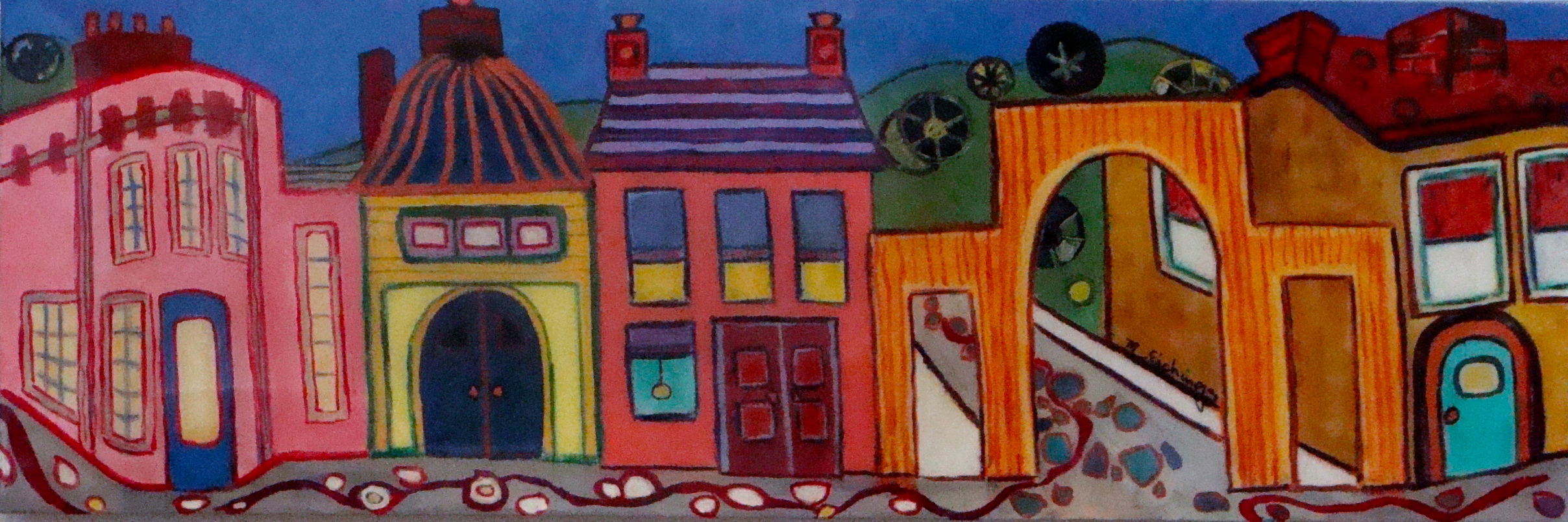
DSC04507Fantasy in Scotland, 12″ by 36″ Acrylic paining on deep canvas, $ 350

“Life is great if you don’t weaken,” says Ray. “Vacations are supposed to be invigorating and inspirational,” I respond. Fortunately and unfortunately our last few weeks were spent wandering the coastal cities of Great Britain where we were introduced to exciting sites, sounds and pubs before returning home bearing the gift of colds . . . we weakened.

During my travels I was on a mission, looking for nuances of architecture that defined each city’s unique characteristics. My goal was to acquire a portfolio of images to influence the myriad of paintings I plan to compose during winter hibernation. Some people keep journals while others like myself paint scenes that have been filtered through my brain with an infusion of colorful imaginary meant to record cultural and social highlights.

Most impressive was Rotterdam with its ultra-angular buildings that made me wonder how they stayed floating in the air. Since the port city had been war damaged, designers had a blank palate on which to create angular city-scapes.

DSC05356DSC05375
DSC05355

The quiet pastoral lands of Ireland that overlooked the ocean’s breakers and high dramatic cliffs topped with fortressed castles also caught my imagination. I especially enjoyed seeing black sheep grazing on gentle rolling hillsides, causing me to continuously repeat in my mind the nursery rhyme, “Baa, Baa black sheep have you any wool.”

DSC05610DSC05667


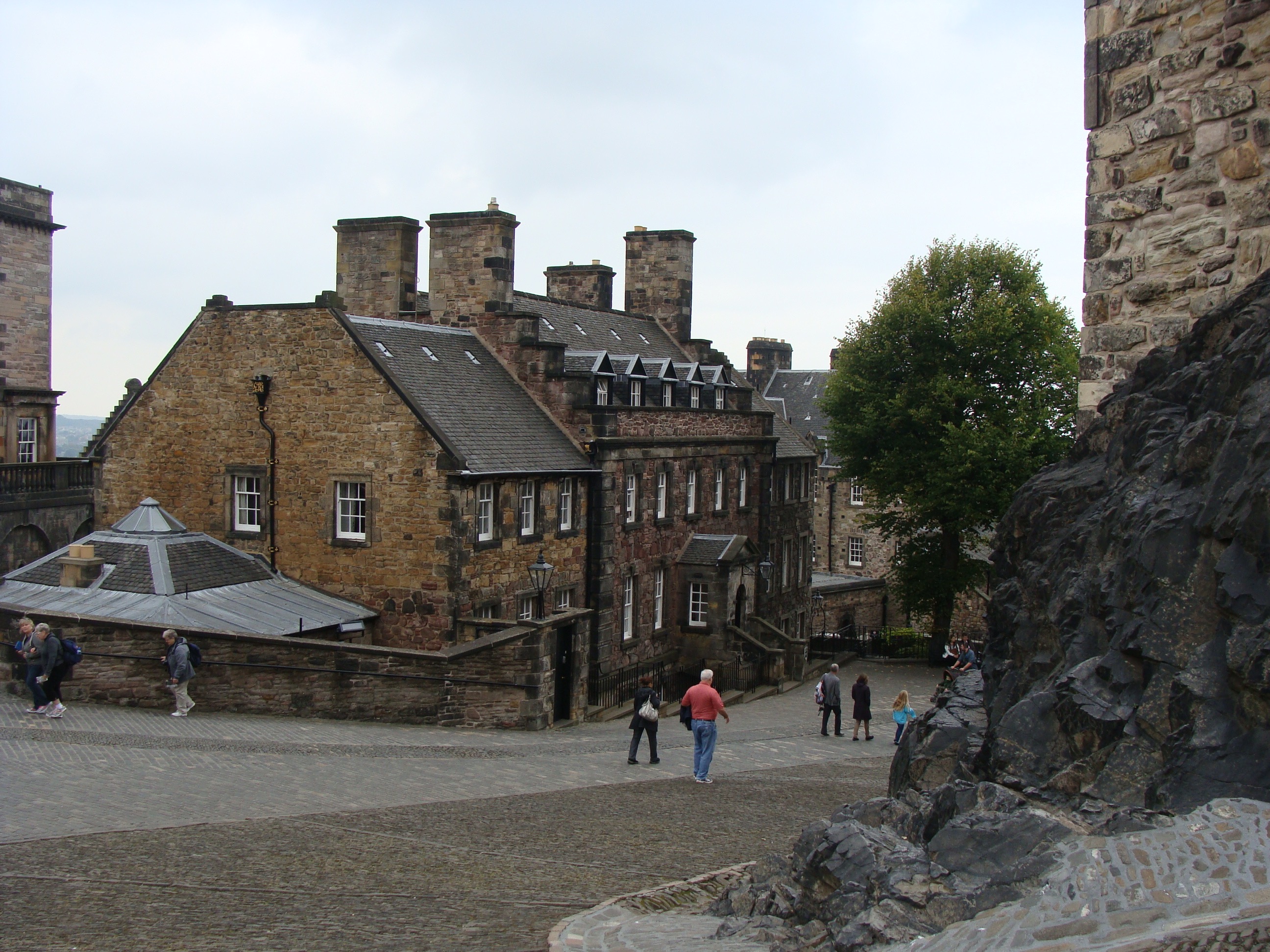
The old cities of Cobh, Ireland and Edinburgh in Scotland showed their warmth with multicolored stone buildings, cobbled streets and fireplace stacks ready for use during windy cold seasons. Pubs were filled with friendly voices mixed with fiddle and accordion players ready to draw patrons into an evening of relaxation.

DSC05711DSC05844

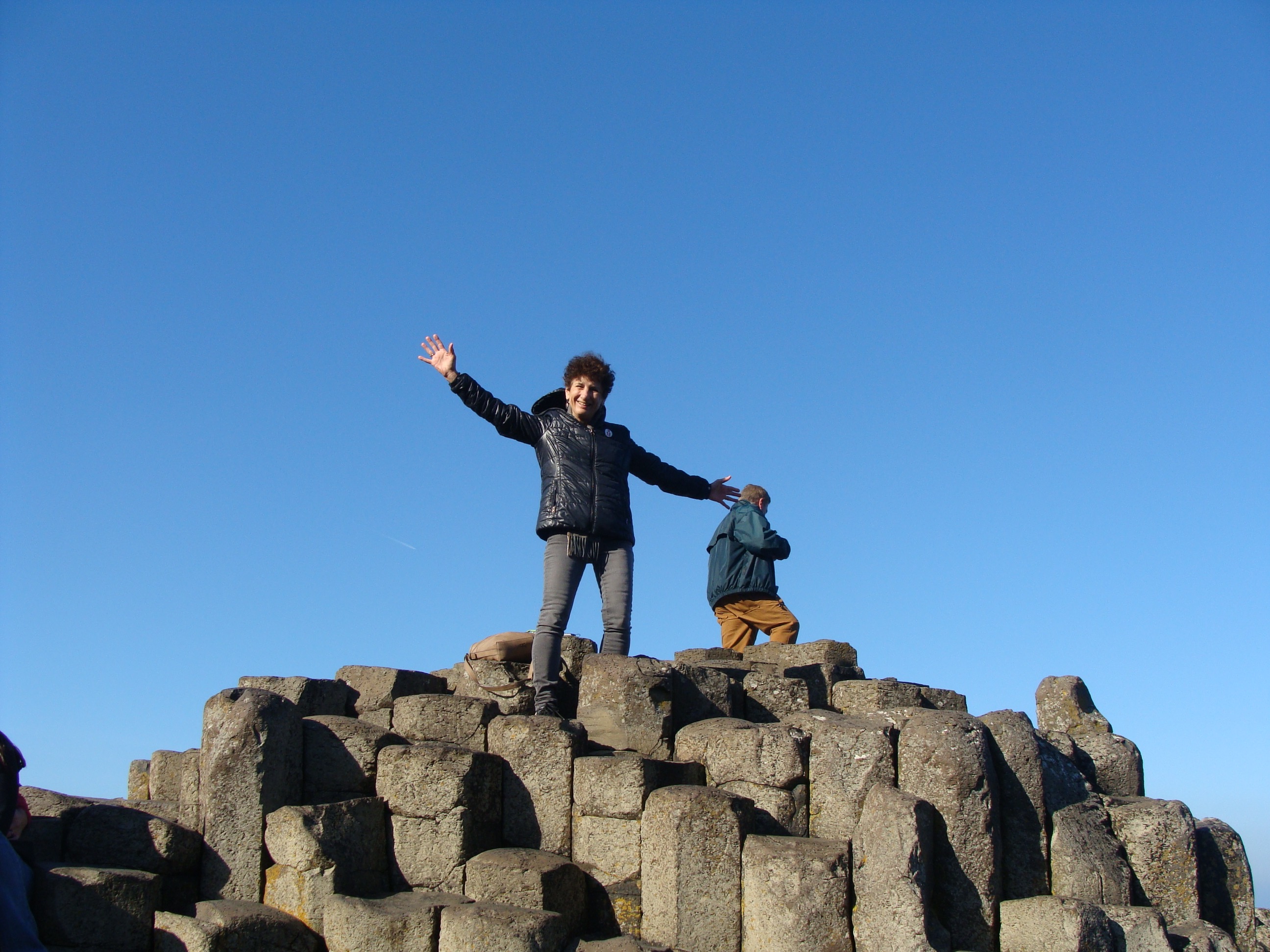
Nature has a way of outperforming man and the Giant’s Causeway in Ireland was no exception. The World Heritage Site boasts geometric basalt columns formed from from ancient volcanoes that became eroded over time by rain and wind. For hours we climbed among these dramatic hexagonal stepping stones in order to view the way it affected the distant coast line.DSC05624

I had a great time and hopefully you too will benefit by seeing  images in next year’s paintings.

Art work is always for sale and can be seen at eichingerfineart.com. For more information contact me at marilynne@eichingerfineart.com.

I look forward to hearing about how vacations have inspired you throughout the year.

Marriage Controversy

first-fight

First Fight
Acrylic Painting 36” x 25” : $ 425.
Anger can underline an issue but if not dealt with in a timely manner it festers over time and becomes destructive.

Finding a solution

The issue of gay marriage has been controversial for much too long. It seems to me that there is a simple solution that should take it out of the realm of moral imperatives and put it in its rightful societal place. This subject does not have to be such an emotional and divisive one.

If our country really accepts the doctrine of separation of church and state then why not get government out of the business of issuing marriage certificates? It would take the sting out of the word “marriage” if a civil license was given to any two people who found it beneficial to live together in an economic union. Rights would be spelled out involving health benefits, social security, hospital visitations, ownership of property and children. The license would be a binding agreement that clarifies legal instead of moral responsibilities. The couple would not have to declare themselves to be pillow partners. Those issuing government licenses would not have their religious beliefs called into question.

Instead it would be up to the churches to issue marriage licenses. In this way, a religion that preaches that marriage is between a man and a woman, would have the right to follow its conviction. One with a more liberal interpretation could condone gay marriages. Followers of each denomination would feel satisfied that their beliefs were being fully taken into account. A government clerk would not be asked to act against his or her beliefs.

There are many people besides marriageable male-female or gay couples who might benefit from a civil license. I know of older  people who have lost their spouses. Not wanting to remarry, they might benefit from a legal document to bind their current co-habitation situation. It may be that they are living with another man or woman of the same or opposite sex purely for economic and friendship reasons.

Others who might benefit are  those who are asexual or severely handicapped individuals who may prefer not to marry yet want to live  with a partner without being looked at in a questioning way.  There are many gay men or lesbian women who prefer to reside with someone of the opposite sex even though their relationship is asexual. They may be the best of friends who are devoted to the wellbeing of their chosen companion.   Various relationships that are presently studded with emotional and complex innuendos could benefit from the more tolerant approach of a civil union . . . one that is not burdened by a definition that challenges our Judeo-Christian heritage.

Since this is a controversial subject I would appreciate hearing your opinions.

For more information about the art go to eichingerfineart.com.

Flash Mobs


Summer Night's DreamSummer Night’s Dream
Acrylic Painting : 26” x 32” : $ 498
What are the dreams of our youth? How do they imagine their future?

Flash Mobs                                                                                                                                                      Living in the moment, ignoring society’s values and social abandonment is nothing new. When still a teen I heard tales of Fort Lauderdale spring breaks. There were wild parties with lots of alcohol loosening the morality of boys and girls on vacation without adult sanctions. Boy…did I want to join them! My parents, however, had other ideas and kept me quietly busy at home during the break. I thought it was a missed opportunity for fun.

Another mob gathering happened one July holiday when our family went for a week’s camping trip in a Michigan sate park. The site was beautiful, with huge old trees near a lake for swimming and fishing. The first two days were idyllic but we were awakened on the evening of July third when tens, then hundreds, and later thousands of kids between 18 and 25 years invaded the park. They set up sleeping bags, tents and boom boxes everywhere there was an open spot, including our own reserved camping space. These partiers rarely left their sites. The men sat in lounge chairs on top of their mini-vans downing beers while shouting obscenities at the skimpily clad girls gyrating-below to loud music.

I observed a police car being rocked back and forth by a rowdy group of kids. Scary! Law enforcement never showed up again that weekend. One kidnapped girl was carried away in the back of a car while her boy friend ran after, shouting for the abductors to stop. Other young women were molested by mobs of inebriated men and there was no one around to stop the resultant rapes. I was afraid to leave my tent and go to the bathroom. It was outrageous, but the local community just acknowledged the behavior as college students and working youth letting off steam, so it was permitted to continue in the same park year after year.

As bad as it was, the gatherings in the 60s and 70s differed from the flash mobs that assemble in various locations throughout the country today. On a moment’s notice text messages, viral emails, tweets and mobile phones invite people to assemble for marches, protests, and parties. They often bring together disruptive elements as well as socially minded citizens. Some flash mobs, lasting only a brief moment, are publicity stunts organized by paid professionals while others are fun gatherings promoting the arts and entertainment.

The daily news mostly covers flash mobs that have taken a political twist used by society’s have-nots. I know of homeless organizers in our town who amass large numbers of kids in order to take over upper class tennis courts so they can play dodge ball with hundreds of stolen tennis balls. Several gatherings by disenfranchised youth have led me to believe that there are great differences between the Ft. Lauderdale type of assembly and today’s flash mob gatherings. In the past, after high school, teens were headed to jobs or to college. Though some events were certainly unruly, at the end of the weekend these kids went back to their stable homes to become law abiding citizens.

Most children today grow up with working parents who are not home to monitor their movements. We may applaud the mother who admonished her son for participating in the Ferguson looting, but she was the exception rather than the rule. Adults often do not know what is going on outside of their homes. Unfortunately many flash gatherings and riots are attended by undereducated, untrained youth who live with bleak future prospects. One 20 year old homeless boy told me with joy in his voice how much fun it was to walk down a street in a mob and take over an area. These kids were not violent but enjoyed putting fear in faces of the adults in their way. Many were on drugs and it would not take much to turn their bravado rendezvous into tragedy. The kids talk about the unfairness of the rich and they want what they can not afford so are willing to take when they can not earn.

On the fringes of political mobs are celebrities and social do-gooders who hope to bring attention to tragic incidents and turn them into a media acknowledgement of inequities. Though they do focus on underlying issues, the public’s willingness to do something about them is fleeting.

These young disenfranchised men and women are likely to be part of the 25 % nationally who have not graduated from high school, and there are many more who do graduate but have not received training that would enable them to work. What should they do? They are angry, scared, and very bored. THERE ARE NO JOBS FOR THEM. Do they want to work? Yes, they do, though they need to learn a trade and have supervision because their skills are poor. They, like most people, want to feel needed and have a sense of belonging.

How did we handle inequity in past years? Schools had vocational programs and realized everyone was not college bound. There were apprenticeship training opportunities to develop specific skills. During wars the draft took large numbers of these kids off the street and sent them to fight. Modern warfare does not require large numbers of bodies but rather well-educated technicians leaving the streets filled with the homeless.

Is there a solution? Of course, I’m an optimist. Perhaps it is the time to reinstitute a youth training program like the Civilian Conservation Corps operated during Roosevelt’s era. Yes, it reeks of socialism, but so what? It is better than growing pockets of idleness. It should be looked on as part of the education system.

Sent to camps, city kids experienced nature, built their own barracks, rose early, worked hard, and were fed good nutritious food. They made friends, learned construction skills including carpentry, electrical wiring and plumbing. Their jobs took them to national parks where they developed conservation techniques, fire fighting, learning how to work in a team and to follow instructions. They were off the streets, out of jail, not drinking or on drugs. They felt good about working, had money in their pockets and could see the fruits of their labor benefiting the community at large.

Our politicians and business people could also bring manufacturing back to the United States? Let’s make things here, not overseas, and provide jobs to our own youth. We will always have citizens who need to work with their brawn instead of brains. An average IQ of 100 means that half the people in our country fall short of the intelligence needed to run businesses, be doctors, or lawyers. Yet these people can be fine, helpful, and happy contributors to society.

College trained children are also worried that there will be no jobs for them upon graduation. Perhaps a year of public service would be a useful way to transition from school to work. Employment in the arts, in our parks, or assisting teachers in overcrowded schools develop work-a-day skills such as time-management, organization , compassion and communication

Solving these issues will determine whether our society lives in fear of the next mob or in harmony with content citizens. It will determine if the wealthy have to build walls to contain themselves in self- imposed ghettos or if all will feel free to roam the city without being accosted by beggars and looters. Those of us who are educated are needed to solve these social issues now. Our ideas, our energy and our belief in a better society can certainly be used to tackle these difficult problems.

Do comment at my blog site: eichingerfineart.com/blog.

Art is always for sale. Contact me at marilynne@eichingerfineart.com for more information.
References:
http://www.wikihow.com/Organize-a-Flash-Mob: How to organize a flash mob

http://wordspy.com/index.php?word=flash-mob: meaning of flash mob and a few examples.

http://six.fibreculturejournal.org/fcj-030-flash-mobs-in-the-age-of-mobile-connectivity/– from the first mob in Manhattan in 2003 to today flash mobs have become part of a socially networked society. Article discusses the history of flash mobs.