Creating an Interactive Museum

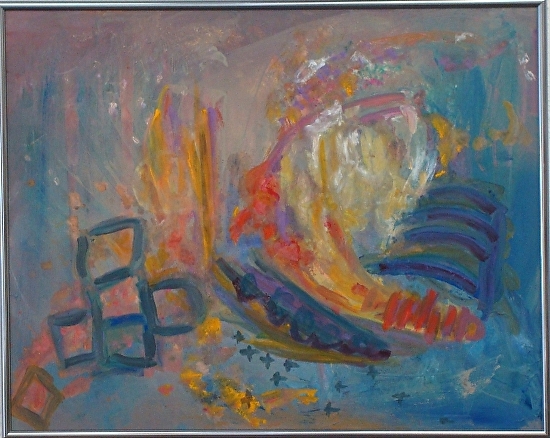
Building BlocksBuilding Blocks

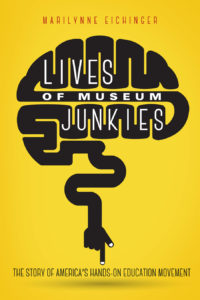
Creating a science museum is like playing with building blocks. It takes imagination, perseverance, and innovation to build a monument to experiential learning. The following excerpt is from the first page of Lives of Museum Junkies. Unusual consequences often occur from obscure beginnings and it is a pleasure to share them with you.

Creating an Interactive Museum: Naïve Beginnings

“Stop running and making so much noise!” I shouted to five rambunctious children playing hide-and-seek in closets throughout the house. It was a cold day and my friend Dee Pumplin was visiting with her son. She and I were having a difficult time hearing each other as we chatted animatedly in the kitchen. It was during this conversation that my homemaker days started to end, when over coffee in my suburban house we brewed up the idea of a hands-on museum that emphasized science. Children are not always polite, studious little creatures set on this planet to impress and please their parents.

Children are not always polite, studious little creatures set on this planet to impress and please their parents. Instead they are balls of energy who love to run, scream and create bedlam. In short they can drive a parent crazy, especially on a rainy day. As Dee and I talked, her one and my four children shouted and squealed, ignoring the storm roaring outside. The increasing noise level was like a drum roll announcing a new idea. We started imagining what it would be like to take our kids to an indoor playground. “Wouldn’t it be magnificent to have a great big barn,” we fantasized, “and fill it floor to ceiling with ramps, poles, and climbing apparatus? What fun it would be for the children and their friends. They would get rid of their energy away from home and our houses would be preserved.” Dee and I started to wonder where we could find a barn and even took the next step of contacting a realtor.

As we learned more, the vision for an indoor play structure grew. The immense dimensions of a working barn inspired our ideas to expand to include interactive learning activities inserted into climbing areas. We imagined children swooping down a sliding board and finding a light table, colored filters, and projectors to use for experimentation. The colored light could be projected on the next child speeding down the slide. We embraced the idea of physical play being integrated with academic challenges in a never-ending cycle of learning.

After months of talk and concept development, we finally located a barn, but it wasn’t long before we faced a dose of reality. The cost to acquire the property was more than we anticipated and building the inside play structure seemed monumental. The barn needed to be heated, insulated, electrified, bathroomed and water sprinkled and once it was upgraded, ongoing utilities would be astronomical. The permitting process was overwhelming to two inexperienced women who began to wonder if the city would even allow this type of play-barn to exist. Insurance was bound to be phenomenal, not only because we were dealing with a wooden structure but because we were planning to let children run throughout. We especially liked the idea of fire poles descending from one level to the next. Sound safe? Costs mounted, reaching an enormous number before we even considered the price of exhibits and staffing. . . . .

Lives of Museum Junkies is available through AMAZON, Barnes and Noble, Powells Books, Inkwater Press, and The-M-porium.

For a signed copy you can purchase from me for $ 19.95 plus $ 4 shipping. Contact me at eichingerbooks@gmail.com.

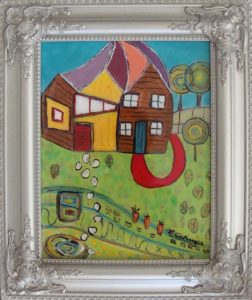
Artwork is always for sale: Building Blocks is a 24” by 28” acrylic painting on canvas in a gold frame. Cost is $450. Contact me at marilynne@eichingerfineart.com for further information.

perf6.000x9.000.indd

New Release: Former OMSI President Reveals the Good, the Bad, and the Ugly History Behind the Hands-On Education Movement

“…will help you see science museums in a new light.” – David Ucko, Museums+More llc
In this lively, behind-the-scenes look at the evolution of interactive science museums, discover:

How the Brooklyn Museum of Art was saved from closure by Mayor Rudolph Guiliani for showing a painting by Chris

How the Brooklyn Museum of Art was saved from closure by Mayor Rudolph Guiliani for showing a painting by Chris Ofili of the Virgin Mary that contained elephant dong.

Why an autistic child spoke for the first time on a science center visit.

Who kept NOVA from being canceled when congress did not agree with their investigative reporting style that explored sensitive subjects like nuclear energy.

What inspired a poor Appalachian orphan to go from rags to riches to become a museum president who later rented an entire cruise ship to see a global eclipse on the Amazon.

Why executives at the top are subject to sexual abuse and find it nearly impossible to manage.

The outcry caused by the Playboy Bunnies playing basketball with business executives to raise funds for a museum.

“recommended for those who care about museums, libraries and society today.”
– Ginnie Cooper, Directed Washington D.C., Brooklyn, and Portland library systems .


Nourishing Dieversity

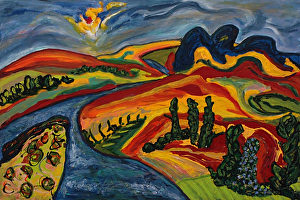
1474323m+v=201607111642&m=9999-1Nourishing the Desert

acrylic painting/ 36” by 24”/ $499
A diversity of people composes the fabric of our society. As we look at it from afar we see that the whole creates a beautiful landscape that is more dramatic than the parts. Once the land is nourished the garden can burst into bloom.

The following excerpt is from Lives of Museum Junkies available month end on Amazon. Keep posted for more information. As a museum professional, I was privy to many experiences that influenced how I think about our country’s racial divide. After Martin Luther King’s march, I assumed we had overcome a hurdle and we would live in a more compassionate place. Unfortunately, when I listen to the news today, I realize that lack of understanding between various racial groups continues. Yet, I am reminded of my youth and how a biased childhood made it difficult to understand the implications of a diverse society. I had to change before I could nourish others. The following excerpt is one of many events that made me do so.

Nourishing Diversity

“I got to know of Earvin Johnson’s mother, the school’s cleaning lady, during a time when Earvin became a local hero. She and her husband were supportive of their talented son and encouraged him to better his basketball chances at all white Everette High. The transition was difficult. He encountered a great many racial incidents, as he wrote in his autobiography Life, but eventually realized that they helped him “understand white people, how to communicate and deal with them.”

Earvin was anointed the moniker “Magic” at the age of fifteen when a writer for the local paper recorded a triple-double of 36 points, 18 rebounds and 16 assists. Earvin had so many fans that the high school had to use Michigan State University’s field house for his games. Not giving into pressure to go elsewhere, upon graduation he enrolled locally and we all got to celebrate when MSU’s basketball team won the college championship.
A few years later, while Magic was playing for the Los Angeles Laker I was invited to attend a birthday party his father organized in Lansing. Having lived most of my life in a white environment, the party was a culturally electric experience. I was one of the 10% of attendees who were white and the event made me realize how little I knew about the black community.

Guests were asked to dress in black or white, and once in the ballroom, the fashion show we beheld was spectacular. Johnson’s young female friends were especially dazzling, looking as though they had stepped off of a New York runway while the men, demonstrating their individuality, wore colored spats and bright suspenders under traditional black tuxedos.

At 7 p.m. the doors were locked to late arrivals. I sat down next to a state senator at an all white table when seven L.A. Laker giants, accompanied by tall, stunning females, entered amid flashing lights, and excited shouting fans. Projecting his well-recognized smile, Magic was in his element when speaking, leaving guests to realize that there was much more ambition in him than simply a basketball player. His favorite band had been flown in from L.A. as a birthday gift from his father. While it played, the black crowd moved and applauded to the sounds while those of us who were white sat stoically in our seats wondering, not understanding.

This party was my first total immersion into a culturally unfamiliar environment. Just as Earvin had to learn about white America, I needed to be exposed to and learn about black culture. I observed many interactions during that evening that made me feel uncomfortable, and I began to wonder how difficult it might be for a minority child to visit a museum where most attendees were white. My eyes were just starting to open.”
________________________
Many experiences over many years helped me become invested in seeing that all elements of society receive an education and life a rewarding life. Lives of Museum Junkies explores what I and others have done to ensure that the underrepresented population is served. My present work with street youth is an extension of the sensibilities I gained while working in museums.
______________________________
Art work is always for sale. Contact me at marilynne@eichingerfineart.com

Do respond with your thoughts by clicking BLOG.
___________________________
StreetwiseFor sale on Amazon by Marilynne Eichinger: The True Story of Streetwise, overcoming homelessness and beating the odds. Go to AMAZON .

Community

The Gossips

The Gossips
12” by 36” / Acrylic Painting / $ 325
Getting community buy-in is often like whispering down the lane. It is a person to person conversation that eventually reaches a tipping point that pushes an idea over the precipice for implementation.

The following excerpt is from Lives of Museum Junkies that is due out at the end of August. Look for information in upcoming blogs. I will be holding several book signings beginning in Tampa, Florida in September; Lansing, Michigan in October; and Portland, Oregon in November. The book is presently at the printers and will be available in a few weeks. I look forward to seeing you at one of these events.

Community
“World events can never be ignored. A milestone that occurred when I was young turned the entire country looking skyward. Sputnik was launched. This was the first time a spaceship was successfully placed in orbit. I remember my mother saying to me that she always prided herself in keeping up with change, but somehow she could not understand what it meant to be putting objects in space. She felt lost and confused about the future.

Many adults today feel like my mother did in the Sputnik era. Technology continuously introduces changes at such a rapid rate that it is not surprising that coping is difficult. We watch many former jobs disappear, and at the same time sophisticated technological positions stay unfilled because of a lack of technical education. Streetwise once told me that he wished he were born one-hundred years ago. He did not like the competition and fast pace of city life, rebelled against using computers, and was fearful of driving on freeways. Thankfully, over the past years he has learned to cope with all of these realities.

This young man’s reaction was similar to that of many of his peers who lacked an understanding of basic subjects, current events, and scientific advancements. Yet these are the men and women who will be voting and making decisions that affect society in the future. The high school dropout rate in the United States is 25 percent, which is a concern since democracy depends on an educated populace.

As a museum director, I remained cognizant of our continually changing society with ever-evolving community issues, and soon realized that the job was filled with push-pull opportunities. I had ideas of what I thought the community needed, but it was not until citizens pushed me to accomplish what I preached that I could succeed. If I had not spearheaded the museum’s growth, it would not have happened, but it was the community that did not let me fail. People grabbed on to ideas and would not let them die. In some respects, I was set up to succeed as long as I was just willing to put in the hours, accept the pain and pitfalls, and not think about anything but the end result. Absolutely no one wanted me to fail. . . .

Lives of Museum Junkies offers insight into how this is done.
__________________________________
You may have a private business with family, investors and bankers committed to your success or you may be involved in a nonprofit organization that depends on community contributions. Perhaps you are working for one or another politician and walking door to door with his or her message. Whatever your passion, it is imperative that you not only communicate but get community buy-in if you want to succeed. This is not always easy. There is an art to organizing people and enabling them to feel a part of your cause.
__________________________________

Do share your experience in how you went about getting community involvement in your project. Respond at eichingerfineart.com/blog.
Artwork is always for sale. Contact me at marilynne@eichingerfineart.com.
________________
For sale on Amazon by Marilynne Eichinger: The True Story of Streetwise, overcoming homelessness and beating the odds. Go to AMAZON .

Home as Museum

Coming Home /16” by 19” / acrylic with silver frame / $ 195

Open the door and what do you see? Is home an interesting reflection of you and do others enjoy it? Does it share your personality? Your history? Your curiosity about life?

The following excerpt is from my upcoming book Lives of Museum Junkies that is due out at the end of August. Look for information in upcoming blogs. I will be holding several book signings beginning in Tampa, Florida in September; Lansing, Michigan in October; and Portland, Oregon in November. Information will be forthcoming in the next few weeks. I look forward to seeing you at one of these events.

Home as Museum

“You can easily substitute home for museum and live in an environment made inspiring. Instead of exhibits, consider decorations, furniture and personal treasures. Architecture, use of space, selection and arrangement of furnishings, collections, and the way they are displayed all define you. How you move about your home, share treasures with friends and family, and teach your children to understand their cultural heritage becomes your way of passing on values.

Ray, my life partner, is a maker of totem poles and Northwest Coast masks. Outside of our home, there is a seventeen foot pole that has become a neighborhood marker. “Go to the totem pole and turn left,” is an oft heard direction given by acquaintances. The lower level of our house has both indoor and outdoor shop areas where carving and painting are pursued much to the enjoyment of nosey friends and those hiking an adjacent trail. Strangers who hear the tap, tap, tap of a hammer stop by wanting to know what is going on, and Ray gladly shows them his carvings, entertaining them with stories of Raven and Beaver.

Our home is filled with his carvings, my collections of pottery and masks, canvases that I paint, and art purchased while traveling. Our furnishings are arranged in a restful way, though presented as eye candy for our visitors. I enjoy living surrounded by the items Ray and I have either made or collected. Sharing them with friends lets them into our souls and initiates many conversations about culture, art, and even politics. Our friends often say when entering our home that it looks like a museum, only warmer and more welcoming.

Many children are first introduced to a cultural institution by visiting a children’s museum. These institutions are unique because the ingenuity they apply to educating the young is more than just exciting—it is engaging. Children spend hours engaged in activities such as playing in water (learning physics and hydrodynamics without realizing it), dressing up in period costumes (a study in history), constructing and plumbing buildings (engineering), and a host of other activities that involve physical as well as mental effort. Young visitors often are seen crying as their parents pull them from the building to go home. A secret to their success is that they are centered on the child and organize their spaces in a way that permits freedom of movement. Displays are built to withstand hard use. They encourage learning by using a variety of cleverly hidden techniques.

I encourage parents to think like a professional and start their own museum at home. What better place to inspire your own child than the relaxed environment of a play area or living room? According to The American Association of Children’s Museums, “A children’s museum is defined as an institution committed to serving the needs and interests of children by providing exhibits and programs that stimulate curiosity and motivate learning.” They encourage parents to interact with their children while in the museum in order to make the experience more meaningful.

That definition fit my family to a “T.” When we moved to Lexington, Massachusetts, a community without a hands-on museum, I decided that I could make my own home into one. The Boston Children’s Museum was much too far to travel to on a regular basis. Part of the challenge of my home operation was one of organization. I decided to set up my children’s basement playroom with a Montessori approach.”
_____________
Lives of Museum Junkies offers insight into how I went about doing this on a shoestring. I also encourage grandparents to consider their residences as their private museum. The accumulations from a life time of travel and just plain living can be organized and displayed in such a way as to fascinate friends and family alike. Perhaps you have thought similarly and share your treasures in a unique way. Do share on my blog site, eichingerfineart.com/blog.
_______________
Artwork is always for sale. Contact me at marilynne@eichingerfineart.com.
________________
For sale on Amazon by Marilynne Eichinger: The True Story of Streetwise, overcoming homelessness and beating the odds. Go to AMAZON .

Streetwise

The Importance of Touch

applauding-the-blues

       Applauding the Blues

Acrylic on canvas/ Gold Frame/ 23.5” by 19” / $ 495.00
Do you stop to look, touch or smell the flowers? Perhaps you even taste them.

The following excerpt is from my upcoming book, Lives of Museum Junkies. Due out in August it tells my story along with that of eleven other innovators who influenced the hands-on museum movement in the early 70’s. Publication information will be available in a few weeks.

The Importance of Touch
In 2012, a young social work student at the University of Rochester was featured in national publications as a most unusual entrepreneur. While studying brain and cognitive sciences as an undergraduate, Jacqueline Samuel became aware of the negative effects of living in a culture that does not sanction touch for its own sake. Throughout the world people are more willing to hold hands and hug friends and family than in the United States.

Adverse consequences of tactile isolation are known to be agitation, anxiety and aggression. Jacqueline decided that she would ameliorate the situation by opening a cuddle parlor she named the Snuggery. Her focus centered on bringing the healing power of touch to those who are tactilely isolated. The rules she and her employees devised were strict; staying clean, keeping clothing on and not engaging in any “funny business.” Her non-sexual touch emporium was singularly based on the platonic need for physical closeness. Business boomed, spurring copy-cat cuddle parlors throughout the country.

One even opened where I live in Portland, Oregon.
You might wonder what type of person needs to pay $60 for an hour hug? Clients come for a variety of reasons and include those on graveyard shifts returning home to empty beds, the physically handicapped and the chronically depressed. There are thousands of people, many elderly, others single or with a physical disability who are never touched, held, or hugged. Having a friend to talk to and being cuddled is important for overall emotional well-being.

Jacqueline’s insight is backed by volumes of research showing how touch reduces cortisol, the stress hormone that suppresses the immune system. The Touch Research Institute at the University of Miami is a center that concurs with Jacqueline’s concerns. They recently completed a study showing that teens who lack hugging are more likely to be aggressive than their peers who are regularly hugged. Elderly people who are touched are healthier and less likely to develop dementia. Premature babies who are stroked gain weight faster than those who are not and infants who lack adequate physical and emotional attention are more likely to have behavioral, emotional and social problems as they age. And now we see that tactile learning can also be highly effective.

Hands-on museums are cognizant of sensory research, and tactile solutions especially form the basis of many of their activities. Not only do people need physical contact with others but they also have a need to touch and play with objects. A friend of mine shared an insight that it was not just his auditory sense that made him enjoy playing the piano, but his tactile contact with the keys. . . . . .

My work in the museum field was influenced by an exercise I had to complete as a graduate student in psychology. One of my assignments was to write a paper imagining what it would be like to lose each of my senses. I was also directed to explore my feelings about loss of sexual sensitivity. To start the exercise I would sit for an hour in an easy chair imagining myself as a blind or deaf person. As I delved into the assignment, I was surprised to realize that losing my hands would be one of the most horrendous handicaps I could have. The hour spent with handless imagery was torturous, leaving me scared, almost frozen. What if I could not touch a door knob or wave my hands while talking? How horrible it would be to not be able to tousle my child’s hair. Touch was not the only sensation that affected me deeply. I quickly realized that losing my sight would be just as awful. As a visual and tactile person I am so fortunate to have both of these faculties.
Each of us is controlled by biological predilections and we are most happy when we allow daily activities to be guided by these predispositions. . . . .

Understanding a child’s sensory preference helps parents and teachers design appropriate educational programs. The visual learner may love reading books, but there are many children who are hesitant readers and need to be drawn into the learning process through an alternative sensory route. A history teacher might design a curriculum for tactile learners by challenging them to make dioramas. The process still requires the children to read in order to know what to include in their 3-D pictures, but their interest in the project will be internally motivated. . . . .

Parents, grandparents, friends and teachers please think twice before you tell a child not to touch. Your curious child might just need a little guidance to encourage safe and constructive activities that take advantage of his or her way of communicating. Remember, a broken glass can be dangerous but there are safe ways to turn broken glass into a mosaic . . . touch me, touch me not. . . . .

_______________________________

This summer is a good time to let your children wander and experiment by using the sensory mode they most prefer. A warm hug for effort will go a long way towards developing their passion for learning. And by the way, we parents and grandparents love hugs as well. They provide wonderful feelings of well being.

I look forward to your comments below.
Art work is always for sale. Contact me at marilynne@eichingerfineart.com

For sale on Amazon by Marilynne Eichinger: The True Story of Streetwise, overcoming homelessness and beating the odds. Go to http://www.amazon.com/dp/B01AAXMJOGThe

Streetwise

For the Sake of Righteousness

DSC07016For the Sake of Righteousness

Last week was spent in the sunny (and hot) Bahamas. Among other activities such as swimming with sting rays and snorkeling my granddaughter and I climbed the steps if the Sun Temple in Costa Maya. In ancient times the top platform was used to perform acts of human sacrifice in hope of influencing the gods to provide an abundant harvest. It was an honor to be chosen for this sacrifice and parents offered up their daughters DSC07035willingly. Those who complied were the self-righteous ones.
Their actions are not very different from those of radical Islamists today. Suicide bombers also have religious convictions that they are willing to die for. Their certainty about the way things should be is imbedded in their psyche and their faith is so solid as to not be easily shaken. In many Middle Eastern countries the families of suicide bombers are given a monetary reward for their loss and parents are resteemed for having produced such a religious child.

Christianity is no stranger to this phenomenon. Crusaders marched, maimed and killed for their faith and were respected if they died in the fight. Those who today stalk abortion clinics and are ready to eliminate anyone not sharing their certainty also consider them self to be among the righteous. They are willing to spend a life in prison or even on death row in order to stand up for their beliefs.

Political movements too are rife with followers who substitute a love for humanity for a utopian ideal. They trust their intuition implicitly and have little understanding of the words of Anatole France who said that, “even a little dog is the center of his own universe.” As an anthropology student I learned that cultures throughout time have their own beliefs, political systems and religious teachings. Many are faith based and people attach themselves to it with iron bonds. Trained at an early age by parents and leaders their societies mores are imbedded in their heads. Who is to say which one is right?

When my father had a conviction and wanted us to adhere to his teachings he blasted, “its my way or the highway.” We kids conformed if we didn’t want to get in trouble. We remained silent.

Fear to speak out and express uncertainty or a desire to do things differently is frowned upon in most cultures because people are more comfortable with the status quo. Most prefer to live in a dependable world. Just think of how difficult it is for seniors to adapt to heavy metal, pink hair and tattoos.

Just as was Socrates, I am wary of the unexplored life. I find it difficult to understand why people are so quick to come to conclusions based on feelings and faith and why scientific exploration is not embraced more rigorously. As the earth changes over time so does our knowledge. New information needs to be incorporated in a minute by minute ritual. It took an awfully long time for Europeans to accept that the world is round and men like Galileo suffered because of narrow thinking.

When it comes to righteousness I would rather err on the side of humanity and maintain the belief that people are doing their best to understand and live within the boundaries of their lives. In my belief system there is no room for torture or killing. An enemy today, as we see with Germany and Japan, may be a friend tomorrow.

The challenge for the righteous person is to be understanding and caring. This is sometimes more difficult than killing. I advise those of you who have not already done so to watch Michael Moore’s latest movie, Who do we invade next. He presents a number of solutions developed around the world for improving a sense of self- worth and allowing for a more harmonious existence.

Fear

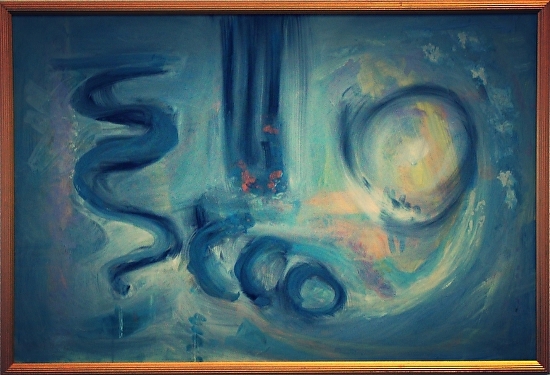
1372915lSquiggle –  Acrylic on canvas/ $ 25” by 37” / gold frame/ $ 490

Fear often results from confusion. Being unclear of the path forward can produce unsettled, anxious feelings that do not let you take risks.

FEAR

Throughout my working career I noticed that many workers were reluctant to take risks because they either feared failing or getting fired. Instead they remained docile and stayed in the shadows as they went about their tasks. I wonder if their brains were clamoring, “ you won’t succeed if you try a new concept or you can’t possible do that because it’s too difficult.”

Perhaps as children these yes sayers were ridiculed for spending time on “crazy or unproductive,” ideas. Maybe they had parents who told them, “you don’t do anything right! You always mess up. That’s just the way you are. ” Those deflating words can create insecure, timid adults afraid of tackling new ventures. Or perhaps they were risk takers but lost money trying to get their venture off the ground. Their self-image might have been destroyed and they became afraid of trying an unproven concept again.

Public pressure is another reason people refrain from testing new ideas. Savvy politicians are quick to say an idea won’t if it doesn’t come from their political party. Opponents are always on the look out for power plays and the media has great fun elevating potential failures to lofty heights making it politically dangerous to try. Once an idea fails, even though a great deal was learned that could lead to a more productive outcome, negative press can be devastating.

The difficulties generated from not taking risks can be great because failure is often a precursor to success.The scientific community know this is the only way to make progress. Scientists experiment with ideas, continuously making adjustments because of failures. Years are often spent pursuing an idea even though disappointing results face the investigator.

In 1937 a Bell Labs scientist named George Stibitz used relays in a demonstration adding machine. The same year a German engineer built his Z2 computer using telephone company relays. Building on these trials David Packard and Bill Hewlett played around in their garage, overcoming one failure after another before inventing the 200A Audio Oscillator, a piece of test equipment for engineers. In 1940 Walt Disney Pictures took a risk by ordering their 200B model to test recording equipment and speaker systems for newly equipped theaters in order to show “Fantasia.” Each of these entrepreneurs spent hours taking risks, often failing before developing societally useful applications.
I wonder what their families thought of their early frustrations. Did they say, “Honey, what you are doing is well and good but you need to spend your time making money to support our family.” Did they turn to their friends and say, “ She’s such a nurd, never doing anything practical!”

Penicillin was accidentally discovered by Alexander Flemming, Professor of Bacteriology at St. Mary’s Hospital in London. In the 1940’s he had just returned from a holiday in 1928 when he went to his lab. Sorting through petri dishes of Staphylococcus bacteria (the one that causes boils and sore throats), he noticed something strange in one dish. In a spot where a bit of mold was growing the Staph colony had disappeared. He had an idea. Yet It took ten years of further study, failures and research at Oxford University to turn what Flemming discovered into a life saving drug. Researchers focused on their goal even though they did not achieve immediate results. The risks they took cost money but their curiosity and hope led them to pursue their dream of curing many diseases. As they looked for answers I wonder if they were stymied by insecurities.

My life has been filled with many failures but each one gave me an idea to treasure. And though I want to help my children avoid my mistakes I have come to realize that they need to reach out, take risks and learn on their own. The best I can do is support them in their endeavors, overlook their failures and encourage them to use boldness in following their ambitions.

http://www.computerhistory.org/timeline/computers/ – history of the computer

http://www.acs.org/content/acs/en/education/whatischemistry/landmarks/flemingpenicillin.html#alexander-fleming-penicillin– discovery of penicillin

Art work is always for sale. Contact me at marilynne@eichingerfineart.com

Do respond below with your thoughts.

_______________________
For sale on Amazon by Marilynne Eichinger: The True Story of Streetwise, overcoming homelessness and beating the odds. Go to AMAZON .

Streetwise

Exploding Emotions

1662376l copyTwin Stars Exploding
Acrylic on Canvas / 16” by 20” / $ 299
Explosions are part of creation. When the product of emotions, they can get channeled for good as well as evil.

Exploding Emotions

Last week I wrote about passion. Due to the horrendous attacks in Orlando my thoughts turn towards anger because the two can be intimately intertwined and also because I need to understand why such things happen. Aggressive behaviors often result from a person passionately embracing a cause that was triggered by real or perceived injustice. Anger festers and churns  eventually became so violent that like a volcano it erupts in an explosion that does great harm to others in the name of passion for a cause.

A terrorist’s violence usually does little good to further his or her stated purpose. Instead, a common public reaction is to close down empathy, shut off communication and increase vows to retaliate. Horror, hatred, punishment and revenge are the overwhelming outcome and questions of why it happened in the first place take a back seat.

In the United States, most of us espouse change by law and not violence, yet a great many frustrated individuals resort to aggression when their way is not endorsed. People who are not heard may decide that the only way to get attention is to maim, kill or destroy property.

I was intrigued by a sentence in a book by Joy Kogawa about the plight of Japanese-Canadians during World War I I.  In ITSUKA she writes about a eulogy given at a funeral. “He praises his dead friend because he never complained, because he paid the price for harmony in a world of discord. He did not add to the din. He was obedient to the command to be meek, but he did not in the end, I am thinking, inherit the earth.”

What is the way forward? Is it better to be quiet and not make waves or to live in the wild west and take law into your own hands? Do we continue to interpret “the right to bare arms,” as permission to use assault weapons? If not to kill then why does anyone need such a lethal machine? It certainly is not for sportsmanlike hunting purposes.

Consider religious fanatics who burn abortion clinics and shoot their doctors. Most of those killers consider themselves to be religious practitioners following the teaching of God. Unfortunately in support of their actions, Christianity, Judaism and Muslim religions are replete with hateful statements about non-believers. Yet, there are also many passages that speak of love. The new testament says, “turn the other cheek” and the ten commandments include, “thou shalt not kill,” but self-righteous fanatics ignore those teachings and commit the very crime they abhor. How did they become radicalized and care so little for humanity?

According to an article by Jennifer Williams for Vox, there is no one religion that can shoulder the blame for violence. It is found among followers of all religions and of every political persuasion. But becoming “radicalized” is not the same as becoming a terrorist. Many individuals who follow extremist views are not violent. Of the 318 events identified in an FBI report only 7% were attributed to Islamic extremists.

The article mentions societal factors associated with a higher risk of radicalization;
• The presence of a large minority population that is socially, politically, and economically marginalized
• Treatment of certain groups as “suspect communities” that are subjected to invasive and overbearing counterterrorism efforts
• A cultural or political hostility toward religion in general or Islam in particular
• Unpopular foreign policies, such as support for repressive regimes or involvement in a military campaign, especially in a predominantly Muslim country (or several of them)
• The presence of preexisting recruitment networks

Following are a few of the individual risk factors;
• Personal ties to an already radicalized individual
• A sense of personal failure, often tied with a yearning to do something important and meaningful with one’s life
• A desire for adventure, rebellion, and life experience
• The need to belong
• Feelings of compassion and concern for the suffering of others with whom one feels some kind of personal connection, often (but not necessarily always) co-religionists
• And, of course, good old-fashioned teenage angst

And NPR reporter mentioned the possibility that the Orlando shooter was confused by his own sexual identity. For years he paid visits to the gay nightclub he massacred. There is no one path to radicalization but the most common either begin in prison or derive from the internet, social media and personal ties to friends and family. . According to Bruce Hoffman in The Daily Beast, terrorists are motivated by altruism, albeit misguided, feelings of self- defense, and a commitment to their faith with the belief that they are divinely commanded. They are difficult to locate in advance which makes dealing with them so difficult.

It is my opinion that we need to rethink our counterterrorism policies by diffusing individualized feelings and working to neutralize organizations that are a threat to our way of life. We need to find ways of changing people’s minds so terror will never be considered a way forward. To do so systems have to be in place that listen to both individual and organized group complaints so that people feel heard. Mental health services can be utilized to help confused, disgruntled people and criminal zealots who have lost their way.

I remember when an close acquaintance of mine allowed his 13 year old daughter to accompany a friend to an evangelical Christian summer camp. It took only one week for her to become brainwashed. Campers were required to stay up past midnight when they were exhausted and vulnerable in order to participate in mind altering services. They were even told how to deal with their parents upon returning home. My friend had to send is daughter to a psychologist who specialized in cult post-trauma recovery. I now understand how easy it is for a vulnerable person to be brainwashed and how difficult it is for that individual to renounce newly adopted beliefs.

There is much that can be done to combat terrorism. Politicians can pay special attention to all of their constituents, not just those with money or share their biases. For instance, many oppose Syrian immigration to the U.S., and though I am not one of them, it is important to listen, reach out and discuss various viewpoints and options before making a decision that affects the country. Citizens want to be heard and responded to with dignity. They have a right to feel comfortable in their homes, not afraid to travel freely and satisfied that their concerns are being addressed.

Government could help by responding more quickly to the needs of the growing army of ignored citizens, many of whom are poor and jobless. The press could be supportive by focusing less on inflammatory remarks and reporting on the news rather than sensationalism. What happened to programs by Edward R. Murrow, John Cameron Swayze, Huntley and Brinkley, Barbara Walters, Tom Brokaw, Peter Jennings, Dan Rather and Walter Cronkite? Where are the reporters who dig deeply for understanding? Who do you trust to report unadulterated news? When did news stations lose their independence?

Lastly, kindness and social awareness need to be taught as part of the school curriculum so violence and bigotry have a chance of being nipped in the bud. Bullies, terrorists and racists are not heroes. The melting pot envisioned by early Americans is a good one that can work to our benefit if we want it to.

http://www.vox.com/2015/11/20/9764078/paris-terrorist-radicalization – How ordinary people become terrorists.

http://www.thedailybeast.com/articles/2013/04/27/answers-to-why-people-become-terrorists.html – Why people become terrorists.

http://www.csj.org/studyindex/studyrecovery/study_trauma.htm – Cult Post-trauma recovery

Art work is always for sale. Contact me at marilynne@eichingerfineart.com

Do respond below with your thoughts.
___________________________
For sale on Amazon by Marilynne Eichinger: The True Story of Streetwise, overcoming homelessness and beating the odds. Go to AMAZON .

Seeking Passion

DSC06759 (1)Bold Beauty by Marilynne eichinger

Acrylic Painting/ 30″ by 24 ” / $ 350.

Seeking Passion
A preview: The following excerpt is from my book, “Lives of Museum Junkies.”

Publication will be complete by August of this year. I’ll keep you posted.                         copyright © 2016 by Marilynne Eichinger.

“Passion has many definitions. It can include love and rage, sometimes at once. It can mean fear and hate as found in the writings of Mao Tse-Tung or joy, a feeling that is natural to all people. When I watched the movie Gandhi, I observed a man feeling a rage so intense that it moved him to action. Gandhi was willing to die for his cause. His love for his homeland and his compatriots was so powerful, so overwhelming that he was able to justify sacrificing himself. In the process of freeing India, he provided an important model of peaceful resistance. Martin Luther King based his civil rights marches on Gandhi’s lead, as did Nelson Mandela. The passion of these men helped win their fights for freedom.

I spent many evenings with my children discussing the pros and cons of passion. My most fervent hope was that they would be willing to take the risk to live honestly and with commitment. I did not want them to be afraid to experience the rewards and the pain that comes from following opportunity. When they were young, I tried to help them discover things to do that they would find absorbing. It did not make any difference what their interest was as long as it was legal. I wanted them to experience what it felt like to be totally invested in an activity and to be consumed so that it occupied their minds for hours each day. My hope was that when they became adults they would crave the feelings experienced as a child, and transfer their desire for passion to selected careers.

My views were influenced to an extent by my parents. Mother was a Republican and staunch capitalist. She believed nothing was beyond my grasp if I became focused and passionate about my undertaking. Mom convinced me that at the very least it was my responsibility to try wholeheartedly to reach my goals. As a side value I learned how important it was to have family support for my activities. My mother believed it was part of a family’s responsibility to their children to provide a consistent and positive foundation. She encouraged me to participate in various ventures and, if I failed, to view it as a learning experience—no problem. I am sure that is why I see failure as a precursor to success. It is also why I am not afraid to try.

Dad was a Social-Democrat who dedicated his life as a physician to serving the poor. He believed it was his responsibility to care for others less fortunate than he. His actions led him to seen as a saint to his patients and an eccentric to his family. We all paid a price for his passion as he worked around the clock to take care of those in need. I remember him getting up at two or three o’clock in the morning, rushing to see a patient in hospital or home. Observing Dad’s total dedication to his profession was inspiring to a young mind.

Martin Luther King Jr., the Kennedys, and Nelson Mandela knew the risks of advocating social and economic changes. As the nation honored these men of conviction, surely their families anguished over whether the risks taken were worthwhile. Janis Joplin, Judy Garland, and Jimmy Hendrix were passionate about their music and yet were never satisfied with their accomplishments. With every performance they were compelled to do better, to be more perfect. They were afraid of slipping, of being ordinary. They had passion for their art, but they lived without compassion for themselves. All three committed suicide. There is a delicate balance between dedicating yourself to a cause and maintaining a sense of identity. This is a great challenge in a meaningful life. . . . .”

More recently I am moved by stories of Mohamed Ali and by the actions of Bernie Sanders. Both men lived passionately and stood by their beliefs. Ali in particular exhibited tolerance for those who thought differently but was effective in finding ways of getting his views heard. From the distance of my living room I believe Ali and Sanders have lived happy, fulfilling lives. They have done their best and were not afraid to try.

Art work is always for sale. Contact me at marilynne@eichingerfineart.com

Do respond below with your thoughts .
___________________________
For sale on Amazon by Marilynne Eichinger: The True Story of Streetwise, overcoming homelessness and beating the odds. Go to AMAZON .

Streetwise

Soaring above the Crowd

DSC05258Soaring above the Crowd

It wasn’t until I was in my mid-fifties that I could fly freely. One by one my five children had left the nest and though I did miss them I also enjoyed being free from the responsibilities of parenthood. Days of carpooling and worry about college applications being submitted on time were left behind. I understood howimportant it was to balance work with play and especially looked forward to the play part.

And so I started a new business publishing the Museum Tour Catalog and looked forward to utilizing the knowledge gained from running two museums. Not worried about supporting anyone but myself, I was open to failing or succeeding through my own wits and effort. It was a terrifying, exciting time filled with opportunities in a field that was new to me. I loved every minute of every day even when balancing the budget became difficult. Annual buying trips to China, evaluating hundreds of educational toys, working with talented people and brainstorming w
ays to improve service were challenging and stimulating activities. I lived in the flow at the the top of my abilities , sailing through highs and lows with relative equanimity.

One year our company decided to promote the catalog on a billboard in Times Square. Flashing lights bearing our logo moved across a sign located adjacent to the Toys”R”Us store. I must have gone out of my way a hundred times during a February visit in order to stand and stare at the crowds as they passed under the bil2077484xllboard. My wings were spread and I was flying high.

That remembrance returned as I watched a newly hatched Great Horned Owl extending its wings for the fi
rst time. He (or she) was a puffball, looking twice its size while covered in soft white down. Periodically the fledgling shifted, testing his stance while Mom sat stoically on a rock nearby and Dad perched unmoving on an overhead wire. They were waiting for evening to supply food for their chick that demanded ten feedings a day. Owls are patient parents and excellent hunters that often go after prey that is too large for them to swallow. Using their strong beaks and talons they tear off pieces that can be swallowed by their young. Tasty morsels of rabbits, squirrels, snakes, possums and fish augment their diet.

It takes about 9-10 weeks before a hatched chick learns to fly and a bit longer to learn hunting techniques. For another two weeks nurturing continues continues before their offspring is left to fend for themselves. The owl family often stays in the same vicinity over the summer but by fall they disperse to live solitary lives until the next mating season. Each night they can be heard hooting and their shadows observed soaring through the sky as they dive silently for food. You’ve heard them,haven’t you? “hoo-hoo hoooooo hoo-hoo?” I love the sound.

It is now graduation season and my granddaughter, Sanna, is among the thousands of youth nationwide marking the end of childhood and moving on to embrace new experiences. Her parents provided a secure childhood and equipped her with wings to to survive in the adult world. As she arranges to move out of her home, I sit back and contemplate where her flight will take her.

I also think of the freedom my daughter will have when all three children leave home. Her wings have been clipped for a great many years. Will she embrace opportunity or be bothered by an empty house?

Psychology Today describes parenting as a long-term investment. “Be prepared to put far more into it than you get out of it, at least for some time.” they say. Because of the stress of American culture, their happiness factor decreases the minute they become parents. “And it gets worse before it gets better.” Happily, in the long run, parenting is one of the most rewarding jobs life provides.

Children in the United States are often nurtured until they are in their 30s. Rarely are they pushed from home and told that they are on their own. Once they do leave they return for vacations, when they lack money or when jobs turn sour. They appear at the door after devastating divorces or when they are just confused about life’s choices.

Yet as children reach maturity and parental pressures lesson many feel sad, get depressed and grieve. The time and energy previously spent as a caring, nurturing adult has ended and energy needs to be redirected. Even those with returning children create new ways of relating to them. Healthy liaisons evolve into peer relationships that provide space for both parties to move independently. Once new hobbies, careers, and leisure activities develop freedom becomes cherished most parents no longer want to be care givers to their children.

A period of rapid growth and contentment swept over me as I adjusted to an empty nest. I was often surprised that my wings grew stronger with each opportunity seized. I learned to soar to new heights by embracing different activities. Now I notice that though I still fly solo I often travel in flocks with those who have also have also reached this stage in life. Friendships deepened once I accepted my own foibles and realized that we all do the best we can. It is a good time to be alive.

References:

http://www.owlpages.com/owls/species.php?s=1220 – About great horned owls.

https://www.psychologytoday.com/basics/parenting – parenting today.

https://www.psychologytoday.com/conditions/empty-nest-syndrome – Empty Nest Syndrome

Art work is always for sale. Contact me at marilynne@eichingerfineart.com

Do respond below with your thoughts.
___________________________
For sale on Amazon by Marilynne Eichinger: The True Story of Streetwise, overcoming homelessness and beating the odds. Go to AMAZON .

Streetwise