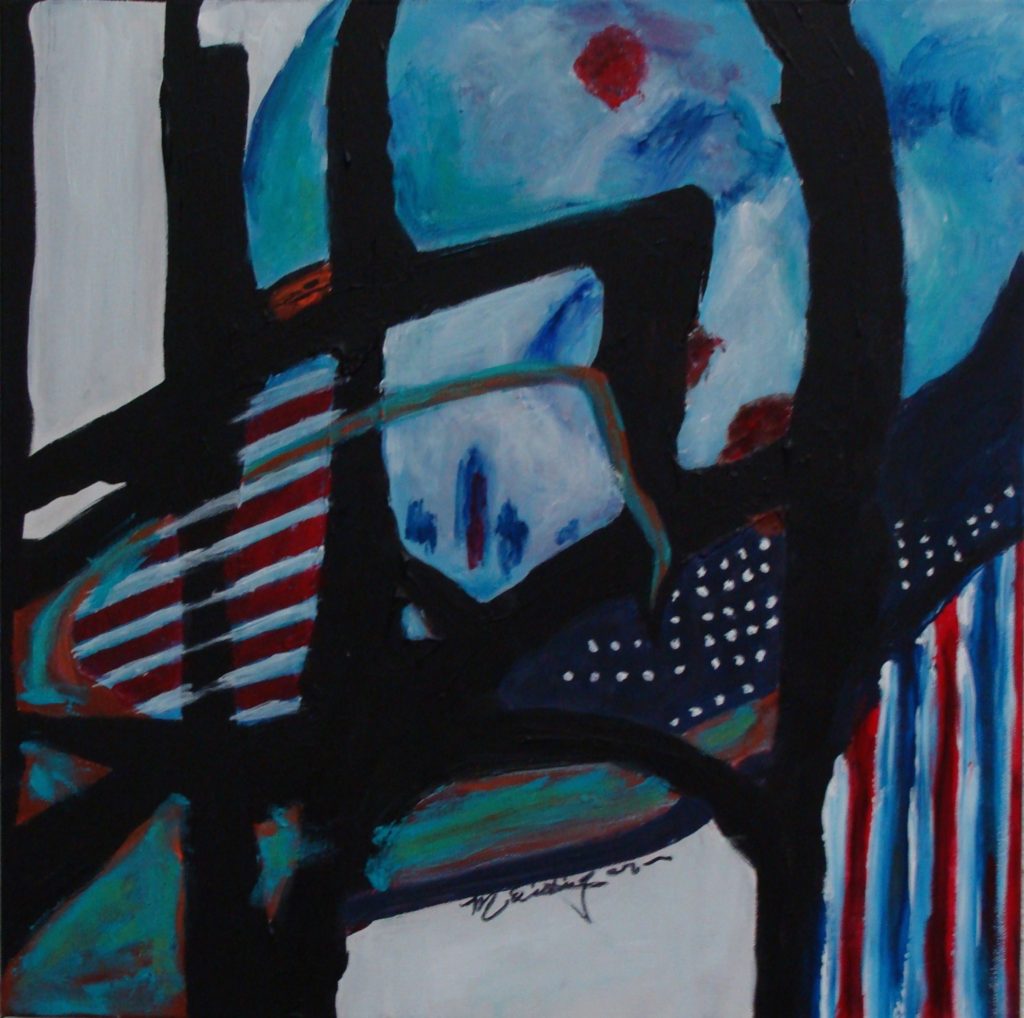
The Innately Rebellious

Cool Daddy
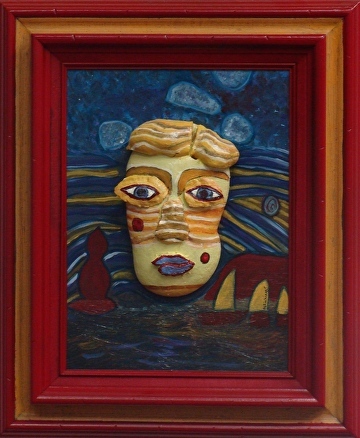
Acrylic painting by Marilynne and Talik Eichinger/ nfs

The Innately Rebellious

The following passage is taken from the manuscript of Over the Sticker Bush Fence: Scaling Barriers for Homeless and Runaway Youth. In this section I discuss what happens to at-risk teens. Most youth go through tumultuous times in their struggle to become a responsible adult. Without adequate parenting, however, the task is arduous and success is marginal.

From the manuscript. Please do not reproduce without my agreement.

“Teen years are a time for rebellion. The following quote is a reminder from the sages. ‘Our youth now love luxury, they have bad manners, contempt for authority; they show disrespect for elders, and love to chatter in place of exercise. Children are now tyrants, not the servants of their households. They no longer rise when elders enter the room. They contradict their parents, chatter before company, gobble up their food and tyrannize their teachers.’ According to Plato, it was attributed to Socrates who died in 399 BC. Some things never change.

“Parents try to blend their child’s need for independence with suffering the consequences of their actions. Wanting to make decisions on their own, teens measure success in terms of independence while their parents evaluate it by rightful actions. The Amish know this tumultuous time well, which is why they let their youth participate in Rumspringa, a period of “running around.” Adolescents, especially boys, are allowed to test the waters of freedom before joining the church. Though parents do not encourage their children to be wild, they do turn their eyes from the behavior they view as unacceptable, believing that their youth will outgrow their rebelliousness.

“During Rumspringa, the adventurous may drink and party late into the night, joy ride in cars, wear the latest “worldly” clothing, and attend movies. The more rebellious may even go bar hopping, smoke, dance in nightclubs, and engage in premarital sex. Though their parents (and minister) may have a thing or two to say about their behavior they are not shunned by the church. The Amish believe that by getting rebellion out of their system this period of deviant activity will pass, helping them freely choose to stay within the faith rather than leave permanently for the outside world of the “English.” Most, but not all, do end up returning to their religion and leading responsible lives. Having been grounded in the community’s values since birth, they have absorbed an ethos that is difficult to leave.

“Though the transition from childhood to adulthood may be turbulent for all teens, it is especially difficult for those without adequate adult supervision. In a “caring family,” behavioral guidelines are introduced and practiced throughout childhood. Over the teen years, most parents increase their youth’s opportunities to problem solve and make decisions. In the early stages of their independence, they are monitored, encouraged and discouraged as their behavior dictates. And, as loving parents, they are available to pick their child up if he or she should fall. What attentive parents do, is lead their adolescents toward responsibility and autonomy. Understanding that rebellion is a part of growing up, they learn to work around it.

“According to researcher Joy Dryfoos, the tasks necessary for responsible adulthood include the following:

• Finding self-definition.
• Developing a personal set of values.
• Acquiring competencies necessary for adult roles, such as problem- solving, and decision-making.
• Acquiring competencies necessary for social interaction with parents, peers, and others.
• Achieving emotional independence from parents.
• Becoming able to negotiate between the pressure to achieve and the acceptance of peers.
• Experimenting with a wide array of behaviors, attitudes, and activities.

“At-risk children have the same needs but have to deal with additional difficulties resulting from living in a climate of uncertainty and fear. If they grow up and remain functionally illiterate (the new untouchables) they risk never becoming responsible adults.

“Neglected children lack parental guidance and older family friends willing to intervene when necessary and help them find their way. Left alone, without good role models, they have neither the training nor experience with which to base sound decision-making. Many react instead by joining gangs, engaging in criminal behavior, or getting involved in drugs or prostitution, thereby putting themselves on a course of destruction. If severely depressed, their actions can tragically lead to suicide or dangerous behaviors that could be fatal.

“Those who commit crimes may be removed from their homes and put in foster care or juvenile correctional facilities. Sadly, the criminal justice system is not the place to go to get your life back on course. It tends to narrow options and train delinquents to be more successful at managing life as a criminal. Rather than building job skills and providing a career path forward, correctional facilities tear down what little self-esteem the youth possesses, producing negative consequences.

“Earlier in my manuscript I write of Zach, a young man who survived childhood neglect, poverty, and a family involved with drugs and alcohol abuse. He escaped to the streets and lived by his wits for four years before my partner and I took him into our home.

“It took five years for Zach to become a fully contributing member of society with enough life and work skills to make us believe that he can carry on on his own. He had to learn table manners, proper English, how to communicate his needs, and to manage money. Numerous times he had social and financial problems that required adult intervention. In other instances, we became involved because of a bad decision he made that affected his ability to remain in his training program. Though it was his life, we were there to help him evaluate the consequences of his actions and nudge him towards sound decisions. His issues were emotional, exasperated by not understanding the causes and effect of his behavior. When the slightest thing went wrong he became excessively upset and instantly depressed. He had to learn to relax before he could deal with his problems.

“Just as middle class parents oversee the idiosyncrasies of their children, those counseling troubled youth need to develop individualized treatment plans for each child in their care. Patience and understanding are important attributes for a caregiver to have because progress does not happen in a straight line. Two steps forward and one back is the norm. Since it took years for the youth to choose homelesses an equal amount of time  may be needed to overcome a childhood filled with trauma.

__
Have you ever had to deal with an  adolescent? Most parents experience occasional moments when they wonder what type of alien monster they are raising. Eventually the parent does focus on the problem and seeks ways towards a peaceful resolution that the entire family can live with. When children are neglected, there is no-one at home to care about their behavior and so, unattended they lash out at society.

References:
Complaining of the Youth (2017). The Literature Network. retrieved from http://www.online-literature.com/forums/showthread.php?17788-Socrates-Plato-Complaining-of-the-Youth

2. Rumspringa (2017).Amish Studies, the Young Center. retrieved from home page http://groups.etown.edu/amishstudies/cultural-practices/rumspringa/

3. Larson, J. (1997). Teenage Rebellion. Culture + Youth Studies. retrieved from http://cultureandyouth.org/troubled-youth/articles-troubled-youth/teenage-rebellion/

4. Dryfoos, J. (1990) Adolescents at Risk, Prevalence And Prevention:. Oxford University Press.

Do comment on my blog site at eichingerfineart.com/blog. What did you do to confront your
unruly teen? What happened to you when you were a youth and acted out?

Art work is always for sale. Contact me at marilynne@eichingerfineart.com.

Where do Ideas come from?


Soaring
Mixed Media on Canvas/ Gold Frame / 38” x 49 “ / $ 765

Soaring high above the mundane we see new horizons


Where do Ideas Come From?

1 + 1 = 3. “What?” you might say. “That is not what I learned in school.” You will be right, though mathematics does play a role, you have to look at reality to learn that facts are not always able to be put in neat summations that make sense. New ideas fall into the category of t unexplained and unexpected happenings that are sometimes exhilarating and at times delusional. So, what brings about great ideas and is there a way to increase ingenuity?

According to Drew Boyd in Psychology Today, many artists, authors, and composers use templates to their stimulate their creativity. Paul McCartney of the Beatles said that John often came up with the first verse and that it gave direction to the whole song. Agatha Christy used a template in the over 60 novels she wrote. Use of a familiar pattern helped both artists be more imaginative.

Regulated, systematic actions provided a templet a teacher friend used when directing his high school jazz band. His students were all well trained musicians, but unable to improvise harmoniously (in fact it was chaotic) until he provided a musical template that all could subscribe to. Once grounded, band members were able to improvise individually, building on what the last person’s contribution. The band won awards for their well coordinated, uniquely melodic sounds.

Dr. Boyd writes that there are five ways to regulate thinking to trigger innovation on demand. He uses a mathematical model.

First is subtraction, the elimination of something that at seems essential but is not necessarily so.

Second is unification, adding an additional component that the product was not originally designed to do.

Multiplication follows third, when a component is copied and changed in a counterintuitive way.

With division the product is divided and then put back together in a new way.

Fifth is dependency where there is a correlation between two attributes, product and environment, so if one changes the other does as well.

My experience is that most people have an appetite for novelty, though some more than others. Many like change and fight against repetitive tasks. They enjoy varying the clothes they wear and changing the car they drive. Some are propelled by an intrinsic need to do something different. I, for instance, when driving home from the grocery store purposefully vary my route. I want to see if anything in the neighborhood has changed since my last tour down the road.

There are times in life when everything seems to be going smoothly. When that happens for an extended period of time, it is not unusual to seek new challenges that interrupt you comfort zone though creating occasional unwanted chaos. What people do is introduce a new puzzle (problem) that needs solving, one that requires out of the box thinking, the stuff that makes them want to get up in the morning.

When that happens to me I often use the forth way of problem solving, and divide my new puzzle into pieces. Life is likely toget disorderly before it is reassembled into a new and hopefully better configuration.

There are also unwanted occurrences like illness, accidents, divorce, and even death, but these too are problem puzzles that require creative solutions. A person who loses a loved one is likely to use subtraction as their path to innovation. Living as one, rather than two, requires the grieving person to find new ways of coping. Counselors often suggest going through motions, and making a to-do list, and following a schedule. Over time, the daily templet becomes a comfortable tool that makes it possible to reach out, try new activities, and become more innovative.

Ideas rarely happen in a vacuum. Information is passed down from one generation to the next for others to contribute to and modify. But occasionally, someone comes forward with an idea that transforms the way we view the world. Physicist Richard Feynman supposedly envisioned nanotechnology from his own imagination, spurring the growth of a billion dollar industry. What he and other brilliant innovators are able to do is synthesize information from across various fields. Their ability to cross pollinate ignites a creative spark within.

When you are in need of inspiration, it is important to look, grab , and blend what you see with other unrelated ideas. A friend shared that when young, he studied law for a year in order to augment his training in philosophy. With an understanding of two analytical approaches he engineered a cutting edge career as a medical ethicist whose advice is sought by hospitals, physicians and patients.

There is one other important factor leading to that wonderful “aha moment” when a new concept takes shape.  Dr. Jonathan Schooler and Claire Zedelius at the University of California, Santa Barbara, study creativity and offer their insight. Their research shows that an increased tendency to mind wander is associated with an increase in creativity when there is an analytic strategy (templet) in place for considering a dilemma. All aspects of the problem need to be understood before a relaxed period of mind wandering can provide insight leading to an “Aha” moment that points to a change in direction.

Increased mindfulness, on the other hand, leads to reduced intuition, which impairs performance that relies on spontaneous insights. Artists such as writer Suzanne Collins, author of the Hunger Games got her idea of youth fighting death matches when lying in bed channel surfing between a reality TV program where a group of young people were competing and coverage where young people were fighting an actual war. She claims that she was tired and that the two stories started to blur in her mind.

In conclusion, I like to remind myself that creativity is a practice. There are tricks that can be used to increase your ability to see things in a new way. However, you also have to be prepared for a time spent in confusion because problem solving is not straight forward. Relaxed attention and a willingness to seek input from multiple sources is a sure path for enriching life.

Please share your creative moments on my blog post below.

References:

1. Boyd,D. 2016. Where Do Creative Ideas Come From? Psychology Today. retrieved from https://www.psychologytoday.com/blog/inside-the-box/201611/where-do-creative-ideas-come

2. Jones,O. 2016. Where Do Truly Original Ideas Come From? Big Think. retrieved from http://bigthink.com/ideafeed/where-do-truly-original-ideas-come-from

4. Schooler, J. & Zedelius.C. 2015. Mind wandering”Ahas” versus Mindful reasoning: alternative Routes to Creative Solutions. ResearchGate. retrieved from  https://www.researchgate.net/publication 278678064_Mind_Wandering_Ahas_versus_Mindful_Reasoning_Alternative_Routes_to_Creative_Solution

Best of Times / Worst of Times, Part II


Russian Escape

Mixed Media, 3 -D/ 26” x 38” / $ 650
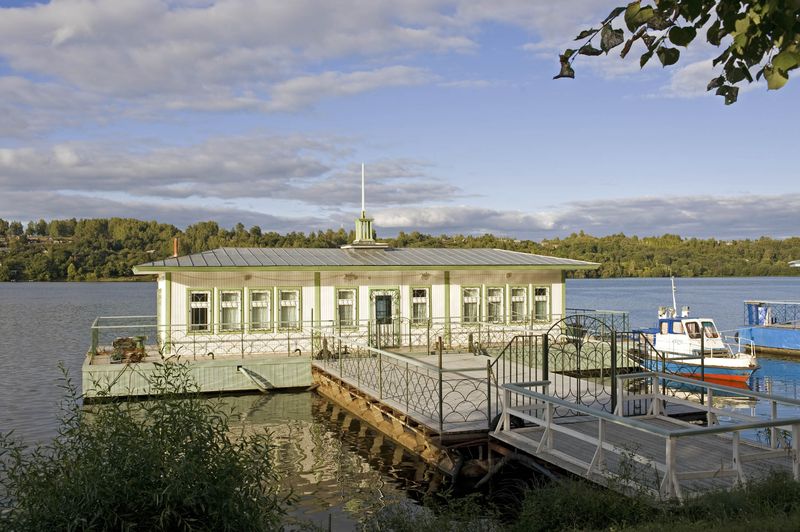
In Russia, the wealthy escape to luxurious homes on the Volga River known as Dachas on. During the communist revolution, Dachas were converted to vacation homes for workers but they have again resurfaced for the elite as exemplified by this seven-figure houseboat on the Volga and a restored traditional wood house in Plyos.

The Best of Times, The Worst of TImes

Fact Checking – In a late December interview with Prince Harry of England, President Obama touted that this is the best of times to be alive. He said that the world is more tolerant, less violent, and that people are healthier, subjects I touched upon in last week’s newsletter. I continue his optimistic statement this week by considering wealth, education, and what might be meant by being more sophisticated.

Part II

Is the world wealthier? When I hear that the world’s eight richest people collectively have the same amount of wealth as the poorest 50 percent of the world, I wonder if dangerous problems lie ahead due to the concentration of wealth among a few. Though the world as a whole might be wealthier, most people do not benefit from this boom. The bottom half struggles to survive. It is grotesque that a handful of rich people are equivalent to 3.6 billion souls living in poverty.

Bill Gates is one of many who echo Obama, agreeing that economic indicators show the world getting wealthier. Yet, when you probe further, he also says that inequality does not matter, which seems to me to be quite a bizarre assessment. The World Bank certainly does not agree with him for it reports that, “No country has successfully developed beyond middle-income status while retaining a very high level of inequality in income or consumption.” In general, those nations with great inequality have higher murder rates and lower life expectancy.

Poverty is defined as a lack of resources needed for a decent life – food and water, housing and energy, healthcare, education, and employment. It is about not having power and being unable to improve your situation. The world’s poverty line is set at $ 2.50 per day and the number of people living below that line increased by 15 percent between 1981 and 2005. So, no. . . the poor are not getting wealthier.

Not only do a handful of billionaires make an extraordinary amount of money, they employ most people. Home Depot’s Bernard Macus and Arthur Blank have over 385,000 employees, Warren Buffet at Berkshire Hathaway, 331,000, Frederick Smith of Fedex, over 400,000, and Peter Buck of Subway over 450,000. If Sam Walton of Wal-Mart were still around he would be credited with 2.3 million jobs. The number of those employed by the world’s 1,645 billionaires (according to Forbes) continues to grow. Don’t think for a minute that wealthy, mostly men, do not control our lives, for they do.

For example, government is influenced by their excessive wealth, for billionaires have the funds to lobby for tax benefits for themselves while making sure that needed government revenues will come from their employee’s taxes. US Tax Code as passed, is designed to permanently benefit corporations and protect the personal savings of the wealthiest but benefits for the middle class are set to expire in five years.

Last year’s stock market went up up by 19 percent. With a simple call to a broker, a billion dollar investment tied to an index fund returned $190,000 million. It is difficult for anyone to spend that much money for groceries, entertainment, cars or housing, so what happens to excessive gains? Will this windfall be plowed back into the economy? Will salaries increase so that those with more modest salaries also benefit?

To answer these questions we need to look at whether Reagan’s trickle-down economics could work under the right circumstances. Douglas Holtz-Eakin, president of the American Action Forum response is, “Trickle. Shmickle. You don’t need a Ph.D. in economics to see that something’s wrong with trickle-down theory. If it were true, inequality would be self-limiting. As soon as the rich started getting richer, wealth would cascade like the Niagara down to the benighted lower classes. Instead, the gap between rich and poor keeps growing.”

The International Monetary Fund concurs that trickle down economics backfires. It isn’t long before policies get instituted that hurt growth. The upper echelon pushes for deregulation of the financial system and puts the middle class at risk. Conflicts become more prevalent, social trust diminishes, and cohesion dissolves. Reasons are well documented as to why policy makers should pay more attention to low wage earners than the wealthy. When the bottom 20 percent of a nation’s population increases its share of national income, stronger growth follows on average within five years.

Among wealthier countries world-wide, poverty has risen since the 1990s. As the ranks of the poor grew, the rich get richer. In our own country, since 2000, the share of middle-class families has shriveled in all 50 states. The United States is an example of runaway inequality. Last November, Bank of America Merrill Lynch surveyed the CEOs of major corporations about how they would invest their foreign-held profits if they brought them back to the states. The majority said funds would be used for debt repayment, share repurchase, and mergers and acquisitions before capital spending. Few businesses planned to increase investments in areas that will benefit middle class Americans, concluded a Wall Street Journal article.

The tax plan that passed in December has winners and losers. The winners are Real estate and other pass through companies, energy drillers, sports team owners, major corporations, tax lawyers, those who don’t want to pay for health insurance, those who will now inherit up to $11 million tax free. The Losers are commuters, residents of high-tax states like New York, New Jersey, and California, and everyone who will now have to contribute to interest payments for a higher budget deficit. 50 Percent of Americans will see their taxes increase after 2025 and 13 million will lose health insurance. Too bad I am not a real estate billionaire like our president, for if I were, I might have had champagne to welcome in the New Year.

Are the People of the World Better Educated? Once more we have to ask ourselves, better educated than when? If we consider primitive societies where learning was passed down from parent to child and tribal member to youth, all children were educated in survival skills. In Egypt, Greece and Rome centers of learning existed since 3,500-3,000 BCE, though the opportunity for literacy were only available to a privileged male elite. It wasn’t until the Middle Ages that book production increased yet it still took centuries for literacy to become universal. Middle class children who were not farmers, were taught by parental example or in the trades in multi-year apprenticeship programs.

If we consider the last two centuries, when literacy became important, then yes, according to the dozens of articles I read, rates have risen globally. Increases are primarily due to enrollment in primary education though in sub-Saharan Africa many countries lag behind with literacy rates below 50 percent of youth. A growing body of research suggests that better education is associated with higher individual income and long-term economic growth. Throughout the world here are large generational gaps, for younger generations are progressively better educated than older ones. In the United States, even low-wage earners are better educated than they were in 1979. For example, in 1979, 39.5 percent had not gone to high school while in 2011 only 19.8 percent had not attended.

It is interesting to note that according the Economist, Immigrants to America are better educated than ever before. Half of all legal migrants have college degrees contrary to the popular belief that they are low-skilled. There is growing interest in the House of Representatives in having a points-based immigration system similar to that of Canada and Australia that gives priority to migrants with degrees, work experience, and fluency in English rather than to families as is the case in America today.

Is the world more sophisticated? I have not the slightest idea and am not sure what President Obama had in mind when he said it was.. What do you think?

Please comment below on my blog site.It will be interesting to hear your comments about these last two newsletters.

Art is always for sale. Contact me at marilynne@eichingerfineart.com

References:

1. Elliott,L. 2017. World’s eight richest people have same Wealth as poorest 50%. The Guardian. retrieved from https://www.theguardian.com/global-development/2017/jan/16/worlds-eight-richest-people-have-same-wealth-as-poorest-50

2. Social Justice Website. 2017. Myth #1: The Poor are Getting Richer. Social Justice Now. retrieved from http://www.globaljustice.org.uk/myth-1-poor-are-getting-richer

3 . Blankfqld,K. 2016. The American Billionaires Behind the Most Jobs. Forbes. retrieved from https://www.forbes.com/sites/kerenblankfeld/2016/10/18/american-billionaires-behind-the-most-jobs/#5b03e27c693f

4. Coy, P. 2017. The Best Way to Spur Growth?Help the Poor, Not the Rich. Bloomberg Business Week. retrieved from https://www.bloomberg.com/news/articles/2017-11-30/the-best-way-to-spur-growth-help-the-poor-not-the-rich

5. Picchi,A. 2015. Is Trickle-down Economics to Blame for Inequality? Money Watch. retrieved from https://www.cbsnews.com/news/the-failure-of-trickle-down-economics/

6. Boak, J. 2017. A look at some winners and losers under the GOP tax plan. ABC News, retrieved from http://abcnews.go.com/Business/wireStory/winners-losers-gop-tax-plan-51903730

7. Roser,M and Ortiz-Ospina,E. 2017, Global Rise of Education. Our World in Data. retrieved from https://ourworldindata.org/global-rise-of-education

8. Economist. 2017. Immigrants to America are better educated than ever before, The Economist Print Edition. United States. retrieved from https://www.economist.com/news/united-states/21723108-far-being-low-skilled-half-all-legal-migrants-have-college-degrees-immigrants


The Best of Times, The Worst of Times

Best of Times, Worst of Times

Summer Night’s Dream
Acrylic on Canvas/ 26” by 32”/ $ 498
Is it the best or worst of times? Surely we are living through confusing times.

On December 27th, President Obama was interviewed by Prince Henry and asked what he sees for the future. He responded by saying, ” If you had to choose a moment in history in which you’d choose to be born, you’d choose today because the fact is that the world is healthier, wealthier, better educated and more tolerant, more sophisticated and less violent.” His comment made me wonder if his words rang true and thought that a bit of fact checking was appropriate at the start of a New Year.   After hours of research, a have come to realize that fact checking  gives complex results.  I will share what I discovered in the next two newsletters.  Part I follows.

Part I

Last on Obama’s list is violence which I thought was a good starting place given the events of 2017.  Articles about gangs, drug cartels, Middle Eastern wars, and gun violence led me to believe that we live in more, not less violent times. However, some studies say otherwise. According to evolutionary psychologist Nigel Barber, the world is a lot less violent than at any other time in history. It is the constant diet of media reporting that turns killers into instant celebrities, and readers into empathetic dispensers of sympathy for victims, stirring a sense of danger that is out of proportion to threat. This is one man’s view based on an evolutionary time line. However, when I explored a shorter period of time, I came across a Forbes magazine article report of the latest Global Peace index published by the Institute of Economics and Peace in June, 2017. As well as full-blooded conflicts, the index takes into account everything from the level of government weapons purchases to homicide rates, incarceration rates, perceptions of criminality, political repression and suppression of free speech.

Over the past year, 93 countries were identified as being more peaceful, while 68 were considered to be less so. Improvements occurred in countries where state sponsored terrorism declined or because of a reduction of US forces, such as in Afghanistan. A disproportionate amount violence exists in Syria, Afghanistan, Iraq, South Sudan and Yemen. Fractionalized politics over the past four years is a major reason peacefulness declined in certain countries. Internal divisiveness leading to the election of Donald Trump, the Brexit vote, terrorist atrocities in France and Belgium, increasing inequality, rising perceptions of corruption and a decline in freedom of the press are contributing factors. The Unites States fell to the 114th spot, below Rhonda, Algeria and Belarus. Yet, despite these declines, internationally, there has been improvement. The most peaceful country is Iceland with New Zealand, Portugal, Austria and Denmark not far behind. Europe is still the most peaceful part of the world claiming 8 of the top ten countries.

What about health? The World Health Organization (WHO) collects statistics for 194 countries. In 2017 it compiled information around 100 indicators such as child care, sanitation, traffic injuries, infant mortality, communicable diseases and life expectancy. Overall, adult mortality rates declined in most wealthy parts of the world. Life expectancy at age 15 increased 2 to 3 years over the last 20 years with the exception of Africa where it decreased by nearly 7 years and the United states which is down 2 years due to opioids. The major causes of deaths among adults is due to noncommunicable diseases, injuries among males, and violence due to war. Causes vary significantly by region. About half the world lacks access to health services and over 100 million people are put into extreme poverty due to health expenses. WHO President Dr. Jim Yong Kim advises that that if we are serious about improving health we must end poverty and urgently provide universal health coverage.

Obama believes that people are more tolerant. In the past year hate crimes rose significantly in the United States according to a 2016 report by the FBI. Rising Islamophobia and anti- Semitism are on the rise, not only in the U.S., but in many European countries. A Huffpost article concurs that “there are strong signs that the modern West is, indeed, becoming less tolerant.” In analyzing tolerance we have to ask, compared to what? Do we look at Spain during the Inquisition, ISIS and their many beheadings or do we compare ourselves to 50 years ago. If we consider more recent society at home, since the Civil Rights movement Americans have become more racially tolerant. People are careful about what they say publicly about Black and Asian Americans and no longer poke fun at Pollocks or the Irish. A 2015 study published in the journal of Social Forces confirms increasing tolerance towards those with differing lifestyles and views. Americans bare more willing to accept of those who divorce, unwed mothers, and the LGBTQ community. Youth continue an upward trend of accepting opinions and lifestyles that differ from their own.

A recent Pew Research study reports that Americans are also more tolerant of religious groups than just a few years ago. Even with negativity around the election, people report greater acceptance of all religious groups with Jews and Catholics receiving the warmest reactions with Muslims and atheists receiving the coolest, though neutral ratings. The concept of “other” focuses on Latino immigrants and Muslims. Hopefully that designation will not last forever for intolerance is not an option for a democratic society.

Max Fisher, professor of ethnicity, compiled a map of world tolerance that shows Anglo and Latin countries to be the most tolerant while India and Jordan are the least. Wide variations exist across Europe where immigration and national identity are major challenges. The large numbers of economic migrants that go for work to countries like Egypt and Saudi Arabia are at risk, though a slight a improvement was registered. Racial tolerance is low in many Asian Countries and especially so in South Korea. Pakistan is surprisingly tolerant despite areas of sectarian violence. The United Nation reports discrimination, marginalization, injustice and violence to be the most common indicators of intolerance. Better education is needed to fight against intolerances which are recipes for conflict disaster and war. Tolerance is a “treasure that enriches us all.”
Do join me next week for Part II, a look at wealth and education.

References:

1. Wintour, P. 2017. Obama tells Prince Harry: Leaders Must Stop Corroding Civil Discourse. The Guardian. retrieved from https://www.theguardian.com/us-news/2017/dec/27/barack-obama-tells-prince-harry-leaders-must-stop-corroding-civil-discourse

2.Barber, N. 2016. Is the Modern World More Violent. Psychology Today. retrieved from https://www.psychologytoday.com/blog/the-human-beast/201506/is-the-modern-world-more-violent

3. Dudley.D/ 2017. Most of the World is Becoming More Peaceful but the US and the Middle
East are Bucking that Trend. retrieved from https://www.forbes.com/sites/dominicdudley/2017/06/01/most-of-the-world-is-becoming-more-peaceful-but-the-u-s-and-the-middle-east-are-bucking-that-trend/#3d8c3fda22e1

4. World Health Organization Web Site. 2017. retrieved from http://www.who.int/gho/en/

5. Marglin,J.2016. Are we Getting More or Less Tolerant, And Does it Matter? Huffpost. retrieved from https://www.huffingtonpost.com/jessica-marglin/are-we-getting-more-or-le_b_8833514.html

6. Perry, S. 2015. Americans have become more tolerant with each generation, Study finds. MINNPOST. retrieved from https://www.minnpost.com/second-opinion/2015/03/americans-have-become-more-tolerant-each-generation-study-finds

7. Williams, W. 2017. Americans are becoming more tolerant of many religious groups, survey finds. The Christian Science Monitor. retrieved from
https://www.csmonitor.com/USA/Society/2017/0215/Americans-are-becoming-more-tolerant-of-many-religious-groups-survey-finds

8. Fisher, M. 2013. 5 insights on the racial tolerance and ethnicity maps, from an ethnic conflict professor. The Washington Post. retrieved from https://www.washingtonpost.com/news/worldviews/wp/2013/05/17/5-insights-on-the-racial-tolerance-and-ethnicity-maps-from-an-ethnic-conflict-professor/?utm_term=.8a7df968ab1c

9 United Nations Educational, Scientific, and Cultural Organization, 2017. Learning to Live Together. UNESCO . http://www.unesco.org/new/en/social-and-human-sciences/themes/fight-against-discrimination/promoting-tolerance/

______________________________________________________________________
Please comment on my blog site below.

Art is always for sale. Contact me at marilynne@eichingerfineart.com for costs and shipping information.

Questioning Life

On Top Of It All
20” by 19”, Mixed media, $399.
Questioning how to give meaning and purpose to life is ongoing. Answers evolve and change with age and circumstance.

Winter holidays usher in a joyful bustle of activities with family and friends but since it is the end of one year and start of another, they are also a time to pause for reflection.

When I was sixteen my boyfriend asked, “which is better a life of love or a life devoted to a quest of knowledge and its application to living?” Without hesitation we both chose love, but as years passed, there were times when the quest for knowledge and career ambitions made us rethink our answer. Today I would respond by saying both.

My memory was stirred by an article I read this week on BBC’s news website. Educated Indian women were forced to give up doctoral ambitions to improve people’s health care in order to be full time mothers taking care of their families. Married women “are not expected to want the privilege of thinking and doing research,” said one of homemakers interviewed. Yet, in India, woman are starting to speak up and not give in to custom. They are finding ways to continue their research through online virtual laboratories and participation in conferences conducted through Skype. Instead of being confined solely to housework, these highly educated women have options never before imagined.

Many other questions were raised during my college years. What is the meaning of life and what idoes it mean to live well? Is there a God? What ethical system should I embrace? How will my activities and choice of profession contribute to society? These questions became buried when raising five children and beginning a career. But every once in a while, a decision had to be made that gave me pause to think. Should I choose advancement, money and accompanying stress over family harmony? Do I go on a business trip rather than stay home with a sick child? Is what I do more important than my husband or children’s ambitions?

From time to time these basic questions suddenly pop up and demand an answer.
As an elder, I am once more reflecting on life’s meaning. When I hear friends saying, “I’ve done enough for others. Now it is time to complete my bucket list,” Is that the best way to conclude my years? But somehow this remark doesn’t make sense. What difference does a trip to Bora Bora, sky diving, or snow shoeing in the mountains make?” These activities can’t be the purpose of living. They can only be a way to pass idle time while waiting to die. Why spend the money? Why change the way I find purpose in life? Then again, why not?

Deciding how to live is not just a quest of the young but it is a multi-year process that twists and turns with experience and circumstance. My answers have been challenged many times  as I developed a deeper understanding of the environment and the earth’s far flung inhabitants. Today when I ask what type of person I want to be and what makes life meaningful, I continue to look to the future— not of mine, but of those who will follow me. I still hope that the world will be a better place for my children and grandchildren to live in and would like to share my mistakes and achievements so they can move on from where I leave off. My ongoing quest for knowledge is pleasurable and gives me much do, but I am less focused on a need to achieve and more interested than ever in educating. Helping young adults known as the “me generation”  overcome this stigma seems like a fulfilling mission. Inspiring them to embrace a life of love and giving to others is a gift I would like to leave behind.

Merry Christmas to all.

Changing Sexual Mores

FACES
mixed media on canvas / 24 x 29” x 2” / $ 450
Good relationships are trick and must be nurtured. They survive because of respect and caring. Violence and rape have no place.

Changing Mores Sexual

The outcry over sexual abuse and harassment has finally been heard throughout the country. “Let it not let it happen again,” is the mantra. And, so old wounds of the past are now willingly being dragged through the media to be relived in the hope of putting this ugliness to bed. Hopefully the actions of brave speaking victims will have a lasting effect, though I must admit to having doubts around power politics. Some predators manage to hold on to their positions despite their despicable behaviors while others, who acknowledge wrong doings with humility and have changed have had to step down.

Are we doing democracy a service by holding so many men accountable in the court of public approval rather than the judicial system? I realize that none of the claims can not be ignored, and that most may be justified . . . but not all. Should those acting in accord with the mores of their adolescent years and have since mended their ways receive equal punishment with rapists, pedophiles, and those using power positions to seduce the young?

Do we treat men who patted a fanny, groped a breast, or kissed an unwilling face as we do one who drugged, molested children, or raped? Not long ago our men lived in a society that ignored these types of behaviors. Old men like George Bush Sr. were seen as harmless when they pinched their nurse. As children they had been taught that chauvinism was simply a manly way to tease those they desired. Sexual harassment and the way men and women acted towards Black Americans was on an equal par.

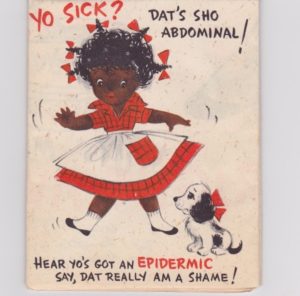
Last week, I found a get well card buried in a box of letters that were mailed to me in the late 1950s. The card had an image of a young black girl speaking in a way that would horrify anyone today. However, during that pre-civil rights era, such pictures were socially acceptable. Should the person who sent this card be judged by today’s standards? Should he lose his job? face consequences because of the way white society thought in the past? Should I, as receiver, have been insulted? Are either of us bad today for having seen the message sent in ’58 as cute? I do not believe we are terrible people, for once the damage caused by such images was explained, we became sensitized. No longer would such a card be an acceptable. This new awakening was then carried forward to the next generation. Culturally acceptable norms were changed.

So too, in matters of sexual harassment. In 1953 Playboy Magazine featured Marilyn Monroe in its first issue. Hugh Hefner and his clubs were popular places for both men and women to go for a drink and entertainment. Hefner was considered a visionary editor accepted by much of society. The 1960’s was a period of profound societal changes in a growing sexual revolution. With the spread of birth control pills and penicillin to fight diseases like syphilis, attitudes towards sex became increasingly permissive, even weakening marriage boundaries.

Though the era also heralded in the women’s movement, men and as well as women were confused about their roles. The revolution had negative as well as positive features for though promised sexual freedom and liberation, women increasingly found themselves victims of rape and oppression. Some men, feeling emasculated, tried to assert their claim to being the strong, superior bread winner to whom the weaker sex owed allegiance. Having lived through these times, I can attest to the fact that it was exciting yet confusing, flirtatious yet risky. It is not surprising that many women became victims for we did not know how to act.

As we consider important steps taken on behalf of traumatized victims, let us proceed wisely. Rape, drugs, violence, pedophilia can never be tolerated. But there are gray areas that impel us to move cautiously to not wreck a good person’s career. Once the individual has acknowledged past mistakes and demonstrated change there can be room for forgiveness. It behooves us to teach young women and boys about predatory ways, so they are not naive and can firmly, politely and swiftly put an end unwanted approaches. Though difficult, we need to have conversations with our children to help them better evaluate flirtations and to know behavioral boundaries so that one person’s will will not be forced on another.

Consequences from abuse make victims feel vulnerable and insecure, two emotions that can last a lifetime. I know this well, for I too was raped by a powerful man. Fortunately, the current turmoil is a chance to grow and learn better ways for men and women to communicate. Let’s not turn the past into a political travesty that backfires but move forward by changing minds.

Without Love, What?

Meet the Blockheads

Acrylic on Canvas with glossy polyurethane finish. 26” by 22” / $385/ framed

Without Love, What?

Those fortunate enough to be showered with love during their childhood are likely to become healthy, well adjusted adults.

Without Love, What?

The following passage is taken from the manuscript of Over the Sticker Bush Fence: Scaling Barriers for Homeless and Runaway Youth. In this section I discuss what happens to children who are raised in loveless surroundings. The book is presently under consideration for publication by a well known publisher. It is not too late to comment and I look forward to your insights.

In my naivety, I assumed that love was instinctual and that every newborn, no matter how poor, is a recipient of parental attention. Without some level of care a helpless infant could never survive. But I quickly learned that feelings of responsibility vary from person to person as do emotions elicited by love.

From the manuscript.

“The majority of us are fortunate for we are surrounded by loving parents and relatives. As infants, family members held and cherished us and as adults, we find partners and form bonds based on love and mutual respect. But what happens to children who are never caressed or told that they are special? What are the long-term effects of never having being touched and cuddled? What befalls those children who are physically abandoned, left on door steps or placed in cribs and not attended to when they cry or diapers need changing?”

“A cornerstone study about infant neglect was initiated in the 1980s when Dr. Nathan Fox and colleagues from Harvard Medical School, walked into an orphanage in Romania. Due to a recent ban on abortion, the number of orphan babies had soared. 170,000 children were placed in 700 overcrowded and impoverished facilities across the country, staffed with an insufficient number of caretakers. Though the facilities were clean, the infants were emotionally neglected. Left day and night in their cribs, the babies were changed periodically and fed without being held. The nurseries were eerily quiet places. Since crying infants were ignored, they stopped making sounds. No attention—no cries—only silence.”

“Dr. Fox followed these children for over fourteen years. During the early years of the study, autistic-like behaviors such as head-banging and rocking were common. As the children grew their head circumferences remained unusually small. They had difficulty paying attention and comprehending what was going on around them. Over time, 50 percent of the children suffered from mental illness. They displayed poor impulse control, were socially withdrawn, had problems coping and regulating emotions, and were shrouded in low self-esteem. They manifested pathological behaviors such as tics, tantrums, stealing and self-punishment. Poor intellectual functioning caused them to have low academic success.”

“Those children lucky enough to be put in a caring foster home before the age of two were able to rebound. Unfortunately, those who entered foster care at a later age were not so lucky, for they were permanently damaged.” . . . .

“Without repeated acts of love, a child’s brain doesn’t make the growth hormone needed for proper mental and physical development, leaving the child permanently scarred. Even small insults of shame and rejection can impact a youngster’s ability to develop in a healthy manner. Verbal abuse from adults who say such words as, “I can’t believe you would embarrass me like that,” or “You Idiot! Who do you think you are?” hurt and affect a child’s self-esteem. This type of verbal abuse can lead a child to be cruel to animals, set fires, take drug, and self-withdrawal.”

Parental warmth and love are crucial for a child’s well-being. Writing for Psychology Today, Christopher Bergland concurs that “Toxic childhood stress alters neural responses linked to illness in adulthood.” He writes of a 2013 study published in the Proceedings of the National Academy of Sciences where researchers examined the effects of abuse and lack of parental affection across the regulatory system. They discovered a biological link between negative experiences early in life and poor health in later years. The brains of unloved, neglected children are permanently affected. Their stress levels are high, setting the stage for elevated cholesterol levels, cardiovascular disease, metabolic syndromes, and other conditions that pose a serious health risks.”

“The study was able to document what most healthy families have always known, that children need to be showered with love and kindness and live in a welcoming environment. Love is what helps youth develop defense mechanisms that provide a buffer from abuse and trauma.”

“A good example of the importance of early love is found in Zach’s story. He was loved as a child even though neglected and at times abused by parents high on drugs and alcohol. That he was occasionally smacked and at times not fed, was not as important in the long-run as knowing he was wanted. He was fortunately part of an extended family that lived nearby, so when the situation became intolerable, he often found shelter with relatives. This early attention sustained him through difficult times and made him able to transition as a caring individual.

“Those growing up without the gift of love are not so fortunate. “Charlie” was left alone in his crib for hours on end. When he cried there was no-one there to pick him up and comfort him so eventually he became silent. His diaper was changed irregularly and rashes developed causing more discomfort. While being fed, a bottle was propped on a pillow by his mouth while he lay still in his crib. He rarely felt the warm arms of a loving adult. He remained listless and grew slowly, learning to sit and crawl months after what was developmentally appropriate for his age. By the age of two, he was more like a one-year-old. Over the years “Charlie” never caught up.”

* * *

Parents, there is no such thing as showering your children with too much love. However, I share a cautionary note. Love is not to be confused with spoiling. It does not equate with letting the child do anything he or she wants to do. Parents are responsible for teaching their children the social and cultural mores of society. There are times when “tough love” is called for in order to instill responsibility. But love may also mean, picking your child up over and over again each time he falls down.

References:

1. Nelson, C. & Fox, N. & Zeanah, C. (2014) Romania’s Abandoned Children, Deprivation, Brain Development, and the Struggle for Recovery, Harvard University Press.

2. Parks, G. (2,000) The High/Scope Perry Preschool Project. U.S. Department of Justice; Office of Juvenile Justice and Delinquency Prevention. retrieved from https://www.ncjrs.gov/pdffiles1/ojjdp/181725.pdf alsoRand Published Study http://www.rand.org/pubs/research_briefs/RB9145.html

3. Bergland, C.( 2013) Parental Warmth is crucial for a Child’s Well-being. Psychology Today. retrieved from https://www.psychologytoday.com/blog/the-athletes-way/201310/parental-warmth-is-crucial-child-s-well-being

4. Smith, D. Effects: of The Lack of Attachment. Addictive Behavior Counseling School Student Lecture notes. retrieved 2017 from http://www.darvsmith.com/dox/lackofattachment.html

I would love to hear from you. Please comment below.

Artwork is always for sale. Contact me at marilynne@eichingerfineart.com.

Social Justice

Mean Aunt Martha

An unfulfilled life led her to drink. Her children unfortunately suffered.
acrylic on canvas/ 30” x30”/ gold frame/ $ 399

The following excerpt is from my latest manuscript. Over the Sticker Bush Fence: overcoming barriers for homeless and runaway youth will hopefully be in print in the near future. The printing business moves slowly and methodically. I do look forward to your comments.

Social Justice

“Life has a way of repeating itself, transferring experiences through time from one generation to the next,” said Kate Lore, who at the time was Social Justice Minister at the Unitarian Universalist Church in Portland, Oregon. “As an adult, I’ve worked hard to break the conditions and mindset of poverty experienced by my ancestors, but doing so has not been easy. This is due not only to the lack of resources but to a culture of shame and secrecy. It’s as if part of my destiny is being controlled by unnamed family ghosts.

“The story of my father’s side of the family dates back to Monticello, where my Irish forebears served as indentured servants of Thomas Jefferson in return for passage to America. These farmers eventually paid off their debt and slowly migrated westward, first to Minnesota and then to California. Generation after generation lived hardscrabble lives, never owning the land they farmed, never getting a good education but always working, working, working. Many of these relatives could be characterized as bad apples. Unspoken shame still permeates the family relating to the fact that my father was the product of a forced incestuous relationship between his teenaged mother and her cousin. Also, my paternal grandfather never met his son nor me because his entire life was spent locked up in prison. Though I know he eventually died of cancer, I’ve never found anyone who would tell me what he had done to land behind bars.

“Knowledge of my mother’s family dates back to the Dust Bowl. Though I tried, I never found a relative willing to talk about the past. What I do know is that my mother’s family shared many similarities with my father’s. They were poor, hardworking tenant farmers who migrated west in order to feed their family. They, too, ended up in California, seeking a better life. But like characters out a John Steinbeck novel, Mom’s side of the family migrated to Monterey’s Cannery Row to work the anchovy canneries. I still carry memories of Cannery Row. It was the era before it became a tourist destination: the smell of fish and stale booze, the site of rusted boat hulls and passed-out-winos and the sounds of seagulls screeching over the next incoming fish haul are captured in my mind. Industrial Cannery Row faded over time and eventually the cannery jobs did, too. My grandparents never escaped the poverty and alcoholism that has plagued and continues to plague, my mother’s family.

My parent’s lives came together in the mid-fifties. They met as young adults in church, both eager to break free from their families of origin and have good lives. Married in 1957, their first child came along three years later. Tragically for my sister and me, their love did not last long. By the time of my birth, Dad was having an affair with another woman.

Born in 1960, I was unaware that my parents were not doing well as a couple. At six months of age, Mom moved her children to join Dad in Tanzania where he had accepted a teaching job. She hoped by doing so that his affair would end. My sister, who was then three and I spent the next several years speaking Swahili and living among people native to that land. I found out later that during the entire three years we lived abroad, my father had continued corresponding with the woman with whom he’d been seeing before we left. But the final shock did not set in until we arrived back home to the San Francisco airport. My mother still had luggage and children in hand when my father turned to her and said; “ This is where we part ways. I’m leaving you. You are on your own.” With that announcement he took a few of his personal belongings and left the airport to live with his lover. I would not see him for many, many years to come.

We found ourselves stranded, possessing nothing. We did not know where to go, nor did Mom have any idea of how she was going to find our next meal. In this emergency situation she wound up moving back to her childhood home with alcoholic parents, not a safe place for kids of any age, and bad for little ones who had just lost their father. It was worse for my sister than me, though, because she was always Daddy’s little girl, the one who had my father’s heart. . . or so she thought. Once abandoned, my dark-haired sister started acting out. She became the “evil one” in the family, and I, a blond, reacted by becoming super sweet. My behavior was an effective survival technique. By being a loving, cuddly kid I could get what I needed. I may have been plain but I was smart. Looking back I wondered if my lifelong “good girl” behavior was largely a reaction to the way my sister acted. I’m not sure. But I have come to believe that my compulsion to be good and the compassion I have for others comes from someplace deep within.

Without a college degree, the only work my mother could find was minimum wage employment. When she worked we were left to the care of our grandparents. Two lively little girls living with inebriated adults was a dangerous situation. That became especially apparent when one one day my grandfather had had enough of the noise my sister was making. He drunkenly grabbed a fork and lunged to stab her in the hand. Thankfully she moved in time or she would have been maimed. Mom realized at that moment that she had to move on but again was lost about what to do and where to go.

She sought advice from a previous mentor, a woman who had been her second-grade teacher in elementary school. Connie Sellars had taken a liking to her as a youngster who came to school from an alcoholic family. Connie got her involved in church and encouraged her to sing in the children’s choir. She and my mother remained friends, writing to each other throughout her trials. Being a Good Samaritan, Connie offered us a place to live in a nearby house that she had recently inherited, asking only $75 a month in rent, an amount that was never raised over the years. If it were not for the kindness of this one individual, I’m not sure what we would have done. Housing is a prerequisite to so many things: security, status, and stability.

Still, I felt shame living in our house. Paint was peeling off the walls and the grass was never cut because we could not afford a mower. We never owned a car which meant that for ten hours a day my sister and I were left at home to raise ourselves while mom rode buses long distances to work as a clerk typist in a distant school district.

Neighbors felt sorry for us, two little urchins abandoned by fate, and they treated us kindly even though our presence “brought the neighborhood down.” They helped fill the house with cast off furniture, responding to our needs compassionately. I attribute their help to the fact that homeless families were a rare phenomenon back then. Neighbors were less inclined to judge us and more inclined to help out. The era was before the 1980s when America suddenly began demonizing the poor. Americans still had compassion for the destitute and had not yet been exposed to Ronald Reagan’s portrayal of single moms as being lazy, unproductive “Welfare Queens.”
_______
Kate survived her difficult childhood due to the camera and compassion of neighbors, church members, and educators. The adage, “it takes a village to raise a child” is a wise one that benefited her. Now, as an adult she decided to give back to the community as a minister focused on social justice. She left the church last year for employment with Volunteers of America where she oversees a large network of shelters for abused women. Childhood experiences often affect the career choices we make. Rather than be succumb to self pity or depression she saw life’s beauty and wants to share her blessedness with those who are less fortunate.

A few questions to answer below:

Did you ever have a childhood experience that influenced your career choice?

Have you been motivated to help someone outside of you immediate family?

There are thousands of children in the United States who would benefit by having a mentor. Ever think of getting involved with one or more of them? If so, please, share you experiences.

Art is always for sale. Please contact me at marilynne@eichingerfineart.com.

Power Play

The Three Sirens

Which one will become prey in a game of one-upmanship?

Acrylic on canvas/ 36” by 12’ / $ 350

Power Play

Women have finally found the courage to share their stories of the powerful men who made unwanted sexual advances towards them.Their predators were masterful players of the one-upmanship game. They knew how to induce fear in their victims by feeding ego that supported their privileged status as employer and reenforced the belief that they were the superior player.

Before the civil war, plantation owners believed in their right to physically and sexually abuse slaves. As property, their prey had little recourse against rape or beatings by cruel masters. Society supported the rights of property owners over the enslaved. Though much has improved since those days, a great deal has stayed the same with ugliness pushed underground. Out of site and out of sound, sexual assaults until recently have been hushed up, though perhaps times are finally changing. Politicians, Hollywood moguls, and industry bosses have always been abel to engage in hurtful acts through bribery, trickery and outright force.

I too was victimized. My first encounter was mild, but demonstrates how unfeeling some young men can be when showing off to their friends. At the age of 19, while walking through Harvard Yard, an approaching student stuck out his arm to brush my breasts. I was shocked as he and his friends had a good laugh at my expense. Fifty years later the memory of that small incident remains burned in my brain. What kind of upbringing did the young man have to believe he had the right to abuse me?

In my thirties, I was subjected to unwanted advances by the chairman of the board under which I served. His power moves were scary for I was naive, neither knowing how to handle his unwanted advances nor willing to confide in someone in since he occupied the organization’s top position. I reasoned that if I went to the police the incident would be exploited in the media. Since the man was a well respected community leader, I wondered if I would be believed over his denials? Would my reputation be tarnished? Would I lose my job? In the early 1970’s women rarely won such cases by suing in court.

Fearing that my young children and spouse would be pulled into my nightmare, I elected to remain silent. By not sharing, my silence created a wedge between me and my husband.

However, once aware of sexual power games, I became determined never to be victimized again. When invited to install an OMSI exhibit in the senate office building in D.C. I was asked to give a private tour to a senator who had a predatory reputation. Forewarned, I was on guard. Sure enough, the man made overtures, but I was able to gracefully and competently end the encounter without making an enemy.

News about the predatory actions of Hollywood directors, politicians and corporate leaders is not surprising. For years their have been tales of exploits shared through backroom gossip networks. I applaud the willingness of the nearly fifty actresses who came forward to expose Harvey Weinstein. However, there is safety in numbers and most are aging ladies with little to lose. What would have happened if they stood alone and confronted him in their younger years? Talented women who work their way up the corporate ladder are at particular risk.

What will insure that job advancement stays in the boardroom rather than involve an unwilling visit to a bedroom. According to Angela Skirtu, “one part of our sex life is power roles.” Most people assume a dominant or submissive role, though some are comfortable back and forth. In a consensual relationship, power dynamics are discussed and agreed upon with the result of deepening the relationship. Without a willingness to communicate, relationships can quickly become power plays that end poorly.

Unfortunately, there are those who disregard consensual practices when outside their homes. They believe they have a license to proceed aggressively with unwilling participants. Powerless to flee, resentment, anger and depression take set in. An abused woman (or gay youth) may fear going to work.

Most employee manuals have a no-tolerance clause for sexual harassment. These rules are difficult to enforce for those at the top of the organization for there is no place further up the ladder to go to seek justice. The consequences of complaint can ruin hard built careers and undermine families. We have only to look at Anita Hill’s exposure of Clarence Thomas to understand how difficult stepping forward can be. Aggressors often have many powerful friends to form a protective ring around them.

In my case, if the situation happened today, I might still remain quiet and not report the event to authorities. However, I like to think it would never be an issue, for I am better armed with an arsenal for nipping unwanted advances in the bud. It behoves everyone to understand their own sexuality and how it affects those they associate with. There are times when flirtation is harmless and can be encouraged. But there are also situations when that is not the case and clear expectations have to be communicated.

How often have your heard, ”women don’t really mean it when they say no?” It is a stereotype about them that reinforces the idea that women are not straightforward. The phrase becomes a convenient excuse to ignore what is being said. Women, as are men, are complicated. There are times when body language is as important as words. Though we want our children to be social and caring, it becomes a problem if they are so sensitive that they fear hurting a predator’s feelings.

A young woman asked me for advice when an older, competitive colleague threatened her career by demanding sex. As a happily married mother, her family meant more to her than advancement through appeasing this individual. The process of vocalizing her concern gave her courage that enabled her to handle he situation in a safe, public arena. She told the man how flattered she was by his interest but that she was happily married and that an affair was not possible. By being open and direct, she was able to set limits. It may not seem fair to some that flattery was her way out, but it was a prudent solution for it enabled her to maintain a useful working relationship.

Moms and Dads, please don’t avoid discussing this difficult subject with your daughters and sons. At the start of their careers they need to know how to respond to unwanted advances without becoming paranoid. Discussions might focus on appropriate work attire and how to deal with inebriated co-workers. It is important let them know that most men and women are considerate and reasonable, so they will not go overboard in fear. Still, it is good to be realistic as well as cautious for there will always be power hungry predators. Women need to be trained at an early age that it is OK to say no. And men need to learn early that a lack of no does not mean yes. Consent needs to be verbalized and valued.

And men, don’t be fooled. The situation can be reversed, for there are women at the top ready to play the same type of one-upmanship game.

References:

Skurtu, Angela (2016) Power Dynamics in Sexual Relationships. Huffpost. retrieved from https://www.huffingtonpost.com/angela-skurtu/power-dynamics-in-sexual-_b_9843280.html

Mitra, M. (2017) what Women Don’t Mean When They Say “No”. retrieved from http://www.filtercopy.com/what-women-don-t-mean-when-they-say-no-2473499543.html

Aaron, M.( 2017) The Role of Power in Relationships, Dr. Michael Aaron – licensed Psychotherapist, Sexologist and Sex therapist. retrieved from Web http://www.drmichaelaaronnyc.com/the-role-of-power-in-relationships/

Art work is always for sale. Contact me at marilynne@eichingerfineart.com

Dynamo for Change

THREE SUNS
40” by 30” / Acrylic on Canvas / $ 499

Scorching Sun allows fires to burn so that Earth appears dry and lifeless. Life hovers underground waiting for Mother Nature to help it reemerge to make Land beautiful once more.

Dynamo for Change

Over the Sticker Bush Fence is a book in progress about homeless and runaway youth. In it I discuss the difficulties caused by childhood neglect and abuse. Over the past three years I interviewed many people who were motivated to work with this population because of experiences they had in childhood. Today I would like to introduce you to Sean Suib, the executive director of New Avenues for Youth. Sean has a special interest in the plight of foster children. Following is an excerpt from the manuscript.
_____________________________________________

Dynamo for Change – Sean Suib – New Avenues for Youth

“Our foster system is broken,” Sean Suib said forcefully. “The only way we are going to fix it is to get it out of the hands of the government. There are smart people in the system but they can’t change anything. The system, like the children they serve, is traumatized. There is not enough money to operate successfully, but that is only part of the problem. Because the system operates out of a place of crisis, it cannot think strategically or even beyond its most basic function, survival. Evidence of this can be seen in the many recent highly publicized examples of the system failing to act to keep children safe, despite clear information about danger. I don’t want you to think the people running the system are bad, to the contrary, there are man caring, hard working, and well-intended people. They just can not get beyond their systemic crisis to prevent its perpetuation. To understand the intersection between foster care and homelessness for youth, it is helpful to think about the Department of Human Services (DHS) as an impoverished single parent responsible for rearing 10 children at the same time. With too little money to meet every child’s specialized needs, DHS can only focus on keeping the most vulnerable children as safe as possible. Older children are less vulnerable when compared to younger, higher needs youngsters. By the time they get to be an adolescent, a system like DHS is not designed for, resourced for, or able to focus on or meet a teen’s needs. As a result, 50% of the kids who leave the foster care system at the age of 18 find themselves homeless within three years. The private sector needs to take over.”

I was sitting across the table speaking to this tall, handsome man whose every pore seemed energized as a change agent. As director of New Avenues for Youth, he moves purposefully among the many challenges he has to confront each day. Though busy overseeing the center’s diverse programs, he had invited me into his small office and graced me with his rapt attention as though I was the only thing in the world that mattered. In my effort to understand the basis of youth homelessness, I had not considered the foster care system and wondered what should be done. Sean shared his thoughts.

“There are critical intervention points that have to be addressed before transitioning a child out of state supervision. Children need social capital, people not paid to be in their lives, who can be called at 2 in the morning if needed. They need to learn life skills, accountability, given leadership opportunities and ways to connect with their community to practice the skills of being an adult. Programs like ours try to sprinkle as many of these proactive experiences into the young person’s life as possible.”

I quickly learned that New Avenues was quite innovative in their approaches and that their work with youth had come a long way from the juvenile detention policies practiced in the past by social service agencies in conjunction with the judicial system.

“We are beginning to understand the unique circumstances that face foster children,” he responded with intensity, making sure that I followed his words. “Many of them have spent years being shuffled from one home to another, often falling through the cracks educationally and emotionally. We already are making a difference with an array of programs and targeted interventions. One of the interventions we are most excited about is a partnership with a non-profit called Bridge Meadows. Bridge Meadows is a multi-generation housing community in which low-income seniors live in community with families that have adopted young foster children. In this model, the entire community works together to help heal and raise these kids.

recently combined resources to build a second housing facility (15 unit apartment complex) dedicated to youth aging out of foster care. Named New Meadows, the facility will sit on land adjacent to the Bridge Meadows campus and leverage relationships and social capital to foster youth as they move into adulthood. New Avenues will wrap a comprehensive program around housing residents by providing mental health counseling, case management, life skills classes, education and college support, and job training.”

As I listened to Sean talk I couldn’t help but imagine that he could have been a successful businessman, spending his working hours amassing a small fortune for his family. He is engaging, has people and organizational skills, and is a strong spokesman for his cause. Sean knows how to work with teams of people in the community from low income to wealthy donors who make up his board. He is also a practiced tradesman with years of construction experience. It would have been logical for him to run his own company, yet he chose to work with the disenfranchised. I wondered why Sean selected a non-profit route. Why was he so ferociously passionate about what he was doing? With little prodding he shared his story.

_____________________________________________________________

Sean’s path to the directorship of New Avenues was inspired by a rocky family life that made him fend for himself at an early age. His journey took him through traumas caused by drugs, divorce and neglect. Sean’s early employment at Janus Youth Services and Outside In provided experience and insight that enabled him to identify holes in the welfare system. Once Over the Sticker Bush Fence is released you will have and opportunity to see how he was influenced as young and why this entrepreneurial dynamo would choose to help those less fortunate.

Do let me know if you think of these last two posts from my new book, Over the Sticker Bush Fence. If you have suggestions, now is the time to make them, since it has not yet been published.

Art work is always for sale. Contact me at marilynne@eichingerfineart.com.