Fractured America

Fractured America

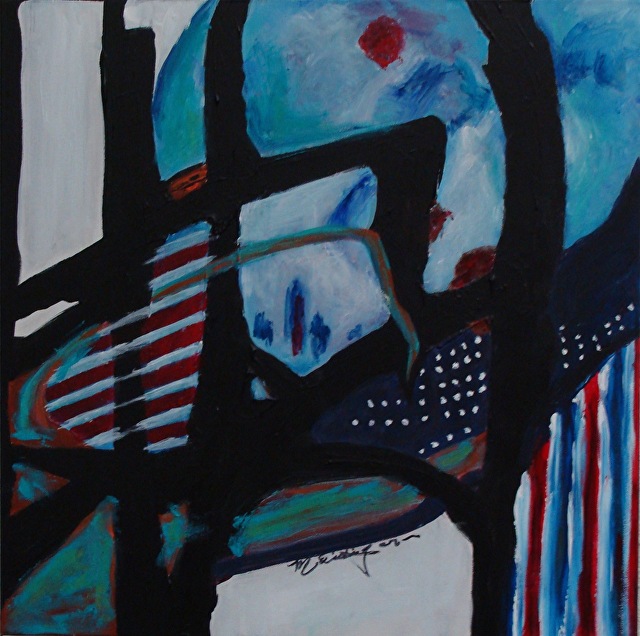
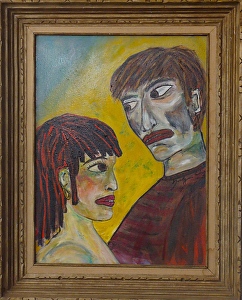
Last year I painted Fractured America to share with my followers on July 4th. At the time, I wrote about worrisome trends plaguing the nation.  This weekend, I looked back to see if the fractures I spoke of started to heal.. Unfortunately, what I saw was not good. Political divisions are wider and deeper than ever.

Fractured America. . . Still?

What is America? Is it a dream, a figment of our imagination? What do Americans stand for? Are our values shared? Does society still cherish free speech and applaud investigative reporters? 

As a child I sang America the Beautiful and This Land is Your Land with gusto. I honored the words written on the Statue of Liberty welcoming those yearning to be free, believed in democracy and embraced ideals written into the Constitution and Bill of Rights . . .a nd I still do. Though my parents were divided in their political leanings, I was never pushed in either direction. Their differences helped me think through issues of the day and come to my own conclusions. My parents believed in compromise, in working across the isle to make the American experiment succeed. Everyone knew that integrating immigrants from different countries, religions, racial identities, customs and culinary preferences was not an easy task. But we believed it could be done. The idea of a melting pot was strong, and many us strived to make it a reality.

That’s not to say that twentieth century America was perfect… far from it. However, most people espoused the idea of a free press and trusted accounts by investigative reporters. They kept us abreast of the fight for racial equality, Japanese internment camps, and the excesses of war. They taught us about the Mafia and gangs controlling the sex trade, gambling, and the free flow of drugs. We lived through political upheaval caused by men like J. Edgar Hoover and McCarthy, excesses in the labor movement, and  growth of the military-industrial complex.  Americans dropped nuclear bombs on foreign soil and became afraid the same thing would happen to them. Fear and greed spurred an arms race, built a society based on oil, clearcut forests, polluted waterways, overfished rivers, and built gated mega mansions for the wealthy.  

But though we did terrible things to the environment and fellow human beings, a tide of activists realized that what we were doing was unsustainable and began to change the status quo. They supported affordable housing and a safety net through social security, medicaid for the poor, medicare for seniors, workers compensation and unemployment benefits. Isolationism was abandoned as we took our place on the world stage and formed the United Nations. We designed the Marshall plan to help war torn countries become strong in their own right. The United States participated in NATO, formed coalitions to fight the Taliban in Afghanistan, and developed treaties around trade and disarmament. Americans applauded the nations who joined together to solve the ozone crisis and build an international space station. We came to the aid of bereft countries decimated by natural disaster and war and helped returning vets purchase property and attend college so that they would prosper. Our citizens cared about ordinary people.

I grew up believing the dream. I thought by working hard, raising good children, living according to the commandments, and accepting personal responsibility for those less fortunate, that my life would have meaning. I trusted that I was one among many improving the world for future generations. 

Over the past few years, my beliefs (not my hopes) shattered. The values that built this great nation, my country, went into hiding. My America was suddenly allowing bullies, bigots, white supremacists, narcissists and a power elite to take over center stage. Audience became immune to poverty, mental illness, homelessness, and children separated from parents running from war, violence, and hunger with the  hope of providing them with a better life. 

This new American willingly ignores scientific evidence about climate crisis and overpopulation. Fourteen of its states passed laws against abortion yet made no plans to pay for the 2.5 million unwanted children likely to be born if abortion becomes legal. There’s little mention of the  reenergized the arms race or talk of a president who befriends dictators while alienating our allies. It allowed fascism (corporate socialism) to replace social welfare, and permit companies too big to fail to rule the economy. It permits televangelists who preach miracles and Armageddon to thousands to become obscenely wealthy off the backs of the poor and working class. 

This July 4th we are more fractured than ever by partisan politics.  And though divisiveness has intensified, a majority of people continue to turn their heads away from the reality of the times.  They choose not to investigate what’s going on behind the rhetoric that comes out of Washington. Ignorance is preferred over worry and activism which demands picketing, speaking out and protesting. We no longer live in America the Beautiful. It’s flooding, burning down losing its coastline. This land is no longer my land, nor is it your land. ($80 for an America the Beautiful Pass to National Parks, mega dollars for property taxes and homeowner fees that make difficult for the middle class to own a house. Chinese investors spent $300 billion purchasing property between 2010 and 2015.) 

We can not afford to stay apathetic if we want America to stay great. We were given the right to come out of hiding, to share viewpoints and to vote, but if people don’t use that right, it is meaningless. But, we must listen to each other’s concerns, help one another succeed, and be willing to compromise.  Fractures have widened and deepened over the past year,increasing the risk that poor and middle class people will fall in.

Following is Martin Neimier’s poem written after WWII.

First they came for the socialists, and I did not speak out—

     Because I was not a socialist.

Then they came for the trade unionists, and I did not speak out—

     Because I was not a trade unionist.

Then they came for the Jews, and I did not speak out—

Then they came for me—and there was no one left to speak for me.

     Because I was not a Jew.

Don’t let this happen here.  Speak out!

References:

Martin, J (2015) Making Money Off Miracles: the Gospel of Televangelists. retrieved from https://gawker.com/making-money-off-miracles-the-gospel-of-televangelists-1725330875

Berman, N ( 2016) Dissecting the Multi Billion Dollar Business of Televangelism. Money Inc. retrieved from  https://moneyinc.com/dissecting-multi-billion-dollar-business-televangelism/

MacKinnon, A. (2019) What Actually Happens when a Country Bans Abortion. Foreignpolicy.com.  retrieved from https://foreignpolicy.com/2019/05/16/what-actually-happens-when-a-country-bans-abortion-romania-alabama/

Reuters (2016) Chinese Investors have spent $300 billion on US property, Study fFnds. retrieved from  https://www.cnbc.com/2016/05/16/chinese-investors-have-spent-300-billion-on-us-property-mbs-rosen-study-finds.html

The 2.5 million unwanted children (over ten years) likely to be born if abortion becomes legal came from multiplying our current population (approximately 329 million ) with information out of  Romania, a country of nineteen million people that made abortion illegal for a period of ten years. 

Art is always for sale. Contact me at Marilynne@eichingerfineart.com

Fractured America, Oil on deep canvas, 24” x 24”/ $425.

Please comment below.


Whack a mole

Whack a mole

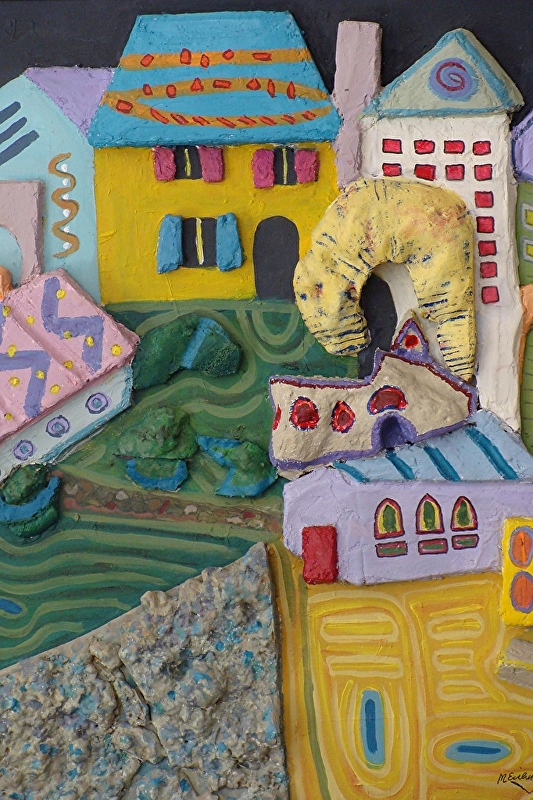
  View from a Bridge 
What good is beautiful landscape, great architecture, and city design if the people who walk the street trash the environment?

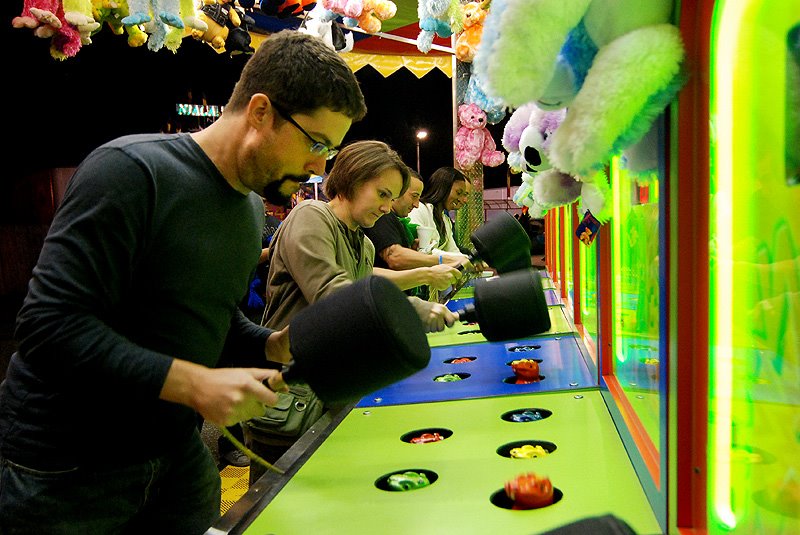
Wham! Bam! Don’t you wish it was that easy to get rid of decisions you thought were decided forever? I am continuously surprised watching society revisit the same issues over and over again without making progress. I keep thinking we’re moving forward only to see well considered ideas erode to push us backwards. The following are a few items I that were once behind us.

Trashing Neighborhoods. Whack! There was a time when the streets of our cities was littered with trash. People thought nothing of throwing cigarette and gum wrappers on the ground and out car windows. And then, in 1965, came Lady Bird Johnson with a campaign to clean up America. She started working on beautifying D.C. before taking her mission nationwide. She believed that a cleaner, more beautiful country would calm people and bring them together. Her efforts had some success, and for years people picked up after themselves. Now there is a new wave of litterers who trash and mar our streets, reminding me of third world country slums. Bam! Hit it down! Let’s restore Johnson’s original goal and beautify our cities, clean up trash, and border roadways with natural vegetation.. 

Abortion.  Whack!  I thought that topic was put to rest 50 years ago. Our citizens agreed that women had rights to make decisions about their own bodies. It wasn’t up to the government to interfere in conversations that belonged in the doctor’s office and family living rooms.The current rush to pass abortion bills and revisit the issue, reverses years of discussion, research and agreement. It returns women to seeking back room abortions, abandoning thousands of unwanted infants wto a life of poverty and crime. It divides the nation by putting us on vitriolic sides, that makes neighbors  hate each other. Bam! Hit it down.

Low income housing. Whack! There was a time when poor people didn’t wander  the streets of America? Through HUD and other social services we made sure \all citizens received a subsidy insuring they were housed. Over the last two years, the White House has directly attacked our efforts to house the poor. They are now calling for a 10.25 billion dollar reduction in funds for public housing assistance, partnership programs, housing for persons with disabilities and the elderly.  These budget cuts follow on last year’s push to slash eighteen percent of HUD’s budget despite studies, like one done by the University of North Carolina, showing it is significantly cheaper to house the homeless than leave them on the streets. Bam! Hit it down!

Nuclear Proliferation. Whack! Though not perfect, international steps were made to reduce nuclear weapons. Treaties with Russia and Iran were hailed a milestones. Stopping North Korea from atomic prowess was a high priority. Over the last two years we’ve pulled out of agreements with Russia and Iran and are playing footsie with a North Korea dictator. We have begun a new arms race. I remember years of fear when schoolchildren were taught to take shelter under their desks in case of a nuclear attack. Why is that nonsense happening again?  Bam! Hit it down!

Prison Reform. Whack!  Since our country’s beginning, prison reformers have struggled with how to punish criminals while preserving their humanity, how to protect the public while allowing prisoners to renter society and how to satisfy the desire of victims for justice and revenge. Americans view incarceration as just punishment. It takes away personal freedoms while protecting the public.The problem is that strict punishment and long sentences don’t stop people from committing crimes. It does not increase public safety but it does cost society money. The three strikes and you’re out crime law has blossomed prisons with low level criminals (mostly marijuana smokers) who were disproportionately African American. When released they remain a burden to society. Bam! Hit it down! The current administration is trying to bring about reform by placing prisoners closer to their families, reducing unfair sentences, giving federal judges more discretion in low-level cases and limiting some mandatory minimum sentences. It is a beginning, but the federal system accounts for only 10 percent of the prison system as a whole. Let’s start working on reforms within the states and get rid of private companies managing prisons. Bam! Hit it down! Fight for decarceration.

Climate Change and Global Warming. Whack!  When did our citizens adopt such uneducated, uncaring and destructive outlooks about the environment. For years scientists spoke of the disaster humankind was bringing on itself through carbon emissions and other pollutants released in the atmosphere. Nations of the world came together to get rid of chloroflourocarbons and close the Ozone hole. Why can’t we do the same to solve global warming. The Paris Climate accord was an excellent beginning, yet the United States pulled out. Deniers are either lazy, greedy or uneducated. Bam! Hit it down! Human beings were given a brain. We’re made to think, solve problems, and preserve the planet and our very existence.

There are many other subjects that see-saw their way into the news and family discussions. Please share a few on my blog site that bother you.  

References

(2019) No New Housing:Impact of the Trump 2020 HUD Budget. Affordable Housing, retrieved from https://affordablehousingonline.com/fy20-hud-budget-cuts

McKay, T (2014) Study Reveals it Costs Less to Give the Homeless Housing Than Leave Them on the Street. MIC. Retrieved from https://www.mic.com/articles/86251/study-reveals-it-costs-less-to-give-the-homeless-housing-than-to-leave-them-on-the-street

Gale,T (2007) Prison Reform Movement. Encyclopedia.com. retrieved from https://www.encyclopedia.com/social-sciences/news-wires-white-papers-and-books/prison-reform-movement

Berger, D. (2019) “Prison Reform” Is Not Enough. In 2019 Let’s fight for Decarceration. Trending. retrieved from https://truthout.org/articles/prison-reform-is-not-enough-in-2019-lets-fight-for-decarceration/

Global Climate Change. (2019() NASA. retrieved from website at  https://climate.nasa.gov/

Lady Bird Johnson. Portrait of a First Lady. OPB. retried from  https://www.pbs.org/ladybird/shattereddreams/shattereddreams_report.html

Art is always for sale. Contact me at Marilynne@eichingerfineart.com.      View from a Bridge     mixed media 32″ x 22″ x 3 D picture$599.00 USD

#PersonalSpace

The amount of open-space we need, differs from person to person and culture to culture. We form bubbles around ourselves that make us feel nervous when punctured. People who grow up in heavily populated cities in Pakistan are much more tolerant of being touched and having people stand close beside them, than those raised in wide-open spaces.

Continue reading

The Happiness Business

For Portland area bookworms: Mark your calendar and join me on June 14th.  

  Adapted from Lives of Museum Junkies

The Happiness Business: Playful Learning is Good

What is the secret of life? This question is an easy one for me to answer: happiness, of course. I am not talking about giddy-happy like you might feel if you won the lottery but rather calm-happy, producing a general sense of well-being.  The Greeks described happiness as the joy we feel moving towards our potential. It is a process and not an end in itself.

Museum professionals are in the happiness business. Parents too are in the happiness 2013 article in the Huffington Post, Carolyn Gregoire reported on a seventy-five-year-old Harvard study that explored secrets to a fulfilling life. What researchers discovered was that most people rated love first and happiness a close second to finding fulfillment. Yet experiencing  joy requires making connections and finding challenges that provide new perspectives. The process is one of problem solving, a creative activity that produces feelings of well-being. What researchers learned may seem obvious, but it doesn’t make it less true.

 Philosophers as ancient as Aristotle, as contemporary as the Dalai Lama, and as scientific as University of California professor, researcher, and author Sonja Lyubomirsk wrote in The How of Happiness: A Scientific Approach to Getting the Life You Want all agree that happiness and contentment are primary goals to work towards for life to have meaningfu. Learning how to do reach this state of well being should start early with good parenting.

It begins when children are given opportunities to play freely, letting their imaginations flow. When my children were young, they loved to dress up. I salvaged a cardboard washing machine box and filled it with old nightgowns, prom dresses, suits, ties, scarves, swords, hats and crowns, stethoscopes, homemade armor and makeup. As many as eight youngsters would assemble in our garage to don costumes before parading around the neighborhood feeling like royalty, Hollywood sirens, or superheroes. This type activity, with no rules or regulations, provided a pleasurable way to engage in creative storytelling. 

Imaginations ran the gamut as they put together dramas and comedies in our garage and playroom. I was often surprised when their acting parroted adult conversations they overheard in our kitchen or when they engaged in behaviors witnessed at home or in school. My children and their friends were practicing the life they thought they would be living as adults. They were analyzing the world as they knew it and presenting it back for their friends and parents  to see. It made my husband and I careful about what we said and how we said it.

 Negotiating for parts in their dramas was also an intense spectacle to observe. They often played school, assuming the role of teacher, student or lunch supervisor. Their reading and math sessions are often quite difficult. My younger children definitely benefited from the strict instruction they received at the hand of an older brother or sister. If real teachers behaved as they did, I am sure angry parents would be knocking at their doors. However, despite rigid rules, I never heard a complaint coming out of play-school when a child was put in a corner with a dunce hat on his or her head. 

My child actors were happy and intense as they practiced being part of adult society. Later in life, when counseling mentally ill clients, I couldn’t help but wonder if they had a chance when younger to be spontaneous and feel wonderment. So many of my clients did not know how to be playful. Those raised in a strict household had a particularly difficult time finding a happiness as an adult. Part of my job as counselor was to loosen them up so they could  laugh, shout, and let their imagination fly.

Melinda Wenner wrote for Scientific American that “free, imaginative play is crucial for normal social, emotional and cognitive development. It makes us better adjusted, smarter and less stressed.”  She discussed investigations of twenty-six convicted Texas murderers by Stuart Brown at Baylor College of Medicine in Houston. He found two things that the killers shared in common,  they came from abusive families and they never played imaginatively as kids.

Many parents sign their children up to play competitive sports. They also buy them computer games, take them to music lessons, and put them in structured play-groups leaving little time for unsupervised activities. Though a psychologist like Anthony Pellegrini, from the University of Minnesota believes structured game rules are a wholesome source of social learning and group coherence, he also says that, play, without a priori rules, brings about more creative responses. “This freedom challenges the developing brain much more that following predetermined rules.

The many benefits for free-play start with the development of strong social skills. It teaches proficiencies that come through interacting with peers, practicing fairness, and sharing equipment. Since imaginative play sparks fantasies, it puts children in situations that require them to learn to negotiate and to be persistent without getting frustrated. Games play an important role in language development for to keep them flowing requires the ability to communicate. Even play-fighting can improve problem-solving skills. It is practice for the unexpected.  As a stress relieving activity, play is critical for emotional health no matter the age.

Since, playful learning creates happiness, we all benefit when we loosen up and let the good times flow? Free time, play time is good time, important time. Parents shouldn’t worry if every minute of their child’s day isn’t scheduled.  This brings me back to the way contemporary science centers and children’s museums operate today. 

Museums are entertainment centers first, education centers second. If visitors don’t have a good time they’ll not want to return. In the early days, when hands-on science centers were evolving, we used to study how Disney integrated entertainment with education at Epcot Center. We experimented with ways to involve visitors in problem solving activities and thought about how to make learning joyful. Our centers transformed from behind the glass,  push button, hands-off artifact-filled spaces to ones of curiosity and challenge. Our methods worked. It is why millions of people visit each year. I invite you to spend time in a science museum this summer. It is never too late to let your imagination run wild. 

Lives of Museum Junkies is available on line and in bookstores in e book and paperback format. To keep track of speaking engagements check the Secrets of a Museum Junkies homepage from time to time.

Check out Over the Peanut Fence, also in paperback and e-book format. A parenting book that tells the story of homeless and runaway youth.

#Loveahug?

Seeking Perfection  The colors caress each other, snuggling close, feeding off of neighbors in their search for warmth, love, and fulfillment.

Loveahug?

Hugging – a sensitive expression of caring in a culture consumed with fear of being abused. It would be nice not to worry about hugs being taken the wrong way. Unfortunately, they often are.

This morning I watched a smiley three-year-old boy stand at the end of a walkway waiting for his giggling little brother to run into his outstretched arms.The brothers were having a wonderful time playing, and I felt fortunate to observe such unbounded expressions of love and happiness. They reminded me of my childhood.

My parents and grandparents were loving people who easily embraced their children. They kissed tears away when we fell down and planted kisses on our cheeks before we went to bed. Their willingness to touch, however, was reserved for  family members, not acquaintances. Visitors were greeted with an outstretched hand and a hearty shake. I followed their lead and stuck my hand forward when welcoming guests until I got married. It was during my hippy years  in Cambridge that customs changed. The normal way to greet acquaintances became a hug and occasional kiss on the cheek. 

I had a difficult time adapting to the new norm, for I was not used to being touched by those outside of my immediate circle. Since I did not want to appear to be a“cold fish,” I forced myself to go with the flow. After a while, I enjoyed hugging with the best of my friends. It was the expected way to act.

When traveling abroad, I observed different types of salutations being used. Europeans often met each other by planting a kiss on each cheek, moving from right to left. In Morocco I saw men hug their friends and kiss them on both cheeks. Similar contact between the sexes was forbidden and considered obscene. The handshakes between men were weak and didn’t last long. Russians, however, shook hands regular and with gusto.  Close male friends and women commonly kissed each other, again on each cheek.I t is to learn these customs before spending an extended period of time in a foreign country. 

Psychologists say that hugs are good for you. They help build trust and provide a sense of safety for the recipient. Hugs boost oxytocin levels which heal feelings of being alone. They strengthen the immune system and improve self-esteem by demonstrating that you are lovable. During a hug, muscles relax and your, nervous system responds with changes in skin moisture, temperature and heart rate.  Caresses teach us to let go, to enjoy the moment, and to give and receive. They becomea visible investment in a relationship. 

Despite the good that comes from being held, I am more nervous about hugging than I used to be. No longer is it the ‘60s with the love generation in full rage. The MeToo movement makes me cautious. I read that Vice President Pence is afraid to have a meal with a woman if his wife is not present. I assume he’s afraid that his intentions will be misunderstood. And I heard accounts of Joe Biden touching Lucy Flores’ shoulders and kissing her hair while she was preparing for a stump speech in Nevada. Many voters chastised him immediately. His actions, considered unwanted today, was typical of the behavior I expected (before a speech and in public) when I was a young adult. It signaled friendliness and encouragement for the task I was about to undertake. 

Because of today’s queasiness with being touched, I’ve had to learn to think before I hug. I try to be more careful before wrapping someone in my arms. I still make mistakes, though. I can feel when a friend stiffens and pulls back. I went so far as to look to the exports.  Following are suggestions found in Psychology Today that serve as my guide.

  • People who hug without thinking need to pause a minute to assess the other person’s body language before lunging. If the individual stands straight and doesn’t lean toward you, it is best to stretch out your hand instead of offer a hug.
  • Stop to consider if your acquaintance might think a hug offensive. A 2014 study found that women not in a heterosexual relationship were reluctant to be hugged by men. Age also played a factor in their willingness to be held.
  • European researchers determined that older adults rate touch more positively than younger ones. They tend to be more welcoming, especial if the caress is slow and gentle—but not always, so sensitivity to the individual is important. It’s definitely smart to be more cautious when hugging a younger person.
  • Hugging a colleague at work is a no-no due to the growing concern about sexual harassment. Leave hugs for special occasions, such as when someone leaves the company or retires.
  • Observe how other people treat the situation you are in. For instance, a graduation or birthday hug is usually acceptable when everyone else is doing so. A hug at a funeral or other emotionally charged event may be seen as a sign of caring. A longer caress can given safely to a person who is grieving or emotionally hurting if you know the individual fairly well.
  • Though you may not be a huggy type, there are times when others may consider you standoffish for being unwilling to receive their affection. That was the case with me before I learned to hug. However, if you are bothered by touch, germs, or body odor, turn to the side and extend your hand or stiffen and and pull back to avoid contact. If it happens often, explain to the individual that you are not much of a hugger but do enjoy their company.  Honesty is often the best way to explain that you do not love to be hugged.

Society’s norms never remain constant, though it would be easier if they did. Since change is inevitable it is important to pay attention to the sensibilities of the object of your affection. 

References

Felicetti,M ( 10 Reasons Why We Need at Least 8 Hugs a Day. mbgrelationships. retrieved from https://www.mindbodygreen.com/0-5756/10-Reasons-Why-We-Need-at-Least-8-Hugs-a-Day.html

Whitbourne, Ph.D.(2016) Seven Basic Rules of Hugging. Psychology Today. retrieved from  https://www.psychologytoday.com/us/blog/fulfillment-any-age/201603/7-basic-rules-hugging

McGann,(2019) Lucy Flores isn’t alone. Joe Bien has a long history of touching women inappropriately. VOX. retrieved from   https://www.vox.com/policy-and-politics/2019/3/29/18241598/joe-biden-lucy-flores-touching-women-media-history-explaine

By a Relocation Expert (2-11)Greeting Customs Around the World, DIversity Resources. retrieved from https://www.diversityresources.com/greeting-customs-around-the-world/

Works of art are always for sale. Contact me at marilynne@eichingerfineart.com.

Seeking Perfection/ Acrylic on Canvas/  20” x 24” / $ 399

#InfantAbuse

The following segment is taken from my latest book, “Over the Peanut Fence.” I am sharing it, because of the move to outlaw abortions without fully understanding the consequences. We can look to Romania, between 1965 and 1989, when contraception and abortions were strictly forbidden. Thousands of unwanted infants were sent to overcrowded, sterile orphanages. Communist leadership hoped to increase the fertility rate of the country but instead nearly 10,000 women died due to complications arising from illegal abortions and thousands of unwanted infants were sent to overcrowded orphanages where brain development was thwarted. Those who had abortions were sent to prison, and those suffering from complications due to seeking an illegal abortion, were turned away from healthcare. 

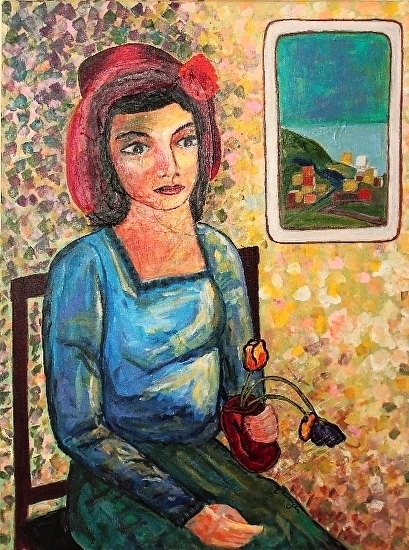
EvaWhy does she cry? She has to face a decision that has no right answer. It is not easy.

From chapter on Lovelessness: “Over the Peanut Fence”

“The majority of us are fortunate for we are surrounded by affectionate parents and relatives. As infants, we were held and cherished us and as adults, we find partners and form bonds based on fondness and mutual respect. But what happens to children who are never caressed or told they are special? What are the long-term effects of never having been touched or cuddled? What befalls those who are abandoned, left on door steps or placed in cribs and not attended to when they cry, or when their diapers need to be changed? 

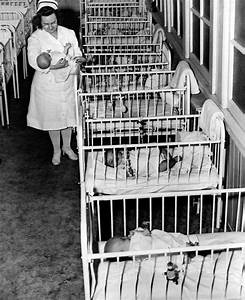
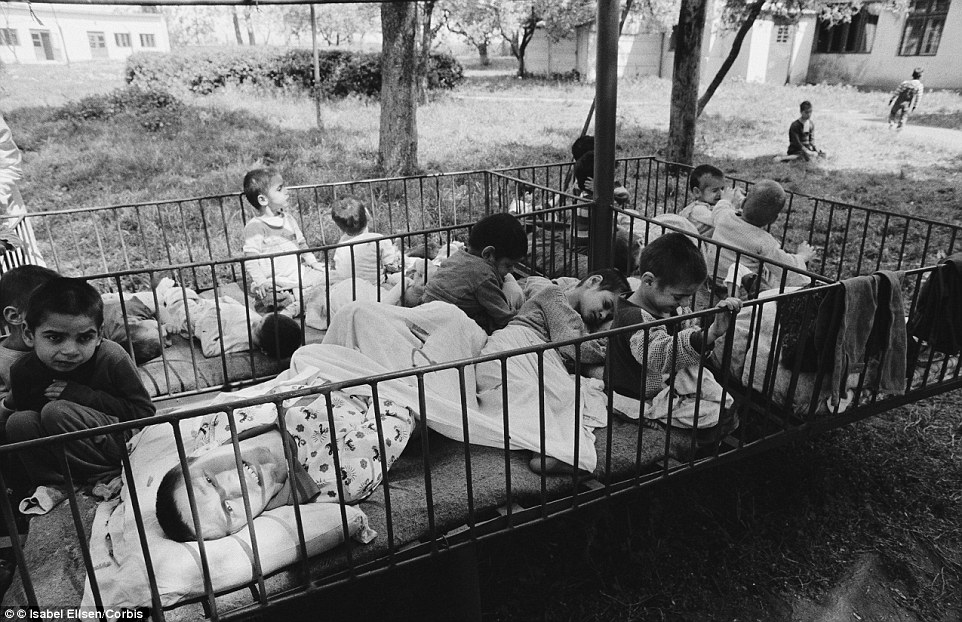
A cornerstone study about infant neglect was initiated in the 1980s when Dr. Nathan Fox and colleagues from Harvard Medical School, walked into an orphanage in Romania. Due to a recent ban on abortion, the number of orphan babies had soared. 170,000 children were placed in 700 overcrowded and impoverished facilities across the country, staffed with an insufficient number of caretakers.  Though the facilities were clean, the infants were emotionally neglected.  Left day and night in their cribs, the babies were changed periodically and fed without being held. The nurseries were eerily quiet places. Since crying infants were ignored, they stopped making sounds.  No attention—no cries—only silence.

Dr. Fox followed the children for over fourteen years.  During the early years, autistic-like behaviors such as head-banging and rocking were common.  As the children aged, their head circumferences remained unusually small. They had difficulty paying attention and comprehending what was going on around them.  Over time, 50 percent of the children suffered from mental illness. They displayed poor impulse control, were socially withdrawn, had problems coping and regulating emotions, and handicapped by low self-esteem.  They manifested pathological behaviors such as tics, tantrums, stealing and self-punishment. Poor intellectual functioning caused them to have low academic success.  

Those youngsters fortunate enough to be put in a caring foster home before the age of two were able to rebound. Those who entered foster care at a later age were not so lucky and many became permanently damaged.”

We know for sure that warmth and love are crucial for a child’s well-being. Dr. Fox’s study continued for thirteen years teaching us much about infant brain development, the need babies have to be touched and responded to when they cry, and the unforeseen effects of imposing a political will on the right of a woman to choose. Abortion is currently legal in abortion. 

Understaffed Romanian Orphanage

In 1965 Romania’s population was 19.4 million.The population of the United states is currently 327.9 million, approximately 16.9 times larger. These laws will likely cause 169,000 deaths due to illegal abortions.  If we use Romania’s numbers and multiply them by 16.9, the U.S. will find itself with 2,873,000 unwanted infants over a ten year period. Most will not get adopted. Many of will become brain damaged due to lack of love and attention for we are not set up to care for them. We will have to care for them the rest of their lives. The average cost of raising a child to seventeen is $ 233,610. Total amount needed for ten years of unwanted infants will be more than $671,161,530,000. Who will pay for these children’s care? Is it better to have a child who will most likely be brain damaged and need care throughout his or her life or to abort?

References:

Nelson, C. & Fox, N. & Zeanah, C. (2014) Romania’s Abandoned Children, Deprivation, Brain Development, and the Struggle for Recovery, Harvard University Press.

(2010) Decree 770: Abortion Outlawed in Communist Romania, CARAOBRIEN,retrive from https://caraobrien.tumblr.com/post/352715826/decree-770-abortion-outlawed-in-communist-romania

Furedi,A ( 2013) On aabortion, we should study Romanian history. The Guardian. retrieved from    https://www.theguardian.com/commentisfree/2013/jan/15/abortion-romanian-history

Population of the United States. (2019) Population of the World. retrieved from https://www.livepopulation.com/country/united-states.html

Ganjanan, M (2017) The Cost of Tasing a Child Jumps to $ 233,61. Money. retrieved from   https://search.yahoo.com/yhs/search?hspart=pty&hsimp=yhs-pty_email&param2=5f96e1b7-3733-4d

Art Work is always for sale. Contact MARILYNNE EVA/ Acrylic on Canvas / 40” by 30”

Available as an ebook and in paperback at booksellers nationally.

#Overpopulation – It’s Complicated

South Slough, Coos Bay, Oregon

The South Slough Reserve, where fresh water mixes with ocean water, includes 4,771 acres of protected land and waterways. Visitors travel through temperate rainforests freshwater swamps, salt marshes, eel grasses and mud flats. Its abundant wildlife includes crabs, herons, bald eagles fish, river otters, elk, beavers and oysters and more. With so much talk about global warming, I started wondering what will happen to the reserve as oceans rise and bring more salt inland, as deep water dredging builds channels for ships that cause oil slicks, as coal trains increasing in number sprinkle toxic dust as they travel, as businesses like Georgia-Pacific continue polluting even when fined, and as housing is built on adjacent lands?

It’s Complicated

I recently mentioned to a friend that I rarely hear people talk about overpopulation as they did in the 60s. His answer was, “Oh boy, that’s complicated.” Of course it is, but that doesn’t mean that the subject should be ignored. It seems obvious to me that population growth is a major cause of environmental degradation and global warming.

The young people I know seem more willing to tackle difficult topics than my friends. Thirty-year-olds say they don’t want to get married or have children because of society’s inability to deal with critical issues. They express concern for global warming, lack of health care, pollution, the high cost of housing, and an education system that leaves them in debt. Many tell me they work two jobs to make ends meet. I’ve also heard some say that don’t feel safe. They worry about armed shooters when attending concerts and shopping at malls. And, they express concern about school and church shootings.

Do you ever wonder if there are too many people for the earth to support? I do. I’ve been told that we have the ability feed and house everyone on earth. There should be no starvation. If this is so, then why aren’t we? Global warming is slowly changing where humans congregate around the globe. Those who live in coastal areas or in arid, hot climates are starting to seek shelter elsewhere. Unfortunately for them, environmental migrants are not welcome newcomers in most countries. High density cities become overburdened and unable to cope with demands for services, housing, and jobs. Cultural differences cause conflicts.

Understanding what is happening is not complicated. There is a wealth of factual information at our fingertips. Last month was the second warmest March (+2.23 degrees F) since records started to be kept 140 years ago. And, though we hear little about population growth, the world’s population as of last Sunday was 7,644,919,317. It is projected to reach 9.8 billion in 2050 and 11.2 billion in 2100 according to the United Nations Department of Economic and Social Affairs.

Population growth is not evenly distributed around the globe. Half the gain will occur in a small number of countries-India, Nigeria, the Democratic Republic of the Congo, Pakistan, Ethiopia, the United Republic of Tanzania, Uganda, Indonesia and surprisingly the United States. Countries in Europe and Japan with lower fertility rates are faced with problems caused by an aging population. 25% of the people alive today are over 60 with that number expected to reach 35% by 2050. Though the US birthrate is now 1.7.  Immigrants, the baby boomers, and better healthcare are the main reasons our population continues to expand.

Over one billion people around the globe go to bed hungry every day. Many live in arid countries where they can’t raise crops. Water scarcity forces them to go elsewhere. Rising sea levels (over 8 in. since 1880, 3 in. since 1993) also are making residents of South Pacific Islands to relocate. With more than 40 percent of the world’s population lives in high density coastal areas where infrastructure, oil and gas wells, power plants and water supplies are threatened, thousands of coastal residents will eventually be forced to move inland.

There’s no doubt that population growth accelerates global warming. More people mean greater demand for electricity, automobiles, heat and food that send Co2 and methane into the atmosphere. Food production that uses fertilizers and hormone fed animals adds problems to overburdened health systems.

I suggest that it’s time to talk about the two subjects-overpopulation and climate-in the same breath. We need to have practical discussions around around birth control and abortion. We need to consider where we will house people who will have to move because their land is inhabitable. Think for a moment about what will happen to thousands of people when Manhattan is under water. What about the Hawaiian Islands? the Everglades? Lawmakers in Hawaii, Florida, and Louisiana are already seeking millions of dollars for coastline protection from rising sea levels. 

The United States isn’t ready to deal with the millions of Americans who will have to relocate because of climate change. With a large influx of people, once habitable cities could easily become disaster zones too. Portland and Seattle are already seeing climate induced migrants and it is not a pretty site. Congestion and homelessness abound on our streets.

Let’s start using scientific information we have on hand and involve social scientists and city planners to discuss how we are going to handle the future. Too many people I know say, “The next generation is in trouble, but I can’t worry about. I’ll be dead before it happens or it’s God’s will.” Nonsense. We were born with brains. It is our responsibility to leave the world a better place than we were born into. Our cities and society will require restructuring. Let’s get going. Understanding the facts is not complicated. Knowing what to do about them, is. We need to talk.

References

United Nations Department of Economic and social Affairs, retrieved from web site https://www.un.org/development/desa/en/news/population/world-population-prospects-2017.html

Population Institute, Why Population Matters, Retrieved fromhttps://www.populationinstitute.org/resources/whypopulationmatters/

Nunez, C (2019) Sea level rise, explained. National Geographic. retrieved from  https://www.nationalgeographic.com/environment/global-warming/sea-level-rise/

Lindsey,R (2018) Climate Change: global Sea Level. Climate.gov. retrieved from https://www.climate.gov/news-features/understanding-climate/climate-change-global-sea-level

Jones, C. (2019) Hawaii lawmakers seek millions for coastline protection from rising sea levels. The Washington Times. retrieved from https://www.washingtontimes.com/news/2019/apr/21/waikiki-beach-flooding-prompts-hawaii-seek-coastli/

Schultz,c. (2014) Climate Change Is already Causing Mass Human Migration. Smithsonian. retrieved from https://www.smithsonianmag.com/smart-news/climate-change-already-causing-mass-human-migration-180949530/

Holdeman,E (2018) Global Warming and USA Migration. Government Technology. retrieved from https://www.govtech.com/em/emergency-blogs/disaster-zone/global-warming-and-usa-migration.html

South Slough National Estuarine research Reserve. Retrieved from website at https://www.oregon.gov/dsl/SS/Documents/South%20Slough%20508C%20Handout.pdf

Art is always for sale. Contact me at marilynne@eichingerfineart.com.

Finding Your Passion

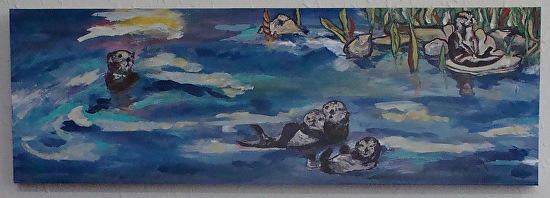
Otters at Play/ NFS

Discovering what you love to do will lead towards a #passionatelife.

Several weeks ago I met an orchestra conductor who grew up on a kibbutz, a communal farm in Israel.  When he was a teenager, the commune decided it needed a bee keeper and assigned him that job. He toiled at beekeeping for three years before leaving the kibbutz to follow his passion which lay in music. Fortunately his dreams, talent, and perseverant personality lead him towards a successful career. Yaacov Bergman served for years as Music Director of the Colorado Springs Symphony and The New York Heritage Symphony and 92nd St. Y Orchestras in New York City. He now conducts regularly in Oregon, Washington, and Idaho and makes frequent guest appearances across the globe. 

Finding a career that provides purpose and passion is not limited to youth. It is a reoccurring theme in most people’s lives. High school and college graduates look for meaningful careers they can embrace throughout their lives. Some become dedicated workers, buying into their employer’s goals. Yet, it’s is not unusual for them to become frustrated in their forties and fifties. Others who spend their early careers chasing after wealth, find it to be a goal that is no longer satisfying. Many discover that their bodies are no longer able to do tasks required for their success. Models became wrinkled,  gymnasts lose flexibility, and rock climbers fear falling. Those who followed goals set by their parents begin to wonder how they got talked into their present careers. They may have been pushed to become lawyers, doctors, jewelers, actors, fishermen or financiers and now, as adults, wonder why they spent so many years following their parent’s dreams. And so, the search to find themselves and for meaningful employment begins. 

Middle age, however, is not likely to be the last time they confront questions of meaning and purpose in daily toil. Active retirees face similar dilemmas of passing their hours purposefully and productively. They search for engagement in meaningful activities, though they may not be as physically strenuous as ones pursued when younger.

Questioning the purpose for being and spending hours in fruitful pursuits continues throughout life.  Happily, finding what you are meant to be and do at each juncture in life is definitely doable. Following are a few thoughts of how to go about it. 

  • Know who you are. Sound easy? It’s not. We do change over time and need to gauge who we are at the particular moment we start our search. Life’s occurrences can alter the way we think and act. As you seek a new direction, appraise your skills and consider what you love to do. What type of books do you read over and over again without getting bored? What did you enjoy doing as a child  If money wasn’t a consideration, what would you be willing to do for free? What are your hobbies?
  • What you are mediocre at? Is it worth spending time (money) to increase your skills? Are you willing to return to school, attend workshops or find a master to apprentice yourself to? In my twenties, I taught dancing to elementary school children. Surprisingly, my worst student was the only one to become a professional dancer. She was inspired and put in hours of practice to get where she wanted to go.  
  • Accept that passion and purpose don’t have to be the same as your job. Many people have repetitive work situations they do for a paycheck. Their purpose is found outside of their employment. Some interests and hobbies will never make you wealthy. Yet, these activities can provide richness and color to living and they may move you in the direction of a career. For example, Jane loved to draw and paint, but to earn a living, required training in computer aided design, marketing,  and other business skills. These added proficiencies enabled her to fuel an emerging passion.
  • List what you hate doing and eliminate those activities from you search. Then ask yourself if there’s something you wish you had been doing for the last twenty years? What would it take to start?
  • Though some people have immediate insight into what they want their future to be, most do not. Finding purpose and passion is like digging for gold. You need discipline and have to be willing to try over and over again, accepting failures as you go. Visualization is a technique I use from time to time to help me solve problems. Imagine dressing quickly because you‘re looking forward to leaving home on a sunny day for a job you like. Where are you going? What will you be doing?

As an employer, during interviews, I always asked people to describe themselves. I was particularly interested in what they did outside of work. Watching them light up as they passionately described their hobbies was often the reason I offered them a job. I wasn’t looking for perfection, but I wanted to know that they were willing to learn and were capable of feeling intensely about something they loved to do. People with a zest for life made our workplace a creative exciting place to be. 

References:

Alex. (2019) Eight ways to find the true passion in life that has eluded you. THeTelegraph. retrieved fromhttps://www.telegraph.co.uk/finance/jobs/11499695/Eight-ways-to-find-the-true-passion-in-life-that-has-eluded-you.html 

Gordon-Barnes,C. (2019). 6 Fresh Ways to Find Your Passion. The Muse, Career Paths. retrieved from https://www.themuse.com/advice/6-fresh-ways-to-find-your-passion

Webb, M.( 2015) How to Find Passion In Your Work. Forbes. retrieved from https://www.forbes.com/sites/maynardwebb/2015/09/22/how-to-find-passion-in-your-work/#19754a826cfd

A Sneak Preview

Last week I announced the launch of Over the Peanut Fence: Scaling Barriers for Homeless and Runaway Youth. It is a hopeful book about  adolescents  overcoming childhood abuse and about professionals and volunteers who help street youth  succeed. Following is a sneak preview from The Story of Zach, Chapter I.

Getting around

The Story of Zach

Cory and I are life partners, sharing a home in Portland, Oregon. In 2011, I owned and operated Museum Tour, a national education supply catalog and Cory was employed in a handful of ventures that used his engineering and carpentry skills. Under our house in the woods, he set up a shop and outdoor area to carve totem poles and Northwest coast masks, which he sells to a burgeoning clientele. When not at work, I spent my hours painting in a sunlit studio located on the lower floor of our contemporary seven-level house. The two of us had few encumbrances as we freely traveled, worked and made art. 

All that changed one blustery November day when Cory noticed a youth pass in front of his car while waiting for the light to change. When the boy stumbled, he caught Cory’s full attention, for he recognized Zach, whom he knew as a child from a troubled family who lived in his old neighborhood. Pulling over to greet the youth, Cory immediately saw that the lad was ill. Fearing pneumonia, he phoned me and after a short conversation we invited Zach for dinner in order to assess his well-being. Within an hour of his arrival and learning that he lived in shelters, we suggested he stay for a few days to be nursed back to health. 

Zach quickly improved after sleeping in a comfortable warm bed and eating nutritious meals and by the end of the week was ready to return to the streets. Winter started early that year, the weather was wet and bitterly cold, and we were reluctant to send 

him back only to become ill again. Zach appeared to be such a young, lost and confused youth that I felt tenderness for him. 

It was an emotional week, for Cory and I were uncertain as to the role we wanted to play in his future. Friends feared for our safety and were quite worried about us getting deeply involved. A few neighbors watched Zach moving about our yard and called to warn us of a vagrant trespassing on our property, advising us to call the police. 

Zach certainly looked like a street transient. I must admit to my middle-class bias in that I did not like his appearance. He wore ragged clothing and had plugs in his ears. His reddish hair was greasy, straggly and unkempt, and he gave off a strong body odor. He walked hunched over, with a shifty look in eyes that never seemed to focus. Zach’s appearance spoke emphatically of a downtrodden boy. Speaking softly when queried, his responses were a short yes, no, or I don’t know. Though we certainly tried, it was difficult to get a complete sentence out of him. 

Knowing that he came from a family that pilfered from one another, we feared he might steal so when we decided to let Zach stay we kept a constant vigil as he moved about the house, insisting he go to his room when we went to bed. My purse was always stored safely in our bedroom at night. This decision proved wise, for we suspect he took money one time when it was unguarded. 

Once Zach agreed to our conditions, which required a haircut and removing the plugs in his ears, we let him remain for the winter. Zach was not happy to lose his straggly locks, but we insisted that if he was going to live with us he had to look like he belonged to our family. We took him to Goodwill and Ross Dress for Less to be outfitted from his feet up. Zach needed everything from undergarments to jeans, a warm coat, gloves and hat. 

House rules included a daily shower, cleaning his room, and making the bed. As time went by, a daily exercise routine was added, and Zach was occasionally asked to help with chores such as shoveling snow and chopping wood. Our goal was to break up the hours he spent lounging aimlessly around the house or watching television. 

One activity he participated in without being asked pleased us greatly—he continued to attend a drug rehab program. Thankfully, Zach had never been addicted to opioid drugs but was a light pot, molly, meth and occasional shroom (psychedelic mushrooms) user. While he was enrolled in the drug program, we never worried about him backsliding, and our trust has since been rewarded. We were concerned about his finances, however, because he had a large fine for possession of marijuana that had to be paid to a municipal district, and we wondered how Zach was going to meet his obligation without an income. 

We decided to lend him money to keep the judicial system from compounding interest, but he needed to find employment. Fortunately, I was able to help, for my catalog company was in the middle of its busy retail season, and we needed workers to ship warehouse products. It was easy to provide a six-week seasonal job, though to keep it, Zach had to pass a drug test and prove he could do the work. He was somewhat concerned about the test. When we discovered there was a pill he could take that would purge his body of narcotics, we took him to a head shop to purchase it. Before we spent a lot of money, the proprietor suggested Zach be tested and thankfully the results showed that he was clean. I was especially glad of the outcome because I was uncomfortable with the idea of helping him disguise an addiction. In addition to becoming an enabler, I would have been a hypocrite for ignoring my own employment requirements. to read on . . .

Why do some youth overcome abusive childhoods while others do not?

Currently available on Amazon in paperback and Kindle. Go to AMAZON.

Please rate on Amazon after reading to bring attention to the plight of homeless youth.

Internationally in bookstores and other internet sites April 22nd.

For speaking engagements contact eichingerbooks@gmail.com.