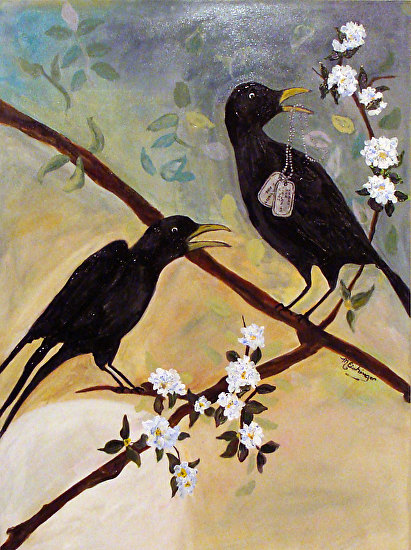
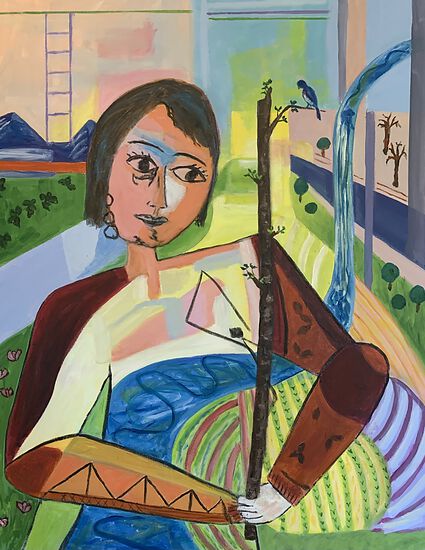
Silence From the silence within comes great thoughts and attainable dreams for the future.
In 1964 Billy Mills, an Oglata Lakota (Sioux) from South Dakota, won the Gold Medal in the 10,000-meter run. It is considered one of the Olympic’s greatest upsets because the victory came from an unknown Native American athlete. Though Mills grew up in poverty on a reservation, he didn’t know it because there were gardens for food and there was a lot to keep him busy. Without a car, he ran, rode bikes, and swam in ponds, developing cardiovascular conditioning without realizing it. At the age of eight when his mother died, he became despondent, yet managed to become the only American to ever win a gold medal in the 10K event.
Mills’ father’s advice helped him overcome his depression and focus on the future. “Your wings have been clipped,” he said to the young boy. They are broken and the only way to grow them back is by following your passion. Chasing dreams will make you whole again and let you soar like an eagle.” The youth started running and found he excelled at it. Over the years he learned how to manage bouts of low blood sugar and severe depression. He dealt with bullying and racism dished out in high school and at the University of Kansas. A low point during his last year at the University was when a photographer pulled him from a group shot after qualifying for a prestigious race in Brazil. He returned to his dorm room afterward prepared to jump to his death.
As a commissioned officer in the US Marine Corps, he trained at Camp Pendleton for the Olympic Games. During his epic run at the Tokyo games, Mills thought he saw an image of an eagle on a fellow contestant’s shirt. Remembering his father’s words, his feet began to speed. He had the wings of an eagle and realized he had a chance at winning. After the race, he looked for the runner and discovered there was no eagle, only the perception.
“Tokyo was about healing a broken soul,” Mills said. “It was finding peace, making friends.” Mills was finally accepted. “When they played the United States National Anthem, it was powerful. It was beautiful,” though he whispered to himself that he didn’t belong, and cried.
When his track career was over, the Olympian decided to give back to the community and share his legacy. He hoped “to empower the visions of the elders and inspire the dreams of the youth.” In 1912 President Obama awarded Mills the Presidential Citizens Medal for his efforts in Native American causes. Mills at 83 worries that our country is losing its democracy. His days are spent as a philanthropist building hope for the future by teaching his twelve grandchildren and community youth to reach for their dreams.”We need everyone to come together so collectively we can choreograph the horizon of the future.”
I tell this tale because so many people have been sharing stories of their broken souls. I too, find it hard to find good when there is so much of the world appears broken. The pandemic, hot erratic weather, families in disarray, cities of trash, and the unhoused invade our senses. Hatred, fear, and confusion about the future have clipped all too many wings. Instead of looking forward to better times, many people appear to be stuck in a cycle of hopelessness. Rather than searching for their passion and following it to make life better, they wallow in self-pity and look for someone to blame. They lash out at politicians and strangers and make things worse for themselves and society at large. You have only to look at the news and read about escalating domestic and gun violence, road rage, homelessness, and alcoholism to know what I say is true.
Too many eaglets fallen from their nests lay broken and silent on the ground, unwilling or unable to move. Yet they breathe–and if given a little bit of hope, they could heal. Though their wings were clipped they can grow strong and stretch wide to carry them to their dreams. A person, no matter age or circumstance, who believes in him or herself and has a passion for making something happen that will improve their life has the ingredients needed to pull forward. It can be done.
No one ever said that a transition was easy. Turning a dream into reality take perseverance, and it may require putting a hard shell around you that keeps adversity at bay–but it can be done. As our country moves through an unprecedented era of transformation we must never give up hope. It is the dreams of young and old that carry light into the world. Imagine what it would be like if everyone dreamt of achieving success in a just and fair society. We’d look up in amazement at seeing thousands of powerful fliers–eagles soaring, gliding, and flapping their spectacular wings over great distances, guiding themselves and loved ones to the places they were meant to be.
Do share your dreams and the energy you put forth to make a better future for yourself and others. Add them to my blog site below.
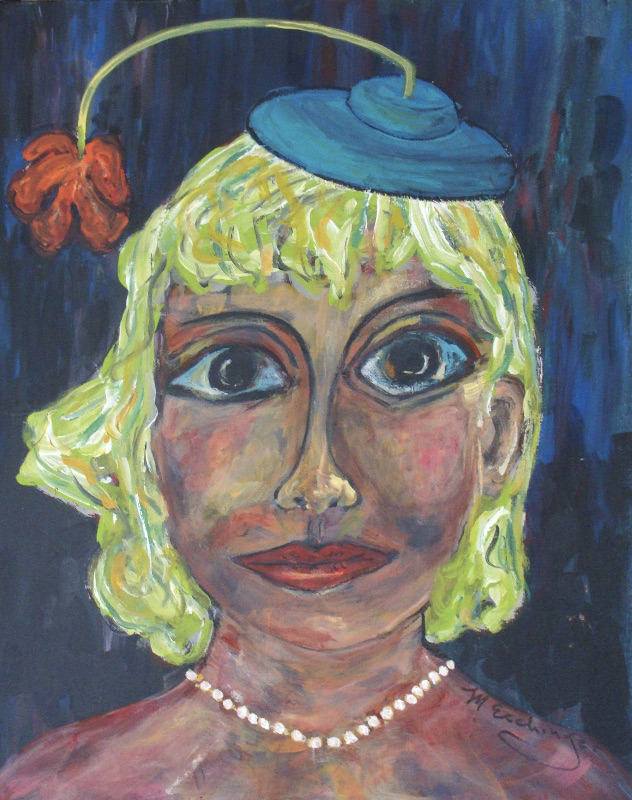
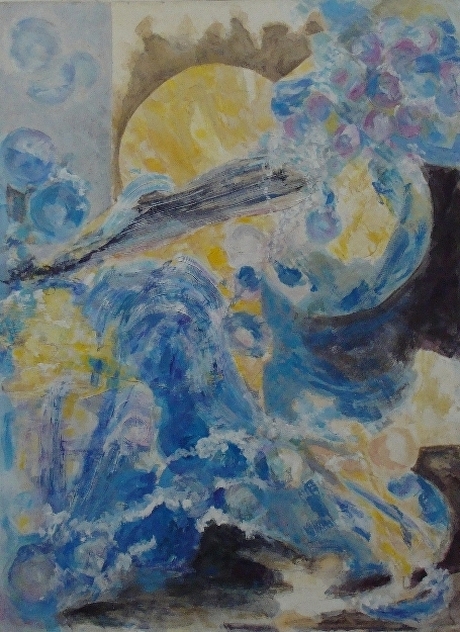
Art is always for sale. Silence is a mixed media, three-dimensional acrylic painting backed by canvas. 28″ by 40″. Framed. Available for $650. Contact me at marilynne@eichingerfineart.com.
Clarity – Understanding the healthcare system is not easy. Seeing it with clarity is almost impossible.
The Whys of Healthcare Frustration
Last week I wrote of my frustration with a health care system that no longer focuses on patient satisfaction. A reader suggested I explain why costs are so high and what led to the degradation of services. Though healthcare is more expensive in the U.S. than in any other industrialized country, it is not best for all, according to a 2019 Johns Hopkins report. Of the $ 3.5 trillion spent by Americans per year, one-third is wasted according to Harvard Professor of Global Health, David Cutler. NBC News reported that a man hospitalized with COVID-10 for 62 days received a $1.1 million medical bill. Receiving that large a bill would give me gray hair if I didn’t already have it.
There are several reasons doctors don’t provide patients with the compassionate care that was once considered standard. David Cutler, professor in the Department of Global Health and Population at Harvard puts it down to three factors; corporate greed, price gouging, and higher utilization of costly medical technology. Not having universal health care with guaranteed access for everyone is a contributing factor.
The most notable problem is that U.S health care operates within a “for-profit insurance system.” Private individuals and companies pay for their care and for that of their employees in contrast to who pays in most developed countries that consider health care to be a right, not a privilege. The motive to make money ripples through our medical economy. Insurance companies, for example, pay a great deal to review claims with the aim of not paying consumers for the care they believe themselves to be entitled to.
Other issues revolve around structure. From billing to service delivery, the system is fragmented and complex. Administrative processes and overhead make up 34.2 percent of costs, twice that of Canada with its decentralized, publicly funded program. The only exception is in the U.S. with Medicare for older Americans. Operating with less bureaucracy than private healthcare systems, administrative costs are much lower. Little time is given to denying people care.
In a privatized system, patients are charged based on the services they receive. It’s in the economic interest of hospitals and physicians to call for extra tests or scans—the more the better. In my previous article, I complained about the service primary care physicians provide. Hospitals and clinics are buying up private physicians and pushing their profit motive down to the primary-care doctors. Internists are pressured to see a certain number of patients every day. Those who meet their quotas, often find them increased the following year. During visits to the doctor’s office, rather than handling minor problems with a physical exam or collecting history that might provide answers, patients are routinely referred to specialists who cost more. This is why over several years, my one-hour annual check-up was reduced to a half-hour and finally a fifteen- minute visit. I was asked to make a separate appointment for every issue I wanted to raise, no matter how insignificant.
Perhaps the most difficult part to understand is what results from a lack of government regulation. Hospitals systems and pharmaceutical companies have an easier time keeping costs high when negotiating with private insurance companies. With a single- payer system run by the federal government, they would be pressured to meet demand at a lower cost. Private insurance companies often pay as much as two and a half times more for services at the same facility as does Medicare.
The federal government doesn’t regulate how much companies charge for services, whether insurance, drugs or care. And, as more and more hospital systems and insurance companies merge, costs have risen significantly. There is little incentive to keep fees low since patients don’t have much of a choice.
If you are sick and wealthy, the U.S. is still a good place to be. You can get the care you need though you may have to dig for it yourself. But, our country does not have a system that caters to all. It leaves thousands of vulnerable people to fend for themselves when ill. That is not compassion. It is not ethically nor morally the right way for a society to behave. No wonder so many people walk around angry much of the time.
Himmelstein, D .,Woolhandler,S. & Campbell, T. ( 2018) Health Care Administrative Costs in the United States and Canada, 2017. Annals of Internal Medicine. retrieved from https://www.acpjournals.org/doi/10.7326/M19-2818
Medical care today is beyond my comprehension. As technology, sophisticated treatments, and pharmaceuticals improve, the quality of interactions between physician and patient appears to decline. Instead of getting to know patients and their families, doctors don’t take the time. Sick people marching through their primary care offices or visited online are treated as though they are robotic machines needing oiling. I don’t like it.
The last time I went for an annual check-up, the doctor sat in front of her computer, typing without looking up. She drilled me with questions, tested my memory, and wouldn’t discuss the list of issues that were on my mind. Believe me, when I say, my memory is good. I remember that visit in detail.
“You’ll have to come back for another appointment to talk about specialists,” she said at the end of the 15 minutes allotted to our session. I was shocked. Come back? Specialists? What happened to the general practitioner who listened to my heart, thumped my chest, and tried to answer the questions I brought with me to her office? I was told later that it was because of the way insurance companies were billed. Doctors make more money if they set up separate visits for each concern. I naively thought that primary care physicians were there to manage my health care, but learned quickly that if you are ill and need hospitalization, he or she won’t stop by the room to say hello or ask how I am getting along. There is no money in it.
My dismay came to a head recently when, after two nights in the hospital recovering from hip surgery, Ray, my partner, was discharged to recuperate from a hip operation at home. Two years earlier patients were typically kept under observation for five days or more after such a procedure. Watch out for blood clots, soreness around the wound, bathroom functions, don’t fall, and don’t get addicted to opioids were on the written instructions handed to him as we went out the door.
What bothered me most, however, was that no one called the next day to ask how he was doing or if I, untrained as a nurse, had a question. Neither a visiting nurse nor a physical therapist was sent to check on him. The first time we heard from the doctor’s office was two weeks later on a video conference call with an assistant. Ray was asked to remove his dressing under the very distant eye of a professional who had difficulty seeing the wound. A man we know who was similarly discharged after an operation died from a massive blood clot his first night at home. He might be alive today if he had remained under professional observation for a few days.
I realize circumstances are different today, and the medical profession has drastically changed the way it manages patient services since I was a child. I suppose I should not fret for fear of being labeled old-fashioned. However, as the daughter of a general practitioner watching her father called from bed three to four nights a week to see patients, I know the meaning of compassionate family care. Dad paid house visits and could assess what type of care they were receiving from their relatives. It wasn’t unusual for him to deliver a baby, remove a cyst, set bones, or stitch wounds since he managed all routine procedures.
His type of ministration was still practiced when my children were young. I never took a child with a high fever to a waiting room where other children might catch my child’s disease. And, I didn’t have to worry about who would care for my toddlers while seeking help for the one who was ill. Seeing a patient in a safe and timely manner was my doctor’s central concern and arrangements were made through the receptionist that worked for all.
As recently as ten years ago, my primary care doctor removed a non-malignant tumor from my neck. I was taken care of in his office and not sent off to a stranger to do something he was capable of doing himself. I trusted him, felt listened to, and well cared for. He participated in a group practice, so when he retired, I was given another physician to call my own. The service I now receive is not as thorough and the quality of interaction not as compassionate. If I mention a concern, though minor, without further inquiry I will be sent off to a specialist and get stuck with a consultancy co-pay four times higher than with my primary care physician. Answering 5-minute questions by phone can elicit a $100 to $200 charge to the insurance company.
Come on friends, neighbors! When you hear the health care system is broken, what you hear is correct. It is, and like a broken bone, needs fixing.
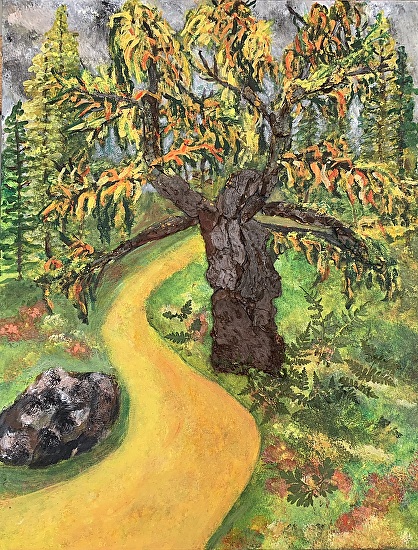
Larch Tree It is easy to be fooled when passing a Larch tree during the summer. They grow cones and have soft two-inch needles bundled like a pine. Each fall, the needles turn a golden yellow before dropping their leaves. They are among the first deciduous tres to grow new needles (leaves) each spring.
Take the Hard Road
A few days ago I watched a TV show where a high school athlete was given a scholarship opportunity on the track team at UCLA. Acceptance rested on her willingness to move far away from home, leave friends behind, and forgo the usual social activities of an incoming freshman. To succeed, along with academics, she would have to devote herself to her sport. The twelfth grader wasn’t sure she wanted to make such a sacrifice, thinking of how difficult it would be to travel along such a singularly focused path.
Feeling conflicted, she spoke to her boyfriend, asking him what to do. And, though he didn’t want her to leave, without hesitation, he told her she had to go for it. “I used to wait tables and do odd jobs,” he said. “I had no direction and never thought about my future. Now I’m that I’m in an EMT course in training to be a first responder, I find it hard—but, it feels so right. I’m not sure why, but the work is fun. It feels great to have a purpose. Take the hard road to fulfill your dreams.”
It was sound advice from a young man and it holds for people no matter what their age. Walking on a purposeful path, sacrificing playtime to do something meaningful, though not easy, is likely to be interesting. The boy’s comment made me remember my childhood passion to be a world-famous prima ballerina and my college desire to travel to exotic places as an anthropologist. It was easy to spend hours practicing dance and studying primitive peoples. Absorbed in what I was doing, I was happy and never thought of it as hard work. As a child, I spent hours in my basement practicing pliés and pirouettes. When older, my time was spent in the library reading about social, political, religious, economic, and childrearing customs in tribal societies. Though I never achieved either career intention, having goals to pursue enriched my student days.
I still enjoy dancing and continue to do so. Exercise became embedded in my daily routine and it helps me stay healthy and flexible. Anthropology taught me how to think and analyze different cultures. I learned that every society has customs and beliefs to answer questions about human existence and they all have ways of organizing their communities. Anthropology turned me into a more tolerant person by realizing that human beings see the world through different lenses. It made me forever curious.
That I eventually pursued a career with museums was not a far reach from having been wrapped up in Indian and African cultures. But the road to success as a science museum director was unexpectedly hard. I had a lot to learn with bumps in the road that, at times, caused me to trip and fall. Thankfully, my earlier studies and training remained with me and served as a buffer going forward. The sum of my effort and failures were a help every time I took a fork in the road.
Those who walk the hard road feel alive. Today’s political situation, confused ethical considerations, pandemics, and global warming make the path forward appear dangerous. Yet, now more than ever, it is important to ask what issues are important and what you are going to do about taking them. No one can afford to sit back and wait for “others” to come up with miracle cures. It won’t happen. But have heart. Taking on a cause adds purpose to each day. Setting goals and following them through with passion will grow your inventory of wisdom and keep you feeling energized and complete.
They’re big, black, smart, and noisy. Most of us recognize the short and long caw sounds of crows invading our neighborhoods. I’ve been on the park blocks in Portland when it was difficult to talk to the person standing next to me. Trying to understand what birds are saying is like trying to understand an alien language. But, with study, determination, and patience it can be done. And, doing so might keep them from going extinct.
Bird Talk
While hiking on Fairmont Boulevard last week I met a fellow traveler. A large raven landed seven feet ahead and to the right of where I walked. As I continued, the bird hopped ahead always keeping the same distance away from me. After ten minutes the bird changed tactics and flew onto a nearby branch. Flying from tree to tree slightly ahead, he waited patiently until I arrived. We continued to travel together for at least an eighth of a mile until another raven, perhaps his mate, lured him away.
Fellow Traveler
I’m certain the raven was trying to communicate. His antics made me wonder if I had passed too close to his nest and he was luring me away. My partner thinks he wanted food, but I don’t agree. He never called, nor did he seem impatient. I’ll never know.
This was not the first time I watched a wild bird reach out. One time, when the bird feeder on our back deck was empty a Towee approached the sliding glass doors on our deck. Cocking his head he stared through the window with a pleading look that asked why the feeder was empty. We responded to his demand immediately and filled it with seeds he devoured.
The twittering sounds and body language of birds say a lot. Chirps, Cheeps, and melodies send messages that can be understood by humans. Some sing love poems designed to woo a mate while others use sound to show strength and warn unwanted birds to back off. Critters in the wild pay attention to their messages. Squirrels, for instance, respond to the short low-and high-pitched shrieks of robins indicating a predator like a coyote is in the area.
The Yao people in Mozambique team up with wild birds to find beehives. Scientists documenting the hunt for honey say it is a two-way relationship. The birds, wanting the combs inside the hives, can’t crack them open and risk being stung. So when they spot a hive they seek out human partners who will smoke out the bees and crack open the nests. The natives leave the combs for the birds to eat. And, when the people have a yen for honey, they make a “brr-hm” sound that calls out for bird assistance.
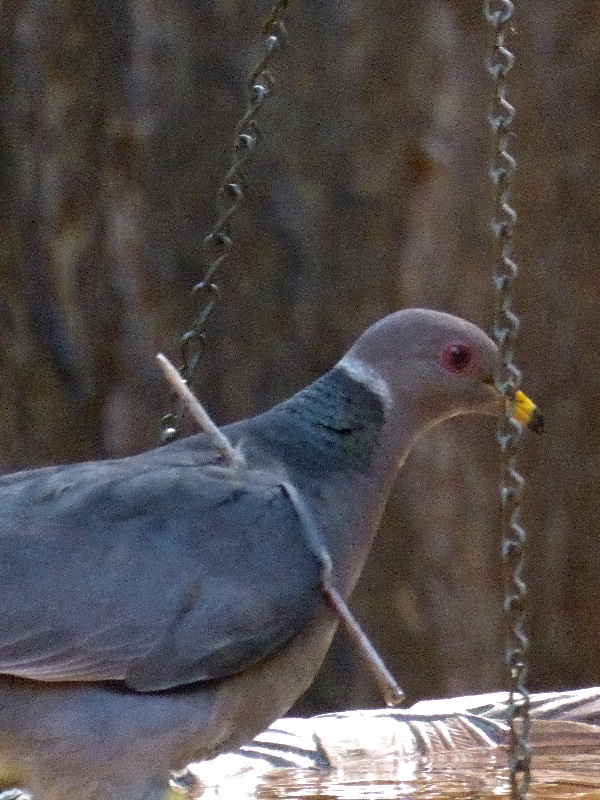
For the past twenty-five years, I’ve been entertained by watching birds at my feeder, though recently I’m seeing things that make me sad. I always looked forward to the return of the ring-necked pigeon from central America. A few years ago one arrived with a dart in his shoulder. How he managed to fly, eat and drink with a stick in his wing is hard to imagine. Birds hit by darts are in pain, subject to infection, and to becoming entangled or stuck in something. Unfortunately, blowgun injuries are being reported more often in the United States.
Pigeon with Dart in Wing
I consider shooting birds for pleasure to be malicious, yet expensive pigeon and dove hunting trips to Central and South America are increasingly popular. Though prices vary, a hunter will pay $1,725 for a two-day trip for a high volume (1000 birds) shooting in Montaraz, Argentina this fall. The cost excludes airfare, hotel room, hunting license, permits, and insurance). Pleasure hunters leave pieces of shot embedded in the birds, making the meat impossible to eat. They destroy an important source of food for native people living in the area.
It is not surprising that with activities like this there are fewer species at our feeder each year. Birds have rapidly been losing the habitat they need to live, find food, rest, and raise their young in safety. According to an article in USA Today, there are three billion fewer birds in North America than there were in 1970. They are being threatened by pesticides, free-roaming cats, wind turbines, insect decline, and disease. While the nation was concerned with COVID-19, Pine Siskins were also falling ill and passing their infection on to other birds. Early spring the Audubon Society asked people to stop filling their bird feeders. I found two dead Pin Siskins on my deck. Since then we have been careful to regularly clean our water tray and feeder.
Birds are also killed by moving vehicles that hit them when they are seeking food from road kills. It is a common end for Condors newly introduced into the wild. They land on large animals like deer and are not fast enough to escape a vehicle being driven seventy miles an hour. Birds are struck by planes more than 40 times a day and they fly into windows on houses and high-rise buildings. This was a problem at our house until we put an image of a hawk on our large picture window to stop birds from hitting it.
All of the problems mentioned are accelerated by climate change. Two-thirds of the continent’s bird species are at risk of extinction. In 2015, nearly 1 million common murres died at sea and drifted ashore, blighting beaches between California and Alaska. It was the largest mass die-off of seabirds in recorded history. When I was vacationing on the Oregon coast, my dog licked over a half-dozen murres scattered on the beach before I could pull him away. The next day my beautiful poodle was dead and I was in tears.
A warmer planet and expanding population are causing more wilderness land to be converted into farmable pastures. Breeding and nesting grounds are becoming agricultural fields and housing developments. “It’s a bird emergency,” says David Yarnold, CEO and president of Audubon. Yes, it is, I agree. And it’s like the canary brought into a coal mine to warn of what will happen to those who don’t pay attention.
While out walking, the raven I saw did nut vocalize but used body language to communicate with me. Rather than through words, he had a more concrete, sensory way to reach me. By doing so, he captured my attention and invited me to take him seriously. If I want to continue hearing birds sing, I will have to do more than I currently do to see that they survive.
A birdie with a yellow bill
Hopped upon my window sill,
Cocked his shining eye and said:
“Ain’t you ‘shamed, you sleepy-head!”
by Robert Louis Stevenson
from A Child’s Garden of Verses.
References:
Hammeri, tl (2017) More Pigeons With Blow Gun Dart Injuries Appear In The Castro, Mission. Hoodline. retrieved from https://hoodline.com/2017/05/more-pigeons-with-blow-gun-dart-injuries-appear-in-the-castro-mission/
Rice,D.(2019) There are 3 billion fewer birds in North America than there were in 1970. USA Today. retrieved from https://www.usatoday.com/story/news/nation/2019/09/19/3-billion-fewer-birds-north-america-now-than-1970/2365747001/
Woodward, A. (2020) An avian apocalypse has arrived in North America. Birdsong could become a rare sound. Business Insider. retrieved from https://www.businessinsider.com/birds-disappearing-in-north-america-2020-1
Jones, B. (2018) How to decode the secret language of birds. Popular Science. retrieved from https://www.popsci.com/learn-bird-language
MacDonald, F. (2016) Scientists Document Wild Birds ‘Talking’ With Humans for the First Time. Science Alert. retrieved from https://www.sciencealert.com/scientists-document-wild-birds-communicating-with-african-tribespeople-to-help-them-find-honey
Mertins,B. (2021) Do BIrds Have Language? Yes! AndIt’s Amazing What they Say . . .Nature Mentoring. retrieved from https://nature-mentor.com/birds-language/
(2011) Language and Culture of Crows. Crows.net. Retrieved from http://www.crows.net/crows.html
Pepperberg, I (2008) Alex & Me: How a Scientist and a Parrot Discovered a Hidden World of Animal Intelligence—and Formed Deep Bond in the Process. ISBN 978-8-06-167398-6. HARPER.
Memorial Day is a time of remembrance. Many people honor family and friends who are no longer alive while others look back further to uncover their family’s lineage. I became interested in the history of my parent’s surname and was surprised at what I found.
What is in a name? “That which we call a rose by any other name would smell as sweet,” wrote William Shakespeare in the 1600s. What he said is not necessarily so. For commercial reasons, roses have been given specific names that denote color as well as odor. There was a time when human brains may have been geared more towards detecting smells for survival. It helped primitive man avoid certain poisonous plants and caves inhabited by dangerous predators. Today, smell connections are primarily a matter of nostalgic memory. People reach for scents with names that bring a sense of well-being-lavender, lemon, forest/pine, and sea breeze. In our litigious world, we can even trademark names used to remember objects and attributes. In earlier eras, names were used to recognize what was important to the society of the time.
The sources from which names are derived include an endless number of physical attributes, places of origin, trades, heraldic symbols, trees, and almost any object one can think of. In hunter-gather societies, people were commonly distinguished by an event, a characteristic, or religious connotation. Before the Norman conquest, Britains were known only by singular personal names or nicknames. Communities were small, and there was no need for hereditary surnames. As the population grew and people were more difficult to identify, second names such as William the Short, John the Tailor, Roger son of Peter ‘the Bald’, and Mary of Wales were added. The Norman barons introduced Smith, Green, and Johnson, names that began to stick. Between the 11th and 16th centuries in England, they began to be passed on from one generation to the next. Surnames became necessary when governments introduced personal taxation. In England, it was known as a Poll Tax.
Countries added to the stockpile with names like French, Fleming, Beamish (Bohemian), Lubbock (from Lubeck a port in NW Germany), and Moore (Morocco). Wang, a common Chinese surname meaning ‘King’ was royal. Other names were derived from landscapes of hills, woodlands, and trees. As in the game whispering down the lane, adaptations of the original name were added to the litany of available surnames. Moore became Morris and Maurice.Hill became Hull, Holt, and Knoll. Wood turned into Greenwood, Woodman, and Attwood. Trees offered names such as Leaf, Bark, Root, Maples, and Oakley. Yang, a type of tree, was the royal surname during the Zhou Dynasty in China.
Names ending in —man or —er usually imply they were influenced by trade. Chapman was a shopkeeper, Leech a physician), Goldsmith a jeweler), and Baker—well, you can guess. By the 14th century, building skills were represented by Wright, Leadbeater, Carpenter, Plummer, and Smith, the most common name in English-speaking countries. From the military came Knight, Squire, Archer, Bowman, and Fletcher (arrow maker). Zhang, the Chinese word for archer came after the invention of the bow and arrow. The arts led to Painter, Fiddler, Piper, Harper, and the church added Pope, Bishop, Monk, and Abbott.
Spanish surnames originated as a way to distinguish between two men with the first name by using the name of their father or mother as the second. Examples include, Leon Alvarez (Leon, son of Alvaro) and Pedro Velazquez (Pedro, son of Velasco). Some names derived from geographic areas like Rcardo de Lugo (Ricardo from the town of Lugo) and others derived from occupations like Lucas Vicario (Lucas, the vicar). Hispanic people occasionally use two last names, one from each parent, though the practice is dying out.
Social class and culture had a strong influence on what people were called. Those of lower social status with less control often had their names handed to them by aldermen, lords, and other authorities. They weren’t always kind and included names like Dullard, meaning a hard conceited man, and Shakespeare (masturbator), though there were others emphasized good qualities like Kind, and Triggs (trustworthy). A Schiller was cross-eyed, Armann, a poor man, and Bechard a gossip. Those of higher status bore less common names like Baskerville, Darcy, Montgomery, Byron, and Percy. They indicate you come from a wealthy family, perhaps of royal blood.
My married name, Eichinger, is German in origin. It was first recorded in Austria’s medieval, feudal society. The name later emerged as a noble family with great influence, noted especially for its involvement in social, economic, and political affairs. Variations of Eichinger include Aiching and Aychinger.
I was previously married to a Rosenberg. He too bore a German name, one of the very first names on record to \be recorded. The name refers to one who resides by a place or area of roses. In medieval times, names were often based upon good feeling, mythical situations, or, as in Romeo and Juliet, a pleasing scent. An adaptation of Rose is found in every European country and varies from Roze in France, Rosette in Italy, to Ruzek in Czechoslovakia.
My partner for the last thirty years is a Losey whose family name can be traced back to Lueneburg in the province of Utrecht in the Netherlands as early as 1277. Losey’s migrated throughout Europe adding variations like Loseke and Loosman. Early American Losey’s worked on the Erie canal.
My mother’s father, a Friedman, was also Austrian-Germanic in origin. He was born in East Prussia before immigrating to America. My maiden name, Katzen, is one of the many forms of Katz. It derives from the Jewish words, ’kohen tsedek” meaning a priest of righteousness. Its earliest known use was in Germany in 1252. Since I cannot escape a Germanic heritage, I must remain a righteous person.
Over the weekend, why not look into the origin of your family’s name? The ten most common in the United States may surprise you. They are Smith (English), Johnson (English, Scottish), Williams (English, Welsh), Brown (English, Scottish, Irish), Jones (English, Welsh), Garcia (Spanish), Miller (English, Scottish), Davis (English, Welsh), Rodriguez (Spanish), and Martinez (Spanish). Those of European descent can search a free internet surname database site: https://www.surnamedb.com/Surname/. Sites for those of African, Hispanic, or Chinese are listed in the reference section below. Have fun and a relaxing Memorial Day discovering your past.
Art is always for sale. Floating Free is 29” by 23”, framed / acrylic on canvas/ flowers appear to be floating on ice. $425. For information, contact me at marilynne@eichingerfineart.com.
If you discover something interesting about your family’s name, do share it on my blog site.
The second edition of Lives of Museum Junkies, published in 2020 discusses the impact of COVID-19 on museums
Portland was shocked a month ago when the Children’s Museum announced it was closing permanently after 75 years. Shuttered nearby is the Discovery Museum at the Forestry Center adding to a sense of loss. Last month, the Oregon Historical Museum was damaged for the second time by rioters leaving behind broken windows, damaged sculptures, and graffiti. Though the science museum (OMSI) and art museum were able to reopen, ticketing is limited. With interactive exhibits unavailable, OMSI lacks the vitality that comes from excited children exploring its displays.
The year 2020 will be remembered as a time of crisis, innovation, anxiety, and introspection. With more people vaccinated, there is hope that cultural institutions will return to business as usual, but from where I sit, that dream is a long way off for museums. Much has to be done to restore public confidence in indoor gatherings, and they face challenges due to diminished resources and layoffs.
Cultural and creative sectors in the economy were greatly affected by the coronavirus crisis. The toll on museums remains distressing. The American Alliance for Museums (AAM) writes that a third risk closing permanently. The Association of Science and Technology Centers (ASTC) reported that science centers were forced to downsize in 2020 to survive. Attendance was down 75 percent from 2019, and though there’s been an uptick since reopening, the numbers remain low.
When the pandemic struck, earned revenue disappeared overnight and small museums without an endowment suffered greatly. Relying heavily on day-to-day tour groups, daily visitations, and gift shop sales, there wasn’t enough income to sustain operations. Those that hung on did so because of generous gifts from wealthy donors and granting organizations. Small business loans and the Federal Paycheck Protection Program provided lifelines for some, but not all. Their recovery, projected to take many years, will permanently alter the way they do business.
When museums closed, they continued to operate as virtual educators, offering programs, curator video chats, and curricula to students, parents, and teachers. Some responded to the need for in-person schooling by organizing enrichment classes within their facilities. These fee-based programs benefited the children of their wealthier, better-educated patrons. The AAM published a fascinating step-by-step description of how the Science Museum of Minnesota adapted to different stages of the pandemic. It can be viewed at https://www.aam-us.org/2020/10/20/downsizing-our-museum-in-the-face-of-a-pandemic. The article explains how many of the larger institutions managed.
Since most museums have no more than six months of funds in reserve for emergencies, the majority had to lay off half or more of their workforce. And, though it was a way to stay in touch with supporters, digital programs and classroom offerings were not robust enough to cover expenses. Unlike restaurants, when a museum closes, it closes forever. Government resources are needed in times of crisis to end a downward spiral.
The Federal Stimulus Bill passed under the Biden administration, thankfully included $135 million relief grants for the National Endowments for the Arts and the Humanities and $200 million for the Institute of Museum and Library Services. Some funds are earmarked for state and regional arts organizations that support local arts organizations and nonprofits while other money will offset administrative expenses for pandemic related programming.
Double its pre-pandemic allotment, the funds allocated for the arts, double were a relief after Donald Trump’s unsuccessful fight to dissolve the NEA. Even so, the amount is short of the $4 billion the arts sector requested in a #CongressSaveCulture campaign launched last year. A great deal more is needed to keep our cultural institutions going.
In the depths of the Great Depression, the Federal government supported the arts in unprecedented ways with New Deal projects. Tax dollars employed artists, musicians, actors, writers, photographers, and dancers. President Roosevelt’s mission was “to promote American art and culture and to give more Americans access to. . . an abundant life.” In addition to saving artists from poverty, thousands of citizens viewed original art and experienced professional theater for the first time. They enrolled in music, drawing, filmmaking, and acting classes. According to the National Archives, a recurring theme was the strength and dignity of common men and women as they faced difficult circumstances. It was an amazing period of creativity during a time of tremendous change.
Humanity again faces a situation that undermines the worth of a people unprepared for change. Technological and scientific advances are forcing our citizens to cope in unfamiliar ways. Swimming through a deadly pandemic and wading through lies spread on social media made matters worse. Global warming, advanced technologies, biological breakthroughs, along with changing worksite needs have been ravaging families for quite some time. The pandemic made people more aware of the financial and racial inequities plaguing the nation. It left Americans confused about the country’s future.
Museums have always played a role in helping the public grapple with change. Artists interpret through visual expression the emotional and social disruptions impinging on our lives. Science and technology centers provide information about life-altering discoveries we will have to adapt to, and history museums contextualize change with the past.
The pandemic gave museums time to get their houses in order so they can be more effective in helping civilization grow and maintain a better social order. They’ve been considering more equitable, safe, and creative ways to work with the public. They’ve been reimagining how they operate, what subjects to cover, and whose art and scientific endeavors to feature. Diversity is very much on their minds.
The pandemic gave cultural institutions time to get their houses in order so they can be more effective in helping civilization grow and maintain a better social order. Museums specifically have been considering more equitable, safe, and creative ways to work with the public. They’ve been reimagining how they operate, what subjects to cover, and whose art and scientific endeavors to feature. Diversity is very much on their minds.
Creativity in the country will blossom again if a WPA-type arts program is reinstated. Inspiration is needed to helpus get through this transformative era. I’ve been following AAM and ASTC discussions and remain impressed with the inventiveness and goodwill of staff. Their hearts are in the right place and their missions appear solid. Museum junkies like myself will most certainly benefit. I look forward to seeing how they interpret the many changes that greet us daily. How with museums help society readjust and thrive?
Ellen: Wide-Eyed and Ready What experiences will mark the phases of her life?
Life Across Time
Gail Sheehy published several books in the 1990s describing passages adults experience throughout their lives. She talked about youth taking longer to grow up and elders longer to die, and that during mid-life people embrace a second adulthood with deeper, more playful, and creative meaning. The problem with Sheehy’s concept today, is that it does not embrace the majority of Americans. Though longevity continues to increase in all segments of society, vast socio-economic differences set people along different paths to old age. Not everyone can afford to have a mid-life crisis. People living in subsets of society go through passages that vary greatly. Forty percent of Americans living in poverty don’t have a chance to customize their experiences as Sheehy suggested.
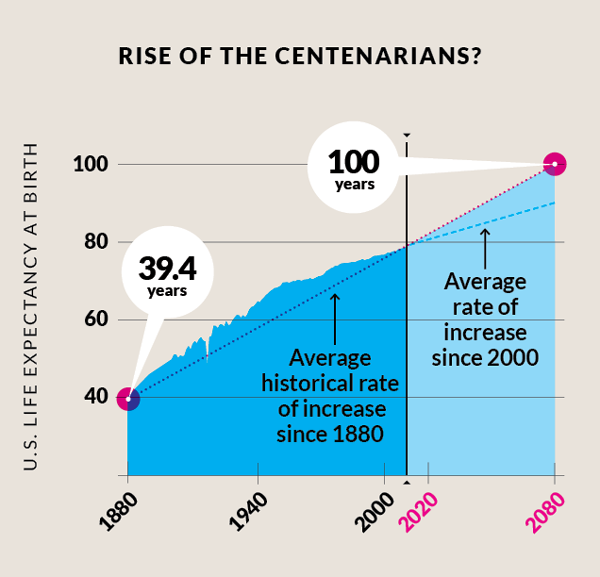
One hundred-sixty-years ago, life expectancy in the U.S. was 39.41 years. In 2020 it was 78.8. Despite the pandemic, 39.39 years is still quite an increase. Americans shouldn’t be complacent though, for expectancy has been on a slight slide downward since 2015. Negative societal trends such as unbalanced diets, sedentary lifestyles, high medical costs, and increasing rates of suicide and drug use are impacting the poor more than the wealthy.
Despite the drop, centenarians have become more common. The United Nations estimates this year that 573,000 people will live to be 100, with that number escalating to 757,000 by 2045. The U.S. has the highest number of centenarians in the world with 97,000 alive in the country today. Kane Tanaka from Japan at 117 years is currently the oldest known person alive today. Back in 2003, when sixty gerontologists were asked to estimate life expectancy in 2100, their combined guesstimates had a median expectation of 100 and a mean of 292 years. The UN currently projects that elders over 60 will double by 2050. With such an increase I can’t help but wonder what will happen when more people live to 100? How will they pass their time and be supported through 30 or more years of retirement? What differences will there be between different segments of society?
Life’s passages don’t proceed in straight predictable ways as was once thought. The idea of retiring after 40 years with one company and taking home a pension and gold watch is gone. No longer do workers believe employers will be loyal to them. According to the Bureau of Labor Statistics in 2019, people change jobs an average of 12 times and spend five years or less in each position. Job changes that require a move, disrupt relationships. The U.S.Census shows that the average American moves 11.7 times in a lifetime. In addition to employment concerns, people move because of changes in marital status, climate conditions, retirement, neighborhood changes, health issues, layoffs, and pursuing dreams.
A high school graduate’s road to the grave will consist of many twists and turns. Independent living, long considered a milestone in the transition to adulthood, is not an option for 48 percent of young adults. The Pew Research Center reports that in 2020, 52 percent of young adults still lived with their parents, the highest amount since the Great Depression. Twenty-year-olds form goals that are expansive, focused on gaining knowledge and information for a long and nebulous future.
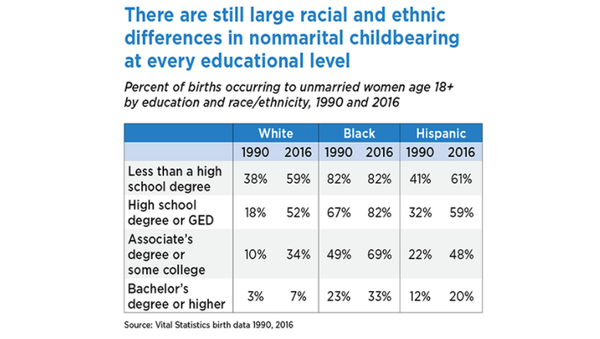
When finally independent, they move to a stage traditionally marked by blending lives. That previously meant marriage to a person of the opposite sex followed by the birth or adoption of a child by the time the woman reached 21. Today, the average age women give birth is 26 or 31 years for mothers with higher education. More women become single mothers than they did twenty years ago, but, whether single or coupled, they opt for fewer babies. Due to financial concerns, global warming, and political unrest many twenty and thirty-year-olds choose not to bring children into the world at all.
Fewer couples married today will remain with their original partner. Instead, they will have serial liaisons throughout their long lives. Cohabitation, no longer confined to relationships between men and women, commonly takes place without marriage vows. Fifty percent of those who do marry will divorce or separate. Though divorce and marriage rates have been declining over the 10 years, the COVID-19 pandemic may reverse the trend. According to BBC, the increase in domestic violence and relationships stressed by the lockdown, financial strain, and political discord may usher in the largest single-year increase in divorce in decades.
Parents with children are challenged to balance work with personal life. Remaining happy and healthy is not always easy when there are multiple demands on time and money. Growing families add pressure for more space and a greater income. Though some parents can provide support and childcare for their children, many can’t. According to a 2019, 60 Minutes newscast, 40% of U.S. families struggle to survive. The pandemic hit women especially hard. More than 2.3 million women have left the workforce since February 2020. A majority of American families require income from two working adults.
Moving and changing neighborhoods disrupts established social patterns and schooling for children. Stress increases as old relationships end and health can suffer. I was once told that it takes twenty years to make a friend. There is some truth in what was said, for it does take a long time to get to know people well enough to be able to trust and depend on them.
When a youth moves out of a childhood home, parents enjoy feelings of freedom not felt for years. Life appears sunny to most empty-nesters. They still have their health and time to travel and take up hobbies. However, for many parents, an empty house brings on a crisis of purpose. Careers may come into question, making them want to try something new. Bored with jobs and perhaps their partner, mid-lifers crave new experiences. They want to feel as free as they did when in their twenties. Unfortunately, middle-age is when they begin caring for their elderly parents.
But, now in their fifties, there is also the worry of losing their jobs. Many workers are passionate about what they do and want to stay employed into their senior years. Those laid off can struggle to find well-paid employment. Many are forced to take a cut in salary or even a low-paying job. Walmart, the largest employer in the United States, pays between $25,000 and $30,000 a year for a full-time employee. Amazon warehouse workers make $31,200 annually. Universities and colleges have the best reputation for keeping older people employed at a fair wage.
According to a recent Gallup survey, the average age for retirement at 61 is not by choice. Most people prefer to stay in the workforce until they are 65-67. Nine million people over 65 find it necessary to stay employed. The book and movie, Nomadland do a good job showing how Americans over 60, faced with debt and high housing prices, pack everything up to live in their vans and RVs, work odd jobs, and find adventure on the road.
The crisis of aging can be painful to go through, though it does bring excitement as well. Seniors faced with an ever-increasing number of years to dream anew think about how to continue living meaningfully. For some grandparents that means raising their grandchildren. Nationwide, 2.7 million are doing so, with one-fifth having incomes below the poverty line. Children who reside with their grandparents are more likely to have experienced traumatic events that will influence their development.
Retirees with the means to do so engage in educational pursuits and travel. Snowbirds move south in the winter and north during summer. Before the pandemic, 28 percent of elders pushed worry aside and stepped forward to volunteer. They benefited by staying healthier than non-engaged retirees, reporting fewer cognitive complaints, depressive symptoms, and functional limitation. Volunteers have a lower prevalence of dementia and live longer. Elders are happiest when able to fulfill emotionally meaningful goals.
Studies show that seniors are generally satisfied in old age and that most report relatively high levels of emotional well-being. This is especially true when life is controllable and social supports are strong.
But, there comes a time when aging brings confinement, causing problems for offspring and family members. As more people reach 100, this will add pressure to health and social systems. With fewer adult children having adequate resources to help aging parents, the government will need to step in. Elders without family, who imagined friends would be there for them when needed, may get a painful surprise when their support system moves into retirement homes or leaves the neighborhood to be closer to their children.
But those fortunate enough to have been raised in a secure loving environment can take heart. They do better with caregivers than those who didn’t have close parental relationships when young. They tend to feel less vulnerable and less subject to emotional distress. Most seniors look back on their lives with contentment, considering what went well and what they wish had been different, accepting what was. Aging well has to do with the ability to acknowledge that you did the best you could throughout life.
_______________
I know this is a long blog and hope you will not be frustrated by its length. There is a lot to cover when considering life’s passages. Your comments are most welcome .
Art is always for sale. Ellen: Wide Eyed and Ready is an acrylic painting on deep canvas /16” by 22” / $399. To make arrangements contact me at marilynne@eichingerfineart.com.
Nature seeks balance, as does the human species, for it is part of nature.
One Woman’s Way towards Balance
There are many ideas as to what it means to live life well. To me, doing so this past year meant achieving balance, finding a way to exist in an equilibrium that allows for self-expression and enables growth. The COVID pandemic brought this need to the forefront when the established patterns I used to adhere to were disrupted. To survive with equanimity. it became necessary to reorganize my brain. My friends tell me of similar experiences, though each is different. Today I share my journey with the hope that you will respond by saying something about yours.
My balancing act started with a desire to maintain my health. Searching for scientific information and following CDC recommended guidelines provided the best path to travel, given that the illness was poorly understood. Paying attention to virologists seemed wiser than listening to voodoo magicians spouting untested solutions. Unfortunately, early CDC recommendations led to confusion that affected public trust and caused negative consequences. Still, the information that followed the science was better than the alternatives.
To counterbalance so much uncertainty, I was driven to maintain some control over my days and did so by starting each one with an exercise routine I varied. Some were aerobic to increase lung capacity and heart strength while others, like pilates and yoga, were focused on building core strength, balance, and meditative breathing. I watched neighbors mask up and join friends on walks, but that was not my custom.
On strolls outside, I preferred being alone so I could observe what I passed more deeply with the aid of a camera. I photographed the flora and fauna through their seasonal growth cycle, studied doorways, walkways, walls, and windows, studying how they were made, positioned, and painted, and maintained. These images along with unusual shadows cast by buildings and bridges provided fodder for paintings made later in my studio. Most of all, I thought.
In my search for balance, I was challenged to exercise my brain. My walks were both meditative and intellectually stimulating. Thoughts often led me back to the computer to seek answers to questions raised during the outing. To adapt to change, I thought it necessary to stay abreast of generational and environmental deviations, economic impacts, and political and racial divides. Maintaining a weekly blog, helped me understand what was happening close to home. But writing had another benefit that helped me maintain balance. Writing is a solitary activity shuffling words and thoughts until they can be put on a page with clarity. To have something to write about, however, writers have to experience the world—study human nature and experience community.
As a species human beings are communal. I started my blog as a way of reaching out to my family to share things that mattered to me. Over time, my reach spread out to friends and acquaintances interested in similar topics. The books I wrote since retiring in 2014, had a different purpose. Lives of Museum Junkies was meant to inspire readers to consider the way children are taught and Over The Peanut Fence was written to explain the plight of homeless and runaway youth to motivate the public to help them. My latest endeavor, in the final editing stage, is Antheia in the Thorns. It is an environmental action story of good and evil and is meant to make readers show the oil and gas industry through a new lens. The process of writing, sharing, and receiving feedback is a balancing act of its own.
Though isolated when writing, the interviews I conduct while doing research, and the talks I give after publication develop community. They reach a literary audience that responds with questions and comments that keep me energized. The literary community, however, is primarily built in the eyes of strangers. To maintain balance in community, it is important to stay connected to family and friends.
Zoom, Skype, and other technologies offer opportunities for distant connections. Becoming a grandmother to children in a local immigrant family helped me cope when unable to see distant relatives. The masked children and I got together weekly for art, dance, and science projects. In good weather, we went to playgrounds, kicked around soccer balls, and blew giant bubbles. They are fun to be with and bring love into my life. Since being vaccinated, we can hug each other and read books while sitting in closer proximity.
A common complaint I’ve heard this year is how awful it is not to be touched. I am fortunate to have a wonderful partner to cuddle—one who massages my feet each evening. I know of people who formed hugging partnerships with a friend they felt safe to hold for a short moment of warmth. A great many people satisfied the need by acquiring a pet, a warm body to stroke and provide companionship while sequestered—important for maintaining balance.
Living within my means, was not a problem for me as it has been for many who lost jobs. The challenge of maintaining shelter and food when let go took a tragic toll. It is impossible to have a balanced life if one aspect of life is so heavily weighted. It is a luxury to have the means to with which to cope with comfort during a pandemic. I wanted to help others achieve a similar balance, But, though my donations to the food bank increased significantly, and as a lay minister I counseled a few struggling people, I felt bad not being able to do more. I admire the health professionals and social workers on the front lines.
The pandemic provided an opportunity to learn about myself and the coping mechanisms I use to maintain balance. I imagine most of you have been similarly impacted. It would be wonderful if you would take a moment and share your experience with our readers.
I look forward to your comments below.
Art is always for sale. Surf’s Up is a 48″ by 36″ acrylic painting on canvas. $699. To purchase contact me at marilynne@eichingerfineart.com
Mother Earth Cares for all creatures and wants them to flourish
Better Than you Found it
A walk in the arboretum took me past a memorial bench for Robert Morgan Cameron-Husband, Father, Scoutmaster, Friend. On the plaque below his name was written, “Leave your campsite better than you found it.” I was touched by his words and disturbed because few people heed them.
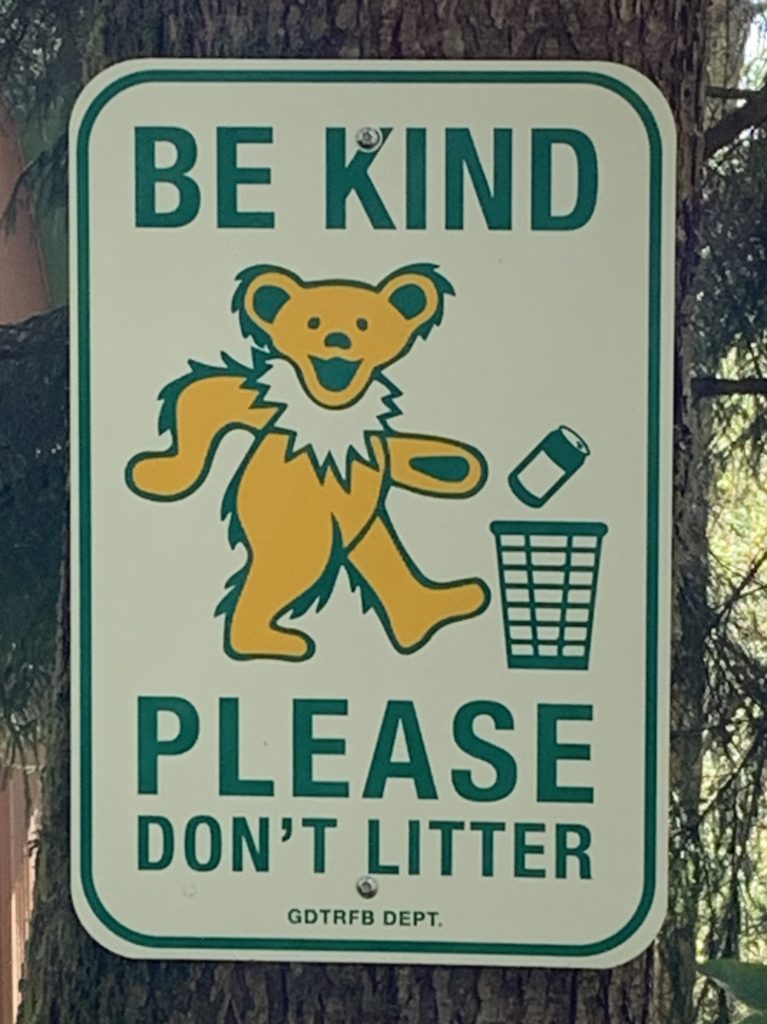
My partner tells the story of how his father in the 1960s opened a pack of cigarettes while driving and was about to discard the plastic covering out the window as he usually did, when he turned to his son and said, “I better not do this, Lady Bird won’t like it.” Instead of littering, he put the trash in his pocket to throw in a receptacle later.
Lady Bird Johnson, when First Lady, pushed Americans and Congress to beautify the nation’s capital and cities. Deeply concerned about urban decay and pollution, she is quoted as having said, “A little beauty, something that is lovely, I think, can help create harmony which will lessen tension.”
Mrs. Johnson believed that pollution, recreation, mental health, the crime rate, rapid transit, highway beautification, the war on poverty, and the nation’s parks were interwoven- that affecting one part leads to a reaction that shows up elsewhere. With Lyndon Johnson’s support, the Highway Beautification Act was passed in 1965 to limit billboards, hide junkyards, and get rid of unsightly messes alongside America’s interstate system. It also funded local efforts to clean up and landscape green spaces. The Johnsons were green before green was popular.
Efforts to improve the country’s appearance didn’t start with the Johnsons, however. Keep America Beautiful, a Connecticut-based non-profit was founded in 1953. Today there are 600 state and community-based affiliate organizations and more than 1,000 partner organizations. Their goal is to end littering, improve recycling and beautify American communities. They initiated the Great American Cleanup that celebrated its twenty-third year this March. Locally, SOLVE was founded in 1969 to bring Oregonians together to improve the environment. Volunteers implement city and beach cleanups, plant trees and shrubs, and remove invasive species to help habitats stay healthy.
To date, city-wide efforts by dedicated individuals haven’t been able to keep pace with the destruction, trash, and graffiti claiming the streets. The pandemic added to the problem by increasing homelessness and creating unemployed people with time on their hands who do not take pride in their environment. With an inadequate number of trash recepticals around town, garbage is found everywhere. People who ordinarily wouldn’t litter do so and add to the pollution. I’ve watched cups and wrappers thrown from cars and busses, receptacles overturned for fun, bags filled with overflowing trash left near park benches and packaging dropped to stay where it lands. Discarded sofas and beds drenched with rainwater line streets. Unconcerned individuals have made too many towns unbelievably filthy. Portland, as an example, is no longer a city to wander through with pride. My town reminds me of visits I’ve taken to struggling developing countries.
Freedom does not give people the right to do and live any way they want to. They don’t have the right to live in filth and make other people sick in body and mind. Rat-infested garbage piling up near homeless encampments leads to hepatitis A, dysentery, and typhus. Thriving rodent populations spread and carry diseases to parks and private gardens.
Do we need another Lady Bird to inspire the nation to leave campsites better than they’re found, or are there ways to do something about the problem now? I was pleased to learn that Portland has started paying homeless and recently housed people $20 an hour to pick up trash. Focused on center-city now, they aim to spread outward until the entire city is clean. Workshops are being held to train volunteers in graffiti removal, another problem that mar’s my soul and reduces livability.
To replace tent strewn streets, villages with tiny homes equipped with heat, electricity, and locked doors are being built so that homeless people can live in dry, safe accommodations near toilets, showers, and trash bins. The answer is uncertain as to whether they will solve the problem of housing the homeless. Tiny homes may be trendy, but they aren’t built to survive years of harsh weather. They are a good, short-term solution that needs to be followed by permanent shelters, counseling, and jobs. Because so many people in our community do care, I am hopeful that we will get there.
Scouting organizations and churches traditionally promoted ethical and community-minded behaviors that families reenforced.
Unfortunately, numerous lawsuits, and difficulty finding volunteers plague scouting. Membership numbers have been steadily declining since a high in 1973, so fewer kids are learning to leave campsites better than they found them.
Church attendance is also on the decline. Fewer people listen to sermons about social responsibility and moral behavior that reinforce, “do unto others as you would have others do unto you,” and “two wrongs don’t make a right.” Racism is wrong, but so is vandalism.
Without strong leadership, what can we do about cleaning up the environment? For sure, don’t litter. But, the burden to reduce litter cannot be entirely placed on the consumer. It has to occur when items are manufactured and marketed. We don’t need elaborate, oversized packages made of material that can’t be recycled. I didn’t need to receive a book I ordered through Amazon in a box that was 10 times its size and filled with plastic bubbles. Too many products sold in markets and hardware stores are in packages that are larger than the item and difficult (near-impossible) to open. In the past, many of these products were not packaged at all.
We can reduce the use of plastics that cause wildlife to die in record numbers. The Great Pacific Garbage Patch spans the entire width of the area between Japan and the United States. It is 7.7 million square miles, mostly plastic floating in the North Pacific Ocean and circles around continually adding trash. Our engineers and scientists should be challenged to come up with solutions that are bio-degradable, and as consumers, we can avoid purchasing plastic items and using plastic bags.
Graffiti has become an underground artform among disenfranchised youth. Somehow, we need to find ways to change their mindset. Defacing public and private property make more people unhappy than happy. There are times that I think the country is too tolerant, for we allow destructive behavior to happen without consequences. Too many parents don’t take responsibility for wayward children. By holding families, as well as the perpetrators accountable, and requiring them to join work teams, and fund needed repairs due to their family member’s mischief, we are bound to reduce vandalism, graffiti, and littering.
Lastly, as adults, it behooves each of us to become role models for youth. We can all be Lady Bird and Lyndon Johnson advocates for a green and beautiful environment. To live well in the community, we must each leave our campsite better than we found it. This Earth Day is a perfect time to get started.