Greed, Generaosity, and the Brian

From Rags to Riches by Marilynne Eichinger
He who is not contented with what he has, would not be contented with what he would like to have,” is attributed to Greek philosopher Socrates.

Greed, defined as an excessive desire for wealth or goods, at its worst, trumps rationality, judgment, perspective, and it can cause damage. Many psychologists say it’s a primal impulse–a biological instinct for survival. They suggest that the urge to work, fight, protect, collect possessions, tools, food, meat, shelter, and even a mate keeps people alive. But, they also say, that at a certain point, greed does an about-face, with diminishing returns.

According to a 2010 study at Princeton University, the correlation between wealth and happiness is about $75,000. Counting for inflation, that is $94,348 today. Happiness starts to decline as earnings continue to rise and stress, anxiety, and social isolation increase. That is the point when greed begins to grow.

The culprit is dopamine. It’s a chemical in our brain that when activated by greed makes you feel good. The more dopamine gets released, the more the pleasure centers in the brain are activated. This can eventually lead to being addicted to greed. Through magnetic resonance imaging, neuroscientists observe that monetary gains such as closing a deal or having your salary raised can trigger the same brain chemical circuitry that compels addicts to partake in cocaine, heroin, nicotine, overeating, or gambling. And, as with addicts, when not constantly rewarded, the person feels let down, disappointed, empty, and craving.

It doesn’t take long before even the threat of financial loss will trigger an unhealthy shift in the brain. Adrenaline and cortisol get released into the bloodstream elevating heart rate, blood pressure, and expanding alertness.  Once you’ve experienced the dopamine rush that comes from greed (making unneeded money, closing a sale, winning the lottery, etc.) your brain can’t help but want those rewards again. Not getting them makes you feel far worse than before.

Those who work hard for their wealth often go through an enabling process of justification and entitlement. They abandon the interests and feelings of those left behind and become detached from the reality of most people’s lives. According to Mark Buchanan in New Scientist, the addiction to dopamine partially explains why the newly rich especially are prone to take risks and partake in unethical behavior to achieve rewards they don’t need. Since 1974, seventeen banking-related crises around the globe were preceded by periods of extreme financial growth and prosperity, real-estate booms, and bull stock markets set off by people fanning dreams of excessive wealth.

The good news is that we don’t have to be dominated by our brain’s chemistry and can re-learn more socially beneficial responsive behaviors. Strategies can be adopted to make us happier and healthier while remaining financially secure. 

The opposite of greed is generosity, which also affects the brain. Generously giving of yourself and or money to help others is something most people enjoy doing. Brains scans show that the act of giving itself triggers areas in the brain linked to altruism to light up. Generosity also serves to diminish activity in the amygdala, the area that processes emotions and sends stress signals to the hypothalamus telling the brain to enter a fight-or-flight mode. There’ increased activation of the amygdala in people who are stressed, phobic or have PTSD. 

Inagaki and Ross at the University of Pittsburgh were curious to see if there were any health benefits from giving. Their studies conclude that the human drive for social connections benefits those who act in the service of others’ well-being. “Targeted forms of support-giving, such as support to people we know are in need,” is a particularly good way to activate the amygdala and reduce stress.

To know thyself is the beginning of wisdom,” a quote attributed to Socrates, points out the importance of recognizing the limits of your own wisdom and understanding. Know what you are and what you have yet to learn. “Know thyself” was inscribed in the forecourt of the Temple of Apollo at Delphi according to Greek writer Pausanias. Two other maxims on opposite walls were “surety brings ruin” and “nothing to excess.” 

I leave with these thoughts.

References:

McGowan, K. (2019) The Neuroscience of the Seven Deadly Sins. Discover. retrieved from https://www.discovermagazine.com/the-sciences/the-neuroscience-of-the-seven-deadly-sins

Schwartz, T (2010) Dope, Dopes, And Dopamine:The Problem with Money,Harvard Business Review. retrieved from https://hbr.org/2010/10/dopes-and-dopamine-the-problem.html

Weckesser, S. (2015) Wired to want? Neuroscientists reveal that our brains may be programmed for greed. Blue Water Credit. retrieved from https://bluewatercredit.com/wired-want-neuroscientists-reveal-brains-may-programmed-greed/

Sandoiu,A, (2018) Generosity benefit health? Brain study sheds light. Medical News Today. retrieved from GENEROSITY.

One Seed at A time

We now understand that the way humans have been using the earth is destructive, but it can be saved by changing how we consume and nurture one seed at a time to health.

One Seed at a Time

The climate summit in Glasgow is a very big deal. The world has many problems, but nothing needs more attention more global warming. Scientists predicted the crisis we are experiencing years ago when the public wasn’t willing to listen. In the 1070s, oil and coal companies knew of the way their industries contributed to greenhouse gasses but chose to bury their research. Marketers led us to believe that an economy based on oil, gas, and coal was the way to progress despite its devastating effect on the environment. Now we are suffering.

Wildlife is dying in record numbers, desertification takes over huge swaths of land, and rivers and groundwater are running dry. The march of economic migrants is picking up speed, creating an international crisis. No country knows what to do with millions of homeless people on their borders. 

Despite dire predictions for the future, I am more hopeful than I’ve been in a long time. People are finally paying attention and realizing that something has to be done. That global warming is human-induced is no longer in question. That our children and grandchildren will suffer, is a fact. They will not be living as carefree a life as we did.

We have no choice but to stop procrastinating and change our mindset. Though I don’t want to change my ways any more than you do, there is no choice. We contributed to the diseased earth, and now we have to give it medicine. There is much that is easy to do.

1) Try planet-friendly plant food and reduce the amount of meat in your diet. It will improve your health, lower cholesterol, and reduce the number of methane farting cows. Meat and dear products account for more than half of food’s carbon footprint. Be mindful.

2) Reduce water consumption. Replace gardens with drought-tolerant plants. Put washing machines on cool rather than hot cycles and take shorter showers.

3) Use a fuel-efficient vehicle. Combine trips to the store and office so you only make one a day. Carpool to work if possible.

4) Make your home energy efficient. Do you really need two refrigerators? Are your light bulbs LEDs? Do you have a smart thermostat to regulate your home’s temperature? Are your windows double-paned?

5) Insist congressional representatives put more money into researching alternative energy sources. The batteries take energy to manufacture and materials used in the process pollute the environment. We need better ways to make batteries and store electricity.

6) Shop less, save more. Rather than have manufactured goods you discard because of quality, purchase items that will last a lifetime. Get rid of disposable, single-use products and use reusables instead. Keep those cloth shopping bags handy. Bring a travel mug to your favorite coffee spot.

7) Reduce pollution in streams and rivers. Purifying water accounts for three percent of global warming. Stop manufacturers from dumping chemicals and logging companies from cutting trees near streams. Design parking lots so the oils don’t drain into groundwater when it rains. And by all means-stop using plastics. They don’t decompose, fill landfills, and kill sea life. Passenger and cargo ships are major contributors to climate change pollution. Ask congress to make and enforce stricter laws requiring them to be more energy-efficient and not dump refuse in the ocean.

8) Reduce the population. There are more people than the earth can support. Those against abortion and birth control add to the problem by allowing more babies to exist that will live in poverty. People crowded in cities struggling for survival are like rats in a cage. They fight for turf and steal and kill to obtain resources.

9) Be a change agent. Let others know what you’re doing. and become politically active. Work to pull down dams in your area. Not only do they replace homes and farmland people have lived on for generations, but they eliminate nature’s way of purifying water, kill fish runs, and destroy food-producing properties that were economically viable. 

For a more complete discussion and for other tips on how to reduce your carbon impact, download the following guide.

Gao, R. (2021) The Good Guide to Reducing Your Carbon Impact. Goodside retrieved from https://www.joingoodside.com/guides/reduce-carbon-emissions?gclid=Cj0KCQjwt-6LBhDlARIsAIPRQcJWS5p_kbrrcSyaJpjqN_YP8p0hQ_5K3eFo5eyXNAbM7RQ-e9YL8mwaAheyEALw_wcB

____________________________________________________________

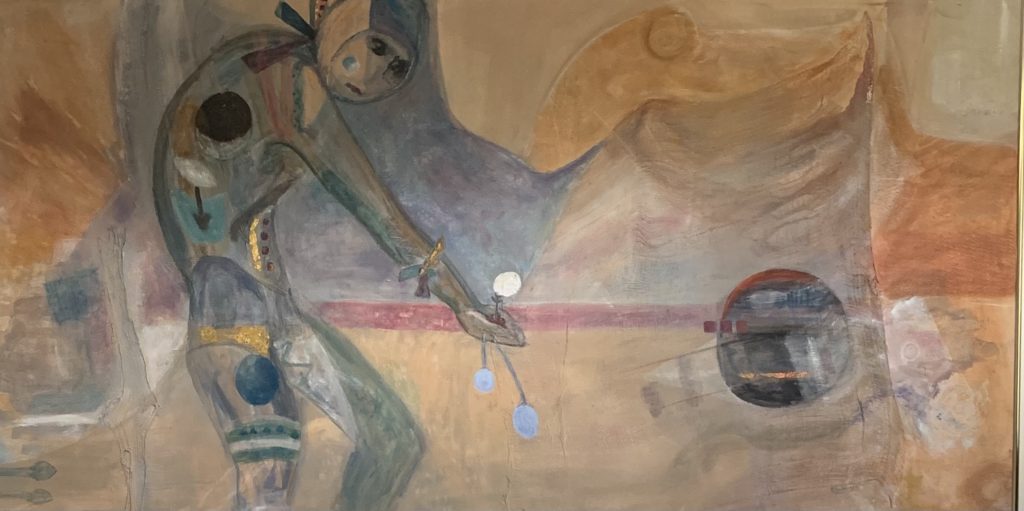
Art is always for sale. One Seed at a Time Mixed media, acrylic base onboard / gold frame / 44″ by 48″ / $1,700. For information about delivery contact marilynne@eichingerfineart.com.

Do comment below. It is always good to hear from you.

Unsung Heroes Nextdoor

SANNA

Is she healthy, safe? Who cares?

Unsung Heroes Nextdoor

We speak compassionately of those who are ill, lose jobs, or become homeless, but there’s another group that deserves our empathy—the caregivers.  Though I appreciate professionals who help those in need, it is the untrained army of friends and family keeping society stable that are taken for granted. At inconvenience to themselves, they step forward, sometimes for years, to ensure the health, safety, and security of physically and mentally ill family and friends. Helping hands come from neighbors and relatives rarely acknowledged for their sacrifice. Since they don’t complain, it is easy to forget that they too need emotional support.


Between 1916-1930, the United States and Europe experienced an epidemic of Encephalitis Lethargic affecting at least half a million people. Victims were overwhelmed by lethargy and sleepiness that put them into coma-like states with muscle rigidity.  My uncle was one of the disease’s unfortunate casualties. After being called lazy and sleeping for nearly a year, he finally woke up but was left with Parkinson’s, a serious disability. According to my father, his brother was the brightest child in their family of nine. The illness took his sharp intellect away and he needed care for the remainder of his life.

My father contributed to his upkeep, but the real burden was assumed by his younger sister and her husband. They provided a welcoming household for him while raising three children of their own. I view my aunt and uncle as unsung heroes. 

There are many good Samaritans among us. Names and locations were changed in the following stories.

For over ten years, Jane Doe, from Michigan has been visiting her ninety-year-old mother in a nursing home several days a week. She takes her on day trips, meets with doctors, and sees that she is well cared for. Jane’s an attorney who has a stressful job helping those on the margins of society. She carries their troubles home and works late into the night to solve difficult problems. But, no matter how busy she is, her mother’s care comes first. Jane’s days are so full that she had to give up something, so her social life suffered. 

When George, his father-in-law, moved to his home for his final years, Sam Smith became his caretaker while his wife continued to work.  Sam took George to medical appointments and hometown baseball games. When he became bedridden, it was Sam who made him laugh, bathed him, and made sure he took his medicine.  Five years later, George died at peace knowing he was loved. Sam’s empathy for the man had no bounds. His father-in-law’s death left an empty spot in Sam’s heart and vacant days to fill.

Jen Black’s seventeen-year-old daughter, Zoe, had an anxiety attack, later diagnosed as a manic depressive disorder. Jen was aghast to learn that her child had an illness likely to come and go throughout her life. Now, it’s been thirty years since she was first diagnosed. During that time, Jen went through the pain of seeing her daughter suffer. Twice, she sat in hospitals after Zoe tried taking her life.  Frequent episodes make it hard for her to keep a job. Though the flare-ups were frightening and she wanted to keep her close, as her daughter aged, Jen acknowledged her need for independence.

Her daughter’s freedom and Jen’s desire to protect Zoe were at odds. She spent sleepless nights wondering how to help her become independent. Zoe now lives on her own, but routine tasks like opening mail and buying food can be a challenge. Mother and daughter speak daily and periodically spend an afternoon together cleaning Jen’s apartment. Making sure her daughter takes her medicine is a major concern. Jen’s wish to travel and take pottery classes remains on permanent hold. When not physically with her daughter, her mind is. 

Children diagnosed with debilitating illnesses that require ongoing attention, force parent’s to put their dreams on hold. The life Jen lives is not one she asked for. After Zoe’s illness led to a divorce, Jen gave up the thought of remarrying. Caring for her daughter is filled with cloudy days intermixed with sunshine. When Zoe tells her mother how much she is loved, Jen feels like her heart will burst with happiness.  A few smiles are all it takes to make her years as a caregiver worthwhile. Jen’s love is a testament to how expansive a human heart can be.

Now in her seventies, Jen worries about what will happen when she dies. Who will love and care for her child? And, I wonder how she found the emotional support and courage to continue throughout the years. Without her mother’s care, Zoe could have been one of the thousands of mentally ill people roaming the streets. Jen is a hero worth recognizing. 

Caretaking for most people is a short-term job, but for a great many it isn’t. Their lives are tortured by seeing loved ones in pain or incapacitated. These kind custodians happen to be our neighbors and relatives. We see them regularly without considering the burdens they bear. The ill person is usually cared for by a physician or psychiatrist. The caretaker stays in the background and is rarely recognized for being the good person he or she is.  

When researching Over the Peanut Fence, I found that youths are being thrown out of their homes due to sexual orientation, mental or physical disabilities, and pregnancy. They take to the streets because they are starving, disagree with parents over religion, and are victims of physical and emotional violence. I applaud relatives and friends who step in to prevent them from becoming homeless. Those who step in are part of the unsung army deserving of appreciation.

I’ve watched many friends, neighbors, and family step forward to help loved ones through rough times.  I’m sure you know these kind souls as well.  To all, I say thank you. You are appreciated.

If people didn’t care homelessness would be worse.

1. ) According to Mental Illness Policy Org

45 percent of the 250,000 people living on the streets are seriously mentally ill 

2)  According to National Health Care for the Homeless Council

Those living on the streets for an extended period of time have a life expectancy of 64 years.  About 1 in every 3 senior households experience severe housing problems.  Blacks, Native Americans, and Hispanic seniors are disproportionately affected.  Due to the current work situation for older people, there is a growing elder population on the streets that is expected to reach 95,000 by 2050. In 2019 in Portland, 23.4 percent of those who were homelessness were 55 or older.

3) According to the National Conference off State Legislatures Youth Homelessness Overview ( 15-25 yrs.)

27 percent of homeless youth had to leave home because of their sexual orientation, primarily because of religion. 

69 percent report mental health problems

29 percent have substance misuse problems

4) According to Easter Seal and Disability Scoop

More than 42.8 percent of America’s homeless population are those with disabilities. This includes substance abuse and mental illness and the physically impaired. In Multnomah County, OR,  61 percent report a chronic physical condition, mental illness, and/or addiction. 

5. According to Youth Today report on Chapin Hall Study by U. of Chicago

Nearly half of America’s homeless women and girls are parents or about to be parents.  18 percent of homeless young men are fathers. In 2017, homeless 18 to 25-year-olds became parents to some 1.1 million Americans.  Many girls had been forced from their homes because of their pregnancies.

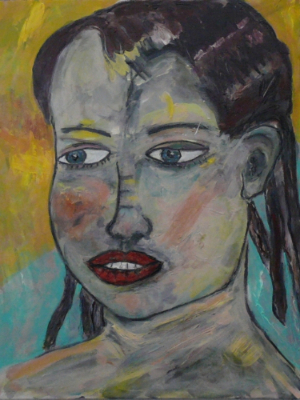
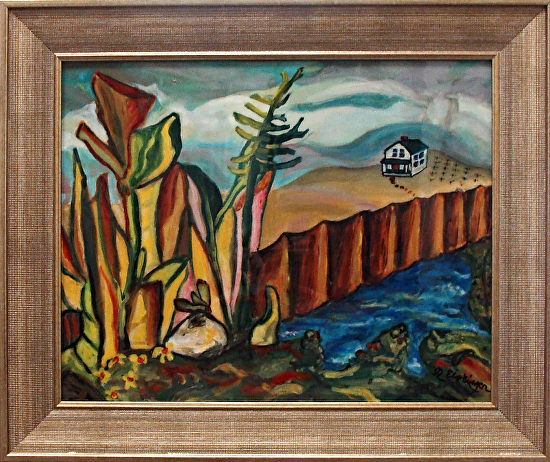
Art is always for sale. Sanna is an acrylic painting on deep canvas/ 24” x 18” / $ 425.

For information contact marilynne@eichingerfineart.com
Do share stories of good people you know who deserve recognition.

A failed City?

Limitless Possibilities.

A Failed City?

Forbes and Politico call Portland a failed city. Like many places in the country, it went from wonderful to war zone almost overnight. Job losses created an influx of people without shelter. George Floyd and political tempers led to graffiti, broken windows, and boarded-up buildings. Tensions between Proud Boys and Antifa ran sky-high. High-rise apartments dwellers descended from lofts, heading elsewhere to avoid long elevator lines and the nightly sounds of helicopters and flash grenades. Residents wary of stepping over legs and around tents abandoned the town.

People used to come to Portland for the quality of life. It is close to mountains, beaches, and deserts. Downtown was a lively place, fun to walk around.

Vibrant cities are full of energy, enthusiasm, and activities. They are healthy with a diversity of offerings. Focused on art, culture, and learning, they have theaters, galleries, and sculptures reminding us of our history and pointing to the future. They are places where couples get married and non-profit organizations hold fundraisers that support the important charitable work they do.

I like cities that spark my imagination and lift me to a higher plane. They show me possibilities and inspire me to think big and dream. Artists, architects, writers, musicians, and philosophers from every race, sexual orientation, and heritage shine through the cores of great cities. They are the Avant-Garde who question reality and experiment with ideas. They challenge us to think about preconceived notions. Low-income housing should be reserved for those who contribute to city life, supporting businesses and the arts through their labor and skills. 

Notice, I didn’t mention unsheltered people sleeping on sidewalks. Portland officials struggling to balance individual vs community rights are having a difficult time injecting downtown with good vibes. I love Portland, and like others, wonder what can be done. 

Recapturing the unique spirit of our community is only possible if people feel safe strolling through public spaces and streets with first-floor shops, restaurants, sidewalk cafes, and attractions. Visitors to downtown areas go to relax and get away from their daily routine.

Portland is not alone in its fall. According to The Hill, eight cities that stand out as being the worst in the country include New York, Los Angeles, San Francisco, Philadelphia, Washington, Oakland, Chicago, and unfortunately, Portland. Twenty others are not far behind.

Revitalization is possible, but it is compounded by the fact that the U.S. has 35 million illiterate people, and 25 percent of youth dropping out of school. Our country is saturated with uneducated, mentally ill, and undervalued citizens unable to find or keep a job. And, they are bringing society to its knees. Though many are intelligent, they have no skills, are not critical thinkers, and are not employable. Many buy into conspiracy theories and accept lies as being true. They put our democratic way of life on an unacceptable downward spiral.

Turning the situation around costs money, and, as long as we live in a capitalist society, downtowns will require wealthy patrons to support them. Since the government does not adequately support the arts, education, or culture as it does in Europe, we have to depend on those who are rich and on vacationers to pitch in. Wealthy residents paying high rents and tourists staying in luxury hotels, eat in fine restaurants, purchase from boutiques shops, and contribute to the city’s economic viability from which local residents benefit. 

Housing poverty burdened people downtown and permitting people to live in tents does not help. Poor people unable to provide either time or resources to the city, will not bring about a resurgence of vitality and creativity because they can’t. For those struggling at the bottom rung of Maslow’s pyramid, their first priority has to be finding food and shelter for themselves. I experienced a downtown area in Michigan decline after prime riverfront property was allocated for low-income housing. The people who moved in were without resources to support the museums, restaurants, and entertainment that citizens craved—the center died.

If revitalization becomes an agreed-upon vision, then city officials have to take the difficult step of banning tents. Confrontational marches with protesters carrying guns and mace and police in riot gear don’t belong on our streets either. Organizations serving the unsheltered should sell their center-city properties and relocate closer to camps that shelter them. Circulating mobile units to various sites is a way to reach more people. As long as non-profits own buildings and provide shelter downtown, unhoused people will congregate nearby.

Because of land use laws, affordable housing in Portland is dire. It will be years before 15,000 temporary mini-houses are built for the unhoused. I fear these camps will never go away. A compassionate solution would be to move unsheltered people immediately into large refugee-style camps where there are tents with heaters and electricity in them that let occupants stand upright and sit in a chair. Communal toilets, showers, cooking facilities, and trash receptacles can control the deplorable, unhealthy situation rimming our highways. What I suggest is not unlike a United Nations refugee camp that takes a week to install. Turkey set up an excellent one in 24 hours to serve Syrian refugees. Health and mental services are easier to administer when people live in communities. As it is, the unhoused are so spread out around the city they are hard to reach.

Visions lead to mission statements that set the stage for action. They are seeds that with nurturing can flower into limitless possibilities. Knowing that global warming will bring havoc into the next century we have to be prepared for more immigrants to the area. What I suggest can be implemented in a month. Within six months center-city will turn around. 

If we are going to handle the future with compassion, we need vibrant centers that keep us rejuvenated and hopeful. 

References;

Beza, C.( 2019) How can we make our cities more vibrant? BBC Network. retrieved from https://www.bdcnetwork.com/blog/how-can-we-make-our-cities-more-vibrant

Friendman,N. (2020)Five Key Characteristics of Vibrant Places. Vibemap. retrieved from https://noah-vibemap.medium.com.

Conerly,B.(2021) Death of a City: The Portland Story? Forbes Magazine. retrieved from https://www.forbes.com/sites/billconerly/2021/01/28/death-of-a-city-the-portland-story/?sh=6784a73c74ad

Russell, J.  (2017) United States of Failed Cities. SmartcitiesDive, retrieved from https://www.smartcitiesdive.com/ex/sustainablecitiescollective/united-states-failed-cities/188291/

Tate, K. (2021) The worst-run cities in America.The Hill.  retrieved from 

https://thehill.com/opinion/finance/533365-the-worst-run-cities-in-america

How is your city faring? Do share your thoughts for its future on my blog site at http://www.eichingerfineart.com/blog

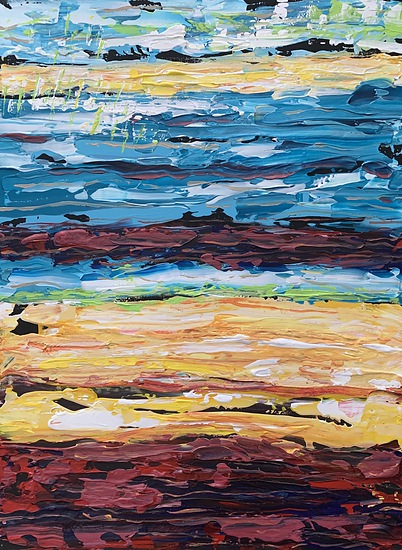
Art is always for Sale- Limitless Possibilities is acrylic on canvas/ 18” x 24′ / $425 /  for information contact me at marilynne@eichingerfineart.com.

McClelland, M. (2014)How to build a Perfect Refugge Camp. New York TImes Magazine. retrieved from https://www.nytimes.com/2014/02/16/magazine/how-to-build-a-perfect-refugee-camp.html

Blah,Blah,Blah

One earth in a vast universe is all we have—care for it.

Blah, Blah, Blah. Powerful words coming from a teen who doesn’t want to wait until she’s in her sixties before greenhouse gas emissions are under control. Greta Thunberg from Sweden is understandably impatient. I am too. I have a shorter timeline and would like to see change before I die and that is only a few years away. It would be calming as I exit to know my grandchildren will be okay. 

I’ve been doing research for my latest novel, an action story centered on water. It’s inspired by a  concern for food shortages and the lack of clean drinking water that’s causing millions of people to migrate. No country wants hoards of starving people at their borders. Wondering how it could be stopped, what I’ve  read is horrifying.  In addition to war, tens of thousands of people around the world are dying every day from water-related illnesses.

Much of the problem is caused by the global commodification of water by corporations and governments. Throughout history, cultures knew that water could run out and respected it. Communities operated on the premise that people had a right to clean water and established guardian systems to protect and use it in a fair manner. In the United States, municipal districts managed water and sewage systems for the benefit of all. 

This communal mindset began to change in the West with the pioneers.  Cowboy economics was set up as a system based on  prior appropriation that gave water rights to the first claim owner. That homesteader was free to use or sell as much water from his land or the aquifers underneath as he wanted.  In the mid-1900s the concept of owning water rights went global with a push to privatize sources. Today, the question of whether water is a human right or a commodity leans in the direction of corporate America.  Defined as a commodity, water made its way to the New York Stock exchange. 

The World Trade Organization sees it as a hindrance to trade since water is needed to produce goods. This type of thinking led to a boom in privatization and water was diverted from small farms to corporate farming and manufacturing.

What we can’t see, we usually don’t pay attention to.  Groundwater stored under the earth’s surface accounts for 60 percent of all freshwater. For it to stay a viable source, aquifers have to be refilled at the same rate they are emptied. With funds made available to build deep wells, water is removed with electric pumps and sent through pipes to industry and agri-farms. When aquifers are drained it leaves small farmers without a livelihood and ordinary people without clean drinking water.

Municipalities short on cash are adding to the problem. They are selling their water at the appraised value of total replacement costs rather than commonly accepted book value which is lower in order to get more money for loans and higher prices for its sale. High prices are covered by increased rates to consumers, the ultimate ratepayers. Shortsighted, they are draining a resource their communities may need in the future. 

Moving water is expensive. It is heavier than oil and evaporates on the way. It is often sent to agricultural areas raising crops that don’t belong in that environment. Rice fields that have to be flooded in dry California don’t make sense. Moving it creates serious ecological and human rights ramifications for both sellers and buyers. 

Bottling companies with water rights ae charging consumers 2000 times more for a gallon of water than if purchased it by turning on the tap. In third-world countries, with surface and groundwater polluted by industrial and agricultural waste, many families have no choice but to spend 30 percent of their income on clean water.

What can you do?  Make sure your community’s water and sewer system stays public and does not become privatized. Private companies are in it to make money. If they do sub-contract there need to be strict guidelines and strong oversight. Sub-contracting for services is rarely cost-effective and almost always leads to a hike in rates.

Rivers traveling through multiple states need better regulation. The Colorado River is a prime example of misuse. It was never meant to flood desert farms and water-guzzling plants. Rising temperatures created a mega-drought that has been ongoing for the past 20 years. The river can’t be expected to provide fresh water to out of control population growth. Forty million people and wildlife depend on the Colorado River for their water and it is going dry. Arizona is the state most affected. States like Oregon have migrants arriving from the Southwest in record numbers. 

Commercial transfers of bulk water should not be allowed. They destroy local plant life, agriculture, fish populations, and it is expensive. They drain aquifers and streams for the sake of other communities.  True Alaska Bottling holds the right to export 9.5 billion gallons annually at a penny a gallon from Blue Lake reservoir. They want to ship it from Sitka to India, the Middle East, parts of China. and California.  At the moment their plans are on hold but it may happen soon. Instead of acting in our country’s national interest, powerful cartels have formed that create hell in third-world countries. Their people come knocking at our door for handouts and we wonder why.

Don’t drink bottled water. Get a home filter if you are not confident in city purification.  Why make companies rich on something  you can have at a lower cost? Plastic bottles pollute. The purifying water causes 3 percent of greenhouse emissions because of methane and nitrous oxide used in the process.

Focus on eliminating pollution. In the old cowboy movies, when a cowhand was thirsty, he’d stop at the river, dunk his hat in and take a drink. No longer is that possible. Our rivers and streams are polluted by animal waste, industrial waste, and careless people discarding garbage and trash. We can’t continue to allow homeless people to trash their sites. I don’t like tents, but if there is no other solution,  \there is no reason not to make inhabitants clean up after themselves.

In Ringwood, New Jersey, Ford Motor Co. dumped more than 35,000 tons of toxic paint sludge onto lands occupied by the Ramapough Lenape Tribe, poisoning groundwater with arsenic, lead, and other chemicals. In North Caroline residents near coal-fired power plants were told their water contained elevated levels of chromium-6. Coca-Cola and Pepsi are mentioned as being among the top 20 most pollution- producing companies in the world. Plastic bottles wind up in oceans, rivers, and streams. Oil leaks from cars and trucks, and runoff from farms and ranches send herbicides, pesticides, and fertilizers into rivers and oceans via rainwater.

Yes, Blah, Blah, Blah. Stop talking—take action, says a young activist. You know what to do. Do it now.

References:

Website, (2021) Water Commodification and Privatization of Municipal Water Services. Sierra Club. retrieved from https://www.sierraclub.org/policy/water-commodification-and-corporate-privatization-municipal-water-sewer-services

Podcast. (2021) What Happens  When the Colorado River Runs Dry. Science Friday PBS. retrieved from https://www.sciencefriday.com/segments/colorado-river-dry/

Barlow,B. & Clarke, T. (2020) Blue Gold. the New Press,NY. ISBN 978-1-56584-731-6.

Also available as a Netflix documentary.

Sguvam v, (2000) Water Wars. Privatization, Pollution, and Profit. Souther Press, Cambridge, MA. library of congress number 2002100340.

Newsstaff ( 2017) Industrial  Waste Pollutes Americas Drinking Water. Carter Center for Public Integrity. retrieved from https://publicintegrity.org/environment/industrial-waste-pollutes-americas-drinking-water/

Young, A. (2019) Coca-Cola, Pepsi highlight the 20 corporations producing the most ocean pollution. USA Oday. retrieved from https://www.usatoday.com/story/money/2019/06/17/20-corporations-behind-the-most-ocean-pollution/39552009/

Douglass, E. (2017) Towns sell their water systems-and come to regret it. Washington Post. retrieved from https://www.washingtonpost.com/national/health-science/towns-sell-their-public-water-systems–and-come-to-regret-it/2017/07/07/6ec5b8d6-4bc6-11e7-bc1b-fddbd8359dee_story.html

Walton,B 92010) Bulk water Exports: Alaska CityWants to sell the World a Drink. Circle of blue. retrieved from https://www.circleofblue.org/2010/world/bulk-water-exports-alaska-city-wants-to-sell-the-world-a-drink/

Art is always for sale. The Firmament is 16″ x 21? gold frame/ acrylic on canvas. Available for $695

Invisible Injustice

Eastern Oregon Contemplative 

Expansive, settling, calm, beautiful, meditative—walking in nature helps maintain perspective and mental health.

Invisible Injustice

“Be prepared. The worst is yet to come,” is the message released by scientists getting ready for the UN’s Global Conference on Health and Climate Change in November. It will be a summit like no other, for it will ask us to get ready for unprecedented changes of a magnitude that are hard to fathom. There will be suggestions for containing COVID-19, for sure. But, most of us can imagine the pandemic eventually coming to an end. It’s the climate part, asking for global collaboration that will cause most of the nervousness. It is an invisible injustice with mental health consequences.

All nations agree that everyone has the right to live in a healthy environment free of pollution, yet plans to make that happen lack agreement and human activities continue to destabilize the earth’s air, water, and climate to the point where there may be no return——certainly not in our lifetime.

Human beings have dealt with nature’s tragedies before. Pandemics, earthquakes, tidal waves have occurred throughout history, but nothing we know of has ever been on the scale that is evolving. Never have we had a crisis with such misunderstood consequences. What is  acknowledge, is that it is worse than scientists originally thought and that there is no end in sight. We are being told to prepare for the long haul——one lasting 300 or 500 years or longer. How do we do that?

The visible consequences of rising temperatures——fires, floods, hurricanes, and tornadoes are easy to see. Poor air quality, degraded food, inadequate water systems, and physical illnesses plaguing our lives are recognized problems we are trying to address. Fear of mass eco-migrants fleeing homelands due to global warming is more difficult to discuss. Instead of compassion, people respond with aggression when they feel community cohesion being threatened. 

Where can people go who lose homes to rising waters? Who will support them when a fire burns down their house? Where will funds come from when they are ill and lack nourishment? From you? From me? These questions plague the mental health of Americans. Dealing with an invisible injustice requires resilience that is difficult to come by. It depends on overcoming the guilt and despair that comes from feeling helpless. 

Eco-anxiety, characterized by severe and debilitating worry about climate and environmental risks, has become a reason for seeking professional help. Loss of appetite, difficulty sleeping, and panic attacks are on the increase. Some psychiatrists consider anxiety an adaptive mechanism, a call to action that is an advantage for survival. They say if we don’t worry enough, we won’t take action. 

The difficulty with climate change, however, is that there is no end in sight. We are on a steamroller gaining speed as the years go by. Children and marginalized communities will suffer the most, as they always do. But, all are affected, whether by conflict avoidance or by feeling powerlessness, by sensing loss and helplessness, or by feeling frustrated.  The health consequences of these concerns are seen in increased injuries, asthma and cardiovascular disease, malaria, forced migration, malnutrition, drug and alcohol use, stress, mental illness, dengue fever, and other illnesses related to ecological change.

Given such dire consequences, it is important to learn how to maintain a sense of well-being. Suggestions from psychiatrists include walking and or biking rather than driving. Not only does it reduce fossil fuel consumption, but physical commuting reduces depression, anxiety, and stress. A second proposal is to spend more time in green spaces. Interacting with nature can significantly lower stress-related illnesses. 

Using wind, solar, hydro, and other climate-friendly sources of energy can reduce particles and pollution in the air and make you feel good for doing your part. Practicing meditation, yoga, or mindfulness twenty to thirty minutes a day is all that is needed to lower blood pressure and help you function with a clearer head. 

Another tip is to become part of a  community. As you adjust to the realities of climate change, it is important to know you are not alone and that others are struggling beside you. If your economic livelihood is threatened, don’t wait until you are penniless. Change your circumstances——relocate, go back to school, try a different line of work even if it means losing money in the short run. Think of change as an adventure rather than a loss.

If forced to move, keep old cultural connections and find ways to celebrate new ones that are comforting. The internet can keep you in touch with distant friends, but it doesn’t replace having people around you with compatible interests. As human beings, we need flesh and blood companionship. 

Family, friends, and networks are critical to supporting resilience. It helps to have people in our circle of acquaintances to whom we can let off steam. Children, especially, need support. They are growing up with the knowledge that the world is not as it should be—safe and secure. Many are afraid for their future. Adults can help them build confidence in their own resilience by fostering optimism and cultivating active participation and self-regulating behavior.

Lastly, it’s a good idea to boost personal preparedness by assembling short-term emergency kits. They add comfort when contemplating natural disasters. Knowing you have done your best by preparing your mind and body to accept change will help keep you calm and when facing unforeseen hurdles. 

References:

Ingle, H & Mikulewicz, M Mental (2020) health and climate change: tackling invisible injustice. The Lancet Planetary Health. retrieved from https://www.thelancet.com/journals/lanplh/article/PIIS2542-5196(20)30081-4/fulltext

(2017) Mental Health and Our Changing Climate: impacts, Implications,, and Guidance.American Psychological Association. retrieved from https://www.apa.org/news/press/releases/2017/03/mental-health-climate.pdf

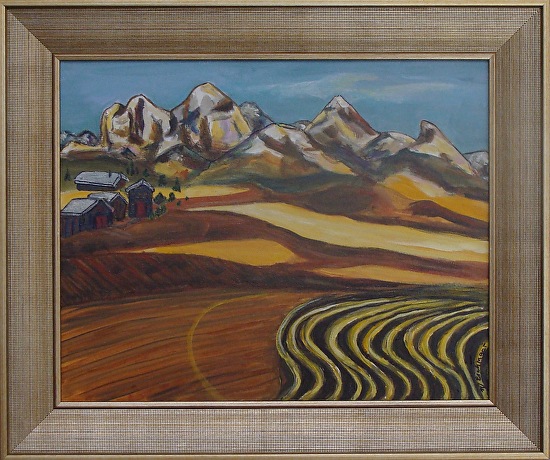
Art is always for sale. contact meat marilynne@eichingerfineart.com Eastern Oregon Contemplative / 21” x 25” gold frame/ acrylic on canvas/ $425. 
Freedom by Mastery

Soaring

Freedom by Mastery

Discussions about individual rights and political freedom plaster the news, while other types of freedom are rarely discussed. Infants standing upright to take their first steps,  gain freedom by moving beyond their crib or parent’s arms to explore on their own— freedom gained. An elder who falls and can’t get up without help will lose the confidence to move without fear of freedom lost.

I remember my 11-month-old-son learning to crawl backward in order to go down the eight stairs to our living room. For a half-hour, he went up and down while my husband and I watched to make sure he was safe. At the bottom of each trip, he would look up at us and grin. He cried when we got bored and picked him up to go somewhere else.  Building muscles and the ability to master steps gave him great joy. The increased freedom he gained results from practice that strengthened his muscles and brain.

  Dancers practice for years before they can leap and twirl with abandonment across a stage. They spend grueling hours focused on stretching,  building muscles and training their brains to tell their limbs what to do. With each advance comes a greater ability to execute moves they imagine in their minds. They work hard and concentric to eliminate outside static and center on the moment. A dancer who gets in “the flow” or “the zone”experiences true freedom. 

Musicians, artists, cooks, athletes, gardeners, and computer programmers speak about the transformation that occurs when the body they inhabit performs as they desire.  They crave moments when they are so completely focused on the task at hand that they are unaware of what’s going on around them. When in the zone, you can float above the cares of everyday life until an insight frees you to create something unique. This is a freedom I enjoy when painting and writing. 

Freedom can also be obtained from synergy.  The effect of that comes from working together can be greater than the sum of the individuals in the group. Yet, as the group grows in stature and abilities, the individuals amazingly do too.

A teacher described to me what it was like to lead a jazz band of talented high school students. The youth were exceptional musicians who had been enrolled in private lessons since childhood. That they had mastered their instruments, led him to believe that if his students were free to express themselves, his band would create exceptional music. The result of everyone doing his or her own thing was chaos. It wasn’t until he took control and added structure, that their individual talents were able to shine through. With skills that perfectly matched the performance requirements set forth, the musicians entered a state of flow felt by their audience. They played so well the students didn’t need to think about how to execute notes but could give themselves over to feeling the music and to expressing their emotions. Within the constraints of the piece they were playing, the youths were free.

We cannot all be masterful artists, musicians, or athletes, but most of us are capable of nurturing body and mind and developing skills that match the performance requirements we set for ourselves. Establishing challenges, learning skills, practicing, and mastering tasks is a recipe for joy. Dopamine levels in the brain increase to make you feel good even when small tasks are accomplished. It is like a drug that makes you crave more. So, you set new goals initiating a cycle that increases freedom with every success. 

The infant learning to crawl backward downstairs will later find joy in balancing a bicycle. The elder who practices how to spin slowly while going down and getting up will gain the confidence to move more freely. A quadriplegic with a functioning brain can find ways to transpose himself from the world he inhabits to the one he wants. 

As the country struggles with issues around political freedom, remember there are other ways to judge how free you are. It is up to you to open your mind and soar.

Share your thoughts about individual freedom on my blog site.

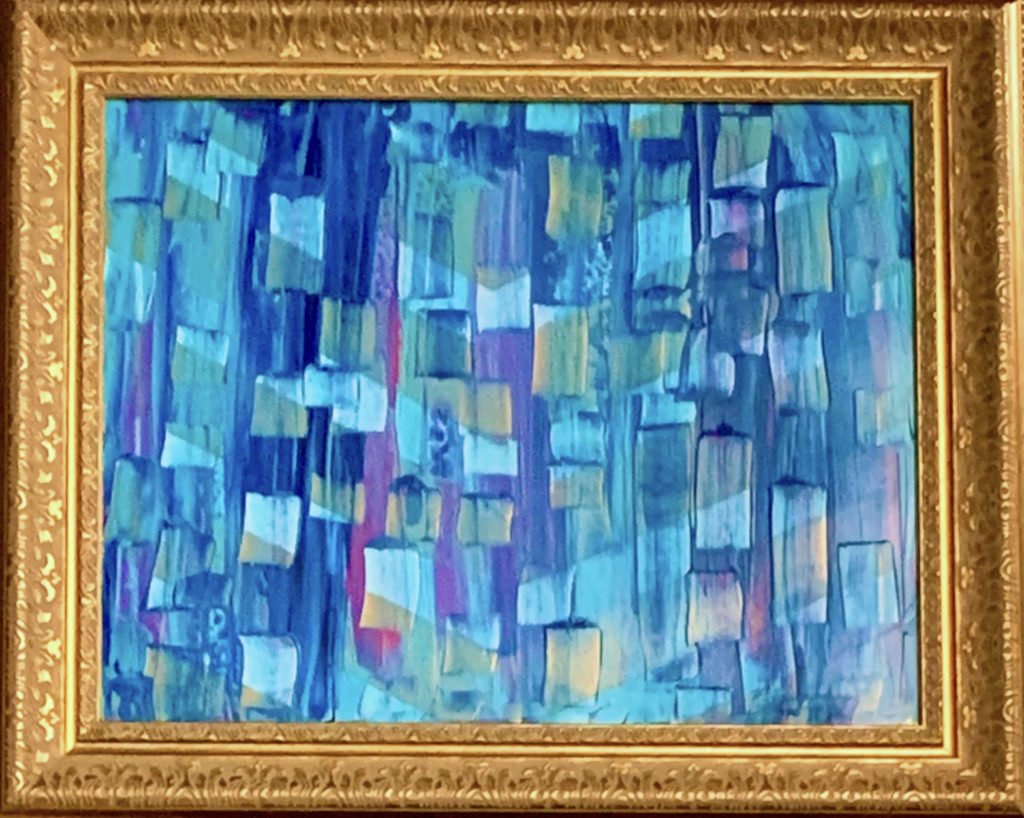
Art is always for sale. Soaring is a 38” x 49” framed acrylic painting on canvas with feathers. Available for $765. For information, contact me at marilynne@eichingerfineart.com.

Do Protests Work?


Gold Static

When you care, your care circulates to make us all better. But what is the best way to show compassion that initiates change? Millions take to the streets to protest social injustice and societal wrongs, but does it do any good?

Do Protests Work?

In the midst of the pandemic and economic crisis, the United States witnessed the broadest, sustained wave of protests experienced in decades. Starting with the presidential election, there were demonstrations against George Floyd, police brutality, ICE, systemic racism, gun violence, mask-wearing, elected officials, eviction notices, voting rights, removal of monuments, and name changes. The Capitol itself was under siege.

But, do protests work? Zeynep Tufekci, writing for The Atlantic, says it takes decades to find out. In the short term, they let authorities know that people are unhappy and want change, but changes to the political system don’t happen overnight. It took over ten years for the 1963 civil rights March on Washington to go from idea, to organization, to dedication, to overcoming obstacles, to change.

The Capitol protesters with their goal of taking over the government were not well organized, and thankfully didn’t succeed, though they scared me and others wishing to preserve a country based on law. But, laws are not always fair, and when people don’t like them, they take their frustrations out with marches and riots.

Some protests in our country’s history have made a difference.

  • The Boston Tea Party on Dec. 16, 1773, sparked the First Continental Congress the following year, leading to the American revolution in 1775.
  • After 60 years of fighting, the Women’s Suffrage Parade, held in 1913 on the eve of President Woodrow Wilson’s inauguration, revived attention for the movement. It took seven more years before the 19th amendment granted women the right to vote.
  • The March on Washington for Jobs and Freedom of 1963, where Martin Luther King gave his “I Have a Dream” Speech, led to the Civil rights Act of 1964 and the Voting Rights Act of 1965.
  • The Stonewall riots in 1969, where Gay and Lesbian communities resisted and protested harassment, led to decades of activism within the LGBTQ+ community. Starting in the ’90s, the Supreme Court established several landmark rulings, including one on June 15th of this year, legalizing gay marriage and making it illegal to fire employees for sexual orientation.
  • The 1969 Native American occupation of Alcatraz led President Nixon to abolish the Indian Termination Policy of the 1040s to forcibly assimilate Native people into American society.
  • The March for Our Lives in 2018 starting at Marjory Stoneman Douglas High School in Parkland, Florida after seventeen people were killed, was a turning point for calls for gun-control legislation. Florida, along with sixteen states and Washington, D.C. raised the minimum age for gun purchases from 18 to 21, enacted red-flag laws, and banned bump stocks to increase the firing power of semiautomatic weapons.

Whether more recent protests will lead to change has yet to be determined.

  • The People’s Climate March in New York City in 2014 that drew nearly 400,000 participants protesting along with 2700 climate-related demonstrations in more than 150 countries brought attention to global warming. It wasn’t long after that President Trump pulled us out of the Paris Accord and cut the EPA’s budget. Though the Biden administration and various individual companies are trying to address global warming, success continues to elude our country and the world as we suffer more climate related crises.
  • The Women’s March on Washington in 2017 drew between 3.2 and 5.2 million people and inspired marches in 400 U.S. cities and 600 worldwide including one in Antarctica. Those advocating for reproductive rights and women’s rights remain concerned about future Supreme Court and state rulings.
  • Protests against police killings of George Floyd, Ahmaud Arbery, Breonna Taylor, and others people of color were among the most intense in U.S. history. Starting peacefully, they quickly moved to violence, setting fires, breaking windows, spraying graffiti, and looting. As I mentioned last week, the Black Lives Matter movement has already created a generational shift, with 65 percent of those under thirty-five supporting the movement but what policies and laws will change remain uncertain.
  • Most protests occur when government supports those at the top and disadvantages those at the bottom. They often start with a single event, igniting long-held grievances. However, if they are not well-organized, they are doomed to die.

What makes protests successful? According to Dr. Catherine Fiechie in a speech given at the Common Futures Conversations Community, dialogue has to be the protest’s priority. Citizens’ assemblies, referendums, and participation in policy-making opens channels for institutionalizing grievances. She also advises that,

  • Protests have to be well-planned, focused, and clear. They must state the problem and what changes are desired. The George Floyd protests were unclear and demands varied from city to city. Cries to charge the officers who killed George Floyd turned into shouts to defund the police, train officers better, administer anti-social personality tests, rid cities of specific elected officials, ban behaviors such as chokeholds, end for-profit policing, end the War on Drugs, make reparations to the Black community, change hiring practices, override police unions, wear body cameras, and remove the Confederate flag.
  • Successful protests employ both digital means of communicating and professional media outreach. Social media plays a major role in facilitating participation. Flash mobs emerge as a result of Twitter, email, blogs, Facebook, and text messages. The #BlackLivesMatter movement gained worldwide visibility on Twitter and through traditional news sources, creating a sense of global unity. Onlookers provided videos of violence taking place that magnified their voices, but when messages put online were not honest and unbiased, they died. Human rights organizations have good techniques for maintaining the public’s attention.
  • All concerns need to be heard and everyone has to work together to find solutions. Protests work well when there is a broad coalition of support that amplifies the voices of the marginalized. The Occupy Wall Street protests against economic inequity, for example, failed because demands were unclear and protesters offered no solutions.
  • Networking with activists across the country and the world adds support to a movement, expands leadership skills, and puts protesters in a position where authorities are forced to engage in talks with them and hopefully answer their demands. Organizers of the Women’s March in 2017, received help from Planned Parenthood and over 100 other organizations to ensure its success.
  • Learning how to take political action should begin in school civic classes. Youth should be brought into discussions and educated in the process. Participation is integral to democracy and essential for creating critical thinkers. I was surprised when my fourteen-year-old grandson asked for Presidential Elections: Strategies and Structures of American Politics, for his birthday. At his age, I wasn’t interested in politics, but he and youth like Greta Thunberg, give hope for the future.
  • Non-violent protests are effective for they convey that they do matter. Movements do well that incorporate methods that have worked in the past and are strategic in their tactics.

Many of us are interested in what we can do to bring about change. Some people feel insignificant and powerless. Waving placards in a mob definitely makes a statement, but it is not for all. Protests fizzle without behind-the-scenes commitment. I, for example, feel like I can be more effective in other ways. There are many opportunities to get involved and lend your voice without having to march. The important thing is to get out of your comfort zone and take a step forward. 

References

Dudenhoefer, N (2020) 7 Influential Protests in American History. University of Central Florida. retrieved from https://www.ucf.edu/news/7-influential-protests-in-american-history/

Garfield,L. & Ettinger,Z. (2020) 14 of the biggest marches and protests in American history. Business Insider. retrieved from https://www.businessinsider.com/largest-marches-us-history-2017-1

Blodget, H & Plotz, D. (2020) Wahl are the protests so much more intense. Business Insider. retrieved from https://www.businessinsider.com/why-are-the-george-floyd-protests-so-much-more-intense-2020-6.

Staff (2021) U.S. Civil Unrest. Center for Disaster Philanthropy. retrieved from https://disasterphilanthropy.org/disaster/u-s-civil-unrest/

Staff (2020) Protests. GlobalSecurity.org. retrieved from https://www.globalsecurity.org/military/world/usa/protests-2020.htm

Haan, L., Barrail, H.,Burdette, e.,Ciasnocha.M. and more. (2020) What Makes a Successful Protest. Chatham House. retrieved from https://www.chathamhouse.org/2020/12/what-makes-successful-protest

2017 Women’s  March. Wikipedia. retrieved from https://en.wikipedia.org/wiki/2017_Women%27s_March#:~:text=The%20Women’s%20March%20was%20a,day%20protest%20in%20U.S.%20history.

Knowing Where to Look

Blue Ladders
There are many ladders to climb and many problems to tackle

Knowing Where To Look

Proof that people are good is all around if you know where to look. With so many troubles facing society, it is easy to forget there is much to celebrate. 

Though trained in psychology, I didn’t pursue a career in mental health. Counselors spend days with people who are sad, lonely, and confused. I empathized with them feeling their pain and wasn’t able to divorce myself from their problems. Carrying their misery I forgot there was a happy side to life.

I left the profession to be surrounded by positive thinkers. I sought out those who had dreams and passions. They were doers who overcame hurdles with hard work and open-minded thinking. Many had gone to counselors, but they fought to overcome their difficulties. I became associated with compassionate people who lived productive, engaged lives. When I looked behind my own interests to find what inspired them, my world expanded tenfold, and I shared in their excitement.

At my catalog company, we gave PRIDE awards to employees who contributed above and beyond their job descriptions. Focusing attention on small acts of kindness and collaboration rather than on mistakes made the organization flourish. 

Individual Deeds: 

Look around and you will find an abundance of people engage in doing good.  Recognizing their decency is a way to keep from being drawn into a quagmire of despair and hopelessness. Their actions are uplifting and an inspiration to others.  Following are examples from my life and from those I read about recently on MSN, FOX NEWS, HuffPost, USA Today, Good News Network, and Sunny Skyz.

Last week a busy physician came cross-country to visit a friend recently diagnosed with Leukemia. Their weekend was spent in laughter and answering his medical questions. The man left his friend better able to face an uncertain future.

On August 3rd an Israeli woman donated her kidney to a 3-year-old Palestinian boy.

Instead of issuing tickets for broken headlights, the Denver police are handing out gift cards to get them fixed.

A man set up a camera inside a bird box and attracted 41 million fans worldwide. He was overwhelmed to discover how many bird enthusiasts there are in the world.

Two Boy Scouts rescued a drowning woman from Missouri Floodwaters, and in British Columbia, a woman trained as a lifeguard 20 years ago, kept a family of three from drowning by jumping in the lake to tow them closer to shore. Onlookers made a human chain and reached out by grabbing her arm and pulling her and the family close enough to get a foothold.

A woman with special needs wanted to be a cook, so Jordyn’s Deli in Falling Waters West Virginia made it happen. “When life gives you lemons, you make lemonade,” the owner said. “ And when one of your best employees comes to you and says that in spite of all obstacles, they want to be a cook. . . you find a way to make it happen.”

My granddaughter had the wedding of her dreams a year after it was postponed because of the pandemic. It was held outside for vaccinated guests and those testing negative for covid. Afterward, her mother looked like she could sleep for a week and hopefully did, but the pleasure she and her husband gave our family after being separated for 18 months was a gift we will always treasure.  

Sam Schmidt, a race car driver paralyzed in 2000, stood and took his first steps due to new technology from Arrow Electronics. As a positive thinker, he discovered a high-tech vehicle that enabled him to compete in races again.

Group Deeds: 

There are times when it takes a group to bring about a change that benefits society. Because of efforts by international governments, scientists, and health organizations, as of August 7th, at least 4.4 billion shots of the Covid vaccine have been administered worldwide (15.3% fully vaccinated) In the U.S.166 Million are fully vaccinated (50.5% of the population). We have more to go, but look how far we have come.

People put their lives at risk to do what they believe is right for society. The Black Lives Matter movement has already created a generational shift, with 65 percent of those under thirty-five supporting the movement. Protests in the United States are escalating to overturn state laws that limit voting rights laws and threaten the foundation of our democracy. Greenpeace organizes ongoing boat interventions in the Antarctic to protect the whales.

Over the past year, COVID-19 itself played a role in protecting ocean wildlife.  Humpback whales became happy when tourism came to a near-halt and 13 million people visiting Alaska on cruise ships stayed away. Researchers at Glacier Bay National Park hear gurgling and bubbling water sounds that haven’t been heard for years. The happy whales spread out across larger swathes of the bay, mothers leave their calves to play while they swim out to feed, and the songs they sing are more varied. 

A group calling themselves the Cruise Control got organized in 2020 to gather signatures for a ballot measure to limit the times and sizes of visiting cruise ships when the pandemic subsides. The drive failed because the business community fought it, but it is not over. “Though tourism is good for the economy, it’s not good if the whales feel too much pressure and leave,” Cruise Control says.

The power of group action was evident when the Supreme Court, with its conservative majority, voted in June to expand employment protections to gender identity and sexual orientation. Old ways of thinking had dissolved and the culture shifted to embrace the LBGTQ community.

Most people want to be fair and try to do what is right. Some innovations, like dams, seemed good at the time it electrified the country. Now we know they kill the fish, destroy cities and farmland, and divert water needed for crops and other living organisms. Dams are being taken down as we find other ways to electrify our towns. 

With population increasing, it is time to reimagine the way energy, agriculture, trade, property, communication, and water are managed. Privacy laws, individual rights, and the limits of capitalism, socialism, and democracy ave to be reimagined. The troubles we have will only be solved by banding together and lobbying for solutions that benefit all.

Younger generations will have a great many problems to solve. There are interesting challenges that will be exciting for citizens with a good heart to tackle. Knowing where to look and taking action is the antidote to despair, making life worthwhile. And, for those of us who are elders, we are also being challenged to help youth find their way.

References:

Tufekci,Z ( 2020) Do Protests Work? The Atlantic. retrieved from https://www.theatlantic.com/technology/archive/2020/06/why-protests-work/613420/

Zurcher,A. (2021) Why whales in Alaska have been so happy, BBC News. retrieved from 

https://www.bbc.com/news/world-us-canada-58032702.

Soar like an eagle

  Silence
From the silence within comes great thoughts and attainable dreams for the future. 

In 1964 Billy Mills, an Oglata Lakota (Sioux) from South Dakota, won the Gold Medal in the 10,000-meter run. It is considered one of the Olympic’s greatest upsets because the victory came from an unknown Native American athlete. Though Mills grew up in poverty on a reservation, he didn’t know it because there were gardens for food and there was a lot to keep him busy. Without a car, he ran, rode bikes, and swam in ponds, developing cardiovascular conditioning without realizing it. At the age of eight when his mother died, he became despondent, yet managed to become the only American to ever win a gold medal in the 10K event.

Mills’ father’s advice helped him overcome his depression and focus on the future. “Your wings have been clipped,” he said to the young boy. They are broken and the only way to grow them back is by following your passion. Chasing dreams will make you whole again and let you soar like an eagle.” The youth started running and found he excelled at it. Over the years he learned how to manage bouts of low blood sugar and severe depression. He dealt with bullying and racism dished out in high school and at the University of Kansas. A low point during his last year at the University was when a photographer pulled him from a group shot after qualifying for a prestigious race in Brazil. He returned to his dorm room afterward prepared to jump to his death.

As a commissioned officer in the US Marine Corps, he trained at Camp Pendleton for the Olympic Games. During his epic run at the Tokyo games, Mills thought he saw an image of an eagle on a fellow contestant’s shirt. Remembering his father’s words, his feet began to speed. He had the wings of an eagle and realized he had a chance at winning. After the race, he looked for the runner and discovered there was no eagle, only the perception.

“Tokyo was about healing a broken soul,” Mills said. “It was finding peace, making friends.” Mills was finally accepted. “When they played the United States National Anthem, it was powerful. It was beautiful,” though he whispered to himself that he didn’t belong, and cried.

When his track career was over, the Olympian decided to give back to the community and share his legacy. He hoped “to empower the visions of the elders and inspire the dreams of the youth.” In 1912 President Obama awarded Mills the Presidential Citizens Medal for his efforts in Native American causes. Mills at 83 worries that our country is losing its democracy. His days are spent as a philanthropist building hope for the future by teaching his twelve grandchildren and community youth to reach for their dreams.”We need everyone to come together so collectively we can choreograph the horizon of the future.”

I tell this tale because so many people have been sharing stories of their broken souls. I too, find it hard to find good when there is so much of the world appears broken. The pandemic, hot erratic weather, families in disarray, cities of trash, and the unhoused invade our senses. Hatred, fear, and confusion about the future have clipped all too many wings. Instead of looking forward to better times, many people appear to be stuck in a cycle of hopelessness. Rather than searching for their passion and following it to make life better, they wallow in self-pity and look for someone to blame. They lash out at politicians and strangers and make things worse for themselves and society at large. You have only to look at the news and read about escalating domestic and gun violence, road rage, homelessness, and alcoholism to know what I say is true. 

Too many eaglets fallen from their nests lay broken and silent on the ground, unwilling or unable to move. Yet they breathe–and if given a little bit of hope, they could heal. Though their wings were clipped they can grow strong and stretch wide to carry them to their dreams. A person, no matter age or circumstance, who believes in him or herself and has a passion for making something happen that will improve their life has the ingredients needed to pull forward. It can be done. 

No one ever said that a transition was easy. Turning a dream into reality take perseverance, and it may require putting a hard shell around you that keeps adversity at bay–but it can be done. As our country moves through an unprecedented era of transformation we must never give up hope. It is the dreams of young and old that carry light into the world. Imagine what it would be like if everyone dreamt of achieving success in a just and fair society. We’d look up in amazement at seeing thousands of powerful fliers–eagles soaring, gliding, and flapping their spectacular wings over great distances, guiding themselves and loved ones to the places they were meant to be.

Do share your dreams and the energy you put forth to make a better future for yourself and others. Add them to my blog site below.

Art is always for sale. Silence is a mixed media, three-dimensional acrylic painting backed by canvas. 28″ by 40″. Framed. Available for $650. Contact me at marilynne@eichingerfineart.com.