Talking to a Conspiracy Theorist

THE ORATOR

The 2020 election ended with a lie, a false claim that the election was stolen. And since January 6, 2021, according to a recent NPR investigation, conspiracy theorists have taken that message on the roads. Four prominent purveyors of voting disinformation crossing the country have spoken at over 308 events in 45 states and the District of Columbia. The highest-profile person tracked is MyPillow CEO, Mike Lindell. The speakers meet small audiences at restaurants, car dealerships, community centers, and churches, and are effective at changing minds to their way of thinking.  According to Chris Krebs, a former Department of Homeland security official who oversaw federal election security measures in 2021, they work to change minds at the lowest level possible. 

Leaders who make allegations without credible evidence corrode our democratic way of life. Yet despite the January 6th committee investigations and efforts by Republican and Democratic election officials from every state, they prevail and their voices continue to rise. Their goal is to take back the country, never considering that it was stolen from the Indigenous people who lived here before them. Like the Crusaders, they want the country to be Christian and white. 

Ignoring the facts, the big lie is promoted as a means of getting legislators to enact laws that make it harder for poor, minority, and marginalized people to vote. Carly Kopeks, an elections coordinator in Weld County, Colorado thinks that many people see it as a religious campaign and believe they are doing the Lord’s work. 

Is it possible to fight misinformation and outright lies? Shouting certainly doesn’t work nor does an appeal to empathy. Rebutting disinformation makes people dig their heels in more deeply. So what can be done other than throw up your hands and walk away? One thing is for sure—you can’t negotiate with someone who won’t sit at the table. 

Dr, James Giordano, Professor of Neurology and Biochemistry at Georgetown University Medical Center, says it is important to understand why conspiracy theories work. “As stress levels escalate, biological, psychological, and social fatigue sets in that makes the perceived stress and the stressor viewed as threatening. The more vulnerable people feel the more volatile they are likely to become.”  Volatility is the prompt for aggressiveness and violence. In a volatile world, wild theories bring peace of mind by painting events as being either black or white. Unfortunately, most of life is bathed in shades of gray.  

Conspiracies are successful in part because they encourage community and are a way to hang out with those who share beliefs. After joining the group it is difficult to leave. People become emotionally attached to their beliefs and form relationships they don’t want to sever.

According to Robert Kozinets, at USC Annenberg School for Communication and Journalism, social media is the cuprite that fosters stress by turning lies to the extreme. False news is emotionally arousing and more interesting than the truth. When it’s presented by influencers, the more extreme the information, the more the brain becomes engaged. It doesn’t matter if the stressor is legitimate. Perceived threat is all that is needed to instill a sense of dread. And, that sense, drives behavior.

When our minds are vulnerable and we feel uncertain, we look to others to confirm our worst fears and show a way forward. Social media accentuates the process by provided a validation feedback loop for those who are afraid,  Fearful people are vulnerable to influencers who have special agendas, and are easily manipulated. These influencers are the ones fanning the political divide. They use the psychology of fear to change minds for their political gain.

So, how do you combat conspiracy theories and open minds to fact-based thinking? You start by dampening stress hormones in the brain and eliminating negative emotions. In other words, the person has to “chill out” and feel respected. Only by meeting people where they are can they be brought to more rational conclusions. 

Analytic thinking has to be introduced in tiny steps that take patience. The process can be started by mentioning the facts without discussing the person’s misconceptions. Don’t dwell on the conspiracy for that will embed false ideas more deeply. Only with the person is relaxed and talking about unrelated issues can you chip away at the conspiracy with occasional comments that make the person think.

These comments, however, have to be in harmony with the person’s preexisting beliefs. For example; climate-change deniers are more likely to shift their view when told stories that have cause and effect conclusions. If the person holds on to a false belief, respond with,” That’s interesting. Do you mind sharing your data?” By showing the person respect, you’ll have more success than negating claims as though speaking to an idiot.

George Layoff of UC Berkeley framed the Truth-Sandwich Method. To debunk an inconsistency, he suggests repeating factual information twice. Let’s say someone you know believes they don’t need the COVID-19 vaccine because the survival rate is 99 % (it isn’t). A response might be, “The survival rate may be high, but the virus is still incredibly dangerous. In a country like ours with 328 million people, a 1% death rate would cost over 3 million people their lives. That’s why, even though the survival rate is high, the virus is still incredibly dangerous.” (See below for the actual rate.)

Another way to bring about change is to mimic Socrates who engaged in back-and-forth debate, pointing out inconsistencies on both sides along the way. People don’t feel attacked by this technique since they’re not being forced to change their beliefs. The debater’s goal isn’t to convince his opponent that he is wrong, but to introduce questions that will help the person come to a better conclusion. Though Socratic arguing takes time, it can bring about change in the long run.

I implore you not to give up when speaking to people who spout conspiracies. Practice patience and find a way to tune into their emotions. Only then that you can open their minds to analytic ways of thinking. Democracy depends on us engaging with one another, not throwing up hands and walking away in frustration.

Dangers of Groupthink


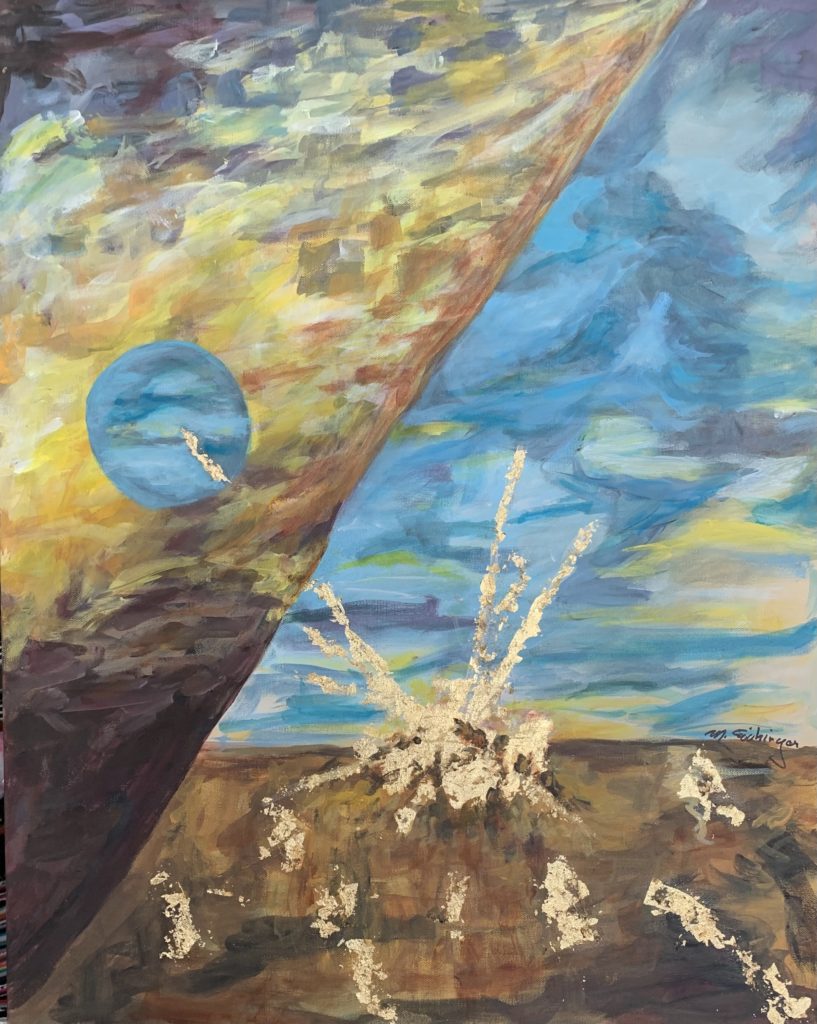
 Hope Exploding 
To better understand yourself and your place in the world, you have to be willing to absorb information that challenges old beliefs. The explosion of ideas that come from creative minds breaking free of groupthink, gives me hope that a more balanced future is possible.

Horrors of Groupthink

To punk artist Henry Rollins, being inactive and unimaginative is among the biggest errors one can make. He wrote, “I believe that one defines oneself by reinvention. To be yourself. To cut yourself out of stone.” As well as being the frontman for the band Black Flag, Rollins was an advocate for social change. He challenged himself to break the mode as a musician, poet, radio host, and actor. Rollins is intense in whatever he does and refuses to stop creating. Rollins tells his audiences to travel unbeaten paths, to do things in their own way, and grab onto the unique qualities that make them different.

Rollins also questions groupthink, an attribute that drives much of our social interactions. Groupthink can pull society down. It occurs when group members prioritize unanimity over a realistic appraisal of a situation. It leads to people accepting lies, joining hate groups, promoting conspiracy theories, and making poor political decisions.

Groupthink fails to consider all factors and alternatives before reaching conclusions. It occurs when social identities are so embedded in the group’s psychology that individuals won’t act on their own conclusions. Though facts may be disputed, group cohesion is stronger. It’s what drives religion, racism, and legislation. Congressional groupthink that holds political parties as more important than the citizens they serve, threatens democracy.

In the 1950s, The Asch Conformity Study conducted a series of psychological experiments about why don’t act independently. The study concluded that people are more prone to conform than they believe they are. In Asch’s experiments, people who were in on the experiment (plants) pretended to be regular participants alongside unaware subjects. All participants were shown a line segment and then asked to choose a matching line out of a group of three segments of varying lengths. When subjects were given the test privately, they all choose the right length. But when the plants were with the subjects, 75% of the subjects changed their mind after hearing the plants select an incorrect length.

Asch’s study led to the following conclusions:

  • Conformity increases when more people are present.
  • Conformity increases when the task is more difficult. People look to others for information on how to respond.
  • Conformity increases when other members of the group are viewed as more powerful, influential, or knowledgeable.
  • Conformity decreases when people respond in private.

Over the years, Asch’s research inspired many other social scientists to look into motives as to why people conform.

  • Some individuals are motivated to avoid conflict.
  • Collectivist cultures are more likely to conform.
  • People are more likely to conform in situations where they are unclear on how to respond.

The Stanford Prison Experiment conducted in 1971 reconfirmed the power of groupthink. It was set up to study what happens when you put good people in a evil place. It had to be stopped after 70 students, randomly assigned as guards or prisoners, became so immersed in their roles that it affected behavior to the detriment of their health. The prisoners cowered and were traumatized while the guards became aggressive. The experiment ended less than a week after it started.

Conformity appears to be a regular part of most social circles. Understanding the mechanisms of groupthink can help you make sense of why people go along with the crowd even when the choice seems out of character. It can be dangerous as it was on the January 6th insurrection.  But, by being aware of the pressure to conform, it’s possible to analyze what is going on and see how other people’s behavior is influencing your choices.

It is difficult to be yourself and speak up for what you value. We have only to look at Liz Cheney to see how she has been targeted for standing up for the truth. Though I don’t agree with many of her policies, I admire her courage. Riddled by threats, much like Salman Rushdie, she is a target of radical thinking. 

Traveling unbeaten trails, seeing issues in broad light, and being willing to stand up for the truth against those who pressure you to conform—that is what individuality and freedom are really about.

Do comment on my blog site at www.eichngerfineart.com/blog.

Art is always for sale. For information contact me at marilynne@eichingerfineart.com

Hope Exploding is an acrylic painting on deep canvas. 24″ x 30″/ available for $495.

Books: Over the Peanut Fence and Lives of Museum Junkies are available online and in bookstores in ebook and paperback formats.

A Society Creating Itself

  Onions
Years ago, my mother asked my fiancé to unreel an onion for a dish she was cooking. He peeled the layers away until there was nothing, and looked up not knowing what to do.  

A Society Creating Itself

When British poet WH Auden moved to the United States in 1939, it wasn’t because of the war. It was because he wanted to live in a society that was creating itself. During that time, the question of whether Communism or Capitalism was the superior system was on many people’s minds. Note, I didn’t mention democracy  or authoritarianism, but rather the economic structure that drives daily life.


It’s been eighty years since the start of the second world war. Communist countries like Russia and China, have since loosened their policies to include free market competition. Capitalist countries like ours have embraced socialist ideals. We now have welfare programs and aid organizations. Through social engineering and because of modernization across the globe, the two economic systems no longer battle for superiority as they become more alike than different. As technology continues to advance, both systems face the challenge of adapting to technologies never imagined. Facebook and Twitter have already caused social and moral confusion that turned society topsy-turvy. 

Entrepreneurs believe that their inventions will better society and give people an improved quality of life. What they say they want is to increase happiness in this life. This differs from a religious goal that considers life to be a test to go through to reduce suffering in the afterlife. Because people are innately curious, research will continue with developments in artificial intelligence and genetics leading to upheaval as great as the industrial revolution.

Naysays think that claims that society is better off are misguided, and most people across the globe agree according to a study by Ruut Veenhaven published in the National Library of Medicine. Negativity prevails when people contemplate drug use, criminality, ethnic troubles, terrorism, and labor disputes. Ecologists point to pollution, global warming, and the degradation of nature, adding to our unease. People from all parts of the world believe we are drifting away from human nature and on an uncontrollable downward slide to paradise lost. They think that the past was better and today worse for the average person. Their claims are made even though we live longer and better than the kings of yesteryear.

If life is so awful, isn’t it surprising that we continue to promote modernization? If the average person can’t cope with change won’t capitalism collapse? If the future is more stressful, unhealthy, and less satisfying won’t communism dwindle?

The 2022 World Happiness Report was issued after three years of Covid, the breakout of war in Ukraine, extreme weather events, and a looming economic crisis. Yet, despite it all, global reports of personal happiness haven’t dropped significantly. The most hopeful finding reported was that humans are remarkably resilient in the face of crisis and catastrophe. 

Investigators believe that happiness is driven by benevolence and generosity, the freedom to choose what you do with your life, and having balance, harmony, money, and health. If this is so, then what about using these indicators as a strainer to evaluate innovations that affect our future? Native American elders consider the next seven generations before making a decision. The rest of society might do well to be grounded in that approach. 

You and I and our children have the chance to participate as society recreates itself. Let’s get energized, not fearful, and do it with as much forethought as the nation’s founders did when drafting the constitution.  Ask whether what we are doing will give us more freedom, and make us better balanced and less stressed. Will we be able to live harmoniously with nature, become healthier, and have enough money to care for ourselves? If we keep these questions in mind as modernization continues, we will be in good shape as the nation recreates itself.

References:

Ruut Veenhaven (2010) Life is Getting Better: Societal Evolution and Fit with Human Nature. National Library of Medicine. retrieved from https://www.ncbi.nlm.nih.gov/pmc/articles/PMC2848343/

@022 World Happiness report website. retrieved from https://worldhappiness.report/ed/2022/overview-on-our-tenth-anniversary/

It is wonderful to hear from you. Please comment below.

Art is always for sale. Onions is a framed acrylic painting on canvas / 24” x 28”/ Available for @299.  For information contact me at marilynne@eichingerfineart.com

Life’s Influences

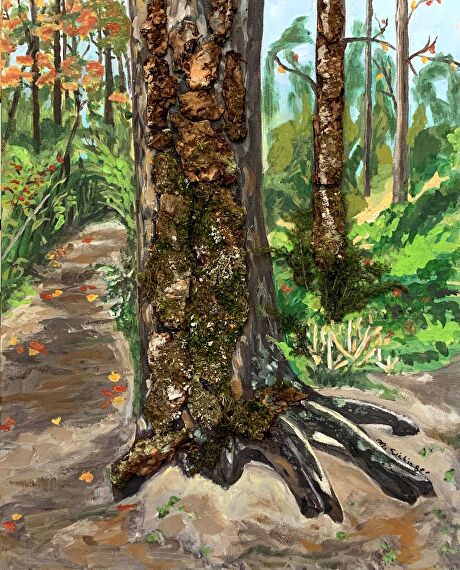
Douglas Fir

 Douglas Firs have been known to live for over 1000 years. They were able to outlive changes in weather patterns and political upheavals. Will they survive global warming and the pressure of population growth?

Last week, my grandson asked me what world events had affected me the most. As I thought about it, I realized there were several that influenced the way I act and think today.

The first one that came to mind was the polio epidemic. I remember magazine photos with people’s heads sticking out of iron lungs. When a child at the summer camp I attended came down with polio, the camp closed and I received a painful shot of gamma globulin. Having a physician for a father made it less fearsome, for I naively trusted him to keep me safe. It wasn’t until the Salk vaccine was distributed that fears receded and my family returned to the beach for vacations.

The next major influence was the Cold War. Children were drilled in school to duck and cover while neighbors built bomb shelters in their back yards. In Boston where I lived at the time, I was sure the historical city would be among the first to be destroyed. I begged my husband to move further inland where, again naively,  I was sure Russian bombs couldn’t reach. The Soviet Union’s demise with the Berlin wall coming down was a high point in my life. I could sleep soundly, believing that under Gorbachev, our enemy nation would become democratic friends. 

Now as I watch Putin rebuild an empire, I don’t trust Russia and wonder why anyone would. My grandparents suffered in pogroms and had to escape Russian brutality. I feel  pain when I see how Ukrainians are treated as they fight to keep their freedom. It is unleashed cruelty.

The sixties and seventies civil rights marches, the women’s movement, and the Vietnam protests ring loudest in my ears. Though it was an epoch of anger and civil disobedience, it was also a time of hope and caring. My friends and I believed it was possible to change minds through marches and by standing up for what is right. We were known as the love generation and fought for compassion. Our call for equality, justice, and peace remains embedded in my psyche. It influences my thinking about abortion, gun control, and freedom. I believe people have the right to vote and live with their beliefs without being bullied and disavowed. The era made me question demigods who make decisions benefiting a few at the expense of the masses. 

The era also introduced a way to stay calm in the face of chaos. The Beatles, Ram Das, and the Marahashi brought eastern thinking westward. The practice of meditation and yoga gave people tools to deal with difficult issues from a calm center. Meditation and pilates (related to yoga) gave me the strength and courage to manage large organizations and a rambunctious young family. 

Though other there were other wars over the last fifty years, it wasn’t until the World Trade Center came down, that the ground under my feet shook again. It ushered in an era of paranoia, lies, and hatred that continues today. We were told to distrust and invade Iraq and found out later that they didn’t have weapons of mass destruction. People began paying attention to a bandwagon of conspiracy theories that made no sense. There are still those who believe that our government brought about the trade building’s demise, that Hitler didn’t exterminate Jews, that the Sandy Hook massacre wasn’t real, oxycontin isn’t addictive, and that the 2020 election was stolen. Lies, lies, lies.

The Middle East wars escalated drug use and immigration fears. Propaganda took over newscasts so that now half the country wants to throw daggers at the other half, whoever they may be. It is confusing to know what to believe, but everyone knows it’s good to have a scapegoat. Who cares if you hate the gays, the immigrants, the abortionists, the Muslims, and Jews?

Amidst global warming, a media that promotes false information, escalating pandemics, electronic communication, artificial intelligence, nuclear war drums, and genetic breakthroughs, society is shaken to the core. The word compromise has taken on sinister meanings that negate empathy and common sense. Authoritarianism is pushed by oligarchs and religious fanatics who are sure they know best for everyone. No longer valuing freedoms granted in the constitution, they want to control the laws of the land and manipulate the way people behave. All I can say about such behavior is to beware and resist. Demigods are self-serving and dangerous.

My hope is that children receive a broad, balanced education that teaches them to think broadly so they can solve complex issues. We need intelligent educated leaders to cut through the bullshit. And since the country is a melting pot of races and religions and is a player on the world scene, we need people who believe the whole to be more important than any one individual. As a woman of peace, I maintain hope that the wrong being done today rights itself.

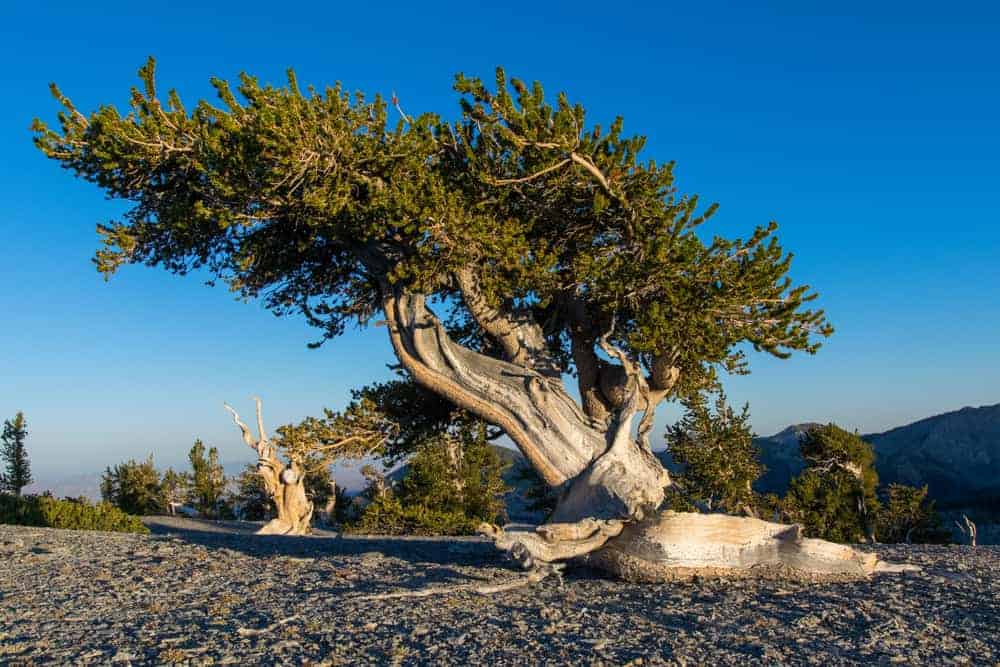
Great Basin Bristlecone Pine trees manage to live through stratospheric changes and still stand 5,000 years later. I pray civilization has the fortitude to adapt to the realities of a warming climate and expanding population so they can continue to prosper. 

I’d love to hear what events influenced your life. Please comment below.

20″x 16″ canvas prints of my tree paintings are available for $70. To see the entire collection of 28 trees go to https://www.eichingerfineart.com/collections/142242. The best way to reach me is at marilynne@eichinigerfineart.com.

119 Degrees Fahrenheit

An Overheating Planet

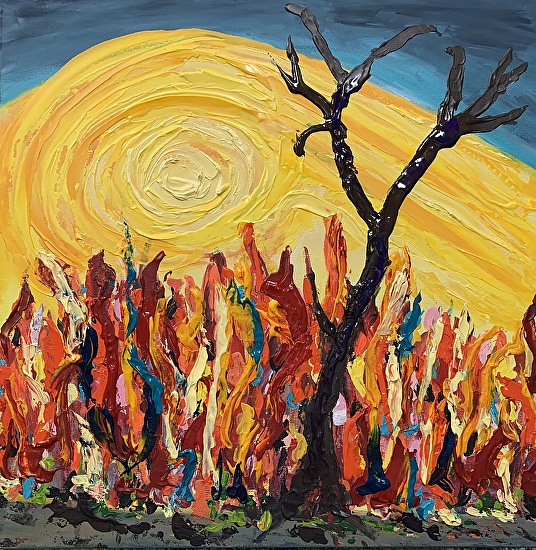
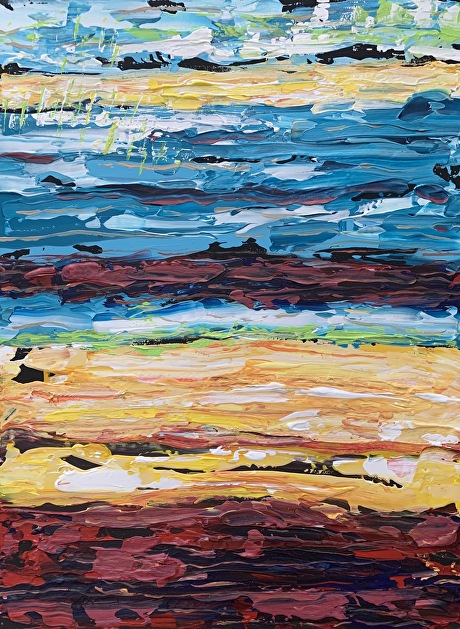
119 Degrees Fahrenheit was painted in 2021 when the temperature in Portland reached record highs. Sweating through July and August changed the way I looked at summer and the many trips I used to take to blistering cities nearer the equator. No longer did I feel superior when hearing how Arizona, New York, and Southern California suffered through heat waves. My northwest home, now bathed in sunlight, seemed worse off with polluted air from wildfires forcing me to stay inside. Since my house wasn’t air-conditioned and the air was not purified, all I could do was stay indoors and pray for cooler weather.

This year, I’m better prepared with two room air conditioners and two air purifiers humming in the background. Though the constant sound of their motors is unnerving and I don’t like having to keep windows closed, I am reluctantly getting used to the fact that Earth’s temperature will continue to go up.

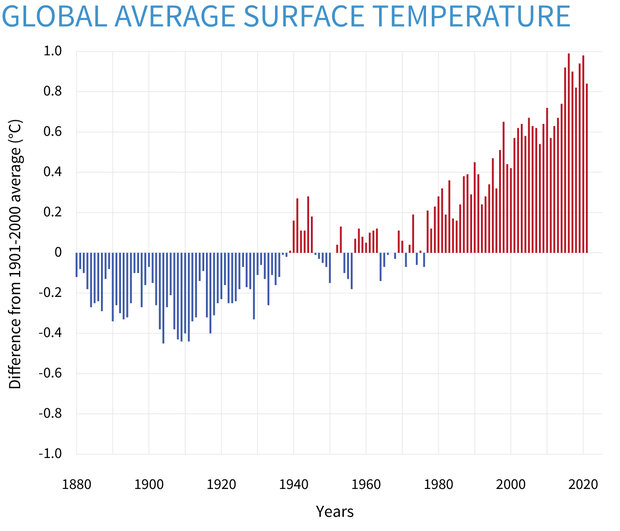
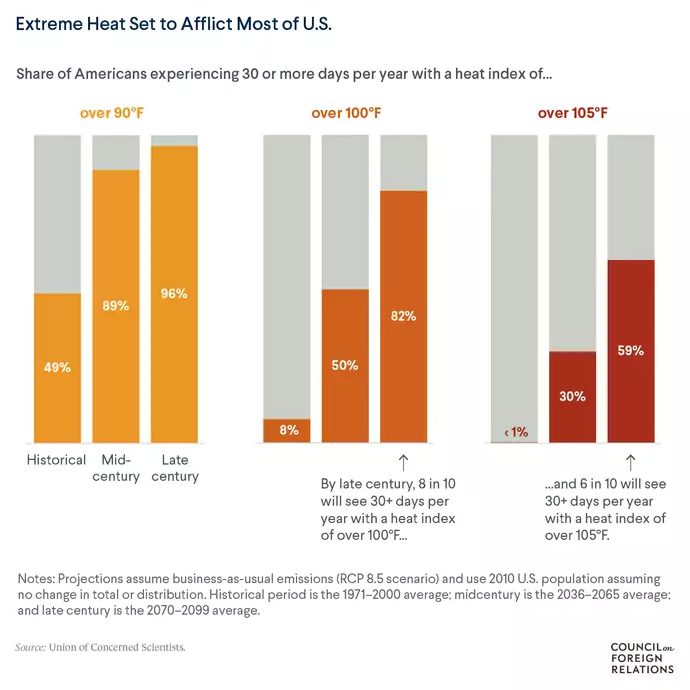
I suffer along with most of the Northern Hemisphere from China to North Africa to the United States and acknowledge the change in temperature and weather patterns as the new norm. Temperatures will rise and storms will become more violent.  Long-lasting heatwaves and droughts will dominate my summer months. Rather than look forward to fun days at the beach, I will seek shelter from damage from the sun’s rays. Heatwaves are dangerous to health and well-being.

How anyone can still deny global warming is beyond imagination. It is forty years since a small group of scientists met at the world’s first climate conference in Geneva raising the alarm about global warming. Though over 11,000 scientists have now signed on, not much has been done to alter its trajectory. 

Last March, at opposite ends of the globe, the Arctic and Antarctic had record high temperatures. Simultaneously, a two-month heat wave covered India and Pakistan. By June the U.S. and Europe were breaking heat records and wildfires were devastating crops in Tunisia. It is difficult to imagine what the world will be like by the end of this century.

Summer temperatures in the Pacific Northwest and Canada are as much as 30 degrees Fahrenheit higher than normal. Their traditionally cool cities don’t have the infrastructure to support citizens through heat waves. Until last year, I never considered owning an air conditioner. Today I pay attention to the U.S. National Bureau of Economic Research’s prediction that says heat deaths globally could equal those from all infectious diseases combined by the end of the century. Communities are in a catastrophic loop that will make many regions of the Earth uninhabitable.

There is much to do if the human race is to survive. To deal with overheated cities we can look at cities like Athens, Greece, and Ahmedabad, India for advice since they have been dealing with heatwaves for generations. They put public cooling spaces in malls, libraries churches, and community centers where people don’t have to walk a half-hour in the heat to get to them. They plant trees to create shady street corridors that allow people to walk safely.

Miami-Dade County, Florida is aggressively dealing with global warming. Despite the fact that many Floridians don’t believe climate change is anthropogenic in nature, they hired a new chief heat officer to tackle issues of equity associated with rising temperatures. They are paying attention to scientists who predict devastating impacts on infrastructure, human health, and the economy if they don’t make changes.

But, more to the point, is what you and I can do to stop the warming trend. The message is clear we can’t stay complicit, sit back, and do nothing. As states make rules against abortion, legislators must consider the impact of population growth and poverty in their communities. Increased numbers lead to a decrease in tree cover, a rise in fossil fuel use, and a greater demand for water and social services.

Though it may not be to our liking, we need to cut the frequency of car use and air travel that expels carbon dioxide and nitrous oxides into the atmosphere.  We can lobby against land clearing and timber companies and developers that chop down forests they repent with monocultural tree farms.  Let’s be conscious of food waste, push for ending subsidies for fossil fuels, reduce meat consumption, and move from the notion that ever-increasing economic and resource consumption is good. An ever-increasing GPD is not sustainable for the planet. 

We can show our children that we care about their future by leading the way. After a year of research, I completed a novel about the water crisis facing our warming planet. When Rightfully Mine is published, I hope it will inspire people to protect our right clean water rather than let it be traded as a commodity. Not only is bottled water 2000 times more expensive than tap water, but its plastic also harms fish in our oceans. 

A recent New York health study found that hot days are associated with more emergency room visits for substance abuse, mood and anxiety disorders, schizophrenia, and dementia. It puts outdoor workers and elderly people at particularly high risk. Heat is also linked to lower performance on standardized tests. 

The health effects of global warming are serious, my friends. What each of us does daily to lower affects the planet.

References:

Website for climate.gov (2022) Climate Change: Global Temperature

Website for Council for Foreign Relations (2022) A world Overheating.

Website for The Brink, How Does Heat Exposure Affect the Body and Mind?

__________________________

 Do comment on my blog site and share how you stay cool and mentally fit during scorching summer days.

Art is always for sale. Contact me at marilynne@eichingerfineart.com.

119 Degrees Fahrenheit is a 24” by 24” acrylic painting on deep canvas. Available for $785.

Limitless Possibilities

  Limitless Possibilities 

The wall outside my childhood bedroom was covered with photos of relatives both dead and alive. My father didn’t like it. He especially minded walking by the image of his deceased parents. Instead of dwelling on the past and what he had lost, he was a man who looked forward to what came next. It took years before I understood why being constantly reminded of the past didn’t feel good.

Several years ago, I repaired an old turntable thinking that it would be fun to listen to Pete Seger, Joan Baez, Bob Dillon, and other albums saved from the past. The memories they brought back, however, made me sad. I too am not good at dwelling on the past and like to make sure I have something to look forward to. It didn’t take long to realize that when it comes to popular music, I prefer hearing sounds that put me in touch with younger generations.

I occasionally get nostalgic thinking of the various political landscapes I lived through. Free speech and civil and women’s issues were rights I fought for. Yet when I hear people speak of those days as though they were better, I worry. They are quick to forget Nazi Germany or fear of a nuclear attack by Russia. Leanard Bernstein wrote West Side Story because of the gang wars plaguing New York. The Vietnam war was horrific. What people remember is the feeling they had from being involved in something greater than themselves.

In those days, I too believed my generation could change the political landscape and make life better for everyone.  We were confident in our beliefs and focused in actions. The three television stations and newspapers didn’t bombard us with lies and conspiracy theories. The confusion the industrial revolution had brought about a hundred years earlier was well past. We wanted to work and willingly fought for living wage jobs for all. We were open to innovations that made life easier and encouraged entrepreneurs to test their ideas. And though there were warnings, population growth had not yet reached the tipping point. 

What my generation did, was increase global warming, pandemics, pollution, and migrations that are now at epic proportions. Advanced technologies, computer algorithms, and genetics thrust us into an era that can be compared industrial revolution. It is a period of profound change that is bound to bring with it uncertainty and confusion. Old ways of supporting and governing ourselves will not work. Since we don’t fully understand the potential of these innovations it is difficult to prepare for the future. People began to disavow what happened and, like Chicken Little, started calling out that the sky was falling.

Change always brings dysfunction. Patience is needed to think things through, but instead of doing so, people flee to religious leaders and autocrats who know little about technology but offer certainty. It is difficult to live with uncertainty and easy to see why an idealized past is more appealing. Ambiguity is accompanied by anxiety and leads to mistrust. Yet ambiguity is the new reality a society comes to terms with algorithms, artificial intelligence, and genetically engineered health care.

It is kind of interesting. My advice is to be curious and not panic. It may take fifty or more years for the world to settle into a new normal. Practicing patience is the best way to navigate through change. Since we are in the midst of a revolution and don’t know where it is headed, all we can do is stay informed and teach the next generation to pay better attention. They are the ones who will devise economic and social systems that embrace AI and genetic engineering. Hopefully, what they come up with will be just and equitable and allow people to live richer, more satisfying lives. It would be interesting if we could come back in the future to see how the present evolves. 

Art is always for sale. Contact me at marilynne@eichingerfineart.com

Publications: Over the Peanut Fence and Lives of Museum Junkies are available in ebook and paperback formats in bookstores and online. For more information go to the Autor’s corner at https://secretsofamuseumjunkie.com/

Freeports: Where the Wealthy Hide Art

Walking on Air

Though Oregon is a no-tax state, it has two freeports where businesses can avoid customs taxes. Is it worth warehousing my art in a freeport warehouse with the expectation that it will go up in value and be sold where it will be taxed?

My naivety shows!  I haven’t thought much about the pros and cons of freeports or free trade zones as they are sometimes called, until rereading The Medici Conspiracy: The Illicit Journey of Looted Antiquities–From Italy’s Tomb Raiders to the World’s Greatest Museums by Cecilia Todeschini. The book is about an art dealer who operated out of a freeport in Switzerland. He sold millions of dollars of illegally acquired antiquities to museums like the Getty and Metropolitan Museum of Art. After exploring Freeport’s in more detail, I found that his conniving ways were more widely practiced than I originally thought. The global art market, estimated to be $65.1 billion in 2021, is riddled with fraud.

According to the Encyclopedia Britannica, a freeport is a lot with a large warehouse located near an international air or shipping port. It is where goods are landed, handled, manufactured or reconfigured, and reshipped without the intervention of customs authorities. Since these free zones are outside the jurisdiction of any country, businesses avoid paying import duties. They provide a legal way for dealers and collectors to avoid import and export documentation, taxes, and insurance costs while storing or selling expensive works of art.  No one knows if art stored in a freeport warehouse was acquired through legal or illegal channels. 

Freeports first emerged in nineteenth-century Switzerland where secure storage facilities held valuable agricultural and personal commodities in transit without being taxed. These isolated, enclosed, policed areas with facilities for loading, unloading, storing manufacturing, and shipping by land, water, or air provide legal protection for businesses dealing in illicit trade.

The ostensible purpose of a freeport is to help businesses compete in the global economy. Since lower tariffs are put on imported component parts they can be manufactured and exported from there at competitive prices. Governments consider them to be good investments because they stimulate trade. The question is since the businesses don’t pay taxes, how do they really benefit society?

Free Trade Zones are havens for money laundering and tax evasion. With less red tape and taxation, ownership is concealed while trade is conducted untaxed. Bad actors in the art world commonly use it to buy and sell illegally acquired antiquities and fine art. Since there is no oversight no one knows what is stored in these warehouses.

Consider the following:  Art purchased at a Detroit gallery would cost the buyer 6 percent over the price in sales tax. A Californian would pay 7.25 percent more. To avoid paying sales taxes, many collectors buy and store their art in a freeport, speculating that the price of the piece will escalate in value. I found the art trail reported by TAXVOX to be most interesting.

“Consider the sales trail of the most expensive painting ever purchased, the Salvator Mundi. In 2005, an art hunter bought the painting for $1,175 at a New Orleans estate sale. In 2013, after experts asserted the painting was by none other than Leonardo da Vinci, art dealer and freeport magnate Yves Bouvier purchased the canvas for $80 million. The next day he sold it, tax-free in his freeport, to Russian fertilizer tycoon Dmitry Rybolovlev for $127.5 million

Four years later, a buyer widely reported to be working on behalf of Saudi Arabia’s Crown Prince Mohammed bin Salman purchased the painting at New York auction house Christie’s for $450.3 million.

Normally, a buyer in New York State would owe 8.875 percent sales tax on the purchase. In this case: a cool $39.9 million. Alas, New York State has not collected a dime. Originally, the painting was scheduled to be exhibited at the Louvre Abu Dhabi. But it’s not there. Nobody knows, or is saying, where it went.” 

Globally today, about 3,500 freeports operate with the content of their warehouses unknown. When I asked friends about them, not one was aware of their existence. There are approximately 298 freeport zones in the United States (statistics vary). Oregon has two, New York has sixteen, California seventeen, Michigan seven, etc. What does it mean to the economy of these states? There are also 400 sub or single-purpose zones that permit businesses outside the confines of the freeport, to have the same benefits as those that are inside.

 If freeports are so important to trade, why isn’t the entire country one big free trade zone? Who benefits from warehousing and selling at a freeport? I’d like to know more. 

Art is always for sale. contact me at marilynne@eichingerfineart.com

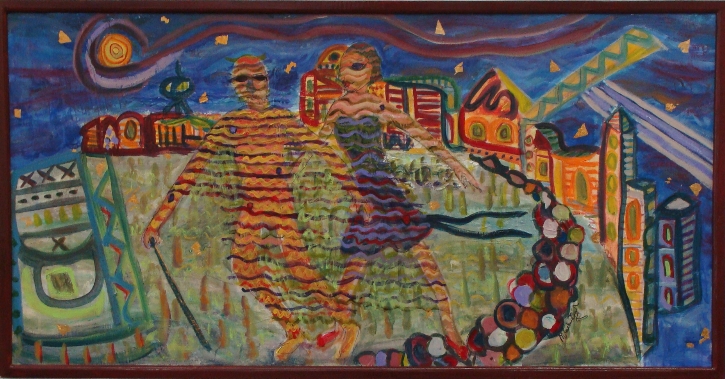
Walking on Air is a framed, acrylic on canvas painting / 26.5” x 49.5”/ available for $850.  Oregon does not have a sales tax.

Do you have an insight into freeports? Do comment below.

references:

Berniker, T. (2020)  Behind Closed Doors: A Look At Freeports, Center for Art Law. retrieved from https://itsartlaw.org/2020/11/03/behind-closed-doors-a-look-at-freeports/#:~:text=While%20the%20term%20%E2%80%9Cfreeport%E2%80%9D%20is,of%20Customs%20and%20Border%20Patrol.

Wikipedia website. Foreign-trade zones of the United States. retrieved from https://en.wikipedia.org/wiki/Foreign-trade_zones_of_the_United_States

Forsters Website. (2021) Freeports — at the good, the bad or the ugly? retrieved from https://www.forsters.co.uk/news/blog/freeports-good-bad-or-ugly

Zaewraky, R. (2022)Does the World Need Tax-Adantaged Art Feeeports? TAXVOX Tax Policy Center. retrieved from https://www.taxpolicycenter.org/taxvox/does-world-need-tax-advantaged-art-freeports

Kim, L. (2020)Where the Superrich Store their Art to Avoid Taxes. Town and Country. retrieved from https://www.townandcountrymag.com/leisure/arts-and-culture/a35032655/what-is-a-freeport-art-collections/

TETRA consultant Website. Free trade Zones in the United States. retrieved from https://www.tetraconsultants.com/jurisdictions/usa-free-trade-zones/

Great Expectations

Origin of A Thought

Great Expectations

When my oldest son was 10, I remember picking him up from a two-week camping trip. He was excited to be home, and as I learned later, he imaged running into the house and collapsing on his favorite chair in our living room. He was in for a surprise, for while he was away, my husband and I rearranged the furniture.

He was shocked when he ran in ready to leap. Instead of what he expected, the chair wasn’t there He became disoriented by the change and very upset. Having a predictable environment disappear in two short weeks threatened his security, making him lash out at his parents.

The way my son reacted is not at all uncommon. I had a similar experience when I was twelve and arrived home after school to find my bedroom bureau askew. My grandfather was hidden behind fixing an electrical outlet. The shock I felt from my bureau being out of place flooded through my body. I was hot and tense and began shouting at my mother. By the time my grandfather stood up to see what the commotion was about, I calmed down. But I was embarrassed and felt like hiding. How did such a violent emotional reaction occur so fast?

Today, I realize that my son and I experienced a fight-or-flight response to what we perceived as a stressful situation. A surge of adrenaline made us more sensitive to our environment giving us an automatic physiological reaction to an event we perceived as frightening. Autonomic or involuntary nervous systems are difficult to control.

I mention these stories because many triggers today are making us react to perceived threats where there are none. We panic at hearing a car backfire, assuming it is a gun going off, are afraid of walking on the same side of the street as a tattooed person with piercings and chains, and fearful that someone in the car next to us is in the midst of road rage. I recently read of a woman who will not leave her apartment because she is afraid of the radiation from a nuclear weapon. 

We panic in the presence of immigrants, those of color, and people with different cultural, sexual, or religious beliefs. We have nightmares about becoming homeless. New to the list are those with a different political view. Children are afraid of being shot in school and being bullied online. Any of these fears can trigger a panic attack and bring on a flight-or-fight response.

The flight-or-flight response was useful when our ancestors lived among dangerous predators. Imagine what would happen if a hungry bear came wandering into your cave. In that situation, responding quickly with added strength given by a surge of adrenaline and cortisol would increase your chances of surviving.

People used to think that body and brain were separate entities, but today we know that they are connected. It’s just that it is easier to understand voluntary nervous responses. You hit a brick wall and feel the pain. Bingo, you got it!

The involuntary or less conscious part of our nervous system baffles us. It can cause havoc during panic attacks that occur without the presence of danger. Borrowing from President Franklin D. Roosevelt’s 1933 inaugural speech when talking about the Great Depression, “. . .the only thing we have fear is fear itself—nameless, unreasoning, unjustified terror which paralyzes needed efforts to convert retreat into advance.”

The response triggers of panic are:

  • Increased heart rate
  • rapid breathing
  • increased blood flow to muscles creating tension
  • dilation of pupils
  • hearing loss
  • tunnel vision that focuses on the danger at hand
  • sweating to cool your body’s response to the heat generated as your body prepares to confront danger.

These bodily changes enable fast reactions that usually dissipate in twenty minutes. But what happens when a response is triggered when there is no danger? It often produces prolonged stress that leads to ulcers or heart disease. Studies show that over the past ten years, anxiety and panic attacks have increased among both genders and all education groups, most especially among those with some college. It is greater among adults who have never been married, young adults, and those with the lowest income. They often start after a serious illness or accident, the death of someone close, separation from family, or the birth of a baby. 

Pandemics, gun violence, police brutality, fears around global warming, high expectations, parental disapproval, and peer pressure are factors that contribute to rising anxiety among the population at large. Learning of a school shooting or online bullying can set off reactions that send people to the hospital. 

Those who experience panic attacks need professional help. Talk and drug therapy are among the arsenals used by most counselors. Deep breathing, relaxation practices like visualization and meditation, physical activity, eye desensitization, and social support from family and friends help people cope in moments of acute stress.

The stormy day a 150-foot tree landed on our roof is one I will always remember. Our house shook so much that I was sure we were having an earthquake. The sound of window glass shattering and of rain pelting the floor through the skylight turned my legs to jelly—at first. An instant later my heart started racing, my head spun, and my muscles tensed. As a practiced meditator, I told myself to take deep calming breaths before leaping into action. In a matter of seconds, I was energized and focused on making my response efficient.

My advice is not to wait until an event triggers panic. Prepare your mind and body in advance, so you can control your emotions and react with equanimity when a situation arises.

_________________________

I look forward to your thoughts. Please share them below.

__________________________

References:

Ankrom, S. MS, LCPC (2019) Flight of Flight Theory of Panic Disorder. Verywell mind. retrieved from https://www.verywellmind.com/the-fight-or-flight-theory-of-panic-disorder-2583916  

Richmond,C. (2021) Panic Disorder and Panic Attacks. WebMD. retrieved from https://www.webmd.com/anxiety-panic/guide/mental-health-panic-disorder 

National Library of Medicine website. Trends in anxiety among adult in the United States, 2008-2018; Rapid increases among young adults. retrieved from https://www.ncbi.nlm.nih.gov/pmc/articles/PMC7441973/

Puirse, M. (2021)Techniques to Tame the  Flight and Fight Response.VeryWell Mind. retrieved from https://www.verywellmind.com/taming-the-fight-or-flight-response-378676

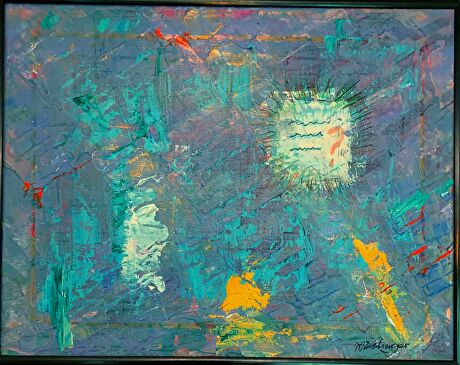
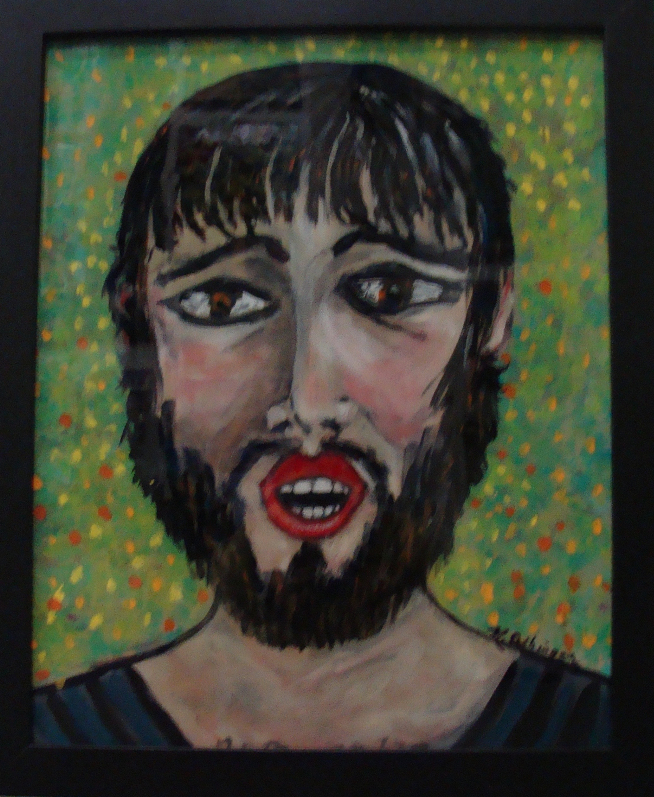
Origin of a Thought is an 11.5” x 14” acrylic painting on canvas in black frame / available for $175. For information about shipping contact marilynne@eichngerfineart.com.

Tigers, and Rhinos, and Elephants— Oh my!


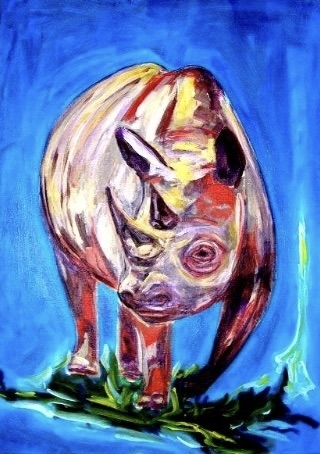
The Rhino-A face a mother can love

Tigers, Rhinos, and Elephants—Oh my!

It has been months since I last visited the zoo, but though Friday was cool, it was fair, so I decide to go there for my daily walk. The animals were alert rather than asleep as they usually are when I visit during the summer. Observing them was more interesting. At my first stop, a tiger was walking around his compound rather than sleeping under a covering near the back. He walked in circles, coming toward and away from me. The animal was handsome and looked to be well cared for. He put a smile on my face, but also pulled at my heartstrings.

Tigers are among the favorite animals visitors seek out when visiting zoos. But viewing them in captivity always makes me wonder if it is fair to keep them locked up. Most zoo animals don’t require as much space as tigers who like to explore. I wondered what this powerful beast thought about while paced instead of running wild in nature. It wouldn’t be about catching his next prey for his food was provided.

About 300 tigers are in U.S. zoos. Another 4,700 are in private backyards and private breeding facilities.Only 3,500 remain in the wild. In East and Southeast Asia, nearly 8,000 live in tiger farms where they’re being raised for their skins and body parts.

Should they live as captives or be left to survive as they can. Unguarded, they are losing ground to poachers and loss of habitat. Zoos have breeding programs to preserve the species. WildAid, a conservation group to preserve threatened animals, thinks zoos are valuable.”Zoos play a positive role in sensitizing people to conservation…the actual experience of seeing a physical animal is nothing like seeing one on a TV screen.”

Born Free USA, believes otherwise. They write that “the tiger is a perfect example of the way that zoos are missing the point about conservation. Money spent on zoo tigers should be redirected to protecting habitat for aid tigers if we want the real thing to survive and not just a shell of the beast we call the tiger.”

The question, of course, is where is there enough habitat to let them roam free? The only place they are doing well is in Eastern Siberia, an area sparsely inhabited by human beings.

Until we find open areas for them to roam, zoos will have to do. As good caretakers, we must ensure their happiness and well-being. Tigers need larger enclosures with greenery and things to play with. At the Minnesota Zoo, tigers are given fake carcasses-fake moose they have to wrestle with in order to get the meat inside. They love it.

Further on, I saw another first when a rhinoceros started running.ru The guide said they can run thirty-five to fifty miles an hour, as fast as a horse. This particular rhino was pacing anxiously for his mate to be brought to his pen. But his caretakers are hesitant, wanting to make sure the resulting calf arrives in warm weather sixteen months later Poor Daddy Rhino lost his free will when it comes to sex.

Rhinoceros in cave paintings show\ a time when they roamed through Europe, Asia, and Africa. At the start of the 20th century, there were 500,000 rhinos, a number that dwindled to 27,000 today. Few survive outside of national parks and reserves. Three species are critically endangered. Prized for their horns in Asian countries, they are prey to hunters for their medicinal powers and status symbols of wealth. Those using rhino horn to cure ailments really believe it works. Tens of thousands of people worldwide have died because of mistaken beliefs according to Save the RHINO, a non-profit organization. Zoos are praised for bringing back the white rhino after it was considered extinct.

As my stroll continued, I didn’t want to miss my favorite—the elephant. Fifteen years ago, I spent time at a Kenyan wildlife preserve researching elephants in the wild.  It was exciting to see young elephants climb over one another at play and watch their mothers scold them if they ran off. They spent a great deal of time around pools hydrating themselves and would then roam as much as 50 miles in a day, Female elephants sleep in a circle with their babies in the middle. After 45 minutes to two hours, the matriarch starts them on their next trek. They need to walk for the soles of their feet act as pumps circulating blood to the heart.

Do they belong in Zoos? Critics say they are never given enough space to be housed properly but proponents believe they are better off in captivity than in the wild where they are decimated by disease, drought, habitat loss, poaching, and conflicts with people. The debate is a complicated tug of war. In 1971, 1.3 million wild African elephants were alive, while today there are fewer than 500,000. In the wild, they travel in kinship groups while in zoos, babies are often separated from their mothers and sent to other facilities. Advocates say funds would be better spent by supporting wildlife preserves in their native lands rather than building costly outdoor and heated indoor facilities with concrete floors that foster foot infection.

My thought is that zoos are wonderful assets to a community when their prime concern is the well-being of the animals and not those who come to gawk.  The animals may be more difficult to see if they are given adequate space but that will help people feel like they are on a safari. As guest visitors to the natural world, they will better understand what it takes to be a caregiver and why animal habitats should be preserved.

References:

World Wildlife Fund website.  5 things Tiger King Doesn’t Explain about Captive Tigers. retrieved from https://www.worldwildlife.org/stories/5-things-tiger-king-doesn-t-explain-about-captive-tigers

McCarathy,S. (2008) Tigers don’t belong in Zoos, But where can they go? Salon. retrieved from https://www.salon.com/2008/01/05/tigers/

Save the RHINO website. https://www.savetherhino.org/rhino-info/threats/poaching-rhino-horn/#:~:text=Rhino%20poaching%20is%20being%20driven,to%20display%20success%20and%20wealth.

Shaw, E.(2017)How fast Does a rhino run? Sciencing. retrieved from https://sciencing.com/how-fast-does-rhino-run-4586507.html

Cohn, JP (2006) Do elephants Belong in Zoos. Oxford Academic. retrieved from https://academic.oup.com/bioscience/article/56/9/714/262884.

Adminisrators (2020) Let Sleeping Elephants Lie—How Elephants Sleep! HERD. retrieved from https://herd.org.za/let-sleeping-elephants-lie-how-elephants-sleep/

Please share your thoughts about zoos. Should animals be kept in captivity or not? Comment below.

Art is always for sale. Contact me at marilynne@eichingerfineart.com

The Rhino is a 30” by 22” acrylic painting on canvas, $495.

Bounty Hunters

Mystery

Mystery

We commonly put laws in place without analyzing the consequences. Vigilantism, bounty hunting, and denying women the right to manage their own health are likely to wreak havoc beyond most people’s imagination.

Bounty Hunting

The Texas law that bans abortion includes a measure to ensure that the law is enforced. If an abortion takes place after six weeks of pregnancy, residents can sue clinics, doctors, nurses, and even those who drive a woman to get the procedure and receive 10,000 or more dollars for doing so. As Sonia Sotomayor said in her Supreme Court descent, “(Texas) deputized the state’s citizens as bounty hunters, offering them cash prizes for civilly prosecuting their neighbors’ medical procedures.”

Though a great deal has been said about the horrific impact of abolishing Roe vs. Wade, little has been mentioned about what bounty hunting laws do to citizens. Last week, a friend described what it was like to live in a country where citizens turn neighbors over to the authorities in exchange for money. He had just returned from Rwanda where police had barged through the door and shot his uncle while he and his relatives were visiting. His shocked family was threatened not to mention the incident or they too might disappear.

In 1994, with genocide at its height in Rwanda, the government encouraged citizens to take up arms against their neighbors. Over 800,000 people were killed, and though the practice is not as common today, unsavory practices do continue. A 2021 UN Human Rights report claimed that Rwanda still has unlawful and arbitrary government killings, forced disappearances, torture, arbitrary detention, and political imprisonment. Freedom of expression is censored, websites are blocked, journalists are threatened, and restrictive nongovernmental laws are in place. Neighbors, tribal dissidents, and family members spy on each other in the hope of collecting a bounty payment. 

The Texas law is a wake-up call that what is happening in Rwanda could occur here. We already have vigilante groups and militias that take the law into their own hands. That Texas has deputized all citizens and encouraged them to spy on one another over abortions is only the beginning.

What happens when states stop protecting the rights of the LBGTQ community? What about Hispanics, Jews, Blacks, and those of Oriental descent who are targets of vigilante groups. Will government continue to deputize citizens so they will turn  people in if they have backgrounds an elite group decides are unsavory? 

Vigilanteism and bounty hunting are on slippery slopes that can easily  separate people and make them fearful. Such activities are pushing Americans into groups of like-minded individuals.  Looking to find fault for the things they don’t like and the end up hatful and fearful of those who are not part of their tribe. 

Dr. Seuss understood what could happen when he wrote his children’s poem,  The Sneetches.

“Now, the Star-Belly Sneetches

Had bellies with stars.

The Plain-Belly Sneetches 

Had none upon tears.

Those stars weren’t so big. They were really so small

You might think such a thing wouldn’t matter at all.

But because they had stars, all the Star-Belly Sneetches

Would brag, “ We’re the best kid of Sneetch on the beach.

With their snoots in the air, they would sniff and they’d say

“We’ll have nothing to do with the Plain-Belly sort!

And whenever they met some, when they were out walking,

They’d hike right on past them without even talking…”

Then, Sylvester McMonkey McBean, the Fix-It-Up Chappie, came along and made stars for the plain bellies so the two groups would look alike. The original Star-Bellies decided to get rid of theirs so they’d be different and “better” again. A competition arose to see which group was better. All the while Sylvester McBean was making money. He surmised, “They never will learn. You can’t teach a Sneetch. “

“But McBean was quite wrong. I’m quite happy to say

That the sneetches got really quite smart on that day,

The day they decided that Sneetches are Sneetches 

And no kind of Sneetch is the best on the beaches.

That day, all the Sneetches forgot about stars

And whether they had one, or not, upon thars. 

I hope we can learn from Dr. Seuss to put aside differences and celebrate our common humanity. Whatever we believe, however we act, let’s not stoop to so low and be so narrow that we turn neighbor against neighbor and can’t tolerate diversity.

I imagine you have a lot to say on the subject.  Please comment on my blog site.

Art is always for sale. Contact me for information marilynne@eichingerfineart.com

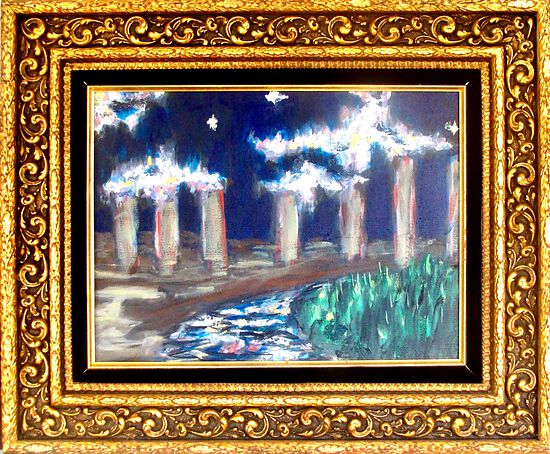
Mystery is a 19″ x 24″ framed acrylic painting on canvas. available for $425.

Resources:

Picchi, A. (2021) Texas abortion ban turns citizens into “bounty hunters. CBS News. retrieved from https://www.cbsnews.com/news/texas-abortion-law-bounty-hunters-citizens/

Rwanda events of 2021. Human Rights Watch. retrieved from https://www.hrw.org/world-report/2022/country-chapters/rwanda?gclid=Cj0KCQjw4PKTBhD8ARIsAHChzRI9iAICmhJpBsulXYOtZ64spja_OfCjDxvYYOk0QPDseEiBuC97cAUaAnjoEALw_wcB#

Dr. Seuss (Theodor Geisel) Before You Read. The Sneetches. elements of Literature. retrieved from https://www.hanover.k12.in.us/cms/lib/IN01001361/Centricity/Domain/2242/Sneetches.pdf