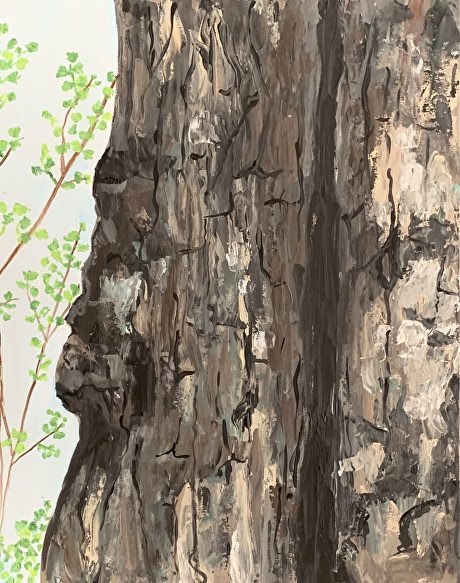
“I try to apply colors like words that shape poems, like notes that shape music. “– Joan Miró
Interpreting art
Anatole France once wrote, “Even a little dog is at the center of his own universe.” There is no single reality. We interpret the world in different ways because our experiences are different. Not only do our pasts differ, but the cones and rods in our eyes also are not the same. And the notes we hear at a concert, like fingerprints, are uniquely our own.
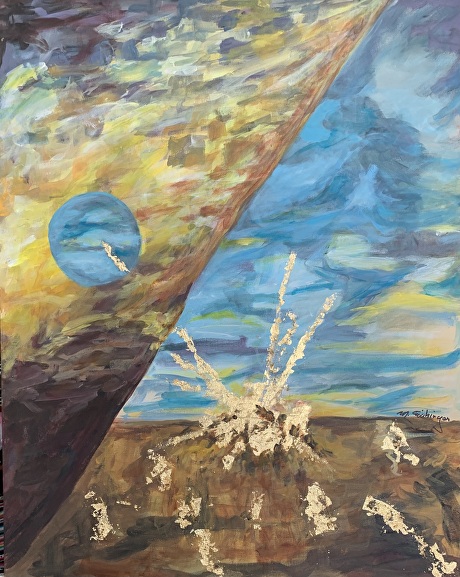
When I paint, I use bold colors and shapes that are influenced by how my eyes see and my ears hear. They are also expressions of past experiences mixed with a little bit of mystery. My pictures tell stories that viewers interpret in their own way. When the paintings are abstract, I am always surprised by the feedback I get. Listening to such varied comments makes me wonder how interpreters of Rorschach tests would analyze the responses.
In a clinical setting, Rorschach tests provide information about healthy emotions. It is a way for people to gain insight into their psyche. The test also helps diagnose diseases like schizophrenia. Assuming most of us are not psychotic, I thought it would be interesting to look at my artwork as though interpreting an inkblot. It might be a way to get to know yourself better.
When shown an image, some patients respond by seeing it in its entirety, while others look at parts. Some focus on the white space, others on color, and still others on the details. When looking at parts of the image, interpretations tend to be more similar. Psychiatrists pay special attention to the uncommon details people see.
Art patrons and clinical patients alike vary in cognitive abilities and perceptual accuracy. They attend viewings with different goals, interests, flexibility of ideas, and emotions. Some come seeking order whereas others find chaos. Following are a few of my abstract pieces. They are labeled by number rather than by name. With a Rorschach test in mind, I’d like to know what you make of them. If you want to know how I labeled them please go to my website under works. You’ll find them in the abstract section. Please comment below.
In 2022, 140 countries pledged to tackle the environmental crisis through green recovery. This means improving biodiversity and reducing forest loss by 2030, seven years away. The three pathways to achieving these goals are; halting deforestation and keeping remaining forests, restoring degraded lands and expanding agroforestry, and sustainably using forests.
To keep the global temperature increase below 1.5 °C, we have to act now. To reduce the risk of future pandemics, and ensure food security for all; to eliminate poverty, frequency of violent storms, and rising oceans; to offer hope for the future, there is no time to wait.
Why be concerned? Can Trees and forests help with the recovery of sustainable economies in badly affected regions of the world?
Climate change has already increased economic and conflicts. It has degraded water and land use and created a health crisis, especially in rural areas. If the U.S. wants to stop immigrants from around the world from seeking asylum, we have to look to the source of their flight. If your family lost everything they had and was starving, wouldn’t you do all you could to find shelter in a climate more favorable to survival?
Population passed the 8 million person mark. We don’t have to look further than our country to see what happens when so many people consume irreplaceable fossil fuels, metals, and minerals. Increased production, consumption, and waste has led to a degrading way of life. We face a crisis we don’t tackle head-on. Nations of the world set priorities and goals without meeting them. The climate continues to warm.
There is a way forward if we look to sustainable resources. We have only to grasp their potential and hang on. By not doing so, deforestation and forest degradation will continue. Nearly 90 percent of deforestation between 2018 and 2018 was related to agriculture. Forests cover 31 percent of the world’s land surface, but the area is decreasing, especially in the tropics. Forests protect most of the earth’s terrestrial biodiversity. They are a buffer against invasive species and diseases that wipe out monoculture plantings and cause illness.
Millions of people get their food from wildlife and plants growing in forested areas, especially in rural and indigenous communities. Each clearcut puts thousands more at risk of starvation. They take to the roads, fill refugee camps, and come knocking on First World doors. They risk disease; the Ebola virus that killed over 11,000 people between 2014-2015 attaches two years after deforestation. The increase in dengue fever, malaria, and yellow fever are also associated with deforestation.
About one-third of global forest loss is fire-related. I too live in fear of the park by my home going up in flames to engulf my house. Though my house is only three miles from the center city, it is at risk. If the temperature keeps rising, the entire city is vulnerable. Most people reside in wood-framed homes.
There are ways to change the situation.
Halting deforestation is a cost-effective action for slowing climate change.
Have a more efficient, sustainable agrifood system that reduces the need for land.
Reduce illegal wildlife trade by increasing surveillance.
Public and private initiatives promoting sustainable land-use
7 percent of deforestation is due to oil-palm plantations that trade internationally. reduce its use and find alternatives.
Increase financing in forest investment so climate targets can be met by 2050.
Improve the regulatory rules to avoid the harmful impacts of deforestation.
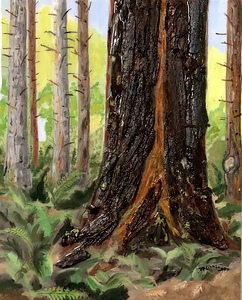
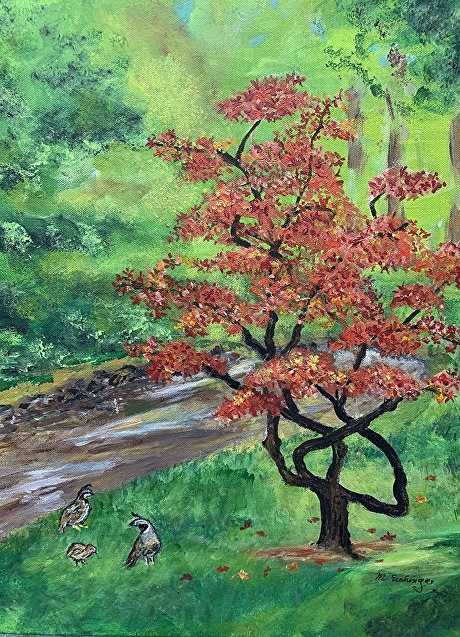
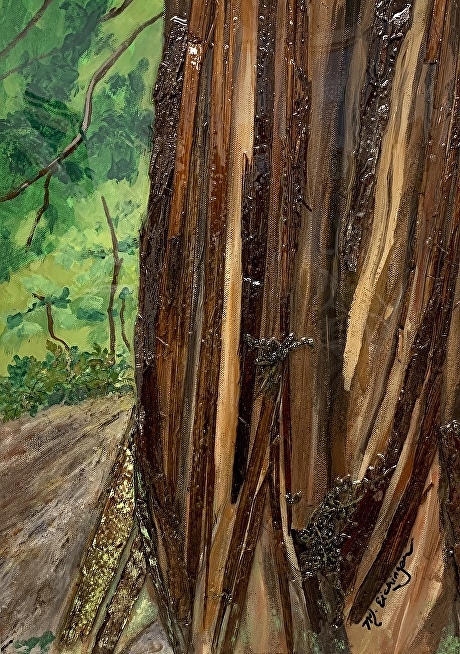
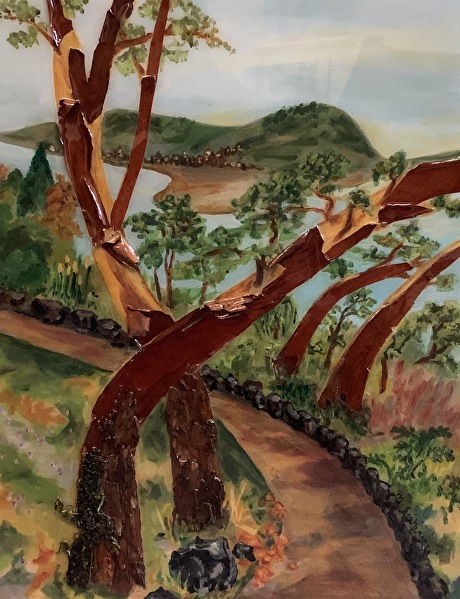
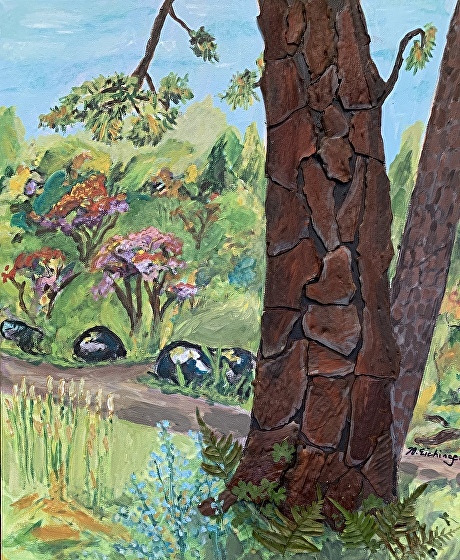
Add a forest to your home. Affordable, quality 20″ x 16 ” deep canvas prints will provide your home with the peacefulness of nature. Only $99 each. Purchase several and walk in the woods whenever you want. To see the entire selection of 28 paintings go to eichingerfineart.com/collections/182747 and purchase online. Order as a gift or for yourself and beat the holiday rush. Free delivery in approximately three weeks.email your questions or for ask prices if you desire a larger canvas. Contact me at marilynne@eichingerfineart.com.
The positive thinker sees the invisible, feels the intangible, and achieves the impossible. — Winston Churchill
Ho ho, hee hee, ha ha – oh!
It’s well established that humans possess an intrinsic instinct for mimicry. Frown at someone, and they will most likely glower back. Smile and there’s a good chance you’ll inspire a reciprocal grin. Laugh and others will laugh with you.
A similar capability is at work in positive thinking. Our bodies respond instinctively when we consciously choose to introduce positive thoughts into our minds. It’s a way we gain power over negative events life throws our way and gives us the strength to face adversity. When the mind signals that all is well, a switch is turned on in the body that makes us more confident and content. It creates a positive feedback cycle that can be quite powerful. With low points viewed as normal fluctuations we all experience, we’re better able to focus on the positive, and help ourselves to move toward the goals we want to achieve.
Positive thinking is often used interchangeably with positive psychology, but it is not the same. Positive thinking is about maintaining optimism and looking at things from a positive point of view. It is about setting an intention and being open to possibilities.
Positive psychology studies the causes and effects of optimism and when it is good to use. Research findings show that positive people have a higher sense of meaningfulness in life and more resilience when faced with difficult events. They are more likely to exercise, avoid smoking, eat a healthy diet, and get quality sleep. They develop coping skills, are less depressed, healthier, and live longer.
Laughter can help get you there. No thinking is required…and it’s good for your health. See what happens when you fake a smile, then giggle. Laugh slowly gradually increasing the tempo and volume. I bet it tickles your funny bone. For a hearty laugh, spread your arms up and direct laughter to come from your heart. Bring your arms down and try it again. Try saying silly words and making gibberish sounds, laughing while doing it. Sing a funny karaoke song, dance like crazy while nude in your bedroom, or watch a funny movie.
Laughter relaxes the whole body, relieves physical tension and stress, and boosts the immune system. It triggers the release of endorphins that make you feel good.
Whether striving for a gold medal, aiming at a big promotion, volunteering for a non-profit, or working tirelessly to raise a happy family, staying on the bright side does more than just benefit you. It has a positive effect on those around you as well. As J.M, Barries wrote in Peter Pan, “Just think happy thoughts and you’ll fly.”
Try as much as possible to be wholly alive, with all your might, and when you laugh, laugh like hell. — William Saroyan
With that in mind—Did you hear about the mathematician who’s afraid of negative numbers? He’ll stop at nothing to avoid them.
And then there’s the woman in labor who suddenly shouted, “Shouldn’t! Wouldn’t! Couldn’t Didn’t, Can’t!” Her doctor responded calmly, “Don’t worry. Those are just contractions.”
Ever wonder why scientists don’t trust atoms? Because they make up everything.
We are living through hard times yet need to stay involved. It is more important than ever to maintain a positive attitude and not drop out. Hope is our future.
Have a good laugh on me !
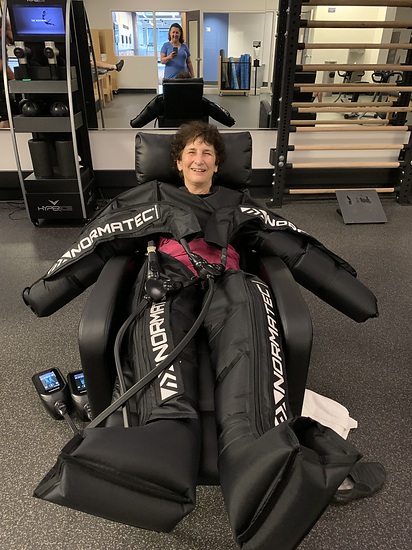
Day at the Spa
References:
Cherry, K. (2022) What is Positive Thinking? Verywellmind. retrieved from https://www.verywellmind.com/what-is-positive-thinking-2794772#
The Oregon Museum of Science and Industry The riverfront museum I spearheaded opened thirty years ago. Impression 5, in Michigan, celebrated its fiftieth year. It is hard to believe.
Wading Through Complex Thoughts
Analyzing your way through complex situations is not easy. On a rainy day in 1972, I was in Lansing, Michigan with four rowdy children and challenged with keeping them from tearing the house apart. So, I started a science museum in my basement. At the time there were only twelve science centers in the United States. Exhibits were push-button displays that mixed chemicals and asked yes and no questions. Fanciful walk-through hearts on Oregon, descent in into the depths of a coal mine in Chicago, fighter jets, and locomotives in Philadelphia covered the floors. What they lacked were interactive activities that called on visitors to experiment and think. A white paper was written pointing fingers at how the Chicago Museum of Science and Industry was a pawn of corporate America.
Public education was also under attack for the way children were held hostage for hours each week. Being pinned to their seats and made to memorize historical facts and formulas was not the way to inspire minds to greatness.John Holt, Howard Gardner, Piaget, and A.S. Neil were among those promoting child-centered ways, age-appropriate ways of teaching.
The table-top exhibits built in the basement of my home with my son recognized that children were not little adults but instead were youngsters with unique ways of learning. Science, engineering, and psychology professors at Michigan State University contributed exhibits and guided me through the learning process. The scientific method became my platform for conceiving interactive displays.
Scientists approach problems through a seven-step process: make an observation, ask a question, from a hypothesis or testable explanation, make a prediction based on the hypothesis, test the prediction, and use the results to make new hypotheses or predictions. It is the way research progresses.
This way of thinking made sense to me and today is embedded in my psyche as a way to tackle life’s problems and idiosyncrasies. When ASTC, the Association of Science and Technology Centers started, science centers exploded throughout the world. I suddenly had company and reached out to seven small museums, including OMSI and the Pacific Science Center to secure a National Science Foundation grant to study visitor interaction with displays that required them to solve problems. We built exhibits that traveled to each other’s sites. Our staffs met to study hands-on education philosophies and to critique how we tackled interactive construction techniques.
We, and the other science centers introduced visitors to computers, technological innovations, and discoveries in genetics, and bio-engineering. What we learned by experimenting with hands-on learning techniques, was incorporated into the teacher education and outreach programs. Our museums became a model for the free school movement. They were places where visitors moved freely through displays, learning in their own way, at their own pace.
You might ask, why I am saying something about this now. I am still involved with the education of young children and am more concerned than ever. The reliance on the computer for teaching has gone ballistic. Children no longer see that moss prefers to grow on North-facing surfaces. They don’t know how to use a hammer and nails to build a birdhouse. They don’t know how to change the oil in their car or sew a seam that burst on a dress. They don’t have the patience to build a balloon-powered card using cardboard and bottle caps to see how far it will go. They are too hyper to start a grow box and watch the way seeds turn into plants. They would rather play computer games than construct a solar oven to cook marshmallows while exploring thermal energy, reflection, and convection.
All of our activities were designed to help young experimenters question and think. They require patience, dexterity, and a willingness to try and at times fail. These are basic needs that adults as well as children need as they conduct their lives.
When I moved to Oregon to run a science museum with greater resources, I was more determined than ever to show visitors how the scientific method is useful when tackling everyday problems. We built a new waterfront museum where people could satisfy their curiosity by conducting experiments on the floor of our exhibit halls. When designing Busy Town for young children, for example, we included a component for parents that focused them on observing their children so they could question their preconceived ideas about the way they learned.
As the world grapples with environmental change, economic challenges, and pandemics, we need clear minds, and a citizenry willing to dig into issues and think problems through. Analyzing these issues can be great fun if we put our heads to it. It calls for more feet on the ground stomping through communities and parks—putting more hands on binoculars, hammers, saws, needles, and thread as a complement to eyes on the computer screen. It requires reading, discussing, arguing, and coming to conclusions you are willing to test. The scientific method provides a way to proceed. Practice solving little problems so the large ones will fall into place.
For a behind-the-scene look at science centers and how they influenced education read Lives of Museum Junkies.
Art is always for sale. Check out my new cart-enabled website eichingerfineart.com to purchase the painting of OMSI or any other that tickles your fancy.
Please share your thoughts below. What do you do when you escape the computer and remember that the physical world is filled with beauty?
Connections In large cities, you are more likely to connect with distant friends who share your interests than your next-door neighbor.
Afraid of Being Mugged?
Last week we discussed the impact of population on the planet. Since then, several friends told me they started carrying pepper spray. I decided to delve into a subset of that question to see if population density affects crime. Following is a summary of my findings. For more information delve into the references at the end.
I started by exploring the mid-to-late 1990s, a period when homicides and property crime rates dropped without warning, a time when many of the myths that had been spouted unraveled. Most people believed that with spatial distances reduced, aggression will increase along with the chance of being victimized. But, instead of investing in their neighborhoods, residents join networks of like-minded people spread throughout the city.
Despite logic, homicide rates plunged in the late 90s by 43 percent. It occurred in all geographic areas and democratic groups, and every type of crime. Curious as to why, Steven Levitt, writing for the Journal of Economic Perspectives, compiled numerous studies conducted at the time. Through his research, he recognized six myths that played little or no role in crime’s decline and mentioned four that did.
Myths
1) A strong economy reduces crime. Levitt didn’t find proof connecting the drop in crime rate to the strong economy of the late 90s aside from the fact that local governments had more money to spend on community policing.
2 ) Aging demographics played a role–older citizens commit fewer crimes. This statistic was counterbalanced by the baby boomer echo, a group that committed most of the crimes.
3) Gun control laws reduce crime. Buy-backs and gun control laws had little impact on crime reduction. Those who commit crimes don’t take advantage of these programs.
4) Better policing strategies reduce crime. New York, the most innovative state, didn’t do significantly better than states that didn’t employ their methods though this finding is somewhat controversial. With community-based policing, crime-fighting enforcement of nuisance activities like panhandling was helped, and improved technology helped in identifying criminal hot spots.
5) Laws allowing for concealed weapons reduced crimes. Studies don’t support the claim that armed citizens defer potential offenders. Unless you wear a holster, it’s hard to grab a weapon when surprised by a criminal.
6) Increased use of capital punishment. Capital punishment doesn’t explain why robberies declined and it isn’t likely to influence a murderer bent on revenge.
Likely factors for the decline
1) Increased policing meant a faster response time.
2) The Rising Prison Population. More people were incarcerated. Most were drug-related offenses, but parole revocation increased and longer sentences were dolled out.
3) The Receding Crack Epidemic. Crack cocaine, used primarily by young black males, began to decline.
4) The Legalization of Abortion. Twenty years after Roe vs. Wade, it was recognized that unwanted children are at a greater risk to become criminals. Legalizing abortion reduced the number of unwanted births. That in turn put fewer criminals on the streets.
Crime today
The so-called scaling law accounts for the size of a city’s wealth creation, knowledge production, criminality, and other aspects of urbanization. Yet its use is not straightforward. When researchers look at different crime types, they find vast differences between homogenous and mixed communities. It is best not to use unequivocal statements like, “the greater the population the more crime.” Our citizens are not rats in a caged experiment and the current increase in crime isn’t the same for equally dense populations. Governance, poverty, and social norms may be more important.
Crime rose dramatically in the U.S. during the Covid-19 pandemic, increasing by 30 percent in large cities, and 20 percent in those with fewer than 50,000 residents. It grew equally in cities run by Republicans and by Democrats, though red states experienced some of the highest murder rates. The rise was concentrated among younger people in poor and disadvantaged communities.
Murder Trends by Region and Population Group (2019-2020)
Percentage of Increase
Northeast 36.1%
Midwest 36.2%
South 26.0%
West 26.7%
Population Groups
Major Cities (250,000) 34.2%
Metropolitan Counties 17.4%
Nonmetropolitan Counties 19.7%
Suburban Areas 20.0%
Aside from motor vehicle thefts, property crimes decreased. Despite the overall increase in crime, the nation hasn’t returned to the high rates of the early 1990s. The Brennan Center for Justice illuminates the following myths and reasons for the increase in crime post-Covid.
Myths
Recent criminal justice reforms, like early release from jail, bail reform laws, and pretrial detention law changes, aren’t significant contributors to the upward trend.
Policing practices don’t have a direct link to crime. De-policing policies don’t explain why violent crime rose and property crime didn’t.
Likely reasons for the increase
More guns are in private hands. 77 percent of murders last year were committed with a firearm, the highest share ever. The time between its legal purchase and its appearance at a crime scene was shorter than in previous years.
Covid-19 created the most unequal socioeconomic situation in U.S. history. Those challenged to meet basic needs faced the added trauma of sickness and death. Non-profits that ordinarily play a key role in public safety had to limit their services. Violence intervention programs dealt with clients virtually instead of on the streets. The closing of community spaces, schools, summer programs, pools, and libraries left communities without safe places to go outside of homes. Remember that most crime occurs in poor communities.
Mental health issues worsened as inequalities in the delivery of services widened.
Racially and economically disadvantaged communities became more segregated from the rest of society. Many struggling communities fell apart.
The Brennan Center warns against responding to rising crime rates with policies that failed in the past. Punitive sentencing and pretrial detention never worked and the collateral consequences of incarceration were disastrous. Despite that, the prison population remains four times higher than in the 1980s at a tremendous cost to the public. It is a drag on the earring potential of the millions of incarcerated Americans who can’t vote or find jobs.
Understanding population statistics in relation to crime has to be nuanced. New York City, with a population of 8,467,513 has 5.8 violent crimes per 100,000 and 15.6 property crimes per 100,000. It ranks among the safest of large cities in America.
The most dangerous city is St. Louis, Missouri, with a population of 304,709 down from 750,177 ten years earlier. It has unstable housing, a poor education system, and a crippled economy. Detroit, Michigan with a population of 624,177 down from 713,026 in 2010, is also crime-ridden. With the loss of manufacturing jobs and desegregation politics, it has become one of the poorest major cities. Baltimore, Maryland with a population of 578,658 has been trending downwards for decades and is also plagued by poverty and unemployment.
10 Most Dangerous Cities in the U.S. according to Forbes. (Population recorded within city boundaries, not the metro area)
St. Louis, Missouri (304,709)
Jackson, Mississippi (426,000)
Detroit, Michigan (624,177)
New Orleans, Louisiana (1.26 million)
Baltimore, Maryland (578,658)
Memphis, Tennessee (630,348)
Cleveland, Ohio (383,331)
Baton Rouge, Louisiana (870,569)
Kansas City, Missouri (1,698,000)
Shreveport, Louisiana (323,000)
Safest Large Cities ( population over 300,000)
Virginia Beach, Virginia (457,672)
Honolulu, Hawaii (352,335)
Henderson, Nevada (322,178)
El Paso, Texas (963,000)
Mesa, Arizona (517, 302)
San Diego, California (1,402,838)
Raleigh, North Carolina (480,419)
Anaheim, California ( 345,940 )
San Jose, California (1,000,008)
Santa Ana, California (309,441)
New York City (8,467,513)
Austin, Texas (964,177)
Arlington, Texas (400,032)
Las Vegas, Nevada (651,124)
Riverside, California (317,261)
Conclusion: Unless you live in a very poor neighborhood, it is not likely that you will be mugged. With the possible exception of your automobile, your property won’t be robbed. To reduce crime, poverty has to be eliminated and people assured a job even if social programs are the means to do so. It is much less expensive to have everyone employed than to have them remain poor, drug addicted, and have to pay for social services and incarceration.
Grawert, A. & Kim, N. (2022) Myths and Realities: Understanding Recent Trends in Violent Crime.Brennan Center for Justice. retrieved from https://www.brennancenter.org/our-work/research-reports/myths-and-realities-understanding-recent-trends-violent-crime
Bloom, L.. (2022) Crime in America: Study Reveals the 10 Most Unsafe Cities. (It’s Not Where You Think) Forbes. retrieved from https://www.forbes.com/sites/laurabegleybloom/2022/02/23/crime-in-america-study-reveals-the-10-most-dangerous-cities-its-not-where-you-think/?sh=58b53e8e7710 —————————————————————————————————————————–
Several weeks ago, I mentioned how time-consuming it is to research the pros and cons of moral dilemmas. I presented ten ethical issues our country faces. They are all complicated. I decided to tackle a few to help you fm an opinion. I only ask that you put away preconceived notions and be open to new information. Consider debating the issue over dinner and switching sides halfway through the discussion. It’s the best way I’ve found to understand ethical issues.
Should we impose population controls as suggested by numerous scientists, or should we listen to religious leaders and economists?
Background
In 1798, Thomas Malthus, an Anglican clergyman, predicted that the earth would have standing room only by 1890. The population at the time was around 500 million but growing so fast in the former colonies that it doubled every 23 years. He was concerned that food couldn’t keep pace. Malthus’ arguments were embraced by the British who used them as an argument to get rid of the poor.
Charles Darwin’s theories added fear as improved healthcare interfered with natural selection. The poor, who were the most prolific, were surviving into adulthood. Plague, pestilence, and unfiltered water were being managed to help them live longer. As their ranks grew, there became a push to stop the “unfit” from having children, and Eugenics was born.
The Nazis grabbed onto U.S. research and took it a step further by promoting pure bloodlines and arousing fear in the wealthy who already felt threatened by the poor. The controversy grew as to who was considered fit and who was not. John D. Rockefeller’s draft charter of the 1952 Population Council had a paragraph encouraging parents with above-average intelligence to have larger families. Research centers were established in poor countries with the goal of developing population control programs. William Vogt, national director of Planned Parenthood in 1948, wrote The Road to Survival, a widely read book documenting the negative effects of an expanding population on the environment.
After World War II, developed countries sent medicine and aid workers to developing nations to the distress of eugenicists. The result was a reduction in mortality rates with birthrates remaining high. Over the 200 years following Mathus’ prediction, Western technology and agriculture increased food production so the world could feed itself. Advances in seed breeding, soil nutrient replenishment, irrigation, and mechanization kept the food supply staying ahead of the population curve. At the same time, the demand for energy, water use, transportation, and communication also rose.
Then came the bomb and the fear of a mega-ton Nuclear explosion. Dixie Cup founder, Hough Moore, initiated the population Action Committee to mobilize against the impending crisis. He The Population Bomb, a pamphlet promoting that overpopulation would “create an explosion as disruptive and dangerous as the explosion of the atom.”
Moore convinced the public that population controls would stop the Communists from raping women, a method they used to gain power. Though it was a lie, it didn’t seem so far-fetched, for impregnating women was often used by conquering warriors as a means of spreading their seed on foreign soil.
In Malthus day, no one thought that advances in public health, family planning, contraception, and urbanization might decrease fertility rates. But, that is what happened, and the public started to believe that the population rate was on the decline.
But halt! The Industrial Revolution came along, initiating a negative environmental trend as fossil fuels were fed into machines. Nations dug deeper for minerals, fished the oceans with more giant nets, and dammed rivers for electricity. Forests were cleared for agriculture, housing, and factories. A burgeoning population consumed rich stores of resources, depleting the earth’s natural capital.
In more affluent areas, fertility rates lowered to 2.6, slightly above replacement. In poorer regions, it was 5.1 children per woman. Yet, the fewer children in the wealthier countries caused the most damage. They consumed most of the resources and kept the rest of the world in poverty. The United Nations Population Division recently warned that the world is on course for 9.2 billion people by mid-century and the trend will continue. Is it Inevitable?
WHY POPULATION MATTERS
“All our environmental problems become easier to solve with fewer people, and harder — and ultimately impossible — to solve with ever more people,” said Sir David Attenborough who believed that women’s empowerment, easy access to high-quality education, and family planning will help ensure that everyone can have a decent standard of living on a healthy planet in the future.
Romania went the other way and banned abortion and contraception in 1966. Maternal mortality rates jumped and thousands of children were placed in poorly funded orphanages. A culture of fear was created that eroded social relationships and affected the broader society. There weren’t enough doctors to care for the increase in babies and mothers, and a generation of mentally ill, retarded children plagued the country. Black market abortions flourished until the ban was repealed in 1989.
Statistics can be difficult to interpret. The U.S. Census Bureau reports that between 2007 and 2020 the Total Fertility Rate went from 2.12 to 1.64, below the necessary rate of population maintenance. They project that it could go as low as 0.5 percent by 2050.” That, however, is not the same as population growth, for it doesn’t take into account immigrants or continued improvements in healthcare. Between 2010 and 2020 (census data) the population of the United States increased by 7.4 percent. It now stands at 338,289,000 people. Is this alarming?
Many economists argue that a lower birthrate will bring about unintended consequences. There will be fewer working adults to pay taxes and more elders in need of support. A declining population will make fewer purchases causing the GDP to tank and cause a recession. Though China’s One Child Policy is credited with preventing 400 million births, it also produced 30 million bachelors with too few eligible women.
Despite an eightfold increase in population since 1798 and the climate crisis they instigated, objectors to population control tout that more births will raise the number of geniuses to invent what’s needed for progress. They say that if genocides from war aren’t replenished it will impact economic and societal growth. They want humans to be free to reproduce and believe entrepreneurs and scientists will find new ways to govern the planet that produce a moral, socially responsible sustainable society.
Will future technology develop ways that don’t deplete our natural capital? Can solar and nuclear power produce unbounded energy to meet our needs? Will the government stop industry from polluting streams, oceans, and air? Do we want the poor to earn fair wages so they’re not homeless? And–if they do become wealthier, will their purchasing power be good as it adds to pollution and global warming?
Is the world doomed to Malthus’ projections? No one really knows, but we do know that the earth cannot support the seven billion people who are alive today in the style of middle-class Americans.
Mother Earth There is no doubt that human beings have endangered the earth. But, you can do something about it. Plant a tree, piggyback car trips to stores, trim ivy back from trees, and leave flood plains vacant. Engaging in positive actions will make you feel good.
“If you don’t like something, change it; if you can’t change it, change the way you think about it.”
— Mary Engelbreit, artist
Power of Positive Thinking
Last Tuesday was Positive Thinking Day. Established in 2003, the day was set aside to celebrate the rewards of positive thinking. Though cynical thoughts may prepare you for the worst, too much pessimism impacts your emotional well-being.
Human beings possess an intrinsic instinct for mimicry. If you smile at someone, it’s most likely they’ll smile back. If you frown you’ll probably get a reciprocal glare meant to put you on edge. The same thing happens when you think positive thoughts. By consciously choosing to introduce positive thinking into your mind, your body will respond instinctually. It will send a signal to your brain that all is well and reduce stress, improve immunity, reduced physical illnesses, and help you become resilient when faced with adversity.
Numerous studies show that positive thinking can increase a person’s life span. Optimistic people tend to live healthier lifestyles than those who are pessimistic. They have healthy diets, don’t smoke or drink excessively, and get more physical activity.
We’ll never get rid of the ups and downs of life, but we can look at low points as a normal part of living and turn our focus upward. Being open to possibility and setting your intention to grasp it, is what positive thinking is about. But, how do you do it? How do you get leave gloom and doom and negative self-talk behind to become positive?
It doesn’t mean ignoring unpleasant situations, but it does mean approaching them in a more productive way. It involved thinking about what can be done to get the best result possible and not dwelling on despair. Negativity can come from not having adequate information, not understanding your options, or being stuck with preconceived ideas. By opening your mind to possibilities and ways around problems, you will find more paths forward than you might imagine.
Start by catching your negative thoughts and reframing them. When I interned at a mental health clinic, we had a patient who was depressed by negative thoughts. His therapist suggested that he put a rubber band around his wrist and snap it whenever a depressing idea passed his way. At the time, I thought the therapist was out on a limb and it would never work.
But, I was wrong. It helped the patient see the tricks his mind played and opened him to reframing his thought with something positive. After recognizing his negative thoughts, he was taught to identify the time, place, and reason for them, and this allowed him to conceive of a positive step to take to solve the situation. It’s good to have a friend or counselor to focus you on a small step toward the result you’d like. Keeping it simple with short-term goals in a positive direction gives you a path to success. When that happens, dopamine is released in your brain, making you happy and want more.
Common pessimistic sink-holes people fall into are:
Personalizing bad occurrences by blaming yourself.
Anticipating the worst without the facts.
Blaming someone else instead of taking responsibility for your thoughts and feelings.
Telling yourself you SHOULD do a task and then blaming yourself when you don’t
Magnifying a minor problem until it becomes a big deal.
Setting perfectionist standards that are impossible to meet.
Viewing yourself as good or bad, without a middle ground.
Filtering out the positive parts of your day and concentrating on the worst.
The Mayo Clinic lists suggests ways to put positive thinking into practice.
Negative self-talk
Positive thinking
I’ve never done it before.
It’s an opportunity to learn something new.
It’s too complicated.
I’ll tackle it from a different angle.
I don’t have the resources.
Necessity is the mother of invention.
I’m too lazy to get this done.
I couldn’t fit it into my schedule, but I can re-examine some priorities.
There’s no way it will work.
I can try to make it work.
It’s too radical a change.
Let’s take a chance.
No one bothers to communicate with me.
I’ll see if I can open the channels of communication.
I’m not going to get any better at this.
I’ll give it another try.
To enjoy life, check on yourself and evaluate your thinking. Be open to humor, follow a healthy lifestyle, and surround yourself with positive, supportive people. Most of all, be gentle and encourage yourself with things that you’re thankful for in your life. If you are immersed in negativity, positive thinking will take practice, but do give it a try. You’ll become less critical of those around you and more willing to accept that we and all of nature have flaws.
“Optimism is the most important human trait because it allows us to evolve our ideas, to improve our situation, and to hope for a better tomorrow.”
A few weeks ago, I discussed groupthink, and how much easier it was to conform rather than do the research necessary to form your own decisions. It made me wonder whether moral dilemmas have become so complicated that most of us won’t try to figure them out. Immigration for instance raises social and ethical questions.
Ask yourself this-If a tree lands on your neighbor’s house are you apt to offer food, clothing, and temporary shelter? Do you take elderly neighbors to doctor’s appointments and help with groceries if they are incapacitated? Many of you will say yes for most of us are empathetic to those we know and will do what we can to alleviate their distress.
But when nameless migrants are facing starvation brought on by drought, fires, floods, and wars beyond their control, empathy stops at the border, most especially if they aren’t white. Texas doesn’t want them. They’re now bussing border migrants to blue states like New York and D.C. Does this mean that Texans are callous and uncaring?
My guess is that their morality is very much intact when it comes to family, friends, and church. But when their values are tested by unknown migrants with different beliefs, they are confused and shut down, finding it easier to say no.
Emerging technologies are also creating uncertainty that challenges past wisdom. Computing and medical ethics are forcing us to select among poorly understood choices. So rather than delve in to research that they half understand, people listen to advertisements and pundits who shout emotional jingles.
In Yuval Noah Harari’s bestselling book, 21 Lessons for the 21st Century, he writes that rather than do tedious research to understand the facts and consequences, of their decisions, people resort to myths. He mentions four. One way minimizes issues by assigning either good or bad to each conflicting side. ie; all Russians are bad, and all Ukrainians are good. Another grasps emotional stories that stand for the conflict as a whole. ie; Illegal migrant Juan robbed a 7-11, therefore all migrants are thieves.
A third way is to weave conspiracy theories into the framework of the issue. ie; The FBI is out to get Trump so evidence was planted when they swept his compound. By diverting the focus away from the pros and cons of absconding with national documents, the issue gets confused and people accept the conspiracy as being real.
The last myth deals with moral issues through the thin veil of dogma so it becomes an all-knowing theory. ie; religious dogma is stretched to cover a woman’s right to choose whether to have an abortion or not.
Moral issues are complex and often don’t lead to answers that will satisfy all. The democratic approach is to trust the voter. The Native American way is to reach a consensus. The Vatican’s way is through papal proclamations. All approaches leave vast numbers of followers unsatisfied.
What makes moral choices difficult is that they are not a matter of one party being right and the other wrong. Rushworth Kidder, the founder of the Institute for Global Ethics, considers choice a matter of “right” vs “right.” It’s right to protect our country from outside meddling by Russia in elections. It’s right to interact with Russia because their oil is needed by millions of people. It’s right to listen to Tchaikovsky’s symphonies. It’s right to fear Russian oligarchs. It’s right to share space exploration with Russia. Are Russians evil or good?
Kiddler writes of four dilemmas to consider when faced with a moral question, and suggests adopting an “and” approach to solve them.
Good for the individual (unit) and good for the whole
Good for the long term and good for the short term
It involves truth and loyalty
It fosters justice and mercy
I like his approach as a framework to consider hard questions. When I ask myself whether a raped woman should be able to abort and put it through Kiddler’s structure I see it as a question of whether women are on earth to be incubators or have free will over their bodies.
When analyzing whether parents should monitor their teen’s social media activities, I concluded that social media is acceptable if ground rules are agreed upon that include how much time is spent on social media and that it will be monitored until the child is old enough to understand its risks and their obligations online.
My 11-year-old granddaughter was given a phone for her birthday. It buzzed one day when she wasn’t around and I noticed a newsflash about abortion across her screen. We’ve never discussed abortion, but flashes like this are commonplace. Parents have to pay attention to what their children see, so they can discuss its meaning together.
According to New Scientist, the greatest ethical issues of today are?
Should we edit our children’s genomes? ( How far do we go to extend life, and insure that we produce “normal” children?)
Should we make everyone ‘normal’? (Should we genetically engineer children? If everyone acted the same way, societies might be happier, but at what cost?)
Should we give animals rights? ( Do we have a right to control animal populations or do research on animals for the benefit of human well-being?)
Should we abandon privacy online? ( What is more important, individual privacy or national security)
Should we give robots the right to kill? (Who should takes responsibility for their actions?)
Should we let synthetic life forms loose? (Is it worth the risk if they tackle global warming and famine)
Should we geo-engineer the planet? ( how far should we go to save the world from ourselves?)
Should we impose population controls? (Listen to common sense or religion)
Should we populate other planets? (Do we have the right to take over another planet?)
Should we stop scientific research? (Do we quit while we’re ahead or continue to do research even if it is harmful to the planet’s existence?)
Clarity Transformation involves self-analysis and viewing the world through an honest lens.
Transformation
I received a letter from a reader complaining that a painful year had turned into a more painful summer and that if the pieces couldn’t be repaired, would I pray for her transformation? I hope the anonymous person doesn’t mind that I am sharing her request. Many of us feel this way, and I can only guess what the individual had in mind in wanting to be transformed. With the pieces of her life no longer making sense, I imagine she wonders why she’s still here.
Hearing that synthetic meth from Mexico was being packaged as rainbow candy for teens was what put me over the top. It was another bad story added to an accumulation of disturbing news. With so much negativity in the airwaves, I too felt a need to transform so I could cope gracefully in the changing world order. I prepared for the task by reevaluating my morality and the purpose of existence in an era where the mores of my past no longer matter.
I believe that society will eventually evolve rules that will let people live in harmony with emerging technologies. Social media will be managed better, limits set on bio-engineering, and we’ll have manners around the use of electronic devices. It may not be in my lifetime, but new norms are bound to emerge. Until then, I plan to navigate through this time of unprecedented change without getting upset. And, since I don’t know the future, I’ll have to prepare my mind to cope.
Yuval Harari, in Lessons for the 21st Century, discusses how to prepare youth for the future. He writes that teachers need to help students make sense of information rather than stuff their heads with facts. To be resilient and open to the challenges of ongoing change, they’ll need skills to take them through multiple transformations.
Yet, it’s not only youth who have to learn to shift with the tide without drowning. We all need training in how to accept continuous change as a given and to enjoy the unexpected. Living calmly through periods of chaos can be aided by having a liberal arts education, one that provides insights into how to manage the twists and turns of change. Its purpose is to develop well-rounded individuals with general knowledge of a wide range of subjects and matters and give them a range of transferable skills. The liberal arts cover the humanities, social sciences, natural science, and formal sciences with an emphasis on;
inquiry and analysis
critical and creative thinking
clear and fluent written and oral communication
effective teamwork
ethical consideration and judgment
Its curriculum is based on the notion that people are naturally curious about themselves and how they fit into the world. It exposes students to a range of concepts that will open them to jobs of the future. The liberal arts provide a foundation for the in-depth learning that may follow, whether it be plumbing, auto mechanics, health care, the law, or business. Students acquire the skills needed to become valuable members of the community so they can adapt, communicate, and thrive because of having a broadened perspective.
Socrates believed that human wisdom began with the recognition of one’s own ignorance. His method of teaching was by debate aimed at helping pupils dissect sentiments and motives. He asked questions that challenged shallow thinking. I embrace his way of teaching and suggest it be practiced more often.
When a young bride, my husband and I often discussed controversial topics through debate. After an hour of arguing one viewpoint, we switched places and argued for the opposing side. Imagine what would happen if politicians debated in that way before enacting laws. I’m certain issues would be better understood before solutions are suggested.
A paradox Socrates explored was whether weakness of will–doing wrong when you genuinely know what is right–ever truly existed. He thought that people only do wrong when the perceived benefits of the moment outweigh the costs. The development of personal ethics was a matter of mastering the art of measurement by understanding the distortions that skew one’s analyses of benefit and cost.
The January 6th insurrection was a demonstration of what happens when authoritarian leaders make a move to benefit few at the expense of a constitutional democracy that benefits many. By not fully analyzing the motivations of their leaders, people joined the bandwagon shouting platitudes like Make America Great Again (whatever that means).
Did these insurrectionists consider the morality of their actions, the fact that they were bringing down democracy, and that more than 50 percent of the public wasn’t with them? Did they understand the cost such divisiveness would have on the nation and how it denied people the right to have their votes counted? Do they really think that a dictatorship is better than a democracy? My guess is that most didn’t consider the consequences that would arise from not taxing the wealthy—how middle-class taxes will escalate if they want to get rid of homelessness and provide healthcare, roadways, and bridges that didn’t collapse.
The nation’s problems are multi-faceted and should be thoroughly analyzed for long-term consequences before decisions are made. Since that doesn’t always happen and laws are enacted that have a negative effect, our job remains one of maintaining resilience. So after you analyze yourself again and explore how you fit into the change, it may involve working for a different solution. It doesn’t mean giving up or losing yourself to despair. It’s simply another challenge to think through. We live in a democratic country. Let’s keep it that way.
Socrates is also known to have said that the unexplored life is not worth living. Today we might add that self-exploration has to be conducted over and over again. With arts and science pursuits increasing mental flexibility and emotional balance, you will be able to explore with a purpose. The process becomes transformative and will dampen that hopeless feeling that occurs from being hammered by bad news. A broad perspective helps you manage the unknown so you are resilient and can adapt. It keeps the door open to possibilities.
It is easy to lose your soul, forfeit your individuality, and become a disposable cog in a fabricated machine. It is harder to transform so you keep your soul, and it’s much more exciting.
Do comment below. It is wonderful to hear from you.
Art is always for sale. Clarity is an acrylic painting on canvas, silver frame / 43” x 36” / available for $699. For shipping or pick up arrangements contact marilynne@eichingerfineart.com