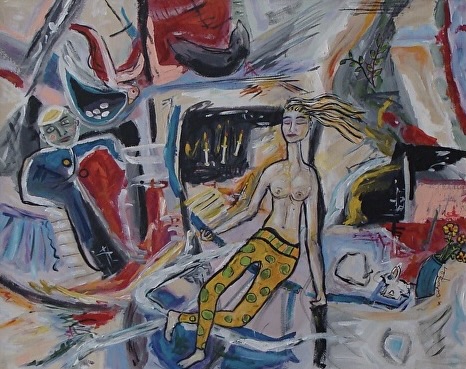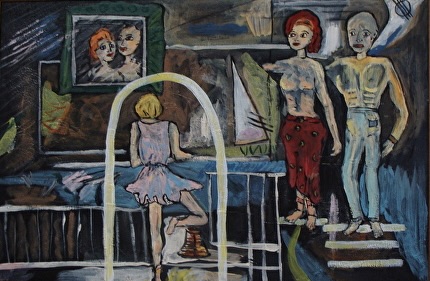
The arts. A waste of mone?

Why waste money on the arts?

The government boasts that between federal, state, and local appropriations approximately $1.85 billion dollars went to the arts in FY2022. Within this total, the National Endowment for the Arts received $ 207 million in appropriations, bringing the overall increase up by seven percent. Much of the increase came from special COVID funding to help struggling institutions restart. Unfortunately, the amount allocated for the arts did not keep up with inflation that topped eight percent last year. If you count inflation, federal funding decreased by nineteen percent over the past twenty years. State appropriations were cut by thirty-three percent and local funding by fourteen percent.

Now, on the brink of a recession, funding for the arts is expected to decrease significantly once more. The devaluation of the dollar combined with population growth makes for a dismal outlook for next year’s programs. States have not only reduced funding for the arts, but they’ve also eliminated it as part of the school curriculum along with eliminated field trips, closing doors on an important part of childhood education.

Too bad you may say. Why does it matter?

Studies over the past thirty years show that young people who regularly participate in arts programs are:

  • 4 times more likely to be recognized for academic achievement
  • 3 times more likely to be elected to class office within their schools
  • 4 times more likely to participate in a math and science fair
  • 3 times more likely to win an award for school attendance
  • 4 times more likely to win an award for writing an essay or poem

Students of the arts show improved scores on ACT and SAT tests, are more likely to graduate from college and have better analytical skills than those who don’t participate. The arts are not fluff in developing an educated person. They are as important as reading and writing when it comes to developing a strong workforce.

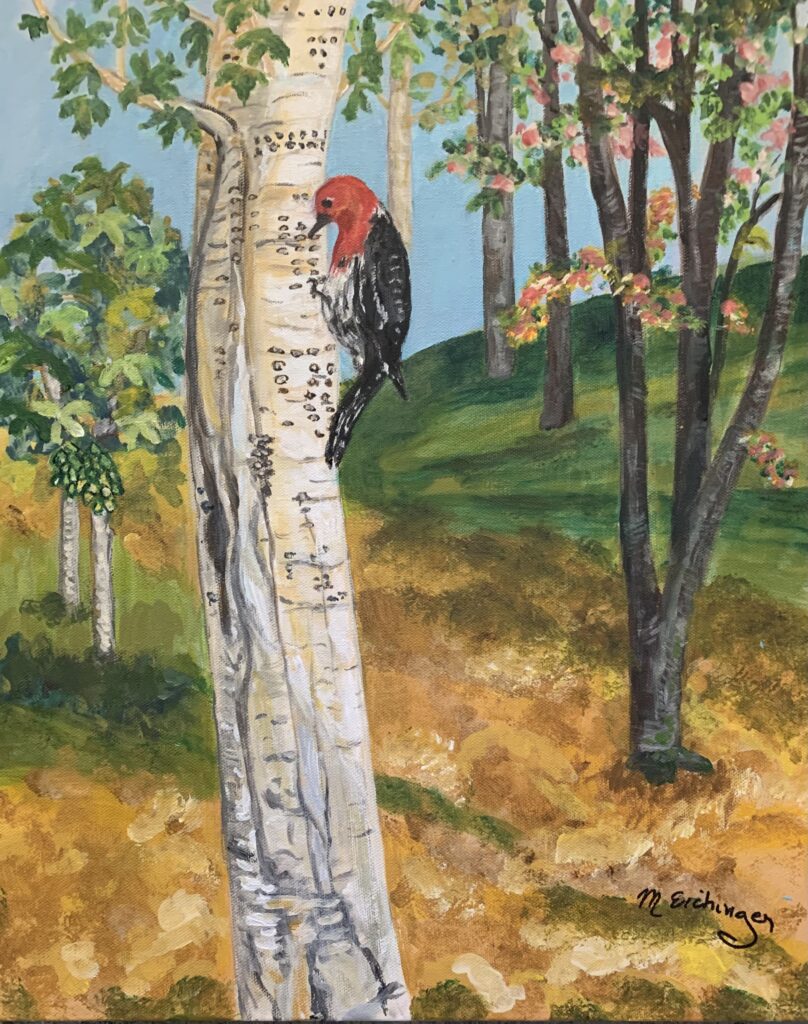
I give a testament to the way the arts helped me throughout my life. Mother made sure I was well exposed to all forms of art through classes and attendance at museums and live performances. I took ballet classes from pre-school through high school and piano lessons for nearly as long. At the age of e eleven, Mom enrolled me in an oil painting class at the Philadelphia Art Museum. After class, I roamed the halls of that magnificent structure, though sometimes went to the natural history and science museums a few streets away. These museums opened my young eyes to a world of intrigue and possibility. They made me a curious person with a thirst for knowledge. Schools in my day required students to study art. These classes and summer camp provided rich programming in all types of crafts as well as fine art. They sealed my fate as an artist, entrepreneur, and writer. They became a way to communicate emotions and share the fruits of my labor, gifts from my world as seen through my eyes.

“Even a little dog is the center of his own universe,” said Anatole France. What I see and express to others comes from my soul, something no one can take from me. They helped me when my son was diagnosed with cancer and provided solace when sequestered during COVID. During stressful situations, there is no better place to throw frustrations to the wind than my studio. Putting thoughts on paper helps as well. Though I rarely read them, I still store a box of childhood diaries filled with embarrassing moments.

For some people, the arts mean music, for others it’s acting, dance, or carpentry. Whatever the preference, developing visual, auditory, and kinesthetic senses will increase brain synapses and expands the way you think. It gives you more pathways to analyze problems and see solutions you may not have thought of before

It is interesting to note, that though public funding for the arts has decreased, private funding has not. The difficulty is that donors tend to fund the major institutions, not the small ones that introduce less wealthy people to the arts. When I started Impression 5 Science Museum in Michigan, I received a $5,000 grant to have a dimensional tableau of Guernica made so blind visitors could experience what Picasso had to say about the war in Spain. At the time, our museum had less than $50,000 to its name. Today, such a grant would never be awarded to an institution with such limited resources.

The Helicon Collaborative of artists reported in Not Just Money that two percent of all cultural institutions receive sixty percent of contributed revenue. Those fortunate non-profits boast annual budgets over five million dollars. Private foundation grants are given to those institutions that emphasize western culture, making the winners richer and the losers poorer.

According to the Economic Policy Institute, by 2032, people of color will make up the majority of the workforce, making it important that we balance the playing field. Equity has to be achieved if we want a creative, thriving society. It makes sense from a dollars and cents perspective. Bloomberg reports that the arts and culture contributed more than $800 billion annually to the U.S. economy. Prosperity depends on having a thriving art community. When creativity is boosted, entrepreneurship blossoms, social connections are made, and jobs increase.

So friends, don’t dis art and cultural organizations as being unimportant when they are. Instead, open yourself to the future and consider adopting Sweden’s public policy lauding the arts. “Culture is to be a dynamic, challenging, and independent force based on the freedom of expression. Everyone is to have the opportunity to participate in cultural life. Creativity, diversity, and artistic quality are to be integral parts of society’s development.”

References:

Grantmakers in the Arts website. Public Funding for the Arts in 2022. retrieved from https://reader.giarts.org/read/public-funding-for-arts-and-culture-in-2022#:~:text=2022%20Funding%20Levels,per%20capita%20investment%20of%20%245.49

Americans for the Arts Website. Why Public Funding for the Arts Matters. retrieved from https://www.americansforthearts.org/blog-feed/why-public-funding-for-the-arts-matters

Ragsdale, D. (2017) Tackling an inequitable arts fund system. Jumper on what the arts do and why. retrieved from https://www.artsjournal.com/jumper/2017/07/tackling-an-inequitable-arts-funding-system-a-response-to-the-report-not-just-money/

PBS News Hour website (2022)  3 ways that the U.S> population will change over the next decade. retrieved from https://www.pbs.org/newshour/nation/3-ways-that-the-u-s-population-will-change-over-the-next-decade

It is always a pleasure to hear from you. Do comment below.

Art is always for sale at eichingerfineart.com
Banning Books? not again!

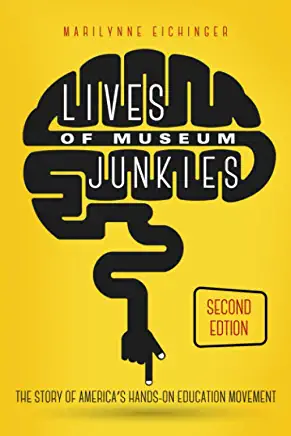
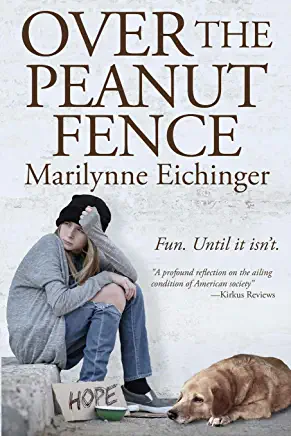
Though there are stories of rape in Lives of Museum Junkies and Over the Peanut Fence explains what happens when LGBTQ youth are sent from their homes, these books aren’t yet banned. You can find them in bookstores and on Amazon in paperback and ebook formats. You might want to purchase them before it’s too late.

Book Burning? “Who kills a man kills a reasonable creature…but he who destroys a good book, kills reason itself-” John Milton, author of Paradise Lost wrote in his 1644 book Areopagitica.

Oh, no–not again! Banning books has a long dark history, spanning every continent. Still, it is surprising to see it happening again. Unfortunately, Florida, Texas, and other conservative states are doing just that. Totalitarian regimes throughout history are the ones that target culture. I fear the United States is headed in that direction. White and Christian nationalism has spurred action that belies the founding documents that assure us freedom of speech, the press, and worship.

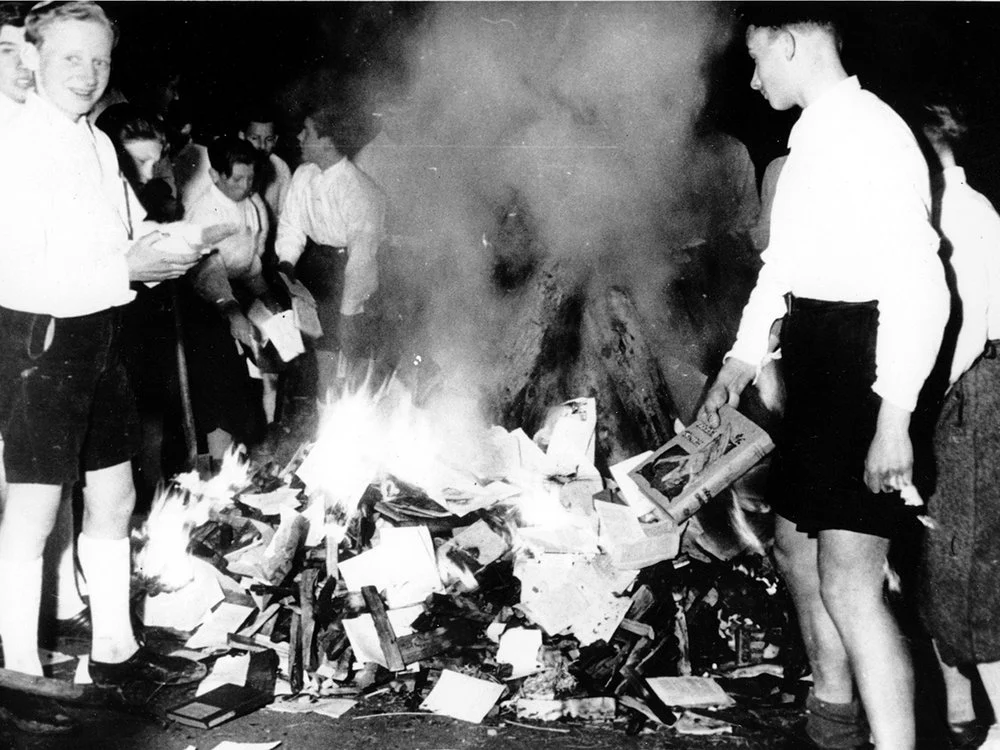
In Germany, the Nazi German Student Association declared war on the Un-German Spirit, and in 1933 initiated public purges by fire. Under a symbol of intolerance and censorship, works of Jewish, liberal, and leftist writers went up in flames. Joseph Goebbels gave a speech shouting! No to decadence and moral corruption! Yes to decency and morality in a family state!” Among those on their blacklist were Ernest Hemingway, Karl Marx, Bertolt Brecht, Thomas Mann, Jack London, Helen Keller, and Theodore Dreiser.


  Hitler Youth members burn books, 1938 – (Smithsonian Magazine)

Over thousands of years, libraries and books have been targeted by all ethnicities. This wasn’t the first time books were burned in Germany. In 1817 students got rid of anti-national and reactionary texts and literature they too thought to be “Un-German.” Years later, in 2012, al-Quida Islamists invaded Malii and then Timbuktu, destroying priceless manuscripts. Thankfully Abdel Kader Haidara and others risked their lives smuggling out 350,000 manuscripts.

To gain greater control over his people, the Chinese emperor, Qin She Huang, ordered a bonfire of books. Poetry, philosophy, and history went up in flames so a comparison wouldn’t be made between him and other rulers. When Mao Zedong took power, the cultural revolution destroyed books that didn’t conform to party propaganda. Australia banned books like Brave New World and Lady Chatterley’s Lover.

A long list of emperors and leaders threatened by the ideas of others felt themselves to be victims of malicious writings. In Livy’s History of Rome, he writes that Bacchanalia (200-150 BC) outlawed writings to prevent disorder and the spread of foreign customs. The Catholic church burned books and manuscripts along with heretics who attacked church doctrine and practices like indulgences and cosmological readings. More recently (1981), the Jaffna Public Library of Sri Lanka, home to 100,000 rare books of Tamil history and literature, was burned by Sinhalese Buddhists. Though they outnumbered the Tamils, the Buddhists felt their beliefs were under threat by the Hinduism of the Tamils.

Unfortunately, many of today’s leaders are too weak to allow divergent viewpoints to circulate. They feel threatened and compelled to wipe writing they disagree with from the historical record. Over the past century, To Kill a Mockingbird, The Autobiography of Benjamin Franklin, Bury My Heart At Wounded Knee, and A Separate Peace have all been subject to bans. So have the works of children’s authors J.K. Rowling and Judy Blume.

Under President George W. Bush, EPA libraries were threatened with closure. In 2014, Canadian Prime Minister Stephen Harper locked away or destroyed scientific research documents. Scientists working for Fisheries and Oceans were prevented from doing science. Their knowledge was purposefully taken from the public.

Power is scary when it allows someone to negate others’ beliefs and put into effect their own logic as though they were a god. Historian, Barbara Tuchman, warned in her 1980 address at the Library of Congress, “Books are the carriers of civilization. Without books, history is silent, literature dumb, science crippled, and thought and speculation at a standstill. Without books, the development of civilization would have been impossible.”

Today’s bans are aimed at the LGBTQ community and race. States like Florida are prohibiting teachers to discuss black history before 1965. Gay, lesbian, and transvestite issues are not to be mentioned. Florida is not alone in negating history and biology. There were 2,532 instances of book bans across the nation between July 2021 and June 2022 and over 100 bills were initiated at the state level to censor them.

Book bans are devastating to authors and gay teens who see the community treat them as being abnormal. Banning denies students the right to receive a culturally and biologically relevant education. Youth need to be given a broad spectrum of information and learn how to analyze issues that are raised. They are our future lawmakers and their minds have to be open to change. By 2040, white people will no longer account for the majority of the U.S. population. White supremacy is bound to fail in the end. Whether it will do so without bloodshed remains to be seen.

The first amendment guarantees freedom of thought and expression. If you advocate for this freedom, speak out and fight against censorship tactics. If you hear of censorship, contact the local press to write about it. Show up at meetings where decisions are being made. It may be a PTA meeting, a school board, or a public event. Whatever you do, make your voice heard. People, including students, need a balanced perspective to make objective decisions. Books are a way to unite us in freedom, while censorship is divisive.

Suggestions to combat censorship: Read a banned book. Speak out publicly. Host a banned books party. Volunteer at your local library. Join your library or school board so you’ll have a seat at the table. Contact the press and let the public know what is happening.

Isn’t this supposed to be the land of the free and the home of the brave?                                                                               _________

For those interested in knowing more, the following information was taken from an article in The Daily Beast.

Five Book Ban Trends to Watch in 2023

1. Laws to limit access to information. Since the summer of 2022, Florida schools have been removing books with LGBTQ+ content under threat of punishment from what critics have dubbed the “Don’t Say Gay” law. In Missouri and Utah, new laws concerning the distribution of material deemed “harmful to minors” have led schools and librarians to cull their collections, scuttling away books with any nudity or sexual content

2. Changed policies making book banning easier. One Pennsylvania district passed vague rules last summer about what kinds of books can be purchased. In the fall, a Texas district passed a prohibition on all books that discuss “gender fluidity.” In Florida and South Carolina, districts have suspended access to slates of books when challenged, then rewritten their policies to justify such bans retroactively. And in Tennessee, a politically-appointed commission will soon have the power to ban books across the state’s schools, and some commission members do not want to have to read the books before banning them.

3. Activists are equating all sexual content with pornography. The pressure to root out such content appears to be working, as some schools and librarians have determined that even classic works like The Handmaid’s Tale or The Bluest Eye, or books about puberty like It’s Perfectly Normal, are somehow indecent materials that lack value for minors because they have sexual content. This dragnet is sweeping up memoirs and works of fiction that might teach young adults about consent, sexual assault, or date rape-and parallel new efforts in some states to censor education about abortion.

4. Censorship efforts are intensifying at public libraries. Though schools are at the epicenter of a movement it is spreading to public libraries. In numerous states libraries have been facing demands to remove lists of books, and to ban LGBTQ-themed books, displays, and content in children’s sections. When one Michigan library refused to ban a handful of LGBTQ+ books, local citizens mounted a campaign and voted to stop funding it.

5. Proposals to regulate books are getting more extreme. The city council in League City, Texas, for example, recently voted to prohibit purchasing, displaying, or stocking books with certain content from any public library. In doing so, they are empowering local governments to dictate what books all citizens can freely access. Likewise, in Texas and Oklahoma, bills recently introduced would require new age ratings for books, which would be used to strictly police their public availability. Unlike rating systems for movies or music which are industry-driven, the Texas proposal would give the state new authority to set and enforce these ratings. Publishers that don’t comply would lose access to the state’s public school market entirely.

References:

Oliver, D. (2023) What happens to our culture when books are banned: ‘A chilling effect’. USA Today. retrieved from https://www.usatoday.com/story/life/health-wellness/2023/02/22/book-bans-what-happens-culture/11262643002/

Holocaust Museum website. (2-23) Book Burning. Holocaust Encyclopedia. retrieved from https://encyclopedia.ushmm.org/content/en/article/book-burning

Boissoneault, L. (2017) A Brief History of Book Burning, From the Printing Press to Internet Archives. Smithsonian Magazine. retrieved from https://www.smithsonianmag.com/history/brief-history-book-burning-printing-press-internet-archives-180964697/

Rogerson, K. ( 2023) The State of Book Bans in the US win 2023. Lit Reactor. retrieved from https://litreactor.com/columns/more-the-state-of-book-bans-in-the-us-in-2023

Friedman, J. (2023) Here are 5 book Ban Trends to Watch in 2023. Daily Beast. retrieved from https://www.thedailybeast.com/here-are-five-book-ban-trends-to-watch-in-2023

Kuabo, Rakuten, (2023) Banned Books Week: 18 Ways to Help & Advocate (2023) retrieved from https://www.goodgoodgood.co/articles/banned-books

Who’s Lucky Now?

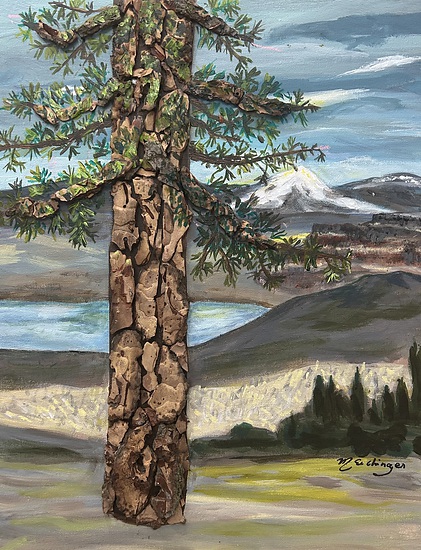
Ponderosa Pine

An overnight trip to central Oregon inspired me to paint this Ponderosa Pine. It was early morning, with the sun rising to illuminate Mount Hood and cover the landscape with a soft blanket.

An overnight trip to central Oregon inspired me to paint this Ponderosa Pine. It was early morning, with the sunrise illuminating Mount Hood and covering the landscape with a soft blanket.

Who’s Lucky Now?

Do some people have more luck than others? Without a doubt, no one is lucky all the time, but some appear to have more good fortune than most. Is that fair and random or is it due to the way these individuals look at life? According to Dr. Margie Warrell, founder of Global Courage, there are six things lucky people do that others don’t. They know bad luck is inevitable but they plan for the future and create good fortune.

What do lucky people do?

  1. First, they trust their intuition. They do their homework and analyze the pros and cons of a decision, then ask themselves if it feels right. They don’t overanalyze big decisions for that lowers the odds of making the right one. With that in mind, don’t ignore your next hunch. “Like everyone else, scientists have intuitions. Indeed, hunches and flashes of insight–the sense that something is true even if you can’t prove it–have been behind countless breakthroughs.” Philip E. Tetlock, Superforecasting: The Art and Science of Prediction
  2. Luck depends on a willingness to take risks. Courageous action that focuses on what you have to gain rather than lose will move you forward. Risk-averse people have a tendency to stay miserable in a secure situation rather than embrace the unknown. Going outside your comfort zone is a good thing, it broadens your horizon. I won’t get upset at you about a mistake. I’ll get upset at you for the next mistake that comes from still thinking about the last mistake.” -Doc Rivers
  3. By expecting good things, you’ll find that more good things do happen. Help others and you will be rewarded, not every time, but in the end. “When you give joy to other people, you get more joy in return.” -Eleanor Roosevelt. When you put out and work hard, you’ll enjoy your days more.If you are working on something that you really care about, you don’t have to be pushed. The vision pulls you.” – Steve Jobs
  4. Optimism-seeing the glass as half full propels you to look for opportunity where there is a setback. It takes an open mind to be accessible to lucky chances. Negative thinking is bound to dampen your spirit and make it more difficult to try new things. Mark Twain once advised, “Stay away from those people who try to disparage your ambitions. Small minds will always do that, but great minds will give you a feeling that you can become great too.”
  5. Failure is inevitable, so embrace it. Everyone has setbacks, and whining about them won’t help. Remember that adversity and failure are seeds for your next success. if something bad happens, don’t let yourself be victimized and dwell on it. It’s essential to change your mindset as fast as you can to the positive and move on. “Success is not final; failure is not fatal: It is the courage to continue that counts.” -Winston S. Churchill
  6. Lucky people associate with other lucky people. Confidence, ambition, and optimism instead of fear and pessimism are critical emotions for creating luck. No matter what happens to you, put on a cheerful face in the presence of others and help them achieve their goals when you can. If they become successful, you will know you’ve done a good deed and can take pleasure in their luck. “Nature has given us all the pieces required to achieve exceptional wellness and health, but has left it to us to put these pieces together.”-Diane McLaren

I’ll add one more to the list. To get out of a rut, do something out of the ordinary. Spend the day in a park, visit the zoo, stop by a skateboard park, try food not tasted before, or take a bike ride. Open your mind to the things outside the artificial boundary you created for yourself.

Do I follow my own advice? Yes, indeed I try to. I tend toward the optimistic side, a trait that sometimes drives my partner crazy. I find it difficult to see the world as good or bad, black or white. When I fail, which I do often, I study my failure so I grow from the experience and try not to make the same mistake twice. When stuck for inspiration, I take drives on back country roads, go for a hike, or spend time painting in my studio. Relaxing and taking my mind off the problem, puts me on the road to solving it. Brainstorming and coming up with outrageous ideas that must be narrowed down later also helps.

I recently joined a non-fiction club that gets me to read books I wouldn’t usually select. The readings and discussions broaden my outlook, giving me tools to use as I go through my days. These tricks I’ve accumulated over years help me stay creative and engaged. The world is beautiful to those who make the most of it.

References:

Chu, M. ( 2017)This Researcher Reveals How Lucky People Doffer From Unlucky People. Inc.Daily DIgest for Entrepreneurs and Business Leaders. retrieved from https://www.inc.com/melissa-chu/want-to-become-luckier-heres-what-you-need-to-do-a.html

Warrell, M. ( 2015) Six Things Lucky People Do That Others Don’t. Forbes. retrieved from https://www.forbes.com/sites/margiewarrell/2015/03/17/create-the-luck-youve-been-wishing-for/?sh=1b3efacb4ace

Art is always for sale. Contact me for questions at marilynne@eichingerfineart.com Ponderosa Pine — original acrylic painting with bark, $595. Canvas Print —$99. booth are 16” x 20”. 

For comments, please do so below.

The four-day workweek

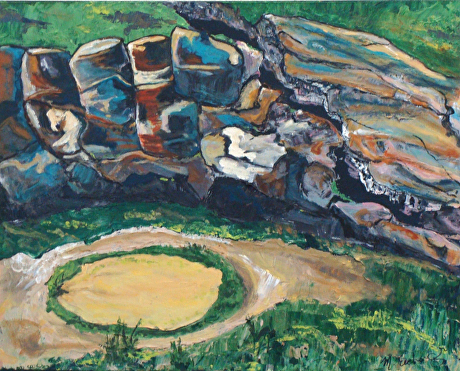
 Diamond Crater

Julie Anderson sings about her favorite things in the Sound of Music. Do you have time to enjoy yours.

The Four-day Workweek.

Two days ago, ten inches of snow fell by my home in the hills of Portland. The forecast is for more snow next week. It took double the time and triple the effort to shovel my drive than it did last year. I found it to be invigorating. As I worked, I stopped to chat with the dozens of men and women walking dogs or carrying sleds by my house. The best hill in my neighborhood is across from my property. Yesterday, the hill rang with the screams and laughter of children. I too was counted as one of the crazies, speeding downhill.

Without having to work, fathers and mothers were having fun with their families. Gone was fear and worry that the pandemic wasn’t over.  The world was as it should be with people having a good time.

I was reminded of a trial conducted in the U.K.  It tested the four-day workweek where employees received the same pay for a thirty-two-hour week as for forty-eight hours. The results were so positive that most of the sixty-one firms involved say they will continue the policy. Fifteen percent of supervisors and employees agreed that no amount of money could convince them to return to a five-day workweek.

Contrary to expectations, corporate revenue increased and absenteeism and resignations fell. Participant well-being registered high on the list of reasons. With less fatigue and more time to spend with children and elders, people felt less stressed. They had fewer guilt feelings from being away from their children. People who worked in nonprofits and professional services spent more of their free time exercising. Those in construction and manufacturing jobs reported declines in burnout and sleep problems. Having a better work-life balance was the main reason sighted for the trial’s success.

After reading anthropologist, Yval Noah Harari’s book, Sapiens, I thought about how work-life balance was an advantage for prehistoric foraging groups. According to Harari, hunter-gatherers worked fewer hours than people do today. Foragers had more nutritious varied diets, stronger immune systems, and more time for leisure. It wasn’t until the agricultural revolution that diets became limited due to the variety of crops that could be successfully farmed. Agriculture ushered in a need for permanent housing that in turn affected population growth and the spread of disease.

Growing out of a desire to make life easier, farming had the opposite effect. Planting crops and harvesting them was hard to do and less nutritious than foraging. Female foragers breastfed children until four or five years, limiting how often they were conceived. Village and city women weaned infants earlier, giving birth annually. They needed the labor. The need to feed, clothe, and shelter large families, required more work hours than before.

The industrial revolution didn’t make life easier. Most laborers worked twelve-hour days. In 196, Illinois became the first state to pass a law for an eight-hour workday. It didn’t get much traction elsewhere until Henry Ford adopted the eight-hour, 5-day work week for his employees in 1926. Ford touted that workers need time to spend with their families. It took another twelve years for labor unions, advocates, and lobbyists before President Roosevelt signed the Fair Labor Standards Act, requiring employers to dispense overtime pay for working more than 40 hours a week.

Despite current laws on the books, a 2022 Gallup World Poll shows that the average worker spends 41.36 hours per week on the job. Those who switched to remote work, spend even more hours working. Clever employers find ways to get around the law by classifying employees as exempt or independent contractors not entitled to be paid overtime pay. Other tricks include; working off the clock, averaging hours over a two or four-week pay period, and misclassifying workers by calling them salaried. Many immigrants and illegal migrants, work dawn to dusk, six or seven days a week–some two several jobs to do so.

Long hours are common for executives as well. Thinking they will work hard and retire at thirty-five, executives are surprised when mortgages, cars, and college tuition don’t allow that to happen. Harvard Business Review reports the fifty to seventy-hour workweek to be common, though a slippery slope that can lead to disaster. The U.S. has fewer days off for vacations and holidays than any first-world county.

Following is a list of professions that tend to require long hours; Health care providers, corporate executives, sales managers, commercial hunting and fishing workers, teachers, lawyers, truck drivers, firefighters, water transportation workers, construction workers, derrick operators, agricultural workers, mining and extraction workers. Feeling the pinch of extended work hours, and on their way to burnout, many are asking, “Is this all there is to life?”

The thirty-two-hour workweek is being discussed worldwide. But will it work in the U.S.? It was tried in Iceland to great success, the Spanish government will shortly start a three-year trial run. Belgium’s new reform package, entitling workers to a four-day, thirty-eight-hour workweek, gives workers the right to turn off devices and ignore work-related messages after hours without fear of reprisal. Maryland’s legislature is considering a bill incentivizing 32 hours, and California has a stalled one in its state legislature. Does it make sense?

From 1979 to 2020, the productivity of the typical U.S. worker increased sixty-two percent, while the average pay only increased seventeen percent. Company profits weren’t shared with most employees. Instead, profits went into the salaries of the top 20 percent, and to shareholders who make money from owning company stock. It is why the young people I speak to, are redefining what they want from life. I hear, “If I’m not seeing the benefit of increased productivity, what motivation is there to keep putting in 40 hours a week?”  They may have a point. What do you think?

My Favorite Things

composed by Richard Rodgers and Oscar Hammerstein II for The Sound of Music, 

Raindrops on roses and whiskers on kittens

Bright copper kettles and warm woolen mittens

Brown paper packages tied up with strings

These are a few of my favorite things

Cream-colored ponies and crisp apple strudels

Doorbells and sleigh bells and schnitzel with noodles

Wild geese that fly with the moon on their wings

These are a few of my favorite things

Girls in white dresses with blue satin sashes

Snowflakes that stay on my nose and eyelashes

Silver-white winters that melt into springs

These are a few of my favorite things

When the dog bites

When the bee stings

When I’m feeling sad

I simply remember my favorite things

And then I don’t feel so bad…

References:

Jernandes, J. (2023) Dozens of U.K. companies will keep the 4-day workweek after a pilot program ends. NPR. retrieved from https://www.npr.org/2023/02/21/1158507132/uk-study-companies-four-day-workweek

Tiimsit, A. (2023) A four-day workweek pilot was so successful most firms say they won’t go back. The Washington Post. retrieved from https://www.washingtonpost.com/wellness/2023/02/21/four-day-work-week-results-uk/

Hewlett, S & Luce, C. (2006) Extreme Jobs: the Dangerous Allure of the 70-hour Workweek.Harvard Business Review. retrieved from https://hbr.org/2006/12/extreme-jobs-the-dangerous-allure-of-the-70-hour-workweek

Harari, Yuval Noah, Sapiens – Harper Collins Publishers. copyright © 2015 by Yuval Noah Harari. ISBN: 978-0-06-231609-7

Ward, M. & Llebowits, S. (2023) Maryland considers a bill incentivizing the 4-day workweek. Insider. Retrieved from WORK.

Update on Trees

An Update on Trees

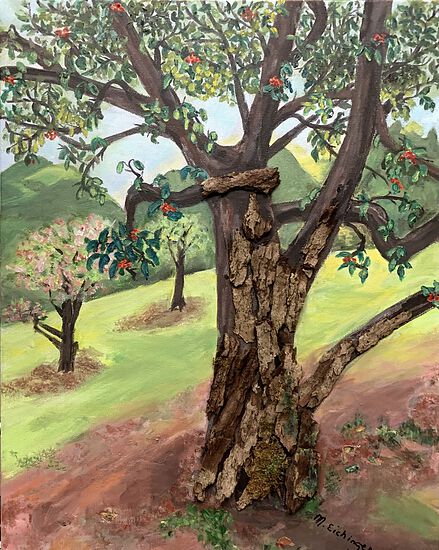
I love trees, especially old-growth ones with limbs twisted and knarled like elders. I was even more enthralled after discovering they communicate for protection against insects and nurture young seedlings. I’ll go out of my way to walk past maritime pines with bark like the plates on an armadillo. I’m fascinated by the holes woodpeckers make in rings around pawpaw trees. How do they manage to keep them in line?

Forests are calming, unique places to go to view the variety in nature and to be filled with inspiration. I become upset when returning home and read they are being decimated. I decided to dig into the current state of tree growth worldwide. What I discovered surprised me.

The United States accounts for 8-10 percent of the world’s forests, with approximately 228 billion trees. According to the North American Forest Commission, that number is two-thirds the amount here in 1600. As cities grew and acreage was added to their boundaries, farmlands and forested areas were converted to cement and asphalt pavings and housing. With 89 percent of the population projected to live in urban areas by 2030, it is likely that urban forests will be decimated by then.

The east coast began adding back forests in the 1940s where woodlands had been heavily logged. Reforesting succeeded when the forest department gained control over how much timber could be cut annually. Designating national parks played a role in preserving woodlands teeming with biodiversity. Though the U.S. replants its forests, the story worldwide is different.

Dr. Thomas Crowther, while a fellow In Forestry and Environmental Sciences at Yale (2015), organized crews to count trees in given geographic locations around the globe. He compared the information his team collected with satellite imaging and came up with the best survey known to date. His estimates show approximately 3.04 trillion trees on the planet today, half as many as when homo sapiens first appeared.

Though Dr. Crowther’s numbers make it seem like there are a lot of trees worldwide, there’s a huge catch. Demand for wood is continuing to grow along with the population. We currently harvest 15 billion trees annually but only re-plant five billion. With a net loss of 10 billion a year, our forests will be gone within the next 300 years. Deforestation is one of the greatest challenges facing humanity as agricultural expansion in the tropics swallows up vast parts of the rainforest.

Climate change, however, is allowing trees to grow in places previously too cold for their survival. Russia added 790,000 square kilometers of trees and China 324, helping to balance the number lost in Brazil if you ignore biodiversity. Foresters remove eight or more species in clear cuts but replant with a single species. Their methods erode the ecosystem, degrade soil, and make forests susceptible to disease and fire. Activists label monoculture tree plantations to be “green deserts.” Such plantations have expanded fivefold since 1980, killing the flora and fauna in tropical forests and savannas forever.

Trees grow faster as global temperatures rise and growing seasons lengthen –not good news. A study of central Europe’s forests shows that pollution and higher temperatures make wood weaker. The trees break more easily in storms, the lumber produced is less dense and less durable, and the amount of CO2 given off drops. Trees are soaking up less CO2 from the atmosphere each year.

Oregon lost 1.1 million acres of trees in 2022 due to drought and extreme heat. At first, it was thought that the deaths were due to fungi and insect infestations. Scientists now agree it’s because of climate change. Though more obvious in fir trees where they die from the tip of their leaves and roots inward, all species show signs of stress. The western red cedar’s range will soon disappear at lower elevations west of the Cascades and western Washington and move north. Forest entomologist, Christine Buhl warns to start shifting expectations of what tree species to plant in the state. for those common in California will move to our region.

It is a lot to take in, but the following are a few additional tidbits of information.

a) Trees are the world’s longest-living species. Some of California’s giant sequoias and Bristlecone pines are between 3,000 and 5000-years-old.

b) Planting trees in urban areas lower vandalism, graffiti, and littering.

c) The earth will receive an additional 260 million tons of oxygen and remove 10 million tons of CO2 by planting 20 million trees.

d) Trees that grow in the sun have thicker bark than those in the shade.

e) Patients with a view of green trees from their hospital bed, spend 8% less time in the hospital than those who don’t.

f) Customers spend more money in shopping districts with trees. They stay longer and perceive products and stores as being of higher quality.

g) Tree limbs are not exactly spherical. They feature an upper (compression) and lower (tension) side that allows them to sustain their own weight as well as the weight of the leaves, nuts, or fruits dangling in mid-air.

h) Utah is home to the world’s oldest clonal tree cluster. According to DNA tests, the Pando group of quaking aspens is roughly 80,000 years old, wishing over 6,000 tons. . It features over 40,000 stems that are branches of a single tree. It is only the world’s oldest living creature but also the biggest.

i) A 2022 threat assessment of 881 native tree species in the U.S. shows that 11-16% are threatened with invasive pests and diseases. The most threatened are Oaks and Hawthorns.

j) The tallest in Redwood Mountain Grove is as tall as a 31-story building, the Widest is in Kings Canyon National Park with a circumference the length of two Toyota Priuses, and the Biggest Tree in Sequoia National Park weighs the same as 107 elephants.

Please share your observations of trees in your area and let followers of this newsletter know about your favorite parks. Comment on my blog below.

I do hope you find time to enjoy outings to national and state parks and forests. If the weather is too cold or wet, you are invited to “Walk in the Woods with me this April at Lake Oswego Library. Twenty-six of my tree paintings will be on display during the Arbor Month exhibit.


16″ X 20″ Canvas prints of the originals are on sale and delivered to your door for $99. Choose your favorites to make your own forest walk. Go to https://www.eichingerfineart.com/collections/182747. Click on the ones you like. Purchasing is easy.

References:

How Many Trees are in the World Today vs 1000 Years Ago? retrieved from The Environmentor.https://blog.tentree.com/fact-check-are-there-really-more-trees-today-than-100-years-ago/#:~:text=Changes%20in%20the%20Last%20Hundred,had%20in%20the%20year%20160

Supriya, L. (2018) Climate change is making trees big, but weaker. Science. 

Earth-has more trees than it did 35 years ago- but there’s a huge catch.  World Economic Forum . retrieved from https://www.weforum.org/agenda/2018/08/planet-earth-has-more-trees-than-it-did-35-years-ago/

Firmageddon” Researhers find 1.1 million acres of dead trees in Oregon.News. retrieved from https://www.nbcnews.com/science/environment/firmageddon-researchers-find-11-million-acres-dead-trees-oregon-rcna59671

Kilgore, G. (2022) How Many trees Are in the United States? Shocking Stats. RForestry, Trees, and Tree Planting. retrieved from https://8billiontrees.com/trees/how-many-trees-are-in-the-united-states/

NatureSuErve website. (2022) Researchers complete first comprehensive threat assessment of all U.S. trees. retrieved from https://www.natureserve.org/news-releases/researchers-complete-first-comprehensive-threat-assessment-all-us-trees

Hance, H. (2008) Monoculture tree plantations are “ green deserts” not forests, say Activists.Mongabay; news and inspiration from Nature’s Frontline. retrieved from https://news.mongabay.com/2008/09/monoculture-tree-plantations-are-green-deserts-not-forests-say-activists/

Oh, Rats!

Limitless Possibilities

So many people, so many ways, and so many paths. Which one to take isn’t clear.  Should we use our minds to set boundaries or depend on biological instincts to lead the way?

Oh, Rats!

    Is the human species so messed up that we’ve started to mimic rats in overcrowded cages? Considering that we are biological animals, it isn’t surprising that the aggressive and deviant behaviors we see on the street are responses that mimic rat behavior in crowded situations. The world’s population grew dramatically since Thomas Malthus wrote his 1798  Essay of the Principle of Population. He thought the problems Industrial European society suffered from ——poverty, malnutrition, and disease were all attributable to overpopulation. If growth were left unrestricted, the population would grow at an exponential rate, exceeding its ability to produce resources to support itself.  He cautioned that if action wasn’t taken, the growing population would self-correct through war, famine, and disease. Social scientists say his prediction didn’t come true because humans have the foresight and the ability to plan for the future.  New agricultural technologies put Malthus’ theories on the back burner for the next two-hundred years.

The conversation returned to the forefront when Stanford University Professor Paul Ehrich wrote The Population Bomb with environmental issues part of the discussion. In 1968, 3.55 billion people occupied the globe, increasing by 2.09 percent a year.  Ehrich was an optimist though. He too thought that human foresight and emerging Ag technologies would keep the population safe from disaster. After revisiting his predictions fifty years later, he said that the most serious flaw in his writing was that it was too optimistic about the future. Fresh water is one of the greatest limitations facing the world. Today there are over 8 billion people on the globe, and though the rate of increase has dropped to less than 1 percent, the base number is high. The UN predicts that in seven years the earth will have to support 600 million more people. 

Rats! Where will they all go? What will happen to the United States? An estimated 83 percent of the population already resides in urban areas, increasing urban land by 15 percent. That’s up from the 64 percent recorded in 1950. By 2050, metropolitan occupancy is expected to reach 89 percent, causing double the need for urban land by 2060. More than 300 urban areas today have a population of over 100,000. The average urban population density is 283 people per square mile. New York, a city with 8.8 million inhabitants, has 27,012 people in every square mile.

Back in 1962, animal ecologist John Calhoun foresaw a future of overcrowded cities and devised a population experiment by introducing five pregnant rats in a quarter-acre pen that could accommodate as many as 5000. The animals were given adequate food, water, and shelter. To his surprise, the rat population grew rapidly at first, but over time subsided and leveled off at 150.  Following is a description of what he saw.

“Dominant males became aggressive, some moving in groups, attacking females and the young. Mating behaviors were disrupted. Some became exclusively homosexual. Others became pansexual and hypersexual, attempting to mount any rat they encountered. Mothers neglected their infants, first failing to construct proper nests, and then carelessly abandoning and even attacking their pups. In certain sections of the pens, infant mortality rose as high as 96%, the dead cannibalized by adults. Subordinate animals withdrew psychologically, surviving in a physical sense but at an immense psychological cost. They were the majority in the late phases of growth, existing as a vacant, huddled mass in the centre of the pens. Unable to breed, the population plummeted and did not recover. The crowded rodents had lost the ability to co-exist harmoniously, even after the population numbers once again fell to low levels. At a certain density, they had ceased to act like rats and mice, and the change was permanent.”

Since Calhoun’s experiment, social scientists and biologists in the fields of ecology and mental health continued studying issues around urban crowding. They investigated prisons, mental health hospitals, refugee camps, and slums. Recent research focuses on destination communities where the quality of life for the residents plummeted as tourism increased.  

Though there is some variation in results, overall studies show that crowded conditions increase the risk of the spread of infectious diseases, cause stress, and create mental health problems and sleep disorders. Home injuries multiply since many crowded areas are in poor repair. And, urban sprawl brings traffic congestion, air and water pollution and in some cases flooding. The demand for energy rises and water quality decreases. An urban heat effect from so much cement and high- rise buildings, causes temperatures to rise and greenhouse gas emissions to get trapped in the atmosphere. The average annual temperature in metropolitan areas is 1-7 degrees higher than in rural regions.

Given these conditions, it is not surprising that there are so many mass shootings, suicides, and unsheltered people. Wealthy families reside in dwellings with adequate per-person space. They live near parks and shop in neighborhoods that are relatively safe. Since the pandemic, they’ve taken even more control over their lives by demanding their employers let them work from home on flexible work schedules.   

The majority of the population is not so fortunate. Their wages are low and they have little control over their hours and work week.  They arrive at their jobs stressed by living in crowded apartments in crowded neighborhoods.  Some become disturbed and exhibit behaviors like those in Calhoun’s experiments. They self-medicate with drugs and alcohol, become aggressive drivers, develop deviant sexual behaviors, commit suicide, join gangs, steal, riot, and murder. Their aggression crosses neighborhood boundaries to impact others who live and work in the city. They create fear throughout the nation and sometimes the world.

Human brains are capable of designing housing and community areas for dense populations. Theoretically, we should be able to build livable cities that don’t impact the environment. We should understand the impact eight billion people have on global resources and the psychological problems that occur when it is too crowded.  

We should, but we don’t. The wealthy don’t want to foot the bill to make cities equitable for all. And, I don’t see our citizens as having the will to tackle problems caused by urban living. I don’t see them making the leaps needed to protect the environment. 

I am always hopeful that we’ll wake up and change.  Since the world’s population is still growing and ever more people are migrating to urban areas, cities will become more dysfunctional, putting more pressure on residents to remain sane. 

I enjoy hearing from you. Your opinions matter. Please share them on my blog site at www.eichingerfinart.com/blog

Art is always for sale. For information about Limitless Possibilities contact me at marilynne@eichingerfineart.com

Books by Marilynne Eichinger are available online and in bookstores in paperback and ebook formats. To purchase on Amazon go to AMAZON.

Drumming for CHange

Climate Man, a totem pole carved by Ray Losey, is a call for action. His drumming is loud and clear and must be heeded now. There is no time to wastefor

 Over 200 countries attended COP26m the international climate conference that took place in 2021. Its main goal was to keep a maximum of 2.7 degrees Fahrenheit of global warming within reach by mid-century. The conference held promise and excitement about the urgency of stronger emissions reduction targets. Vulnerable countries were already experiencing dwindling crop yields and devastating storms. They called for financial help from richer nations to help them adapt to the effects of climate change. By the end, 151 resubmitted climate plans that slashed emissions. It was the first time countries agreed to shift away from coal and fossil fuel subsidies. Diplomates left with their hopes alive—but just barely.

The COP27 climate summit reconvened last November in Sharm el-Sheikh Egypt. the conference was framed as a battle for survival. A key outcome was establishing a loss and damage fund for nations vulnerable to the climate crisis. The money will be used for everything, including building sea walls and creating drought-resistant crops. This agreement was important, but when it came to moving away from Fossil fuels, the summit failed miserably. Reports that showed no progress was being made were bad news for our warming planet. The reports painted a bleak picture with no credible path to a 2.7-degree Fahrenheit limit. For the first time, a pavilion was devoted to children and youth, the generations to suffer most. Unfortunately, the policies in place point to a temperature rise bringing catastrophic consequences by the end of the century.

The war in Ukraine hasn’t helped. Countries dependent on Russian oil restarted polluting coal-operated plants. According to a BBC report, the war has led to 33 million tons of greenhouse gases being emitted into the Earth’s atmosphere. Rebuilding Ukraine will release upwards of 49 million tons of carbon dioxide. 

No community in the United States is immune to the effects of a warming climate. If yours isn’t affected by radical weather, it is likely to become overrun with climate migrants. In my backyard, my partner and I are afraid to leave our home for extended periods of time. During the summer, we fear fire whipping through the small canyon below our house. The smoke from California, Oregon, and Washington forest fires keeps us inside during the most beautiful time of the year. 

During the other nine months, we fear mudslides from torrential rains and trees trees and power lines falling down from windstorms .s. In the summer, it is too hot to be outside. For forty years I’ve never needed air-conditioning, but now I do. A 150-foot tree landed on our house a few years ago, one totaled a car in the drive, and this Christmas our roof just missed getting speared through by a branch. We live seven miles from the center of Portland, in an area considered stable.  

ONE SEED AT A TIME

It’s incumbent upon every person to take action. Energy-efficient electric appliances, washing laundry with cold water, and hanging clothes to dry instead of using a dryer are a few of the many ways to save energy at home. Stop complaining about bike lanes, we need them. Walking, biking, and using public transport improve health and fitness as well as the planet. Bundle trips to the store when going by car. We see people drive by our home five and six times daily to complete one small task at a time. Eat more vegetables and less meat. Plant-based food results in fewer greenhouse emissions. Generate less waste.

But, the really big changes have to come from Industry. Large-scale tree plantings, donations to energy-green projects, and preserving rainforests are at the top of the list. Car manufacturers need to increase the efficiency of our cars and homes. Employees should be encouraged to work remotely if possible so the freeways are less rounded and big commercial offices can be downsized. Businesses should reconsider the way travel is conducted. Can employees travel by train instead of a plane? Can they conference by Zoom? They can use climate-conscious vendors for supplies and services and donate to climate-related causes. The public is responsible for holding corporations accountable for their impact on the planet.

The push will come from peer pressure. “We’re going carbon neutral, why aren’t you?” are words that should ring from everyone’s lips. Old values have to be challenged to inspire real change. How many mega-floods or blazing fires have to be experienced before the nation is shaken to its core? The time will come when insurance rates will be too high to afford. Eventually, families will be forced to move from coastal regions, floodplains, and forested areas. In time, people will realize that increasing the gross domestic product is less important than caring for the environment. 

CLIMATE CHANGE IS THE MAIN ISSUE OF OUR TIME. Best not to look at it with horror, but with curiosity. This is an exciting time to be challenged by possibility. By planting one seed at a time we can build a movement that tackles our problems with force. The United States can be an inventive, flexible, and caring country. Let’s not let it be stupid and lazy.

United Nations Climate Action (2021) Together for our planet. retrieved from https://www.un.org/en/climatechange/cop26

Summary Report 6-10 November 2022 COP27. Earth Negotiations Bulletin. retrieved from https://enb.iisd.org/sharm-el-sheikh-climate-change-conference-cop27-summary

Rannard, . (2022)  COP27: War causing huge release of climate warming gas, claims Ukraine. BBC. https://www.bbc.com/news/science-environment-63625693

Ali. M (2022) 10 ways companies can do more to fight climate change. Hotjar, retrieved from https://www.hotjar.com/blog/ten-ways-companies-can-help-fight-climate-change/

What are you doing to lower your carbon footprint? Do you care? Do share your thoughtS below.

Art is always for sale. Contact marilynne@eichingerfinearet.com. Offers considered.

Climate Man by Ray Losey is a 7’ 4” tall and 19” wide cedar pole. Available for $5,800.

One Seed at A time, Mixed Media on Panel 44” x 84” metal frame. available for $ 2,900.

Mental Health Conundrum

Over 20 Percent of the general population suffers from mental illness. Could one of these women be afflicted?

Mental Health Conundrum

In the1960s, I was part of a Lexington, Massachusetts research project to train volunteers to help empty state mental health facilities. After nine months of training, our group of twelve was assigned patients. Our mission was to reintroduce them to the world. The forty-year-old woman in my charge had been in a locked ward for most of her life. Her mother resided in the same hospital.

State mental hospitals were horrible places where inmates had no rights. Their dormitories were overcrowded, attendants poorly trained, and the grounds were a fenced-in prison. I saw one woman nearly catatonic after having a lobotomy. The ward my patient was confined to held severely ill people. One wall was lined with women staring into space while tied to their chairs. Two others were talking to the wall as they turned in circles. While waiting to meet my patient, a woman wandered into the nurse’s station and started choking me. It took several nurses to ply her hands from my neck.

The situation I found myself in, started as a response to prison conditions in the mid-1800s where psychotic inmates were “chained, naked, beaten with rods, and lashed into obedience.” After witnessing these deplorable conditions, Dorothea Dix of Massachusetts lobbied for states to create asylums. By 1955, half a million people were in state-run psychiatric facilities. They were set up to be safe, therapeutic places where people could live productive lives. Many put patients to work in small-scale agricultural farms, others had laundries or bakeries. By the mid-1980s the number had dropped to 100,000 and incarcerations grew.

By the 1950s, Mental health professionals were lobbying to abandon the hospitals and treat patients at community mental health centers instead. They believed that erratic behavior could be controlled by medications making it possible for mentally ill people to lead normal lives. Unfortunately, that is not what happened.

More patients moved in and the facilities outgrew their capacity. Staffing became even more critical during WWII when doctors and nurses were drafted. It wasn’t long before these hospitals resembled the earlier prisons.

In 1954, FDA approval was given to the antipsychotic drug known as Thorazine. It introduced the idea that mental illness could be cured with medication and state mental institutions were no longer needed. President John F. Kennedy sighed a law in 1963 to replace custodial mental institutions with community health centers. Medicate, created in 1965 accelerated the shift by not paying for inpatient care.

What happened is that few mental-health centers were built and Thorazine, the miracle drug, had serious side effects. Research shows that a simple drug can’t cure conditions like bipolar disorder and schizophrenia. Those who benefited, often couldn’t manage their medications. Community-based care turned out to be a failure.

Mental health crises today are usually dealt with by law enforcement. These officers are poorly trained to deal with such emergencies, and the laws intended to protect civil liberties made it easy to arrest disturbed people but difficult to hospitalize them against their will. According to a Washington Post database, nearly half the people in jail and more than a third in prisons are diagnosed with a mental illness. One-quarter of fatal police shootings involve a person with mental illness. Suicide among this population is high, and care is inadequate for incarcerated prisoners. The mental hospitals of the past and the prisons of the present are shockingly similar.

The shift from hospital to prison created other differences. State hospital patients were primarily composed of men and women middle-aged or older. Today’s incarcerated patients are largely young, male, and not white. These numbers grew along with the 1972 to 2009 War on Drugs where the prison population grew 700 percent. Many mentally ill people self-medicate with illegal drugs, making them especially vulnerable to incarceration.

In Oregon, a judge recently called for the release of 100 patients from our overcrowded state hospital. At the same time, there are calls in the community for new treatment facilities to separate the mentally ill from the prison population. Throughout the nation, Crisis Intervention Teams are being formed to respond to psychiatric calls, yet there is no evidence that a few hours of instruction will overcome use-of-force practices.

Other alternatives to prison are being tried. Over 300 mental-health courts oversee people who agree to treatment, medicine, and regular check-ins with a judge. But without a real system of mental health care, it remains likely that more people will enter the criminal justice system. Forty percent of the homeless suffer from mental health issues.

Overall, twenty percent of the population suffers from mental health issues. How to help is a conundrum. Do we let them wander through life without hope or do we step to the plate and change the way their treatment is handled? Mental conditions are complex and require a personalized approach, but imagine how much better our communities would be if this problem was tackled straight on. Right now, we lack an effective system of mental care.

There continues to be a demand for good residential treatment facilities. My hope is that the mental help system will be rebuilt with compassion and that services will be within reach of the general public, not confined to the wealthy. There are wonderful private facilities that serve as an example of the kind of programs that should be available to all.

References:

Torrey, F.( 2013) Ronald Reagan’s shameful legacy: Violence, the homeless, mental illness. retrieved from https://www.salon.com/2013/09/29/ronald_reagans_shameful_legacy_violence_the_homeless_mental_illness/

Lyons, R. (1984) How Release of Mental Patients Began. New York Times. retrieved from https://www.nytimes.com/1984/10/30/science/how-release-of-mental-patients-began.html

Roth,A. (2021) THE truth About Deinstitutionalization. The Atlantic. retrieved from https://www.theatlantic.com/health/archive/2021/05/truth-about-deinstitutionalization/618986/

Sheppard Pratt website. Care and Service that change lives. retrieved from https://www.sheppardpratt.org/care-services/

Do you have a friend or family member suffering from a mental disease? Do comment below.

Art is always for sale. The Three Sirens is a 36″ by 12″ acrylic painting on a wide canvas. Available for $495 including shipping in the continental US. Purchase on my website or contact me at marilynne@eichingerfineart.com

Books by Marilynne Eichinger are available in bookstores and online in paperback and ebook formats. To purchase with ease, you can go to AMAZON

Today’s Educated Person

Eastern Oregon Contemplative

Traveling east from Portland reminds me that nothing stays the same. Seasons change along with the landscape. The city gives way to fields and the cliffs turn into mountains. As I ride east, I question my preference for open quiet spaces as opposed to high-rise apartments, shops, museums, and honking cars. Where should I live the rest of my life? I’m bothered by housing encroaching on nature and homeless tents cluttering city streets. Swimming through the thorny issues of the century is not easy.

Today’s Educated Person

Happy New Year Folks! I am sorry not to have wished you good tidings last week, but I’ve been in bed with the flu. Gratuitously, it gave me time to think.

The Times They Are A-Changin’ were words written by Bob Dylan in a song released in 1964. The first and third stanzas follow:

1.

Come gather ’round people

Wherever you roam

And admit that the waters

Around you have grown

And accept it that soon

You’ll be drenched to the bone

If your time to you is worth savin’

And you better start swimmin’

Or you’ll sink like a stone

For the times they are a-changin

3.

Come senators, congressmen

Please heed the call

Don’t stand in the doorway

Don’t block up the hall

For he that gets hurt

Will be he who has stalled

The battle outside ragin’

Will soon shake your windows

And rattle your walls

For the times they are a-changin’

There is a lot of wisdom in Dylan’s lyrics. He warns that parents who don’t keep up with the times should get out of the way of their children. He tells prophets not to speak too soon, for the losers of today may be winners in the future.

With this in mind, how does one stay abreast of change as we age? As we continue to learn, will we evolve with the times so that we don’t become dinosaurs? In an epoch where information is available at the click of a button, one might imagine it would be easy. Unfortunately, the click can lead to misinformation or partial truths that must be sorted through. More than ever, we are required to be actively involved in the learning process. The information we read or listen to has to be sifted through filters before it becomes meaningful. People like you and me may have the skills but lack the fortitude to examine our personal attitudes and values before passing judgment on what is new. It is a way to stay motivated and open to change so we won’t wallow in the past.

Most of my readers are lifelong learners. If they miraculously returned to high school, their teachers would help them adapt to a life of change by showing them how to explore connections along with factual information. Today’s educators see the physical, emotional, and intellectual well-being of their students as important factors in the search for meaningful relationships with others, ideas, and the environment. They view the education process as an ecosystem composed of complex parts that impact one another.

It begins with having a positive sense of identity that is connected to the land, language, cultures, and values before exploring the impact of technology and the environment on the future. Self-understanding provides context as research and information are evaluated. It empowers the student to examine how they fit into the new world order.

Change in the political climate, brain research, genetic engineering, and artificial intelligence won’t make sense if you can’t understand how it will affect you. and your family. Adaptation requires thinking outside the box. It may mean reevaluating social justice issues and innovative technologies to see if they are in line with your values and perceptions. If they aren’t, you will find yourself under a great deal of stress until you change your thinking or move to a community more compatible with your beliefs. Society will not return to the way it was when you were a child. Those who can’t change to meet the present are burdened. Their complaints add stress to their days.

My way through turmoil is to embrace the notion of continuous self-exploration. I have values that I hold sacrosanct and use to evaluate the new world order. When they conflict, I shift my thinking a bit left or right and become involved with like-minded people who want change that will work for a burgeoning population with shifting needs due to climate change. An educated person is challenged to return balance to his or her thoughts while living out his or her days. Doing so is like undertaking a jigsaw puzzle. It is fun if there aren’t too many pieces to overwhelm you.

Do share your thoughts below.

Art is always for sale. Contact me at marilynne@eichingerfineart.com

Eastern Oregon Contemplative/ 21″by 25″ framed acrylic painting/ $485 shipped free in the continental U.S.

References:

The Times They Are A-Changin’ I The Official Bob Dylan Site. retrieved from https://www.bobdylan.com/songs/times-they-are-changin/

ECE website, Reasons for Change. Education, Culture and Employment. retrieved from https://www.ece.gov.nt.ca/en/services/renouveau-en-education-aux-tno/reasons-change

Teaching for Change website. retrieved from https://www.teachingforchange.org/about/what-we-do

To Move A Mountain

LAST NIGHT’S DREAM

To Move a Mountain

“The man who moves a mountain begins by carrying away small stones.” This 2,500-year-old quote is attributed to the philosopher Confucius. It remains true for anyone with a goal and entrepreneurial spirit. Yet, we make resolutions to follow our dreams but are slow to follow through. Why is getting started so difficult?

Procrastination doesn’t help a person begin, but neither does motivation work without the energy to engage. Brain scientists say that a sufficient amount of dopamine has to be released in the brain for people to move ahead with their plans. This is especially hard for those who have difficulty focusing. They wait until the last minute for an impending consequence (reward or negative outcome) to heighten the brain so it will release dopamine.

Some people have interest-based rather than value-based (importance-based) nervous systems. Those who do are challenged to get close to the task. Their best path forward is to break their goal into achievable parts. Let’s say, the goal is to fix your snow blower but don’t do it because you don’t know where to get it repaired. If you change the task from fixing the blower to finding a repair shop, it is easier to get started. With the first task complete, the next goal is to call for an appointment. In other words, smaller tasks are the pebbles that get you to the starting line.

Unconscious negative emotions can hinder motivation, making it difficult to tackle even simple, straightforward projects. Waiting for external pressure to build a sense of urgency is a slippery slope that can lead to disaster. People who wait until the last minute can become sleep deprived, do mediocre work, and make mistakes.

If your hesitance is due to a lack of confidence, reaching a goal can feel like an overwhelming task. The way forward is to execute a plan with a timeline, small attainable parts, and a reward system that kicks in after each task is complete. Rewards can be as simple as taking a break for a cup of hot chocolate or a walk around the block. Whatever it is, it is important to recognize progress by patting yourself on the back. But don’t forget a contingency plan. Having one strengthens confidence and eliminates unwarranted fear.

A warm-up routine helps some people get you going. I remember my husband sharpening a dozen pencils before delving into a math assignment without the aid of a computer. He went through the motions daily even though most of the pencils were sharp. Self-talk can also work. When I was in high school found it hard to focus on school assignments so I bargained with myself. I agreed that if I concentrated on homework for a half-hour, I was entitled to daydream for 10 minutes. The method helped me through many difficult assignments.

Lack of financial security is a major hindrance to starting. Living month-to-month isn’t good enough to launch a big project. Depending on the project, it’s best to have a six-month to a year reserve before starting. But money isn’t the only thing to consider. Time management skills are also essential. You may have to trade away TV hours if your project is to succeed.

Self-confidence is a sticky wicket, especially for perfectionists When analyzing my business, I looked at annual rather than weekly trends. I found that perfectionists couldn’t take the stress of multi-year goals that aim for an imaginary pinnacle. I found it best to inch my way forward and celebrate small winnings rather than sit on the sidelines to work out every detail. Of course, that wouldn’t be a good idea if launching a spacecraft or new pharmaceutical.

If you have too much on your plate, lighten the load and find distraction-free space. You need to talk to family and friends to get emotional support and respect for your needs as you pursue your dream. But if you stall because you don’t know enough to implement the project, take time off to learn about it rather than let your dreams die.

A surprising number of people hesitate due to the fear of success. What will happen if you pull your dream off? Will you be treated differently? Will more be expected of you? It may seem irrational, but the fear of success can be as paralyzing as the fear of failure. It helps to visualize the future so you can avoid an unwanted outcome.

Whatever your dream, no matter your age, you have one life, so make the most of it. I started painting in my fifties and was a published author in my seventies. Gladys Burrill was a marathon runner at 92 years. Julia Child became a success at 50. Toni Morrison won a Nobel prize at 62. Ray Kroc was 52 when he founded the McDonald’s chain. At the age of 69, Hubert Jones started the Boston Children’s Choir. Vera Wang was a figure skater until entering the fashion industry after 40.

This coming year, why not resolve to follow your dream? Set goals, take a risk, and start to move one pebble at a time.

Reference:

Pandey, S. (2018) Things That are Stopping You from Pursuing Your Dream Career. Careerindia. retrieved from https://www.careerindia.com/tips/things-that-are-stopping-you-from-pursuing-your-dream-career-022785.html

Wax, D. What’s stopping You from Getting Started (and What to Do About It) Forbes Magazine. retrieved from https://www.lifehack.org/articles/featured/whats-stopping-you-from-getting-started-and-what-to-do-about-it.html

Cummins, M. (2022) Do You Know the 2 Reasons You Have Trouble Starting Tasks. Marla Cummins website. retrieved from https://marlacummins.com/trouble-starting-tasks-adults-with-adhd/

Do you have trouble getting started? Please share your thoughts below.

Art makes a wonderful holiday gift. Peruse www.eichingerfineart.com

and click on the works tablet at the top to see available pieces.

For questions, contact me at marilynne@eichingerfineart.com

Books are also a wonderful way to say happy holiday. Over the Peanut Fence, about homeless and runaway youth, and Lives of Museum Junkies- second edition, a behind-the-scenes look at museums, are available in bookstores and online. For fast delivery try Amazon.