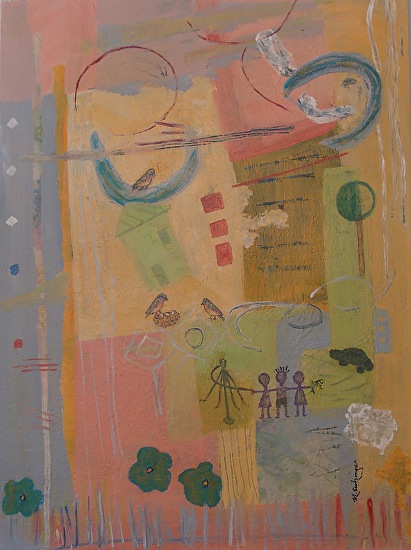
Words may not mean what you think they do.

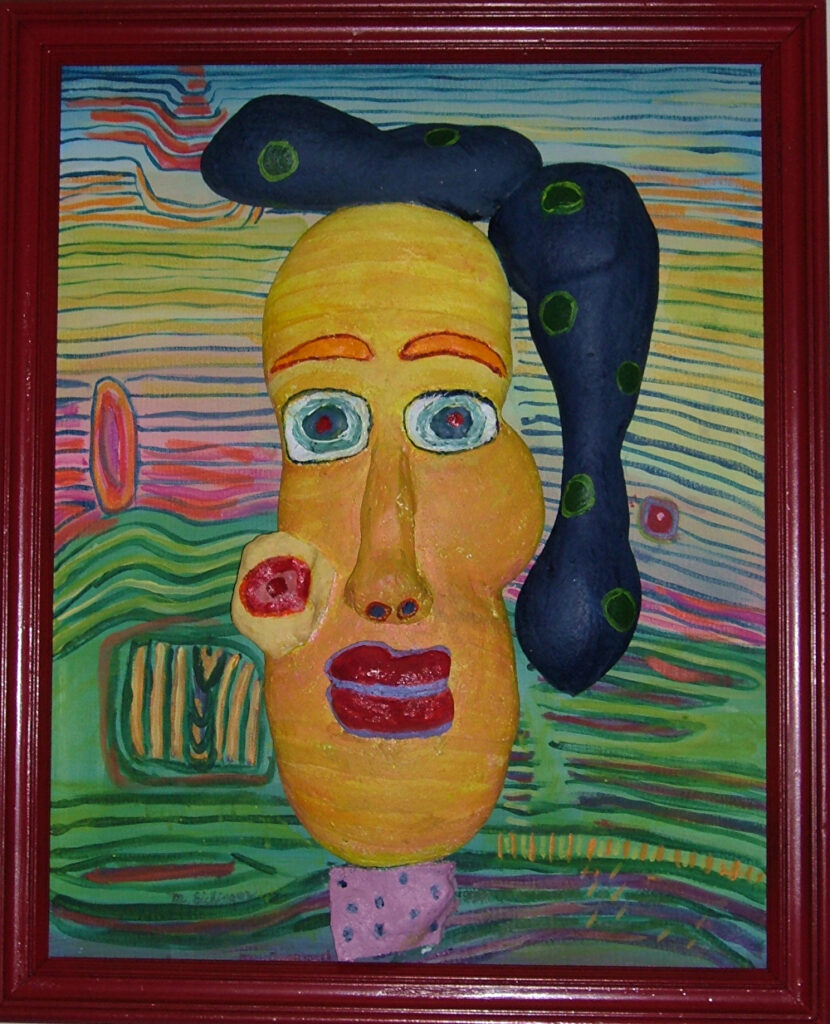
SHOCKED

Words may not mean what you think they do

Though language is constantly evolving, I don’t always like it. But to understand what young people are saying, I’m forced to stay up with the times. I’m not talking about slang. I’m talking about losing the good old common words I grew up with.

Adapting to change,  whether language, fashion, or climate, creates problems in every generation. A cheater was originally an officer who looked after the king’s escheats-the land that returned to the Crown when an owner died without heirs. Today, a cheater refers to a gamester, swindler, or unfaithful spouse. In the 1300s, naughty people had naught (nothing). They were needy and poor. It was in the 1400s that the meaning shifted to being morally wrong or wicked, indicating that the person was worth nothing. My grandmother used to ask if I fell off the roof when she wanted to know if I was menstruating. I didn’t understand her when she asked me that question. To her, cool was the temperature desired for a hot summer’s drink and had nothing to do with her having a risk-taking son you thought of as cool.

I wasn’t happy when the homosexual community took over gay. I like that word. There was a time the word was used to express a sparkling sense of happiness and joy. Today it’s only uttered when speaking of same-sex partners. I was concerned when the LGBTQ+ community repurposed the use of rainbow by putting it on their flag in 1994. I’m glad it’s still acceptable to use rainbow when the ark of the color spectrum mystifies our sky. 

The English language evolved slowly in the past, but in our generation, technology spurred a dash to change meanings. Canceled once meant to disregard or terminate, as in “I canceled my subscription.” The word now refers to people who have lost popular support, especially for having done something racist, sexist, manipulative, or violent. Harvey Weinstein and Kevin Spacey are examples of people referred to as canceled.

As a writer, I find using pronouns such as they and them to describe non-binary people confusing. Who decided it was okay to use them to describe an individual when they have historically been used to describe a group? “They (the individual) stood out when they (the group) walked into the concert hall together.” I wish someone with imagination would coin a new word.

In the 1960s, during the woman’s movement, safe space was used to imply physical distance from men and patriarchal thought. In the 2010s, safe spaces became places where individuals could express themselves without fear of being challenged because of sexual orientation, race/ethnicity, cultural background, age, or physical or mental ability. The University of Chicago told 2016’s incoming first-year students that they don’t “condone the creation of intellectual ‘safe spaces‘ where individuals can retreat from thoughts and ideas at odds with their own.” Critics consider safe spaces on campuses a way of retreating from differing opinions.

I grew up with fairy tales about trolls under bridges waiting to pounce on unsuspecting travelers. Today’s internet trolls start arguments or try to upset people online to sow discord. Trolls use inflammatory messaging for personal amusement or political gain. Trolls are now known to swarm websites to put an end to honest discussions and to outnumber those who disagree with them.

Woke became popular in the Black Lives Matter movement following the shooting of Trayvon Martin. Social media posts initially used #StayWoke regarding police brutality and racism. Though people still say, She woke me up, and I woke up coughing, the word has more facetious meanings. “I drank lots of coffee to stay woke.” For the left, Woke is a good word that describes someone politically savvy, especially regarding racism, sexism, and classism.  On the right (and to some on the far left), it’s used negatively to describe ideas, viewpoints, and policy changes they believe would radically and negatively alter society. They see it as a power play that removes their rights, freedoms, and autonomy. Intellectuals see people who are not “work” as true critical thinkers. 

I am an avid cloud watcher, especially when driving through high deserts or prairie lands that provide a more incredible view of the sky. I keep a chart in my car to identify the different types of clouds. These masses of condensed vapor suspended in the atmosphere tell me whether or not to carry an umbrella. To my grandchildren, growing up in cities, the cloud is a place on the internet for processing and storing documents and data.I doubt they go outside in the morning to see if rain clouds are on the horizon.

Yesterday, I picked up a pot by its handle, nearly spilling its contents because it was hot. Today’s handle is my screen name, the moniker I use on the internet. I often follow people by subscribing to their updates on social media. Sometimes I give a bump to their post by adding a new comment to their thread. There was a time when I followed behind my husband when hiking. I was careful not to bump into him, fall, or rip my jeans since I didn’t pack a needle and thread.

Many young people aren’t concerned about word usage. Rather than text their thoughts, they rely on images that portray emotions. I happen to like written responses to my writings. They are fun to reply to and often the start of a stimulating discussion. More frequently, however, my inbox is filled with shortcut emojis that aren’t intellectually challenging.


References:

Barrow, J (2019) 10 Words Transformed by the 2010s. ALTA Language Services. retrieved from https://www.altalang.com/beyond-words/10-words-transformed-by-the-2010s/

Law. W. (2022)English words That Have Completely Changed Meaning, Culture Try. Retrieved from 

Dewey, C. (2015) 24 words that mean totally different things now than they did pre-Internet. Washington Post. retrieved from https://www.washingtonpost.com/news/the-intersect/wp/2015/10/15/24-words-that-mean-totally-different-things-now-than-they-did-pre-internet/

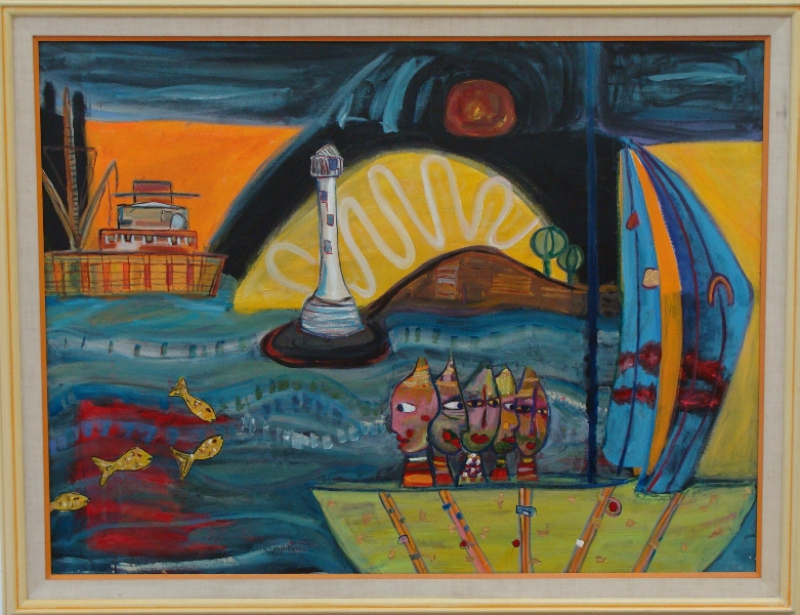
Art is always for sale. SHOCKED is a mixed-media framed painting on canvas. It is 23″ x 18″ and available shipped to your home for $650. For questions, contact me at marilynne@eichingerfineart.com

Do take a minute to comment below. It is great to hear your reasons for liking or not liking a particular blog.

T

Grand Prize

More than thirty years ago, Martin Eichinger was invited to meet Stevie Wonder at a preview showing of the documentary, “The Secret Life of Plants.” Though an unusual gathering took place before the screening with women waiting outside his bedroom to be chosen as the evening’s escorts, Marty found the movie illuminating. Based on a bestselling book by Peter Tompkins and Christopher Bird, the film had a psychic documenting how plants communicate pain and joy. The plants were wired to oscilloscopes, electroencephalograms (EEGS), and other recordings to demonstrate Cosmic Consciousness and the mystical interconnectedness to life.

Replanting the Garden

Secret Lives of Plants

Marty reminded me of a segment showing plants connected to monitors reacting to a person in a monster mask chopping a plant to pieces. Other plants in the room responded to the brutality with silent screams. Several days later the masked monster returned again. The plants responded to its presence even though the monster acted in a passive manner this time. Was this science or fiction? Not sure, but the soundtrack by Stevie was a true Wonder.

Over the following decades, the science moved on. High-voltage imaging techniques show coronas around leaves that scientists call “a cold emission of electrons.” Occultists say it’s the “aura” some psychics see and use to detect illnesses.

Since becoming enamored of trees, I’ve read about how they communicate through chemical, hormonal, and slow-pulsing electrical signals that scientists are starting to decipher. To reach their enormous heights, Douglas Firs, for instance, depend on a complicated web of relationships and alliances known as the world wood web. It is a place where mother trees feed saplings with liquid sugar and warn neighboring trees when there is danger. When young foolhardy trees drink too much water, shed leaves when they shouldn’t, or light chase, they die.

Peter Wohlleben, German forester and author grabbed public attention when he wrote of the inner life of trees. No longer do foresters think of them as disconnected loners competing for nutrients and sunlight. They are not simply wood-producing systems battling for the survival of the fittest. Instead, they are communal and share collective intelligence through an underground microscopic network of hairlike root tips joining fungal filaments. The network provides a lifeline for young saplings in shaded parts of forests lacking the sunlight necessary for photosynthesis.

Distress signals about drought and insect infestations are also sent through the network. I’ve witnessed how stressed trees that are vulnerable will increase the number of seeds they produce in cones or in flying wing-like pods. A year two later the tree is dead and needs to be removed.

Trees also communicate through the air using pheromones (chemicals outside the tree that carry information to the receiving tree) and scent signals. Wohlleben writes, “When elms and pines come under attack by leaf-eating caterpillars, they detect the caterpillar saliva, and release pheromones that attract parasitic wasps. The wasps lay their eggs inside the caterpillars, and the wasp larvae eat the caterpillars from the inside out. “Very unpleasant for the caterpillars. Very clever of the trees.”

A grad student in British Columbia found that when bears eat salmon near trees, they leave their carcasses on the ground. The trees absorb salmon nitrogen they share with other trees through the network.

Plants, as well as trees, navigate life through the five senses of touch, sight, sound, smell, and taste. Many of the ideas presented by psychics thirty years ago are being legitimized by research. For example, to prevent damage, Mimosa leaves fold inwards when touched. Venus Flytraps snap shut when an unsuspecting insect touches a tiny hair on its leaf, setting off a chemical timer in the leaf that starts it digesting the prey. Botanists at the University of Missouri recorded the sound of caterpillars chewing on leaves. It produced defense chemicals in Arabidopsis that were similar to those released when the chewing was real. In Tel Aviv University Experiments, flowers increase the sugar content of their nectar when they hear recordings of a buzzing bee.

Plants “sniff” out neighbors to avoid rooting near toxic substances. These chemicals are detected through specialized receptors. And though trees don’t see as we do, they can distinguish different forms of light, from ultraviolet to infrared. Sunflowers face the sun and track its movement to maximize the sunlight they receive for photosynthesis. The Boquiila Trifoliate plant in Chile and Argentina, changes leaf shape, size, color, and vein patterns, mimicking the plant on which it grows. Why it’s able to mimic artificial plastic plants as well, is still unknown.

Overstimulated and stressed plants are calmed by anesthetics. They produce these compounds to lessen their injuries when wounded. Though the lives of plants are less hidden than before, there still is a lot to learn. A study by the Royal Horticultural Society showed that music and human vibrations from talking help plants grow faster. Yet it takes more than a chat to develop a green thumb. However, talking to your plants s a good way to get things off your chest. They won’t interrupt or argue back when you’re speaking.

Please share your experiences with plants on my blog site.

References:

First,E. (1973) The Secret Life of Plants. New York Times. retrieved from https://www.nytimes.com/1973/12/30/archives/the-secret-life-of-plants-by-peter-tompkins-and-christopher-bird.html

Grant, R. (2018) Do Trees Talk to Each Other? Smithsonian. retrieved from TALK.

Nichols,B.(2023) Plants have Feelings Too. BBC Earth. retrieved from https://www.bbcearth.com/news/plants-have-feelings-too

Calino, S. (2023) The case for talking to your houseplants. The Washington Post. retrieved from https://www.washingtonpost.com/home/2023/01/11/talking-to-plants-grow-thrive/

Art is always available. Grand Prize is an acrylic on canvas painting, framed, 24″ by 28″, available for $799.

Replanting the Garden is acrylic on canvas, framed, 20″ x 16″/ available for $495

Floating free is 29″ x 23″ acrylic on canvas framed painting, available for $725

Contact marilynne@eichingerfineart.com with questions.

Hidden and Not-So-Hidden Meanings

Five Men in a Tub is my version of the rhyme

Political and social poetry are not new genres. Poets of every generation marked historical moments with poems critical of society. Nursery rhymes often conveyed hidden messages that spoke to commoners. Unaware of their meaning, today’s adults sing the rhymes to newborns and chant them to toddlers. Here We Go Round the Mulberry Bush, for instance, dates back to the mid-1700s when female prisoners exercised around a mulberry tree in the prison yard.

Humpty Dumpty records the 1797 civil war in England when King Charles and the Royalists fought off the Roundheads who wanted parliament to govern the people. When the town of Colchester was under siege, a man named Jack Thompson was supposedly on top of the tower of St Mary-at-the-Walls, manning a cannon nicknamed “Humpty Dumpty.” The cannon did damage to the advancing Parliamentarian troops until it fell to the ground when the Roundheads blew off the top of the church tower. Though dozens of men tried to put it together again, it was too heavy and they were unable to do it.

Humpty Dumpty sat on a wall,

Humpty Dumpty had a great fall.

All the king’s horses and all the king’s men

Couldn’t put Humpty together again.

Theories around Baa, Baa, Black Sheep also abound. Historians think it may have started as a protest against the wool tax imposed in 1275, continuing for 200 years. It was decreed that the sale from a bag of wool was to be split three ways, one for the king, one for the church, and one for the farmer. “None for the little boy who lives down the lane” added later, implying that the tax increased to where sheep farmers had nothing left after paying the tax.

Baa, baa, black sheep,

Have you any wool?

Yes, sir, yes, sir,

Three bags full.

This Old Man is a favorite rhyme to teach counting and the English language-Knick-Knack, paddy whack isn’t easy for a toddler to say. Its origin is traced back to Wales in 1870. As it spread to other countries, the rhyme became more than a counting game. Irish lore says it’s related to an old pervert who strolled through town offering to play “paddy whack” with young children. It may have been used to warn kids to stay away from men like that.

This old man, he played one

He played knick-knack on my thumb

Knick-knack paddy whack

Give the dog the bone

This old man came rolling home.

Though there are many theories about the origins of nursery rhymes, most explanations are pure speculation. It’s more likely they were intended as riddles posed to children for their amusement. Given current evidence, it is far more likely that Humpty Dumpty was not intended to be a history story, but rather a riddle posed to children for their amusement. The answer to the riddle is “an egg”, which is why Humpty Dumpty is nearly always depicted as such.

There are others: Pop Goes the Weasel was written about England’s poverty. The original version is;

Up and down the City Road

In and out the Eagle

That’s the way the money goes

Pop! goes the weasel.

The Eagle was a Tavern in North London where a lot of drinking took place. The weasel stands for a suit of clothing in Cockney slang. Pop refers to the poor having to pawn their suits to pay for drinks. Though it may have a questionable message, it was a popular tune in Queen Victoria’s day where it was played at fancy balls organized by the Court.

Rub-a-Dub-Dub, three men in a tub, a 1798 rhyme, tells more than you might imagine. It references “maids in a tub” viewed in peep shows at fairgrounds. Men, like the butcher, the baker, and the candlestick-maker paid hawkers to see women bathing naked in tubs.

Hey! rub-a-dub, ho! rub-a-dub, three maids in a tub,

And who do you think were there?

The butcher, the baker, the candlestick-maker,

And all of them gone to the fair.

Many rhymes were banned or altered over the years.

According to Reader’s Digest Ten Little Monkeys had racist beginnings. It was originally derived from a nursery rhyme called Ten Little N**gers, which counted down by illuminating ten horrible ways for Black boys to die. Used in minstrel shows in the South. it taught white children to hate. Just as bad, was a Ten Little Indians cartoon playing on Saturday morning.

In 2009 the Birmingham council didn’t like unhappy endings for toddlers. They changed the ending of Humpty Dumpty from “couldn’t put Humpty together again” to “made Humpty happy again.”

Though Rain! Rain! has origins dating back to England in the 1700s, it was made overt give a conserve water message. The new lyrics are “Rain, rain, come again! We need more rain every day!”

New York Toddlers were banned from making a “star” sign while singing Twinkle, Twinkle, Little Star for fears that the perceived rudeness of the gesture might offend the deaf. The star gesture is seemingly similar to the sign used for female genitalia.

What do you think of Goosey, Goosey Gander? Should it be banned or used as a lesson of what not to do? It is rather violent.

Goosey, goosey gander,

Where shall I wander?

Upstairs, downstairs,

In my lady’s chamber.

There I met an old man

Who wouldn’t say his prayers,

I took him by his left leg.

And threw him down the stairs.

I’ll stick with Bobby Charles’s 1950 song, See You Later, Alligator since I will be traveling through the canyons and hills in Oregon with my grandson next week. You will not hear from me again until the 10th of June. Have a wonderful Memorial Day holiday. Welcome to the start of summer.

See you later, alligator,
After a while, crocodile,
Blow a kiss, jellyfish.
Give a hug, ladybug,
See you soon, big baboon,
Out the door, dinosaur,
Take (good) care, polar bear,
Wave goodbye, butterfly.

What is your favorite nursery rhyme? Find its meaning and share it at www.eichingerfineart.com/blog

references:

McGuinnes, D. (2021) 17 Dark & Creepy Meanings Behind our favorite Rhymes. cafe mom. retrieved from https://cafemom.com/parenting/meanings-nursery-rhymes-lullabies/here-we-go-round-the-mulberry-bush

Nursery Rhyme Central website. The Fascinating Meaning Behind Nursery Rhymes. retrieved from https://nurseryrhymecentral.com/the-fascinating-secret-meanings-behind-nursery-rhymes/

Upton, E. (2013) The Origin of Humpty Dumpty, Today I found Out; Feed Your Brain. retrieved from https://www.todayifoundout.com/index.php/2013/04/the-origin-of-humpty-dumpty/

Gilchrist, A. ( 2017) History of this Old Man. Nursery Rhymes for Babies. retrieved from http://nurseryrhymesforbabies.com/history-of-this-old-man-song-2/

Baldassarro,R. (2013) Banned Books Aswareness:” Banned Nursery rhymes. The Morning Bulletin, Telegraph. retrieved from https://bbark.deepforestproductions.com/column/2013/06/30/banned-books-awareness-banned-nursery-rhymes/#:~:text=Toddlers%20have%20been%20banned%20from,to%20use%20a%20different%20gesture

Ten Little Monkeys Reader’s Digest. retrieved from https://www.rd.com/list/childrens-nursery-rhymes-that-are-actually-racist/

Do Older People Complain More?

The Orator

Does he stand on his soapbox hoping his complaints will be heard by people who will do something about them? Or, does he just want to vent and have others agree with him? 

Do older Americans complain more than those in their thirties, forties, and fifties? According to the National Institute of Health and Human Services, adults sixty-five and older complain less than adults who are younger. When they do complain, it is about youth feeling more entitled, narcissistic, and less self-sufficient than in past generations. Their feuds with youth are retaliated by comments such as; “Ugh, old people just don’t get it!” They call out elders for not taking action on climate change and gun control and see their parents as restive to the progressive policies they find important.

Elderly complainers existed as far back as antiquity. They are part of a cycle that repeats itself. According to University of California Santa Barbara psychologist John Protzko, complaining has a lot to do with memory. When 260 developmental psychologists were asked if they thought the current generation was better able to wait out temptation than their own generations, eighty-four percent thought today’s youth was more impatient. However, when children were given the “marshmallow test” for patience, the results showed today’s children as being better at delaying gratification.

So why do elders assume children have less control and are worse-mannered than when they were young? Part of the reason for their bias is that past memories aren’t recorded accurately. Remembered incidents are pieced together with disparate snippets of information stored in their minds over years, a fraction of which are true remembrances from a specific time period. Though there are exceptions due to socio-economic background, In general, adult complaints about youth are unfounded.

“Our brains grab the easiest bits of information we want to recall,” University of California Irvine psychologist Linda Levine concludes from the research she did on the memory of emotions. “Our memories of past relationships are colored by how we feel about those people now.” If you are going to judge kids today, you have to remember how they were when you were young, and that’s not easy to do. So, we fill in the gaps with information about ourselves in the present moment. More authoritarian adults are likely to say kids are less respectful of elders today than in the past. Better read adults, think kids are less interested in reading than they were when they were young. Highly intelligent adults are likely to think today’s youth are not as smart as the friends they grew up with.

A forty-year study of 8.3 million teenagers published in The Journal of Child Development proves my point. Rather than being unruly and going against parental wishes, today’s teens are more likely to listen. They avoid early sex, alcohol, drugs, and fast driving, preferring to spend their time scrolling through social media apps. They don’t date, work for pay, or go places without their parents. Instead of a part-time job or engaging in extracurricular activities, teens tethered to their devices stay isolated. Contrary to what complainers may say, less rebellious, more tolerant teens are also less happy. The hovering parent trend that started in 2000 keeps children more dependent and willing to stay young longer. Unfortunately, their childrearing practices have also led to skyrocketing suicide rates. The study, one among many, demonstrates how easy it is to complain without knowing the facts. Still–many people simply like to complain.

Complaining, an expression of dissatisfaction triggered by a negative situation, takes three forms. Chronic complainers ruminate on problems, focusing on setbacks over progress. Neuro-psychologists tell us that the brains of habitual complainers became re-wired to a particular way of thinking. And though chronic complainers have the ability to make their brains more positive, they don’t believe it’s possible. They continually lose control, spouting displeasures loud and clear. “The movie was awful. The contractor did bad work. The city council has made homelessness increase.” Though these are commonly heard complaints, they are not made by everyone. Some adults hold their tongues and keep negative thoughts private.

Venting is a second type of complaint. Venters focus on themselves and solicit attention with a show of anger and frustration. “The city’s going to hell. I don’t know how long I can take it.” Though they look for sympathy, they discount advice and proposed solutions. Their goal is to seek validation with little interest in solving the problem. Venting and chronic complaining are apt to raise blood pressure and dampen moods, results that make the complainers feel worse.

The instrumental complaint is a third type of complaint. Aimed at solving problems, it focuses on the impact of the problem, the importance of change, and the willingness to cooperate to create a plan for doing so. Instrumental complainers tend to be more mindful, complaining less. When they do, their words are strategic, and put their energy to work. “When I drive, I’m scared to death I’ll hit someone on a bicycle. I contacted my councilwoman. She said there were a lot of complaints about the new bicycle lanes. She’s looking into it to see what can be done.” Fewer complaints provide instrumental complainers with a happier view of the world. We would do well to follow their lead rather than spout numerous complaints that could take years away from your life.

  • Avoid dampening your mood by complaining only rarely
  • Complain only in instances where you believe it will affect real and positive change
  • Consider whether affirmation or some other strategy will work instead of complaining
  • Limit your exposure to complaining by limiting your exposure to complainers.

Do the complainers you know fit one of these three categories? Do you mind being around them? If so, how do you handle it? Comment on my blog site at www.eichingerfineart.com/blog

References:

Resnick, B. (2019) Why old people will always complain about young people. VOX. retrieved from https://www.vox.com/science-and-health/2019/11/12/20950235/ok-boomer-kids-these-days-psychology

Resnick. b.(2018)The ” marshmallow test said patience was a key to success. A new replication tells us s’more. Vox. retrieved from https://www.vox.com/science-and-health/2018/6/6/17413000/marshmallow-test-replication-mischel-psychology

Weller, C. (2017) A 40-year study of teens finds Generation Z avoids sex, alcohol, and driving at record rates. Insider. retrieved from https://www.businessinsider.com/generation-z-sex-alcohol-driving-study-2017-9

Biswas-Deiner, R. (2017) Three Types of Complaining. Psychology Today. retrieved from https://www.psychologytoday.com/us/blog/significant-results/201706/the-three-types-complaining

Navidad.A. (2023) Marshmallow Test Experiment And Delayed Gratification. Simply Psychology/ retrieved from https://www.simplypsychology.org/marshmallow-test.htmlmarshmallow

Art is always for sale. The Orator is a 22″ by 18″ framed acrylic painting. It is available for $395 and shipped free to your home. For more information, contact me at marilynne@eichingerfineart.com

Over the Peanut Fence and Lives of Museum Junkies are available in print and ebook formats in bookstores and on Amazon.

Raising a Golden Princess

 GOLDEN PRINCESS

She is your daughter, granddaughter, neighbor’s child, or young friend struggling to become a confident woman ready that moves the world forward. 

Girls have to navigate the murky waters of adolescence earlier than they did in past generations. The average age for menstruation in 1840 was 16.5 years. Today it’s thirteen. Social media, role models who lie and cheat, and artificial intelligence tricks us into believing something is real when it is not, making it difficult to become a trusting, loving adult. Yet, the job of a parent is to turn their daughters into caring human beings.  It’s a difficult one to be sure.

From the industrial revolution on, parents have been more challenged by society’s impositions than the natural world. In recent times, the soothing effects of nature were pushed even further back with the advent of computers and electronic technology.  Instead of a romp through the woods, today’s girls tune into media that bombards them with messages about health care, sex, and the need for upgraded phones.  If I see one more Viagra, diabetes, or panty liner ad, I’ll puke.  Knowing that half the messages are exaggerations, if not downright lies doesn’t help for I don’t have time to check them all out. And now, with AI’s ability to manipulate images and speech, it will be even more difficult to discern fact from fiction.

Do you remember The World is Too Much With Us  by William Wordsworth? He wrote the poem in 1802 as a critique of the first industrial revolution drawing people into materialism rather than nature. The poem rings true today.

The world is too much with us; late and soon,

Getting and spending, we lay waste our powers;—

Little we see in Nature that is ours;

We have given our hearts away, a sordid boon!

This Sea that bares her bosom to the moon;

The winds that will be howling at all hours,

And are up-gathered now like sleeping flowers;

For this, for everything, we are out of tune;

It moves us not. Great God! I’d rather be

A Pagan suckled in a creed outworn;

So might I, standing on this pleasant lea,

Have glimpses that would make me less forlorn;

Have sight of Proteus rising from the sea;

Or hear old Triton blow his wreathèd horn.

Finding role models who demonstrate good manners, kindness, and caring isn’t for the faint at heart. What can you do when our leaders lie, embezzle, take bribes, and won’t compromise? Yet, we have to be ready for the difficult questions we are likely to be asked by our children.


Where do I come from? From God? From nature? From the imagination of an invisible force? Do people die and enter another realm? Are they reborn? Do parents watch over us after we are dead or are we nothing but dirt without a soul? Despite the beliefs, you grew up with, your child will be bombarded by conflicting views as they venture away from home. To have a peaceful society, they will have to get along with people with different beliefs. Faith-based religions, of which there are many, disavow scientific certainty. To not fight with neighbors, followers have to accept that there will be others who will never believe as they do. We homo sapiens are unique in the animal kingdom, in that we have a brain that considers philosophical issues that question the unknown.

Do I have any value of significance? Does self-worth come from success and achievement in school and career or from having lots of friends and being part of a caring community? Parents have to help their daughters value their own worth so they’ll have a rock to stand on when taking risks and exploring new surroundings.

Does morality exist? If so, whose mortality do I follow? That of my parents? President Donald Trump? Biden? Do I listen to the fundamentalist to the left of my home or the social activist to the right? The question of morality has been turned topsy-turvy by newscasters’ praise of ruthless billionaires and criminals in between giving air time to dwellers who give up material possessions to live more frugally. With the environment in crisis, what path will our daughters take?

Where am I going? Time has a different dimension for youth than for adults. The future appears far away to young people. Staying focused on grades so they can get into a good college when they don’t know what they want to do, seems absurd. Having close friends, dating, and dealing with a move that will cut them off from their friends are more important issues. Helping children handle moves, friendships, and rejections is an important job of parenting. Kids who’ve been ghosted, fail tests, or don’t make the soccer team need encouragement so they don’t give up. Developing confidence, self-esteem, and assurance will be necessary skills to have to lead a fruitful life.

Parents, grandparents, teachers, and significant others have their own questions. They would do well to think of these issues when interacting with them.

The goal of parenting daughters is to help them feel secure in their bodies so they will be able to take action in the future and make positive choices for themselves and those they are responsible for. The crux of the job is raising girls to think critically. Beauty is, as we know,  only skin deep–self-worth runs deeper and can last through old age. Powerful women have a “can do” attitude, acknowledge and express feelings, and recognize those of others. They think positively about themselves and know they are a valuable part of society.

What more can parents do? They can expose their children to nature and introduce them to a variety of ethnic groups,  sampling their food.  They can teach them not to be ashamed of their bodies, but to treasure them with nourishing food and meaningful sexual relationships. Parents can encourage their children to read broadly and ask questions so they can discuss what they read with you. They can find out what shows they watch, censor violence, and discuss the values of the while they remain under your roof.

How do I help my daughter focus?  Help her find pursuits she can master.Let her contribute to decisions about activities to pursue. When she shows an interest in something, encourage her to follow her passion and where it will take her. When a child experiences what it is like to lose themselves in something they love, they will want to duplicate the feeling many times over as she ages. 

Modeling values you find important. What do you value?—Friendships? Family” Entertaining? Charity? A work ethic? The best way to teach morality and values is to model them. You can’t teach a person not to tell lies if you lie to them. You can’t tell them not to steal if you walk off with the money they’ve been saving to buy a new phone. 

Encourage your daughter to problem solve rather than you doing everything for her. Start when she’s young by having her choose what to wear. As she ages, give her a budget to make purchases within set limits. Coddling your daughter will keep her from developing the coping skills she’ll need to handle unexpected situations. Set boundaries for behavior and don’t worry if she disagrees or gets angry. Teach her to express disagreement clearly, yet help her understand why she can’t always have things her way. By acknowledging her struggles, you can help her maintain a sense of proportion. I can’t stress enough how important it is to communicate in a way that lets her know she is heard. Listening more than talking is not easy, but it is necessary if you want to develop trust and have meaningful dialogue

Girls need to take physical risks as well as boys. When they fail, they may need help to overcome their reluctance and try again. If your daughter is afraid of heights, won’t get in a swimming pool, climb a jungle gym, or ride a bicycle, it’s time for extra coaching. Daily physical activity when young, sets the stage for adult health.

Limit your daughter’s exposure to social media.  it will give her more time for creative endeavors and enough space to use her imagination. Set rules on screen time and pay attention to what she does watch when engaged. Her viewing interests might provide interesting topics to explore together.

Sexuality flaunted by the media makes it imperative to have sex talks early. introduce the biological facts and help your daughter understand the difference between the ups and downs of relationships rather than the over-sexualized, aggressive versions portrayed in films. Masturbation, heterosexuality, bisexual behavior, homosexuality, and transvestite issues are topics that should be on the table. Your child is bound to learn about them from their girlfriends, social media, or TV. Most curious children will dig until they get the truth. Don’t be surprised to find banned books under the mattress.

Most of all, join your daughter in activities you both enjoy. Do you both like to cook, hike, bicycle ride, or style hair? Be on the lookout for connections, changing them as she gets older. The close bond you establish while she is young, will provide companionship for the remainder of your life.

I look forward to hearing your comments about raising girls

References:

Harvey, M. (2013) Raising Girls is tough in modern society. Daily Record. The Last Word. retrieved from https://www.dailyrecord.co.uk/lifestyle/raising-girls-is-tough-in-modern-society-1547113

PBS website. (20223) Raising a Powerful GIrl. PBSKids for Parents. retrieved from https://www.pbs.org/parents/thrive/raising-a-powerful-girl

Meeker, Meg MD.( 2020) Raising Daughters in Today’s World. Meeker Parenting. retrieved from https://meekerparenting.com/blog/raising-daughters-in-todays-world/

Awe: Isn’t it awesome?

BLUE BIRDS

The smell of fresh-cut grass, bluebirds nesting in a nearby tree, and cherry blossoms floating in the wind against a bright blue sky are things that inspire awe,  giving joy for the majesty of the earth.

Awe: Isn’t it awesome?

Awe is an emotion, a feeling you get in the presence of the vast unknown. Hard to describe, the feeling challenges your understanding of the universe. Awe, a mixture of fear and wonder, can fill you with respect for mystery. Eliciting an ecstasy sparked by music, art, and nature, it is experienced by infants as well as seniors on their death bed. Developmental scientists like Allison Gopnik, author of The Philosophical Baby, believe that children feel awe more often than their parents. Adults become adept at eliminating awe-inspiring experiences from their lives.


I still remember the expression on my six-month-old son’s face when seeing his first snowfall. His eyes lit up, becoming round like saucers as snowflakes fell silently around him. His mouth opened round as he reached out from my husband’s arms, trying to grasp a flake. Though many parents don’t think infants as having the capacity for awe, recent scientific investigations show the opposite. Infants are aware, thoughtful, and constantly analyzing all that they see.

I like being around young children. Their explorations allow me to relive the wonder and experience surprise, shaking me from complacency. When my three-and-a-half-year-old grandchild was upset after noticing the tires on my car were scarred with deep cuts, her observation led to an inspection of dozens of tires on cars in the lot adjacent to her apartment. Because I was there to witness the moment, I grabbed onto her curiosity and helped it evolve into something more. I learned a lot about tires that day.


Awe is mainly viewed as positive emotion, as it was the time I stood on the rim of the Grand Canyon–but that isn’t always the case. One stormy night, while driving on the New Jersey Turnpike, lightning struck a few feet in front of my windshield. It sounded like the crack of a whip, followed by a luminescent, blinding light that left me shaking in fear of its power. It wasn’t the first time I had seen lighting up close. The Franklin Institute in Philadelphia sparks lighting in a controlled environment. The demonstration was interesting, but not as awe-inspiring as it was on the turnpike.

We humans are unique in our capacity to experience awe. It awakens our minds, stirring intellectual and philosophical thoughts. We may speak of these events as being transformative, sometimes spiritual. While it may make you feel small in relation to the universe, it can also give purpose to life. Religious leaders are known to find their calling after an awe-inspiring experience.

As an expansive emotion, awe is good for our health. It takes us out of self-interest, letting us become more willing to engage with people. Awe inspires musicians, artists, philosophers, and inventors willing to share the insights gained from their mastery. They may be humbled by their achievements, but their skills can also make them strong, open-minded, and generous. And wonderment coming from admirers can inspire others to follow in their footsteps.

We would do well to put ourselves in situations that stimulate awe. Medieval cathedrals, synagogues, and mosques with stained glass windows were designed to do that for people paying homage to God. The Taj Mahal, an Ivory-white marble mausoleum in India commissioned in 1631 by Shah Jahan, was built so that visitors would feel awe at the love he had for his wife. Visits to national parks and other places of beauty stimulate wonderment for the mystery of being alive and love for the people close to us.

Hiking through natural areas, viewing a night sky that’s not dulled by city lights, hearing a virtuoso musician, and watching an olympian athlete perform are things that take us outside of ourselves. They help put our days in perspective. I challenge you this spring to seek out those precious moments that inspire feelings of awe rather than dwell in the gutter of negativity that looms incessantly on newscasts throughout the nation. 

References:

Keltner. D., 2021. What is Awe? Greater Good Magazine, retrieved from Berkeley

Omary, A. 2022. The Awesome Psychology of Awe. Psychology Today. retrieved from https://www.psychologytoday.com/us/blog/natured-nurture/202207/the-awesome-psychology-awe

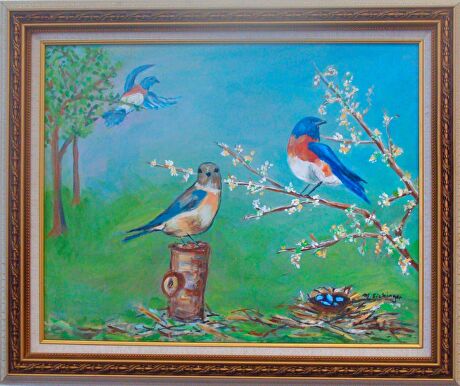
Art is always for sale. Bluebirds is an acrylic on canvas painting, 20.5″ by 24.5″/ available framed for $425. Shipped free within the continental U.S. Send questions to mariynne@eichngerfineart.com

Over the Peanut Fence, about homeless and runaway youth and Museum Junkies, giving a behind-the-scenes look at museums, are autobiographical and biographical accountings of unusual experiences. Books can be purchased at  AMAZON

Please share a few of your awsome experiences below.

A Utopian Dream for Earth Day

Don’t be Fooled

Earth Mother: Is a Utopian Future Possible?

Don’t be fooled! The human species has flung the planet into an era propelled by human behavior rather than biological evolution. They have reshaped the map into urban areas, croplands, and rangelands rather than the woodlands, rainforests, savannas, and tundras spanning the globe in the past. With 9.5 billion people expected to populate the earth by 2050, can our natural resources can keep up with this increase? It is naive to imagine there are enough life-giving resources available to sustain an infinite amount of growth.

Predicting the maximum number of species our environment can support is difficult for ecologists to calculate. How people reproduce, consume resources, and interact with the environment varies from place to place and country to country. Ecologists evaluate the carrying capacity of the earth by comparing how natural resources are consumed and how waste is managed. According to World Population Resources, “Today, our global footprint is in overshoot. It would take 1.75 Earths to sustain our current population. If current trends continue, we will reach 3 Earths by the year 2050.” No wonder Elon Musk’s utopian vision is to establish colonies in outer space.

Environmental naysayers believe that technology will change these dire projections. Other folks advocate for slowing population growth, while still, others seek rational ways of changing global culture to improve decision-making. I fall into the latter category. Mathematical biologist, Joel Cohen, writes that all three approaches are necessary, though they may not be enough. His call is to promote access to contraceptives, develop third-world economies, empower women, and educate all.

At this moment in history, the United States is heading in the opposite direction. The offshoot of urban growth is increased poverty, homelessness, pollution, and gun violence. Recent actions to eliminate abortion, ban books, and bastardize the LGBTQ community are pushing countrymen into a pit to be consumed by lions.

Is the situation hopeless as many think? I’m not sure. Population growth in the past was controlled by epidemics and wars. Today’s medical establishment controls mass extinctions. Though 6,845,412 died of COVID during the last three years, it was a drop in the bucket compared to approximately 420 million births occurring during the same period. There are four births every second of every day with more than half taking place in Asia with twenty-five million births in India and sixteen million in China alone every year.

Though the global trend of live births has decreased since 1950, it is still not low enough In 1950 the average birth rate per thousand in a year was 37. In 2050 it is expected to drop to 13 which still creates an increase when you consider how long people live. With global warming added into the formula, mass migrations out of equatorial countries and from coastal areas will continue pushing inward and north.

In prehistoric times, life expectancy at birth is estimated to have been 33 years. By 1950 it rose to 48 years globally. Global expectancy in 1922 was 72.98 years. Kaare Christens of the Southern University of Denmark predicts that a Danish woman born today will live to be over 100 years and that the first person to reach 150 is already alive. The United States is in the middle of the pack with a life expectancy for males to be 74.5 years, well under Hong Kong’s (82.9 years, Iceland’s (81.7 years), and Japan’s (81.6 years). Life expectancy for women in the U.S. is 80.2 years. In addition to hormonal differences between men and women, the discrepancy is due to the toll of gun violence, risky male behaviors, smoking, and drug usage among the male population.

A Utopian Solution

“Among all species, it is perhaps only humans who create habitats that are not fit to live in.” – Stephen Marshall

Healing the earth has neither an easy nor welcoming solution. Controlling population growth, changing morality, and doing what is necessary to protect the human species from extinction requires a worldwide consensus to do the right thing. The solutions won’t be pleasant for first-world countries used to independent thinkers controlling their own destinies. Our mega-cities are pollution centers crowded with vehicles that cause road rage. Carbon emissions continue to climb and rising sea levels affect coastal cities around the world. Many individual privileges will have to be curtailed to obtain clean water and air, an adequate food supply, universal healthcare, and education for the masses.

My thinking is that it will only happen if an organization like the United Nations is given increased power to control population, pollution, migration, resource development, and usage in a shared economic vision for the planet. This means lowering the autonomy of national governments and requiring local authorities to implement changes that evolve from a consensus of nations. Neither capitalism nor communism would be the end-all economic solution, but rather a blending of social programs and innovative technologies will be aimed at improving the quality of life for all.

Future cities will have to embrace approaches that allow for adjustment to ongoing change. I believe that a more sustainable model of urban development will need to evolve to let cities adapt more easily to continuous change across multiple parameters. Urban planners will have to pay attention to the soil, the importance of plant diversity, its role in water and nutrient cycles, and its reserve of carbon. City governments will have to account for how extreme weather brings down power lines and the way rising seas affect wildlife as well as urban dwellings. Long-range city plans already take into account the fact that climate change increases the risk of extreme wildfires, droughts, and floods. Physicians have been responding to allergy seasons that have become more intense. Fossil-fuel-reliant governments are slowly looking for more earth-friendly sources of power.

Our shared vulnerability may be the key to change. Dwindling natural resources affect everyone regardless of wealth and status. A step forward could be to promote intergenerational involvement in climate change, gun laws, and housing. The world appears different for graduating youth than it did in my day. As a result of changing demographics, they are more tolerant of sexual and racial diversity, live in apartments with smaller footprints, and are more connected to each other through technology. They don’t desire a large family and look to friends to provide emotional and physical support.

To plan for the future, our children will need to study how nature continues to adapt. They will have to get ready for the next pandemic, wean themselves off of petroleum-driven engines, and create social structures that are supportive of diverse cultural norms. It is a great challenge, but I believe our youth are up to it. My twenty-year-old grandchildren already live and talk differently than I did at their age. They are more aware of global issues, are less acquisitive, and find pleasure in nature, friendships, exercise, and things that can easily be enjoyed without a huge expense.

My utopian dream is based on hope for the next generation to do what is right. I see my role as a supportive one that provides youth with the tools they need to analyze the complex issues of their day. They will find it easier to adjust to the realities of the day than folks like me, nearing the end of my time on earth.

I look forward to your comments below.

References:

Nevozhai, D. (2021) Farewell the utopian city. The Converstation. retrieved from https://theconversation.com/farewell-the-utopian-city-to-cope-with-climate-change-we-must-learn-from-how-nature-adapts-157878

PRB website.  Gemder Disparities in Health and Mortality. retrieved/from https://www.prb.org/resources/gender-disparities-in-health-and-mortality/

World Population Counts website.  retrieved from https://www.theworldcounts.com/populations/world/births

Worldometer web site.  Coronavirus Death Toll. retrieved from https://www.worldometers.info/coronavirus/coronavirus-death-toll/

World Population History Website.  How Many People Can Our World Support? retrieved from POPULATION. https://worldpopulationhistory.org/carrying-capacity/#:~:text=Today%2C%20our%20global%20footprint%20is,to%20sustain%20our%20current%20population

Art is always for sale. Earth Mother is a 30″ x 24″ deep canvas acrylic painting. available for $645. For information contact me at marilynne@eichingerfineart.com

Lives of Museum Junkies, second edition is available on Amazon for $14.95. Now is your chance for a behind-the-scenes look at museums and to see how a naive mother became the director of a major science center. Go to AMAZON

Covid Hits!

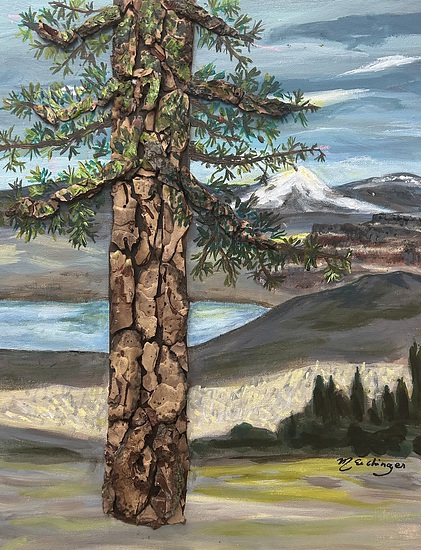
Spring Snow on Oak Trees

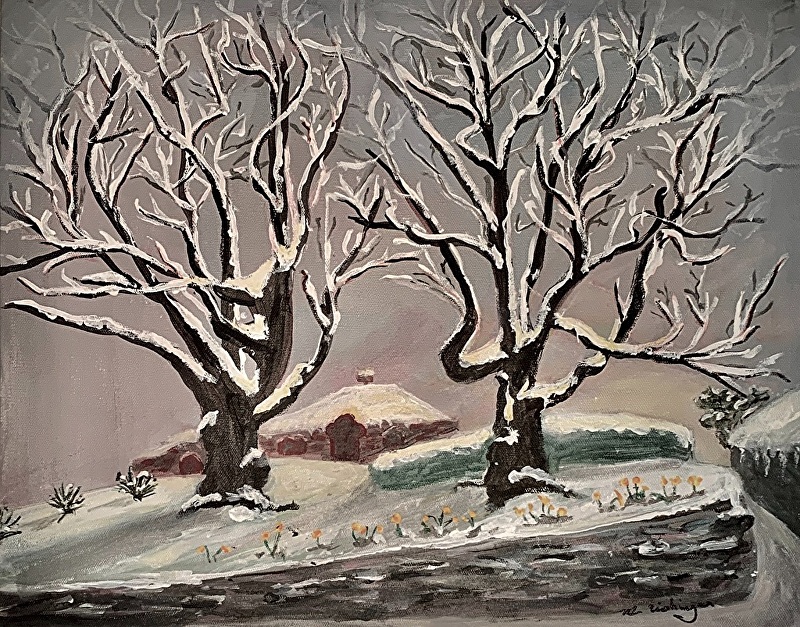
Portland residents were sequestered in March three years ago. It snowed that day with jonquils peeking through to remind me that life is cyclical. As did many of my friends, I expected the pandemic to be over by the summer.  What a surprise when it continued year after year.  While people were sick and dying around me, I became healthier than ever. I took long walks through the neighborhood and arboretum, painting and writing about my observation. The air was clean and I had nary a sniffle. I was at peace with the universe and myself.

By the time most people stopped wearing masks, I was convinced I was one of the lucky ones who would never get COVID. What a surprise when that myth was shattered two weeks ago. Not only did I become ill, but I brought COVID to friends and family who also thought they were immune. Fortunately, we didn’t have to face the worst of the storm. With medicine available to reduce the severity of the disease, we languished at home rather than in a hospital.

My case was pretty mild, and though I remained tired for two weeks, I slept much of the day away. Unfortunately, my daughter and my partner experienced the full fury of COVID. Though they are on the mend, they taught me that it’s not something to mess with.

Please excuse me if I don’t wow you this week with statistics and insights into the human condition. I count myself among the lucky millions who now have antibodies to protect them for a while. I wish you well until next Saturday when I plan to return full steam ahead.

Reminder!

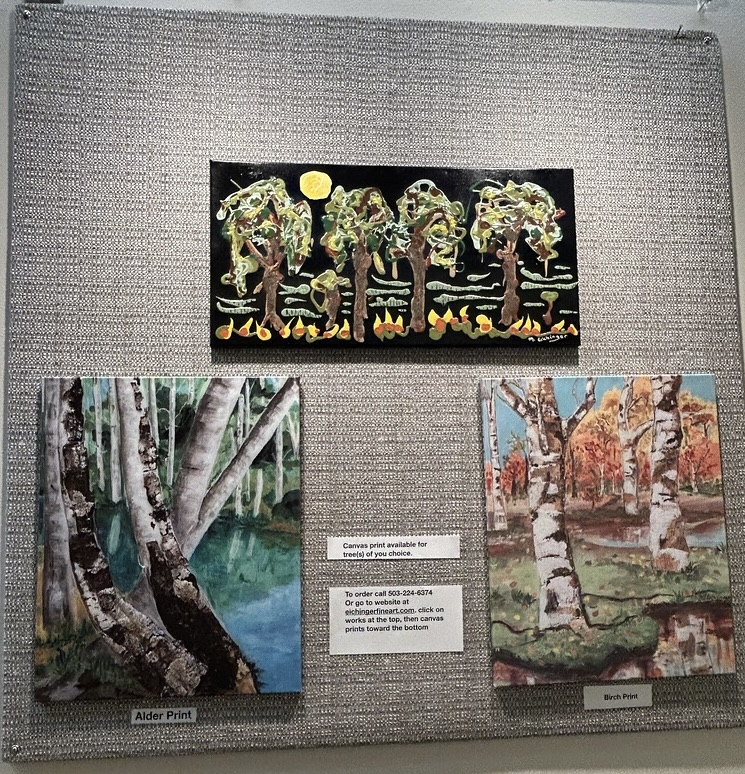
A Walk in the Woods with thirty paintings from my COVID collection remains at Lake Oswego Library through the month of April. To purchase canvas prints delivered to your door for $99 go to https://www.eichingerfineart.com/collections/182747

Questions? Contact me a marilynne@eichingerfineart.com

Springtime Slavery

Spring holidays abound worldwide. It’s the time when Farmers plow in anticipation of spring plantings. Jewish people gather for Passover, an eight-day holiday celebrating the cycle of life. It is also a reminder of surviving slavery in Egypt. WHether this is true or not is open for discussion.

Passover begins on a full moon in the spring. It was at sundown on April 5th this year. Families and friends gathered around the Seder table to read from the Haggadah, the story of the exodus from Egypt. My gathering takes place tonight, this Saturday. 

The Last Supper celebrated by Jesus, was a service and meal similar to today’s meal. The Seder plate holds unleavened bread symbolizing that there wasn’t time for the bread to rise before the escape. A roasted egg recognizes spring and the cycle of life. Parsley dipped in salt water is a reminder of the tears shed during slavery. Bitter Herbs are for the bitterness of Egyptian slavery, Charoset, a mixture of apples, nuts, and wine is symbolic of the mortar Hebrew slaves used to build the pyramids. A lamb shank bone completes the platter, representing the Passover sacrifice made in biblical times.

The story elicits conversations that continue through the night. One question that occasionally arises, is whether the tale is true or a myth. And, if a myth, what does that mean to those who participate in the service? As a woman of Jewish heritage, I celebrate Passover because of its cultural and historic significance. The holiday brings my family together but is also a reminder of the horror of slavery. Unfortunately, it still exists, and though it isn’t legal anywhere, it happens everywhere.

According to Anti-Slavery International, modern slavery is “when an individual is exploited by others, for personal or commercial gain. Whether tricked, coerced, or forced, they lose their freedom. This includes human trafficking, forced labor, and debt bondage.” Estimates are that globally, 49.6 million people, half of them women in forced marriages, live in involuntary labor conditions. A quarter of the victims are children. Approximately, 6.3 million are trapped by commercial sexual exploitation, another 4 million are captives of government labor camps and prisons, with another 17.3 million in private-sector forced labor situations.

A study conducted at the Britain’s University of Nottingham concludes that the average modern-day slave (worldwide) is sold for $90 -$100, a price much lower than was in the 1800s. Though the price may seem low, slaves are easy to acquire, especially in countries like Nepal where parents sell children to sex traffickers for $10. In 2017, sex traffickers worldwide received an average of $660 per person. The purchaser reaps between $4,000 and $50,000 annually, depending on the country, the U.S. being on the high end.

It surprised me to read that women make up the largest proportion of traffickers. Their motive remains one of money. Globally, human traffickers make an estimated $150 billion in profits. In an effort to thwart slavery, our government partners with private businesses. For example, traffickers use banks to deposit and launder earnings. They use planes, buses, and taxis to transport victims and book hotel rooms. They are active users of social media to recruit and advertise the services of their victims.

United Kingdom, the first country to abolish slavery (1833), it also established a slave owner compensation fund that lasted until 2015. The government paid out £20m ($49.6) in bonds to 40,000 slave owners. In today’s money, the distribution amounts to £16.5bn ($20.46 bn). The accumulated interest made certain families in the UK exceedingly wealthy. Similar reparations were given to slave owners in Denmark, the Netherlands, Sweden, Argentina, Colombia, Paraguay, Venezuela, Peru, and Brazil.

In 1862, President Lincoln signed the District of Columbia Compensation Emancipation Act giving $300 ($8000 today’s value) to 900-odd slaveholders ( for 3,100 slaves) to free their slaves and stay loyal to the Union. In 1864 and 1866, two acts of Congress allowed the owners of slaves who enlisted or were drafted in the military to file a claim against the Federal government for loss of their slave’s services. The compensation for slaves who enlisted was $300 with $100 paid for drafted slaves.

An 1862 government census held before the Civil War counted 3,853,700 slaves. Their descendants make up nearly 50 million  U.S. citizens. After the war, an emigration incentive of $100 ($2,683 today) was offered to formerly enslaved people who agreed to leave the country. No payments were made to the enslaved.

There is a growing movement in the United States to compensate slave families. The estimate is that it will cost $10 to $12 trillion or roughly $800,000 per person to compensate eligible Black households. There are numerous arguments for and against reparation that I won’t get into here. This Passover, I’ve been thinking about how slavery and human trafficking in the U.S. remains rampant and cause such suffering.

In the United States, an estimated 17,5000 foreign nationals and 400,000 American citizens have trafficked annually with women and children making up 70 percent. At-risk communities include children in foster care, people of color, LGBTQ individuals, and migrants-people in plain sight. Slaves may be working on your roof, in your parent’s nursing home, in a restaurant you frequent, or in a sweatshop supplying clothes bought for the holiday. With the demand for slaves high, traffickers find it relatively easy to find victims to force into slavery.

Five states have slavery on the ballot this year. Citizens are deciding whether to close loopholes allowing convicted labor as an exception to slavery. Twenty states have constitutions that permit slavery and involuntary servitude. There is a push against incarcerated people being forced to work without recompense. Still, in those states where they do receive pay, the amount is piddling. If a prisoner doesn’t want to participate, he/she is denied phone calls, visits with families, and even parole.our

This brings me back to the question of whether Jews were slaves in Egypt or whether the Passover story is a myth. Ancient Egyptians kept slaves, most of whom were war captives. The extent they were important to the economy is unknown because slavery was never codified into law. The old kingdom lasted from 2649 to 2130 B.C. The middle kingdom was more active as a slave culture with peasants obliged to work in the fields.

The Bible talks of the Jewish people being enslaved three hundred years after the 1750 B.C. completion date of the pyramids. There is no archeological evidence, state records, or primary sources to prove that Jews were enslaved in Egypt. Not one shred of pottery, of Hebrew writing, or mention in Egyptian records points to the sudden migration of 600,000 families (one-quarter of Egypt’s population at the time) crossing the Sinai. 

Still, Passover remains an important family gathering and a reminder of the burdens carried by slaves. Symbols of the seder plate are worth remembering. To rebuild trust and maintain peace, Jewish people have to let go of their prejudices against Arabs just as Americans have to do when it comes to the Black/White divide. If we want to build a better world, each person has to bend to accommodate and celebrate our differences. 

References: 

Anti Slavery. website What is Modern Slavery. retrieved from https://www.antislavery.org/slavery-today/modern-slavery/

Kimberfee, K  (2022) For Five U.S. States, Slavery is Back on the Ballot. retrieved from 

https://www.yahoo.com/video/five-u-states-slavery-back-005858747.html

Hartmann, M. (2018) Does Slavery Exist in America Today? The Exodus Road.

Merican Reparations Commission. retrieved from https://reparationscomm.org/reparations-news/britains-colonial-shame-slave-owners-given-huge-payouts-after-abolition/

Hadavi, T (2020) Support for a program to pay reparations to descendants of slaves is gaining momentum, but could come with a $12 trillion price tag. CNBC. retrieved from https://www.cnbc.com/2020/08/12/slavery-reparations-cost-us-government-10-to-12-trillion.html

Niethammer, C. (2020) Business of Human Trafficing. retrieved from TRAFFICING. https://www.forbes.com/sites/carmenniethammer/2020/02/02/cracking-the-150-billion-business-of-human-trafficking/?sh=367d6d3c4142

website Guide to Cvcil l War Slave Compensation Claims from Compiled Military Service Records. Set. Louis County Library. retrieved from https://www.slcl.org/content/guide-civil-war-slave-compensation-claims-compiled-military-service-records

Facts and Details website.  Slavery in Ancient Egypt. retrieved from https://factsanddetails.com/world/cat56/sub404/entry-6151.html

Mintz, J.  (2017) Were Jews Ever Really Slaves in Egypt, or is Passover a Myth? Jewish World. retrieved from https://www.slcl.org/content/guide-civil-war-slave-compensation-claims-compiled-military-service-records

Art is always for sale. Dreamu is a 16″by 20 ” acrylic, deep canvas painting, available for $390 through my website at www.eichingerfineart.com/works

Or contact me at marilynne@ eichingerfineart.com.

Spring has Sprung – Again

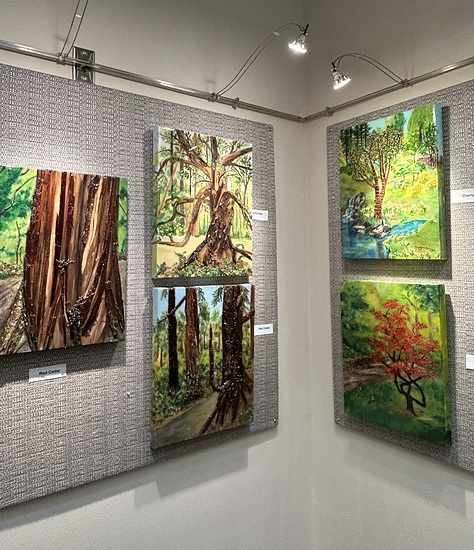
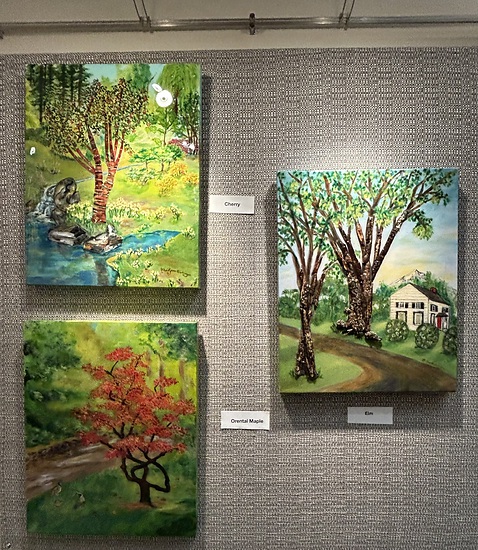
 This is a busy time of year for me. I just installed thirty arboretum paintings at the Lake Oswego Library’s Gallery and am finalizing edits of Rightfully Mine: the Water Factor to be published later this year. The paintings will be on display throughout April, so stop by to see them if you are in Oregon. 

With jonquils and hyacinths pushing through the earth, and chrysanthemums blooming in my yard, I have renewed energy and am ready for action. Some things are constant reminders of spring, like grabbing a light jacket from its peg by the back door and being reminded of the poem I recited as a child.

Spring has sprung  the grass is riz I wonder where my jacket is.

The words pop into my mind as soon as the first flowers push through the ground. When I looked into who wrote the verse, I came up with a big zero. Though often attributed to Ogden Nash or ee cummings, the poem has roots that go back to an anonymous author centuries before.

Spring is sprung, the grass is riz, I wonders where the birdies is. They say the birds is on the wing. Ain’t that absurd? I always thought the wing was on the bird.

And then there is my favorite adaptation in Arnold Silcock’s Verse and Worse.

The Budding Bronx 

Der spring is sprung  Der grass is riz I wonder where dem boidies is?  Der little boids is on der wing,  Ain’t dat absoid?  Der little wings is on de boid!

And then – attributed to Ogden Nash, though I can’t find proof.

Spring has newly sprung the hills are full of grass and along comes a billy-goat sliding on his overcoat down the summer pass. 

Whatever the words, the poems carry the joy, beauty, and energy of the season, a time of rebirth. Spring is a gift that propels me to begin anew and focus on ways to realize my dreams. As Passover, Easter, and May Day pass I am reminded that much of life is cyclical. But after participating in the festivities, I see that the celebrations are not identical to the one I went to the previous year. Though the earth circled the son to complete its cycle, I’m not the same either. All I have to do is look in the mirror to find a few more wrinkles and gray hairs.

The universe that surrounds us is so vast, it is easy to forget that it is in a constant state of transition. Why should we be any different? Within the universe is our solar system, beginning 4.6 billion years ago as a collapsing cloud of gas and dust. It took 600 million years for the sun and the planets to form. And even longer for the oceans on earth to be created by the impact of comets rich in water ice. Microscope bacteria evolved into plants and animals to form our present environment. The oldest known fossils are only from 3.8 million years ago. 

As human brains evolved, sapiens focused on survival and immediate pleasures, not thinking about the universe and all its creatures are in a constant state of transition. The earth travelling around the sun each year brings changes with each revolution. A NASA study published in March 2021 found that Earth’s axis has been shifting drastically since 1995, speeding the movement of the poles and changing its direction. The reason behind the shift is melting glaciers, a contributor to climate change.

Since the earth will be here long after I’m gone, I can only hope that wise land stewards will take the helm from those who remain with their heads in the sand or are only motivated by instant gratification. Pollution, population growth, and a warming planet are long-range issues that must be taken seriously if our great-grandchildren are to enjoy the boidies and see that the grass is riz each spring. 

Your thoughts? please respond on my blog at eichingerfineart.com/blog

___________________________

April Art show of 30 paintings at Lake Oswego Library’s gallery. in Oregon. 706 4th avenue
Lake Osweho 97034


Art is always for sale. Canvas prints of the paintings are available for $99, shipping included. Purchase through web sited or contact me at
marilynne@eichingerfineart.com

Resources:

NASA Website. Planets Grow and Change OVer time. https://www.nasa.gov/sites/default/files/files/YOSS_Act_14.pdf

POEM– sources for “pring has sprung”

P

__________

Your thoughts? please respond below. Your comments are always welcome.
Art is always for sale. Contact me at
marilynne@eichingerfineart.com