Frightening Times! Was it ever worse?

FLYING HIGH

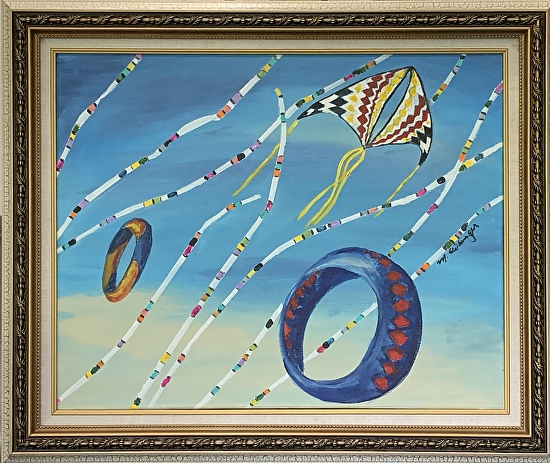
COVID-19 flying alongside children’s kids during the summer of 2020, made for a frightening time. 

Frightening Times

A few days ago, a young woman asked me if the world was more frightening today than at any other time during my life. The question made me pause and reflect on how I dealt with the past eight decades.

The Cold War came to mind first, with nuclear annihilation on everyone’s tongue made me live under a cloud of fear that wouldn’t go away. An ideological and political rivalry between democracy and communism escalated at the end of the Second World War affecting the world. Counties had to choose sides. Winston Churchill’s 1956 speech chilled the world when he said that an iron curtain had descended. I didn’t pay much attention to what was going on until I married and moved to Boston to finish college. I became terrified listening to the news, sure the city would be the first one attacked. I begged my husband to move to the suburbs. Bostonians were building bomb shelters and storing a year’s worth of supplies in their basements. Television newscasts showed school children being drilled in how to drop, cover, and hide under their desks in case of an attack. Watching these programs kept my fear going. The war lasted until the Soviet Union’s collapse in 1991, and fifteen independent nations were born. Though there wasn’t a direct military confrontation between the United States and Russia, the Cold War cost the country billions of dollars. In 1945, when the Cold War started, the earth’s population was about 2.3 billion.

Another tense event occurred during The Cuban Missile Crisis of October 1962. It scared my family and friends more than it did me. A male acquaintance recently described his panic and belief that the crisis would lead to the end of humankind. I was pregnant and living in England during the crisis, oblivious to the severity of the situation. It wasn’t until I saw news clips of President Kennedy informing the nation of developments in Cuba and his decision to enforce a “quarantine” that I understood the global consequences of the crisis continuing to escalate. In 1962, there were approximately 3.126 billion people around the globe.

The Civil Rights Movement didn’t hit me in full force until the 1954 Supreme Court Brown v. Board of Education decision was passed. Tensions escalated in the 60s while I was in Boston. You could feel it in the air. Bobby Seal and the Black Panthers and the Nation of Islam, with Malcolm X as its spokesman, made headline news. The Southern Christian Leadership Conference was formed after the success of the Montgomery Bus Boycott. The Selma march to Montgomery in 1965 energized the movement with painful footage of county posses and state troopers charging 600 unarmed protesters. The Student Nonviolent Coordinating Committee began organizing students to participate in sit-ins and register black voters nationwide. The Ku Klux Klan and white Citizen’s Councils kept espousing racist views while saying they didn’t sanction violence. Though Black neighborhoods bore the brunt of destruction, the Watts Riots of 1965 and the Detroit Riot of 1967 shocked the nation, myself included.

Martin Luther King’s 1968 assassination escalated the civil disobedience campaign with tent encampments. It was all we discussed at gatherings. Friends rode protest buses to the south and tried to get me to join in. My husband and I were chased by police with barking dogs at our heels when attending a rally at the tent city at the Boston Commons. We watched protesters next to us being grabbed by police and clubbed on the head before getting handcuffed and taken away. When I think back, I still feel the adrenaline rush accompanied by a knot in my stomach that made me want to throw up. The Civil Rights Act and the Voting Rights Act were passed in 1973, effectively ending the movement. Many states still haven’t adjusted to federally imposed desegregation and all citizens’ right to vote. In 1970, there were 3.695 billion spread across the earth.

Anxiety reached epic proportions in the 60s and 70s due to the Vietnam War, a conflict that lasted 20 years. The college towns I lived in were in constant turmoil with anti-war protests. The conflict started in 1954 when the communist government of North Vietnam was pitted against the South and its allies. With the United States bringing in active combat units, county draft boards were set up in 1964, calling up 2.2 million young men. Riots ensued, with people burning draft cards and growing long hair to protest military cuts. Many friends fled to Canada. I was worried about my brother being drafted. When he graduated college, he avoided the draft by teaching in a rural community, but his exemption didn’t last long. The lottery system was introduced, and my brother’s number was one of the first to be called. He developed an ulcer almost overnight that thankfully kept him from harm’s way. My husband and I watched the musical Hair, listened to Joan Baez and Bob Dylan songs, and joined protest marches.

At the time, I was a counselor in the emergency room of a community mental health center. Late one evening, a young man came in who had gone AWOL because he refused to kill North Vietnamese soldiers. He had become paranoid, believing everyone he passed on the street wanted to turn him. I hospitalized the youth and contacted a legal organization that helped soldiers avoid the draft. To get discharged from service, he had to return to the Marines. My patient was eventually released, but not before he was beaten and his arm broken. I was dismayed at hearing that. The war ended with 57,939 Americans and 250,000 Vietnamese declared dead. It cost our country a lot, and accomplished nothing. Today, we are friends and trading partners with communist Vietnam. By 1973, the globe contained 3.920 billion people.

Anger and fear permeated every waking hour throughout the 60s and 70s. Women joined those ready to fight for their rights. Though women had been seeking equity for decades, a wave of feminism was sparked by Betty Friedan’s 1963 book, The Feminine Mystique, creating a landslide of activity. Women were not only enraged, they burned their bras, protested against the Miss America Pageant, staged a Ladies’ Home Journal Sit-In, and organized The Women’s Strike for Equality. Feminists worked for social equality, with sexual reproductive rights as its center. Much of their energy went to passing the Equal Rights Amendment, which still hasn’t been ratified. However, they did influence the passage of the Equal Pay Act in 1963 and Title IX of the Education Amendment of 1972, which protected people from discrimination based on sex. The movement’s crowning achievement was the pro-choice passage of Roe v. Wade in 1973, a right taken away last year.

As an educated woman trained to be a stay-at-home mother and housewife, I was caught in the middle of the feminist moment. My eyes were opened when a fundraising event I organized for Impression 5 Science Museum fell apart. The Detroit Playboys Bunnies had agreed to a basketball match against community leaders, all of whom were male. The event created negative press and initiated protests by high school and college women. Though less press was given to the women’s movement by the 80s, it remained ongoing. The recent Supreme Court’s vote to eliminate abortion rights brought it to the forefront again. By 1980, there were 4.444 billion people on earth. When pro-choice was eliminated in 2022, the world population was 7,975 billion.

The Civil Rights Movement, Vietnam, and the Women’s Movement overlapped, causing tumultuous times like none other. Though upset and afraid during many of those years, I was also excited and energized by the thousands who joined forces to create a better world. It was a time of destruction yet an era of hope for those who believed change was possible. We felt confident that we were doing the right thing and that our voices would be heard.

Do I think things are worse today? After looking back, my answer is yes. Species are being eradicated at an alarming rate by something more worrisome than a bomb. It is hard to turn back the years of damage humans have inflicted on the planet. Global warming and pollution are hidden killers we have not effectively dealt with. Still, on the hopeful side, I believe a woman’s right to choose will be restored. I also think the NRA fights a losing battle. With crime and homicides increasing, the country will have to get control of firearms as it did in the West when cowboys new to town turned their guns over to the sheriff until they left town. I see the campaigns for universal healthcare, child and senior care, and those against domestic violence as having positive outcomes.

With the world’s population passing 8.045 billion this year, I hear little talk about the earth’s carrying capacity, especially with rising temperatures making vast swaths of land uninhabitable. This means more people will have to coexist on a shrinking amount of usable land. What is in store for the planet hasn’t hit enough people’s consciousness to change the course of the catastrophic events that will plague the globe for the coming decades. In the quest for profit, we’ve allowed carbon products and chemicals to pollute the land and water, raising temperatures from the Arctic to the Antarctic. We let corporations and individuals poison citizens with toxic throwaways and look the other way when they drown in floods or die from heat exposure.

The homeless encampments and illegal border crossings we experience now are minuscule compared to what we can expect in the future. Wars over water rights and rising sea levels that bury islands and flood vast swaths of coastal land will cause millions of people to move to a moderate climate. The push for electrified cars may help some, but won’t reduce the problem if we can’t produce non-polluting batteries and create enough electricity to prevent power outages.

Democracy is being challenged by billionaires who don’t care about the suffering of those subservient to them. Having a polarized and self-centered Congress makes everyone in the country feel worse. There is reason to be angry. Unfortunately, it shows up in unwholesome ways. I fear my children will have to survive ongoing natural disasters. I worry about how they will earn a living and occupy themselves when AI, mechanization, and Big Ag continue to take over jobs. I don’t believe I’m being paranoid. This is the new reality. 

With the world’s population projected to reach 9.8 billion in 2050 and 11.2 billion by 2100, there is much to cause anxiety. Our citizens need a paradigm shift from self-centered thinking toward collective concerns for the earth and all plants and animals on it. This is why I wrote about ethics in last week’s blog. We have to find ways to get along with one another.

I look forward to your comments. Are you more afraid now than you were at other times during your life? So others can learn from you, Please share them below.

Art is always for sale. Flying High is a good way to remember the pandemic of 2020. Acrylic on canvas painting/framed/16″ x 20″ $596 includes shipping in the continental US. Contact me atmarilynne@eichingerfineart.com

Books: Over the Peanut Fence, about homeless and runaway youth, and Museum Junies about the rise of science centers are available in bookstores and on AMAZON.

References. 

U.S. History website. The Cold War Erupts. Retrieved from https://www.ushistory.org/us/52a.asp#:~:text=The%20Cold%20War%20lasted%20about,the%20free%2Dmarket%20capitalist%20world.

Office of The Historian website. The Cuban Missile Crisis, October 1962 . Retrieved from https://history.state.gov/milestones/1961-1968/cuban-missile-crisis#:~:text=

PBS American Experience website. Groups During the American Civil Rights Movement. retrieved from https://www.pbs.org/wgbh/americanexperience/features/eyesontheprize-groups-during-american-civil-rights-movement/

Lehman, C. (2006) Civil Rights in Twilight. Journal of Black Studies.

, pp. 415-428 Published By: Sage Publications, Inc. retrieved from 

https://www.jstor.org/stable/40035018

Vietnam War: Causes, Facts and Impact. History Channel. Retrieved from https://www.history.com/topics/vietnam-war/vietnam-war-history 

Women’s History website. Second Wave  Feminism: Collections. Retrieved from   https://www.gale.com/primary-sources/womens-studies/collections/second-wave-feminism#:~:text=The%20second%20wave%20feminism%20movement,spread%20to%20other%20Western%20countries

ThoughtCo. Website. Significant Feminist Protests. retrieved from https://www.thoughtco.com/significant-american-feminist-protests-3529008

Worldometer website. World Population by Year. Retrieved from https://www.worldometers.info/world-population/world-population-by-year/

You Can’t Do It Alone

Family in a Turkish Village

Living in crowded communities requires residents to be polite, understanding, and respectful of different views.

You Can’t Do It Alone

Ethics. It’s a word not on the tip of an educator’s tongue these days. Ethics are the moral principles that govern behavior. But there is such a fear of offending someone’s beliefs that the topic takes a back seat. I rarely hear talk about a liberal education focused more on asking questions than giving answers. Such a curriculum aims to prepare students to deal with complexity, diversity, and change.

Liberal education programs aim to produce virtuous, ethical adults knowledgeable in many fields. It combines ethics, philosophy, psychology, and compassion by focusing on transformative thinking rather than concrete information–an approach that dates back to the Ancient Greeks. Arithmetic, music, and astronomy were added to the curriculum in the Middle Ages. The Natural Sciences and Formal Sciences were included during the twentieth century, though not to overpower the classical subjects. The liberal arts create wholesome thinking and tolerance that is hard to obtain if indoctrinated into a narrow way of thinking. Changing a communal ethos is not a speedy fix to be made in the privacy of an individual’s office.

Unfortunately, the number of students enrolling in a liberal arts curriculum has shrunk because of jobs requiring specific degrees other than the arts and humanities. It doesn’t help that the word “liberal” carries connotations that bother conservative parents. But most of the decrease is due to globalization giving rise to occupations in the tech sector. More students opt for a STEM curriculum leading to fields in engineering, computer science, and medicine, where they become narrowly focused and project-oriented rather than dwell on the big picture.

The arts, ethics, history, and philosophy are subjects focused on how to live. They strive to integrate practical achievement with the human condition. Around us, we can see what happens when people shift away from these topics. We’ve evolved into a tense society devoid of compassion.

With civility out the window, more people live in a bubble where they don’t participate in worldly concerns. We have only to look at our streets and to see how far we have drifted. The way people drive and how we’ve let mentally ill and poor people camp on sidewalks instead of housing them are cases in point. Both situations demonstrate a lack of moral character. We act as though society owes us everything, and we owe nothing back in return. Drivers and bicyclists ignore posted traffic signs, speed through neighborhood streets, and weave in and out of traffic. The unhoused eat, sleep, defecate on the sidewalk, and wear trousers at half-mast. They bully passers-by with rude gestures.

As cities fall apart and people act disrespectfully, shouting and cursing increase, making the combatants feel frustrated and hopeless. According to Real Simple Magazine’s website, the six rudest cities in the U.S. are New York, Los Angeles, Washington, D.C., Chicago, Boston, and Detroit, with others not far behind. To experience the best, go to Raleigh, N.C. In 2022, The Brooking Institute reported historic population losses among large cities. And though there was some upward turnaround in 2023, wealthier Americans still leave downtown areas in droves, giving the streets over to the needy rather than building adequate housing and developing mental health services that would help them.

I crave a national movement calling for civility. We share a planet with eight billion people. That’s a lot; the United Nations predicts that 89 percent will reside in cities by 2030. To live compatibly with so many people, tensions must be lowered so we can act ethically and instill compassionate behavior in young children. Let’s provide youth with an education that doesn’t sugarcoat history so they can learn from it, one tolerant of diverse opinions so they can understand the reason behind different beliefs and explore right and left-leaning economic systems. Doing so gives us a chance to have a well-balanced society capable of solving deep problems.

But why wait until our children grow up to solve the earth’s problems? Adults are the ones to set examples and serve as mentors. Gather with neighbors to discuss positive discourse, philosophy, and behavioral expectations. Start a movement now to bring back civility. We can do something about rude, self-centered behavior and end the “me’ attitude by insisting on polite discourse and behaviors benefiting the whole, even if it means compromising individual freedoms.

Movements start small, with discussions in homes and backyards. They can grow through online chats and community outreach. Imagine what could happen if we discussed what kind of society we want to live in instead of complaining about it.  We can create vibrant, wholesome communities by listening to concerns, asking questions, and considering solutions from a broad perspective. Societal change rarely happens by going at it alone.

Art is always for sale. Family in a Turkish Village is a 24″ by 48″ acrylic painting on board, framed for $795. For information, contact me at marilynneQ@eichingerfineart.coom.

What are the roads and streets like in your city? How do people behave? Please comment below.

References:

Seaver, M. (2022) The Rudest Cities in the U.S.., Ranked by Americans. Real Simple retrieved from https://www.realsimple.com/work-life/work-life-etiquette/rudest-cities-in-america-survey

Thompson, D.(2022) Why Americans Are Leaving Downtowns in Droves. The Atlantic. retrieved from https://www.theatlantic.com/newsletters/archive/2022/04/metro-areas-shrinking-population-loss/629665/

Frey, 2022, Big cities saw historic population losses while suburban growth declined during the pandemic. Brookings. retrieved from https://www.brookings.edu/articles/big-cities-saw-historic-population-losses-while-suburban-growth-declined-during-the-pandemic/

Haidar, H. (2023) What is a Liberal Arts Education? Top Universities. retrieved from https://www.topuniversities.com/blog/what-liberal-arts-education

The Essence of Being You

Clarity by Marilynne Eichinger

                   Our mind tells us that we exist. What of it?

Cogito, Ergo Sum or “I think, therefore I am” is René Descartes’ defining statement on existence. Considered the father of modern philosophy, the 17th-century Frenchman was noted for a mind-body philosophical theory based on scientific observation grounded in experimentation. Skeptical of the dogma spouted by religious authorities and earlier philosophers, his quest was to find truth. As a scientist and mathematician, he searched for “perfect knowledge.” That meant finding answers that would leave no room for doubt.

Most of us view the human body as flesh, bones, organs, nerves, muscles, and blood. If you walk into a wall and bang your head, you feel the pain of hitting a solid, unmoving object. When scientists think of human cells, however, they imagine water and protein molecules that are a collection of vibrating atoms under an electron microscope. Since atoms also make up the wall you hit, theoretically, you should be able to pass between them.

Though Descartes could doubt the existence of a physical body, he couldn’t doubt that he could think. He is credited for inspiring The Enlightenment, an era that embraced the belief that people could be improved by rational change. Descartes relied on reason to test the truth of what people said.

Does this mean anything more than knowing your brain confirms your existence? Or does it make you wonder what type of existence the brain will conjure for you next? Thoughts pigeonhole us and can render us helpless. It is easier to be classified, eliminating the worry of finding a Mr. Hyde beneath the surface instead of the Dr. Jekyll we profess to know. We trap ourselves into thinking a single trait or activity is the essence of our personality. Examining and sharing your complex inner nature with the outside world takes courage.

Not questioning the labels attached to you by yourself or others can handicap you. He’s a gay teacher; watch the kids. She’s an assembly-line worker and never thinks for herself. He’s smart because he’s Asian. Of course, she has a bad temper; she’s a redhead. He’s a millionaire, so he must know the best person to vote for.

It’s also common to define people by their profession. For some, that becomes such an important definition they don’t develop other interests. I’ve met many people like that who face difficulties when retired. Feeling unappreciated, they become bored and go about their days without purpose. Young adults feel at loose ends when they can’t find work in their chosen field of study. A football athlete, I knew, had to give up the sport due to an injury. With his dream of turning pro shattered, the twenty-one-year-old shot himself on the field behind his dorm.

During a recent commencement talk, a College president in China advised the graduating class: “You must not aim too high or be picky about work.” With one-fifth of China’s youth out of work, he spouted China’s economic and political policy to young people, telling them to”suck it up.” In our country where job loss is increasing due to AI and robotics, it is time to stop defining people by what they do for a living. We are not in the Middle Ages, where men with Carpenter for a last name worked with wood.

“I think, therefore I am.” I read more into the phrase than my existence when acknowledging that it’s my mind that defines what I think about myself and my environment. It’s thought processes, not employment, that turn us into who we are. It is possible to do a routine job yet find meaning in bird watching, cooking, hiking, or teaching a child to swim. It is your mind, with its thoughts, emotions, and values, that makes you unique. It can make you energetic and able to glean beauty and pleasure from your surroundings or push you to depression, where you are bored and mired in ugliness.

Take a moment to think about how you define yourself. Is it a true representation? The certainty of the truth depends on how you think about it, Descartes reminds us. When you believe in your multiple abilities, you can plow through foot-deep mud and keep going as some attendees did at last week’s Burning Man event in the Nevada Playa. For them, it was an awesome, though challenging experience. Their thoughts looked for meaning in the generosity of their neighbors and the creative way they entertained each other in the rain. Other minds focused on how miserable it was. Their fear and anger made their existence torturous. It is difficult to adapt if your thoughts turn sour.

Last week, I was engrossed in a Netflix Korean mini-series about a seventy-year-old retired postal worker who, to his family’s horror, wanted to be a ballet dancer. It was a dream put on hold since he was eight. Though his family frowned at his ambition, he went for it, thinking, “What am I waiting for? I’ll only live once.” Believing he could do it, the elder practiced ballet moves and observed younger dancers preparing for performances. He existed. Spurred by passion, his days were filled with pleasure. By acting on his thoughts, he showed an unknown part of himself to the rest of the world–and it was good.

Do comment on my website at www.eichingerfineart.com/blog

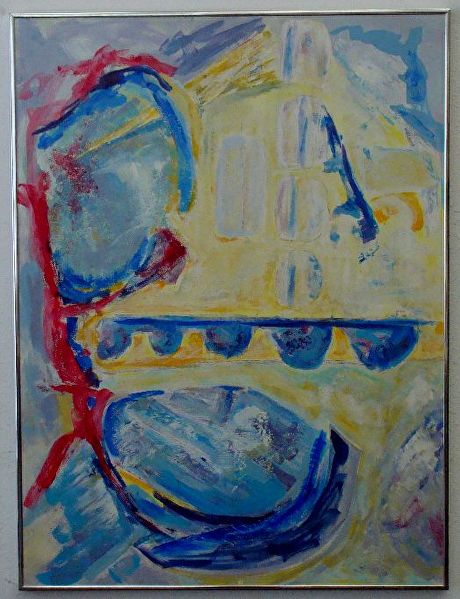
Art is always for sale. Clarity is a framed, 48” x 36” acrylic on canvas painting available for $795. Shipped free in the continental U.S. For information, contact me at marilynne@eichingerfineart.com


References:

Hu, R (2023). The jobs data China doesn’t want people to see. Opinion Today. retrieved from https://mail.google.com/mail/u/0/#inbox/FMfcgzGtwznFlMFZLtGpJJnbghFMJPlg

Ashcroft, R. (2022) What Does “ I Think, Therefore I Am”  Really Mean? The Collector. retrieved from https://www.thecollector.com/what-does-i-think-therefore-i-am-mean/

The Bouceback Effect— Resilience

It’s a New World

Why do we fail?” I asked Mom. “So we can pull ourselves up again,” she answered.

The Bounceback Effect – Resilience

Several weeks ago, I mentioned that people attend boxing matches to watch battered fighters rally and win. They want their heroes to be as resilient as they wish they could be. It’s easy to speak of resilience as a trait to possess, but it’s difficult to pull yourself up when down. Why? What makes one person able to survive challenging ordeals while others crumble?

Though it may be difficult, most of us recognize the importance of not dwelling on failures. Psychologists agree that inner resilience is the basis of mental health and the secret of success. Parents lecture children to rise and face the demons keeping them down. They comfort children when they don’t win a spelling bee, or their team loses a match, admonishing them to try harder next time. People advise friends and partners not to dwell in self-pity when they lose a job or experience a loss. They may commiserate at first but will tolerate “just so much” of the person’s depression before turning away.

Having resilience is more than just bouncing back from adversity. For psychologists, it’s the ability to remain flexible in thoughts, feelings, and behaviors when faced with life disruptions and pressures to emerge stronger, wiser, and more able. A severe illness or unexpected death can invigorate a resilient person who, though knocked down by the event, grows from it. They discover hidden abilities within themselves and seek out friends who help them rise to meet their challenges. Over time, they alter their priorities, embrace meaningful values and goals, and eliminate unimportant things.

Finding a renewed purpose isn’t easy for people who aren’t naturally resilient. They may fall into a depression, not knowing how to emerge from it. I consider myself one of the lucky ones, though I worked hard to get here. I may cry for months when a door closes, yet I start an immediate search for another opening to walk through. I push myself out the door rather than sit around waiting to feel better.

Timelines vary for returning to normalcy after a loss. When a friend was depressed after her infant son’s death, her doctor said that, on average, it takes five years to get over grief. She was advised to reconfigure her days and assign the loss to a smaller part of the healing process. Reframing her situation and broadening her outlook enabled positive emotions to creep in. Though still grieving, she returned to work and spent time with friends.

Physical activities reduce the impact of stress, improving self-esteem and confidence. Participation in trusted social networks helps grieving people feel less isolated. I found it difficult to sell my company and retire. After the ink was dry, I enrolled in a pottery class and joined a writer’s group, where a new friendship circle developed over time. Knowing my strengths and using them developed new skills and the controls I needed to overcome the hurdle of being unemployed. Recognizing that setbacks are usually temporary, I remained optimistic about the future.

It’s easy to give advice but difficult to manage emotions to get to step one. Resilience starts with self-care: getting adequate sleep, eating a healthy diet, exercising regularly, and making time for relaxation and exercise. Emotions and stress can be regulated through meditation, mindfulness, exercise, and cognitively reframing challenges and opportunities. Learning to communicate your needs and to express your feelings promotes healing, leading to resiliency. By all means, seek help if you can’t get there yourself.

Setting well-defined and achievable goals and then taking small steps builds confidence and is rejuvenating. Being aware of negative thoughts, practicing gratitude, and considering setbacks as opportunities for growth and learning will take you out of a dark place. No one is born with a resilience gene. It is a trait that has to be developed and nurtured over the years, involving serious thinking about how to thrive in the 21st century. This era of rapid technological change with a burgeoning world population and climatic disruptions is challenging for everyone.

Those of us in a good emotional space need to be understanding of those who aren’t. People are experiencing unprecedented levels of PTSD due to the pandemic. Some are losing their homes due to extreme weather conditions. The news is full of stories of people with debilitating illnesses, losses due to accidents, and victims of crime. Immigrants are fleeing to our borders from war-ravaged countries and parched lands where livestock and plants no longer thrive. I have neighbors losing jobs due to artificial intelligence, robotics, age or gender discrimination, and racial bias. The flight from rural areas to cities continues to stress housing because big ag has taken over family farms, and companies are buying up water rights.

An employee who used a wheelchair used to call me a TAB, a temporarily able-bodied person. Looking at elders my age, I understand what she means. We will all struggle with mobility loss as we age. Your compassion can help friends and family develop the resilience to move on, and it will strengthen your skill to face adversity when it hits.

I’m in tune with the growing field of positive psychology initiated by Martin Seligman and Mihaly Csikszentmihalyi. It’s a discipline focusing on states of normality and happiness rather than mental and emotional dysfunction. PTG (Post-Traumatic Growth) provides a way to find purpose in pain and look beyond the struggle. Their primary interest is identifying and building mental assets emphasizing meaning and deep satisfaction, not just fleeting happiness.

I look forward to your comments below.

“It’s a New World” is in a private collection.

To reach me for information about pieces of art on my website, contact me at marilynne@eichingerfineart.com

References:

Staff. (2023) Positive Psychology. Psychology Today. retrieved from https://www.psychologytoday.com/us/basics/positive-psychology

Wilson, S, MD. From Post-Traumatic Stress to Post-Traumatic Growth. Vital WorkLife. Retrieved from TRAUMA

Sutton, J. Ph.D. (2029)What is Resilience and Why is it Important to Bounce Back? Positive Psychology. retrieved from https://positivepsychology.com/what-is-resilience/

Doyle, H. (2016) How to Thrive in the 21st Century: Educating a new generation of global citizens prepared to create, collaborate, and navigate the world’s complexities, Harvard Graduate School of Education. retrieved from https://www.gse.harvard.edu/ideas/usable-knowledge/16/11/how-thrive-21st-century

Don’t Just Survive, Thrive!

 Final Blooms

Maya Angelou – “My mission in life is not merely to survive, but to thrive; and to do so with some passion, some compassion, some humor, and some style.”

After reading Angelou’s comment, I often ask myself if I’m thriving or just surviving. It would be easy to sit back and say I’ve done enough, but that wouldn’t help me flourish. Yet, it takes work to thrive, and that requires willpower. I have to challenge my brain and stay engaged with my family and community. It means continuing to read, question, write, paint, exercise, and help those younger than me achieve their goals. It sounds like a lot, but without young children at home, I have a lot of time to fill with engaging activities if I stay away from the TV.

Anyway–what is enough? When does the responsibility to improve myself end? A friend recently advised me to relax and let others save society. It was strange advice coming from him, for he is a doer. In many countries, elders are respected for their experience and perspective and expected to contribute. People seek them out. American youth tend to ignore their parent’s wisdom, though surprisingly enough, the electorate has been voting in seniors.

Living on past laurels isn’t enough to prepare for a future that changes daily. To do that, you have to stay abreast of music trends, language usage, political and social swings, and fashion. Being able to adapt to changes in society is the only way I know to live with gusto. Navigating through a technical world peppered with eight billion inhabitants created a lot of problems for society, but it also brought opportunities for alert people to mine. One approach is to look at each day as a blank page to be filled with scribbles, words, and thoughts of what comes next.

Psychologist and educator Dr. Ryan Niemiec, writes of seven attributes research indicates are needed to thrive. At the top of his list is to have hopeful expectations of the future. A positive perspective and an optimistic attitude help you cope with stress and adversity and encourage you to stick with tasks rather than quitting or avoiding them. Positivity also requires you to look at yourself and your environment honestly so you move forward authentically.

A proactive personality includes an internal desire to seek out opportunities and be challenged. Those engaging in purposeful career decision-making are more likely to thrive than those who let chance lead the way. Proactively pursuing projects adds zest to life, making you want to get up in the morning. Strengths gained by being proactive are bravery and perservence.

Motivation to grow comes from following your naturally occurring strengths, talents, and interests. They provide the impetus for learning and growth. Curiosity, the love of learning, and developing new skills are central sources of motivation and a source of motivation in work and play.

Commitment to learning is an important element of thriving across all socio-economic groups and ages. Many research studies show that academic and vocational education increases creativity, perspective, appreciation for excellence, and the love of learning.

Psychological resilience is the ability to overcome, rise up, and benefit from struggles. To thrive and survive adversity, it’s necessary to be flexible and adaptable. Perseverance is needed to overcome obstacles and setbacks that get in the way. Strengths gained from resilience are gratitude, forgiveness, curiosity, and kindness.

Social Competence, being able to connect with others matters. Resolving conflicts peacefully, being appreciative of other cultures, and developing interpersonal skills enable you to benefit from social support. Social intelligence is the tool that lets you assess people and situations, enabling you to respond appropriately. Having leads to justice-oriented strengths of compassion, leadership, fairness, and teamwork.

Religiosity or spirituality is a connection to the universe in a meaningful way that may or may not include formal religion. It can involve spending time in nature, reflecting on the universe, meditating, or praying. Being connected in a spiritual community opens the door to gratitude, a value that increases thriving.

To thrive well isn’t much different for twenty-year-olds than it is for those over seventy. Powering up to have a purpose no matter your age will charge your internal engine. Everything you do to develop skills and challenge yourself adds to the uniqueness of who you are. It helps to be surrounded by people who give you energy. An active social life that supports healthy behaviors turns boredom and drudgery into fun. So, why not throw away bad habits and do what you can to thrive? The alternative is a drag.

What do you think?  Please comment on my blog site at www.eichingerfineart.com/blog

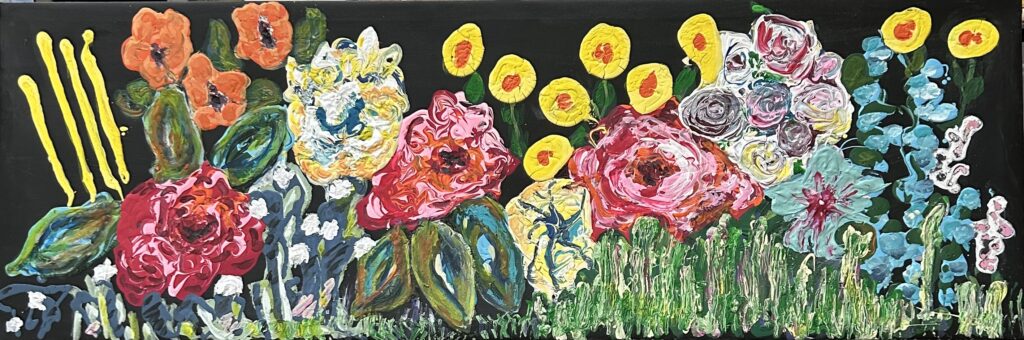
Art is always for sale. Final Blooms is an acrylic on eep dcanvas 26″ x 12 ” painting, available for $ 395. Contact me at marilynne@eichingerfineart.com

References:

Niemiec, R. Psy.D..(2019)m (You Need These 7 Things to Thrive.VIA Institute of Character. retrieved from https://www.viacharacter.org/topics/articles/you-need-these-7-things-to-thrive-research-says

Bachel, B. (2021)Aging with Gusto. Retirement Wisdom. retrieved from https://www.retirementwisdom.com/aging-with-gusto/

Why Dwell on Negativity

Twin Stars

We live in an explosive universe! 

Why Dwell on Negativity?

The media revels in stories of disaster, incompetence, corruption, war, and murder. Why? Why dwell on terrible things? Why watch accounts of January 6th over and over again? For that matter, why tune into a boxing match to see fighters bloodied? What makes the crowd roar? And why do ice hockey spectators covet brawls that end in the penalty box? Why go to movies like All Quiet on the Western Front?

According to Psychology Today, human brains are wired with a bias toward negativity and aggression. A nasty word hurled at us will remain in our heads for decades. Political smear campaigns outperform positive ones. Psychologists believed that focusing on what is terrible evolved to keep us out of harm’s way. They can see electrical activity in the cerebral cortex become greater with downbeat news than good news. Unfortunately, this makes it hard for people to get along. In good marriages, couples find a balance between negativity and positivity. Society might also benefit by focusing on balance.

A brain wired toward aggressive behavior is helpful if you have to hunt for food or protect one’s young from predators. Physical violence is part of the survival-of-the-fittest struggle that evolved with specialized neural circuitry. However, we also have rational brains that tell us aggression comes with risks; getting hurt is one. Society developed ways to make aggressive behavior socially acceptable. Violent sports fall into that category, and with it comes pain.

Common sense says to seek pleasure, not pain, but people don’t always listen to reason. They pound the pavement jogging until knee joints need to be replaced. Some go further, inflicting pain on themselves as a management method. When I complained to my father about a headache as a child, I got a slap on my arm in return. “Ouch! Why did you do that?” I shouted. “So you’ll forget your headache,” he answered. Fighting pain with pain is a remedy people with chronic diseases use to get by. Teenagers cut themselves to alleviate the psychological distress that wracks their waking hours. It hurts so much; it feels good. A person engaged in this type of self-aggressive behavior endures pain, coveting the relief that follows.

The link between pleasure and pain is related to the hippocampus in the nervous system’s control center. Pain causes endorphins to be released that block pain and induce feelings of euphoria. A “runner’s high” kicks in when muscle pain receptors send a message through the spinal cord to the areas activated by passionate love and music. The body’s narcotics (endorphins) block the pain and stimulate the limbic and prefrontal regions to provide a post-pain rush similar to a high of morphine. This helps people cope in the aftermath of an injury.

But why try to knock out opponents while boxing? It’s a way to control aggressive impulses so they don’t get out of hand. For many boxers, their opponents are mere obstacles to their goal of becoming a champ. They are single-minded, with a type of aggression that isn’t personal. They come from various backgrounds and train for cardio, strength-building, balance, and agility. Boxers also suffer from being hit. Brain injuries and cauliflower ears are risks they live with.

It’s the fans that are most interesting to me. According to the Guardian, they are lured to the sport by a desire to see a fighter experience and overcome pain and adversity. The Guardian considers boxing fans the most vociferous and voracious of all attendees at sporting events. Fans transfer their aggressive instincts to the boxers who face suffering to become triumphant. They view their preferred athlete’s win as one for themselves. They aren’t supermen themselves but are attracted to courage, aggression, and grit.

A type of self-inflicted pain that gets my attention is self-sacrifice. Some people act instinctively, as did the person who chased a thief who stole my daughters purse. The man good samaritan, unfortunately, fell over the curb and hurt himself. Others are willing to act aggressively when they belong to something so substantial that they’re willing to be maimed or die for it. People take horrendous risks for power, political beliefs, and religious dogma. According to Oxford University researchers, self-sacrifice is ruled by visceral feelings of oneness with a collective or movement that is hostile toward those outside the group. Their shared feelings are forged through emotional, life-shaping experiences. Think about the rallies and riots that unite people to war, the politicians that rile up crowds and tell them to fight, and the groups that inspire individuals to kill physicians trying to save the lives of pregnant women.

Fundamentalism, terrorism, sports extremism, drug turf fights, and tribal wars are led by highly cohesive organizations that fuse members into a singular positive mindset they consider to be positive and speak negatively of their opponents. Their members find strength in belonging, no matter how bizarre the doctrine, and will act aggressively to further their cause. Their actions trip the pleasure centers of their brain, making them want to do more. I’ve spoken to individuals who left a cult yet still crave the companionship, excitement, and certitude the group provided. It is difficult to divest yourself of these feelings if there’s nothing to take its place.

Unfortunately, when people think the system doesn’t work for them, they often believe the only way to deal with it is to destroy it. Violence can spark a movement and motivate people to act, but it won’t sustain victory. Thankfully, our rational mind can mediate the wired-in negativity, leading to violence. According to Gordon Rabrenovic, director of the Brudnick Center on Violence and Conflict, “There’s certainly more evidence that peaceful protests are more successful because they build a wider coalition.”

Society needs tools other than negativity to institute change. With over eight billion people worldwide, we will never just live among like-minded people. We must stop complaining about “others” and start looking for the many positive attributes we admire. Building a broad coalition that brings people together is essential.

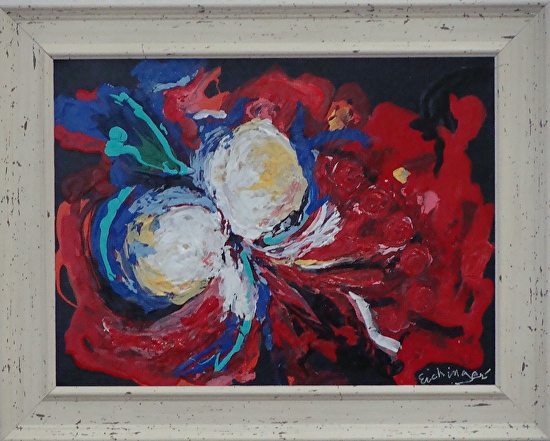
Art is always for sale. Twin Stars is a 16″ by 20″ acrylic on canvas painting, framed. Available for $ 395. Shipped free in the continental U.S. For information, contact me at marilynne@eichingerfineart.com

References:

Mario, E. (2016) Why We Love Bad NewsPsychology Today. retrieved from https://www.psychologytoday.com/us/articles/200305/why-we-love-bad-news

Cowart, L What Makes Someone Seek Pain for Pleasure? New York Times. retrieved from https://www.nytimes.com/2021/09/14/books/review/hurts-so-good-leigh-cowart.html

Franklin, J (2010) How Pain Can Make You Feel Better. Scientific American. retrieved from https://www.scientificamerican.com/article/how-pain-can-make-you-fee/

Gorvett, Z. (2015) Why Pain Feels Good. BBC. retrieved https://www.bbc.com/future/article/20151001-why-pain-feels-good

University of Oxford website, (2015)Dying for the group: what motivates the ultimate sacrifice? Retrieved from https://www.ox.ac.uk/news/2018-03-05-dying-group-what-motivates-ultimate-sacrifice#:~:text=Previous%20theories%20of%20extreme%20self,diminished%20mental%20health%20and%20depression

Hoorkovska, I. (2022) What is Chronic Self-Sacrifice? Is Self-Sacrifice Schema a Bad Ting? Calmer. retrieved from https://calmerry.com/blog/self-esteem/what-is-chronic-self-sacrifice-is-self-sacrifice-schema-a-bad-thing/

Reid, A. (2022) Ironl Hate. Talk Sport. retrieved from https://talksport.com/sport/boxing/1073511/mike-tyson-tyrell-biggs-knock-out-fight/

Jeff Pryor,(2013) The appeal of boxing to its fans. The Guardian. retrieved from https://www.theguardian.com/sport/queensberry-rules-boxing-blog/2013/dec/13/appeal-boxing-fans

Fields, D. (2021) The Roots of Human Aggression. NIH National Library of Medicine,  https://www.ncbi.nlm.nih.gov/pmc/articles/PMC8284101/

I look forward to reading your comments below.

Art is always for sale. Twin Stars is a 16″ by 20″ Acrylic on Canvas Painting, Framed. Aailabe for

The Other Oppenheimer

The Other Oppenheimer

The film Oppenheimer brings back memories of Robert Oppenheimer’s brother Frank, a colleague from my days as a museum director. I knew him years after he worked on the nuclear bomb with Robert. Frank started the Exploratorium three years before I incorporated Impression 5 Science Center in Lansing, Michigan in 1972. I met him that summer while my husband worked at Stanford and I toured museums. During our stay, a friend and I went to see the Exploratorium in San Fransico with five children in tow.

I was overwhelmed by the size of the Palace of Fine Arts, the building the science center occupied, but was underwhelmed by the number of exhibits. The building was poorly lit, with interactive displays covering one-third of the floor, with the rest filled with airplanes. As I walked through the hall, I waved my hand through a rock hovering in space above a barrel. The illusion of a floating object became one of the early exhibits I added to my Lansing Museum.

Frank greeted me in a trailer office in the center of the building. It was the only place that was heated and air-conditioned. He was perched like a bullfrog on the seat of his chair, squatting the whole time we talked. Our conversation was animated as we discussed interactive teaching methods and lamented the difficulty of raising money for our ventures.

After spending a pleasant morning, I was horrified to find I had locked my keys inside my car. Frank saved the day by inserting a wire under the rubber at the top of the window and pulling up the lock, a feat impossible today. Over the next eighteen years, until his death, our paths crossed often at conferences, meetings, and workshops.

Frank Oppenheimer was a nuclear physicist who became a science center director by chance after being blacklisted for belonging to the communist party. Banned from university positions, he sold an inherited Van Gogh painting to purchase a ranch in Colorado. He was an angry, confused, unhappy man until McCarthyism ended and a local school lost its physics teacher. The administration begged him to take the position, and a new life took off.

Frank turned their poorly attended science class into a top contender at the Colorado State Fair. His teaching methods ensured that pedantic material came alive, making the bored children of ranchers into student scientists. From teaching high school, he went to the University of Colorado, where he returned to particle physics research and taught, but his interest in science education never wavered. It led to his developing a “Library of Experiments” for educators. With new these new methods in hand, he made his dream of starting a science center a reality by founding the Exploratorium in 1969.

Three years later, when I became involved, there were fewer than twenty science centers sprinkled across the U.S. Only sixty-five of us attended the first Association of Science and Technology Center (ASTC) gathering. With National Science Foundation funding, the fledgling group started when the American Association of Museums (now the Alliance) wouldn’t recognize our centers as worthy of membership. The snub disappeared a few years later as the number of science centers, natural history museums, children’s museums, and nature centers with interactive displays grew into the thousands.

Our group of newbies looked up to Frank, who played an important leadership role in the development of hands-on learning in museums. We were a heady group of quasi-fanatics who attended workshops organized by the Exploratorium. There we complained about public school teaching, about how children were required to memorize science from textbooks. And, we weren’t happy with the push-button, copy-heavy commercialism of the twelve major science museums, including those in Philadelphia, Chicago, and L.A. 

Frank was a Renaissance man promoting art and science and touting aesthetics, engineering, and technology as necessary elements for creative outcomes. Exploratorium displays weren’t in fancy cabinets. Yet they were sophisticated and built solidly. Their construction shop was open to the public to peer inside. If you ever played with a pin screen and made the pins pop up in the shape of your hand, you participated in a display by an artist funded by the Exploratorium. A few years later, a toy company illegally flooded the market with copies of the artist’s creation.

We shared ideas with Exploratorium staff and discussed ways of making thought-provoking problem-solving exhibits that wouldn’t fall apart when thousands of hands played with them. Frank never pushed ideas on us but rather opened opportunities for discussion. With my psychology background, I shared that children approached exhibits fearlessly, without reading instructions, while their timid parents read every word we put out. Our goal was to make the instructions more intuitive than lengthy while providing in-depth information to adults who didn’t mind reading. 

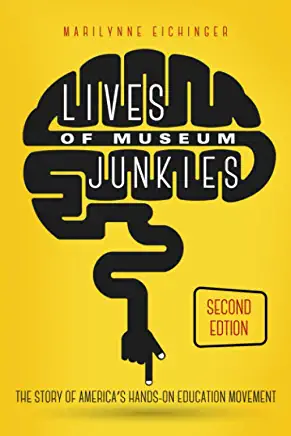
Frank’s struggles were many, and his perseverance was admirable. His journey is one of twelve biographies included in Lives of Museum Junkies, a book I wrote about the trendsetters of the science museum movement. Frank was among us not knowing how to run a public institution. We learned the hard way how to attract volunteers, assure public safety, make dispids on the cheap, and manage our boards. e.

Building a museum from the ground up is expensive. We were poor and had to become handshaking fundraisers. Impression 5’s museum suffered by not having air-conditioning during boiling hot summers. Visitors to the Exploratorium needed hand warmers and overcoats during winter excursions.

Before the pandemic, the science centers and museums that were part of ASTC reported an annual attendance of over 62 million visits, with another 10.1 million people served in off-site events and programs such as school outreach. Those numbers plummeted during COVID and still haven’t grown to pre-pandemic levels.

Lives of Museum Junkies candidly addresses the mistakes we made and gives a behind the scene look at the challenges of running a public institution. Passionate and naive, we plodded along, working long hours to ensure our institution’s success. I say “naively” because many of us might not have started our projects if we knew what lay ahead.

I updated Lives of Museum Junkies to cover the trials brought about by COVID-19. It was a terrible time of closures when centers had to be inventive to survive. Every museum director included in the book tells a unique story. Though I’m definitely biased, I think you’ll find the stories inspiring. If you purchase from Amazon, please write a review. Though the first edition had dozens of positive reviews, they didn’t transfer to the second edition’s sale page. I need at least twenty-five more to ensure that these stories will inspire future generations to follow their passions.

Questions about museums. Contact me at marilynne@eichingerfineart.com.

Please share your science center experiences below.

The American Family Today

Life Rolls With Hope

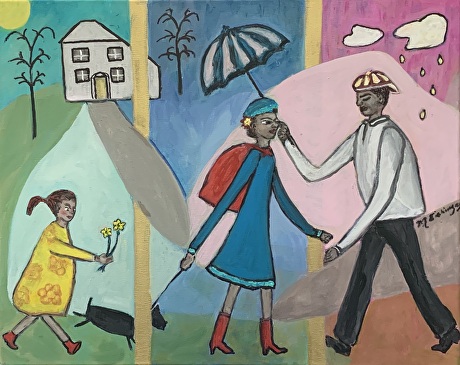
Though troubles rain down, the couple makes sure their

child remains free from trauma and hardship.

The American Family 

Last week, I wrote about friendship relationships and how they evolve and dissolve in our mobile technological society. This week’s blog delves into the altered structure of the nuclear family and its impact on schools and the community.

As a mother of five and grandmother of eight young adults, I am fortunate that we live in the same time zone, though I admit to being sad that I wasn’t there when my grandchildren were growing up. The African saying that it takes a village to raise a child didn’t include me. My children spent most of their childhood in a traditional nuclear family, with both parents in a stable household. Though I divorced before they graduated high school, their father and I shared responsibilities, ensuring the children were cared for and didn’t play one parent against the other. I saw them daily since my ex and I lived in the same school district. Our children woke up at one house and went to bed at the other parent’s home.

In the 1950s, most women were married by twenty and men by twenty-four. Over half the women gave birth to their first child before reaching twenty-three. There were more children and fewer divorces in my generation than there are today. In the 1970s, 73% of children resided with two parents in their first marriage, but that number declined to 25 % by 2019 due to economic and societal changes. Twenty percent of today’s children must deal with custody-arranged divorces involving remarried parents. With so many blended families, the stigma of divorce lessened.

A 2022 Gallup poll reports that 95 percent of Americans approve of interracial marriages, a significant change from the 4 percent in 1958. But, it wasn’t until 1967, with Loving v. Virginia, that interracial marriages were legalized nationwide. Government statistics show that 10 percent of today’s population are in mixed-race unions. By the end of the last century, their offspring and the increase in international adoptions added to schoolroom diversity. Children not seeing themselves in the image of their parents or

neighbors contributed to confusion, shame, and questioning. School districts began recognizing the importance of preparing teachers to manage culturally diverse classrooms.

International adoptions peaked at nearly 23,000 in 2004, falling to 1,784 in 2021. The decline was influenced in 1993 by The Hague Adoption Convention’s policies requiring a paper trail to establish the identity and history of legal custody. With an increasing number of countries arguing that children belong in the land of their birth, foreign adoptions from second and third-world countries are rare. The Indian Child Welfare Act of 1978 made it nearly impossible to adopt Native American children.

In 2015, with American society more tolerant, the Supreme Court gave the LGBTQ community the right to marry and adopt children. This right was enshrined into federal law in ’22. Today, an estimated six million American children have an LGBTQ parent, according to the UCLA School of Law Williams Institute.

With the societal acceptance of single motherhood and LGBTQ parenting, many expect last year’s Supreme Court abortion ruling to increase available infants. So far, that has not happened. Family Trend magazine reports that the number of potential parents waiting for infants remains the same. However, laws have changed for the 130,000 children that do get adopted. Sixty percent are in open adoptions where birth parents are involved in their children’s lives. Numerous studies show that adoptees feel more secure when they know their origin.

The nation’s birthrate is at a historic low. With women. on average, marrying at 28 years and men at 30, the age to birth a first child also climbed. And, though women still earn less than men, many stay focused on careers, deciding to have fewer children or forgo child-rearing altogether. Juggling young ones and schooling them while maintaining a full-time job is quite a challenge, especially if you don’t have financial resources.

Multi-generational families more common since the recession of 2007 and the COVID-19 pandemic. According to Pew Research Center, 18 percent of families are multi-generational compared to 7 percent in 1972. Now that younger adults marry later, they remain in their childhood homes longer, especially men. Though not as common as in other countries, the number of aging parents living with adult children continues to increase for financial and psychological health reasons.

Changing norms about money, work, marriage, and kids can be summed up by the fact that last year, Americans moved at the lowest rate since 1948. It may feel like people are fleeing cities for rural and suburban areas, but the statistics show differently. Eighty percent of the population resides within one hundred miles from where they grew up. CBS reports that the reasons for not moving are reflected by the aging population and their need for care at one end of the spectrum and the need for childcare at the other end. Other factors are declining marriage rates, high housing costs, the expense of driving, and the rise of two-income households. A person accepting employment in a new location may interrupt their partner’s career. According to INSIDER, a business magazine, being unwilling or unable to move can prevent families from improving their financial standings.

Lots of people are happy to live near their families in the town where they were born. They have strong social connections in their communities and wouldn’t trade them for anything else. The rise in remote work allowed many to remain in their hometowns, but it also gave some the flexibility to move to a preferred location. It remains to be seen whether enough people with remote jobs will choose to go elsewhere and reverse the trend to stay local once more.

Last week’s blog about deep friendships and this week’s missile about close family ties shed light on the importance of meaningful connections. We need acquaintances that will consider our feelings and listen to our deepest thoughts–people you willingly help that will reciprocate when needed.

If you were a politician with this information, would you use it to impact city planning? What would you do to combat loneliness and isolation?

Please comment at below.

Art is always for sale; Life Rolls With Hope is a 16 x 20 acrylic on canvas painting available for $395, including shipping. To make arrangements, contact me at marilynne@eichingerfineart.com

References:

Mauer, B. (2023)The changing Face of the American Family. Parents. retrieved from https://www.parents.com/parenting/dynamics/the-changing-face-of-the-american-family/

Hogan, C. (2022) What Open Adoptions is Really Like. Parents. retrieved from https://www.parents.com/what-open-adoption-is-really-like-6834746

 Website (2022) Pew Research Center. retrieved from https://www.pewresearch.org/social-trends/2022/03/24/the-demographics-of-multigenerational-households/

Website (2017) Why are international options on the decline? Nightlight Christian adoptions. Retrieved from https://nightlight.org/2017/10/international-adoptions-decline/#:~:text=Hague%20requirements,their%20history%20of%20legal%20custody

Drah, H. (2023) 24 Groundbreaking Interracial Marriage Statistics for 2023. 2Date4Love. retrieved from https://2date4love.com/interracial-marriage-statistics/

Zinkula, J. (2022) Most Americans never move far from their hometown. Insider. retrieved from https://www.businessinsider.com/americans-are-moving-less-social-demographic-changes-2022-8

Ensuring Friendships

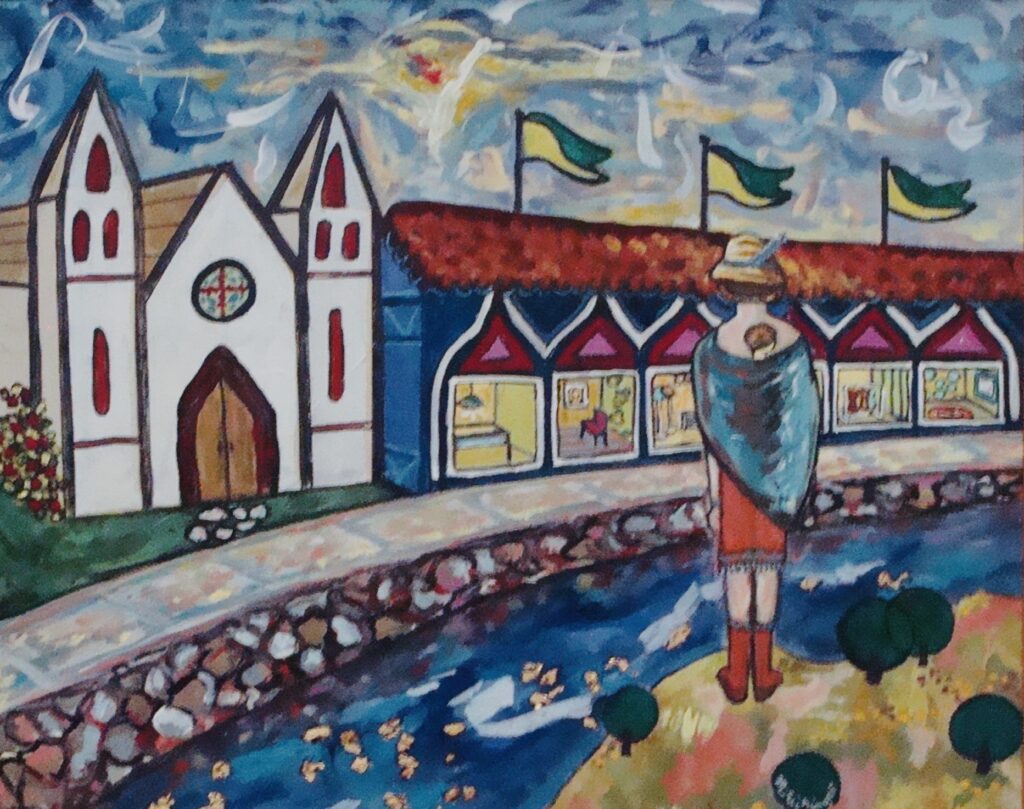
THE THREE SIRENS are friends from my youth without the wrinkles they have today.

When do you call a person your friend? The homeless boy my husband and I took into our house, considered any street kid he spent time with a friend, even if they had only interacted for an hour and the relationship didn’t last more than a day. When my elementary school grandchildren play with strangers on the playground or at the beach for the first time, they always introduce them by saying, “I made a new friend,” –not an acquaintance.

Years ago, a man in my chamber music group told me it takes twenty years to make a friend. Our group met weekly, went on picnics, and shared dinners. He abandoned my group after a year to join my husband’s bluegrass band. He and my husband developed a stronger bond than he did with me, but I still considered him a friend. When I moved to the west coast, our relationship ended. It didn’t survive the test of distance.

The Britannica describes friendship as enduring affection, esteem, intimacy, and trust between two people. Emotional ties between friends have lasting implications. William Shakespeare defines a friend as “one that knows you as you are, understands where you have been, accepts what you have become, and still, gently allows you to grow.”

Unlike families and marriage partners, friendships are unique because they lack formal structure, and you choose to enter them. Having someone to talk to, to depend on, and to enjoy are critical components of a good life. And though friendships may dissolve as you age and circumstances change, having friends remain essential to your health and happiness.

Parents set the stage for relationship-building when their children are infants. Nursing and playing games like peek-a-boo establish emotional connections of intimacy and trust. A toddler who pats her brother when he scrapes his knee learns empathy and understanding of another’s feelings by imitating adult behavior. Early relationships developed in unstructured environments are the basis for the intimacy and trust required in adult friendship.

During adolescence, friendships are easily influenced by pop culture and kids in school. They are made close to home within the community. High school kids, more secure with who they are, deepen relationships with those who share their values and interests. With plenty of time to explore, most youths spend between ten and twenty-four hours a week cementing friendships.

The Atlantic Monthly reported that young adults socialize more than any other age group. The move to college puts them in a similarly dense social environment with friendships made on campus. Their friendship structure breaks up when they return home or move because of a job opportunity. During this period, twenty-year-olds spend most of their non-working hours with friends while pouring themselves into finding a mate.

The average age for marriage in the U.S. is 27 for women and 29 for men, with variations depending on the state. According to Pew Research, the share of married adults ages 25 to 54 fell from 67 percent in 1990 to 53 percent in 2019, while the share of those cohabiting more than doubled. However, that doesn’t make up for the fact that 38 percent of this age group are not partnered and living alone.

All over the world, people opt for a single life. To be happy without marriage, strong social relationships have to be maintained. A study of 270,000 people in 100 countries conducted by Michigan State University Professor William Chopic showed that meaningful relationships are a more significant indicator of health and happiness than familial relationships. This becomes even more so as people age. Singles have more friends and spend more time maintaining friendships than married people. This is especially true for women.

Married couples are so busy with jobs and family affairs that they spend less time with valued friends. An Oxford University study revealed that most people have an average of four to six close friends. The number is dropped by two when a new partner dominates their lives. The study concludes that “Love can lead to a smaller support network with one family member and one friend being pushed out to accommodate the new lover.” More friendly acquaintances are developed than deep friendships during this period of long work hours, children’s activities, and school functions.

By the time they retire, many are in the same position I was in, an empty nester who was friendless. Both times, after leaving the presidency at OMSI and selling my company, the following administrations expected me to walk away from the staff, board, and donors I had befriended. Employees were instructed to break off their association with me. This is a more common practice than you might imagine. Severing ties helps to transfer loyalty to the new management.

Retirement initiates another phase in the friendship cycle. Once again, there is time for relationship building. To reconnect with old friends and develop new ones, I joined a writer’s group and a non-fiction reading group, took pottery classes, and increased my involvement with the Unitarian Church. The internet helped me reestablish relationships with childhood friends.

My days are full, yet I remember the man who said it takes twenty years to make a friend. A University of Kansas study says it takes fifty hours to go from acquaintance to friend and more than two hundred hours to develop a close friend. New friendships are lovely, but they don’t provide the same comfort as the ones I’ve known for decades. We have a shared language that comes from listening to similar music, living through economic cycles, raising children simultaneously, and surviving social upheavals and wars. All it takes is a glance to know what they’re thinking.

With the advent of technology, it is easier to keep old relationships ticking. Liking friends on Facebook, sending birthday e-cards after receiving a popup reminder, and texting, can maintain closeness over decades. I’m happy to connect from time to time and will visit them if I am in town. The people I have a history with are in my dormant category. Active friendships are with the people I contact regularly. They are there for emotional support and know what’s happening in my life. These friends know my flaws yet still accept me.

Numerous studies show that humans benefit from relationships but don’t need to be coupled in a marriage or romantic partnership to be happy. In either case, it is essential to take extra care to maintain your close friendships and not let them fall through the cracks.

References:

 Tiret, H. (2022) What is friendship? Michigan State University Extension. retrieved from https://www.canr.msu.edu/news/what-is-friendship

Zero to Three website.  (2010) Tips on Helping Your Child Build Relationships. retrieved from https://www.zerotothree.org/resource/tips-on-helping-your-child-build-relationships

Beck, J.( 2015) How Friendships Change over Time. The Atlantic. retrieved from https://www.theatlantic.com/health/archive/2015/10/how-friendships-change-over-time-in-adulthood/411466/

Pew Research Center. (2021) Rising Share of U.S. Adults Are Living Without a Spouse or Partner. retrieved from https://www.pewresearch.org/social-trends/2021/10/05/rising-share-of-u-s-adults-are-living-without-a-spouse-or-partner/

Kisley, E. (2019) The Impact of Friendships on Single and Married people. Psychology Today. retrieved from https://www.psychologytoday.com/us/blog/happy-singlehood/201904/the-impact-friendships-single-and-married-people

Heckman R. (2018 )How to Make Friends? Study Reveals How Much Time it Takes. University of Kansas. retrieved from https://news.ku.edu/2018/03/06/study-reveals-number-hours-it-takes-make-friend

I look forward to your comments below.

Embrace Boredom!

Embrace Boredom!

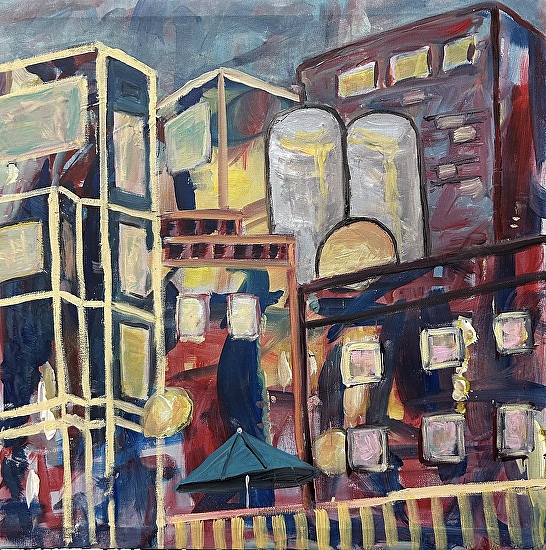
The photo on the left is taken from Jake’s cafe patio. The painting on the right is a work-in-progress, an outline of what might eventually emerge on my canvas. I’ve been working on it for two days and have no idea what it will look like when finished. Though it has a long way to go, the incomplete work is an example of the creative process in action, a process that keeps me from being bored.

The various angles of the buildings struck me while dining outside. They formed an exciting yet confusing hodgepodge I couldn’t wait to put on canvas. The sun reflected off some of the windows and walls, making the images blow hot and cold. Dark green foliage appeared yellow with intense light brightening its leaves. It reminded me of looking for my car at night when the overhead lights made my red Toyota appear blue. I was convinced someone had stolen it.

Creative people don’t stay bored because boredom and creativity are opposing states of mind. Instead, they are forever curious; they meditate on mundane happenings and look closely at idiosyncrasies in the natural world. They let their imagination run wild.

Children are often taught that boredom comes from ignorance and a lack of imagination. Parents tell bored offspring to get off their duff and do something productive. Because they don’t like moping children who sit around doing nothing, they book them up with extra curricula classes and camps. They look the other way when they spend hours at the computer playing games or browsing social media. It’s less of a bother than having them engage in creative endeavors that demand their involvement.

Isn’t it possible that boredom is the path to the imagination? Boredom is often the first step to creating a dream that you want to follow. A farmer’s daughter told me she made up stories while doing routine tedious tasks as a child. She started writing them down when she had a free moment afterward. Today she is a productive, published writer on her way to fame. 

Two of my children were in middle school when self-directed learning was the rage. I put them in a “school within a school” with an unregulated curriculum. They could choose when, what, and how to participate in academic, social, physical, and creative activities. Most of the year, they sat on pillows reading comic books, doing puzzles, chatting with friends, or staring into space. By the time the trees were budding in the spring, they had had enough of doing nothing and asked if they could enroll in the regular academic program the following year. I was surprised and said it was fine, but they had to make up for the year’s loss to be in the next grade with their friends. It took three months to complete the year’s curriculum. The following semester they aced their courses and engaged in various creative activities. I consider the year of boredom as having contributed to their successful careers. It helped them figure out who they were, how they learned, and it motivated them to engage in productive endeavors.

Raising children helped me realize how boredom sparks the creative process. Adults have transportation, access to information, and money to help them overcome lethargy and engage in activities that enrich their lives. Children are less mobile. They have to be surrounded at home by opportunities they can grab onto. Books, art materials, hammers and screwdrivers, sports equipment, science kits, and an adult willing to answer questions are tools that help them combat boredom. Though there are extracurricular camps and classes designed to promote creative thinking, they are very expensive. On average, a one-week summer camp costs $ 450. Overnight camps are $800 for a full week.

Many families that can’t afford such luxuries take refuge in computer games and social media. Unfortunately, so much screen time makes children less willing to engage in the creative process. It’s easier to respond to a text with an emoji or to spend hours playing games someone else designed than to hone your writing skills in a letter and make up your own game. Computer activities require reactive thinking rather than the active thinking needed for creativity. A full life requires both sides of the brain to be developed equally.

Yes, we all need downtime, and the computer has non-threatening activities to occupy yourself if trapped at home as we all were during COVID. It may get you through the day, but do you go to bed happy, satisfied that you accomplished something? Does it challenge you to learn and grow? Creative endeavors are more satisfying because they build skills that let you expand your horizon.

Researchers at the University of Arizona suggest that creative people don’t need a smartphone or streaming service to stay entertained. When they have downtime during the day and are bored, they explore their mind by allowing one idea to lead to another. During COVID-19, creative people tended to be more engaged with their thoughts and less bored as a result.

I suggest adding balance to your waking hours. Get away from the screen with physical and mentally challenging activities. Walk in nature. Ask questions. Meditate about a future filled with opportunity and be wary of activities that are reactive in nature. Find time for your brain to wander over the curious things and occurrences that made up your day. Though it may seem like a waste of time, an active imagination can lead to projects that fully engage you.

References:

Angello, A. (2022) You Can’t Have Creativity Without Boredom. Literary Hub. retrieved from BOREDOM

Anderer, J. (2023) Screen-free fun: Creative people enjoy moments of boredom more than others. StudyFInds. retrieved from https://studyfinds.org/creative-people-enjoy-idle-time/