Difficult Decisions

Seeking Perfection

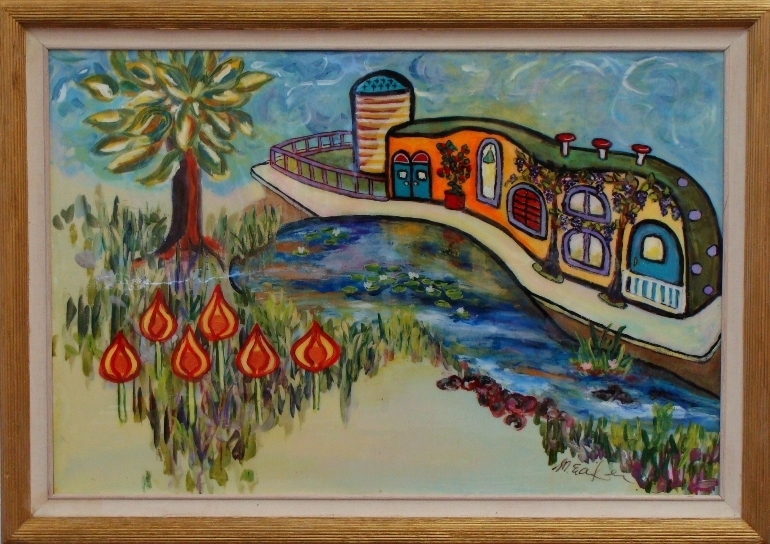
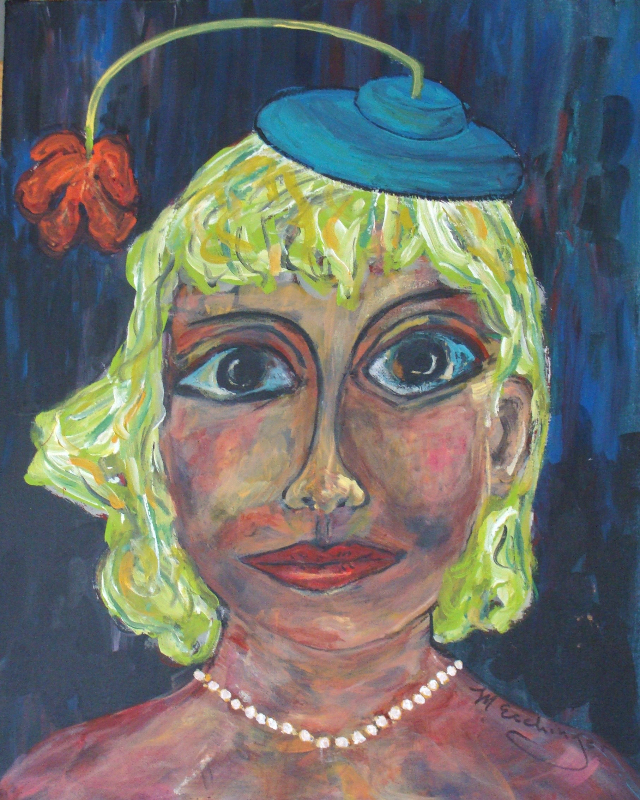
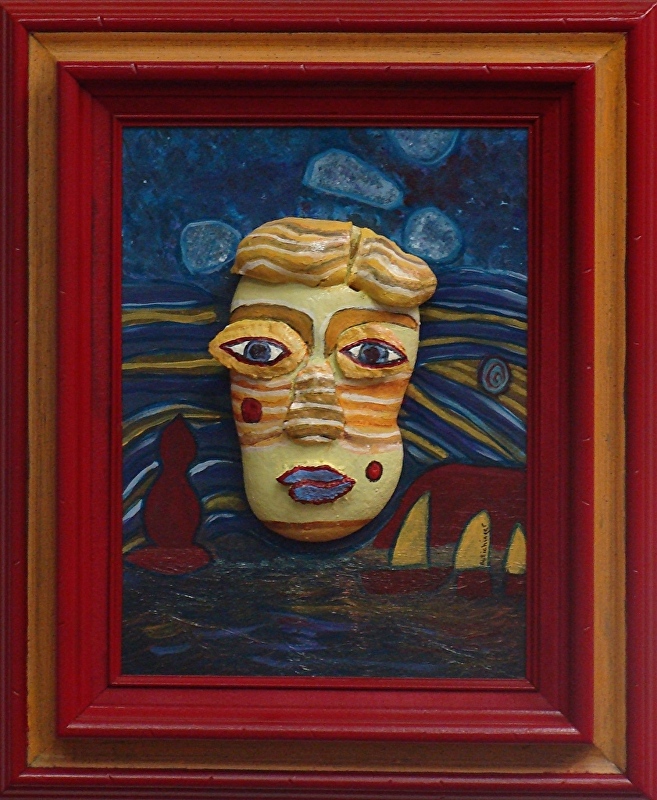
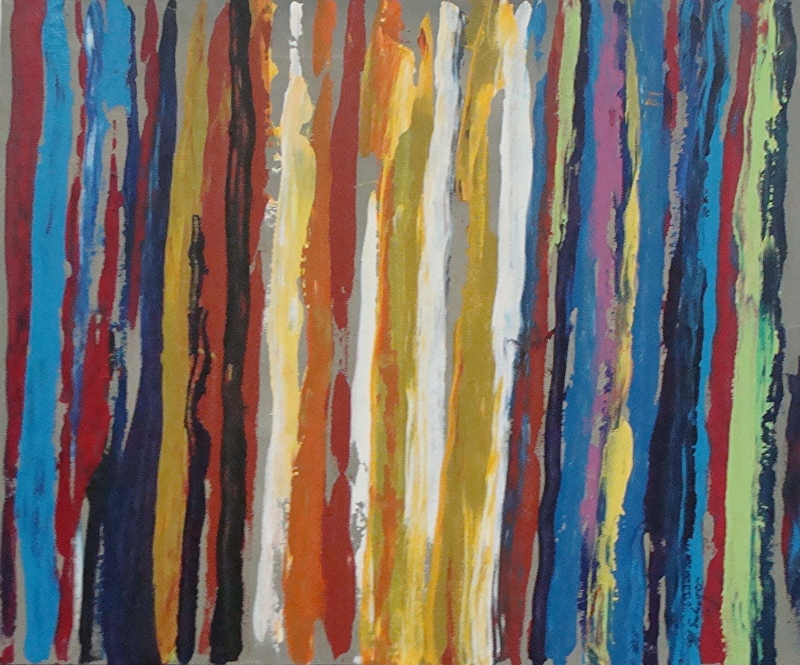
acrylic on canvas / 20″ by 24″ / $399

Last week two articles about teens competed for my attention. One discussed lowering the voting age to 16 and the other was a scientific study of the brain saying that maturity is not complete until near thirty. What I read made me wonder about what level of brain development was necessary for 16-year-olds to vote. After reading this newsletter I do hope you will share your opinion.

Nancy Pelosi recently gave her support to lowering the voting age to 16. She, as do many others, says that 16 is the age when when interest in government is strongest. The National Youth Rights Association gives reasons why.

– Millions of youth are employed, volunteer, and assume adult responsibilities as care givers and financial contributors to their households. They pay taxes and have the right to drive a car.

– Adolescents are expected to follow the law but have no say in making it. 16-year-olds brought before the criminal justice system are tried as adults. Over 250,000 youth are incarcerated as adults each year.

– Teens form political action committees, manage campaigns, make donations, and advocate for rights. Greta Thunber, a 16-year-old from Sweden was nominated for a Nobel Peace Prize for organizing students in over 112 to tprotest against global warming. Parkland, Florida students challenged lawmakers to tighten gun control laws.

-Young people are good voters. In 2013, when Takoma Park, Maryland lowered its voting age to 16, 16 and 17-year-olds voted in greater numbers than 20 to 50-year-olds.

-16 and 17-year-olds care about issues that affect them and want politicians to pay attention to their concerns. They are hurt by demographic trends which overwhelmingly favor older voters. They see their future jeopardized by inadequate funding for schools, poor gun control and global warming.

– Adolescents shouldn’t be held to a higher standard than those over 18. In a democracy, it’s wrong to disenfranchise people because we disagree with them. Some Republicans worry that teachers are biased towards liberal ideas. Yet, civic classes are likely to teach youth how how to dig for truth and to analyze the pros and cons of issues.

Historically teens were considered adults. In medieval Europe, adolescents participated in apprenticeships and were expected to contribute to their family’s financial well-being. There are many examples of teen warriors. In 1212, children as young as 12 joined the Children’s Crusade. In 1340, Edward, Prince of Wales (The Black Prince) was 16 when he engaged the French army at Crecy. Joan of Arc as a teen inspired civilians and soldiers in Orleans, France to fight the English. More recently, in 2015, Jan Bowman-Davies, a 16 year old British captain helped his three man adult crew abandon ship as it started to sink.

Lowering the voting age has more support than many voters realize. Over 25 countries allow youth under 18 to vote. In the U.S., nearly half the states have tried to lower it. Legislation was recently introduced in Oregon to amend the constitution and lower the voting age from 18 to 16. If the bill passes, voters will decide to approve or disapprove during the 2020 election.

The above arguments favor lowering the voting age. Now, on to the adolescent brain.

According to Stanford Children’s Health, no matter how smart your teen is, good judgment is not something he or she can excel in. Recent studies show full maturity as delayed until thirty. To understand why, let’s look at how the adolescent brain develops.

The central brain along with the central nervous system develop during six major stages. The first four occur during gestation. The last two occur later, with growth continuing into adulthood. Maturity occurs from the back to the front of the brain. The frontal lobe (prefrotal cortex) is where complex decision-making, planning skills, impulse control, emotional reactions, focusing attention, and prioritizing information takes place. Its matures slowly during adolescence which is why many teenagers can’t access certain abilities until older.

During teen years the prefrontal cortex, begins to exert greater control, helping adolescents learn to think before they act. It handles higher-level cognitive abilities such as planning, solving problems, and making decisions. But, before the cortex fully matures, the amygdala, which controls emotions, is in charge. Teens with a large amygdala show aggression, fear and depression more intensely than adults.

Brain development is the root cause of adolescent behaviors that appear to be erratic.Some researches claim that adolescents are hardwired for risk-taking. In ancient times, that helped them deal with dangers in the wild. Today, aggressive behavior is more likely to translate into fighting or bullying, unsafe sexual behavior, alcohol or substance abuse, unsafe driving, and poor self care.

Compassionate, patient parents guide their children through the teen years and teach healthy coping mechanisms that satisfy the demands of the amygdala. For instance, the desire for emotional experiences can be satisfied with outdoor adventures, playing musical instruments, performing on stage, and even go-cart racing. Parents who jump in with advice or try to fix problems often make their teen less likely to trust them. They benefit when their parents show interest in what they are doing and are helped to overcome impulsive behaviors by being presented with facts and having discussions about possible consequences of their actions.

It is your turn to decide. I’ve not made up my mind. What do you think? Should the voting age be lowered to16? Please respond below. Your opinion matters.

Art is always for sale. Contact me at marilynne@eichingerfineart.com.

References:

Top Ten Reasons to Lower the Voting Age. National Youth Rights Association. retrieved from web site at https://www.youthrights.org/issues/voting-age/top-ten-reasons-to-lower-the-voting-age/

Vote16USA. retrieved from .https://vote16usa.org/5-reasons-for-lowing-voting-age-16/

Hains,T. (2019) Pelosi Supports Lowering Voting Age To 16, Real-ClearPolitics. retrieved from POLITICS

Doclspm.EK. (2019) Teen Climate Activist Greta Thunberg Hs Been Nominated for the Nobel Peace Prize. Rolling Stone. retrieved from ACTIVIST

lou,M. (2019) Oregon may lower the voting age to 16.CNN Politics. retrieved from AGE.

Alvarez,S (2014) Teenagers at War During the Middle Ages Society for Medieval Military History. retrieved from http://deremilitari.org/2014/03/teenagers-at-war-during-the-middle-ages/

Jarus,O. (2013) Joan of Arc: facts and Biography. LiveScience. retrieved from https://www.livescience.com/38288-joan-of-arc.html

Spillett,R (2015) The incredible moment Britain’s youngest ship’s captain, 16, calmly helped his adult crew abandon ship as the vessel started to sink in rough seas. Daily Mail. retrieved from CAPTAIN.

(2018) the Facts about Teen Brain Development. Newport Academy. retrieved from BRAIN.

Understanding the Teen Brain Stanford Children’s Health. (2018) retrieved from web site at STANFORD.

Adamson, A. (2016) Brains May Not Yet Fully Mature Until After Age 30. Tech Times. retrieved from MATURE.

Wnuk, A. (2018) When the Brain Starts Adulting. Brain Facts.org. retrieved from FACTS.

Relational Worldview

Touring Rotterdam/ Acrylic on canvas/ 30″ by 24″ / $495

Holland has robust multi-generational co-housing housing complexes that provide social, recreational and personal space for their residents.

The Estate Acrylic on canvas/29” x 41″/ $650.00

Mega houses for the wealthy fly in the face community needs for affordable housing. They are built in gated communities or on land that leaves the inhabitants isolated from the world around them.

Relational Worldview

According to social worker Terry Cross, there are two predominant world views, linear and relational. European and American cultures are rooted in the linear model based on the idea that cause comes before effect. To solve a problem linearly you identify it, treat it and observe the result. A relational model differs in that it is based on harmony. It views life as a continuous balancing act between interrelated influences that include the collective thinking of the culture. Its goal is to meet the needs of the community, not just the individual. The relational model seeks balance between four elements, context (culture, community), mind (cognitive and emotional processes), body (genetic, gender, condition, health), and spirit (learned teachings, metaphysical and innate, both negative and positive). Cross gives an example of how the model helps individuals.

“Death is an example of an event that threatens harmony. When we lose a loved one, we feel grief emotionally; physically, we may cry, lose our appetite, or not sleep well. However, spiritually, we have a learned positive response, a ritual, called a funeral. Usually, such events are community events, so the context is changed. We bring in relatives, friends and supporters. In that context, we intellectualize about the dead person. We may recall and tell stories about him or her. We may intellectualize about death or be reminded of our cultural view of that experience. Physically, we touch others, get hugs and handshakes; we eat, and we shed tears. 

“These experiences are interdependent and play off one another in multi-relational interactions that, if successful, allow us to resolve the grief by maintaining the balance. If we cannot, then, in a Western sense, we are said to have unresolved grief or, in some tribal cultures, to have a ghost sickness or to be bothered by a spirit. Different world views often use different conceptual language to describe the same phenomenon.”  A person can only move on if he or she returns to a state harmony. 

The relational thinking is gaining traction as a tool to use in solving larger societal problems.  Consider environmental issues, for example. Linear reasoning moves from: A causes B causes C causes D and so on. This approach favors capitalism with its goal to make money for the individual and increase GDP for the country. Environmental issues through a relational lens explores competing interests to see what it would take to bring them to harmony.  It’s a search to balance personal earnings with clean drinking water, global temperatures, unpolluted fish in the oceans, adequate food production on land, sources for energy for transportation, home and business use, clean air and a fair distribution of property.  Balance takes into account that human beings and animals share the earth with survival depending on a symbiotic relationship. In a relational view, there is no place for capitalism and colonialism that is designed to keep people in poverty. Harmony can only be achieved when all people and the environment are in balance.

Transitioning economic models that are primarily based on the rights of the individual to those of the greater community is not easy. Our country is imbedded in linear thinking that rewards personal achievement based on hard work and predestination. The founders, influenced by John Calvin’s preaching, went a step further and turned his religious thoughts into a justification for excessive wealth. Calvin was a theologian, not an economist, and his sermons were more humanistic than generally acknowledged. Unfortunately, ideas of predestination led to many to accept the notion that those with capital are marked favorably by God. Communities of haves and have nots became tolerated as a just part of American society. Today, the “have nots” are growing at a faster rate than ever before, weighting the scale with poverty, discord and ignorance. 

Despite seeing so much societal degradation, I remain an optimist, recognizing that a great many people understand how unjust the world has become. Many are trying to change the current paradigm, or at least bend rules that keep the ecology in an unbalanced state. Despite the greedy people splashed over the news, I see signs for restoring social and environmental harmony. I hear people talk angrily about the unbridled wealth and power of just a few and hear them devising plans to restore equity.

 It takes a long time to change the way a culture thinks. Eventually, however, most do evolve with changing times. Look around and you will see that your community no longer resembles that of your childhood. Take notice of the changes. Do you have friends who tune into Marie Kondo’s program to de-clutter.  Pay attention to the millennials who value experiences over possessions. Observe that more people are leaving their cell phones tucked out of sight during meals. Ask yourself, why youth under thirty are purchasing vinyl records and changing their diets to organic, plant based foods. Note how younger generations easily accept sexual, religious and racial differences. Notice that it is schoolchildren who are leading the marches for gun safety and a sustainable environment. Study the slow movement, a cultural shift that promotes a slower pace of life in all areas. One branch of the movement is slow technology which, according to technopedia, is “designed to to curb some of the damaging effects of excessive technologies in human life, primarily through promoting slower or less extreme interactions with certain technologies. In general, the slow technology movement seeks to alter how humans interact with technologies including mobile devices, social media, email and other relatively recent innovations that tend to be highly addictive, or at least consume a lot of time.“

Younger generations are bringing about systemic changes that encourage face-to-face relationships and living lightly on the planet. It will be interesting to see if Amazon, Facebook, Twitter and Instagram go the way of so many media moguls or if they will evolve? Ten years ago who would have thought eBay’s traffic would decline? The slow movement says it’s time to get bored, for that brings about inventiveness. I’m not bored and probably not as inventive as I was when young, but I sure am having a blast watching thoughtful young adults conceive of ways to save society. 

References: 

Cross, T. ( 1997) Understanding the relational worldview in Indian families. Oregon State University.http://oregon.4h.oregonstate.edu/sites/default/files/information/staff/inclusive/RelationalWorldView.pdf

Feuerherd, P  (2017) John Calvin: The Religious Reformer Who Influenced Capitalism. Daily. retrieved from https://daily.jstor.org/

Slow Technology Movement .Technopedia.retrieved from web (2019) site https://www.techopedia.com/definition/28641/slow-technology-movement 

SlowTech, retrieved from web site 2019 at http://slowtech.org/

When Disaster Strikes

 Oregon City Falls by Marilynne Eichinger

Acrylic on Canvas/ 36” x 48” / $1,100

Oregon City, the end of Oregon Trail, is the site of the first electrical cable power line in the United States. The hydro electric dam on the Willamette River produced electricity that was sent to Portland, 14 miles away.  No longer a pristine power dam or site of a paper mill, this tumbling down image projects the area  today. I wonder what it will look like when the earthquake strikes?

Poem by my Granddaughter, Mira Horn

Oh Grandma!

The lens through which you see this city cannot be captured through another’s brush

I wish I knew just what shape the town used to be

when  waters crashed and  city and sky lights touched

Here lies the first glimmer of electricity

Here lies the end of the Oregon Trail

The past upon the past, the dark against the pale

Can you tell me where the creases lie, what makes this painting blush?

Oh Grandma, I think you’ve left the city clear

Breathed in it life, and swept away the dust

(The following section is taken from soon to be published “Over The Peanut Fence.” It discusses what happens to poor and homeless people when disasters occur. 

When Disaster Strikes

During times of crisis caused by natural or manmade disasters the most vulnerable among us suffer greatly. Even slight setbacks can have disastrous consequences for children, adolescents, seniors, and those with disabilities. For example, in January 2017, Portland, Oregon had an unusual storm that dumped 14 inches of snow on city streets. In general, Portland winters are mild, but that year, below-freezing temperatures plagued the city for many days. 

Four homeless people died of exposure and a great many children went hungry. When schools close for inclement weather, children in low-income families are often without food. In Portland, where over 50 percent of the students participate in federally subsidized breakfast and lunch programs, cancelled school days mean lots of hungry bellies.

Though Oregon communities are involved in emergency planning, the most vulnerable are usually the last to receive services. For example,\ one  recommendation for earthquake preparedness is that each person set aside 14 gallons of water in their home or apartment. Homeless people have no way of doing so.

 Imagine an earthquake, hurricane, tornado or tsunami hitting your town. Responders and hospital staff will attend to the most drastic situations first. Those with bank accounts, stocked pantries, vehicles, neighbors and relatives will be better able to survive than poor or homeless people who may have to endure days, weeks or even months of added trauma. 

Portland’s snowstorm last year was a wake-up call for community leaders. With limited transportation and no electricity, the Bureau of Emergency Management was incapable of giving special attention to those unable to care for their own needs. The mayor had to step in and coordinate emergency personnel to deal with the situation. Though the event lasted only a few days, it made officials recognize that they had to plan for those without shelter. Temporary housing, communication and food for the poor, the homeless, the mentally ill and homebound seniors had to be considered. Emergency planning teams concluded that a trained network of volunteers had to be part of the solution for avoiding a humanitarian crisis.

I suggest emergency preparedness be introduced in the elementary grades. Homes need to be equipped with up-to-date first-aid kits, extra food, water, and easily accessible clothing on hand. Those living together need to know how to shut off gas and electrical lines. Families (and friends) need designated meeting places to go to in case of separation. There is also a moral responsibility to  help neighbors in need if you are able to do so. The process begins with surveying the neighborhood to see who might require attention, needing food, special supplies or help vacating their premise. 

It is surprising how difficult it is for those in need to ask for assistance. After a heavy snow, our young wheel-chaired son often finds himself trapped indoors waiting for someone to dig out his car.  Distant friends eventually come to his aid but he feels uncomfortable asking someone living in his apartment complex to help, for he doesn’t know them well.  I wish someone would recognize his situation and not wait until he asks. 

Children need instruction in what to do and where to go in case of an emergency. Youth who find themselves temporarily stranded will need to know how to find their parents. Those who live homeless also need to be made aware of their options. Street youth are constantly honing  survival skills, but during a major disaster they will not be able to access their usual shelters or food distribution sites. Organizations like Outside In and New Avenues for Youth, the Salvation Army, etc. should consider teaching their clients what to do and where to go in a disaster.

Several weeks ago I wrote of the need for volunteer mentors to help homeless youth. Many of you responded positively to that newsletter. Emergency preparation also requires trained volunteers who know how to  help for those with special needs. We all must to be prepared for natural disasters common to our part of the country but we also need to be aware that some unknown person might need our help.

Power of Love

Flickers Caring For Their Young
Nesting birds need the love and care of attentive parents if they are to become healthy adult birds capable of carrying on the species. 
Acrylic on canvas/ 4 399

POWER OF LOVE: Observing aimless teens hanging out on street corners makes me wonder which ones will overcome their situation to have a productive, happy life and which ones won’t. If you’re like me, you do not enjoy homeless youths taking over neighborhood parks or begging for handouts while perched on sidewalks. If you’re like me, you cover your nose when descending stairwells in city-center parking garages that smell of urine. And, if you’re like me, you are intimidated when a gang of adolescents walk past making lewd gestures and shouting dirty words. 

Street-kids don’t want to be ignored. Hearing their cries for help is important, not only for their sake, but selfishly for mine. Yet, I am not sure how to do so. What if these teens are permanently damaged by having been in abusive situations? What if they’re just going through a phase? By my standards, they lack social values and the moral fiber necessary for living in a democratic society. The more I learned about them, however, the more interested I became in finding answers.

I soon discovered that much of their antisocial behavior is directed towards those they fear. This includes most adults, including  you and me. Growing up in a dysfunctional, abusive household leads them to distrust the very people who should be protecting them.  Antagonism is rarely aimed at their own peer group. Once they they run away from home, they follow a strict set of their  rules that embrace  street-life values. They care for instantly acquired friends by sharing food, cigarettes, drugs,  information and they adopt the strict code against “ratting.”  Though divisive behavior may result from a lack of parental love, they act thoughtfully when helping other youth. I see their kindness is a sign of hope, for with good counseling it is possible to transfer compassionate street behavior to the greater society.

I used to assume that love is instinctual and that every newborn will receive the parental attention it deserves. Without it, I reasoned, a helpless infant would be incapable of surviving. I know now that parental feelings of love and responsibility for newborns is not a given.  All too many parents neglect their offspring causing physical and psychological damage.  

Most of us were fortunate to grow up surrounded by affectionate parents and relatives who held us close. As adults, we transfer the love we received as children to partners with whom we form bonds based on trust and respect. But, what happens to children who are never caressed or told they are special? What are the long-term effects of not being touched or cuddled? What befalls those who are abandoned, left on doorsteps or placed in cribs in overcrowded houses where they’re not attended to when they cry for food or a diaper change? 

A cornerstone study about infant neglect began in the 1980s when Dr. Nathan Fox and colleagues from Harvard Medical School walked into an orphanage in Romania. Due to a newly passed ban on abortion, the number of orphaned babies in the country soared. Some 170,000 children were placed in 700 overcrowded facilities staffed with an insufficient number of caretakers. Though the orphanages were clean, the infants were emotionally neglected. They were left day and night in their cribs, to be changed on schedule and fed without being held. The nurseries were eerily quiet. Since crying infants were routinely ignored, it wasn’t long before they stopped making sounds. No attention—no cries—only silence. 

Dr. Fox followed the Romanian children for over fourteen years. Autistic-like behaviors such as head-banging and rocking were common during their early years.  As the children aged, their head circumferences stayed unusually small. They had difficulty paying attention and understanding what was going on around them. Over time, 50 percent of the children suffered from mental illness. Displaying poor impulse control, they became socially withdrawn, had problems coping and regulating emotions, and were handicapped by low self-esteem. They manifested pathological behaviors such as tics, tantrums, stealing and self- punishment. Intellectually, they functioned poorly, which caused them to have poor academic success. Those youngsters fortunate enough to be placed in a caring foster home before the age of two were able to rebound. But those who entered foster care at a later age were not as lucky. Most were permanently damaged. 

Another study of note was conducted between 1962 and 76 by the HighScope Perry Preschool Project, in conjunction with nurse-family practitioners focused on parenting practices in an African-American community in Michigan. The school operated an innovative program that included decision-making and problem-solving activities and allowed for physical movement throughout the day. Researchers were interested to see what would happen if caretakers were taught parenting skills through their involvement in the program. Parents were invited to participate in weekly visits that brought them into the education process. They were shown how to express love and reward good behavior. The study concluded that “without repeated acts of love, a child’s brain doesn’t make the growth hormone needed for proper mental and physical development.” Loveless children become permanently scarred. Their stress levels are high, setting the stage for elevated cholesterol, cardiovascular disease, metabolic syndromes and other conditions that pose serious health risks later in life.

Bullying is a subtle form of abuse that makes victims feel inadequate and humiliated. Most keep silent about the injustice done to them, not only because they fear reprisal but because they think they are no good. A bullied child subconsciously believes that if no one loves me, then how can I love myself?  He (or she) sees himself as undeserving and incapable of change.  Even after completing a well-executed task, a bullied child has difficulty feeling satisfied or accepting compliments. Parents who say “I can’t believe you would embarrass me like that,” or “You idiot! Who do you think you are?” hurt the child’s self-esteem. Bullying causes some children to act out by being cruel to animals, setting fires, taking drugs or simply withdrawing into themselves. Health can be affected by even small insults of shame and rejection.

A child’s well-being depends of having security and love. Thankfully, most families know that children need to reside in a safe welcoming environment that showers them with affection and kindness. Love helps them develop defense mechanisms that provide a buffer from illness, abuse and trauma. And it is love that sets the stage for healthy adult relationships.

This valentine’s day be thankful you were loved and are  able to share that love with others. It is a gift to give that should not to be squandered. Many unhappy events are surmounted when someone  reaches out to express their love and concern.  And, for those of you who have extra tenderness tucked away in your heart, consider mentoring a youth who is having a tough time. Your love can help this child blossom and it will make the world a better, kinder place for all. 

References:

Nelson, C. & Fox, N. & Zeanah, C. (2014) Romania’s Abandoned Children, Deprivation, Brain Development, and the Struggle for Recovery, Harvard University Press. 

Parks, G. (2000) The High/Scope Perry Preschool Project. U.S. Department of Justice; Office of Juvenile Justice and Delinquency Prevention. retrieved from STUDY. Also found at www.ncjrs.gov/pdffiles1/ojjdp/181725.pdf

Bergland, C. (2013) Parental Warmth is crucial for a Child’s Well-being. Psychology Today. retrieved from www.psychologytoday.com/ blog/the-athletes-way/201310/parental-warmth-is-crucial- child-s-well-being 

Weir, Ki. (2014). Lasting Effect of Love Deprivation. American Psychological Association, Vol.45. No.6. retrieved from www.apa.org/monitor/ 2014/06/neglect.aspx 

Art is always for sale. Contact me at marilynne@eichingerfineart.com.

Behind the Wrinkles

Ellen: Wide Eyed and Ready

She may be older but she still feels young and ready to tackle life.

acrylic on Canvas / 20” x 16” / $ 399

Behind the Wrinkle

Last week two participants in my writers group read passages that contained descriptions of elderly women. I was aghast at listening to their portrayals of women my age. They conjured up frumpish matrons with beatific smiles who spend much of their time knitting and gossiping over tea. Their arms are open for those who knock on church doors looking for aid.  “Yes dear, do come in. You are loved.“ Perhaps, forty to fifty years ago these women did exist in white middle and upper class communities where husbands worked and women stayed home. Not now.

During the comment period I mentioned that I certainly don’t feel like the people described on their pages. My writer friends laughed and the meeting went on. However, the issue of age continued to bother me for I don’t know anyone who would comfortably step into the pages of their books. These days, older women are full participants in the social and political fabric of the country. I set out to investigate age discrimination more thoroughly.

My attention immediately leaped to Ruth Bader Ginsburg on the Supreme Court and Senator Diane Feinstein, both working at 85 despite physical ailments that plagued them as they aged. I wondered how Nancy Pelosi at 78 retained her role as a Washington powerhouse and how Maxine Waters at 80 remains relevant to her district. None of these women appear to lack the stamina needed in their jobs.

I noticed that older actresses were getting better roles. Jane Fonda at 81 starred with Lily Tomlin, 79, in the Netflix series Grace and Frankie. She maintains a healthy lifestyle, exercises regularly, eats well, and boy does she look stunning. As a bionic woman, she hasn’’t lets her fake hip, artificial knee or many back surgeries stop her for living fully. And then there’s Oprah Winfrey, who at 65 looks like she will remain active forever. She’s a media executive who continues as a publisher, actress, TV producer and philanthropist. She got American to read. 

Inevitably, our bodies will decline, so I decided to investigate elderly female athletes. Phyllis Sues at 91 is a competitive Tango dancer who recently took up skydiving.  Sylvester Stallone’s mother Jackie at 92 does CrossFit Boxing, indoor rowing and takes dance classes. Tao Porchon-Lynch at 96 is the world’s oldest yoga teacher. She didn’t start her practice until the was 73. Madona Buder (known as the Iron Nun) at age 84 finished the Ironman triathlon. The competition involved a 2.4 mile swim, a 112-mile bike ride, followed by a 26.2 mile run. The stories are many.   

Exercise, healthy diet and remain active—those words are pounded into the heads of women in every socio-economic level. For economic reasons, though, more of them have to work into their senior years to make ends meet. Employment is not easy, for age discrimination starts at fifty for women. Though they may be youthful, savvy, and connected, in the workplace coworkers often consider them dinosaurs. They are disrespected, labeled old fashioned and forced out of jobs. Unlike men, whose value increases as they get older, they fall prey to assumptions that they lack stamina, aren’t technically astute and aren’t invested in their careers. The opposite is actually true, for their companies are not invested in them. 

According to a study from the National Bureau of Economic Research one reason older female job seekers are discriminated more than males is because physical appearance matters more for women than men. Though laws are in place to protect workers over 40, age discrimination is difficult to prove. However, according to AARP, women are finally speaking up and reporting injustices, the first step towards change. The Bureau of Labor Statistics forecasts that by 2024 there will be twice as many women over 55 in the labor force as women ages 16 to 24.

Though older women are least valued by employers, they are needed. Many are educated, trained, reliable and experienced. They understand the aging marketplace and add to the economy with their purchases. They save employers money because they demand fewer benefits. Medicare lowers health insurance premiums and Social Security fill in some of the gaps in income needs. 

But, those who can retire, don’t slow down. They are involved and engaged in writing, participating in politics, volunteering on school boards and becoming classroom aids. They travel with emergency teams to disaster areas and join local committees to overcome homelessness. They keep their bodies fit and their minds sharp by auditing university classes, attending lecture series, travel. Their spirits adjust to advancing age through meditation and yoga. Balancing volunteer activities with play helps them remain young at heart. The seniors I know stay abreast of the changing world, use computers and participate on social media sites. They text and tweet to communicate with grandchildren and pride themselves on understanding the younger generation.

Older women are not fragile. They’ve always worked hard taking care of families and participating in community life. And, in case you wondered, yes, most enjoy sex. So young squirts, get over it. Look at reality and not some outdated concept of a great grandmother in a flower patterned housecoat reclining in a rocking chair ready to dispense tea and chat. We are a mounting force that needs to be reckoned with.  

References:

Ward, P. (2014) 7 Inspiring Women Athletes Over age 70. Health. retrieved from https://www.health.com/fitness/7-inspiring-women-athletes-over-age-70

Sitzes, Jenae, (2018) How Jane Fonda Looks So Young at 80. Prevention. retrieved from https://www.prevention.com/fitness/a20686775/jane-fonda-age/

Marcus, B. (2018) Age Discrimination and Women in the Workplace: How to Avoid G3eting Pushed Out. Forbes. retrieved from https://www.prevention.com/fitness/a20686775/jane-fonda-age/

Terrell,K (2018) Age Bias Complaints Rise Among Women and Minorities. AARP. retrieved from  https://www.aarp.org/work/working-at-50-plus/info-2018/age-discrimination-increases-women-minorities.html


Maxine Waters, US
 Congresswoman at 80


Helen Mirren at 73
Well Groomed and Active Seniors
They are not all young


Yoko Ono at 85

Art is always for sale. Contact me at marilynne@eichingerfineart.com

Resiliency

The following article is an adaptation from Over the Peanut  Fence: Scaling barriers for homeless and runaway youth. The book, a work of love and hope, is out for review and in the final stages of production. Stay tuned. 

Resiliency

Runaway teens tend to have strong survival instincts. Most leave home because of abusive situations that make the risks of living on the streets more appealing than remaining in place. Experiencing  trauma for much of their childhood leaves them confused, angry and the without the skills needed to earn a living. This was certainly the case when we invited Zach (stage name), a street kid to live with us. It took him five years to climb out of the dungeon of his mind to the light.

For years, social workers tried to help trouble youth like Zach by employing behavior modification techniques. The idea was to get rid of disruptive behaviors by enticing (or forcing) the youth to adapt to societal norms. Their techniques had marginal success for rather than build self-esteem and confidence it reinforced the notion that society considered him or her to be incorrigible. 

In recent years, developmental psychologists started looking at positive approaches that build on intrinsic strengths rather than on hand-slapping. Their goal was to  transform adversity into affirmation. They studied why some adolescents function well while others in similar situations, do not. This led to taking a broader approach that integrates account life at  molecular, individual and family levels. The result was to develop and therapy based on resiliency that uses medical, social service and educational resources to initiate change. 

 Resiliency therapy focuses on the client’s strengths and on identifying a flexible treatment plan to help overcome early trauma. It reinforces healthy behaviors by acknowledging the fortitude and skills that already exists within the adolescent. Therapists use these proficiencies to develop additional competencies that will give the youth feelings of accomplishment.

Before goals are set, the case worker explores family, community and cultural factors that were either disruptive or were helpful to the youth’s development.  Mentors may be called in and asked to spend time getting to know the youth. These good samaritans help identify hidden talents and provide encouragement to meet education goals once they are set. As progress is made and praise rightfully given, budding feelings of self-worth begin to blossom. A mentor is often the first person to pay attention to the youth’s needs and desires. 

Cultural inhibitors can have  a significant impact on resiliency. An adolescent from a minority community who experienced or perceived racism when young has a harder time  adapting to white society than one who has not. In fifth grade, Dewey Taylor,  a child of color,  was bused  to an all-white school.   When he got off the bus he was greeted by a girl who rubbed her finger across his face to see if the color came off. Dewey was shocked and pushed her away only to be challenged by an older brother who proceeded to beat him up. Dewey and his friends decided that white kids were crazy. They lived in a middle class black  neighborhood that sheltered their children from racism. The incident messed with Dewey’s confidence. It wasn’t until the Black Panthers emerged and soul singer James Brown shouted, “I’m black and I’m proud!” that Dewey mustered the strength to pull his life together. 

Though a youth may eventually acquire job skills, early negative experiences can impinge on work by causing anti-social behavior, depression, anxiety and feelings of inadequacy.  Promoting full resiliency requires contextual understanding on the part of counselors. Changing cultural and social environments becomes part of the treatment plan. 

Lowering factors that produce negativity, focusing on growth and adaptation, and promoting altruism and harmony,  empowers adolescents to think more positively. Success comes from rewarding small steps over and over again while raining down positive praise for accomplishments. 

Leland Leonard, director Tsehootsooi Medical Center in Arizona writes about Navajo adolescents and resiliency; 

“Resilience is the natural, human capacity to navigate life well. It is something every human being has—wisdom, common sense. It means coming to know how you think, who you are spiritually, where you come from, and where you are going. The key is learning how to utilize innate resilience, which is the birthright of every human being. It involves understanding our inner spirit and finding a sense of direction.”99 

It is a challenge to find the right amount of stimulation to propel an adolescent towards self-motivation. Vocational training, rites of passage and challenging sports offer opportunities that address this need. Unfortunately, these pathways are not always available to poor youths. Such programs give troubled youth a place to test their skills and find resilience. I’ve come to realize that overcoming youth homelessness is not a hopeless situation. It just takes the combined wisdom and compassion of people like you and me to want to do it. 

References:

Zimmerman, M. (2014) Resiliency Theory: A Strengths-Based Approach to research and Practice for Adolescent Health. US National Library of Medicine, NIH. retrieved from www.ncbi.nlm.nih.gov/pmc/ articles/PMC3966565/ http://www.ncbi.nlm.nih.gov/pmc/ articles/PMC3966565/

Leonard, L. (2008) The Relationship Between Navajo Adolescents’ Knowledge and Attitude of Navajo Culture and their Self-Esteem and Resiliency. Dissertation at Arizona State University. 

. Zimmerman, M. PhD. (2013) Resiliency Theory. National Institution of Healthy Public Access. retrieved from www.ncbi.nlm.nih.gov/ pmc/articles/PMC3966565/ 

I look forward to your comment on my blog site.

.

Her Majesty – My Pet

She sits proudly on her perch to be admired by all who pass. A little scratch under the chin makes her purr, a quiet soothing sound. She and her owner are content. 


Her Majesty
acrylic painting on canvas/ 20″ x 20″ / $399

Her Majesty – My Pet

Two granddaughters inspired the picture above. They both have cats (as do I) that are an important part of their lives. My first pet was a Dalmatian puppy given to my brother and me as a Christmas gift. Though we became attached to him, he was not considered an integral a part of the family’s fabric in the way pets are today. He ran around our lawn without a leash, played catch and greeted us with a wagging tail when we came home, but in those days, dogs were considered pets, not companions, not human beings. 

My partner, Ray, grew up in a rural area where animals were part of the work force. Cats kept the rodent population down, barking dogs provided front line security and goats ate blackberry bushes taking over the yard. Animals were loved, petted and fed, but spent most of their time out of doors, acquiring rich thick coats of fur in the winter. Once the United States urbanized, the relationship to animals changed. Today, 90 percent of dog owners say their dog has a positive impact on their mental and physical health. That comment would never have been made forty years ago. 

Instead of buying big bags of standard food, urban owners are fussy, believing their pets have special nutritional needs. They have concerns about food allergies and fears about packaging being contaminated. Owners enjoy pampering their cats (not so rural owners). They spend freely, purchasing toys, fancy collars and expensive pillows and willingly pay high fees for veterinary specialists and daycare services. 

Statistics from Research and Markets:

55% of households have pets (dogs rule) – half live in the 25 largest              Metropolitan areas

Dog ownership is up 29 percent in the past decade

Multiple dog households have increased

Ownership among older, Hispanic and millennial populations is growing

Unmarried and childless people have more pets than before

24 percent of cats are overweight

Urban owners spend much more than rural owners on their animals

Fish are more likely found in affluent and larger households

Hispanics form the largest segment of bird owners

47 percent of reptiles are owned by millennials.

Roland Sonnenburg, a professional animal trainer who supplies animals for film and television reminds people that dogs are not humans. They shouldn’t be dressed in cute outfits, given ice cream for dessert or entertained by a television left on when alone.  He says that well-meaning owners make the mistake of assuming animals enjoy the same things people do. And even worse, they expect them to behave like people. Healthy dogs act like dogs and cats behave like cats. Human beings need to act human and not try to mimic their pets in order to improve their relationship with them. For instance, don’t growl in your dog’s face when he snarls or you very well might end up in the hospital. Your dog acted appropriatly for he considered you to be threat.

It’s unfair to get angry when your pet reacts to a rambunctious toddler who pulls his tail. It’s dog-like to nip back and cat-like to spit and hiss. Owners are responsible to keep their pets safe and leashed so they don’t get in fights with other animals or destroy property. They have to be watched so they don’t chew on power cords or dash across the street after a bird or squirrel when the front door is opened. My dog, Ashanti, was poisoned when off-leash while playing on a beach where dead birds had washed to shore. He would not respond to my call when I tried to put him back on the leash but ran instead to lick his find.  I’ll always feel guilty for his death as I continue to mourn his passing. Pets rely on their owners to make good decisions for them. They don’t understand the concept of long term consequeces. 

A cousin who bred blue ribbon shelties warned me about overfeeding my dog and giving him food that appeals to my taste buds. She said that processed well balanced meals were healthier and designed to keep weight at an appropriate level. Since so many owners don’t follow this advice and think their animal needs to eat as often as they do, a tremendous amount of overweight animals have to be put on diets by vets. 

Exercise is another factor to keeping animals healthy. In urban areas, pets are not allowed to roam freely. Many owners are too lazy to exercise them outside in inclement weather. Most dogs enjoy romping outside in the cold. They have energy and want to run. They like being challenged to fetch a stick that is thrown further each time. 

Many behaviors pet owners exhibit have more to do with their own psychology than that of their pets. For example, people hang stockings for their animals and fill them with special treats and toys to be given on Christmas morning. They subject them to photo sessions wearing reindeer antlers or furry red coats. The number of people buying canine costumes has increased by 24 percent since 2010 according to PetSmart. Why do this?

Psychologist, Kit Yarrow in Psychology Today says that pets are “stress-busters.” Pet ownership has increased as have the number of people reporting anxiety. Cuddling and playing with an animal boosts oxytocin, a stress-relieving hormone that makes people happier and more deeply bonded. 

A second factor in the way owners behave has to do with status.  In contemporary society, 91 percent of owners consider their pets to be members of the family with 81 percent saying that they are equal members. This was never the case forty years ago.  Advancements in veterinary care kept pace with the elevated position pets occupy in the household. There are internists, ophthalmologists, dermatologists, and many more specialists for animals. There are even pet insurance companies to help pay for unexpected medical emergencies.  Advanced medical care is not inexpensive but since pets are increasingly as important as other members of the family more people are willing to pay what they can. 

Lastly, humans have a need to be nurtured, and pets fulfill that need. An unprecedented number of people live alone. Large numbers of couples choose not to have children and due to increased longevity, those who do live in empty nests for years. These changes contributed to owners thinking of their pets as children. They commonly use baby-talk when addressing them. Over 58 percent refer to themselves as “mom” or “dad.”  Pet-parents who want to provide their animals with human experiences have caused the pet industry to blossom.  Gourmet meals, pet hotels rather than kennels, toys and stellar healthcare provide emotional support, connection and happiness to owners.  I should know. I’m one of them.

References:

Research and Markets (2017) United States Pet Population and Ownership Trends Report 2017 – Focus on Dogs, Cats, and Other Pets. Globe Newswire. retrieved fromhttps://globenewswire.com/news-release/2017/07/17/1047437/0/en/United-States-Pet-Population-and-Ownership-Trends-Report-2017-Focus-on-Dogs-Cats-and-Other-Pets.html

Turnbull, L. (2015)Your dog is not a human being. Stop treating her like one. The Week . retrieved from https://theweek.com/articles/536712/dog-not-human-being-stop-treating-like

Yarrow,K. (2016) three Reasons Why Pets are More Pampered Today. Psychology today  https://www.psychologytoday.com/us/blog/the-why-behind-the-buy/201612/three-reasons-why-pets-are-more-pampered-today

The Mentor

On Top of It All 

When you’ve worked through life’s pitfalls to achieve most of  your goals, it is time to help someone else do the same.

mixed media on canvas/ wood frame/23″a x 19″ / $399                        

The Mentor

School does not bode well for those who find it difficult to sit still, and, from time-to-time, that’s the case for all students. I’ve listened to kids complain about academic subjects they say are boring and non-essential. They consider homework to be busywork that is irrelevant for their future, yet have no idea what that future might be.  Permissive parents go along with their complaints and provide late notes when they sleep in or miss a day of school. According to Patrick Gabriel in an article for school superintendents, this attitude contributes to a poor work ethic. They drop out of school and are lackadaisical in their jobs, wondering why they don’t get the raise they assume they deserve. Many young people are confused and don’t want to put in hours of hard work necessary to meet graduation requirements. For those going for an advanced degree, the six-year graduation rate for full-time undergraduate students at a 4 year degree-granting program is only 60 percent according to the National Center for Education Statistics. Institutions with open admissions policies find that only 32 percent graduate. 

There will always be children who enjoy a traditional curriculum, but many won’t. Some students become handicapped by never learning how to read. with ease.  More than 30 million adults in the U.S. cannot read, write or do basic math above a third-grade level. Their children have a 72 percent chance of remaining at the lowest reading levels themselves. 

Non-academic students might be better served by a more practical, vocational training approach. We need to do something different or we will continue to get students dropping out of school.  Though federal data released in December, 2018 shows graduation rates increasing, fact checkers claim data is manipulated by state and local departments of education unwilling to include the poor statistics coming from charters, alternative and virtual schools. According to “Building a Grad Nation’s” annual report that tracks high school graduation rates, the number of schools with low graduation rates is actually growing. Twenty-five percent of entering freshman drop out of high school, most from poor neighborhood schools. 

For democracy to succeed it’s important for everyone to be educated and hopefully enjoy learning for its own sake. To do so, a variety of teaching approaches need to be used that address the variety of ways students learn. In the hands of the right teacher, tactile and auditory methods can be just as effective as the written word. This calls for individualized attention and instruction which would be extremely expensive paid instructors were the only resource. There are other ways.

Last week, I received an email from a woman who told me of her mentor, a person extremely  important to her professional and personal growth. Her comment reminded me that throughout my student years, I too had advisors to inspire and guide me.  In elementary school, Ms. Dorothea, my dancing instructor filled that role. Not only did she show me the benefits to controlling how I moved, but she demonstrated the importance of doing so with purpose and grace. “Pretty fingers” she said to her class of ballerinas as we pranced around the studio acting like we belonged to the New York City Ballet. 

Mrs. Lambert, my high school english teacher was the first of many mentors to inspire my love of literature.  By letting us read books of our own choosing during class  time, we read voraciously tales in every genre. We weren’t pressured to  analyze and dissect our readings, but by devouring so many books we  absorbed a craving for those that were well written.  Classmates and I hovered around her desk after class, occasionally visiting her home, anxious to absorb bits of knowledge flung in our direction. 

In college, I enrolled in anthropology classes and fell under the spell a female professor. It was the first time I came into contact with an adventurous woman who traveled fearlessly to out of the way places. My, how I wanted to be like her! She was accepted in primitive villages despite differences in customs and values, and she never imposed personal biases. This professor helped me understand that each person views the world from his or her own center. The way a society operates is complex and should not always be judged by western values..

When starting Impression 5 Science Museum in Lansing, Michigan, I  sat next to a successful real estate developer at a luncheon for non-profit organizations. He advised me to not wait for everything to fall into place if I wanted to achieve my goal of starting a museum.  He told me to look for cracks in walls and move through them without hesitation. “Grab the moment when it presents itself,” he said, “for it may never occur again. It’s not likely that everyone will be in agreement as you forge a new field. There are times when you have to take action to demonstrate the way forward.”

My mentors were generous with their time. They listened to my concerns and helped me achieve my goals. Now that I’m older, I make myself available to others who might benefit by my experience. I’ve assisted several women with their businesses, helped a boy overcome homelessness and assisted an immigrant adapt to life in the states. It’s challenging to listen to others without letting my biases take over.  But, helping people achieve  goals they set for themselves is what a good coach does. Mentors help them think through ways to solve their problems. They provide contacts, may open a new line of reasoning but above all help their mentee build self-esteem.

Considering how many youth struggle in traditional  classrooms, I think that opportunities should become available to all students. All students, but especially those from dysfunctional families will benefit from individual attention. Parents can not be all things to their children. There are times when an aunt, uncle or stranger is well suited to step in. 

 Considering how many youth struggle in traditional  classrooms, I suggest a mentor be assigned to every student. All children, but especially those from dysfunctional families, will benefit from individualized attention. No parent can be all things to each of their offspring. There are times when an aunt, uncle or caring tutor is well suited to step in. 

If I was the potentate of schools and could wave a magic wand, I’d  call on patriotism to establish an army of mentors. 

I’d ask retirees and young adults to entice, tantalize and inspire at least one youth to work hard and take pleasure in learning. Carpenters, plumbers, bakers, electricians, auto mechanics, health professionals, artists, business men and women as well as those with an academic bent can play a role. Let’s rid ourselves of the notion that everyone learns in the same way and discover how each mentee thinks.

Lastly, mentors can not be thrown into the lion’s den and expected to survive. They deserve to receive training. The purpose of mentoring is to build basic life skills, self-confidence, academic success and resiliency and they will need help when there are bumps in the road. Please don’t imagine mentoring a student to be an entirely altruistic activity, for mentors usually receive as much as they give. They make lifetime friends with their students who in turn help them “think young” and stay tuned to the world as it evolves for the next generation.

References:

Gewertz.K  2019. There are Now More High Schools with Low Graduation Rates. Why? Education Week. retrieved from http://blogs.edweek.org/edweek/high_school_and_beyond/2018/06/there_are_now_more_high_schools_with_low_graduation_rates_why.html?

Education News (2018) Crisis Point: The State of Literacy in America. Concordia University. retrieved from  https://education.cu-portland.edu/blog/education-news-roundup/illiteracy-in-america/

Wexler, N. (2018) Why American Students Haven’t gotten Better at Reading in 20 Years. The Atlantic. retrieved from https://www.theatlantic.com/education/archive/2018/04/-american-students-reading/557915/

Gabriel Jr. P. ( 2018) Has the Student Work Ethic Lost Its Way? The School Superintendents Association (AASA). retrieved from http://www.aasa.org/SchoolAdministratorArticle.aspx?id=17494

Selling,J. (2018) Why do So many students drop out of college and what can be done about it? Washington Post. retrieved from https://www.washingtonpost.com/news/grade-point/wp/2018/06/08/why-do-so-many-students-drop-out-of-college-and-what-can-be-done-about-it/?noredirect=on&utm_term=.e4abb6903db0https://www.washingtonpost.com/news/grade-point/wp/2018/06/08/why-do-so-many-students-drop-out-of-college-and-what-can-be-done-about-it/?noredirect=on&utm_term=.e4abb6903db0

National Center for Education Statistics (2018) Fast Facts. retrieved from https://nces.ed.gov/fastfacts/display.asp?id=40

Art is always for sale. Contact me at marilynne@eichingerfineart.com

Will You Be My Friend?

     Family and Friends                

Friends of different backgrounds, time and place open vistas to enrich your world.   acrylic on deep canvas/ 20” by 16” $399

Will you be my friend?

A Michigan acquaintance used to say “it takes twenty years to make a friend.” I think of his words often.  Moving across the country made me wonder if I would ever have friends who will withstand the test of time. I respect my youngest son who decided to stay living in Portland, and I am impressed by the rich circle of companions he continues to accumulate. They surround him with love. 

Though moving great distances deprived me of many of my close acquaintances, changing jobs also contributed to lost relationships. Several times when leaving a position, I was asked to refrain from contact with previous employees so they were free to bond with their new boss.

Anais Nin wrote “Each friend represents a world in us, a world possibly not born until they arrive, and it is only by this meeting that a new world is born.” Her words make me aware of wonderful friendships that opened vistas that changed my life.  For instance, a woman I cherish showed me what it’s like to live her talk.  She is passionate about community and environment. Most people I know acknowledge that human beings are abusing the earth, but few are willing to make a lighter footprint. My friend is an exception. She built a 1,200 sq. ft. home with thick walls that college volunteers helped insulate with straw and mud. She spends little on frivolities, grows vegetables and  participates in the governance of a co-housing community of like minded environmentalists. Residents share workshop space, art studio and community kitchen for their large gatherings. For the forty years I’ve known this woman she has lived consistently with her values. She continues to make a difference and part of me tries to emulate her. 

According to Psychology Today, strong friendships can decrease anxiety, bolster against loneliness and even improve physical health. The article reminds us that quality of time spent together is much more important than the quantity. Psychology researcher, Sarah Cavanaugh, writes of concentric friendship circles. Forty percent of a person’s time is allocated to just five people since it takes time and energy to maintain close relationships. Much effort goes towards what Dr. Cavanaugh calls mentalizing, mentally envisioning the landscape of the other person’s mind. I think of it as empathizing. She writes that when one person leaves this intimate circle another person in is usually added in to take his or her place. I feel she speaks for me, for when I moved, remarried  and befriended my children as they became adults, my group of five changed. 

The second tier or circle of friends are those we care about deeply and can rely on when support is needed. These are the people we let into our innermost thoughts, desires and feelings. I think often of a woman in this circle who helped me through an operation. Due to a genetic defect, I was hospitalized for over a week when I had my aortic valve replaced. For eight nights various family members were by my side at all hours.  One night, however, no one could make it. I would have been alone, when a friend volunteered to sleep on a cot by my side. I will never forget her kindness, and I will do anything for her in return. She is a friend who has been through the trenches with me and I have warm thoughts when thinking of her.

Looking further afield to the next circle are thirty-five close acquaintances. The one following maximizes out at about 150 contacts.  These are the people we call occasionally, send Christmas cards to and share a meal from time to time. Using technology, we stay in touch through instagram, facebook and text messages. We may call them friends though they don’t usually climb to the top of our friendship ladder. Social media, does however, keep these distant relationships going and many people feel connected and less lonely than they might otherwise be. I consider emails to be a better platform for sharing intimacies than social media sites. I know of a romance that started in a chat room, continued through emails and ended in marriage. 

In general, the circle comprised of 150 people belongs more in the category of close acquaintances than friends. They may share pictures of the food they eat, their children and send selfies while traveling but their emotions are expressed through emojis and by “liking” rather than with hugs, conversations and shared activities. The likelihood they will be available to help you move, to care for you when ill or to be there if you lose a loved one, is slight. 

Young people brag about the number of on-line friends they have, but I question their definition of friendship. Those who don’t invest in face-to-face contacts or share experiences and intimacies, tend not to deepen their relationships.  And, if friendship circles aren’t replenished when depleted due to moves or job changes, there’s a strong likelihood that their old age will be lonely. Men who allow marriage and work to occupy all of their hours are especially vulnerable in retirement. They need to maintain same sex friendships throughout their lives as most women do.

 It doesn’t have to take twenty years to make a friend but it certainly does take time. When counseling elderly people, I notice differences between those who added and maintained friendships and those who let their circle of intimates become depleted. I see seniors who are frightened, lonely and unwilling to leave their homes and encourage them to trust the company of others.  It is a way to enrich life as Anais Nin suggested, for each new friend invites us to enter a world that never existed before we met them. Isn’t that worth the effort?

Cavanagh, S. (2017) Friendship by the Numbers, Psychology Today. retrieved from https://www.psychologytoday.com/us/blog/once-more-feeling/201712/friendship-the-numbers

Clark,J. (2018) Social Media is Killing your Friendships. Healthline. retrieved from   

https://www.healthline.com/health/how-social-media-is-ruining-relationships#8

Do comment on my blog site below.

Art is always for sale. Contact me at marilynne@eichingerfineart.com

A Life Well Lived

Nurturing

  Does art give meaning to life? Does it influence the way you think and act? The painting depicts a devastated earth and is a reminder that when we nurture the land we can bring it back to  life. 

A Life Well Lived

The New Year is a time to take stock of your past and plan for the future. Are you pleased with the way you live or do you want to make changes?  When contemplating this my life, I began to wonder what it means to live well. This question is one philosophers have debated since ancient times. What is happiness? Does human life have a purpose? There are times I think that life could not possibly be better. But, then there are instances when it feels like my actions are for naught and I wonder why I roam the earth.  I decided to seek help from the sages.

Aristotle wrote, “Happiness is the meaning and purpose of life, the whole aim and end of human existence.” He believed the highest goals to strive for are personal well being and happiness.  I wonder if he would say that today after reading news clips of politicians and mobsters who act for personal gain and happiness at the expense of others. 

Martin Heidegger from Germany went a bit further than Aristotle and wrote that it wasn’t possible to live a good life if you weren’t living authentically. By that he meant, happiness could only be obtained by directing life on your own terms rather than the expectations of others. His thought rings a bell with me, though after watching anarchists and libertarians in action, I wonder if this is the way.

French existentialist, Jean Paul Sartre, considered freedom to be life’s highest goal. He said, “Freedom is what you do with what’s been done to you.” His thinking is meaningful when I think about the homeless youth I’ve been investigating. Impacted in  childhood by abuse, they run to the streets search of freedom. It’s not long before they realize they are not free. Strings of their past hold them tight, making it difficult for them to evolve and prosper. They usually need professional help before they can participate in adult society.

I remain fascinated by the early American Transcendentalists. Ralph Waldo Emerson bade us to take each day in stride and not to be burdened by worries about past or future. “You have done what you could; some blunders and absurdities have crept in; forget them as soon as you can. Tomorrow is a new day; you shall begin it serenely and with too high a spirit to be encumbered with your old nonsense.” Emerson was a Unitarian, as am I. At the end of each Sunday service the minister reminds congregants, “This is the day you have been given. Go in peace, practice love.”  It does feel good to start with a clean slate.

And then there is French philosopher and novelist, Albert Camus. He warned against over-thinking and over-analyzing. He thought life, in general, to be absurd and didn’t  believe people can be happy if they’re always searching for meaning in everything they do.  Simply put, Camus would enjoin us to just live, take things as they come and enjoy our days. 

To fully enjoy life, though, and to experience happiness, Epicurus the Hellenic philosopher, believed that “most important was the acquisition of friends.” He wrote that friendship more than anything else contributed to a healthy and fulfilling life. 

German philosopher Nietzche, was prolific in his teachings. He wrote about morality, religion, good and evil, antisemitism and nationalism. His thoughts about art interests me for he wrote that creation and enjoyment of art are the things that make life worth living. “We should consider every day lost on which we have not danced at least once,” and, “the creative powers of the individual could overcome social, cultural and moral contexts to develop new values and aesthetic health.” I don’t think my paintings impact society but I do try.  Occasionally I send a message for others to consider. (see above)

A great many philosophers, psychologists and educations bring insight to this topics. American philosopher, William James spoke of a will to believe. He wrote, “Be not afraid of life. Believe that life is worth living, and your belief will help create the fact.” And, French philosopher, Simone de Beauvoir, believed life got its meaning from caring for others. She rings a bell close to my heart. 

New Criterion columnist and best selling author, Emily Esfahani Smith makes a distinction between a happy life and a meaningful one. She explored psychological studies and concluded that happiness is an emotion of the moment that fades rapidly. Meaning, however, is enduring and connects the past to the present to the future. Smith writes, “meaning comes from giving part of oneself away to others, from making a sacrifice on behalf of the overall group, from investing oneself in something bigger than oneself.”  

Through the years I’ve moved from one philosophy to the next. Today I am most attuned to Emily Smith’s ideas. Perhaps its a sign of

The New Year is a time to take stock of your past and plan for the future. Are you pleased with the way you live or do you want to make changes? Before analyzing your present situation, it’s important to decide what it means to live well. This raises questions philosophers have debated since ancient times. What is happiness? Does human life have a purpose? There are times I think that life could not possibly be better. But, there are instances when it feels like my actions are for naught and I wonder why I roam the earth. I decided to seek help from the sages.

Aristotle wrote, “Happiness is the meaning and purpose of life, the whole aim and end of human existence.” The highest goals to strive for are personal well-being and happiness. I wonder if Aristotle would say that today after contemplating politicians and mobsters who act for personal gain and happiness at the expense of others. 

Martin Heidegger from Germany went a bit further than Aristotle and wrote that it wasn’t possible to have a good life if you weren’t living authentically. By that he meant, happiness could only be obtained by directing life on your own terms rather than the expectations of others. His thought rings a bell with me, though after watching anarchists and libertarians in action, I wonder if this is the way.

French existentialist, Jean Paul Sartre, considered freedom to be life’s highest goal. He said, “Freedom is what you do with what’s been done to you.” His thinking is meaningful when I think about the homeless youth I’ve been investigating. Impacted in childhood by abuse, they run to the streets in search of freedom. It’s not long before they realize they’re not free. Strings from their past hold them tight, making it difficult for them to evolve and prosper. They usually need professional help before they can participate in adult society.

I remain fascinated by the early American Transcendentalists. Ralph Waldo Emerson , for instance, bade us to take each day in stride and not to be burdened by worries about past or future. “You have done what you could; some blunders and absurdities have crept in; forget them as soon as you can. Tomorrow is a new day; you shall begin it serenely and with too high a spirit to be encumbered with your old nonsense.” Emerson was a Unitarian, as am I. At the end of each Sunday service the minister reminds congregants, “This is the day you have been given. Go in peace, practice love.”  It does feel good to start with a clean slate.

And then there was French philosopher and novelist, Albert Camus. He warned against over-thinking and over-analyzing. He thought life in general to be absurd and didn’t  believe people could be happy if they’re always searching for meaning in everything they do. Simply put, Camus would enjoin us to just live, take things as they come and enjoy our days. 

To fully enjoy life, though, and to experience happiness, Epicurus the Hellenic philosopher, concluded that “most important was the acquisition of friends.” He wrote that friendship, more than anything else, contributed to a healthy and fulfilling life. 

German philosopher Nietzche, was prolific in his teachings. He wrote about morality, religion, good and evil, antisemitism and nationalism. His thoughts about art interest me. He wrote that creation and enjoyment of art are the things that make life worth living. “We should consider every day lost on which we have not danced at least once,” and, “the creative powers of the individual could overcome social, cultural and moral contexts to develop new values and aesthetic health.” I don’t think my art has much of an impact on society. but I do try.  Occasionally , my paintings carry a message for viewers to contemplate. (see above)

A great many philosophers, psychologists and educations reflected on the meaning of life.  American philosopher, William James spoke of a will to believe. He wrote, “Be not afraid of life. Believe that life is worth living, and your belief will help create the fact.” And, French philosopher, Simone de Beauvoir, wrote that life got its meaning from caring for others. Her words ring bells close to my heart. 

More recently, New Criterion columnist and best selling author, Emily Esfahani Smith makes a distinction between a happy life and a meaningful one. She explored psychological studies and concluded that happiness is an emotion of the moment that fades rapidly. Meaning, however, is enduring and connects the past to the present to the future. Smith writes, “meaning comes from giving part of oneself away to others, from making a sacrifice on behalf of the overall group, from investing oneself in something bigger than oneself.”  

Through the years I’ve moved from one philosophy to the next. Today I am most attuned to Emily Smith’s ideas. Perhaps it’s because I’ve been blessed with a wonderful life that I enjoy spending hours helping others. 

lived a wonderful life that I desire spending hours helping others. 

What about you? Join the conversation and share what you think a it means to live well. Respond on my blog site below

References:

Gregoire, C. (2017) Living Well, According to Some of the Wisest People Who Ever Lived.  Life.  https://www.huffpost.com/entry/the-truest-things-ever-sa_n_3798034

Friedrich Nietzsche. Stanford Encyclopedia of Philosophy. retrieved from https://plato.stanford.edu/entries/nietzsche/

Smith, E.E. ( 2017) The Power Of Meaning: Crafting a Live that Matters. Crown Publishing Group, a division of Penjuin Random House LLC, New York. ISBN 9780553419993

________________

Art is always for sale. Nurturing is acrylic on board / gold metal frame / 43” x84” / $1,100

To make arrangements contact me at marilynne@eichingerfineartcom.marilynne@eichingrfineart.com