Bubbling Creek on a Hot Summer Dy

 Rock Creek Awakens

How cooling are the gurgling sounds from a freshwater creek on a hot summer day! There was a time when you could enjoy drinking from iT without getting sick.

Of the seventy percent of the Earth covered with water, ninety-seven percent is salt water. Last week, a reader asked if I knew anything about desalinization. Though I know a little, her query inspired me to investigate further. Because I was involved in bringing the Blueback, a WWII submarine, to OMSi, I know that submarines have a distillation apparatus that heats and vaporizes seawater. When the salts are removed and the vapor is cooled, the condensation goes into a freshwater collecting tank. Submarines can produce 10,0000 to 40,000 gallons daily to cool electronic equipment and support the crew.

I also know that Israel has major desalinization plants that push saltwater through membranes with microscopic pores, leaving larger salt molecules behind. The drought of 2018 pushed the country to the edge, scorching the Fertile Crescent and forcing Israel to confront the shortage. The problem they had at first was with seawater microorganisms colonizing and blocking the pores, requiring costly, chemical-intensive cleaning. Researchers didn’t give up; designing a chemical-free system using porous lava stone to capture the microorganisms before reaching the membranes made the process more efficient and less expensive. Israel gets fifty-five percent of its domestic water from desalination and produces more water than it needs, inspiring other parched nations to do the same. Desalination costs one-third of what it did in the 1990s.

You might wonder why California doesn’t build desalinization plants on the Pacific coast and pump water inland. They have twelve that are very expensive to run, making it prohibitive to pump water to a state like Nevada without a shoreline. Like most environmental solutions, there are pros and cons to every possibility. The advantage is that it is possible to produce large amounts of potable water by removing salt and other minerals through reverse cosmos, thus increasing the water supply for drinking water, agricultural irrigation, and industrial needs. Desalinization provides independence from seasonal variations, a significant advantage in regions where availability fluctuates wildly.

Disadvantages start with the initial capital expenses for building the plants and the ongoing operational costs, which include significant energy consumption. Desalinization machines are expensive, with considerable continuing maintenance and energy costs. Until costs come down and the plants become more affordable, widespread adoption is unlikely, but that may change in the future.

Removing salt from water increases climate change concerns by contributing to a high carbon footprint since the process relies on fossil fuels. The chemicals used in the process can affect water quality, posing a health risk because of its high sodium content. Disposing minerals from seawater (brine) back into the ocean creates additional problems by elevating salt and chemicals harmful to marine life and disrupting the balance of aquatic ecosystems. Proper brine disposal management is crucial to minimize environmental impact.

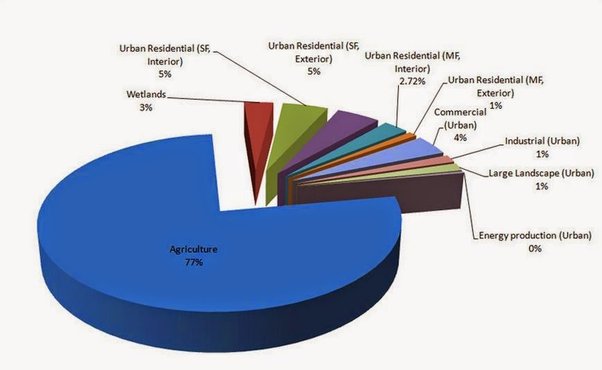
California doesn’t have a shortage of water, but it does have a shortage of cheap water. The state uses an ancient system for water allocation, where some people get it for free while others have to pay. Most of their water is used for agriculture, and those ag users don’t pay market rates. Without subsidies, many types of farming wouldn’t be cost-effective. Yet, without modification, the subsidy and allocation program set up when show packs were historically high will create an ongoing crisis. Farms should be using drip irrigation that goes directly into the soil rather than getting absorbed in the air. According to the Public Policy Institute of California, up to a million acres of prime farmland may need to come out of production in the San Joaquin Valley. Almonds, alfalfa, dates, kiwis, rice, and cotton belong on the chopping block. Grain and other hay crops, turf farms, wheat, and sunflowers are the lowest uses, while vineyards, pistachios, olives, plums, prunes, and apricots are in the middle.
Water rights vary from state to state, with great differences between the eastern and western parts of the United States. In the East, they are uniformly riparian, while in the West, they are hybrid appropriations depending on complex ownership laws.  Transferring ownership doesn’t guarantee that water rights will be attached. Based on English Common law, Riparian rights grant water rights to property owners “whose land physically touches a river, pond, or lake.” The right is transferred when the land is sold and remains valid even if the right is never exercised and the water isn’t used. Appropriative rights allocate water based on historical usage rather than land ownership. It is based on seniority and can be lost if not used regularly. Senior rights holders can use their allocation even if there isn’t enough leftover for junior rights holders. The system is tricky for states west of the Mississippi River and too complex to discuss here.

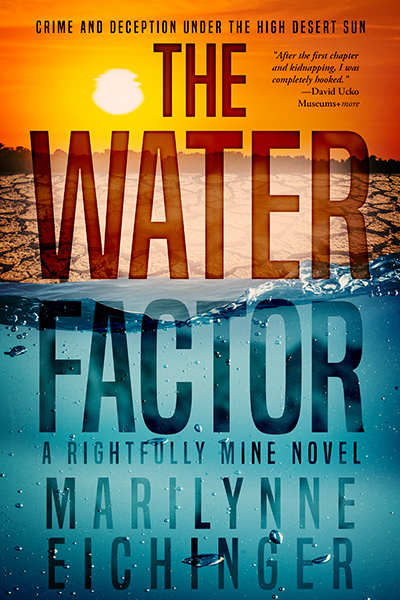
In all states, it’s wise to remember that purchasers are not just buying land but also water rights. Reading The Water Factor will provide a glimpse into current fights arising from antiquated laws in a world with over 8 billion people. Find out what is happening in your community and keep abreast of issues that deprive you of your right to clean, affordable water. 

Purchase The Water Factor today. You won’t be sorry. On AMAZON

or Barnes and Noble. Soon to be in bookstores everywhere.
References:

Shook. (2023) What are the Advantages and Disadvantages of Desalination Plants? NE Water. Retrieved from https://www.newater.com/pros-and-cons-of-desalination-plants/#:~:text

Website (2016 ) Israel Proves the DesalinationEra is Here. Scientific America. Retrieved from https://www.scientificamerican.com/article/israel-proves-the-desalination-era-is-here/

Website (2024) Water Rights by State. AQUAOSO. Retrieved from https://aquaoso.com/water-rights/

Website (2024) How Submarines Work. How Stuff Works. Retrieved from https://science.howstuffworks.com/transport/engines-equipment/submarine2.htm#:~:text
Don’t be Fooled

Sunday’s headline in the Washington Post last week read, “Mexico City’s water ‘Day Zero’ may come even for the wealthiest residents. The city of 22 million residents gets its water from a dry system. Some fear it will run out of water by the end of the month. Last January, Raquel Campos received a message from her condo’s building manager saying the city hadn’t delivered water to its cistern. Taps in her upscale home went dry four days later. When it went on, days later, the pressure was much lower. To cover the cost of having water delivered, her monthly condo expenses increased by thirty percent. 

This could happen in the United States as well. No…I made a mistake. This is happening in the United States. Jackson, Mississippi; Baltimore, Maryland; Houston, Texas; and Flint, Michigan, are among the cities facing a similar crisis. Many communities lack the resources to maintain their water infrastructure, septic system, and wastewater treatment. As aquifers and streams dry up, Latino, Black, and Indigenous communities and those in low-income and rural areas are disproportionately affected. Being forced to rely on bottled water costs an estimated $1,350 per person yearly. My novel, The Water Factor, is set on a Native American reservation and in Ethiopia to show vivid examples of what is occurring worldwide.

Can you imagine what would happen if the Colorado River went completely dry? After supporting life for over six million years, it will affect the entire ecosystem, forcing animals that drink from the river and eat the plants that grow by it to leave. It will put an end to inspiring river trips through the Grand Canyon. The Biden administration is trying to combat the unsustainable use by dedicating 15 billion dollars to Arizona, California, Nevada, and several Native American tribes in exchange for cutting their water consumption by the end of 2036. 

Do you wonder what is happening in your backyard? The following are a few examples, but every state is affected.

  1. Oregon: Water shortages and groundwater problems have been chronic issues in Central Oregon for over a century. Soaring regional growth over the past two decades will make the challenges even more difficult to resolve. As this region’s population increases, so will the number of straws pulling on a finite amount of water resources.
  2. Michigan: Michigan is lucky to be surrounded by four great lakes, over 11,000 inland lakes, and 63 major watersheds. However, the state faces microplastic pollution, contaminated drinking water, PFAS contamination, algae blooms in Lake Erie, Failing septic systems, and erosion. 
  3. New York City: NYC’s water supply is unfiltered, and an aggressive watershed protection program is needed to protect it at its source. The quality of its drinking water depends on it. The most significant threats to NYC are sprawl, aging infrastructure with lead pipes, and pharmaceuticals in its waters.  Water shortages due to drought occasionally affect New York City because the reservoirs supplying the city are upstate.
  4. North Carolina: North Carolina has historically been considered a water-rich state. However, the state has faced water shortages recently due to rapid population growth, drought, and aquifer degradation. Experts predict that if present growth and water use trends continue, North Carolinians will find it increasingly difficult to satisfy their water needs in the coming decades.
  5. Louisiana: Big and small communities in south Louisiana, including the state’s two largest metro areas, Baton Rouge and New Orleans, are grappling with saltwater intrusion into underground aquifers and critical surface water sources like the Mississippi River. Drinking water for millions of people is threatened. 
  6. Kentucky: Surface- and groundwater supplies in Kentucky are susceptible to pollution from both natural and manmade sources. Naturally occurring substances such as iron, manganese, barium, selenium, hydrogen sulfide, and salt may be present at undesirable levels.  
  7. California: California’s relationship with water continues to generate controversy. The most essential issues center on distributing and sharing the resource — getting the water to the right place at the right time — while not harming the environment and aquatic species. Distribution is coupled with conflicts between competing interests over available supplies. The water demand is highest during dry summer when little natural precipitation or snowmelt occurs. California’s capricious climate also leads to extended periods of drought and major floods.The water demand is highest during dry summer when little natural precipitation or snowmelt occurs. California’s capricious climate also leads to extended periods of drought and major floods. Though the situation improved in 2023, Lake Mead and Lake Powell reservoirs remain at 36% capacity.
  8. North Dakota: North Dakota has 37 documented cases of groundwater quality degradation. About two-thirds of those cases involve gasoline, diesel fuel, fuel oil, or lubricating oil contamination from leakage or spills. Most of the degradation can be  corrected by simple means, such as excavating contaminated earth materials.
  9. Illinois: Many Illinois rivers, streams, and lakes are contaminated with E. coli bacteria; contain fish that have been exposed to mercury and PCBs; exhibit low oxygen levels; and contain excessive phosphorus, manganese, siltation, suspended solids, and algae, all of which negatively impact aquatic life.
  10. Texas: Texas is prone to periods of drought that impact water availability for agricultural, industrial, and municipal uses that exacerbate existing water challenges. Another hot, dry summer may push parts of Texas to the brink. The Rio Grande hasn’t flowed consistently into the Gulf of Mexico since the early 2000s. And, because the Colorado River is running dry, Water releases to coastal wetlands have been halted, affecting bays and estuaries. In Corpus Christi, a major refining and export hub for Texas shale oil and gas, city authorities have imposed water use restrictions on residents. At the same time, they let the region’s largest industrial water consumers operate unabated.

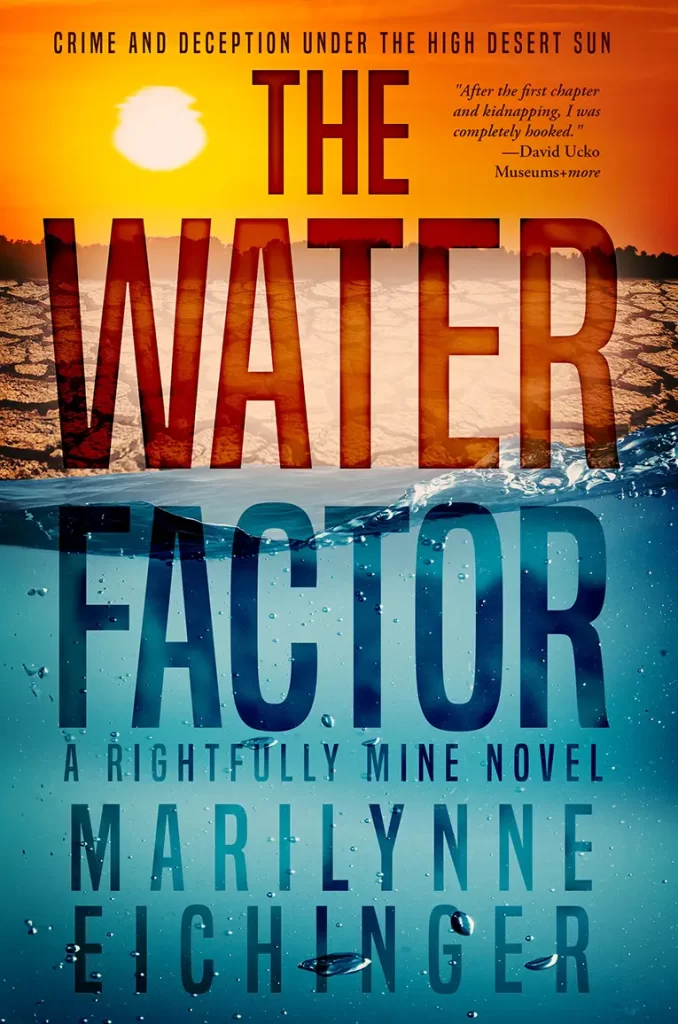
THE WATER FACTOR: A RIGHTFULLY MINE NOVEL. It may have all the bells and whistles of a thriller set in the future, but it is based on factual events that have already occurred. The Water Factor will have you turning pages as you learn what happened when water became a commodity and was no longer a right. If you don’t see it in your local bookstore yet, ask them to order it.

A 2024 Firebird International Award Winner For Best Dystopian Novel: Available at Barnes and Noble  and Amazon

Water and the WTO

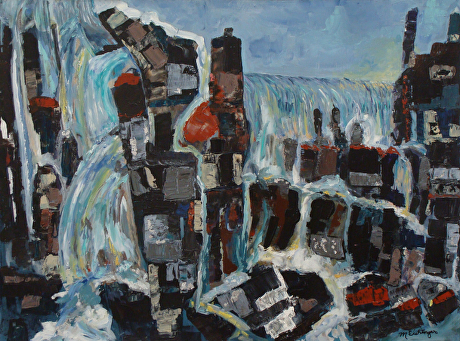
THE WILLAMETTE FALLS

Willamette Falls Power Station was formed at the end of the Oregon Trail in 1888. It was the first station in North America to transmit power over electric lines between two cities. Before then, the falls were an important fishing and trading location for many tribes. After the power station was constructed, it became home to paper mills that are crumbling and falling into the river today. A tribal coalition plans to restore the falls to its pre-industrial condition with a new public access project on the river’s west side.

Water and the WTO

The World Trade Organization (WTO) conference was hosted in Seattle in 1999. It initiated one of the largest protests the city had ever seen. I never understood why my neighbors to the north were so agitated. As the world’s largest international economic organization with an overall objective to use trade to raise living standards, create jobs, and improve people’s lives, their goals sound more than reasonable. The intergovernmental organization provides a framework for countries to negotiate trade agreements and resolve differences, and it promotes free trade by reducing barriers to it, like tariffs. Don’t developing nations need our help? And don’t we like the inexpensive gadgets provided by companies that manufacture abroad?

Free trade sounded good to me, so why the protests? And why were tensions so high during this February’s annual WTO conference? The meeting revealed bad feelings between industrialized nations, like those between China and the United States, and the conflicts between industrialized nations and activists who want a greater say in rules managing their country’s trade. 

Protesters view WTO as an organization devised to increase the profits of international corporations. Their regulations allowed foreign companies to take over critical services with little oversight.  WTO rules say little about unfair trade practices like cartel agreements, price fixing, and the abuse of dominant position on the market.  Economists  Dan Rodrik and Ha Joon Chang and anthropologist Marc Edelman argue that the WTO “only serves the interests of multinational corporations, undermines local development, penalizes poor countries, [and] is increasing inequality.” All too many agreements have led to restricted access to food, water, and healthcare, causing large numbers of deaths.

I delved further into water rights and water and wastewater management systems to understand the relationship between the WTO, the World Bank, The International Monetary Fund, and international corporations repairing infrastructure problems. I label the WTO as the Fixer. The Fixer goes into a country to deregulate its industry, softening the reluctance of elected officials to protectionist policies.  This opens the way for the World Bank and International Monetary Fund to offer loans with interests that can tax a fragile economy to the hilt. With money guaranteed and oversight slight, international water cartels are willing to take over community water systems. This often leads to rising water rates and draining aquifers farmers have depended on for generations. Companies are able to acquire water rights to bottle and sell it back at 2,000 times the cost of getting it from a kitchen faucet or pumping it from a well.

Water is also vital to manufacturing. When it’s diverted to produce widgets, companies abuse the privilege by polluting the rivers with industrial waste, making the water inaccessible for livestock and human consumption. When diverted to large agriculture, small farmers losing water rights are forced off the land with nowhere to go. Peasant protests are becoming common. “Take agriculture out of WTO” is a familiar protest cry.  Indigenous and peasant communities are also affected and are seen campaigning for rights to land, water, and governance of their own people.

Understanding the positive and negative aspects of the WTO is complex. International trade can reduce production costs, lower prices, and provide more choices. Looking at the U.S., you can understand what happens when production is outsourced to countries with struggling economies. It leaves our workers struggling to make a living wage. However, protections in affluent markets raise domestic prices and affect consumers in poorer countries.  When global food imports are sky-high, the least developed countries that depend on them suffer. According to an article in Sage Magazine, “Since 2004, attention in the WTO has shifted from overarching human rights concerns toward a focus on technical detail constraining developing countries from acting to respect, protect, and fulfill the right to food.”  This goes for water as well.

This review scratches the surface of a multifaceted issue that forms a backdrop for The Water Factor, a Rightfully Mine eco-thriller about corporate crime. The book will be available to pre-order on Amazon. Look for my announcement next Saturday. 

Please share your thoughts below.

The Willamette Falls Painting is in a private collection. To see other works by Eichinger, go to www. echingerfineart.com or for information, contact me at marilynne@eichingerfineart.com

The Water Factor will be available for pre-sale on Amazon by April 1st in paperback and ebook editions. Help me make its launch a success.

Book Launch — April 28th, during the Earth Day Celebration between 11:45 and 2:30 at 1211 SW Main Street. I will introduce the book and discuss water issues during a half-hour talk and be available for signings afterward.. 

The event is sponsored by the Community for Earth and will inspire you to activism for a healthy planet.

References:

Website (2024) World Trade Organization: Promoting Free Trade. Academy 4SC. Retrieved from  https://academy4sc.org/video/world-trade-organization-promoting-free-trade/?

Website (2024) Who we are.  World Trade Organization. retrieved from https://www.wto.org/english/thewto_e/whatis_e/who_we_are_e.htm#:~:text

Hawkes, S.& Plahe, K (2018) Worlds apart: The WTO’s Agreement on Agriculture and the Right for food in developing countries. Sage Publications.  Retrieved from https://journals.sagepub.com/doi/10.1177/0192512112445238?icid=int.sj-full-text

Website (2024): The World Trade Organization should reorient from rule-making to dialogue. Retrieved from https://www.chathamhouse.org/2024/03/world-trade-organization-should-reorient-rule-making-dialogue

Water: A Right or Commodity?

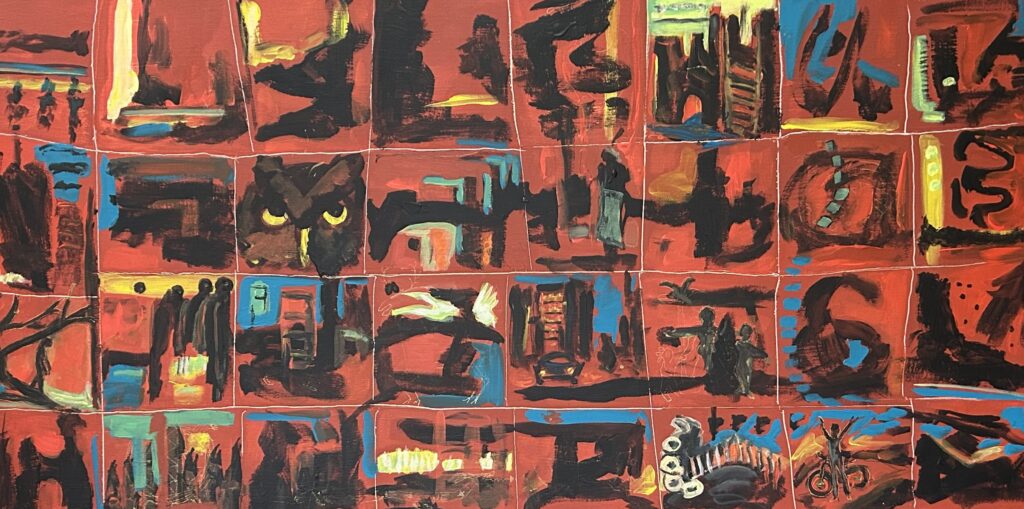
SEE All.                                                                                                                                           Like the owl, watch and see what is going on in your community so you know how to vote and take action. 

Water: A Right or Commodity?

For millions of years, the animal kingdom treated access to clean and safe water as a For millions of years, the animal kingdom treated access to clean and safe water as a fundamental right necessary for life. In 2010, the United Nations recognized the right to water and sanitation as essential for the full enjoyment of life and all human rights. It took twenty years to get there. Advocates for this perspective believe that water should be managed as a public good, ensuring equitable access for all, regardless of ability to pay.

In 1992, at the U.N.’s International Conference on Water and the Environment, The Dublin Principle declared water an “Economic good” for the first time, spurring water to be traded for the first time. The debate of whether it was a commodity or not escalated until corporations took matters into their own hands. In the Hague, 5,700 people gathered at the World Water Forum convened by big business in 2002. The topic was how to benefit from selling water globally. Though U.N. officials, The World Bank, WTO, and 140 governments were non-voting attendees, they were not voting members. The main players were Vivendi, Suez, and food procession conglomerates like Nestlé. Since then, water has been one of the most actively traded commodities on Wall Street. It can be bought, sold, and allocated based on supply and demand. Proponents argue that treating water as a commodity encourages efficient allocation and incentivizes investment in water infrastructure and technologies.

The debate continues as water scarcity increases due to global warming and population growth. We are no longer a hunter-gatherer society wandering the globe, and stopping at freshwater holes. Nor are we farmers with guaranteed rights to collect water from clean-flowing streams and rivers on our properites. Today’s access to water revolves around the cost of managing it sustainably and efficiently.

With 89 percent of the U.S. population and 68 percent of the world’s population in cities, water scarcity is a pressing issue made worse by automotive runoff, household contaminants, industrial waste, and pesticides that pollute waterways. Wishing for filtered water to come to our kitchens and bathrooms for practically free is a dream, but with rates so high, an increasing number of residents can’t pay their water bills. In Detroit, tens of thousands of households had their water shut off in 2014 because they couldn’t pay their bills. One mother asked a U.N. representative, how he could deny a person the right to use a toilet.

Flint, Michigan, residents have dangerously high lead levels in their bodies and experience various health problems due to a mismanaged water system. Though not directly connected to Flint’s problems, Nestlé has been depleting local wells and wetlands nearby, paying almost nothing to bottle and sell it. In California, Nestlé pumps water from the San Bernardino National Forest for its Arrowhead Mountain Spring Water.

Forty-four nations, including the United States, abstained from the U.N.’s resolution affirming the human right to clean drinking water and sanitation.

The U.S. argued that water was not a human right despite its being necessary for survival. Since it passed, the resolution is a legally binding international law stating that water and sanitation must be sufficient, safe, acceptable, accessible, and affordable (not more than three percent of a household’s income). Unfortunately, this laudable goal is failing, with the attempt to gain private water rights growing.

Extensive land purchases are being made in America, Africa, and Asia for the water that goes with it. It has been labeled as the “great water grab.” JPMorgan and Deutsche Bank increased their water investments and companies like Northwest Natural Gas and PGE in Oregon have departments devoted to purchasing water rights. Companies that bottle and sell water, energy companies involved in fracking, and industries that use water to sell their goods have a huge incentive to acquire water rights. Some of the largest water corporations, like Suez and Bechtel, have taken over municipal systems worldwide to much criticism.

After the 2020 heatwave in California, The Chicago Mercantile Exchange allowed farmers, hedge funds, and municipalities to begin hedging against future water availability, with $1.1 billion in contracts at stake. This put a basic human right in the hands of financial institutions and investors. Rather than protecting the environment and ensuring universal access at a reasonable cost, privatizing water guarantees corporate profits will go to private companies. Activist David Hall studies past examples of privatization. A common example is what Guinea experienced where prices became seven times higher than those of their neighbors. On average, communities with privatized utilities have bills that are 59 percent higher than those with public providers. Given this statistic, why would any community let its PUD slide into public-private arrangements that raise rates?

Change is happening slowly due to rising alarm. Last year, U.N. experts concurred that water should be managed as a common good and urged the United States to “ensure that human rights and water defenders be placed at the core of the UN-Water Conference.” They convened a three-day session to consider the global water situation for the first time in 50 years.

In my area, The Portland Utility Board (PUB) serves as a community-based advisory board for the Bureau of Environmental Services (BES) and the Portland Water Bureau (PWB). In 1999, Portland employees provided eighty-five percent of its drinking water and 95 percent of wastewater treatment. Since then, the market began opening up to private providers for capital to repair or replace aging infrastructure without going to the public for bond approvals. In 2023, The Portland Water Bureau seated twenty-eight contract teams for projects worth $1.83 billion.

My hope is that our cities will end this practice. Private companies are difficult to monitor, and their goal to make money for shareholders is passed on to consumers. I agree with the Indigenous nations that signed an agreement “reject absolutely the commodification, privatization and dispossession of water being implemented by states and private sector entities around the world.”

The way Indianapolis shows us that with proper incentives, public employees can be as competitive as outside vendors was an example in the City Club of Portland Report on Privatization of Government Services. Non-profit entities can manage as well as for-profit neighbors. Rather than changing the Monopoly board going forward, let’s continue to keep Public Utility districts government-owned for the public good.

Get ready for Earth Day and help launch The Water Factor in mid-April and write a review. It will first be available online in paperback, ebook, and audio versions and in bookstores by August. 

References:

Burtka, A. & Montgomery, W. (2018) A right to water – Is water a human right or a commodity? ERB INSTITUTE, University of Michigan. Retrieved from https://erb.umich.edu/2018/05/30/a-right-to-water-is-water-a-human-right-or-a-commodity/#:~:text

Statements and Speeches (2023) Water is a common good, not a commodity: UN experts. United Nations Human Rights. Retrieved from https://www.ohchr.org/en/statements-and-speeches/2023/03/water-common-good-not-commodity-un-experts

Shukla, N. (2021) Water is Now Being Traded as a Commodity Amid Fear of Scarcity. Earth Org.Retrieved from https://earth.org/water-trade/

DiFelice. M. & Grant, M. (2022) We Have a Right to Water. The U.S. has yet to Deliver. Food & Water Watch. retrieved from www.foodandwaterwatch.org/2022/09/15/we-have-a-right-to-water-the-u-s-has-not-delivered/

The City Club of Portland (1990) Privatization of Government Services. Report. Retrieved. https://pdxscholar.library.pdx.edu/cgi/viewcontent.cgi?article=1492&context=oscdl_cityclub

Newcomb, T. (2023)  Portland, Ore., Picks Contractors for $1.8 B in Water Projects ENRNOrthwest. retrieved from https://www.enr.com/articles/56809-portland-ore-picks-contractors-for-18b-in-water-projects

Website. Historic UN 2023 Water Conference generates transformative commitments. United Nation. Retrieved from https://www.unwater.org/news/historic-un-2023-water-conference-generates-transformative-commitments

Website. INDIGENOUS PEOPLES’ DECLARATION FOR THE 2023 UNITED NATIONS WATER CONFERENCE. Retrieved from https://www.iitc.org/indigenous-peoples-declaration-for-the-2023-united-nations-water-conference/

Please don’t hesitate to share your thoughts below.

SEE ALL is a 24” by 48” by 2” acrylic painting available for $895. Free shipping in continental U.S. Purchase online or contact me at marilynne@eichingerfineart.com

Headlines Around Water

With 71 percent of the Earth’s surface covered by water, you might wonder why there is a crisis. Since saline oceans hold 96.5 percent of the earth’s water, we rely on the small amount that is freshwater to support human, plant, and animal life. A warming planet and booming population make it difficult to keep up with human needs. For an overview, scan these headlines for a glimpse into the future.

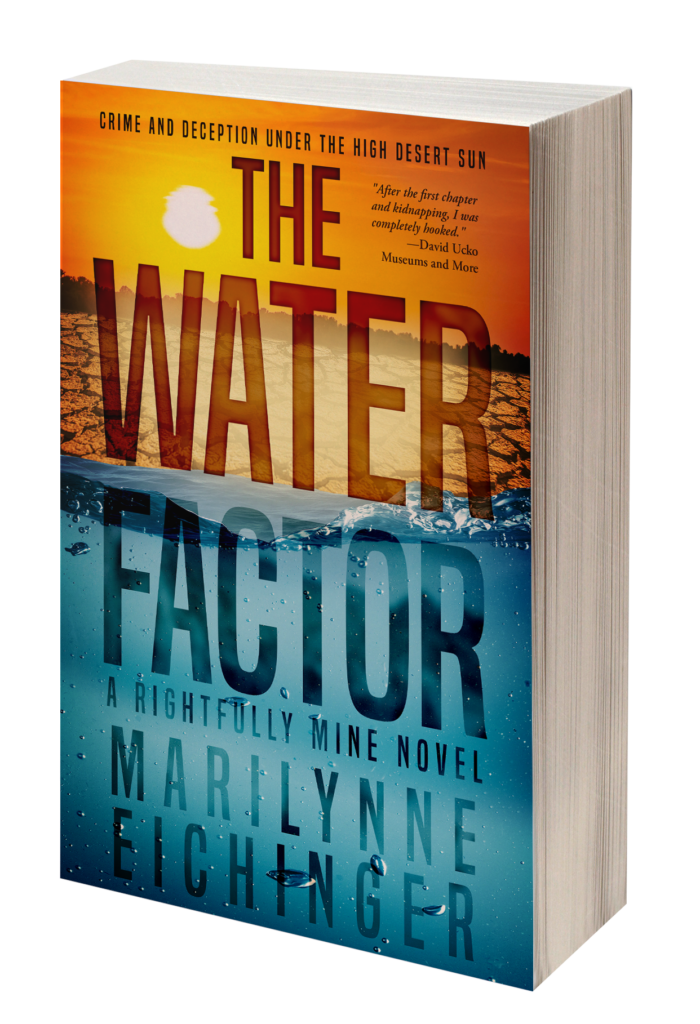
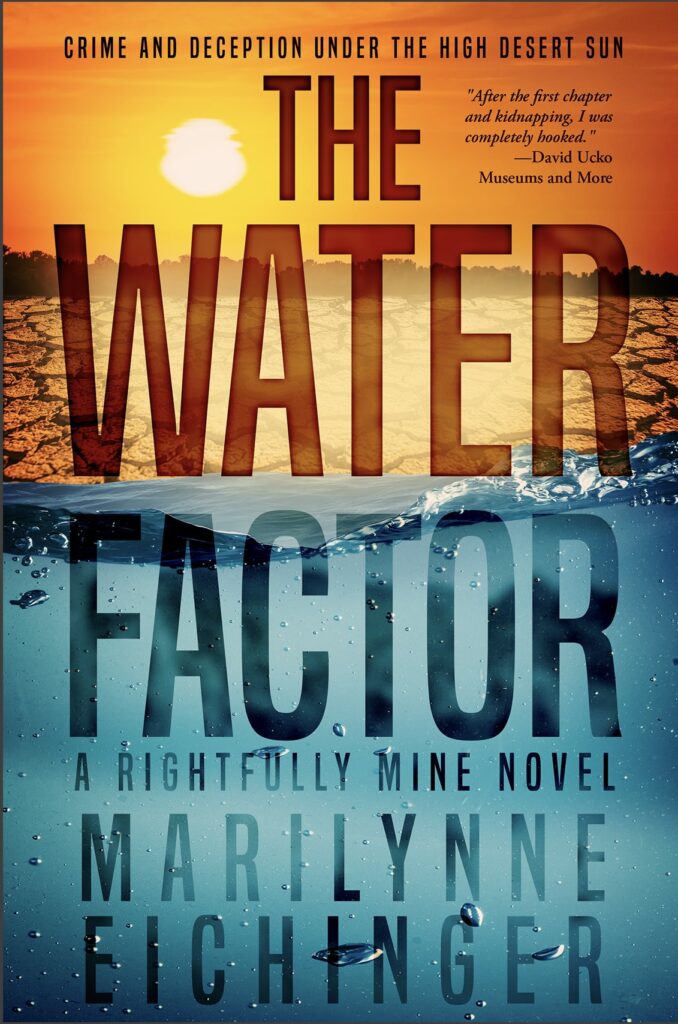
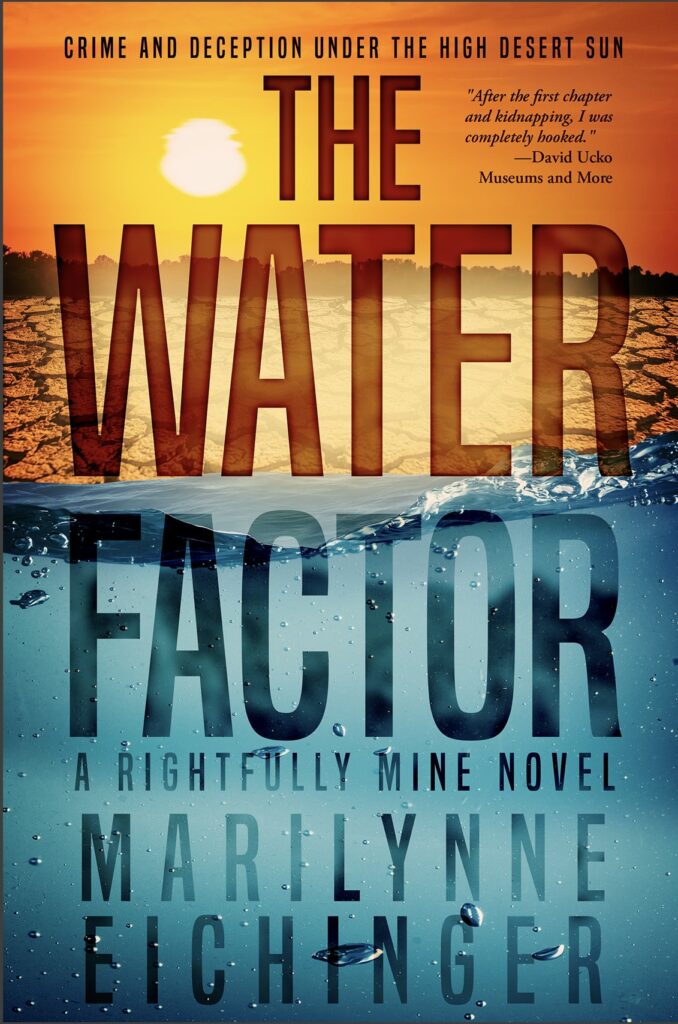
Last week’s blog was a preview look at the cover graphic for The Water Factor, a thriller about corporate crime, that will be available for sale in mid-April. Though the novel is a work of fiction, the issues around water are based on fact. Over the next month, I will share the research that inspired me to write this story. Today’s writing provides an overarching view of the problem. Next week, I will discuss what the corporate takeover of water by utility companies and water cartels is doing to communities throughout the world.

TOWNS SELL THEIR PUBLIC WATER SYSTEMS–AND COME TO REGRET IT.

LAKE STATION, Ind. — This hard-luck town just south of Chicago is weighing a decision confronting many small and midsize cities with shrinking populations and chronic budget deficits: whether to sell the public water system to a for-profit corporation. Neglected water infrastructure is a national plague. By one estimate, U.S. water systems need to invest $1 trillion over the next 20 years. In a special meeting, the council voted 5-2 to sell the plant for $20.68 million, the water company’s original offer. Elizabeth Douglass (2017) Washington Post and Carole Carlson Chicago Tribune.

Mexico City’s long-running water problems are getting even worse. Climate change and mismanagement have exacerbated the inequalities between those who have access to water and those who don’t. Authorities are warning of major water shortages across huge swaths of Mexico City until the rainy season begins in June and refills the reservoirs. Emily Green (2023 )NPR

Lawsuits Mount for Nevada-based Real Water, amid FDA probe. Lawsuits are mounting against a Las Vegas-based bottled water brand, Real Water, amid a U.S. Food and Drug Administration investigation and accusations by more people in more states that it caused liver illness and other ailments. KEN RITTER (2021) Associated Press

PFAS Water Utility Lawsuit Shows An Increasing Trend. In the latest lawsuit, the Pennsylvania-American Water Co. (“PAWC”) sued numerous PFAS manufacturers over allegations that the companies knowingly or negligently allowed the contamination of Pennsylvania’s drinking water. (2021) CMBG, LAW

Drug cartels stealing millions of gallons of water for marijuana grows in Antelope Valley. Drug cartels have been stealing 2-3 million gallons of water a day to feed illegal marijuana grows in the Antelope Valley, officials said. Asked where the water was being stolen from, Rep. Mike Garcia, who represents the state’s 25th District, said: “Right here from our local aqueduct system. The California Aqueduct flows right through the Antelope Valley. They’re taking it out of wells. They’re stealing it from fire hydrants.” Leo Stallworth (2021)ABC Eyewitness News

IS WATER THE NEW DRUG FOR MEXICO’S CARTELS. What it’s like when narcos run your privatized water system. Tamara Pearson(2013) New Internationalist.

Kenya: Nairobi’s Water Cartel Woes. The urbanization of Nairobi has significantly strained its water infrastructure and the supply of water to the city. That strain has raised concerns about the cleanliness of the water and the issue of water cartels tapping into the water mains.Poorly maintained pipelines and the growing concern about the activities of water cartels call for multilateral action. Christopher Crellin (2018) Global Food and Water Crisis Research.

Global Water Crisis: Facts, FAQS, and How to Help. Water, the essence of life on earth, is a vital resource. Yet, a global water crisis continues to challenge people’s access to the quantity and quality needed for drinking, cooking, bathing, handwashing, and growing food. Sevil Ober (2024) World Vision.

Water Shortages Destabilize Ethiopia and Wider Region: A major food crisis triggered by drought and conflict is affecting more than 20 million people in East Africa.”The drought in eastern and south-eastern Ethiopia mostly affects pastoral people who are forced by water shortages to move their livestock, such as cows and sheep, elsewhere, creating tension between villagers who, overnight, have to share the same pasture land and water points,” Fabrice Vandeputte, (2023) Handicap International’s programs in Ethiopia.

U.S. TRIBAL NATIONS DEAL WITH A LEGACY OF POOR DRINKING WATER: Warm Springs: The community’s four-decades-old water treatment plant has been plagued with problems. In 2019, a boil-water notice continued for three months in some parts of the reservation. The community has, at times, been forced into communal showers. It hasn’t always been clear that enough water is available to fight fires. Scholars say access to safe drinking water and reliable sanitation is a problem for nearly half of Indigenous people in the U.S. President Joe Biden’s administration has dedicated billions of dollars from its massive infrastructure spending to improve water and sewage services for tribal nations. (2024) Deschutes River Conservancy.

Water and Agriculture. An interview with John DeVoe: “Eighty percent of our water goes to agriculture. You have to understand there is no charge for water itself in the transfer of the right to use it (a public resource) from the states in the West to agriculture. Agriculture does not pay for it. It’s not that they pay “a little” or a “small amount”, they do not pay for it. Not their irrigation districts (corporations) and not individual farmers. It is free to them. There’s no need to focus on far-away corporate control and “what ifs” when the real corporate control is right here, right now – within irrigation districts, reclamation projects, utilities, and so on. The corporate control horse – at least in the American West – has already left the barn.” John DeVoe (2019) WaterWatch of Oregon.

Keep Nestlé Out of the Gorge. Upon learning of Nestlé’s attempted water grab, conservation and public interest groups formed a coalition to raise awareness and opposition to the proposal. They created a blueprint for protecting local water.The plan would have given Nestlé a fifty-year guarantee of access to 118 million gallons of water annually from state-owned Oxbow Spring, which it would transform into hundreds of millions of bottles of Arrowhead brand water to be sold across the Northwest. Cascade Locks city officials, two Oregon governors, and the state fish and wildlife agency all lined up behind the proposal, continuing to back it throughout the long approval process. Yet nearly a decade later, in October 2017, the plan was officially dead. Jaffee, D. (2024) Columbia INSIGHT.

The Water Factor will be online and in bookstores by mid-April.

I look forward to your comments below.

Cover Preview for Family & Friends

You are the first to view the cover graphic for The Water Factor, a thriller about the corporate takeover of water. Though set in the future, everything in the story is based on fact. You’ll be surprised, horrified, intrigued, and concerned about water cartels operating throughout the world without much oversight. They consider water to be blue gold, a commodity to buoy up billionaires, letting millions drown in poverty. 

The Water Factor will be in bookstores and online by mid-April. Over the next few weeks, I will share some of my underlying research, with a few insights gleaned from what I learned. I hope that people will become better informed and do more to protect the most important substance needed to support life.

Do you consider water a right or commodity. Over the next few weeks, I look forward to reading your thoughts .

Hold Onto Pride

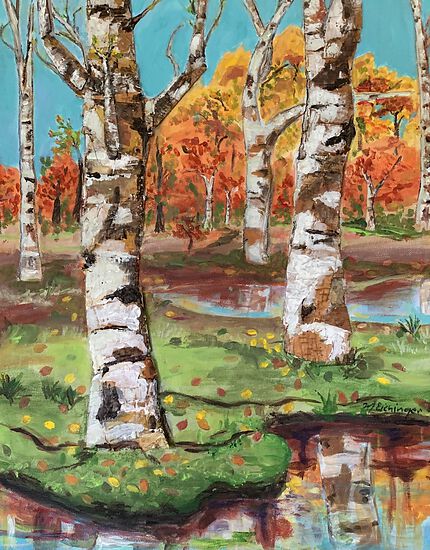
Birch Trees. We live in a country where beauty takes many forms. Our job is to protect and enjoy nature’s bounty so it can remain the pride of future generations. 

Holding onto Pride

Last week, I watched Dance Life, an Australian mini-series on Prime Video. It documented 19 and 20-year-olds in an advanced school preparing for a highly competitive career after graduation. I was impressed by how the instructors hammered the students to take pride in their training, embracing their craft with the totality of their minds and bodies. It was no place for students who doubted what they were doing and reinforced their need to commit to success. The spectacular graduation performance led to contracts with agents, dance companies, musicals, modeling agencies, and advertising companies.

The series made me wonder how many youths have dreams they follow through to fruition. The Australian students supported each other, pushing frustrated friends to work harder to achieve the highest degree of excellence possible.

I was reminded of crossing the ocean on a Holland American ocean liner with my young husband. We were served in the dining room by a professional waiter and his apprentice. I could see that the younger man looked up to his mentor, performing as his shadow. He stood tall and proud under the head waiter’s tutelage, mastering his movements and style. I felt honored to be at their table.

When my friends and I married, we were determined to outshine each other as homemakers, mothers, and hostesses. We scrubbed our apartments and studied child psychology books to become super-moms. It didn’t matter whether we were also enrolled in college, working, volunteering, or were home as a full-time mom; the goal was to excel. We believed in America as the land of the free, a melting pot that provided opportunities for families to prosper. We were expected to leave the world a better place than when we were born.

The years following the Second World War ushered in an era of prosperity. The economy was booming, with a record number of children being born. During this “Golden Age of American Capitalism,” the government built Interstate highways, libraries, and schools. Inflation and unemployment rates were low. The military spent millions on new technologies, leading to computers and advanced airplane travel. People felt good about being Americans, though pride led to some being labeled ugly Americans when traveling abroad. The dream of home ownership was achievable–that is, for white citizens and those following the dos and don’ts of a conservative society.

The counterculture of the 1960s and 70s was a reaction to the stringent values of the 50s. The Civil Rights, Women’s Rights, and the LGBTQ movements emerged from a desire to recognize all citizens as worthy individuals who could walk down the street with their heads held high. Minorities and women demanded equal treatment at work and access to housing. Youth wanted more freedom and autonomy, especially sexual liberation. The movement was so strong that thousands of us took action. It wasn’t that we believed in dropping out as so many elders claimed; we were dropping in to create a more inclusive society. We were proud to participate in something we saw as fair and essential: treating all Americans equally.

Pride comes from dedication and involvement. A house painter I met recently complained that younger employees show no interest in mastering the techniques of his trade. They do what they can to get by and count the minutes until their shift ends. Is apathy a typical attitude today? What he told me was so different from how I was raised. It didn’t matter if it was a board room or warehouse; I was brainwashed to be all in. I found ways to make routine jobs fun. For example, while picking and packing hundreds of toys to ship out of a warehouse over Christmas, I imagined myself as an elf helping Santa. I feared making a mistake that would lead to a disappointed child. Imagining that my labor was meaningful made the work fun.

The Mental Health Project, a Seattle Times initiative, interviewed 608 people from four generations–Boomers, GenX, Millennials, and GenZ. It concluded that Gen Zers are the least happy at work, with 26 percent wanting to leave their jobs. It wasn’t that they were lazy; it was that they wanted more from their workplace. They want professional development, opportunities to learn, mentorship, and growth. Most of all, they want work they consider meaningful.

COVID-19 gave millions of Americans time to reflect on their jobs. Though many liked their profession, they resigned because they didn’t like how they were treated. They concluded that being over-consumed with work and constantly busy isn’t healthy or satisfying. They started looking for jobs that provided more flexibility.

On average, today’s workers change jobs every 2-3 years. It’s a far cry from a lifelong dedication to a company job that was common after WWII. Businesses are so concerned with their bottom line that they aren’t loyal to their workers. Few offer stable employment that carries substantial retirement benefits. Since that is the case, why should their employees be loyal to them? Loyalty comes with a price tag that includes a competitive salary, excellent benefits, flexibility, and a reasonable workload. Not many people are lucky enough to find work for a company that protects and values its employees above increasing profits for investors.

Millennials and Gen Zers are better educated and credentialed than previous generations. They also have increasingly more debt and a greater need to be with an earning partner. The desire for meaning and security in a gig economy is even more challenging. Short-term jobs related to a career path are hard to find, and self-worth and pride in their work are no longer related to capitalism and production.

So…they are adapting. Careers no longer define the totality of their existence. Upward mobility isn’t the end game. The goal is to find work that provides an adequate salary with a work-life balance that allows time to pursue outside interests. Cultivating a personal life that makes you happy and whole is becoming the norm.

I rarely ask people I’m newly introduced to about their profession. Instead, I want to know their interests and what they do in their free time. One woman told me about the exotic plants she raises. A man described how he plans to ride his bicycle on every street in the city. A senior citizen mentioned collecting trash with SOLVE. These people took pride in their actions and were happy to share their stories.

According to a recent Gallup poll, adult Americans have a historically low regard for our country. This affects their children, who start work at a disadvantage. Without pride in the nation and their communities, they start work feeling hopeless. There is a feeling that nothing they do will make the situation better. They don’t turn up at work to produce the most outstanding products or provide the best service in the world.

Employers have a hurdle to overcome when hiring youth. If they want them to take pride in a job well done, they are challenged to help them see value in their employment. This means mentoring, training, listening, and helping them view the future as one with possibilities for change and growth.

References:

history.Com editors ( 2022) The 1950s. History. Retrieved from https://www.history.com/topics/cold-war/1950s

Desjardins,M. (2016) Counterculture: The Generational Gap And Reaction to the 1950s. Providence College. Retrieved from https://digitalcommons.providence.edu/cgi/viewcontent.cgi?article=1003&context=american_studies_forum

Bregel. S. (2023) Gen Z is the least happy generation at work. FastCompany. Workplace Evolution.Retrieved from https://www.fastcompany.com/90879257/gen-z-happy-workplace-gen-x-millennials-boomers-study

Graham, C. Phd. (2023)Millennials and the Data of Job Loyalty: Why do we leave? Medium. Retrieved from https://cagraham1986.medium.com/millennials-and-the-death-of-job-loyalty-why-do-we-leave-8fca863b516d

Brendan, M.  (2023) Extreme Pride in Being American Remains Near Record Low. Gallup. Retrieved from https://news.gallup.com/poll/507980/extreme-pride-american-remains-near-record-low.aspx#:~:text/

Art is always for sale. Birch Trees is an acrylic painting with natural bark on the trees. It is available on my website, www.ecingerfineart.com, for $ 595. A print delivered to your home can be purchased there for $ 99. Contact me with questions at marilynne@eichingerfineart.com

Do share your thoughts below about pride in work and the nation.

Join the The Water Factor’s launch in April. It is the first thriller in the Rightfully Mine series about corporate crime.

.

Aliens?

Heaven and Beyond. What lies beyond our sight?

Aliens?

Most people are accustomed to alien life forms in their backyards and don’t think twice about them. But perhaps you do, especially when English Ivy, introduced by European colonists in 1727, creeps up your tree to the canopy, killing it. More recently, our neighborhood has been dealing with stink bugs that arrived from the Orient in container ships. According to Washington State University researchers, changing weather patterns have increased the habitat for stink bugs throughout the country.

And though immigrants seeking asylum in the U.S. are called aliens, they aren’t the ones I’m writing about. The papers are full of the pros and cons of integrating people of different skin colors, languages, religions, and cultures into American society. From insects and immigrants, we can see how difficult it is to adapt to things alien to our environment. What if the situation becomes even more extreme and science fiction becomes a reality?

I am curious why the U.S. Congress became so interested in U.F.Os that funding was tucked into a measure in the annual defense policy bill passed last December. It directs the National Archives to collect documents about unidentified anomalous phenomena, technologies of unknown origin, and nonhuman intelligence. Conspiracy theories abound, and suspicions persist that the government has been concealing information about UFOs for decades. I started wondering about the upsides and downsides of finding intelligent life somewhere in space.

Planetary travel and chance intergalactic meetings can excite and scare those who believe it is possible. Whether the thought is exciting or causes fear depends on a combination of psychological, cultural, and societal factors. Meeting an alien will require people on our planet to change beliefs held since childhood. Remember how long it took for the Catholic Chuch to accept that the world is round? Men like Galileo Galilei were tortured in the Inquisition before their calculations were accepted. People in the Flat Earth Society still think the world is flat, not round. Adapting to a multi-inhabited universe would require change at warp speed.

Some with strong religious and cultural beliefs will view extraterrestrial arrivals as a divine or spiritual event. Within the Aztec Empire, many believed that Cortés was Quetzalcoatl, a god who would return to overthrow the god Tezcatlipoca, who demanded human sacrifice. Other people would view arrivals from space as a threat to the religious and cultural indoctrination they grew up with. A perceived threat to their way of life and well-being would most likely trigger a fear response. Extraterrestrials might stir evolutionary instincts geared toward survival that could lead to intergalactic wars.

In 2014, the Center for Theological Inquiry received $1.1 million to study the societal implications of astrobiology. Many taxpayers were enraged, saying it was a waste, but others said the day will come when humanity has to respond to aliens from space. An increasing number of scientists agree that this is not an idle fantasy and that extraterrestrial visits are a question of when, not if. Their reasoning is influenced by the rapid discovery of thousands of planets seen through the Kepler space telescope.

By January 25th, 2024, space telescopes identified and confirmed 5,572 exoplanets and 4,145 planetary systems, with 59 potentially Earth-sized exoplanets occupying a “habitable” zone around their star. Some studies analyzing Kepler data calculate that the Milky Way could have as many as six billion Earth-like planets. The truth is, we really don’t know. We do know that the more scientists peer into space, the more likely they’ll find something.

Fear of the unknown and unpredictable scenarios are the most common reasons for not wanting to find extraterrestrials. Media and popular culture play a role in stirring up fear. Movies, TV shows, and books range from friendly and benevolent to hostile and menacing. It is easy to be influenced by their portrayals, even when you know they are the imagination of some writer’s brain.

Seeing is believing for those who say they’ve encountered UFOS and extraterrestrial beings. Whether real or imagined, if the experience is positive, the person feels excitement and curiosity. Negative sitings produce fear of future encounters. When such reactions and opinions become supported by their social circle or broader society, they shape the perspectives of a wide range of individuals. Scientific study provides a more reasoned way to view extraterrestrial incidents than believing in your senses, which can easily be fooled. Anyone tricked by a Magician understands what I mean.

To study human uniqueness, scientists consider the principles around nature’s uniformity, plentitude, and mediocrity. They surmise that the physical processes seen on Earth are found throughout the universe, that everything is possible as long as there are no impediments to life forming, and that there is nothing special about Earth’s status. In other words, alien life will likely exist and, if encountered, will require humans to adapt to changes beyond our imagination.

In The Cosmic Question, Carl Sagon wrote that space exploration leads directly to religious and philosophical questions. According to the Center for Theological Study, the main problem is the mediocrity principle that says there is nothing special about humans. It challenges Abrahamic teaching that God purposefully created human beings and that they occupy a privileged position in relation to other creatures. Rather than rely on the bible for the creation story, scientists look to space. They study images captured through satellite telescopes, sophisticated instrumentation, and computers that analyze the data. In  Religion and Extraterrestrial Life, David Weintraub notesthat “we live on an insignificant planet of a humdrum star lost in a galaxy tucked away in some forgotten corner of a universe in which there are far more galaxies than people.”

When alien lifeforms are discovered, religions will have to adapt or perish. The Koran says that “All things in the heavens and/or the Earth” are Allah’s, so they have a built-in mechanism for adaptation. BBC investigator Brandon Ambososino quotes the Talmud as saying, “God spends his night flying throughout 18,0000 worlds. It’s another setup for accepting alien life forms. Though the Mormon church denies its members are taught they will get their own planet in the afterlife, the Broadway show The Book of Mormon influenced many people.  I had a Mormon acquaintance who, on her deathbed, shared the planet she was headed for.

The ones who will have the most difficulty adapting to life beyond earth are people who take the Bible literally. Many fundamentalists continue to reject Darwin’s theory of evolution, believing instead that God created the world in seven days. They will have a hard time since salvation is an Earth-only concept. Given the immense timeline of the universe’s existence, there are probably life forms much older than ours. Survival will require giving up Earth-centric religious beliefs for an order that expands into the unknown. More spiritually and socially advanced extraterrestrials may have to teach us how to become children of the universe.

References:

Ambrosino, B. (2016)If we made contact with aliens, how would religions react? BBC. Retrieved from https://www.bbc.com/future/article/20161215-if-we-made-contact-with-aliens-how-would-religions-react

NASA website. Exoplanet Exploration: Planets Beyond our Solar System: Retrieved from https://www.bbc.com/future/article/20161215-if-we-made-contact-with-aliens-how-would-religions-react

Lewis, B. (2023)There may be hundreds of millions of habitable planets in the Mikey way, new study suggests.LiveScience. Retrieved from https://www.livescience.com/space/exoplanets/there-may-be-hundreds-of-millions-of-habitable-planets-in-the-milky-way-new-study-suggests

Alper, B. & Alvarado, J. ( 2021) Religious Americans less likely to believe intelligent life exists on other planets, Pew Research Center. retrieved from https://www.pewresearch.org/short-reads/2021/07/28/religious-americans-less-likely-to-believe-intelligent-life-exists-on-other-planets/

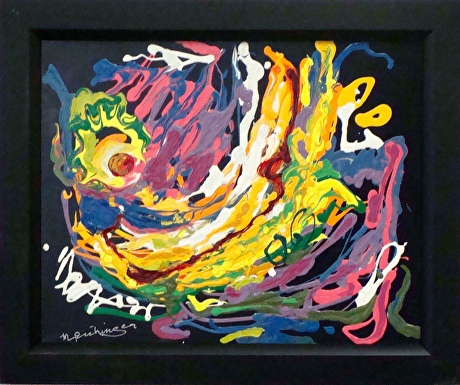
Heaven and Beyond is a 20   x 24, framed acrylic canvas painting. Available for $450, free shipping within the continental U.S. For additional information, contact the artist at marilynne@eichinger.com

I look forward to your comments below.

.

Outside the Box

Time Outside the Box

Do you remember the first time you left home? Overnight, you were without parents telling you what to do. The day I was accepted to college, I dreamt about how wonderful it would be on my own and not have to care for a younger sibling. I’d be free to stay up late and party through the night. As a sheltered child, my parents didn’t want me far from home, so my higher education began at Ursinus College, an Evangelical and Reform-sponsored college 100 miles west of Philadelphia. 

The surprise that first week away was to find that instead of freedom, I was trapped on campus with strict oversight rules regulating my whereabouts. Among other things, it was mandatory to attend chapel three days a week, with attendance taken to ensure we were there. The transition from Philadelphia suburbia was difficult for a Jewish eighteen-year-old used to the richness of the city. I loved visiting museums, going to theatrical performances, and attending symphonic and folk events. As a child, I was taken to Saturday morning children’s concerts; as a teen, I graduated to youth concerts and went with my friends to Symphony Hall. I was enrolled in art classes at The Philadelphia Art Museum, where their collection of masterpieces inspired me, and I studied ballet with plans to go professional.

My parents weren’t concerned when I traveled from suburbia to Rittenhouse Square for piano lessons. Though going by bus and subway took an hour, it was considered a safe means of transportation. Philadelphia was my playard, grounding me in American history and providing more freedom than I realized.

Years later, I was asked why I chose to attend a small rural college and if I would do it again. I went to Ursinus because Dad had taken his medical residency nearby. It was known for its strong liberal arts and pre-med programs. I was thrilled to be accepted and couldn’t wait to meet my roommate, a young woman who turned my world upside down. She was an enigma, leading me to question my take on reality. Alice (not her real name) opened my eyes to a slice of society coming from another world. There was one other Jewish woman in my freshman class and both of us were matched with Catholic roommates so we wouldn’t pollute the minds of our evangelical classmates.

Alice roommate lived in a small New Jersey town where she grew up riding horses from an early age. In her teens, she attended demolition derbies , went to wild beach parties, and galloped across the country club’s grounds with friends dressed as Ku Klux Klan members. I was shocked by the cavalier way she described her exploits and disdain for Black Americans. In our dorm, she partied in a friend’s room until the wee hours of the morning, and slept afternoons in ours. I tiptoed around the room during the day, studying with the shade down in the dark .

Undergraduate men were also different than the boys from home. Except for the pre-med students serious about their studies, they were into cars, sex, and physical exploits. Their childhoods didn’t include hours spent in cultural institutions. They liked Elvis, while my friends and I were enthralled with the Beatles and Pete Seeger. Most male undergrads came from families where practical work was valued over academic achievement. During hunting season, male undergrads attended class with hunting licenses pinned to the back of their shirts. They’d head for their rifles and hunting gear, he second the bell rang. I’m not sure where firearms were kept. Hazing rituals at fraternities made my hair stand on end. I still hear the screams of initiates drifting through my open window at night.

 Though Ursinus had a stimulating lecture series, few students attended. I sat among the staff with a handful of co-eds, wondering about the curiosity of my fellow students. School dances and movies were well attended.

Freshman women, subject to a hazing ritual supported by the administration, were compelled to wear one yellow and one red sock for our first six week. We slung name placards over our shoulders, like a sandwich sign, and wore freshman beanies wherever we went. As a newby, I memorized the long, fanciful names sophomore leaders took on, and addressed them like royalty whenever they passed. The consequence of forgetting a name was having to sing the school’s anthem before everyone at pep rallies. First-year students met at noon to be tested on our knowledge of the school’s football chants and songs. We were later told that the goal of hazing was to get the freshman class to bond and rise against the sophomores. Our class overwhelmingly failed, and the following year, hazing was abandoned.

I was shy and fearful and didn’t understand all of the rules in the women’s dorm. We had to sign out when we left after seven p.m. and in before ten p.m. weekdays, midnight on weekends. It wasn’t until the last quarter that I broke through my fear of doing something wrong. As a former ballet student, I secured a lead part in a spring homecoming extravaganza. After performing in the stadium before thousands of students, parents, and alums, I was recognized as someone other than a wallflower and suddenly had friends. College became life bearable.

 The following year, I transferred to Boston University where I loved walking through the halls without being recognized. I think fondly the the times I spent having lunch with classmates who talked about what they were studying. Boston University is in the heart of a city with over sixty universities and colleges, and I thrived in the intellectual atmosphere. But when I reflect on my days at Ursinus, I realize that learning to enjoy and accept people with different customs and values may have been the more valuable experience. After opening myself to the joys and hardships of fellow students, I saw that every family has some level of dysfunction, but most children figure out ways to survive. My classmates were down to earth, grounded in reality, and as concerned about their future as I was\. In 1958, only 7.7 percent of American women attended college. Today, that number is at 60 percent. Back then, there was a strong emphasis on exiting with a husband.

Leaving home, whether to further education, travel, take a job, or join the military, is life expanding. It takes getting out of your comfort zone to discover who you are and to be able to evaluate your strengths, likes, and dislikes. A willingess to accept some level of risk taking is as import for senior citizens as high school graduates. Humans are continuously evolving creatures that metamorphosis as they go through life’s passages. 

Congress would do a better job running the country if legislators opened themselves to the commonalities of the human condition. Unfortunately, too many hide inside boxes and shoot barbs at people they don’t understand or know. Cultures differ as does the food we eat.  But as human beings, we all lose baby teeth, learn to control our bladders, and get grey hair as we age. We care about our children and friends and put ourselves out to see they are happy and well-fed.  We teach children to ride bikes, catch balls, cook, clean, brush their teeth, enjoy sporting and cultural events, and use computers.

Everyone wants to be free from illness, poverty, road rage, potholes, and crime. We enjoy decorating our homes for the holidays and spending time with friends and family. Focusing on  shared interests and traits is the starting place for understanding. I implore politicians to get out of their boxes and embrace humanity instead of trashing those they don’t agree with.

I look forward to your comments on my blog site.

Art is always for sale. I Thought I Knew You is a 36″ by 18″ Mixed Media painting on Canvas/ available for $795 / free shipping in the continental U.S. For Information, go to  www.eichingerfineart.com.

Eichinger books are available in paperback and ebook formats in bookstores and online. To purchase on Amazon go to https://www.amazon.com/s?k=books+by+Marilynne+Eichinger

SPECIAL THIS WEEK/ Free Kindle download of Lives of Museum Junkies second edition.

Spiritual? You Kidding

Blue Ladders (NFS)

There are many pathways to inner peace.

Spiritual? You Kidding?

I never considered myself to be a spiritual person, yet friends say I am. The word itself bothers me. Spiritual brings forth images of ghosts and angels flying in spook shows.  Part of the problem is that I used to live next to Spiritualists whose home was shrouded in mystery. They held weekly seances to call forth the dead behind covered windows. I was also affected by a twenty-year-old client I counseled.  The young man wouldn’t acknowledge he was an alcoholic, though drinking was damaging his life. Though he agreed to go to a detox clinic, he never admitted to the problem.  A year later, I received a call at home saying he didn’t do it. Having no idea what he was referring to,  I asked him to explain. A year earlier, two women died when he crashed into their auto while driving intoxicated. Unable to live with the guilt, he sought out a medium who, after contacting the spirits of the dead women, said it wasn’t his fault. I was stymied about how to respond.

The demand for spiritual guidance soars when people are fearful and when that fear is coupled with uncertainty. A surprising number of people, one in five Americans according to a 2017 Pew research study, have consulted fortune tellers. Consultations with mediums often resemble armchair counseling, with thoughts reflected back to clients through a mystical lens. With more than a quarter of U.S. adults thinking of themselves as spiritual but not religious, more people seek comfort through paranormal sessions.

A boom in psychic readings began with COVID-19 when mediums were forced to conduct their meetings by phone or computer. Ulema Hormaeche, a Los Angeles tarot reader, says that the pandemic and the last election “upended people’s lives and sapped their optimism.” The cost to visit a psychic can be steep, varying between $100-$150 for an hour’s session. I know of a Miami psychic who charges $ 4.49 a minute and another fully booked woman in California who collects $1,000 to read your Akashic Record.

Thomas Rabeyron, a psychology and psychopathology professor at the University of Lorraine in France, labels psychics as barometers of social anxiety. He considers them dangerous fraudsters looking to trick vulnerable clients out of money. There are good reasons to doubt readings based on an endlessly interpretable mystical realm. “Throughout history, whenever there has been some sort of upheaval or some sort of collective anxiety in society, interest in psychics has shot up,” writes York University Professor of Psychology James Alcock. People find it hard to deal with uncertainty. They don’t trust scientists, physicians, and elected officials  hesitant to speak authoritatively. Lacking control over the environment fosters anxiety about the future, so people seek out spurious sources for reassurance.

Spirituality, unlike spiritualism, embraces the deepest values and meanings by which people live. I feel at my best when I am in tune with my inner psyche, my actions, and my perception of the universe. Believing I’m connected to something bigger than myself, I am at one with humanity. To experience this feeling, I have to be in the zone. It is the moment when the world falls away and all that exists in myself and my thoughts.

There are many paths to spirituality, all requiring commitment. Basketball players, musicians, dancers, and fine artists strive through their respective fields to get there. Athletes who are physically and mentally fit get in the zone when they are about to tune out the static that keeps them from acting in the moment. Sufi Dervishes clear their minds with a whirling meditation. When I watched them spin in Turkey, it took about ten minutes to tune out the audience and become immersed in their practice.

The zone is a moment of relaxation and peace. Free from anxiety, it allows you to see the larger picture. It is a religious experience for some, a psychic one for others, and a rational explanation for the scientifically minded. For thousands of years, people of every faith meditated to get relief from the inner turmoil controlling their lives. They do so with the hope of expanding the time they spend worry-free. The moment may start with a flash of realization. With practice, it can spread until calmness takes over both body and mind. A feeling of wholeness and connection with the universe reduces stress, lowers blood pressure, and slows heart rate.

My path includes meditating, painting, writing, and walking solo through the woods. Those are moments when I am entirely focused on the here and now. One of my neighbors gets in the zone when she cooks, another when gardening, and yet another through prayer.  Whatever you choose, your mental and physical health must be attended to first.

Our country is going through a difficult time with no magical cure in sight. People are angry, frustrated, and at wit’s end as to what to do to survive global warming, increasing crime, the influx of millions of migrants, and thousands of homeless vagrants. Working on these problems starts by clearing your mind. If you don’t have a calm center, you can’t help others.

I enjoy reading your comments. Please do so below.

To see my art, go to https://www. eichingerfineart.com

References:

Macdonald, F. (2021) What, if Anything, Can Psychics Tell Us About All of This? New York Times. retrieved from https://www.nytimes.com/2021/01/15/style/did-you-predict-this.html#:~:text

Lipka, M. & Gecewicz C. (2017)More Americans now say they’re spiritual but not religious.Pew Research Center. retrieved from https://www.pewresearch.org/short-reads/2017/09/06/more-americans-now-say-theyre-spiritual-but-not-religious/