Perk Up Holiday Conversations

Family and Friends

There are a number of ways to seed conversations and avoid having impeachment hearings, football scores or Aunt Matilda’s sciatica take center stage during your holiday meal.  To generate topics that appeal to everyone and to insure lively discussions ask guests to jot down on a piece of paper a question they would like discussed other than health, politics or sports.  Put suggestions in a bowl or hat and circulate during dinner.  Take turns choosing a paper from the container and reading what it says aloud. Go around the table asking everyone to comment on the subject.

 Some of the suggested topics that made the rounds at my dinner parties were, “What’s the most enjoyable trip you’ve ever taken? When was the first time you were kissed? Do you believe in ESP?  When did your family immigrate to the U.S.? What’s the worst (or best) thing you ever did in elementary school?”  I never had anyone get sleepy-eyed after dinner or heard them complain about participating.  It’s a wonderful way to get to know your friends and family better.  

When you feel like stretching rather than stay seated, try a more physically active parlor game. They can also stimulate conversation and and create good feelings.

Human Sculpting (Four or more participants) This is a nonverbal activity. The host or hostess selects one or two people to stand aside. One is designated the pointer and the second the observer.  A piece of tape, paper or object is put in the middle of the floor to indicate the center of the sculpture. The remaining people stand or sit in a circle a distance from the center until called.

The pointer selects a person to go to the center and strike a pose. The pointer then selects the next person, continuing on until all have added their bodies to the sculpture. The choice of whether to touch another person or not is up to them. When complete, the observer (with assistance from the pointer) gives the sculpture a title and the two describe the relationships they see between players. (Who is posed next to whom? Are they intertwined or distant? Do they look comfortable, trusting, ridged or clownish?  that sort of thing.) —Take a photo. It will be good for laughs for years to come.

The activity can be repeated with variations, such as having people make a noise as they approach the sculpture to join it (helps to be more spontaneous about positioning). As a person adds his or her body to the sculpture invite them to say who  or what they are.“I’m a butterfly landing gently on your big toe.” or” I’m the wind and will blow  your butterfly away.” These statements help create a shared story.

 “What Are You Doing? (Five or more participants)   Everyone stands in a circle; one person starts by miming an activity (e.g., brushing their teeth), the person standing next to them asks “ Jennifer (Name of person)) what are you doing”? Jennifer responds by saying she is doing something completely different from what she is acting out (e.g., fishing). This next person now begins acting out fishing, and the person next to them asks them what are they doing. This process continues around the circle several times; it often takes at least one go-around for everyone to get on board as to how it all works.

If you’re concerned about people suggesting inappropriate activities, establish rules (or set them up in advance )— like no bathroom or sex talk.  This game can lead to a  discussion of how people’s actions don’t always match their word.  When the game is over share true occurrences from your lives. My father told me of the time he put on a record of a violinist so his mother would think he was practicing his violin. Instead he crawled out his bedroom window to play baseball.   Instead he crawled out a window to play baseball.  Of course he was caught since records didn’t play for very long in those days.  When I was twelve I got into a towel fight with my brother while washing dishes. My acting must have been stellar, for I pretended being hurt and got out of going to Hebrew school. What are you Doing,  is a great game to play for getting at the truth with laughs and bonding. 

Whatever you do, no matter where you are, smile and be thankful.  Have a happy, tasteful Thanksgiving. 

________________________________________________________________________

Art is always for sale, Contact me at marilynne@eichingerfineart.com

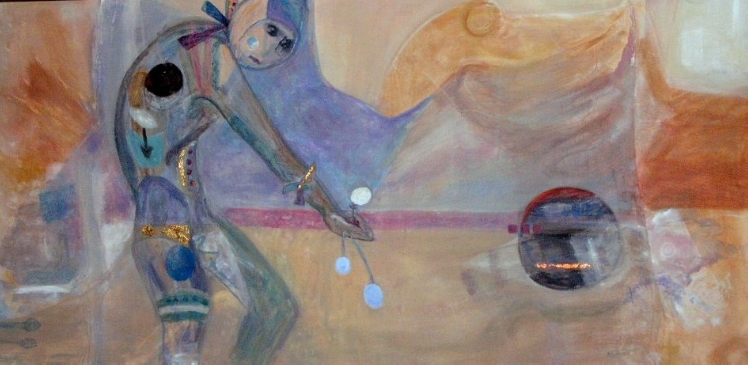
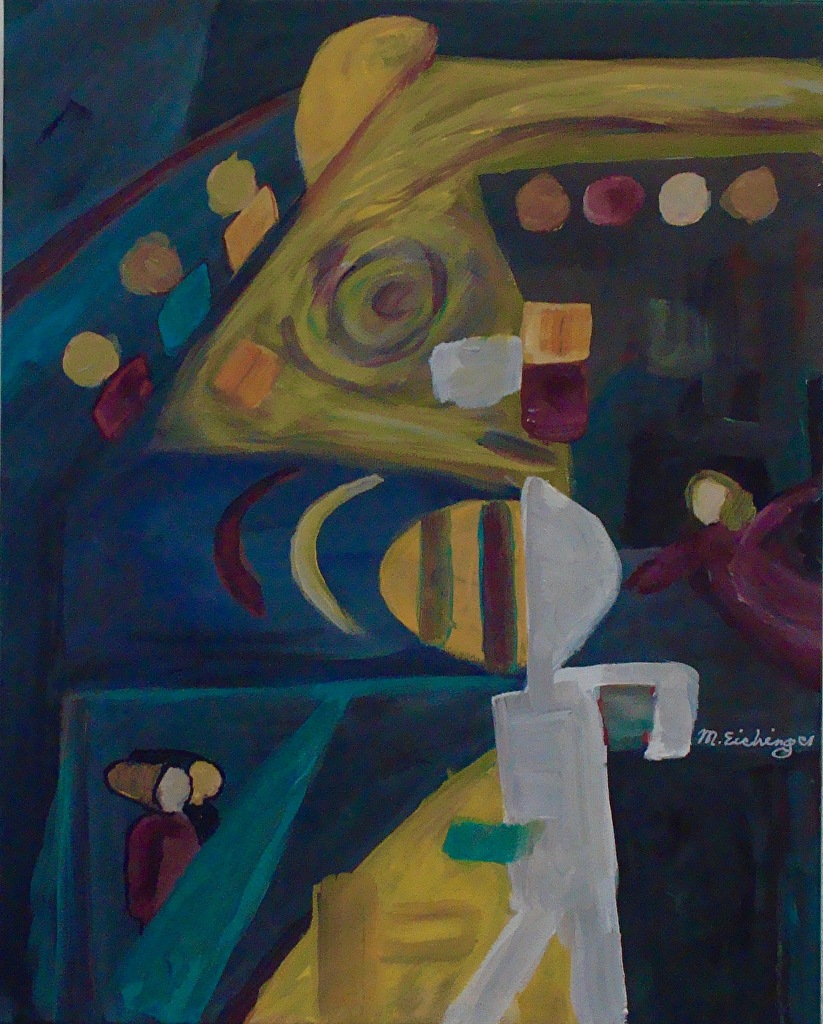
Friends and Family is 20” x 12” deep canvas Acrylic painting . $ 299 – We need to cherish and care for those who are close to us. There will come a time when they need our help or we need theirs.

#trees

In The Great Northwest

Trees fascinate me, but Douglas Furs in particular catch my imagination. They are full of life and remind me of my own journey with its many branches and diversions, yet it continues to grow straight and tall. I marvel at how the forest appears simultaneously wild and serene.  It’s unorthodox. Nothing about it is understandable, but everything about it flows into a cohesive whole that provides summer shade, perches for birds, structures for children to test their climbing skills, and places for lovers to read poetry while marveling at nature’s beauty.

This tree is old and gnarled, having had to twist and turn to accommodate itself to the unsuspecting ups and downs that occurred during its lifetime.  If you look closely you will see many wounds, yet they eventually healed and allowed the tree to continue to grow. It reaches out for light yet hovers near the ground within reach of all who chose to learn from its wisdom. I imagine its roots growing deep, allowing it to communicate to the other organic organisms living nearby. 

Unfortunately, too many hillsides that should be richly covered with trees are dead or dying.  The Santiam Pass painting to the left depicts one of many devastating burns occurring all too often throughout the planet.  It is what land looks like in the Jefferson National Forest in Oregon after fire brought devastation, and burned 40,418 acres.  It took 2,300 fire personnel and $38 million to contain the damage.  A heating planet is making this scenario a common one throughout the globe. 

The  painting to the right is of the Pearl District in Portland, and is representative of many cities that have eliminated their forests to make way for paved streets  and high rise apartments. Dwellers unwittingly replaced fresh clean air living with dirt and pollution that blackens their lungs.

Malheur Sunset depicts dusk in eastern Oregon where trees provide a place for song birds to rest from their daily search for food and water. Unfortunately, this wildlife reserve suffers from drought.  Over the past twenty years, the number of migrating birds that stop for water along their way north have greatly diminished. 

The Tree, to the right is  a 3 D rendition of a rich Pennsylvania landscape. It  demonstrates what can be when people take care of their land rather than strip it dry. The tree and surrounding farmland supported generations of Amish farmers who farm organically. Trees create oxygen for them to breathe deeply without fear of being poisoned, while carrying away carbon dioxide and other toxins that might ruin their lungs.

Nurturing

Each of us has a responsibility to care for the land that sustains us. To date, human beings have not done a very good job. But, by changing habits and nurturing one small seedling, we can overcome centuries of destruction caused by the naive, uncaring people who put the earth in crisis mode. Today, we know better. Scientific information provides us with data that tells us what to do. It’s time to take care of planet earth and replant the Garden of Eden. 

#Holidaypolitics

First Fight

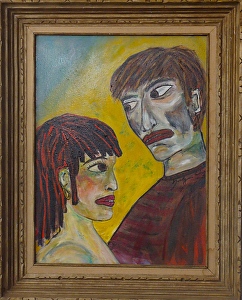
I painted the above picture several years ago. It reminds me that disagreements are natural, and it takes courage to end arguments without leaving bitter feelings behind.

How do you talk to people you vehemently disagree with? It s not easy, especially during holidays when you are forced to sit next to relatives and friends who bring political opinions to the dinner table. It could be fun and make for a lively conversation, yet such conversations are often stressful and don’t end well. 

 Most of us want to be accepted, not antagonized. We like being heard and understood for who we are and what we value.  But at social functions we hold back, not saying what’s on our minds for fear the event may dissolve into a fight. What’s wrong with this picture? Why can’t we talk to one another about difficult topics?

As a child, I was taught that democracy was strong enough to allow for freedom of expression. I learned that the United States is a melting pot of cultures that comprise “one nation, indivisible with liberty and justice for all (under God was added in 1954). The American experiment requires us to learn from one another rather than dismissing contrary opinions. Our teachers told us to listen with open ears and an open heart. Todays political climate makes this especially difficult, but not impossible. 

At my exercise club, I occasionally cycle next to a man whose political leanings are at odds with mine, yet we ket a kick out of telling each other how we would rule if we held positions of power.  Like many voters, we pretend to know how to run the country better than our elected politicians. Both of us are well r read, though our information comes from different sources. We are both economically secure, though he is a great deal wealthier.  Our religious belief in predestination and notions of the hereafter differ as well. No matter – we respect each other’s opinions and truly like each other. 

The best part of our relationship is that we are not afraid to say what is on our mind and don’t look for agreement. Debating, cajoling, and sharing ideas is a search for ways to bridge our political differences in order to solve social and economic problems. 

How we arrive at our utopian solutions is at the crux of our arguments. We discuss trickle down and bottom up solutions in minutia. We don’t lecture, get angry, raise our voices or try to overpower the other person. Discussions are reasoned and backed up with what we most recently read, which isn’t always accurate.  It is not unusual to call a statement misinformed and fact check for the truth.

We communicate well because of the many values we do share. We both believe in family, in education, in peace over war, in working hard, and in economic prosperity for all.  We realize that the world has changed and that young people have a different set of problems to overcome than we did.  And, we know there will always be people who need our support.

Political discussions can be entertaining and enlightening if you set and adhere to ground rules for your debate. A few suggestions follow:

  • Be respectful and don’t interrupt.
  • Don’t hog the conversation
  • State your opinion and why you came to that conclusion.
  • Don’t denigrate another person’s opinion ( no comments like, “I can’t believe you said that” or : Who do you think you are”?”)
  • Don’t label people you disagree with as stupid, uneducated, naive, racist, liberal, reactionary, out of touch, etc. 
  • Stay calm. Find ways to defuse tension. Don’t let emotions guide you.
  • Acknowledge positives when you hear them.
  • Support arguments with factual information (you can fact check) rather than gossip.
  • No predicting the future. The facts aren’t in and no one knows the outcome of the next election. 

 The goal is not to convince but to listen and learn. Remember that everyone sees the world from his or her own center. Though the person sitting opposite you at table may be your sister, her experiences were never the same as yours.  The best you can do is try to understand. And, though you may disagree with Uncle Rudy’s politics, he is still worthy of a your love and the gift of a smile.

References.

Leahy,R. (2018) Talking Politics During the Holidays. Psychology Today. retrieved from https://www.psychologytoday.com/us/blog/anxiety-files/201812/talking-politics-during-the-holidays

Waters,L (2018) Being with politics during the holidays. Daily Record. retrieved from https://www.dailyrecordnews.com/scrapbook/being-with-politics-during-the-holidays/article_a7ac3a60-62d5-5cfc-95f5-c84426a8dbfa.html

Art is always for sale. contact me at marilynne@eicingerfienart.com.

First Fight – 26” x 36” / acrylic on Canvas / framed / $326

#Friends

Elaine – always in my heart

An acquaintance told me, “It takes twenty years to make a friend.” It’s the experiences and intimacies shared over time that build trust. He has a point, though I think the process can occur more quickly.

Zach, our adopted homeless youth, considered everyone he met on the street to be his friend. It didn’t make a bit of difference if he had known the person for an hour, a week or ten years. Bound by lack of shelter and shared abusive childhoods helped him form instant attachments. He and his new friends needed a family to depend on for survival. His instant friends stood up for one another, at times foolishly but always without hesitation.  Following is a story he shared. It is included in Over the Peanut Fence.

Zach, our adopted son, considered everyone he met on the streets be his friend. It didn’t

“About midnight, some kid would shout, ’you can spend the night at my place.’ Fifteen of us couch drifters might follow the invite. We would get there and party. When we got tired, we would find a place to sleep on the floor. If we got lucky, we got a piece of a bed or the sofa. Lots of times other people in the building would knock on the door or walls complaining of the noise.” 

One evening, Jenny, a friend of Zach’s, had an apartment that became such a place. Jenny and two girlfriends shared the cost of rent, but when ten kids arrived for the evening, her roommates were not at all happy. As a party got underway and became increasingly raucous, they became angry and told them to leave. No one paid attention. Drugs and alcohol were passed around making the roommates even more upset. Finally, they called the police. 

Me and a friend were outside smoking at the time enjoying fresh air when we seen a police car approaching. We ran inside to clean up.” 

When asked why he went back and didn’t run he said, “You never leave your friends hangin.’  It’s the first law of the streets.”  Zach continued with what happened after the police arrived.

“All of a sudden I realized,” Zach said with a crooked grin, “that we had cleaned the apartment but forgot about what we was carrying on our bodies. I had a wad of pot in my pocket ready to be used in my soda-pop pipe. The bulge was so obvious that the cops cuffed us immediately. That’s when they found that my friend was carrying heroin and I got really scared. The police grabbed us roughly, ready to take us to the station and charge us for possession of illegal drugs.”

“I went crazy and screamed that I never used heroin. Luckily, I was backed by Jenny. The only thing the policemen had on me was possession of a small amount of marijuana so I was let go, but they were angry because I was belligerent. I was given a $1,200 ticket while my buddy was pushed out the door and taken to jail.” Zach had not met the boy before that evening and never spoke to him again once he was taken away.  His interpretation of friendship was culturally different than  mine. 

Russian blogger Aliya Sagandykova writes, “When I asked my Spanish friend if it is better to have $100 in the wallet or 100 friends in life, he without a second of hesitation, chose $100. In post-Soviet countries this dilemma is not a dilemma at all. There is an old saying in Russian: ‘Instead of having 100 rubles, better have 100 friends.’” Russian literature abounds with proverbs and stories about the importance of being a loyal, affectionate, mutually trusting and faithful friend. 

For years Sagadykova resided in Spain, observing that friends who socialize and share drinks and time together,  have a barrier that keeps them from getting involved in problematic situations. People are on their own to find solutions and friends have no responsibility to come to their aid. 

Though the United States also has proverbs glorifying friendship, Sagadykova sees American friends as being activity specific. For instance, they may have a golf, music, or book club friend but not see the person outside the relationship. She thinks we make friends easily but forget them just as fast.  

Katja Kaila from Finland says in her country, friends are exclusive and you care careful with those you bring into your life.  Friendship is a commitment that takes serious thought before it is allowed to happen.  Leah Lochart of France believes America friends allow each other to escape from norms and do unsociable things like getting drunk or taking undo risks, while in France friends keep each other within norms by stopping unacceptable behavior.

Cultural differences around friendship help shape minds and direct behaviors. Some sociological studies that divide friendships into two categories based on  individualism vs. collectivism. For instance,  Zach was attracted to the collective, an amorous group of homeless and runaway youth. The group had rules that were followed rigorously.  Gangs, fraternity and sorority members, and churches act similarly.  Members are bound by mutual obligation to the collective.  

Please understand that these divisions are overly simplistic. Variations exist within regions are influenced by religion, history, and socio-economic strata. Sociologists generalize that the majority of Asian, African, South American and Pacific Islands cultures are highly collectivist while American, Europe, and Australia cultures are more individualist, emphasizing personal identity, wishes, desires, autonomy, and values over that of the group.  Individualist societies tend to focus on self-fulfillment, giving priority to personal rather than in-group goals.  Individualists choose to enhance self-esteem and self-worth through association with selected groups. Sociologists say that those collectivist cultures tend to have fewer though closer friends than those in individualist societies.  

I’m reminded of a  song I learned in elementary school that influences me to this day. 

Make new friends but don’t forget the old,

One is silver and the other is gold.

I cherish friends and like my family, am tied to them whatever their circumstances, wherever they live. I trust them and don’t view our relationship as a burdensome obligation. Their love and compassion provided me with years of comfort that enabled me to act foolishly at times. They supported me when I took risks and continue to help me live an interesting life.

References:

Sagandykova, A. (2014)The Importance of Friendship in Different Cultures. top Universities. retrieved from https://www.topuniversities.com/blog/importance-friendship-different-cultures

Kaila,K. (2017) How does the notion of friendship differ across cultures? Quora.retrieved from https://www.quora.com/How-does-the-notion-of-friendship-differ-across-cultures

Alex Bae, Y (20103) Differences in Friendship qualities of Korean and American College Students. Illinois Wesleyan University Honors Project. retrieved from  http://digitalcommons.iwu.edu/cgi/viewcontent.cgi?article=1000&context=psych_honproj

Art Is Always for Sale. Elaine is an acrylic on canvas painting, 48” by 36 “ / $699

Contact me at marilynne@eichingerfineart.com

Ready to Party?

The holidays elicit both positive and negative emotions. It is up to each of us to decide whether to enjoy the season or not. The glass can be full if you want it to be and empty if you decide that you prefer misery. Long dark winter nights are the reason humans have brought light into the season for generations.

Continue reading

Into the Unknown

INTO THE UNKNOWN by Marilynne Eichinger

In his first inaugural address, President Franklin D. Roosevelt made the oft quoted remark, “The only thing we have to fear is . . .fear itself.” He said it during the great recession when the economic situation in the country was dire . He called fear a ”nameless, unreasoning, unjustified terror which paralyzes needed effort to convert retreat into advance. In every dark hour of our national life a leadership of frankness and of vigor has met with that understanding and support of the people themselves which is essential to victory.” 

It was a masterful speech that went on to say the nation will endure as it has through all sorts of extreme challenges, that there is much to be thankful for despite hard times, and that we have to stand together to solve problems.

I wonder how his speech would be received today? Does the constant barrage by TV and electronic news programs make our fear worse? It is important to remember that the media is strongly motivated to keep us on edge in order to keep us consuming.  The more often we return to their newscasts, the more ads they sell.

People frozen into inaction by fear are said to have agoraphobia. They may be unable to leave the house because they fear having a panic attack.  Psychologist Jay Winner says this type of fear is a secondary emotion. Primary emotions are the direct result of something that made you sad, such a loved one being hit by a car. If the incident makes you too afraid to leave home because you too might get struck by a moving vehicle and, if you get angry at yourself for worrying unreasonably, the resulting emotions of fear and anger are secondary. Stress causes distress by imagining you should feel differently. THe result is prolonged agony. 

Adrian Vilaca discusses fear in another way. She sees anxiety as keeping us back from taking leaps of faith. Adrian is a martial artist who fights in cages against opponents bent on beating her unconscious. She describes being gripped with fear as she walks toward the event coordinator in an arena filled with a screaming crowd and super loud music. As the MC raises his his hand and slowly folds finger after finger until none are shown, her tension increases. When the music defining her act starts playing and her team huddles round to provide support, she realizes how alone she really is. 

Adrian moves forward even though s terrified of losing and letting people down. In that moment she forces a smile and gets into her fear. Once embraced she finds it motivating.for fear represents what she values and wants to do. She cherishes the ability to feel a full range of emotions.  

Walking through life moves us toward our individual cages. The trip can can be crippling if you let it, for it represents the unknown—and, you could fail.  However, if you believe what you are creating is more important than being afraid, it can give you strength. 

I used to be afraid, very afraid, afraid of my shadow, some people would say, until the day a counselor asked me if I was afraid to succeed. Afraid to succeed? How strange, you might ask. How can that be? 

The thought of success also freezes people to inaction, for success is often accompanied by unanticipated demands. Unsure of what they might be, I did not want to face added responsibility.  So, I stayed in the bubble of a comfortable routine I could control. The counselor’s comment somehow enabled me to take a leap into the unknown. The potential rewards that might occur far outweighed the risks I had to take.  And so, I started a science museum.

The political climate today causes many people to retreat into the safety of the familiar. I know individuals who are afraid to leave their homes.  Some friends won’t say what’s on their minds because they fear reprisal. Others shake their heads in despair, spend their days in jitters, and can’t sleep at night. They are frozen by inaction—not a good way to embrace life.

Today’s political climate needs people willing to scale self imposed safety barriers and engage in a search for truth and understanding of those who hold differing opinions. The political divide is artificial, brought about by partisan interests and fueled by a media that benefits by inciting fear and confusion in their audiences. Most ordinary Americans are not as divided as you might think. They want the same things—to be respected and loved, to feel secure, to live in health, and to participate in activities that make them happy. With that in mind, it is easy to close the door on fear and open it to engagement. Being part of the solution to make neighborhoods safe and clean, children better educated, and all citizens well cared we will heed FDR’s words once again.

  “ Happiness lies not in the mere possession of money; it lies in the the joy of achievement, in the thrill of the creative effort . . .These dark days will be worth all they cost us if they teach us that our true destiny is not to be ministered unto but to minister to ourselves and to our fellow men.

References:

Winner, J. (2008) Nothing to Fear, but Fear Itself ? Psychology Today. retrieved from https://www.psychologytoday.com/us/blog/stress-remedy/200810/nothing-fear-fear-itself

Vilaca, A. (2016) Fear of the Walk – There is Nothing to Fear but Fear Itself.Wellness Motivation. retrieved from  https://www.fearlessmotivation.com/2016/10/27/fear-of-the-walk-there-is-nothing-to-fear-but-fear-itself/

Art is always for sale. For more information contact marilynne@eichignerfineart.com.

Into the Unknown:   Acrylic on Canvas / Ornate gold Frame / $ 599 /     23” x 19”

#change

Heaven and Beyond
It is good to be reminded that we are part of a universe that is in a constant state of flux.

Reluctance to change

Life is about change, but how do you cope when you live or work with someone with ubiquitous resistance? Refusal to change manifests itself in many ways, from foot-dragging and inertia to petty sabotage to outright rebellion. A child, partner or business associate may be entrenched in their ways because of fear or just plain laziness. When you are convinced that change is necessary, what can you do about it? 

The best way to begin is to understand the sources of resistance that are most likely to occur and then strategize around them. Here are a few I’ve found to be the most common.

  • Loss of control. Change interferes with autonomy and can make the people feel that they’ve lost control over their territory.
  • Excess uncertainty.  People often prefer to remain mired in misery than to head toward an unknown. They want to feel safe and are more comfortable with the status quo.
  • Surprise! Decisions imposed suddenly, with no time to get used to the idea or prepare for the consequences, are generally resisted.
  • Immersed in habit. Change is meant to bring something different, but how different? We are creatures of habit. Routines become automatic, but change can jar us into consciousness in an uncomfortable way. Often you mind does not believe your goals are worth suffering for. It explains why so many people resist dieting. 
  • Loss of face. Change is a departure from the past. People associated with the last version — the one that didn’t work — are often defensive about it. They develop a mindset that predict failure. Failure, though is not guaranteed. Thomas Edison failed 1000 times before inventing the light bulb. He considered all of his failures a success because they led to his invention.
  • Competency concerns. Can I do it? Change is resisted when it makes people feel stupid.
  • More work.  Change involves work. Acquiring a new skill, mindset or way of behaving is time consuming.
  • Ripple effects. Change creates ripples, that disrupt family dynamics and alter relationships. It’s not unusual for family or colleges to push back, rebelling against changes they had nothing to do with yet interfere with their own activities.
  • Past resentments. The minute you need cooperation for something new or different, ghosts of the past spring into action. Old wounds reopen, historic resentments are remembered 
  • The threat may be real. Actual pain can occur. Household roles may change, activities you once enjoyed may end, and friendships often end with a move. Whether you live more lavishly or fugally can change depending on circumstances around employment. 

Change is likely to be good for you once you figure out why you want to alter your life. Perhaps you want to manage stress level, make more money, buy a new house, live in another state. Making a change requires identifying what you want to do, doing research and analyzing the pros and cons. When your change affects others, leadership is an essential tool for bringing them along with your dream. Leadership begins with confidence in yourself to bring others along.

Diagnosing the source of resistance is the first step toward getting buy-in. Sacrifices and consequences that might impact others have to be considered. People likely to be affected should be invited to express their concerns so a solution can be found that makes them feel more comfortable. They will be better able to cope if their feelings are acknowledged and they understand the dynamics behind the change. 

References:

Kanter, R (2012) Ten Reasons People Resist Change.Harvard Business Review. retrieved from https://hbr.org/2012/09/ten-reasons-people-resist-chang

Griggs, U. (2019) How to Overcome Your Resistance to Change to Live a Better Life. Lifehack. retrieved from  https://www.lifehack.org/822909/resistance-to-change\

Art is always for sale. Contact me at marilynne@eichingerfineart.com

Heaven and Beyond/ Black frame / acrylic on canvas, 20” by 24” / $ 399

#Whoareyou?

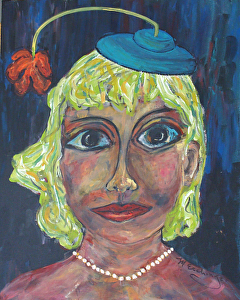
Ellen:Wide Eyed and Ready

Who Are You?

Do you know who you are? How do you think of yourself and how would you describe that self to others. I recently heard a NPR broadcast suggesting listeners state twho they believe themselves to be in a concise sentence that starts with, “I am from . . . and   I can . . . “ 

It was a formidable challenge to define myself in few words, but  decided to give it a try.

          “ I have moxie, independence, compassion and love, and  I can dream, can do and can be.”

Once I put thoughts to paper I became intrigued with the process of describing oneself succinctly. Business coaches advise that it’s  important to be able to identify your skills in brief during in a job interview, at networking events, or when developing a Linkedin profile. A way to organize you thoughts is to first identify who are you, then state for whom you do what you do, and finally mention how they will benefit.

“I am an executive and lay minister who helps museums, small businesses, and families become empowered through education, resources and information that improves careers and personal situations?”

I was on a roll, so after deciding not to describe myself in the Hausa Language. I  took the plunge and tried a one-sentence definition to get me elected to political office.

“ I’m a mother of five, a fighter who loves our city and cares about leaving a healthier, vibrant, more compassionate community for the next generation.”  Was that wishy-washy enough? Who can be against that sentiment? Perhaps I need to add “plus I’ll find a job for everyone.”

James Blanchard Cisneros says, “Enlightenment isn’t a change into something better or more but simply an expression of knowing who you are.” How in the world can you do that? One way to begin is by exploring your priorities, values, and interests. What makes you happy? What type of people do you like to be around? Describe your character, your style, and your overall emotional state? What are your boundaries? Does the exercise sound difficult execute in one sentence? No problem. . . break the rule and try two.  

“I am a happy, engaged person who is curious, studious, and adventurous within limits set by my physical abilities and (most) societal norms. I like those who inspire me to reach outside my comfort zone, enjoy friends who make me laugh at life’s foibles and have such a bad memory that I forgive all who aggrieve me.”   

Well now, that’s a that’s enough about  me.  What about you?  Who are you?  Take the challenge and share a sentence (or two) below.

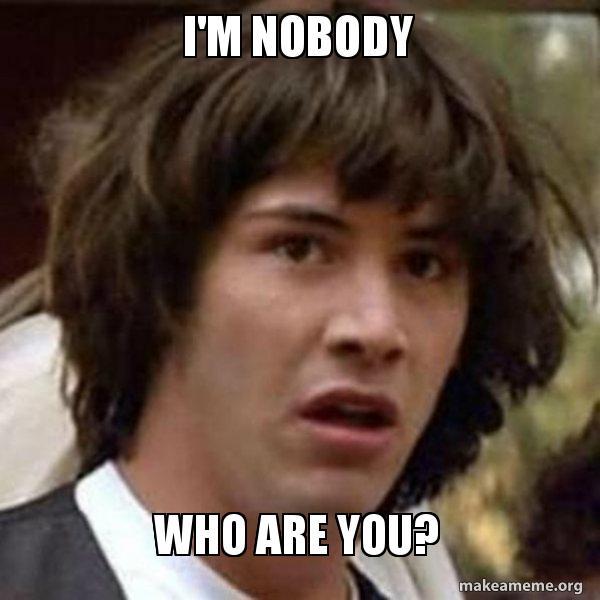
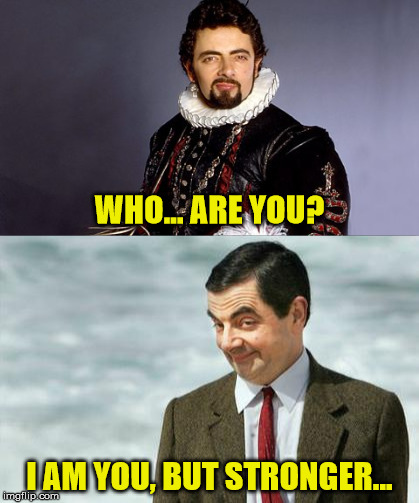
A few images to get you started.  

Art is always for sale. Contact me at marilynne@eichignerfineart.com

Ellen: Wide Eyed and Ready / 20” by 16” / acrylic on canvas / $399

References:

LaCivita, A. (2019) How to describe Yourself in One Sentence: Elavorty PitchYouTube

Cisneros,J, (2015) A Journey of Self Awareness,.  You Have Chosen to Remember Series ( A Journey of Self-Awareness, Peace of Mind and Joy) Chosen to Remember Books, Coconut Grove, Florida. Available in paperback and on Kindle on Amazon.

James,M Ph.D. ( 2012) Who are You? Psychology today. retrieved from  https://www.psychologytoday.com/us/blog/focus-forgiveness/201212/who-are-you 

#Anxiety

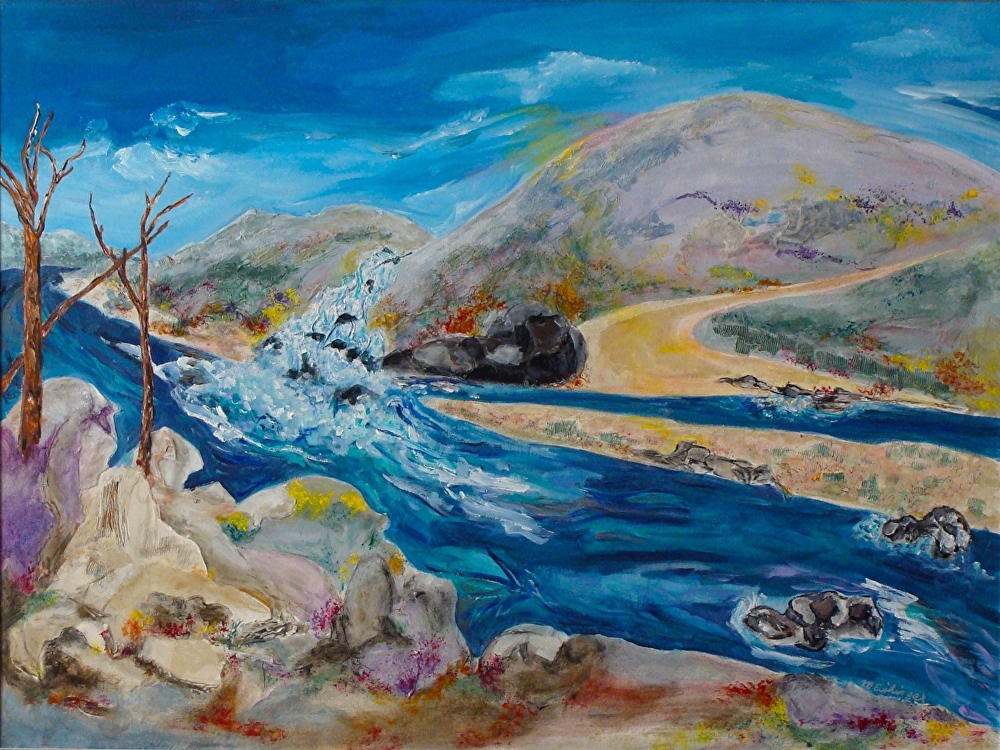
Coos Bay, Oregon by Marilynne Eichinger

This peaceful slew is impacted by the ebb and flow of ocean tides. Coastal areas are feeling the effects of rising seas, warmer ocean temperatures, stronger storms, and altered marine ecosystems. Streams that drain the coastal range carry increased runoff resulting from greater winter rainfall. This reverses itself in the summer with decreased rainfall which effects salmon and other cold-water species. Estuaries and wetlands are especially subject to rising sea levels that bring about sediment deposition, and changes to the shoreline. Invasive species and acidification effect clams, crabs, oysters and other shellfish. 

Action Over Anxiety

It’s easy to become overwhelmed paying attention to the stories of doom and gloom that circulate freely through the media. Most do represent real problems that can not be brushed aside. Talk of global warming, of war, gun violence, rape, homelessness, trade imbalances, a new arms race, affordable housing, a growing class divide, and Middle East unrest fill the airwaves.

How people process so many disturbing accounts varies, with some developing illnesses while others become activists.  I am privy to numerous distraught individuals who fear getting out of bed each morning. During the day they glue themselves to daily newscasts that push them into serious depression. Most of us, however, reside great distances from where these horrific stories occur.  Imagine what it would be like to live in a community where each day you watch past predictions of disaster unfurl. 


Last week on NPR, a psychologist spoke about native populations living in the Arctic. She said that an escalating number of people suffer from severe anxiety depression. They are upset by what happening to their communities because of warming trends. These men and women are on the front lines, watching fragile habitats destroyed while fossil fuel reserves become more readily accessible for extraction, exacerbating the problem. To these residents, global warming is not a debate. It is a daily reality. They have a front row view of Arctic Sea ice melt and of when happens when oceans warm. They are the first responders, the canary in the mine that gives a warning all must heed. 

Ice reflects sunlight, and water absorbs it. It is easy to understand that as ocean volume grows, more sunlight is absorbed which raises the temperature, warming the land and causing the weather to become more violent. In the far north, wildfires have already devastated large tracks of land.  Melting permafrost topples houses, and disappearing glaciers cause riverbeds to stay dry. Fish die and wildlife lack water needed for their sustenance. Over the the past century, the seas have risen four to eight inches, depending on where you live.  Arctic warming, however, in speeding up, occurring faster than originally thought. Experts currently predict the seas to rise 23 feet before the century is over. Following is a 50 year chart for the US put out by the Union of Concerned Scientists. You will see how the rise differs from coast to coast. 

 Look grim? It is, but that does not mean that you have to be frozen with fear. Living in a state of anxiety is not good for your health, nor does it solve problems at hand. Burying your head in the sand or saying God will solve situations brought about by humankind does not help. Troubles don’t go away unless they are tackled head on.  

It is unreasonable to thing each of us can focus on every difficulty. And, it is not wise to worry about every issue brought to your attention. It is best to choose one concern that speaks to you and work towards a solution. By all means, learn as much as possible about a variety of issues, but put your vast knowledge into a worry-free box and let others take the lead.  At the same time, work outside of the box. Find an issue you can get passionate about and get involved. Choose action over anxiety.

The Arcticpsychologist on NPR told listeners the same thing. We were told not to retreat from the news, but to form small discussion groups where feelings of helplessness can be challenged and you can engage in constructive self-talk to build a personal sense of resilience and optimism. She suggested focusing on what you can control and act accordingly. Making a positive difference locally does improve the mental health of those who participate. And, with thousands of people worldwide meeting in hometown groups, solutions are bound to emerge. Best of all, these good folks will have fun getting to know each other.  


Action over anxiety. It worked for me by focusing efforts on youth homelessness. . I am appalled by what I see on the streets. I think about it and am continuously learning abut the subject. I adopted a homeless youth and wrote about the experience in order to help others understand street-life. I continue to work with others to end homelessness. I see progress and am fortified. Meeting people who share my concern makes me feel good. It’s been rewarding to get to know energized people and a pleasure to call them friend.                                                      

References:

Shankman, S & Horn,P. ( 2017) The Most Powerful Evidence Scientists Have of Global Warming. Inside Climate News. retrieved from https://insideclimatenews.org/news/03102017/infographic-ocean-heat-powerful-climate-change-evidence-global-warming gclid=Cj0KCQjwiILsBRCGARIsAHKQWLMtz09jHmgQO1YCLVaPnlnERLEqQNOda6-qIEqx9lZZzqtVdtz6vXIaAoi0EALw_wcB

Beltra, D. ( 2019) The Arctic and Global Warming. Greenpeace. retrieved from https://www.greenpeace.org/usa/arctic/issues/global-warming/

Pajer, Nicole (2019) How Therapists Are Dealing with Anxiety Around Global Warming. Huffpost. retrieved from https://www.huffpost.com/entry/anxiety-global-warming_l_5c69d43be4b01757c36c9e00

#Exporting Jesus: Building Infrastructure

You Decide

      Exporting Jesus vs. Building Infrastructure

Last week, I took my car in for a recall adjustment and was driven to the service station by a Lift driver born in Kenya. Talking to him brought back memories of the wonderful experience I had years ago when participating in a research study of elephants passing through Tsavo National Park.  I was surprised to discover that my fifty year old driver was a Kikuyu who planned to return to Kenya to become a farmer. 

I asked him if he worried about the ground being too dry to grow crops due rising global temperatures. is answer surprised me. “No,” he said. “The Chinese dug wells connecting to a large underground aquifer. There’s plenty of water.  

My driver said that I wouldn’t recognize Kenya if I returned because of Chinese investments.  Roads, buildings, power plants and plumbing projects have transformed Kenya and were helping the country prosper. He mentioned that Chinese involvement also worried him. It could plunge the country back into colonialism by making it a puppet of Asia rather than England.

Our conversation particularly interested me since watching “The Family,” a Netflix documentary based on books by Jeff Sharlet warning of the dangers of mixing fundamentalism and power with politics.”  The series documents a secret society that promotes what they call “Jesus Plus” ideology.  Since the late 1960w it’s been in existence behind closed doors under the leadership of an Oregon born man named Doug Coe (recently deceased). Doug subsidized Georgetown accommodations for congressmen who embraced a Christian religious agenda. Young adult graduates of elite colleges live in all male or female homes caring for congressmen who live in C Street and the dignitaries who visit. According to Sharlett“They (The Family) have more power now than ever.”

Military leaders, politicians and business leaders are united through prayer breakfasts attended by presidents from Eisenhower onward. Mike Pence is part of the group and President Trump has been anointed by it.  Those on the Jesus Plus bandwagon do not believe in separation of church and state or that all men (women) are created equal. Conservatives only, never liberals, are invited to the table. Abortion rights, fair housing, equal access to voting, and global warming activists are rare and far between. 

  Based on Calvinist ideals around predestination, Coe’s movement rewards dictators, wealthy individuals, and Mafiosa strongmen by providing forgiveness when they rule oppressively. Believing that powerful men are chosen by God, they are not subject to the same sexual, moral, or financial/legal rules the rest of their countrymen follow. They say the poor, also marked by God, will always exist and must accept their lot.  In my mind, The Family’s rational is reminiscent of India’s caste system, 14th century missionary zeal, and pre-Civil War rational for suppressing people of color.  

My partner Ray pointed out that to build trade and spread influence, the United States leaders preaches Jesus to an international power elite while the Chinese construct infrastructure. Though self centered motivations may be at the base of both countries, one can’t but wonder which one benefits the majority.  

By improving economic conditions in struggling countries, the also Chinese support businesses that create new markets for their goods. They build schools, roads, bridges, railways and hospitals. Their investments save deteriorating facilities, rescue jobs and create thousands of new ones. They carry a banner we used to wave at the end of WWII when the Marshall plan was in place. And, they are reaping many benefits.

The US also spends billions of dollars in foreign aid ($300 billion since 1970). I’ve read that 80 percent goes to companies in the United States for weapons and agricultural products while 20 percent is allocated for health and disaster relief.  Much of the money winds up in the hands of corrupt individuals at home and abroad. Those in need are marginal beneficiaries.

There was a time when U.S. foreign aid was connected to the recipient’ country’s human rights track record. That is rarely true anymore. We (as does China) look the other way when it comes to countries like Saudi Arabia. China’s influence abroad benefits by their no-strings attached program promising growth. China spends half of its aid capital in Africa, benefiting from the continent’s rich natural reserves of  oil, iron ore, timber, and copper.  In exchange, China provides cheap manufactured goods, infrastructure, direct investments and billions of dollars in loans. Many of the projects they fund are implemented using Chinese labor. In 2014, China’s trade with Africa totaled over $ 200 billion. 

Chinese foreign aid is rapidly shifting political influence away from the United States. The countries they help return the favor by voting China’s interests at U.N. and other international gatherings.

“We the People” of the United States are at a critical point in history. We face an identity crisis as to who we are and what we want to be in the future. Are we the loving, giving, compassionate, pluralistic society we consider ourselves to be or the self-centered, militaristic, racist, greedy one much of the world believes us to be? Do we honor dictators as men chosen by God or are ordinary people a manifestation of the Kingdom of God? Do white Christian men supposedly anointed by God rule or do we want a democracy that values all who reside within?  

References:

Sharlot, J. (2009) The Family: The Secret Fundamentalism at the Heart of American Power, Harper-Collins Publishers, New York.

Manero,E. (2017) China’s Investment in Africa: The New Colonialism? Harvard Political Review: retrieved from http://harvardpolitics.com/world/chinas-investment-in-africa-the-new-colonialism/

Bonasso, D. (2019)US Foreign Aid to Africa: What we give and Why . the Borgen Project. retrieved from https://borgenproject.org/us-foreign-aid-to-africa-what-we-give-and-why/

Art is always for sale. Contact me at Marilynne@eichingerfineart.com

You Decide is acrylic on Canvas/ 40” by 16 “/ deep canvas/ $385

Your comments are welcome below.