#Celebrations of Hope

  Life Rolls on with Hope
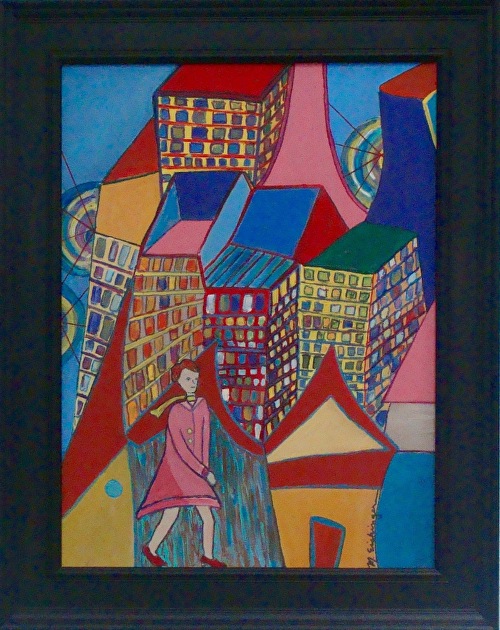
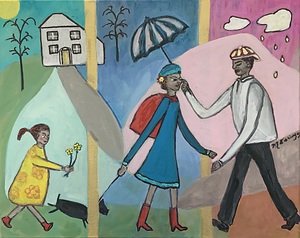
The man helps the woman stay dry while clouds of tears rain on them. Their child follows, carrying flowers of hope for justice and sun filled days. She is their future.

Time never stops. Our lives continue on despite a pandemic, protests, riots, hurricanes, and election politics. We are an inventive people who, under difficult circumstances have found ways to maintain and reenergize old relationships while learning to use our hours productively to fight adversity and injustice. We share, laugh, and cry in harmony with one another.

Being sequestered lets us think about our commonalities. Most of us want to live in a community free of financial worries and concerns about health care. Being isolated made us find ways to connect, mark holidays and celebrate life passages. It also made us aware of economic inequities, health care and racial issues, police brutality and individual rights, to name a few.  There are many decision we are going to have to make to set things right. Yet, despite being sad, burdened, and worried much of the time, happiness abounds as we look to the future. We envision a time of change for the better. We celebrate that which is good.

A few days ago, hundreds of children in cars festooned with balloons blowing in the wind and horns beeping wildly crept through winding neighborhood streets to mark the end of the of the school year. Signs were placed in doorways and on lawns to proudly announce that a 2020 graduate lived there. TV tributes, online ceremonies and internet parties are occurring all over the country to honor the accomplishment of thousands of high school and college students. Educated citizens are our hope for the future. ( According to U.S. Census Bureau: Ninety percent of the U.S. population age 25 and older has completed high school. Thirty-four percent of the population has a four year college degree.)

I was invited to a driveway party that occurred over two days to insure social distancing. Guests were lured there with pastries and the opportunity to extend wishes to a birthday boy (late 70s) to let him know he was not forgotten. On walks I watched other celebrants serenaded from decorated cars and witnessed people singing happy birthday outside of apartment building windows.  A train of cars stopped by a ninety year old man’s house with honking horns and shouts of well-wishes. Filled with emotion he cried tears of joy. Compassion is the way of the future.

Banners and balloons adorned a yard up the street for a child’s ninth birthday. Friends came on bicycles to pass gifts over her fence. Her mother baked cupcakes and lit candles while distant family members watched on ZOOM as she blew them out. They made sure the youngster knew she was important and recognized by a caring family. Her party was different than the one she expected, though not likely to be forgotten. Over the past months she had to get used to school on a computer, being bored, and not having playdates with friends. The world as she knew it changed rapidly making her grow up more quickly. Holding children close will be a challenge of the future.

Alex, the medical student who lives downstairs will marry this weekend. Her father flew into town to witness the couple’s nuptials along with a handful of friends. The bride’s face glowed all week and she will look lovely in her white wedding dress. Since the party is small, the gift from her family is a month long road trip in a rented RV they will embark on later this summer. What a wonderful way to start their future together.

During Passover, Easter, Ramadam, Mother’s Day, and recent graduations, celebrations never stopped. Online services reached out to thousands of worshippers. Celebrants, families and friends stayed connected through media outlets that let them sing, tell jokes, share stories and eat ritual foods together. Unable to touch physically, they touched each other’s souls and reminded them that much that is in the future remains with the past.

Saturday was graduation day for Sanna, my fourth granddaughter. Her university conducted a virtual ceremony and the family brought paper, pencils and drinks to a happy hour Zoom celebration to mark the end of four years of study. I thought about what to say as she begins her career, but was at a loss for words. I’m worried. Where will she find a job? How will she support herself through the economic downturn facing a country that’s become rancid and divisive. She is perky, energetic and full of optimism, yet compassionate and feels deeply for those treated unjustly. She and her classmates will face numerous challenges if they wish to combat climate change and create a just and equitable future for all. Yet, what a fascinating time to be alive!

Despair and gloom may flow over us in waves, yet we still find ways to be happy. And though we are adapting to today’s reality, being sequestered makes us yearn for physical contact with friends and family. It makes us better able to understand the cruelty of isolation in prisons. Human beings like many in the animal kingdom are not meant to live alone. There’s a reason geese find mates and stay paired for life. Being coupled or residing in a household with other caring individuals provides support through the emotional ups and downs of the time. Of course, when forced to live with an abuser, the outcome can be disastrous and a reason to seek other arrangements.

As Marge Piercy wrote in her poem “The Low Road,”

“Two people can keep each other sane

can give support, conviction,

love, massage, hope, sex.

Three people are a delegation

a cell, a wedge.

With four you can play games

and start a collective.

With six you can rent a whole house

have pie for dinner with no seconds

and make you own music.”

Yes, time never stops and life rolls on. Let us live in a society that shares warmth and good wishes. Give our children bright flowers of hope to carry forward.

___________________________________

Art is always for sale. Life Rolls On with Hope is 20 x 16 inch acrylic painting. $ 399 For Information about shipping contact me at marilynne@eichingerfineart.com
#Protest and Change

First Fight

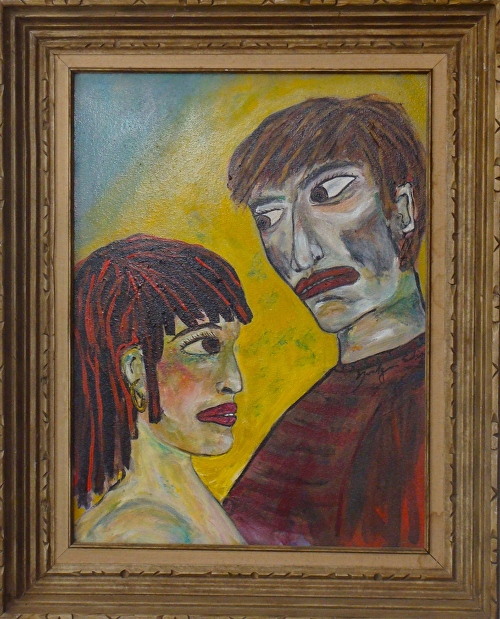
The couple above are not happy. That was me and my partner twenty-five years ago after our first fight. At the time, I was an inexperienced painter, but the emotion of the moment comes through loud and clear. Somehow, we managed to stay together over twenty-five years, which gives me hope for the nation. Expressing anger is an important part of getting along. It is unreasonable to expect people to share the same house, community or country without disagreements. Couples unwilling to argue, likely have a hidden part bubbling dangerously underneath their exterior show of harmony. The inability to express feelings or beliefs may indicate fear — fear of reprisal, of being harmed or belittled or of not being taken seriously. It may explode in shouting, violence,   or as in the current national situation, protests and riots.

As in boxing matches, fighting to communicate is a learned art form. It starts at the family level with members developing non-violent ways to express themselves honestly.  A public protest is a sensible way to express opinions affecting people who believe they are not being heard through traditional communication channels. Protests attract the media and reach those who have never considered their viewpoint to engage in meaningful debate. 

Fringe elements often join the fray violently to further their political agendas. Their aim is to push legitimate messages aside and get police to respond forcefully. By escalating emotions they cause ordinary citizens to retreat into preconceived notions fanned reinforced through social media. Photos and video clips move the public from from listening to social issues to responding to violence. Extremists divide the nation to further civil unrest, showing power as might equals right. They do not want an equitable society. 

Unfortunately, protests also attract a true criminal element, those who destroy property, loot and steal. That group is lawless and should be subject to intervention, but we need to look long and hard at ways to stop generational crime.


Our country is an experiment, founded a belief that all men (and women) are created equal and a hope that we will respect each other.  As a child, I pointed the the Statue of Liberty with pride and quoted its sign welcoming “the tired and poor, those yearning to be free.” I also believed in the ten commandments, still do, and take them seriously.  All who reside in the U.S., including native people, immigrated to the “new world” and placed on a rich playground with a plethora of multicultural ideals. It brought misunderstanding and conflict but also the dream that a melting pot of races and cultures would make a better society. And, despite conflicts and ugliness plastered in headlines, I still think that way.

Living in harmony requires each of us to want the American experiment to succeed. Rather than knock-outs, it means finding ways to leave parties standing. Allowing for  freedom of thought, religion, and expression is not an easy undertaking. It calls for fairness and justice and acting morally in the face of conflict. It provides room to err and to recover and grow from adversity. We can not keep attacking people (or politicians) for mistakes they made twenty to thirty years ago without recognizing that they may have changed.

Fighting fairly starts with being open-minded and not ruled by artificial biases before the contest begins. It requires focusing on the topic under discussion and not on past grievances. For example, at a national level, unrelated items tacked on to bills to garner congressional votes do the country a disservice. They hold the majority hostage, by allowing legislation to pass without discussion and agreement. Cooperation, the goal of winning the fight together rather than winning by competing, is the only way to go. There are ground rules for dealing with emotionally charged issues. 

1. Observe without judging.  Notice and express information without evaluating in terms of right or wrong.  Notice that there is no evaluation, just factual observation, no time for taking cheep shots.

2. Express feelings. Hidden emotions are usually at the heart of failed communication. They often disturb and sabotage communication from within and cannot be addressed and solved because they are  not known to your communication partner. Express your emotions in a considerate way, without judgment. 

3. Express and clarify needs. Communication requires understanding the needs of the parties. The need to feel safe and not belittled. The need to have the other party give you their undivided attention.

4. Express specific requests based on your feelings and needs. After clarifying your emotions and needs, finish by making a clear request (what specifically does the other person have to do so that you can feel your needs have been met? You would say all of this in an open, honest and fair tone – without any mockery or aggression.

Since George Floyd’s murder, we’ve witnessed peaceful protests by a large majority of our population, violent actions by a minority who hold extremist beliefs, and unfortunately watched people who are looters. Peaceful protesters make it easy to understand their pain, absorb their feelings, to hear requests to eliminate choke holds, to demilitarize the police, eliminate racial profiling, and to improve the economic situation for those at the bottom of the pyramid.  Those engaged in disruptive actions do not.

When issues come to the forefront, after fair analysis, in a democracy, we vote our way forward. Though the outcome may not please everyone , it will benefit the majority based on the information at hand provided everyone has the opportunity to vote and express his or herself,. This is what makes a thriving people able to live in harmony, even among those with whom we disagree.

References:

Sepi, A, (2014) The 4 Steps of Nonviolent Communication. Intercultural Communication Solution. retrieved from https://yourtranscreator.com/2014/07/11/the-4-steps-of-nonviolent-communication/

Brenner MD, G. (2018) The 4 Keys to Fighting Fair. Psychology Today. retrieved from https://www.psychologytoday.com/us/blog/experimentations/201811/the-4-keys-fighting-fair

___________________________________________________________________________

Art is always for sale. Contact me at marilynne@eichingerfineart.com to discuss shipping.
First Fight – 35” x 25” / Acrylic on Canvas framed / $325

I look forward to hearing your comments on my blog site.

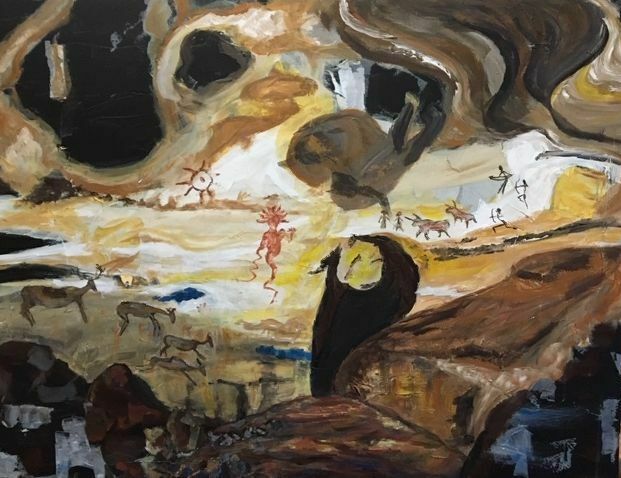
Saga of the Big Bang

It began with an explosion that no one heard. It was the start said German priest, astronomer and physics professor, Georges Lemaitre in 1927. It was the creation said the bible. Dust, particles and chemicals swirled and coalesced in wind storms as the void expanded from a single atom until it was impossible to see the end or the beginning. A multitude of galaxies with stars, planets and moons were formed including the planet I stand on now.

Over the course of millions of years, mountains and seas were created, minerals deposited, and land became fertile on planet earth.

Trees grew tall, flowers bloomed and plants produced nuts, berries, fruit, tubers and green leaves in abundance, making it possible to support organisms on land and not only in the sea. 

Creatures of every type covered the earth and multiplied. Animals joined the plants to pave the way for human beings to evolve by providing what was needed to  nourish, clothe, and shelter them.  

Men, women, children evolved to stand upright, walk on two feet, and hold tools with their hands. Their presence was but a whisper on the land for they dwelled in caves, followed the herds and left little behind. They prospered as the years went by, multiplied, and spread over the globe. 

They searched for meat, learned to farm and with the aid of boats and beasts, traveled by land and sea. There were more of them. They saw more and wanted  more.

Seeking unoccupied land and hunting grounds they trekked from Asia across the Bering Straits, then south, spreading their seed throughout a new land.

Years later they were met by wagon trains rumbling through from the east filled with loggers and settlers determined to farm their land and tame their wilderness. They cut down the trees.   

Others built dwellings in jungles, finding medicinal plants that let them live longer and allowed them to multiply again and again. They cut down the trees. 

Yes, they cut down more trees and replaced them with towering structures in grand cities filled with apartment houses, stores and entertainment centers.  

The wealthy erected mega-mansions in suburbs with garages large enough for the two and three cars needed to transport them to centers of industry, finance and law. 

There came a divide between the haves and have-nots. Those with wealth stayed locked inside giant carved gates where they were surrounded by greenery, inspiration, and like minded neighbors, while “the others” were relegated to barren lands, broken down buildings and hard concrete sidewalks, not knowing a way to climb over the fence. 

And still the population grew, demanding more power for their homes, greater warmth for their businesses, and the ability to operate their automobiles and machinery faster and for longer periods of time.

The temperature got warmer, fires burned forests, trees died, houses collapsed. It became harder to breathe, difficult to see crisp hillsides and mountains through the thick haze. Hurricanes, tornadoes, and floods were more violent. Asthma increased and children became ill. 

Trash was thrown in the streets, waste spilled into streams. Fish numbers declined. Those living wild in the ocean ingested mercury, drinking water had to be filtered and treated. To feed earth’s people, animals were herded into pens and fed hormones to make them fat. The ground was drench with fertilizers and insecticides affecting everyone’s health.

Birds decreased in numbers, leaving one where before there were flocks.     Young men and women fought in wars over water, land, oil and mineral rights.  Hundreds of thousands died.  

Then. . . while people were sleeping, there was another bang, a gigantic explosion that no-one heard. It flared up from a virus multiplying faster than they,  making them sick while the earth became bright. Those who paid attention were reminded what it was like to breathe in clean air, see fish through sparkling waters, and highways uncluttered by trash. They smelled the perfume of the flowers, marveling at their vibrant colors. They were calmed by the quiet, felt safe with less crime, and had fewer accidents. 

And. . . it dawned on them that it was their job to care for the earth.

Art is always for sale. For information go to my art website at eichingerfineart.com. Go to the works section to find pieces or contact me at marilynne@eichingerfineart.com
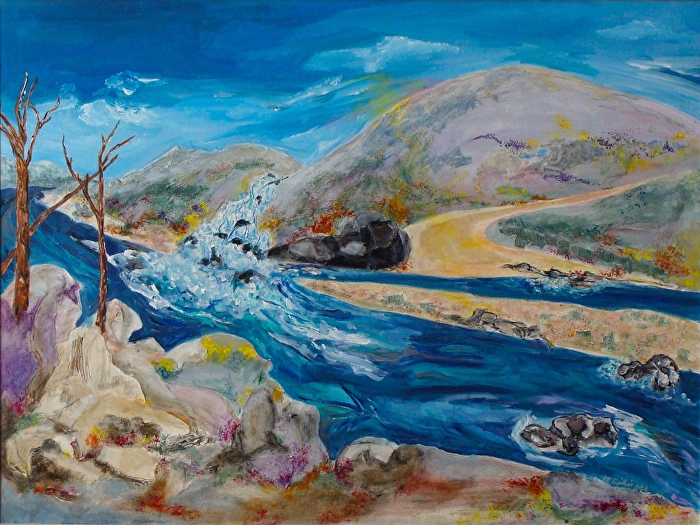
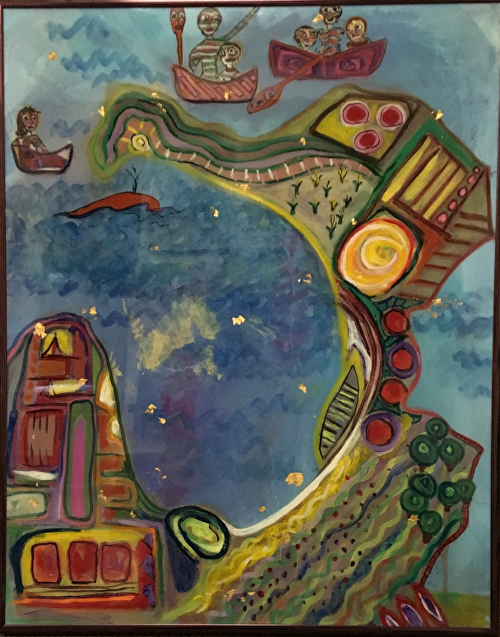
Waves of Fear

Surf’s Up
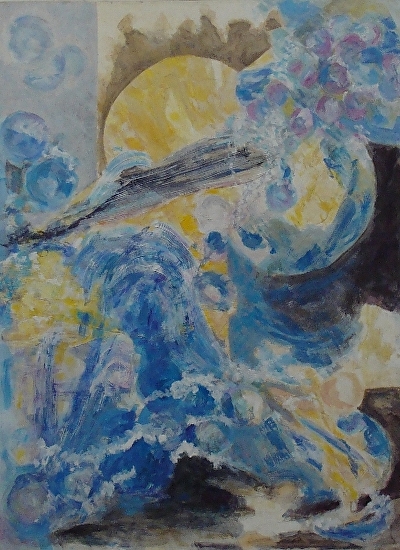
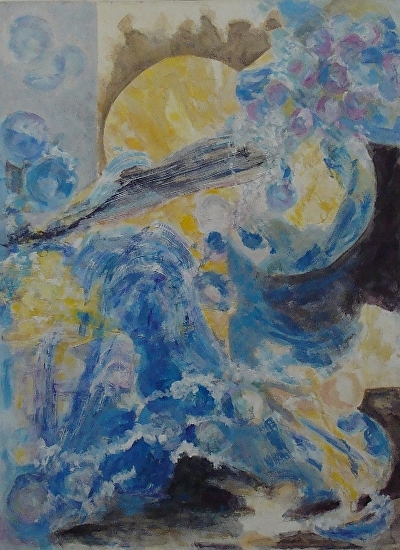
The surf is definitely up and emotions churn wildly with the ebb and flow of restricted lives.

Waves of Fear

When first sequestered I was asked to call forty people and ascertain how they were feeling and if they had special concerns that needed to be addressed. Most all responses were upbeat. I was told they were fine, establishing a routine, and enjoying the quiet of being home. Some worried about the future but not very much for it was difficult to image the country falling apart. Now, two months later, I contacted the same people to see if they were still OK. This time I received descriptions how fear washed over them in waves. They are tired of being alone, find it hot wearing a mask, scared shitless about lack of employment and lost savings, and crave warm hugs from friends and family. Some experience bouts of moodiness while others are fighting depression. The elderly, faced with how a two year pandemic will affect them, are grieving.

I spoke to several mental health counselors during those initial weeks, curious to know if they were inundated with calls. No, they said, their clients were coping and less stressed being home. Their calendars were wiped clean. That changed as the weeks passed, and being isolated started to take its toll. Fear creeped in as people dealt with the reality of their lives, imagining bleak years ahead. Suicide hot lines began responding to a 900 percent increase in calls, and counselors became busy conducting on-line mental health sessions. The way people are coping makes me think of the ocean.

 Just as waves hit the shore and retreat, so does panic roll over us before slowly retreating.  Eight weeks ago we were soothed by statements like “we are in this together,” and trusted health care professionals and government leaders to assess the pandemic and keep the sea calm. But as deaths rose, as unemployment reached unimaginable highs and as food became scarce for the poor, the ocean began to churn violently. Those stuck at home began to feel like they were drowning and started flailing wildly to stay afloat.  

Parents working at home with children under foot were faced with rolling waves that have to be continuously jumped over. It’s sometimes fun, but often exhausting, at times aggravating, but doable. But, when someone returns from work after caring for the ill, delivering mail or working in a food market, tidal waves of fear beat the door of those at home wondering if the virus is coming with them. Seniors who floated serenely on retirement rafts months earlier shake when realizing that country will open for those under 60, but exclude them. If they don’t remain isolated on their rafts they risk being toppled off by the next wave of viruses.

It is the uncertainty of how and when the pandemic will end that causes anxiety. Imagine yourself on a rowing team challenging the ocean. Just as your team establishes a rhythm, you are hit by a wild wave and thrown off balance. Sneaker waves like the stock market’s rise and fall on speculation adds to your instability. It doesn’t help when the coxswain throws off your rhythm with lies, false statistics, and harmful medical advice. When a boat is steered poorly, the rowers fall overboard.

Most Americans are  stressed, anxious, fearful, sad and lonely  . . . but not all the time. And though people with mental health disorders can slip into serious depression, few of us will.  Strategies of self-care can lower stress so you can take charge of your life and dilute height of the swells. Now that we are two months into the pandemic, ask yourself if you are following self-care practices consistently?

It will take time for the waters to calm when the pandemic ends, and many will suffer from post traumatic stress (PTSD). It is the time to imbed self-care practices so strongly in your psyche and everyday practice that you’ll have strength to cope with and enjoy the challenges that lie ahead.

Remember to get enough sleep, participate in physical activity, eat healthy, avoid tobacco, alcohol and drugs, limit screen time, and find time to relax.

Care for you mind by keeping a regular routine, limit exposure to news media, stay busy, focus on positive thoughts, set priorities, learn something new, and draw strength from your moral compass and spiritual life.

Strengthen relationships through connections on phone, or on-line, help others, and support family members or friends who are isolated through notes, or phone calls.

Get help if you need it. Stress is normal but COVID-19 pandemic can easily push you beyond your ability to cope. If you feel helpless, sad, angry, irritable, anxious or afraid. If you have trouble concentrating on typical tasks, your body aches, have trouble sleeping or eating, or if you struggle to face routine tasks for several days in a row, you may need help. Don’t be embarrassed to ask for it. It is not a weakness. It is a stressful Pandemic, not of your making. 

Contact a close friend or loved one, someone in your faith community, your primary care provider, or a mental health professional.  Organizations such as the National Alliance on Mental Illness (NAMI)  or the Substance Abuse and Mental Health Services Administration (SAMHSA)  800-985-5990 offer help and guidance. If you feel suicidal contact the suicide prevention Lifeline at 1-900-273-8255. If you are a victim of Domestic violence call 1-800-799-7233 .

References:

CDC staff (2020) cCoronavirus Disease 2019 (COVID-19) Outbreaks can be stressful. Center for Disease Control. relieves from https://www.cdc.gov/coronavirus/2019-ncov/daily-life-coping/managing-stress-anxiety.html

Mayo Clinic Staff (2020) COVID-19 and your mental health. Mayo Clinic. retrieved from https://www.mayoclinic.org/diseases-conditions/coronavirus/in-depth/mental-health-covid-19/art-20482731

NIMH staff (2020) Supporting Mental Health During the COVID-19 Pandemic, National Institute of Mental Health. retrieved from https://www.nimh.nih.gov/news/science-news/2020/supporting-mental-health-during-the-covid-19-pandemic.shtml

Art is always for sale. Contact me at marilynne@eichingerfineart.com
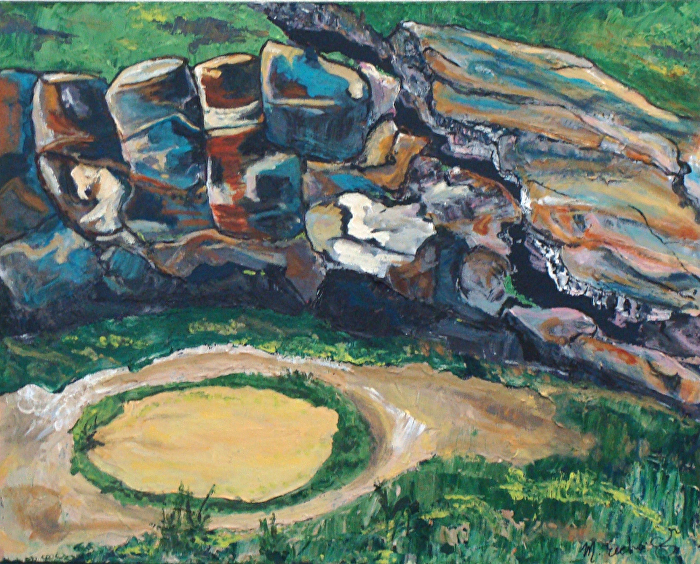
Surf’s Up  

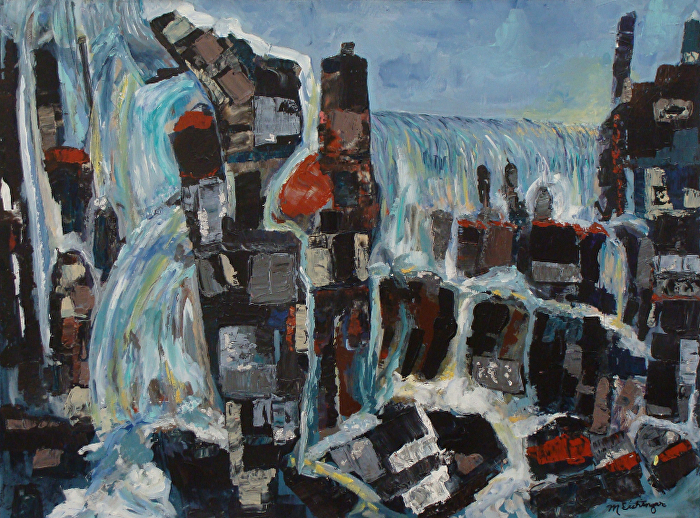
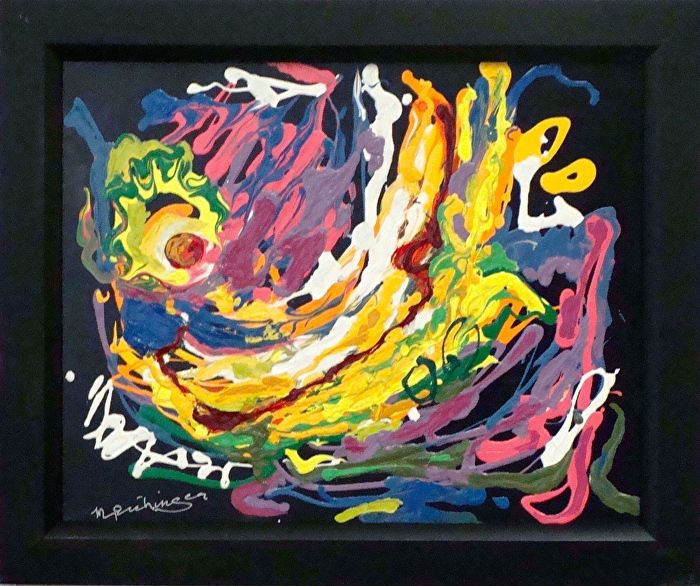
Acrylic on Canvas/ 48” x 36”/ gold frame / $699

Waves of Fear

Surf’s Up
The surf is definitely up and emotions churn wildly with the ebb and flow of restricted lives.

Waves of Fear

When first sequestered I was asked to call forty people and ascertain how they were feeling and if they had special concerns that needed to be addressed. Most all responses were upbeat. I was told they were fine, establishing a routine, and enjoying the quiet of being home. Some worried about the future but not very much for it was difficult to image the country falling apart. Now, two months later, I contacted the same people to see if they were still OK. This time I received descriptions how fear washed over them in waves. They are tired of being alone, find it hot wearing a mask, scared shitless about lack of employment and lost savings, and crave warm hugs from friends and family. Some experience bouts of moodiness while others are fighting depression. The elderly, faced with how a two year pandemic will affect them, are grieving.

I spoke to several mental health counselors during those initial weeks, curious to know if they were inundated with calls. No, they said, their clients were coping and less stressed being home. Their calendars were wiped clean. That changed as the weeks passed, and being isolated started to take its toll. Fear creeped in as people dealt with the reality of their lives, imagining bleak years ahead. Suicide hot lines began responding to a 900 percent increase in calls, and counselors became busy conducting on-line mental health sessions. The way people are coping makes me think of the ocean.

 Just as waves hit the shore and retreat, so does panic roll over us before slowly retreating.  Eight weeks ago we were soothed by statements like “we are in this together,” and trusted health care professionals and government leaders to assess the pandemic and keep the sea calm. But as deaths rose, as unemployment reached unimaginable highs and as food became scarce for the poor, the ocean began to churn violently. Those stuck at home began to feel like they were drowning and started flailing wildly to stay afloat.  

Parents working at home with children under foot were faced with rolling waves that have to be continuously jumped over. It’s sometimes fun, but often exhausting, at times aggravating, but doable. But, when someone returns from work after caring for the ill, delivering mail or working in a food market, tidal waves of fear beat the door of those at home wondering if the virus is coming with them. Seniors who floated serenely on retirement rafts months earlier shake when realizing that country will open for those under 60, but exclude them. If they don’t remain isolated on their rafts they risk being toppled off by the next wave of viruses.

It is the uncertainty of how and when the pandemic will end that causes anxiety. Imagine yourself on a rowing team challenging the ocean. Just as your team establishes a rhythm, you are hit by a wild wave and thrown off balance. Sneaker waves like the stock market’s rise and fall on speculation adds to your instability. It doesn’t help when the coxswain throws off your rhythm with lies, false statistics, and harmful medical advice. When a boat is steered poorly, the rowers fall overboard.

Most Americans are  stressed, anxious, fearful, sad and lonely  . . . but not all the time. And though people with mental health disorders can slip into serious depression, few of us will.  Strategies of self-care can lower stress so you can take charge of your life and dilute height of the swells. Now that we are two months into the pandemic, ask yourself if you are following self-care practices consistently?

It will take time for the waters to calm when the pandemic ends, and many will suffer from post traumatic stress (PTSD). It is the time to imbed self-care practices so strongly in your psyche and everyday practice that you’ll have strength to cope with and enjoy the challenges that lie ahead.

Remember to get enough sleep, participate in physical activity, eat healthy, avoid tobacco, alcohol and drugs, limit screen time, and find time to relax.

Care for you mind by keeping a regular routine, limit exposure to news media, stay busy, focus on positive thoughts, set priorities, learn something new, and draw strength from your moral compass and spiritual life.

Strengthen relationships through connections on phone, or on-line, help others, and support family members or friends who are isolated through notes, or phone calls.

Get help if you need it. Stress is normal but COVID-19 pandemic can easily push you beyond your ability to cope. If you feel helpless, sad, angry, irritable, anxious or afraid. If you have trouble concentrating on typical tasks, your body aches, have trouble sleeping or eating, or if you struggle to face routine tasks for several days in a row, you may need help. Don’t be embarrassed to ask for it. It is not a weakness. It is a stressful Pandemic, not of your making. 

Contact a close friend or loved one, someone in your faith community, your primary care provider, or a mental health professional.  Organizations such as the National Alliance on Mental Illness (NAMI)  or the Substance Abuse and Mental Health Services Administration (SAMHSA)  800-985-5990 offer help and guidance. If you feel suicidal contact the suicide prevention Lifeline at 1-900-273-8255. If you are a victim of Domestic violence call 1-800-799-7233 .

References:

CDC staff (2020) cCoronavirus Disease 2019 (COVID-19) Outbreaks can be stressful. Center for Disease Control. relieves from https://www.cdc.gov/coronavirus/2019-ncov/daily-life-coping/managing-stress-anxiety.html

Mayo Clinic Staff (2020) COVID-19 and your mental health. Mayo Clinic. retrieved from https://www.mayoclinic.org/diseases-conditions/coronavirus/in-depth/mental-health-covid-19/art-20482731

NIMH staff (2020) Supporting Mental Health During the COVID-19 Pandemic, National Institute of Mental Health. retrieved from https://www.nimh.nih.gov/news/science-news/2020/supporting-mental-health-during-the-covid-19-pandemic.shtml

Art is always for sale. Contact me at marilynne@eichingerfineart.com
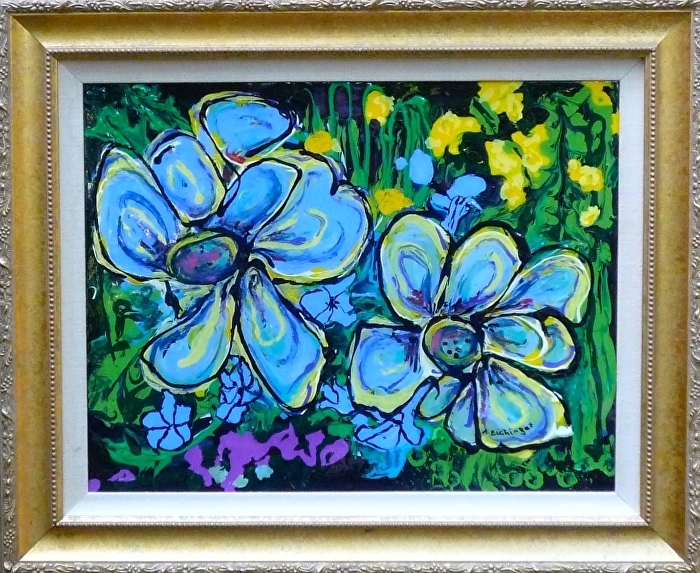
Surf’s Up  

Acrylic on Canvas/ 48” x 36”/ gold frame / $699

#agoodlife

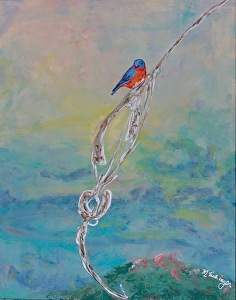
Spring Burst

In the middle of a pandemic, life continues with its challenges, excitements, and disappointments. It gives us time focus on what is important and what is not, and to realign proprieties to coincide with what we consider meaningful.  

What Makes Life Meaningful? From a distance of six feet, I conversed with a neighbor who confessed  retiring from a lucrative career she never enjoyed. For forty years she went to her law office rather than risk a cut in salary to do something more meaningful. The woman remained trapped in a self-made cage, with little time for anything else. Now that she no longer works, she travels and takes  walks, but her wonderings are unfocused. She stays in a meaningless vacuum while the world spins around her.

There are people who search for meaning throughout  life and never find it. One reason is that they stay focused on what they think is missing rather than what really matters to them.  I’ve counseled men and women who are bored at work, yet rather get involved in meaningful activities during their leisure time, they escape to computer games and YouTube videos. By equating how they earn a living with the essence of who they are, they remain unfulfilled. The two are not the same. 

It is only in the last fifty years that the question of life’s meaning became a distinct field of philosophy. Some philosophers needed a definition. “What are you talking about?” they wanted to know, while others immediately began asking if meaning comes from achievements, a moral character or having loving relationships? They were curious about the role of creativity, of God, and of a willingness to accept the situation you find yourself in.

Some investigated spirituality while others delved into existentialism which provides greater license to follow desires? They asked if meaning involves satisfying sexual yearnings or does it only have do with procreation? To live meaningfully do you focus on personal goals or those of family and society? Answering these questions these takes thought. It seems bizarre that it takes a pandemic to gift us the time to think about  profound subjects.

Many seekers believe “meaning” changes with age and maturity causing the need for periodic queries to take place throughout life. Meaning may not be the same for a twenty-year-old starting a career as it is for a seventy-year-old ending one. For others, like my father, there is a consistency that never varies. Though my father did not attend religious services as an adult, he was a deeply religious man who always acted with a sense of moral obligation.

The Stanford Encyclopedia of Philosophy organizes  thoughts about the meaning of life by describing four ways contemporary philosophers approach the subject. Though the digest that follows lacks many of the pro and con discussions, it gives a taste of what they say.

 a)  The meaning of “meaning” (getting consensus around the word “meaning” has not been easy. Is it best understood biologically? Psychologically? Are some periods during your life more meaningful than others? Happiness, purpose, and worthwhileness are good endeavors to have, but see them as distinct from what is meaningful.)                        

 b)  Supernaturalism – Relationship with spiritual realm  

b1–Soul-centered relationships (how you live outlives your death: If life is to be meaningful then do something worth doing that makes a difference to the world. Justice rather than wickedness must flourish. Most see having a soul as being immortal.)

b2–God-centered relationships (where God is an all knowing: God is all-good, an all-powerful spiritual being grounding the physical universe with a purpose. The meaning in life is to fulfill God’s purpose.) 

c) Naturalism –  Science

c1–Subjectivism (science is within the mind: Meaning of life varies from person to person. Live has meaning if you believe something, seek it out, and reach your goal. Becoming engrossed in whatever you are doing provides meaning ) or 

c2–Objectivism (views science from a physical perspective independent of the  mind: Meaning comes from morality and creativity with out the need for a God’s direction. Without a worthwhile project there is no meaning.  If you take up a worthwhile project and don’t care about it then it too is meaningless.)

 d)  Nihilism (pessimism) – (Life’s meaning can not be obtained and does not exist:

People are inherently dissatisfied. For a life to matter we must add value to the                                   world but we can’t, for everything in the physical world already has value and  nothing we do will make a difference. The universe is millions of years old, so  what does our 75 or so years matter. Bringing people into existence is immoral   if it would harm them.         

The struggle people have finding meaning can be helped by exploring the above paths. Once you understand where you fall on the spectrum, the rest falls more easily into place. For instance, an in-law of mine was a God-centered man who put everything on the shoulders of a supernatural being instead of himself. No matter what he did, whether he like it or not, he was at peace in knowing he lived within God’s plan. He remained stress free through economic hardships, times of war, and illness, certain he was in the hands of a loving creator.


A  taxi driving friend is a subjective scientist type who found meaning in a different way. He sees himself in the center of the universe looking out at life through a prism of what he knows and experienced. He is fascinated by his customer’s stories, because they also see through a unique lens. He tries to get inside their heads so he can add their insights to his understanding of life. My friend meditates daily to control his involuntary nervous system in order to bend it to his will.

On a trip to Kenya, I roomed with a soul-centered Hindu. This lovely young woman grew up reading the Bhagavad Gita as her source of wisdom. She believes in reincarnation, and engages in good deeds, confident she will be reborn in a higher realm in the next life. Without using threats, promises, or coercion her religion enjoins her to act as she thinks best, which she does with grace and compassion. She meditates to find center so she will know herself before reaching out to others.

My Niahlist friends who say there is no meaning to life, agree that there can be purpose and say that we are better off creating our own. Nazi concentration camp survivor, Viktor Frankl wrote form his observations that people are not motivated by pleasure as Freud thought or power, as Adler believed, but by meaning. “The point,” said Frankl, ‘”is not what we expect from life, but rather what life expects from us.”  He advises people to   1) Experience reality by interacting authentically with the environment and with others.  2) Give something back to the world through creativity and self-expression, 3) Change your attitude when faced with a situation or circumstance that you cannot change.

My thoughts about the topic continue to evolve. When younger, I was God-centered and at another stage, I was a Nihalist. Today I’m more of an Objective Naturalist. It is why it is easier for me to research and write a non-fiction book than a fictional one. As a housewife scrubbing toilets, mother comforting my child’s hurt, hostess serving friends, or business woman closing deals, I felt what I did had meaning when I was fully engaged in doing my best. As an activist, author, and a-whatever-else, I consciously try to make the world around me better. I strive to understand complexity in society, workings of the physical world, and to grasp psychological and biological aspects of the mind. But, meaning only comes from doing something with the information I accumulated.  At this stage in life, I find meaning when transfering what I’ve learned to the next generation.

I wrote this article because of the seekers who visited my “Do You Need a Mother Booth” at Shift Music Festival, for clients who came to my office wanting to end their lives, and for older friends and stay-at-home parents who say they are bored and live a meaningless existence.  Living without meaning can be as stressful as having fears caused by a pandemic. If you are the type of person who finds that being alone with your thoughts feels like too much to bear, try to go a little deeper within to ask yourself why. You’ve been given the gift of time to find the answer and to reorient your goals in a meaningful way.

References:

Metz, T. (2013) The Meaning of Life. The Stanford Encyclopedia of Philosophy. retrieved from  https://plato.stanford.edu/entries/life-meaning/

Burton, N. (2018) What is the Meaning of Life? Psychology Today.  retrieved from  https://www.psychologytoday.com/us/blog/hide-and-seek/201803/what-is-the-meaning-life

What’s Next? Blue Laws?

Personal Space

What’s Next? Blue Laws?

The way families have adapted to staying home, remind me of the Blue Laws ruling Pennsylvania when I was young. Each day parents and their offspring hop, run, and walk by the side of the road while chatting as though the world depends on what they have to say. Without the worry of cars whizzing by, the father and children next door shoot baskets from the street into a hoop near his house. Neighbors say they limit screen time and spend afternoons assembling puzzles, experimenting with recipes, and playing games. My guess is that monopoly, scrabble, and charades are favorites. 

Restrictive Sunday laws were first enacted in America in 1682 a year after William Penn established a government in the colony that later became Pennsylvania. The term Blue Lawdidn’t come into common use until1781 when a  document printed on blue paper in Puritan, New Haven was circulated. It listed regulations that forbid regular work, buying, selling, traveling, public entertainment or sports on Sunday. The word “Blue” was also used disparagingly in the 18th century to mean “rigidly moral.” Most colonies had similar laws but, in general, they lapsed after the revolution. Still, statutes remain on the books in numerous states, especially in defining hours for selling alcohol (prohibited all day in Mississippi). 

Some existing laws of interest: A few counties in Florida limit the number of hours alcohol and sex toys can be sold on Sundays. Hunting remains illegal in Maine and Pennsylvania with an exception in Pennsylvania allowing for foxes, crows, or coyotes to be killed. Michigan, Illinois, Oklahoma, and Maryland (except for three counties) don’t allow motor vehicles of any kind to be bought or traded. It took until 2016 for Fort Smith, Arkansas to repeal a law banning dancing on Sundays. Bergen, New Jersey is the only county in the country that still practices Sunday closing laws. A vote to repeal them regularly appears on the ballot only to be overwhelmingly shot dow. In Bergen,  the only open conveniences are grocery stores, pharmacies, hotels, and restaurants.

Originally put in place by religious organizations, Blue Laws are what economic historians call a “moral economy” while secular minded people see them as a violation of church-state separation. Labor unions have historically supported the concept of a rest day to carve time away from work and to give working people a chance to engage in civic duties like voting. Labor sees Blue Laws as protection for large swaths of working-class service employees from arbitrary scheduling and seven-day workweeks. Unions also express concern for white-collar workers who find their time invaded by emails, demanding immediate answers. A law restricting nonessential businesses from functioning one day a week would eliminate the creeping take over of work into every waking hour.  

I remember a time when all stores in Philadelphia, including grocers, were closed on Sundays. The day was given over to all sorts of family activities.  Teens and young adults picnicked, hiked, joined recreational sport teams, and partied in parks and each other’s homes. Grandparents, aunts, uncles, and cousins came together in multi-generational gatherings. 

Our family enjoyed long road trips to view fall foliage and spring blossoms. We purposely got lost and made a game out of finding our way home without a map (there was no GPS at the time). During the summer, New Jersey beaches offered a break from the city’s stifling heat (no air-conditioning either). We piled into our Buick with a trunk loaded with blankets, buckets, towels and a change of clothes. It was hard sitting still during the two hour drive, when the thrill of riding and ocean waves and digging holes to China was before us. As the afternoon waned, shedding bathing suits for shorts, we went for dinner and a walk on the boardwalk. Before the casinos took over, the boardwalk was lined with family friendly shops and carnival like entertainment. Feeling mellow after a day in the fresh air, we drove home glued to Mystery Theater, Father Knows Best, and the Green Hornet.

These excursions didn’t happen every Sunday. Some days were spent in the garden or making household repairs. Other times we visited relatives. Occasionally we’d attend an afternoon baseball game. I knew the name and number of every Phillies player and cheered them on. In those days ticket prices were reasonable for a family of six, and kids stood outside hoping to catch a home run ball to use as their entrance to the park.

One spring afternoon, we went to a farm to look at the newborn goats and sheep. I will never forget my ten year old brother climbing a billy goat enclosure only to get butted in the you-know-where. I laughed while he cried, his pride being hurt more than his derriere. New Hope, a pretty tourist town in Bucks County, was a favorite destination of my parents. While most of us wandered galleries and gift shops, Dad headed to the barber shop for a haircut and to hear town gossip. The barber was the elected mayor and his shop the meeting place for politicians and businessmen.  

Designating a day of the week off from work so that families and friends can spend time together is something all political parties should embrace. The pandemic certainly requires too much of us, but it is good to realize we are communal beings who need to spend time with each other.  Shopping may be inconvenient for some, but with the ability to order on-line that should not be an inhibiting factor. A day of rest and recreation improves health, lowers blood pressure and cortisol levels, decreases stress, and increases creativity. It helps us become better at our jobs, more available in our relationships and more energetic with our families. Life, in general, becomes more enjoyable with time to relax and think. 

Let’s save what we found to be good from the pandemic by starting a movement to retain a day of the week for the country to slow down so people can be together with family, friends, or simply alone in solitary peace. 

I’ve been thinking about what to name our day.  The world Blue has too many religious undertones for those who want a more secular day. Rainbow, Pink or Green might have worked but they too have connotations that are not inclusive. How about putting on your thinking cap and sharing suggestions of what to call it?

Meeting and Greeting During a Pandemic

I look forward to your comments on my blog site below.

Art is always for sale. Contact me at marilynne@eichingerfineart.com
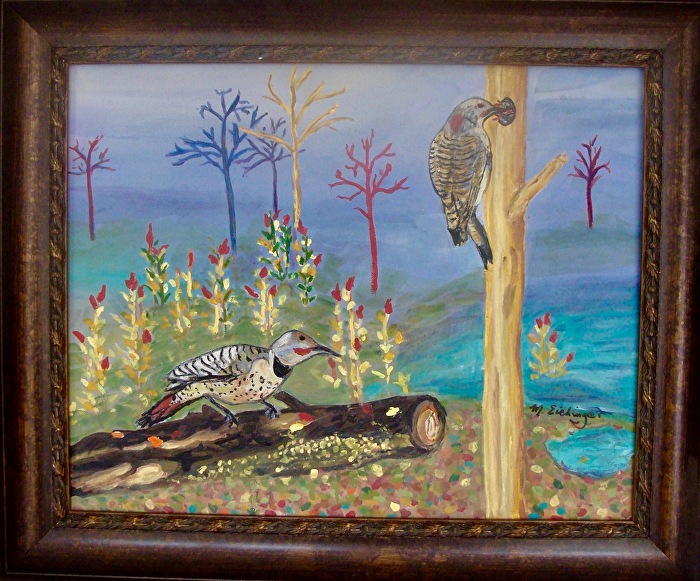
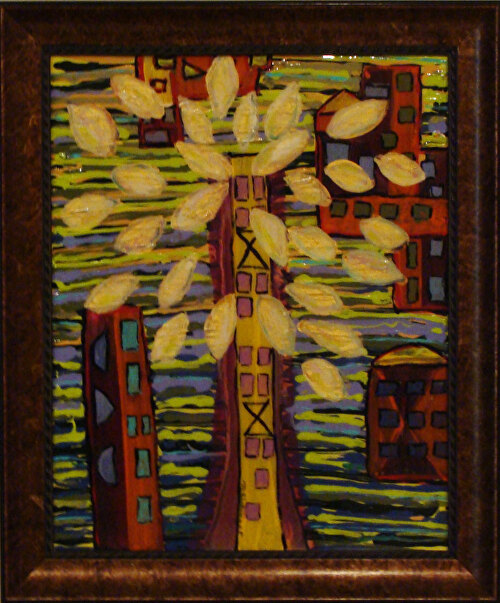
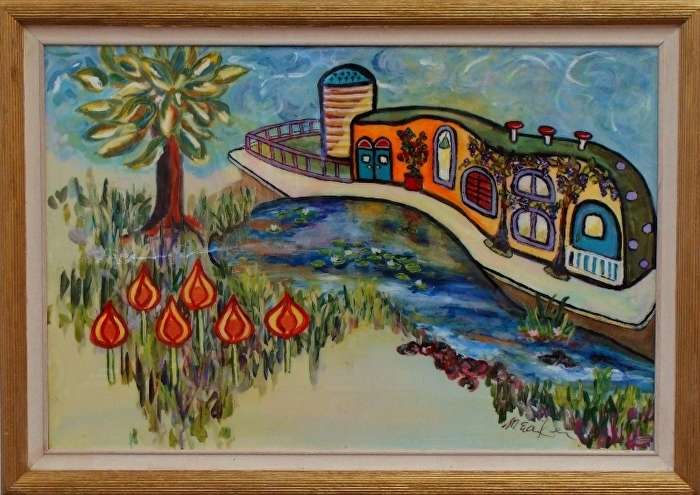
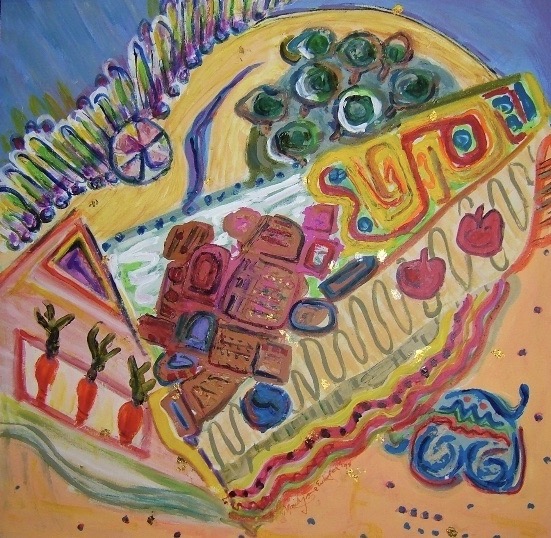
Personal Space – acrylic on deep canvas / 20” by 16” / $ 299 

References:

The Editors (2020) Blue Law American History. Encyclopedia Britannica. retrieved from https://www.britannica.com/topic/blue-law.

Stone,L. (2018) Why we need “blue laws,” the religious tradition that sanctifies life outside of work. Vox. retrieved from https://www.vox.com/the-big-idea/2018/10/2/17925828/what-were-blue-laws-labor-unions

Scott,E.(MS) (2019)How to take a Break From Work (Why You Need It). Verywellmind. retrieved from https://www.verywellmind.com/why-you-should-take-a-break-3144576

Muschick,P .(2020) Pennsylvania blue laws: It’s illegal to play ball on Sundays on most towns. How that once cost a 23-year-old man his life. The Morning Call. retrieved from https://www.mcall.com/opinion/mc-opi-pa-blue-laws-baseball-football-muschick-20200124-2ypbs6u4k5cmfar5weir6xpndm-story.html

#Solace in the woods

Woods outside my house

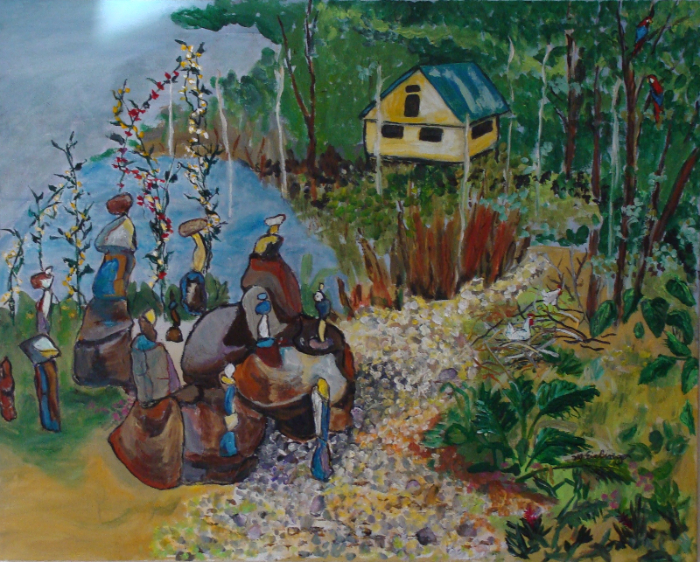
Life continues. Just as 2019 gave birth to Covid-19, so does spring burst with new life. The woods adjacent to my home hold great wisdom – one just has to pay attention to its cycles. There are days when I move quickly past the trees, demanding my muscles move in harmony with my breath. But there are times when I meander slowly and try to understand what the plants and birds whisper in my ears. 

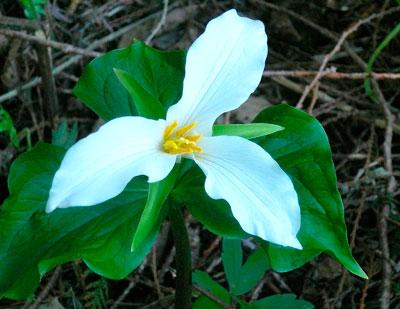
My path is lined with trillium warmed by the early spring sun. Though its bloom lasts only a short while, it marks the change of seasons. Its flower is extremely fragile yet the plant provides food. At maturity the base and core of the ovary turns soft and spongy, producing small fruits. Ants take them to their nest where they eat the fruit and discard the seeds in their “garbage,” where they germinate, providing beauty for those passing by.

Trillium

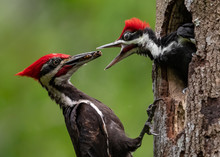
 I heard the persistent tat, tat tat sounds of a pileated woodpecker’s drumming, and noticed an old snag he most likely perches on when people aren’t around. Years ago tiny holes dotted the trunk when I hiked past. Today, they have expanded into small caverns. Though it the tree appears dead, nature’s supermarket has full shelves and continues to nurture its patrons.

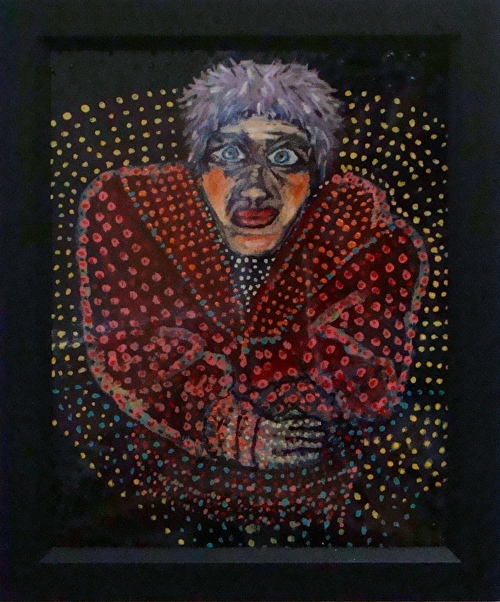
An old lady holding her head watched me as I turned a bend and continued up the path. She warned me to be careful so as not to fall. Though a downed tree made a convenient bridge to shorten my walk, I heeded her advice and took the long way round.

I miss the children I befriended, American citizens from an Etheopian and Samali immigrant family. Wednesday mornings were my day to take the four year old on trips to the library and river to feed ducks. I passed this wonderful tree and was sad knowing that she and her older sister would enjoy nature’s play structure. Now they have to wait until it is safe to go out.

Nature’s Playground

There is much death in the woods, but that is not bad.  As trees age and fall, slowly returning to soil, they nurture new life. New trees grow from their bellies and mushrooms flourish on their bark.

Even young and strong varieties have symbiotic relationships allowing vegetation to share its vitality, though invasive species like English Ivy, often smother the life force from its limbs.

I like it all – the deep earthy smells, the sounds of song sparrows drowned by loud cackling crows, and the frogs jumping in the creek at the bottom of the hill. Nature can show itself to be lovely and gentle but also as rough and brutal. I am driven to seek out beauty that propels life forward but understand that the dark side is also a part of the cycle.

#Caronavirusfear

The Garden
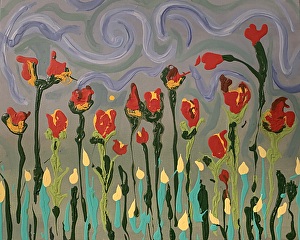
Think spring, welcome the sun, plant for the future and push back anxieties. 
“Is it useful to feel fear, because it prepares you for nasty events, or is it useless, because nasty events will occur whether you are frightened or not?” Lemony Snicket

Facing Fear in a Pandemic

It is human nature to fear. Fear allows us to increase our supply of adrenaline and react quicker when things happen around us. It allows us to realize that there are things out there that can hurt us and take the proper precautions.

Fear can be a good thing. It has been saving our ancestors butts since the time that they  hunted Wooly Mammoths with nothing but stone weapons and atladls (look it up). It has an important place in our lives, but it can also hold us back. Unlike in caveman times, we do not need to live in a constant state of fear. Too much, converts to stress and anxiety, making our lives more troublesome. Dealing with stress can turn into a health issue tat is worse that the thing we actually fear. 

I believe that it’s never worth worrying twice. Take precautions for sure – but then relax, for the event may or may not occur. While waiting, manage anxiety so you will be able to act calmly and intelligently if the situation does become critical. A few ideas follow.

Proven Ways to Relieve Stress

1. Drink Tea Chamomile tea has been noted to be a sleep aid.

2.Go for a Walk – it decreases stress by pumping your brain’s feel good receptors and lowers depression and anxiety. It can give you a feeling of control over your own body.

3.Reduce/eliminate Coffee and/or Caffeine – caffeine exaggerates and prolongs stress. 

4. Eat more Ginger – it has long been deemed as a homeopathic stress reliever. 

5. Disconnect from technology – Don’t watch the news all day to hear the latest coronavirus figures or stock  market dip. Once daily will keep you informed.

6. Get a good night’s sleep – try that tea before bedtime.

7.  Avoid process foods that are rich in refined sugars and white flour. They skyrocket insulin levels. No to junk food, fired foods, and food with preservatives.

8. Take Flax-seed Oil.  It reduces blood pressure, constipation, cholesterol, inflammatory diseases, anxiety.

9. Practice breathing techniques – deep breathing – inhale a larger than normal volume of air, hold it in your lungs for five seconds and exhale slowly over five seconds. Repeat 10 times.

10. Try mindful meditation. According to Harvard University it has a positive effect on stress and anxiety.

11 – Listen to soothing music, music that makes you happy. It can also help you think more clearly. 

12. Take a break to do something you enjoy.  Read (fiction is particularly beneficial at reducing stress )  Paint. Sew. Chop wood. Watch a funny TV show, Call a friend. Do a jig.(With added time on  my hands, I’m planning to paint.)

13. Write it down – Journaling is an effective stress management technique.

14. Roll you way to health with a foam roller. It can reduce stress.

15.  Cater to your sense of smell – aromatherapy using essential oils, especially lavender, have a positive effect on stress reduction.

16.  Smile – It is difficult to be anxious when smiling. Smile at friends to help them feel good. Force one on your face even if you don’t feel like it.  Smile at yourself in the mirror. You’ll be surprised at how the simple act of smiling can make you feel better. 

Proven Ways to Relieve Your Stress can be found at Develop Good Habits.  https://www.developgoodhabits.com/dealing-with-stress/  

Foam Roller

You gain strength, courage and confidence by every experience in which you really stop to look fear in the face. You are able to say to yourself, ‘I have lived through this horror. I can take the next thing that comes along.’ You must do the thing you think you cannot do.”Eleanor Roosevelt

____________________________

Are there special tricks you use to overcome anxiety and fear? Do share them on my blog site so all can benefit.

Art is always for sale. contact me at marilynne@eichingerfineart.com
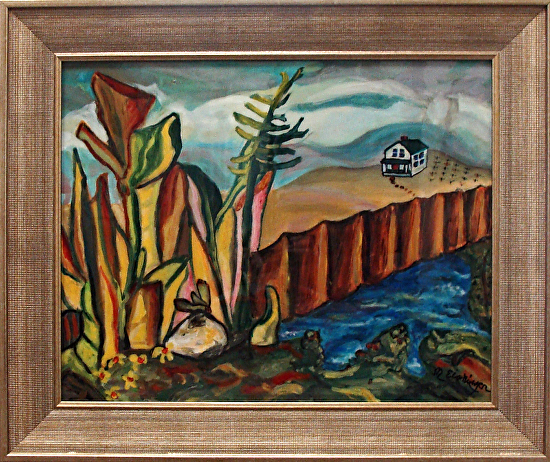
The Garden – acrylic on heavy board, gold metal frame, 37’ x 37” – $ 699

#Hobbies

Cool Daddy
My son painted this picture when he was younger and I enhanced it several yeas ago. We won a $100 award at an art festival and enjoyed a fine meal afterwards.

Hobbies in an Age of Bots

This is the third in a series of newsletters about survival in the age of bots. It is time to tune into the likelihood of millions of workers being laid off because of advances in robotics, automation, and artificial intelligence. The labor force’s participation rate has steadily declined, forcing unemployed people to occupy their time in some way. What do they do? The chart below from the Bureau of Labor Statistics shows only 63 percent of working age people employed, a drop from 67.4 percent 11 years ago. The one that follows show unemployment rates by educational attainment.


Civilian Labor Force Rates
Unemployment by educational attainment.

To live contentedly though the next 50 years, youth will need far-reaching ways to think about work. The jobs they take as graduates may not give them the satisfaction they crave nor provide them with a purpose for going to work each day. Being passionately engaged in a leisure time activity may be what is needed to keep depression and drugs at bay. Hobbies are not only satisfying, they can lead to employment that has nothing to do with college courses or training undertaken earlier.

I’ve spoken to people whose hobbies changed the course of their work lives. It is fascinating to discover how their early experiences built self-esteem, enabling them to develop into flexible adults capable of changing direction. Last week I wrote of Dan Stueber, a drummer turned archeologist specializing in stone tools. This week my youngest son Talik gave me permission to share the unusual path he is on.

Brendan Talik Eichinger

To supplement grade school teachings, Talik was given piano lessons and participated in gymnastics, joining a team in middle school. During the summer he attended robotics and computer camps with like minded boys hooked on networked gaming. Before internet was common, we mothers had to drive our sons with their heavy computers to a home where a LAN (local area network) was set up. The boys spent the next several days engaged in fantasy and role playing games, eating pizza (boxes and boxes of it) and sleeping at random hours on the floor or sofa.

Since he was a hands-on learner, we enrolled Talik at Benson High, a vocational school with a strong computer programming and assembly component. Augmenting the academic curriculum were practical offerings like metalworking, woodworking and small engine repair. He was introduced to electrical wiring, electronics and fabrication. After school, he rock climbed, a skill requiring focus, and late nights he joined drumming circles held in parks distant from those trying to sleep.

Programming computers in high school and OSU led to his first job as an IT specialist. After several years he left to start Mezr, Inc, a web design company employed by large businesses such as Jack-in-the Box. Though he and his employees work diligently, it is his after work activities I find most unusual.

Burning Man’s art/science festival motivated Talik to become a contributing participant. He moved into a vacant transmission shop, carved out living quarters, and filled the remainder of the space with tools, welding equipment, and large work tables. Wednesday evenings were designated as craft night.  Twenty to forty people came to work on their own projects as well as communal ones for the festival. He attracted artists, electronic, light and sound specialists, electricians, welders, designers, woodworkers, and computer programers. There were also a sprinkling of marketers, organizers, accountants and lawyers. They came for inspiration and to build community These gatherings reminded me of my early days of starting a science museum with volunteer help in Michigan.

Hobbies have a way of evolving. Tectonic was born when Talik and friends designed, sewed, and assembled a large colorful tent with fire spewing from thirty foot center poles. The tent surrounds a stage where DJs add their effects and mix recorded music and where bands can play before gyrating crowds. Light sculptures, laser shows, fire dancers, and acrobats provide additional entertainment. When more powerful speakers were needed, they were built in-house. If not needed for festivals, they are rented to events that hire Tectonic to manage sound.

After accumulating a mountain of equipment, the logical next step was to organize a summer event of his own. Shift Festival, now in its fifth year, takes place in July south of the Dalles. It has grown steadily, yet prudently. Advertising is primarily by word of mouth to discourage drunken ya-ya party-goers. Having attended for several years, I can attest that it is a well managed, artistically interesting, musically immersive venue with safety of great importance.

Talik’s hobby was started in part to counterbalance hours of sitting in front of a computer. This winter Mezr moved into a new 10,000 square foot warehouse in an industrial park. Its subsidiary, Tectonic,  set it up as a place for private parties and music events. An opening bash for Shift 2020 is scheduled for March 13th to launch ticket sales.

The festival and music part of Talik’s business has expanded so rapidly that it may overtake the internet design company. What was a hobby is now a second job, causing him to work and worry ’round the clock. There are employees and volunteers to supervise. Thankfully, they passionately share his burden and help maintain a vision of building a community that inspires creativity. 

Each child and every working adult will have to grow up able to bend, twist, and change direction as the economy and world changes.  Educators and parents can help children think more creatively, learn to take reasonable risks, and encourage them discover a passion. A broad liberal arts education, vocational options and leisure time hobbies will go a long way to ensure the next generation survives in the age of bots.#Ho

References:

Civilian labor force participation rate (2020)  U.S. Bureau of Labor Statistics. retrieved from web site at https://www.bls.gov/charts/employment-situation/civilian-labor-force-participation-rate.htm

Yang,A. (2018) The War on Normal People. Hachette Book Group.  ISBN 978-0-316-41424-1, New York, NY.