Understand. Have Hope!

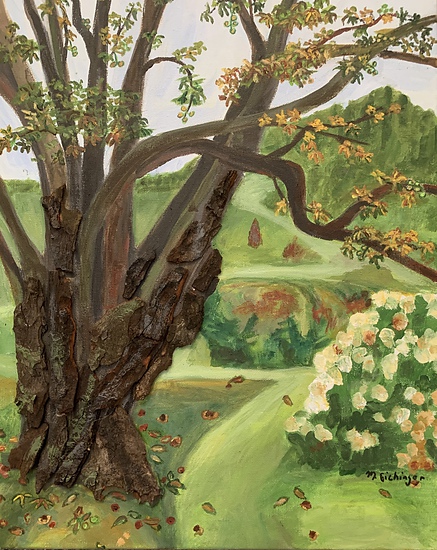
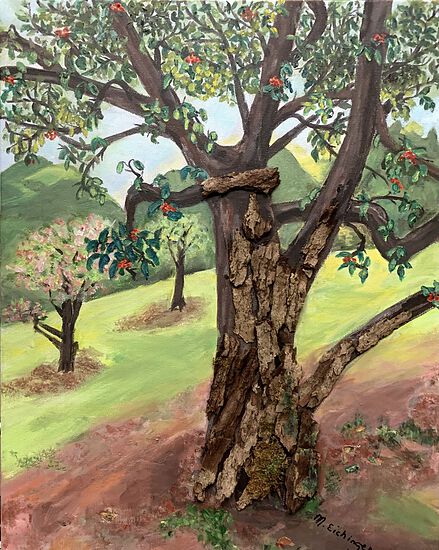
Hawthorn Tree
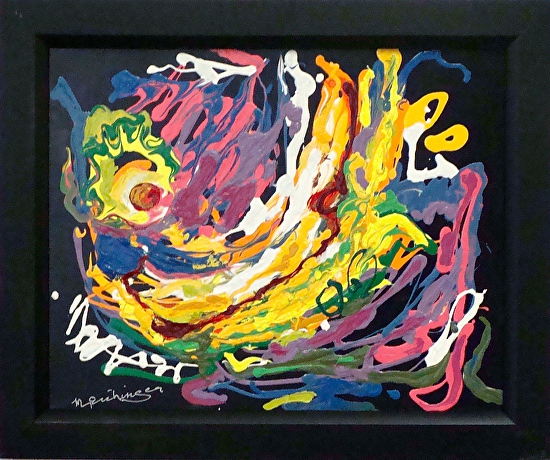
Many beautiful trees carry thorns. I study them. Instead of staying glued to television during the election I spent time in my studio painting out frustrations. It is a place I go to remind myself that people are basically good and do what they can to survive.

Understand. Have Hope!
Biden won, but many people are angry. This is especially true of gun wielding, flag flying middle age men. The 2020 presidential election pointed out ways our country is divided, but addressing the fury of so many citizens needs to be tackled immediately. I believe that doing so will reduce unrest and bigotry and make it better for everyone.
Non-Hispanic white men without a college degree are committing suicide in record numbers and their concerns need to be addressed. There have been many research papers written over the past five years that focus on white working-class Americans in their 40s and 50s who are dying of suicide, alcoholism and drug abuse. Their high death rates contrast sharply from those of college graduates. They are having a particularly difficult time adjusting to changes brought about by the Fourth Industrial Revolution-the one we are in now.
Though I’ve mentioned this concern in previous blogs, I feel it is important enough a subject to dig deeper into their plight. Uneducated white men, fearing loss of masculinity, often wind up joining militias and participating in acts of intimidation. Lies told at the expense of minority groups bolster them into believing they are not at the bottom of society’s totem pole. Unable to adapt to the new reality brought on by advanced technology, they are angry, frustrated and follow QAnon conspiracies with the misguided idea that they will hold back change. 
Though European countries face the same kind of technological change, men are not killing themselves with guns, drugs or alcohol. The United States is unique in the dramatic way inequality has risen while middle-class incomes have stagnated more than in Europe, Japan, or Asia. As large corporations increased their market share worldwide they left workers with little bargaining power. Outsourcing remains the norm as executives seek low-wage workers over developing company loyalty.
Days lack structure, status and meaning for many middle- and low-income Americans. Those who are employed, don’t always know what days or hours they will work each week so it is difficult to make leisure time plans. Lack of loyalty to their employer or business frequently translates into lack of pride in the work they do.
There was a time when the corporation or institution a person worked for gave meaning to the person’s life. Miners and factory workers identified with the company that employed them, knowing they would work there for life. Today they rarely have the same connection and fear they are expendable to executives looking for ways to reduce costs.
Other factors come into play as well. Men without college degrees are less likely to attend church and less likely to get married. They register a high degree of chronic pain and they find it difficult to do basic things like climb a flight of stairs or socialize. Since they are unhappier they drink and use drugs to excess leading to obesity and heart disease.
How can these men be helped to transition through the latest technological revolution? We need to start with empathy for their plight. Imagine how difficult it must have been to go from a horse and buggy agrarian society to life in cities with steam engines, automobiles and assembly line factories. The present economic revolution is equally difficult and already alters the way we live, work and relate to one another. Breakthroughs in artificial intelligence and biotechnology are happening at a faster rate than most people can keep up with, making adjustment difficult. Set against a background of warming environment we are called to transform entire systems of production, management, and governance at breakneck speed.
One way to help people adjust is to keep big business from maximizing profits at the expense of their workers. Inequality is sited as the greatest societal concern associated with the Fourth Industrial Revolution. Antitrust laws need to be enforced and there needs to be an evolved form of labor unions to deal with management.
Added to labor issues is the fact that the United States suffers by far from having the world’s most expensive health-care system. It drains resources that could be more productively spent on schools, daycare, roads and public transit. And, despite high costs, the American medical system fails to keep large segments of society healthy.Last but not least is the need to reform our healthcare system.To do so, politicians will have to do a better job explaining to the public why our current system does not work. The health of our citizens should be a higher priority than the wealth of the those working in the industry. 
Education, though, is at the core of preparing present and future generations to survive. To insure everyone is educated, government will have step in and subsidize four-year college degrees and meaningful vocational training. People in their thirties and forties need to be drawn into a massive effort to get them retrained. A demand for highly skilled workers will continue to increase while the demand for workers with less education and lower skills will only decrease.
But, education is not just a matter of machine learning. Things that set people apart from machines, such as how to work collaboratively to solve real world challenges and gaining an understanding of different cultural needs and perspectives have to be taught.
Now that social scientists better understand what is happening to uneducated white men, we can put our heads together and solve this problem. It is time to act aggressively and compassionately as a nation in order to move it forward. I have hope.
References:Brown-Martin,G.(2018) Education and the Fourth Industrial Revolution . Learning to thrive in a transforming world. Keynote talk at Regenerative Global. retrieved from GLOBAL.
MacGillis, A. and ProPublica.(2020) The Original Underclass.The Atlantic. retrieved from UNDERCLASS.
Reed, I. (2018) the Plight of the White American Male. Haaretz. retrieved from MALE.
Schwab, K, (2016)The Fourth Industrial Revolution: What it means, How to respond. World Economic Forum. retrieved from FORUM.
Leonhardt,D. & Thompson, s. (2020) How Working-Class Life is Killing Americans, in charts. New York Times. retrieved from KILLING.

Art is always for sale. Hawthorn Tree is 20″ x16″ x 2 ” / mixed media on canvas/ $325.
Contact me at marilynne@eichingerfineart.com to discuss shipping.
_________________________________________________________
Join me on November 17th at 7pm (PST) for a book talk sponsored by Lake Oswego Library. To receive information about how to connect on zoom go tohttps://www.ci.oswego.or.us/library/third-tuesday-author-marilynne-eichinger-0?date=0 and register.

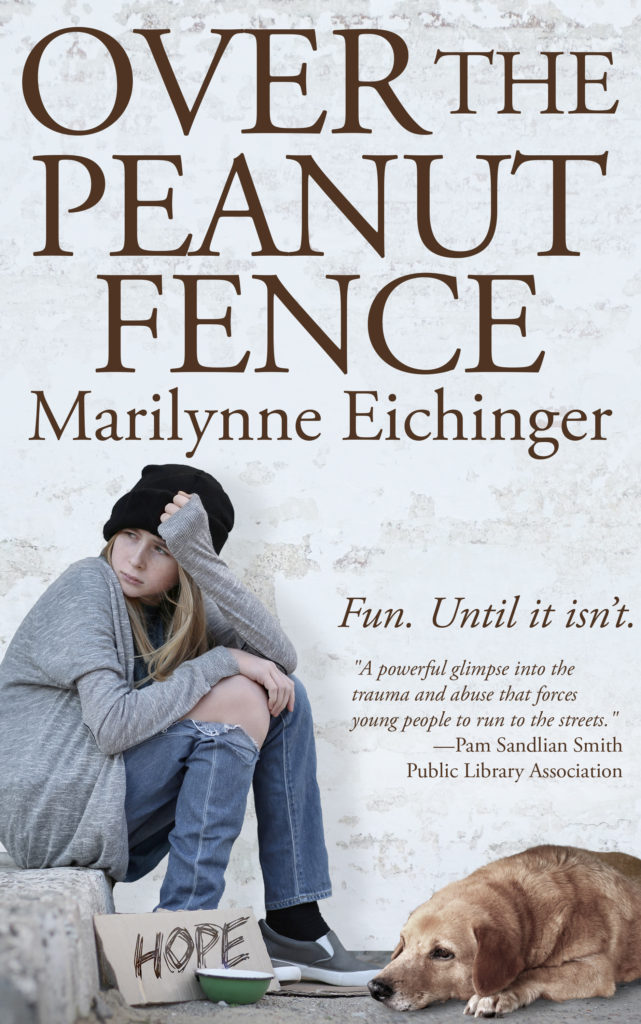
Over The Peanut Fence, a book about homeless and runaway, focuses on problems of traumatized youth, many of whom experience the effects of PTSD. Over the past twenty years we have learned a lot about developing brains and are learning how to help them overcome barriers to having a successful life.

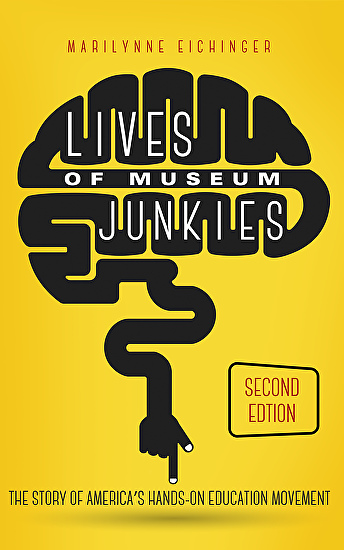
Lives of Museum Junkies: Second Edition

Revised and re-edited, the second edition of Lives of Museum Junkies is now available. It corrects mistakes and brings stories about the development of science centers up to date, covering ongoing events affecting communities nationwide.

* * *

When I was a young wife and mother, I started a science museum in my basement. It was 1972 when Impression 5 Science Museum was incorporated as a non-for-profit organization in Lansing, Michigan. That action heralded the beginning of an adventure that changed a timid, naive woman into one capable of running the Oregon Museum of Science and Industry (OMSI), one of the nation’s foremost science museums.

A wise man advised me, “When the time feels right, go for it! Don’t wait for everyone else to agree with your dreams because that never happens. Grab your own opportunities.” And that is what I did, though not alone. In Lives of Museum Junkies: Second Edition I share the joys and difficulties I experienced, as well as the struggles of eleven men and women who were on the leading edge of an international movement to create experiential museums dedicated to science. 

As pioneers, we were change agents influencing the country’s education ethos. And, as visionaries, we broke from tradition by combining art with science, engineering, math, and technology. Years later schools followed our leadership with a curriculums known as STEM, and when the arts got included, STEAM education. We saw ourselves as promoters of lifelong self-improvement, practitioners of creative problem-solving, believers in equal opportunity, disseminators of the latest scientific information, and teachers who made learning so much fun that students were compelled to ask the next question. We wanted visitors to leave the museum yearning to know more. 

We were unsophisticated when we started our museums and not skilled at fundraising, board development or staff management. We were artless in the way we constructed interactive displays and did not understand how chauvinism, race, poverty, and social class played a role in what we were doing. Included are sections called “lessons learned” so you will understand how the people I write about were changed by their experiences. Hopefully, the insights shared in the book will be helpful to anyone attempting a new venture.

I built and ran science museums for twenty-five years. In my late fifties, I took a risk by leaving the comfortable cocoon I had spun around me. With the help of twenty-two national museums and several board members, I left OMSI to found the Museum Tour Catalog in order to spread science literacy to homes throughout the country.  My goal was to provide parents with information and hands-on manipulative devices in order to help their children become engaged in doing and questioning rather than retreating to mindless television programs.

For eighteen years, The Museum Tour Catalog along with science centers inspired toy companies to develop hands-on science materials for children. Today science and art kits are found everywhere toys are sold. In the pandemic these materials are providing vital props for parents willing to augment virtual classroom learning.

The American Alliance of Museums recently estimated that one-third of the nation’s museums and science centers will close as a result of COVID-19. Thankfully, Impression 5 and OMSI look like they will survive. Their staffs are engaged in educating sequestered children and providing special in-museum offerings for those needing help with homework. They offer a variety of programs for adults craving intellectual stimulation. Special exhibits like the one OMSI opened about Genghis Khan are made available through timed entrance reservations.

What these overworked staff members do is not easy. OMSI, for example, had to reduce its budget by half which meant laying off fifty-three percent of its employees. Though the organization remains viable due to the commitment and inventiveness of its staff and financial support from the community, each day is a struggle. 

The revised edition of Lives of Museum Junkies explains how science museums became integrated into their communities, making them valuable assets that help people stay abreast of change. The pandemic focused attention on the importance of heeding scientists and medical professionals with years of training rather than giving credence to wishful thinkers and rumor mongers who extend Covid’s dangerous reaches.  Science centers play a critical role in separating truth from fiction in confused minds.

Lives as Museum Junkies’ second edition demonstrates how entrepreneurs who follow their dreams stay motivated and dedicated despite setbacks. Remaining positive and reaching for a better tomorrow is as important today as it was fifty years ago. As Norman Stiles implied in his children’s book Everything in the Whole Wide World Museum, the entire universe is everyone’s museum and we just have to fine tune the way we see things to take advantage of all that is there. I hope my writings will encourage readers to do just that.

Lives of Museum Junkies: Second Edition is available online in ebook and paperback formats. The print version will be in bookstores on Monday, November 2nd.

Fourth Industrial Revolution

Chestnut trees are known to live 800 years. Imagine the changes that occur while they spread their limbs during the fourth industrial revolution.

The Fourth Industrial Revolution

COVID-19 is a wake-up call, a shout-out for resilience. The pandemic created a vacuum that opened space for possibility. Though the illness is horrific, it let us see changes that have been occurring over the past several decades. It pointed out problems but also showed us what happens when society is thrust into a new era. We left the industrial and computer ages behind years ago and are moving to a world where advances in artificial intelligence and biotechnology will lead the way. The period we are in is spoken of as the fourth industrial revolution.

Now able to visit distant friends virtually instead of boarding a plane, within ten to twenty years we will be able to communicate with friends who leave earth to reside on the moon. With 3D printers, machines that can show emotions, bionic body parts, and genetically designed health care, the old ways are gone forever. In order to prepare for change, shine light from the past through a prism and watch it emerge as a rainbow of possibilities on other side.

COVID, our prism, illuminated empathy and the importance of science. It focused on dangerous antics of uneducated middle-class men while showing us people suffering in a land of plenty. Sequestering forced us to grapple with loneliness and learn to live in the moment, holding off plans for a future we don’t fully understand.

With pictures of the nation’s economic and political divide brought into  living rooms, we saw the plight of the poor and how people of color and native populations are treated. We learned that poverty is interconnected with health care, unemployment and lack of affordable housing. And, in the midst of multiple traumas we realized how important it is to share in community and yet reserve time for ourselves.

The pandemic also demonstrated that good government matters and that leaders who carried the welfare of their countrymen and women in their hearts, mitigated effects of the illness.Their examples taught us that the way we interact with neighbors matters. But for citizens to follow directives by government leaders, they must be transparent, trustworthy, and accountable.

Nations practicing multilateralism experienced synergistic benefits from working together. The European Union, for example, became stronger while facing COVID, migration, and climate change challenges. International participation in youth rallies, the women’s movement, and Black Lives Matter marches demonstrated what is possible when like minded people build platforms for resilience and fight against seemingly impossible odds.

The pandemic is already spurring discussions on how to make systemic improvements to the way business and government operates. I am more hopeful now than I was a year ago. There are times when things have to hit rock bottom before they get better. When that happens, there is a lot to do.

China, the largest emitter of greenhouse gasses, has done an about face by instituting policies that shift their economy toward a low-carbon future. When the United States dropped out of the Paris Accord, they assumed a leadership position in greening the world through carbon neutral investments in foreign infrastructures. Though our federal government is not involved, thankfully, individual states and companies are committed to lowering carbon emissions, with the hope of slowing global warming.

The projected surge in migrations caused by drought, flooding, and unlivable conditions has to be faced head on. Climate displacement has already caused entire communities to leave their ancestor’s bones behind on islands and coastal areas. Western Alaskans are forced to abandon their villages due to melting glaciers and erosion. We need to make plans to accommodate and help migrants resettle rather than treat them as pariahs.

But there are signs of progress as well. During the next fifty years, developments in artificial intelligence and biotechnology will explode. Have you noticed the shift in attention given to mind than rather than body activities? Fantasy sports and gaming, for instance, attract more people than ever attended live sporting events. A man like Steven Hawking could not have survived to contributed so well without advances in healthcare and AI. Symbols rather than the written word are used by youth who communicate with emojis and computer short hand. My son sent “<3” as an expression of love and best wishes. I had no idea what he meant.

Change in energy and materials technology already influence the way buildings are constructed and transportation systems designed. From airplane windows we see solar panels and gardens on rooftops. City planners of costal cities are reimagining how to coexist with rising waters with some suggesting we direct the sea through town in canals like the Dutch do in Amsterdam.

Corporate capitalism is bending to public pressure by incorporating social responsibility into its mode of operating. 200 Chief executive officers, including Amazon’s Jeff Bezos, Apple’s Tim Cook, and General Motors’ Mary Barra, signed an agreement to move away from “shareholder primacy,” to include all stakeholders such as employees, suppliers, and consumers. By doing good, they expect to have a positive impact on global economies which in turn will be good for business.

No one knows for sure how this Fourth Revolution will fully evolve, except that the way our lives are conducted is bound to be different. COBOTS, robots designed to interact physically with humans in collaborative environments and augmented reality and virtual reality are bringing enriched immersive experiences. Big data will allow massive data management and interpretation for business purposes and 3D and 4D printing will give us a way to quickly, accurately, and economically develop prototypes and products for sale.

My advice in how to cope with change is try to understand the past but not overly dwell on it. Rather, look to the future with curiosity and flexibility. Change can be exciting if you are a part of it. To prepare children, immerse them in STEAM education and teach them to be empathetic, creative, and competent problem solvers.

References:

Sandalow, D. (2019) Guide to Chinese Climate Policy 2019. COLUMBIA/ SIPA  Center on global Energy Policy. PDF retrieved from https://energypolicy.columbia.edu/sites/default/files/file-uploads/Guide%20to%20Chinese%20Climate%20Policy_2019.pdf

Ball, J ( 2020The climate of Chinese checks: Easing global warming by greening Chinese foreign infrastructure investment. Brookings. retrieved from https://www.brookings.edu/articles/the-climate-of-chinese-checks-easing-global-warming-by-greening-chinese-foreign-infrastructure-investment/

Web site (2019) Climate Change Forcing Some Alaskan Villages to Relocate. Insurance Journal. www.insurancegournal.com/news/west/2019/06/20/530000.htm

Web site (2020) Moon to Mars Overview, NASA. retrieved from https://www.nasa.gov/topics/moon-to-mars/overview

Walsh, B. (2020) A coming bio revolution is poised to change the world. AXIOS>  retrieved from https://www.axios.com/biotech-revolution-covid19-coronavirus-world-14a98277-e9c2-4f01-8419-986377d0e96b.html

Pranavathiyani,G (2017) Revolution of Artificial Intelligence in Science. Towards Data Science. retrieved from https://towardsdatascience.com/revolution-of-artificial-intelligence-in-science-4047440a3cd0

Cevora, G. (2019) The relationship between Biological and Artificial Intelligence. Towards Data Science. retrieved from https://towardsdatascience.com/the-relationship-between-biological-and-artificial-intelligence-aeaf5fb93e19

Gelles, D & Yaffe-Bellany,D. (2019) Shareholder Value is No Longer Everything, Top C.E.O.s Say. New York Times. Retrieved from https://www.nytimes.com/2019/08/19/business/business-roundtable-ceos-corporations.html

Newsletter (2020)  Industry 4.0:Which technologies will mark the Fourth Industrial Revolution. IBERDROL. retrieved from  FOURTH REVOLUTION https://www.iberdrola.com/innovation/fourth-industrial-revolution#:~:text=The%20concept%20of%20the%20Fourth,book%20of%20the%20same%20name.

Art is always for sale. Chestnut Trees is an acrylic on canvas with tree bark imbedded in the painting/ 20″ x16″ x2″ / $325. Call for to make arrangements. marilynne@eichingerfineart.com.

___________________________________________

About homeless and runaway youth.
Available online and in bookstores in paperback and ebook formats.

Save the date: November 17th at 7pm.

ZOOM book talk sponsored by Lake Oswego Library, Lake Oswego, Oregon.

#Freedom

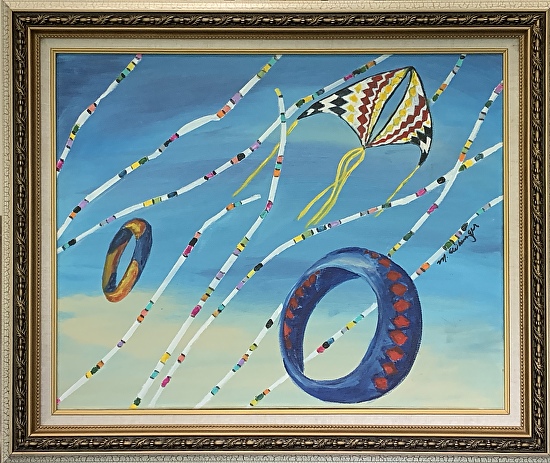
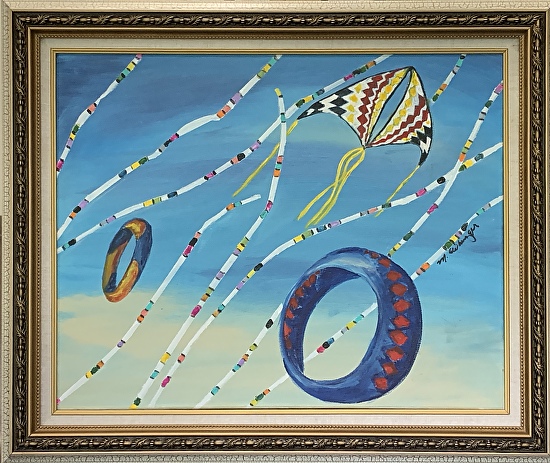
Flying High by Marilynne Eichinger : COVID brings home the fact that we live in community. One person can affect people living on the other side of the globe.

 Whose Freedom is it?

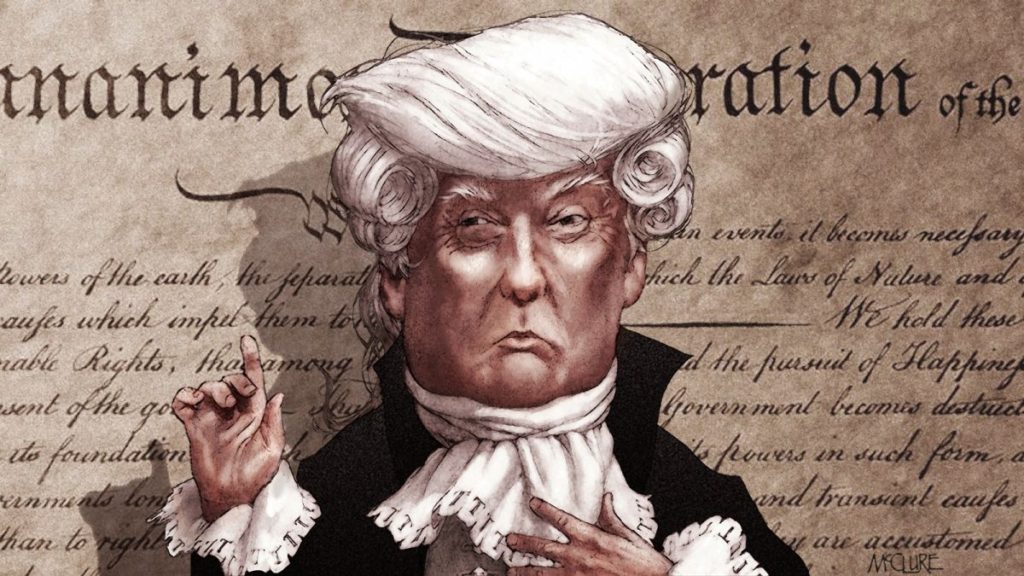
The question raised is how far should freedoms go? Does freedom of speech give you the right to lie or incite hatred? Is a free press given the right to spread false rumors? The Declaration of Independence maintained that people have the right to life, liberty and the pursuit of happiness. The Constitution set parameters under which laws of the land are enacted and the Bill of Rights spelled out civil rights and liberties for the individual: freedom of speech, press, and religion. 

A war was fought to free the nation from tyranny by a foreign power. Since then, our citizens have been obsessed with the concept of freedom, with many considering it a right to do whatever makes them happy. happiness. 

Whining about wearing masks and calling social distancing an infringement of personal freedom seems ludicrous, childish, and even dangerous. Why does anyone think that an individual’s rights are more important than everyone’s safety in a pandemic? Perhaps these “freedom lovers” grew up watching cowboy movies or space odysseys with wide open spaces between homesteads and planets where no one was paid attention to how they acted. Do they remember that even cowboys had to drop their guns off at the sheriff’s office when they came to town?

There have always been constraints on how to behave, but COVID and protests against police brutality made us aware of what happens when an individual’s pursuit of freedom impinges on the rights of others. This occurs often, but not in ways that are flaunted by extremist groups.

The Pilgrims left their homelands to come to the Americas because of religious persecution. This led to the Bill of Rights that prevented government from creating or favoring a religion. Unfortunately, many of the freedoms the founders cherished are being undermined today. 

Packing the Supreme Court entirely with men and women of conservative Christian persuasion reminds me of the Inquisition, a time when individuals were denied the right to live according their spiritual conscience. Laws upheld by judges or made by legislators who place personal beliefs about the Almighty more important than the Constitution that separates governance from religion, can easily make criminals out of non-believers. When powerful people are firmly imbedded in dogma, they dismiss individuals and religions that countenance that LGBTQ is a biological condition, that women have the right to manage their own bodies, and that the universe is best understood by the study of science. A small group of nine can impinge on the freedoms of many. 

The Declaration of Independence spells out why the colonists wanted to be free from England. Many of the disagreements they wrote about in the seventeen hundreds are similar to concerns expressed by individual States and citizens today. Quotes from the Declaration (about King George):

“He has endeavored to prevent the population of these States: for that purpose obstructing the Laws of Naturalization by foreigners, refusing to pass others to encourage their migrations hither. . .” Today we have our own power elite obstructing naturalization by foreigners and discouraging migrations.

“He has made Judges dependent on his Will alone, for the tenure of their offices. . . “ We again have an oligarch demanding absolute allegiance to his will alone.

“He has erected a multitude of new Offices and sent hither swarms of Officers to harass our people, and eat out their sustenance. . . “ A swarm of Immigration and Customs Enforcement officers (ICE) harass individuals who have lived peacefully in the country for decades, divide their families, and treat them inhumanely.

“He has kept among us in times of peace standing armies without the consent of our legislature.” We send our army to foreign lands and station them in homeland cities without war being declared by the legislature.

“He has affected to render the military independent and superior to the civil Power.” The president uses the military as his private army and sends them into states when not requested to do so and without the backing of congress.

“He has plundered our seas, ravaged our Coasts, burnt our towns, and destroyed the lives of our peoples.” Though this is a stretch, leaders who deny global warming, allow the seas to be polluted, and destroy plant and animal life in record numbers, are the ones causing land and towns to be plundered by fire, floods, and drought. People are suffering in record numbers. 

“He has excited insurrection amongst us. . .” When the Declaration was written this article talked of how King George incited native peoples to plunder and divide our colonizers. Today, our president divides our citizens and incites right and left wing reactionary groups that are bent on destruction.

Though we inherited the right to life, liberty and the pursuit of happiness, as well as freedom of speech, press, religion and the right to bear arms, they were not given in a vacuum. We live in a global community of 7.8 billion neighbors, whose welfare affects our freedoms and happiness. In the 1700s there were an estimated 643  million inhabitants on earth. 

Do to the way we trade and travel, their diseases reach our shores. A warming climate and wars push millions of families to migrate to foreign lands. They have no choice if they are to survive. There are now so many people on this planet, that we would do well to consider our collective human family when thinking of our own welfare, for they are connected and can never be separated again.

Historian: What would Founding Fathers Think of Trump? CNN,  Joseph Ellis, 2016 

References:

 Text of the Declaration of Independence. Britannica. retrieved from https://www.britannica.com/topic/Declaration-of-Independence/Text-of-the-Declaration-of-Independence

The Bill of Rights: What Does it Say? National Archives. retrieved from https://www.archives.gov/founding-docs/bill-of-rights/what-does-it-say#:~:text=The%20Bill%20of%20Rights%20is%20the%20first%2010%20Amendments%20to%20the%20Constitution.&text=It%20guarantees%20civil%20rights%20and,the%20people%20or%20the%20States.

Ellis, J,. (2016) Historian: What would Founding Fathers Think of Trump? CNN Opinion. retrieved from cnn.com/2016/05/04/opinions/what-would-founding-fathers-think-of-trump-ellis/index.html.

#Creativity amidst Chaos

Creativity Amidst Chaos

As chaos swirls around us, it calls on our creativity. In the face of multiple challenges, we have to stay positive to maintain sanity. Though seeds of our problems were planted years ago, it was staying home with more free time that we recognized the effects of climate change, police brutality and a flawed health care system. Watching society fall apart so rapidly took most of us by surprise, yet it also became a call for action. According to faculty at Boston University’s School of Global Affairs, times like this often initiate change for the better. When the initial shock of the pandemic in Italy subsided, COVID-19 made the European Union stronger. Countries came together, sharing information and resources that helped them get better control of the virus.

I dare say that no one is complacent today. We’ve been forced to look inward and, though we’ve seen much that is bad, their is also good. We’re more realistic and more inventive in the way we communicate and manage our days.


Last weekend I went to a Zoom wedding. Rather than attend an over-the-top extravaganza, I sat in jeans watching two very happy people exchange vows with only six family members in live attendance. I was so close to the couple I could see smile lines on their faces. Their eyes twinkled as they looked at each other with such warmth that I was drawn into their circle. We gallery of watchers applauded and wished the couple well, saying we would be there for them as their married lives evolve.

Zoom marriages, celebrations of birth, memorials, and computer matches keep people connected. We are fortunate to live today and not in the 14th century during the black plague. Modern medicine, computers, heated and air cooled homes and supermarkets are blessings not to be taken for granted.

Last weekend, I watched an NPR documentary about 30,000 Jewish refugees confined to a one-square-mile ghetto area in Shanghai during the Japanese invasion of China. Isolated behind barbed wire fences for six years, they were forced to reexamine their values and find ways to stay positive. They educated their children and lived in the present, saying they were one day closer to the end of their confinement. They realized that posessions have little value for they are easily taken away. What is important is maintaining health, being with family and friends, having a joyful spirit, and accepting each day as a gift.

A friend witnessed the best of America while visiting a relative near the Big Hollow Fire north of Vancouver, WA. Fleeing families were invited into the homes of strangers or allowed to camp on their lawns. Food, clothing, toys, and equipment poured into the community to help refugees who did not know if they would have a home to return to. No one asked if they were a Republican or Democrat. Across the country, people give aid to those who need it and get joy from doing so. They are good citizens.

A woman called to tell me the pandemic was a blessing, for it gave her time to think about who she was and what she wanted to do next. She started planning a new business venture and is in the initial stages of executing her dream. Several artist friends in their studious are producing works inspired by the pandemic. Their insights will grace the public with magnificent displays of beauty when the pandemic is over.

A physician friend is making sculptures that surprise the neighborhood. Though a novice metalworker, he learned to weld, cut and assemble pieces that look professional. The woman across the street from him stays occupied by making quilts. She hangs lovely creations over her porch railing before giving them away.

Many people pass as they head for the trail by our house. One neighbor commented that because of her daily walks, she is stronger and healthier than she was last February. It is apparent from they way she looks that the excursions make her complexion glow.

There are more flex jobs and more people working in pajamas, proving to employers that they can get work done from home. It is likely that some hybrid of home and office work will evolve to replace “the daily grind” in an office setting. This should lower traffic congestion and decrease the need for new office buildings. Jobs for software developers and customer support increased dramatically.

Though vacations by plane decreased, families went on road trips and enjoyed nature where wildlife is thriving. Monkeys were seen roaming streets in Thailand. A bear was spotted navigating a town in Alaska while humans were indoors. My neighborhood, only ten minutes from center city, is frequent by deer, coyotes, owls, raccoons, possums, and hundreds of rabbits, animals not seen five years ago.

Pharmaceutical and health research companies are making massive technological advancements in their search for a vaccine. People who get COVID-19 today have a greater chance of surviving than they did seven months ago. There have been tremendous advances in digital health care that will serve us well in the future.

At a scale not seen in 50 years, millions of Americans returned to cooking. Interest in online tutorials and recipe websites have surged. IKEA, revealed how to make its famous meatballs and Swedish cream sauce and many restaurants are sharing their secret recipes so people can try them at home. Cooking could make a difference to the average person’s health, for those who do so eat less fat and sugar. According to Hans Tapariea, professor at NYU Stern School of Business, the newfound proficiency in in the kitchen could be lifesaving.

Drive-in concerts have sprung up all over the country for those who miss live music , yet don’t want to be in crowds. Lady Gaga made a new album for dance-floor fun use in our living rooms. Taylor Swift put out her best ever studio album. The Chicks returned after 14 years with “Gaslighter” reigniting a love of twangy empowerment songs.

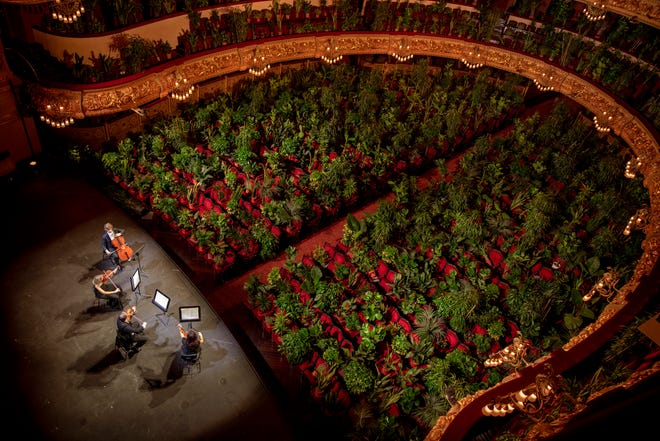
The Opera in Barcelona, Spain performed to an attentive audience of house plants in July and then donated the plants to health care workers. And, Hamilton was made available to the public as a movie.Coronavirus sent theater online. In the U.K., an online view of One Man Two Guvnors by Richard Bean had 2.6 million viewers on Zoom and YouTube. Broadway and West End playgoers can watch musicals and dramas at home via Broadway HD for a monthly fee of $ 8.99.

Puzzles and board games are cool again and parents spend more time with their kids. Recognizing that homeschooling is hard, they are praising teachers again for the heroes they are. Now that most schools offer distance learning, teachers are learning how to keep students engaged. It is not easy. Thousands of tablets were handed out to students who need them. Computer literacy may improve because of it, becoming an equalizer of the future.

Museums got creative by showing their collections virtually, offering special classes and lecturers through Zoom, and developing in-house and distanced programming that meets social distanced and hygiene guidelines. OMSI started a program to help children with their homework.

Bike lanes stayed open when many park trails closed. Bicycle companies are doing a booming business. It is a healthy, non-polluting way to travel that has caused a shortage of cycles as anxiety over public transportation and a desire to exercise sent the demand surging.

As toilet paper disappeared from store shelves, bidet sales boomed, which was good news for our behinds…and less wasteful. Peer-reviewed research claims bidets are superior to toilet paper, a position supported by many doctors. Bidets are common in Europe, but Americans always had an aversion to the idea. The pandemic may bring about a change in attitude.

People looking for activities to occupy their free time after events closed, turned to gardening in record numbers. Burpee & Co. sold more seeds than any time in its 144 year history. Neighbors, new at farming, grew tomatoes and cucumbers in their yards and shared the excesses with their friends. Gardening was an especially good activity to do with children.

In our neighborhood, people raised garage doors and chatted with friends in driveways or on porches during happy hour. Neighbors brought their own drinks, food and utensils and sat on chairs arranged six feet apart. As always, there was much to say.

References:

Haneline, A (2020) Good News Prevails: 100 positive things that happened in 2020 (so far) retrieved from https://www.usatoday.com/story/life/2020/07/29/100-good-things-from-2020-positive-stories-news/3257222001/

Editors (2020) 8 Positive Things since the COVID-19 Pandemic Started, medikeeper. retrieved from https://medikeeper.com/blog/positive-things-since-covid-19-pandemic-started/

Vargas, T. (2020) He asked stranger to share positive things that happened to them because of the pandemic. Hundreds of revealing responses followed. The Washington Post. retrieved from STRANGER. https://www.washingtonpost.com/local/he-asked-strangers-to-share-positive-things-that-happened-to-them-because-of-the-pandemic-hundreds-of-revealing-responses-followed/2020/07/17/d42dcfcc-c875-11ea-b037-f9711f89ee46_story.html

Taparia, H. (2020) How Covid=10 is Making Millions of Americans Healtihier. New York Times. retrieved from  https://www.nytimes.com/2020/04/18/opinion/covid-cooking-health.html

Goldaum,C. (2020)Thinking of Buying a Bite? Get Ready for a Very Long Wait. New York Times. retrieved from https://www.nytimes.com/2020/05/18/nyregion/bike-shortage-coronavirus.html

Knibbs, K. (2020)As Toilet Paper Flies off Shelves, Bidet Sales go Boom-Boom. Wired. retrieved from d.com/story/toilet-paper-shortage-bidet-sales-boom/

Walljasper, C. & Polansek,T. (2020) Home gardening blooms around the world during coronavirus lockdowns.Reuters. retrieved fromhttps://www.reuters.com/article/us-health-coronavirus-gardens/home-gardening-blooms-around-the-world-during-coronavirus-lockdowns-idUSKBN2220D3

(2020) Theatre companies are pushing storytelling boundaries with online audiences amid COVID-19. The Conversation. retrieved from https://theconversation.com/theatre-companies-are-pushing-storytelling-boundaries-with-online-audiences-amid-covid-19-141583

Morgan, D. (2020) Performing arts online: Bringing theater to socially-distancing audiences. CBS News. retrieved from ARTS. https://www.cbsnews.com/news/coronavirus-performing-arts-online-bringing-theater-to-socially-distancing-audiences/

#Survival of the Fittest and Social Darwinism

All Aboard

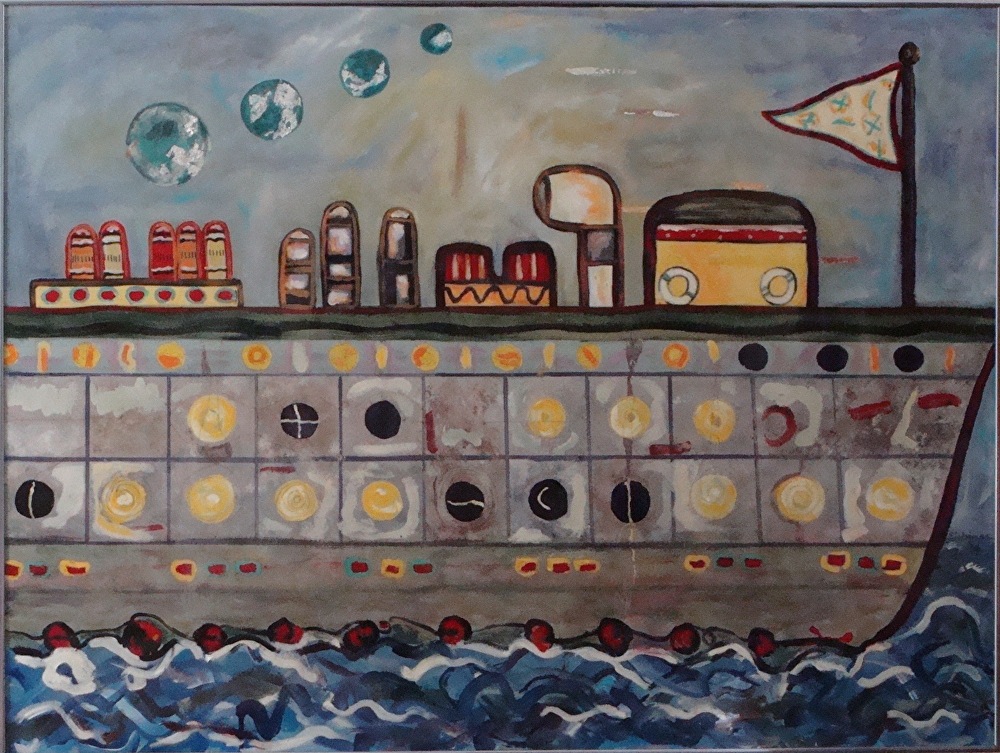
 Though the super wealthy may not be biologically the fittest, they certainly know how to survive without rubbing elbows with 4,800 fellow travelers.

Survival of the Fittest and Social Darwinism

Trying times make me think of Darwin’s theory of evolution and the ways people warp his writings to justify political, social, and economic agendas. Biologists looking at Coronavirus without effective treatment or preventive options, find the fittest depends on two phases of a patient’s immune response. The first occurs when the virus first attacks the body and immune cells gather at the site of the infection to destroy it. The second phase begins when regulatory cells suppress the inflammation to allow the infected tissues to heal. A deficiency in the first phase causes uncontrolled growth in the infection. A defect in the second phase can trigger massive inflammation, like pneumonia, that damages tissue and can cause death. Thankfully, the majority of people recover from coronavirus infections. 

Biologically, the fittest are those with a normal phase 1 response that clears the infection and keeps it from spreading in the lungs and a strong phase 2 response that prevents excessive inflammation. But survival in the United States does not depend entirely on the biology that allows the best adapted plants and animals to reproduce and transfer their genes to the next generation. Darwin’s theory of natural selection was developed to explain diversity and why different species of plants and animals evolve. He did not take social issues like wealth, healthcare or education into consideration. 

When examining Covid-19 to see why people survive, we have to consider factors besides the Darwin’s theory of natural selection. Access to health care, being educated enough to understand epidemiologists and cautious enough to avoid contamination by wearing masks are survival mechanisms based, in part, on political leanings, economics and education. Having enough money not to not worry about rent or food during a pandemic is a luxury for wealthy people, but also those receiving social security, medicare and medicaid. There are many nuances to why individual people survive pandemics, and we have to be careful not to twist the theory of evolution for political benefit as was done in the late 19th and early 20th centuries. 

Social Darwinism, advocated by Herbert Spencer and others, promoted a belief that powerful people are innately better. It was used to justify imperialism, racism, eugenics and social inequality by saying that the fit inherit qualities like industriousness and the ability to accrue wealth, while the unfit are innately lazy and stupid. Spencer preached that people could genetically pass on learned qualities like frugality and morality on to their children. Unfortunately, I see vestiges of Spencer’s thinking in our country today. 

Social Darwinism forms a basis for unrestrained capitalism calling for businesses to operate without government oversight. It opposes laws that help workers, the poor, and those who are genetically weak, believing they are unfit and that their extinction should not be delayed. Social Darwinists believe that individual competition for property and social status are justified tools for eliminating those who are weak and whom they judge to be immoral. 

In the mid-1900s, some went so far as to support Eugenics. Adulf Hitler, one of the most notorious examples, was inspired by California’s forced sterilizations of the “feeble-minded.” His call for a German master race was based on maintaining a pure gene pool. Hitler’s cries were similar white supremacists who walk our nation’s streets believing white people are superior to those of other races and therefor should dominate them. White supremacy was at the heart of the defense of slavery and justified segregation. 

According to Simon Clark of the Center for American Progress, Steven Miller, is an ideologically extreme Trump advisor who began working for him before the 2016 presidential election. He speaks of “the ‘great replacement’ theory, fears of white genocide through immigration, race science, and eugenics; he also linked immigrants with crime, glorified the Confederacy, and promoted the genocidal book, The Camp of the Saints, as a roadmap for U.S. policy.”

 Unfortunately, the numbers of White Supremacists are growing. This week, in Portland, The Proud Boys, a hate group identified by the Southern Poverty Law center, was turned down due to Coronavirus concerns when they requested a permit for 10,000 people to assemble.

Added to the supremacists way of thinking, are the evangelical believers who anoint wealthy and powerful, though immoral or criminal, as chosen by God. By selling their soul to politics, they are rewarded with attacks on reproductive rights and freedoms for LBGTQ+ people, and the appointment of scores of conservative judges. Kept in line through promises of salvation in the coming Armageddon, they little imagine the master race they are setting up to survive on earth without them.

The two groups stoke a dangerous situation that belittles ninety percent of humanity. Our country fought for independence against the Divine Right of Kings and we fought world wars against Social Darwinism, yet so many people bend to the rich and powerful who step on their backs.  

Most super wealthy people are not concerned that minority populations have a disproportionate number of coronavirus victims. They find ways to avoid paying taxes so they won’t have to underwrite healthcare, childcare or a living wages for all. They are not interested in feeding the poor, caring for the homeless or those who escaped life with addiction. They pass laws to drill for oil in wildlife areas and eliminate EPA regulations. 

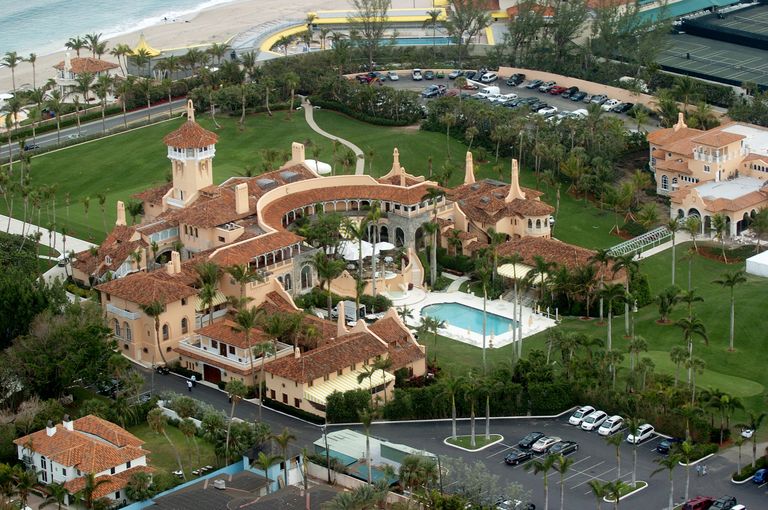
Because of global warming, the millions of people in the United States will migrate, lose jobs, starve, experience a decline in the quality of their environment and become ill over then next fifty years, while the super wealthy will stay secure in gated, air purified communities. They will travel in private jets and enjoy vacations on luxury yachts, rather than rub elbows with 4,800 middle class passengers. They may not be biologically the fittest, but they certainly know how to survive.

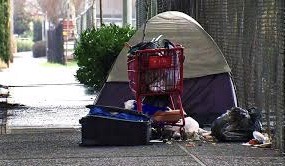
Travel by Yacht? Reside at Mar-a-Lago? or join the throw-away-people at home on the streets of Portland, OR?

References:

Editors (2018) Social Darwinism. History.Com. retrieved from https://www.history.com/topics/early-20th-century-us/social-darwinism

Nagarkatti,P & naugarkatti, M. (2020) What does ‘survival of the fittest’ mean in the coronavirus pandemic? Look to the immune system. University of South Carolina. retrieved from https://www.sc.edu/uofsc/posts/2020/05 coronavirus_immune_system.php#.X2l2Dy9h2S4

Lustgarten, A. (2020) How Climate Migration with reshape America. New York Times magazine, retrieved from https://www.nytimes.com/interactive/2020/09/15/magazine/climate-crisis-migration-america.html?campaign_id=52&emc=edit_ma_20200919&instance_id=22331&nl=the-new-york-times-magazine&regi_id=99366442&segment_id=38533&te=1&user_id=12c7cdc64c72bcde46f22458fd64bd0c

Unparalleled privilege: Why white evangelicals see Trump as their savior. The Guardian, retrieved from https://www.theguardian.com/us-news/2020/jan/11/donald-trump-evangelical-christians-cyrus-king

Clark, S. (2020) How White Supremacy Returned to Mainstream Politics. Center for American Progress. retrieved from https://www.americanprogress.org/issues/security/reports/2020/07/01/482414/white-supremacy-returned-mainstream-politics/

Art is always for sale. Contact me at marilynne@eichingerfineart.com

All aboard / Acrylic on canvas / silver frame / 36” by 48” /  $695

I enjoy hearing from you. Please send your comments to my BLOG SITE and eichingerfineart.com/blog.

#RBG Dedication

BIRCH TREES
Please excuse me for being late with my blog this week. Though not surprised by her death, for I knew how ill Ruth Bader Ginsburg was, I was saddened. Coming on the back of a pandemic, protests against police brutality, horrendous wild fires in the West and hurricanes in the East, I was not prepared to deal with one more thing that would be used as a wedge to divide our country.

So, I retreated into myself, not wanting to listen to the news or hear opinions about the election. I was unwilling to dig through statements for the truth, not ready to face the horrors mass migration will cause within our borders because of global warming.

Instead, I looked for beauty with thoughts of crisp autumn leaves that are about to fill the ground with color. I spent hours in my studio and decided to dedicate the seventh painting in my COVID-19 series about trees to the strong, ethical, caring, hardworking, extremely intelligent Supreme Court Justice who died after years of service to the country. She brought about change for ordinary men and women and was admired across party lines.

To fellow citizens-I’m sorry for your loss.

#Summer of Protests

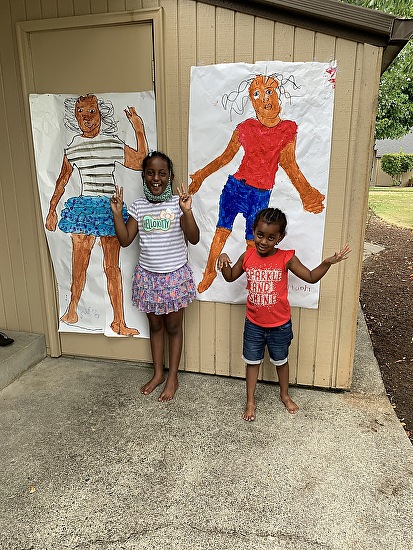
When the pandemic started I began writing letters to two African American children who call me Grandma. Over the summer I spent Thursday afternoons with them engaged in science and art projects. They practiced soccer moves and played with hula hoops. We had fun, though the protests hung over their heads for they were afraid their parents would be harmed. Following is a letter I wrote to explain what happened to African American people when they came to the United States.

#17

Dear Hanan and Mirna,

Over the summer you watched very scary protests that started when George Floyd was killed by police. People were angry and marched in the streets shouting, “Black Lives Matter.” This was not the first time protests occurred in this country. I’ll tell you what happened years ago.

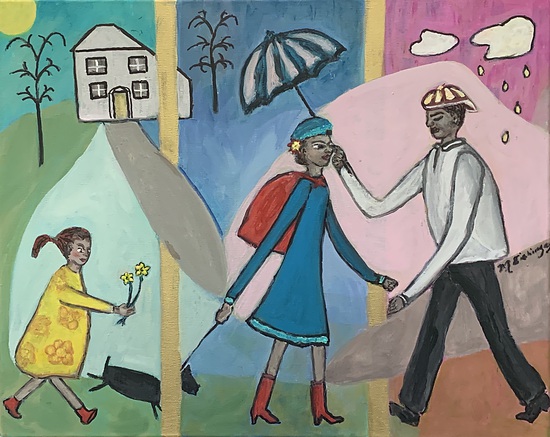
Life Rolls with Hope

Can you guess what this picture is about? The man on the right side walks under a rainstorm of tears. He holds an umbrella to protect his wife from getting rained on by sad and mean things that make them cry. The little girl behind the dog is happy walking in the sun. She carries yellow flowers bringing hope for a better future. That is what protests are about. People coming together in marches to ask the country to be kind and fair to everyone. It started with the Civil War.

When I was in elementary school, I learned that men and women captured in West Africa were sold as slaves to work on cotton plantations and in their owners’ homes. A lot of people were sold into slavery, though not everyone thought it was a good thing to do. Differences in what people thought about slavery brought about a deadly war. A civil war is a war where people in the same country fight with each other. In our country, states in the North fought against eight slave states in the South that wanted to break away to become a new country called the The Confederate States of America. Millions of people died or were hurt by the fighting and the South was left in ruins.

Everyone knows that the North won, the country stayed united, and the constitution was changed to free the slaves and make them citizens. The Civil War ended in 1865, over one hundred years ago, before I was born. But prejudice and privilege do not die easily. 

Most people in the South didn’t like what happened and stayed angry at the North. Though they lost the war they let the Confederate flag continue to fly over their buildings. They didn’t want freed slaves voting, competing for jobs, living next door, or going to go to school with their kids. They made laws that sent Black and white children  to different schools. They used different bathrooms, drank from different water fountains, and shopped in separate stores. Southerners made it difficult for freed slaves to vote. Many fled the South and went to cities in the North where they thought life would be better.

Seventy years ago, we called people who came from Africa “colored people” or “Negros” not Black, Brown, African American or people of color. I will use the world colored until the country changed again. There was one colored girl in my elementary school class who lived in a segregated (that means separated) part of the city not far from my house. I lived in an all white neighborhood where  busses arrived in the morning full of colored women coming to work for white families. They took care of  their children, cooked and cleaned their houses. 

Our family’s maid was a woman name Ruth who worked for my parents until she was very old. Ruth became a good friend of my mother’s, though they never went out together and Ruth was always considered a servant. The men mostly worked in factories, the post office, and did odd handyman jobs. Ruth’s husband sometimes cut our lawn and painted the house.

My mother didn’t let me to play with colored children. I was friends with a girl who lived a few blocks away and sometimes went to her house to play with dolls. But, when my mother found out, I was stopped from going there. Though I was only eight, I became angry at her and hurt for I knew what she did was not right. My father never said a bad word against the colored people he treated in his medical office. When white people left the neighborhood and only colored people moved in, he stayed, unlike other white doctors who moved away.

By the time I was in my twenties, a man named Martin Luther King organized peaceful protests against “Jim Crow Laws” that started after slavery was abolished. Jim Crow wasn’t a real man. He was invented by a white actor,  a minstrel who painted his face black and pretended he was a dumb, clumsy slave who jumped and sang to his master’s commands. His jokes made fun of colored people and the name Jim Crow stuck in people’s mind. They started using it when they talked about laws that were unfair to colored people. Northerners and some southerners did not like the way they were being treated.

Change occurred in 1955 when the Supreme Court told states to integrate their schools. More than half the people in the North thought it was the right thing to do, but only 13 percent in the South, which isn’t many, agreed. Southerners did everything they could to keep schools segregated. Courageous colored students in the South who registered at white schools and universities were met by mobs when they tried to enter. It took a lot more protesting to bring about change. 

The states were told to get rid of segregated schools when the Supreme Court passed a ruling in 1968. To hurry the process along, the court told the states to bus children from one neighborhood to another to mix the races. By 1988, forty-five percent of African American students in the United States were going to a mostly white school.

An African American friend told me recently, that when he was bused in fifth grade, a white third grade girl swiped her hand over his face to see if his color rubbed off. He pushed her away, causing the girl’s older brother to start a fight that ended in both boys being suspended. That was not a good first day at a new school. My friend and his buddies thought the white boys they met in school were weird because they were always saying bad things to them.

While schools were being desegregated, people started  protesting against Jim Crow Laws. In 1968, over 250,000 activists, more than all the people who live in Vancouver, marched on Washington to ask for civil rights. The nation tuned in to hear Martin Luther King Junior speak about his dream for a better America. Though the marches he led were peaceful, there were also riots and shootings like the ones we saw on the news this summer. Some of  people were poor and broke into stores to steal, but most people knew that wasn’t a good thing to do.

 It took courage to speak out and go to jail for what was you know to be right. Rosa Parks wouldn’t give up her bus seat to a white man and was arrested. She started a bus boycott that went on for over a year. Four college students in North Carolina sat at a white only Woolworth lunch counter waiting to be served, and seven Black and six white Freedom Riders went south to protest segregated bus terminals. 

Martin Luther King and Malcolm X, who lead the Nation of Islam and the Organization of Afro-American Unity, were killed fighting for freedom. White and Black people fought side by side for change. The way we spoke about people with dark skin changed. Instead of saying colored and Negro, we started saying Black, Brown, African American and People of color so I’ll change the way I write now.

But, not everyone liked the change. Ruth, the woman who helped raise me, grabbed me one day and pointed to her arm. “Is that black?” she demanded. “I’m not black. My skin is brown. I’m colored. You’re white.” Boy was she angry. She didn’t like being called African American any more than I want to be called English or Lithuanian American. She was American through and through.

My friends went south on Freedom Rides to protest unfair laws. I didn’t go because I had a new baby. When the Civil Rights Act of 1964 was finally passed it said that people couldn’t be turned away from jobs because of race, color, sex, religion or country of origin. I remember having to take a reading test the first time I signed up to vote, but the Civil Rights Voting Act of 1965 put an end to that. Three years later the Fair Housing Act gave everyone an equal right to housing.

See, my grandchildren, good things happen when a lot of people speak up. When people sit back and are silent it is possible to go backwards. Now that busing is not required, children are again sent to neighborhood schools that are not equally good. Since colleges no longer push to diversify, students of different races don’t get to meet and know each other. Public schools are more segregated now than they were 30 years ago. And though many white people didn’t realize how badly people of color were treated by the police until George Floyd’s death was caught on camera, they finally woke up.

You girls should feel proud at witnessing streets filled with all kids of people standing side by side to protest Black lives matter. I wanted to take you to a march so you could see how many people care about making things right. I didn’t because of the Coronavirus pandemic, thinking it better not to be in a crowd. But remember these times. You will benefit because the protests will make the  country more fair. 

Many police departments are already changing the way they interact with people. Police officers are getting trained in how not to be racist and how to help those who are mentally ill. Organizations and clubs are changing membership requirements so anyone can join. Businesses are looking at ways to hire more people of color. Good things will come as a result of the ugly things you watched on television, and one day you will tell your grandchildren about them.

A great many African Americans came to the United States after slavery was abolished. Your parents are from ancient people with Ethiopian and Somalian ancestors who were never slaves. They lived in families that cared for their children but had to leave when it became hard to earn enough money to live and because of tribal fighting in Somalia.

Though you were born here after slavery, because of the color of your skin, you are lumped together with descendants of slaves. It is important to understand that they grew up with problems that are different from yours. Their great grandparents were often misused and sold so they couldn’t stay together and they saw their children taken away and sold into slavery. They don’t know what country their ancestors came from and they were told that because they were captured, became slaves, and weren’t allowed to get educated, that they weren’t smart. That is very mean and also not true.

Prejudice is wrong, so don’t pay attention to people who bully and say bad things because of the color of your skin. Hold your head high and be proud of who you are and where you came from. Think about where you are heading. It is up to you to become what you want to be. Your future will depend on how much you study or train, how willing you are to work hard for what you want, and if you are a kind, good person. You can be president. You can fly to outer space, be a doctor here on earth, or become a world famous chef. You can marry whomever you want to and live wherever you can afford to live. You have the right to be you and to be loved for who you are—the best girls in the world.

Love, 

Grandma

References:

Teaching Tolerance editors (2004) Teaching Tolerance. Brown vs. Board of Education Time Line of School Integration in the U.S. . retrieved from https://www.tolerance.org/magazine/spring-2004/brown-v-board-timeline-of-school-integration-in-the-us

History. com editors (2020) Civil rights Movement time Line. History. retrieved from https://www.history.com/topics/civil-rights-movement/civil-rights-movement-timeline

History .com editors (2020)Civil War. History. retrieved from https://www.history.com/topics/american-civil-war/american-civil-war-history

#Know Yourself

Though it is not what we wished for, we are propelled through a pandemic that provides us with the gift of time. It is a gift that puts us alone with our thoughts, letting us contemplate about our past and the world around us. Are your thoughts comforting, frightening, insightful? Since most days pass less frantically, we have time to get to know ourselves better. Are you pleased with what you’ve discovered? Are you satisfied with your life? Do you look forward to the future and curious as to how you will adapt?

Saying hello to yourself can be an enlightening if somewhat conflicting experience. It means coming face to face with many things that define you? There will be things you are happy to acknowledge and celebrate and hidden parts you wish would stay buried forever. As you dig to find the essence of your being, it’s human to ask if you are like what you uncover. Once you accept who you are, you can lay plans to bring about the tomorrow you crave.

In June, as the weather warmed we looked forward to summer in hope that strands of virus would fly away like kites in the wind. We were surprised when to realize that Coronavirus had thoughts of its own. Though most of my friends were managing well, they were tired of communicating through ZOOM and ached to hug  family and friends. Everyone wanted the pandemic to end.

FLYING HIGH

But it didn’t. So, we had to adjust and get into a rhythm that would last for many more months. Some occupied themselves by gardening, writing or painting. Energetic neighbors repaired roofs, painted walls, cleaned drains, and fixed broken windows. Those who were sports minded took long runs, bicycle rides, and hikes through the woods. People slowed down, relaxed, finding beauty in nature and peacefulness in silence.

SILENCE

In the midst of adjusting, a loud blast started a fire burning in our hearts. We felt injustice in a country that treats people unfairly. We saw images of hungry families standing for hours in food lines and passed homeless tents that seemed doubled in number. The sights were ones previously relegated to the Great Depression. Gun shots, lies, divisiveness, and news clips of police brutality kept us awake at night. As we watched buildings looted and set aflame the future no longer seemed beautiful and hopeful. Downtown streets shuttered and abandoned while citizens cried out to be heard. I felt bleak and drained. You told me that you felt sad and miserable. Those raised to think the world was getting better, cried tears in empathy and distress.

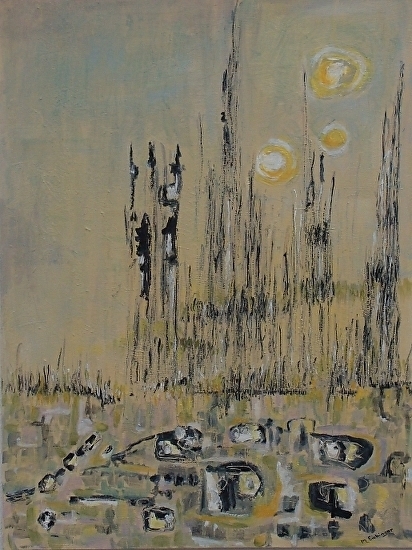
THREE SUNS

But, though I was disturbed, I experimented with a new style of painting, finished writing my third book and was engaged in science and art projects with two young immigrant children who call me grandma. Despite wearing masks, I enjoy having neighbors visit on my front porch and am pleased that I’ve gotten to know them better. Solitary walks in the forest give me time to think and decide what I am going to do and write about tomorrow. There is so much I want to accomplish.

The seeds of change being planted throughout the nation bode well for the future. Discussions and legislation moving forward will reform community policing. There is a heightened recognition that additional resources are needed provide social and health services for the mentally ill and physically addicted. Organizations and clubs started making changes in their policies in order to increase racial diversity among members. Several people stopped their cars at dusk to offer assistance to an African-American friend of mine whose bicycle tire was flat. Before they would have given him wide berth.

Social media sites have acknowledged the damage that happens when lies and falsehoods are spread for political gain. Best of all, they are doing something about it. High schools are teaching students to fact check and question what they read in texts and on Twitter, Instagram, and Facebook. With so many lies “whispered down the lane,” it is hard to know what to believe. Teachers tell students that it is up to each one of them to delve into what they read and find the truth. They have the time.

No longer silent, people spoke out when the postal service was undermined by those who want it privatized and want to create distrust in the results of next election. Health professionals learned to spread their reach by communicating to patients online. And, electric cars are being purchased in record numbers despite oil companies getting access to drill in the Arctic. Oil is on the way out. Young people are participating in politics and are active in the environmental movement. Though last week, the EPA reduced air pollution requirements to make it easier for coal plants to operate, I don’t think people will let it slide through without a fight. Coal is on the way out.

Yes, we will get through this pandemic and one day it will recede to the back of our minds like a dream, but not without changes. New jobs will be created for those who will continue to work from home. With fewer cars on the road I imagine road rage and pollution will decrease. Web based health care will continue.

People will learn how to adapt to change or perish. It is not alway easy, but eventually they will start to look beyond today and reimagine the future. As you get know yourself better and consider what you want to do next, use the blank canvas the pandemic provides to create opportunity.  Sequestered, with no one to tell you what to think or do, there is much to decide.

GALLERY

To see art go to Eichingerfineart.com. For information you can contact me at marilynne@eichingerfineart.com.

#Labor Day in the Woods

Western Red Cedar

Labor in the Woods 

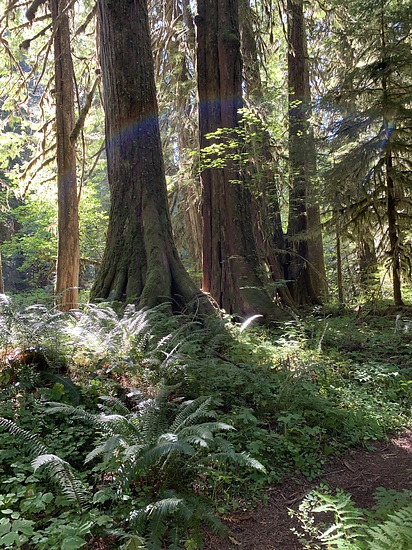
A few days ago, I went to the Gifford Pinchot National Forest in Washington to explore old growth Cedar trees for a picture I was painting. It seemed like a perfect way to celebrate the last days of summer and acknowledge the coming of Labor Day, a holiday that reminds us that the weather will start to cool and rains will come to drench the Northwest. As soon as I started up the trail, my mind was transported back to a time when the entire coastal region looked like the forest I was in. My imagination went wild with the thought that people once lived and labored in the woods I traversed.

It had been many years since I walked past trees as old as 1,500 years and I was overcome by earthy, woodsy smells that somehow felt warm and reassuring. I gazed at sphagnum moss hanging from limbs and the variety of green mosses blanketing lower trunks and roots. I felt good knowing that mosses harbor cynobacteria that convert atmospheric nitrogen into a form that can be used by other plants.

Gifford Pinchot is one of the oldest national forests in the United States. Its 1.32 million acres include 198,000 acres of old growth pockets along the western slopes of the Cascade range between Mount Rainier and the Columbia River. Dense wooded areas benefit from a abundance of rainfall and a network of streams fed from glaciers on Mount Rainier, Mount St. Helens, and Mount Adams.

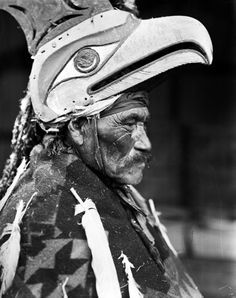
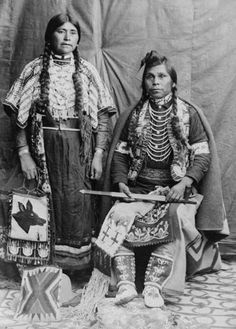
Coastal natives were fortunate to live a place that served their needs so well. Tribal members labored together and didn’t have to travel far to acquire the food and materials for shelter needed. Washington tribes were wealthy in comparison to other Native American communities. With natural bounty around them, they became successful traders who traveled up and down the coast bartering their wares. During the winter months they had time to relax and develop their artistic culture Artisans were employed to carve totem poles and make masks for story tellers to use by the fire in front of mesmerized children. Women worked on beaded moccasins, wove baskets and made festival garments.

Together they built communal houses made from thick cedar planks as long as 100 feet. It must have been difficult to fell massive trees and split them into planks using beaver teeth and stone axes. Healers harvested medicinal plants. Women and children collected berries and tubers while men hunted elk and deer and fished in well stocked streams. The woods were full of species we now consider endangered. Natives heard the calls of spotted owls. They trapped beaver and easily caught  coho and steelhead salmon for smoking in preparation for winter.

Foragers split the inner bark of Cedar trees into fine lacings and ties and wove them to make storage bags, baskets, finely twined mats and rain capes. Some were woven into hats decorated with a red dye made from the tree’s shavings. Twigs were boiled and sprinkled on hot stones or brewed into tea to relieve symptoms of Rheumatism. Large trees were hollowed to make canoes that could hold up to fifty people. They were strong enough to travel the length of the Columbia River and withstand battering waves of the ocean. The labor they performed was always in harmony with the land.

In 1855, the Klikitat, Palus, Wallawalla, Wanapam, Wenatchi, Wishram, and Yakama peoples signed a treaty that gave up ancestral lands that amounted to one quarter of the state of Washington. The Confederated Tribes agreed to live with the Bands of the Yakama Nation on a reservation with off-reservation resource rights. In 1916, the treaty was broken when the Washington State Supreme Court ruled that hunting and fishing off-reservation had to be done in accordance to state fish and game laws. It was no longer possible for Native people to live as they did generations earlier.

The reservation in eastern Washington is barely able to sustain itself. Its economy does not function well with timber sales down and unemployment at 73 percent. Tribal members live in extreme poverty. Health care and housing are inadequate, schools are failing with a high drop out rate, and the family unit is often non-existent. The women are twice as likely to be abused as the average Washington female and teens are more likely to commit suicide or die a violent death. COVID-19 has hit the Yakama Nation exceptionally hard, forcing them to postpone community gatherings.


As we approach Labor Day, I feel sad that we turned a proud people with a rich heritage into a shell of what they once were. Labor Day was started in 1882 to protest deplorable working conditions. The communal way of life that the Yakama Tribes thrived under is no more. Their working conditions are shattered and they are no longer able to sustain themselves. It is difficult to celebrate labor when it has to endure such a dire situation. As we recognize the importance of the men and women labor for their living, and hear the concerns of American workers, let’s not forget the people on reservations who need their world to be made right.

References:


Maxfield, D. (2016) 9 Revealing Stats that Show the Breakdown of Yakama society. Sacred Road Store. retrieved from https://sacredroadstore.com/9-revealing-stats-that-show-the-breakdown-of-yakama-indian-society/The

Yakama Tribal Council. (2018 )Proposal for an AmeriCorps program. retrieved from https://www.nationalservice.gov/sites/default/files/grants/17TN195273_424.pdf

Sager, J. (2020) 10 Fascinating Things You Probably Didn’t Know About the History of Labor Day and the Labor Movement. retrieved from  https://parade.com/1081089/jessicasager/labor-day-history/

Art is always for sale: Western Red Cedar is mixed media on acrylic with a canvas base/ 16″ by 20″ / $ 375. For information contact me at marilynne@eichingerfineart.com.

I enjoy hearing from you. Do comment below.