Senses Vs Covid

The bell rang on the seventh round of The Senses Vs COVID and the crowd went wild with frustration. COVID, coming from behind, upset Smell in the third round, all but wiping him out. Taste rebounded in the fourth as restaurants closed and home chefs produced masterpieces. Waistlines grew broader in the fifth, causing Sight to lose her footing when her eyes closed to what was happening. Sound made up for sight’s loss, soothing spectators with the chirping of birds and awakening them to the banging of pots to thank healthcare workers. A mounting rumble of sadness is causing COVID to turn Touch into the biggest loser of the day by making the fight a no-contact sport. Tension is mounting, friends, as the referee tries to balance sanity with madness from sense starvation before the end of the match.

The Senses Vs Covid

SMELL: COVID-19 plays havoc with our senses. Eighty percent of people who test positive complain of smell or taste lost. The first symptom they notice is loss of smell, but because taste is connected, it soon follows. Recent studies show that those who experience smell dysfunction usually have a milder case than those with severe respiratory infections that include congestion, drainage and other nasal symptoms. Doctors believe the primary reason for loss of smell is an inflammatory reaction inside the nose leading to loss of olfactory neurons. For quite a few victims, the loss is permanent.

TASTE: The pandemic instigated a lot more home cooking. Not only do people feel unsafe going to restaurants, they work from home longer and don’t stop for  meals on their commute.  For many, financial concerns are an added reason to dine at home. According to the New York Times, home chefs, feeling more confident of their abilities in the kitchen, are now making more complex dishes. They are cooking gourmet sources and clearing our spice racks in super markets to do so. Spicy sauces and dishes of all kinds have increased substantially. Taste buds have become more discerning with retailers taking advantage of the change offering round the world adventurous flavors. 
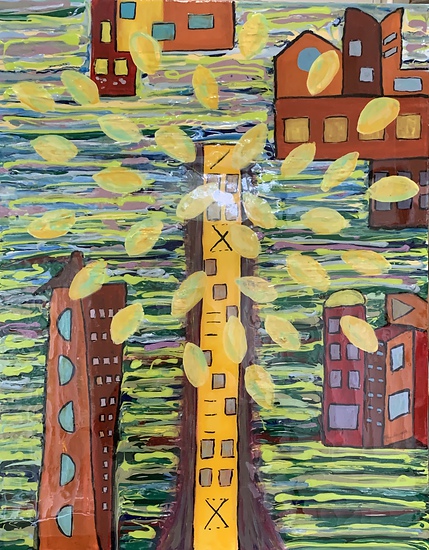
SIGHT: The visual arts play a role in keeping people sane during COVID. A recent survey by the CDC revealed that anxiety and depressive disorders in the US increased considerably since last spring. During periods when we can’t see friends and family, art can reduce stress and help people process the heaviness they feel. According to art therapist, Tammy Shella, the verbal and visual sides of the brain take two different paths. People with PTSD (a side affect of COVID for some) are triggered by sights, smells, colors and sounds reminding them of the trauma. Talking therapy doesn’t always lead to healing, while an artistic outlet may. My experience is similar to others who engage in artistic endeavors.

Creating art puts me in state of flow where I am completely focused on the task at hand. Worries fade away and a sense of peacefulness takes over. Arts (and crafts) provide a way to connect with others. I can express inner feelings to friends through my paintings. Some artists sculpt, make videos, design cards, or make quilts for newborn babies. They are selfless acts that make the practitioner feel good. Engaging in artistic ventures does not have to be expensive. 

SOUND: During the pandemic, many sounds that defined our cities have vanished. Though some residents find the silence is deafening, others celebrate it. In New York, the screech of subways, the chatter of multilingual voices, the blare of traffic have been replaced the sounds of chirping birds and air conditioner motors coming from tall apartment complexes. Stuart Fowkes, a U.K. sound artist, has been mapping sounds of cities around the world since 2014, continuing so during the pandemic. As we adapt to living with less noise pollution, will we rebel when the cacophony of jarring city sounds reappear? Will we finally change laws to outlaw gas leaf blowers that disturb the quiet of my neighborhood?

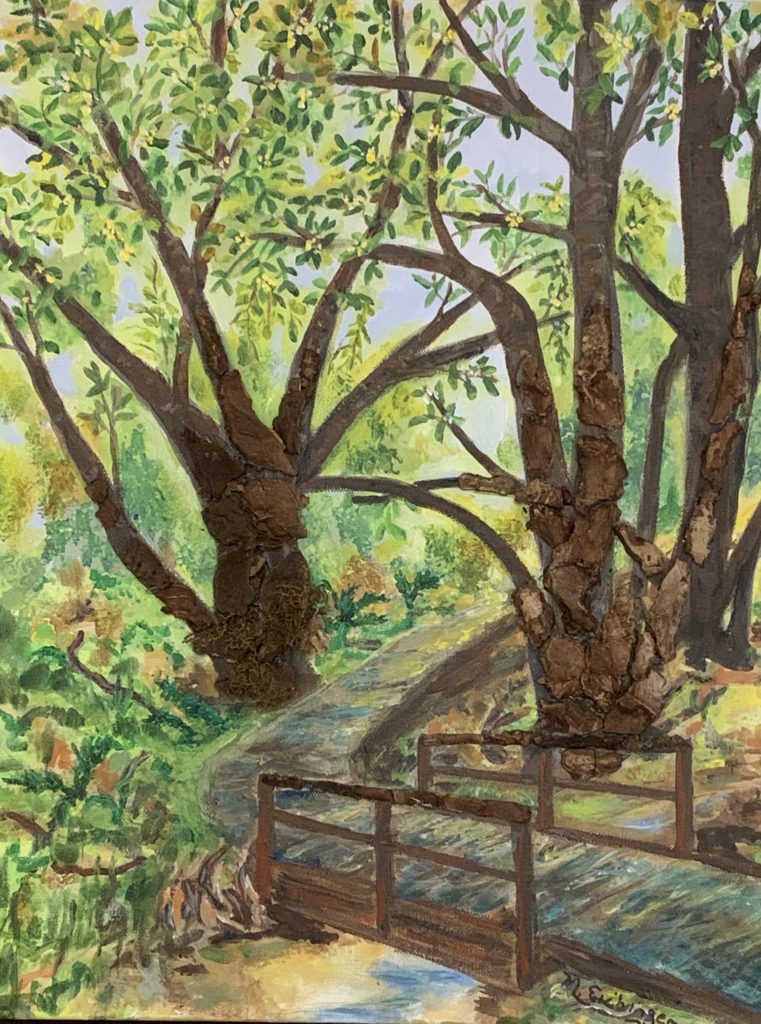
TOUCH : The trees below were painted with actual bark applied to their trunks. Not only are they visual images, they can be touched. I was inspired by walks in the woods and touching the bark as I passed different species of trees. Are you aware that some are soft and spongy while others are iron hard? On some trees, the bark peels and curls others grow in  plates that fall off and are replaced. Try touching them. It is comforting and challenging to see how they differ.

The complaint I hear more frequently from single friends is their inability to touch and be touched, adding to feelings of loneliness. Unable to hug parents, children, grandchildren and friends or to trust kissing a new paramour, they are touch-starved. Those with partners and children are fortunate. 

Singles are experimenting with solutions to combat social distancing. In one shared apartment, residents instituted a six o’clock hug at the end of every day activity that lasts 25 seconds, that psychologists say is long enough the get the physiological and psychological benefits that touch can bring. Touch can convey emotion faster than words and it is known to reduce stress in adults as well as babies—though it is important to remember that not everyone likes to be touched. When someone is touch-starved, stress, depression and anxiety are triggered with cascading negative psychological effects that effect blood pressure, heart rate, muscle tension, the digestive and the immune systems. 

I am a hugger and miss putting arms around friends and family and shaking hands with acquaintances. Dr. Fauci doesn’t think we should reintroduce the handshake after the pandemic is over, saying it will go a long way to preventing influenza as well as coronavirus disease. However, I feel certain we will find a way back to tactile  bonding in order to release oxytocin, the cuddle hormone, in the brain. Those feel-good sensations of trust and connection that decrease our fears and anxiety, is such a need, that we will be compelled to find safe ways to touch one another.

The ongoing match between The Senses and COVID will make many people feel like they are going mad. However, this isn’t the first time or the last the world was faced with a pandemic, and we know they end, though it may take years for trauma from the experience to settle. We may be more cautious  and risk adverse than before it started. We may continue cooking at home for pleasure and not shake hands for health reasons, but eventually, fears will lesson. But hopefully, what we learn about ourselves and society will be used to improve lives going forward. 

References:

Staff (2020) Five things to know about smell and taste loss in COVID-19. Vanderbilt University Medical Center. retrieved from https://www.vumc.org/coronavirus/latest-news/five-things-know-about-smell-and-taste-loss-covid-19

Contrearas,T. (2020) How the pandemic is shaping home cooking trends. SmartBrief. https://www.smartbrief.com/original/2020/09/how-pandemic-shaping-home-cooking-trends

Repko,M. (2020) THe pandemic’s new chefs and foodies: How the health crisis shaped what we cook and crave.CNBC. https://www.cnbc.com/2020/12/29/even-after-pandemic-companies-may-have-to-cater-to-a-nation-of-aspiring-chefs-foodies.html

Staff ( 2020) How Art Can Help You Cope With The Pandemic. Cleveland Clinic, Health Essentials. retrieved from https://health.clevelandclinic.org/how-art-can-help-you-cope-with-the-pandemic/

Scherer, J. MD (2020) Hearing Humanity Through the Noise of a Pandemic. National Institute of Health. retrieved from https://www.ncbi.nlm.nih.gov/pmc/articles/PMC7301060/

Poor,L. (2020) Soundscape. Bloomberg City lab. retrieved from https://www.bloomberg.com/news/articles/2020-10-22/the-changing-sounds-of-cities-during-covid-mapped

2020 Why I’m not alone in missing hugs during the pandemic. BBC News, retrieved from https://www.bbc.com/news/stories-54373924

Pierce,S. (2020) Touch starvation is a consequence of COVID-19’s physical distance.retrieved from https://www.tmc.edu/news/2020/05/touch-starvation/

Do comment below. It is always interesting to hear from you.

Art is always for sale. Visit my website at eichignerfineart.com or contact me at marilynne@eichingerfineart.com.
Senior Moves

California Bay Laurel  
After painting this scene I thought of my older children in Northern California, wondering if, as I age, I will be forced to leave the area I’ve been living in for nearly forty years ? Will my children want me near them or will I be considered a burden?

Senior Moves

A few days ago, my next door neighbor announced that he and his wife were moving to the East Coast to be closer to their children. A day later another woman talked about selling her house and going to a retirement home out of state. I will miss these neighbors whom I’ve known for years. They are threads in the fabric of my life and without them, my cloth will rip and leave gaping holes.

Their current dwellings will likely be sold to families with children who will energize our street with their playful antics. The slow moving couples passing by my house on afternoon outings will be replaced by skateboarders, kids on bicycles and sidewalk chalk artists. When school reopens, these children will play with classmates who live near them. Their parents will invite families with similarly aged children to barbecues in the summer and birthday parties year round.

I am an observer of change, even though I am outside the circle of young mothers. Having young bodies on streets where I live shows how life cycles. I listen to parents  talk of the difficulties of homeschooling children during a pandemic and hear how they integrate their jobs with family life. It is interesting to hear them discuss ways the past year has altered  thoughts about the future. Though burdened by responsibility, they seem spirited, adaptable and hopeful, while my elderly friends, missing their families and past freedoms, aren’t. A weight on many of my neighbors minds is what to do about aging parents. Their stories make me sad, for I don’t like to think of myself as a burden, though I know it could happen soon.

The hardship of aging has always been a two-way strain for families across the globe. Well-known stories about Eskimos no longer able to contribute to the group tell of being taken to sea to be set adrift on a floating iceberg or walking into the night to freeze and be eaten by a polar bear. Those who practiced this form of death with dignity for the good of the community, believed that another world awaited them after death. Children, rather than sending their parents off to disappear in a retirement center, believed they were helping their elders move on to the afterlife. This form of euthanasia, though not widespread, is no longer practiced because government subsidies insure survival of their villages.

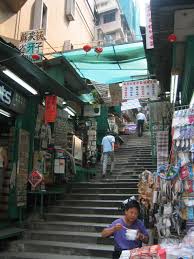
Walking through the hills of Hong Kong twelve years ago, I spied an elderly mother, a delightfully wrinkled woman who looked to be ninety, resting on a blanket while observing shoppers come and go. Her daughter, a shop owner, would occasionally join the old lady to chat and pass the day in familial companionship. Their conversation was filled with smiles and laughter. 

Children in China are taught Confucianism, a doctrine stating that an adult child has a duty to care for  elderly parents. And, though filial piety still persists, there is a growing  demand for private nursing homes and senior centers. Due to the one child policy and increasing life expectancy,  the population in China is aging faster than ours. Their children, especially those in rural areas, leave to find work and are not around to care for parents.

Nursing homes are out of reach for most older citizens who don’t want to go into them anyway. Eighty-four percent of elders prefer to stay home alone and not burden their children who have financial needs of their own. Old-age industries, such as voice-activated alarms connected to video cameras installed in front of televisions and other devices, are developing, allowing seniors more freedom until they become ill. Unfortunately, Confucian principles of filial piety don’t work in modern economies and pressure is being put on  the government to underwrite the cost of senior care.

Recent surveys show 901 million people worldwide to be 60 and older, with projections that by 2050 the number will reach 2.1 billion or 21.55 percent of the global population.  Geoworld Magazine published a study of 105 countries and rated them best to worst places for old people to live, taking into account seven categories—life expectancy, health care, safety, happiness, property prices, cost of living, and pension start age. Of the top ten, Finland ranked number one, followed by Denmark, the Netherlands, Switzerland, Australia, Austria, Canada, Norway, New Zealand and Spain. The United States is 28th. The ten worst countries are  Iraq, Kenya, Ukraine, Venezuela, Cambodia, Nigeria, Iran, Egypt, Namibia and the Dominican Republic.

The Happiness index also lists Finland first, followed by Norway, Iceland and the Netherlands indicate that living in a cold climate can be good for health and well-being. What keeps Finland’s seniors happy? For a start, they are highly visible at all kinds of social and cultural events as well as the great outdoors where they speed by on bicycles and skis. The population of Finland is aging faster than anywhere else in the world except Japan, so the country developed networks for home based care. The government makes it easy for elders to use public transport, exercise in pools and gyms, and visit museums, libraries and theaters. Co-housing experiments where older citizens are housed with students in buildings with communal spaces for crafts, exercise, and lounging provide a family atmosphere for young and old. 

Maintaining community is at the heart of elders aging well. The pandemic made them computer savvy since it was the best way to maintain connections with the outside world. Through platforms like ZOOM, seniors maintain ties that soften the misery of being isolated. As more families are faced with aging parents, and more elders realize the need for care in community, society is finding creative solutions to keep them in their homes and not tucked away in senior centers to die alone. More than one-third of Coronavirus Deaths nationwide are linked to nursing homes and other long-term care facilities. In Oregon, that number is 53 percent.

Virtual villages have sprung up where neighbors help neighbors stay neighbors, and home based care services are becoming more common in many states. Longevity has forced communities to reimagine old age and insure that elders stay productive and happy as the reach the end of their life cycle.

References:

Revelations. Initial Journey, Eskimos-Old Age. retrieved from http://www.theinitialjourney.com/features/eskimos-old-age/

Xinhua. (2019) China’s care for the elderly boosts ‘silver economy.  China Daily. retrieved from https://www.chinadaily.com.cn/a/201910/08/WS5d9c4004a310cf3e3556f300.html

Ireland,S. 2020. World’s Best (and Worst) countries For Older People to Live In, 2020. Geoworld Magazine. retrieved from https://ceoworld.biz/2020/01/29/worlds-best-and-worst-countries-for-older-people-to-live-in-2020/

( 2021) More than One-Third of U.S.Coronavirus Daths are Linked to Nursing Homes.New York TImes. retrieved from https://www.nytimes.com/interactive/2020/us/coronavirus-nursing-homes.html

#Democracy: Letter to Grandchildren

The following letter is one of a series written to my adopted African American grandchildren during the COVID-crisis. They are about my life as a child in comparison to how things are today. I plan to put them in a book for them to enjoy when they are older.

Dear Hanan and Mirna:

Electing a president this year was scary. Donald Trump and many of his friends told so many lies it was hard to know what what was the truth. That is why Mama and Baba and I tell you not to lie even when you do something wrong

Part 20 

  When I was your age, elections that happened every four years were exciting. All my neighbors watched the Democratic and Republican conventions on television to see who would be selected to run for president. Friends wore big buttons and waved flags with the name of the person they wanted to win. In school, we learned about democracy and why voting is important. On election day, we all voted to see which candidate our school favored.

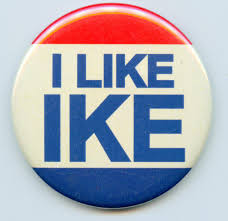
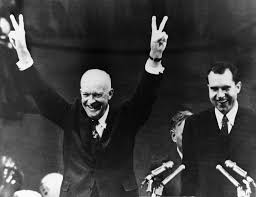
This picture is of a Republican named Dwight D. Eisenhower putting his ballot, a sheet of paper with his vote on it, in a box in 1953. Do you think he voted for himself?  For a nickname they called him IKE and his followers shouted “I like Ike” over and over again. He was very happy when he won.

Democracy really starts at home.  When you are young, your parents and grandma rule over you like kings and queens and tell you what to do. But, when you are older and know more, your family will ask for your opinion about what you like and don’t like. Before you tell them, you have to consider the good and bad parts of what you are being asked to comment on.

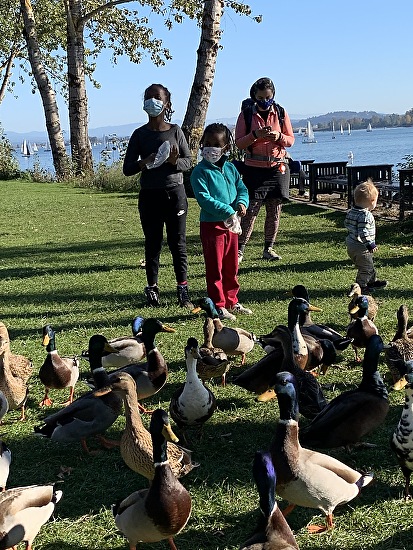
For instance, if I ask you girls if you want to go the river to feed the geese, and Hanan says yes and Mirna says no, then a third person will be needed to break the tie. If that person is me, and I agree with Hanan, it becomes two yes votes and one no vote.  We are practicing democracy. Though Mirna may not be happy, if she is democratic, she will go along with the majority. The next time we go out, she might give us a reason to vote for the playground instead.  

Feeding Geese

The same voting happens in a democratic country with over three hundred million people. The only way it can be managed is by having groups of citizens vote for someone to represent them. 

Imagine being in a group that has clubs all over the country. The club in your town club has ten girls in it who vote for one person to be their leader. The leader will represent them when all the clubs in the country decide to gather. It would be too expensive and too confusing if every girl from every club went to the meeting. The people sent to represent each club will make the rules everyone agrees to follow. After a lot of talk and arguments, they will vote on whether the rules are ones they want by marking yes or no on a ballot. If most people say yes then the rule is accepted. Your leader will come home and share what she learned at the meeting.

Though not all club members will be happy with the rules, if you believe in democracy and not in fighting to get you way, you will accept and follow what most people want. If you wish the vote went a different way, you have to figure out how to get the leaders to change their minds and vote your way during the next election. That is how democracy and politics (running a government) work. 

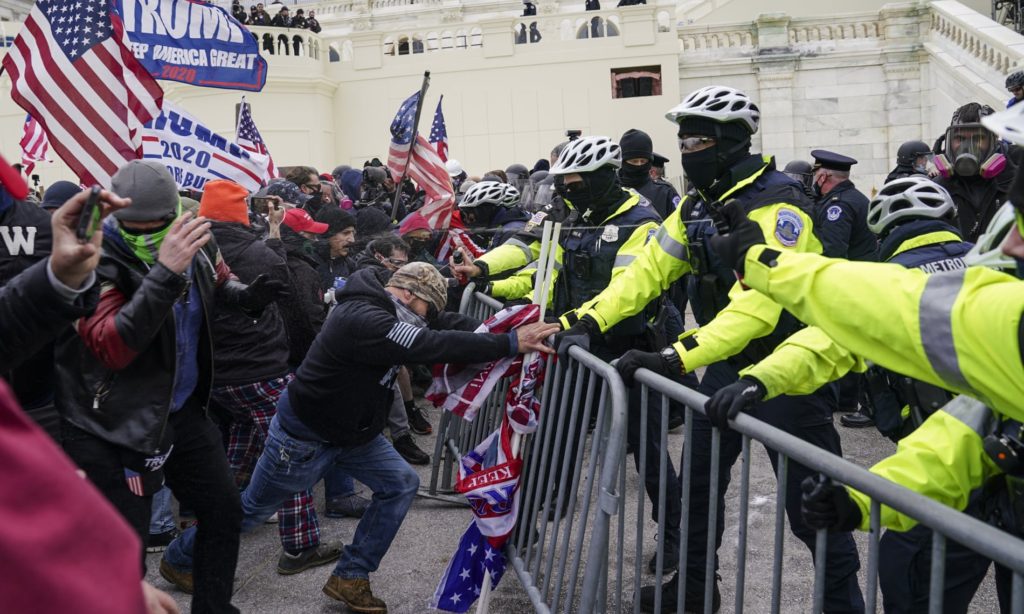
Mob fighting police

Problems occur when citizens forget that we live in a country where we follow the rules most people think are good.  Instead, they decide their way is better and they know what is best for everyone else. President Donald Trump thought that way. He did not want to give up his power, so in 2020, he acted like a dictator who didn’t care if people wanted him as president. During the election, he lied to everyone in the country and told us that our votes were not fairly counted, even when they were recounted several times and proved to be correct. He wanted votes for Joe Biden, the man running against him,  to be thrown away so he would win. By repeating the lie over and over again, some people started to believe him. Trump was president, after all. They got angry even when they were told the truth. A big ugly mob with weapons went to the capital in Washington, planning to take over the government. They smashed windows and stole souvenirs from offices. Men beat up the police and tried to capture and kill lawmakers they did not like.

These men and women were traitors to democracy and caused five people to die and many to fear for their lives. Taking over the government by force is called treason. January 6th, 2021 was a horrible day in the history of the United States, a country that is proud that we transfer the power from one person to another without a fight. Though you are only five, Hanan and you nine, Mirna, it is an important day to remember and make sure it will never happen again.

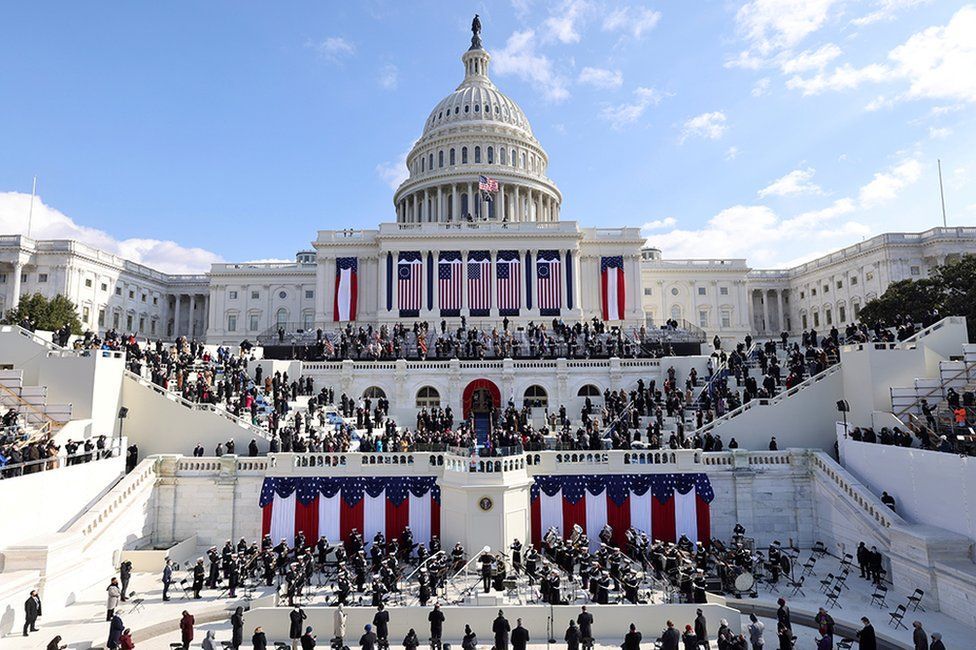
Joseph R. Biden becomes President

I was very worried when our democratic country almost became a dictatorship. It showed me how important it is for leaders to be honest and voters to check to make sure what they are told is truthful. Politicians who lie, cause many people to get hurt. 

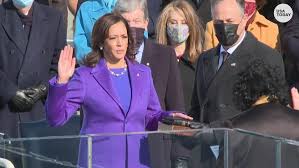
Thankfully, democracy survived, and on January 21st, a man named Joseph Biden became the country’s new president. Kamala Harris became the first woman to be elected vice president. She, like you, is a girl of color and proof that if you study hard and decide you want to govern the country to make it a better place, it is possible to get people to vote for you. You might even become president one day. 

Vice President Kamala Harris

#Dance for Freedom

The Studio

Freedom Through Dance

During these dark days of January, many Americans are asking what it means to be free. Does freedom involve breaking into the people’s house and threatening to put a noose around the neck of congressmen? Does it mean bowing to Christian nationalists and conservative militiamen who profess freedom is only for those who believe as they. Or, does it give rise to a pluralistic society where one person’s freedom doesn’t impinge on anther another person’s rights? Many of my thoughts around this issue evolved from experiences I had with dance.

My mother used to say I was a clumsy child who tripped and fell with some regularity. As an antidote, I was enrolled in Miss Dorothea’s dance academy to learn balance and grace. Mom also took me to see professional performances where ballerinas moved on stage as though they were feathers in the wind. The light and playful way they comported themselves as they twirled without getting dizzy and could lifted a leg higher than their heads made their movements look easy. When running across the stage to sail into a waiting partner’s arms, I could imagine what it is to fly free. 

It took me years to understand that freedom through movement comes after years of blending mind and body in a symbiotic relationship. Dancing is restrained without having stretched and toned muscles and a trained brain able to direct how the body moves. Students have to understand anatomy, know how each limb functions and it interacts with other parts of the body. Dancers become practitioners of a mind, body and spirit connections through meditation and focus. 

The history of dance, provides insight into cultural differences in the way it is used to celebrate the cycles of life. Each society’s approach, is intrinsically beautiful, no singular way of expressing movement more correct than another. Life is more vivid, complex, and fulfilling to students who acknowledge the way people move in celebration of their environment. 

Freedom for a dancer is a nuanced concept requiring focus on rhythms and cadence in music that was most likely composed by a stranger. It requires getting into the musician’s head in order to feel what the artist wants to impart, and then transferring those emotions to movement. This is why young people who dance at rock concerts often seem to be in a trance.  And, in truth they are–for as they move with the beat  they become free enough to display unexpressed feelings bottled up inside.

Producing high-quality works of art is a cooperative effort of performers, choreographers, lighting experts, costume designers, etc. Dancing is an activity that is rarely done alone.  Line-dancers in a Texas bar as well as ballerinas in the corps de ballet develop a sixth sense about the person next to them. They move so as to not invade their space, make them uncomfortable, or cause an accident. Being aware of others, working as a team, and developing a strong body, are skills acquired through discipline, commitment, and a work-ethic. They develop a self-confidence that helps people overcome challenges when mastering new goals. 

 Tolerance, connectedness, and disciple grow from having passion about what you are doing and wanting to share your joy with humanity. For this blog, I could have written about basket ball players, Latin, hip hop or classical dancers. I might have chosen musicians, writers, painters, gardeners, or computer programers, those expert enough in their field to be able to create unencumbered.

 For me it was dance that demonstrated the way to have beauty through movement and imagination. I saw it as a gift that brings people together in a creativity joyous way. It provides feelings of unity and connectedness, and after years of training your body to react automatically, dancing brings freedom, and freedom brings power. When shared with others, it is a positive expression of love. But, power must be used cautiously.

To reside in a country where citizens can express themselves creatively, there has to be respect and honor of personal boundaries. Embracing the uniqueness of neighbors, hearing their music and feeling their presence can enrich your life. To not step on toes and to search for beauty in a dances that are not your own, are life affirming actions that make individual freedoms possible. With more tolerance and less “my way or the highway” thinking, we might be able to live up to the tenants of the constitution and avoid another civil war. 

_____________________________________________________________________________

Art works are always for sale. For additional information contact me at Marilynne@eichingerfineart.com

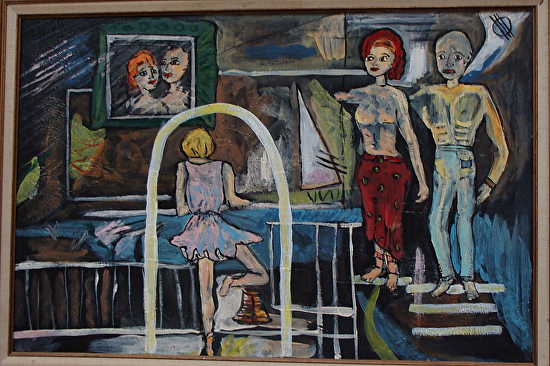
The Studio / Acrylic painting on canvas, wood frame, $ 399.

#My America

Twin Stars Exploding

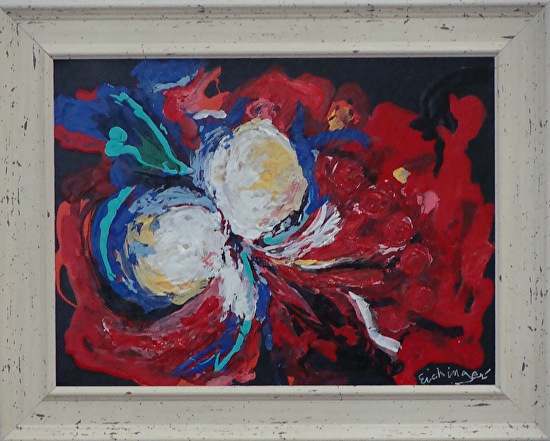
Pandora’s box opened to reveal an explosion of reality? Can it be turned into something of beauty or will we feel scars for generations to come? 

My America

I slid from my mother’s birth canal into warm arms

and smiles of relatives cradling me through childhood

Where people lived proudly free from tyrannical rule.

This country of opportunity, I was taught, welcomes

those fleeing oppression to achieve impossible dreams.

It’s an America for you and me and them and slaves.

Those captured and tyrannized need help father said

as he waved us good-by to keep fascism at bay.

In our country, we believe in democracy, not dictators.

Founders fought subjugation by wealthy aristocrats

who step over indigents begging from the streets.

Citizens should vote and elect leaders who care.

Learn not to make mistakes of the past, mother implored

as she bent my head to study with more fervor.

You can reach the moon if you try hard enough.

But, stick with your own kind Grandma added.

You are my kind, I shouted back.You and you and you.

But, said Grandpa, these spacious skies from sea to shining

sea only bless the heathy, wealthy and white.

Not good enough, I replied chanting that Black lives matter,

Women have a right to choose, Gay pride gives dignity.

America will evolve, I thought. Youth and time will make it so.

Love will be practiced, children taught not to lie nor bully, 

cheat, steal or kill. Neighbors will live without fear,

and keep doors unlocked with no need for guns.

But then,

Wednesday, January 6th taught me otherwise. 

Hope, shattered on the Capitol’s steps, was replaced by reality.

Intolerance and hate grew from lies of a despot we chose.

merica. I won’t have it so. . . Yet, I’m afraid.

Fractured America

Art is Always for sale.  Acrylic on canvas paintings.

 Twin Stars Exploding, Twin Stars 16” x 20”,   $299

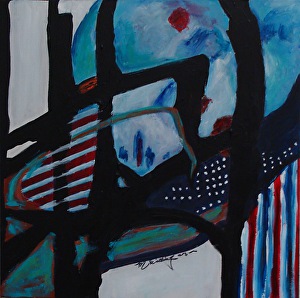
tured America 24” x 24”, $425

Do comment below. It is important to share your opinions during times of struggle.

#SANTA: QAnon Conspiracy or not?

The Gossips

SANTA: QAnon Conspiracy or not?

As an early promoter of Santa Claus, I admit to having been part of a worldwide conspiracy. My husband and I went so far as to take photos of Santa’s boot coming down our chimney and showing our seven-year-old son a dish of half-eaten cookies that he supposedly snacked on while depositing gifts. I did have a twinge of guilt when the pictures we took were taken to school to share as proof of Santa’s existence.

However, it was easy to rationalize that fairies, goblins and a toy manufacturing center at the North Pole run by elves are good things for children to believe in. Fantasies help spur their imagination, I thought. It makes them happy to know there is a place where sugar plum fairies exist. On the negative side, I risked losing his trust. Why should he believe what I tell him in the future?

Fantasies are ways of seeing a world composed of hopes, dreams, fears and plans for the future. At times they go so far that people project onto others what they imagine they are thinking and feeling. Tensions within marriages are often colored by such unconscious fantasies.

Ethel Person, Professor of clinical Psychiatry says, “You need fantasy, but there has to be a way to put the brakes on. Killing your boss may be a pleasurable fantasy and can reduce tension, but murder is a terrible thing.” Being overtaken by fantasy can be detrimental to your mental health. Porn addition, for example, can grow to take precedence over real-life interactions. Fantasizing about a stranger may lead to stalking.

But, for healthy, well balanced individuals, there are many benefits of fantasy. Reading travel magazines and imagining a vacation sailing down the Rhine River can be a mood booster that lets you escape from mundane routines or being sequestered at home during a pandemic. Those caught in adverse family situations or in jobs they can’t walk away from can insert themselves in happier environments through imaginative stories.

Allowing your mind to go to a place without rules or parameters opens up creative possibilities that are useful to solving problems. Fantasy feeds artists, writers, and readers as well as those involved in scientific pursuits. Playing with ideas is can motivate us to try something new. Psychoanalyst, Lisa Schlesinger writes that fantasy is a mental holding space that is safe, a place where the mind is able to play with the idea of change before doing it.

Difficulty arises when the mind turns fantasy into reality and barriers between thought and action disappear. Over the past year, the public has been inundated with misinformation from the alt right. Fake news, a type of fantasy, was presented in such a way as to be believable and accepted as truth. Commentators on Fox News, QAnon and other conspiracy promotors spread lies, some of which were homegrown while others emanated from foreign entities. They created mistrust and chaos around institutions Americans always held sacred. Testing the accuracy of false statements required hours of research that most people are not willing to engage in. It was easier to accept illusions presented by charlatans they hope will better their lives. 

I find disproven and discredited far-right conspiracy theories so unbelievable, it is a wonder anyone takes them seriously. QAnon conspiracies center on the idea of a “deep state” in which anti-American elements in the government, industry, media and other institutions are involved in bringing down President Donald Trump. It promotes that Satan-worshiping pedophiles are running a global child sex-trafficking ring that control the world and the media, and that Princess Diana was murdered after trying to stop the September 11th attacks. Conspiracy theorists also subscribe to the belief that COVID-19 was planned. Why accept such outlandish statements?

Unfortunately, like telling a seven-year-old that Santa is real, misinformation not only plays havoc with the lives of gullible people, but with the rest of society as well. Though social media sites attempt to ban such falsehoods, they are still passed on and gossiped about to friends through private accounts on Facebook and Twitter. An increasing number of people are allowing harmful fantasies to creep into U.S. politics.

During the past election, over two-dozen Republican candidates who engaged with QAnon conspiracies, ran for congress, and one, Marjorie Taylor Greene, from Atlanta is headed there. QAnon believers divorced themselves from reality are capable of bringing about real-world violence. The FBI published a report last year calling them a potential source of domestic terrorism.

According to Pew Research Center, the majority of Americans who learn of right wing conspiracy theorists, say they are a bad thing for the country, but they don’t know what to do about it. The fight for the U.S. presidency is being taken to bitter end by nay-sayers who do not believe in democracy.

So, what is the difference between conspiracy theorists and Santa promoters? Santa is a benevolent jolly man who brings presents and fulfills wishes. He’s fair, and only rewards the good children, bringing coal to the bad. In the United States 85% of five-year-old children believe Santa exists, stopping by the age of eight.

Some psychologists say that believing in him is harmful because it asks children to suspend critical thinking and encourages them to consume false ideas. Other experts consider it harmless to let children believe that if they are good they will be rewarded, and is innocent fun for parents who get a kick out of surprising little ones with magic on Christmas morn.

I’ve come to believe the Santa story more harmful than good after realizing so many people don’t know how to separate truth from fiction. Santa doesn’t care if the child believes in him or not. Kids can enjoy fantasizing about him as a storybook character as much as they have fun imagining the Grinch stealing Christmas. They will still wake up with excitement and anticipation on Christmas morning ready to tear wrappings off gifts piled under the tree.

Whatever your beliefs, have a Merry Christmas and enjoy the holiday season. ____________________________________________________________________

HOLIDAY Art  SALE 20% off all art until December 20th.

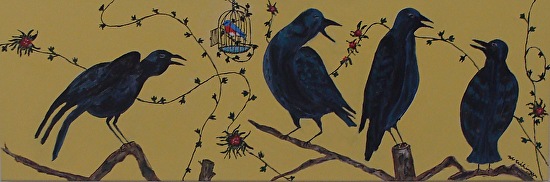
The Gossips   –  12” x 36, acrylic on deep canvas/ $ 325, now  $260. Contact to arrange for pick up, marilynne@eichingerfineart.com_____________________________________________________________________

REFERENCES:

(2020) 5 facts about the QAnon conspiracy theories. Pew Research Center. https://www.pewresearch.org/fact-tank/2020/03/30/qanons-conspiracy-theories-have-seeped-into-u-s-politics-but-most-dont-know-what-it-is/

Schlesinger,L.(2015) 5 Reasons Fantasizing is Good for you. Huffpost. retrieved from https://www.huffpost.com/entry/five-reasons-fantasizing-is-good-for-you_b_8060884#:~:text=Fantasies%20are%20comprised%20of%20your,might%20be%20thinking%20or%20feeling.&text=If%20we%20are%20overtaken%20by,room%20for%20relating%20with%20others.

DiResta,R (2020 Right-Wing Social Media Finalizes Its Divorce From Reality. The Atlantic. retrieved from https://www.theatlantic.com/ideas/archive/2020/11/right-wing-social-media-finalizes-its-divorce-reality/617177/

Giubilini,A. (2018) Should we Believe in Santa Claus? Practical Ethics, University of Oxford. retrieved from http://blog.practicalethics.ox.ac.uk/2018/12/should-we-believe-in-santa-claus/

#History-A case for study

Oregon City Falls

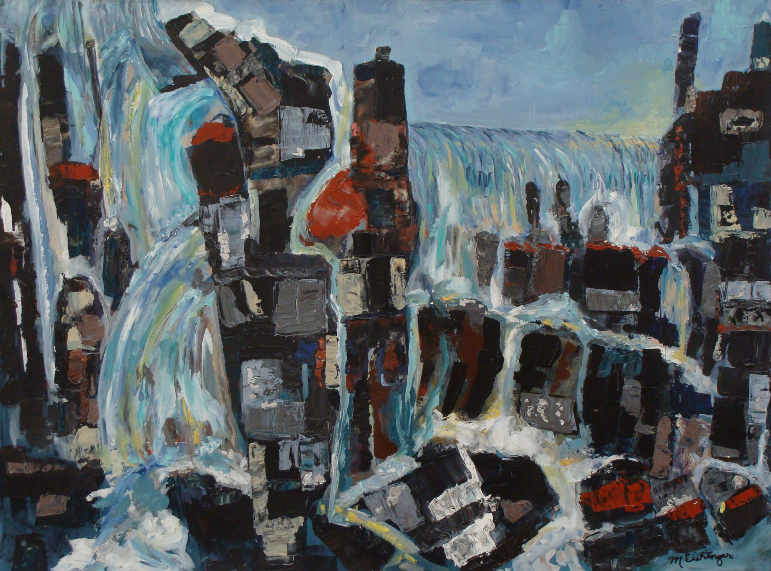
The Oregon Trail ended near falls that became an energy hub for area, transmitting the first electric power to light Portland streets and providing energy to feed industrial mills along its banks. Today the buildings lie vacant in disrepair, with plans for them to be demolished and the falls  resorted to its original beauty. The wheel turned. The area has to be cleansed of debris to meet today’s needs. 

History- A case for Study

In the New Reformers (1844) Ralph Waldo Emerson  wrote, “We are students of words: we are shut up in schools and colleges and recitation rooms for ten or fifteen years and come out at last with a bag of wind, a memory of words and we do not know a thing.”

His complaint is valid today, and that history is poorly taught, affects the nation. Lectures and memorization are history killers for most students. The relevancy of what  happened hundreds of years ago is difficult for most children to comprehend but unfortunately,  most  adults find it mystifying as well. A survey by the Woodrow Willson Institute found that only one in three Americans would pass the U.S. citizenship test, that 2 percent of those surveyed identified climate change as the cause of the Cold War and that many confuse the civil rights movement with the Civil War.

Americans are prone to consider history is boring and lacks practical purpose. Yet, the subject doesn’t have to be presented in dry, pedantic ways. It can be told through stories that bring the past to life. It is through them that we learn how to manage the future.  Knowing who we are, where we come from, and how the world operates is essential to deciding where we are going. History provides us with data that we use to make laws and develop theories about how society operates. 

Our ancestors exert both positive and negative influences on how we live today. Ignoring historical events thrust into a purgatory where human induced tragedies repeat themselves causing unnecessary for misery. Our handling of the pandemic is a case in point. The plan put together by the Obama administration, based on years of information about past pandemics only to be ignored by the present administration to the detriment of thousands of people.  The past is a map that delineates cause and effect and can help us understand human frailties and point out moral issues and evolving values  that keep up with changes in society. 

Before the birth of Christ, around 5114 years ago, Egypt’s Old Kingdom dynasties cycled through 30 dynastic periods assigned by scholars to seven kingdoms. Major shifts occurred during times of greed, political strife, invasions, and civil war. During peaceful times the country prospered, producing architectural masterpieces that displayed the kingdom’s wealth. With few threats, there was time to cultivate art in its highest forms.

China also went through dynastic cycles. Many scholars today consider the communist rule but another repetition. According to theory, the various dynasties reach a political, cultural and economic peak when, because of moral corruption, they lose the “Mandate of Heaven, and fall, to be replaced by a new dynasty. The Mandate of Heaven says that there can be only one legitimate ruler at a time and that the power bestowed on the emperor is blessed by the gods as long as he uses it for good. Dynasties  fall when children of wealthy rulers receive privileges that make them lazy and less inclined to work for the betterment of the state. They  become focused on building personal wealth and power and willingly do so on the backs of peasants and the working poor. Dynasties were overthrown through rebellion and bloodshed, peasant revolts and external invasions.

Books have been written about the rise and fall of The Roman Empire,  The Third Reich, The West, and Texas Oil Tycoons. History tells of powerful leaders who rule bloated empires that fall under their own weight. It tells how discord and corruption run rampant brings about uprisings that usher in periodic stretches of order and prosperity such as the great Pax Romana—two centuries of peace under Augustus in 27 BC.

At this moment, I feel like I am living in the horror loop of a great historical cycle. Around me I see greed and desire for personal wealth above all supersede fairness and justice. It is a period where contemporary Machiavellis rule nations with dictatorial authority.  In 1530s when Machiavelli wrote “The Prince” in a letter to Lorenzo de Medici ruler of Florence, he meant it to be a guide on how to lead. His basic premise was that staying power justifies any means used to do so-no matter how horrific. That is certainly occurring in the United States and many other nations around the globe today. 

Though I will never concede that the end justifies the means, Machiavelli goes on to  argue that once leadership is obtained, reason and understanding should be used to better politics so that it will work for the common good. He gives warnings of what will happen when power is misused. His cautions can be applied  to ideas of the alt right and the way the media and politicians promote “fake news.” Contemporary Machiavellian leaders use evil methods to gain and maintain a power that they do not use for the common good. Instead, they line their own treasure chests and set up legal precedents that undermine democracy. They spread falsehoods and rumors that make people fearful. By doing so, they divide citizens, incite civil unrest and arm neighbors who take law in their own hands.

There is no doubt in my mind that the cycle we are in will eventually play out, and the strife will end. Unfortunately, you and I may not live long enough to enjoy the fruits of the next “Pax America.” But, for the sake of our children’s grandchildren, let’s study history and look back in time to discover ways to break through dysfunctional cycles that allow self-serving magnates to flourish at the expense of humanity.

References

Wexler, N (2018) Three Myths That Explain Why Americans Don’t Know Much About History. Forbes. retrieved from MYTHS https://www.forbes.com/sites/nataliewexler/2018/10/11/three-myths-that-explain-why-americans-dont-know-much-about-history/?sh=4aef9fdb47ba

Millmore, (2020) M: Egyptian Old Kingdom Dynasties. Discovering Egypt. retrieved from https://discoveringegypt.com/ancient-egyptian-kings-queens/egyptian-old-kingdom-dynasties/

The Dynastic Cycle. Students of History. retrieved from https://www.studentsofhistory.com/the-dynastic-cycle

History Vault: Rome:Rise and Fall. History. retrieved from https://www.history.com/news/history-vault-rome-rise-and-fall

(2019) Machiavelli’s ‘The Prince’ and its Relevance to the Modern Political Sphere. Dissertation  retrieved from https://ukdiss.com/examples/machiavelli-the-prince-modern-politics.php 

Snow Days

SPRING SNOW

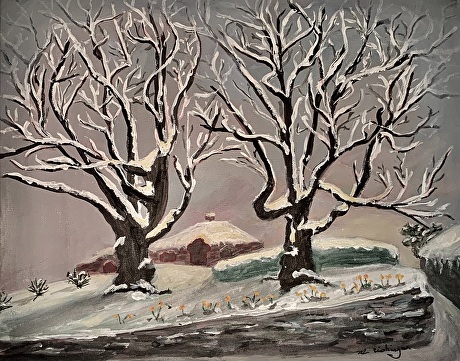
In Portland, Snow arrived late in 2019 and didn’t last long. During the first week we were sequestered I painted Spring Snow after noticing daffodils breaking though the snow at a neighbor’s house, imagining the pandemic would soon be over. Now, nine months later, I realize we have a long way to go. Yet, the pandemic will end and our world will continue turning in never ending cycles.

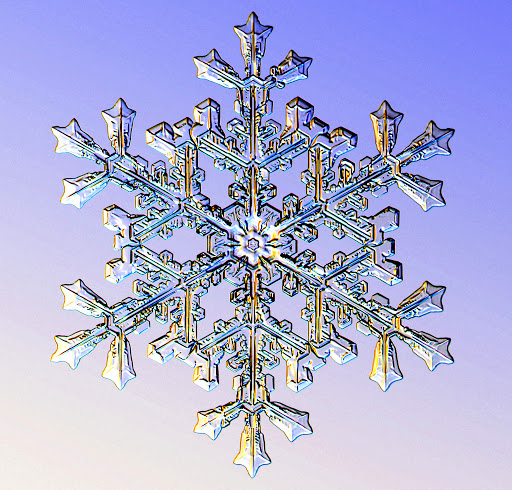
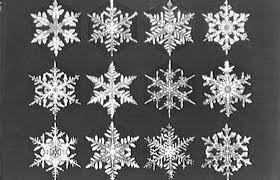
Snowflakes, like people, are unique.

The other day, I spied our snow shovel buried in the basement closet indicating it was time to move to the garage where it will be more accessible. The white caps of the Cascade Mountains expanded over the past month. It won’t be long before snow will creep from its high perches and descend on rooftops and sidewalks in the lower Willamette Valley.

I love the snow and wish Portland had more of it. Thirty-five years ago, I could cross country skiing through Washington Park during  lunch breaks from work. That pleasure is long gone. Global warming has effected such escapades close to town.

The street I lived on as a child was entered on a high plain that swooped down to where my house was situated. When it snowed the children in my neighborhood spent the day whizzing down the hill on our sleds to see who could go the furthest. In those days, sleds were made of wood and had metal runners you steered with a cross bar. Plastic disks and molded toboggans didn’t exist.

We dressed in puffy snowsuits and boots that were more clumsy to wear than the cold-weather clothes sold in stores today. My Mom had hot chocolate waiting by the time we came in with frozen fingers and toes.

In addition to making snowmen, building forts and having snowball fights, my cousin Elaine and I would go to Grey Nuns Pond, not far from our house, to see if the ice was fit for skating. One year, against my Elaine’s advice, I took a few steps on the ice to a spot I thought was thick, when it cracked and I fell in. Thankfully, I was near the edge and didn’t drown. Elaine thought what happened hilarious and started laughing as I pulled myself out. I laughed so hard that tears came down my cheeks and I wet my pants, which amused her even more.

When my youngest son was seven months old son, my husband and I took him outside so he could see snowflakes falling from the sky for the first time. The delight and amazement on his little face as he stretched out his hand to capture them is imbedded in my memory forever.

Watching white fluffy precipitation blanket our one-hundred-year-old farmhouse was thrilling. I kept cross country skis on the porch and took off through neighboring farm fields with the moon lighting my way.

Snowflakes have always fascinated me. Though similar to their companions, each one is a unique ice crystal that develop as a result of thousands of distinct water molecules combining in random formations. The flakes are clear, not white, appearing that way because of how light is reflected through them. Like snowflakes, people too share a fleeting moment of individuality before disappearing into the mass of humanity.

Snow is a reminder that cycles control the seasons and all living matter. Water vapor rises to form into clouds before falling as flakes on mountain tops where they will melt and run through rivers into seas before rising again. We are like the flakes, individuals, united in societies that are born, grow and die in continuous cycles of transformation.

You might wonder how one is formed.

–Flakes, or snow crystals develop around a dust particle that grows into a hexagonal prism. It happens when water freezes and molecules join together to form six smooth sides. It takes approximately 100,000 water droplets to make one snowflake.

–The flake grows larger, becoming unstable, which causes the corners to sprout

arms.

–As it falls from the clouds, the crystal moves though different temperatures

and arms starts to grow on the arms.

–It keeps moving through more temperature changes that cause new growth to grow on the arms.

                    No Two Are Alike

Fun facts your teacher never told you.

  1. The world’s largest snowflake was just under 15 inches wide and 8 inches thick. It fell at Fort Keogh, Montana on January 28, 1887.
  2. Snowflakes fall at 3-4 miles an hour
  3. Each snowflake is made up of about 100,000 water molecules forming 200 ice crystals.
  4. 80% of the world’s water comes from snow.
  5. The most snowfall over a year was on Mount Rainier in Washington. It snowed 1, 224 inches between February 1971 and February 1972.
  6. Snow at the North and South Poles reflect heat into space. The snow acts like a mirror from the sun with light bounces off it and traveling into space.

While sequestered it is good to stay busy. 

Project 1: Have fun making watching crystals form as you make snowflake ornaments out of pipe cleaners to hang on you Christmas tree.  

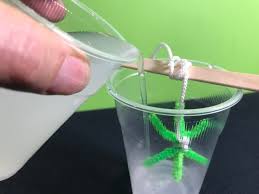
Pour Borax solution into cup with pipe cleaners

Supplies

Box of Borax detergent

Hot water

Wide mouth jars or paper cup

Pipe cleaners

Food dye if you want to color them

Process 

  1. Shape various Christmas ornaments using pipe cleaners. For example, shape pipe cleaners into a stocking, star, or cross. Note: The shapes must fit into the jars.

2. Tie a string to the top of the ornament.

3. Fill jars with hot water.

4. Add three tablespoons of Borax to each jar of water with a few drops of food dye if you want to color them.

5. Lower the string so that the ornament is completely covered. And then tie the string around the top of the open jar to keep it in place.

6. Leave the ornaments in the water overnight.

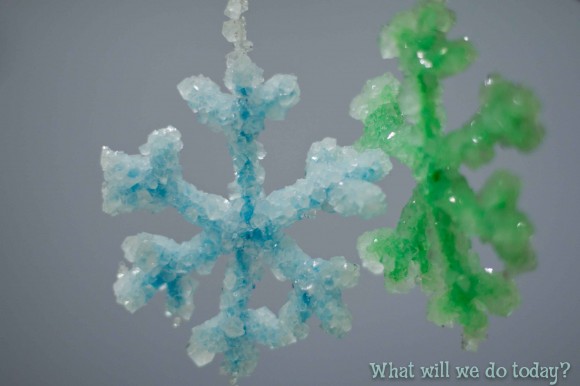
7. Next day the Borax will have crystallized in the water and attached themselves to the pipe cleaner ornaments.

Why does it work?

Because Borax is an example of a crystal. Salt and sugar are other examples. Hot water molecules move away from each other. When you add Borax, the molecules make room for borax crystals to dissolve. But a point of saturation can be reached, meaning there will be some remaining crystals. As this water cools, the water molecules move closer together again. Crystals begin to form and build around another item in the water, such as the pipe cleaner. This is especially true as the water evaporates.

Project #2: Capture your own snowflakes

Supplies

A cold, winter day

black piece of foam board or paper

magnifying glass

Place the black paper or foam board outside, but out of the snow, for 15 – 20 minutes, or until snowflakes can land on it and not melt immediately. When the paper is cold enough place the paper on a level surface or hold it carefully where snowflakes can fall on it. Observe the collected snowflakes with the magnifying glass quickly before they disappear.

#Love:Lean into it

Applauding the Blues
Beauty surround us, though it is elusive when we forget to open our eyes.

Lean into Love

Platitudes about love and happiness make me shudder. Those uttering such statements imply they are easy to acquire. Love and happiness require thought and determination and, like most things, they take effort to achieve. Positive emotions may come naturally if you were fortunate enough to have parents who modeled them, but for many, they are obtained by setting goals that are reached by trial and error.

Emotions are difficult to understand. Many psychologists consider romantic love not to be an emotion at all. They call it a drive associated with feelings produced by activating neurons in the midbrain that secrete dopamine. Sound romantic? Rage, hate, and revenge fall into that category, though anger is considered an emotion. Whether a drive or emotion, it is buried within, and can be triggered in positive and negative ways that influence the meaning you give to life.

Negative emotions (and drives) are difficult to change. Directives that tell you to “Lean into love and love will lean into you,” or, “Have fun and you’ll be happy,” mean little to a person who is sad and has no idea how to make them happen. And, as most people know, happiness is not the same as contentment. Behind the directive is the implication that success is simply a matter of mind over matter.

During my short career as a mental health counselor, I spoke to a mother unable to control anger. She lashed out by shouting and slapping her young children and was brought to the attention of social services. Warned by a judge to control herself or have the kids taken away, she stared at him fearfully and hopelessly. She didn’t know how to stop the rage that welled up inside. The judge thought his harsh words would inspire the woman to change. She wanted to be kinder and hated being angry all the time, but his advice was difficult to follow as a single mom. She was stretched thin by poverty, exhausted by a manual job, and faced rowdy children the moment she arrived home. She was overwhelmed and her brain had stopped responding to reason. 

So, how do you help a stressed woman generate positive emotions? How does she go about turning anger into love? My client’s stress was alleviated with counseling and acquiring time-management skills. She childproofed her apartment and rearranged cabinets to get dangerous products away from little hands. She joined a babysitting co-op that gave her time away from children. Though it meant bringing other children into her apartment, they became playmates for her children, and reduced the burden of being constantly on call. She was advised to hug her children more, which she did, and eventually came to my office with a smile brightening her face.

Platitudes do not help a person who lost a loved one get over the fear of being hurt by loss. It doesn’t help someone find love in a pandemic. And, they can’t help you find happiness, though some may try by resorting to drugs or short term solutions. A vacation or a party might make you happy, but those moments are fleeting and don’t bring about a lasting sense of well being. 

What tools do you need in your arsenal to go from apathy to love, from depression to contentment? They are not as easily obtained as watching a blossom open on a magnolia tree. People can’t just turn a switch or wait for the season to change to find love or happiness. Whether by meditation and looking inward or by reaching out, action of some sort is required. 

Let’s focus on love. There are rewards to being loved and giving love. Love brings about feelings of well-being and fosters emotions that keeps us in good spirit. There are tangible health benefits such as lower blood pressure, reduced anxiety, improved immunity, less pain and longer life. Love is good medicine, but to have it you need to seek out positive relationships from a spouse, friend or even a pet, and avoid loneliness, a current day health hazard. If you don’t have love and want it in your life, it requires you to change your behavior.

Love is something you have to make yourself capable of giving and receiving. It is influenced by the way you deal with others and often starts by helping friends in need with their problems. Love evolves from appreciating someone else’s successes and being grateful to those who reach out to you. It means thinking good things about a person and acting in a way to make that individual feel comfortable. It can’t be demanded or preserved. It is the opposite of possessiveness.

Reaching out connects you to other people, provides stability and security, and removes fear of being alone. As relationships mature over time they have the chance of turning into loving ones. Doing good deeds tends to generate feelings of love. Doing them often, intensifies them and leads to a higher level of spiritual growth. The opposite is also true. Love won’t flow over a person filled with ego, anger and selfish tendencies, for negative emotions suppress the inner urge to love.

Love is a feeling that fills us with happiness and triggers emotions derived from an inner need to love. Sadly, the object of your love may not love you back. Irrespective of how the other person feels, the feeling of being in love resides in yourself alone. The object of your love can only be a facilitator to bring out the emotion that makes you happy. And, it cannot be taken in or felt unless you are open to it. But when you are, when you open your inner self, you feel light and joyful.

Love and happiness, like life, has ups and downs. They require adjusting to changing situations and taking them in stride. Doing so affects relationships to others and the quality of your life. It is a mistake to think that love is trouble and pain free. It is not. You can love and lose the object of your affection due to circumstances beyond your control, and unrequited love can hurt. Yet, learning to live with its problems, understanding differences that arise as relationships mature, making changes in life style, and becoming tolerant are skills that can be learned. They take us beyond physical attraction to something deeper, and provide a contentment that flows through the days to give life meaning.

References:

Murphy, J. (2020) health benefits of being in love, according to researchers. MDLinx. retrieved from https://www.mdlinx.com/article/health-benefits-of-being-in-love-according-to-researchers/73jp3DJFZypxPMMBf2aawt regard, B. (2015) 

What is Love? (No, Really. What is it?) Psychology Today. retrieved from https://www.psychologytoday.com/us/blog/the-mysteries-love/201502/what-is-love-no-really-what-is-it

Cooper, A. (2018) The Emotions of Love-more than meets the eye. Drive Global. retrieved from https://thriveglobal.com/stories/the-emotions-of-love/#:~:text=Love%20is%20a%20feeling%20of,to%20love%20and%20be%20loved.

Why is it difficult to do what is right?

Forest Conversion

The forests were cut to make room for people. Humans inhabited and warmed the planet bringing about natures fury. Now, to have rich and meaningful lives, we must replant, reduce our carbon footprint, and develop new ways to exist in harmony with nature.

Why is it difficult to do what’s right?

We all require access to energy, food and healthcare at reasonable prices. To be happy we need to relax and have places to go where we can join others in community. We encourage our children to have dreams and enjoy helping them get realized. And, as adults, we believe we deserve salaries that will enable us to live without fear of landing on the streets do to a quirk of nature.

Unfortunately, our most ardent desires are easily shaken by natural events that bring disaster to communities and individuals. Floods, earthquakes, hurricanes, tornadoes, fires, droughts, and pandemic, to name a few, are becoming increasingly destructive. And, as in COVID’s case, they can affect a large part of the globe’s population.

If our goal is to live a rich fulfilling life, we need to pay more attention to events of nature that may disrupt dreams. Surprisingly, though we know that natural disasters are bound to occur, it is difficult to get motivated to prepare for emergencies. Most of us are procrastinators.

As chair of an emergency planning committee, I’ve learned that getting people to plan for unexpected events is as difficult as getting people to wear masks at the start of a pandemic. Humanity prefers to wait until tragedy strikes before acting, which may not be catastrophic if you are wealthy. If you are middle income or poor, it could be devastating and require those with money to help assist if they don’t want their streets completely taken over by homelessness and illnesses like typhoid.

Our country was fore warned of the possibility a global pandemic by scientists, yet was of little interest to the general public. And, though the Obama administration did develop a plan for dealing with a pandemic, it was defunded by the Trump administration. What they did is not unusual. Plans made in the heat of the moment are often shoved to the of back file cabinets and never reviewed again.

Few Americans have rainy day funds in anticipation of a disaster. They don’t carry emergency kits in their cars or have a five day supply of water in their homes. Those living in earthquake or flood prone areas may carry extra insurance a year or two after an event, but tend to drop it a few years later.

Scientists repeatedly say that disasters caused by climate change will get only worse. Though it already impact millions of people, those unaffected become angry with eco-migrants waiting at our borders. They ignore projections about future migrations despite the fact that a billion people will be affected. I never hear talk about how to accommodate people fleeing climate tragedies, though there will be ramifications for every town in every country with a habitable climate. Before long, doing nothing will not be an option.

I don’t appreciate how President Trump made people doubt science, yet I do marvel at his ability to attract followers who take his word over that of experts. One thing he does is paint a rosy picture of the future. Imagine what would happen if his marketing skills were used to inspire people think critically and seek truth. Since nature will continue to throw unexpected events our way, what if we changed tactics? Rather than present doom and gloom futures, lets frame arguments that show ways to develop richer, more satisfying lives

For instance, rather than say, “burning gasoline produces carbon that warms the planet, causing rising waters, wild storms and fires,” say, “electric cars will make cities quieter and the air cleaner giving you a better quality of life.”

When discussing energy, point out ways we have cut energy consumption so people think we are headed in the right direction. Cell phones and computers, for example, enable us to communicate world wide instead of having to travel to see family or business partners in gas guzzling cars and airplanes.

 Rather than ask people not to drive gasoline guzzling cars, build transportation networks that are safe, clean, comfortable, and less expensive than owning several vehicles. Small electric busses (Jitneys) moving through neighborhoods on frequent schedules are safer to be in, less polluting, and easier to manipulate than large buses.  

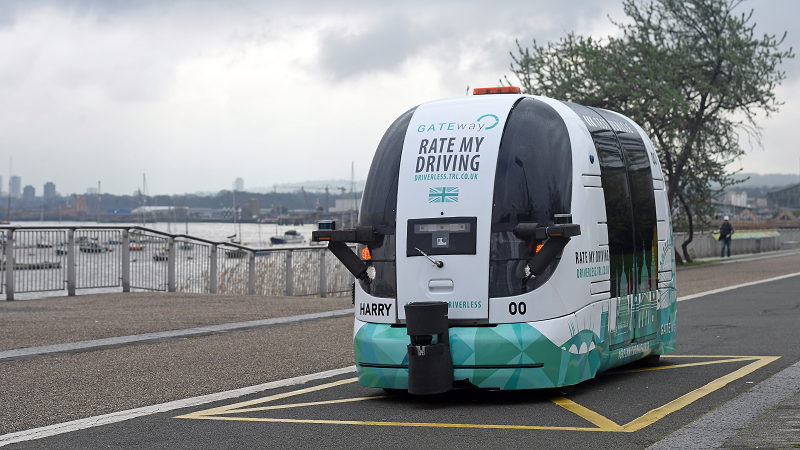
Ask city planners to to redesign streets to accommodate family sized driverless buses like those  starting to be used in Taiwan and London. Many of these vehicles will travel on specially designated lanes that make travel safer with fewer accidents.

Let’s get rid of trolley tracks that are the source of many casualties and make bike lanes as safe for children as they are in the Netherlands so they don’t have to be bussed to school. Health benefits from cycling and walking are significant and go far to connect people to their communities.

When the pandemic ends, many business will continue to have their employees work from home. Workers will share desks and computers and mainly come to headquarters for in-person conferences. Companies will save a great deal of money with these hybrid measures. Stress will decrease with fewer cars on the road and health will improve when people don’t have to share crowded elevators with sneezing riders.

Rather than fear messages calling us to lock out eco-migrants, let’s find a way to integrate them into our communities, by teaching them our language and sharing our values rather than pushing them into ghettos. Migrants are not pariahs, but simply people forced to face catastrophic change. And-global warming will force everyone to change with them. Migrants will have to be accommodated, not only by us, but by countries throughout the globe.

Climate change is not a problem we can solve by ourselves. It is an international crisis that requires countries to work together to find solutions. Migrants need to shelter, food, employment and to be educated into the host country’s way of life. Accommodating them will give construction workers jobs, provide income for landlords, outlets for farm produce, and sales for retail stores. If we make our guests are happy, we will be happy too. Nature is not bringing about the end of the world, but the beginning of a entirely new way of being.

Do comment below. I look forward to hearing from you.

Art is always for sale. Contact me at marilynne@eichingerfineart.com

Forest Conversion – Acrylic on Canvas / 28” x 22” x 2”  / $399.