Museums in Crisis

The second edition of Lives of Museum Junkies, published in 2020 discusses the impact of COVID-19 on museums

Portland was shocked a month ago when the Children’s Museum announced it was closing permanently after 75 years. Shuttered nearby is the Discovery Museum at the Forestry Center adding to a sense of loss. Last month, the Oregon Historical Museum was damaged for the second time by rioters leaving behind broken windows, damaged sculptures, and graffiti. Though the science museum (OMSI) and art museum were able to reopen, ticketing is limited. With interactive exhibits unavailable, OMSI lacks the vitality that comes from excited children exploring its displays.

The year 2020 will be remembered as a time of crisis, innovation, anxiety, and introspection. With more people vaccinated, there is hope that cultural institutions will return to business as usual, but from where I sit, that dream is a long way off for museums. Much has to be done to restore public confidence in indoor gatherings, and they face challenges due to diminished resources and layoffs.

Cultural and creative sectors in the economy were greatly affected by the coronavirus crisis. The toll on museums remains distressing. The American Alliance for Museums (AAM) writes that a third risk closing permanently. The Association of Science and Technology Centers (ASTC) reported that science centers were forced to downsize in 2020 to survive. Attendance was down 75 percent from 2019, and though there’s been an uptick since reopening, the numbers remain low.

When the pandemic struck, earned revenue disappeared overnight and small museums without an endowment suffered greatly. Relying heavily on day-to-day tour groups, daily visitations, and gift shop sales, there wasn’t enough income to sustain operations. Those that hung on did so because of generous gifts from wealthy donors and granting organizations. Small business loans and the Federal Paycheck Protection Program provided lifelines for some, but not all. Their recovery, projected to take many years, will permanently alter the way they do business.

When museums closed, they continued to operate as virtual educators, offering programs, curator video chats, and curricula to students, parents, and teachers. Some responded to the need for in-person schooling by organizing enrichment classes within their facilities. These fee-based programs benefited the children of their wealthier, better-educated patrons. The AAM published a fascinating step-by-step description of how the Science Museum of Minnesota adapted to different stages of the pandemic. It can be viewed at https://www.aam-us.org/2020/10/20/downsizing-our-museum-in-the-face-of-a-pandemic. The article explains how many of the larger institutions managed.

Since most museums have no more than six months of funds in reserve for emergencies, the majority had to lay off half or more of their workforce. And, though it was a way to stay in touch with supporters, digital programs and classroom offerings were not robust enough to cover expenses. Unlike restaurants, when a museum closes, it closes forever. Government resources are needed in times of crisis to end a downward spiral.

The Federal Stimulus Bill passed under the Biden administration, thankfully included $135 million relief grants for the National Endowments for the Arts and the Humanities and $200 million for the Institute of Museum and Library Services. Some funds are earmarked for state and regional arts organizations that support local arts organizations and nonprofits while other money will offset administrative expenses for pandemic related programming.

Double its pre-pandemic allotment, the funds allocated for the arts, double were a relief after Donald Trump’s unsuccessful fight to dissolve the NEA. Even so, the amount is short of the $4 billion the arts sector requested in a #CongressSaveCulture campaign launched last year. A great deal more is needed to keep our cultural institutions going.

In the depths of the Great Depression, the Federal government supported the arts in unprecedented ways with New Deal projects. Tax dollars employed artists, musicians, actors, writers, photographers, and dancers. President Roosevelt’s mission was “to promote American art and culture and to give more Americans access to. . . an abundant life.” In addition to saving artists from poverty, thousands of citizens viewed original art and experienced professional theater for the first time. They enrolled in music, drawing, filmmaking, and acting classes. According to the National Archives, a recurring theme was the strength and dignity of common men and women as they faced difficult circumstances. It was an amazing period of creativity during a time of tremendous change.

Humanity again faces a situation that undermines the worth of a people unprepared for change. Technological and scientific advances are forcing our citizens to cope in unfamiliar ways. Swimming through a deadly pandemic and wading through lies spread on social media made matters worse. Global warming, advanced technologies, biological breakthroughs, along with changing worksite needs have been ravaging families for quite some time. The pandemic made people more aware of the financial and racial inequities plaguing the nation. It left Americans confused about the country’s future.

Museums have always played a role in helping the public grapple with change. Artists interpret through visual expression the emotional and social disruptions impinging on our lives. Science and technology centers provide information about life-altering discoveries we will have to adapt to, and history museums contextualize change with the past.

The pandemic gave museums time to get their houses in order so they can be more effective in helping civilization grow and maintain a better social order. They’ve been considering more equitable, safe, and creative ways to work with the public. They’ve been reimagining how they operate, what subjects to cover, and whose art and scientific endeavors to feature. Diversity is very much on their minds.

The pandemic gave cultural institutions time to get their houses in order so they can be more effective in helping civilization grow and maintain a better social order. Museums specifically have been considering more equitable, safe, and creative ways to work with the public. They’ve been reimagining how they operate, what subjects to cover, and whose art and scientific endeavors to feature. Diversity is very much on their minds.

Creativity in the country will blossom again if a WPA-type arts program is reinstated. Inspiration is needed to helpus get through this transformative era. I’ve been following AAM and ASTC discussions and remain impressed with the inventiveness and goodwill of staff. Their hearts are in the right place and their missions appear solid. Museum junkies like myself will most certainly benefit. I look forward to seeing how they interpret the many changes that greet us daily. How with museums help society readjust and thrive?

References:

Kravinsky, N. (2021) Pandemi Has Many Small Museums At Risk of Closing Permanently. NPR. retrieved from https://www.npr.org/2021/03/29/980234526/pandemic-has-many-small-museums-at-risk-of-closing-permanently

Spolar, c. (2020 Museums are staying Alive During the Pandemic. National Geographic, retrieved from https://www.nationalgeographic.com/travel/article/how-museums-are-staying-alive-during-coronvirus

website 2019. Science Centers and COVID—19. ASTC. retrieved from https://www.astc.org/coronavirus/

Li, S. (2020) American Museums are going through an Identity Crisis. The Atlantic. retrieved from https://www.theatlantic.com/culture/archive/2020/11/american-museums-are-going-through-identity-crisis/617221/

McGlone, P. & Smee, S. ( 2020)Coronavirus shutdowns and charges of white supremacy: American art museums are in crisis. The Washington Post. retrieved from https://www.washingtonpost.com/entertainment/museums/american-art-museums-covid-white-supremacy/2020/10/11/61094f1c-fe94-11ea-8d05-9beaaa91c71f_story.html

(2020 ) Leading in Times of Crisis. American Alliance of Museums. retrieved from website https://www.aam-us.org/programs/about-museums/leading-in-times-of-crisis/

Cascone, M. (2021) The $1.9 Trillion Stimulus Bill Congress Just Passed Includes $470 Million for America’s Arts and Culture Sector. artnet news. retrieved from https://news.artnet.com/art-world/stimulus-package-includes-big-bucks-nea-1950807.

A New Deal For the Arts. National Archives. retrieved from https://www.archives.gov/exhibits/new_deal_for_the_arts/index.html#

Lives of Museum Junkies: Second Edition is available in bookstores and online in paperback and ebook formats.
Life Across Time

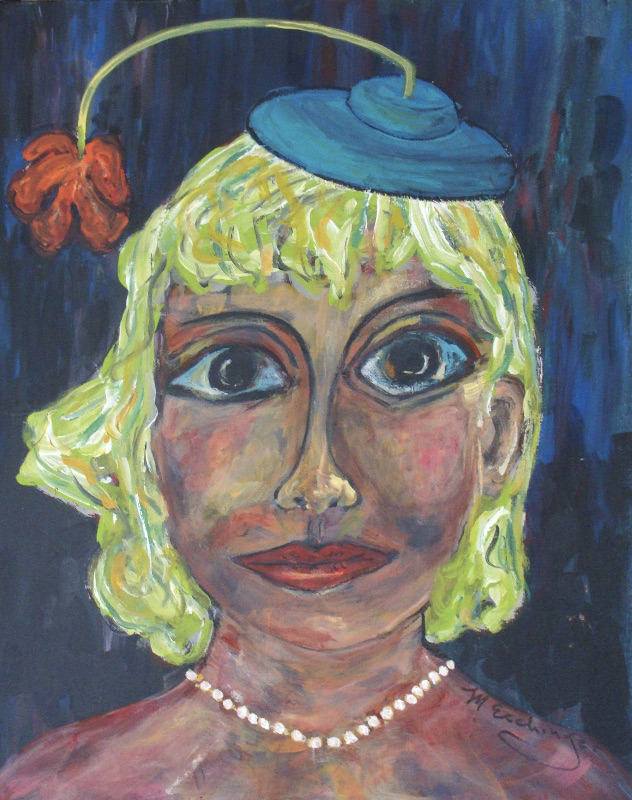
Ellen: Wide-Eyed and Ready
What experiences will mark the phases of her life?

Life Across Time

Gail Sheehy published several books in the 1990s describing passages adults experience throughout their lives. She talked about youth taking longer to grow up and elders longer to die, and that during mid-life people embrace a second adulthood with deeper, more playful, and creative meaning. The problem with Sheehy’s concept today, is that it does not embrace the majority of Americans. Though longevity continues to increase in all segments of society, vast socio-economic differences set people along different paths to old age. Not everyone can afford to have a mid-life crisis. People living in subsets of society go through passages that vary greatly. Forty percent of Americans living in poverty don’t have a chance to customize their experiences as Sheehy suggested.

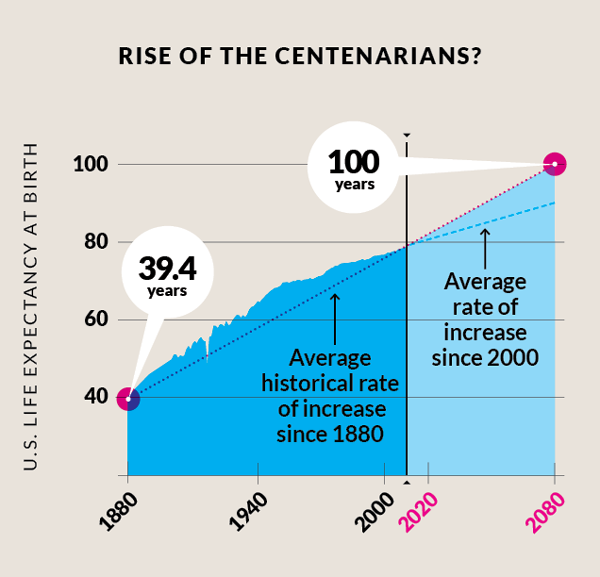
One hundred-sixty-years ago, life expectancy in the U.S. was 39.41 years. In 2020 it was 78.8. Despite the pandemic, 39.39 years is still quite an increase. Americans shouldn’t be complacent though, for expectancy has been on a slight slide downward since 2015. Negative societal trends such as unbalanced diets, sedentary lifestyles, high medical costs, and increasing rates of suicide and drug use are impacting the poor more than the wealthy. 

Despite the drop, centenarians have become more common. The United Nations estimates this year that 573,000 people will live to be 100, with that number escalating to 757,000 by 2045. The U.S. has the highest number of centenarians in the world with 97,000 alive in the country today. Kane Tanaka from Japan at 117 years is currently the oldest known person alive today. Back in 2003, when sixty gerontologists were asked to estimate life expectancy in 2100, their combined guesstimates had a median expectation of 100 and a mean of 292 years. The UN currently projects that elders over 60 will double by 2050. With such an increase I can’t help but wonder what will happen when more people live to 100? How will they pass their time and be supported through 30 or more years of retirement? What differences will there be between different segments of society?

 Life’s passages don’t proceed in straight predictable ways as was once thought. The idea of retiring after 40 years with one company and taking home a pension and gold watch is gone. No longer do workers believe employers will be loyal to them. According to the Bureau of Labor Statistics in 2019, people change jobs an average of 12 times and spend five years or less in each position. Job changes that require a move, disrupt relationships. The U.S.Census shows that the average American moves 11.7 times in a lifetime. In addition to employment concerns, people move because of changes in marital status, climate conditions, retirement, neighborhood changes, health issues, layoffs, and pursuing dreams.

A high school graduate’s road to the grave will consist of many twists and turns. Independent living, long considered a milestone in the transition to adulthood, is not an option for 48 percent of young adults. The Pew Research Center reports that in 2020, 52 percent of young adults still lived with their parents, the highest amount since the Great Depression. Twenty-year-olds form goals that are expansive, focused on gaining knowledge and information for a long and nebulous future.

When finally independent, they move to a stage traditionally marked by blending lives. That previously meant marriage to a person of the opposite sex followed by the birth or adoption of a child by the time the woman reached 21. Today, the average age women give birth is 26 or 31 years for mothers with higher education. More women become single mothers than they did twenty years ago, but, whether single or coupled, they opt for fewer babies. Due to financial concerns, global warming, and political unrest many twenty and thirty-year-olds choose not to bring children into the world at all.

Fewer couples married today will remain with their original partner. Instead, they will have serial liaisons throughout their long lives. Cohabitation, no longer confined to relationships between men and women, commonly takes place without marriage vows. Fifty percent of those who do marry will divorce or separate. Though divorce and marriage rates have been declining over the 10 years, the COVID-19 pandemic may reverse the trend. According to BBC, the increase in domestic violence and relationships stressed by the lockdown, financial strain, and political discord may usher in the largest single-year increase in divorce in decades.

Parents with children are challenged to balance work with personal life. Remaining happy and healthy is not always easy when there are multiple demands on time and money. Growing families add pressure for more space and a greater income. Though some parents can provide support and childcare for their children, many can’t. According to a 2019, 60 Minutes newscast, 40% of U.S. families struggle to survive. The pandemic hit women especially hard. More than 2.3 million women have left the workforce since February 2020. A majority of American families require income from two working adults.

Moving and changing neighborhoods disrupts established social patterns and schooling for children. Stress increases as old relationships end and health can suffer. I was once told that it takes twenty years to make a friend. There is some truth in what was said, for it does take a long time to get to know people well enough to be able to trust and depend on them.

When a youth moves out of a childhood home, parents enjoy feelings of freedom not felt for years. Life appears sunny to most empty-nesters. They still have their health and time to travel and take up hobbies. However, for many parents, an empty house brings on a crisis of purpose. Careers may come into question, making them want to try something new. Bored with jobs and perhaps their partner, mid-lifers crave new experiences. They want to feel as free as they did when in their twenties. Unfortunately, middle-age is when they begin caring for their elderly parents. 

But, now in their fifties, there is also the worry of losing their jobs. Many workers are passionate about what they do and want to stay employed into their senior years. Those laid off can struggle to find well-paid employment. Many are forced to take a cut in salary or even a low-paying job. Walmart, the largest employer in the United States, pays between $25,000 and $30,000 a year for a full-time employee. Amazon warehouse workers make $31,200 annually. Universities and colleges have the best reputation for keeping older people employed at a fair wage. 

According to a recent Gallup survey, the average age for retirement at 61 is not by choice. Most people prefer to stay in the workforce until they are 65-67. Nine million people over 65 find it necessary to stay employed. The book and movie, Nomadland do a good job showing how Americans over 60, faced with debt and high housing prices, pack everything up to live in their vans and RVs, work odd jobs, and find adventure on the road.

The crisis of aging can be painful to go through, though it does bring excitement as well. Seniors faced with an ever-increasing number of years to dream anew think about how to continue living meaningfully. For some grandparents that means raising their grandchildren. Nationwide, 2.7 million are doing so, with one-fifth having incomes below the poverty line. Children who reside with their grandparents are more likely to have experienced traumatic events that will influence their development. 

Retirees with the means to do so engage in educational pursuits and travel. Snowbirds move south in the winter and north during summer. Before the pandemic, 28 percent of elders pushed worry aside and stepped forward to volunteer. They benefited by staying healthier than non-engaged retirees, reporting fewer cognitive complaints, depressive symptoms, and functional limitation. Volunteers have a lower prevalence of dementia and live longer. Elders are happiest when able to fulfill emotionally meaningful goals. 

Studies show that seniors are generally satisfied in old age and that most report relatively high levels of emotional well-being. This is especially true when life is controllable and social supports are strong.

But, there comes a time when aging brings confinement, causing problems for offspring and family members. As more people reach 100, this will add pressure to health and social systems. With fewer adult children having adequate resources to help aging parents, the government will need to step in. Elders without family, who imagined friends would be there for them when needed, may get a painful surprise when their support system moves into retirement homes or leaves the neighborhood to be closer to their children.

But those fortunate enough to have been raised in a secure loving environment can take heart. They do better with caregivers than those who didn’t have close parental relationships when young. They tend to feel less vulnerable and less subject to emotional distress. Most seniors look back on their lives with contentment, considering what went well and what they wish had been different, accepting what was. Aging well has to do with the ability to acknowledge that you did the best you could throughout life.

_______________

I know this is a long blog and hope you will not be frustrated by its length. There is a lot to cover when considering life’s passages. Your comments are most welcome .

References

O’Neil, a. (2021) Life expectancy (from birth) in the United States, from 1860 to 2020. Statosta. retrieved from https://www.statista.com/statistics/1040079/life-expectancy-united-states-all-time/

Buchholz,K. (2021) Is 100 the New 80?: Centenarians are Becoming More Common. World Economic Forum. retrieved from https://www.weforum.org/agenda/2020/07/is-100-the-new-80-centenarians-are-becoming-more-common

Sheehy, G (2095) New PassagesRandom House. ISBN 0-394-22447-7

Careers. Forbes. retrieved from https://www.forbes.com/sites/ashleystahl/2020/05/01/new-study-millennial-women-are-delaying-having-children-due-to-their-careers/?sh=13bfaede276a

Fry, R, Passell, J, Cohn,D. (2020) A majority of young adults in the U.S. live with their parents for the first time since the Great Depression. Pew Research Center. retrieved from https://www.pewresearch.org/fact-tank/2020/09/04/a-majority-of-young-adults-in-the-u-s-live-with-their-parents-for-the-first-time-since-the-great-depression/

Anderson,L. Scherer.Z (2020) U.S. Marriage and Divorce Rates declined in last 10 Years. United States Census.https://www.census.gov/library/stories/2020/12/united-states-marriage-and-divorce-rates-declined-last-10-years.html

Miller, J. (2021) A year into the pandemic, mothers and children are still struggling, USC News. retrieved from https://news.usc.edu/183396/women-kids-covid-19-pandemic-child-care-workfore-usc-experts/

Savage,M. (2020)Why the pandemic is causing spikes in break-ups. BBC. retrieved from https://www.bbc.com/worklife/article/20201203-why-the-pandemic-is-causing-spikes-in-break-ups-and-divorces

Henderson, T (2019) For Passion or For Money, More Seniors Keep Working. PEW. retrieved from https://www.pewtrusts.org/en/research-and-analysis/blogs/stateline/2019/09/20/for-passion-or-for-money-more-seniors-keep-working

Iannuci, L. (2021) How real Americans are living the ‘Nomadland’ life. MarketWatch. retrieved from https://www.marketwatch.com/story/how-real-americans-are-living-the-nomadland-life-11613769899

Senior Data website. (2021) Volunteerism – Ages 65+. America’s Health Rankings. retrieved from https://www.americashealthrankings.org/explore/senior/measure/Sarah 

Raposo, S., Barnes,J., Sims, J., Yotopoulos, A, Carstensen, L. Age and Emotional Weel-Being. Stanford Research. retrieved from https://www.comfortkeepers.com/assets/documents/Age-and-Emotional-Well-Being.pdf

Charles, s. and Carstensen, L (2010) Social and Emotional Aging. US National Library of Medicine. retrieved from https://www.ncbi.nlm.nih.gov/pmc/articles/PMC3950961/

US News website (2020)U.S. Grandparents are Raising Millions of Kids, and It’s tough. retrieved from  https://www.usnews.com/news/health-news/articles/2020-08-04/us-grandparents-are-raising-millions-of-kids-and-its-tough

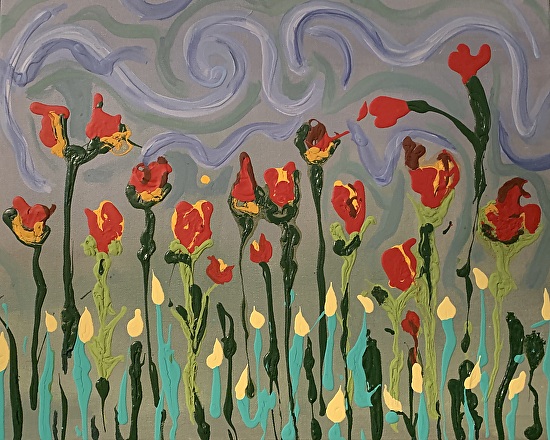
Art is always for sale. Ellen: Wide Eyed and Ready is an acrylic painting on deep  canvas /16” by 22” / $399. To make arrangements contact me at marilynne@eichingerfineart.com.

Seeking Balance

Nature seeks balance, as does the human species, for it is part of nature.

One Woman’s Way towards Balance

There are many ideas as to what it means to live life well. To me, doing so this past year meant achieving balance, finding a way to exist in an equilibrium that allows for self-expression and enables growth. The COVID pandemic brought this need to the forefront when the established patterns I used to adhere to were disrupted. To survive with equanimity. it became necessary to reorganize my brain. My friends tell me of similar experiences, though each is different. Today I share my journey with the hope that you will respond by saying something about yours.

My balancing act started with a desire to maintain my health. Searching for scientific information and following CDC recommended guidelines provided the best path to travel, given that the illness was poorly understood. Paying attention to virologists seemed wiser than listening to voodoo magicians spouting untested solutions. Unfortunately, early CDC recommendations led to confusion that affected public trust and caused negative consequences. Still, the information that followed the science was better than the alternatives.

To counterbalance so much uncertainty, I was driven to maintain some control over my days and did so by starting each one with an exercise routine I varied. Some were aerobic to increase lung capacity and heart strength while others, like pilates and yoga, were focused on building core strength, balance, and meditative breathing. I watched neighbors mask up and join friends on walks, but that was not my custom. 

On strolls outside, I preferred being alone so I could observe what I passed more deeply with the aid of a camera. I photographed the flora and fauna through their seasonal growth cycle, studied doorways, walkways, walls, and windows, studying how they were made, positioned, and painted, and maintained. These images along with unusual shadows cast by buildings and bridges provided fodder for paintings made later in my studio. Most of all, I thought.

In my search for balance, I was challenged to exercise my brain. My walks were both meditative and intellectually stimulating. Thoughts often led me back to the computer to seek answers to questions raised during the outing. To adapt to change, I thought it necessary to stay abreast of generational and environmental deviations, economic impacts, and political and racial divides. Maintaining a weekly blog, helped me understand what was happening close to home. But writing had another benefit that helped me maintain balance. Writing is a solitary activity shuffling words and thoughts until they can be put on a page with clarity. To have something to write about, however, writers have to experience the world—study human nature and experience community.

As a species human beings are communal. I started my blog as a way of reaching out to my family to share things that mattered to me. Over time, my reach spread out to friends and acquaintances interested in similar topics. The books I wrote since retiring in 2014, had a different purpose. Lives of Museum Junkies was meant to inspire readers to consider the way children are taught and Over The Peanut Fence was written to explain the plight of homeless and runaway youth to motivate the public to help them. My latest endeavor, in the final editing stage, is Antheia in the Thorns. It is an environmental action story of good and evil and is meant to make readers show the oil and gas industry through a new lens. The process of writing, sharing, and receiving feedback is a balancing act of its own.

Though isolated when writing, the interviews I conduct while doing research, and the talks I give after publication develop community. They reach a literary audience that responds with questions and comments that keep me energized. The literary community, however, is primarily built in the eyes of strangers. To maintain balance in community, it is important to stay connected to family and friends. 

Zoom, Skype, and other technologies offer opportunities for distant connections. Becoming a grandmother to children in a local immigrant family helped me cope when unable to see distant relatives. The masked children and I got together weekly for art, dance, and science projects. In good weather, we went to playgrounds, kicked around soccer balls, and blew giant bubbles. They are fun to be with and bring love into my life. Since being vaccinated, we can hug each other and read books while sitting in closer proximity. 


A common complaint I’ve heard this year is how awful it is not to be touched. I am fortunate to have a wonderful partner to cuddle—one who massages my feet each evening. I know of people who formed hugging partnerships with a friend they felt safe to hold for a short moment of warmth. A great many people satisfied the need by acquiring a pet, a warm body to stroke and provide companionship while sequestered—important for maintaining balance.

Living within my means, was not a problem for me as it has been for many who lost jobs. The challenge of maintaining shelter and food when let go took a tragic toll. It is impossible to have a balanced life if one aspect of life is so heavily weighted. It is a luxury to have the means to with which to cope with comfort during a pandemic. I wanted to help others achieve a similar balance, But, though my donations to the food bank increased significantly, and as a lay minister I counseled a few struggling people, I felt bad not being able to do more. I admire the health professionals and social workers on the front lines.

The pandemic provided an opportunity to learn about myself and the coping mechanisms I use to maintain balance. I imagine most of you have been similarly impacted. It would be wonderful if you would take a moment and share your experience with our readers. 

I look forward to your comments below.

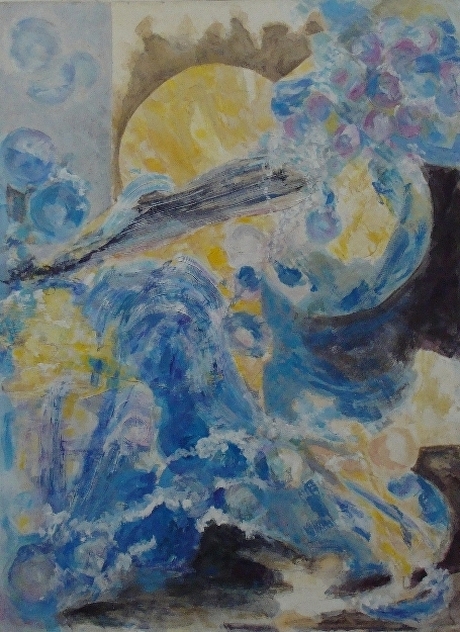
Art is always for sale. Surf’s Up is a 48″ by 36″ acrylic painting on canvas. $699. To purchase contact me at marilynne@eichingerfineart.com

Better than you found it

Mother Earth Cares for all creatures and wants them to flourish

Better Than you Found it

A walk in the arboretum took me past a memorial bench for Robert Morgan Cameron-Husband, Father, Scoutmaster, Friend. On the plaque below his name was written, “Leave your campsite better than you found it.” I was touched by his words and disturbed because few people heed them. 

My partner tells the story of how his father in the 1960s opened a pack of cigarettes while driving and was about to discard the plastic covering out the window as he usually did, when he turned to his son and said, “I better not do this, Lady Bird won’t like it.” Instead of littering, he put the trash in his pocket to throw in a receptacle later. 

Lady Bird Johnson, when First Lady, pushed Americans and Congress to beautify the nation’s capital and cities. Deeply concerned about urban decay and pollution, she is quoted as having said, “A little beauty, something that is lovely, I think, can help create harmony which will lessen tension.”

Mrs. Johnson believed that pollution, recreation, mental health, the crime rate, rapid transit, highway beautification, the war on poverty, and the nation’s parks were interwoven- that affecting one part leads to a reaction that shows up elsewhere. With Lyndon Johnson’s support, the Highway Beautification Act was passed in 1965 to limit billboards, hide junkyards, and get rid of unsightly messes alongside America’s interstate system. It also funded local efforts to clean up and landscape green spaces. The Johnsons were green before green was popular.

Efforts to improve the country’s appearance didn’t start with the Johnsons, however. Keep America Beautiful, a Connecticut-based non-profit was founded in 1953. Today there are 600 state and community-based affiliate organizations and more than 1,000 partner organizations. Their goal is to end littering, improve recycling and beautify American communities. They initiated the Great American Cleanup that celebrated its twenty-third year this March. Locally, SOLVE was founded in 1969 to bring Oregonians together to improve the environment. Volunteers implement city and beach cleanups, plant trees and shrubs, and remove invasive species to help habitats stay healthy.

To date, city-wide efforts by dedicated individuals haven’t been able to keep pace with the destruction, trash, and graffiti claiming the streets. The pandemic added to the problem by increasing homelessness and creating unemployed people with time on their hands who do not take pride in their environment. With an inadequate number of trash recepticals around town, garbage is found everywhere. People who ordinarily wouldn’t litter do so and add to the pollution. I’ve watched cups and wrappers thrown from cars and busses, receptacles overturned for fun, bags filled with overflowing trash left near park benches and packaging dropped to stay where it lands. Discarded sofas and beds drenched with rainwater line streets. Unconcerned individuals have made too many towns unbelievably filthy. Portland, as an example, is no longer a city to wander through with pride. My town reminds me of visits I’ve taken to struggling developing countries.

Freedom does not give people the right to do and live any way they want to. They don’t have the right to live in filth and make other people sick in body and mind. Rat-infested garbage piling up near homeless encampments leads to hepatitis A, dysentery, and typhus. Thriving rodent populations spread and carry diseases to parks and private gardens.

Do we need another Lady Bird to inspire the nation to leave campsites better than they’re found, or are there ways to do something about the problem now? I was pleased to learn that Portland has started paying homeless and recently housed people $20 an hour to pick up trash. Focused on center-city now, they aim to spread outward until the entire city is clean. Workshops are being held to train volunteers in graffiti removal, another problem that mar’s my soul and reduces livability. 

To replace tent strewn streets, villages with tiny homes equipped with heat, electricity, and locked doors are being built so that homeless people can live in dry, safe accommodations near toilets, showers, and trash bins. The answer is uncertain as to whether they will solve the problem of housing the homeless. Tiny homes may be trendy, but they aren’t built to survive years of harsh weather. They are a good, short-term solution that needs to be followed by permanent shelters, counseling, and jobs. Because so many people in our community do care, I am hopeful that we will get there.

Scouting organizations and churches traditionally promoted ethical and community-minded behaviors that families reenforced.

Unfortunately, numerous lawsuits, and difficulty finding volunteers plague scouting. Membership numbers have been steadily declining since a high in 1973, so fewer kids are learning to leave campsites better than they found them.

Church attendance is also on the decline. Fewer people listen to sermons about social responsibility and moral behavior that reinforce, “do unto others as you would have others do unto you,” and “two wrongs don’t make a right.” Racism is wrong, but so is vandalism.

Without strong leadership, what can we do about cleaning up the environment? For sure, don’t litter. But, the burden to reduce litter cannot be entirely placed on the consumer. It has to occur when items are manufactured and marketed. We don’t need elaborate, oversized packages made of material that can’t be recycled. I didn’t need to receive a book I ordered through Amazon in a box that was 10 times its size and filled with plastic bubbles. Too many products sold in markets and hardware stores are in packages that are larger than the item and difficult (near-impossible) to open. In the past, many of these products were not packaged at all.

We can reduce the use of plastics that cause wildlife to die in record numbers. The Great Pacific Garbage Patch spans the entire width of the area between Japan and the United States. It is 7.7 million square miles, mostly plastic floating in the North Pacific Ocean and circles around continually adding trash. Our engineers and scientists should be challenged to come up with solutions that are bio-degradable, and as consumers, we can avoid purchasing plastic items and using plastic bags.

Graffiti has become an underground artform among disenfranchised youth. Somehow, we need to find ways to change their mindset. Defacing public and private property make more people unhappy than happy. There are times that I think the country is too tolerant, for we allow destructive behavior to happen without consequences. Too many parents don’t take responsibility for wayward children. By holding families, as well as the perpetrators accountable, and requiring them to join work teams, and fund needed repairs due to their family member’s mischief, we are bound to reduce vandalism, graffiti, and littering.

Lastly, as adults, it behooves each of us to become role models for youth. We can all be Lady Bird and Lyndon Johnson advocates for a green and beautiful environment. To live well in the community, we must each leave our campsite better than we found it. This Earth Day is a perfect time to get started.

References:

Social Impact Movement website. 2021. What is the Great Pacific Garbage Patch? retrieved from https://socialimpactmovement.org/what-is-the-great-pacific-garbage-patch/?gclid=Cj0KCQjw6-SDBhCMARIsAGbI7UjjXNdbetE7yvgQTc2rGtgY2AbyJAlSupGc34Lo7tavWcC3UdZ7Sa0aAolDEALw_wcB.

PBS website. Lady Bird Johson: The First Lady’s Beautification Campaign. retrieved from https://www.pbs.org/ladybird/shattereddreams/shattereddreams_report.html

#Social Economy

CITY CONNECTIONS

Faced with burgeoning populations that are difficult to control, businesses and governments are testing ways to influence social behavior. Face recognition programs, computer data banks, and point systems based on good behavior are worming their way into the economy.

 Keeping Score: The Social Economy

Though the United States never had a caste system as in India, we’ve always had a social ranking system.  In our country we score based on status, origin, resources, skin color, family ties, education, and reputation. The civil rights demonstrations that occur periodically are loud shout-outs to this issue. They are a way of fighting against an inequitable ranking system.

Contemporary ranking systems have added another way to pigeonhole people by scoring their behavior. They use sophisticated computer technology to socially rate people for corporate or political purposes. The goal is to influence the way providers and customers interact through social engineering. It is causing participation in Social Credit Clubs to expand worldwide.

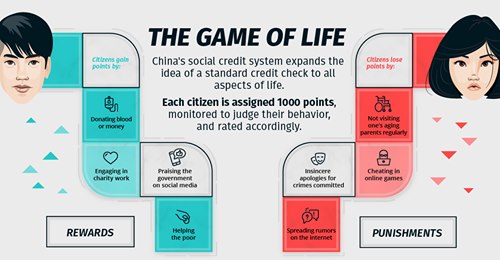
Governments and corporations are engineering ways to use social pressure to change the way people act, succeed at work, and contribute to society. Some are voluntary schemes to get lower insurance fees, while others being developed in authoritarian countries are not up to the individual to join.  China is taking the concept to its extreme by monitoring behavior with the Game of Life. The game is made up of three interconnected parts: a master database, a blacklisting system, and a punishment and rewards mechanism. It is transparent social governance, meaning that all data is shown with no privacy at all.

Each citizen is assigned 1000 points to monitor and judge behavior. People are rewarded for things like donating blood, engaging in charity work, taking one’s parents to the doctor, and helping the poor. They are punished for spreading rumors on the internet, cheating on online games, jaywalking, playing loud music, and not visiting one’s aging parents regularly. Reward points earn work promotions, tax breaks, easier access to bank loans, and priority for children’s school admissions. Punishments may keep a person from booking flights or train tickets, make them ineligible for certain jobs, restrict access to public services, and cause public shaming on social media and TV platforms. It is a Big Brother approach to a cooperative society. Pilot projects have taken place since 2014 with plans to implement the Game of Life nationally sometime this year.

If you think this Orwellian nightmare can’t happen in the U.S. guess again, it already is. The New York State Department of Financial Services gave insurance companies permission to base premiums on social media posts. An example given is of an Instagram picture of a man teasing a grizzly bear at Yellowstone with a martini in one hand, a bucket of cheese fries in the other, and a cigarette in the person’s mouth causing his insurance premium to increase. Another picture on a Facebook post shows that a person doing yoga can save money. Insurance companies see ratings as an extension of the lifestyle questions asked when applying for life insurance. If you say no to rock climbing and then post pictures of yourself on social media soloing, it could count as a yes. According to Forbes, it is possible in the future that posting while driving, boasting about an unregistered pet, or leaving on geotagging while on vacation and thus signaling to thieves that your house is vacant could influence your premium. 

PatronScan is a company that manages customers for bar and restaurant owners. It helps spot fake IDs and scans a list of troublemakers who, on previous occasions, committed objectionable activities – fighting, sexual assault, drugs, theft, or other bad behavior. The list is shared among all PatronScan customers in the U.S., the U.K., and Canada. Judgment about what kind of behavior qualifies for inclusion on a list is up to the bar owners and managers. 

Airbnb bans customers for life for any conduct they consider objectionable. With more than 6 million listings in its system, being banned can limit travel options. It is easy to get blacklisted on Uber as well. Though there is a system that lets passengers, rate drivers, they also  installed one that allows drivers to rate disruptive passengers. Amazon and eBay have been using rating systems for years, tracking honesty in product presentation and timeliness of deliveries. A reciprocation scoring system promotes mutually acceptable behavior.

WhatsApp will ban you from using their service if too many users block you for sending spam, threatening messages, or trying to hack into their app. Though the service isn’t very significant in the United States, it is a great punishment in some countries. Of course, we’ve all saw what happened to Donald Trump when we told too many lies on Twitter and Facebook. He’s banned for life and struggling how to develop a social media presence that rivals them.

Social ranking systems categorize people on identity, popularity, power, and resource allocation. Their prescribed norms, values, and behaviors are governed by algorithms. How they work and who is rewarded is unknown to the public. Those who have more than 20,000 visitors to their media sites are considered influencers and as such, are given special treatment. Businesses also study social media sites to determine who to approach when looking for customers. Real estate agents have become especially adept at weeding people out when deciding who to rent to. They look for people with a big online following to boost awareness of their rentals, search for wealthy individuals, and though it is illegal, eliminate minority populations they deem to be undesirable. 

Social credit systems work outside the legal system. There is no jury, judge, legal representation, and often there is no appeal. It is a system where the accused have few rights. It is enforced by private companies, not the government, and operates without public input. In the future, it may be that law enforcement, rather than being determined by the Constitution or the legal system, will be determined by licensing agreements made with Corporations.

Social systems may help our countrymen and women become better-mannered and more considerate drivers. They may act as a reminder to treat others as they would like to be treated, to not spread falsehoods, to not litter, and to care for those in need. But, as systems are established it is important to consider who sets the standards for behavior.  What cultural norms and values do most Americans find important? It would be easy to exacerbate caste-like social divisions if systems are not equally applied to all. And, if social credit systems continue to expand, we must make sure they are monitored fairly. There is much to consider. 

Resources:

Elgan. M. (2019)Uh-oh: Silicon Valley is building a Chinese-style social credit system. Fast Company. retrieved from https://www.fastcompany.com/90394048/uh-oh-silicon-valley-is-building-a-chinese-style-social-credit-

Jones, K. (2019) The game of Life: Visualizing China’s Social Credit System. Visual Capitalist. Visual Capitalist. retrieved from https://www.visualcapitalist.com/the-game-of-life-visualizing-chinas-social-credit-system/

Hockett, R. (2019) When is ‘Social Credit’ Orwellian? Forbes. retrieved from https://www.thebalance.com/best-peer-to-peer-lending-companies-4580285

Baron, J. (2019) Life Insurers Can Use Social Media Posts To Determine Premiums As Long as they Don’t Discriminate. Forbes. retrieved from https://www.forbes.com/sites/jessicabaron/2019/02/04/life-insurers-can-use-social-media-posts-to-determine-premiums/?sh=ecc8b3923ce1

Boyle, M. reviewer (2021)What is Time Banking? Investopedia. retrieved from https://www.investopedia.com/terms/t/time-banking.asp#:~:text=Time%20banking%20is%20a%20bartering,to%20supplement%20government%20social%20services.

(2018) Social Credit: China’s Digital Dystopia in the Making. Youtube. PBS.  

Hiyser, K. (2019) Report: America Has a Social Credit System Much Like China’s. Futurism. retrieved from https://futurism.com/america-social-credit-system-china

Fenwick, A. (2019) How’s your social credit score?  Hult International Business school. retrieved from https://www.hult.edu/blog/your-social-credit-score/

I look forward to hearing from you. Please respond below.

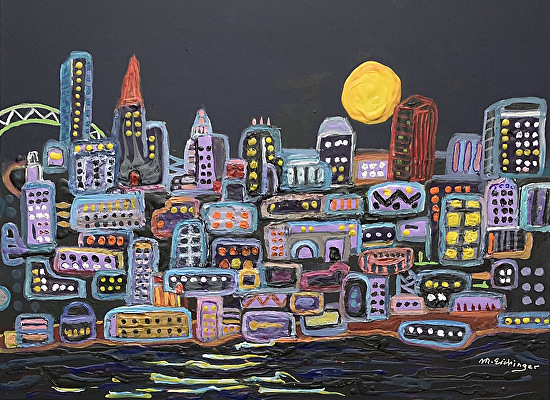
Art is always for sale. For information about City Connections contact me at marilynne@eichiingerfineart.com.

#Social Economy

Trees communicate through an underground social network known as the wood-wide web.   It is where microscopic fungal filaments form links between trees and fungi to act as an economic exchange. They share water and nutrients and send distress signals about drought, disease, and insect attacks. Trees in their network change their behavior when receiving these messages. In exchange, fungi receive sugar that the trees photosynthesize from sunlight. Well-fed fungi scavenge the soil for nitrogen, phosphorus, and other minerals which are absorbed and consumed by the trees. 

Social Economy in the Age of Bots

My first child was welcomed into the world when I was 21. By then, I had completed three years at Boston University and was determined to finish the fourth, but wasn’t quite sure how to manage an infant, classes, and find time to study. My husband, who had started a doctoral program at MIT, was occupied with high-level courses, thesis concerns, and a teaching position that supported us. Though my parents paid my tuition, we lived frugally on our own. Hiring babysitters was more than we could afford. 

Fortunately, a cooperative operating in Cambridge came to our rescue. It was a barter exchange program with points earned depending on how many children you cared for and whether they were awake or asleep. My husband and I took turns sitting for other people’s children to make date nights and afternoons at the library reasonable options. Also, I watched a neighbor’s daughter each afternoon while she worked, and she took care of my son in the morning while I attended classes. At the end of two years and the birth of a second child, I finally graduated.

I often suggested to young parents that they participate in a babysitting exchange rather than pay $15 an hour for child care. No-one ever took up the idea, but after reading Andrew Yang’s Book, The War on Normal People, I was heartened to learn that the concept has legs and a new name, TimeBanking. In an age when computers, robots and artificial intelligence are taking over jobs, we need to imagine another economy, one that will help people survive cutbacks in employment and earnings.

TimeBanking is a barter system where services are exchanged for time-based credit rather than money. You give one hour of service and one-time credit is banked in your account. Neighbors assisting neighbors collect social credit points that can be exchanged for services. Childcare, raking leaves, housekeeping, shopping, handyman assistance, food preparation, driving to doctor’s appointments, dog walking, and guided fishing trips are among the ways people earn and use credit. March 23rd is International TimeBanking Day so expect to hear more about the concept.

TimeBanking can be used by organizations, groups, and individuals to increase personal and community well-being. An example of a time-based organizationis the Burning Man festival, where neither money (nor accounting) is exchanged. The event is based on the honor system. Attendees come to the even with items to share-food, drinks, sound stages, clothing, water, showers, yoga classes, tarot readings, misting tents, fire dancing, etc. 

Individuals tend to join clubs that vary in size from 20 to tens of thousands, according to TimeBanks USA. Edgar Cahn, in his book No More throw-Away People, listed four core values to which he’s since added a fifth.

  1. Asset: every person has something of value to share with someone else. 
  2. Redefining work: Money is not the basis for building strong families, revitalizing neighborhoods, making democracy work, or advancing social justice.
  3. Reciprocity: I’ll help you, you help someone else. The idea is to pay it forward. 
  4. Community/Social Networks: communities can be revitalized through support, strength, and trust. An important task is to create communication networks. 
  5. Respect: Accept where people are in the moment – not where we hope they will be in the future.

TimeBank exchanges track activities, inform members of events, recruit members, and so forth. They’ve been known to change the way neighborhoods operate by encouraging communication, and how neighbors care for one another. They get to know each other, establish friendships, and offer help through tough times. TimeBank groups gather for potlucks, secure the streets, and plan for emergencies. For those living in Portland, PDX TimeBank is a group that was recently formed. It now has 140 members who have clocked over 5,518 exchanged hours. 

Peer-to-peer lending companies, also known as P2P,are an investment deviation operating in the social economy. They conduct business with goals that do not follow typical banking practices and are a way to help entrepreneurs who may not qualify for a bank loan. It is a form of online lending that allows individual investors to work directly with people or businesses seeking loans. Once an application is received by a lending group, software matched lenders with potential borrowers. By cutting out traditional financial institutions like banks, borrowers can access funds more quickly. Investors shoulder the financial risk for the loan though they usually get a healthy return on their investment, depending on the creditworthiness of the borrower. There is always the risk to a lender that the borrower will stop making payments. A few of the more highly rated lending companies are listed below.

Lending Club: for Borrowers With Good Credit (loaned over $55 billion)

Upstart: for Educated Borrowers (more approvals, fewer defaults than banks

Fund Rise: Investing in Real Estate (minimum $500, annual return 8.6 % to 12.4%)

Funding Circle: for Small Businesses And Big Investors 

Street Shares: for Established Small Businesses (in business at least a year)

Peerform: No Frills (loan up to $ 25,000 – investors from 16 risk categories.)

Prosper: for Originalists (over $13 billion in loans, 3 to 5-year repayment)

Kiva: Best for Charitable Investors (invest out of the goodness of your heart from $25 to buy a Ugandan farmer chicken seed to a $10,000 interest-free loan.)

A common complaint about social credit systems is that they are an end-run around the legal system. The accused have few rights and no appeal. Mike Elgan of Fast Company calls it “a slippery slope away from democracy and toward corporatocracy.” 

A second grumble is that a barter system is incompatible with our system of taxation. It is difficult to assign value to a person assisting a neighbor. Your neighbor might be able to help clear a clogged pipe and save you the cost of a plumber. Service companies don’t like it because it promotes self-reliance rather than hiring their employees to do common household jobs.

I am not sure where social bartering clubs and peer-to-peer lending companies will take the country in the future. Hopefully, they’ll make people more compassionate and help them feel less isolated. They might break down large monopolies that control people through ads that cost them billions of dollars. Social bartering clubs may make neighborhoods safer and foster greater respect for those with different backgrounds and skills. I like to think that they’ll prick the bubble of anxiety and stress that is mounting throughout the country. Living in isolation, fearing loss of employment to robots, and worrying about becoming ill with no one to care for you, is not healthy. The Age of Bots requires reimagining economic and social structures to take into account the needs of all Americans.Next week I will discuss how social behavior is being manipulated for economic gain.

References:

Markosian, D. (2018) Do Trees Talk To Each Other? Smithsonian Magazine. retrieved from https://www.smithsonianmag.com/science-nature/the-whispering-trees-180968084/

Delbridge, E. (2019) The 8 Best Peer-to-Peer Lending Companies oThe Balance. retrieved from https://www.thebalance.com/best-peer-to-peer-lending-companies-4580285

TimeBanks: retrieved from web site https://timebanks.org

Wang, A.(2018) The War on Normal People. Hachette Books. ISBN- 978-0-316-41421-0

Boyle, M. reviewer (2021)What is Time Banking? Investopedia. retrieved from https://www.investopedia.com/terms/t/time-banking.asp#:~:text=Time%20banking%20is%20a%20bartering,to%20supplement%20government%20social%20services.

Rosenberg, Eric. (2021) What is peer-to-peer lending? credit karma. retrieved from https://www.creditkarma.com/personal-loans/i/peer-to-peer-lending

Art is always for sale. For information go to eichingerfineart.com or contact me at marilynne@eichingerfineart.com.

#Friendships thru COVID

                     Blue Birds                                                          Personal Space 

Emerging from COVID with Friends

Anais Nin wrote, “Each friend represents a world in us, a world possibly not born until they arrive, and it is only by this meeting that a new world is born.” She implies that joy, companionship, and growth come from friends influencing how we experience the world. A colleague once advised me that it takes twenty years to make a friend. The comment seemed extreme, but as I’ve aged, I’ve given it more credence. Strong friendships are a critical part of our well-being, but they take nurturing and time to develop.

Zack, the twenty-year-old homeless boy I write about in Over the Peanut Fence, made street-friends instantly. After spending a few hours with a new arrival, he would call the youth a friend, an indication that he was open to knowing the person better. Over the following weeks, the relationship was tested by observing the youth’s willingness to share his limited resources. If he had cigarettes, he was expected to offer  some to his friends. If she pulled in ten dollars begging, she bought the  \pizza and gave her friends a slice. When the person was known as someone willing to share, he or she was valued and could expect to receive favors and help in return.

Loyalty grows quickly in an environment where individuals share experiences and hardships. Simply sharing the brutal story that led the youth to flee home creates bonds. Hearing these tales makes homeless youths realize they are not the only ones to have suffered. They help them take small steps forward towards trusting people again. If caught stealing, the street-thief will take all of the blame, never tattling on a friend involved in the hoist. If a gay or lesbian youth is bullied, friends join together to fight against the perceived injustice. Though street relationships develop quickly, they are lost equally as fast. Those who choose not to partake in drugs or decide to return to school, for instance, have accepted a lifestyle that no longer supports the habits of their former acquaintances. Rather than lose their friends’ trust, they disappear.

Children tend to make friends easily. School, camp, clubs, and sports teams where time is spent with people their age, spurs fast friendships. Adults, unfortunately, find it more difficult to create enduring relationships. They don’t happen automatically as they did when in school unless put in situations where they have to depend on one another, as in the military. For adult intimacy to deepen, it requires intention, time, and effort. Though progress may be slower, growing acquaintances is a similar process to the one homeless youth experience. It involves giving something of yourself before you can expect something in return.

Strong friendships are built on a foundation of sharing, honesty, and trust. Rock climbers and combat soldiers have to trust one another for their lives depend on it. That is not the case in most situations, but it is in some. If a person becomes ill, divorced, traumatized, or elderly their survival often depends on the willingness of a friend to help out.

Research presented in Psychology Today shows that friendships have mental and physical benefits that contribute to self-esteem, greater happiness, a sense of purpose, lower blood pressure, and a longer life span. A University of North Carolina study concluded that having numerous friendships is most beneficial during adolescence and old age. Middle-aged people are less affected by the number of friends they are connected to but more concerned by whether the relationships they do maintain provide support or add strain. My relationships over time fit into their pattern. 

As a child, a college student, and a young adult I had lots of friends and enjoyed doing things with them. When I became a young parent, my husband and I expanded our friendship circle to include couples raising young children. However, by middle age, when deeply involved in the work and care of older children, I spent less time nurturing these relationships. The dinner parties and events I gave and attended were often related to my work. The people I called friends were likely to be colleagues, board members, and professional contacts. It is customary to leave work-friendships behind to let the new president bond with the staff and board when you exit a position as president of an organization. No one wants to run an organization with a shadow over their shoulders saying the old way was better than the new. 

Friendless when I left OMS, I started the Museum Tour Catalog, imagining things would be different when the business sold and I retired. That was not the case. The purchaser asked the staff not to socialize with me.  Building close relationships anew could only  be accomplished with intention. I took pottery classes, stayed to socialize after exercising at my club, became a lay minister, and talked to neighbors strolling by the house. I arranged for walks and luncheons with friends I hadn’t seen for years. It was an effort and took time to deepen these relationships, but it felt worthwhile.  I slowly developed a circle of friends I could call on when needed and committed myself to do the same for them.  When COVID-19 burst on the scene, however, it inhibited my traditional ways of interacting.

Studies show that during the pandemic younger more than older adults reported their friendships had suffered. Though elderly individuals expressed loneliness, younger adults and those less educated were hit harder. Men’s friendships suffered more than women’s because of the way they tend to interact with friends. In general, men enjoy doing things together like watching or playing sports. When together, they stick to concrete subjects while women communicate emotions more directly when conversing. These are stereotypes for sure, but Psychologist, Dr. Denworth claims they are based on cultural and biological truths. 

This last year, people came to view friends as a source of risk rather than as a way to manage it. Instead of going to a friend’s house to ask for help or get advice during the crisis, we spoke through masks and computer screens. We couldn’t hug or comfort friends who were ill or lost a loved one or do the many little things that demonstrate to your friend that he or she is valued. Young people, especially, felt guilty for putting friends and family members at risk. Elders found it easier to slip into loneliness than find ways to make new friends.

There are exceptions, of course, for those who had close relationships and who were determined to nurture them through the pandemic. When they had a serious need, neighbors stepped up by leaving food on doorsteps, shopping for friends unable to do so, and calling to see how they were faring. Close friends and relatives stayed connected as best they could through Zoom. They joined book clubs, writing groups, and gaming associations. Unfortunately, we have a society that values individualism, and many find it difficult to ask for help though most people willingly do so.  It is the back-and-forth give-and-take that builds bonds.


As we heal from a year of isolation, it will take effort to rebuild our relationships. For some, it will be as difficult to resume face-to-face interactions as it was to pull back from them during the pandemic. We are creatures of habit and find it hard to change. In the long run, however, it will be worth bursting the bubble we were forced to be in. Re-establishing friendships requires us to emerge from our cocoons and let people know how we evolved over the past year so we can fly with gusto into the future.

References:

Franco, M. (2019)  5 Skills for Making Friends as an Adult. Psychology Today. retrieved from https://www.psychologytoday.com/us/blog/platonic-love/201909/5-skills-making-friends-adult

Denworth, L. (2021) How Friendship Has Changed in the Pandemic. Psychology Today. retrieved from https://www.psychologytoday.com/us/blog/brain-waves/202102/how-friendship-has-changed-in-the-pandemic

Art is always for sale. Contact me for information at marilynne@eichingerfineart.com.

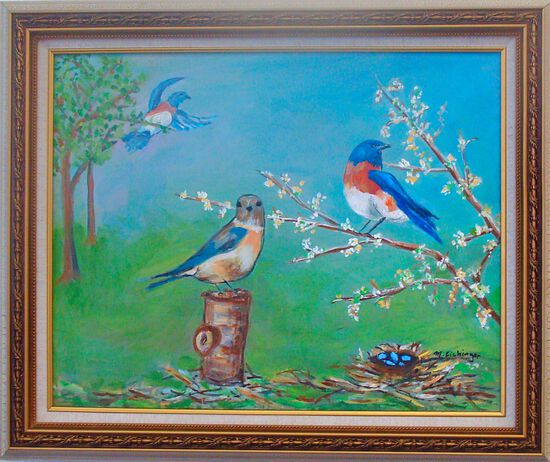
Western Bluebirds / acrylic on canvas /  20.5 x 24.5/ framed / $375

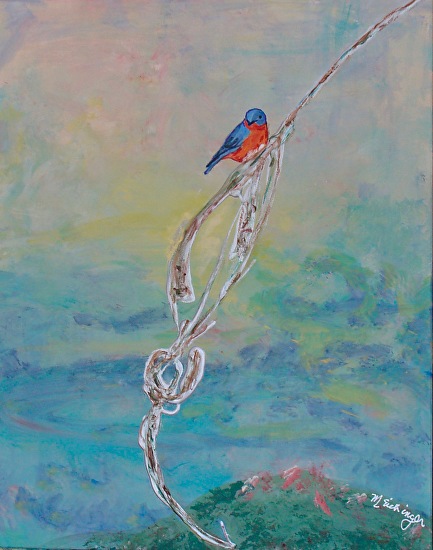
Personal Space / acrylic on deep canvas  /16” by 20” /  $299

#Seasons with COVID

The streets were covered with snow when Portlanders sequestered during the first week of March last year. I remember walking through the neighborhood, enjoying the silence and softness of blanketed lawns where daffodils pushed through the darkness in search of sunlight. The snow melted a few weeks later and all at once, the tulips burst into bloom. Most of us thought the COVID scare would be over by summer, never imagining it would last more than a year.

By the end of April, gardeners were out in force carrying heavy bags of fertilizer and purchasing trays of young plants to add cheer to their homes and to glorify the streets to remind us of what is good. “Life continues,” we said, “no matter what happens, we have to stay in touch with family, eat, and make the best of it. We’ll plant gardens and be okay.

Replanting the Garden

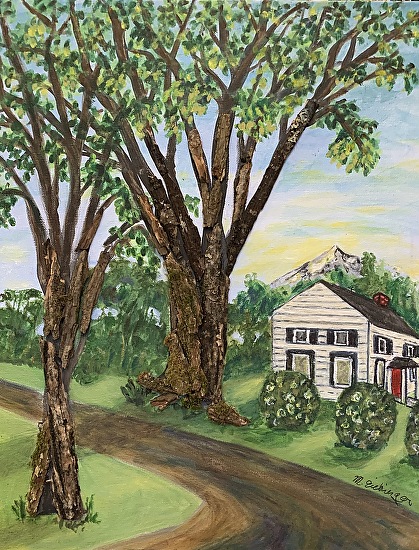
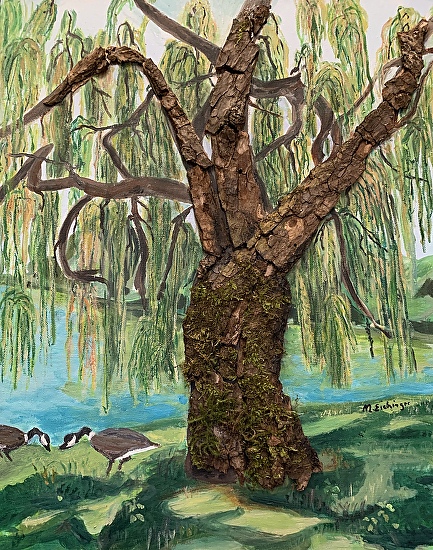
I took walks in the woods, enjoying the soft yellow-green colors of spring. The path by my house and the arboretum were favorite places to visit early in the morning before they became crowded with hikers and joggers. As I wandered through narrow trails unable to look at treetops without tripping, I inspected the trunks by my side and found beauty in their variety.

California Bay Laurel

I touched their bark, noticing some that were rough and others smooth, some hard as stone while others were spongy.

PawPaw fruit

I saw that PawPaw trees held their outer bark on tight like the skin on a body. The tree is home to insects that sapsuckers find by tapping their beaks in evenly spaced lines. Their fruit is a delicacy that feeds millions of people.

As spring turned into summer, children flew kits along with the COVID virus that kept spreading. Throughout America, hundreds of thousands of people marched in protest of George Floyd’s inhumane death. The clouds cried tears of sadness as men tried to protect loved ones. Children followed carrying hope for the future. Most Oregonians marched peacefully, yet there was much destruction. Many protesters didn’t wear masks. Covid spread.

Extremists turned Portland’s center-city into a disaster zone. A bronze sculpture of an elk was destroyed. Why that? Jobs were lost. Social distancing made shelters inadequate. Adjacent to smashed windows and boarded-up buildings, hundreds of tents were erected. Still, COVID continued. More tents appeared. More trash accumulated. More people died.

Amazon trucks tripled, flooding neighborhoods, yet traffic remained light because people worked from home. The air became cleaner, easier to breathe. With 6,000 fewer planes flying daily there days when the sky was crystal clear.

Elm Trees

On the surface, the city looked peaceful. Police records show shootings escalated, robberies increased, and domestic violence became rampant.

Over the summer, there were families that ventured to uncrowded beaches while others looked for shade to get away from the heat.

Then, towards the end of August, the West Coast burst into flame. It was difficult to breathe. People lost homes and cried through their masks. Generous souls made donations to help them survive. Nature showed us who was in control. Life is precious and must be cared for and valued. More people got COVID. More wore masks.

Fires in the Northwest

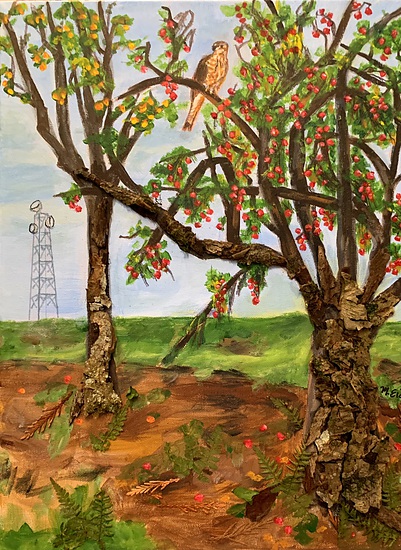
Yet, The Crabapples ripened and were picked for pies. No one goes hungry if they know how to live off the land. Squirrels worked at collecting sap-filled pine cones with seeds to put away for winter. They dropped them from high trees to land with a thud on our porch where they left a sticky mess. When did our trees get so big and falling cones loud enough to wake us up in the morning?

Despite the devastation, the weather began to cool and chestnuts started falling. On outings, I filled a bag with them to roast. They reminded me of my childhood when our turkey was stuffed with chestnut filling. Thanksgiving and Christmas were bitter-sweet holidays filled with longing. Some traveled despite warnings not to, and so COVID flourished. More died.

By then, leaves had changed colors and dropped from their branches. The deciduous trees displayed their bark more fully when they were bare. I loved examining the way their branches are in an assemblage of shapes. Walks became a treebark lover’s paradise.

In the Northwest, we are fortunate to have a variety of Evergreens that keep Oregon green. in winter their color is dark and the trees appear to be sleeping.

January became February, and it will shortly be March. One year after the start of sequestering, despite civil unrest, we have a new president and over 500,000 dead from COVID. Yet there is progress. Almost 14 percent of the US population has received at least one dose of vaccine. The Magnolia trees are budding and getting ready to bloom. There is renewed hope that our lives will be better by summer.

Magnolia Trees in Bloom

To see the entire COVID-19 series go to https://www.eichingerfineart.com/collections/142242

Feel free to share this blog if you find it an interesting accounting of the past year.

Art is always for sale, contact me at marilynne@eichingerfineart.com.

Scammers and Victims

You Decide
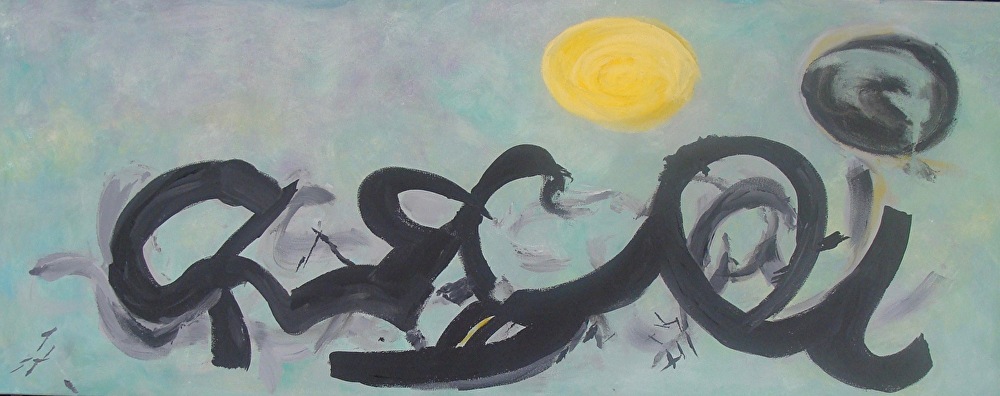
What is it? It could be a secret language, an emotional appeal, a work of beauty, a print or ugly art painted by someone famous or a by trained monkey. It could cost $10,000 or $15. Is it a fraud or the real thing?

Scammers & Victims

Last week I wrote about telephone scams. This week the conversation continues by delving into the type of person who excels at scamming with a focus on charismatic investment advisors, corporate swindlers, and religious leaders.

Though in the past, there certainly were snake oil salesmen who conned innocent people out of their money, today’s electronic technology moved fraudulent deceptions to an entirely new level that enable tricksters to reach broader audiences. As I mentioned in my previous newsletter, 95 million robocalls a day are made to reach a small number of gullible people. 

High among the list of scammers are charismatic leaders who get millions of people to empty their purses. Some are financial wizards who offer Ponzi schemes with promises of easy riches while others are preachers out to benefit unscrupulous ministries. And, there are the conniving ways of executives of large corporations that supposedly operate under the watchful eye of government regulators.

Con artists have been fooling the public for generations. In the late 18 and early 1900s, George Parker successfully sold the Brooklyn Bridge many times over, getting $50,000 for it at least once. Police removed several of victims when they tried erecting toll booths on the bridge. During his career he sold Madison Square Garden, The Metropolitan Museum of art, and the Statue of Liberty, setting up fake offices to handle real estate swindles targeting immigrants and tourists. He turned actor and dressed in Civil War attire when selling Grant’s Tomb. Convicted of fraud three times, he escaped once, was recaptured and sentenced to a life term in Sing Sing. His exploits gave rise to the phrase, “and if you believe that, I have a bridge to sell you.” 

What Parker had in common with other con artists was an ability to exploit a need to feel part of a group. He looked for people with knowledge-gaps and pretended he was able to help them. When techniques like this fail, scammers resort to intimidation or force as exemplified by shops that conduct endless sales and salesmen who push customers with fake time pressures.

In the early 2000s, Enron, under the leadership of Kenneth Lay (now deceased), inflated profits and concealed debt, fooling both regulators and investors with fake holdings and off-the-books accounting. After its stock peaked at $90.75 it plummeted to 26 cents a share causing shareholders to lose $74 billion in what at the time was the largest bankruptcy ever. Lay was considered a good guy who insisted the world needed equal opportunity, that smoking was bad, and that the African-American arts community deserved support. He knew what was best for you, how to negotiate conflicts among peers, and was admired widely.

Parker also liked drinking coffee from china cups, had an Enron plane repainted during a layover because he didn’t like the color, and spent thousands of dollars on antiquing trips and birthday parties when his company was tanking. Lay was featured on television going to church and carrying a bible. Most people in Houston thought they knew who he was, but by the end of his trial the jury uncovered the truth. His win-at-all-costs personality showed him to be imperious, devious, and disloyal, pushing his crimes onto the shoulders of colleagues.

Bernie Madoff’s empire came crashing down in 2008. The following year he pleaded guilty to engineering the biggest Ponzi scheme in history, losing $65 billion that included the life savings of close friends and family members. The 81-year-old, still in prison serving a 150-year sentence, recently petitioned for release due to kidney failure. His request is being considered.

Mr. Madoff was a swindler who conned investors to hand over their savings and falsely promised consistent profits in return. He is described as an affable, charismatic man who moved comfortably among power brokers on Wall Street and Washington. He had a penthouse apartment in Manhattan, shared in two private jets, and owned a yacht on the French Riviera. Madoff honed his image carefully and shunned one-on-one meetings with investors to make him more desirable to those seeking access. He was greedy and didn’t care whom he hurt to get what he wanted. 

Gregg McCrary, a former F.B.I. agent who constructs criminal behavioral profiles, said Madoff shared destructive traits typically seen in psychopaths who lie, manipulate, have feelings of grandiosity, are self-confident, and are callous towards their victims. He calls him a chameleon, good at “impression management,” a man who cast himself as a crusader protecting the interests of smaller investors. He wooed regulators to ignore what he was doing and told employees to adopt the mantra “KISS,” or “keep it simple, stupid.”

A great many mega-churches, pay-for-prayer calls, and televangelists are part of an underworld run by leaders who entice poor and ill people in desperate situations with promises of salvation, wealth, and healing. Known as “property preachers,” they link riches to religion and preach that health and prosperity are controlled by God. Charismatic preachers dress in suits, spout the bible, and urge devotees to send them “seed” pledges to demonstrate their faith. Followers are encouraged to contribute to the church before paying rent or utility bills. According to Christian religious scholar Michael Cooper,

“These personality cults-such as Jim Jones of the People’s Temple, David Koresh of the Branch Davidians, or David Berg of the Children of God/the Family-exhibit extraordinary influence over their followers. While these extreme examples resulted in abuse and death, others have exhibited a spiritual abuse couched in Christian language that appears legitimate for a while, but they are often exposed by disillusioned followers. In recent times, one may recall Jimmy Swaggert, Jim Bakker, Ted Haggard, Mark Driscoll, Bill Hybels, James MacDonald, and most recently, Jerry Falwell, Jr. as well-known examples of charismatic personalities within the evangelical world who held an extreme influence over followers, thus permitting their deviant behaviors and moral failures.”

They keep messages simple and provide followers with a way to make sense of sickness and healing. Claiming they are God-anointed figures, they promise that bequeaths made to the church will be repaid many times over with good fortune and healing. When donations don’t produce the desired results, followers are told that their faith is not strong enough, and that they need to contribute more. Kirbyjon H. Caldwell from Texas, Spiritual adviser to Presidents Bush and Obama, used his clout and influence to persuade people to invest $3.5 million in bogus bonds issued by the former Republic of China. The $900,000 he received before being sent to six years in prison, helped maintain his lifestyle and pay down credit cars and mortgages. 

Mega-churches collect millions of dollars that make the salaries of their senior ministers rival that of Wall Street executives, while most of their employees barely earn a living wage. They enjoy tax-exempt status and federal subsidies that are supposed to go to community outreach, but are not required to share how much of what they bring in goes to charitable causes. Collections support private jets, expensive cars, and numerous mansions. Followers turn their backs to their wealth since it is seen as proof that God shined on the preacher.

Charismatic scammers, whether financial or religious, are irresistible, hypnotic, exude confidence, and have a force of personality that draws people to them. They are strong communicators who know how to mobilize followers to view them as gifted, heroic and god-like. They are organizers who train banks of telephone callers, volunteers, and salespeople to push rattletrap messages and make pitches that bring in the gold.

Larger than life figures who produce positive results do exist. A good example is Bill Gates, Microsoft’s founder. But when manipulative, narcissistic men like Adolf Hitler take center stage, a dark self-focused side emerges. When errors in judgement, unethical behavior and self-serving actions go unchallenged due to fear of retribution by the leader, followers disengage and withdraw rather than act. Their timidity makes the leader stronger and enables him or her to become more wicked and corrupt.

The Federal Trade Commission says that people are less likely to lose money if they’ve heard about the scam beforehand. They suggest spreading the word when you read or hear about fraudulent acts or were victimized by one. Social media sites and television make it difficult to tell honest promotions from deceptive ones. We can help one another by sharing what we know, and by being dubious about investments and pitches that appeal to emotions and seem too good to be true.

References:

Lisa, a. (2019) 30 of the biggest scams in modern history. Stacker. retrieved from https://stacker.com/stories/2525/30-biggest-scams-modern-history

Swartz. M. (2006) The Three Faces of Ken Lay. New york Times. retrieved from https://www.nytimes.com/2006/05/21/opinion/21swartz.html

Crswell and Thomas Jr. (2009) The Talented Mr. Madoff. The New York Times. retrieved from https://www.nytimes.com/2009/01/25/business/25bernie.html

MacBeth, C. 2020 Are mega churches just businesses masquerading as worship? News Daily. retrieved from https://filmdaily.co/news/mega-churches/

Brown, D. (2020)How Megachurches Blurr Religion and Riches. How Stuff Works. retrieved from https://people.howstuffworks.com/do-megachurches-preach-that-prayer-will-make-rich.htm

Church Law Website (2020) Political Activities by Churches: What’s Permitted and What’s Prohibited. Church Law Center of California. retrieved fromhttps://www.churchlawcenter.com/church-law/political-activities-by-churches-whats-permitted-and-whats-prohibited/

Cooper,M. (2020) the Dangers of Charismatic Leadership. Ephesiology. Retrieved from https://ephesiology.com/blog-post/the-dangers-of-charismatic-leadership/

Audrey M. (2018) Battling the Dark Side Of Charisma. Forbes. retrieved from https://www.forbes.com/sites/audreymurrell/2018/06/04/battling-th

Baker. V. (2019)The preachers getting rich from poor Americans. BBC News. retrieved from https://www.bbc.com/news/stories-47675301

_____________________________________________________________________

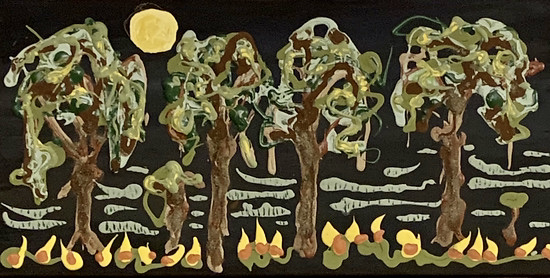
Art is always for sale. You Decide – acrylic on canvas painting, 16” x 40” x 2” / $ 385.  Painted by a real live person.For information contact me at marilynne@eichingerfineart.com. 

Scammers Be Gone

COMING HOME
Home is supposed to be a peaceful retreat. Unfortunately it is marred by telephone scammers who call and interrupt my activities during the day and into the night.

Scammers Be Gone

Telephone Scammers! I’m tired of them. Robocalls and phone banks of hustlers out to steal money or personal information have made Americans reluctant to answer their phones. This is dangerous, for there are occasions when incoming calls are important.

Hearing that my social security number was compromised or that a large international purchase was made from my Amazon account is getting tiring. Threatening calls come in from the IRS and technicians who want to fix my computer. An extended appliance warranty and a lottery sweepstake award almost trapped me. Thankfully, I realized what was happening before the hustlers got my money, but that didn’t stop their calls from resuming.

Robocalls take pay-to-pray formats to a new level. “Hello, this is the Hope and Prayer Center Ministry calling today to see if you need an urgent prayer. If you would like to have someone from our center pray for you, please press one. If you no longer want to hear from us, please press three.” If you press one, as many Americans do, you will receive a second automated call asking for a donation to the Hope and Prayer Center Ministry. Though not stating how much you will need to donate, it will forward you to a service in charge of collecting payments.

The government anticipates scammers will steal over $2 billion in 2021. Over 95 million robocalls will be initiated daily with the use of advanced autodialing technology in order to reach the few who fall prey to their con. Robocalls are commonly spoofed. That means they are initiated internationally, but the call that comes to your home has a local area code. Legislation introduced in 2019 by bi-partisan members of congress is helping FCC go after companies that spoof.

The government’s warning list of scams is robust. They center on banking, government grants, and pyramid schemes. There are ticket hoaxes, census-related fraud, investment and charity rackets, moving company cons, and Ponzi schemes. Extortionists push time-share vacations homes and supplemental healthcare programs. Since the start of the pandemic, coronavirus ripoffs were added to the list of false rumors and price gouging. Sorry, but you cannot “jump the vaccine line” in exchange for payment. Rackets occur online, through the mail, and on the phone where victims are pushed for an immediate decision. Hardly anyone with a phone is immune from them.

Taking advantage of the public is not new. I admit to fooling an elderly woman when I was twelve. One summer afternoon my cousin and I thought it would be fun to pick a random phone number and tell the person answering the phone that he or she won a prize. Our first call was answered by a sweet lady who was so happy to her of her award that we were horrified by our prank. The woman probably knew we were a couple of kids playing a prank, but she went along with the ruse. Though we didn’t want money or ask anything from the woman, we made an award that was bound to make her feel bad when nothing was received. The guilt my cousin and I felt kept us from making a second call.

For those who don’t know how scammers communicate with unwary victims, I’ve put together a few scripts.

SCAM #1 – Sweepstakes

Scammer: Congratulations, Ms. Smith. I’m pleased to tell you that you won $250,000 from Publisher’s Clearing House Sweepstakes.

Winner: I did? I can’t believe it. I’ve entered for years.

Scammer: Your persistence paid off. What will you do with the money?

Winner: This is so sudden, I’m not sure. Pay some bills and help my family, I guess. I always wanted to take one of those river cruises. But, wait a minute. How do I know this isn’t a scam? I’ll have to pay to get my money, won’t I?

Scammer: “Absolutely not. You don’t have to pay a thing. Here is a number you can call to check that we are legitimate. xxx-xxx-xxxx. (The phone is answered by someone in the scammer’s group. If the winner does not call the scammer back he will continue calling over the following months, reinforcing that the person is a winner and should claim the award before it goes away.)

Winner: This is very exciting. How do I get my check?

Scammer: “We’ll come to your house with balloons and flowers and hand you a large check that we use in publicity. You don’t mind if we take photos, do you? If you prefer to keep your award quiet we can honor your wish as well.

Winner: I’d prefer not to have any fanfare. I don’t want the neighborhood knowing I won a $250,000.

Scammer: That’s understandable. When is a good time to come by?

Winner: I’ll ask my husband when he’ll be home.

Scammer: No, don’t do that. This is for you alone. Let him be surprised when he discovers the amount in your bank account. Does Thursday next week work?

Winner: I’m free that day.

Scammer: Because $250,000 is such a large amount, we’ll accompany you to the bank to make sure the deposit goes through. After it is deposited, we do ask for a small amount ($8,000) to cover expenses for getting the money to you. 

(The check is put on hold for four days before the bank contacts the winner to say it is fake. The winner remains responsible for funds paid to the scammer. When a Michigan Representative was recently asked to look into a scam a constituent’s elderly father fell for, the Rep’s answer was, “More than likely these are legitimate businesses and we are not interested in stopping good businesses.”)

Scam #2 – Social Security

Robocaller: Hello. This is a message from the Social Security office. Someone is using your social security number for suspicious activity. Call xxx-xxx-xxxx immediately immediately to speak to an agent in our office or you could be subject to arrest. Have the last four digits of you social security number ready.

SS Card holder follows through and is connected to a live person

Scammer: Your name please, and the last four digits of your Social Security number. Due to suspicious activity we are suspending your social security number and issuing a new card.

Card Holder: What? How can that be? I’ve had this card all my life and I’m going on 75.

Scammer: Congratulations for a long life, dear. Too bad this had to happen to you. Unfortunately identity theft is rampant and someone got ahold of your number. It is a good thing we caught the fraud, so you are not implicated. But, to be sure that I’m talking to the right person, please read off your full social security number.

Card Holder: Just a minute, I have to get it from my wallet.

Scammer: Now that I know it is you, I need to verify your address. A new card will cost $45. Will you be using VISA, Mastercard or American Express. Let me know when you are ready. I’ll read the number back.


Obtaining a credit card, social security number and address made the scammer’s call successful. It is good to remember that neither the social security office or IRS communicate through the phone.

To eliminate scams you might consider getting a robocall blocker if you haven’t already done so. Other suggestions are:

a) Never let a recorded stranger talk you into pressing 1 or to press 2, the do-not-call list. Don’t press anything. 

b) Never provide legal businesses with written consent to contact you by phone.

c) Place your number on the FTC’s do-not-Call list and check out the FCC guide to robocalls.

d) Slow things down. Callers try to create a sense of urgency. Ask questions and don’t get rushed into a bad situation. 

e) Spot check and look up the organization that’s calling you and get in touch directly. 

f) Never send a payment on the spot.

February is a time to beware of romance scammers who build relationships slowly before submitting an urgent request for money. In 2019 over $200 million was lost to romance scams. Loneliness during the pandemic has made many people targets of their devious ways.

Have you been scammed? Though it may be embarrassing to admit to being a victim of fraud, your story will help others avoid falling into the same trap. Do share your experience on my blog site at eichingerfineart.com/blog

This method of extortion raises additional questions I plan to address in my next newsletter?

  1. Are more people out to defraud the public than ever before or does it just feel that way? Millions of people, especially the elderly, fall pray to a variety of devious schemes. Since they are bad for society, why do we let it continue? Why allow credit card and payday loan companies to charge usury fees for services that put millions of people so deeply in debt they will never escape from it.
  2. What makes people gullible to deception and who is most likely to become a victim of fraud?

Tune in next week to find out.

References

USAgov. site about Scams: https://www.usa.gov/common-scams-frauds

Bote, Joshua. (2019) Fraud, private jets and Lamborghini: 10 Televnangelists who have faced controversy. USA Today. retrieved from https://www.usatoday.com/story/news/nation/2019/06/17/joel-osteen-kenneth-copeland-10-televangelists-trouble/1471926001/

website ( 2020) How to Deal with Hpe and Prayer center Ministry robocall. Do Not Pay. retrieved from https://donotpay.com/learn/hope-and-prayer-center-ministry-robocall/

Collins,G (2021) Arise, Robocall Resistance! New York Times. retrieved from

https://www.nytimes.com/2021/02/10/opinion/robocalls-telemarketing.html?campaign_id=39&emc=edit_ty_20210211&instance_id=27002&nl=opinion-today&regi_id=99366442&segment_id=51444&te=1&user_id=12c7cdc64c72bcde46f22458fd64bd0c

web site ( 2021) Scam Spotter. retrieved from https://www.scamspotter.org/?gclid=Cj0KCQiAyJOBBhDCARIsAJG2h5cnuuf6MVPjGbxy3pg-KsGe4hEyfhOFqKbbvwxow8x9nVyGsvHDpvgaAo_GEALw_wcB

Art is always for sale. Coming home is 16x 20 acrylic painting in silver frame available for $325. To make arrangements, contact me at marilynne@eichingerfineart.com.