I Thought I Knew You

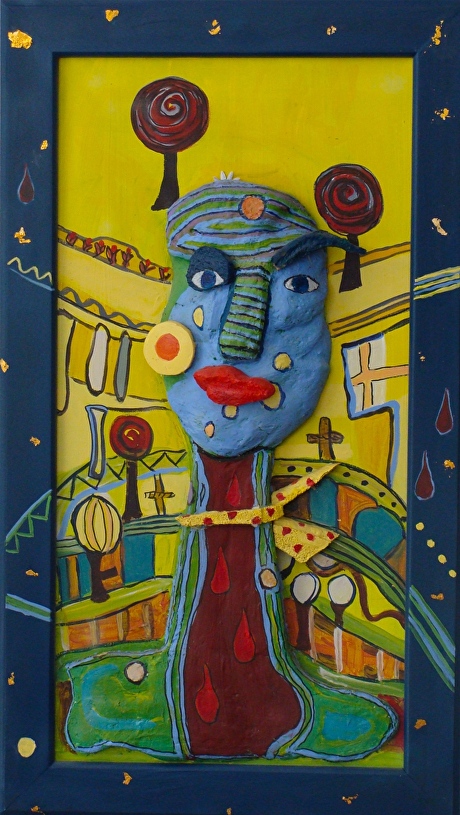
I THOUGHT I KNEW YOU

Most of us don’t know what is going on in our family’s or neighbor’s heads, let alone the country. You might be pleasantly surprised they’re engaged in many activities aimed at improving lives.

How can you be happy if you perceive your country’s falling apart? After talking to people on the left and right sides of the political spectrum, I realized their main area of agreement is that the United States is on a downward spiral. An immigrant from Ukraine told me that she came here to live in a democracy that followed the rule of law. Increased lawlessness, homelessness, and poverty make her feel like she moved to a third-world country. With the media dwelling on tragedy, promoting falsehoods, and taking pleasure in reporting about backbiting politicians, the woman no longer knows what to believe. An uncomfortable rumble resides in her chest that doesn’t subside.

I agree that our political system has lost its way, but also believe many individuals haven’t. Though congress and oil magnates may not be combating global warming, private citizens are. Behind closed doors, in homes, and office buildings a great many innovations are being worked on to right society’s wrongs.

For example, Hydrogen Fuel Cell technology is on a fast track to revolutionizing transportation. Hydrogen, the simplest and most abundant element in the universe and a major component of water, oil, natural gas, and living matter, is in great abundance. For years, engineers and scientists have been searching for a way to release the energy in hydrogen to power machines. 

Hydrogen is a fuel that when consumed in a fuel cell produces only water. Turned into electricity it is clean, highly efficient, and has low power loss. Honda began selling Clarity, its fuel cell car, in 2021. Toyota put the Mirai Fuel Cell vehicle on the road this year. General Motors is expanding the market for hydrogen fuel cells beyond vehicles. They are designing emissions-free generators to power large commercial buildings. Manufacturers of autos, busses, trucks, trains, ships and planes have fuel cell designs in the planning.

How wonderful it will be when we can breathe again without ingesting carbon fuels. I’m excited by this technology and what it will do for the planet.

But, fuel cells are only one of many innovations. Biotechnology has spurred a revolution that will impact our lives the most. Watson’s discovery of the Double helix, mapping the human genome, and now CRISPR, a tool to edit genes adapted from a naturally occurring genome editing system in bacteria gave scientists tools for a better understanding of biology. Their labs are opening possibilities in health care and agriculture never before imagined.

Because of CRISPR, scientists developed a vaccine against COVID-19 in one year rather than the twenty years it took for a polio vaccine or 200 years for the one to irradiate smallpox. It won’t be long before we see a vaccine targeted against the Omicron variant.

CRISPER is being tested as a means of curing cancer, sickle cell anemia, and other chronic diseases. It might even be possible to resurrect extinct species. CRISPER benefits the agriculture community by improving crops to be more tolerant to drought, heat, cold, and pests. It is being used to develop crops with a longer shelf life and greater nutritional value.

Excited? There’s more. Agroecology, the science of managing farms as ecosystems, is a burgeoning field. Scientists study ways to build and maintain healthy soil, manage water wisely, minimize air, water, and climate pollution, and promote biodiversity. The emphasis is away from large ag to locally grown produce eliminating long supply chains.

Regenerative farming is the common term used for implementing sustainable methods to grow and harvest produce. Farms are redesigned to enhance biodiversity and eliminate pesticides and herbicides with plants that protect and nourish soils. Regenerative farming is climate-specific agriculture in that it varies depending on threats like droughts, flooding, or rising temperatures. Soil, weed, and pest management are integrated. 

An example of how symbiotic relationships enhance agriculture is in three sisters planting, a practice used by indigenous communities for generations. Corn, beans, and squash seeds planted together help one another thrive. Corn provides tall stalks for beans to climb, wrap around, and stabilize the stalk during heavy winds. The beans have rhizobia that take nitrogen from the air and convert it into forms absorbed by plant roots. Squash plants spread along the ground large leaves that provide shade, retain soil moisture and prevent weeds. A diet of corn, beans, and the squash provides a complete and balanced nutritional meal.

There is so much I could write about–artificial intelligence, robotics, 3D printing, virtual reality, and brain implants that will enable paralytics to operate a smartphone with their mind rather than thumbs. Individual technologies are combined in transformative ways to affect healthcare, supply chains, utilities, and consumer trust. Quantum computing and nanotechnology are leading to small, light, self-contained devices using little energy. We’ll have to save this for another day. 


Suffice it to say, change is occurring at great speed despite so many people languishing hopelessly in their homes. It is worth getting out of armchairs to look past politicians and media pundits and learn what’s going on in the garages, gardens, and labs of innovators. Perhaps you thought you knew your neighbors–check it out. You will find that creativity abounds where you least expect it.

_______________________________________________

Do comment on my blog site at www.eichingerfineart.com/blog. What exciting things do you see happening that people aren’t aware of but might enjoy taking time to explore. 


REFERENCES:

CRISPER EXPLAINED

CRISPER stands for Clustered Regularly Interspaced Short Palindromic Repeats.

Palindromes are words that can be read the same way backwards and forwards. They are common in DNA, serving as backups for damage to our genetic code. Some are common in cancer mutations. Crisper allows the information to be inserted in the middle of a DNA sequence. In the case of COVID, The insertion, or spacer, as its called, contains the genetic code of viruses that have invaded in the past and developed immunization

Website: Fuel Cells. Hydrogen and Fuel Cell Technologies Office. Energy.gov. retrieved from FUEL

Tabb, M.& Gawrylewski, A. & DelVIscio,J. (2021) What is CRISPR, and Why is it so Important. Scientific American, retrieved from CRISPER

Colarossi, N. (2020) How long it took to develop 12 other vaccines in history. Insider. retrieved from VACCINES

Website (2021) What is Sustainable Agriculture? Union of Concerned scientists. retrieved from AGRICULTURE

Eight emerging technologies and six convergence themes you need to know about. EmergingTechnology . retrieved from TECHNOLOGIES

Art is always for sale: Contact me at Marilynne@eichingerfienart.com.

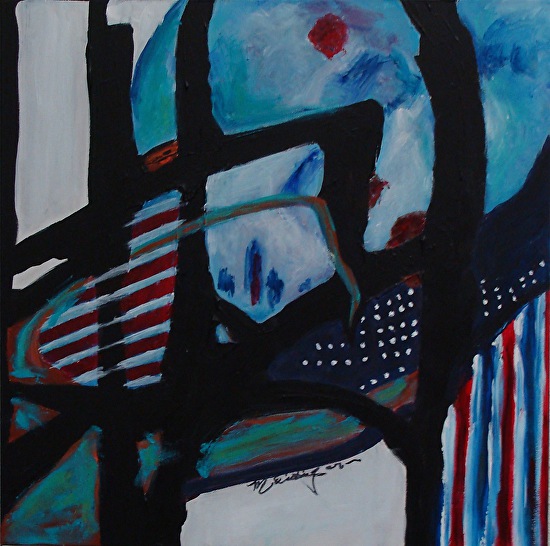
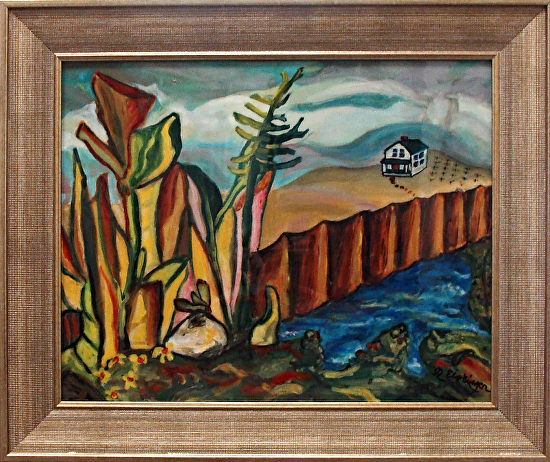
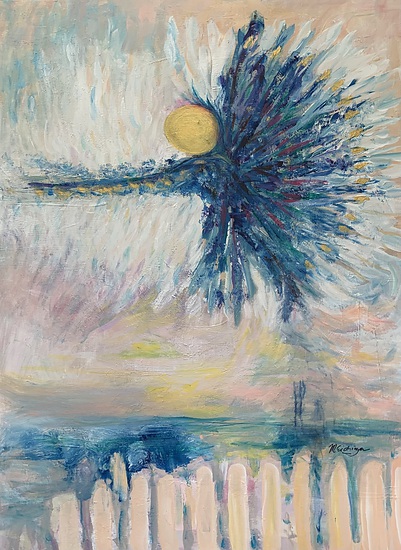
I THOUGHT I KNEW YOU is a 3D painting / 36″ by 18″/ mixed media / framed/ $ 399.

_____________________________________________________________________________________

Lady With a Cause

It’s no secret that I write my blogs with a cause in mind. I hope to stimulate thought about issues rarely discussed.  The research I do pries my eyes open so I can see the world more clearly.

Last week I wrote about the moment my son discovered Jolly St. Nicolas didn’t arrive with a bag of toys on a sleigh led by Rudolf. I received a thoughtful response you might enjoy.

“I want to thank you for your excellent work in maintaining your blog and sharing your wisdom. I always look forward to seeing your art and well-researched essays promoting the wonder of discovery.

“Regarding Santa, I’d like to share my discovery experience. At the time my wiser and more worldly pals began to sow seeds of doubt about Santa, I considered him to be one of a group of magical characters that adults took delight in charming children with. Included in that group were the tooth fairy, easter bunny, Jesus, God, Paul Bunyan, and a host of others. While I thought it was good fun being immersed in the fantasy of these characters.

“I felt a fulfilling sense of coming of age as I discovered the truth behind the secrets adults kept from children. Of the aforementioned group, I thought Santa was the most impressive. He had the best marketing hype, and even when his existence became suspect, I was hesitant to make disparaging comments when the holiday season was upon us. My take away from the well-intentioned, elaborate hoax was that I had to discover my own truth with a questioning curiosity. 

“Overall, the experience served me well, as it taught me to rely on self-discovery and not too heavy on the conclusions of others. Thank you for sharing your life of discovery.”

Thank you, Al, and all of you who read my blog. Hearing from you is wonderful. I wish you all a very Merry Christmas and Happy New Year.

Is Democracy What You Want

Fractured America

  Fractured America 

The events of January 6th brought the realization that half the people in the country don’t believe in or want democracy. They are willing to throw majority rule away to armed mobs. I wonder if these people know what the consequences of their actions will do to the country?  Perhaps their belief in democracy dissolved many years ago. 

The line drawn between political and economic systems is blurry. Fifty years ago, an economics professor at Boston University lectured that the United States was headed towards a fascist rule. He said that as corporations become more powerful, capitalism will give way to a dictatorship benefiting business, industry, and the wealthy.  I fear his prediction rings true.

With varying ways to organize an economy, we put capitalism together with democracy and have Fascism and dictatorship lurking in its right-wing. The Netherlands chose Socialism and democracy with Communism and dictatorship as its left-wing. I ask myself what the right combination is for a country of our size and cultural complexity?

Economic Systems

  1.   Socialism advocates ownership and control of the means of production and distribution, capital, and land in the hands of the community. It is under a centralized government that is usually democratic but sometimes autocratic.  In its purest form, the system is meant to empower the working class with services provided by the government and paid for by taxes.

1a) Communism, the left-wing movement within socialism favors a classless society based on property held in common. Ownership may be ascribed to the community as a whole or the state. A command economy is when the state controls planning and redistributing resources. In communist nations like North Korea, the state owns and operates industry on behalf of the people. There are capitalist countries that allow communes to operate within their borders. An Israeli kibbutz and a communal housing unit are examples of groups that share ownership make operational decisions. 

2) In a market economic system like capitalism, private individuals own and control property in accord with self-centered interests. Proponents say that the interest of society is best served by having free-markets set prices. Capitalism’s essential feature, to make a profit, over time concentrates wealth and promotes the growth of large corporations causing economic inequality. Increased government action and control are needed to bring the economy in balance.

2a) Fascism, a right-wing movement within capitalism, is led by powerful dictators who forcibly suppressed opposition and criticism. It is a command economy with centralized power. The leader’s regime sets all parameters for industry and  commerce, often emphasizing aggressive nationalism and racism. Hitler’s Germany, Mussolini’s Italy, and Franco’s Spain are well-known examples. Parents also run fascist households, especially when their children are young. They tell them when to come home, what to eat, and when to go to bed. These authoritarian, hierarchical governments may last well into the child’s teen years. The federal government expects parents to be benevolent dictators acting in the best interest of their children. 

3) Traditional economic systems are the most ancient types of economies. They tend to be in rural, second, or third-world countries closely tied to the land. The barter system, where goods and services are traded, was prevalent in primitive societies. It is, making a comeback in the United States as it tends to do in times of economic hardship. A barter is when two or more parties, individuals, businesses, or nations, make an even exchange without using money. You can exchange a piece of art for braces as my husband did when our son was in his teens.

Political systems

Capitalist and Socialist countries tend towards democratic political systems. Fascist and Communist countries tend to be ruled by dictators. The advantage of a command economy by dictators, in theory, is that the government can develop a healthy supply of resources, create jobs, reward people with affordable prices, and move quickly.  In reality, that doesn’t tend to happen for most dictators t focus on acquiring wealth through their most valuable resources like oil. 

1) In  true democracies, leaders are chosen by citizen voters who retain ultimate power.  Towns do still exist within the U.S. giving all adult citizens a voting voice on governing issues. For instance, New England Town meetings are public forums that enable residents to share opinions, deliberate, and vote on public issues. Larger municipalities typically have elected representatives instead of direct participation. Of the few places in the world operating by consensus, Guernsey in the Channel Islands is one. The Organization for Security and Co-operation in Europe (OSCE) operates by consensus rule as well. 

2)   Dictatorships give one individual an absolute right to govern as he or she sees fit. Hitler is an example of an elected official who took control to remain in imperious, overbearing power for years.  Today, monarchies like the one in England are primarily ceremonial.  Countries where the monarch still maintains absolute power are found in Saudi Arabia, Vatican City, and Brunei, among others. The United Arab Emirates is a federation of individual monarchies.

3)  Authoritarian capitalism, is a capitalist market economy with an authoritarian government.  Examples include Hungary under Viktor Orban, Russian under Vladimir Putin, Singapore under Lee Kuan Yew, Augusto Pinochet in Chile, and Batista in Cuba. China also operates a free market economy within an authoritarian regime. Communist revolutions, like the one in Cuba, often come about because capitalist dictators swing the pendulum too far to the right.  Regulations, government contracts, and protectionist policies around business, at first increase the dictator’s influence. Eventually, citizens become tired of the self-centered system and demand accountability. 

The United States has not been a true democracy run by majority rule for a long time. It is guided by a small number of financial, political, and corporate elites. Voting is corrupted by gerrymandered districts and an electoral college as an intermediary to direct voting.  A better description of our country’s political system is to define it as a capitalist dictatorship with powerful businesses pulling the purse strings.

Is this what you want?

Reference:(2021) 

Ruthenberg, J. Letter: Democracy or Capitalist Dictatorship. Times Union. retrieved from https://www.timesunion.com/opinion/article/Letter-a-capitalist-dictatorship-16246400.php 

Agarwal, P. (2021) Economic System. Intelligent Economist. retrieved from https://www.intelligenteconomist.com/economic-systems/

______________________________

Do comment on my blog site below.

Art is always for sale. Contact me at marilynne@eichingerfineart.com

Fractured America is a 24” x 24”, acrylic on deep canvas painting. Available: $425.

______________________

Uncertainty

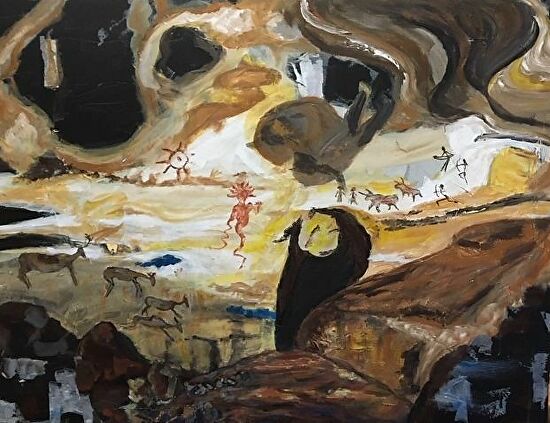
        The Cave

Imagine the number of changes in the world since caveman days. Often accompanied by war, famine, and cruelty, they weren’t always welcome.

Living with Uncertainty This week, I passed the following quote posted outside a yoga studio: “Life is not about answers. It is learning to live in the middle of complete uncertainty and doing it gracefully.” It was written by Swami Chetunananda, a 2021 Lifetime Achievement Recipient for his interfaith work. The Swami is a well-published, American, spiritual leader who from college on devoted his life to creating positive change in the world. 

I went to his website to learn more. He writes that we are in the world to grow so that we can express the possibility that exists within us. The path to get there is a spiritual practice based on meditation, one that releases tensions and expands awareness. Controlling the flow of your breath enables energy to expand in your body creating a desire and capacity to give back in service. By dissolving yourself in deep breathing, you become liberated of problems, waves of anger, and petty grievances. It frees you from delusions about what life is. He preaches that the freedom obtained through this type of practice brings happiness and unimaginable possibility. 

The Swami speaks of other things I have a harder time accepting. And, though I am not one of the Chetunananda’s followers, I do adhere to some of his ideas. I practice aTranscendental Meditation and have been doing so for forty years. \

After hearing health professionals and politicians trying to guide us through mutating viruses and listening to scientists discuss likely disasters to come from rising temperatures, my belief that we have to learn to live with uncertainty is reinforced. Constant change is inevitable. It always has been, though many of us wish the world was more stable. We attempt to add consistency to our lives and resist transitions that might make us think differently. Living with uncertainty and being graceful about it, is not easy.

It’s why so many follow religious or political leaders who claim to have all the answers. Sorting through reams of information and continuously readjusting behavior to meet evolving situations is exhausting. Since it is easier to have someone do the work and interpret for us, we blindly follow charismatic speakers. 

Unfortunately, too many of them tell followers that their way is the only way, the right way.  Those who don’t agree are labeled traitors and deemed bad. All-knowing influencers can inflame crowds to make them angry and willing to hurt those with differing opinions. Yet, having violent emotions is neither good for the perpetrator nor the target of their displeasure. They’re the stuff from which ulcers are made and they bring down cultures unwilling to compromise and change.

There is another way forward that is less destructive. To live with equanimity requires a person to be centered so new information flows calmly through body and mind like a soft breeze. As it swirls around and connects with the old, it evolves and opens your mind to changing ideas without experiencing angst. You gain the ability to view what is happening through the eyes of hundreds of thousands of people rather than just your own. It builds a strong center that helps move you gracefully in an uncertain world.

Do share how you live with uncertainty in my comment section below

Art is always for sale. Contact me for information at marilynne@eichingerfineart.com. The Cave / 30” x 40”/ acrylic painting on canvas/ $699.

Resources:

Website, (2021)  Swami Chetamamamda. Open to an Unimaginable Possibility. retrieved from http://chetanananda.org/teachings/

Happy Thanksgiving—Happy Brain

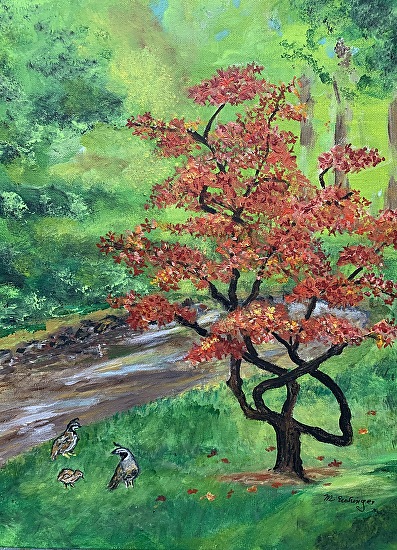
Oriental Maple

Thirty-five years ago I planted an oriental maple that, on the way to my front door, greets with lacy red foliage. Walking past, I am filled with gratitude. 

Happy Thanksgiving, Happy Brain

A few weeks ago I wrote about how dopamine in the brain is stimulated to provide feelings of joy. One way to release it is to become a workaholic and act dishonestly to get money and further selfish interests. But, there are other, more positive, ways as well. Practices like generosity and gratitude also provide dopamine jolts.

Thanksgiving is a time we are reminded of why it is good to be alive. By joining with family and friends, shopping for Black Friday sales, and remembering the country’s Pilgrim heritage, we flush our brains with serotonin and bring out feelings of well-being. We are all immigrants to this land–even First Nations.

By thinking positive, grateful thoughts, the prefrontal cortex, the area of the brain linked to learning and decision making, is stimulated. We feel good and even better when our thoughts are expressed verbally. We become healthier and happier and more likely to spread positivity to those we work, live, and play with.

Since retail stores are having Black Friday sales weeks before the Friday after Thanksgiving, I don’t see why we can’t make New Year’s resolutions months before January 1st. Resolving to start practicing gratitude will lead to greater emotional intelligence. It will strengthen your brain’s neural circuitry so it is easier to notice the beauty of the land, water, and sky. It will help you appreciate the many people who are good.

I am grateful for my family, friends, the trees, rock formations, and starry nights. I love thunderstorms and pouring rain that is over as fast as it starts. I am happy to be alive, to have a partner I love, and am able to spend my retirement years writing and painting. . . and so much more.

Have a Happy Thanksgiving, Marilynne

Please share what you are grateful for below

Oriental Maple is one of thirty paintings made during the pandemic. You can see them on my art website, www. eichingerfineart.com under COVID series.

Reverences:

Wong, K. & Brown,J. (2017) How Gratitude Changes You and Your Brain. Berkely Ed. retrieved from Berkely

Lechner, T. (2019) The Neuroscience Behind Gratitude” How Does Cultivating Appreciation Affect your Brain. Chopra. retrieved from Gratitude

Despair


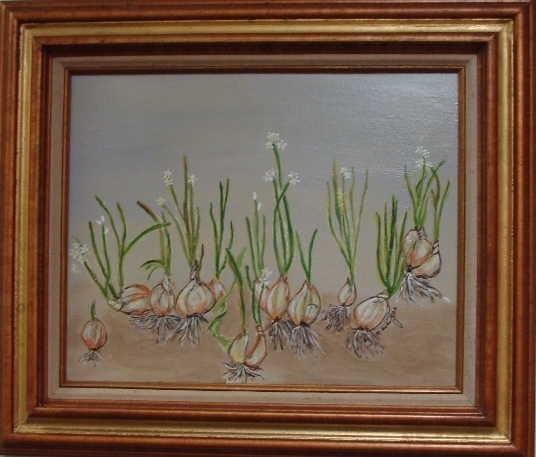
ONIONS 
Onions create tears when pealed, and flowers when planted

At the start of the week, I finished reading There, There by Tommy Orange who wrote about the plight of urban Native Americans. It was one of the most hopeless books I read, showing what alcohol, drugs, guns, and displacement have done to First Americans. Orange’s book was recognized as one of the New York Times’ 10 best books of the Year in 2019.

On November 11th, I took my fiancé of 28 years, to a string quartet concert honoring veterans. They played a newly commissioned piece by Kenji Bunch followed by a 1970 selection called Black Angels —Thirteen images from the dark land by George Crumb. Both works were discordant, with voices, instruments, bongs, and tuned water glasses used to replicate planes dive-bombing, explosions, insects swarming, and confusion. When my head nodded in the warm room a bang brought me back to the reality of war. The author considers the piece to be an allegory of God vs the Devil. The piece ends as did the book, with the Devil winning. 

Between the two events was grumbling from family, neighbors, and the news, hitting my senses from every angle: Democrats and Republicans are divided 50-50 in North Carolina, yet gerrymandering sets the stage for Republicans to win elections by 70 percent over the next ten years. Not fair!  I want freedom not get vaccinated or wear a mask in public even if my presence makes other people sick. Not fair! Carrying a gun in public is a right even though 115, 551 are shot with 34,566 die of their wounds each year.  Not Fair!  The right for everyone to earn a family wage. Not fair!

Critical Race Theory, something few can explain, shouldn’t be taught in school. (It acknowledges how institutionalized racism perpetuates an unequal caste system.) Not fair!  Taxes are too high and should be lowered for everyone. (In 2018 after Trump’s tax cuts, billionaires paid an average of 23% in taxes, while middle-income people pay 24.2%. The top 1 percent also gained through 30 Tax shelters.) Not fair! We’re becoming a socialist country! Not fair.  We’re becoming a Fascist country. Not fair!  We’re becoming a dictatorship instead of a democracy. Not fair! The right to choose? Not fair! Life for the fetus no matter the circumstance. Not fair! Not fair! Not Fair!

I cover my ears to the whir of leaf blowers through dinner hour.  I cover my eyes to the man who gave me the finger when he drove past because I was driving too slow, only ten miles above the speed limit.

What is fair? Is it fair to keep supporting those who are ill from drug addiction and alcohol abuse not wanting to get better? Is it fair to let buildings get defaced, cars stripped, and people pee in public? Is it fair to deny the poor a free community college education when statistics show that those without a degree are the most despondent and likely to commit suicide? That those who can’t find employment despair. Not Fair! Americans without bachelor’s degrees have watched themselves become ever less valued in our economy.

I love the word cacophony. It rolls around my mouth and brings images of noise and discord.  What I observe of our current society is a cacophony of noise and images reminding me of an orchestra tuning up. Each musician is out for him or herself.

The wonderful thing about orchestra tuning is that the players will come together under the direction of inspired conductor and make harmonious sounds to uplift the soul. The act coming together is what must be accomplished by our nation as well. 

Endings like Tommy Orange and George Crum suggest are not inevitable. All is not hopeless. But, we do need to elect leaders who think of society, and are impervious to bribes from lobbyists. We need citizens willing to compromise and harmonize their beliefs in a manner that is respectful of differences. And—we need everyone’s participation. No one who lives in this country has the right to be a bystander. Those without shelter as well as billionaires can improve the environment. Leaving trash around street tents or needles on the ground is not acceptable, nor is polluting rivers with agricultural or industrial runoff. 

We live on earth—not in space, not on Mars. I can’t escape, nor probably can you? But I can stop complaining and despairing that life in America will never change. Yes, when economic and social instability in people’s lives or in the community rises, so does despair. When material and social circumstances fall below expectations, so does suicide.  But, this is not the great depression. We can help communities become more stable and ensure that individuals are fairly employed. It’s not rocket science but it is compassion the opposite of self-absorption. Let’s talk hope, be active, and make good lives happen. No more complaints. The future rests on each of our shoulders. 

References:

Brady Statistics.  retrieved from https://www.bradyunited.org/key-statistics

Critical Race Theory. About Critical Race Theory – retrieved from https://www.endasianhate.org/critical-race-theory

Gawanade, A. 2020. Why Americans are Dying From Despair. The New Yorker. retrieved from https://www.newyorker.com/magazine/2020/03/23/why-americans-are-dying-from-despair

Art is always for sale, Onions is acrylic on canvas, good frame / 24” x 28”/ $ 299.

For information contact marilynne@eichingerfineart.com

Greed, Generaosity, and the Brian

From Rags to Riches by Marilynne Eichinger
He who is not contented with what he has, would not be contented with what he would like to have,” is attributed to Greek philosopher Socrates.

Greed, defined as an excessive desire for wealth or goods, at its worst, trumps rationality, judgment, perspective, and it can cause damage. Many psychologists say it’s a primal impulse–a biological instinct for survival. They suggest that the urge to work, fight, protect, collect possessions, tools, food, meat, shelter, and even a mate keeps people alive. But, they also say, that at a certain point, greed does an about-face, with diminishing returns.

According to a 2010 study at Princeton University, the correlation between wealth and happiness is about $75,000. Counting for inflation, that is $94,348 today. Happiness starts to decline as earnings continue to rise and stress, anxiety, and social isolation increase. That is the point when greed begins to grow.

The culprit is dopamine. It’s a chemical in our brain that when activated by greed makes you feel good. The more dopamine gets released, the more the pleasure centers in the brain are activated. This can eventually lead to being addicted to greed. Through magnetic resonance imaging, neuroscientists observe that monetary gains such as closing a deal or having your salary raised can trigger the same brain chemical circuitry that compels addicts to partake in cocaine, heroin, nicotine, overeating, or gambling. And, as with addicts, when not constantly rewarded, the person feels let down, disappointed, empty, and craving.

It doesn’t take long before even the threat of financial loss will trigger an unhealthy shift in the brain. Adrenaline and cortisol get released into the bloodstream elevating heart rate, blood pressure, and expanding alertness.  Once you’ve experienced the dopamine rush that comes from greed (making unneeded money, closing a sale, winning the lottery, etc.) your brain can’t help but want those rewards again. Not getting them makes you feel far worse than before.

Those who work hard for their wealth often go through an enabling process of justification and entitlement. They abandon the interests and feelings of those left behind and become detached from the reality of most people’s lives. According to Mark Buchanan in New Scientist, the addiction to dopamine partially explains why the newly rich especially are prone to take risks and partake in unethical behavior to achieve rewards they don’t need. Since 1974, seventeen banking-related crises around the globe were preceded by periods of extreme financial growth and prosperity, real-estate booms, and bull stock markets set off by people fanning dreams of excessive wealth.

The good news is that we don’t have to be dominated by our brain’s chemistry and can re-learn more socially beneficial responsive behaviors. Strategies can be adopted to make us happier and healthier while remaining financially secure. 

The opposite of greed is generosity, which also affects the brain. Generously giving of yourself and or money to help others is something most people enjoy doing. Brains scans show that the act of giving itself triggers areas in the brain linked to altruism to light up. Generosity also serves to diminish activity in the amygdala, the area that processes emotions and sends stress signals to the hypothalamus telling the brain to enter a fight-or-flight mode. There’ increased activation of the amygdala in people who are stressed, phobic or have PTSD. 

Inagaki and Ross at the University of Pittsburgh were curious to see if there were any health benefits from giving. Their studies conclude that the human drive for social connections benefits those who act in the service of others’ well-being. “Targeted forms of support-giving, such as support to people we know are in need,” is a particularly good way to activate the amygdala and reduce stress.

To know thyself is the beginning of wisdom,” a quote attributed to Socrates, points out the importance of recognizing the limits of your own wisdom and understanding. Know what you are and what you have yet to learn. “Know thyself” was inscribed in the forecourt of the Temple of Apollo at Delphi according to Greek writer Pausanias. Two other maxims on opposite walls were “surety brings ruin” and “nothing to excess.” 

I leave with these thoughts.

References:

McGowan, K. (2019) The Neuroscience of the Seven Deadly Sins. Discover. retrieved from https://www.discovermagazine.com/the-sciences/the-neuroscience-of-the-seven-deadly-sins

Schwartz, T (2010) Dope, Dopes, And Dopamine:The Problem with Money,Harvard Business Review. retrieved from https://hbr.org/2010/10/dopes-and-dopamine-the-problem.html

Weckesser, S. (2015) Wired to want? Neuroscientists reveal that our brains may be programmed for greed. Blue Water Credit. retrieved from https://bluewatercredit.com/wired-want-neuroscientists-reveal-brains-may-programmed-greed/

Sandoiu,A, (2018) Generosity benefit health? Brain study sheds light. Medical News Today. retrieved from GENEROSITY.

One Seed at A time

We now understand that the way humans have been using the earth is destructive, but it can be saved by changing how we consume and nurture one seed at a time to health.

One Seed at a Time

The climate summit in Glasgow is a very big deal. The world has many problems, but nothing needs more attention more global warming. Scientists predicted the crisis we are experiencing years ago when the public wasn’t willing to listen. In the 1070s, oil and coal companies knew of the way their industries contributed to greenhouse gasses but chose to bury their research. Marketers led us to believe that an economy based on oil, gas, and coal was the way to progress despite its devastating effect on the environment. Now we are suffering.

Wildlife is dying in record numbers, desertification takes over huge swaths of land, and rivers and groundwater are running dry. The march of economic migrants is picking up speed, creating an international crisis. No country knows what to do with millions of homeless people on their borders. 

Despite dire predictions for the future, I am more hopeful than I’ve been in a long time. People are finally paying attention and realizing that something has to be done. That global warming is human-induced is no longer in question. That our children and grandchildren will suffer, is a fact. They will not be living as carefree a life as we did.

We have no choice but to stop procrastinating and change our mindset. Though I don’t want to change my ways any more than you do, there is no choice. We contributed to the diseased earth, and now we have to give it medicine. There is much that is easy to do.

1) Try planet-friendly plant food and reduce the amount of meat in your diet. It will improve your health, lower cholesterol, and reduce the number of methane farting cows. Meat and dear products account for more than half of food’s carbon footprint. Be mindful.

2) Reduce water consumption. Replace gardens with drought-tolerant plants. Put washing machines on cool rather than hot cycles and take shorter showers.

3) Use a fuel-efficient vehicle. Combine trips to the store and office so you only make one a day. Carpool to work if possible.

4) Make your home energy efficient. Do you really need two refrigerators? Are your light bulbs LEDs? Do you have a smart thermostat to regulate your home’s temperature? Are your windows double-paned?

5) Insist congressional representatives put more money into researching alternative energy sources. The batteries take energy to manufacture and materials used in the process pollute the environment. We need better ways to make batteries and store electricity.

6) Shop less, save more. Rather than have manufactured goods you discard because of quality, purchase items that will last a lifetime. Get rid of disposable, single-use products and use reusables instead. Keep those cloth shopping bags handy. Bring a travel mug to your favorite coffee spot.

7) Reduce pollution in streams and rivers. Purifying water accounts for three percent of global warming. Stop manufacturers from dumping chemicals and logging companies from cutting trees near streams. Design parking lots so the oils don’t drain into groundwater when it rains. And by all means-stop using plastics. They don’t decompose, fill landfills, and kill sea life. Passenger and cargo ships are major contributors to climate change pollution. Ask congress to make and enforce stricter laws requiring them to be more energy-efficient and not dump refuse in the ocean.

8) Reduce the population. There are more people than the earth can support. Those against abortion and birth control add to the problem by allowing more babies to exist that will live in poverty. People crowded in cities struggling for survival are like rats in a cage. They fight for turf and steal and kill to obtain resources.

9) Be a change agent. Let others know what you’re doing. and become politically active. Work to pull down dams in your area. Not only do they replace homes and farmland people have lived on for generations, but they eliminate nature’s way of purifying water, kill fish runs, and destroy food-producing properties that were economically viable. 

For a more complete discussion and for other tips on how to reduce your carbon impact, download the following guide.

Gao, R. (2021) The Good Guide to Reducing Your Carbon Impact. Goodside retrieved from https://www.joingoodside.com/guides/reduce-carbon-emissions?gclid=Cj0KCQjwt-6LBhDlARIsAIPRQcJWS5p_kbrrcSyaJpjqN_YP8p0hQ_5K3eFo5eyXNAbM7RQ-e9YL8mwaAheyEALw_wcB

____________________________________________________________

Art is always for sale. One Seed at a Time Mixed media, acrylic base onboard / gold frame / 44″ by 48″ / $1,700. For information about delivery contact marilynne@eichingerfineart.com.

Do comment below. It is always good to hear from you.

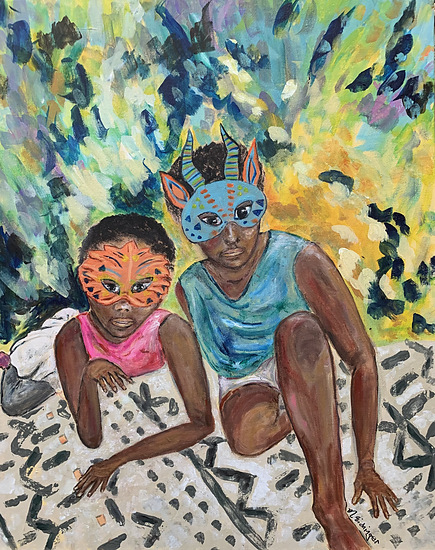
Unsung Heroes Nextdoor

SANNA

Is she healthy, safe? Who cares?

Unsung Heroes Nextdoor

We speak compassionately of those who are ill, lose jobs, or become homeless, but there’s another group that deserves our empathy—the caregivers.  Though I appreciate professionals who help those in need, it is the untrained army of friends and family keeping society stable that are taken for granted. At inconvenience to themselves, they step forward, sometimes for years, to ensure the health, safety, and security of physically and mentally ill family and friends. Helping hands come from neighbors and relatives rarely acknowledged for their sacrifice. Since they don’t complain, it is easy to forget that they too need emotional support.


Between 1916-1930, the United States and Europe experienced an epidemic of Encephalitis Lethargic affecting at least half a million people. Victims were overwhelmed by lethargy and sleepiness that put them into coma-like states with muscle rigidity.  My uncle was one of the disease’s unfortunate casualties. After being called lazy and sleeping for nearly a year, he finally woke up but was left with Parkinson’s, a serious disability. According to my father, his brother was the brightest child in their family of nine. The illness took his sharp intellect away and he needed care for the remainder of his life.

My father contributed to his upkeep, but the real burden was assumed by his younger sister and her husband. They provided a welcoming household for him while raising three children of their own. I view my aunt and uncle as unsung heroes. 

There are many good Samaritans among us. Names and locations were changed in the following stories.

For over ten years, Jane Doe, from Michigan has been visiting her ninety-year-old mother in a nursing home several days a week. She takes her on day trips, meets with doctors, and sees that she is well cared for. Jane’s an attorney who has a stressful job helping those on the margins of society. She carries their troubles home and works late into the night to solve difficult problems. But, no matter how busy she is, her mother’s care comes first. Jane’s days are so full that she had to give up something, so her social life suffered. 

When George, his father-in-law, moved to his home for his final years, Sam Smith became his caretaker while his wife continued to work.  Sam took George to medical appointments and hometown baseball games. When he became bedridden, it was Sam who made him laugh, bathed him, and made sure he took his medicine.  Five years later, George died at peace knowing he was loved. Sam’s empathy for the man had no bounds. His father-in-law’s death left an empty spot in Sam’s heart and vacant days to fill.

Jen Black’s seventeen-year-old daughter, Zoe, had an anxiety attack, later diagnosed as a manic depressive disorder. Jen was aghast to learn that her child had an illness likely to come and go throughout her life. Now, it’s been thirty years since she was first diagnosed. During that time, Jen went through the pain of seeing her daughter suffer. Twice, she sat in hospitals after Zoe tried taking her life.  Frequent episodes make it hard for her to keep a job. Though the flare-ups were frightening and she wanted to keep her close, as her daughter aged, Jen acknowledged her need for independence.

Her daughter’s freedom and Jen’s desire to protect Zoe were at odds. She spent sleepless nights wondering how to help her become independent. Zoe now lives on her own, but routine tasks like opening mail and buying food can be a challenge. Mother and daughter speak daily and periodically spend an afternoon together cleaning Jen’s apartment. Making sure her daughter takes her medicine is a major concern. Jen’s wish to travel and take pottery classes remains on permanent hold. When not physically with her daughter, her mind is. 

Children diagnosed with debilitating illnesses that require ongoing attention, force parent’s to put their dreams on hold. The life Jen lives is not one she asked for. After Zoe’s illness led to a divorce, Jen gave up the thought of remarrying. Caring for her daughter is filled with cloudy days intermixed with sunshine. When Zoe tells her mother how much she is loved, Jen feels like her heart will burst with happiness.  A few smiles are all it takes to make her years as a caregiver worthwhile. Jen’s love is a testament to how expansive a human heart can be.

Now in her seventies, Jen worries about what will happen when she dies. Who will love and care for her child? And, I wonder how she found the emotional support and courage to continue throughout the years. Without her mother’s care, Zoe could have been one of the thousands of mentally ill people roaming the streets. Jen is a hero worth recognizing. 

Caretaking for most people is a short-term job, but for a great many it isn’t. Their lives are tortured by seeing loved ones in pain or incapacitated. These kind custodians happen to be our neighbors and relatives. We see them regularly without considering the burdens they bear. The ill person is usually cared for by a physician or psychiatrist. The caretaker stays in the background and is rarely recognized for being the good person he or she is.  

When researching Over the Peanut Fence, I found that youths are being thrown out of their homes due to sexual orientation, mental or physical disabilities, and pregnancy. They take to the streets because they are starving, disagree with parents over religion, and are victims of physical and emotional violence. I applaud relatives and friends who step in to prevent them from becoming homeless. Those who step in are part of the unsung army deserving of appreciation.

I’ve watched many friends, neighbors, and family step forward to help loved ones through rough times.  I’m sure you know these kind souls as well.  To all, I say thank you. You are appreciated.

If people didn’t care homelessness would be worse.

1. ) According to Mental Illness Policy Org

45 percent of the 250,000 people living on the streets are seriously mentally ill 

2)  According to National Health Care for the Homeless Council

Those living on the streets for an extended period of time have a life expectancy of 64 years.  About 1 in every 3 senior households experience severe housing problems.  Blacks, Native Americans, and Hispanic seniors are disproportionately affected.  Due to the current work situation for older people, there is a growing elder population on the streets that is expected to reach 95,000 by 2050. In 2019 in Portland, 23.4 percent of those who were homelessness were 55 or older.

3) According to the National Conference off State Legislatures Youth Homelessness Overview ( 15-25 yrs.)

27 percent of homeless youth had to leave home because of their sexual orientation, primarily because of religion. 

69 percent report mental health problems

29 percent have substance misuse problems

4) According to Easter Seal and Disability Scoop

More than 42.8 percent of America’s homeless population are those with disabilities. This includes substance abuse and mental illness and the physically impaired. In Multnomah County, OR,  61 percent report a chronic physical condition, mental illness, and/or addiction. 

5. According to Youth Today report on Chapin Hall Study by U. of Chicago

Nearly half of America’s homeless women and girls are parents or about to be parents.  18 percent of homeless young men are fathers. In 2017, homeless 18 to 25-year-olds became parents to some 1.1 million Americans.  Many girls had been forced from their homes because of their pregnancies.

Art is always for sale. Sanna is an acrylic painting on deep canvas/ 24” x 18” / $ 425.

For information contact marilynne@eichingerfineart.com

Do share stories of good people you know who deserve recognition.

A failed City?

Limitless Possibilities.

A Failed City?

Forbes and Politico call Portland a failed city. Like many places in the country, it went from wonderful to war zone almost overnight. Job losses created an influx of people without shelter. George Floyd and political tempers led to graffiti, broken windows, and boarded-up buildings. Tensions between Proud Boys and Antifa ran sky-high. High-rise apartments dwellers descended from lofts, heading elsewhere to avoid long elevator lines and the nightly sounds of helicopters and flash grenades. Residents wary of stepping over legs and around tents abandoned the town.

People used to come to Portland for the quality of life. It is close to mountains, beaches, and deserts. Downtown was a lively place, fun to walk around.

Vibrant cities are full of energy, enthusiasm, and activities. They are healthy with a diversity of offerings. Focused on art, culture, and learning, they have theaters, galleries, and sculptures reminding us of our history and pointing to the future. They are places where couples get married and non-profit organizations hold fundraisers that support the important charitable work they do.

I like cities that spark my imagination and lift me to a higher plane. They show me possibilities and inspire me to think big and dream. Artists, architects, writers, musicians, and philosophers from every race, sexual orientation, and heritage shine through the cores of great cities. They are the Avant-Garde who question reality and experiment with ideas. They challenge us to think about preconceived notions. Low-income housing should be reserved for those who contribute to city life, supporting businesses and the arts through their labor and skills. 

Notice, I didn’t mention unsheltered people sleeping on sidewalks. Portland officials struggling to balance individual vs community rights are having a difficult time injecting downtown with good vibes. I love Portland, and like others, wonder what can be done. 

Recapturing the unique spirit of our community is only possible if people feel safe strolling through public spaces and streets with first-floor shops, restaurants, sidewalk cafes, and attractions. Visitors to downtown areas go to relax and get away from their daily routine.

Portland is not alone in its fall. According to The Hill, eight cities that stand out as being the worst in the country include New York, Los Angeles, San Francisco, Philadelphia, Washington, Oakland, Chicago, and unfortunately, Portland. Twenty others are not far behind.

Revitalization is possible, but it is compounded by the fact that the U.S. has 35 million illiterate people, and 25 percent of youth dropping out of school. Our country is saturated with uneducated, mentally ill, and undervalued citizens unable to find or keep a job. And, they are bringing society to its knees. Though many are intelligent, they have no skills, are not critical thinkers, and are not employable. Many buy into conspiracy theories and accept lies as being true. They put our democratic way of life on an unacceptable downward spiral.

Turning the situation around costs money, and, as long as we live in a capitalist society, downtowns will require wealthy patrons to support them. Since the government does not adequately support the arts, education, or culture as it does in Europe, we have to depend on those who are rich and on vacationers to pitch in. Wealthy residents paying high rents and tourists staying in luxury hotels, eat in fine restaurants, purchase from boutiques shops, and contribute to the city’s economic viability from which local residents benefit. 

Housing poverty burdened people downtown and permitting people to live in tents does not help. Poor people unable to provide either time or resources to the city, will not bring about a resurgence of vitality and creativity because they can’t. For those struggling at the bottom rung of Maslow’s pyramid, their first priority has to be finding food and shelter for themselves. I experienced a downtown area in Michigan decline after prime riverfront property was allocated for low-income housing. The people who moved in were without resources to support the museums, restaurants, and entertainment that citizens craved—the center died.

If revitalization becomes an agreed-upon vision, then city officials have to take the difficult step of banning tents. Confrontational marches with protesters carrying guns and mace and police in riot gear don’t belong on our streets either. Organizations serving the unsheltered should sell their center-city properties and relocate closer to camps that shelter them. Circulating mobile units to various sites is a way to reach more people. As long as non-profits own buildings and provide shelter downtown, unhoused people will congregate nearby.

Because of land use laws, affordable housing in Portland is dire. It will be years before 15,000 temporary mini-houses are built for the unhoused. I fear these camps will never go away. A compassionate solution would be to move unsheltered people immediately into large refugee-style camps where there are tents with heaters and electricity in them that let occupants stand upright and sit in a chair. Communal toilets, showers, cooking facilities, and trash receptacles can control the deplorable, unhealthy situation rimming our highways. What I suggest is not unlike a United Nations refugee camp that takes a week to install. Turkey set up an excellent one in 24 hours to serve Syrian refugees. Health and mental services are easier to administer when people live in communities. As it is, the unhoused are so spread out around the city they are hard to reach.

Visions lead to mission statements that set the stage for action. They are seeds that with nurturing can flower into limitless possibilities. Knowing that global warming will bring havoc into the next century we have to be prepared for more immigrants to the area. What I suggest can be implemented in a month. Within six months center-city will turn around. 

If we are going to handle the future with compassion, we need vibrant centers that keep us rejuvenated and hopeful. 

References;

Beza, C.( 2019) How can we make our cities more vibrant? BBC Network. retrieved from https://www.bdcnetwork.com/blog/how-can-we-make-our-cities-more-vibrant

Friendman,N. (2020)Five Key Characteristics of Vibrant Places. Vibemap. retrieved from https://noah-vibemap.medium.com.

Conerly,B.(2021) Death of a City: The Portland Story? Forbes Magazine. retrieved from https://www.forbes.com/sites/billconerly/2021/01/28/death-of-a-city-the-portland-story/?sh=6784a73c74ad

Russell, J.  (2017) United States of Failed Cities. SmartcitiesDive, retrieved from https://www.smartcitiesdive.com/ex/sustainablecitiescollective/united-states-failed-cities/188291/

Tate, K. (2021) The worst-run cities in America.The Hill.  retrieved from 

https://thehill.com/opinion/finance/533365-the-worst-run-cities-in-america

How is your city faring? Do share your thoughts for its future on my blog site at http://www.eichingerfineart.com/blog

Art is always for Sale- Limitless Possibilities is acrylic on canvas/ 18” x 24′ / $425 /  for information contact me at marilynne@eichingerfineart.com.

McClelland, M. (2014)How to build a Perfect Refugge Camp. New York TImes Magazine. retrieved from https://www.nytimes.com/2014/02/16/magazine/how-to-build-a-perfect-refugee-camp.html