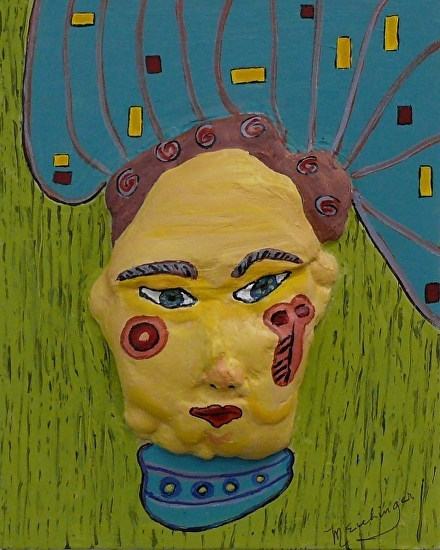
 Will she be in control?
Great Expectations
My 13 year-old-daughter returned from two weeks in overnight camp with great anticipation. She later told me that during the car ride home she imagined running into the house and jumping onto the pillows of her favorite living room chair. Unbeknownst to her, while she was away, my husband and I had rearranged the furniture. When my daughter entered the room ready to make her leap, instead of the chair being in its familiar location, it had been moved across the room. She became disoriented and quite upset. “ What have you done to the room? Where is my chair? ” she shouted, blaming us for providing a chaotic and unanticipated homecoming. It was as though we had taken away her sense of belonging and safety from the place she called home.
Her reaction reminded me of a similar situation I experience in my childhood. In that instance I was entering my bedroom and discovered that the bureau was moved away from the wall. I did not notice my grandfather hidden behind the furniture trying to fix an electrical outlet. Instead of thanking Grandpa for helping with the repair, I too exploded in anger. Afterwards I was embarrassed by my behavior, and I still cannot think of the incident today without feeling remorseful.
Those two incidences of angry emotional reaction were singular, but as I aged there was one emotion, that of fear, that stayed with me to cause a great deal of trouble. Public speaking was part of my job as museum director yet for years I would get dizzy as soon as I started talking to a crowd. This dysfunctional reaction had started in fifth grade when I was asked to give a book report before the class. Three minutes into the talk I felt dizzy and my eyes would not focus. I had to sit down and put my head between my legs to avoid fainting.
Years later I considered these past experiences and wondered what triggered such fierce reactions, and asked myself how they could be better controlled. Curiosity led me to study the physiological makeup of the body in closer detail, especially the role of adrenaline.
I learned that the way a person reacts to a situation is commonly labeled as an emotional response (happy, sad, anger, fear etc.), and to create that emotion the body’s involuntary nervous system is at work. Several hundred years ago it was believed that body and brain were separate, but today the idea is accepted that they are connected. How our appendages are moved by thought is something most of us can comprehend, or at least accept, for we have control when using the voluntary part of our nervous system. Think about raising your arm and you can probably do it with ease. The involuntary or less conscious part of our sensorium is more complex, but it is where we need go in order to understand how emotional responses are triggered.
This part of our neurology causes so much havoc that I wanted to figure out why. The autonomic, involuntary or visceral nervous system is a part of the body that acts as a control system below the level of consciousness. Bundles of nerves deal with functions like heart rate, perspiration, glands, digestion and salivation, diameter of the pupils, urination, and sexual arousal. Often their effects are life saving, as when adrenaline jumps in dangerous situations, helping to focus attention and enable a fast reaction. At other times, especially under conditions of prolonged stress, the effect can lead to ulcers or heart disease.
I wondered if these involuntary emotional systems could be controlled? Pharmaceutical companies think so, and have developed a multi-billion dollar industry with pills like Prozac. Many monks and yogis are convinced that it is a learned response that can be possessed after years of practicing meditation. Drug dealers, taking advantage of society’s desire for short cuts, sell mind altering drugs like marijuana and cocaine in order to affect autonomic nerves.
When I was president of The Oregon Museum of Science and Industry we developed an exhibit that showed how the mind can learn to control the involuntary system. A visitor would go into a quiet booth and put two fingers on adjacent probes. The goal was to make one finger warmer than the other through mind control. When the finger temperatures differed by a degree, an electric train placed outside of the booth would be put in motion. A great many visitors were able to accomplish this feat though I never could.
Neurologists teach people how to do “hot hands” to treat migraine headaches. I had a doctor friend who used the process often when working in tense emergency medical situations. He learned a modern technique that used bio-feedback equipment to help speed up the meditative process. The goal of his therapist was to teach migraine sufferers how to make their blood flow from head to hands, opening the restricted vessels in their neck that often cause the pain.
My personal technique for controlling my autonomic reactions is meditation. I practice daily and after many years am able to slow my heart rate and keep adrenaline from spiking uncontrollably, enabling me to make a speech when called on to do so. I have friends who practice yoga or Pilates with similar intent, focusing their mind to control stress and other negative emotions.
As I age, I find it more important than ever to incorporate mind control activities into daily practice. It helps me gain a perspective when dealing with unexpected situations involving family, finances, and illnesses to name a few. My desire to stay completely calm in the face of unexpected situations will probably never be fully realized, but I am better than before. I also have perspective, and accept the fact that many things will go wrong, just as many times there will be pleasant surprises with better than expected outcomes. Watching my daughter embark on new new adventures, I see her taking risks based on dreams where she imagines a happy ending. I hope she has learned how to prepare both body and mind to react to unexpected events in order to emotional balance ups and downs that might get in the way. The knowledge that she has internal resources at her disposal may be all that is needed to provide enough courage for her to pursue ideas with great expectations.
Art work is always for sale. Go to www.eichingerfineart.com for more information.
I would love to hear your thoughts on my blog site. Click eichingerfineart.com/blog to respond.
Art work is always for sale. Go to eichingerfineart.com for more information.
Do you want to know more about the autonomic nervous system?
https://www.rarediseasesnetwork.org/ARDCRC/patients/learnmore/FAQ.htm – also discusses diseases and cures.
https://faculty.washington.edu/chudler/auto.html – great description, written for kids
http://www.drweil.com/drw/u/ART00466/Biofeedback-Dr-Weil-Wellness-Therapies.html – bio feedback and migraines “With practice, biofeedback can allow you to influence the part of the nervous system that regulates the dilation of blood vessels that contribute to migraine symptoms. Once you master this technique, it can be a tool you can use to abort a headache at the start of an attack.”