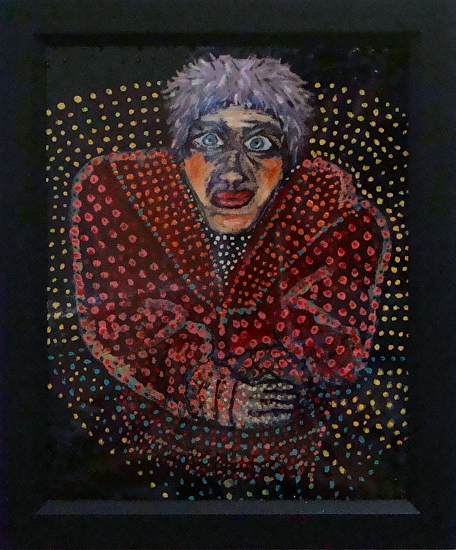
Is it Possible to Multitask?

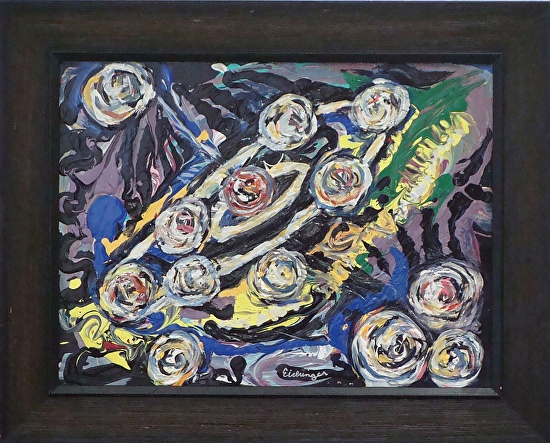
Powe of the Universe
The planets revolve in their orbits, focused on only one ask. We can depend on the to continue, at least in our lifetime.  Acrylic on Canvas 16 x 20 x 0 $299.00 USD

Is it Possible to Multitask?

When asked, I proudly tell people that I am an accomplished multitasker, but I recently became aware of research saying that I am not.  I  ride an exercise bicycle and watch TV while doing so.  Isn’t that multitasking? while  I imagine I might be a better cyclist if I was not distracted but I would probably get bored and give up after ten minutes.

A receptionist answers the phone while greeting visitors, a parent talks to a child while preparing dinner, and partners have sex while making mental plans to see a lover. Aren’t they doing two things at one time? I once observed a very successful canvas artist work on eight, 4 by 8 foot canvases spread out on the floor of his studio. He added colorful pigments and details moving from one to the next and back again. He was fast and working on so many at once permitted paint to dry while focusing on the next canvas. I was impressed by his ability to develop unique creations. When finished, though, he did not have eight masterpieces. One was exceptionally good but the rest were mediocre. He sold them all, however, which was his intent.

As do most  working executives, I thought of myself as a multitasker, for I was able to move rapidly from one subject to the next. An hour could easily be filled with 10minute meetings on topics ranging from a broken plumbing pipe, budget and insurance issues, discussion around marketing to interviewing a prospective employee. If someone interrupted me for an emergency I was able to handle it and then turn back to the topic I had been working on. I labeled this behavior as multitasking. What I haves since learned is that most of us think we are multitasking when we aren’t. I wasn’t do two things at the same time, but rather was compartmentalizing my mind. I was a fast shifter. Each activity required complete attention and it was easy for me to go back and forth quickly.

This skill is not easily transferred to art work or writings. To paint, I need 100 percent focus on what I am doing. It is not possible to select a color, put a dab on a brush , and apply it to a canvas without complete attention. Young children who are less focused, leave art sessions with with paint on their clothes or spilled on the floor. I attest to having cleaned up quite a few messes.

For nearly all people, in every situation, multitasking is near impossible. The neuroscience presented is clear. We are wired to be mono-taskers. Attempting to do two things at the same time is an illusion for most of us.

Over the past ten years many businesses downsized to become a lean and, in some instances, a mean workplace. As employees dwindled, loads increased, requiring workers to do more, producing short term effectiveness and long term disasters. When overworked, people become stressed, develop migraines, and suffer adult ADHD according the the American Management Association. The young man Ray and I mentored was injured on the job, in part, because management worked him physically 10-12 hours a day, six or seven days a week, month after month. His manager kept challenging him to man up, go faster, paint while balancing precariously. Since it is easier to move without wearing a heavy harness, he took short cuts and was rewarded with praise for being efficient—that is until he fell from scaffolding and became a quadriplegic.

One of the keys to successful mono-tasking is to slow down, not speed up. Learning to do move from topic to topic and place to place quickly takes time. The brain and muscles have to be well trained in order to switch from one activity to the next without getting overloaded. Multitasking is a misnomer for doing any task well requires full attention to the project at hand. What effective managers learn to do efficiently is to switch between tasks quickly. Basically, they single task with intention, often using cheat lists to store enabling information. And—most importantly—they know to take brain rests. They use the full amount of time allocated for lunch and work breaks in order to turn off their mind.

I am always impressed with the skills at-home parents develop by caring for children, cleaning, and engaging in social and community activities. To accomplish a multitude of tasks they develop organizational and time management abilities that rival those practiced by corporate managers.

So, can the brain do two things at one time? The estimate is that 2 to 2.5 percent of the population are capable of doing more than one complex thing at a time. One of the tasks is usually automatic, like walking or tying a shoelace while talking.

When activities are unrelated, the two hemispheres split the labor, with each side taking on a task. However, both tasks tend to suffer and errors greatly compound, for neither has the brain’s full attention. For instance, those walking briskly down a street become slower when they talk. You seemingly can cook and talk on the phone at the same time but not efficiently. A third goal will get discarded altogether by the prefrontal cortex.

One Stanford University study showed that those who believe they are the best multitaskers are actually the worst, for they are chronically distracted and find it difficult to focus. Multitasking is more wasteful than it is timesaving. The more we multitask the less we are able to accomplish because we lose the ability to focus enough to learn. According to an article by Kabu and Machado, “empirical research has demonstrated that multitasking with technology (such as texting, listening to music, checking emails) negatively impacts studying, doing homework, learning and grades.“

So, yes, we can practice switching from one task to the next quickly and no, you will not be multitasking. It is unlikely that you will ever be able to do two things at the same time and do them well.

References:

Secrets of Multitasking: slow Down to Speed Up. (2018) American Management Association. retrieved from web site http://www.amanet.org/training/articles/secrets-of-multitasking-slow-down-to-speed-up.aspx

Goodman, N. (2013) How to Train Your Brain to Multitask Efficiently. Entrepreneur. retrieved from https://www.entrepreneur.com/article/225865

Glowatz, E. ( 2016) Do You Struggle with Multitasking? Why The Brain Can Only Focus on one thing at a time. Medical Daily. retrieved from http://www.sciencemag.org/news/2010/04/multitasking-splits-brain

Telis, G. (2010) Multitasking Splits the Brain. Science Magazine. retrieved from http://www.sciencemag.org/news/2010/04/multitasking-splits-brain

Kabu,C. & Machado, A. (2017) Why Multitasking is Bad for You. Time.retrieved from
http://time.com/4737286/multitasking-mental-health-stress-texting-depression/

Art is always for sale. Contact me at Marilynne@eichingerfineart.com
Social Isolation-a Crisis of Our Time

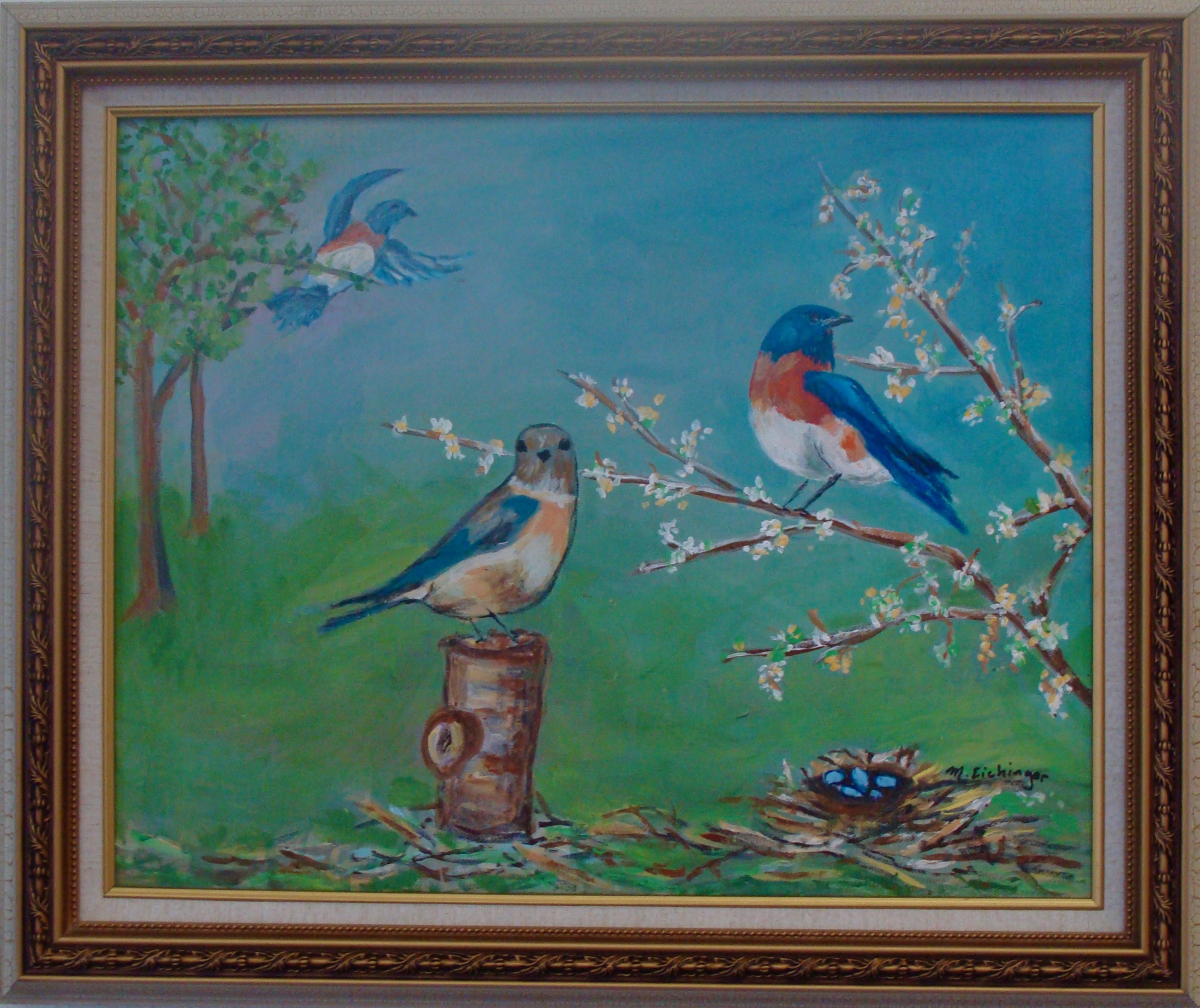
Western Blue Bird
It is spring, when birds join together to produce and care for their offspring. All creatures have a need to be connected to others of their kind.
Acrylic on canvas/ framed/ 20.5” by 24.5”/ $375

Social Isolation – a Crisis of Our Time

Most recently, an elderly acquaintance was alone in a hospital room when his heart stopped beating. There were no friends or family around to hold his hand through his illness nor to mourn the moment of passing. When younger, this man led a vibrant, engaged ilife. He loved to travel, give thought provoking talks, party with friends, and enjoyed interacting with a wide circle of work contacts. By his waning years, however, most close friends were gone and he was left stranded alone. He had no children and his few relatives were either ill or had died years earlier.

Serving as a lay ministry at the Unitarian Church in Portland, made me aware of the large number of people who are socially isolated. About one-third of Americans over 65 are alone with their anxieties, depression, and health issues. The friends and family members they assumed would always be there to help them as they aged, dispersed throughout the country and are unwilling or unable to care for their needs. No one calls or stops by their home to chat. Those without children, peers, or counselors  are not able to share the ups and downs of life.  Feelings of loneliness often become a trigger, accelerating cognitive decline and premature death.

As a stuendt of human behavior, however, I am aware that social isolation is not exclusively a problem of the elderly, for it increasingly plagues youth and middle aged Americans. Health professions consider it a growing epidemic with severe mental, physical and emotional consequences. Some of their studies show childhood isolation to be the cause of poor health twenty years later.

In the United States, adults become isolated for many reasons. When moving to a new community because of a job opportunity, many people become immersed in their work, not realizing how important it is to reestablish close friendships. In other instances, it is friends or family members who do the moving, leaving the person behind with feelings of abandonment. Drug addiction, mental illness, sexual orientation, abuse and poverty cause some people to turn inward rather than share the embarrassing truth of their situation. Their problems are likely to push close acquaintances to withdraw their love and support. After all, who wants to deal with a drug addicted friend or one who is depressed? Not fun.

My greatest surprise was to discover the growing problem middle aged men face with loneliness. According to studies by Judy Chu and Niobe Way, obesity, smoking or lack of exercise are not the biggest threats to middle aged men, but isolation is, and it threatens their health. Their loneliness is linked to increased risk of cardiovascular disease, stroke, and Alzheimer’s. I started to wonder how active men slide into social isolation so I did a bit of investigating. What I discovered is certainly not true of all men, but the number experiencing isolation is increasing at a rate that is alarming to health professionals.

What I learned is that when men are in their thirties and forties, their high school and college buddies start taking a back burner to work and family. Male contacts become limited to those whose paths they accidentally cross while at work or in the locker room. Not nurturing friendships with men initiates their slow drift into social isolation. Their tendency is to have more casual relationships which are harder to maintain. According to a Boston Globe article, a contributing factor is a belief that talking about personal matters with other men is not manly.

Adding to their difficulties are changes in the job market that cause growing numbers of men to lose employment while in their fifties. In some cases, advancing technologies make their skills obsolete. Those employed in physically demanding jobs develop aches and pains as their bodies wear out. Without work, they feel rejected and marginalized and no longer needed. Years of focus on work left little time to develop hobbies, relationships, or for involvement in meaningful community activities. Not knowing how to occupy their time initiates a downward spiral that leads some to drink, take drugs or sit around the house all day watching sporting events.

To prevent this progression from happening, it is important to develop and maintain activities with other men. Bonding relationships need to be nurtured and strengthened over time. Unlike women, who can keep a friendship by simply talking on the phone, in general, men become closer when sharing activities. Hooking up with others to play cards, attend sporting events, or go hiking is more comfortable. Since childhood they have been taught not to show or talk about feelings. Relationship building, however, requires sharing and a willingness to show strong emotions. Men who avoid social isolation are those who overcome homophobic fears and make time for male companionship.

When women feel isolated they become lonely and depressed while men in a similar circumstances are more likely to become angry. A Psychology Today article notes that married women are lonelier than their husbands, but men feel lonelier when they are single. Makes one wonder about the reasons for marriage.

Since women tend to be more social and concerned about the quality of one-on-one relationships, they often maintain closer contacts outside of romantic ones. However, the links they have to other women are few and the label “friend’ is applied sparingly. Therefore, when a close relationship sours, it is felt deeply and its end is mourned for a long time. Though depression often follows, most women seek out someone with whom they can share their feelings.

Men react differently by staying silent and keeping their emotions bottled inside. Their feelings of alienation are lessened if their friendship group is dense. The group is their buffer to the loss of a close friend.

Being connected to others is a fundamental human need. According to AARP’s Loneliness Study, 42.6 million adults over age 45 suffer from chronic loneliness. 1/4th of the population lives alone. 1/2 are unmarried, and over the past half century the number of children per household has declined. Multi generation families no longer stay together. But the need for human contact is as strong as it ever was.

In order to avoid health pitfalls caused by isolation, society will have to give greater prioritization to human connectedness. It will help to start social skill training in elementary grades with programs continuing through high school. The medical profession can also help by encouraging their patients to maintain active social lives. Preparations for retirement should focus on social as well as financial well being. Community developers can play a major role by promoting shared social spaces that encourage gathering and interaction. Recreation centers, community gardens, tennis and bocce ball courts, community art centers should be within easy reach of everyone.

Social isolation is  a major public health threat in need of serious attention

References:

Khullar,D. (2016) How Social Isolation is Killing Us. The New York Times. retrieved from https://www.nytimes.com/2016/12/22/upshot/how%2Dsocial%2Disolation%2Dis%2Dkilling%2Dus.html

Ashbrook,T. (2017) Middle-Aged Men Need More Friends. On Point http://www.wbur.org/onpoint/2017/08/22/middle-aged-men-need-more-friends

Green, M. (2017) The Terrible Price of Our Epidemic of Male Loneliness. The Good Men Project. retrieved from http://www.wbur.org/onpoint/2017/08/22/middle-aged-men-need-more-friends

Asatruam.K. (2016) 3 Surprising Truths about Gender and Loneliness, Psychology Today. retrieved from https://www.psychologytoday.com/us/blog/the-art-closeness/201601/3-surprising-truths-about-gender-and-loneliness

American Psychological Association.( 2017) Social isolation, loneliness could be greater threat to public health than obesity. Science Daily. retrieved from https://www.sciencedaily.com/releases/2017/08/170805165319.htm

Over the Peanut Fence

Dear Friends: I would like to hear from you. Following is the introduction to Over the Peanut Fence and need to know if you would read a book like this. Your comments are invaluable to me at this time. Will you take a moment to respond?

Send comments to marilynne@eichingerfineart.com.

I am playing around with covers as well. Above is a potential design though it may not be my ultimate selection. It should help you understand the gist of the book. Do you find it appealing? Would you pick it up if you were browsing in a book store or on line?

Introduction

This is a tale of awakening, of learning to pay attention to shadows. It’s a quest to understand the lives of youths who struggle to survive—neglected, abandoned, homeless—living in hidden worlds far from the guarded, landscaped communities of social convention.

These youths are present at the periphery but rarely at the center of attention. Over a long and multi-faceted career, I frequently encountered homeless youths and, sometimes, their families, working to accommodate their needs so they could be included. More recently, I came face to face with the greater picture, the one in the shadows, the full immensity of the daily challenges faced by just one of these youths and I began to question, thus this tale.

As the former president of two museums and as owner of a catalog company, I interacted with people from diverse socio-economic backgrounds and saw that the damaging effects of poverty are many and, at times, tragic. Even newly housed people face difficulties. Isolation behind closed apartment doors can be depressing for those used to socializing on the streets.

It was not until my partner Ray and I agreed to house Zach, a 19-year-old boy who survived four years living on the streets, that I became aware of youth homelessness. Though we knew Zach as a child, and threw peanuts over a fence to amuse him and five other siblings locked in their yard, we lost track until we saw him wandering aimlessly in Portland. He was ill, so we took him home for a week to bring him back to health and he wound up staying for five years. Over time, he became more literate, gained self-confidence and developed skills as a journeyman industrial painter.

Zach’s plight made me curious as to why youths are taking to the streets in record numbers. I wondered if stemming the growth of youth homelessness is possible. Teens run away for many reasons including poverty, drugs, mental illness, pregnancy, abuse, sexual orientation, and natural and man-made trauma. In each instance their developing brains are impacted. Care providers focus on interventions to help them become calm and improve their self-esteem.

Over the Peanut Fence is part memoir and part storybook about homeless youth, agency leaders, and volunteers. Tales are personal, like that of Kate Lore, who as a child, with her mother and sister, was locked out of a comfortable home and left to reside in poverty. Narratives explain how teens negotiate city streets in search of places to sleep, socialize, and eat. They reveal how much fun it is to be free from abuse and to meet others like themselves, and they tell of the depression that takes over when they see that their future prospects are poor.

As I shared information with friends, I soon realized how little most people know about youth homelessness. They, like I used to be, were quick to label street people as lazy, thieves, and drug abusers without understanding what brought them to their current circumstances. Fed by erroneous media reports, they believed that street youth are dangerous and commit violent crimes. Their perception is far from the truth. Rather than perpetrating crimes, homeless adolescents tend to be victims of criminal behavior and neglect which, in turn, toughens them up in order to survive.

Accordingly,“A recent study in Los Angeles puts a finer point on this information. Interviewing hundreds of street youth, homeless advocates found that 46% of boys and 32% of girls take part in “survival sex.” Of that group, 82% prostituted themselves for money, 48% for food or a place to stay, and a small group for drugs. A Hollywood study also found that half of the street youths sampled sold drugs. But interestingly, only one-fifth of that group–or, one in ten of all street youths–sold drugs to support their own habit. The rest sold drugs as a means to earn money for food or shelter.”

Living on the streets is a relatively new phenomenon. Though there has always been mental illness, addiction, and domestic violence, widespread homelessness started in the 1970s, when the country stopped providing public housing for the mentally ill and the poor. Policies initiated by Nixon and Reagan continued under both Republican and Democratic presidents, worsening as the economy declined in 2007. Large numbers of unemployed adults began to self-medicate with alcohol and drugs. Often, depressed parents became abusive, neglected their children, causing them to take to the streets in record numbers.

I believe that government entities are unlikely to provide adequate funding, so the private sector will need to pick up the slack. Volunteers, schools, church groups, and youth agencies will have to join together and coordinate their efforts. Four years of research have provided me with reasons to hope. We can end youth homelessness because there are a great many people involved who care. Though cautiously optimistic that this societal problem can be solved, it will only happen if you and I step forward. This book is a call to action.

My Hope for Wisdom


Down Covered Baby Owl with Mother (sold)

Is an owl wise? According to western folklore, the owl is wise, silent and solitary. It is associated with lunar deities—symbols of wisdom. It is also the animal representation of Athena, Greek goddess of wisdom. In India, however, owls are considered dumb and foolish. They have a small brain for their size. It may be that their big eyes and a serious look make them appear smart. Their laser-like vision and excellent hearing allows them to easily catch prey.

Hope for Wisdom

“Between hope and despair, choose hope. It is harder to bear.” These words written by Boris Novak speak to me. They seem especially poignant in a time of discord when so many people wonder how to blend divergent view points. Hope. . .for wisdom.

All of my life I’ve dreamed, wished, and hoped. When I was young I hoped to get older quickly, when older, to feel younger. As I aged, I wanted to be wiser.

I didn’t have to do much to bring about my first wish. Birthdays marking the way were not under my control. Feeling younger was another story, one that required work. Exercise, turning away from ice cream sundaes and eliminating stress remain ongoing challenges.

But wisdom—that is my elusive hope. How does one go about becoming wise?

Wisdom has been defined as a process of integrating experience, knowledge, and good judgement. It involves accepting the uncertainties of life and knowing how how to make decisions that maintain a sense of balance. In general, wise people are optimistic, believing that life’s problems are solvable, and thus they are calm when faced with difficult decisions. They are able to see the big picture and to apply a sense of proportion to the situation. In other words, they have the ability to think.

ome think of philosophers as wise, in part, because they were the first to coin the name Philosophy that implies that they are smart thinkers. The word comes from Greek roots, philo-sophia, which means “a friend of wisdom. Philosophers supposedly practice their love of wisdom.

Men like Socrates, though, struggled with wisdom, believing that it starts with wondering about a topic and later admitting ignorance. Knowing the limits of knowledge is difficult. Socrates once said, “I do not think that I know what I do not know.” Socrates was humble and was aware that many of his beliefs were uncertain. Time might well prove them wrong. He thought true wisdom could only be only possessed by the gods, not human beings.

Despite Socrates nixing mortal wisdom, I still hope to become wiser with age and wondered how to go about doing so? Studying the attributes of those I consider  wise was my starting point. Each person I investigated was certainly well experienced. Some were old and others young but all were kind and insightful beyond their years.

Wise people are like sponges, soaking up lessons wherever they go. They also are able to see the obvious, that which is right in front of them, their relationships, and knowledge of their own mortality. They engage in mind games to balance self-interest with that of others and they look at both short and long-term perspectives. Wisdom brings with it the ability to adapt to changing situations and environments.

People who live long lives are survivors. They probably had to face one type of trauma or another at some time along the way but they didn’t succumb to their difficulties and become depressed, instead they grew from their situations. They relied unashamedly on the strong support network they previously assembled to help them through bad times.

Most of us see those who are wise as compassionate and tolerant of differences. They spend time seeking self-understanding which helps them recognize boundaries that separate their own biases from those of others. They accept that each person lives at the center of his or her own universe, realizing that individuals see, have goals and priorities, and make responses that vary from their own.

Having wisdom has many benefits besides the ability to make good decisions. Psychologists associate it with higher life satisfaction, better relationships, less depression and fewer negative feelings. Though not related to intelligence, it is related to a level of well-being. It is also interesting to note that wise actions can be influenced by relationships. People tend to be wiser among friends who help them see other perspectives—the big picture.

Now that I  put words to my desire for wisdom, it is up to me to be so. It will not be easy. Gathering facts, reflection and analysis of even the smallest decision. takes time. Judgements will have to include the impact my decision will have on others. Will my footprints contribute to the greater good?

If I hope to be wise, perhaps, like Socrates, acknowledging how little I know will be my first step.

References:
Brindle, B. (2018) 10 Wildly Wrong Animal stereotypes. How Stuff Works. retrieved from https://animals.howstuffworks.com/animal-facts/10-wildly-wrong-animal-stereotypes7.htm

Wisdom: 2018. All about Wisdom. Psychology Today, retrieved from https://www.psychologytoday.com/basics/wisdom

Westacott, E. (2017) Socratic Wisdom. Thought Co. retrieved from https://www.thoughtco.com/socratic-wisdom-2670665

Rusnell, Q. (2016) If Philosophy is literally the love of wisdom, then how do you define wisdom? Quora. retrieved from https://www.quora.com/If-Philosophy-is-literally-the-love-of-wisdom-then-how-do-you-define-wisdom

Pearson, C. (2014) 7 Secrets of Wise People ( And How to become one . . . Now) Huffpost. retrieved from https://www.huffingtonpost.com/2014/04/08/wisdom-tips_n_5086606.html

Hammond, C. (2017) What is wisdom? And can you learn it? BBC. retrieved from http://www.bbc.com/future/story/20170124-how-to-be-wiser

Five years to grieve?

EVA
Acrylic on Canvas/ 40” x 30″ / $599.00 USD

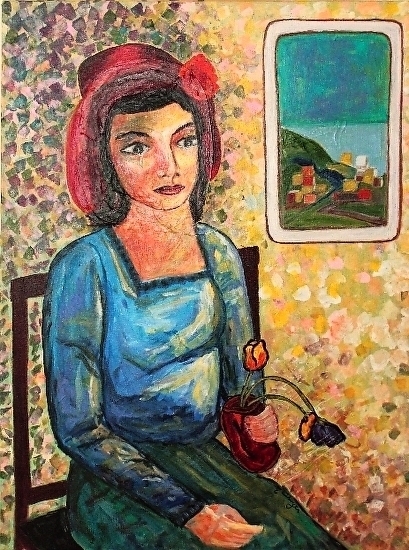
A tear rolls down her cheek as she wonders what the future has in store for her.

Five years to grieve?

Grief. It happens to us all at one time or another so we should not be surprised. People die, friends move, divorce occurs and accidents change lives. How we deal with grief is the challenge, for loss can be enormous and almost unbearable.

When my mother died in an automobile accident, I cried uncontrollably for days. Her death was so sudden and it took years before moments of intense sadness stretched into weeks and eventually months. Forty years later, I still miss her. Divorce affected me similarly, for it was also a death. I plunged into darkness and it was a good five years before I felt warmth in the light. In both cases, however, I continued living fully with the expectation that happiness would return one day to fill the empty pit in my gut.

When mass shootings occur, I grieve with the families for nothing can prepare a parent for the loss of a child. They must feel as though a piece of them has been taken away.

When a friend lost one of her twin babies shortly after his birth, she sank into a depression even though she hardly knew the child and still had one lefte to care for. Her psychologist aid that it was not unusual for grief to last five or more years and advised that she continue her activities until they once more came naturally.

Death of a close friend can be as devastating as losing a sibling. Feelings of abandonment, loneliness, fear and insecurity coalesce with sadness and grief. If the friend has shared life changing events with you, their loss can be so severe that it affects daily living. A roller coaster of emotions can give way to numbness and lack of energy. When a sibling dies, those remaining have to reorder their relationship with those still alive. Feeling a loss of innocence is common as is guilt for having survived.

When a grandparent dies, it may be the first time a chid encounters the death of someone significant. Intense surprise or shock may induce sadness, anger, rage, and a insecurity. Though the intensity of losing a grandparent or sibling may be great, oft times sympathy and caring offered by friends and family is inadequate for the grieving child’s need.

Sad emotions do not go away easily. Unfortunately, many supportive people distance themselves after being around a depressed person for a period of time. In many cultures, laws and customs push grieving people into new roles before they are ready. Religions and cultural groups, attempting to regulate the process are more likely to do so with widows than widowers.

According to my father, Jewish men are supposed to remarry at the end of a year of mourning. His friends began suggesting he do so even before my mother’s funeral was held. According to Jewish law, “The duty of marriage is discharged after the birth of a son and a daughter (Yeb. 61a). Still no man may live without a wife even after he has many children (ib.). Women are exempted from the duty of marriage, although, to avoid suspicion, they are advised not to remain single (ib. 65b; “Yad,” l.c. 2, 16; ib. Issure Biah, xxi. 26; Eben ha-‘Ezer, 1, 13; see Woman)”.

In the old days, when a man died without leaving children, his brother had to marry the widow. The custom was a way of insuring economic security. It is still the law in Israel today, though not always practiced. A woman and brother-in-law who choose not to marry are supposed to participate in a ceremony where the woman kneels, removes a special handmade shoe from the man’s foot, spit on the ground next to him and recite a verse that frees them from their obligation to marry.

Death does not always end the marriage. In India, for example, widowhood can mean a “social death.” Without a husband to support their children, widows lose their status and are consigned to the margins of society. In recent times, most countries have enacted laws to protect women but customs in religious groups may take precedence. Some Hindu women shave their heads, no longer wear a red dot theirr foreheads, and will not display jewelry. In the old days she was expected to walk barefoot. Thank goodness the custom to throw herself on her husband’s funeral pyre is outlawed.

In some third world countries such as Nigeria, a woman is expected to have sex with her brother-in-law or another male-designate after her husband’s death. This ritual cleaning by sex is supposed to ward off evil spirits and keep her children from suffering. Though most women find the practice repugnant, refusal can subject them to violence. They may be forced to drink water that the corpse has been washed in, confined indoors for up to a year, prohibited from washing their bodies for months, and be forced to sit naked on a mat, ritually crying and screaming at specific times, day and night.

Orthodox Christian women living in parts Russia, Czechoslovakia ,Greece, Italy and Spain customarily used to wear black for the remainder of their lives after losing a husband. Though this practice has mostly died out, there are Immigrants to the US who still don black as a show of devotion.

Christians often ask religious leaders if they stay married in heaven after death. The idea provides solace to those who have been in long time committed relationships. What I read says that a woman is free to marry if her husband dies. According to Jesus, in Luke 20:34-36, there are no marriages in heaven. Marriage is a legal contract and does not make it to heaven, for according to the bible, “marriages here are a foreshadowing of the event that is to come when we are joined together with Christ our God forever.”

Muslim customs can vary by community. According to Shykh Saalih al-Munajjid, after death the widow has to practice Iddah, and wait four months and ten days before remarrying. Husbands are instructed to bequeath a year’s worth of maintenance and residence in case of death. During the time of mourning a widow may not wear decorative clothes, apply kohl to her eyes, use perfume or sleep outside her house unless afraid for her own safety. She is still required to take care of the shopping, cooking, cleaning, laundry, children, etc. If a family member other than her husband dies then mourning lasts no more than three days.

Psychiatrists in the United States tell us that grieving is a process that is uniquely different for every individual. Grief tends to come in waves of emotions that move between anger, disbelief, sadness, and even happiness. Kubla-Ross, in her pioneer study of death, spoke of five stages to grief, not necessarily in a specific order. She mentions denial and isolation, anger, bargaining, depression, acceptance.

Sometimes grief leads to an untimely death of the remaining partner. Known as the widowhood effect, mortality rates are known to rise during the first three months of a spouse’s death. As one spouse’s health declines the surviving person may stop taking care of his or her own health and becomes ill as well. Men, over 50 are at greater risk than women, though income and wealth do make a difference. Without the support of family and friends, lifestyle habits tend to worsen. Men especially, eat poorly, forget to take medications, stop exercising and do not sleep well. They are less proactive than women in seeking solace.

I wrote this article because a number of my friends have recently lost loved ones and I want them to know that I am here to support them for as long as they need me. One thing I am trying to absorb as I age is patience, but I also know that those who dwell too long on their miseries find it hard to over come them. Making motions towards normalcy can be a difficult first step towards healing. Engaging in a cause, like gun control or raising money for cancer can also help with the healing process. It is a way of turning tragedy into a meaningful endeavor that will positively affect the next generation.

References

Schecter, S. & Greenstone,J. (1906) Marriage Laws. Jewish Encyclopedia. retrieved from http://www.jewishencyclopedia.com/articles/10435-marriage-laws

Death and Dying (2018) Widows in Third World Nations. retrieved from website http://www.deathreference.com/Vi-Z/Widows-in-Third-World-Nations.html

A Voice in the Wilderness (2011) Marriage after Death: Can we be married forever. retrieved from https://heraldinthewilderness.wordpress.com/2011/05/03/marriage-after-death-can-we-be-married-forever/

Saalih al-Munajjid, M. (2018) Rulings on the mourning of a woman whose husband has died. Islam Question and Answer. Retrieved from https://islamqa.info/en/2628

Condolence (218) What are the Stages of Grief? Learning Center. Grief and Coping. retrieved from http://www.econdolence.com

Jegtvig,S (2013) Widowhood effect strongest during first three months. REUTERS. retrieved from https://www.reuters.com/article/us-widowhood-effect/widowhood-effect-strongest-during-first-three-months-idUSBRE9AD0VU20131114

Do comment below. Your thoughts are intersting and always welcome.

Art is always for sale. Please contact me at Marilynne@eichingerfineart.com.

Honored Citizen Pride


 Delilah
Acrylic on Canvas/  30” by 24”/ gold Frame/ $ 750
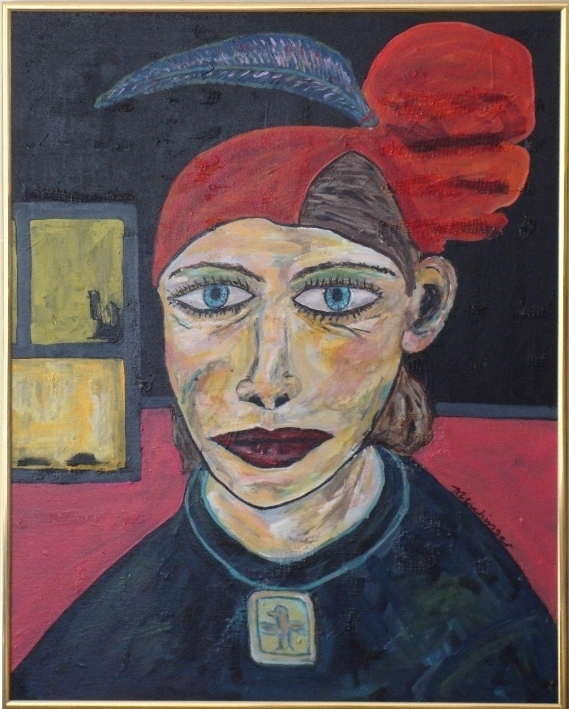
What are her thoughts? What does she live for? When she looks in the mirror does she find her youth or only wrinkles?

Honored Citizen Pride

Shortly after my company sold, I spoke to a doctor about retirement.  I mentioned that I was worried that I would shrivel up and die within the year.  His response was a belly laugh and then, after wiping his eyes, he said that I wasn’t the type–I had too many interests outside of work. “But,” he continued, “some people do whither away.  Since they never had hobbies and spent little time developing friendships, they become couch potatoes, age quickly and poof—they’re gone.”

When still employed , I kept a to-do list on my desk that kept me organized. That habit did not stop with retirement.  Once the big decision was finalized,  I put together an exciting plan to carry me through the next several years.  I wanted to learn to write well and to improve my artistic abilities in order to share  thoughts, ideas, and yes—wisdom.   In order to become more accomplished, I knew it would mean hard work, for I had few years remaining to live.

I’ve had a hell of a life—ran two non- profit museums, founded a for-profit catalog company, raised five children,  loved eight grandkids, adopted a street youth, and traveled extensively. Why not share my good fortune with the next generation?  Perhaps I can keep a few young souls from making the same mistakes I made. I thought that if I passed on everything I  learned during my life-journey then they would have a head start to improving society.  I fear that in many ways, my peers and I failed.

Armed with this purpose, I vowed to become a better listener, act compassionately, speak judiciously, and spend more time with family and friends.   Then one day, several unhappy thoughts popped into my head.  Does anyone want to listen to an aging lady?  Is my advice welcome or seen as interference?

The young people I meet today are busily immersed in their own challenges, and don’t seem to mind making mistakes.  They want independence and to be allowed to fail, though they do relish encouragement to try again. They see the world through a slightly different lens than I do.  Yet, they act similarly to the way my son did when, at 15 months,  he learned to climb stairs.  Each time I put him at the bottom of our carpeted steps, he took the climb as a challenge and went at it with a vengeance.  There was no stopping him. He was determined  and single mindend as he climbed to the top over and over again, never fearful of falling.  When I went to take him to another place he cried so hard that we stayed put for almost an hour.  I turned him bottom first so he could climb down as well as up.  My hands were always in place, ready to catch him.

Perhaps the real test of wisdom, is not sharing what you know but rather creating  possibilities for others to discover on their own. It means stepping back into the shadows, yet remaining as an available safety net in case of a fall.  The same son, now and adult, recently told me that the reason he was able to take risks at work, was that he knew that neither his father nor I would let him starve or go homeless. We were a security blanket folded in the back of his mind that allowed him to soar.  Interestingly, our role was simply to witness and applaud his successes and commisurate with him about his failures.

Now adults, my children do not need me. They are independent, well launched, travel their own roads, and do so with gusto. Most have families to care for and don’t live nearby.  I am at the edge of their thoughts, and when we get togethers it is as companion and friend, not parent or teacher.

Since I don’t have to work, raise children, babysit grandkids, or even decorate the house, what keeps me ticking?  I like learning.  I don’t want to be a dinosaur stuck in the mud to be covered and fossilized.  Reading, thinking, traveling, analyzing, embracing change—and yes sharing ideas, especially when I get a response, give me energy.

Secondly, I like helping the young people I come in contact with achieve their own dreams.   What fascinating challenges they have as they move through a  technological, social media connected world and what wonderful enjoyment I derive from watching them!  It is hard to keep up with their comings and goings.  Lucky me.   I plod on, a little wiser—maybe, a bit more silent, always older and seeking the truth in all things.  ______________________________

Do share your thoughts about aging below.  There are many times when we are called on to rethink our purpose in life. What is yours?

Art is always for sale. Contact me at marilynne@eichingerfineart.com.

A Fractured World


Fractured America
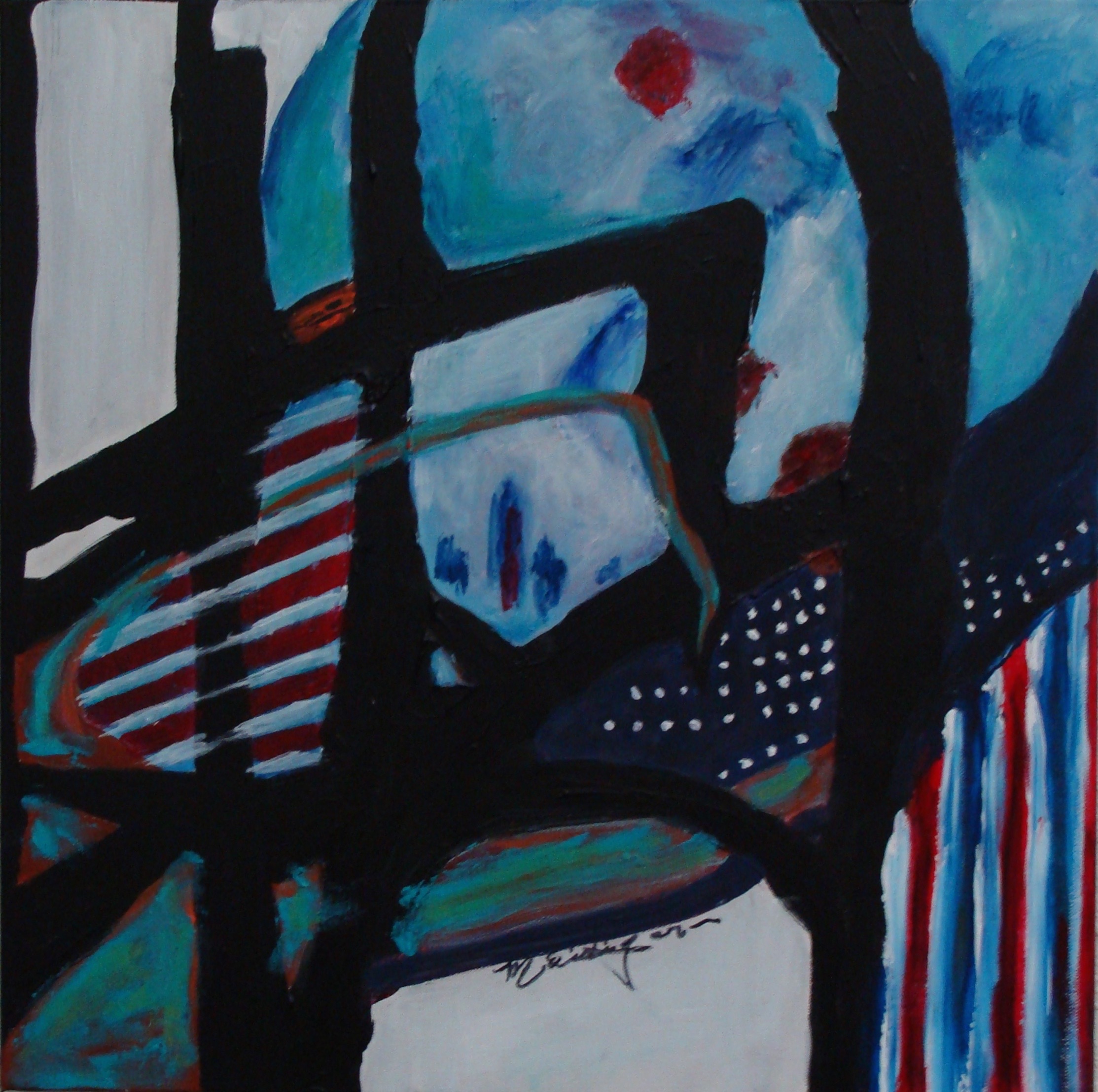
acrylic on canvas/ 24”by 24”/ $ 450

Healing a Fractured System
The other day I overheard two childhood friends embroiled in a shouting match about illegal immigrants that was so hateful that I doubt they will ever speak to each other again. They inspired me to search for a way to overcome the fractional divisions that plague our country.

The values I was taught as a child that made America unique and great are now in question. Due process of law, the presumption of innocence, and freedom of speech are suspect. The right to privacy has been eliminated. There is no control over the way our taxes are spent, so we drive on streets and highways dangerously flawed by pot holes, bearing signs covered with untrimmed shrubbery.

Hypocrites speak of virtue yet vote for known bullies, harassers, and sex offenders. Anti-abortionists cling to family values yet are unwilling to provide health care for children born into poverty. Hunters believe endangered species laws should be eliminated. When one party controls all of government they are quick to forget that they are there to govern on behalf of all Americans. Compromise and consensus are two important words that have been eliminated from our vocabulary.

The Statue of Liberty has little meaning for we are not willing to do as it says:
“Give me your tired, your poor,
Your huddled masses yearning to breathe free,
The wretched refuse of your teeming shore.
Send these, the homeless, tempest-tossed to me,
I lift my lamp beside the golden door!”

Have we lost the way? It seems to me that both Republicans and Demarcates have gone haywire, holding extremist ideals that make compromise untenable. Yet it is bargaining in good faith that brings about a balanced society.

Newt Gingrich escalated the political breakdown in 1995 when he changed the congressional calendar to mid-week meetings and encouraged new delegates to go home for the weekend rather than reside in Washington and befriend members on the opposite side of the isle. Without socializing to build cross-party relationships a bitter culture developed. Simultaneously, the seniority system for selecting committee chairs was eliminated. Leadership was free to assign positions based on party loyalty, making it difficult for independent thinkers who were not willing to tow the party line.

The introduction of cable TV and internet enabled viewers to seek out hundreds of partisan stations rather than put their trust into commonly watched commentators like Walter Cronkite. Today it is rare for someone to take the time to seek evidence that confirms or denies the truth of the information they receive. The generation, shaped by Vietnam, participated in a culture war that was divisive. Baby boomers marched and fought against the establishment, and as lies about the war escalated, distrust in the media and government grew. The high cost of campaigning also contributed to fracturing the the political structure. Politicians who spend two to three hours on the phone each day fundraising instead of governing are afraid to offend party donors.

What are we left with? Hatred, class war, manipulation by power elites? It makes us wonder if it is possible to revamp the way Washington works. Haidt and Abrams suggest improving the social and political functioning of congress by encouraging after hour get togethers and by bringing congressional families back to Washington. We citizens could demand that politicians stop the blame game and labeling the other party as evil. We are in this together and thankfully most lawmakers have good intentions.

Excellent suggestions were made in 2014 by the Commission on Political Reform. Members from both sides of isle, like Tom Daschle and Trent Lott, were challenged to find ways to improve congressional working relationships. Starting with policymakers focused on solving problems rather than getting elected, they offer 60 ideas ranging from improving the electoral system, increasing voter turnout and addressing gerrymandering to congressional reform that is less hyper-polarizing. They suggest engaging young adults in service, reinstating a five day congressional work week, and limiting time for debate.

Their findings, referenced below, are interesting to read and make me believe that a more civilized way of ruling is possible. Lets begin by not dissolving long term friendships over political differences but use our heads and hearts for the benefit of all who reside in this wonderful land.

Reference:
Commission on Political Reform 2014. Governing in a Polarized America: A Bipartisan Blueprint to Strengthen our Democracy.Bipartisan Policy Center retrieved from https://bipartisanpolicy.org/library/governing-polarized-america-bipartisan-blueprint-strengthen-our-democracy/

Strange Customs of “The Others”

In Ecuador, babies are carried in shawls on mother’s backs. In Rotterdam, buildings swerve and jut looking like Escher configurations that can’t possibly stand. In Scotland villages are small and streets walkable. In New Orleans balconies hold diners above parading revelers. In Eastern Oregon, the land is vast. In Pueblos, Natives walk on roofs to visit neighbors.

Strange Customs of “The Others”

An acquaintance shared his experience of being the first white person to own a home in a black Portland neighborhood. He was welcomed into a friendly community of people who relaxed on their front porches and chatted amicably with those wandering by. He knew and counted as friends most everyone living on his block. Twenty years later, he speaks longingly of that time. When gentrification came and Black-Americans were pushed out of the neighborhood, the new owners kept to themselves. Today he knows no-one on his block. It is a different community with a different culture—one he does not like as well.

The first time I was fully aware of the subtleties of cultural differences was in Lansing, Michigan. To support the Urban League, my husband and I attended a fundraising dinner, arriving on time to an empty hall. When the meal was served, one token man of color joined our table set for 8. I felt sorry for the director because attendance was so disappointing.

But—not so quickly—I misjudged. By eleven that evening, the place was packed with elegantly dressed men and women enjoying themselves on a crowded dance floor. Party goers arrived after dinner and stayed into the wee hours of the morning.

A few weeks later I sat next to a professor of back studies at George Washington University while flying to D.C. When I mentioned the Urban League event he laughed and told me that the custom to arrive late originated in Africa where people walked miles, sometimes days, to attend a wedding or funeral. It was impossible to predict what time guests would arrive.
Once aware of this custom, I was not surprised to receive an invitation to Magic Johnson’s birthday party with instructions saying, “Doors open at 6 and close at 7. No one will be admitted after the hour.” The party planners did not want an Urban League type response accommodating late arrivals.

There are many cultural differences that are learned during childhood when we ingest social mores, biases and misconceptions from our community (tribe). Composed of family and friends, our tribes are influenced by location, religion, race, and sexual orientation. We became locked into these early indoctrinations.
To overcome these biases it is helpful to think like anthropologists who meet newcomers as a subjects of interest. They explore customs and values, and learn how people function in their particular culture.

So many of us are uncomfortable and afraid to make a blunder that we prefer to judge “others” as inferior rather than have to accept their differences. By taking this path, however, we make mistakes and at times develop enemies.

Ignorant missionaries who burned Native American totem poles in the 19th century is a case in point. These evangelists thought the poles were religious objects replete with animalistic gods. They didn’t understand that they were either lineage poles serving as a family crests or story telling poles featuring animals from tales similar to Aesop’s fables. Their ignorance turned into a rampage that destroyed well crafted art and denied a peace loving people their cultural heritage.

Who is the potentate to decide who and what is superior?

In my twenties, I ran a summer Montessori program in a low income neighborhood. During a teacher conference one mother refused to face me. I was uncomfortable for I was trained to always look a person in the eyes while communicating. When the woman responded to my questions, she glanced sideways, answering in monosyllables. I interpreted her actions as lack interest in her child. It was years before I understood that she was trained to never look a white person in the face. She was being respectful and I was being—well not sure, but at the time I extrapolated to the larger race and harbored negative feelings about poor black women not caring about their children.

Childhood indoctrinations create subtle social tensions. It was not until I lived in Great Britain that I felt like an American. Why? Because in the United States I was identified by others as being Jewish first. This conviction was reinforced often, such as when my husband and I stepped into a Massachusetts real estate office and asked an agent to help us find an apartment near Boston College. The woman replied, “you don’t want to live in this neighborhood. You’ll be much happier if you move to Brookline, where there are more of your kind of people.” I naively thought she didn’t hear me correctly for I knew where I wanted to live. But my husband got her message immediately, and pulled me out the door.

It hurts to be regarded as a commodity. It is not fun to be put in a box and have differences labeled as bad. The Bill of Rights was written to fight against discrimination, yet cultural differences continue to be misunderstood and prejudicial judgments made. White and black, gay and straight, Christian Jew, and Muslim are engaged in the blame game. It takes time and openness to know thy neighbor and treat him or her as you would like to be treated.

One last thought. I watched Bill Maher’s TV program when Republican, Anthony Scaramucci was his guest. Anthony tried to explain the emotions and anger held by white men who feel threatened because their way of life, jobs, and social positions are being eroded. His presentation was cut short because Bill and other panel members rudely interrupted him. “Look what Republicans have done to us? Trump’s base does not count.” was their message which immediately negated concerns held by a good portion of the country.

It is scary to lose your job. It is frightening to have the values you were raised with challenged. It is uncomfortable to hear most people speaking a foreign language in your local grocery store. And, it is difficult to adapt without understanding and trust. If we are to transition to a more equitable society, then the fears and concerns of every sub-culture, every tribal member within our borders need to be taken into account.

Sharing spaceship earth, means recognizing our own prejudices and engaging the “others” in conversation. New technologies push us to shift gears faster than we had to generations ago. It doesn’t do any good to just dig in and say the old ways were better. I’ve lived long enough to see that fanatics who won’t change can lead us to war. Why not work instead towards a new world order with solutions that are greater than any one of the parts?


Do comment below. Your thughts are iimportant to me.

Art is always for sale. Go to Eichingerfineart.com to view prices.

Effects of trauma on children

Janna

Acrylic on canvas/ carved gold frame/ 23” by 27”/ $ 599

Janna learned suddenly that the world is not always safe when shooting started while she was enjoying a rock concert in Las Vegas. Fortunately she managed to escape without physical damage but mental scars remain.  She and many of survivors of the tragedy have to contend with with fear,  nightmares, and depression.  She is fortunate to have a loving family and a precious new kitten by her side.

Following is a section from my soon to be published book, Over the Sticker Bush Fence. Trauma is one of many reasons kids take to the streets.   Though I write about homeless youth in America what I say can also be applied to immigrants coming from the Middle East. It helps understand why their many of their children become radicalized. These youth  face many of the same problems as do our own , only they have the added burden of moving to a land with a strange culture.  Their difficulties are compounded by lack of acceptance in school by their peers and by poor job opportunities upon graduation.

Please do not  copy article without permission.

Trauma 

Abuse, violence, and naturally occurring disasters such as war or accidents are trauma producing events as are painful medical procedures and the loss of a loved one. Neglect, verbal put-downs, being treated like a slave, and starvation can lead to a chain of trauma induced reactions. These situations are debilitating, often leading to dysfunctional behavior patterns that affect the youth’s ability to grow into a balanced thoughtful adult.

Sara was in a horrendous boat accident when she was eleven. On a sunny summer day a waterspout developed that suddenly hit the family’s boat from behind. The small craft was capsized and her mother lost a part of a finger as she floated out to sea. Her father’s leg was partially severed while he held on to his daughter by a poorly secured life jacket. The family was fortunately rescued by a passing stranger and taken to a local hospital. After the accident, the girl’s friends started calling her a jinx. Since she was physically fine, her parents did not realize that she needed psychological counseling to get over the incident. The emotional damage of the event stayed hidden and was one of several traumatic instances that led to a mental breakdown at the age of eighteen.

Negligent caretakers, even if naive as in the above case, keep children from developing into strong, healthy adults. Instead of developing confidence, their children grow up feeling that the world is unsafe. They may lose trust in older people and have problems regulating emotions. As they age, they draw into themselves and find it difficult to connect with other people. their own age. As teens they are likely to have conflicts with authority and create unnecessary problems in school, at work or with law enforcement. Romantic relationships and friendships tend to be sparse and unhealthy

The stress from growing up in an abusive environment contributes to impaired brain development, chronic or recurrent physical problems such as headaches, stomach aches, rapid breathing, and heart-pounding. It is not unusual for a traumatized child to self-medicate with drugs, alcohol, and overeating. Some children become hypersensitive and act out inappropriately while others are just the opposite and become disassociated from their senses. Constant anxiety and fear, more often than not, lead to severe depression.

In school, a traumatized child tends to space-out by daydreaming and not paying attention to assignments. Childhood trauma and neglect can affect the child’s ability to learn to read. It is hard to pay attention when your home problems are of more immediate concern than schoolwork. Their wandering minds lose track of time and, in many cases, impulsive behavior replaces rational thought, making the youth unpredictable, volatile, and extreme. Believing they are powerless in the face of adversity, traumatized youth compensate by becoming defensive and acting aggressively when feeling blamed or attacked. A great many move towards high-risk behaviors like self-mutilation, unsafe sex, and high-speed auto races.

Since abused children have difficulty thinking and reasoning clearly, they are unable to plan ahead and anticipate their future. Their fight and flight reactions take precedence over rational thought and problem-solving. Without hope or purpose life has little meaning and is without value. Without the ability to influence their lives, they operate in survival mode.

Though it may take years to turn around negative feelings of self-worth, with the right intervention, it can be done. My friend Caroline shared her up-bringing with me. As a child, she was raised in poverty in a small Appalachian community. Though loved, her young life was traumatized by poverty and illness. As the oldest of five children, she was called on to care for the younger ones and assist her mother in household chores. Daily activities were especially cumbersome, for her mentally unstable mother was hospitalized frequently. When Caroline was in fifth grade, her father developed Tuberculosis (TB) and was hospitalized at the same time her mother was committed to a distant mental hospital. In those days there were limited ways to treat TB and most patients spent years in a sanatorium. The family was without a bread winner facing starvation. At eleven years, Caroline was in charge of her younger brothers and sister.

When the state finally learned of the situation a social worker found Caroline foraging by herself in the woods. She and her siblings were separated by the state, with two boys sent to one orphanage and the two girls to another. Caroline wondered if she would ever see her young brothers again. Describing her feelings of that time she said, “I believed that my family was no good trash. After all, we were poor with no chance of improvement. I thought that since things were so horrible, we must be bad people who got what we deserved. I was sure that I too would come down with TB and suffer from mental illness as I got older. I assumed that all of our misfortunes were inherited.”

Fortunately, Caroline was taken in by a loving couple, both doctors, who dedicated themselves to caring for the homeless children of Appalachia. The two adults were inspirational role models for the young girl. With scarce finances to operate their orphanage but with a big I-can-do infectious attitude, they impacted the lives of thousands of children. Their perseverance and positive outlook attracted help from others in the nearby city of Charlotte. At one point the doctors decided to build a clinic. Without the necessary money to do so, they relied on old fashioned community help by organizing the children and mountain neighbors to help dig river rocks for the building’s foundation. To earn additional revenue, they collected used clothing from wealthy in-town donors and started a thrift shop that is now over fifty years old. Their actions and positive attitude were role models for young Caroline.

Most importantly, they showered her with attention and love. They convinced Caroline that tuberculosis and her mother’s mental state had nothing to do with her. As an adolescent she gained in self-esteem and began to believe that the tragedies she had experienced could be surmounted. Upon graduation from high school, Caroline was awarded a scholarship to college where she studied nursing. She fell in love and married a physician who provided a comfortable home where she became a social force in the community as she raised five children. As they aged she went on to direct a prestigious science center.
Caroline is still attached to the mountains of Appalachia and continues to support the orphanage that helped her become a successful businesswoman. The sister who had accompanied her to the orphanage also flourished under the tutelage of the two doctors. Unfortunately, her brothers did not fare as well in their group home and struggled throughout their lives.

Not only does trauma burden children but it causes economic and political repercussions that carry a high price. Medical, law enforcement, and legal expenses are paid for by the rest of society.

Parents who leave their children alone for long hours, whether due to illness, drugs, or excessive work schedules, are often faced with unexpected consequences. In poor neighborhoods, many children play outside to a combative, primeval atmosphere similar to that described by William Golding in Lord of the Flies. They move about in city jungles without adult guidance, join gangs and exist in a survival mode. They become unruly and unwilling to play by the rule of law, with little regard for the consequences of their actions. These youngsters add to the burdens of our courts, foster care, and juvenile detention systems. Each year, the country incurs between $8-21 billion in long term costs for confining young people.

References:

Larson, S. (1997) Teenage Rebellion. Culture and Youth Studies. retrieved 2017 from http://cultureandyouth.org/troubled-youth/articles-troubled-youth/teenage-rebellion/

(2014) Calculating the Full Price Tag for Youth Incarceration. Justice Policy Institute. retrieved 2017 from http://www.justicepolicy.org/uploads/justicepolicy/documents/sticker_shock_final_v2.pd

Art work is always for sale. Contact me at marilynne@eichingerfineart.com

Do comment on my blog post below. Have  you or your family experienced trauma?

The Innately Rebellious

Cool Daddy
Acrylic painting by Marilynne and Talik Eichinger/ nfs

The Innately Rebellious

The following passage is taken from the manuscript of Over the Sticker Bush Fence: Scaling Barriers for Homeless and Runaway Youth. In this section I discuss what happens to at-risk teens. Most youth go through tumultuous times in their struggle to become a responsible adult. Without adequate parenting, however, the task is arduous and success is marginal.

From the manuscript. Please do not reproduce without my agreement.

“Teen years are a time for rebellion. The following quote is a reminder from the sages. ‘Our youth now love luxury, they have bad manners, contempt for authority; they show disrespect for elders, and love to chatter in place of exercise. Children are now tyrants, not the servants of their households. They no longer rise when elders enter the room. They contradict their parents, chatter before company, gobble up their food and tyrannize their teachers.’ According to Plato, it was attributed to Socrates who died in 399 BC. Some things never change.

“Parents try to blend their child’s need for independence with suffering the consequences of their actions. Wanting to make decisions on their own, teens measure success in terms of independence while their parents evaluate it by rightful actions. The Amish know this tumultuous time well, which is why they let their youth participate in Rumspringa, a period of “running around.” Adolescents, especially boys, are allowed to test the waters of freedom before joining the church. Though parents do not encourage their children to be wild, they do turn their eyes from the behavior they view as unacceptable, believing that their youth will outgrow their rebelliousness.

“During Rumspringa, the adventurous may drink and party late into the night, joy ride in cars, wear the latest “worldly” clothing, and attend movies. The more rebellious may even go bar hopping, smoke, dance in nightclubs, and engage in premarital sex. Though their parents (and minister) may have a thing or two to say about their behavior they are not shunned by the church. The Amish believe that by getting rebellion out of their system this period of deviant activity will pass, helping them freely choose to stay within the faith rather than leave permanently for the outside world of the “English.” Most, but not all, do end up returning to their religion and leading responsible lives. Having been grounded in the community’s values since birth, they have absorbed an ethos that is difficult to leave.

“Though the transition from childhood to adulthood may be turbulent for all teens, it is especially difficult for those without adequate adult supervision. In a “caring family,” behavioral guidelines are introduced and practiced throughout childhood. Over the teen years, most parents increase their youth’s opportunities to problem solve and make decisions. In the early stages of their independence, they are monitored, encouraged and discouraged as their behavior dictates. And, as loving parents, they are available to pick their child up if he or she should fall. What attentive parents do, is lead their adolescents toward responsibility and autonomy. Understanding that rebellion is a part of growing up, they learn to work around it.

“According to researcher Joy Dryfoos, the tasks necessary for responsible adulthood include the following:

• Finding self-definition.
• Developing a personal set of values.
• Acquiring competencies necessary for adult roles, such as problem- solving, and decision-making.
• Acquiring competencies necessary for social interaction with parents, peers, and others.
• Achieving emotional independence from parents.
• Becoming able to negotiate between the pressure to achieve and the acceptance of peers.
• Experimenting with a wide array of behaviors, attitudes, and activities.

“At-risk children have the same needs but have to deal with additional difficulties resulting from living in a climate of uncertainty and fear. If they grow up and remain functionally illiterate (the new untouchables) they risk never becoming responsible adults.

“Neglected children lack parental guidance and older family friends willing to intervene when necessary and help them find their way. Left alone, without good role models, they have neither the training nor experience with which to base sound decision-making. Many react instead by joining gangs, engaging in criminal behavior, or getting involved in drugs or prostitution, thereby putting themselves on a course of destruction. If severely depressed, their actions can tragically lead to suicide or dangerous behaviors that could be fatal.

“Those who commit crimes may be removed from their homes and put in foster care or juvenile correctional facilities. Sadly, the criminal justice system is not the place to go to get your life back on course. It tends to narrow options and train delinquents to be more successful at managing life as a criminal. Rather than building job skills and providing a career path forward, correctional facilities tear down what little self-esteem the youth possesses, producing negative consequences.

“Earlier in my manuscript I write of Zach, a young man who survived childhood neglect, poverty, and a family involved with drugs and alcohol abuse. He escaped to the streets and lived by his wits for four years before my partner and I took him into our home.

“It took five years for Zach to become a fully contributing member of society with enough life and work skills to make us believe that he can carry on on his own. He had to learn table manners, proper English, how to communicate his needs, and to manage money. Numerous times he had social and financial problems that required adult intervention. In other instances, we became involved because of a bad decision he made that affected his ability to remain in his training program. Though it was his life, we were there to help him evaluate the consequences of his actions and nudge him towards sound decisions. His issues were emotional, exasperated by not understanding the causes and effect of his behavior. When the slightest thing went wrong he became excessively upset and instantly depressed. He had to learn to relax before he could deal with his problems.

“Just as middle class parents oversee the idiosyncrasies of their children, those counseling troubled youth need to develop individualized treatment plans for each child in their care. Patience and understanding are important attributes for a caregiver to have because progress does not happen in a straight line. Two steps forward and one back is the norm. Since it took years for the youth to choose homelesses an equal amount of time  may be needed to overcome a childhood filled with trauma.

__
Have you ever had to deal with an  adolescent? Most parents experience occasional moments when they wonder what type of alien monster they are raising. Eventually the parent does focus on the problem and seeks ways towards a peaceful resolution that the entire family can live with. When children are neglected, there is no-one at home to care about their behavior and so, unattended they lash out at society.

References:
Complaining of the Youth (2017). The Literature Network. retrieved from http://www.online-literature.com/forums/showthread.php?17788-Socrates-Plato-Complaining-of-the-Youth

2. Rumspringa (2017).Amish Studies, the Young Center. retrieved from home page http://groups.etown.edu/amishstudies/cultural-practices/rumspringa/

3. Larson, J. (1997). Teenage Rebellion. Culture + Youth Studies. retrieved from http://cultureandyouth.org/troubled-youth/articles-troubled-youth/teenage-rebellion/

4. Dryfoos, J. (1990) Adolescents at Risk, Prevalence And Prevention:. Oxford University Press.

Do comment on my blog site at eichingerfineart.com/blog. What did you do to confront your
unruly teen? What happened to you when you were a youth and acted out?

Art work is always for sale. Contact me at marilynne@eichingerfineart.com.