And Then There Were Birds . .

1485452xl

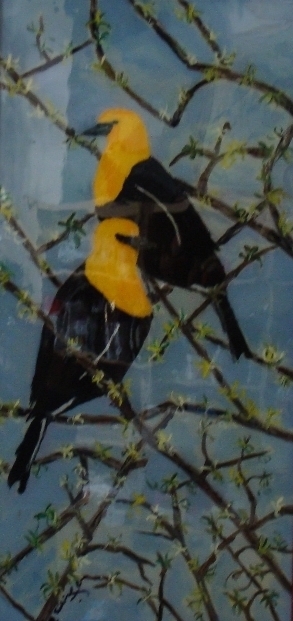
                                                                     Yellow Headed Black Bird
by Marilynne Eichinger

Can You Potty Train Your Bird?  

Pet ownership is thriving in our country. Over 84 million have been adopted by Amercian households. According the American Veterinary Medical Association 36.5% of households own dogs, 30% own cats, 3.1% birds and 1.55 horses. The majority of pets are obtained from family and friends with 20-30 % of cats and dogs adopted from shelters and 2-10% purchased from pet shops.

Our cat came from a shelter, but when we got her home we realized that she had been badly abused. It took years to make her coat shiny and to have her relax to the point of letting us rub her head. She now is a most agreeable, though still on edge at times.

Pets are acquired for many reasons such as  teaching responsibility to children, companionship for adults, assistance to the handicapped, and therapy for the ill. They are socializing agents helping people overcome their reluctance to start a conversation. Emotional and physical well being is often enhanced with a companion animal. Healthy exercise is part of the routine for those who walk their dog daily. Grooming and petting provide tactile connections that human beings need and often don’t get as they reach old age.

Pet owners in general develop an understanding of what it means to give and receive unconditional love, loyalty, and sympathy. Caring for animals encourages kindness and understanding. Service animals lead the blind across streets, help the deaf hear alarms, provide warning signs for those living alone, and give an overall feeling of safety. In addition companion animals help lessen the feeling of loneliness, lowering blood pressure and even cholesterol levels.

Birds are not  are not quite as cuddly but still fall in the fascinating and beautiful category. I enjoy watching them in my backyard feeder or on outings to Malheur national wildlife refuge when migrating in the spring. Last year, with help, Ray and I identified 164 species of birds  at Malheur in just five days. The Yellow Headed Blackbird picture above was painted after last year’s excursion. These birds in the wild, however, are not pets.

A friend of mine enthusiastically shared stories about her Double Yellow Head Amazon Parrot. The bird talks and sings whenever anyone is around. It is pretty amazing to observe how appropriate it’s phrases are to teach situation. My friend keeps the cage open and lets her bird fly around the house without being afraid of poop landing on furniture or carpet. She claimed that she was able to “housebreak” her parrot and teach it to relieve himself in the proper spot. Wow! I found that statement hard to believe so I did some investigative research to find out if that was possible.

What I found was an overwhelming affirmation, especially with “hookbill” birds. You can train a bird much as you train a dog, but you do need a lot more patience. Birds are very intelligent, responding to expressions, soft speech, and the punishment of being put back in the cage.

If you give attention to a bird or animal you will start to understand why emotional attachments get formed. Pets can help you learn, grow, and become a more satisfied person! But please remember that if you are purchasing a new feathered friend, make sure that it is legal and not a kidnapped bird on the endangered species list. When I was in Costa Rico with my grandchildren we participated in an early morning bird count and learned that local denizens were capturing Macaws to sell to the U.S. market. The result is diminishing populations and endangering their survival. Macaws are beautiful birds that belong in the wild or purchased from a supplier in the United States that raises them for domestic use.

I would love to hear your thoughts.

Artwork is always for sale. Go to www.eichingerfineart.com for email me at mariliynne@eichingerfineart.com for more information.

To learn more go to:

http://www.veterinarypracticenews.com/July-2012/Feds-Propose-Protecting-Four-Macaw-Species-As-Endangered/ – Illegal capturing of Macaws.

https://www.google.com/?gws_rd=ssl#q=american+veterinary+medical+association – statistics etc.

http://www.animalfreedom.org/english/opinion/pets/why_do_people_want_pets.html : Why people have pets.

My Mysterious DNA

1361301l

Three Suns by Marilynne Eichinger
Mystery surrounds us; in our environment, with relationships, and within our bodies. Seeking…. we sometimes find ourselves.

My Mysterious DNA

Twice over the past several years I have had DNA tests. The first time was after my daughter asked me to find out if I had a gene that made me vulnerable to breast cancer. Though it cost a bundle, she was so insistent that I decided to take the test.
I went into the geneticist’s office and was greeted by a young man who carefully explained why my background might lead to a positive result. He discussed the odds, wanting to make sure that I understood limitations of the study, and my options. After having my blood drawn there was a waiting period during which I was nervous. Since results could not be given on the phone, I had to subject my self once more to an explanation of possibilities before he presented the findings. His wordiness only added to my feelings of angst. ‘Why was he talking so much?’ In the end the results were negative. I did not carry the gene for cancer that concerned my daughter and her doctor.

The second DNA test was a holiday gift from my partner Ray. He paid for my participation in the National Geographic Genome Study. I would be one among thousands of people tracking their ancient ancestors out of Africa. Since all human-kind is thought to have originated in East Africa approximately 180,000 to 200,000 years ago, DNA stories start there and continue by identifying paths traveled by various tribes as they moved thru North Africa, the Middle East, Asia and Europe.

When studying an individual’s DNA, scientists look for certain genetic markers that result from occasional mutations. Because these variations are passed on to the next generation they become the new line to follow. Markers enable geneticists to plot the evolutionary trail of a particular family, and in my case, identify when my ancestors changed from hunter gatherers to farmers.

It was not long before a kit of cotton swabs arrived with instructions to rub them on the inside of my mouth before placing them in an envelope to be returned for analysis. The promised waiting period of six weeks dragged on for three months before my curiosity could be satisfied, but while I waited the researchers did make it easy to follow their progress online. Finally a notice arrived on my computer that the information was in hand and I could discover my story.

I learned that my family traveled through the Mid-East, stopping in Egypt, Lebanon, and Jordan. My ancestors then went north through eastern Europe, eventually heading towards England. The most fascinating part, though, was to discover that I had minuscule amount of Neanderthal genes in my DNA. This information was certainly up-to date-science, because it has only been a short time since scientists realized that intermingling of Homo sapiens with Neanderthals in the Mediterranean area less than 100,000 years ago. About 2% of most people who descend from Europeans, Asians and other non-Africans is Neanderthal. In an article in Science and Nature last year geneticists speculates that cross-breeding my ave given humans genes that enabled them to live in cooler climates, but they also may have had increased fertility problems.

Ray also had his DNA analyzed, and his results tell a completely different and more thorough story. Because he has an XY chromosome both the female and male ancestors could be analyzed. My tests could only delve into the XX chromosomes that follow the female line. Some of Ray’s ancestors had traveled to Spain, intermarried with the Jewish population and remained there for about 5000 years before moving on. Part of his family went north through Eastern Europe while other traveled through Asia to Micro Oceana (Taiwan, Hawaii).

As a totem pole carver he has always been interested in documenting his native connections and now suspects that he probably has closer ties to Kennewick man than to the Clovis people who traveled in later years through the Bering Straits. This hypothesis can not be confirmed, however, because there DNA testing on Kennewick man is tied up in court battles though non-invasive bone analysis has occurred and Ray looks exactly like an artist’s rendition of what Kennewick man might have looked like. We suspect that Ray’s relatives arrived from Asia about ten to fifteen thousand years ago. It was thousands of years later that east met west, and his Asian ancestors intermingled with European pioneers who settled in Washington.

Anthropologists suggest a northern branch of Eurasians traveled an ice bridge connecting the islands of the Bering Strait, traveling as far south as Chile, 1000 years before the Clovis people arrived. Other scientists believe there were early migrations from Europe to eastern North America. There are still many unanswered questions. But as scientists continue to look for genetic markers, gaps in our understanding will get filled in to more accurately connect recent history with the distant past.

Many exciting developments have resulted from the human genome study. Fields such as forensics, pharmaceuticals, medicine, and agricultural have been impacted. Biology is the new frontier, undergoing major changes since I was in high school studying peas. It certainly is a field to pay attention to.

All art work is for sale: Go to www.eichingerfineart.com to learn more.

For More Information go to:
http://www.nature.com/news/modern-human-genomes-reveal-our-inner-neanderthal-1.14615; About interbreeding of Neanderthal and Homo Sapiens.
http://www.japantimes.co.jp/news/2014/10/23/world/science-health-world/oldest-homo-sapiens-dna-contains-traces-of-neanderthal-genes-suggests-migration-into-asia-60000-years-ago/#.VLXekIs9ei4: about Shomo Sapiens in Asia with traces of Neanderthal genes.http://
www.nature.com/news/ancient-migration-coming-to-america-1.10562 : Arrival of Clovis people verses earlier migrations.

Creating Captains of Industry

1339830lTraining the next generation of entrepreneurs.

Creating Captains of Industry

The term Captain of Industry was first used in the United Kingdom during the Industrial Revolution to describe a business leader who contributed positively to his country while amassing a fortune. It indicated that he was able to increase productivity, create a great many jobs and expand new markets while remembering his duty to society as a philanthropist. The term resurfaced recently after the dot.com bubble burst and was used for those strong enough to survive the turmoil. People like Bill Gates, co-founder of Microsoft, Peter Thiel, venture capitalist and founder of Pay Pal, and Steve Jobs, founder of Apple Computer, are among those who fit into this category.

There have been books written about these men that analyze what makes them so special. One common thread is that they shared a rich and varied childhood that was filled with educational opportunities along with parental encouragement to be creative.

As a boy Steve Jobs and his father, a Coast Guard veteran and machinist, spent hours doing electronics in their family garage. Throughout his childhood Steve had the warmth and support of his family. He was an intelligent innovative thinker, often frustrated by the traditional school system. His enrollment at Reed College was short lived and he spent some of his college years traveling and looking for spiritual enlightenment. Working with Dad gave Steve mechanical skills, stick-to-it-ness, and the confidence that eventually propelled him to take his hobby to the work place. His spiritual quest helped him think in new ways. He and friend, Steve Wazniak, started Apple Computer together in his family’s garage.

Bill Gates, born in Seattle, also grew up in a warm supportive family. By the time he was 13 years old he was showing a strong interest in computer programming. He, too was an innovator, encouraged by his parents to strive for excellence and to be competitive. Bill enjoyed playing board games and athletics to win. His socially minded mother introduced him to charity work and took him with her when she volunteered. At the age of 15, Bill with his friend Paul Allen started a company called “Traf-o-Data.” The company netted
$20,000 and he wanted to drop out of school to continue in business. Dad insisted that he complete his education and after high school he enrolled at Harvard. Bill’s passion was always in the computer lab, and he and Paul Allen continued their friendship while he was in college, coming up with an idea that eventually became Microsoft.

Peter Thiel was born in Germany, moving to the US as a toddler. He is one of the most successful venture capitalists in the tech industry. Now president of investment company, Clarian Capital, he co-founded PayPal and was the first angel investor in Facebook. Thiel is a math genius who was a national level chess player at one time claiming that his competitiveness and intellectual skills were developed by playing the game. Peter is somewhat of a loner, is a self proclaimed Libertarian with a “Born to Win” attitude. As a Stanford University man he studied philosophy and law and worked on the Stanford Review with the same intensity that consumes our other Captains of Industry. Thiel is considered to be somewhat nerdy, loves intellectual discussions with friends, hangs around coffee shops, is a philanthropist and dreams of a utopian world where everyone lives to 150 years. He started PayPal with the belief that it would help society by giving people individual and financial freedom.

What are the attributes that these three men share and how do you encourage the children you know to develop them? Each child grew up in a stable and loving family that supplied a foundation of security and trust. All had parents who supported their intellectual development, making sure they were broadly educated, allowing for idiosyncrasies to blossom outside of the school system. The three men became involved in endeavors they were passionate about while they were still in high school.

Whether it was computers, electronics, or chess, they were encouraged to master what they were doing, and experienced great enjoyment from being totally immersed in their pastimes. They had the ability to concentrate, to persevere when there were failures, and believed strongly that they were winners. Each man developed deep friendships based on mutual interests and used their social network when starting their businesses. They were intelligent and encouraged by their families to think outside the box. Their families regularly involved them in discussions, introduced news topics, and helped them develop a social conscience.

As adults we can aide the children in our lives by helping them find their passion through involvement in science, math and the arts. Once a strong interest is shown, we can provide the tools and training necessary to develop their skills, encouraging them to concentrate and be tenacious so they can experience success that comes from mastery.

Passion breeds excitement, concentration, a willingness to become totally immersed, and to work hard. A by- product is the friendships developed with those who share interests. Once this type of passion is experienced, a person can not help but want the excitement it produces to continue. Lessons learned as a child will transfer to other endeavors throughout life.

Our role as family and friends is to supplement the school system. Since we know our own children better than anyone else, we can better help them find their passions, and set the stage for our next Captains of Industry.

Want to know more? Try the following references:

Steve Jobs by Walther Isaacson
http://www.wired.com/2012/07/ff_stevejobs/all/ The Story of Steve Jobs: An Inspiration or a Cautionary Tale? 2012

Bill Gates: a Biography by Michael B. Becraft
http://www.biography.com/people/bill-gates-9307520: Bill Gates Biography

Zero to One by Peter Thiel

Peter Thiel: Entrepreneur.Investor.Author.Former national chess master. 2014

Birthing Knowledge

1353332xl

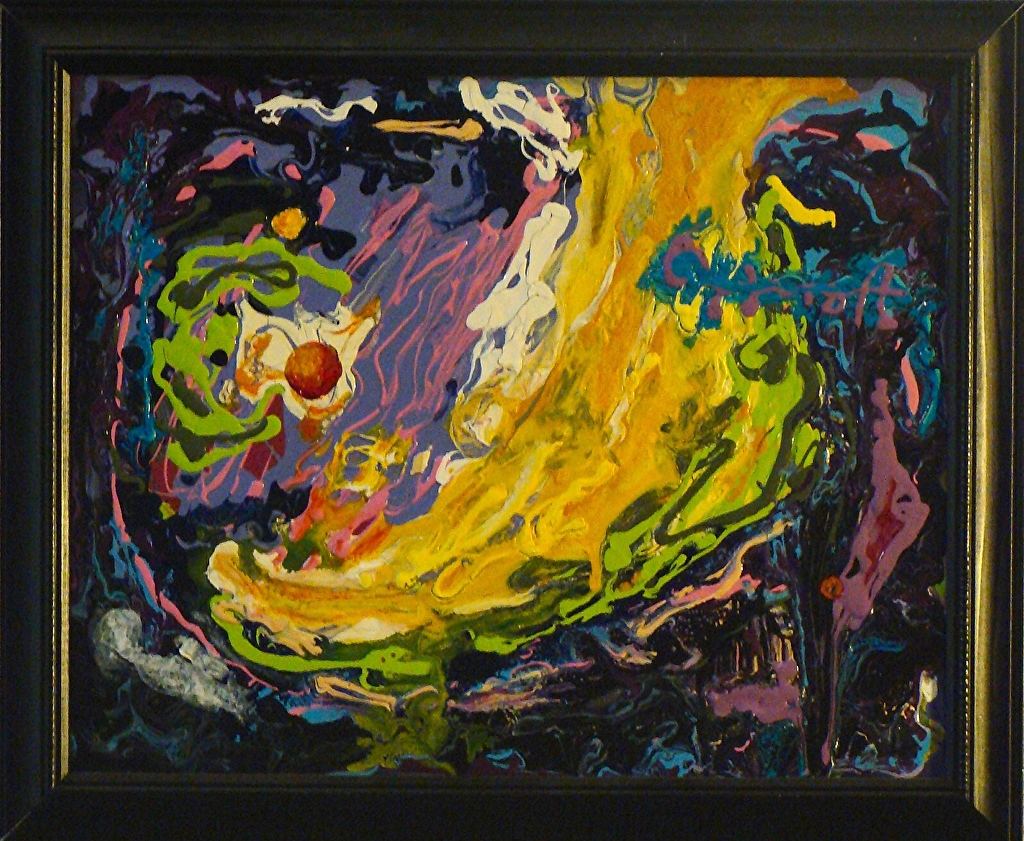
Cosmos – Birth of a Star

Birthing Knowledge
Studies of the brain are spurring a revolution in education for young and old alike. Using a variety of research techniques, scientists are better able to observe how the brain learns, thinks and remembers. Understanding the brains of babies is the first step to developing a concept for a life of learning for they are masters at absorbing new concepts.

It used to be that scientists thought of infants as defective adults, egocentric, irrational and unable to understand cause and effect. Research is proving these theories wrong. At the forefront is Dr. Alison Gopnick, professor at UC Berkeley, and a leader in the study of children’s learning. She claims that children “possess a great deal of knowledge, literally from birth and grown ups are designed to unconsciously teach the young the very things they need to know.” She also believes that adults would do well to maintain, throughout their lives, the flexible exploration methods used by infants.

A July 2010 Scientific American article titled How Babies Think discusses the findings of Dr. Gopnick who lectures that children become acquainted with the world much as scientists do, conducting experiments, analyzing the results and forming intuitive theories or hypotheses. She suggests that brains are a kind of computer designed by evolution and programmed by experience .

I will never forget watching my son learn how to maneuver the stairs of my sunken living room. Over and over he crawled up the five carpeted steps. My husband or I would turn our toddler around at the top so he could back down only to start the process over again. He was relentless until he mastered the task, showing his displeasure by crying when we tried to pull him away. Our son was a young experimenter at work.

Babies are engineered to learn. Harried parents may call the mess they make getting into everything , but to the child all that they do is one big experiment. I watched a video of one of Dr. Gopmick’s test subjects and was impressed with how brilliant the pre-school boy appeared to be. When directed to solve a puzzle that would light up a box he develop hypotheses after hypothesis, testing each one before discarding it and going on to the next. In two minutes, five different pathways were taken in quick succession before successfully completing the challenge.

Infants are able to take in and process a great deal of information all at once from a wide variety of sources. Their consciousness appears to be expansive. They are not as good as adults at narrowing attention to a single detail which is needed to develop careers and master concepts. However, we do have a lot to learn from the wide-ranging approach of infants. As grown ups we often cut off information lines too early and make problem solving more difficult than need be.

An example close to home comes from watching my grandchildren try to correct a computer bug. Even when they do not know what is wrong they feel confident in their poke and try repair method. It always surprises me that their trial and error technique usually works. I, on the other hand, approach computer issues with purpose and timidity. My single minded approach is much less playful and filled with frustration. I recently resolved to change and decided to copy their bravado. Much to my amazement I have been rewarded with occasional successes. Yea! I pat myself on the back.

This brings me to my New Years resolution for 2015 . . . Don’t be afraid of failure. Take in as much information as possible and try . . .try . . . try. I am reminded that babies are the fast learners, so I plan to follow their example and keep on plugging away.

Happy New Year Everyone! May your dreams and wishes come playfully true.

To comment go to https://secretsofamuseumjunkie.com

For more information go to:

The Scientist in the Crib: What early Learning Tells Us About the Mind by Alison Gopmick, Andrew N. Meltzoff, Patricia K. Kuhl.

The Philosophical Baby: What Children’s minds Tell Us About Truth, Love, and the Meaning of Life by Alison Gopnik

http://www.ted.com/talks/alison_gopnik_what_do_babies_think?language=en – Video about What do Babies Think Filmed July 2011

An Elephant Never Forgets


2007_0712Kenya0295 2

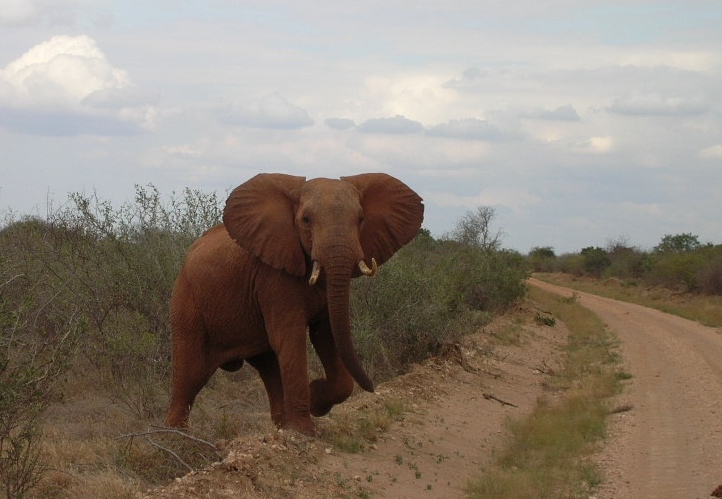
Startled Bull Elephant Chases our Land Rover.

An Elephant Never Forgets

A number of years ago I participated in an Earthwatch research project at Tsavo National Park in Kenya under the tutelage of Dr. Barbara McKnight. For several weeks I lived and breathed elephants, tracking from our rugged Land Rover a portion of the 11,600 behemoths still traveling through the 21,000 km preserve. Since the area also contained baboons, lions, wart hogs, giraffes, zebras, hippopotamus, enormous venomous snakes, and rhinoceros to name a few, we were confined to our vehicle, and even instructed to pee quickly behind the SUV.

Eight hours a day we followed these beautiful creatures as they lumbered in family groups, trailing the matriarch from watering hole to feeding ground. We documented the herds by recording their size, direction of travel, antics, postures, and eating habits. Ear notches and scars told us which animals were returning to various locations. We recorded plants, listed birds and creatures nearby, including goats and cattle illegally encroaching on the parkland.

2007_0712Kenya0319 2

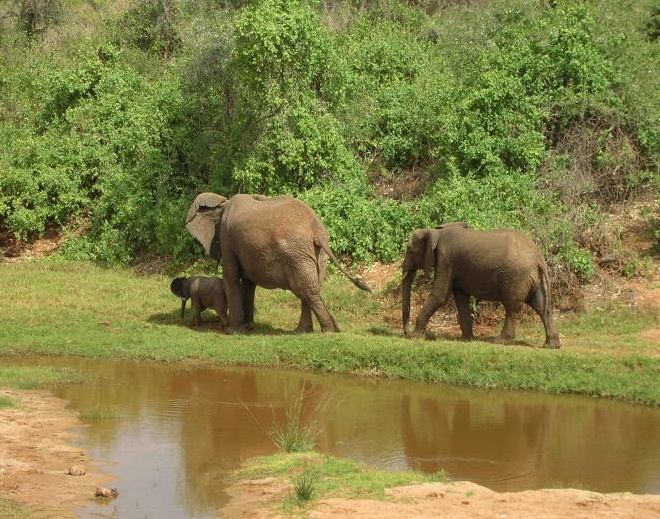
Most fun was watching playful baby elephants piling one on top of another, rolling off to scamper around their resting site. If they roamed too far away they were firmly nudged back to their mothers by a nearby female. When the herd took their hour nap, calves were placed in the center of a ring of outward facing adult cows. Eventually the matriarch would signal it was time to continue marching over the land to cover as much as 50 miles a day.

During the birthing process the entire herd will surround the laboring cow. Once her calf is born they trumpet with joy, taking turns touching the newborn with their trunks in greeting. The entire herd then becomes responsible for the safety and education of the newborn. While traveling the baby is placed between the protective legs of its mother. In case of death, the cow morns for days by standing over her calf’s body, covering it with twigs and leaves while other members of the herd visit to give comfort. The depressed mother knows it has to leave to find food and water, but as she does so she carries a trail of sadness.

At times we observed young bull elephants, recently ejected from the herd, traveling closely behind their mothers. More often we came across older bulls foraging alone. Once when we accidentally startled a bull, our vehicle was charged, much to the great fear of Dr. McKnight who backed away as fast as she could. Not understanding the danger, I could see fear in her eyes and sweat dripping from her face. When I originally went on this adventure, I had expected to return as a zoo volunteer, but after observing elephants in the wild, I was horrified at their condition in captivity.

And…I learned, that elephants never forget. They live up to 60 years in the wild, and their amazing memory is the key to their survival. According to Scientific American, “scientists now have solid evidence that elephants are just as brilliant as they are big: They are adept tool users and cooperative problem solvers; they are highly empathic, comforting one another when upset; and they probably do have a sense of self.” Their 10.5 pound brain is used to encode survival details of alternative routes to use in case of drought. They recognize faces of other elephants they may have come in contact with during periodic multi-herd gatherings. Though their eyesight is fair their sense of smell and touch are strong. By smelling urine they notice unfamiliar elephants who could potentially cause trouble.

An elephant’s memory develops with age and experience, but unfortunately the older animals are the ones poachers are likely to kill, leaving the remaining herd at great disadvantage. Youngsters watch in horror when their families are slaughtered and remember forever the faces of perpetrators. What the herd loses is the matriarch’s memory of survival routes. 35,000 elephants are slaughtered by ivory poachers each year, and these mass killings can turn otherwise nonviolent elephants into dangerous animals.

In captivity elephants recognize their trainers and those who care for them. Many zoos involved in protecting the species are starting to see elephants from their own perspective. In Portland, the Oregon Zoo is expanding its elephant area to 6 acres, a pittance for their needs, but far better than before. Food dolled out randomly at multiple sites will compel the elephants to explore in order to find their next meal. I am excited by the new enclosure opening in spring of 2015. It is about time. Perhaps I will volunteer after all.

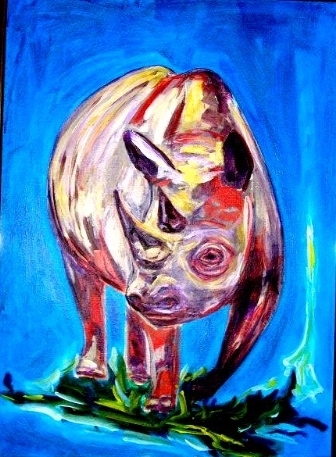
1353377lRhino Marching
Tsavo National Park had it all

I look forward to your comments.

For more information about Elephants:

http://www.scientificamerican.com/article/elephants-never-forget/ – Scientific American article Fact of Fiction?: Elephants Never Forget.

http://voices.nationalgeographic.com/2013/01/16/ivory-poaching-threatens-elephant-memory/ National Geographic – Ivory-poaching-threatens-elephant-memory

http://www.scientificamerican.com/article/the-science-is-in-elephants-are-even-smarter-than-we-realized-video/ Elephants Are Even Smarter Than We Realized.

http://mentalfloss.com/article/52381/it-true-elephants-never-forget – Mental Floss, About memory and Elephants.

http://www.wildize.org/projects/Wildlife-Security/Tsavo-Elephant-Research-TER-Dr-Barbara-McKnight/56 – About Research at Tsavo National Park.

Bio-feedback: A Case of Nerves

1339860l

Mao
Do you use bio-feedback to control the electrical pathways emanating from your brain?     Bio-feedback; A Case of Nerves

The autonomic nervous system(ANS) has fascinated me ever since I watched a psychology movie of a person controlling an HO electric train set with his brain. Without conscious effort, the ANS sends impulses to organs of the body, and controls such things as heart rate, breathing rate, blood pressure, body temperature and other instinctive activities that maintain equilibrium. In the train experiment the subject had probes placed on two fingers and was told to make each digit a different temperature. Most participants were eventually able to make the toy train move. What the researcher had designed was a vivid use of bio-feedback as a way to teach the brain to move blood.

The film made such an impression on me that I decided to turn the experiment into an exhibit at the Oregon Museum of Science and Industry. A sound booth was built and placed adjacent to a circular HO train course. Visitors were directed to place two fingers on the temperature probes that were inside the glass booth that overlooked the course. Unfortunately, I was never successful in making the train move, perhaps because I did not spend enough time practicing. But I did observe others who were actually able to make one finger warmer than the other by directing different amounts of blood from their brain to each finger. Spectators were as amazed as I when the train started its slow journey around the track.

Commercial devices are now available that can translate the brain’s electrical patterns to make objects move, as well as alter sound waves. NeuroSky, a San Jose-based company, developed a toy that enables the player to turn the blades of an eight inch helicopter and make it soar. The participant experiences success by concentrating on a single thought, turning on electrical patterns inside his brain. The outcome not only makes the helicopter fly but changes his emotional state to produce a sense of calm and relaxation.

A number of years ago I observed a medical application of mind-body control being conducted in a Portland bio-feedback lab that helped those suffering from severe migraines. A patient was hooked up to electrical sensors and told to pay attention to the line on a monitor that responded to change in blood flow. The idea was to send the blood away from the head to body extremities such as hands or feet. With practice hot hands, as it is often called, can be an effective way to reduce headaches.

The Mayo clinic is one among many health centers active in training people to control such things as heartbeat, asthma, anxiety and muscles to reduce pain. Bio-feedback gives the patient power to control thoughts in mind and body in order to improve health and physical conditioning. Use of a bio-feedback machine does take time, however, and practice sessions may be costly. Relaxation techniques and meditation are a less expensive alternative.

Chemicals are more widely used to control parts of the brain. Everything from pain killers to sleeping aids are found in medicine cabinets throughout the country. In the 1960s and 70s my Boston friends were playing around with LSD. I remember one neighbor telling me that the idea behind acid was to gain insight into the brain’s possibilities so you could then work to achieve that state without drugs. The woman who spoke to me had experienced brilliant colors and sharp images while on an acid trip. She spent months afterwards meditating in order to relive the experience at will.

As an aside, I do not recommend that you try this chemically induced state. When I worked in a mental health center I observed patients who took LSD and could not come out of the experience. According to a 2013 Popular Science article, there is renewed interest among scientists in studying the use of pharmaceutical grade hallucinogenic drugs in psychiatry. Clinicians believe that it could help cure some of our most debilitating problems such as alcoholism, depression and PTSD. It will be interesting to see if their experiments turn out to be successful.

I have been meditating on and off for forty years and have found it to be most beneficial. Several years ago I had to undergo a series of operations and wanted to make sure that I would be a stress-free patient. Meditation did help me enter the hospital with a calmness of mind. Yogis say that once your realize that your body/mind is within you but you are not your body/mind everything changes.

Scientists have studied change by using magnetic resonance imaging (MRI) on meditators while they practiced two forms of meditation, one non-directive and the other concentrative. In an article published in the journal Frontiers in Human Neuroscience researchers under the direction of Svend Davanger at the University of Oslo in Norway found “that when participants practiced non-directive meditation, they had higher brain activity in areas associated with processing self-related thoughts and feelings than when they were resting. But when subjects practiced concentrative meditation, their brain activity was nearly the same as when they were resting.”

Dr. Davanger suggests that non-directive meditation “allows for more room to process memories and emotions than during concentrated meditation.” He was also surprised to learn that “a mental task like non-directive meditation results in even higher activity in this network than regular rest.”

Many people ask me how I can carve out time to meditate in a busy schedule and my answer surprises them. For every minute I spend mediating I reduce my need for sleep an equal amount or more. Meditation puts my brain waves into a relaxed state, and it has a creepy-crawly effect that expands to fill my mind throughout the day.

To review my art go to eichingerfineart.com.

For more information about the autonomic nervous system:

http://training.seer.cancer.gov/anatomy/nervous/organization/pns.html- about the peripheral nervous

system.http://www.npr.org/blogs/alltechconsidered/2014/01/21/263078049/brain-games-move-objects-with-your-mind-to-find-inner-calm – move objects with your brain.

http://www.mayoclinic.org/tests-procedures/biofeedback/basics/definition/prc-20020004- Bio-feedback and control of body functions.

http://www.ncbi.nlm.nih.gov/pubmed/19935987 – research on bio-feedback and migraines.

http://thelazyyogi.com/post/34377765370/meditation-why-what-and-how – about meditation.

http://www.medicalnewstoday.com/articles/276959.php- article in Medical News about how the brain works during meditation, May 19, 2014

It’s a no-brainer – Secrets of a Museum Junkie

1339829lThe Studio    

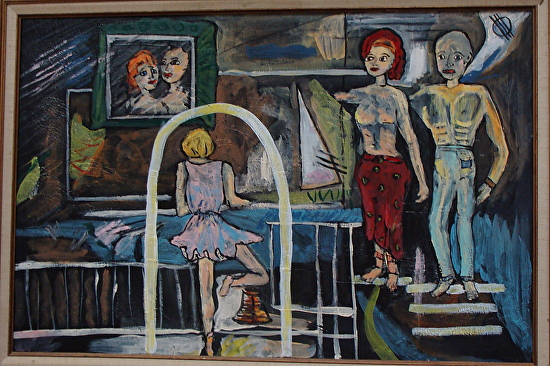
 A young girl innocently practices dancing while elders observe. Will her life embrace the grace and happiness she imagines? With age will her body remain supple? Her brain alert?

It’s a no-brainer

Since my retirement I have been engaged in new exercise classes and am enthralled. At the top of my list is Nia, a program that combines Martha Graham type modern dance with Tai Chi, Tai Kwan Do and mindfulness. Nia’s website claims that “it is a movement and well being program that connects body, mind, emotions and spirit by paying attention to sensation.” To get a better idea of this eclectic study, imagine yourself as a child, twirling gracefully with head thrown back to the falling leaves when a danger suddenly approaches. You stop, look around, tightening your body and prepare to run. Nia alternates a graceful flow that feels like you are moving in a bowl of jello with precision, balance, and speed. There is no room for a wandering mind as you move in preparation for the unexpected. As Mark Morris of the Mark Morris Dance Group says,
“ movement is like having a sixth sense, one that helps you understand your position in space.”

As a child I was clumsy and my mother was concerned because I tripped while walking so she enrolled me in dance classes. However, falling at a young age was not a worrisome condition since my body was close to the ground. Now that I am older, a fall could be quite serious, so coordination and balance are skills that I am inviting back into my life. But best of all, with this exercise regime I feel more spirited.

I started to wonder why I have the sensation of being more alert, and decided to do a bit of research about the influence of movement on the brain. What I discovered is that as I practice, signals are being sent from my motor cortex through 20 million nerve fibers in my spinal cord to my legs and arms, enabling me to go through my day with greater ease. A constant internal conversation is taking place between my muscles and my brain. Every small step or blink of the eyelid gives proof that the highway between between these two parts of my body are actively engaged. The brain directs our bodies much like an orchestra leader, telling it where and how to turn, tap, or flow through space. Resulting movement has the effect of improving mood and concentration.

The Cambridge Centre for Ageing and Neuroscience (Cam-CAN) refutes the popular view of aging as one of decline and decay. They say that “the brain remains flexible and adaptable across the lifespan.” Since most neuroscientists now claim that the brain can continue to expand its neural network, rather than sit lazily at home, we are advised to take on new challenges throughout life. “Change your job, try a new hobby, vary your exercise routine and socialize with others,” is the advice given for building new synapses.

My daily program also focuses on mindfulness, which according to Harvard neuroscientists can change brain structures after only eight weeks of practice. Their research suggest integrating mindful intention into all daily activities including walking, eating, sitting, making the bed, etc. The Harvard study revolved around 45 minutes of exercises that included yoga, sitting mediation and some sort of mindful movement. As a result, practitioners gained a sense of peacefulness and physical relaxation along with cognition and psychological benefits that lasted throughout the day. MRI scans confirmed that mindfulness increased gray matter in the areas of the brain involved in learning, memory, emotion regulation, sense of self, and perspective-taking (the ability to take the perspectives of others).

I had been fearful of retirement, imagining that without work I would start to wither. Instead, the opposite is happening and I have a sense that my mind and body are burgeoning. My participation in movement and mindfulness classes has led me to feel, energetic and happy to engage in new ventures.

It would be fun the hear what you are doing to keep your brain developing.
Click the URL at the bottom of this page and respond on the Blog site.

References:

http://www.brainfacts.org/sensing-thinking-behaving/movement/- discussion of movement and dancing and the brain.

Society for Neoroscience- reviewed May 2014 – Dancing and the Brain.

http://www.ascd.org/about-ascd.aspx – Curriculum development for mind-body links

https://nianow.com/practice – Information about Nia.

http://www.mindbodygreen.com/0-12793/how-meditation-changes-your-brain-a-neuroscientist-explains.html – Harvard study about mindful meditation.

http://www.cam-can.org – Cambridge Centre for Ageing and Neuroscience – Recent research on aging.

http://learn.fi.edu/learn/brain/exercise.html – Information about the brain from an exhibit at Philadelphia’s Franklin Institute.