The Anthropologist’s Way

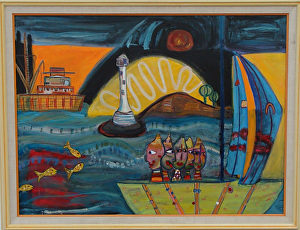
Summer Night’s Dream
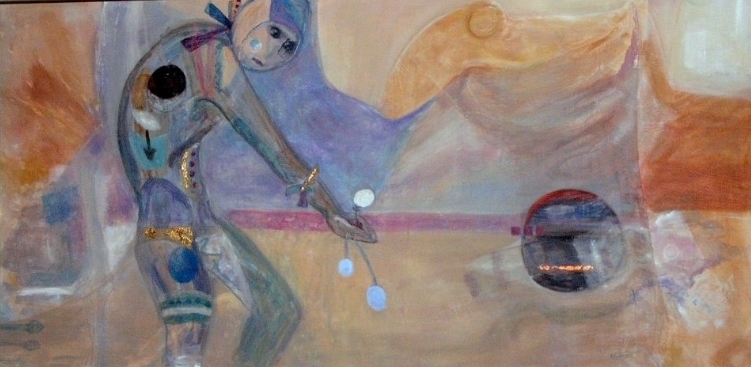
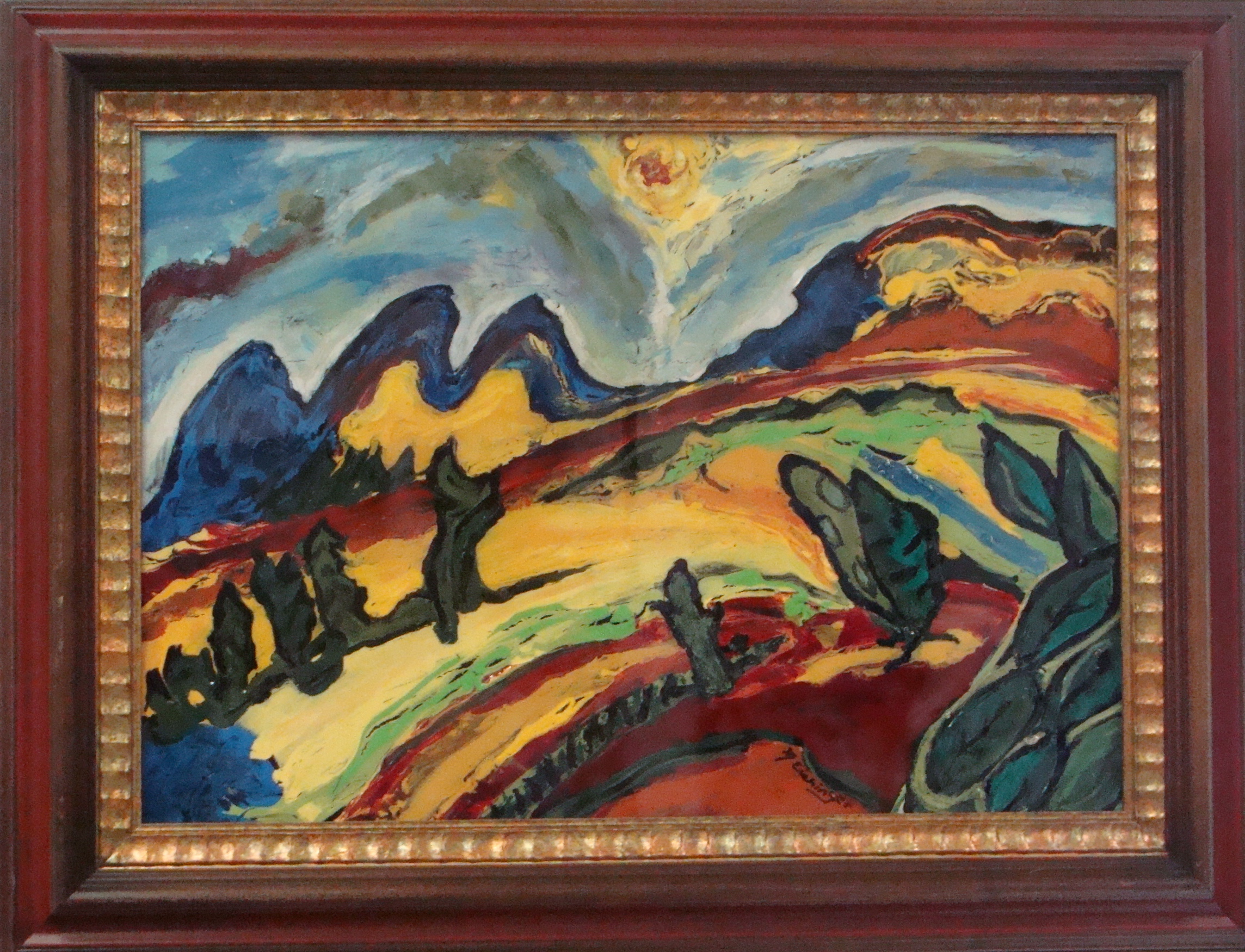
Acrylic on Canvas, 26” ato 32”, Gold Frame, $498

We are afloat in a world that has changed. The systems we grew up with in comfort are no longer applicable for a blended society that spans the globe.

The Anthroplogist’s Way

In college I majored in cultural anthropology, a pursuit my parents thought was one step up from useless. Since they assumed I would get married rather than travel the world to live among exotic tribes, they were not worried and never complained. They were right since I did get married at 18 and was a mother at 21. I never did go to the outreaches of Nigeria where I hoped find an unstudied people who would carry me to fame and fortune.

Looking back, I realize that I could not have made a better choice of major. Anthropology taught me a great deal and continues to guide my thoughts. It helped me understand how each person is culturally tied to the world from a unique vantage. And, though we reside within communities, our individual struggles make each of us the center of our own universe. We peer through tinted glasses shaded by family, community, economic conditions, and our own experiences.

Yet, with all of our differences, societies are similar in that they are organized around common systems. To understand the interrelationships between individuals, groups and institutions we studied beliefs and ways of organizing. The systems are identified as:

-religious
-political
-family
-economic
-social classes
-racial diversity
-gender roles
-ethical values
-distribution of wealth

These categories create an exchange of energy that defines the whole. Every society has them yet in each they differ.

Once I realized that societies have similar organizational needs, I reasoned that ego-centricity is the main cause of tension between cultures. The more I learned, the more difficult it became to define a particular system as good, better or best for it was created relative to the totality of everything in the environment.

I thought of how clothing can define a culture, yet they most likely were designed to accomadate a particular climate and habitat. For instance, those living in a Middle-Eastern desert would need to cover head, face, and body for protection from sandstorms and the burning sun. After realizing that these garments work well in harsh conditions, it is probable that the fashion was spread by nomads to nearby towns and cities. Since men and women’s bodies in Middle-Eastern countries are fully covered, their garments may also have contributed to ideas about morality and modesty. Of course, this is speculation on my part, but it makes some sense.

My high school history books talked about how ancient societies of hunters and gatherers slowly evolved to live a more agrarian existence. Further readings explained how pregnancies were welcome, for multiple births insured the group’s survival. Childhood diseases and accidents were rampant before antibiotics and deaths frequent. Hunting was dangerous and farming families needed many hands to till the land.

Today’s world has different challenges. Augmented farming methods give us the ability to feed more mouths with less need for labor. And though the birth rate has slowed in industrialized nations, population still increases in poor countries lacking resources. When a warming climate and war impacts those living in poor countries, families suddenly find that there is not enough safe, fertile land and drinkable water to survive. They are forced to migrate and come in conflict with strange organizational systems and beliefs.

Migrants as well as those in communities that accept them as immigrants become confused, don’t understand cultural differences, and have conflicting feelings about the ways “the others” view the world. The centers of their universes are now overlapped, causing tensions that can even lead to war. It happens quickly, with little time to accommodate.

Systems that previously worked well become suspect as migrants try to provide input even though most of their ideas are frowned upon by the dominant society. Few of us want to change. We hold on to our beliefs as though they are etched in stone forever more. We scream, fight, belittle, and say that we will not move away from what we have always known. We prefer to remain in a childhood comfort zone.

Time does not stand still and migrants do influence change. Societies constantly and painfully reorganize systems that mix cultural norms. The pushing and shoving, giving and taking that goes on around us is exacerbated by war, climate warming, population growth. Eventually a synergy results from this blending of cultures and people slowly adapt.

There are no absolutes. As mentioned earlier, we each see things from the center of our own universe. Einstein spent his waning years looking for a unified theory of the universe. His search for one unqualified, universal truth remains an unsolved challenge. We may never know absolute truth and for now, at least, have to deal with uncertainty and chaos.

What this means for most is that we must constantly question and realign systems as new input is received. It involves investigating beliefs and allowing that there are conflicting views that may be valid but we may never know for sure.

My parents would be surprised to discover that an anthropologist’s way of looking at systems might help different cultures coexist ccompassionately. By exploring common needs around food, water, land use and population perhaps rational decisions can be made to reorganize systems to benefit the majority.

Let’s also agree that it is OK to disagree when it comes to items of religious faith and embedded customs that do no harm to others. To live on this earth together, we have to bend a bit.
bend a bit.References:
1. Definition of Socio Cultural Anthropology, http://www.cod.edu/dept/anthro/cultural%20anthropology%20definition.htm
2. Noakes, Zoe, Why do the Poor Have Large Families? Compassion, January 2011, https://www.compassion.com.au/blog/why-do-the-poor-have-large-families
_______________________________

I look forward to your comments below.

Art is always for sale. Contact me at marilynne@eichingerfineart.com
Science vs Belief

Rub a Dub Dub Five Men in a Tub

Acrylic painting on Canvas/ 42” by 54” / $ 790

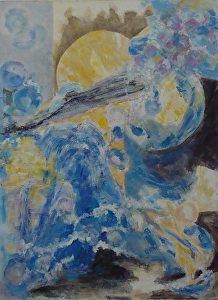
Courageous explorers set out to sea and disproved the flat earth theory. What if they hadn’t? Galileo was punished for saying the earth travelled around the sun. What if he (and others) hadn’t? Salk wiped out polio with a vaccine? What if people had refused to give it to their children?

Science vs Belief

In 2015, Julie Beck wrote an article for The Atlantic saying Americans Believe in Science, Just Not its Findings. Though 79 percent of Americans do think life is much easier because of science and that investments in research are worthwhile, they question their findings. A recent Pew Research study shows that there is a large gap between what the public believes compared to the beliefs of scientists. I quote the following:

Genetically modified foods: 88 percent of scientists say they’re “generally safe” to eat; 37 percent of the public agrees.

Vaccines: 86 percent of scientists believe they should be required in childhood, compared to 68 percent of the public.

Climate change: 94 percent of scientists say it’s a “very serious” or “somewhat serious” problem; 65 percent of the public agrees. 87 percent of scientists blame humans; 50 percent of the public does too.

Evolution: 98 percent of scientists say they believe humans evolved over time, compared to 65 percent of the public.

There were also large disparities on issues like whether it’s safe to eat foods grown with pesticides (scientists: 68 percent; public: 28 percent), and
whether the world’s growing population will be a problem (scientists: 82 percent; public: 59 percent).

Instead of trusting facts, the public tunes into feelings. People are quick to go to pseudoscience when they want to refute a claim they dislike, for most any reason. Strangely, though they trust and respect scientists, they don’t believe in their evidence-heavy research. Dan Kahan, professor at Yale Law Schools says there is a “creeping anti-science sensibility” overtaking the country and it is gradually getting worse. I wanted to know why?

Pew research scientists say that the fault is with the media because of they don’t know how to present complex information in a concise manner that can be easily digested by the public. Scientific information does not lend itself to be communicated through sound bites and reporters don’t know how to capture people’s attention for a long enough period of time to present all of the facts and nuances. Most people have stopped reading newspapers altogether and they avoid cumbersome science stories.

However, there are other factors to consider besides the media. Religion, jobs, and past experience with faulty science causes people to reject studies they don’t like. Preferring childhood indoctrinations and the faulty conclusions they surmised from personal experiences, they use them as a guide to evaluate valid research findings. In other words, they stay committed to their own beliefs which may or may not be based on tested results. It may be why so many people believe that ghosts are real, that holding your laptop on your lap will make you sterile, that talking on your cell phone will give you cancer, or that sugar makes your kids craz. They also commonly spout that hair and nails continue to grow after you die, that crossing your legs gives you varicose veins, and that brown eggs are better for you than white.(they are both the same)

The 2015 international student assessment test (PISA), given to 15 year olds, showed that out of 71 countries the United States placed 38th in math and 24th in science. Though math scores steadily increased since the early 1990s, in 2009 they once again started to dip. Science scores showed only a slight improvement. The American Association for the Advancement of Science (AAAS) blames our country’s overall weak scores on poor STEM education in the schools.

The numbers are worse when evaluating adults, for over 70 percent of Americans are not able to read and understand the science section of the New York Times. Only 28 percent of the population qualifies as being scientifically literate.The small percentage of those who are interested in science and engineering and continue on for advanced degrees excel. “The United states has done more to advance science in the modern world than any other country on earth,” says physician/researcher Danielle Teller.

Our engineering schools are among the top in the world and even medical research still remains among the best. At the highest level of academic achievement we do well, but among the general public’s understanding we fall behind. One reason may be that science writers have not been able to connect researched facts to daily life in order for it to have meaning. Instead, information is presented in confusing bullets that claim one thing to be the truth and then shortly after we are told their are nuances to the study that need to be more carefully evaluated. It is difficult for the average person to know what to make of the information so they stop trying. Rather than show their ignorance, many simply say, “I don’t believe it and who says so?”

What do we do about the public’s lack of understanding of science? How do we communicate to those who are not interested in science and what is important for them to know? For over 50 years the National Science Foundation (NSF) had a science initiatives that funded programs like NOVA, encouraged the building of science centers, and supported innovations in teaching. The present administration, however, wants to reverse the trend by cutting research budgets for NSF and NIS (National Institute of Health) as well as funds targeted to increase science literacy. I suppose their reasoning is that if they are not going to accept the outcome of the research, why conduct studies? If they do not want any one to discuss the contribution of fossil fuels uto global warming, why give out research grants? Should we care?


Science literacy is not just about facts for it prescribes what to do with them. It is about being able to predict and explain natural phenomena like volcanoes, tornadoes, and tidal waves. It enables informed participation in civic, cultural, and economic affairs and defines ways to make judgements about the future. Scientific literacy is crucial in that it affects everyday decision making, but it is also personal in that it encompasses societal values. Since many value-laden beliefs get applied to critical issues, to find science useful you have to accept that it is much more than the latest study.

Science is a way of thinking—a process involving ideas, collecting data, developing a hypothesis (an educated guess), testing, and coming to a conclusion only to start the process over again. It is not focused on the absolute perfect answer but rather the outcome based on the best information available. at the time. It involves challenging preconceived notions, over and over again in a never ending cycle.

It is difficult to live in a world without absolutes but due to high speed communication we are forced to do so. It is important to understand research findings and resultant innovations in order to decide if they benefit society. There are decisions to made and they can’t be based on thin air. We know how to make robots and drones. The societal question involves how we want to use them? Should they deliver packages, pick up passengers, clean our homes and add to workplace unemployment? How do we deal with the problems they create for those who lose their jobs? Answering questions like, “Do all children need to be vaccinated? Is there such a thing as clean coal? What is an acceptable level of toxins to allow in drinking water?” require knowledgeable decision makers.

Scientific literacy also includes understanding how data is manipulated and purposefully misinterpreted for political and business reasons. Informed people need to ask how data is being collected, what biases are involved, and who is footing the bill for the study. They need to be able to interpret statistical information in order to not be fooled. It also behooves us to look for mental laziness on the part of the investigator and to make sure that comfort results that reinforce cherished beliefs are not being sought. .

Facts can be used to reenforce long held beliefs or they can be used to shed light on the universe. They can serve as answers to curious inquiries and a platform for the next great discovery or as fodder for industrial moguls who want to negate findings. Whether science is used for good or for evil depends on our values and motivations. Since we are traveling speedily through the universe, clinging to the land by means of earth’s gravity, it behooves us to understand as much about it as possible in order to protect and sanely develop our spaceship.

References:

Beck, Julie, The Atlantic, 2015 , Americans Believe in Science, Just not its findings, In https://www.theatlantic.com/health/archive/2015/01/americans-believe-in-science-just-not-its-findings/384937/

Desilver, Drew, Pew Research Center, 2017, U.S. Students’ academic achievement still lags that of their peers in many other countrieshttp://www.pewresearch.org/fact-tank/2017/02/15/u-s-students-internationally-math-science/

Lombrozo, Tania, 2015, NPR, Scientific Literacy: It’s Not Just about the facts,
http://www.npr.org/sections/13.7/2015/09/14/440213603/scientific-literacy-it-s-not-just-about-the-facts

Teller, Danielle Quartz MEdia LLC, 2016,There’s a good reason Americans are horrible at science,https://qz.com/588126/theres-a-good-reason-americans-are-horrible-at-science/

Art is always for sale. Contact me at
marilynne@eichingerfineart.com
Please share your thoughts below.

____________________________________________
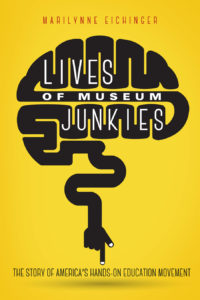
CELEBRATE! and learn about hands-on learning and the growth of art and science museums by naive but passionate directors from throughout the country.  Laugh and cry with them as you read their stories of trying to navigate the quagmire of running a non-profit organization.  
 
Lives of Museum Junkies — Upcoming Book Talks

Old Boys Club – Tigard –  April 28, 2017

Museum of Natural and Cultural History, University of Oregon,
Eugene – May 23, 2017
 
Lake Oswego Library  – June 20, 2017
 
High Desert Museum, Bend – October 5, 2017
 
Available for $19.95 Powells Books, Amazon, Barnes and Noble, Broadway Books, MAC Emporium, Also on Kindle for signed copy contact the author.

Violent Storms a’ Comin’

Surf’s Up
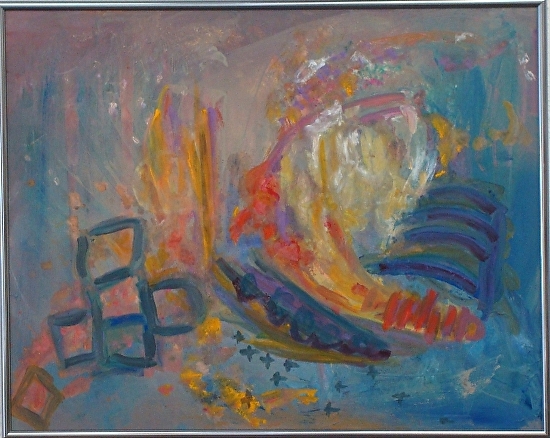
Acrylic on Canvas, gold frame, 48” by 36” / $ 699

Violent Storms a’ Comin’

A few days ago a friend of mine went to a Buddhist induction ceremony where Initiates were given a bowl and robe and told that from then on these objects would be their only possessions. Letting go of attachment, being mindful and focused, having kindness and compassion, reducing suffering and increasing happiness they are all that matter. Property ownership is meaningless.

His story made me wonder what it would be like to give up everything I own? I realize that you can’t take objects with you when you die but to possess and create beautify art has always made me feel good. As a visual person, the natural and human-made environments are important to me. Just as I appreciate observing birds in the wild I enjoy putting my hands around a lovely piece of pottery I own to feel ripples in the clay that the potter made when crafting a bowl.

While acknowledging that I was attached to my possessions, I switched the television on to the weather channel where they were reshowing images of the aftermath of Hurricane Sandy. I had never paid a great deal of attention to the trauma that beset the New Jersey Coast but when I heard the newscaster say Barnegat Bay, he grabbed my attention. My family had once owned a summer home on Long Beach Island. Located between the Bay and Ocean, the narrow strip of land bore the brunt of the hurricane’s force. It struck me that no longer can I bury my head and say that losing everything is not a possibility.

During the past two years, several trees landed on my property due to erratic weather conditions and rain saturated land. One smashed through the roof of my house and the second demolished a car in the driveway. In both cases, members of our family were inches away from being killed. Are these violent storms going the be the norm in the future? I decided to explore more deeply why a warming climate produces violent storms that include icy cold winters.

As early as 2007, NASA predicted that increased levels of carbon dioxide would make continents warm more quickly than oceans, resulting in storms becoming more vigorous. On the west coast, an increased amount of rain and snow may solve problems of summer drought as long as there are ways to capture water from saturated grounds that are prone to flooding. Overall, though, the west coast will increase lightning strikes which are prone to start wildfires. Central and eastern states will have their own set of problems. They will be especially vulnerable to more numerous severe storms and thunderstorms like Sandy, Katrina, Andrew and Ike. Social, economic, physical and psychological scars will be left behind.

Doyle Rice, writing for USA Today, reported on proceedings of the National Academy of Sciences. They also say that thunderstorms and violent tornadoes will have “ a robust increase across parts of the U.S in upcoming decades because of climate change.” They predict that between the Rockies and the Atlantic severe storms could increase as much as 40 percent.

“Two primary ingredients are needed to produce severe thunderstorms: The first is the fuel needed for these monster storms to develop — what scientists call “convective available potential energy” (CAPE). CAPE is created as the air in the lower atmosphere warms. The warm air rises, carrying with it moisture to higher altitudes. The second is vertical wind shear, a strong current of wind that helps spin up energy and moisture in the atmosphere.”

The Union of Concerned Scientists continues, “ As ocean temperatures rise, there is also less cold, subsurface ocean water to serve as a braking mechanism for hurricanes. When strong storm winds churn up cold subsurface water, the cooler waters can serve to weaken the storm. But if deeper waters become too warm, this natural braking mechanism weakens. Hurricane Katrina, for example, intensified significantly when it hit deep pools of warm water in the Gulf of Mexico.”

The Nature Conservatory predicts that rising temperatures will cause one-quarter of earth’s species to become extinct by 2050. Ocean acidification, heat waves, droughts, and floods are already endangering species. Poverty, hunger, and disease are among the reasons so many people migrate from their homes in Africa and the middle-east. Warlords in the area fight fiercely to control both oil and water. Without water for crops and animals and when homes are bombed, survival is at stake. What can a family do but seek shelter elsewhere? Though there have always been disasters, an increasing number of people worldwide are a displaced due to war and global warming.

Friends, climate change is not a theory. 97 percent of scientists agree that it is happening and that it is human-induced. Why would anyone but greedy people ignore this information? How come scientists are being forbidden to share the results of Surf’s Up

References:

Global displacement statistics from 1989 to Present from the Internal Displacement Monitoring Center: http://internal-displacement.org/global-figures

NASA predicts severe storms, 2007, https://www.nasa.gov/centers/goddard/news/topstory/2007/moist_convection.html
Rice, D, 2013, USA Today, Study: Climate change pumps up the risk of Severe Storms.

Nature Conservancy on Climate change: http://www.nature.org/ourinitiatives/urgentissues/global-warming-climate-change/threats-solutions/index.htm

Union of Concerned Scientists: Hurricanes and Climate Change: http://www.ucsusa.org/global_warming/science_and_impacts/impacts/hurricanes-and-climate-change.html#references

Works of art are always for sale. Surf’s Up / Acrylic on Canvas, gold frame, 48” by 36” / $ 699Contact me at marilynne@eichingerfineart.com
I look forward to hearing your comments. Please respond below.

Creating an Interactive Museum

Building BlocksBuilding Blocks

Creating a science museum is like playing with building blocks. It takes imagination, perseverance, and innovation to build a monument to experiential learning. The following excerpt is from the first page of Lives of Museum Junkies. Unusual consequences often occur from obscure beginnings and it is a pleasure to share them with you.

Creating an Interactive Museum: Naïve Beginnings

“Stop running and making so much noise!” I shouted to five rambunctious children playing hide-and-seek in closets throughout the house. It was a cold day and my friend Dee Pumplin was visiting with her son. She and I were having a difficult time hearing each other as we chatted animatedly in the kitchen. It was during this conversation that my homemaker days started to end, when over coffee in my suburban house we brewed up the idea of a hands-on museum that emphasized science. Children are not always polite, studious little creatures set on this planet to impress and please their parents.

Children are not always polite, studious little creatures set on this planet to impress and please their parents. Instead they are balls of energy who love to run, scream and create bedlam. In short they can drive a parent crazy, especially on a rainy day. As Dee and I talked, her one and my four children shouted and squealed, ignoring the storm roaring outside. The increasing noise level was like a drum roll announcing a new idea. We started imagining what it would be like to take our kids to an indoor playground. “Wouldn’t it be magnificent to have a great big barn,” we fantasized, “and fill it floor to ceiling with ramps, poles, and climbing apparatus? What fun it would be for the children and their friends. They would get rid of their energy away from home and our houses would be preserved.” Dee and I started to wonder where we could find a barn and even took the next step of contacting a realtor.

As we learned more, the vision for an indoor play structure grew. The immense dimensions of a working barn inspired our ideas to expand to include interactive learning activities inserted into climbing areas. We imagined children swooping down a sliding board and finding a light table, colored filters, and projectors to use for experimentation. The colored light could be projected on the next child speeding down the slide. We embraced the idea of physical play being integrated with academic challenges in a never-ending cycle of learning.

After months of talk and concept development, we finally located a barn, but it wasn’t long before we faced a dose of reality. The cost to acquire the property was more than we anticipated and building the inside play structure seemed monumental. The barn needed to be heated, insulated, electrified, bathroomed and water sprinkled and once it was upgraded, ongoing utilities would be astronomical. The permitting process was overwhelming to two inexperienced women who began to wonder if the city would even allow this type of play-barn to exist. Insurance was bound to be phenomenal, not only because we were dealing with a wooden structure but because we were planning to let children run throughout. We especially liked the idea of fire poles descending from one level to the next. Sound safe? Costs mounted, reaching an enormous number before we even considered the price of exhibits and staffing. . . . .

Lives of Museum Junkies is available through AMAZON, Barnes and Noble, Powells Books, Inkwater Press, and The-M-porium.

For a signed copy you can purchase from me for $ 19.95 plus $ 4 shipping. Contact me at eichingerbooks@gmail.com.

Artwork is always for sale: Building Blocks is a 24” by 28” acrylic painting on canvas in a gold frame. Cost is $450. Contact me at marilynne@eichingerfineart.com for further information.

perf6.000x9.000.indd

New Release: Former OMSI President Reveals the Good, the Bad, and the Ugly History Behind the Hands-On Education Movement

“…will help you see science museums in a new light.” – David Ucko, Museums+More llc
In this lively, behind-the-scenes look at the evolution of interactive science museums, discover:

How the Brooklyn Museum of Art was saved from closure by Mayor Rudolph Guiliani for showing a painting by Chris

How the Brooklyn Museum of Art was saved from closure by Mayor Rudolph Guiliani for showing a painting by Chris Ofili of the Virgin Mary that contained elephant dong.

Why an autistic child spoke for the first time on a science center visit.

Who kept NOVA from being canceled when congress did not agree with their investigative reporting style that explored sensitive subjects like nuclear energy.

What inspired a poor Appalachian orphan to go from rags to riches to become a museum president who later rented an entire cruise ship to see a global eclipse on the Amazon.

Why executives at the top are subject to sexual abuse and find it nearly impossible to manage.

The outcry caused by the Playboy Bunnies playing basketball with business executives to raise funds for a museum.

“recommended for those who care about museums, libraries and society today.”
– Ginnie Cooper, Directed Washington D.C., Brooklyn, and Portland library systems .


For the Sake of Righteousness

DSC07016For the Sake of Righteousness

Last week was spent in the sunny (and hot) Bahamas. Among other activities such as swimming with sting rays and snorkeling my granddaughter and I climbed the steps if the Sun Temple in Costa Maya. In ancient times the top platform was used to perform acts of human sacrifice in hope of influencing the gods to provide an abundant harvest. It was an honor to be chosen for this sacrifice and parents offered up their daughters DSC07035willingly. Those who complied were the self-righteous ones.

Their actions are not very different from those of radical Islamists today. Suicide bombers also have religious convictions that they are willing to die for. Their certainty about the way things should be is imbedded in their psyche and their faith is so solid as to not be easily shaken. In many Middle Eastern countries the families of suicide bombers are given a monetary reward for their loss and parents are resteemed for having produced such a religious child.

Christianity is no stranger to this phenomenon. Crusaders marched, maimed and killed for their faith and were respected if they died in the fight. Those who today stalk abortion clinics and are ready to eliminate anyone not sharing their certainty also consider them self to be among the righteous. They are willing to spend a life in prison or even on death row in order to stand up for their beliefs.

Political movements too are rife with followers who substitute a love for humanity for a utopian ideal. They trust their intuition implicitly and have little understanding of the words of Anatole France who said that, “even a little dog is the center of his own universe.” As an anthropology student I learned that cultures throughout time have their own beliefs, political systems and religious teachings. Many are faith based and people attach themselves to it with iron bonds. Trained at an early age by parents and leaders their societies mores are imbedded in their heads. Who is to say which one is right?

When my father had a conviction and wanted us to adhere to his teachings he blasted, “its my way or the highway.” We kids conformed if we didn’t want to get in trouble. We remained silent.

Fear to speak out and express uncertainty or a desire to do things differently is frowned upon in most cultures because people are more comfortable with the status quo. Most prefer to live in a dependable world. Just think of how difficult it is for seniors to adapt to heavy metal, pink hair and tattoos.

Just as was Socrates, I am wary of the unexplored life. I find it difficult to understand why people are so quick to come to conclusions based on feelings and faith and why scientific exploration is not embraced more rigorously. As the earth changes over time so does our knowledge. New information needs to be incorporated in a minute by minute ritual. It took an awfully long time for Europeans to accept that the world is round and men like Galileo suffered because of narrow thinking.

When it comes to righteousness I would rather err on the side of humanity and maintain the belief that people are doing their best to understand and live within the boundaries of their lives. In my belief system there is no room for torture or killing. An enemy today, as we see with Germany and Japan, may be a friend tomorrow.

The challenge for the righteous person is to be understanding and caring. This is sometimes more difficult than killing. I advise those of you who have not already done so to watch Michael Moore’s latest movie, Who do we invade next. He presents a number of solutions developed around the world for improving a sense of self- worth and allowing for a more harmonious existence.

What Saith the Soothsayer?

Heaven-and-BeyondHeaven and Beyond by Marilynne Eichinger

What Saith the Soothsayer?
“If humanity is to survive long-term, it must find a way to get off planet Earth-and fast. In fact, human beings may have less than 200 years to figure out how to escape our planet,” claims famed physicist Stephen Hawking. “Otherwise our species could be at risk for extinction.”

Wow! Those words are are strong and make me wonder how to embrace ideas such as a mass exodus of earthlings from our planet to one in outer space. Though not my immediate concern, I do wonder about my great-grandchildren. What will their lives be like if they continue to live on land that is being increasingly degraded, or will they be first in line to board a space ship?

There are two potential manmade catastrophes of major concern to humanity. The first is climate change and the second, nuclear or biological warfare. (Genetically engineered monocultures are not far behind.) Every day newscasters present stories about pollution and its related sister, global warming. Pictures of rising coastal waters overspilling land in countries like Bangladesh and of polar bears fighting for their lives in search of ice bergs, give graphic examples of species in trouble. How can we continue to exponentially populate the earth, over-fish the waters, and build oasis houses in the desert? According to the United Nations, 7.3 billion people presently inhabit earth and that number is expected to be 11 billion by the end of the century, adding to the depletion of fresh water supplies and oil resources. This mega-population will also accelerate food scarcity and disease outbreaks caused by dense living-quarters. Earth’s inhabitants presently dump 713 million tons of waste annually and destroy habitat for many thousands of species, cutting 18 million acres of forests each year in competition for land. Clean, fresh water, a major cause of conflict in the Middle East and sub-Saharan Africa, is now part of the political wrangling in our own Southwestern states. There is no doubt that natural resources are running out at a much faster rate than they can be replaced.

What about nuclear war? Why aren’t citizens clamoring for more treaties like the one proposed with Iran? And why is it so difficult to reach an agreement about weaponry within our own boundaries? According to the Brookings Institute there are approximately 22,600 stockpiled nuclear weapons around the planet (10,600 in the U.S.). Why do we have them? Isn’t it time for an accord to end proliferation of weapons of mass destruction? Aren’t alternative ways available to coexist other than with the threat of military intervention? Why not make efforts to defuse, rather than arm waring factions?

History shows that when societies develop and stockpile weaponry, war is not far behind. In 1961 President Dwight Eisenhower gave the nation a warning that he labeled “a threat to democratic government.” He described the military-industrial complex as a union of defense contracts and the armed forces that had created a large arms industry. These ammunitions providers need war in order to thrive, and congress seems perfectly happy to feed their needs.
When there is no fighting, plenty of politicians are willing to step forward to devise a threat. The war in Iraq presents a clear example of how a cause for war can be invented for economic reasons. It is time to stop poking our noses into foreign conflicts as though we were God, creating enemies where none had previously existed?

Over the past fifty years you might wonder if there were any forecasters giving notice of the consequences of these political and economic actions. The answer is yes, soothsayers exist in every age. The destruction of our planet, and atomic weaponry that were part of yesterday’s predictions, now ring true. As early as 1940, well before we were part of WWII and the Manhattan project, in Solutions Unsatisfactory, Robert Heinlein postulated a world affected by Atomic weaponry would be one assured of destruction. And then came Hiroshima. The same year George Orwell wrote 1984, warning us of the surveillance state. And then came NSA and the Patriot Act. Shortly after, Aldous Huxley’s Brave New World predicted genetic engineered human beings. And then came test tube babies and cloned sheep. Stand on Zanzibar by John Brunner in 1969 predicted a country plagued with school shootings and terrorist attacks. And then came Colombine and the Twin Towers. William Gibson wrote Newuromacncer, describing what it would be like to live in a scarcity-driven future. Cities like Detroit were depicted as wastelands. And then came Detroit.

Today’s soothsayers are similarly posing questions about where to go from here and how to get there? Will the strain on earth’s resources make people more willing to live in space, and will scientific advancements allow for space-time travel? Scientists and science fiction writers ask us to put aside preconceived notions and embrace a flexible pantheon of ideas to help prepare us for what may eventually become reality. In a book by Philadelphia physicist, Paul Halpern, entitled Cosmic Wormholes, he discusses how to build and use a cosmic wormhole as a interstellar shortcut. Unless astro-physicists come up with ways of traveling to other galaxies at the speed of light, it is going to be difficult to transport a mass population to a livable environment. Yet scientists, such as Harold “Sonny” White of NASA’s Johnson Space Center, are claiming that a ring shaped warp drive device that propels a football-shaped starship even faster than light may be more feasible than previously thought.

Science Fiction writer Kim Stanley Robinson won a 2012 Nebula for Best Novel in his latest book 2312. In it he solves solar system problems by adapting asteroids for the task of housing people. He creates gravity by hollowing out the orbiting space rocks so that they cam be set on their axis to spin. He fills various asteroids with plants and animals from different parts of Earth, making a variety of pleasant environments. His early publication, Red Mars, was a foreshadowing of NASA’s goal of sending six astronauts to live on the planet. Kathleen Ann Goodman, published This Shared Dream in 2011. In it, Alima, a bio-architect, grows from a nanotech seed an engineered habitat for 250,000 people. Huge rotating space stations like the one shown in 2001: A Space Odyssey might be a solution closer to home. The station even houses a Hilton hotel for those using it as a transfer stop from Earth to deep space.

Given current technology and mindset, the billions of dollars needed to make habitats that hold large populations does not seem plausible to me — even one thousand years in the future. Yet, if life on earth gets too difficult, there are bound to be a small number of futurists who will be able to live out their dreams on a real space habitat. It is too bad that I won’t be able to come back from the dead to find out . . . or maybe I will, through advancements in cryogenics.

More realistically, the solution I wish for is that will change their mindset by acting immediately to limit population growth, halt deforestation, reduce trash, ban construction in watershed areas, and tackle pollution. These topics form the political issues of the day, and solving them can make a difference to the lives of our immediate descendants. We can have an impact, because each of us has the means of making a difference through personal conservation, and by electing environmentally savvy, committed legislators.

I do worry about our planet’s future even though I will be long gone. Life already seems more difficult for my children and grandchildren than it was for my generation. My California children are concerned about not having enough water for agricultural and recreational uses. They worry about how they are going to wash their cars. I was raised to believe that my role on earth was to leave it a better place than it was when I was born, but now, I am not sure that I and my peers have done that. I plan to do better, and I count on you think that way as well. Together we can be powerful agents for change.

If you find this is a subject worthy of discussion please comment below:

Art is always for sale. For information go to eichingerfineart.com or email me at marilynne@eichingerfineart.com.

Interested in learning more ?  References follow:

follow:http://www.theworldcounts.com/stories/consequences_of_depletion_of_natural_resources- About depletion of natural resources.

http://bigthink.com/dangerous-ideas/5-stephen-hawkings-warning-abandon-earth-or-face-extinction – Stephen Hawking’s ideas about expansion into space.

http://www.tested.com/tech/concepts/460223-futurists-were-right-10-predictions-made-sci-fi-writers-came-true/item/antidepressants/ and http://mashable.com/2014/07/23/sci-fi-books-the-future/ For Futurist Predictions that have come true.
http://www.livescience.com/41316-11-billion-people-earth.html- What Life would be like with 11 billion people.

http://www.brookings.edu/about/projects/archive/nucweapons/50 – Nuclear weapons

http://www.npr.org/2011/01/17/132942244/ikes-warning-of-military-expansion-50-years-later- Eisenhower’s warning about the military-industrial complex.

http://www.the-scientist.com/?articles.view/articleNo/12428/title/Cosmic-Wormholes–Where-Science-Meets-Science-Fiction/ – About wormholes and space travel. Book written by Paul Halpern a teacher of mathematics and physics at the Philadelphia College of Pharmacy and Science.

http://www.popsci.com/science/article/2013-06/dispatches-future- Predictions of the future from contemporary Science Fiction writers.

http://www.space.com/17628-warp-drive-possible-interstellar-spaceflight.html – Present scientific work with the concept of warp drive.

Humming in the Background

city-scaper

Changing City Scape- by Marilynne 

As wooded areas become high rise condominiums, noise levels and pollution escalate. Garbage, mail trucks and automobiles flow through residential areas from before dawn ‘till late at night. Music blasts from open windows, while rooftop parties contribute to the the din of carousing revelers.

Humming in the Background

In my house there is a running debate about background sounds. Thinker craves music or TV voices humming softly, filling the room’s silence, while Forceful prefers to live in a home devoid of extraneous noise. It is not that he does not like music, but when he listens to it he gives it complete attention. “If it is not quiet then I can not hear myself think,” he complains.

Geeker wants loud Metallica music playing throughout the house, claiming it is a necessary background sound for doing homework. Forceful, as you might imagine, threatens to move out if the noise stays booming . . . a problem easily solved with ear buds. So now Geeker wears them at what is probably ear damaging decibels.

Thinker is an artist and always paints with the radio on, tuning out her immediate surroundings, oblivious to the rest of the house with its extraneous noises. Forceful is also an artist but works without electronically produced sound. He is very sensitive to what is going on in the neighborhood…dogs barking, birds chirping, cars rolling by, people walking and talking, etc. He is always berating Thinker for not hearing things. Thinker thinks that Forceful is much too tuned into neighborhood happenings and gossip. “So what if the garbage truck goes by? Ignore it.” she advises.

Sleep-time presents other issues. Thinker’s daughter, Dreamer, turns on a fan or some artificially produced soothing sound to help her fall asleep. She also trained her children to go to bed listing to white noise. Thinker prefers to fall asleep hearing background voices that are so quiet that the words are indistinguishable. The TV or radio tuned quietly does not disturb her as long as the words don’t make sense. She has tried concert music but that keeps her awake because she pays too much attention to what is playing. Forceful, of course, wants silence so he can hear the owls and coyotes howling.

Audiologists have been complaining for some time that children are listening to music that is too loud. A generation of young adults is now dealing with severe tinnitus, vertigo and hearing loss. Did you know that wearing headphones over 2 hours a day can damage hearing according to recent study by the “Centers for Disease Control.” Loud music also has other ramifications? Because of loud music youth are less tuned into each other and the world around them. They are non-communicative at concerts and become isolated when tuned into their ear plugs. Now that cell phone texting has taken the place of telephone calls, life is more complicated, for children listen to music while sending messages at the same time. Trying to get the attention of someone who is listening to music on their ear phones or gazing at their smart phone is not easy.

I became curious about what decibels I hear in a typical walk-about-day. According to Marshall Chasen at the Center for Human Performance and Health, a normal conversation taking place between 3-5 feet is at 60-70 dB, piano practice is the same. The dial tone of a telephone is at 80 dB, a power saw at 110 dB. Pain begins at 125 dB which is at the level of a pneumatic riveter. A violin has a very high decibel rating at 84-95 dB. Symphonic music peaks at 120 dB but it does not usually last very long at that volume so the public is safe. However, musicians in the orchestra often experience hearing loss due to extended hours of playing. Amplified rock music at 4-6 ft is 120 dB and goes to a peak of 150 dB, a damaging number.

The environmental protection agency recommends that neighborhoods be no louder than 55 dB during waking hours. Prolonged exposure of 85 dB and higher will result in hearing loss so protection is advised. At 90 dB (example-lawn mower, router, snowmobile or hair dryer) you are taking a risk if listening to the sound for more than two hours, so ear plugs are advised. Rock concerts? According to the center for Disease Control and Prevention, exposure for more than 30 seconds can cause loss.

Chronic hearing loss is irreversible. Researchers recommend that noise canceling headphones be used instead of buds and that headphones not be used for more than one hour a day at levels below the 60% of maximum volume. This does create a problem for image conscious teens who find headphones a bit more costly, large and cumbersome.

You might be interested to know that nearly 13 percent of children have noise-induced hearing loss? To deal with this poor statistic some establishments are making changes to the noise level inside their pubs and restaurants. One recent response to painful and prolonged decibel defying sounds shows employers of dance halls handing out sound reducing headphones to staff. There are even concert venues that distribute ear plugs or, for a rental fee, ear buds that bring music directly to you, eliminating background sounds and enabling the concert to be heard at a lower decibel rate. However, beware! Because ear buds are placed directly into the ear they can boost the sound signal as much as six to nine decibels.

This summer when the concert series gets in full swing, be sure to pack your ear plugs. It only takes one hour of listening to a concert that is over 105 DB to damage your ears. Even MTV is telling people to “Turn it Down!” With a bit of foresight you can enjoy your summer and your favorite band and still be able to hear the birds in the forest the next day.

Please let me know your experience with hearing loss by responding to this blog.

Art work is always for sale at eichingerfineart.com.

If you want more information about the decibel level of both occupational and non-occupational sounds go to www.http://e-a-r.com/pdf/jhearingcons/noie_Naf.xls.

Epigenetics: Why Care?

NurturingNurturing 

Our environment does make a difference to the genetic makeup of the next generation.

Epigenetics: Why Care?

When my husband was asked why he found me attractive, his reply always was,
“ Because she has good genes.” To my ears it was not a very romantic answer, but he sincerely meant what he said. He told me that when he had decided to get married he started looking for a woman with characteristics that he hoped would carry on to the next generation. I suppose something carried on because several months ago my granddaughter circulated a picture of three generations of women in our family. It showed us all sporting big smiles topped with cascading dark curly hair. There was no doubt in anyone’s mind, we looked like family. I was never sure if it was the curly hair or something else that my husband found attractive.

Geneticists have been working for years to determine the statistical likelihood of your child turning out one way or another. The first words spoken by those visiting new parents are often, “Who does she look like?” The answer, “Oh, Aunt Bessie or Uncle Gary . . . just look at the resemblance!” Modified food, animal husbandry and plant biology have been in the news as targets of complex genetic research. Since the completion of the human genome study we are starting to learn a great deal more about our own condition.

Do you remember Mendel’s peas? When I was in school, genetics was a matter of identifying what would happen to the next generation after cross fertilizing peas. Now students learn of how their cells carry instructions formed on a double helix which hold nucleotide bases. They study that their DNA sequencing gives order to these bases passing on directions that affect growth and death. If you think this information is a lot to comprehend, just consider that there are 3 billion bases and over 20,000 genes making proteins that trigger the biological functions we call life.

So what is epigenetics? Remember the old question of what was more important, your environment or genetic makeup? My friends and I used to spend hours debating the issue, especially when we knew someone who had strange behaviors. “Were they born that way or was it the way they were raised?” we would ask. Well it turns out, the two are related and that certain environmental happenings can cause genes to be turned off and on. They can become dormant or active depending on where you live, what you eat, your sleep patterns, exercise regime, and even your friendships. It is these every day occurrences over time that turn the genetic toggle switch. Even diseases such as cancer or Alzheimer can be genes that have switched away from what was once a healthy state to something with more dire consequences. What is happening is that without changing DNA sequencing, chemical modifications leave marks on segments of the DNA or related proteins that control the off/on switch.

It is epigenetics that makes us unique, because it is the different combination of genes that are turned off and on that makes us enjoy spicy food, have a quiet contemplative or bubbly personality, or even be attracted to curly haired women. And it is this uniqueness of inherited genes, modified by environment, that scientists now believe can be carried on to the next generation. You might think that mapping every single cause and effect of every possible combination could help keep the good and get rid of the bad genes, to slow aging or stop obesity, but it is an impossible task as we know it today. No orchestra leader has stepped forward with a way to conduct this rich genetic music. Methods of control remain for science fiction writers to contemplate.

Why do we care? In an article written for Public Health Ethics, Michele Loi writes from Portugal that, “ Recent epidemiological reports of associations between socioeconomic status and epigenetic markers that predict vulnerability to diseases are bringing to light substantial biological effects of social inequalities.” She goes on to say that there are moral consequences of these findings due to inequality in health care. In my mind epigeneticist have issued a challenge to socially minded people and policy makers.

We now know that the epigenome is highly sensitive and responsive to environmental influences, including toxic exposures, dietary factors, and behavioral impacts. For example, stress and heart disease, intellectual disabilities, immune and psychiatric disorders are all potentially affected by epigenetic changes. Epigenetic effects are especially sensitive during fetal development and in newborn infants. A pregnant woman living in poverty without proper nutrition or medical care, could permanently affect the genetic makeup of her child. Smog, water quality and over populated crime ridden cities can carry forward epigenetic scars that have huge consequences for the rest of society.

The chain of connection between the social and natural or biological world is important to consider as we work to build the type of society we want. By not paying attention to early childhood development, environmental and health issues of all citizens we are accepting great risks to the human population as a whole.

Art work is always for sale. For information go to eichingerfineart.com

I enjoy your comments. Please respond to this blog below.

For a greater understanding of epigenetic and social consequences go to the following sites:

http://www.whatisepigenetics.com/fundamentals/

http://phe.oxfordjournals.org/content/6/2/142.full

http://www.ncbi.nlm.nih.gov/pmc/articles/PMC3034450/

Great Expectations

SannaWill she be in control?

Great Expectations
My 13 year-old-daughter returned from two weeks in overnight camp with great anticipation. She later told me that during the car ride home she imagined running into the house and jumping onto the pillows of her favorite living room chair. Unbeknownst to her, while she was away, my husband and I had rearranged the furniture. When my daughter entered the room ready to make her leap, instead of the chair being in its familiar location, it had been moved across the room. She became disoriented and quite upset. “ What have you done to the room? Where is my chair? ” she shouted, blaming us for providing a chaotic and unanticipated homecoming. It was as though we had taken away her sense of belonging and safety from the place she called home.

Her reaction reminded me of a similar situation I experience in my childhood. In that instance I was entering my bedroom and discovered that the bureau was moved away from the wall. I did not notice my grandfather hidden behind the furniture trying to fix an electrical outlet. Instead of thanking Grandpa for helping with the repair, I too exploded in anger. Afterwards I was embarrassed by my behavior, and I still cannot think of the incident today without feeling remorseful.

Those two incidences of angry emotional reaction were singular, but as I aged there was one emotion, that of fear, that stayed with me to cause a great deal of trouble. Public speaking was part of my job as museum director yet for years I would get dizzy as soon as I started talking to a crowd. This dysfunctional reaction had started in fifth grade when I was asked to give a book report before the class. Three minutes into the talk I felt dizzy and my eyes would not focus. I had to sit down and put my head between my legs to avoid fainting.

Years later I considered these past experiences and wondered what triggered such fierce reactions, and asked myself how they could be better controlled. Curiosity led me to study the physiological makeup of the body in closer detail, especially the role of adrenaline.
I learned that the way a person reacts to a situation is commonly labeled as an emotional response (happy, sad, anger, fear etc.), and to create that emotion the body’s involuntary nervous system is at work. Several hundred years ago it was believed that body and brain were separate, but today the idea is accepted that they are connected. How our appendages are moved by thought is something most of us can comprehend, or at least accept, for we have control when using the voluntary part of our nervous system. Think about raising your arm and you can probably do it with ease. The involuntary or less conscious part of our sensorium is more complex, but it is where we need go in order to understand how emotional responses are triggered.

This part of our neurology causes so much havoc that I wanted to figure out why. The autonomic, involuntary or visceral nervous system is a part of the body that acts as a control system below the level of consciousness. Bundles of nerves deal with functions like heart rate, perspiration, glands, digestion and salivation, diameter of the pupils, urination, and sexual arousal. Often their effects are life saving, as when adrenaline jumps in dangerous situations, helping to focus attention and enable a fast reaction. At other times, especially under conditions of prolonged stress, the effect can lead to ulcers or heart disease.

I wondered if these involuntary emotional systems could be controlled? Pharmaceutical companies think so, and have developed a multi-billion dollar industry with pills like Prozac. Many monks and yogis are convinced that it is a learned response that can be possessed after years of practicing meditation. Drug dealers, taking advantage of society’s desire for short cuts, sell mind altering drugs like marijuana and cocaine in order to affect autonomic nerves.

When I was president of The Oregon Museum of Science and Industry we developed an exhibit that showed how the mind can learn to control the involuntary system. A visitor would go into a quiet booth and put two fingers on adjacent probes. The goal was to make one finger warmer than the other through mind control. When the finger temperatures differed by a degree, an electric train placed outside of the booth would be put in motion. A great many visitors were able to accomplish this feat though I never could.
Neurologists teach people how to do “hot hands” to treat migraine headaches. I had a doctor friend who used the process often when working in tense emergency medical situations. He learned a modern technique that used bio-feedback equipment to help speed up the meditative process. The goal of his therapist was to teach migraine sufferers how to make their blood flow from head to hands, opening the restricted vessels in their neck that often cause the pain.

My personal technique for controlling my autonomic reactions is meditation. I practice daily and after many years am able to slow my heart rate and keep adrenaline from spiking uncontrollably, enabling me to make a speech when called on to do so. I have friends who practice yoga or Pilates with similar intent, focusing their mind to control stress and other negative emotions.

As I age, I find it more important than ever to incorporate mind control activities into daily practice. It helps me gain a perspective when dealing with unexpected situations involving family, finances, and illnesses to name a few. My desire to stay completely calm in the face of unexpected situations will probably never be fully realized, but I am better than before. I also have perspective, and accept the fact that many things will go wrong, just as many times there will be pleasant surprises with better than expected outcomes. Watching my daughter embark on new new adventures, I see her taking risks based on dreams where she imagines a happy ending. I hope she has learned how to prepare both body and mind to react to unexpected events in order to emotional balance ups and downs that might get in the way. The knowledge that she has internal resources at her disposal may be all that is needed to provide enough courage for her to pursue ideas with great expectations.
Art work is always for sale. Go to www.eichingerfineart.com for more information.
I would love to hear your thoughts on my blog site. Click eichingerfineart.com/blog to respond.

Art work is always for sale. Go to eichingerfineart.com for more information.

Do you want to know more about the autonomic nervous system?

https://www.rarediseasesnetwork.org/ARDCRC/patients/learnmore/FAQ.htm – also discusses diseases and cures.

https://faculty.washington.edu/chudler/auto.html – great description, written for kids

http://www.drweil.com/drw/u/ART00466/Biofeedback-Dr-Weil-Wellness-Therapies.html – bio feedback and migraines “With practice, biofeedback can allow you to influence the part of the nervous system that regulates the dilation of blood vessels that contribute to migraine symptoms. Once you master this technique, it can be a tool you can use to abort a headache at the start of an attack.”

Unusual Family Vacation


Is this they habitat that Rhinos lived in during the Miocene?
Is this they habitat that Rhinos lived in during the Miocene?   The Painted Desert by Marilynne


Rhinos lived 14.5 million years ago but were not there when the dinosaurs roamed.
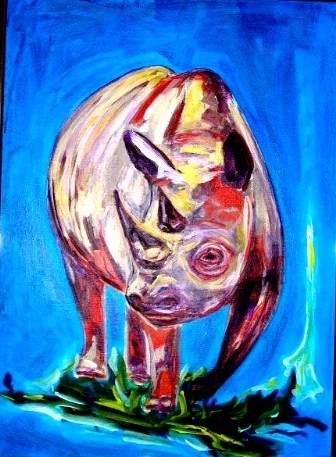
Rhinos lived 14.5 million years ago but were not there when the dinosaurs roamed. Rhinoceros by Marilynne

Bones, dem Bones, dem Dino Bones.

Today’s Rhinoceros are relatively new animals in the evolutionary chain of events but similar to those that lived during the Miocene era 14.2 million years ago.  Though old, they are much at the same now as they were then and more related to human being than dinosaurs.  Dinosaur’s lived over 167,000 million years ago so fully understanding how they lived is still a mystery. There is a great deal of new research being conducted about dinosaurs, with mounting  evidence showing that their ancestors may be related to birds rather than mammals. People visit Zoos to see Rhinos. Why not visit a dino-dig to find ancient fossil treasures?

Wouldn’t it have been exciting to be the teenager who found a Duck-billed Hadrosaur mummy in North Dakota in 2007? Imagine discovering a dinosaur with skin so that scientists don’t have to guess about the outer covering of this great extinct mammal.

Dinosaur explorations often change our view of history. I always imagined myself on a dig-team, becoming famous for finding a missing link. When my children were young I thought it would be fun to take them on a dig to the Dakotas or Texas as part of our family’s vacation. I never followed through though, so now I have to be satisfied by visiting museums and reading about interesting discoveries.

When my granddaughters were still in elementary school I once took them on an excursion to the Burke Museum in Seattle. The girls were excited by the prospect, grabbing notebooks and pencils along with a small reference book for the trip. Once in the museum they traveled from display to display, writing down information and drawing a pictures just as their research father might have done. This visit made me realize how fearless, curious and participatory young children are when given a chance to explore. They often lead the way to learning.

Pre-history is interesting for young and old alike. A while ago I learned of a fossil mammal found in Europe that is connected to South Dakota suggesting that there was a trans-Atlantic route about 66 million or so years ago. The keen eyes of paleontologist Frans Smet of St. Mary’s College in California discovered a tiny marsupial mammal tooth embedded in rock in Maastricht, Netherlands. When it was scanned in an electron microscope, the connection was made to North America and the historical timeline as the world knew it changed by 50+ million years.

Paleontologists now believe that T-Rex was a lean, mean, warm-blooded hunter who only attacked large prey and was not a scavenger as previously thought. He was agile and used a lot of energy, meaning that he needed a lot of food. Other research shows that most dinosaurs were vegetarian rather than meat-eaters and my oh my… they were sexy. It is thought that flying dinosaurs actually had more elaborate mating displays than modern-day peacocks. The fin-backed Pterosaurs and Pelycosaurs developed elaborate headrests and sails in order to attract a mate.

Did dinosaurs die 65 million years ago because of an asteroid impact? New research suggests that a bad climate caused by a series of volcanic eruptions was slowly killing off the mammals. “The [asteroid] impact was the coup de grace,” Paul Renne, a geologist at the University of California, Berkeley, said in a statement for National Geographic. USC earth scientist David Bottjer confirms that the earth “just got sick” during the Triassic-Jurassic extinction and food became scarce. By looking at rare development of aragonite crystals on the ocean floor, he postulates that the slow dying period had something to do with the ocean’s chemistry. The coral reefs of that period are related to those in our oceans today and by understanding why they died we might learn more about the death that is now occurring in reef populations around the world. Is our earth getting “sick”? Will mankind die out as did the dinosaurs?

There are several dinosaur extinction theories but the most prevalent speaks of five major mass extinctions, the largest occurring 250 million years ago in the Permian-Triassic era. Almost 95% of all species were eradicated at that time. Some scientists say a comet or asteroid collided with earth, others postulate that a flood volcano causing oxygen loss in the seas was the reason. Some investigators have had theories about thinning atmospheric oxygen levels and now even this theory is questioned. Such are the twists of science where each discovery causes a new hypothesis to be made.
Can understanding geology and paleontology help us with current issues of global warming? Scientists look at these ancient creatures and how they lived, at changes in land mass and atmospheric and oceanic conditions for clues that can help in predicting the fate of the earth over the next millennium.

According to Peter Dodson at the University of Pennsylvania, there are great times ahead for dinosaur hunters. He claims that paleontology will be a good career because new discoveries are increasing by 10-20% a year. So…if those visits to museums, digging for dino-bones in toys, and reading books spark an interest in your child or grandchild, you may want to fan the flame. With summer quickly approaching, participating in a excavation might be the perfect vacation.

Art work is always for sale. Go to eichingerfineart.com for more information.
Want to know more? Go to:
http://www.sciencedaily.com/news/fossils_ruins/dinosaurs/ – for the latest research about dinosaurs.
http://www.ucmp.berkeley.edu/tertiary/miocene.php -Miocene era.
http://news.nationalgeographic.com/news/2013/13/130212--chicxulub-asteroid-dinosaurs-volcano-mass-extinction-environment-science/ – about dinosaur extinction.
https://www.museumofwesternco.com/dino-digs/ – for family expeditions in Colorado.
http://www.paleoadventures.com/dinosaur-dig-site-tours.html – for family expeditions in South Dakota.
http://www.wyodino.org/dig-site-tours/ – for family expeditions in Wyoming.
http://www.smithsonianmag.com/science-nature/dinosaurs-living-descendants-69657706/?no-ist=&page=4 – Dinosaur connection to birds.