Mean Aunt Martha’s Brain

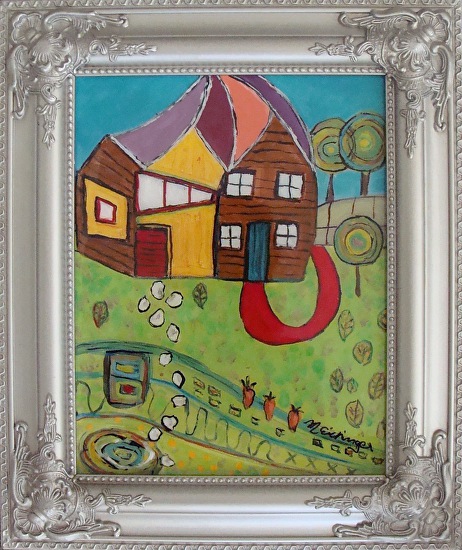
1356531mMean Aunt Martha                                                                                                                                      Acrylic/ 30” by 30” / gold frame/ $ 399
She was a beautiful, talented alcoholic who was mean to her children.
What type of brain did she have?

Over and Under-stimulated Brains

Sean Suib director of New Avenues for Youth recently told me that there are two types of brains. The thought intrigued me so I did a little research. What I discovered is that one brain type is over-stimulated while at rest. I have one of those. My brain does not like going on roller coaster rides or being exposed to extreme circumstances. We who are over-stimulated are hypersensitive since our brains are continuously at an “all systems go” level. Our brains often cause us to have social anxiety and exhibit fear based responses.

When it comes to taking physical risks I am cautious even though I like to get up on the roof and sweep off the leaves. Heights don’t seem to bother me as much as my neighbors who worry about me falling. I am smart enough to attach a rope if I have to go to a particularly dangerous spot where the ground is 40 feet below.

It takes courage to grow up and strike out on your own. Those of us with over-stimulated brains have a difficult time becoming independent unless we learn to calm our minds. In my twenties my career suffered because of anxiety and fear. I turned down a wonderful position offered by the Boston Children’s Museum when I first graduated from college. I had to learn how to overcome my disability and eventually did so through the practice of Transcendental Meditation. When I first started Impression 5, a science museum in Lansing Michigan, I sat in my car meditating for 20 minutes before going to appointments. Over time, I learned to relax and eventually to enjoy the chaos of a stimulating work environment. I started to thrive under the pressure of daily decision making that was required in my challenging job a president of OMSI. Though I now consider myself a risk-taker when it comes to my personal and business life, I am rarely impulsive. My moves are well analyzed and calculated.

The second brain type is under-stimulated. Those with this type of brain have constant feelings of boredom. They become the thrill seekers who love roller coaster rides and high speed car chases. These individuals are in danger of depression and acquiring compulsive behaviors like drinking and gambling. They seek extreme activities to overcome boredom and have a propensity for poor impulse control. Under-stimulated brains tend to feel and move through life without thinking of the future. Under-stimulation is often paired with a psychological condition known as motivational syndrome, defined as a low desire to participate in social situations. They are often apathetic to what goes on in the world outside of themselves.

Streetwise, as do many homeless teens, has an under-stimulated brain. When we first met him he constantly complained of boredom. With a lack of motivation nothing interested him saying nothing interested him. He could sit staring into space for hours, not responding to our suggestions to go out and enjoy the world. . “Go visit a friend.” I would say or “ If you are bored, why not join a bowling team or get involved with a hobby.” The answer was always, “I’m not interested.” However, when it came to physical risks his response was different. Streetwise was ready to jump into a risk taking position as long as someone else initiated the interaction. I would hear of his dreams of bungee jumping, skydiving, speed racing, and skateboarding as they swirled around his head while he lay on the sofa.

One day Ray and I noticed how much Streetwise enjoyed getting up on the roof to look over the edge without being tied on by a rope. One section of our roof is over 50 feet off the ground but its height did not phase him. The higher the roofline he could stand on the happier he was. His attraction to danger is what led us to suggest that he become an industrial painter. This career puts him on 75 foot water towers where he can hang over the side to sand blast and paint. At times he has to walk along narrow platforms and climb cables on bridges that span huge distances over turbulent water. Streetwise embraced his training and apprenticeship program with gusto. He has excellent job possibilities ahead of him as long as he stays safe. We have observed a big change in the way he problem solves so I am optimistic. His brain has adapted making him a more outgoing personality who is comfortable in social situations once he has been pushed into attending.

I do believe that Aunt Martha was in many ways similar to Streetwise.  Her under stimulated brain, however, took her towards self medication through alcohol.  She reacted instinctually when she did not like something and slashed out at her children with biting verbal remarks.  Her anger was a way of stimulating adrenaline, making her feel alive.

Which of the two categories do you fall into? Is your brain over or under-stimulated? Have you ever had to overcome adversity due to the way your mind works? Have you tried to repattern the way you think?

Do share your thoughts below.
Art is always for sale. Contact me at marilynne@eichingerfineart.com

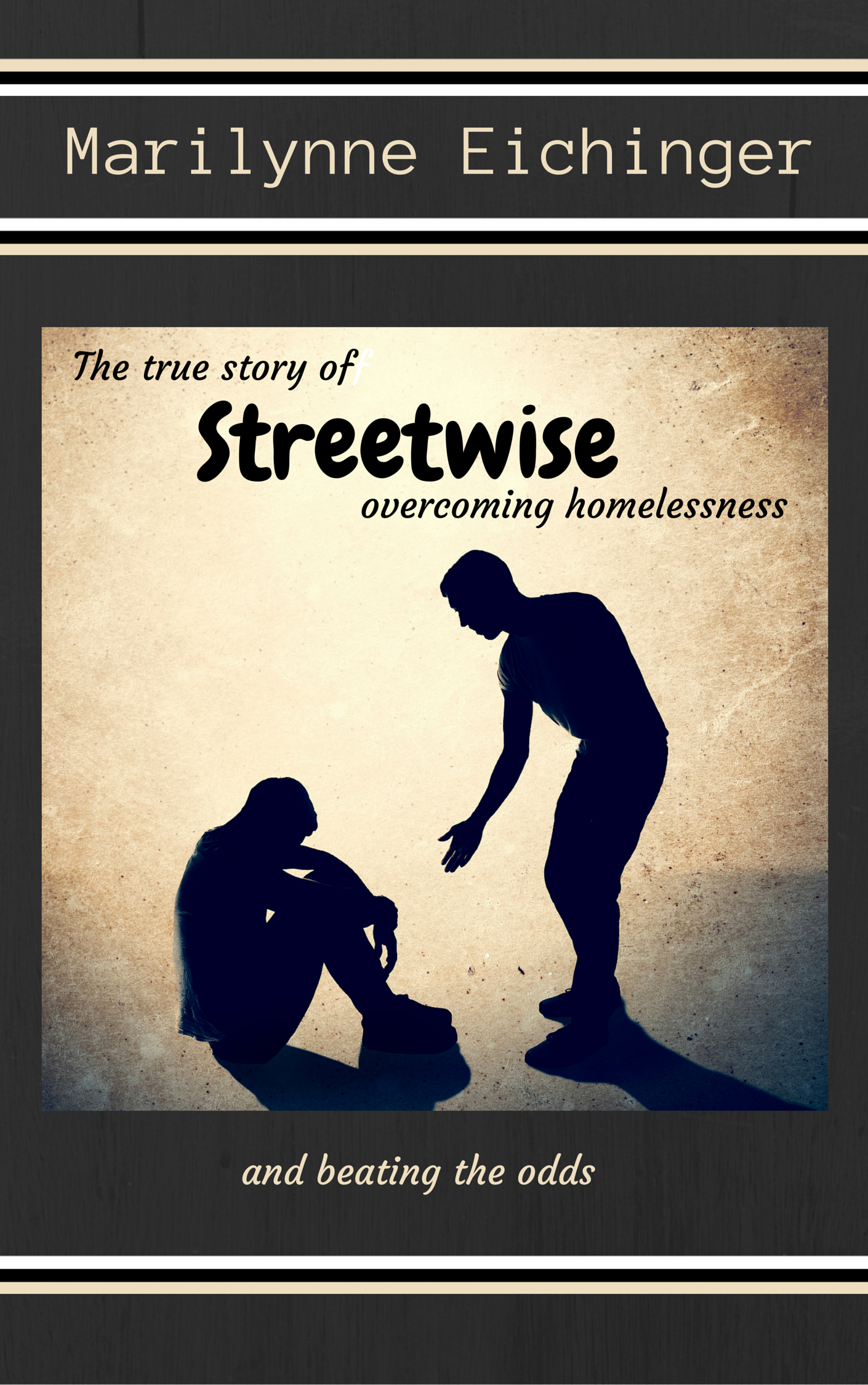
For sale on Amazon: The True Story of Streetwise, overcoming homelessness and beating the odds. Go to AMAZON.

 
References:

http://hubpages.com/health/processing-disorders-under-stimulated-brain – About the overstimulated brain.

http://www.ehow.com/way_5418991_mean-feel-understimulated.html – Understimulated brain.

Why Read?

1353336l (1)TV Diva

acrylic painting, 30” by 40” / $ 499
How do illiterate people get the news? from internet? bloggers, TV personalities,
news channels, friends? church?. . . . or do they just not bother.

Why Read?

A few years ago National Geographic had an article about Australian aborigines. One man was quoted as saying, “Why read books? When you are hungry, can you eat a book?”

To that I say yes. If you can read you have a better chance of getting a job, earning money and putting food on your plate. Many young people, however, do not subscribe to this view. Streetwise, for instance, tells me that there is no need to read for he can get everything he needs to know off of a YouTube Video. He listens to anyone who has a jazzed up message and is not critical about where it comes from.

His attitude disappoints me. I fear being at the mercy of uneducated voters who, without the facts, make decisions that affect my life. If YouTube is their carrier then critical reasoning skills are needed to wade through a lot of misinformation. Though he is literate, reading does not come easy. Getting information from a news article is not part of Streetwise’s repertoire.

Did you know that 1 in 4 children in America grow up without learning how to
read? 44 million adults are unable to read a simple story to their children.

Those who don’t read proficiently by 3rd of 4th grade are 4 times more likely
to drop out of school.

85% of juvenile’s facing court trials are functionally illiterate.

75% of Americans who receive food stamps perform at the lowest 2 literacy
levels. 50% of adults cannot read a book written at the 8th grade level.

50% of unemployed youth between 16 and 21 are functionally illiterate

The US is the only free market company where the current generation is less
educated than the previous one. We rank 12 out of 20 in literacy among high
income countries.

90% of high school drop outs are on welfare.

Literacy is a learned phenomenon while illiteracy is passed along by parents who do not read or write. But what happens when there is a burgeoning illiterate population? Daily living requires adults to read basic texts, understand legal and financial documents and navigate technology. Those who cannot miss out on job opportunities. If employed they earn about $ 230-45 a week and only work 18-19 weeks a year.

Politicians talk of working wage jobs for all but we are not going to get there if we do not solve illiteracy as a fist step. Elections worry me because their are not level playing fields with knowledgeable voters ready to execute their democratic rights. Instead emotional oratory bravado that says little captures the imagination of the public.

Most of the people who pay attention to my blog are readers. They read to their children when young and grandchildren as they come along. Now I implore you to consider going one step further. Mentor a person who needs extra help.

It is not easy to motivate a reluctant reader and involves developing a relationship that is close and trusting. Helping a slow reader requires flexibility and being in tune with psychological blocks that may have impeded learning in the first place. It takes patience, compassion and persistence.

The exciting result, though, is that once a student experiences success, self-motivation often takes over. Eyes light up, understanding occurs and confidence builds. Mentors find that they receive as much as they give.

Consider volunteering today to turn around a life. There are many organizations throughout the country seeking help. Several in my area include The Portland Literacy Council ( http://portlandliteracy.org) , Portland Community College volunteer tutoring ( http://www.pcc.edu/resources/tutoring/volunteer/), the library and the public schools.

Don’t wait. Did you know that in 2015 Portland ranked # 6 out of large cities in volunteering and # 1 for Millennials? We are a caring community.

Art work is always for sale. Contact me at marilynne@eichingerfineart.com

Please respond below. I would love to hear from you..

____________________________________

Streetwise


For sale on Amazon: The True Story of Streetwise, overcoming homelessness and beating the odds. $2.99
Go to http://AMAZON

Repatterning the Brain

Coming Home: 

Children need to grow up in a safe environment
acrylic painting/ 16” by 19” / $ 195

Repatterning the Brain

While reading and interviewing those who work with homeless and runaway youth I kept asking myself if there is hope that we will get ahead of this crisis. The reported number of street kids keeps escalating and I am concerned. Over the past half year, though, I have become more positive in my outlook because I learned of therapies that do work. Some treatments have been developed because of our growing knowledge of how the brain works. I take this opportunity to share what I have learned about repatterining treatments for a better future. Those of you working in the field may want to add to my comments.

As a child we learned to crawl by coordinating our muscles to move – first the right arm, then left leg, left arm followed by right leg. This learned neurological process we developed on the floor was then carried forward to walking. Our practice formed on- off switches that helped co-ordinate the muscles we used in locomotion, posture and balance.

Nerves in our body are alive with energy and every time we do a new exercise or learn a new fact neurological connections are made. The more active we are the stronger the network of nerves develops to keeps us functioning well. Those who do little often lose their ability to move with ease, but those willing to become active soon get it back.

Cross crawl marching, is a therapy employed for people suffering from certain types of traumatic brain injury. The shock to their system that left them confused and uncoordinated caused their muscles to relax with resultant disability. Repatterining exercises are one form of therapy used to fix the problem. Repatterining has been found to be effective in minimizing dyslexia, ADD, handwriting and coordination problems and other learning disabilities.
In addition to the physical realm, trauma can also precipitate emotional disfunction. A newborn child is usually develops trust when surrounded by a nurturing, secure environment. But when trauma is introduced such as child abuse, hunger, loss of home or drugs the child’s brain is shocked. Their newly scrambled neurological connections can lead to a state of confusion.

Researchers can now identify the impact of stress through brain scans that record the result of long-term physical and psychological abuse. The limbic system, often called the ‘emotional brain’ controls emotions that drive survival. It is the center for fight, flight or freeze responses. It communicates with the more rational cortex which is slower to respond.

Most adjusted people rely on the cortex to navigate their way through life. When a child has experienced frequent abusive encounters, however, instead of staying calm to problem solve he or she may misinterpret the threat and respond inappropriately because of an overactive limbic system. Victimized children have nervous systems that are on constant alert because they anticipate further danger.

Just as with physical disabilities repatterning is used as a therapy. It may take many years to repattern a brain and nervous system even after the environment becomes safe. Repatterning is a natural healing remedy used to relieve trauma, abuse, stress, anxiety and fear. It is even used to aide concentration and memory and enhance sports performance. A variety of therapies come under the umbrella of repatterining, including such techniques as Eye Movement Desensitization to targeting stressful thoughts as a way of allowing natural energy to resume and bring relief.

It is good to know that there is hope for turning lives around. Relief is more readily available because of the good work being done by brain researchers.

______________

Art work is always for sale. Contact me at email.

I would love to hear from you. Please respond on my blog site.

Streetwise For sale on Amazon: The True Story of Streetwise, overcoming homelessness and beating the odds. Go to Streetwise.


References:

http://www.headbacktohealth.com/Cross_crawl.html – reference about repatterning.
http://www.cdcrehab.com/brain-integration-therapy – repatterning the brain during therapy
http://www.asca.org.au/WHAT-WE-DO/Resources/General-Information/Impact-on-the-physiology-of-the-brain – From an Adults Surviving Child Abuse article.
http://www.brainbreakthrough.com/modalities.html – Therapies used to repattern.

Create a Museum at Home

totally-modern

Totally Modern : A home museum can be full of adventure
Mixed media / 16” x 20” x 2” /$ 425

2 copy 3In The True Story of Streetwise; overcoming homelessness and beating the odds, I talk of the education system and how traditional classroom teaching is not right for all children. The addition of tactile experiences makes a difference for a great many learners. Parents and grandparents can take matters into their own hands and make sure it happens. The True Story of Streetwise is available for $ 1.25 as an ebook on Amazon:

Create a Museum at Home

Why are hands-on museums unique? As a previous museum director I visited hundreds of children’s museums and science centers, finding their creativity and ingenuity to be more than just little bit exciting. They are places of engagement where children spend hours doing activities such as water play (learning physics and hydrodynamics without realizing it), dressing up in period costumes (learning history), constructing and plumbing buildings (engineering), watching balls speed down ramps and a host of other activities that involve the whole body as well as mind. Young visitors often cry as their parents pull them away from the exhibits to go home.

When my children were young I often visited the Boston CHildren’s Museum and was influenced by their educational approach. At preschool age, I decided to send them to Montessori schools where classrooms are laid out as mini-museums. Students are permitted to approach materials at their own developmental time frame and are encouraged to master a concept before going on to the next.

According to The American Association of Children’s Museums, a children’s museum is “an institution committed to serving the needs and interests of children by providing exhibits and programs that stimulate curiosity and motivate learning.” That definition fit my philosophy perfectly. When I moved to a community without a hands-on museum I decided to turn my home into one.

Part of the challenge was organizational, so I decided to set up our playroom as a museum with a Montessori approach. I envisioned it as a place filled with meaningful toys that promoted factual learning and creative imagination.

Maria Montessori had a major influence in the education of young children. A 19th century physician turned educator, she became involved in designing Casa dei Bambini, a school for low-income children. As she experimented with curriculum and classroom design, “she began to see independence as the aim of education and the role of the teacher as an observer and director of children’s innate psychological development.”

Montessori believed young children were sensitive to order, enjoyed doing activities repetitively and were happiest doing practical things. She developed an environment that was kid-size so that materials could be easily reached and put away when completed. Over time, very sophisticated materials were developed for for sale with teachers specially trained in her methodology.

I did not have the training or money to set up a true Montessori school but I did have the ability to develop a child-sized, child-centered environment. I started by organizing different locations in our play area for various activities. Shelves were divided into sections for math manipulatives, reading readiness, puppetry, puzzles, costumes, and a crafts. I added a carpentry area with safe tools and a music tree filled with percussion instruments. Once in place I took the tine to demonstrate how to use various toys and learning materials. As my kids succeeded with an activity, they were encouraged to use the objects more imaginatively before returning them to their storage locations.

A big part of training was putting items away after use. The task was easily accomplished by being consistent. Keeping the environment clean for the next project not only makes a parent’s job easier but it provides an uncluttered work space. A secret to a successful home museum is introducing toys (activities) one at a time. I began by demonstrating the item’s use. Then I sat back and observed my child in action, making sure the clean up phase was part of the cycle. Once these steps were mastered, I would note if he or she was ready for a more difficult challenge. My goal was to have my children master the activities independently. With each success they became motivated to continue to learn.

This home-museum environment does take careful planning, but once operational the task becomes easier because children will navigate the space on their own.They choose toys they know how to use. Because they enjoy the challenge they concentrate and move progressively from one skill level to the next.

One last thought — a child of two and a half is ready for a home museum. At first only a few toys should be visible and easily accessible. Once the manipulative is mastered, introduce another toy, the next challenge. If you have several children at home then each child needs to understand which items they have earned the right to use.

Yes, hands-on museums are fun because they are child centered and permit freedom of movement. If you do decide to set up a museum at home, I would love to hear from you and learn of your success or difficulties. What toys did you select? What problems have you encountered?

War of Ideologies

1546585lFamily in a Turkish Village                                                                                                                         acrylic painting / 24” by 48” / $ 690.00

War of Ideologies

Donald Trump shouts about making America strong . I wonder what he really means.  His words imply one direction – increase military might.  Is that where America gets its strength?

Many of the candidates talk of war and fighting ISIS, with no discussion of why so many youth take up the call of Jihad. Their solutions are directed to increasing military spending, decreasing our privacy by freely accessing phone and internet messages, targeting peaceful Muslims, and “bombing the hell out of them” irrespective of whether innocent victims are killed. My head spins and my stomach churns when hearing candidates talk sound bites rather than strategic planning. It reminds me of how Hitler came to power, how he rallied Germans by making the Jews the enemy.

There is no doubt we have a serious threat that has to be handled on many fronts, but an important one is being ignored . . . reinvigorating what made America great in the first place. It was not military might that made immigrants want to come to this country, but the values we professed and the economic possibility for a better life. It was our humanity, the Bill of Rights, the vote, the ability disagree without being put in jail, and the respect given to man, woman and child despite race or religious preference. It was the idea of America as a melting pot and the belief that together we are stronger than any one individual.

ISIS too has a vision of a society, and use their ideology to attract revolutionaries to their cause. It is one in which men make decisions, provide for their families, and live strictly according to Sharia law. Their utopia maintains leadership though control and fear, yet somehow they are able to entice people to make the ultimate sacrifice for rewards after death.

The reality of how a select group of men at the top are getting wealthy and powerful by controlling water and oil is not spelled out in their propaganda. The fact that many revolutionaries are not practicing Muslims is kept quiet. Battle lines they established are philosophical and to fight them we have to answer in-kind. ISIS promotes their version of a good society and we must demonstrate why our way is better. Youth embraces utopian ideals. They want to make a better world. Let’s show them the way.

If the values that established our nation are believable then we must live by them. We should teach children our ideology and speak of it day and night. And we should implore the media to help instead of putting fuel on our advisories’ fire. They have a chance to play an important role by turning a negative, gossipy reporting style upside-down. Rather than feature the worst parts of our nature, I would appreciate equal time given to how neighbor helps neighbor, the richness of our freedoms, and the way so many more people than not do try to live by values imbedded in the constitution. Share with the world a vision of a democratic society that was, and still is, the dream of those who want to be free. We can develop an economy that works for all, so that youth don’t feel that their future is hopeless so they are willing to stay to develop their skills.

If the media— and I include bloggers in this comment — continues to hammer ugliness, if politicians don’t work together for the common good, and if citizens do not take responsibility for making sure that our system of government works, then we are no greater than ISIS. We can and we must do better.

Yes, this is a philosophical war and it is time to remind our citizens how precious and fortunate we are to be Americans. It is also a time to understand why other’s might like to live here so we can make appropriate accommodations to those who do respect our values.

Art work is always for sale. Contact me at marilynne@eichingerfineart.com or to see more, go to  eichingerfineart.com.

I would love to hear your comments below.

Soaring With TAG

soaringSoaring                                                                                                                                                                     38” by 49” / mixed media/ cost $ 765

Soaring with TAG

Smart, intelligent, intuitive, creative, brainy? Absolutely. Every parent knows that what Garrison Keillor says is true…we live in a place where “the kids are above average.” Each one of our children belongs in a TAG program for the gifted and talented. And so do you.

Let’s start by considering our children. When my youngest son was in elementary school and his teacher was nominating kids for TAG he was not selected. She thought him to be average because he did not follow her rules all of the time. My husband and I, thinking him above average of course, questioned his teacher and insisted that he be allowed to take the IQ test necessary for being part of the select group. When the results came back she was shocked. My son passed the test with flying colors, was admitted to the program, and proceeded to have a grand time with the special activities and attention that was given to TAG children. He was easily on a par with his other classmates.

After observing his enrichment program, it wasn’t long before I realized every child would benefit from TAG. The projects were not particularly advanced, challenging or difficult. Teachers offered many opportunities for creativity and open ended solutions. They presented more activities involving exploration than offered through a typical class curriculum. Also, the group size was small and manageable. TAG instructors know how to make school fun and lessons exciting by teaching to individual learning styles. As a result the children were involved and absorbed by the challenges presented and there were no behavioral problems.

I am convinced that if more children were taken on field trips, exposed to open ended problems and given the opportunity to use their individual abilities that brain cells would explode in the classroom. Hours of rote memorization and workbook based teaching is a perfect way to kill ambition and desire. Today’s large classes adhering to state and federal standards have resulted in teaching to the test not the child. Curriculum needs to needs to start with the child to insure that learning takes place.

If a school does not embrace an individualized learning philosophy then it becomes the responsibility of parents and grandparents to become a TAG-like educators. Though it would be wonderful to have inspiring programs for every child budget restrictions have made that difficult. But help from mom or dad is available. Family members usually understand their child’s learning style since they have to react to it daily. They are capable of adding enrichment programs to feeds their young one’s brains and many do.

But what about you? Aren’t you worthy of having your brain nourished by interesting activities? Advice given on Care.com suggests that to remain vital continue reading. According to a Mayo Clinic study on aging, reading books can lead to a 50 percent decrease in your chance of getting dementia. Other suggestions are to consider going back to school or auditing a class (learn, test your brain and feel young once more.) Play games and puzzles (improves creativity, memory and decision-making skills), write (helps thinking, language and memory), or pick up an instrument ( improves hearing, memory and hand movement.)

Though the brain does slowly deteriorate, older heads are so filled with knowledge that it just takes a bit longer to retrieve the right information. So, don’t worry if you are slower than you used to be. That is to be expected. It is also why so many of our presidential candidates are in the 60s and 70s. They lived long lives and know more than younger colleagues. It is also true that these politicians participate in a perpetual TAG program. Their busy lives demand constant problem solving, providing a continuous challenge to their brains. By being showered with a barrage of facts and experiences new synapses are created that connect the parts of their ever expanding knowledge.

Denise Park, co-director of the Center for Vital Longevity at the University of Texas at Dallas claims, “As we age we accrue knowledge, have a higher vocabulary score, and know more about the world.” We can remain relevant and dynamic if we adopt the simple advice of a past museum colleague of mine, neuroscientist Marion Diamond who said, “Use it or Lose it applies to brains, bones and muscles!” She advises people to change their hobbies, exercise patterns and jobs in order to stimulate their minds. Marion, authored the Brain Coloring Book, reinforcing her belief that “use of one’s kinesthetic sense in coloring enhances learning and memory processes.” If we, as adults, adopt a TAG mentality and participate in brain building, we can remain contributing members of society throughout our lives.

References

http://news.nationalgeographic.com/news/2014/01/140128-aging-brain-memory-cognitive-decline-neurology/ – Aging brain is pretty smart

https://www.sfn.org/~/media/SfN/Documents/TheHistoryofNeuroscience/Volume%206/c3.ashx / About Marion Diamond

https://www.care.com/a/9-ways-to-keep-an-aging-brain-smart-1207200456 / Ways to keep an aging brain vital.

Art work is alway for sale. Go to eichingerfineart.com for more information or contact me at marilynne@eichingerfineart.com.

A Passion for Art

Window to HomeWindow To Home
Acrylic painting on canvas, 20- x 15- , $ 325
We have art throughout our house, our own and that of others, creating a gallery for contemplation and enjoyment.

Passion for Art
Running the Oregon Museum of Science and Industry was a high-stress job. I had to keep 350 employees busy with new exhibits, education programs, a submarine and Omnimax films. Staff managed and operated the restaurant and the gift shop. Fundraising, also the job of the president, included soliciting donors, lobbing for legislative money and writing grants. It was a fun but a very exhausting position, and I knew that I had to have an outlet to manage stress. I exercised and meditated but my mind was never clear of work-a day worry.

Fortunately, Martin, my former artist husband, came to the rescue and convinced me to take up painting. He made me an easel for Christmas and set me up with paints, saying, -Go to it.- At first I was shy about painting in front of him since he was a successful professional artist. I did not want to take lessons and have to -learn the right way to paint,- because, frankly, that sounded like too much work. Instead I was encouraged to just enjoy myself and not to worry about what anyone else thought, nor think about producing pieces worthy of sale.

So I brazenly followed his advice and painted following the techniques and styles of the masters, and I didn’t worry about being good. Often, I redid the original art I put on canvas, painting only for myself. My husband was wonderful, always complimentary, only offering advice when I asked for it.

Painting became an all-encompassing passion. It helped keep my blood pressure low and enthusiasm high. It is impossible to put a dab of paint or a line on a canvas and think about anything else. Try it. You’ll see what I mean. While painting, my mind is clear of daily concerns for I am totally absorbed in what I am doing.

I started this hobby 30 years ago and have been at it ever since. Slowly, without realizing, I improved. Instead of always following the masters I began developing my own style. People began asking if they could purchase my paintings and I submitted some to be shown at festivals, winning awards and selling here and there.

Art has helped me see the world more clearly. Walking through the city or a country lane is a new experience with every step. I look at plants and houses more deliberately than before, noticing colors, shapes, unusual flaws and quirky images. I study eyes, noses, smiles, and shadows and consider how to portray a 3-D world on a 2-D canvas.

When I met Ray, visits to art museums became part of our travel experience and we became more focused on our home’s interior decorations. At first, I put my paintings up everywhere I could find space. Ray’s masks and totem poles were also liberally sprinkled throughout the house. After we became more knowledgeable and critical we started looking at works by other artists, buying their paintings and bringing them into our home. Summer street fairs became a search for the most unusual appealing art by local artists. A swatch of color here and a mood changing image there has transformed our house into an eclectic gallery. It is fun to look at the pictures and sculptures, remembering the artists who produced them and the circumstances of the purchases. Friends enjoy visiting and studying the variety of works that enhance our walls, sharing their impressions with hours of comment afterwards.

DSC04949From time to time my grandchildren asked to paint along side me during their visits. Sometimes we would go outside with chalk, selecting an interesting scene to draw. Other times they sloshed paint on paper, mixing colors and images that matched their own imaginations. Visits to art and craft museums gave our family an opportunity to talk about what we like or don’t like, what the artist was trying to portray and how styles have changed over the centuries. Very often their insights were more astute than my own.


Yes, art is now integrated into my life at every level. My studio is entrance to a woman-cave where time stands still. Painting has taught me patience, not to be too self-critical and to realize that practice certainly is necessary for improvement. It is wonderful to Raven and the Sun         be retired and have opportunities to create art and to match visual by Ray Losey                     expressions with written words. Most of all, art has shown me that          having a passionate hobby is fun and mind expanding. I recommend that you give it a try! You won’t be sorry.

Art work is always for sale at: For more information go to eichingerfineart.com or raylosey.com or contact me at marilynne@eichingerfineart.co.

I would love to hear from you at below.


Summertime – Was the Living Easy?

1386187lHood River Bed and Breakfast
Acrylic painting on canvas 28” x 32” :    $ 399.
When traveling we often stay in a bed and breakfast.

Summertime-Was the Living Easy?

Vision of My Young Self
School is over and the fun begins. No more homework! Lazy days lie before me with nothing to do and no where to go. I can’t wait to get out my bicycle and go exploring the woods with my cousin. I’m going to sleep late and do nothing, nothing, nothing! Maybe I’ll see a few friends, eat a lot of ice cream and swim if it is hot. A whole two months for play. . .

Mom, I’m bored. There’s nothing to do. I miss my friends. When does school start again?

Vision of My Parents
We kids are home, and my parents are wondering what they are going to do with us? They worry about us being underfoot, tracking in dirt, being bored and needing entertainment. They complain that we are constantly hungry and let us know that we exhaust them. We have to go everywhere with Mom: to the grocery store, to the cleaners and she has to drive me to play dates. The good side is that she does not have to wake up early and run around like a mad woman to be sure we are ready for school on time. She actually seems more relaxed in the summer and happy to have us around. No school lunches to prepare.

Mom says that she needs to get organized, plan fun things to do together like going to the park on our bicycles. I didn’t like it when she read an article to my Dad about how children lose a lot of what they have learned during the school year when they stop academics in the summer? Now she thinks of summer as the time she gets to play teacher and counselor. What does she want us to learn? My school suggested daily time with work books that they sent home at the end of the year. Ugh! I wonder how much time I will spend doing math or writing so I will not fall back in school? If I’m lucky I’ll be sent away to camp or get signed up for swimming and tennis lessons. Maybe we can go to the beach for a family vacation. Dad says we need to stock up on vitamin D by being in the sun. Will they still make me practice the piano? . . . . . .

Mom says that she can’t wait for school to start again. Yea! it’s finally time and I am ready too. I wish that she wasn’t so happy to get rid of us next week. I don’t think I am that difficult. My cousin’s school began in mid-August. Imagine that!

Vision of Myself as a Parent Before I Started Work
It is so much more relaxing when the kids are off from school, but I need to organize myself to ensure they are busy. It’s no fun when they hang around bored. I want them to spend a lot of time outdoors but I also want them to keep learning. This is my time to round out the gaps in their school education. Nature camp or science camp for a few weeks seems like a good start, but my budget is tight this year. I will plan to arrange for a few excursions of my own. We might start with a tracking expedition in the woods. Later we can use our underwater scope to check out the creek and collect water samples to analyze. Food is a big issue so working on a garden would be fun. I think I will get a food dehydrator so we can take fresh fruit and make our own snacks. Fun, fun, fun! I like being the home teacher but I am lucky that I do not have to go to work. . . .

Well, you can get too much of a good thing. I can’t get anything done when the kids are underfoot. When does school start? I’m looking forward to Labor Day.

Vision of Myself as a Parent After I Started to Work
The kids are off from school. How am I going to manage? Do I just leave them home by themselves all day or do I have to pay for a babysitter? There are lots of summer programs but they cost money. Perhaps I can arrange different hours in order to take turns with my husband for home time. I wonder if my mother or sister will help out a bit. This is going to be a very exhausting summer. I have an idea. I am going to speak to my friend and see if she will exchange care time. I’ll take half a day and she can take the other half. If I have to work longer hours, then I will just have to pay for a sitter. We will plan for a family vacation and do some fun activities each day. The kids can help out around the house. I wonder if there are any free parks and recreation programs available this summer?

Why don’t the schools take responsibility for children over the summer? They should institute year round classes? Camps are too expensive. . .

Labor Day is soon approaching. We’ll have a family barbecue to mark the occasion and then off to school the next day. Yea! But, so sad too. My high school graduate will be entering college and I have to drop her off next week. I will miss her, even the arguments. A bitter-sweet time for sure. Hope she will be all right on her own.

Vision of Myself as a Grandparent                                                                                                                        
My grandchildren could be quite a burden on their parents this summer. The 16-year-old is lucky because she found a job, but the others are going to need attention. I think I will send some money so they can go to a week of camp. Ray and I will be taking two of them to the coast for a week, maybe even the mountains. That should help, and it will be a great time to get to know them better. When I was a child, my grandparents were always there to for me. I was lucky because the women and children in our extended family went to the beach for the summer. Men visited on weekends. That is not commonly done these days. My kids work and their children can’t be left alone. Too bad government austerity is making our city’s parks and recreation department cut their programs. I am glad the swimming pool is still open, though. I do wonder about my grandchildren. They do not appear to have the freedom to roam that I did as a child.

Oh my, I do miss having my family around, but on the other hand I like to travel. We always wait until children are back in school before planning a vacation. Who wants little ones running around the tourist sites and crying in restaurants?

Hope you had a wonderful summer and looking forward to a great fall.

Art work is always for sale at eichingerfineart.com. I can be contacted at marilynne@eichingerfineart.com.

Do comment on my blog site below.

An Adrenaline Rush

First Fight

First Fight
acrylic painting: 26” x 25” $ 425

Parents occasionally fight but when violence, exacerbated by drugs and alcohol, is the norm, children are bound to suffer.

An Adrenalin Rush

Ray and I have been mentoring a youth who between the age of 16 and 19 had lived on the streets. Though his journey was wrought with a great many highs and lows, over the past four years he transformed himself into an industrial painter with a career that promises a good life. His experiences made me curious about why some homeless youth metamorphose while most do not. To learn more I read a great many studies and interviewed numerous adults engaged with this population. I am now drawing conclusions that I would like to share with the hope that you will provide me with your experiences and thoughts.

Teens leave their homes for a myriad of ugly reasons, most often involving poverty. Their Households might be violent, unsafe places with parents addicted to drugs, alcohol or illegal ventures. Or… they may have been kicked out due to their sexual orientation or their own involvement with prostitution, drugs robbery, gangs or truancy. Over forty percent have severe mental problems. Whatever the cause, once they leave school they are on a downward slope that continues to snowball in hopelessness. Each year, Portland agencies provide intervention to1000 children. Nationally according to Safe Horizons there are over 1.7 million on the streets.

My biggest surprise was discovering that life on the streets can be a lot of fun. Homelessness is often a relief from stressful situations and presents interesting experiences. I am reminded of ancient Indian rites of passage that sent youth into the wilderness on a vision quest, to hunt and discover that they can subsist on their own.

Modern day wanderers learn very quickly how easy it is to survive. They discover where to get three meals a day and how to find shelter for the night. They couch-surf or visit crisis centers in bad weather. There are known hang-out parks where 40-50 youth gather to smoke, play a brutal form of dodge-ball, competitive chess and to skate board. In the wee hours of the morning, one of the older kids might shout to the others, “You can crash at my place for the night.” Ten to fifteen teens might follow, listening to music and partaking in drugs before drifting to sleep on chairs, sofas and floor. Unfocused on consequences, the apartment dweller will often get evicted due to complaints.

To live on the streets takes constant vigilance and awareness of danger. Yet it is intriguing to watch illicit money change hands and to figure out how to avoid becoming the target of violence. Street life certainly beats going to boring school lectures while sitting still for hours at a time. And no homework . . . ah, the taste of freedom is addictive. There is no one to tell you to clean your room, when to be home and with whom to hang.

Gang Leader for a Day, is a book about the HUD housing projects of Chicago. The author, Sudhir Venkatesh, described how men joined gangs when young, rising in rank to become wealthy drug lords. Many of these bosses had the resources to move their mothers out of their decrepit buildings and into suburbia only to find that their moms preferred living in their old apartments. The women felt isolated in their new homes and missed the friendships that were formed with others who shared similar adversity. Families helped each other with food and babysitting, providing shelter when needed along with a listening ear. They bartered, threatened, bribed, hid drugs, paid protection money, strong armed and prostituted officials in order to survive. When there was a shooting, gang families in each housing unit formed a closely knit cocoon to fight their enemy. There was never a dull moment. Adrenaline ran high.

Homeless youth often become part of street families that protect their members from threats. From them they learn how to steal, beg and acquire drugs. Young girls are lured by pimps with the promise of love and become controlled through drug addiction. Attractive women can earn over $1000 a day being paired with well heeled businessmen or politicians. Why would these girls want to return to school or minimum wage jobs?

Street kids rarely understand that actions have consequences. Their role models were parents who lived from one pay or SSI check to the next with no thought of the future. Their families avoided banking, preferring to hide cash under mattresses or in holes dug in walls. On July 4th, in one of the poorest parts of Kelso, Washington I watched residents explode thousands of dollars in fireworks.

Middle class youth are monitored and continuously coached by caring adults. They are offered adventures through hiking and camping excursions, and given opportunities for thrills by rock climbing, horseback riding, snow boarding, water skiing and taking dune buggy rides.

Runaways seek similar excitement and quickly become addicted to street life. They too crave adrenaline producing ventures that test their survival skills. Though they are dropouts without a safety valve, they still want to participate in dramatic exploits. To entice them back into the classroom, educators need to provide adrenaline producing, hands-on training programs. These experiences need to be administered with a tough love approach that gives frequent rewards (food treats, housing, clothing, electronics) for progress and non-violent punishments (pushups, jogging, cleaning) for mishaps.

Why do some kids graduate from this addictive lifestyle to become contributing tax payers? The more intelligent youth get bored with standing in lines to eat and sleep. The minute they recognize that their life is floundering is the moment that intervention has a chance to work. Job Corps, Outside In, New Avenues for Youth and Janus Youth Services have programs in Portland that reach out to kids before they are indoctrinated in street behavior. These agencies place them in transitional housing and work to get them back in school. Unfortunately, funding is limited for the long term counseling required for indoctrination into a middle class values.

These children need to learn basic lessons in self-care. They must to be taught how to purchase food, set a table, clean an apartment, study for exams, manage their money, and get along with others. They have to learn about bank accounts, personal hygiene, who to trust, how to complete applications, what job opportunities are possible and where to get training. They need to be taught to drive a car, how to dress for work, and what type of body piercings and tattoos are inappropriate. These, skills routinely taught by middle class parents are alien to those who have not had parental guidance.

The child Ray and I befriended is successful in part because we recognized that he was not afraid of heights. He was fearless when asked to help clean the roof. A career as an industrial painter was the perfect solution for him. High bridges and water towers keep his adrenaline flowing. No longer is life boring, nor is there a need to escape with drugs.

I believe that children who experienced parental love when young have a better chance of surviving a crisis during their teens. Even if they experienced violence or addiction they still feel valued by their parents. An insight came from a friend of mine who at one time lived next door to a dysfunctional household. My friend had a large garden and invited his neighbor-children to help plant and weed in the spring and harvest vegetables to take home in the fall. . . . Fast forward eleven years when of the girls was heard talking to her brother. “Do you remember when Dad had that garden and we all worked in it together?” Her sibling laughed in response by reminding her that their father was an alcoholic. “Don’t you remember that it was the neighbor’s garden?” he asked. The girl had wanted so much to believe that her father was a loving family man that she transferred her neighbor’s actions to her own parent. Children cling to good childhood memories and creatively make up new ones when needed, expanding them to fill voids. According to Kevin Donegan from Janus Youth Services, “Every youth wants to believe that he or she is desired. During holidays they all wish they could go home.”

The topic of youth homelessness is huge and I have only skirted a few issues. Drugs, alcohol, transgender and mental difficulties present their own challenges that need to be dealt with in individualized ways. Government statistics skim the surface and do not tell how to treat the problem. I am writing a book on the subject which is why I look forward to your comments.

Please post comment on my blog below.

Art Work is always for sale. Contact me at marilynne@eichingerfineart.com or go to eichingerfineart.com for more information.

References:

http://www.safehorizon.org/page/homeless-youth-statistics–facts-69.html – Homeless Youth Statistics.

Gang Leader for a Day by Sudhir Venkatesh: About the Chicago housing projects and gang life.

Information gained from my own experiences as well as interviews with Keven Donegon, from Janus Youth Services, Kathy Oliver from Outside Inn, and Dewey Taylor a Job Corps trainer.

Achieving Mastery

Curious Cat Emerging                                                                                                                                     24” x 28” acrylic painting – NFS                                                                                                         Curiosity motivates one to achieve mastery

When I was in my early thirties I had a dancing partner who could lift me into a wide variety of positions. I would run across the room and leap in his muscular arms to be spun over head and then placed gently on the floor. My body was flexible and strong due to years of practice. The experience was exhilarating because I was able to complete physical moves directed from my imagination. It was the first time that I truly understood the concept of personal mastery. Though I would never be a professional performer, my body was as fine-tuned as it would ever get. Unfortunately, this feeling of physical capability slowly dissolved as I aged and became busy taking care of children while getting a masters degree at Michigan State University.

In the same vein, a friend of mine shared a story that has stayed with me over the years. He taught music in a wealthy suburban high school where many students were excellent musicians. Deciding to start a jazz band with the very best of them, he assumed that with such talent all he had to do is circulate the score and they would play magnificently. Instead of music, however, what he got was discordant sounds that had no semblance of professional orchestration. He told me that he had to take the students back to basics, making sure they all joined in the same rhythm and played in-key before he could permit one or another band member to have freedom of self-expression. His students needed a conductor to closely monitor their movements. Though, each individual had a degree of mastery over his or her instrument, when it came to a collaborative effort, a different type of organization was needed. With his tale I discovered that some mastery results from a team effort.

I started to think about what it takes to be accomplished and why some people attain proficiency but so many more do not. In my teens I traveled across the Atlantic on a Holland American Line ship. The waiters were European and extremely well trained, insuring that every plate was properly placed and orders prepared with style. The server and his apprentice had excellent deportment and gave their complete attention to the diners they served. To me they appeared to be in a zen state, for they acted as one with what they were doing. These men took pleasure in their work and it was satisfying to give them a gratuity at the end of the voyage. Though I have been on a great many ships since that crossing I have never experienced similar service. I realized then that taking pride in what you are doing is an essential part of virtuosity.

More recently I have been become aware of the skills needed to be an industrial painter, noticing the satisfaction shown by graduates who complete four years of apprenticeship training. Because painting requires frequent inspection, their work is well reviewed. Those who are accomplished are recognized and rewarded by boss and colleagues. It is understandable that these skilled workers want to be treated with dignity and compensated for the mastery they bring to their work.

And so it goes . . .surgeons, dentists, computer programers and housecleaners all have an opportunity to master their professions and take pride in their work, but not all do.

Painting company managers complain that they have a difficult time getting enough trained employees willing to put in the effort to maintain excellence. They have to deal with those who are late to the job, leave unfinished spots (called holidays) and work for a pay check rather than out of joy.

I know of a dentist who acted similarly. He would arrive at his office, speak to a few of his most prestigious patients, then turn the work over to a subordinate so he could manage his investments. He made a lot of money and might have been quite competent when younger, but in his forties he lost his passion for his profession. To maintain mastery there needs to be an element of joy in what you are doing.

On June 7th, NPR had a program discussing the thousands of patients who die in small community hospitals from operations done by surgeons who do not have a great deal of experience with a particular type of surgery. Rates of success are much higher in large cities where doctors have opportunities to practice procedures under the watchful eye of an accomplished supervisor. Practice, practice, practice is a necessity for even motivated individuals. And, along with practice comes the need for focus. Mastery often involves putting blinders on to other activities. The old adage, “you can’t do it all,” comes into play.

So, why are some, but not all young people motivated to work for self-improvement rather than grades or monetary compensation? And, how did they obtain a desire for engagement that encompasses a willingness to overcome failures. Where did they acquire their thirst for knowledge?

According to Stanford psychologist Paul O’Keefe school and home environments play a major role in creating motivation. A culture that stresses learning for the sake of learning will more likely produce a person who wants to master an activity rather than simply perform it, and those who are curious are more likely to strive for mastery than those who are detached. If the focus becomes one of outperforming fellow students, rather than getting enjoyment from the activity, then the stress of competition is likely to produce anxiety. Environments that encourage intellectual risk-taking and reduce competition help students gain a desire for proficiency. The student who sets self-learning goals becomes willing to practice.

But, once competent, can everyone go from good to great? This question has been raised by researchers according to author Christopher Bergland, writing for a May 21, 2013 Psychology Today article. Studies show that there are quite a few factors involved in reaching elite status; the age you begin to learn the skill, innate ability, intelligence, amount of sleep you get and your working memory all come into play. Of course, study and practice are also important, but to be really great you have to love what you are doing. As Zach Hambrick of Michigan State University says, “you need to find the sweet spot between boredom and anxiety where your skill level perfectly matches the level of challenge.” With this balance a person obtains what he calls superfluidity, which leads to mastery.

The important lesson is that when people get an accurate assessment of their abilities and interests then they are more likely to choose fields to study where they can achieve their goals. The advice of Hambrick’s research is that you should “love what you do and pour yourself into it.” Without that passion, no amount of practice will make you an expert.

Since no one is good at everything, my advice for students of any age is to keep searching until a special activity is found to be enthralling. It could be a job or hobby, but once discovered, joy will follow from the process of learning and improving. Each successful step will increase motivation, develop confidence, promote happiness, and engender a sense of self-fulfillment.

With these thoughts about individual mastery I will leave the question of group mastery or team work for next week.

Please share your thoughts at eichingerfineart.com/blog.

Art work is always for sale at eichingerfineart.com
References:

http://news.stanford.edu/news/2012/may/shape-achievement-goals-051012.html – The environment had help shape achievement goals.

https://www.psychologytoday.com/blog/the-athletes-way/201305/can-practice-alone-create-mastery Secret to mastering a skill.