Social Isolation-a Crisis of Our Time

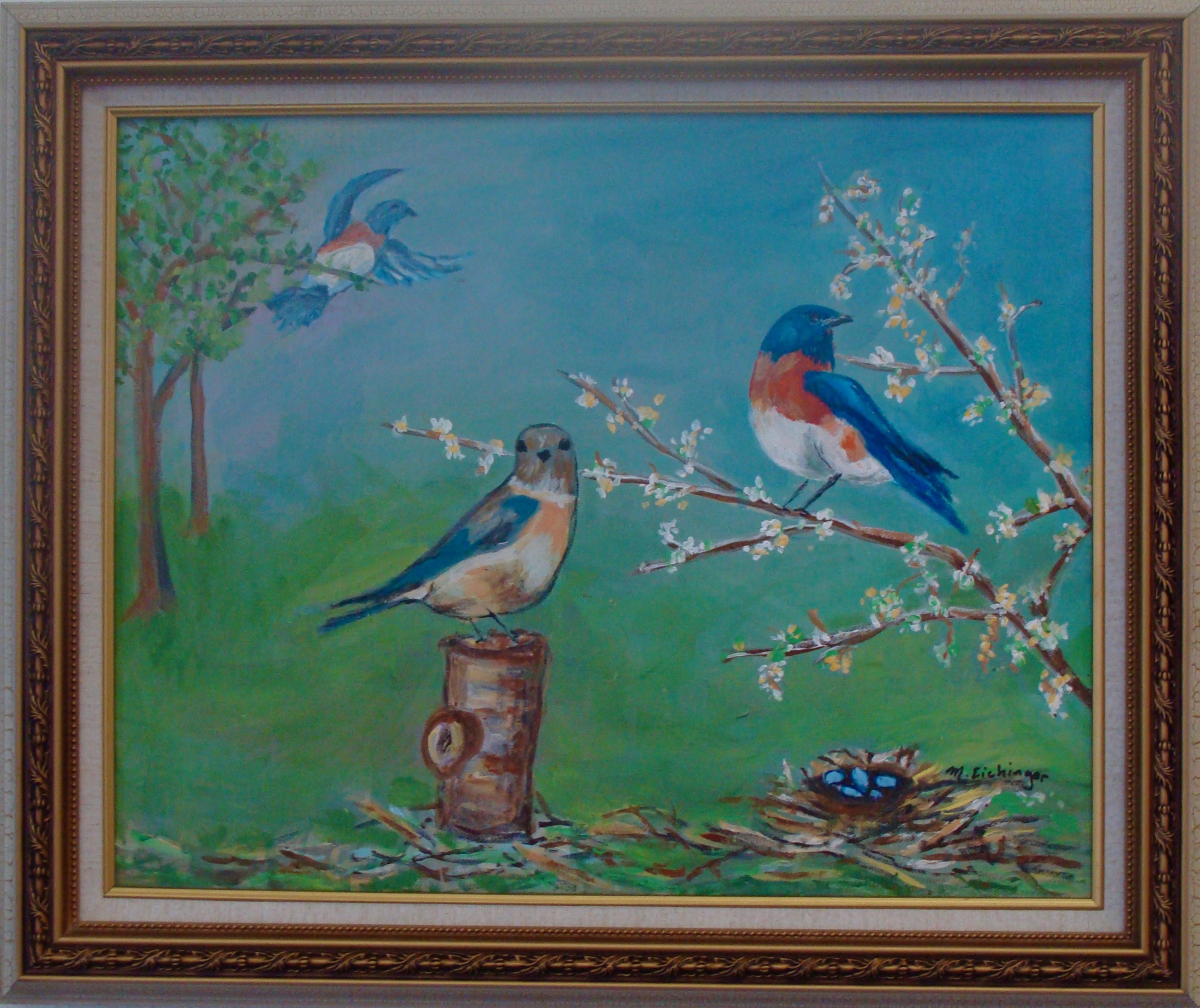
Western Blue Bird
It is spring, when birds join together to produce and care for their offspring. All creatures have a need to be connected to others of their kind.
Acrylic on canvas/ framed/ 20.5” by 24.5”/ $375

Social Isolation – a Crisis of Our Time

Most recently, an elderly acquaintance was alone in a hospital room when his heart stopped beating. There were no friends or family around to hold his hand through his illness nor to mourn the moment of passing. When younger, this man led a vibrant, engaged ilife. He loved to travel, give thought provoking talks, party with friends, and enjoyed interacting with a wide circle of work contacts. By his waning years, however, most close friends were gone and he was left stranded alone. He had no children and his few relatives were either ill or had died years earlier.

Serving as a lay ministry at the Unitarian Church in Portland, made me aware of the large number of people who are socially isolated. About one-third of Americans over 65 are alone with their anxieties, depression, and health issues. The friends and family members they assumed would always be there to help them as they aged, dispersed throughout the country and are unwilling or unable to care for their needs. No one calls or stops by their home to chat. Those without children, peers, or counselors  are not able to share the ups and downs of life.  Feelings of loneliness often become a trigger, accelerating cognitive decline and premature death.

As a stuendt of human behavior, however, I am aware that social isolation is not exclusively a problem of the elderly, for it increasingly plagues youth and middle aged Americans. Health professions consider it a growing epidemic with severe mental, physical and emotional consequences. Some of their studies show childhood isolation to be the cause of poor health twenty years later.

In the United States, adults become isolated for many reasons. When moving to a new community because of a job opportunity, many people become immersed in their work, not realizing how important it is to reestablish close friendships. In other instances, it is friends or family members who do the moving, leaving the person behind with feelings of abandonment. Drug addiction, mental illness, sexual orientation, abuse and poverty cause some people to turn inward rather than share the embarrassing truth of their situation. Their problems are likely to push close acquaintances to withdraw their love and support. After all, who wants to deal with a drug addicted friend or one who is depressed? Not fun.

My greatest surprise was to discover the growing problem middle aged men face with loneliness. According to studies by Judy Chu and Niobe Way, obesity, smoking or lack of exercise are not the biggest threats to middle aged men, but isolation is, and it threatens their health. Their loneliness is linked to increased risk of cardiovascular disease, stroke, and Alzheimer’s. I started to wonder how active men slide into social isolation so I did a bit of investigating. What I discovered is certainly not true of all men, but the number experiencing isolation is increasing at a rate that is alarming to health professionals.

What I learned is that when men are in their thirties and forties, their high school and college buddies start taking a back burner to work and family. Male contacts become limited to those whose paths they accidentally cross while at work or in the locker room. Not nurturing friendships with men initiates their slow drift into social isolation. Their tendency is to have more casual relationships which are harder to maintain. According to a Boston Globe article, a contributing factor is a belief that talking about personal matters with other men is not manly.

Adding to their difficulties are changes in the job market that cause growing numbers of men to lose employment while in their fifties. In some cases, advancing technologies make their skills obsolete. Those employed in physically demanding jobs develop aches and pains as their bodies wear out. Without work, they feel rejected and marginalized and no longer needed. Years of focus on work left little time to develop hobbies, relationships, or for involvement in meaningful community activities. Not knowing how to occupy their time initiates a downward spiral that leads some to drink, take drugs or sit around the house all day watching sporting events.

To prevent this progression from happening, it is important to develop and maintain activities with other men. Bonding relationships need to be nurtured and strengthened over time. Unlike women, who can keep a friendship by simply talking on the phone, in general, men become closer when sharing activities. Hooking up with others to play cards, attend sporting events, or go hiking is more comfortable. Since childhood they have been taught not to show or talk about feelings. Relationship building, however, requires sharing and a willingness to show strong emotions. Men who avoid social isolation are those who overcome homophobic fears and make time for male companionship.

When women feel isolated they become lonely and depressed while men in a similar circumstances are more likely to become angry. A Psychology Today article notes that married women are lonelier than their husbands, but men feel lonelier when they are single. Makes one wonder about the reasons for marriage.

Since women tend to be more social and concerned about the quality of one-on-one relationships, they often maintain closer contacts outside of romantic ones. However, the links they have to other women are few and the label “friend’ is applied sparingly. Therefore, when a close relationship sours, it is felt deeply and its end is mourned for a long time. Though depression often follows, most women seek out someone with whom they can share their feelings.

Men react differently by staying silent and keeping their emotions bottled inside. Their feelings of alienation are lessened if their friendship group is dense. The group is their buffer to the loss of a close friend.

Being connected to others is a fundamental human need. According to AARP’s Loneliness Study, 42.6 million adults over age 45 suffer from chronic loneliness. 1/4th of the population lives alone. 1/2 are unmarried, and over the past half century the number of children per household has declined. Multi generation families no longer stay together. But the need for human contact is as strong as it ever was.

In order to avoid health pitfalls caused by isolation, society will have to give greater prioritization to human connectedness. It will help to start social skill training in elementary grades with programs continuing through high school. The medical profession can also help by encouraging their patients to maintain active social lives. Preparations for retirement should focus on social as well as financial well being. Community developers can play a major role by promoting shared social spaces that encourage gathering and interaction. Recreation centers, community gardens, tennis and bocce ball courts, community art centers should be within easy reach of everyone.

Social isolation is  a major public health threat in need of serious attention

References:

Khullar,D. (2016) How Social Isolation is Killing Us. The New York Times. retrieved from https://www.nytimes.com/2016/12/22/upshot/how%2Dsocial%2Disolation%2Dis%2Dkilling%2Dus.html

Ashbrook,T. (2017) Middle-Aged Men Need More Friends. On Point http://www.wbur.org/onpoint/2017/08/22/middle-aged-men-need-more-friends

Green, M. (2017) The Terrible Price of Our Epidemic of Male Loneliness. The Good Men Project. retrieved from http://www.wbur.org/onpoint/2017/08/22/middle-aged-men-need-more-friends

Asatruam.K. (2016) 3 Surprising Truths about Gender and Loneliness, Psychology Today. retrieved from https://www.psychologytoday.com/us/blog/the-art-closeness/201601/3-surprising-truths-about-gender-and-loneliness

American Psychological Association.( 2017) Social isolation, loneliness could be greater threat to public health than obesity. Science Daily. retrieved from https://www.sciencedaily.com/releases/2017/08/170805165319.htm

My Hope for Wisdom


Down Covered Baby Owl with Mother (sold)

Is an owl wise? According to western folklore, the owl is wise, silent and solitary. It is associated with lunar deities—symbols of wisdom. It is also the animal representation of Athena, Greek goddess of wisdom. In India, however, owls are considered dumb and foolish. They have a small brain for their size. It may be that their big eyes and a serious look make them appear smart. Their laser-like vision and excellent hearing allows them to easily catch prey.

Hope for Wisdom

“Between hope and despair, choose hope. It is harder to bear.” These words written by Boris Novak speak to me. They seem especially poignant in a time of discord when so many people wonder how to blend divergent view points. Hope. . .for wisdom.

All of my life I’ve dreamed, wished, and hoped. When I was young I hoped to get older quickly, when older, to feel younger. As I aged, I wanted to be wiser.

I didn’t have to do much to bring about my first wish. Birthdays marking the way were not under my control. Feeling younger was another story, one that required work. Exercise, turning away from ice cream sundaes and eliminating stress remain ongoing challenges.

But wisdom—that is my elusive hope. How does one go about becoming wise?

Wisdom has been defined as a process of integrating experience, knowledge, and good judgement. It involves accepting the uncertainties of life and knowing how how to make decisions that maintain a sense of balance. In general, wise people are optimistic, believing that life’s problems are solvable, and thus they are calm when faced with difficult decisions. They are able to see the big picture and to apply a sense of proportion to the situation. In other words, they have the ability to think.

ome think of philosophers as wise, in part, because they were the first to coin the name Philosophy that implies that they are smart thinkers. The word comes from Greek roots, philo-sophia, which means “a friend of wisdom. Philosophers supposedly practice their love of wisdom.

Men like Socrates, though, struggled with wisdom, believing that it starts with wondering about a topic and later admitting ignorance. Knowing the limits of knowledge is difficult. Socrates once said, “I do not think that I know what I do not know.” Socrates was humble and was aware that many of his beliefs were uncertain. Time might well prove them wrong. He thought true wisdom could only be only possessed by the gods, not human beings.

Despite Socrates nixing mortal wisdom, I still hope to become wiser with age and wondered how to go about doing so? Studying the attributes of those I consider  wise was my starting point. Each person I investigated was certainly well experienced. Some were old and others young but all were kind and insightful beyond their years.

Wise people are like sponges, soaking up lessons wherever they go. They also are able to see the obvious, that which is right in front of them, their relationships, and knowledge of their own mortality. They engage in mind games to balance self-interest with that of others and they look at both short and long-term perspectives. Wisdom brings with it the ability to adapt to changing situations and environments.

People who live long lives are survivors. They probably had to face one type of trauma or another at some time along the way but they didn’t succumb to their difficulties and become depressed, instead they grew from their situations. They relied unashamedly on the strong support network they previously assembled to help them through bad times.

Most of us see those who are wise as compassionate and tolerant of differences. They spend time seeking self-understanding which helps them recognize boundaries that separate their own biases from those of others. They accept that each person lives at the center of his or her own universe, realizing that individuals see, have goals and priorities, and make responses that vary from their own.

Having wisdom has many benefits besides the ability to make good decisions. Psychologists associate it with higher life satisfaction, better relationships, less depression and fewer negative feelings. Though not related to intelligence, it is related to a level of well-being. It is also interesting to note that wise actions can be influenced by relationships. People tend to be wiser among friends who help them see other perspectives—the big picture.

Now that I  put words to my desire for wisdom, it is up to me to be so. It will not be easy. Gathering facts, reflection and analysis of even the smallest decision. takes time. Judgements will have to include the impact my decision will have on others. Will my footprints contribute to the greater good?

If I hope to be wise, perhaps, like Socrates, acknowledging how little I know will be my first step.

References:
Brindle, B. (2018) 10 Wildly Wrong Animal stereotypes. How Stuff Works. retrieved from https://animals.howstuffworks.com/animal-facts/10-wildly-wrong-animal-stereotypes7.htm

Wisdom: 2018. All about Wisdom. Psychology Today, retrieved from https://www.psychologytoday.com/basics/wisdom

Westacott, E. (2017) Socratic Wisdom. Thought Co. retrieved from https://www.thoughtco.com/socratic-wisdom-2670665

Rusnell, Q. (2016) If Philosophy is literally the love of wisdom, then how do you define wisdom? Quora. retrieved from https://www.quora.com/If-Philosophy-is-literally-the-love-of-wisdom-then-how-do-you-define-wisdom

Pearson, C. (2014) 7 Secrets of Wise People ( And How to become one . . . Now) Huffpost. retrieved from https://www.huffingtonpost.com/2014/04/08/wisdom-tips_n_5086606.html

Hammond, C. (2017) What is wisdom? And can you learn it? BBC. retrieved from http://www.bbc.com/future/story/20170124-how-to-be-wiser

Five years to grieve?

EVA
Acrylic on Canvas/ 40” x 30″ / $599.00 USD

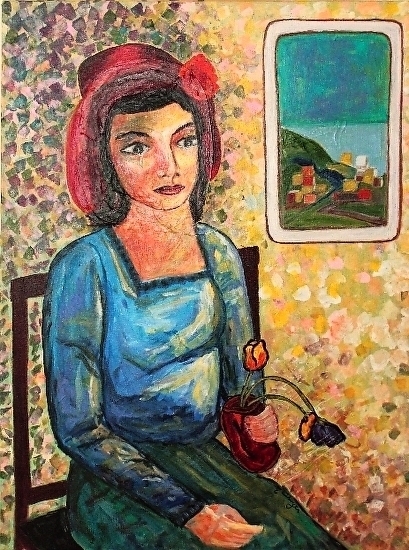
A tear rolls down her cheek as she wonders what the future has in store for her.

Five years to grieve?

Grief. It happens to us all at one time or another so we should not be surprised. People die, friends move, divorce occurs and accidents change lives. How we deal with grief is the challenge, for loss can be enormous and almost unbearable.

When my mother died in an automobile accident, I cried uncontrollably for days. Her death was so sudden and it took years before moments of intense sadness stretched into weeks and eventually months. Forty years later, I still miss her. Divorce affected me similarly, for it was also a death. I plunged into darkness and it was a good five years before I felt warmth in the light. In both cases, however, I continued living fully with the expectation that happiness would return one day to fill the empty pit in my gut.

When mass shootings occur, I grieve with the families for nothing can prepare a parent for the loss of a child. They must feel as though a piece of them has been taken away.

When a friend lost one of her twin babies shortly after his birth, she sank into a depression even though she hardly knew the child and still had one lefte to care for. Her psychologist aid that it was not unusual for grief to last five or more years and advised that she continue her activities until they once more came naturally.

Death of a close friend can be as devastating as losing a sibling. Feelings of abandonment, loneliness, fear and insecurity coalesce with sadness and grief. If the friend has shared life changing events with you, their loss can be so severe that it affects daily living. A roller coaster of emotions can give way to numbness and lack of energy. When a sibling dies, those remaining have to reorder their relationship with those still alive. Feeling a loss of innocence is common as is guilt for having survived.

When a grandparent dies, it may be the first time a chid encounters the death of someone significant. Intense surprise or shock may induce sadness, anger, rage, and a insecurity. Though the intensity of losing a grandparent or sibling may be great, oft times sympathy and caring offered by friends and family is inadequate for the grieving child’s need.

Sad emotions do not go away easily. Unfortunately, many supportive people distance themselves after being around a depressed person for a period of time. In many cultures, laws and customs push grieving people into new roles before they are ready. Religions and cultural groups, attempting to regulate the process are more likely to do so with widows than widowers.

According to my father, Jewish men are supposed to remarry at the end of a year of mourning. His friends began suggesting he do so even before my mother’s funeral was held. According to Jewish law, “The duty of marriage is discharged after the birth of a son and a daughter (Yeb. 61a). Still no man may live without a wife even after he has many children (ib.). Women are exempted from the duty of marriage, although, to avoid suspicion, they are advised not to remain single (ib. 65b; “Yad,” l.c. 2, 16; ib. Issure Biah, xxi. 26; Eben ha-‘Ezer, 1, 13; see Woman)”.

In the old days, when a man died without leaving children, his brother had to marry the widow. The custom was a way of insuring economic security. It is still the law in Israel today, though not always practiced. A woman and brother-in-law who choose not to marry are supposed to participate in a ceremony where the woman kneels, removes a special handmade shoe from the man’s foot, spit on the ground next to him and recite a verse that frees them from their obligation to marry.

Death does not always end the marriage. In India, for example, widowhood can mean a “social death.” Without a husband to support their children, widows lose their status and are consigned to the margins of society. In recent times, most countries have enacted laws to protect women but customs in religious groups may take precedence. Some Hindu women shave their heads, no longer wear a red dot theirr foreheads, and will not display jewelry. In the old days she was expected to walk barefoot. Thank goodness the custom to throw herself on her husband’s funeral pyre is outlawed.

In some third world countries such as Nigeria, a woman is expected to have sex with her brother-in-law or another male-designate after her husband’s death. This ritual cleaning by sex is supposed to ward off evil spirits and keep her children from suffering. Though most women find the practice repugnant, refusal can subject them to violence. They may be forced to drink water that the corpse has been washed in, confined indoors for up to a year, prohibited from washing their bodies for months, and be forced to sit naked on a mat, ritually crying and screaming at specific times, day and night.

Orthodox Christian women living in parts Russia, Czechoslovakia ,Greece, Italy and Spain customarily used to wear black for the remainder of their lives after losing a husband. Though this practice has mostly died out, there are Immigrants to the US who still don black as a show of devotion.

Christians often ask religious leaders if they stay married in heaven after death. The idea provides solace to those who have been in long time committed relationships. What I read says that a woman is free to marry if her husband dies. According to Jesus, in Luke 20:34-36, there are no marriages in heaven. Marriage is a legal contract and does not make it to heaven, for according to the bible, “marriages here are a foreshadowing of the event that is to come when we are joined together with Christ our God forever.”

Muslim customs can vary by community. According to Shykh Saalih al-Munajjid, after death the widow has to practice Iddah, and wait four months and ten days before remarrying. Husbands are instructed to bequeath a year’s worth of maintenance and residence in case of death. During the time of mourning a widow may not wear decorative clothes, apply kohl to her eyes, use perfume or sleep outside her house unless afraid for her own safety. She is still required to take care of the shopping, cooking, cleaning, laundry, children, etc. If a family member other than her husband dies then mourning lasts no more than three days.

Psychiatrists in the United States tell us that grieving is a process that is uniquely different for every individual. Grief tends to come in waves of emotions that move between anger, disbelief, sadness, and even happiness. Kubla-Ross, in her pioneer study of death, spoke of five stages to grief, not necessarily in a specific order. She mentions denial and isolation, anger, bargaining, depression, acceptance.

Sometimes grief leads to an untimely death of the remaining partner. Known as the widowhood effect, mortality rates are known to rise during the first three months of a spouse’s death. As one spouse’s health declines the surviving person may stop taking care of his or her own health and becomes ill as well. Men, over 50 are at greater risk than women, though income and wealth do make a difference. Without the support of family and friends, lifestyle habits tend to worsen. Men especially, eat poorly, forget to take medications, stop exercising and do not sleep well. They are less proactive than women in seeking solace.

I wrote this article because a number of my friends have recently lost loved ones and I want them to know that I am here to support them for as long as they need me. One thing I am trying to absorb as I age is patience, but I also know that those who dwell too long on their miseries find it hard to over come them. Making motions towards normalcy can be a difficult first step towards healing. Engaging in a cause, like gun control or raising money for cancer can also help with the healing process. It is a way of turning tragedy into a meaningful endeavor that will positively affect the next generation.

References

Schecter, S. & Greenstone,J. (1906) Marriage Laws. Jewish Encyclopedia. retrieved from http://www.jewishencyclopedia.com/articles/10435-marriage-laws

Death and Dying (2018) Widows in Third World Nations. retrieved from website http://www.deathreference.com/Vi-Z/Widows-in-Third-World-Nations.html

A Voice in the Wilderness (2011) Marriage after Death: Can we be married forever. retrieved from https://heraldinthewilderness.wordpress.com/2011/05/03/marriage-after-death-can-we-be-married-forever/

Saalih al-Munajjid, M. (2018) Rulings on the mourning of a woman whose husband has died. Islam Question and Answer. Retrieved from https://islamqa.info/en/2628

Condolence (218) What are the Stages of Grief? Learning Center. Grief and Coping. retrieved from http://www.econdolence.com

Jegtvig,S (2013) Widowhood effect strongest during first three months. REUTERS. retrieved from https://www.reuters.com/article/us-widowhood-effect/widowhood-effect-strongest-during-first-three-months-idUSBRE9AD0VU20131114

Do comment below. Your thoughts are intersting and always welcome.

Art is always for sale. Please contact me at Marilynne@eichingerfineart.com.

Honored Citizen Pride


 Delilah
Acrylic on Canvas/  30” by 24”/ gold Frame/ $ 750
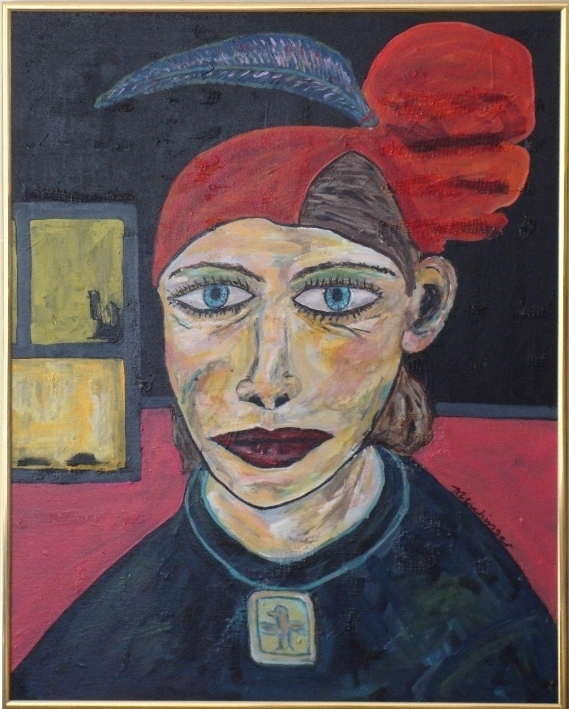
What are her thoughts? What does she live for? When she looks in the mirror does she find her youth or only wrinkles?

Honored Citizen Pride

Shortly after my company sold, I spoke to a doctor about retirement.  I mentioned that I was worried that I would shrivel up and die within the year.  His response was a belly laugh and then, after wiping his eyes, he said that I wasn’t the type–I had too many interests outside of work. “But,” he continued, “some people do whither away.  Since they never had hobbies and spent little time developing friendships, they become couch potatoes, age quickly and poof—they’re gone.”

When still employed , I kept a to-do list on my desk that kept me organized. That habit did not stop with retirement.  Once the big decision was finalized,  I put together an exciting plan to carry me through the next several years.  I wanted to learn to write well and to improve my artistic abilities in order to share  thoughts, ideas, and yes—wisdom.   In order to become more accomplished, I knew it would mean hard work, for I had few years remaining to live.

I’ve had a hell of a life—ran two non- profit museums, founded a for-profit catalog company, raised five children,  loved eight grandkids, adopted a street youth, and traveled extensively. Why not share my good fortune with the next generation?  Perhaps I can keep a few young souls from making the same mistakes I made. I thought that if I passed on everything I  learned during my life-journey then they would have a head start to improving society.  I fear that in many ways, my peers and I failed.

Armed with this purpose, I vowed to become a better listener, act compassionately, speak judiciously, and spend more time with family and friends.   Then one day, several unhappy thoughts popped into my head.  Does anyone want to listen to an aging lady?  Is my advice welcome or seen as interference?

The young people I meet today are busily immersed in their own challenges, and don’t seem to mind making mistakes.  They want independence and to be allowed to fail, though they do relish encouragement to try again. They see the world through a slightly different lens than I do.  Yet, they act similarly to the way my son did when, at 15 months,  he learned to climb stairs.  Each time I put him at the bottom of our carpeted steps, he took the climb as a challenge and went at it with a vengeance.  There was no stopping him. He was determined  and single mindend as he climbed to the top over and over again, never fearful of falling.  When I went to take him to another place he cried so hard that we stayed put for almost an hour.  I turned him bottom first so he could climb down as well as up.  My hands were always in place, ready to catch him.

Perhaps the real test of wisdom, is not sharing what you know but rather creating  possibilities for others to discover on their own. It means stepping back into the shadows, yet remaining as an available safety net in case of a fall.  The same son, now and adult, recently told me that the reason he was able to take risks at work, was that he knew that neither his father nor I would let him starve or go homeless. We were a security blanket folded in the back of his mind that allowed him to soar.  Interestingly, our role was simply to witness and applaud his successes and commisurate with him about his failures.

Now adults, my children do not need me. They are independent, well launched, travel their own roads, and do so with gusto. Most have families to care for and don’t live nearby.  I am at the edge of their thoughts, and when we get togethers it is as companion and friend, not parent or teacher.

Since I don’t have to work, raise children, babysit grandkids, or even decorate the house, what keeps me ticking?  I like learning.  I don’t want to be a dinosaur stuck in the mud to be covered and fossilized.  Reading, thinking, traveling, analyzing, embracing change—and yes sharing ideas, especially when I get a response, give me energy.

Secondly, I like helping the young people I come in contact with achieve their own dreams.   What fascinating challenges they have as they move through a  technological, social media connected world and what wonderful enjoyment I derive from watching them!  It is hard to keep up with their comings and goings.  Lucky me.   I plod on, a little wiser—maybe, a bit more silent, always older and seeking the truth in all things.  ______________________________

Do share your thoughts about aging below.  There are many times when we are called on to rethink our purpose in life. What is yours?

Art is always for sale. Contact me at marilynne@eichingerfineart.com.

Effects of trauma on children

Janna

Acrylic on canvas/ carved gold frame/ 23” by 27”/ $ 599

Janna learned suddenly that the world is not always safe when shooting started while she was enjoying a rock concert in Las Vegas. Fortunately she managed to escape without physical damage but mental scars remain.  She and many of survivors of the tragedy have to contend with with fear,  nightmares, and depression.  She is fortunate to have a loving family and a precious new kitten by her side.

Following is a section from my soon to be published book, Over the Sticker Bush Fence. Trauma is one of many reasons kids take to the streets.   Though I write about homeless youth in America what I say can also be applied to immigrants coming from the Middle East. It helps understand why their many of their children become radicalized. These youth  face many of the same problems as do our own , only they have the added burden of moving to a land with a strange culture.  Their difficulties are compounded by lack of acceptance in school by their peers and by poor job opportunities upon graduation.

Please do not  copy article without permission.

Trauma 

Abuse, violence, and naturally occurring disasters such as war or accidents are trauma producing events as are painful medical procedures and the loss of a loved one. Neglect, verbal put-downs, being treated like a slave, and starvation can lead to a chain of trauma induced reactions. These situations are debilitating, often leading to dysfunctional behavior patterns that affect the youth’s ability to grow into a balanced thoughtful adult.

Sara was in a horrendous boat accident when she was eleven. On a sunny summer day a waterspout developed that suddenly hit the family’s boat from behind. The small craft was capsized and her mother lost a part of a finger as she floated out to sea. Her father’s leg was partially severed while he held on to his daughter by a poorly secured life jacket. The family was fortunately rescued by a passing stranger and taken to a local hospital. After the accident, the girl’s friends started calling her a jinx. Since she was physically fine, her parents did not realize that she needed psychological counseling to get over the incident. The emotional damage of the event stayed hidden and was one of several traumatic instances that led to a mental breakdown at the age of eighteen.

Negligent caretakers, even if naive as in the above case, keep children from developing into strong, healthy adults. Instead of developing confidence, their children grow up feeling that the world is unsafe. They may lose trust in older people and have problems regulating emotions. As they age, they draw into themselves and find it difficult to connect with other people. their own age. As teens they are likely to have conflicts with authority and create unnecessary problems in school, at work or with law enforcement. Romantic relationships and friendships tend to be sparse and unhealthy

The stress from growing up in an abusive environment contributes to impaired brain development, chronic or recurrent physical problems such as headaches, stomach aches, rapid breathing, and heart-pounding. It is not unusual for a traumatized child to self-medicate with drugs, alcohol, and overeating. Some children become hypersensitive and act out inappropriately while others are just the opposite and become disassociated from their senses. Constant anxiety and fear, more often than not, lead to severe depression.

In school, a traumatized child tends to space-out by daydreaming and not paying attention to assignments. Childhood trauma and neglect can affect the child’s ability to learn to read. It is hard to pay attention when your home problems are of more immediate concern than schoolwork. Their wandering minds lose track of time and, in many cases, impulsive behavior replaces rational thought, making the youth unpredictable, volatile, and extreme. Believing they are powerless in the face of adversity, traumatized youth compensate by becoming defensive and acting aggressively when feeling blamed or attacked. A great many move towards high-risk behaviors like self-mutilation, unsafe sex, and high-speed auto races.

Since abused children have difficulty thinking and reasoning clearly, they are unable to plan ahead and anticipate their future. Their fight and flight reactions take precedence over rational thought and problem-solving. Without hope or purpose life has little meaning and is without value. Without the ability to influence their lives, they operate in survival mode.

Though it may take years to turn around negative feelings of self-worth, with the right intervention, it can be done. My friend Caroline shared her up-bringing with me. As a child, she was raised in poverty in a small Appalachian community. Though loved, her young life was traumatized by poverty and illness. As the oldest of five children, she was called on to care for the younger ones and assist her mother in household chores. Daily activities were especially cumbersome, for her mentally unstable mother was hospitalized frequently. When Caroline was in fifth grade, her father developed Tuberculosis (TB) and was hospitalized at the same time her mother was committed to a distant mental hospital. In those days there were limited ways to treat TB and most patients spent years in a sanatorium. The family was without a bread winner facing starvation. At eleven years, Caroline was in charge of her younger brothers and sister.

When the state finally learned of the situation a social worker found Caroline foraging by herself in the woods. She and her siblings were separated by the state, with two boys sent to one orphanage and the two girls to another. Caroline wondered if she would ever see her young brothers again. Describing her feelings of that time she said, “I believed that my family was no good trash. After all, we were poor with no chance of improvement. I thought that since things were so horrible, we must be bad people who got what we deserved. I was sure that I too would come down with TB and suffer from mental illness as I got older. I assumed that all of our misfortunes were inherited.”

Fortunately, Caroline was taken in by a loving couple, both doctors, who dedicated themselves to caring for the homeless children of Appalachia. The two adults were inspirational role models for the young girl. With scarce finances to operate their orphanage but with a big I-can-do infectious attitude, they impacted the lives of thousands of children. Their perseverance and positive outlook attracted help from others in the nearby city of Charlotte. At one point the doctors decided to build a clinic. Without the necessary money to do so, they relied on old fashioned community help by organizing the children and mountain neighbors to help dig river rocks for the building’s foundation. To earn additional revenue, they collected used clothing from wealthy in-town donors and started a thrift shop that is now over fifty years old. Their actions and positive attitude were role models for young Caroline.

Most importantly, they showered her with attention and love. They convinced Caroline that tuberculosis and her mother’s mental state had nothing to do with her. As an adolescent she gained in self-esteem and began to believe that the tragedies she had experienced could be surmounted. Upon graduation from high school, Caroline was awarded a scholarship to college where she studied nursing. She fell in love and married a physician who provided a comfortable home where she became a social force in the community as she raised five children. As they aged she went on to direct a prestigious science center.
Caroline is still attached to the mountains of Appalachia and continues to support the orphanage that helped her become a successful businesswoman. The sister who had accompanied her to the orphanage also flourished under the tutelage of the two doctors. Unfortunately, her brothers did not fare as well in their group home and struggled throughout their lives.

Not only does trauma burden children but it causes economic and political repercussions that carry a high price. Medical, law enforcement, and legal expenses are paid for by the rest of society.

Parents who leave their children alone for long hours, whether due to illness, drugs, or excessive work schedules, are often faced with unexpected consequences. In poor neighborhoods, many children play outside to a combative, primeval atmosphere similar to that described by William Golding in Lord of the Flies. They move about in city jungles without adult guidance, join gangs and exist in a survival mode. They become unruly and unwilling to play by the rule of law, with little regard for the consequences of their actions. These youngsters add to the burdens of our courts, foster care, and juvenile detention systems. Each year, the country incurs between $8-21 billion in long term costs for confining young people.

References:

Larson, S. (1997) Teenage Rebellion. Culture and Youth Studies. retrieved 2017 from http://cultureandyouth.org/troubled-youth/articles-troubled-youth/teenage-rebellion/

(2014) Calculating the Full Price Tag for Youth Incarceration. Justice Policy Institute. retrieved 2017 from http://www.justicepolicy.org/uploads/justicepolicy/documents/sticker_shock_final_v2.pd

Art work is always for sale. Contact me at marilynne@eichingerfineart.com

Do comment on my blog post below. Have  you or your family experienced trauma?

Where do Ideas come from?


Soaring
Mixed Media on Canvas/ Gold Frame / 38” x 49 “ / $ 765

Soaring high above the mundane we see new horizons


Where do Ideas Come From?

1 + 1 = 3. “What?” you might say. “That is not what I learned in school.” You will be right, though mathematics does play a role, you have to look at reality to learn that facts are not always able to be put in neat summations that make sense. New ideas fall into the category of t unexplained and unexpected happenings that are sometimes exhilarating and at times delusional. So, what brings about great ideas and is there a way to increase ingenuity?

According to Drew Boyd in Psychology Today, many artists, authors, and composers use templates to their stimulate their creativity. Paul McCartney of the Beatles said that John often came up with the first verse and that it gave direction to the whole song. Agatha Christy used a template in the over 60 novels she wrote. Use of a familiar pattern helped both artists be more imaginative.

Regulated, systematic actions provided a templet a teacher friend used when directing his high school jazz band. His students were all well trained musicians, but unable to improvise harmoniously (in fact it was chaotic) until he provided a musical template that all could subscribe to. Once grounded, band members were able to improvise individually, building on what the last person’s contribution. The band won awards for their well coordinated, uniquely melodic sounds.

Dr. Boyd writes that there are five ways to regulate thinking to trigger innovation on demand. He uses a mathematical model.

First is subtraction, the elimination of something that at seems essential but is not necessarily so.

Second is unification, adding an additional component that the product was not originally designed to do.

Multiplication follows third, when a component is copied and changed in a counterintuitive way.

With division the product is divided and then put back together in a new way.

Fifth is dependency where there is a correlation between two attributes, product and environment, so if one changes the other does as well.

My experience is that most people have an appetite for novelty, though some more than others. Many like change and fight against repetitive tasks. They enjoy varying the clothes they wear and changing the car they drive. Some are propelled by an intrinsic need to do something different. I, for instance, when driving home from the grocery store purposefully vary my route. I want to see if anything in the neighborhood has changed since my last tour down the road.

There are times in life when everything seems to be going smoothly. When that happens for an extended period of time, it is not unusual to seek new challenges that interrupt you comfort zone though creating occasional unwanted chaos. What people do is introduce a new puzzle (problem) that needs solving, one that requires out of the box thinking, the stuff that makes them want to get up in the morning.

When that happens to me I often use the forth way of problem solving, and divide my new puzzle into pieces. Life is likely toget disorderly before it is reassembled into a new and hopefully better configuration.

There are also unwanted occurrences like illness, accidents, divorce, and even death, but these too are problem puzzles that require creative solutions. A person who loses a loved one is likely to use subtraction as their path to innovation. Living as one, rather than two, requires the grieving person to find new ways of coping. Counselors often suggest going through motions, and making a to-do list, and following a schedule. Over time, the daily templet becomes a comfortable tool that makes it possible to reach out, try new activities, and become more innovative.

Ideas rarely happen in a vacuum. Information is passed down from one generation to the next for others to contribute to and modify. But occasionally, someone comes forward with an idea that transforms the way we view the world. Physicist Richard Feynman supposedly envisioned nanotechnology from his own imagination, spurring the growth of a billion dollar industry. What he and other brilliant innovators are able to do is synthesize information from across various fields. Their ability to cross pollinate ignites a creative spark within.

When you are in need of inspiration, it is important to look, grab , and blend what you see with other unrelated ideas. A friend shared that when young, he studied law for a year in order to augment his training in philosophy. With an understanding of two analytical approaches he engineered a cutting edge career as a medical ethicist whose advice is sought by hospitals, physicians and patients.

There is one other important factor leading to that wonderful “aha moment” when a new concept takes shape.  Dr. Jonathan Schooler and Claire Zedelius at the University of California, Santa Barbara, study creativity and offer their insight. Their research shows that an increased tendency to mind wander is associated with an increase in creativity when there is an analytic strategy (templet) in place for considering a dilemma. All aspects of the problem need to be understood before a relaxed period of mind wandering can provide insight leading to an “Aha” moment that points to a change in direction.

Increased mindfulness, on the other hand, leads to reduced intuition, which impairs performance that relies on spontaneous insights. Artists such as writer Suzanne Collins, author of the Hunger Games got her idea of youth fighting death matches when lying in bed channel surfing between a reality TV program where a group of young people were competing and coverage where young people were fighting an actual war. She claims that she was tired and that the two stories started to blur in her mind.

In conclusion, I like to remind myself that creativity is a practice. There are tricks that can be used to increase your ability to see things in a new way. However, you also have to be prepared for a time spent in confusion because problem solving is not straight forward. Relaxed attention and a willingness to seek input from multiple sources is a sure path for enriching life.

Please share your creative moments on my blog post below.

References:

1. Boyd,D. 2016. Where Do Creative Ideas Come From? Psychology Today. retrieved from https://www.psychologytoday.com/blog/inside-the-box/201611/where-do-creative-ideas-come

2. Jones,O. 2016. Where Do Truly Original Ideas Come From? Big Think. retrieved from http://bigthink.com/ideafeed/where-do-truly-original-ideas-come-from

4. Schooler, J. & Zedelius.C. 2015. Mind wandering”Ahas” versus Mindful reasoning: alternative Routes to Creative Solutions. ResearchGate. retrieved from  https://www.researchgate.net/publication 278678064_Mind_Wandering_Ahas_versus_Mindful_Reasoning_Alternative_Routes_to_Creative_Solution

Questioning Life

On Top Of It All
20” by 19”, Mixed media, $399.
Questioning how to give meaning and purpose to life is ongoing. Answers evolve and change with age and circumstance.

Winter holidays usher in a joyful bustle of activities with family and friends but since it is the end of one year and start of another, they are also a time to pause for reflection.

When I was sixteen my boyfriend asked, “which is better a life of love or a life devoted to a quest of knowledge and its application to living?” Without hesitation we both chose love, but as years passed, there were times when the quest for knowledge and career ambitions made us rethink our answer. Today I would respond by saying both.

My memory was stirred by an article I read this week on BBC’s news website. Educated Indian women were forced to give up doctoral ambitions to improve people’s health care in order to be full time mothers taking care of their families. Married women “are not expected to want the privilege of thinking and doing research,” said one of homemakers interviewed. Yet, in India, woman are starting to speak up and not give in to custom. They are finding ways to continue their research through online virtual laboratories and participation in conferences conducted through Skype. Instead of being confined solely to housework, these highly educated women have options never before imagined.

Many other questions were raised during my college years. What is the meaning of life and what idoes it mean to live well? Is there a God? What ethical system should I embrace? How will my activities and choice of profession contribute to society? These questions became buried when raising five children and beginning a career. But every once in a while, a decision had to be made that gave me pause to think. Should I choose advancement, money and accompanying stress over family harmony? Do I go on a business trip rather than stay home with a sick child? Is what I do more important than my husband or children’s ambitions?

From time to time these basic questions suddenly pop up and demand an answer.
As an elder, I am once more reflecting on life’s meaning. When I hear friends saying, “I’ve done enough for others. Now it is time to complete my bucket list,” Is that the best way to conclude my years? But somehow this remark doesn’t make sense. What difference does a trip to Bora Bora, sky diving, or snow shoeing in the mountains make?” These activities can’t be the purpose of living. They can only be a way to pass idle time while waiting to die. Why spend the money? Why change the way I find purpose in life? Then again, why not?

Deciding how to live is not just a quest of the young but it is a multi-year process that twists and turns with experience and circumstance. My answers have been challenged many times  as I developed a deeper understanding of the environment and the earth’s far flung inhabitants. Today when I ask what type of person I want to be and what makes life meaningful, I continue to look to the future— not of mine, but of those who will follow me. I still hope that the world will be a better place for my children and grandchildren to live in and would like to share my mistakes and achievements so they can move on from where I leave off. My ongoing quest for knowledge is pleasurable and gives me much do, but I am less focused on a need to achieve and more interested than ever in educating. Helping young adults known as the “me generation”  overcome this stigma seems like a fulfilling mission. Inspiring them to embrace a life of love and giving to others is a gift I would like to leave behind.

Merry Christmas to all.

Positive Psychology

Bursting Forth
Acrylic on Canvas/ gold frame/ 37” by 31” / 459
Flowers make me happy. I love visiting fragrant gardens and also enjoy bringing vibrancy home.

Positive Psychology

It may sound elusive, but being happy is primarily under under your own control. I have always thought so, which is not surprising, since I characterize myself as a glass is a half-full person. Born in a protective bubble, perhaps I am happy because of loving parents who had few expectations for me other than to be a good wife and mother. Without stress, I was free to study whatever I wanted and encouraged to take classes and get involved in activities of interest rather than for practical reasons. My university education was broad based, centering on ideas and concepts that expanded my understanding of the world. Increased curiosity made me thirst for new experiences that I anticipated would be joyful. I never imagined the bubble bursting to unveil tragedy. It was only with maturity that I learned that misfortune and adversity are part of most people’s lives, and mine was no exception.

And so, I was coerced to grow from struggles and develop coping mechanisms. There are times affliction made me stronger, so rather than complain, I explored how to emotionally benefit from what happened. I had to learn how to greet divorce, death and illness and transform the confusion and sadness they created into enabling energy. When my son was ill, I painted my grief on canvas and then researched every avenue for making him well again. As I did this, I noticed that planning ways to improve the future is enjoyable in itself. The process of engaging in possibilities provided motivation with feelings of hope and contentment. I said yes to life.

When told that a museum could not be built in Michigan, I was determined to ignore nay sayers and find ways to achieve my goal. The process was often fearful for I was forced to leave my comfort zone and do things, like fundraising and public speaking, that I never thought I could. As I succeeded I began more confident and stepped forward further.

I often wonder why so many people focus on negative events, digging trenches into sadness, and becoming frozen in the believe that they can not overcome adversity. The media takes advantage of this fascination with tragedy, showing grim images far more often than celebratory ones. By spotlighting negativity they contribute to a stressed, unhappy nation of people who view their glasses as half-empty.

I decided to do a bit of investigation on the subject of happiness and began by looking at wealth, since that seems to be an area of major discontent. I discovered that money is only important to the point that it provides freedom from worry about the basics. Once housing, safety, food, clothing and health care are provided the happiness that separates a billionaire from a family earning $50,000 is small. People in every socio-economic group, whether in tribal compounds, on family farms, or in senior citizen communities, can be found with positive, joyful outlooks. More important factors than money control mood and a positive outlook, though researchers have been slow in investigating (Treadmill, 2017).

It is only since the 1990s that psychiatrists turned their attention to positive psychology (Srinvasan, 2015). Previously, most researchers focused on abnormal behaviors like depression and schizophrenia, subjects they believed could be quantified. But, “Why not measure happiness?” thought Martin Seligman after his 5 year old daughter chastised him for being a grouch? He decided then and there, that rather than fixate on what was wrong, he would focus on what was right. Since contemporary living gives us time for play, why not understand what can be done to enhance feelings of joy?

Happiness is commonly defined as a state of well-being that comes from living a life with meaning, one that provides a deep sense of satisfaction. It results from both intentional and strategic planing though DNA also plays a role. Dutch researchers recently isolated three genetic variants of happiness (Woollaston, 2016). It is now thought that a large part of cheerfulness comes from the very structure of the human genome and is inherited. But, lest we be complacent, genetic makeup is only part of the story. Life circumstances, achievements, marital status, and social relationships are also important factors. Feeling happy is contagious and having family and friends nearby are major contributors to a sunny outlook.

Happy people do things in a slightly different way than unhappy ones, for they are willing to move out of their comfort zone and take risks (Biswas-Diener, 2013). Though they start with a set-point of contentedness they periodically move out in order to get a boost of joy before returning to their natural set-point. By continuing to engage in new behaviors, over time habits and choices begin to push the needle forward, providing an increased sense of well-being. I can attest to this growth in my own life. For years I was uncomfortable traveling abroad on my own until I finally decided to try going to Kenya on my own. The trip was exhilarating. Other people I met were often coupled in their home life, but traveled solo when they went on adventures. I enjoyed creating my own schedule, talking to someone as long as I liked, and not being asked if I was ready to leave. The next time an opportunity for travel presented itself I looked forward to the opportunity, anticipating a good time.

Happy people also spend quite a bit of time nourishing small pleasures. They indulge themselves by watching birds splash in a backyard fountains or sitting glued to a park bench as the sky turned rainbow colors at sunset. These small diversions provide entertainment and can give great satisfaction. Absorption in work, exercise, a good book, artistic challenges, enjoyment in setting and meeting goals, and getting in the flow give me a great deal of contentment.

Over the past 20 years, a series of interventions to promote positivity have been tested in labs. They may sound simple, but they work. Certain drills do bring about feelings of well-being. Two of the most documented activities are kindness and gratitude exercises devised by Keiko Otake (2006). Volunteers were asked to jot down and then meditate on facts of kindness (or gratitude) they engaged in during the week. They found that happy people become more kind and grateful simply by counting and acknowledging their actions. Regular practice in recognizing kindness and gratitude increases happy memories and improves the quality and quantity of happy moments. Over the course of a few weeks, as feelings of well-being increase, permanent changes are visible on brain scans.

A brain imaging study published in Social Cognitive and Affective Neuroscience explains why self-affirmation works (Jarrett, 2015). Subjects asked to focus on values and situations that gave them the pleasure showed increased activity in the part of the cortex known to be involved in expecting and receiving rewards. When directed to think of a time in the future when they anticipate having fun with family or friends, scans show even greater positive activity.

Each of us has the ability to cultivate what is best within ourselves and to enhance experiences of love, work, and play. Life is a see-saw that needs to adjusted and continuously put in balanced. There is no need to dwell on all of the negative garbage the media throws at us when happiness can be increased by practicing positive thinking and embracing the good in life.

References:
Biswas-Diener, R. & Kashdan, T. (2013) What Happy People Do Differently, Psychology Today. retrieved from https://www.psychologytoday.com/articles/201307/what-happy-people-do-differently

Jarrett,C. (2015) Brain Scans Can Help Explain Why Self-Affirmation Works. Science of Us. retrieved from http://nymag.com/scienceofus/2015/11/why-self-affirmation-works.html.

Otake,K. (2006) Happy People Become Happier Through Kindness: A Counting Kindness Intervention, University of North Carolina at Chapel Hill. retrieved from
https://uncch.pure.elsevier.com/en/publications/happy-people-become-happier-through-kindness-a-counting-kindnesse

Srinivasan,T. (2015).THe 5 Founding Fathers and A History of Positive Psychology.
Positive Psychology Program. retrieved from https://positivepsychologyprogram.com/founding-fathers/

Treadmill,H. (2017). The Art of Happiness. Psychology Today. retrieved from https://www.psychologytoday.com/basics/happiness

Woollaston, V.(2016) Is Happiness in Your DNA? Daily Mail. retrieved from http://www.dailymail.co.uk/sciencetech/article-3559114/Is-happiness-DNA-Study-finds-genes-affect-mood-prone-depression-neuroticism.html.

Art is always for sale. Contact me at marilynne@eichingerfineart.com

Do share your happy experiences below.

Death Wish


Feeding-Crow
Acrylic on Canvas/ 40” by 30”/ gold frame/ $ 599

Death Wish

For a short time I worked as a community mental health worker and encountered people from all socio-economic strata. As a protected girI had not been exposed to the trauma experienced by so many children during their formative years. Their scars were brutal and healing required insight, self-acceptance, and a willingness to enter a portal to new ways of thinking.

Unfortunately, though exposed to other options, not everyone was capable of traveling through the tunnel to reach them. I witnessed cases where the tension created during the transformation process was so great that it manifested itself as a death wish.

For example, one 21 year old football athlete came to me during his senior college year after he injured his knee. He had expected to become professional upon graduation but his injury forced him to change course. His presenting clinical symptoms were dramatic for not only was he depressed, but he thought his body was eating away at itself. I hospitalized and medicated him for a while, which enabled his symptoms to subside and allowed him to become open to counseling. Over the course of many months he improved, seemingly accepting his fate, and ready to complete his final college year. His parents and I were very pleased with the willingness he showed to reform his career options. Two days after his return to school I received a call saying that he had taken a gun to a distant park and killed himself. He had become strong enough to end his life.

At the time, I was a young counselor and was devastated by my patient’s death. I brutally had learned how vulnerable people are during the process of healing and that caution must be taken before claiming that someone is “out of the woods.” This is especially true of youth who survive trauma for to do so, their flight and fight responses become so well developed that it is difficult to slow down for rational analysis to take place.

When terror strikes, whether due to natural conditions conditions producing floods, fires, or drought, human induced circumstances around war or gangs, or abuse within the family, the body responds with increased adrenaline in preparation for immediate response. If the situation continues for an extended period of time, some people begin to crave the feeling of being on the edge and so add even more risk to their days. The movie, American Sniper, is an example of how a trained soldier can develop a craving for adventure (war) which he eventually could not manage. These risk cravers (adrenaline junkies) are labeled as having PTSD and disproportionally land in hospitals or jail. They crave adventures that put them on the edge where they dare fate over and over again. When they survive, they consider themselves to be skilled and intrinsically lucky, and do not believe they could ever fail. “After all,” they rationalize, “I overcame trauma, therefore I am invincible and know I can survive future tests of fire. And so, their risky behaviors become a way of life which continues, while parents and loved ones worry and eventually suffer the consequences of their behavior.

I recently read a book written by an Afghan refugee whose mother sent him out of a Taliban war zone. At the age of twelve he embarked on a hazardous journey to safety that was almost as bad as living with constant shelling. Gulwali Passerlay’s story is brilliantly told in his book “The Lightless Sky.” A great deal of money was paid to ruthless smugglers traveling a dangerous route to Europe. During the way he was tortured, put in jail, starved, frozen, and nearly drowned. Occasionally he was shown courageous acts of kindness by good people who went out of their way to help him. Each time Gunwale overcame a difficult condition he was forced to rise to the occasion or perish. When finally given a secure place to stay, adequate food and tender care his mind collapsed inward and entered a severe depression, trying suicide on several occasions. Though he had become physically healthy and was not running on pumped up adrenaline, when his brain had a chance to focus, he thought only of the losses and trauma to his young life. In other words, while living with risk, he did not have time to think, but when settled his fears and trials had time to surface giving rise to a wish to end his life.

Today I am sitting in a rehabilitation center in Omaha, Nebraska meeting patients and parents who are encouraging their children to reinvent themselves. Forty percent of the young men in the facility are here because of motor cycle, car, and sporting accidents. Another third have accidents related to working in dangerous situations. “A tree fell on my son while climbing as an arborist,” said one mother. “A crane landed on my husband while moving paper in a factory,” said another woman. “The last 20 percent had mishaps of fate well behind their control. Some of the risk taking youth come from disturbed backgrounds, but not all. Others simply craved the excitement promoted in action movies and on internet.

Though seriously maimed, many patients remain attuned to their high risk demons rather than listening to more cautious advisors. One problem is that if they slow down and take time to consider what happened and how their lives have changed, they run the risk of depression. Though in most cases, sadness is reasonable and can be a motivating factor for change, in some instances a death wish is not far behind. Without maintaining an adrenaline rush that comes from risk taking they perceive the game as over, and have no desire to live.

It is important to acknowledge that after a dreadful accident, once strength is regained, the person may still crave the same dangerous behavior that caused the incident. As care givers and friends must remember that change is a struggle that does not happen over night. Highs and lows are part of the mending process. We expect those who suffer to struggle on until past demons are overcome and a more mature outlook is achieved, yet as onlookers, we too are called upon for patience and adaptability to changes in your loved one as he or she heals.

Willpower

The Family in a Turkish Village is inspired by the work of Greg Hawthorn. It speaks to me of the energy it takes to join together physical, mental and spiritual parts of one’s being.
Acrylic on Canvas, 24” by 48”, Gold Frame, $ 690.00.

Bulking the Brain

Body, mind, and spirit are part of a health mantra chanted from coast that says, eat right, stay engaged, lower cholesterol, exercise, be mindful, and nourish your spirit. Be generous to body and find energy to meet daily challenges. Be generous to mind to improve mental and emotional heath, lower stress, and develop calmness. And, be generous to spirit to achieve a well lived life. . . one that has meaning.

This advice makes sense to most people, so why don’t they follow it? It is not difficult to dedicate 20 minutes a day to meditate as does my sister-in law, a most beautiful, composed woman who deals with trauma on a daily basis. Mindfulness enables her to answer a crisis hot line, one of the most stressful volunteer jobs.

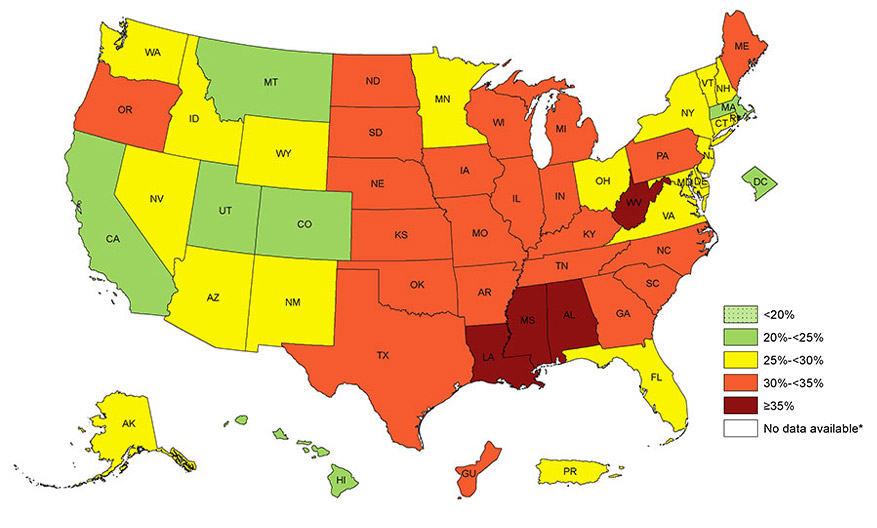
Most of my friends exercise regularly, eat well and watch their sugar intake. After all, we live in the land of Nike, were raised with “Just do it,” and can afford to go to health clubs. So it surprised me when I read that Oregonians live in one of the most obese states in the nation. We are at the high end of the national
average where 40.2 percent of adults (40-59), 37 percent of those over 60, and 32.2 percent of younger adults are obese. I learned that among white men, those with higher incomes are more likely to be obese while the reverse is true among women. Though education does not seem to affect obesity in men it does in women where the better educated are less likely to be heavy than their less educated sisters.

Telling people to “Just do it” obviously does not work. Look at the map assembled by the Center for Disease Control and Prevention showing the prevalence of self-reported obesity among adults throughout our country.

After seeing this map I realized that changing health habits requires willpower and I was not sure where one finds it.

There are many studies that show the benefits that come from resisting temptation and having self-control. The first experiment in the U.S. was conducted in 1960 by Walter Mischel who recognized his smoking addiction and wondered what it would take to get over it. He offered four year olds the choice of a marshmallow that they could have immediately, or two if they could wait for 15 minutes. The treats were always visible and the child was told that she or he could ring a bell to call the experimenter back to end the torturous wait. Mischel tracked their performance into adulthood and found that those who could resist temptation had greater academic success, better health, and lower rates of marital separation. Even knowing this outcome, Mischel could not stop smoking. It wasn’t until he saw a man with lung cancer that he realized he was fooling himself. From then on, each time he reached for a cigarette he would create a picture in his mind of the sick man which helped change his craving.

Psychologist Denise Cummins says that willpower is like a muscle that gets stronger when exercised. “Use it or lose it” is her advice. People rarely want to change, yet to have a happy, successful life, willpower and self-control are essential. It is neither fun nor comfortable to change patterns for it necessitates breaking bad habits. It may mean establishing new relationships with friends and family. Beer buddies or coffee klatch friends may be difficult to be around if they don’t share your desire to lose weight and not to drink excessively.

Those who see that love ones to need to change, are almost always ineffective in getting them to do so. To make a lifestyle change, the person has to decide to please him or herself rather than someone else.

Developing willpower is an internal, conscious decision that has to be approached with caution. . . and that means not to overdoing it. When practicing a new life pattern, don’t berate yourself if there are times when you don’t follow through. Willpower grows over time and needs occasional recovery periods in-between.

The task, however, is a creative one that takes imagination. There are tricks that can be employed to help. Mindfulness can be useful to help divert craving and constantly thinking about the addiction. Imaging games such as the one used by Mischel to stop smoking are helpful. Imagining what you will eat after watching a movie or cleaning a closet also works. Studies have shown that those who delay gratification are in more control when they finally do eat or drink.

It does take practice to develop visualization and mindfulness skills. Meditation helps calm the brain but turning away from the desired object is faster and also works. It makes sense for an alcoholic to avoid going into a bar or an obese person from visiting an all-you-can-eat restaurant. On a recent cruise to the Caribbean, I watched grossly overweight people returning from a buffet with two full plates of food, baskets of bread and piled high desert plates and wondered if they really were prepared to gain 5 or more pounds on their vacation. If not, they might have been better off avoiding temptation by being served from a menu with more limited choices and serving portions.

Stress depletes willpower, while exercise, meditation, and knowledge are power tools to use to gain it. Whenever I interviewed new employees I asked them what they did when they were stressed at work. Everyone had an answer to my query. They knew what helped them get through difficult times and easily shared their stories. What I discovered, was that they often forgot to call on their inner resources when needed. Whether it is visualization, listening to music, or as I do, taking a ride in my car, it is important to take the time to go to your secret place rather than feed your addiction.

Acquiring willpower can actually be fun, though it is easy to wonder how can weight loss or exercise be enjoyable when the thought of it is painful. The practice becomes easier if pre-planning is done. For instance, attending cooking classes where healthy ingredients are used provides an enjoyable, social activity. Establishing a routine with friends to walk, jog, or exercise is a way to make time whizz by. Setting a schedule for meditation, not only builds brain-power, but lowers blood pressure, and improves focus, all outcomes that feel good.. My own experience as a meditator is simply that it makes me feel relaxed and leaves me with renewed energy.

Problems are a never ending part of human existence that brings excitement into life. If there are many, I am busy working to solve them but notice that when there are few, I get bored and will go out of my way to find a new challenge. How problems are approached and overcome is what makes each life special. Growth occurs to those willing to step on a path that engages them in healthy activities. It is a road that leads to weight reduction, improved stamina, and relaxation. The walk becomes increasingly enjoyable as posture improves, pounds are shed, self-esteem improves, and new clothes are worn with pride. Smiles and sensitivity to others spread as problems are put in their place and dealt with as entertaining challenges.

Sounds pretty good doesn’t it? After gaining weight this winter I think I’ll get me some willpower and self-control.

References:
Overweight and Obesity, Center for Disease Control and Prevention,2015, https://www.cdc.gov/obesity/data/prevalence-maps.html

Cummins,Denise, How to Boost Your Willpower, 2013, Psychology Today, https://www.psychologytoday.com/blog/good-thinking/201306/how-boost-your-willpower

Konnikova, Maria, The Struggles of a Psychologist Sudying Self-Control, 2014, The New Yorker, http://www.newyorker.com/science/maria-konnikova/struggles-psychologist-studying-self-control

Haederle, Michael, How Mindfulness Can Build Your Brain, Life Reimagined, https://lifereimagined.aarp.org/stories/29441-How-Mindfulness-Can-Build-Your-Brain