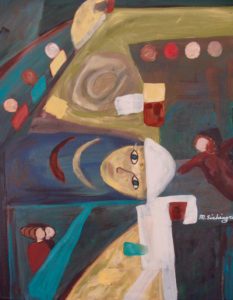
Negotiating Volatility

Limitless Possibilities

           Confusing, Volatile, Hateful, Loss, Changing, Compassionate, Loving, Opportunity, Joy

Negotiating Volatility

Though retired, I keep one foot in the museum world. This February’s American Alliance of Museum magazine was about navigating the future during a volatile time. Trendswatch, a center forecasting the future for museums, supplied data for the article. Since insights are as pertinent for ordinary people as they are for museums, I decided to share them.

The magazine begins by summarizing data that affects us all. I was surprised to read that one hundred sixty educators have been fired for political reasons since 2022, and the increase in global carbon emissions since 1970 is 90%.  By 2090, with the adoption of generative AI, they project job loss to be as high as 30%. The number translates into 300 million current jobs being eliminated globally. Last year, 53 % percent of hiring managers reported that their company eliminated the requirement for a bachelor’s degree in some or all roles.

I knew that book banning was a problem but was horrified to learn that over 2,571 book titles have been challenged or banned in U.S. public libraries and school libraries between 2020 and 2022; so much for freedom of expression, with so many people becoming morality censors.  I’m not surprised that the segment of U.S. adults who reported feeling lonely a lot of the time yesterday is 17% of the population (44 million American adults).

The speed of change is increasing exponentially. Google’s director of engineering predicts that a year’s worth of change that occurs today will only take three months to do by 2041. ChatGPT, launched in November 2022, had over a million active users by January 2023. It and other AI platforms are changing the landscape for thousands of writers, illustrators, and journalists. Rapid change is unpredictable and can be terrifying for those unprepared.  AI is a record-breaker. It processes data and completes tasks faster than humans. Plus machines, don’t need bathroom and lunch breaks.

Frey and Osborn, who accurately predicted job loss over the past twenty years, predict that the following jobs are at immediate risk. 

  • Transportation and material moving (nearly 12 million jobs)
  • Sales and sales-related roles (3.8 million jobs)
  • Production (2.8 million jobs)
  • Office and administrative support (14.4 million jobs)
  • Food preparation and service (4.4 million jobs)
  • Business and financial operations (700,000 jobs)
  • Other, which include:
    • Art, design, entertainment, sports, and media (14,000 jobs)
    • Building, grounds cleaning, and maintenance (3.8 million jobs)
    • Legal occupations (414,000 jobs)
    • Personal care and service operations (179,000 jobs)
    • Protective service operations (91,000 jobs)                               These predictions are causing people to rethink career paths.

What does this mean to you and me? The future will be frightening and challenging for anyone set in their ways. There will be exciting possibilities for individuals with a broad outlook who are not afraid of technology and can adapt. Those who survive unscathed will set a course that helps them adapt without becoming overly stressed.

They will–

  • Pay attention to hot-button topics likely to set people off, realizing that verbiage matters. They won’t use words designed to hurt or likely escalate emotions.
  • Find purpose through meaningful social interactions with people who support their beliefs. It will be a mechanism for developing friendships and close family relationships. It can start with discussions around the dinner table, getting children used to analyzing the risks and benefits of their positions. It will mean joining friendship groups to get help with employment opportunities.  
  • Learn to deal with angry, aggressive people and find ways to engage them in a more productive dialogue. They will do this by participating in discussion groups that include people with differing backgrounds and beliefs. They will take into account the perspectives of others, respecting their viewpoints even when they disagree with them.  
  • Participate in neighborhood watch, become friendly with neighbors, and are willing to help and be helped in an emergency. They will discuss ways to deal with extreme weather situations and will stock up on supplies so they are prepared for natural disasters predicted in their area.
  • Monitor local legislative and legal decisions to ensure that water, utilities, and land use aren’t areas for corporate exploitation. They will take a stand on issues that concern them—knowing that everyone loses when cultural and educational institutions are held hostage by partisan politics. These institutions are among the few that can be trusted to deliver non-partisan information.

Navigating the future will be difficult and not for the light-hearted. We are headed for a time of extreme poverty, displaced people due to climate change, and increased mental illness due to stress. Maintaining a democratic society will be difficult, but it can be done. We can’t give up hope.

While working through confusion, we’ll have to roll with the times and find enjoyment where we can. We can love and be loved and expand our love to include those less fortunate than ourselves. Compassion can get us through bad times and stir up peace. Valentine’s Day is an excellent time to start expanding love. 

I look forward to your comments about the volatility of your life. Do you find change stressful? How do you deal with it? Please share at www.eichingerfineart.com/blog

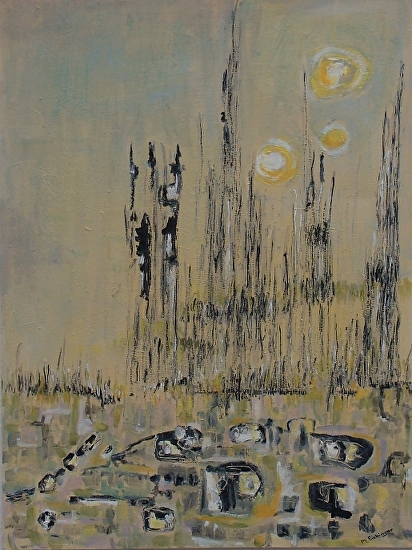
Art is always for sale. Limitless Possibilities is a 24″ x 18 “acrylic painting on canvas. Available for $595. Free shipping within the continental U.S. To purchase, contact me at marilynne@eichingerfineart.com or go to the abstract work category on my website at www.Eichingerfineart.com

and buy online.

Search for Community

Search for Community

Between 1870 and 1920, eleven million people migrated from rural to urban America. Today, only two percent live on farms or ranches. Due to industrialization, homogeneous towns disbanded and city dwellers had to find ways to connect. They joined churches and animal clubs like the Lions, Elks and Moose, and participated in business/charity associations like Rotary. The upper classes became members of exclusive clubs and joined Masons, Shriners and Junior Leagues.

My immigrant grandmother met women in a corner knit shop where needles clicked in time with their mouths as they shared local gossip. Krewes sponsored balls and floats in New Orleans and New Years Associations contributed to the Mummers Day Parade in Philadelphia. Youth organized themselves in social club or gangs which offered protection as well as a sense of belonging. Sports and Gentlemen’s clubs, those organized around nationality of origin, and unions made it tolerable to live next to strangers who traveled silently on subways and trolleys.

As years passed, many of the clubs lost their luster, finding it difficult to recruit young members. But though membership declined, the need for community hasn’t changed. Living in cities distant from relatives and childhood friends, electing not to be married, it is easy to feel lonely and isolated. 

Most of us are aware of some of the ways internet brings people together. Sites like match.com promise love connections. LinkedIn allows participants to scan profiles and send “Connect with Me” notices. Tweets, Instagram feeds and Facebook are avenues for friends and acquaintances to stay in touch, share interests and seek advice.  But, though friends spend hours communicating on-line, it cannot allow them to touch or look into eyes while sharing a meal. You cannot notice a person’s flush when they say something awkward or sexy. And a friend recuperating in a hospital can not be helped or comforted from a computer as they can from a warm bodied friend.

Face-to-face relationships are as important as they ever were. The way people form friendships and develop community  today is a reflection of changes brought about by the economy and population growth interacting with the internet.

Snowbirds and Nomads: A growing number of retired people travel south for the winter and north in the summer. Wealthier snowbirds have condos in gated golf communities or travel in forty-foot RVs, camping seasonally at resorts or state parks. They party and join fellow campers who own dune buggies, horses and kayaks. Over several years deep friendships develop, forming community based on shared interests.

A burgeoning subset of seasonal travelers, are less affluent nomads living in second hand RVs, school busses, pickup trucks and sedans. They drive the highways to reach mega-lots outside of warehouses run by Amazon, Walgreens and Walmart, where they are employed seasonally. They may harvest sugar beets or sell Christmas trees and pumpkins at roadside stands.

These wanderers are middle class Americans who do not have enough money to retire. The Great Recession of 2007 wiped out their savings. Though many are educated, they can only find employment in low paying jobs that demand long hours of physical labor that is not enough to sustain them. Eventually they sell their possessions and take to the roads. They sleep in parking lots, truck stops and public camping areas in warm weather and reach out to family and friends when it turns cold.

Their way of life is more freeing than expected when they first embark on it. Fellow nomads are friendly and helpful. They use the internet to stay in contact off-season, sharing advice about jobs and places to camp. They pass the hat when someone’s vehicle needs repair, help them if they are ill, share meals, play cards and socialize. They enjoy their freedom, stay off the grid, use solar power and participate in community.  Like gypsies, these wanderers develop an appreciation for adventure and escape from social norms. The lifestyle becomes more difficult when they can no longer lift a 50 pound bags or stand on their feet 10 hours a day.
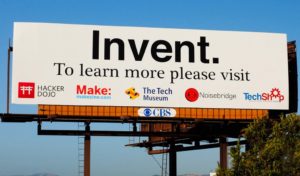
Makers – A diverse group of inventors are drawn into affinity groups around art, electronic music, science, and technology. Maker fairs, held in most states, feature inventions and activities that take place in garages, museums and homes. Open to the public, they are attended by NASA, MakerBot Industries, Shop Bot, 3D systems, Kickstarter, Autodesk, Instructables, universities, etc. 3 D printing is the latest explosion along with robotics, electronics, metal fabrication and computer controlled technology, though woodworking and aboriginal skills remain in the mix.  Makezine.com is a good place to go to find out what’s happening.

Intel, General Electric, science centers and education institutions sponsor maker spaces. But a great many more are organized by individuals with a desire for community. Makers are more than hobbyists. They are multi-age inventors who enjoy the diversity of talents and skills gathered together to execute someone’s project. Maker spaces encourage grown-ups to play with leading edge technology. They construct everything from terrariums, music venues, computer designed knitted ski masks and t-shirts with electronic messages to mechanical-art sculptures. They allow those with unfulfilled potential (often college drop-outs) to show off and have a chance of attracting investors.

Habitat for Humanity is an organization that is built around community. Volunteers along with the future homeowner, lend expertise and muscles to construct affordable housing. Those who stay involved for years, going from project to project, form tight friendship groups. Building a habitat house reminds me of they way the Amish gather to raise a barn. It is a a joyful event with a tangible outcome that puts smiles on the new owner’s face.

Meetup.com—More than a web site, “meetup” it is a movement that connects like-minded people to small affinity communities. I belong to Nine Bridges, a writers group promoted on meetup.com. My group is one of hundreds over a five state region that meet weekly, giving twelve people the opportunity to read from their work and receive criticism.

Meetup categories range from outdoors & adventure, sports & fitness, photography, food & drink, music, film, LGBQ, Language & culture, Beliefs to  Movements, Pets, Hobbies and Crafts, Fashion & Beauty. There are social and career & and business sites listed as well. Connecting is easy for those willing to leave their homes, computers and TVs to venture forth into the unknown.

Street Life – Homeless youth are also a communal lot, sharing much more than the sidewalk. They understand each other, for most left abusive home situations to  seek safety and shelter on the streets. The young adults they meet are their friends, even if they only interact for only one day.  Friends hang out, play games in parks and share survival skills. They couch surf at the homes of more those who have an apartment. They are loyal to a street code that prohibits tattling and promotes sharing. They lend money, food and drugs when they have them.

Older homeless denizens also share community, though members may be less healthy because of mental and physical illnesses developed from imbibing alcohol and drugs and living in inclement weather. They socialize on sidewalks, in parking lots and under freeways, sharing their stories and information about services and shelter.  When given permanent lodging, they often miss their street buddies. I was on the board of a group called The Giving Tree that helped homeless people adapt to housing and saw first hand how depressed some become. While holding a weekly tea in a unit for elderly people, a woman jumped from a 6th story window. Suicide is not uncommon among the newly housed and insect infestations are rampant. To combat isolation we provided cooking, cleaning and art classes.

Social Clubs – Clubs pull young adults together for music, film, food and drinks. An example is the White Owl Social Club which features everything form live bands and comedy skits to movies shown with old fashioned projectors. Prices are moderate and stereo volume kept low to allow for conversation. Social clubs are more than a restaurant or bar. They are gathering sites for friends who share apartments and homes that are not large enough to accommodate a group. Pool and ping pong tables, bowling alleys and foosball provide a Chucky Cheese type experience for grown ups. Comfortable sofas, a fire pit, and laid back gathering areas make it easy to relax and deepen friendships. 

Burners and Festivals- Many young adults spend summer months traveling from festival to festival engaged in a culture around music, art and community. Small Burning Man style festivals that operate throughout the world (China included) preach compassion and sharing over commercialism. Corporate logos are never displayed and money doesn’t change hands. People assist with the work of setting up, cleaning up and feeding attendees. Resources are willingly shared. One camp (a friendship group) might operate a misting tent, while others dispense food, provide entertainment, psychological advice, showers and off-beat clothing. Technology, art, bright lights and colors flash from bicycles, floats and sculptures. Dancers twirl fire while techno-music plays until dawn. What makes Burning Man unique is that the camps are composed of people who value creativity and the arts. Friends meet year round to work on festival projects.

My son occupies a transmission shop that he converted into living, office and shop spaces. Friends gather weekly to implement techno-art projects for festivals like Burning Man. They have fun while maintaining community. Festivals provide them with deadlines, goals and purpose. They think of themselves as family and support each other throughout the year.

Senior Centers – Day centers operating throughout America bring the elderly. into community. They provide information and connection to local health, housing and legal services, yet most are a great deal more than counseling centers. They offer recreational activities, classes, lectures and discussion groups and a place to lounge. Some operate in conjunction with service organizations like Meal on Wheels. The YMCA, Urban League, Native American Family Centers, Latino Networks and private non-profits are actively involved. Their goal is to kindle joy and make retirement purposeful. I’ve given talks at senior centers in wealthy suburbs and in poor neighborhoods. What I’ve witnessed in general, is that those who participate are active, age well and enjoy being with a community of peers.

There are a great many ways people participate in community.  Gangs, political organizations, veterans associations, food and craft groups, church committees, professional and exercise clubs, and shared office workspaces unite people by common activity, affinity and proximity.  Co-housing is one I hope to explore another time

References:

Kahn Academy website  (2018)America moves to the cityKahn Academy. References: retrieved from website. https://www.khanacademy.org/humanities/us-history/the-gilded-age/gilded-age/a/america-moves-to-the-city

Merchant,N. (2017) Feel like you don’t fit in?  Here’s how to find where you truly belong.  ideas.Ted.Com. retrieved from.  https://ideas.ted.com/feel-like-you-dont-fit-in-heres-how-to-find-where-you-truly-belong/

Agrawal. M. (2018) Community is Everything: How to Build Your Tribe. Inc. retrieved from https://www.inc.com/miki-agrawal/community-is-everything.html

Bruder,J. Nomadland   Surviving America in the Twenty-First Century (2017) W.W. Norton & Company, New York

The 3 Rs Plus Technology


   Oregon City Falls

Acrylic on Canvas / 436” x 49” / $ 1,100

Oregon City is the site of the first electric power transmission line in North America. We have come a long way since then. Miniaturized components enable us to operate devices that were never imagined during the late 1880s.

The 3 R’s plus Electronics?                       

For over 300,000 years, humans worked with stone and metal hand tools. But 150 years ago, with the invention of electronic devices, many of these helpers became obsolete. Since 1835, when American scientist, Joseph Henry invented the electric relay, emerging technologies have changed the way we live and do business. It is difficult to imagine a home without television, mobile phones, computers or internet connections. We rely on microwaves, remote controls, satellite dishes, keyless automobiles, global positioning devices and baby monitors. These devices that control homes and keep us secure have created a demand for skilled workers who can design, build, install, test and maintain them. It makes me wonder what schools are doing to prepare students for technological jobs.

Elementary schools concentrate on the 3 Rs – reading writing,  ‘rithmatic but the notion of introducing young children to  technology has not been embraced by educators. To most adults, techno-specialists speak a foreign language. We do not know what a diode, capacitor or resister does nor do we understand how electrons flow through wires and light traveling through fibers is converted to electricity.

Are you staying abreast of changes in cognitive science, biotechnology, artificial intelligence, robotics and nanotechnology? Most people aren’t. These subjects feel too foreign—too scary. It is for this reason that we need to introduce young children to these technologies through games and interactive devices. Their minds are adaptive and they have not been programmed against them. All one has to do is look at youths to see how much easier it is for them to use computer operated devices than their parents.

Art, music, sports, cooking and craft programs provide hands-on experiences that stimulate the sense and use the creative side of the brain. Assembling robots, electrical boards or drones do the same thing. The first time I put together a theremin was exhilarating because it was such a foreign activity. Once I overcame my fear of being thought stupid, I discovered success was a matter of learning a few new words (electronic-speak), following directions and being patient. As I assembled the small components, I discovered my eye-hand coordination and ability to concentrate also improved..

Assembling electronic devices requires organization in the same way a cook organizes ingredients for a favorite recipe.  Collecting, measuring, storing ingredients and cleaning are part of the process. They are both problem solving activities that can have satisfying outcomes.

Schools do not think about hardware in the same way they do software, yet workers are needed to repair electric cars, computers and home monitoring devices. Engineers of the future will continue to make devices go faster and more efficient. Those who are technically savvy are the pace setters for tomorrow and our education system must be challenged to teach to them.

Many educational devices have been invented that make techno-learning fun. They can be purchased in upscale toy stores and are used in many after school science programs. It is now time to bring them into the public school system. Tinkering and taking things stimulates the imagination and makes life exciting. Leonardo da Vinci, knew this for he was not only and fine painter for an amazing engineer.

Of course, not everyone is a hands-on learner. Some enjoy reading, learning history, and using their knowledge to analyze change. For these individuals, there will be ethical questions to explore and laws to enact. Questions will be asked such as, should infants be tagged with an electronic device under their skin that will follow them through life and how will people survive if robots continue to replace workers. Historians, philosophers and journalists will have plenty to do.

So in addition in helping children become familiar with hardware and software they will need to develop ways of thinking about ethical issues and social change. Embracing innovation is complex and needs our full attention or we will continuously be surprised as was Mark Zuckerberg over Facebook’s privacy issues.  Let’s get out front of technology and consider ramifications before we are in trouble. 

Reference:

World Economic Forum. (2017) Top 10 Emerging Technologies of 2017. Scientific American. retrieved from https://www.scientificamerican.com/report/top-10-emerging-technologies-of-20171/

I look forward to hearing you opinion Go to eichingerfineart.com/blog to comment.

The New Biology

Indian Princess
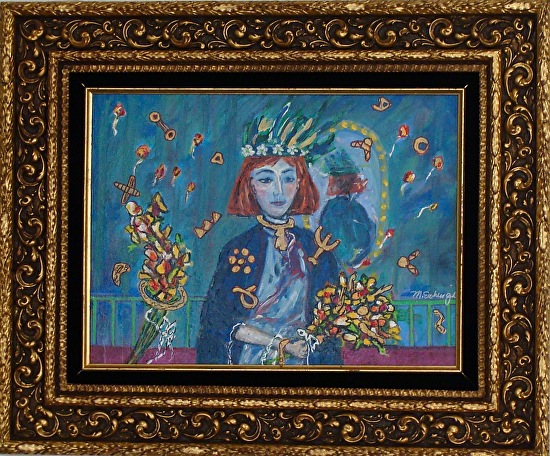
Surrounded by molecules and artifacts that represent her genetic past and complex ancestry, the Indian Princess wears a nurses cape as she brings flowers to her next patient.

acrylic on Canvas, 19” x 23”, $ 475.

My partner, Ray, was curious about his distant ancestors and decided that the best way to learn about his origins to have his DNA analyzed. The test involved swabbing his mouth four times with a Q tip before placing the samples in individual containers and mailing them off to a genetics lab. It was that easy.

We found his findings fascinating, for he discovered that after leaving Africa over 100,000 years ago, one branch of ancestors traveled west and spent 5,000 years on the Iberian Peninsula. Results from another strain was more surprising for these ancestors made their way east, through Asia to Oceana, before crossing the Pacific to the new world. Rather than coming over the Bearing Straight land bridge, his relatives might have been among those who settled on somewhere on the western coast, 13, 000 to 14,000 years ago, prior to the arrival of Northeast Asia’s Mongoloid population.

Ray’s discoveries made me curious about my own heritage so I joined the thousands of people participating in the National Geographic’s Genome Study. Unfortunately, at the time, I did not realize that since I am a female with two X chromosomes I only could follow the female part of my lineage. More information would have been provided if my brother was tested with his X and Y mixture, instead of me. But, what I learned was still interesting. When my female line exited Jordan the intermingled with Neanderthals. I learned that 35,000 and 45,000 years ago marked the disappearance of the Neanderthals, yet there is a great deal of evidence that they did interbreed with Homo Sapiens before spreading throughout Europe. Scientists now believe that all non-Africans alive today have a genetic trace of Neanderthal ancestry. Perhaps this genetic mixture helped make me strong. As DNA researchers learn more, they will be able to complete the story of modern human evolution.

National Geographic results are only able to follow genetic markers to about 5000 years ago. Over time, my ancestors did migrate north towards what is now Germany, but more contemporary ancestry searches told of members of my family moving through England, Austria, and Latvia to cross the Atlantic Ocean in the early 20th century.

Biology has certainly evolved since I went to school and studied Mendel’s accounting of the genetics of peas. Mapping the human genome has not only produced information about how we evolved as humans beings but has brought about an explosion of excitement and possibility for future developments in medicine, agriculture sand beyond. We have begun to understand how lifestyle can shape our destiny as scientists learn more about he interaction between genetics, the environment and epigenetics. Moving beyond DNA, to other modifying factors involving cell cycles and molecules makes researchers optimistic about being able to treat and reverse diseases like cancer and autoimmune diseases such as diabetes. Clinical trials are currently underway that use gene therapy to re-engineering the body so it can recognize and attack destructive tissues. As of 2015 more than 1,800 disease genes have been identified with 350 biotechnology-based products released onto the market.

These new therapies have not been easily accepted. They have also spawned political and moral debates about whether the medical profession is altering the course of national selection and human evolution by trying to influence longevity. Others who welcome genetic science’s forward momentum have concerns about administering treatments that have not been thoroughly tested. There are those who are concerned that approvals come too quickly, while others facing imminent death, find the vetting process incredibly slow. And then, there are side effects. For some patients find that the cure is worse than the disease. The FDA has a difficult job of balancing possible benefits of early approvals with the build up of toxicity that occurs in many patients.

A more social concern is deciding how personal genetic information will be used and if individual privacy will be affected. Fears that insurance companies will raise rates and employers will not hire those with a genetic propensity for certain diseases are not unfounded. Many Americans recall Hitler’s dream of creating an race of supermen and find the notion of playing around with human genetics dangerous. Should parents be permitted to choose the color of their child’s hair or eyes, decide on sexual characteristics, or abort a mongoloid child? The more religious among us fear that we are altering God’s will while others believe that we are simply making the human race stronger and more disease resistant. They imagine a world where human beings can live to the ripe age of 150 years and beyond as good.

I have my own worries, for I wonder how the earth earth will be able to support a larger population before self-destructing if life expectancy is increased. There are those who have an answer for every concern. Gene mapping is used in agriculture to design crops that are insect and drought resistant, bringing hope that millions of people can be fed who would otherwise go hungry. Genetically Modified Foods, however, create their own brand of controversy. There is fear that GMO’s are still unpredictable, and that monoculture planted crops could be wiped our with a single organism. In the United States where the public remains wary of the health benefits of GMO, there is a move to have modified food labeled even though, according to Scientific American, most scientists believe that GMOs are safe to eat. The most comfortable decision would be to not alter nature, but in countries where hunger and insufficient food is a problem we have to ask ourselves if genetically altered food is a trade off that needs to be made.

As genetics and computer technologies continue to progress there will be amazing developments in the near future. One area already impacting society are the changes DNA analysis has brought to criminal justice. In earlier years, hundreds of innocent people were convicted of crimes they did not commit. With the advent of DNA mapping, those wrongfully imprisoned are now challenging earlier findings and proving their innocence through incontrovertible evidence. Of the 350 people who have been exonerated by the Innocence Project over the past 25 years, 20 had spent time on death row, two-thirds were African Americans, and 71% were sent to prison because of eyewitness misidentification. These poor souls spent an average of 14 years in prison, wasting their lives.

Other scenarios that are part of our future sound like they belong in a science-fiction novel. They include carrying identity cards with genome characteristics. and conducting laboratory analysis of physical based testing outside of traditional hospitals. Already, cloned organs, gene corrections, and obtaining early use of genetic information enables patients
to play an active role in their own health care.

With legal and ethical issues abounding as we look to the future, we are called on to develop protocols and regulation that makes sense. Yes, biology has certainly changed since I was in high school with much of our future being influenced by a new breed of biologists and geneticist.

References:

Lovgren, Stefan, National Geographic News, 2003, Who were the First Americans? http://news.nationalgeographic.com/news/2003/09/0903_030903_bajaskull.html

Grant, Bob, The Scientist, 2015,Neanderthal-Human Hybrid Unearthed / http://www.the-scientist.com/?articles.view/articleNo/43354/title/Neanderthal-Human-Hybrid-Unearthed/

Durmaz, Karaca, Demkow, Toruner, Schourmans, Cogulu, Evolution of Genetic Techniques:Past, Present, and Beyond, BioMe Research International, 2015 https://www.hindawi.com/journals/bmri/2015/461524/

Freedman, David, Scientific America, 2013, The Truth about Genetically Modified Food, https://www.scientificamerican.com/article/the-truth-about-genetically-modified-food/

The Forensic Science Technician website, 2017, http://www.forensicsciencetechnician.net/25-wrongly-convicted-felons-exonerated-by-new-forensic-evidence/

The Innocence Project website, 2017, https://www.innocenceproject.org/dna-exonerations-in-the-united-states/

Still STEAMing!

1353607x240

Walking on Air, by Marilynne Eichinger
Painting made after visiting Bath, England.

The following article was written by my son, Ryan Rosenberg for the Los Gatos Education Foundation. It is an appropriate follow-up to my blog about STEAM education. Thank you for the many comments and suggestions you made to that particular article. The only parts I changed were the pictures.

Study finds arts, music can be the “secret” to a successful tech career 9/26/2016

Successful tech entrepreneurs seem to have a surprising “secret” to their accomplishments – studying art, music, and hands-on creative activities (such as wood or metal working).

A study published in the journal Economic Development Quarterly (1) found that participation in artistic activities boosts the chance of entrepreneurial success in technical fields.

Researchers followed a group of Michigan State University honors college graduates from 1990 to 1994 who majored in science, technology, engineering or mathematics (STEM).

Graduates who were successful entrepreneurs — those who went on to found companies or produce patents — were significantly more likely to have had participation in art, music and hands-on creative activities than those who did not.

And it’s not just entrepreneurs who benefit from the arts; a strong link was found with STEM graduates overall. In fact, the STEM practitioners in this study were 62% more likely to have had classes in visual arts than the general population, 59% more likely to have been taught music, 39% more likely to have had dance instruction, and 38% more likely to have taken acting lessons.

So how does their music, arts, and hands-on creative experience help these engineers and scientists in the real world? It seems artistic thinking is crucial to their work.

The study asked participants to identify the types of tools they used for problem-solving and found, “as one would expect of science and engineering professionals, the vast majority reported using logic while doing their work…[but] an overwhelming majority also reported using ‘artistic’ styles of thinking: 95.3% reported using exploratory play as a method of problem solving; 80% reported using either intuition, imagination, or both; and about 80% reported using analogies. In other words, these successful STEM professionals use ‘artistic’ types of thinking at work just as often as they use stereotypical ‘scientific’ modes of thinking.”

In summary, researchers determined that “participation in various arts and crafts positively correlates with the production of patentable inventions and the founding of new companies, and can differentiate the entrepreneurs from less innovative individuals, even among a group of highly successful individuals such as Honors College STEM professionals.”

Reference:
Arts and Crafts: Critical to Economic Innovation
LaMore et al., Economic Development Quarterly, August 2013, 27 (3), p. 221

Guest Author – Ryan Rosenberg for the Los Gatos Education Foundation

artwork is always for sale. Contact me at marilynne@eihingerfineart.com.
Walking on Air -Acrylic on Canvas / 25.5” by 49.5” / $ 650

My Mysterious DNA

1361301l

Three Suns by Marilynne Eichinger
Mystery surrounds us; in our environment, with relationships, and within our bodies. Seeking…. we sometimes find ourselves.

My Mysterious DNA

Twice over the past several years I have had DNA tests. The first time was after my daughter asked me to find out if I had a gene that made me vulnerable to breast cancer. Though it cost a bundle, she was so insistent that I decided to take the test.
I went into the geneticist’s office and was greeted by a young man who carefully explained why my background might lead to a positive result. He discussed the odds, wanting to make sure that I understood limitations of the study, and my options. After having my blood drawn there was a waiting period during which I was nervous. Since results could not be given on the phone, I had to subject my self once more to an explanation of possibilities before he presented the findings. His wordiness only added to my feelings of angst. ‘Why was he talking so much?’ In the end the results were negative. I did not carry the gene for cancer that concerned my daughter and her doctor.

The second DNA test was a holiday gift from my partner Ray. He paid for my participation in the National Geographic Genome Study. I would be one among thousands of people tracking their ancient ancestors out of Africa. Since all human-kind is thought to have originated in East Africa approximately 180,000 to 200,000 years ago, DNA stories start there and continue by identifying paths traveled by various tribes as they moved thru North Africa, the Middle East, Asia and Europe.

When studying an individual’s DNA, scientists look for certain genetic markers that result from occasional mutations. Because these variations are passed on to the next generation they become the new line to follow. Markers enable geneticists to plot the evolutionary trail of a particular family, and in my case, identify when my ancestors changed from hunter gatherers to farmers.

It was not long before a kit of cotton swabs arrived with instructions to rub them on the inside of my mouth before placing them in an envelope to be returned for analysis. The promised waiting period of six weeks dragged on for three months before my curiosity could be satisfied, but while I waited the researchers did make it easy to follow their progress online. Finally a notice arrived on my computer that the information was in hand and I could discover my story.

I learned that my family traveled through the Mid-East, stopping in Egypt, Lebanon, and Jordan. My ancestors then went north through eastern Europe, eventually heading towards England. The most fascinating part, though, was to discover that I had minuscule amount of Neanderthal genes in my DNA. This information was certainly up-to date-science, because it has only been a short time since scientists realized that intermingling of Homo sapiens with Neanderthals in the Mediterranean area less than 100,000 years ago. About 2% of most people who descend from Europeans, Asians and other non-Africans is Neanderthal. In an article in Science and Nature last year geneticists speculates that cross-breeding my ave given humans genes that enabled them to live in cooler climates, but they also may have had increased fertility problems.

Ray also had his DNA analyzed, and his results tell a completely different and more thorough story. Because he has an XY chromosome both the female and male ancestors could be analyzed. My tests could only delve into the XX chromosomes that follow the female line. Some of Ray’s ancestors had traveled to Spain, intermarried with the Jewish population and remained there for about 5000 years before moving on. Part of his family went north through Eastern Europe while other traveled through Asia to Micro Oceana (Taiwan, Hawaii).

As a totem pole carver he has always been interested in documenting his native connections and now suspects that he probably has closer ties to Kennewick man than to the Clovis people who traveled in later years through the Bering Straits. This hypothesis can not be confirmed, however, because there DNA testing on Kennewick man is tied up in court battles though non-invasive bone analysis has occurred and Ray looks exactly like an artist’s rendition of what Kennewick man might have looked like. We suspect that Ray’s relatives arrived from Asia about ten to fifteen thousand years ago. It was thousands of years later that east met west, and his Asian ancestors intermingled with European pioneers who settled in Washington.

Anthropologists suggest a northern branch of Eurasians traveled an ice bridge connecting the islands of the Bering Strait, traveling as far south as Chile, 1000 years before the Clovis people arrived. Other scientists believe there were early migrations from Europe to eastern North America. There are still many unanswered questions. But as scientists continue to look for genetic markers, gaps in our understanding will get filled in to more accurately connect recent history with the distant past.

Many exciting developments have resulted from the human genome study. Fields such as forensics, pharmaceuticals, medicine, and agricultural have been impacted. Biology is the new frontier, undergoing major changes since I was in high school studying peas. It certainly is a field to pay attention to.

All art work is for sale: Go to www.eichingerfineart.com to learn more.

For More Information go to:
http://www.nature.com/news/modern-human-genomes-reveal-our-inner-neanderthal-1.14615; About interbreeding of Neanderthal and Homo Sapiens.
http://www.japantimes.co.jp/news/2014/10/23/world/science-health-world/oldest-homo-sapiens-dna-contains-traces-of-neanderthal-genes-suggests-migration-into-asia-60000-years-ago/#.VLXekIs9ei4: about Shomo Sapiens in Asia with traces of Neanderthal genes.http://
www.nature.com/news/ancient-migration-coming-to-america-1.10562 : Arrival of Clovis people verses earlier migrations.

Bio-feedback: A Case of Nerves

1339860l

Mao
Do you use bio-feedback to control the electrical pathways emanating from your brain?     Bio-feedback; A Case of Nerves

The autonomic nervous system(ANS) has fascinated me ever since I watched a psychology movie of a person controlling an HO electric train set with his brain. Without conscious effort, the ANS sends impulses to organs of the body, and controls such things as heart rate, breathing rate, blood pressure, body temperature and other instinctive activities that maintain equilibrium. In the train experiment the subject had probes placed on two fingers and was told to make each digit a different temperature. Most participants were eventually able to make the toy train move. What the researcher had designed was a vivid use of bio-feedback as a way to teach the brain to move blood.

The film made such an impression on me that I decided to turn the experiment into an exhibit at the Oregon Museum of Science and Industry. A sound booth was built and placed adjacent to a circular HO train course. Visitors were directed to place two fingers on the temperature probes that were inside the glass booth that overlooked the course. Unfortunately, I was never successful in making the train move, perhaps because I did not spend enough time practicing. But I did observe others who were actually able to make one finger warmer than the other by directing different amounts of blood from their brain to each finger. Spectators were as amazed as I when the train started its slow journey around the track.

Commercial devices are now available that can translate the brain’s electrical patterns to make objects move, as well as alter sound waves. NeuroSky, a San Jose-based company, developed a toy that enables the player to turn the blades of an eight inch helicopter and make it soar. The participant experiences success by concentrating on a single thought, turning on electrical patterns inside his brain. The outcome not only makes the helicopter fly but changes his emotional state to produce a sense of calm and relaxation.

A number of years ago I observed a medical application of mind-body control being conducted in a Portland bio-feedback lab that helped those suffering from severe migraines. A patient was hooked up to electrical sensors and told to pay attention to the line on a monitor that responded to change in blood flow. The idea was to send the blood away from the head to body extremities such as hands or feet. With practice hot hands, as it is often called, can be an effective way to reduce headaches.

The Mayo clinic is one among many health centers active in training people to control such things as heartbeat, asthma, anxiety and muscles to reduce pain. Bio-feedback gives the patient power to control thoughts in mind and body in order to improve health and physical conditioning. Use of a bio-feedback machine does take time, however, and practice sessions may be costly. Relaxation techniques and meditation are a less expensive alternative.

Chemicals are more widely used to control parts of the brain. Everything from pain killers to sleeping aids are found in medicine cabinets throughout the country. In the 1960s and 70s my Boston friends were playing around with LSD. I remember one neighbor telling me that the idea behind acid was to gain insight into the brain’s possibilities so you could then work to achieve that state without drugs. The woman who spoke to me had experienced brilliant colors and sharp images while on an acid trip. She spent months afterwards meditating in order to relive the experience at will.

As an aside, I do not recommend that you try this chemically induced state. When I worked in a mental health center I observed patients who took LSD and could not come out of the experience. According to a 2013 Popular Science article, there is renewed interest among scientists in studying the use of pharmaceutical grade hallucinogenic drugs in psychiatry. Clinicians believe that it could help cure some of our most debilitating problems such as alcoholism, depression and PTSD. It will be interesting to see if their experiments turn out to be successful.

I have been meditating on and off for forty years and have found it to be most beneficial. Several years ago I had to undergo a series of operations and wanted to make sure that I would be a stress-free patient. Meditation did help me enter the hospital with a calmness of mind. Yogis say that once your realize that your body/mind is within you but you are not your body/mind everything changes.

Scientists have studied change by using magnetic resonance imaging (MRI) on meditators while they practiced two forms of meditation, one non-directive and the other concentrative. In an article published in the journal Frontiers in Human Neuroscience researchers under the direction of Svend Davanger at the University of Oslo in Norway found “that when participants practiced non-directive meditation, they had higher brain activity in areas associated with processing self-related thoughts and feelings than when they were resting. But when subjects practiced concentrative meditation, their brain activity was nearly the same as when they were resting.”

Dr. Davanger suggests that non-directive meditation “allows for more room to process memories and emotions than during concentrated meditation.” He was also surprised to learn that “a mental task like non-directive meditation results in even higher activity in this network than regular rest.”

Many people ask me how I can carve out time to meditate in a busy schedule and my answer surprises them. For every minute I spend mediating I reduce my need for sleep an equal amount or more. Meditation puts my brain waves into a relaxed state, and it has a creepy-crawly effect that expands to fill my mind throughout the day.

To review my art go to eichingerfineart.com.

For more information about the autonomic nervous system:

http://training.seer.cancer.gov/anatomy/nervous/organization/pns.html- about the peripheral nervous

system.http://www.npr.org/blogs/alltechconsidered/2014/01/21/263078049/brain-games-move-objects-with-your-mind-to-find-inner-calm – move objects with your brain.

http://www.mayoclinic.org/tests-procedures/biofeedback/basics/definition/prc-20020004- Bio-feedback and control of body functions.

http://www.ncbi.nlm.nih.gov/pubmed/19935987 – research on bio-feedback and migraines.

http://thelazyyogi.com/post/34377765370/meditation-why-what-and-how – about meditation.

http://www.medicalnewstoday.com/articles/276959.php- article in Medical News about how the brain works during meditation, May 19, 2014

The Unsung Revolution

1353420l

A Pretty How Town
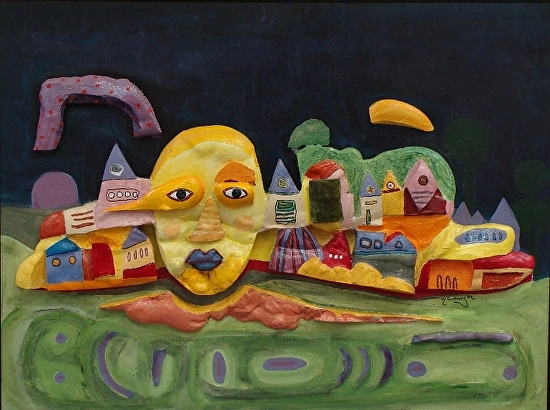
How has technology changed the balance of power within the family? The above 3-D painting is based on ee cumming’s poem written in response to cookie cutter suburbs built in the early 60’s. Today another revolution is happening inside the homes of these Pretty How Towns.

The Unsung Revolution
When I hear the word revolution I am not thinking about the Arab Spring or Syria. Instead I am focused on a revolution occurring inside most of my neighbor’s homes. What I have observed is the shift of power from father, to mother, to child. According to Webster’s definition, revolution refers to a fundamental change in power. That transition has definitely occurred within families, for the young dominate the household.

My great-grandparents worked along side their elders on the family farm. After several poor harvests they moved from their rural community outside of Riga, Latvia to Philadelphia, a city teaming with immigrants. To make ends meet their children sold newspapers and shined shoes. Earned income was handed over to their parents to help support their multi-generational family.

My own parent’s changed that pattern by living as a small nuclear unit. My father worked long hours to pay for household expenses while Mom stayed at home, available to chauffeur me to activities around town so I could reach “my potential.” Her word was law when it came to most daily activities. The money I earned from babysitting or being employed as a camp counselor stayed in my hands and was not turned over to support my family.

I behaved in a similar way with my own kids. When my children were under foot my husband worked and I, as suburban mom, drove them to activities and play dates. I made sure that homework was completed on time and that sporting and cultural events were part of their diet. We spent a great deal of face-to-face time together.

Now my children and their friends are parents and they operate in a changed landscape. With single, same sex and two working-parent families their generation has ongoing pressure to juggle daily responsibilities. To keep in touch with their children they rely heavily on electronics, and it is their use of technology that has spurred the latest revolution. Cell phone, text messaging, YouTube and Facebook rule!!! Even email has become cumbersome.

Adults contribute to the technology boom by paying outrageous mobile phone bills and annually upgrading home tablets and computers. By doing so they have inadvertently changed the power structures within their family unit. This article is my way of saying “buyer beware!” Know what is happening with your kin and learn how to manage both good and bad consequences.

In a seminar conducted by anthropologist Jan English-Luck titled “Technology and Social Change: The Effects on Family and Community,” results he collected from interviewing Silicon Valley families were shared with the audience. A typical story he related is illustrated by Sharon, a mother who is in constant contact with her children through computer and mobile phone. Dr. English-Luk claims that Sharon’s children feel safer, stay out longer and are more independent than earlier generations since they are in constant contact. Yet the family no longer operates as a unit. The only time parent and children were physically together over a two week period was when the anthropologist visited their home for an interview.

Today’s youth text in short blips rather than communicate more fully by phone or in person. Since texting is limited, it is rare that the entire story gets through. Voices portray emotion and face-to-face encounters give non-verbal cues that transmit between-the-line messages. Through texting it is possible to discover the location of your child, assuming that he is truthful, but you will never know what he or she thinking. Full descriptions of situations and events are rarely given. Gone are opportunities to develop verbal communication skills needed for future employment. And because letter writing and now e-mails are also becoming obsolete, the written word is suffering as well.

Benefits of cell phone use are many . . . contact, entertainment, safety, wellness help, and photography. But the hazards are also many. With the introduction of smart phones, parents started working around the clock answering texts and emails. Instead of paying attention to their children while at home they often find their mind wandering to the latest business or social communication. Conversations between family members are interrupted by a constant stream of incoming calls and messaging.

Since technology is the root cause of this power shift it is not surprising that role reversal occurs when the child knows how to use a new gadget better than the adult. When parents do not fully understand a device’s potential they find it difficult to control it’s use and as a result are faced with a host of new problems.    I’ll mention a few:

Bullying and harassment: text messages increasingly are sent by bullies
Memory: Use of cell phones is destroying short term memory.
Eye strain and digital thumb stress: Heavy use puts children at risk for early myopia.
Bacteria – Devices are not cleaned and are crawling with germs.
Sleep disorders – Teens tend to keep their phone on and are awaked during the night by incoming text messages.
Reliance – Impacts daily routine.
Dishonesty (39% of users 18-29 are not always honest about their location) they find it easy to cheat on tests.
Cost – Parents have sticker shock.
Health risks – Question of brain damage still unresolved.

Yes, technology is great and not going away! It is wonderful to have a computer for researching papers, scheduling activities, staying in touch with the news, finding directions and even getting gossip through one minute news blasts. Mobile devices can be helpful additions if precautions about their use and costs are taken into account and rules of etiquette established.

But it is good to remember that educating a child and maintaining relationships with family members still requires personal interaction. Face-to-face communication can not be replaced by gadgetry. Electronic transfer of information does not take the place of a hug or chat in the warmth of your home.

Staying in control rather than being controlled by your children requires both time and patience. Keeping parental power is the main way to pass on your values. To be a respected boss it is important to be on the job.

For more information about children and cell phone use go to:

http://www.aboutourkids.org/articles/kids_cell_phones_staying_connected – kids and cell phone use.