Wading through Complexity

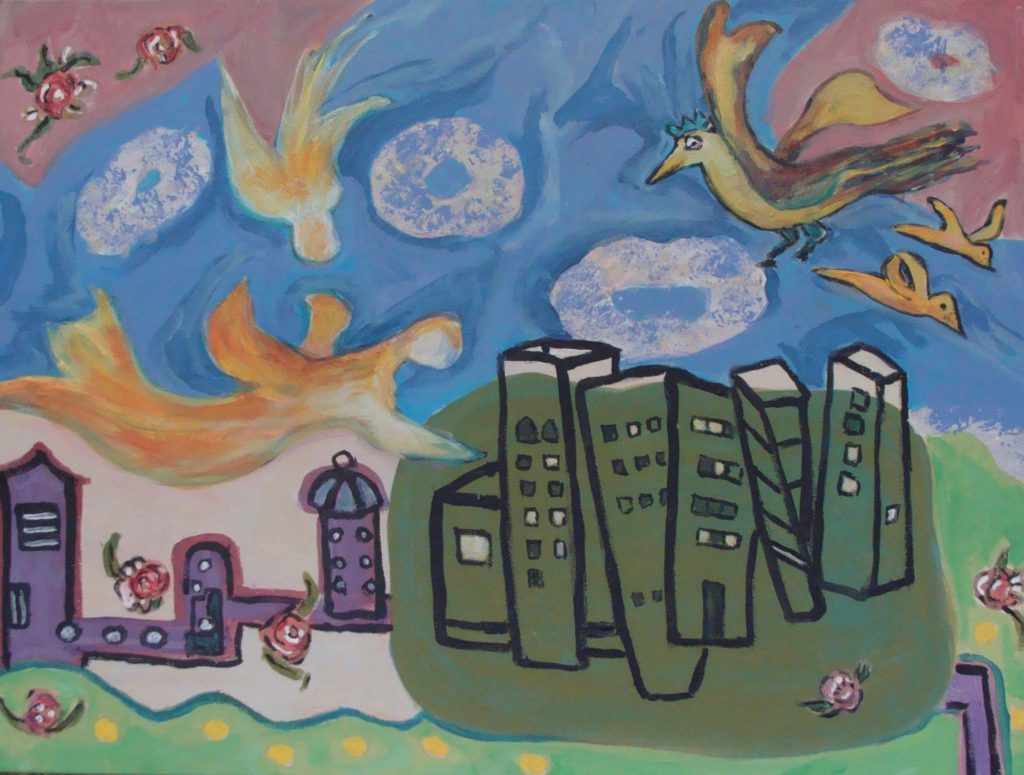
The Oregon Museum of Science and Industry
The riverfront museum I spearheaded opened thirty years ago.
 Impression 5, in Michigan, celebrated its fiftieth year.  It is hard to believe.

Wading Through Complex Thoughts

Analyzing your way through complex situations is not easy. On a rainy day in 1972, I was in Lansing, Michigan with four rowdy children and challenged with keeping them from tearing the house apart. So, I started a science museum in my basement. At the time there were only twelve science centers in the United States. Exhibits were push-button displays that mixed chemicals and asked yes and no questions. Fanciful walk-through hearts on Oregon, descent in into the depths of a coal mine in Chicago, fighter jets, and locomotives in Philadelphia covered the floors. What they lacked were interactive activities that called on visitors to experiment and think. A white paper was written pointing fingers at how the Chicago Museum of Science and Industry was a pawn of corporate America.

Public education was also under attack for the way children were held hostage for hours each week. Being pinned to their seats and made to memorize historical facts and formulas was not the way to inspire minds to greatness.John Holt, Howard Gardner, Piaget, and A.S. Neil were among those promoting child-centered ways, age-appropriate ways of teaching.

The table-top exhibits built in the basement of my home with my son recognized that children were not little adults but instead were youngsters with unique ways of learning. Science, engineering, and psychology professors at Michigan State University contributed exhibits and guided me through the learning process. The scientific method became my platform for conceiving interactive displays. 

Scientists approach problems through a seven-step process: make an observation, ask a question, from a hypothesis or testable explanation, make a prediction based on the hypothesis, test the prediction, and use the results to make new hypotheses or predictions. It is the way research progresses.

This way of thinking made sense to me and today is embedded in my psyche as a way to tackle life’s problems and idiosyncrasies. When ASTC, the Association of Science and Technology Centers started, science centers exploded throughout the world. I suddenly had company and reached out to seven small museums, including OMSI and the Pacific Science Center to secure a National Science Foundation grant to study visitor interaction with displays that required them to solve problems. We built exhibits that traveled to each other’s sites. Our staffs met to study hands-on education philosophies and to critique how  we tackled interactive construction techniques. 

We, and the other science centers introduced visitors to computers, technological innovations, and discoveries in genetics, and bio-engineering. What we learned by experimenting with hands-on learning techniques, was incorporated into the teacher education and outreach programs. Our museums became a model for the free school movement. They were places where visitors moved freely through displays, learning in their own way, at their own pace.  

You might ask, why I am saying something about this now. I am still involved with the education of young children and am more concerned than ever. The reliance on the computer for teaching has gone ballistic. Children no longer see that moss prefers to grow on North-facing surfaces. They don’t know how to use a hammer and nails to build a birdhouse. They don’t know how to change the oil in their car or sew a seam that burst on a dress. They don’t have the patience to build a balloon-powered card using cardboard and bottle caps to see how far it will go. They are too hyper to start a grow box and watch the way seeds turn into plants. They would rather play computer games than construct a solar oven to cook marshmallows while exploring thermal energy, reflection, and convection. 

All of our activities were designed to help young experimenters question and think. They require patience, dexterity, and a willingness to try and at times fail.  These are basic needs that adults as well as children need as they conduct their lives. 

When I moved to Oregon to run a science museum with greater resources, I was more determined than ever to show visitors how the scientific method is useful when tackling everyday problems. We built a new waterfront museum where people could satisfy their curiosity by conducting experiments on the floor of our exhibit halls. When designing Busy Town for young children, for example, we included a component for parents that focused them on observing their children so they could question their preconceived ideas about the way they learned.

As the world grapples with environmental change, economic challenges, and pandemics, we need clear minds, and a citizenry willing to dig into issues and think problems through. Analyzing these issues can be great fun if we put our heads to it. It calls for more feet on the ground stomping through communities and parks—putting more hands on binoculars, hammers, saws, needles, and thread as a complement to eyes on the computer screen. It requires reading, discussing, arguing, and coming to conclusions you are willing to test. The scientific method provides a way to proceed. Practice solving little problems so the large ones will fall into place.

For a behind-the-scene look at science centers and how they influenced education read Lives of Museum Junkies.

Art is always for sale. Check out my new cart-enabled website eichingerfineart.com to purchase the painting of OMSI or any other that tickles your fancy. 

Please share your thoughts below. What do you do when you escape the computer and remember that the physical world is filled with beauty?


Steve Johnson – Hopscotching Through the Age of Bots

The Estate (NFS) 
While I created homes on my easel, Steve Johnson built structures on his computer. Our hobbies evolved and we began selling our creations.

Steve Johnson – Hopscotching Through the Age of Bots

He discovered his passion, not once, not twice, but many times over the course of his 62  years. What fascinates me is how Steve Johnson, former NBA All-Star, grabbed on to his dreams and turned enthusiasm into paying ventures.  

Being the third of six children in a family headed by a disabled vet on disability and a school bus driving Mom was not easy. Poverty led them to a cinderblock  apartment house in Watts, California, with bars on the windows and the sound of gunshots outside the front door. Fortunately, they moved to San Bernardino one year before the Watts riots. 

Mom was a Seventh Day Adventist who insisted the children attend private Adventist schools and attend prayer meetings several evenings a week. Dad buried himself in their garage practicing for hours in his music studio though, according to Steve, he never managed to play one song all the way through.  He insisted the children play an instrument and though Steve could play several horned instruments by ear, unlike his brother, he never took to it. He had other things on his mind, especially after discovering his first passion.

At the age of fourteen, his father took him to watch his cousin in a practice basketball game in L.A.  At the end of the session he was introduced to the man who later become his coach. That evening his cousin joined the family for dinner. The boys went to a playground afterwards to shoot baskets. His cousin showed him a few moves and advised him to learn the hook shot, advice that made him unstoppable on the court. By the end of that eventful day, Steve knew what his future would be. 

Academically he was an underachiever. School didn’t interest him so he struggled. But, he was a thinker and a planner capable of developing goals in his early teens. They were;

  1. Get to a public school
  2. Get noticed in high school and receive a scholarship to college
  3. Become an All American
  4. Be a first round NBA draft pick
  5. Become an All Star.

His first goal was the most difficult to achieve. Since Adventists didn’t play team sports, he had to battle his parents over leaving school for an out of district public education. He ran away several times hoping to establish residency but failed repeatedly. He wasn’t successful until the summer before his senior year when the high school coach introduced him to a man who let him stay in a condemned house he owned.  Steve used a coat hanger to enter. To eat, he pilfered food and other items he could sell for cash. He avoided prostitutes and the gambling room at the back of his house, and convinced the board of education to let him transfer in despite a ruling that kept seniors from doing so.

That fall, without ever having played on a team, the coach took a risk and let the 6’10” athlete join. Half way through the season, the starting center was hurt. Steve played in his place, made 25 points, and earned a permanent spot in the game. During the rest of the season he stacked up enough points for six colleges were interested in giving him a scholarship. He chose Oregon State University and played basketball for four years under Naismith Hall of Fame coach, Ralph Miller. There, as a record breaking athlete, he became All-American and PAC-10 Player of the Year in 1981, eventually being inducted into the Oregon Sports Hall of Fame.

Playing for the Blazers

Upon graduation, Steve was the seventh pick in the first draft of the NBA. Over the course of his career he played for Kansas City Kings, The Chicago Bulls, San Antonio Spurs, Seattle Supersonics and The Portland Trail Blazers. Ten years later Steve was ready to retire after living with the pain caused by years of wear and tear on his feet.

In retirement he undertook several entrepreneurial ventures, that flourished and sputtered in the recession of 2008. He remained self-confident and driven and stayed focused on the idea of being successful-this time, as a businessman. His present undertaking fascinates me for it shows what a person can do who is willing to take a calculated risk and embrace change. His passion started with a computer came he played for fun. He became as absorbed in this new hobby as he did playing basketball.

Not a strong reader, Steve relies on YouTube Videos to teach him what he wants to know. He sees himself as a self-taught natural problem solver who knows how to mine and analyze social media for data. He is a planner and a goal setter who doesn’t give up.

The Sims is a computer game that allows players to explore a digital world where they buy property, design and build houses, and furnish them to their taste. When the game became internet connected, players could communicate and share information but The Sims had drawbacks. Steve’s son introduced him to Second Life, a more sophisticated game offering better tools and a marketplace for players to sell their designs. One day, with the help of his Avatar, Steve took a world tour and discovered a man building virtual boats. Rather than pay $40 to purchase the design, Steve started building his own yacht. When the president of Christensen Yachts discovered similarities to their boats, Steve was given permission to use their name. His virtual yachts sold for $175.

Millions of dollars are spent and made on  simulation games. Some players move on to well paying jobs in the real world. Virtual players become racers, drone and robot operators, marketers and fashion designers. Many tech companies are attracted to entry-level job candidates who cite playing or developing video games as a hobby. According to Ashley Deese of the Smithsonian Institution’s science education center in D.C., “They (gamers) tend to be problem solvers, organized, and adaptable.”  Law student Aylmer Wang, said gaming taught him “leadership, entrepreneurialism, dedication and organization.” Gamers are motivated and determined says Christopher McKenna, head of a student recruiting for the law firm Bennett Jones LLP.

During the 2008 recession Steve realized that when the economy returned, yachting would not be the same. New customers with money would come from high tech, yet they were unaware of yachting. Rather than purchase boats, Steve imagined them more willing to charter them. The going rate to charter a 100 to 160 foot yacht is between $100,000 and 300,000 a week, plus expenses. There was money to be made and he wondered how to turn his hobby into a lucrative business in the real world.

Under the name of Monaco Yachts, Steve created virtual experiences for potential customers by placing them on yachts and take them to places they might visit on a chartered boat. Final contracts are often signed at yachting conventions taking place around the world. His web site, yachtinglifestyle365 is basically a marketing brochure–a very successful one that writes about the yachting lifestyle.

Steve’s story is an example of why our current system of education needs to be improved to help students survive in the age of bots. Workers of the future will need to be flexible, team oriented, determined and confident of their ability to learn on their own. They will skills that enable them to adapt to change and hopscotch across occupations.

A goal of the education system should be to help students find their passion. To do so, vocational options, exercise, crafts, the arts, and computer games need to be blended with academics to insure graduates develop meaningful leisure time activities. High school students should leave with enough self-esteem to enable them to shift confidently as the economy changes. Letting students pursue activities they passionately embrace, teaches them what is involved in setting goals, acquiring skills, and achieving a modicum of success.

Resources:

Needleman S. (2019) When a Passion for Videogames Helps Lad a Job. Wall Street Journal. retrieved from https://www.wsj.com/articles/when-a-passion-for-videogames-helps-land-that-job-11551888001

Molloy,D.(2019) How playing video games could get you a better job. BBC News. retrieved from https://www.bbc.com/news/business-49317440

A Sneak Preview

Last week I announced the launch of Over the Peanut Fence: Scaling Barriers for Homeless and Runaway Youth. It is a hopeful book about  adolescents  overcoming childhood abuse and about professionals and volunteers who help street youth  succeed. Following is a sneak preview from The Story of Zach, Chapter I.

Getting around

The Story of Zach

Cory and I are life partners, sharing a home in Portland, Oregon. In 2011, I owned and operated Museum Tour, a national education supply catalog and Cory was employed in a handful of ventures that used his engineering and carpentry skills. Under our house in the woods, he set up a shop and outdoor area to carve totem poles and Northwest coast masks, which he sells to a burgeoning clientele. When not at work, I spent my hours painting in a sunlit studio located on the lower floor of our contemporary seven-level house. The two of us had few encumbrances as we freely traveled, worked and made art. 

All that changed one blustery November day when Cory noticed a youth pass in front of his car while waiting for the light to change. When the boy stumbled, he caught Cory’s full attention, for he recognized Zach, whom he knew as a child from a troubled family who lived in his old neighborhood. Pulling over to greet the youth, Cory immediately saw that the lad was ill. Fearing pneumonia, he phoned me and after a short conversation we invited Zach for dinner in order to assess his well-being. Within an hour of his arrival and learning that he lived in shelters, we suggested he stay for a few days to be nursed back to health. 

Zach quickly improved after sleeping in a comfortable warm bed and eating nutritious meals and by the end of the week was ready to return to the streets. Winter started early that year, the weather was wet and bitterly cold, and we were reluctant to send 

him back only to become ill again. Zach appeared to be such a young, lost and confused youth that I felt tenderness for him. 

It was an emotional week, for Cory and I were uncertain as to the role we wanted to play in his future. Friends feared for our safety and were quite worried about us getting deeply involved. A few neighbors watched Zach moving about our yard and called to warn us of a vagrant trespassing on our property, advising us to call the police. 

Zach certainly looked like a street transient. I must admit to my middle-class bias in that I did not like his appearance. He wore ragged clothing and had plugs in his ears. His reddish hair was greasy, straggly and unkempt, and he gave off a strong body odor. He walked hunched over, with a shifty look in eyes that never seemed to focus. Zach’s appearance spoke emphatically of a downtrodden boy. Speaking softly when queried, his responses were a short yes, no, or I don’t know. Though we certainly tried, it was difficult to get a complete sentence out of him. 

Knowing that he came from a family that pilfered from one another, we feared he might steal so when we decided to let Zach stay we kept a constant vigil as he moved about the house, insisting he go to his room when we went to bed. My purse was always stored safely in our bedroom at night. This decision proved wise, for we suspect he took money one time when it was unguarded. 

Once Zach agreed to our conditions, which required a haircut and removing the plugs in his ears, we let him remain for the winter. Zach was not happy to lose his straggly locks, but we insisted that if he was going to live with us he had to look like he belonged to our family. We took him to Goodwill and Ross Dress for Less to be outfitted from his feet up. Zach needed everything from undergarments to jeans, a warm coat, gloves and hat. 

House rules included a daily shower, cleaning his room, and making the bed. As time went by, a daily exercise routine was added, and Zach was occasionally asked to help with chores such as shoveling snow and chopping wood. Our goal was to break up the hours he spent lounging aimlessly around the house or watching television. 

One activity he participated in without being asked pleased us greatly—he continued to attend a drug rehab program. Thankfully, Zach had never been addicted to opioid drugs but was a light pot, molly, meth and occasional shroom (psychedelic mushrooms) user. While he was enrolled in the drug program, we never worried about him backsliding, and our trust has since been rewarded. We were concerned about his finances, however, because he had a large fine for possession of marijuana that had to be paid to a municipal district, and we wondered how Zach was going to meet his obligation without an income. 

We decided to lend him money to keep the judicial system from compounding interest, but he needed to find employment. Fortunately, I was able to help, for my catalog company was in the middle of its busy retail season, and we needed workers to ship warehouse products. It was easy to provide a six-week seasonal job, though to keep it, Zach had to pass a drug test and prove he could do the work. He was somewhat concerned about the test. When we discovered there was a pill he could take that would purge his body of narcotics, we took him to a head shop to purchase it. Before we spent a lot of money, the proprietor suggested Zach be tested and thankfully the results showed that he was clean. I was especially glad of the outcome because I was uncomfortable with the idea of helping him disguise an addiction. In addition to becoming an enabler, I would have been a hypocrite for ignoring my own employment requirements. to read on . . .

Why do some youth overcome abusive childhoods while others do not?

Currently available on Amazon in paperback and Kindle. Go to AMAZON.

Please rate on Amazon after reading to bring attention to the plight of homeless youth.

Internationally in bookstores and other internet sites April 22nd.

For speaking engagements contact eichingerbooks@gmail.com.

Over the Peanut Fence

Be First to Review

“A powerful glimpse into the trauma and abuse that forces young people to run to the streets. Their stories are a call for action to libraries, government, youth agencies, universities, parents, and volunteers to work together to solve this national problem.” —Pam Sandlian Smith, Public Library Association

++++++++++

Provide a bravo launch for Over the Peanut Fence, a book aboutscaling barriers for homeless and runaway youth.Currently available on Amazon in paperback ($14.99) and on Kindle ($6.99) versions, it will find its way to other e pub sites and bookstores internationally in approximately three weeks. Help attract attention to youth homelessness by purchasing today and commenting on Amazon’s website.

My goal in writing this Over the Peanut Fence was to discover if psychological problems caused by early childhood abuse can be overcome. Four years of interviewing homeless youth, research into why they run to the streets, and studying interventions used by caregivers, gave me much to consider. The following Kirkus Review summarizes the book well.

A blend of memoir and sociocultural commentary analyzes the problem of teenage homelessness. Eichinger had known Zach when he was just a child, the victim of his parents’ chronic “negligence and abuse. The author divides her book into several distinct parts: a remembrance of her experience with Zach; a reflection on the root causes of homelessness in the United States; a synopsis of the latest research regarding the functioning of a youth’s brain; an homage to organizations that make a positive difference; and two short stories that dramatize ways in which adolescents can be effectively assisted. While always pragmatic and rigorously empirical, Eichinger finds considerable cause for cautious optimism, especially given studies demonstrating the deep resiliency of youths’ minds to overcome their early traumas. The author’s account is lucidly written, both intellectually thorough and emotionally affecting. In addition, this isn’t a work of ax-grinding political partisanship—Eichinger prefers cool-headed analysis to grandstanding. Further, at the heart of her ‘part memoir and part storybook’  is a profound reflection on the ailing condition of American society, withering from the widespread disintegration of the family and the grim plague of ‘lovelessness.’ An astute and moving assessment of an urgent societal problem.”—Kirkus Reviews

To Purchase advance copy go to AMAZON

A Way Out of Madness

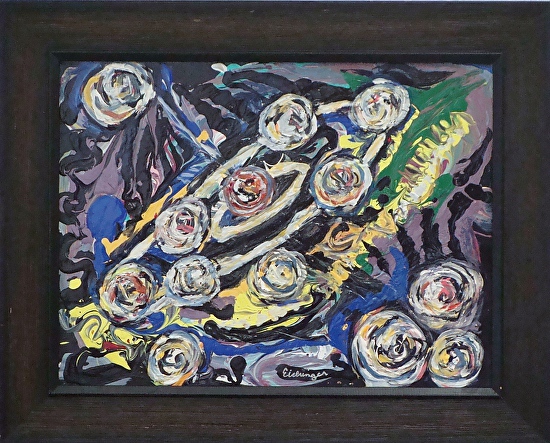
         Solar Systems

We live in the same universe and share the same planet. Can’t we live on it in peace?

Acrylic on Canvas/ 16” x 20”/ $ 299

A Way Out of Madness

People are concerned about how our country is going to heel the current political divide before it leads to a full fledged civil war. If you don’t think  that scenario is possible they say, look at Syria. It used to be a vibrant country of 22 million that was considered a political and military heavyweight in the region. It’s rich history is both complex and diverse. Before the war, it boasted bustling marketplaces in Damascus and Aleppo with an innovative IT industry despite economic sanctions imposed by the west. It was known for having a sophisticated literary tradition, film industry, supermarkets and modern shopping centers to go along with the old. Friends and family gathering around tables for celebrations welcomed all who knocked on their door. It was a melting pot of religion and ethnicities, allowing for mixed marriages between Christians and Muslims. Syria was a cradle of civilization in the Middle East. Are we headed in this direction? Is this image from Syria a possibility for us?

A friend told me how upset she was because her conservative brother-in-law made demeaning and nasty comments on Facebook about her  liberal leaning brother. She said she now understands how families, split over political beliefs, were devastated by the Civil War. Looking back, hopefully, most people can see that war is not the way forward.

Wars benefits ammunition dealers, financiers and this hungry for power. They rarely help citizens who are instead used as fodder. They kill thousands of ordinary people, destroy homes, and leave families and friends destitute and bitter. As with our own Civil War, some people never heal and put the conflict behind them. PTSD and long lasting grudges spill into future generations.  Is war the training we want to give our children?

Who will stop the madness taking over America? It has to be tackled on many fronts but I look to our children. They view the world differently than their elders, are more accepting of differences and better educated in environmental issues. However, the quality of their schooling is not evenly distributed. Our job as adults is to change that trajectory and insure that everyone receives a comprehensive education. Perhaps they will them be able to help us stop this madness.

Let’s start with bullying, a problem that can make a young person afraid to attend classes. Programs to eliminate bullying are now part of curriculums nationwide.They begin in the elementary years and continue through twelfth grade. My hope is that graduates will not stand for the type of name calling and bulling that now invades the highest levels of government.

I was taught that  “sticks and stones will break my bones but names will never harm me.” Unfortunately, that’s not true. Labeling people horseface, Pocahantus, bimbo, dumb as a rock, sophomoric, beggar, clown , sleepy-eyes and dumpy-political-pundit is not only hurtful and ugly but is childish. Most parents don’t support this type of rhetoric at home or in their schools.  Upset parents are the reason schools now emphasize compassionate communication and bully free zones.  With this type of early training, I anticipate  our children will lead in more civilized ways.

The study of history provides ways to learn from the past, but only if it is presented in honest, complete and unbiased ways. Reading textbooks that are slanted towards the white race at the expense of other groups will not heel our country’s divide. Subjects need to be included that are often glossed over such as the Indian Wars of the late 1800s, the growth and suppression of labor unions and the racially motivated immigration laws of the early 1990s.  By understanding both sides of issues we learn to open our hearts so we can hear divergent concerns. Studying the past enables youth to see what worked and what didn’t so that they can better deal with the world they find themselves in today.

It is important that students learn how to search for truth, but even more important that teachers inspire them to want to do so.  Encouraging curiosity is the greatest of tasks.  There are consequences to complacency and ignorance. From an early age on, questioning should be encouraged. If a parent or teacher does not have an answer then the two should challenge themselves to discover what it is.  Parents can inspire curiosity when visiting national monuments like the Liberty Bell, the Statue of Liberty or the Capital. If the budget doesn’t allow for travel, then videos, books and local museums can provide material for discussion. In either case, there is no substitute for talking to children about what is seen. Exploring deeply will prepare them to be thinkers and intelligent voters. 

With the exception of a few states, most school curriculums cover environmental issues around global warming. The teens I speak to are knowledgeable and concerned, often more aware of the human influence on climate change than older adults. It is good that they understand the science but it would also be helpful if economic factors were brought into discussions for they are at the crux of congress’s unwillingness to act. Combatting warmer temperatures requires people to change the way they live, what they eat, and how they move.

Learning where money flows, who benefits and who sacrifices tells a lot about the political debate. It is a subject that should not be glossed over if we want our children to get us out of the mess we’re in. Recognizing that there are winners and losers and debating the pros and cons of various economic, religious and political systems is challenging but also interesting to most young minds. A place to start could be a discussion of  “the common good,” for it is at the base of many political and economic beliefs. 

My bicycle riding neighbor stop me, “ I don’t believe in the common good. I believe people should sink or swim on their own merits. I started out dirt poor. I’m a self made man. It wasn’t easy, but I was determined. Anyone who works hard can do the same.  I probably will wind up living in a gated community.”

This man of color pulled himself out of poverty.  He is intelligent, college educated, earned a pile of money that allowed him engage in entrepreneurial ventures. Unfortunately, most people do not have his skills nor the support that helped him become an NBA player. Thousands fall through the cracks of poverty, poor schooling and parental ignorance. 

Public education has the potential of being the great equalizer. But adults need to insure schools have resources and teachers who are willing and able to reach out and encourage  students to express concerns, to think for themselves and to problem solve. They need to learn when they’re being duped and how to analyze fake news. Collecting  and considering information is something curious people do

Public education is under attack and we can not let that happen. The move to use public money for private schooling through vouchers will exasperate the divide. Religious indoctrination doesn’t belong in public education. Integrating schools in the aggregate, works. Giving marginal students extra help, works. Funding pre-schools works. Providing school meals for the hungry, works. Special education for those with disabilities, works. Subsidizing college tuitions, works. Fair programs will allow our children to heal the social divid and make America great again.

I’m not hopeful about our country right now. I don’t like being marginalized and told I’m not a true patriot. We are all Americans and need to work together to keep democracy working. Seemingly we don’t have the ability to get over our differences, so let’s make sure our children do. Five them the tools to govern more rationally.

  References:

Saleh,S. (2014) Five things you never knew about Syria before the war. news.com.au. retrieved from https://www.news.com.au/world/five-things-you-never-knew-about-syria-before-the-war/news-story/50aee87307f613edcd8505f7bce12d0b

Krueger, H., Hardiman, K., Kelly, C. (2015)Trump’s most notable insults. The Hill. retrieved from https://thehill.com/blogs/ballot-box/249102-trumps-most-notable-insults

Lynn,R & Vanhanen,T., (2010)All Countries: What is the Average I! in the United Sates? IQ Research. retrieved from https://iq-research.info/en/average-iq-by-country/us-united-states


Art is always for sale. Contact marilynne@eichingerfineart.c

Me Too? You Too? Not My Kids!!


“Searching for Truth”   Truth will eventually emerge. Lies will be uncovered. There are always consequences.

24” x 18”x1.5”/ acrylic on Canvas/ $350/

Me too? You Too? Not My Kids

The number of women seeking counseling for sex abuse increased 400 percent last week. I was reminded of the clients I assisted when I worked as a mental health professional. They also made me think of the women I helped later in my career as business woman.  A great many suffered from abuse.  It was hard to their stories and difficult to advise them how stop unwanted advances before becoming a monumental problem. The world of work carries its own challenges.

For instance, a thirty-seven-year old woman r opened a consulting firm that was making headway in a national market. She had a few contracts with major conglomerates and was on call 24 hours a day to help them handle difficult personnel issues. She gave speeches at conventions, wrote a book and made the right moves to be recognized as an expert. Standing in her way, however, was  a competitor, a well established older man who threatened to blackball her if she did not sleep with him. The woman was happily married with two children and had no desire to attend to the mans sexual needs, yet she needed his support to further her business goals. She wasn’t sure how to maintain a working relationship without giving in to his demands. What would you do?

I advised her to confront him head on— to tell him how much she enjoyed his attention but that she was happily married and not interested in an affair. I suggested she then flatter him for his knowledge of the field and ask if he would be willing to provide advice from time to time. They went on to have an collegial relationship built on mutual business interests.

Another woman was a department head in a small business funded primarily by men who formed the company’s board of directors. The woman was tall and blond, and attracted the attention of the director of a fortune 500 company who invested $200,000 in the start up.  At the end of a late meeting, the man offered to walk the woman to her car. As she opened the door, he grabber her, planted a wet French kiss on her lips and asked to meet for dinner the following week. The woman, was disgusted and did not want to go near the man again. Unfortunately her position required them to interact occasionally. She decided the best thing to do was be direct. She explained she was married, not interested in an affair but flattered by his attention. The president of the start up, made aware of what happened, assure her that she  would never seated near him again.

I had several experiences as well. personal  At a meeting with a newly elected board chairman, I was asked to define our future relationship. He wanted to know if  the right to join me in bed went along with the job as chair. At the time, I thought he was joking. He wasn’t. He was serious, but at least he asked. I told him no, that especially since he was in a leadership position we could not have an affair. My goal was to keep him actively involved with the organization without damaging his ego or my privacy. I am still amazed that he thought his position entitled him to my body.

All of the women mentioned were shocked at being considered a sex toy. In similar situations, many women freeze and get in trouble because they are unable to respond quickly fearing they will lose their livelihood if they don’t comply. As children they were never told that someone might try to abuse them and as young adults the subject remained taboo. When I was younger, girls and boys were not taught about their legal rights, how to respond to abuse or how to fight back. Thank goodness the these issues have come to the forefront and hope they will not be ignored by future generations.

Many children are sexually abused in childhood. Girls have a 1 in 4 chance and boys a 1 in 6 chance of being molested before the age of 18. Those with disabilities are 2.9 times more likely to be abused than children without a disability. Most children do not report their abuser. My parents never talked to me and I was shocked and ill prepared to faced “Me Too” events. And, though I taught my children about sex, respect and what makes a good relationship, it never crossed my mind to discuss abuse. The “Me Too” movement changed my thinking and I now suggest that abuse become a topic for family discussion.

Parents who routinely teach their children traffic safety rules need to add sex abuse discussions to the docket. They need to start when their children are young      (4 year olds are often molested) and teach them the names of private parts (no cute names) when they are taught to say ears, nose and toes. They need to be able to communicate clearly to you, teachers, and a doctor when necessary. If they learn a pet name (like my kit-cat) the adult may not know what they’re talking about.

It is important for children to feel loved and their parents want to keep them safe. They should know that their private parts are theirs to control. They need to learn that no one should touch them even if they’re promised that it will make them feel good. Bathroom or stall doors should be closed, public restrooms locked, and nudity restricted to bedroom or bathroom.  As soon as possible children should be taught to clean their private parts by themselves.

Parents should not force children to kiss or hug anyone they don’t want to and children need to understand that secrets are not kept from parents. He or she must be told they will be believed know matter what is said, and that the truth will never get them in trouble.  The them that some people threaten children by saying something bad will happen to them or their parents if they say tattle. Those who are abused feel vulnerable, powerless and conflicted. Talking calmly, answering questions and demonstrating that the subject is not taboo is a pathway for open communication.

As children enter high school, alcohol, bullying, and date abuse can be added to the conversation. Many schools have sex ed classes though not all discuss abuse. Even if they do, these conversations  belong in the home as well. Topics should touch on verbal consent before sex and the importance of developing a caring relationship. Sex should not be seen as a route for popularity as it is for many teens.

Workplaces are also fraught with abuse and harassment. Many, but not all, companies have policies in place to deal with inappropriate behavior.  Equal opportunity laws such as the Civil Rights Act, Americans with Disabilities Act and the Age Discrimination Act prohibit harassment, abuse and discrimination in the workplace are the basis for most policies. Even so, abuse occurs. Young adults will avoid pitfalls if their parents willingly discuss workplace abuse. The more a youth knows about the ways predators act, the less likely he or she will freeze and respond inappropriately.

It is impossible to be prepared for every scenario, nor do we want to raise fearful children. Most people are good, but some are not, and being naive does not help when faced with evil.  I recommend that high school girls and boys take classes in self defense, karate or Judo. Students can learn to assess threats and sharpen reaction times.

I am glad that the subject of abuse is out in the open. The time to learn respect for one another is now.

Kim,S. (2014) 10 ways to Talk to Your Kids  About Sexual Abuse. Every Day Feminism Magazine. retrieved from https://everydayfeminism.com/


Art is always for sale. Contact me at marilynne@eichingerfineart.com.

Potty Mouths

The Gossips

What are they saying? Are they cursing, bullying, sharing sordid stories or tales of beauty?

Acrylic on Canvas/ 12” x 36” x 1.5 “ $285

Potty Mouths

When did it become OK to curse in public? As a child living in a lower middle-class neighborhood, I was exposed to cursing on the streets. At home, however, mother treated profanities ruthlessly by washing my mouth with soap if I uttered one of the evil words. She taught me effectively for I never curse, nor do my friends, family, business associates or social acquaintances. So—who utters obscenities besides stand-up comedians?

I was surprised when when my writers group suggested I have characters in a novel I’m writing, swear to show strong emotions. Uttering fuck or shit does not come naturally to me, though I do realize that for many people they are common place. Words like “Knucklehead” or “Damn” are considered whining instead of cursing.

Why is contemporary society willing to accept crude a words as the norm?   What happened to “good” manners and polite conversation? 

Strong language has always been part of the voice of most cultures. In every country, swearing or profanity in known to erupt from an explosion of emotion, often aimed at upsetting another person. But anger isn’t the only reason people use crude words. James Harbek of the BBC speaks of five different ways people swear.  For example one can say,  “descriptively (Let’s fuck), idiomatically (It’s fucked up), abusively (Fuck you…!), emphatically (This is fucking amazing), and cathartically (Fuck!!!).” These are not necessarily meant to annoy.

Some words are taboo, but whether they are considered considered swearing varies from culture to culture. For instance, in some South African tribes, it is not OK for a woman to say her father-in-law’s name or any word that sounds like it, but if she does, it doesn’t turn it into a curse word if said accidentally.

Genitalia are commonly used in strong language, but again not always. In one Philippine language buray ni nanya (mother’s vagina) is heard as regularly as I would say, “Nuts!” Calling someone a ‘whore’ is also an international term, but usually refers to someone other than a wife. The most aggressive curse used by most cultures is naming a sexual act against someone’s mother. “Motherfucker” comes to mind.

Among Christian cultures, devil, hell, and Satan were turned into evil words by missionaries. Contemporary American society considers “damn” and “hell” to be moderate curse words in the middle of the spectrum. Potty words also get mixed attention depending on the country.  In Sweden, for instance, you might say Skif (Shit) if annoyed, but it is not a very considered a powerful curse and can be said in front of your Grandmother without repercussion. Poor health bothers the Dutch. Calling someone a “cancer sufferer”is a bad phase to use in Holland. In Mandarin, guītóu, or turtles head, is a veiled reference to penis and a strong curse.

Contemporary society is embroiled in a culture face-off between moralists and modernists. Moralists see swearing as a collapse of civility and sign of America getting coarser. They trace rampant cursing back to civil rights and Vietnam demonstrators shouting curses at rallies in the 60’s. Since then, Hollywood films, rock music and hip hop have made them commonplace. Moralists believe society has lost all sense of shame. They believe increased use of profanities escalates anger and supports bullying  that is disruptive to civilized communication.

Cromplaining about unchecked profanity is not new. In the 1920s, society railed around ‘slummers’, well-bred young people who emulated course language heard at the docks. In the 40s, a profanity came sailing home from the wars in Europe and Asia, along with returning GIs.  But, during those periods, cursing didn’t not overwhelm common language as it does today.  According to NPR, curse language has increased exponentially in recent years. They report that since the 1970s, causal vulgarity became more commonplace as informality expanded.

Modernists consider “dirty” words to be so ordinary that they are no longer profane. They’re simply colorful, though most agree that kids should be taught not to use them at inappropriate times. I’ve even heard someone say that, “potty mouths are like potholes, just another of life’s little inconveniences.”

To many, however, they are much worse than potholes. They see curse words and gutter talk indicating a lack of having class. Most citizens want their leaders to refrain from cursing. No one is interested in hearing a political say “Twat”, “Bitch” ,“Cock” or “Wanked” on national TV.

Apparently, I am one a of dwindling few who find vulgarness troubling, and don’t enjoy hearing people swear in public. I don’t even find it funny when comedians spout curse words and see their use as a crutch and poor substitute for cleverness.

When it comes to raising children, three-quarters of the population say parents should teach them that cursing is never right.  Strangely enough, 85% of the same population poled, say they curse from time to time.

Uttering profanities vividly demonstrates that your emotions got the better of you. When I hear people swear in anger, I tend to judge them badly for they are out of control even if they are justified to be upset.  I don’t want to be around them until they calm down. Swearing does not explain the cause of their anger and it gets in the way of the ability to problem solve.

Modernists need moralists if their curses are to mean anything. Foul mouths will lose power If everyone in society casually accepts profanity, for without prudes like me who are shocked by vulgarness, curse words will become meaningless.

I would love to hear your take on the use of profanity in common parlance. Please comment below.

References:

Harbeck, J. (2015) Mind your language! Swearing around the world. BBC Culture. retrieved from http://www.bbc.com/culture/story/20150306-how-to-swear-around-the-world

Nunberg,G.(2012) Swearing: A long and 3%@&$ History. NPR – Fresh Air Opinion. retrieved from https://www.npr.org/2012/07/24/156623763/swearing-a-long-and-history

My art is aways for sale. Contact me at marilynne@eichingerfineart.com.

For the Love of Kids

  Julia                                                                          25” by 36”/ Acrylic on Canvas / $ 425                                                                                 Resting from a day job, housework and chauffeuring children, she considers the pile of requests and applications to teachers, healthcare providers, camps and colleges that remain piled on her desk.

 For the Love of Kids

Eight senior managers were employed to help me run OMSI. Though all were married, only one beside me had children. Four interacted with kids on a regular basis while the remaining mangers handled the business of running a large institution. All were committed and worked tirelessly to ensure the museum’s success.

It surprised me that adults interested in educating children did not want to become parents. Several mentioned concern about overpopulation, but most wanted freedom to immerse themselves in work, travel and other interests.

I realized they were happily engaged in what they were doing, but privately thought they were missing out on the most important part of life. As they near retirement, I wonder if they still believe they made the right choice. I worry about their a safety net for end of life needs.

Though they have adequate resources to enter comfortable retirement facilities, who will visit?  Who will take the time time to hear their stories, shower them with love and mourn when they are no longer alive. 

Before the nineteenth century, children were important to their parent’s welfare. They worked on the family’s farm, were sent into mines at the age of thirteen or took after-school jobs carrying groceries. In old age, their children took care of them.

The economic value of children decreased with transformation from an agrarian to urban society. Medical advances led to a decline in childhood mortality rates. Since fewer children were needed for economic reasons, birth rates declined.

At the same time, cost of raising their offspring increased. Schooling added to the family’s expenses for children have to be fed, clothed, enrolled in after-school activities and provided with an indoor place to study. Children, once treated as property, were given entitlements. Parents became more egalitarian, friendlier and less strict. Motherhood began to lose its value. 

The government demanded an ever-larger share of earnings in the form of taxes. As usable income declined, both parents had to work to make ends meet. Children were a hardship to exhausted couples embroiled in debt. Divorce rates escalated, adding to the burden of single parents.  According to 2017 consumer expenditure statistics, the average cost to raise a child through age 17 is $284,570.

Approximately 67 percent of women decide as teenagers to have two children and, by and large, do so, even though they view motherhood as an overwhelming commitment. 15 percent of American women never experience motherhood. Free from child-care responsibility, they peruse careers, travel and socialize. Women were given  freedom to work while men benefited by having freedom from work.

Judged negatively, those who do not choose parenthood are pressured by family and friends. Over time, many become concerned about their lack of forming a love-bond with a child. They may be successful in their jobs, have financial security, but become bored by chasing happiness. This is seen in a 6 percent upswing of people over 40 becoming parents. Children start to be viewed as the legacy they hope to leave behind, the minds they hope to mold to their way of thinking.

Childless couples also consider their legacy, but rather than through parenthood, they pursue it through art, science, religion or career. Friendship and professional networks are developed as a substitute to having a young family. And, childless couples claim to be just as satisfied with their lives as parenting women (except for teen moms).

Yet, I still maintain that childless couples miss out on life’s greatest pleasure. Following are thoughts about what children mean to me. 

1. Children keep alive my thirst for knowledge. I relearned math, history and literature as my children went through school. By the time they were adults, their opinions often challenged my beliefs and helped me adapt to change.

2. They make me happy. When they give me a kiss, tell me they love me or say positive things, everything seems right in the world.

3. When young, they kept me involved in healthy activities. Taking them to museums, zoos, water parks and on hikes took me far away from stress.

4. They kept me alert, for they acted in surprising ways that often involved problem solving. If they needed a science fair project their father or I became involved. I was both a booster and cheerleader enabling them to take risks, overcome difficulties  and act creatively.

5. They keep me laughing. Starting in infancy, their big smiles, giggles and oft-times crazy antics made me smile and laugh. Jumping on a trampoline, trying to free a frisbee caught in a tree and winning at scrabble were happy times. They continue sending emails that make me laugh.

6.  My children taught me to see more clearly. I will never forget when my 9 month old son saw snow for the first time. The expression on his face wrapped me in the beauty and mystery of the moment as though I too was seeing it for the first time. 

7. The occasionally provided me with an alibi for getting out of something I didn’t want to do. I shamelessly used their slightest sniffle as a reason for staying home. 

9. Children gave our family tax savings which was important, for their costs were great.

10. Lastly, my children kept me sane, contrary to the belief that most will drive you crazy. The crazy part was momentarily while the sanity was long lasting.  I had to rise to the occasion of being a dependable presence who loved them unconditionally and appreciated their accomplishments.

As a mother, I never asked about the purpose of life or whether what I was doing was worthwhile. I knew in my heart and soul that it was. Inspiring thoughtful, happy, creative children who contribute to bettering society, was the most important thing I could do. 

References

Perry, S. (2014) Children aren’t worth very much —that’s why we no longer make many. Family Values. retrieved from https://qz.com/231313/children-arent-worth-very-much-thats-why-we-no-longer-make-many/

Khazan, O. (2017) How People Decide Whether to Have Children. The Atlantic. retrieved from https://www.theatlantic.com/health/archive/2017/05/how-people-decide-whether-to-have-children/527520/

 Lino, M. (2017) The Cost of Raising a Child. Center for Nutrition Policy and Promotion report in Food and Nutrition. retrieved from https://www.usda.gov/media/blog/2017/01/13/cost-raising-child

  (2012) Common myths about having a child later in life. CBS News. retrieved from https://www.cbsnews.com/media/common-myths-about-having-a-child-later-in-life/


Case for a History Sleuth


  Family in a Turkish Village 

 Acrylic on Canvas/  Black Frame24” x 48” / $690

The Kurds are an ethnic group that spans Turkey, Iran, Iraq and Syria. Historically and linguistically they are classified as belonging to the Iranian people. Since the end of the Ottoman Empire they have been separated by boundaries created by foreign interests. During the 20th century the Kurds regained their voice  and instigated a call for Kurdish nationalism. What is the right path for these people? Who is to decide their future?  And who should take responsibility for upheaval and displacements when they occur?               

Case for a History Sleuth

In the New Reformers (1844) Ralph Waldo Emerson said, “We are students of words: we are shut up in schools and colleges and recitation rooms for ten or fifteen years and come out at last with a bag of wind, a memory of words and we do not know a thing.”

Emerson’s sentiment rings true to me.  I had a difficult time studying history and found the required readings had little relevance to my life.  As a teen, anything that occurred before I was born, was unimportant. My focus was on the present moment and what I would do with the rest of my life. 

This myopic view is not uncommon. What occurred  hundreds of years ago doesn’t matter to most children. One of my grandsons is an exception. His interest in history was actually peaked in school by a teacher that did not require him to memorize dates and battles but inspired him through games and play acting. More likely, though, he likes history because he has been fortunate enough to travel abroad with his family and see remnants of the past for himself. Walking grounds where past civilizations tread or reading letters by eye witnesses can make the past come alive.

Yet, despite visiting ruins and reading about the ancient world, I doubt that teens understand how history influences what is going on in the world today. For most children, the past is represented by storybook tales that have nothing to do with computers, YouTube, cell phones or space exploration. They are enthralled by League of Legends, Minecraft, and Tetris.

A grasp of history is imperative for our leaders but also important for the rest of society. It is not the facts, but the values, mistakes, and influences on the direction human civilization that matters most.  Past events provide avenues for contemplation that test our values and contribute to our sense of identity. 

“Those who cannot remember the past are condemned to repeat it,” said philosopher George Santayana. There is truth in his words. Wars in the United Staes and Europe have often served as breeding grounds for more wars.  After WWII we carved countries into new entities without understanding the ties that previously stabilized the regions. Distrust and ongoing fights within these new borders continue to plague these politically created entities. Men like Napoleon, Stalin, and Mao Tse Tung used war as opportunity for regime change.  Over time their initial good intentions led to dictatorships. When foreign powers intervene in the internal affairs of sovereign states, war becomes protracted. This pattern is repeated time and again throughout the ages. 

How can studying history be made fascinating yet useful? Primitive people used to gather around the fireplace to teach through oral presentations that stimulated emotions. Stories of creation and historical events were combined with moral lessons often animated by dancers and masked actors. Until television, storytellers in were in great demand and commanded respect. Troubadours in the middle ages sang about historical as well as current events. Abraham Lincoln mastered the art of storytelling and spun tales that captured the imagination of his audiences in order to get his point across.  Information is digested more easily when facts  are connected to emotions. Stories help people to remember what is said and provide a way for them to relate to one another.

Another way to teach history is to develop cases that challenge with hidden messages.  Students are asked to become detectives who unravel clues from by gone eras. Facts become illuminated as the past is unravelled and not because it has been presented for memorization. Cases can be entertaining and offer opportunities to observe, interact, and understand human nature. 

Just as forensic experts are scientists who use sleuth-like strategies to solve crimes, case system participants are similarly immersed in the scientific method. They form hypotheses, collect data, analyze it, and report results. The outcome may shed light on a current societal issue and inspire a new hypothesis to be tested that is relevant for today’s.  Using the scientific method as a system for solving  problems can help understand conflicting and confusing data. 

For example, the Supreme Court is often asked to clarify what the signers of the constitution meant when they wrote certain articles. Though it is difficult to put ourselves into a dead person’s mind there are many clues that can help in our analysis. Were the signers religious? Well educated? Family men? What were their professions? Were they wealthy or poor?  And a topic I find most interesting—what happened to the founders later in life because of their earlier involvement? Did you know that that some were considered traitors? Several became bankrupt.  A few had their homes ransacked? 

Change does not happen smoothly as can be seen by many convicts that plague the world today. By studying past revolutions, however, students learn to question and develop insight into the cost of freedom. 

As parents and grandparents it behooves us to help youth become history sleuths. We have an opportunity during vacations to look behind the surface when we take children on trips to parks and historical places. It is our job to teach the next generation how to think.  I do believe we can do a better job of showing them how the past relates to the many conflicts of today.

References:

Clairmont, N. (2017) “Those Who Do Not Learn History are doomed to repeat it. Really? Big Think. retrieved from http://bigthink.com/the-proverbial-skeptic/those-who-do-not-learn-history-doomed-to-repeat-it-really

Do comment below. Your thoughts are meaningful.

Effects of trauma on children

Janna

Acrylic on canvas/ carved gold frame/ 23” by 27”/ $ 599

Janna learned suddenly that the world is not always safe when shooting started while she was enjoying a rock concert in Las Vegas. Fortunately she managed to escape without physical damage but mental scars remain.  She and many of survivors of the tragedy have to contend with with fear,  nightmares, and depression.  She is fortunate to have a loving family and a precious new kitten by her side.

Following is a section from my soon to be published book, Over the Sticker Bush Fence. Trauma is one of many reasons kids take to the streets.   Though I write about homeless youth in America what I say can also be applied to immigrants coming from the Middle East. It helps understand why their many of their children become radicalized. These youth  face many of the same problems as do our own , only they have the added burden of moving to a land with a strange culture.  Their difficulties are compounded by lack of acceptance in school by their peers and by poor job opportunities upon graduation.

Please do not  copy article without permission.

Trauma 

Abuse, violence, and naturally occurring disasters such as war or accidents are trauma producing events as are painful medical procedures and the loss of a loved one. Neglect, verbal put-downs, being treated like a slave, and starvation can lead to a chain of trauma induced reactions. These situations are debilitating, often leading to dysfunctional behavior patterns that affect the youth’s ability to grow into a balanced thoughtful adult.

Sara was in a horrendous boat accident when she was eleven. On a sunny summer day a waterspout developed that suddenly hit the family’s boat from behind. The small craft was capsized and her mother lost a part of a finger as she floated out to sea. Her father’s leg was partially severed while he held on to his daughter by a poorly secured life jacket. The family was fortunately rescued by a passing stranger and taken to a local hospital. After the accident, the girl’s friends started calling her a jinx. Since she was physically fine, her parents did not realize that she needed psychological counseling to get over the incident. The emotional damage of the event stayed hidden and was one of several traumatic instances that led to a mental breakdown at the age of eighteen.

Negligent caretakers, even if naive as in the above case, keep children from developing into strong, healthy adults. Instead of developing confidence, their children grow up feeling that the world is unsafe. They may lose trust in older people and have problems regulating emotions. As they age, they draw into themselves and find it difficult to connect with other people. their own age. As teens they are likely to have conflicts with authority and create unnecessary problems in school, at work or with law enforcement. Romantic relationships and friendships tend to be sparse and unhealthy

The stress from growing up in an abusive environment contributes to impaired brain development, chronic or recurrent physical problems such as headaches, stomach aches, rapid breathing, and heart-pounding. It is not unusual for a traumatized child to self-medicate with drugs, alcohol, and overeating. Some children become hypersensitive and act out inappropriately while others are just the opposite and become disassociated from their senses. Constant anxiety and fear, more often than not, lead to severe depression.

In school, a traumatized child tends to space-out by daydreaming and not paying attention to assignments. Childhood trauma and neglect can affect the child’s ability to learn to read. It is hard to pay attention when your home problems are of more immediate concern than schoolwork. Their wandering minds lose track of time and, in many cases, impulsive behavior replaces rational thought, making the youth unpredictable, volatile, and extreme. Believing they are powerless in the face of adversity, traumatized youth compensate by becoming defensive and acting aggressively when feeling blamed or attacked. A great many move towards high-risk behaviors like self-mutilation, unsafe sex, and high-speed auto races.

Since abused children have difficulty thinking and reasoning clearly, they are unable to plan ahead and anticipate their future. Their fight and flight reactions take precedence over rational thought and problem-solving. Without hope or purpose life has little meaning and is without value. Without the ability to influence their lives, they operate in survival mode.

Though it may take years to turn around negative feelings of self-worth, with the right intervention, it can be done. My friend Caroline shared her up-bringing with me. As a child, she was raised in poverty in a small Appalachian community. Though loved, her young life was traumatized by poverty and illness. As the oldest of five children, she was called on to care for the younger ones and assist her mother in household chores. Daily activities were especially cumbersome, for her mentally unstable mother was hospitalized frequently. When Caroline was in fifth grade, her father developed Tuberculosis (TB) and was hospitalized at the same time her mother was committed to a distant mental hospital. In those days there were limited ways to treat TB and most patients spent years in a sanatorium. The family was without a bread winner facing starvation. At eleven years, Caroline was in charge of her younger brothers and sister.

When the state finally learned of the situation a social worker found Caroline foraging by herself in the woods. She and her siblings were separated by the state, with two boys sent to one orphanage and the two girls to another. Caroline wondered if she would ever see her young brothers again. Describing her feelings of that time she said, “I believed that my family was no good trash. After all, we were poor with no chance of improvement. I thought that since things were so horrible, we must be bad people who got what we deserved. I was sure that I too would come down with TB and suffer from mental illness as I got older. I assumed that all of our misfortunes were inherited.”

Fortunately, Caroline was taken in by a loving couple, both doctors, who dedicated themselves to caring for the homeless children of Appalachia. The two adults were inspirational role models for the young girl. With scarce finances to operate their orphanage but with a big I-can-do infectious attitude, they impacted the lives of thousands of children. Their perseverance and positive outlook attracted help from others in the nearby city of Charlotte. At one point the doctors decided to build a clinic. Without the necessary money to do so, they relied on old fashioned community help by organizing the children and mountain neighbors to help dig river rocks for the building’s foundation. To earn additional revenue, they collected used clothing from wealthy in-town donors and started a thrift shop that is now over fifty years old. Their actions and positive attitude were role models for young Caroline.

Most importantly, they showered her with attention and love. They convinced Caroline that tuberculosis and her mother’s mental state had nothing to do with her. As an adolescent she gained in self-esteem and began to believe that the tragedies she had experienced could be surmounted. Upon graduation from high school, Caroline was awarded a scholarship to college where she studied nursing. She fell in love and married a physician who provided a comfortable home where she became a social force in the community as she raised five children. As they aged she went on to direct a prestigious science center.
Caroline is still attached to the mountains of Appalachia and continues to support the orphanage that helped her become a successful businesswoman. The sister who had accompanied her to the orphanage also flourished under the tutelage of the two doctors. Unfortunately, her brothers did not fare as well in their group home and struggled throughout their lives.

Not only does trauma burden children but it causes economic and political repercussions that carry a high price. Medical, law enforcement, and legal expenses are paid for by the rest of society.

Parents who leave their children alone for long hours, whether due to illness, drugs, or excessive work schedules, are often faced with unexpected consequences. In poor neighborhoods, many children play outside to a combative, primeval atmosphere similar to that described by William Golding in Lord of the Flies. They move about in city jungles without adult guidance, join gangs and exist in a survival mode. They become unruly and unwilling to play by the rule of law, with little regard for the consequences of their actions. These youngsters add to the burdens of our courts, foster care, and juvenile detention systems. Each year, the country incurs between $8-21 billion in long term costs for confining young people.

References:

Larson, S. (1997) Teenage Rebellion. Culture and Youth Studies. retrieved 2017 from http://cultureandyouth.org/troubled-youth/articles-troubled-youth/teenage-rebellion/

(2014) Calculating the Full Price Tag for Youth Incarceration. Justice Policy Institute. retrieved 2017 from http://www.justicepolicy.org/uploads/justicepolicy/documents/sticker_shock_final_v2.pd

Art work is always for sale. Contact me at marilynne@eichingerfineart.com

Do comment on my blog post below. Have  you or your family experienced trauma?