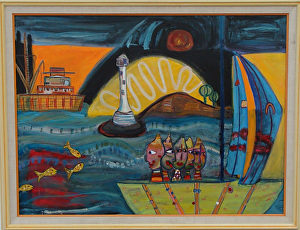
A Writer’s Passion

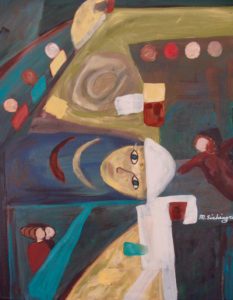
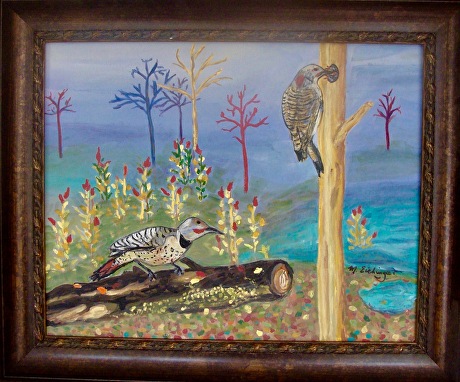
Flickers Caring for Their Young

Access to food and clean water is necessary for the survival of all living species. We need to be diligent about preserving nature’s gifts to humanity. 

A Writer’s Passion

While president of OMSI, I collaborated with Dr. Marion Diamond, my counterpart at the Lawrence Hall of Science in Berkeley. Before assuming its directorship, she was one of the founders of modern neuroscience and the first to demonstrate that the brain improves with experience and enrichment. Though known for her studies of Einstein’s brain, her rat studies showed that an enriched environment (toys and companions) beneficially changed the brain’s anatomy. In contrast, an impoverished environment lowered the capacity to learn. By showing the plasticity of the brain, she shattered past beliefs of the brain as static and unchangeable, degenerating as we age.

Dr. Diamond advised me to stay active after retirement by changing my daily activities, interests, exercise routine, and readings. Doing so, she said, would develop new synapses to keep me vibrant and engaged throughout my senior years. To grow and continue learning throughout my life would keep me relevant and give life purpose.

So…when I retired at seventy-three, I followed her advice. Instead of remaining a consultant to the corporate world, I divested myself of boards, committees, and fundraising activities, choosing to spend my time with individual endeavors instead. Community activities took on a counseling aspect with singular individuals rather than leading groups. I spent hours engrossed in my art. But of all the undertakings, writing is the one I focused on most. I had always been an idea person, but when I put my thoughts on paper, I relied on others to make my thoughts well composed. My retirement goal was to learn how to write. I joined a writers’ group, so what I put down is critiqued before distribution.  The best way to become a writer is to write every day without fail. Sending out a weekly blog keeps me on course, but most of my effort goes towards my books.

Lives of Museum Junkies and Over The Peanut Fences were non-fiction, partly biographical endeavors. The first explored my early involvement with science museums and hands-on learning, how I learned to manage large institutions, and the people who helped the profession grow. The second accounts for the days spent mothering a previously unsheltered youth and getting to know the staff and volunteers of organizations that help young adults heal.

As I watched the environment suffer due to global warming and pollution, I decided it was time to write a novel, a thriller to capture the public’s imagination and to encourage governments to improve their care of life-affirming resources.”

Capturing attention with the written word requires dedication, a nuanced knowledge of the English language, and an understanding of people’s emotions. My first attempt at an environmental novel was focused on petcoke, a little-known petroleum by-product that resembles coal. When I wrote the last chapter, I realized it could have been better, but I needed to figure out what was wrong. I found a teacher who had me flush out character descriptions in the middle of the night when my mind wasn’t sharp. I was advised not to begin my story before I understood how each looked, walked, talked, was raised, and felt. I had to live in the head of each individual and worry about their families and friends.

After three years of research and writing, I completed The Water Factor, a thriller about the corporate takeover of water. It should be in bookstores and online by late spring. Though set in the future, everything I write about has already occurred.  Access to clean drinking water is in peril and will affect everyone’s life in the future. I was shocked to learn that the World Water Forum of 1998 and 2000 led to water being declared a commodity and not a right. This opened the way for it to be traded on Wall Street and privatized by corporations that charge 2000 times more by bottling it than letting it flow through a tap. Backing from the World Bank and the International Monetary Fund followed, giving a handful of international corporations license to take over the management of public water services aggressively, leading to higher water and sanitation rates.

The United Nations recognizes access to water and sanitation as a human right fundamental to everyone’s health, dignity, and prosperity. Unfortunately, well over billions of people today live without water being safely managed. The plot moves from rural Oregon to Ethiopia to a Native American reservation, showing what can happen when corporate interests take over access to clean water.

My purpose in writing The Water Factor is to bring this issue to the forefront so communities can do something about it. The first of the  Rightfully Mine series, the novel shows the depths of manipulation and deceit people will engage in for money. It’s a page-turner to stimulate your brain, though I hope it will do more. The book is a call to action for citizens to monitor how their water and sewage systems are managed. Northwest Natural, an investor-owned gas company in Oregon, has begun purchasing small water companies in Oregon, Idaho, and Washington. The company is positioning itself to buy municipal water systems as it expands. It is time to ask if we want our water to be privatized.

Communities need to take heed of water issues. Lives depend on it. Who is selling, and who is purchasing local water rights? How will this affect your family in the future? I hope you get actively involved. Your effort is bound to stimulate new brain synapses and be a meaningful endeavor. 

References:

United Nations website. Human Rights to Water and Sanitation. Retrieved from https://www.unwater.org/water-facts/human-rights-water-and-sanitation#:

Burtka, A. & Montgomery, W. (2018) A water right—Is water a human right or a commodity? ERB Institute University of Michigan. Retrieved from https://erb.umich.edu/2018/05/30/a-right-to-water-is-water-a-human-right-or-a-commodity

Green, E. (2018)NW Natural is buying water utilities. Should Oregonians be concerned about privatized water? Street Roots. Retrieved from https://www.streetroots.org/news/2018/08/10/nw-natural-buying-water-utilities.

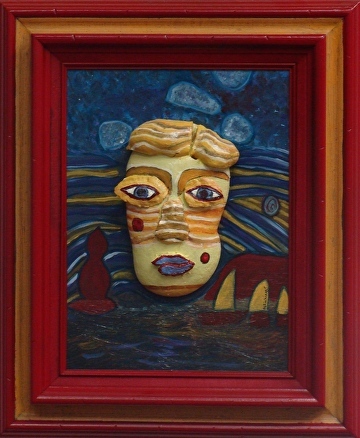
Art is always for sale. Flickers Caring for Young is a 22” x 25” framed acrylic on canvas painting. It is available for $425 and shipped free in the continental U.S.A. For information or to answer questions, contact marilynne@eichingerfineart.com

I look forward to reading your comments below.
Steve Johnson – Hopscotching Through the Age of Bots

The Estate (NFS) 
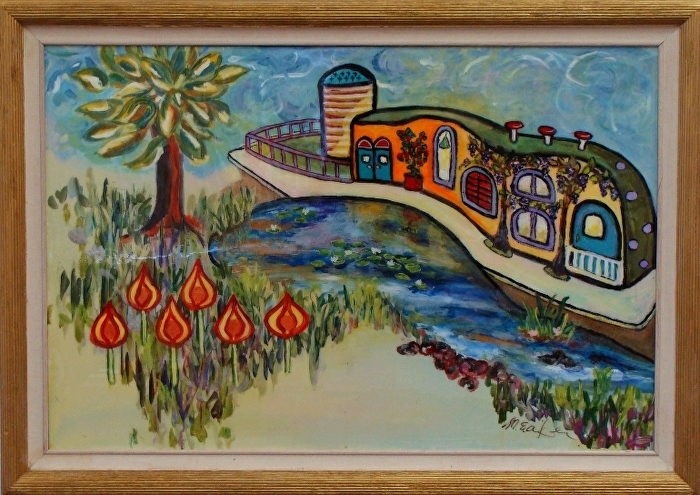
While I created homes on my easel, Steve Johnson built structures on his computer. Our hobbies evolved and we began selling our creations.

Steve Johnson – Hopscotching Through the Age of Bots

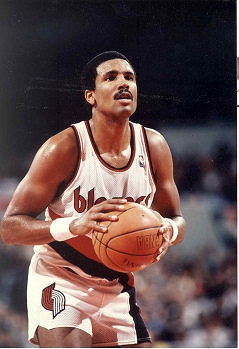
He discovered his passion, not once, not twice, but many times over the course of his 62  years. What fascinates me is how Steve Johnson, former NBA All-Star, grabbed on to his dreams and turned enthusiasm into paying ventures.  

Being the third of six children in a family headed by a disabled vet on disability and a school bus driving Mom was not easy. Poverty led them to a cinderblock  apartment house in Watts, California, with bars on the windows and the sound of gunshots outside the front door. Fortunately, they moved to San Bernardino one year before the Watts riots. 

Mom was a Seventh Day Adventist who insisted the children attend private Adventist schools and attend prayer meetings several evenings a week. Dad buried himself in their garage practicing for hours in his music studio though, according to Steve, he never managed to play one song all the way through.  He insisted the children play an instrument and though Steve could play several horned instruments by ear, unlike his brother, he never took to it. He had other things on his mind, especially after discovering his first passion.

At the age of fourteen, his father took him to watch his cousin in a practice basketball game in L.A.  At the end of the session he was introduced to the man who later become his coach. That evening his cousin joined the family for dinner. The boys went to a playground afterwards to shoot baskets. His cousin showed him a few moves and advised him to learn the hook shot, advice that made him unstoppable on the court. By the end of that eventful day, Steve knew what his future would be. 

Academically he was an underachiever. School didn’t interest him so he struggled. But, he was a thinker and a planner capable of developing goals in his early teens. They were;

  1. Get to a public school
  2. Get noticed in high school and receive a scholarship to college
  3. Become an All American
  4. Be a first round NBA draft pick
  5. Become an All Star.

His first goal was the most difficult to achieve. Since Adventists didn’t play team sports, he had to battle his parents over leaving school for an out of district public education. He ran away several times hoping to establish residency but failed repeatedly. He wasn’t successful until the summer before his senior year when the high school coach introduced him to a man who let him stay in a condemned house he owned.  Steve used a coat hanger to enter. To eat, he pilfered food and other items he could sell for cash. He avoided prostitutes and the gambling room at the back of his house, and convinced the board of education to let him transfer in despite a ruling that kept seniors from doing so.

That fall, without ever having played on a team, the coach took a risk and let the 6’10” athlete join. Half way through the season, the starting center was hurt. Steve played in his place, made 25 points, and earned a permanent spot in the game. During the rest of the season he stacked up enough points for six colleges were interested in giving him a scholarship. He chose Oregon State University and played basketball for four years under Naismith Hall of Fame coach, Ralph Miller. There, as a record breaking athlete, he became All-American and PAC-10 Player of the Year in 1981, eventually being inducted into the Oregon Sports Hall of Fame.

Playing for the Blazers

Upon graduation, Steve was the seventh pick in the first draft of the NBA. Over the course of his career he played for Kansas City Kings, The Chicago Bulls, San Antonio Spurs, Seattle Supersonics and The Portland Trail Blazers. Ten years later Steve was ready to retire after living with the pain caused by years of wear and tear on his feet.

In retirement he undertook several entrepreneurial ventures, that flourished and sputtered in the recession of 2008. He remained self-confident and driven and stayed focused on the idea of being successful-this time, as a businessman. His present undertaking fascinates me for it shows what a person can do who is willing to take a calculated risk and embrace change. His passion started with a computer came he played for fun. He became as absorbed in this new hobby as he did playing basketball.

Not a strong reader, Steve relies on YouTube Videos to teach him what he wants to know. He sees himself as a self-taught natural problem solver who knows how to mine and analyze social media for data. He is a planner and a goal setter who doesn’t give up.

The Sims is a computer game that allows players to explore a digital world where they buy property, design and build houses, and furnish them to their taste. When the game became internet connected, players could communicate and share information but The Sims had drawbacks. Steve’s son introduced him to Second Life, a more sophisticated game offering better tools and a marketplace for players to sell their designs. One day, with the help of his Avatar, Steve took a world tour and discovered a man building virtual boats. Rather than pay $40 to purchase the design, Steve started building his own yacht. When the president of Christensen Yachts discovered similarities to their boats, Steve was given permission to use their name. His virtual yachts sold for $175.

Millions of dollars are spent and made on  simulation games. Some players move on to well paying jobs in the real world. Virtual players become racers, drone and robot operators, marketers and fashion designers. Many tech companies are attracted to entry-level job candidates who cite playing or developing video games as a hobby. According to Ashley Deese of the Smithsonian Institution’s science education center in D.C., “They (gamers) tend to be problem solvers, organized, and adaptable.”  Law student Aylmer Wang, said gaming taught him “leadership, entrepreneurialism, dedication and organization.” Gamers are motivated and determined says Christopher McKenna, head of a student recruiting for the law firm Bennett Jones LLP.

During the 2008 recession Steve realized that when the economy returned, yachting would not be the same. New customers with money would come from high tech, yet they were unaware of yachting. Rather than purchase boats, Steve imagined them more willing to charter them. The going rate to charter a 100 to 160 foot yacht is between $100,000 and 300,000 a week, plus expenses. There was money to be made and he wondered how to turn his hobby into a lucrative business in the real world.

Under the name of Monaco Yachts, Steve created virtual experiences for potential customers by placing them on yachts and take them to places they might visit on a chartered boat. Final contracts are often signed at yachting conventions taking place around the world. His web site, yachtinglifestyle365 is basically a marketing brochure–a very successful one that writes about the yachting lifestyle.

Steve’s story is an example of why our current system of education needs to be improved to help students survive in the age of bots. Workers of the future will need to be flexible, team oriented, determined and confident of their ability to learn on their own. They will skills that enable them to adapt to change and hopscotch across occupations.

A goal of the education system should be to help students find their passion. To do so, vocational options, exercise, crafts, the arts, and computer games need to be blended with academics to insure graduates develop meaningful leisure time activities. High school students should leave with enough self-esteem to enable them to shift confidently as the economy changes. Letting students pursue activities they passionately embrace, teaches them what is involved in setting goals, acquiring skills, and achieving a modicum of success.

Resources:

Needleman S. (2019) When a Passion for Videogames Helps Lad a Job. Wall Street Journal. retrieved from https://www.wsj.com/articles/when-a-passion-for-videogames-helps-land-that-job-11551888001

Molloy,D.(2019) How playing video games could get you a better job. BBC News. retrieved from https://www.bbc.com/news/business-49317440

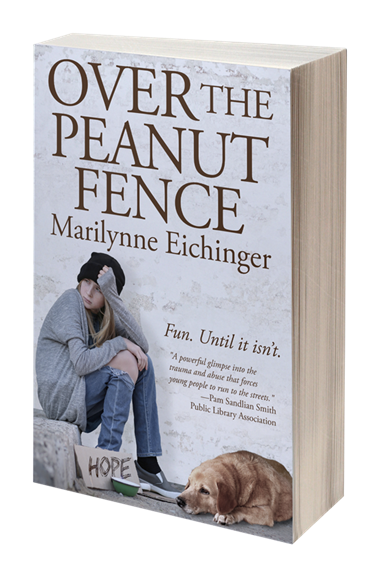
Over the Peanut Fence

Be First to Review

“A powerful glimpse into the trauma and abuse that forces young people to run to the streets. Their stories are a call for action to libraries, government, youth agencies, universities, parents, and volunteers to work together to solve this national problem.” —Pam Sandlian Smith, Public Library Association

++++++++++

Provide a bravo launch for Over the Peanut Fence, a book aboutscaling barriers for homeless and runaway youth.Currently available on Amazon in paperback ($14.99) and on Kindle ($6.99) versions, it will find its way to other e pub sites and bookstores internationally in approximately three weeks. Help attract attention to youth homelessness by purchasing today and commenting on Amazon’s website.

My goal in writing this Over the Peanut Fence was to discover if psychological problems caused by early childhood abuse can be overcome. Four years of interviewing homeless youth, research into why they run to the streets, and studying interventions used by caregivers, gave me much to consider. The following Kirkus Review summarizes the book well.

A blend of memoir and sociocultural commentary analyzes the problem of teenage homelessness. Eichinger had known Zach when he was just a child, the victim of his parents’ chronic “negligence and abuse. The author divides her book into several distinct parts: a remembrance of her experience with Zach; a reflection on the root causes of homelessness in the United States; a synopsis of the latest research regarding the functioning of a youth’s brain; an homage to organizations that make a positive difference; and two short stories that dramatize ways in which adolescents can be effectively assisted. While always pragmatic and rigorously empirical, Eichinger finds considerable cause for cautious optimism, especially given studies demonstrating the deep resiliency of youths’ minds to overcome their early traumas. The author’s account is lucidly written, both intellectually thorough and emotionally affecting. In addition, this isn’t a work of ax-grinding political partisanship—Eichinger prefers cool-headed analysis to grandstanding. Further, at the heart of her ‘part memoir and part storybook’  is a profound reflection on the ailing condition of American society, withering from the widespread disintegration of the family and the grim plague of ‘lovelessness.’ An astute and moving assessment of an urgent societal problem.”—Kirkus Reviews

To Purchase advance copy go to AMAZON

Search for Community

Search for Community

Between 1870 and 1920, eleven million people migrated from rural to urban America. Today, only two percent live on farms or ranches. Due to industrialization, homogeneous towns disbanded and city dwellers had to find ways to connect. They joined churches and animal clubs like the Lions, Elks and Moose, and participated in business/charity associations like Rotary. The upper classes became members of exclusive clubs and joined Masons, Shriners and Junior Leagues.

My immigrant grandmother met women in a corner knit shop where needles clicked in time with their mouths as they shared local gossip. Krewes sponsored balls and floats in New Orleans and New Years Associations contributed to the Mummers Day Parade in Philadelphia. Youth organized themselves in social club or gangs which offered protection as well as a sense of belonging. Sports and Gentlemen’s clubs, those organized around nationality of origin, and unions made it tolerable to live next to strangers who traveled silently on subways and trolleys.

As years passed, many of the clubs lost their luster, finding it difficult to recruit young members. But though membership declined, the need for community hasn’t changed. Living in cities distant from relatives and childhood friends, electing not to be married, it is easy to feel lonely and isolated. 

Most of us are aware of some of the ways internet brings people together. Sites like match.com promise love connections. LinkedIn allows participants to scan profiles and send “Connect with Me” notices. Tweets, Instagram feeds and Facebook are avenues for friends and acquaintances to stay in touch, share interests and seek advice.  But, though friends spend hours communicating on-line, it cannot allow them to touch or look into eyes while sharing a meal. You cannot notice a person’s flush when they say something awkward or sexy. And a friend recuperating in a hospital can not be helped or comforted from a computer as they can from a warm bodied friend.

Face-to-face relationships are as important as they ever were. The way people form friendships and develop community  today is a reflection of changes brought about by the economy and population growth interacting with the internet.

Snowbirds and Nomads: A growing number of retired people travel south for the winter and north in the summer. Wealthier snowbirds have condos in gated golf communities or travel in forty-foot RVs, camping seasonally at resorts or state parks. They party and join fellow campers who own dune buggies, horses and kayaks. Over several years deep friendships develop, forming community based on shared interests.

A burgeoning subset of seasonal travelers, are less affluent nomads living in second hand RVs, school busses, pickup trucks and sedans. They drive the highways to reach mega-lots outside of warehouses run by Amazon, Walgreens and Walmart, where they are employed seasonally. They may harvest sugar beets or sell Christmas trees and pumpkins at roadside stands.

These wanderers are middle class Americans who do not have enough money to retire. The Great Recession of 2007 wiped out their savings. Though many are educated, they can only find employment in low paying jobs that demand long hours of physical labor that is not enough to sustain them. Eventually they sell their possessions and take to the roads. They sleep in parking lots, truck stops and public camping areas in warm weather and reach out to family and friends when it turns cold.

Their way of life is more freeing than expected when they first embark on it. Fellow nomads are friendly and helpful. They use the internet to stay in contact off-season, sharing advice about jobs and places to camp. They pass the hat when someone’s vehicle needs repair, help them if they are ill, share meals, play cards and socialize. They enjoy their freedom, stay off the grid, use solar power and participate in community.  Like gypsies, these wanderers develop an appreciation for adventure and escape from social norms. The lifestyle becomes more difficult when they can no longer lift a 50 pound bags or stand on their feet 10 hours a day.

Makers – A diverse group of inventors are drawn into affinity groups around art, electronic music, science, and technology. Maker fairs, held in most states, feature inventions and activities that take place in garages, museums and homes. Open to the public, they are attended by NASA, MakerBot Industries, Shop Bot, 3D systems, Kickstarter, Autodesk, Instructables, universities, etc. 3 D printing is the latest explosion along with robotics, electronics, metal fabrication and computer controlled technology, though woodworking and aboriginal skills remain in the mix.  Makezine.com is a good place to go to find out what’s happening.

Intel, General Electric, science centers and education institutions sponsor maker spaces. But a great many more are organized by individuals with a desire for community. Makers are more than hobbyists. They are multi-age inventors who enjoy the diversity of talents and skills gathered together to execute someone’s project. Maker spaces encourage grown-ups to play with leading edge technology. They construct everything from terrariums, music venues, computer designed knitted ski masks and t-shirts with electronic messages to mechanical-art sculptures. They allow those with unfulfilled potential (often college drop-outs) to show off and have a chance of attracting investors.

Habitat for Humanity is an organization that is built around community. Volunteers along with the future homeowner, lend expertise and muscles to construct affordable housing. Those who stay involved for years, going from project to project, form tight friendship groups. Building a habitat house reminds me of they way the Amish gather to raise a barn. It is a a joyful event with a tangible outcome that puts smiles on the new owner’s face.

Meetup.com—More than a web site, “meetup” it is a movement that connects like-minded people to small affinity communities. I belong to Nine Bridges, a writers group promoted on meetup.com. My group is one of hundreds over a five state region that meet weekly, giving twelve people the opportunity to read from their work and receive criticism.

Meetup categories range from outdoors & adventure, sports & fitness, photography, food & drink, music, film, LGBQ, Language & culture, Beliefs to  Movements, Pets, Hobbies and Crafts, Fashion & Beauty. There are social and career & and business sites listed as well. Connecting is easy for those willing to leave their homes, computers and TVs to venture forth into the unknown.

Street Life – Homeless youth are also a communal lot, sharing much more than the sidewalk. They understand each other, for most left abusive home situations to  seek safety and shelter on the streets. The young adults they meet are their friends, even if they only interact for only one day.  Friends hang out, play games in parks and share survival skills. They couch surf at the homes of more those who have an apartment. They are loyal to a street code that prohibits tattling and promotes sharing. They lend money, food and drugs when they have them.

Older homeless denizens also share community, though members may be less healthy because of mental and physical illnesses developed from imbibing alcohol and drugs and living in inclement weather. They socialize on sidewalks, in parking lots and under freeways, sharing their stories and information about services and shelter.  When given permanent lodging, they often miss their street buddies. I was on the board of a group called The Giving Tree that helped homeless people adapt to housing and saw first hand how depressed some become. While holding a weekly tea in a unit for elderly people, a woman jumped from a 6th story window. Suicide is not uncommon among the newly housed and insect infestations are rampant. To combat isolation we provided cooking, cleaning and art classes.

Social Clubs – Clubs pull young adults together for music, film, food and drinks. An example is the White Owl Social Club which features everything form live bands and comedy skits to movies shown with old fashioned projectors. Prices are moderate and stereo volume kept low to allow for conversation. Social clubs are more than a restaurant or bar. They are gathering sites for friends who share apartments and homes that are not large enough to accommodate a group. Pool and ping pong tables, bowling alleys and foosball provide a Chucky Cheese type experience for grown ups. Comfortable sofas, a fire pit, and laid back gathering areas make it easy to relax and deepen friendships. 

Burners and Festivals- Many young adults spend summer months traveling from festival to festival engaged in a culture around music, art and community. Small Burning Man style festivals that operate throughout the world (China included) preach compassion and sharing over commercialism. Corporate logos are never displayed and money doesn’t change hands. People assist with the work of setting up, cleaning up and feeding attendees. Resources are willingly shared. One camp (a friendship group) might operate a misting tent, while others dispense food, provide entertainment, psychological advice, showers and off-beat clothing. Technology, art, bright lights and colors flash from bicycles, floats and sculptures. Dancers twirl fire while techno-music plays until dawn. What makes Burning Man unique is that the camps are composed of people who value creativity and the arts. Friends meet year round to work on festival projects.

My son occupies a transmission shop that he converted into living, office and shop spaces. Friends gather weekly to implement techno-art projects for festivals like Burning Man. They have fun while maintaining community. Festivals provide them with deadlines, goals and purpose. They think of themselves as family and support each other throughout the year.

Senior Centers – Day centers operating throughout America bring the elderly. into community. They provide information and connection to local health, housing and legal services, yet most are a great deal more than counseling centers. They offer recreational activities, classes, lectures and discussion groups and a place to lounge. Some operate in conjunction with service organizations like Meal on Wheels. The YMCA, Urban League, Native American Family Centers, Latino Networks and private non-profits are actively involved. Their goal is to kindle joy and make retirement purposeful. I’ve given talks at senior centers in wealthy suburbs and in poor neighborhoods. What I’ve witnessed in general, is that those who participate are active, age well and enjoy being with a community of peers.

There are a great many ways people participate in community.  Gangs, political organizations, veterans associations, food and craft groups, church committees, professional and exercise clubs, and shared office workspaces unite people by common activity, affinity and proximity.  Co-housing is one I hope to explore another time

References:

Kahn Academy website  (2018)America moves to the cityKahn Academy. References: retrieved from website. https://www.khanacademy.org/humanities/us-history/the-gilded-age/gilded-age/a/america-moves-to-the-city

Merchant,N. (2017) Feel like you don’t fit in?  Here’s how to find where you truly belong.  ideas.Ted.Com. retrieved from.  https://ideas.ted.com/feel-like-you-dont-fit-in-heres-how-to-find-where-you-truly-belong/

Agrawal. M. (2018) Community is Everything: How to Build Your Tribe. Inc. retrieved from https://www.inc.com/miki-agrawal/community-is-everything.html

Bruder,J. Nomadland   Surviving America in the Twenty-First Century (2017) W.W. Norton & Company, New York

Case for a History Sleuth


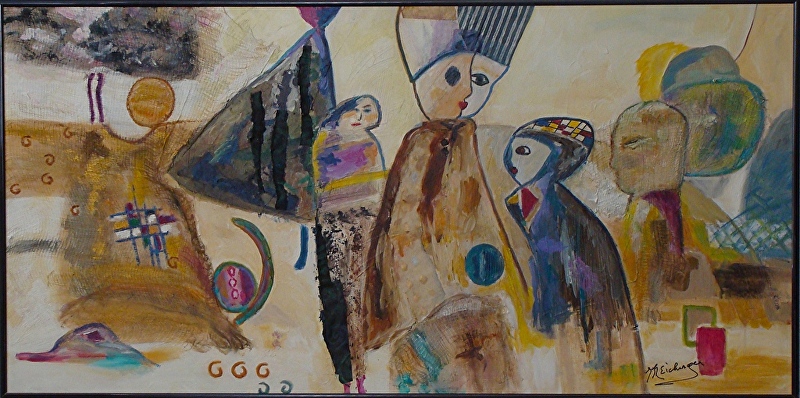
  Family in a Turkish Village 

 Acrylic on Canvas/  Black Frame24” x 48” / $690

The Kurds are an ethnic group that spans Turkey, Iran, Iraq and Syria. Historically and linguistically they are classified as belonging to the Iranian people. Since the end of the Ottoman Empire they have been separated by boundaries created by foreign interests. During the 20th century the Kurds regained their voice  and instigated a call for Kurdish nationalism. What is the right path for these people? Who is to decide their future?  And who should take responsibility for upheaval and displacements when they occur?               

Case for a History Sleuth

In the New Reformers (1844) Ralph Waldo Emerson said, “We are students of words: we are shut up in schools and colleges and recitation rooms for ten or fifteen years and come out at last with a bag of wind, a memory of words and we do not know a thing.”

Emerson’s sentiment rings true to me.  I had a difficult time studying history and found the required readings had little relevance to my life.  As a teen, anything that occurred before I was born, was unimportant. My focus was on the present moment and what I would do with the rest of my life. 

This myopic view is not uncommon. What occurred  hundreds of years ago doesn’t matter to most children. One of my grandsons is an exception. His interest in history was actually peaked in school by a teacher that did not require him to memorize dates and battles but inspired him through games and play acting. More likely, though, he likes history because he has been fortunate enough to travel abroad with his family and see remnants of the past for himself. Walking grounds where past civilizations tread or reading letters by eye witnesses can make the past come alive.

Yet, despite visiting ruins and reading about the ancient world, I doubt that teens understand how history influences what is going on in the world today. For most children, the past is represented by storybook tales that have nothing to do with computers, YouTube, cell phones or space exploration. They are enthralled by League of Legends, Minecraft, and Tetris.

A grasp of history is imperative for our leaders but also important for the rest of society. It is not the facts, but the values, mistakes, and influences on the direction human civilization that matters most.  Past events provide avenues for contemplation that test our values and contribute to our sense of identity. 

“Those who cannot remember the past are condemned to repeat it,” said philosopher George Santayana. There is truth in his words. Wars in the United Staes and Europe have often served as breeding grounds for more wars.  After WWII we carved countries into new entities without understanding the ties that previously stabilized the regions. Distrust and ongoing fights within these new borders continue to plague these politically created entities. Men like Napoleon, Stalin, and Mao Tse Tung used war as opportunity for regime change.  Over time their initial good intentions led to dictatorships. When foreign powers intervene in the internal affairs of sovereign states, war becomes protracted. This pattern is repeated time and again throughout the ages. 

How can studying history be made fascinating yet useful? Primitive people used to gather around the fireplace to teach through oral presentations that stimulated emotions. Stories of creation and historical events were combined with moral lessons often animated by dancers and masked actors. Until television, storytellers in were in great demand and commanded respect. Troubadours in the middle ages sang about historical as well as current events. Abraham Lincoln mastered the art of storytelling and spun tales that captured the imagination of his audiences in order to get his point across.  Information is digested more easily when facts  are connected to emotions. Stories help people to remember what is said and provide a way for them to relate to one another.

Another way to teach history is to develop cases that challenge with hidden messages.  Students are asked to become detectives who unravel clues from by gone eras. Facts become illuminated as the past is unravelled and not because it has been presented for memorization. Cases can be entertaining and offer opportunities to observe, interact, and understand human nature. 

Just as forensic experts are scientists who use sleuth-like strategies to solve crimes, case system participants are similarly immersed in the scientific method. They form hypotheses, collect data, analyze it, and report results. The outcome may shed light on a current societal issue and inspire a new hypothesis to be tested that is relevant for today’s.  Using the scientific method as a system for solving  problems can help understand conflicting and confusing data. 

For example, the Supreme Court is often asked to clarify what the signers of the constitution meant when they wrote certain articles. Though it is difficult to put ourselves into a dead person’s mind there are many clues that can help in our analysis. Were the signers religious? Well educated? Family men? What were their professions? Were they wealthy or poor?  And a topic I find most interesting—what happened to the founders later in life because of their earlier involvement? Did you know that that some were considered traitors? Several became bankrupt.  A few had their homes ransacked? 

Change does not happen smoothly as can be seen by many convicts that plague the world today. By studying past revolutions, however, students learn to question and develop insight into the cost of freedom. 

As parents and grandparents it behooves us to help youth become history sleuths. We have an opportunity during vacations to look behind the surface when we take children on trips to parks and historical places. It is our job to teach the next generation how to think.  I do believe we can do a better job of showing them how the past relates to the many conflicts of today.

References:

Clairmont, N. (2017) “Those Who Do Not Learn History are doomed to repeat it. Really? Big Think. retrieved from http://bigthink.com/the-proverbial-skeptic/those-who-do-not-learn-history-doomed-to-repeat-it-really

Do comment below. Your thoughts are meaningful.

Questioning Life

On Top Of It All
20” by 19”, Mixed media, $399.
Questioning how to give meaning and purpose to life is ongoing. Answers evolve and change with age and circumstance.

Winter holidays usher in a joyful bustle of activities with family and friends but since it is the end of one year and start of another, they are also a time to pause for reflection.

When I was sixteen my boyfriend asked, “which is better a life of love or a life devoted to a quest of knowledge and its application to living?” Without hesitation we both chose love, but as years passed, there were times when the quest for knowledge and career ambitions made us rethink our answer. Today I would respond by saying both.

My memory was stirred by an article I read this week on BBC’s news website. Educated Indian women were forced to give up doctoral ambitions to improve people’s health care in order to be full time mothers taking care of their families. Married women “are not expected to want the privilege of thinking and doing research,” said one of homemakers interviewed. Yet, in India, woman are starting to speak up and not give in to custom. They are finding ways to continue their research through online virtual laboratories and participation in conferences conducted through Skype. Instead of being confined solely to housework, these highly educated women have options never before imagined.

Many other questions were raised during my college years. What is the meaning of life and what idoes it mean to live well? Is there a God? What ethical system should I embrace? How will my activities and choice of profession contribute to society? These questions became buried when raising five children and beginning a career. But every once in a while, a decision had to be made that gave me pause to think. Should I choose advancement, money and accompanying stress over family harmony? Do I go on a business trip rather than stay home with a sick child? Is what I do more important than my husband or children’s ambitions?

From time to time these basic questions suddenly pop up and demand an answer.
As an elder, I am once more reflecting on life’s meaning. When I hear friends saying, “I’ve done enough for others. Now it is time to complete my bucket list,” Is that the best way to conclude my years? But somehow this remark doesn’t make sense. What difference does a trip to Bora Bora, sky diving, or snow shoeing in the mountains make?” These activities can’t be the purpose of living. They can only be a way to pass idle time while waiting to die. Why spend the money? Why change the way I find purpose in life? Then again, why not?

Deciding how to live is not just a quest of the young but it is a multi-year process that twists and turns with experience and circumstance. My answers have been challenged many times  as I developed a deeper understanding of the environment and the earth’s far flung inhabitants. Today when I ask what type of person I want to be and what makes life meaningful, I continue to look to the future— not of mine, but of those who will follow me. I still hope that the world will be a better place for my children and grandchildren to live in and would like to share my mistakes and achievements so they can move on from where I leave off. My ongoing quest for knowledge is pleasurable and gives me much do, but I am less focused on a need to achieve and more interested than ever in educating. Helping young adults known as the “me generation”  overcome this stigma seems like a fulfilling mission. Inspiring them to embrace a life of love and giving to others is a gift I would like to leave behind.

Merry Christmas to all.

Positive Psychology

Bursting Forth
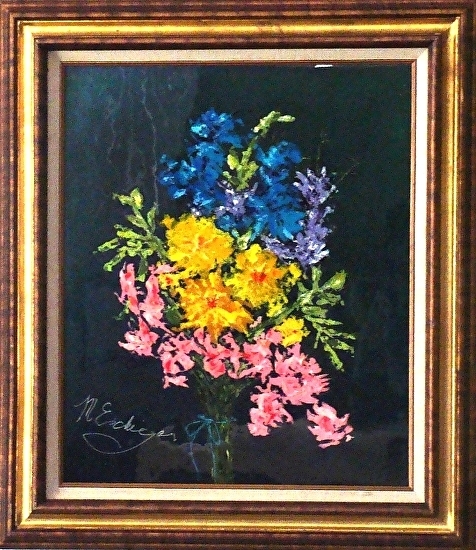
Acrylic on Canvas/ gold frame/ 37” by 31” / 459
Flowers make me happy. I love visiting fragrant gardens and also enjoy bringing vibrancy home.

Positive Psychology

It may sound elusive, but being happy is primarily under under your own control. I have always thought so, which is not surprising, since I characterize myself as a glass is a half-full person. Born in a protective bubble, perhaps I am happy because of loving parents who had few expectations for me other than to be a good wife and mother. Without stress, I was free to study whatever I wanted and encouraged to take classes and get involved in activities of interest rather than for practical reasons. My university education was broad based, centering on ideas and concepts that expanded my understanding of the world. Increased curiosity made me thirst for new experiences that I anticipated would be joyful. I never imagined the bubble bursting to unveil tragedy. It was only with maturity that I learned that misfortune and adversity are part of most people’s lives, and mine was no exception.

And so, I was coerced to grow from struggles and develop coping mechanisms. There are times affliction made me stronger, so rather than complain, I explored how to emotionally benefit from what happened. I had to learn how to greet divorce, death and illness and transform the confusion and sadness they created into enabling energy. When my son was ill, I painted my grief on canvas and then researched every avenue for making him well again. As I did this, I noticed that planning ways to improve the future is enjoyable in itself. The process of engaging in possibilities provided motivation with feelings of hope and contentment. I said yes to life.

When told that a museum could not be built in Michigan, I was determined to ignore nay sayers and find ways to achieve my goal. The process was often fearful for I was forced to leave my comfort zone and do things, like fundraising and public speaking, that I never thought I could. As I succeeded I began more confident and stepped forward further.

I often wonder why so many people focus on negative events, digging trenches into sadness, and becoming frozen in the believe that they can not overcome adversity. The media takes advantage of this fascination with tragedy, showing grim images far more often than celebratory ones. By spotlighting negativity they contribute to a stressed, unhappy nation of people who view their glasses as half-empty.

I decided to do a bit of investigation on the subject of happiness and began by looking at wealth, since that seems to be an area of major discontent. I discovered that money is only important to the point that it provides freedom from worry about the basics. Once housing, safety, food, clothing and health care are provided the happiness that separates a billionaire from a family earning $50,000 is small. People in every socio-economic group, whether in tribal compounds, on family farms, or in senior citizen communities, can be found with positive, joyful outlooks. More important factors than money control mood and a positive outlook, though researchers have been slow in investigating (Treadmill, 2017).

It is only since the 1990s that psychiatrists turned their attention to positive psychology (Srinvasan, 2015). Previously, most researchers focused on abnormal behaviors like depression and schizophrenia, subjects they believed could be quantified. But, “Why not measure happiness?” thought Martin Seligman after his 5 year old daughter chastised him for being a grouch? He decided then and there, that rather than fixate on what was wrong, he would focus on what was right. Since contemporary living gives us time for play, why not understand what can be done to enhance feelings of joy?

Happiness is commonly defined as a state of well-being that comes from living a life with meaning, one that provides a deep sense of satisfaction. It results from both intentional and strategic planing though DNA also plays a role. Dutch researchers recently isolated three genetic variants of happiness (Woollaston, 2016). It is now thought that a large part of cheerfulness comes from the very structure of the human genome and is inherited. But, lest we be complacent, genetic makeup is only part of the story. Life circumstances, achievements, marital status, and social relationships are also important factors. Feeling happy is contagious and having family and friends nearby are major contributors to a sunny outlook.

Happy people do things in a slightly different way than unhappy ones, for they are willing to move out of their comfort zone and take risks (Biswas-Diener, 2013). Though they start with a set-point of contentedness they periodically move out in order to get a boost of joy before returning to their natural set-point. By continuing to engage in new behaviors, over time habits and choices begin to push the needle forward, providing an increased sense of well-being. I can attest to this growth in my own life. For years I was uncomfortable traveling abroad on my own until I finally decided to try going to Kenya on my own. The trip was exhilarating. Other people I met were often coupled in their home life, but traveled solo when they went on adventures. I enjoyed creating my own schedule, talking to someone as long as I liked, and not being asked if I was ready to leave. The next time an opportunity for travel presented itself I looked forward to the opportunity, anticipating a good time.

Happy people also spend quite a bit of time nourishing small pleasures. They indulge themselves by watching birds splash in a backyard fountains or sitting glued to a park bench as the sky turned rainbow colors at sunset. These small diversions provide entertainment and can give great satisfaction. Absorption in work, exercise, a good book, artistic challenges, enjoyment in setting and meeting goals, and getting in the flow give me a great deal of contentment.

Over the past 20 years, a series of interventions to promote positivity have been tested in labs. They may sound simple, but they work. Certain drills do bring about feelings of well-being. Two of the most documented activities are kindness and gratitude exercises devised by Keiko Otake (2006). Volunteers were asked to jot down and then meditate on facts of kindness (or gratitude) they engaged in during the week. They found that happy people become more kind and grateful simply by counting and acknowledging their actions. Regular practice in recognizing kindness and gratitude increases happy memories and improves the quality and quantity of happy moments. Over the course of a few weeks, as feelings of well-being increase, permanent changes are visible on brain scans.

A brain imaging study published in Social Cognitive and Affective Neuroscience explains why self-affirmation works (Jarrett, 2015). Subjects asked to focus on values and situations that gave them the pleasure showed increased activity in the part of the cortex known to be involved in expecting and receiving rewards. When directed to think of a time in the future when they anticipate having fun with family or friends, scans show even greater positive activity.

Each of us has the ability to cultivate what is best within ourselves and to enhance experiences of love, work, and play. Life is a see-saw that needs to adjusted and continuously put in balanced. There is no need to dwell on all of the negative garbage the media throws at us when happiness can be increased by practicing positive thinking and embracing the good in life.

References:
Biswas-Diener, R. & Kashdan, T. (2013) What Happy People Do Differently, Psychology Today. retrieved from https://www.psychologytoday.com/articles/201307/what-happy-people-do-differently

Jarrett,C. (2015) Brain Scans Can Help Explain Why Self-Affirmation Works. Science of Us. retrieved from http://nymag.com/scienceofus/2015/11/why-self-affirmation-works.html.

Otake,K. (2006) Happy People Become Happier Through Kindness: A Counting Kindness Intervention, University of North Carolina at Chapel Hill. retrieved from
https://uncch.pure.elsevier.com/en/publications/happy-people-become-happier-through-kindness-a-counting-kindnesse

Srinivasan,T. (2015).THe 5 Founding Fathers and A History of Positive Psychology.
Positive Psychology Program. retrieved from https://positivepsychologyprogram.com/founding-fathers/

Treadmill,H. (2017). The Art of Happiness. Psychology Today. retrieved from https://www.psychologytoday.com/basics/happiness

Woollaston, V.(2016) Is Happiness in Your DNA? Daily Mail. retrieved from http://www.dailymail.co.uk/sciencetech/article-3559114/Is-happiness-DNA-Study-finds-genes-affect-mood-prone-depression-neuroticism.html.

Art is always for sale. Contact me at marilynne@eichingerfineart.com

Do share your happy experiences below.

Genetic Advantage

Malheur Sunset
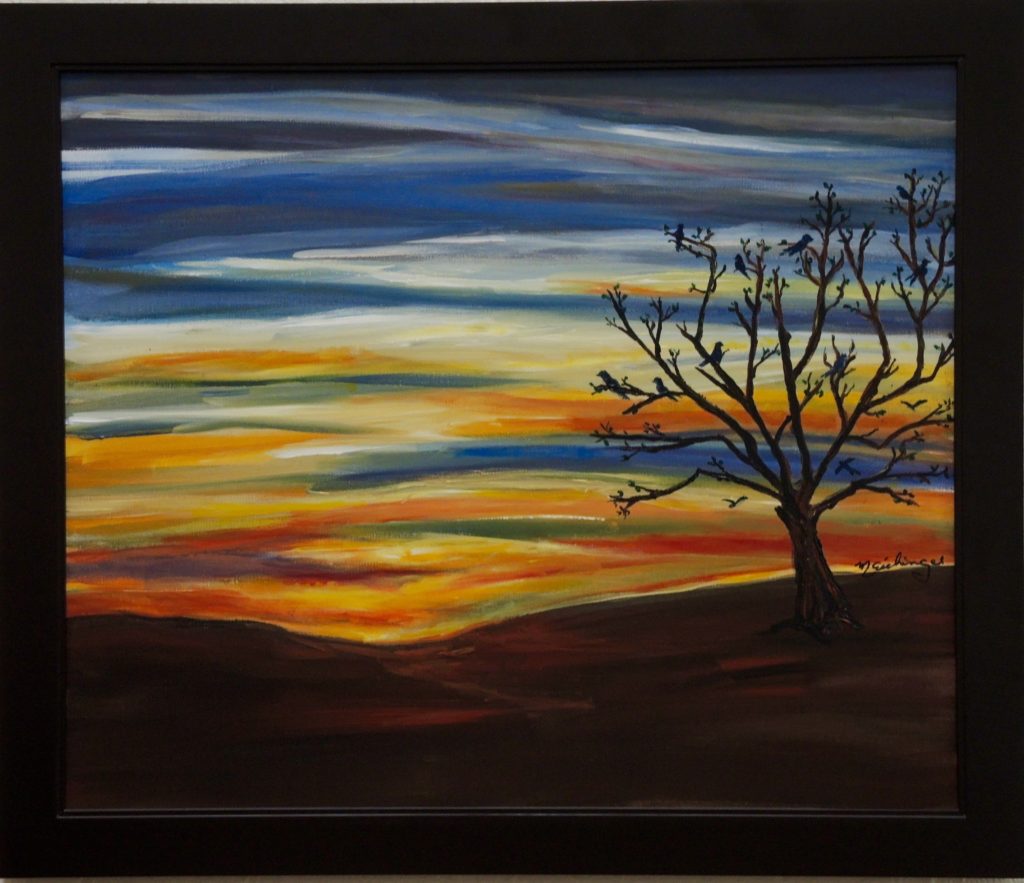
The Swallows resting in the tree are considered to be genetically distinct. In evoloutionary terms, they have been evolving for 500,000 to 1 million years. Homo Sapiens are only at the beginning of their genetic journey.

Genetic Advantage
Thousands of people gathered recently in downtown Portland, Oregon representing both the right and left side of the political divide. In general, tempers were civil, though the crowd was on edge and there were moments of disruption. Several religious groups in the pro-Trump camp had posters with slogans proclaiming their adversity to racial mixing. They carried signs that said, “Diversity is Death for White Race.” I decided to do a bit of exploring and find out if there was merit to their claim. I wanted to know if there are there genetic advantages to having a mixed race species and if there was such a thing as a pure race?

According to a UK documentary about the subject, the uncontroversial answer is that mixed species are stronger than monocultures. The program claimed that if Hitler had had his way by genetically designing a purebred Aryan race, the results would not have been superior. The reverse would most likely have occurred, with a weaker biological stock emerging.

For more than a century, biologists have known that mixing diverse strains of plant or animal results in more vigorous offspring. An unrelated partner from a different stock or population can produce what scientists call, Hybrid Vigor? They identify situations where interbreeding in a particularly small community is common. The offspring tend to be unfit with a tendency to die young.

Human beings have 23 pairs of Chromosomes carrying about 30,000 genes. Every once in a while a gene may be bad or broken even though it will not cause a problem in the host organism. However, If two broken genes combine during procreation, they create an unhealthy situation for the descendent. Hybrid Vigor, the result of breeding occurring between unrelated people, avoids the problem of having two broken copies of the same gene likely to meet. 
 It is somewhat difficult to measure the effect of interbreeding because environmental effects are also play a role in the human condition. Being killed in a car accident or having damaged lungs because of smoking overrides the benefits that may occur from selecting a biologically strong mate. Though not a scientific claim, it is interesting to note that in the United Kingdom, mixed race people make up only 3% of the population, yet make up t30% of soccer players. Brazil, with a very mixed race population, has won the World Cup more than any other country.

In America, laws forbidding marriage between people of different races were common until the middle of the 20th century. Writers like Madison Grant, a leading eugenicist, warned that racial mixing was “a social and racial crime” that would lead toward “racial suicide” and the eventual disappearance of white civilization. For instance, he said that the cross between higher (white) racial types with Indians will produce Indians and with Negroes, will produce a Negro child, both unhealthy outcomes. Grant called for purity of blood inheritance. His writings, among others, led to 16 states developing legislation such as Virginia’s Racial Integrity Act . It spurred the growth of Anglo Saxon Clubs and the Ku Klux Klan. Virginia’s original law stated that a person was not white if he or she had 1/64 of Native Ancestry. Interestingly, 16 members of the Virginia General Assembly proudly claimed to be descendants of Pocahontas and objected to the law that was eventually passed. It wasn’t until 1967 that the Supreme Court struck down the Racial Integrity Act and 15 similar ones in other states.

According to a 2017 Pew Research Center report, 1 out of 10 married people in the U.S. has a spouse of a different race or ethnicity. Part of this accelerating condition is due to mass immigration which is making Americans more tolerant toward interracial marriage. Among women, Asians are the most likely to marry someone of a different race while among men, Hispanic and Black men are the most likely to intermarry.

However, there is a growing group of White Americans opposed to the trend to racial mixing. Those expressing their resistance to interracial marriage are most strong in rural areas. I was surprised to learn that 51 percent of Democrats and 72 percent of Republicans do not think intermarriage is good.

Despite negative feelings, the future of society is likely to lead to mixing races as it always has done in the past. In my last blog I mentioned the results of genome testing done with millions of people show that most Homo Sapiens have small traces of Neanderthal their DNA. What has changed from those prehistoric days to now is the speed in which racial mixing occurs. The structure of the human gene pool is dynamically affected by globalization and migration. I am reminded of lessons learned from Darwin’s Survival of the Species, that natural selection requires diversity and that those best suited to their environment will be the best candidates to pass their genes on to the next generation.

Today many of us live in environments that are not biologically well-suited for natural selection. Heating and cooling systems, contemporary agricultural practices and extensive transportation systems make that possible. Movement by mass populations has the advantage of blending genes, providing an opportunity for good traits to make their way into other populations. For example, in Tibet where high altitude creates low oxygen levels Tibetans are well adapted to their environment, but the Han Chinese and Serpas who moved to the area when China occupied the country in were not. When the races started to mix, the beneficial genes of the Tibetans helped the next generation of newcomers become better adapted to the thin air.

When examining dogs to identify genetic disorders, purebreds are found more likely to suffer weaknesses than those of a mixed-breed because same-breed mating can cause unhealthy recessive genes to become dominant. The human condition acts similarly. Studies of Middle Eastern and North African marriages among close relatives show that their children are more likely to have birth defects or genetic disorders than those living in racially mixed countries.

Geneticists explain that we are not as diverse as you might think. New York Times reporter, Natalie Angier, wrote, “Scientists say that while it may be easy to tell at a glance whether a person is Asian, African or Caucasian, the differences dissolve when one looks beyond surface features and scans the human genome for DNA hallmarks of race.” Race is a social construct, not a biological one and accounts for less than .01 of variations in genetic makeup.

It was interesting to learn of the recent discovery in Morocco identifying the skeletons of 300,000 year old Homo Sapiens. However, it was much later that our early ancestors left the content to travel north. “All of us evolved over the last 100,000 years from the same small number of tribes that migrated out of Africa and colonized the world,” says Dr. Craig Venter, head of Celera Genomics Corporation. He, along with others from the National Institutes of Health declare that there is only one race—the human race. There have only been 7,000 generations since the 10,000 or so people who left Africa started migrating north to mix at times with archaic humans. (such as Neanderthals and Homo Erectus). This is not enough time to produce variations of any significance.

The differences in how we are packaged, the visual cues of color, are minuscule when studying the human genome. There is little scientific evidence to support substantial distinctions between groups. Yes, there are genes that control pigmentation and other physical features but the are mostly “skin deep.” Slight variations are caused by the pressure of the environment to carry a certain genes to protect skin against the burning sun. Occasionally an isolated group develops a genetic predisposition due to one ancestor being born with an unusual mutation.

Over time, species either adapt of become extinct. Evolution can not be stopped and as the environment changes so will the need accelerate human adaptations. As sea levels continue to rise, populations will be forced to move and continue to reshape the structure of the gene pool However, it will take hundreds of thousands of generations living in changed and isolated environments before human beings will divide into genetically different groups. You and I will never live to see these differences so I say, let’s stop the racial biases and come together based on our similarities.

References:

Controversial, but True? mixed Race Humans have a Genetic Advantage, 2010,
http://www.ign.com/boards/threads/controversial-but-true-mixed-race-humans-have-a-genetic-advantage.192331120/

Lombardo, Paul, Eugenic Laws Against Race Mixing,University of Virginia, http://www.eugenicsarchive.org/html/eugenics/essay7text.html

Rosetti, Chris, National Vanguard, 2017, Pew Study:Vast Majority of Whites are Resisting Racial Mixing, http://nationalvanguard.org/2017/05/pew-study-vast-majority-of-whites-are-resisting-racial-mixing/

Slomon, Scott, from Future Humans: inside the Science of our Continuing Evolution, 2016, https://aeon.co/essays/the-future-is-mixed-race-and-thats-a-good-thing-for-humanity

Angier, Natalie, Do races Differ? Not really, DNA Shows. The New York Times, 2000
https://partners.nytimes.com/library/national/science/082200sci-genetics-race.html

Works of art are always for sale. Please contact me at marilynne@eichingerfineart.com

Malheur Sunset, 23” by 27”, $425, Acrylic on Canvas, Black wood frame

I would love to hear from you. Comment on my blog at eichingerfinearat.com/blog

A Museum at Home

This summer, greet your young visitors with a museum in your home. It is enjoyable to organize and fun to observe smiling faces that move independently without creating chaos.
3-D image, Mixed-media, 32” by 22”, gold frame, $ 599.

Museum at Home

It is summer and the children wll either be home home or taking trips to friends relatives. Most adults don’t plan for the onslaught of vacationing children and as much as they look forward to their company, they also dread it. With a bit of preplanning, much can be done to make the time spent in your house (or at a family gathering) special. It is possible to organize a space to permit creative activities to occur without having to worry about cherished possessions being destroyed.

Why not create a hands-on museum in your home. . .one that will stimulate curiosity and absorb the attention of active children? By thinking like a museum director you can provide opportunities for house bound youngsters to engage in creative, educational and thoughtful pursuits. It is not uncommon in hot weather for kids to spend hours in water play. With a bit of foresight their play will be a lesson in physics and hydraulics as well as a way to cool down. THey can dress in period costumes (culture and history), constructing forts and buildings (engineering), putting together 3-D puzzles (spacial challenges), putting on puppet plays (imaginative writing) and engage in activities that involve physical movement as well as mental stimulation. By expanding educational opportunities during summer vacation you also have a chance to test your own ingenuity and creativity. The process can be challenging and a great deal of fun.

When my children were young I was a frequent visitor to children’s museums and noted the way they were organized to permit kids to roam freely within environments packed full of learning materials designed for their age level. According to The American Association of Children’s Museums, “A children’s museum is defined as an institution committed to serving the needs and interests of children by providing exhibits and programs that stimulate curiosity and motivate learning.” They encourage parents to interact with their children while in the museum in order to make the experience more meaningful. That definition fits my family to a “T” so, when I moved to a community without a hands-on museum, I decided that I would make my home into one.

Maria Montessori had a great influence. She was a 19th century physician turned educator who became involved in designing Casa dei Bambini, a school for low-income children. As she experimented with curriculum and classroom design, “she began to see independence as the aim of education and the role of the teacher as an observer and director of children’s innate psychological development.” When my children were preschoolers I enrolled them in Montessori schools which I quickly realized were simply classrooms set up as mini-museums. They were organized spaces that permitted students to access materials when they wanted to do so. Manipulative were designed for problem solving, mastery, and use in surprisingly creative ways.

Montessori believed that young children were sensitive to order, enjoyed doing activities repetitively and were happiest doing practical things. She even taught two year olds how to peel carrots. Montessori developed an environment that was kid-size so that materials could be easily reached and put away when completed. Over time, very sophisticated materials were developed for schools run by teachers specially trained in her methodology.

With Montessori’s approach in mind, I started my own in-home museum to be operated on a shoe-string. Part of the challenge of permitting children to roam freely involves developing an organizational plan. I began by selecting a dedicated area for my grand experiment. It was a place devoid of objects that could be accidentally destroyed but could be filled with materials, supplies and educational toys to promote creativity and imaginative play.

I added shelving and assigned different locations to hold games and toys. There were construction areas, a place with math manipulatives, a reading area with pillows and a rug, a puppet stage, assigned shelves for puzzles and educational toys, a dress-up bin and a craft station. I also built a music tree with clips to hold percussion instruments that the entire family enjoyed grabbing during musical gatherings.

Before entering the play area children were given instructions for its use. They were told that they could take whatever toys or supplies wanted but they had to return them to their original location before selecting a new item. Training children to put items away after use is not difficult if the rules are explained and if you consistently follow up. Keeping the area clear for future projects not only makes a parent’s job easier but it makes the child’s space more accessible.

If an item was new, I took the time to demonstrate its use, exiting the scene as soon as it was evident that the toy was mastered and they could continue with their own creations. Part of the secret of a successful home museum is to introduce toys (activities) one at a time. When there were lots of little parts I put them on a tray that the child could take to a table or the floor. This made the clean-up cycle easier. Once my child knew how to use the toy in its intended way, she or he was free to create variations in the way they played with it. The goal was for my young ones was to master the activity and become independent of my interference. I wanted them to gain satisfaction from their successes and become motivated for the next challenge.

A home-museum environment does take careful planning, but once operational the task becomes more routine because the child has learned to select his/her own activity, concentrate on the task at hand, and move progressively from one skill level to the next. The toys are not jumbled one on top of another as they would be in a toy box and are within easy reach. Again, independence is the goal.

One last thought. . .a child of about two and a half years old is ready for your home-museum. At first it is best not to have too many toys available so the child will not choose items he does not know how to operate. When the manipulative is successfully mastered then the next challenge can be introduced. If several children use the space, each needs to understand which items they have earned the right to use. This system provides motivation and works well for older children as well as preschoolers. It oftn encourages older children to teach younger ones.

When I became a grandparent, I did not have a playroom available but I still wanted my grandchildren to enjoy a degree of freedom when visiting and of course, I wanted them to be engaged in meaningful pursuits. I used a large buffet in my dining area for it contained shelving and doors. It was perfect for storage and when the doors were open, shelves held a neat, organized arrangement of fun filled opportunities. Toys and supplies were well positioned at child height with areas for books, puzzles, art supplies, construction materials, etc. A separate box holding legos served as a plant base when the children were not there. Between meals, the dining table was covered with a protective cloth to avoid paint and clay spills. a wood floor permitted buildings to be constructed and small wheeled vehicles to be assembled from parts. Even after my grandchildren graduated to more sophisticated electronic toys and computers, the cabinet was kept ready for visiting youngsters. I wanted to be prepared and not worried about them getting bored while I spent time talking to their parents.

Yes, children’s museums are fun because they are child centered and permit freedom of movement. Exhibits are designed to allow learning to take place and are built to withstand use. Since a mob of children are not your concern, there are hundreds of toys on the market that will serve your purpose. If you do decide to set up a museum in your home, I would love to hear back from you to hear about your success. What toys did you select? What problems have you encountered?

Do comment below.
_________________________________________________________________________________

Science vs Belief

Rub a Dub Dub Five Men in a Tub

Acrylic painting on Canvas/ 42” by 54” / $ 790

Courageous explorers set out to sea and disproved the flat earth theory. What if they hadn’t? Galileo was punished for saying the earth travelled around the sun. What if he (and others) hadn’t? Salk wiped out polio with a vaccine? What if people had refused to give it to their children?

Science vs Belief

In 2015, Julie Beck wrote an article for The Atlantic saying Americans Believe in Science, Just Not its Findings. Though 79 percent of Americans do think life is much easier because of science and that investments in research are worthwhile, they question their findings. A recent Pew Research study shows that there is a large gap between what the public believes compared to the beliefs of scientists. I quote the following:

Genetically modified foods: 88 percent of scientists say they’re “generally safe” to eat; 37 percent of the public agrees.

Vaccines: 86 percent of scientists believe they should be required in childhood, compared to 68 percent of the public.

Climate change: 94 percent of scientists say it’s a “very serious” or “somewhat serious” problem; 65 percent of the public agrees. 87 percent of scientists blame humans; 50 percent of the public does too.

Evolution: 98 percent of scientists say they believe humans evolved over time, compared to 65 percent of the public.

There were also large disparities on issues like whether it’s safe to eat foods grown with pesticides (scientists: 68 percent; public: 28 percent), and
whether the world’s growing population will be a problem (scientists: 82 percent; public: 59 percent).

Instead of trusting facts, the public tunes into feelings. People are quick to go to pseudoscience when they want to refute a claim they dislike, for most any reason. Strangely, though they trust and respect scientists, they don’t believe in their evidence-heavy research. Dan Kahan, professor at Yale Law Schools says there is a “creeping anti-science sensibility” overtaking the country and it is gradually getting worse. I wanted to know why?

Pew research scientists say that the fault is with the media because of they don’t know how to present complex information in a concise manner that can be easily digested by the public. Scientific information does not lend itself to be communicated through sound bites and reporters don’t know how to capture people’s attention for a long enough period of time to present all of the facts and nuances. Most people have stopped reading newspapers altogether and they avoid cumbersome science stories.

However, there are other factors to consider besides the media. Religion, jobs, and past experience with faulty science causes people to reject studies they don’t like. Preferring childhood indoctrinations and the faulty conclusions they surmised from personal experiences, they use them as a guide to evaluate valid research findings. In other words, they stay committed to their own beliefs which may or may not be based on tested results. It may be why so many people believe that ghosts are real, that holding your laptop on your lap will make you sterile, that talking on your cell phone will give you cancer, or that sugar makes your kids craz. They also commonly spout that hair and nails continue to grow after you die, that crossing your legs gives you varicose veins, and that brown eggs are better for you than white.(they are both the same)

The 2015 international student assessment test (PISA), given to 15 year olds, showed that out of 71 countries the United States placed 38th in math and 24th in science. Though math scores steadily increased since the early 1990s, in 2009 they once again started to dip. Science scores showed only a slight improvement. The American Association for the Advancement of Science (AAAS) blames our country’s overall weak scores on poor STEM education in the schools.

The numbers are worse when evaluating adults, for over 70 percent of Americans are not able to read and understand the science section of the New York Times. Only 28 percent of the population qualifies as being scientifically literate.The small percentage of those who are interested in science and engineering and continue on for advanced degrees excel. “The United states has done more to advance science in the modern world than any other country on earth,” says physician/researcher Danielle Teller.

Our engineering schools are among the top in the world and even medical research still remains among the best. At the highest level of academic achievement we do well, but among the general public’s understanding we fall behind. One reason may be that science writers have not been able to connect researched facts to daily life in order for it to have meaning. Instead, information is presented in confusing bullets that claim one thing to be the truth and then shortly after we are told their are nuances to the study that need to be more carefully evaluated. It is difficult for the average person to know what to make of the information so they stop trying. Rather than show their ignorance, many simply say, “I don’t believe it and who says so?”

What do we do about the public’s lack of understanding of science? How do we communicate to those who are not interested in science and what is important for them to know? For over 50 years the National Science Foundation (NSF) had a science initiatives that funded programs like NOVA, encouraged the building of science centers, and supported innovations in teaching. The present administration, however, wants to reverse the trend by cutting research budgets for NSF and NIS (National Institute of Health) as well as funds targeted to increase science literacy. I suppose their reasoning is that if they are not going to accept the outcome of the research, why conduct studies? If they do not want any one to discuss the contribution of fossil fuels uto global warming, why give out research grants? Should we care?


Science literacy is not just about facts for it prescribes what to do with them. It is about being able to predict and explain natural phenomena like volcanoes, tornadoes, and tidal waves. It enables informed participation in civic, cultural, and economic affairs and defines ways to make judgements about the future. Scientific literacy is crucial in that it affects everyday decision making, but it is also personal in that it encompasses societal values. Since many value-laden beliefs get applied to critical issues, to find science useful you have to accept that it is much more than the latest study.

Science is a way of thinking—a process involving ideas, collecting data, developing a hypothesis (an educated guess), testing, and coming to a conclusion only to start the process over again. It is not focused on the absolute perfect answer but rather the outcome based on the best information available. at the time. It involves challenging preconceived notions, over and over again in a never ending cycle.

It is difficult to live in a world without absolutes but due to high speed communication we are forced to do so. It is important to understand research findings and resultant innovations in order to decide if they benefit society. There are decisions to made and they can’t be based on thin air. We know how to make robots and drones. The societal question involves how we want to use them? Should they deliver packages, pick up passengers, clean our homes and add to workplace unemployment? How do we deal with the problems they create for those who lose their jobs? Answering questions like, “Do all children need to be vaccinated? Is there such a thing as clean coal? What is an acceptable level of toxins to allow in drinking water?” require knowledgeable decision makers.

Scientific literacy also includes understanding how data is manipulated and purposefully misinterpreted for political and business reasons. Informed people need to ask how data is being collected, what biases are involved, and who is footing the bill for the study. They need to be able to interpret statistical information in order to not be fooled. It also behooves us to look for mental laziness on the part of the investigator and to make sure that comfort results that reinforce cherished beliefs are not being sought. .

Facts can be used to reenforce long held beliefs or they can be used to shed light on the universe. They can serve as answers to curious inquiries and a platform for the next great discovery or as fodder for industrial moguls who want to negate findings. Whether science is used for good or for evil depends on our values and motivations. Since we are traveling speedily through the universe, clinging to the land by means of earth’s gravity, it behooves us to understand as much about it as possible in order to protect and sanely develop our spaceship.

References:

Beck, Julie, The Atlantic, 2015 , Americans Believe in Science, Just not its findings, In https://www.theatlantic.com/health/archive/2015/01/americans-believe-in-science-just-not-its-findings/384937/

Desilver, Drew, Pew Research Center, 2017, U.S. Students’ academic achievement still lags that of their peers in many other countrieshttp://www.pewresearch.org/fact-tank/2017/02/15/u-s-students-internationally-math-science/

Lombrozo, Tania, 2015, NPR, Scientific Literacy: It’s Not Just about the facts,
http://www.npr.org/sections/13.7/2015/09/14/440213603/scientific-literacy-it-s-not-just-about-the-facts

Teller, Danielle Quartz MEdia LLC, 2016,There’s a good reason Americans are horrible at science,https://qz.com/588126/theres-a-good-reason-americans-are-horrible-at-science/

Art is always for sale. Contact me at
marilynne@eichingerfineart.com

Please share your thoughts below.

____________________________________________
CELEBRATE! and learn about hands-on learning and the growth of art and science museums by naive but passionate directors from throughout the country.  Laugh and cry with them as you read their stories of trying to navigate the quagmire of running a non-profit organization.  
 
Lives of Museum Junkies — Upcoming Book Talks

Old Boys Club – Tigard –  April 28, 2017

Museum of Natural and Cultural History, University of Oregon,
Eugene – May 23, 2017
 
Lake Oswego Library  – June 20, 2017
 
High Desert Museum, Bend – October 5, 2017
 
Available for $19.95 Powells Books, Amazon, Barnes and Noble, Broadway Books, MAC Emporium, Also on Kindle for signed copy contact the author.