Past and Present

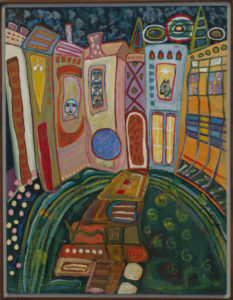
Georgetown Row Houses

Until the age of eleven, I lived in a row house close to neighbors, where friends were easily made and it was safe to roam the streets.

Then and Now

Last Saturday was my birthday. I was born on Rosh Hashanah, the Jewish New Year, which ushers in the Days of Awe that last through Yom Kippur. According to the Jewish calendar, fall rituals have been happening for 5779 years.  These high holy days are a time for remembrance, contemplation and forgiveness. It is a solemn occasion, yet joyous, for with forgiveness comes healing and joy. Children are blessed, extra charity is dispersed and honey cakes eaten to usher in a sweet year.

While celebrating my birthday and the holiday, I reminisced about my childhood and dead relatives. My first recollection as an infant was of my father waking me in my crib and while half asleep, carrying me downstairs to a house full of friends partying in our living room. I was bewildered by the noise, but the faces that peered in my direction were friendly.  Dad held me securely, as he and my mother did throughout the years I lived at home.

This memory brings to mind images of less fortunate families, those fleeing homes because of war or famine. I remember seeing a pictures of a child who drowned at sea while his parents watched helplessly from an overcrowded boat. Courageous men and women live through unimaginable adversity in order to escape the tragic realities of their homeland.  At the same time, the images make me grateful, for I was held securely, never dropped or neglected, but always loved, cradled and protected.

Grandpa protected us by roaming the neighborhood during WWII to make sure blackout shades were lowered. Mother watched out for us by carefully clipping rations to insure that we ate balanced meals that included vegetables from my grandparent’s victory garden. When the men left for the front and an aunt and cousins came to live with us, the adults shielded us from the brutality the war, made sure our early years were happy ones.

Later, when the U.S. was embroiled in the Cold War, there were no adults to protect me from fear.  Air-raid drills and bomb shelter talk put me in a state of continuous worry. I felt stressed and wanted to move far away from the coast, believing that Boston would be a prime target.  Propaganda said we’d be safe ducking under school desks to avoid harm from a blast. We were told to make preparations in case the had to stay in a basement shelter for several days. I became cynical after realizing we were lied to and being fed propaganda. It reinforced a belief that my future was tied to education. I wanted to be able to dig for the truth and make decisions based on fact.  But I digress. . .

Until my eleventh birthday I lived in a lower middle-class area of Philadelphia during a time peddlers hawked wares on the streets. I used to run outside the moment the organ grinder stopped to play in front of our house. His music attracted neighborhood kids with nickels to place in the monkey’s cup. Dressed in colorful shorts and red jacket, we were mesmerized as the animal ran back and forth from music box to the organ grinder’s shoulders.

Some families still used ice boxes instead of electric refrigerators, which brought the ice truck to a nearby corner. The iceman’s arrival always attracted a crowd of kids to his tailgate on hot summer days. When finished with deliveries, he took out his long icepick and chipped slivers of ice to put in outstretched hands. Licking icicles was a cooling way to enjoy the heat—and it cost nothing. However, the Howdy Doody truck which jingled later in the day, was also popular. I always tried to be first in line to get a popsicle.

Summer was for leisure and play. Hours were not heavily booked with classes and camps. We had plenty of time to splash in the water gushing from a hydrant that was opened by a friendly fireman and to play Hide and Seek, Jacks or Red Light, Green Light. Stay-at-home-moms watched out for our safety. I could get a band aid or drink of water at anyone’s house.

Today, I rarely see children gathering in the neighborhood for a pick-up game of ball or hopscotch. During vacations, most are away at camps or classes. When home, their parents hover over with worry, fearing that they’ll be hit by a car driving fast down our windy street or even kidnapped. Instead of letting them explore a nearby trail on their own, they accompany them on prescribed walks. No one would be permitted to play Red Rover, Red Rover across the road.

My biggest fear is fire. Last summer, my partner Ray, organized a fire watch for we were afraid of someone accidentally setting off a blaze in the dry canyon edging our property. Fortunately there were no incidents nor was water consumption limited but I fear a warming planet may make it happen one day. I empathize with residents of California who lost everything to fires that whipped through their neighborhoods. I”m grateful to live in the northwest where it is not as hot, and hope  we will have enough water and resources in the future to care for thousands of people flowing to Portland to escape unlivable heat.

In my twenties, I lived near Harvard University in Cambridge, MA. In many ways, shopping was easier then than it is now, for vendors still hawked wares up and down our street.  The milkman delivered dairy goods, baby diapers arrived and were taken away twice weekly. The Salvation Army’s band entertained us as it marched by our front steps. Trucks piled high with fresh fruits would be followed by one peddling pots and pans. And of course, everywhere we went the ice-cream truck jingled its tune. My favorite vendor, however, was the knife sharpener.  For a few coins, scissors and knives were kept dangerously sharp. Now, I depend on Ray to do the job when he has time. I’m too lazy to take them to a hardware store for sharpening. I used to walk to the grocery, meat market, hardware store, and I took sheets and shirts to the laundry where they were washed and ironed for such a reasonable sum that everyone, even college students, could afford to do so.

Today, most of us drive to mega stores, park a block away from the front door.  But, I noticed that there is a revival of inbound services. Not only can you get pizza delivered, but groceries and entire cooked or uncooked oven-ready meals can be delivered to your front door. Working adults are happily pampered by tip seeking deliverymen who make their lives easier. They certainly have benefited my wheelchair bound son.

I am, however, still a holdout waiting for the knife sharpener to come around.  My scissors are dull.

Art is always for sale. Contact me at marilynne@eichingerfineart.com.

Do share some of your fond memories from childhood and contrast them with how you live today.
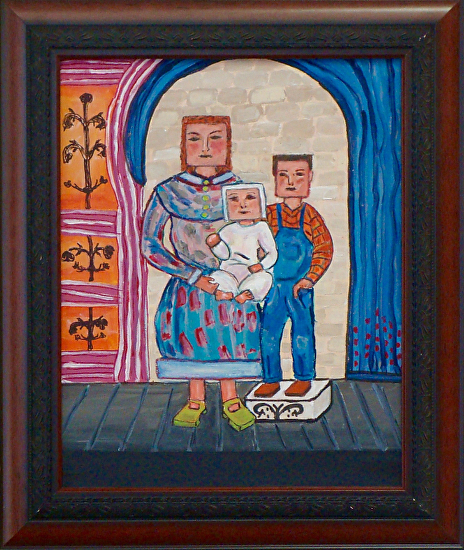
Without Love, What?

Meet the Blockheads

Acrylic on Canvas with glossy polyurethane finish. 26” by 22” / $385/ framed

Without Love, What?

Those fortunate enough to be showered with love during their childhood are likely to become healthy, well adjusted adults.

Without Love, What?

The following passage is taken from the manuscript of Over the Sticker Bush Fence: Scaling Barriers for Homeless and Runaway Youth. In this section I discuss what happens to children who are raised in loveless surroundings. The book is presently under consideration for publication by a well known publisher. It is not too late to comment and I look forward to your insights.

In my naivety, I assumed that love was instinctual and that every newborn, no matter how poor, is a recipient of parental attention. Without some level of care a helpless infant could never survive. But I quickly learned that feelings of responsibility vary from person to person as do emotions elicited by love.

From the manuscript.

“The majority of us are fortunate for we are surrounded by loving parents and relatives. As infants, family members held and cherished us and as adults, we find partners and form bonds based on love and mutual respect. But what happens to children who are never caressed or told that they are special? What are the long-term effects of never having being touched and cuddled? What befalls those children who are physically abandoned, left on door steps or placed in cribs and not attended to when they cry or diapers need changing?”

“A cornerstone study about infant neglect was initiated in the 1980s when Dr. Nathan Fox and colleagues from Harvard Medical School, walked into an orphanage in Romania. Due to a recent ban on abortion, the number of orphan babies had soared. 170,000 children were placed in 700 overcrowded and impoverished facilities across the country, staffed with an insufficient number of caretakers. Though the facilities were clean, the infants were emotionally neglected. Left day and night in their cribs, the babies were changed periodically and fed without being held. The nurseries were eerily quiet places. Since crying infants were ignored, they stopped making sounds. No attention—no cries—only silence.”

“Dr. Fox followed these children for over fourteen years. During the early years of the study, autistic-like behaviors such as head-banging and rocking were common. As the children grew their head circumferences remained unusually small. They had difficulty paying attention and comprehending what was going on around them. Over time, 50 percent of the children suffered from mental illness. They displayed poor impulse control, were socially withdrawn, had problems coping and regulating emotions, and were shrouded in low self-esteem. They manifested pathological behaviors such as tics, tantrums, stealing and self-punishment. Poor intellectual functioning caused them to have low academic success.”

“Those children lucky enough to be put in a caring foster home before the age of two were able to rebound. Unfortunately, those who entered foster care at a later age were not so lucky, for they were permanently damaged.” . . . .

“Without repeated acts of love, a child’s brain doesn’t make the growth hormone needed for proper mental and physical development, leaving the child permanently scarred. Even small insults of shame and rejection can impact a youngster’s ability to develop in a healthy manner. Verbal abuse from adults who say such words as, “I can’t believe you would embarrass me like that,” or “You Idiot! Who do you think you are?” hurt and affect a child’s self-esteem. This type of verbal abuse can lead a child to be cruel to animals, set fires, take drug, and self-withdrawal.”

Parental warmth and love are crucial for a child’s well-being. Writing for Psychology Today, Christopher Bergland concurs that “Toxic childhood stress alters neural responses linked to illness in adulthood.” He writes of a 2013 study published in the Proceedings of the National Academy of Sciences where researchers examined the effects of abuse and lack of parental affection across the regulatory system. They discovered a biological link between negative experiences early in life and poor health in later years. The brains of unloved, neglected children are permanently affected. Their stress levels are high, setting the stage for elevated cholesterol levels, cardiovascular disease, metabolic syndromes, and other conditions that pose a serious health risks.”

“The study was able to document what most healthy families have always known, that children need to be showered with love and kindness and live in a welcoming environment. Love is what helps youth develop defense mechanisms that provide a buffer from abuse and trauma.”

“A good example of the importance of early love is found in Zach’s story. He was loved as a child even though neglected and at times abused by parents high on drugs and alcohol. That he was occasionally smacked and at times not fed, was not as important in the long-run as knowing he was wanted. He was fortunately part of an extended family that lived nearby, so when the situation became intolerable, he often found shelter with relatives. This early attention sustained him through difficult times and made him able to transition as a caring individual.

“Those growing up without the gift of love are not so fortunate. “Charlie” was left alone in his crib for hours on end. When he cried there was no-one there to pick him up and comfort him so eventually he became silent. His diaper was changed irregularly and rashes developed causing more discomfort. While being fed, a bottle was propped on a pillow by his mouth while he lay still in his crib. He rarely felt the warm arms of a loving adult. He remained listless and grew slowly, learning to sit and crawl months after what was developmentally appropriate for his age. By the age of two, he was more like a one-year-old. Over the years “Charlie” never caught up.”

* * *

Parents, there is no such thing as showering your children with too much love. However, I share a cautionary note. Love is not to be confused with spoiling. It does not equate with letting the child do anything he or she wants to do. Parents are responsible for teaching their children the social and cultural mores of society. There are times when “tough love” is called for in order to instill responsibility. But love may also mean, picking your child up over and over again each time he falls down.

References:

1. Nelson, C. & Fox, N. & Zeanah, C. (2014) Romania’s Abandoned Children, Deprivation, Brain Development, and the Struggle for Recovery, Harvard University Press.

2. Parks, G. (2,000) The High/Scope Perry Preschool Project. U.S. Department of Justice; Office of Juvenile Justice and Delinquency Prevention. retrieved from https://www.ncjrs.gov/pdffiles1/ojjdp/181725.pdf alsoRand Published Study http://www.rand.org/pubs/research_briefs/RB9145.html

3. Bergland, C.( 2013) Parental Warmth is crucial for a Child’s Well-being. Psychology Today. retrieved from https://www.psychologytoday.com/blog/the-athletes-way/201310/parental-warmth-is-crucial-child-s-well-being

4. Smith, D. Effects: of The Lack of Attachment. Addictive Behavior Counseling School Student Lecture notes. retrieved 2017 from http://www.darvsmith.com/dox/lackofattachment.html

I would love to hear from you. Please comment below.

Artwork is always for sale. Contact me at marilynne@eichingerfineart.com.

Dynamo for Change

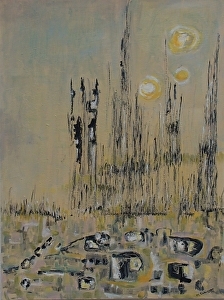
THREE SUNS
40” by 30” / Acrylic on Canvas / $ 499

Scorching Sun allows fires to burn so that Earth appears dry and lifeless. Life hovers underground waiting for Mother Nature to help it reemerge to make Land beautiful once more.

Dynamo for Change

Over the Sticker Bush Fence is a book in progress about homeless and runaway youth. In it I discuss the difficulties caused by childhood neglect and abuse. Over the past three years I interviewed many people who were motivated to work with this population because of experiences they had in childhood. Today I would like to introduce you to Sean Suib, the executive director of New Avenues for Youth. Sean has a special interest in the plight of foster children. Following is an excerpt from the manuscript.
_____________________________________________

Dynamo for Change – Sean Suib – New Avenues for Youth

“Our foster system is broken,” Sean Suib said forcefully. “The only way we are going to fix it is to get it out of the hands of the government. There are smart people in the system but they can’t change anything. The system, like the children they serve, is traumatized. There is not enough money to operate successfully, but that is only part of the problem. Because the system operates out of a place of crisis, it cannot think strategically or even beyond its most basic function, survival. Evidence of this can be seen in the many recent highly publicized examples of the system failing to act to keep children safe, despite clear information about danger. I don’t want you to think the people running the system are bad, to the contrary, there are man caring, hard working, and well-intended people. They just can not get beyond their systemic crisis to prevent its perpetuation. To understand the intersection between foster care and homelessness for youth, it is helpful to think about the Department of Human Services (DHS) as an impoverished single parent responsible for rearing 10 children at the same time. With too little money to meet every child’s specialized needs, DHS can only focus on keeping the most vulnerable children as safe as possible. Older children are less vulnerable when compared to younger, higher needs youngsters. By the time they get to be an adolescent, a system like DHS is not designed for, resourced for, or able to focus on or meet a teen’s needs. As a result, 50% of the kids who leave the foster care system at the age of 18 find themselves homeless within three years. The private sector needs to take over.”

I was sitting across the table speaking to this tall, handsome man whose every pore seemed energized as a change agent. As director of New Avenues for Youth, he moves purposefully among the many challenges he has to confront each day. Though busy overseeing the center’s diverse programs, he had invited me into his small office and graced me with his rapt attention as though I was the only thing in the world that mattered. In my effort to understand the basis of youth homelessness, I had not considered the foster care system and wondered what should be done. Sean shared his thoughts.

“There are critical intervention points that have to be addressed before transitioning a child out of state supervision. Children need social capital, people not paid to be in their lives, who can be called at 2 in the morning if needed. They need to learn life skills, accountability, given leadership opportunities and ways to connect with their community to practice the skills of being an adult. Programs like ours try to sprinkle as many of these proactive experiences into the young person’s life as possible.”

I quickly learned that New Avenues was quite innovative in their approaches and that their work with youth had come a long way from the juvenile detention policies practiced in the past by social service agencies in conjunction with the judicial system.

“We are beginning to understand the unique circumstances that face foster children,” he responded with intensity, making sure that I followed his words. “Many of them have spent years being shuffled from one home to another, often falling through the cracks educationally and emotionally. We already are making a difference with an array of programs and targeted interventions. One of the interventions we are most excited about is a partnership with a non-profit called Bridge Meadows. Bridge Meadows is a multi-generation housing community in which low-income seniors live in community with families that have adopted young foster children. In this model, the entire community works together to help heal and raise these kids.

recently combined resources to build a second housing facility (15 unit apartment complex) dedicated to youth aging out of foster care. Named New Meadows, the facility will sit on land adjacent to the Bridge Meadows campus and leverage relationships and social capital to foster youth as they move into adulthood. New Avenues will wrap a comprehensive program around housing residents by providing mental health counseling, case management, life skills classes, education and college support, and job training.”

As I listened to Sean talk I couldn’t help but imagine that he could have been a successful businessman, spending his working hours amassing a small fortune for his family. He is engaging, has people and organizational skills, and is a strong spokesman for his cause. Sean knows how to work with teams of people in the community from low income to wealthy donors who make up his board. He is also a practiced tradesman with years of construction experience. It would have been logical for him to run his own company, yet he chose to work with the disenfranchised. I wondered why Sean selected a non-profit route. Why was he so ferociously passionate about what he was doing? With little prodding he shared his story.

_____________________________________________________________

Sean’s path to the directorship of New Avenues was inspired by a rocky family life that made him fend for himself at an early age. His journey took him through traumas caused by drugs, divorce and neglect. Sean’s early employment at Janus Youth Services and Outside In provided experience and insight that enabled him to identify holes in the welfare system. Once Over the Sticker Bush Fence is released you will have and opportunity to see how he was influenced as young and why this entrepreneurial dynamo would choose to help those less fortunate.

Do let me know if you think of these last two posts from my new book, Over the Sticker Bush Fence. If you have suggestions, now is the time to make them, since it has not yet been published.

Art work is always for sale. Contact me at marilynne@eichingerfineart.com.

The Patriot

Feeding Crow
Acrylic on Canvas/ gold frame/ 40” by 30” / $ 599
Each of us is called on to defend our country, whether at war or at peace. The rights granted us under the Constitution and the Bill of Rights are worth defending. It is not something for others to do. We will never agree with our neighbors about every issue but our homeland asks us to accept the tenants of democracy.

Call Me Patriot!

Call me Patriot. No one can take that name away from me, neither the right nor the left. In today’s political climate, the word has become loaded with meaning. I love our country and the people I come in contact with daily, even when I do not agree with their political views. Most are good and generous individuals who are ready to help their neighbors in time of need. And, though I am very upset by many things that our politicians do, I see it as my duty to be involved to make things better for the next generation. It upsets me to hear of acquaintances who want to give up their citizenship and go elsewhere. If we want to live on a kinder more compassionate canvas, then it is ours to paint.

A patriot is defined by Webster as a person attached to his or her homeland. Sadly, at times it is difficult to feel connected to ours, especially when congressional delegates act as children and make it hard to believe they have the best interest of the electorate at heart. Wrapped in their own desire to get reelected, they forget they are part of a family unit that gains strength by working together.

Growing up, each of my children had opinions of their own which did not always correspond with mine. Yet I loved them, tried to consider their point of view, and embraced their goodness despite our differences. We always came to some accommodation that permitted us to live in harmony. I would lay down my life for my children no matter how much we disagree.

When it comes to politics, however, I notice that some, who call themselves patriots, take self-centered positions based on identity with such things as social class, race, religion or gender. They may decide that only those who share their culture, ethnic background, language, nationality of origin, profession or sexual orientation are patriots. The dictionary labels them chauvinist patriots for they carry an excess of patriotism. Laying claim to their political position as the valid one, they speak as if only they have the right to the word. Not so!

I fear they do not understand the intent of the Constitution, Bill of Rights and laws that underpin our national identity. Their love of homeland is based on their own mythology. For instance, section 8 in the Constitution says that Congress shall have power, “To regulate Commerce with foreign Nations, and among the several States, and with the Indian Tribes.” This was written, in part, to insure that treaties with Native Americans are respected. Instead, over the years, when money is involved, self-interest has ignored the clause. It seems to me, that since Native-Americans are identified as nations, our government does not have the right to invade tribal lands. If you were an Native-American, wouldn’t you consider a forced pipeline being put through your territory as an act of war? Wouldn’t a Patriot expect the government to honor our agreements?

The Bill of Rights protects free speech, religious freedom, and the freedom of assembly. It does not give permission to isolate those of any one faith, to make inflammatory remarks, or treat them differently. Internet, though, has ushered in shady behavior, for it allows individuals to overstep the bounds of free speech by inciting malicious behavior. A true patriot would not make disparaging comments because of differences in race, gender, or religion.

And, what about voting? All citizens over 18 have the right to vote. A patriot, in my opinion, would not be gerrymandering electoral districts for their own benefit. They would not put obstacles in the way of minority voters, or treat a corporation as an individual. They certainly would not hack emails or spread false information. Unfortunately, that is not how it is, for power brokers who consider themselves patriots, have found ways to go around the laws of our land. Greed controls actions that are difficult to combat.

Many interpretations of the Constitution and its amendments are based on what we imagine the framers meant. It is impossible to get into their heads but common sense says that their intent was always for the good of the people, most people, we the people. The overall goal has always been fairness.

There never will be complete agreement, which is fine. It makes life interesting. We just need to hear each other and respect minority views as having value. Since we are neighbors and often need each other, why not listen compassionately and act with kindness? All human beings are faced with personal difficulties. Why add hate and anger as burdens? Both minority and majority views can be patriotic if the intent is to improve the homeland and actions are done in accordance with the nation’s laws.

That is not what is happening, however. Even those on dating sites such as Match or Zoosk are adding comments to their profiles like, “not interested in a Trump supporter” or “will only date a Republican.” I never would have been born under those circumstances since my parents supported different political parties. They loved each other and their views never seemed to be a burden as they shared their values with their children. I think I was fortunate to be able to evaluate two opposing points of view and take the best ideas from each side of the isle.

Recently, I have been looking at the faces of some of my friends and they are frozen with fear. Since the cold war days, I have not been privy to such raw emotion. They thought that this was their country and now they feel like they are being marginalized. Being fearful is no way to live in America. My America is the land of the free, and it is my patriotic duty to keep it so.

How Do You Talk to a Bigot

The Next Generation

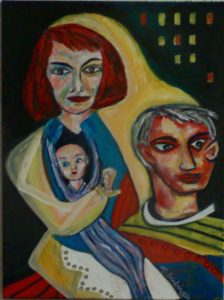
Acrylic painting on canvas / in black frame (not shown) / $ 450 / 25” by 20”

Will this couple raise their child to think and reason independently or will their prejudices get passed?
____________________________________________

How Do You Talk to a Bigot?

A man must be excessively stupid, as well as uncharitable, who believes there is no virtue but on his own side.
Joseph Addison, The Spectator 243, (8 December 1711).

In high school, one of my teachers asked the class, “ How do you talk to a bigot?” The question stayed with me these many years for I found it tremendously difficult to answer. Examining his query scared me because so many family members and friends spoke out against those not made in their own mold.

In the 1950s and 60s, anti-Semitism was rampant as was hatred towards those of color. When Kennedy sought the presidency, wildly disparaging remarks were made against Irish-Catholics and the Pope. In nightclubs and on television, comics made fun of everyone by calling them Dago, White Trash, Paddy, Mik, Hun, Redskin, Honky, and Chink. The audience laughed. These words were part of common parlance and unflatteringly spoken in living rooms nationwide. Movies reinforced cultural differences by mocking minorities by using character actors who supported common prejudices. During my student years, so many people spouted self-aggrandizing beliefs that put others down that I could not imagine a way to turn their minds and hearts around.

In looking back, I realize that we have come a long way towards overcoming prejudice. No longer do we have segregated bathrooms based on racial identity though we still are not comfortable with sexual deviations. There are no black-faced minstrels dancing like children on stages nor are religious slurs tolerated in the media. Recent events, though, have made me realize that bigotry went underground and has not gone away. Many of us are surprised at the rise of the KKK and Arian Brotherhood who never accepted the idea of the United States as a melting pot of people with diverse backgrounds as an advantage to making the country strong.

Family gatherings are a time that brings to the forefront differences. Some friends complain that family members accept them with smiles to their face but then joke and make racial or sexual slurs when they leave the room. A few of my southern acquaintances mention more overt snubs. With self-righteousness and beliefs in their own superiority, they have relatives who liberally sprinkling sentences with words like faggots and Niggers. Families have been known to break up over such differences.

Bigotry, as defined in Webster’s, is “the stubborn and complete intolerance of any creed, belief, or opinion that differs from one’s own.” Ignorance and fear are two powerful allies of bigotry that seem to be on the increase. Bigoted people ignore the reality of diversity and cover themselves with security blankets to suppress their fear. They irrationally discriminate against those who are different and play on emotions rather than logic. Belief is elevated above thought and credence is given to lies before investigation. The possibility of error is beyond their imagination. Yet, their absolute acceptance that they are in the right causes a lot of pain.

So how do you get rid of bigotry? Eliminating bigoted beliefs often means giving up power which makes many people feel uncomfortable. What do you do when family or friends are the ones promoting disparaging statements? How can tolerance be encouraged and ignorance overcome? Is there a possibility for open, honest communication or do you just have to turn away from those who engage in hateful banter?

Doing nothing is not a good enough response for those living in a democratic society. Democracy only thrives when there is open and honest communication, a willingness to compromise, and an agreement to live by consensus or majority agreements.

I have gathered several suggestions on how to respond to a bigot.

1. Speak up to let the person know how you feel about their extremist remarks. Then walk away if racial, ethnic, or religious slurs continue.

2. Find several like-minded people willing meet the offending person at a less emotionally charged time in order to engage in an educational discussion. The meeting can not be confrontational but rather based on shared feelings that speak to fears and prejudices. Facts that counter long-held prejudices will only be heard if the discussion is non-threatening.

3. Decide in advance how important the relationship is to you and if you are willing to leave if the situation can not be resolved? If you come from a household where bigoted behavior was accepted, acknowledge it, but let your family and friends understand that as an adult you have learned to respect others. If your community is not a loving and respectful one, consider moving to one that is.

4. Don’t expect prejudiced people to instantly agree with you, but do expect that in your and your family’s presence offending statements will not continue.

5. Remind yourself that bigotry is not a political issue. It usually is passed on from one uncritical generation to the next. It exists across party, religious and state lines. It is in your backyard and cannot be ignored.

Comments by others to give you pause for thought:

“I ask you to uphold the values of America, and remember why so many have come here. We are in a fight for our principles, and our first responsibility is to live by them. No one should be singled out for unfair treatment or unkind words because of their ethnic background or religious faith.”
George Walker Bush, Freedom and Fear Are at War: Address to a Joint Session of Congress and the American People (20 September 2001).

“Perhaps travel cannot prevent bigotry, but by demonstrating that all peoples cry, laugh, eat, worry, and die, it can introduce the idea that if we try and understand each other, we may even become friends.”
Maya Angelou, Wouldn’t Take Nothing for My Journey Now (1993), p. 12.

“God deliver us all from prejudice and unkindness, and fill us with the love of truth and virtue.”
William Ellery Channing, “Unitarian Christianity”, an address to The First Independent Church of Baltimore (5 May 1819)

“I know a good many people, I think, who are bigots, and who know they are bigots, and are sorry for it, but they dare not be anything else.”
Edwin Hubbell Chapin, Living Words (1869) p. 125

References:

https://en.wikipedia.org/wiki/Sinophobia#Derogatory_terms> – List of derogatory words.
http://www.lifehack.org/articles/lifehack/bigotry-ignorance-and-fear.html _ About Bigotry
http://www.amnottheonlyone.com/how-to-deal-with-bigotry-among-family-and-friends/
– Bigotry among friends and family.
https://www.splcenter.org/20150126/speak-responding-everyday-bigotry– Southern Poverty Law Center- Speak Yup: Responding to Everyday Bigotry

Filled with STEAM

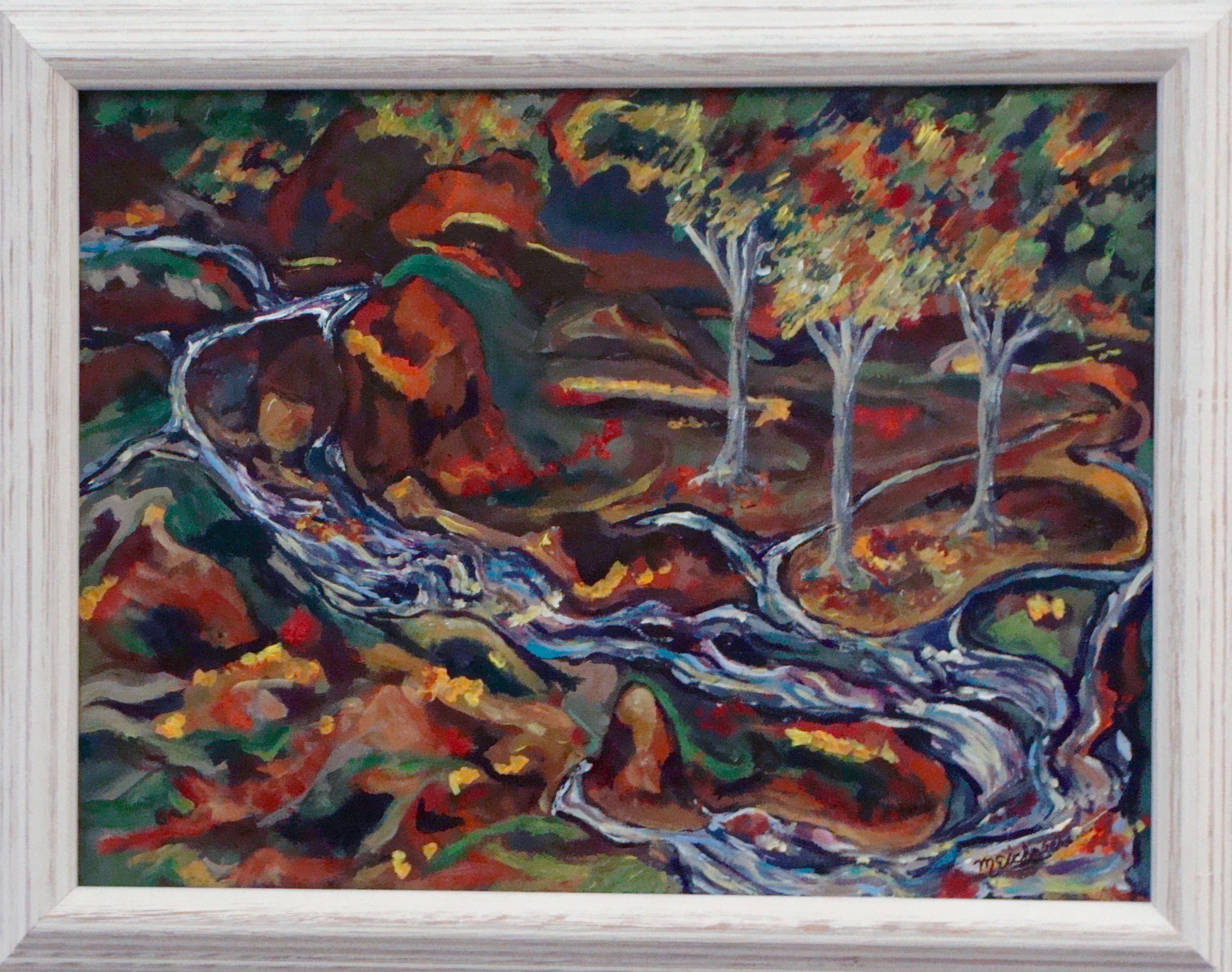
Autumn Breeze
Fall is a time of beauty that makes me consider the changing seasons, vibrant colors, and slow moving rivers in need of replenishing. It is science. It is art. It is comforting and it can be wild when rain and the wind batter the land.

Filled with STEAM

Many parents have heard STEM initiatives bandied about in education circles. Schools are now abuzz with programs that provide science, technology, engineering and math options to meet perceived needs for a technologically able workforce. This expanded curriculum has opened the way for more hands-on teaching. It is a good start.

STEM activities, however, fall short of addressing the needs of all students since they do not always engage those with a more humanitarian or artistic bent. To address this lack the formula is starting to change. By putting art (and design) into the acronym, some educators have given birth to STEAM.

The movement, championed by the Rhode Island School of Design among others, has also been fostered through festivals such as Burning Man where art and technology join in a burst of sensory stimulation. STEAM offers a way to reach those who claim disinterest or fear of science and math. Organizations like the National Science Foundation (NSF) are now collaborating with the arts and humanities by giving grants to multi-disciplinary proposals. NSF recognizes that people are needed to solve problems that deal with pollution, global warming, energy, bio-genetics and advanced technologies. Emotional appeals through the arts can lure those who are hesitant and reach new audiences.

I have many friends who claim they are only interested in the arts and humanities. “I have no head for numbers,” they say. Or, I don’t understand science and never read technical articles.” Yet, these same people may enjoy science fiction and are interested in history. They attend laser light shows, put shoes on their children with heels that flash when they walk and change cell phones regularly to own the latest technology. By tuning into their stated interests and working to entice them with fun approaches to learning, those who are hesitant can be drawn into wanting to understand science and mathematics.

Why bother with all this subterfuge you might ask? Because voters need to grapple with fracking, global warming, and genetically modified food if a democracy is to be maintained. Ignorance will allow technocrats, politicians, and economists to control our lives rather than the other way around. I see confusion regularly in people trying to understand statistics thrown at them from many sources. Numbers can be skewed and misunderstood if you do not have a basic understanding of statistics.

Science and art are intrinsically bound. The scientifically literate see nature through one lens while artists explore it through another. They meet in the middle. Understanding sound waves and how people hear has led to surround sound and improved speakers. Electronics enabled digital production methods to be integrated when producing concerts and films. Studies of gas led to neon sign artistry. Chemistry aides chefs develop seasoning blends and mixtures to tantalize our pallets. Steve Jobs understood that candy-colored sleek casings would shake consumers up and make his computers more popular than others. The interaction of biology and art on the public’s understanding of science is being explored by the Haseltine Foundation for Medical Science and the Arts and the New York Academy of Science.

Sesame Street also has joined the trend to use the arts promote STEM curriculums. “Elmo the Musical” is an interactive, fun-filled adventure created by Elmo and the child at home. With lots of singing and dancing, Elmo uses his imagination and math skills, such as enumeration, relational concepts, addition/subtraction, and geometric shapes to solve problems.” Other segments are being planned to combine the visual and performing arts with STEM.

I read of an anatomy professor who presents her beginning medical students with a CD of songs that help them memorize the various body systems The Nurses Medication song heard on YouTube aids nurses learn the names and uses of various commonly used of medications. For those with kinesthetic intelligence, Living AnatomME, was developed by two medical students in conjunction with the Director of Anatomyat Mt. Sinai School of Medicine in New York to teach musculoskeletal anatomy through yoga and Pilates.

The Cushman school in Florida is one of many embracing STEAM. Following is a sample of the type of curriculum they are offering. It is a good introduction to state of the art thinking.
“The implementation of our STEAM program allows students the opportunity to learn through real-life applications in the critical areas of Science, Technology, Engineering, the Arts and Math. Students become engaged in hands-on projects where problem-solving, collaboration, and the results of their efforts make the lessons more relevant than a textbook alone ever could. By creating real things that “matter,” STEAM, at its essence, is like the apprenticeship of a bygone era.  
 
Our new Innovation Center offers cutting-edge equipment in a free flowing workspace designed to encourage flexibility of thought and creative solutions applicable to today’s competitive marketplace. This active participation in society’s productivity helps students develop an entrepreneurial mindset and effectively prepares them to be leaders in the respective STEAM fields.

Our STEAM programming includes: 
 
• Artists-in-Residence program
• Architectural Design class using Revit
• Video Game Design using Alice software
• Music Composition using Propellerhead Reason (version 4) and Pro Tools 9
• Engineering and Robotics Clubs
• Lego and Vex Robotics
• Music Festival Series that brings professional bands to campus for concerts
• TD Bank – Financial Literacy 
• Common Threads – Teaching children how to cook wholesome, healthy meals through a professional led, curriculum-based program”

I am thrilled to see this type of effort going into education. It is similar to the message Science Centers have embraced for over the past 40 years. And it is a bandwagon worth you and your family joining.
Resources:

http://stemtosteam.org – What is STEAM

http://www.pbs.org/parents/education/music-arts/boost-memory-and-learning-with-music/ – boosting memory through music

http://www.cushmanschool.org/our-program/steam-initiative/ – Sample of a STEAM curriculum within a grade school.

http://www.nyas.org/Publications/Ebriefings/Detail.aspx?cid=1a6933bd-bdd8-422f-b5f8-815972a905aa Biology and Art, Two Worlds or One?

https://www.deepdyve.com/lp/wiley/living-anatome-teaching-and-learning-musculoskeletal-anatomy-through-xdok4g4KYB – Living Anatomy CD

Artwork is always for sale. Contact me at marilynne@eichingerfineart.com
Autumn Breeze – acrylic painting / 28” by 22” / $ 399.