Anthropology and Me

A Family in a Turkish Village

While studying anthropology at Boston University, I acquired tools that helped me navigate America’s melting pot. Viewing workplaces and social environments as unique cultures influenced how I interacted with staff and managed my business. Most important was understanding that what a person sees differs from their neighbor. Images traveling through the optic nerve to the brain are filtered by birth order, family, community, school, friends, religion, education, economic station, culture, and work history, which influences interpretation.

Sir Edward Taylor, credited with founding cultural anthropology, coined”culture” as an ethnographic term in the 1800s. His emphasis was on the non-genetic ways people adapt to their environments. Human evolution from hunter-gatherer communities to complex urban environments was spurred by climatic changes, power struggles, and innovations to meet the needs of an expanding population.

Anthropologists speak of cultural relativism rather than comparing humanity’s commonality and generalizing about the human condition. They study how particular cultures differ and strive to understand the context of society that causes people to act in specific ways. 

Anthropologists are challenged when interpreting another person’s culture. They also have biases and reactions based on their upbringing. To overcome these predispositions and biases, anthropologists advocate living in the culture of interest for an extended period, learning their language and the customs that contribute to their beliefs. Immersion makes it easier to unravel systems of social relations related to domestic life, the economy, law, politics, and religion.

Thinking like an anthropologist aided my interaction with a culturally diverse staff. Being curious about their childhoods, how they identify themselves, their education, economic situation, and culture made them open up to me. Respecting their uniqueness made communicating easier and finding solutions possible when opinions differed. It helped rally a diverse staff around company goals.

The U.S. has been a melting pot of cultures and ideas since its inception. It’s what made the country prosperous, yet it also divided us. Residents have consistently expressed concerns over immigration surges. Though they or their ancestors were immigrants, they want the door closed to new arrivals. They forget that European Settlers stole the land occupied by  Native Americans. Early settlers ostracized Scotch-Irish (17763-1775), Irish and Germans (1846-1885), Ellis Island arrivals from Eastern And Southern Europe (1992-1914), Mexicans and Latinos (1982-2007).  Thousands of Chinese railroad workers were returned to China between 1863 and 1869. In the late 18th century, there was a movement to send Africans back to Africa. Sierra Leone and Liberia were established by formerly enslaved people repatriated to Africa within 28 years. It took a civil war to grant enslaved Africans the right to citizenship.

Though the Statue of Liberty welcomes the tired, the poor, and those yearning to be free, most Americans don’t mean it. We can be cruel, forgetting why our ancestors left their countries of origin. As the population became more urban and our cities became more crowded, it required a greater effort to get along. Factory jobs, logging, the public education system, the military, and diversifying the workplace stirred the pot. Melting ideas and customs made our country work.

Instead of looking back to something that never was, why not become an armchair anthropologist and look forward and consider how to get along? Become immersed in a subculture culture and learn what makes it click—putting yourself out, becoming vulnerable, and questioning your biases in enriching. Interacting, understanding, communicating, and being willing to compromise will keep America great.

Art is always for Sale. A Family in a Turkish Village is a 24″ x 48″ framed acrylic painting available for $795. Shipping is included in the continental U.S. For information, contact me at marilynne@eichingerfineart.com

Please start a dialogue and add your comments below.

References:

Website. Edward Burnett Tylor. Wikipedia. Retrieved from https://en.wikipedia.org/wiki/Edward_Burnett_Tylor

Website. Cultural Anthropology. Wikipedia. Retrieved from https://en.wikipedia.org/wiki/Cultural_anthropology

Barnes, F. (2024) America and its Immigrants. Washington Examiner. Retrieved from https://www.washingtonexaminer.com/policy/immigration/211955/america-and-its-immigrants

Weaponize It!

Hope those of you in Portland can make it. The discussion is bound to be lively.

UPCOMING EVENT: Reading and discussion from The Water Factor on March 13th. For information, go to https://annieblooms.com/event/2025-03-13/reading-marilynne-eichinger-water-factor.

Weaponizing Information

Disinformation or propaganda has been used as a weapon for over 2,500 years.  The Chinese military strategist and philosopher Sun Tse considered it a good way to destabilize a population and disable a country.  Weaponized information affects the recipient’s perception of a person or action that’s not warranted.  It intends to harm by bringing about a change in beliefs and attitudes. Another way to think of it is as cognitive or brain hacking.

Spreading intentional falsehoods is a tactic most often used by politicians. It’s social engineering skillfully crafted to interfere with critical thinking. According to Sophia Ingatidou, an AI researcher at Chatham House, disinformation is the first stage used to subvert democracy, confuse rival states, and control public opinion. Despite fact-checking initiatives, disinformation is not abating.

Some companies use disinformation to undermine public trust in authority. There is a growing distrust of traditional media sources, spread through cyber hacking, cyber trolls, and other propaganda outlets. In a Brookings article, Thomas Hill warned how Russia was subverting democracies through the tactical deployment of “weaponized information.” He suggested that the United States and its allies adopt an offensive strategy to protect their populations from foreign interference and that the United Nations develop rules governing weaponized information.

Donald Trump has repeatedly promised to weaponize the federal government and use the Attorney General’s office to pursue revenge, retaliation, and retribution against his political enemies. Because many of his threats are carried on Truth Social, Trump’s personal network, his comments often fly below the radar. In 2023, he wrote, “If you go after me, I’m coming after you.!”  He says he will authorize FBI raids, investigations, indictments, and jail time for anyone who disagrees with him. Republicans and Democrats alike shake in their boots, afraid to share their true feelings.  Senators, judges, members of Biden’s family, Liz Cheney, Michelle Obama, and non-governmental organizations are targets of his rage.

To control a potential misuse of power, Congress must ensure that the military and federal law agencies aren’t weaponized to carry out Trump’s threats. Will they do this before it’s too late?

The court’s five conservative Supreme Court justices dealt a devastating blow by weaponizing the First Amendment by unleashing judges to intervene in economic and regulatory policy. At one time, the amendment was a defense of the powerless. Today, it’s become a weapon of the powerful, shielding racists, misogynists, pornographers, authoritarian leaders, corporations buying elections, Klansmen, Christian Nationalists, and insurrectionists. When the court ruled that unlimited campaign spending by corporations is protected and that the government has no business regulating political speech, it upended years of protection for the middle class. It is difficult to compete against men like Elon Musk, who, according to CBS News, spent 277 million dollars to back Trump and Republican candidates. What a waste. Think of the homeless people who could have been housed with that money.

I, like many of my fellow Americans, are fearful of demigods. We’ve created an aristocracy over the past quarter century and lost control over elected rulers.  In 1776, our people revolted against a greedy British monarchy, as did the French in 1999. People fought to end the inequalities and the corruption of officials benefiting from widespread hardships inflicted on the working class. World War II was to fight Fascist regimes in Germany and Italy supported by wealthy oligarchs. The Civil War, 1861 to 1865, ended slavery, strengthening the federal government’s power. “A house divided cannot stand,” said Abraham Lincoln. These words are valid today.

The Civil Rights Act of 1964 aimed to create a more equitable society by abolishing racial segregation, discrimination, and disenfranchisement against minority groups. The Women’s Rights movement of the 1970s gave women equal rights, opportunities, and personal freedom, including control over their bodies. When the Soviet Union dissolved https://www.eichingerfineart.com/blog/198835/weaponize-it into component republics in 1991, it ended the Cold War and a series of brutal dictatorships.

Were these fights by patriots futile? Why CEO pay has skyrocketed by 1322% since 1970 while the average worker’s pay has increased by 61% is a question to explore. Have we forgotten the hardships dictators inflict on ordinary people? It is so easy to slip into apathy, to hope the government or our family will take care of us, to blame immigrants for taking jobs our citizens won’t do. Are you willing to pick cotton or install a new roof in ninety-degree heat? We have to be careful and not get trapped by misinformation. Always ask yourself who benefits when a politician talks. Is it essential or a puffed-up emotional distraction meant to keep your attention from powerful oligarchs eliminating your rights?

I look forward to your comments.

Searching for Truth is an 18” by 25” acrylic painting on a wide canvas, available for $395. Shipping is included in continental U.S. Purchase online at https://www.eichingerfineart.com/workszoom/2876635/searching-for-truth#/

If you have a question, contact me at marilynne@eichingerfineart.com

Resources

Weaponizing of Information.European Center for Populism. Retrieve from https://www.populismstudies.org/Vocabulary/weaponization-of-information

Hill, T. (2017) Is the U.S. serious about countering Russia’s information war on democracies? Brookings Institute. Retrieved from https://www.brookings.edu/articles/is-the-u-s-serious-about-countering-russias-information-war-on-democracies/

Jacobs, R. (2024). Trump has threatened dozens of times to use the government to target political enemies. CREW.. Retrieved from https://www.citizensforethics.org/reports-investigations/crew-investigations/trump-has-threatened-dozens-of-times-to-use-the-government-to-target-political-enemies/

Liptak, Adam (2018)How Conservatives Weaponized the First Amendment. Zebra. Retrieved from https://www.nytimes.com/2018/06/30/us/politics/first-amendment-conservatives-supreme-court.html

Hoodwinked!

Artificial Intelligence was far from my mind when the Rose Bowl game started on January 1st. I’m not a major football fan, but since the University of Oregon was playing against Ohio, I wanted to root them on and see them win. Since we didn’t want to pay for sports TV, Ray assured me we could watch the game on YouTube. Sure enough, he found a site that featured it without annoying ads.

The green and yellow-clad teams lined up for the kickoff, with the announcer’s voice full of excitement. He discussed the players, with his voice rising and falling with first downs, near misses, touchdowns, and field kicks. Occasionally, the camera would scan the crowd or show the University of Oregon’s Duck dancing or Ohio State’s cheerleaders forming a pyramid. We cheered when Oregon made a touchdown and moved ahead, and we booed when Ohio State caught up, making it a close match. We weren’t sure who would win, but you might imagine our excitement when the Ducks made a final touchdown and won, with excited fans cheering in the stands.

It wasn’t until the following morning, when I read the Times that I discovered we’d been hoodwinked. Instead of losing, the Buckeyes took the lead early in the game and won by a large margin. I was horrified, yet glad I hadn’t discussed it with someone outside my house. It was embarrassing to be fooled so quickly, and I could have easily been a source of misinformation.

For months, I’ve been inundated with articles discussing the merits of AI and warning me about its risks. I am aware that articles and books are used without the author’s permission when algorithms are designed to respond to customer queries. But until the Pasadena game, I didn’t know Pandora’s box had already been opened.

I started paying more attention to discussions about AI. I’m concerned that social media sites stopped fact-checking and censoring misinformation that influences our thoughts and how we vote.  Politicians, pharmaceutical, insurance, tobacco, health providers, and energy companies are known to hide the truth, as do hundreds of shysters who enjoy hoodwinking the public, thinking it’s cool. I find their behavior sickening.

This year, I plan to analyze what I hear on TV and read online. I vow to examine the source of information before accepting it as accurate. I also refuse to pay attention to reporting that isn’t clear, transparent, and fair. My time is too valuable. I’m angry that I wasted several hours watching a garbage sports program.

I wish I lived in a nation where people weren’t afraid of the truth, but I don’t. With misinformation and disinformation rapidly spreading, checking sources has become a burden everyone needs to assume. Remember when Hillary Clinton was accused of harboring young children as sex slaves as part of a child abuse ring operating out of a Washington, D.C., pizza parlor? As crazy as it sounds, people believed it. Thankfully, there are trustworthy organizations that do fact-checking full-time, making the job easier.

The City University of New York published a reputable list of fact-checking websites. The list can be found at https://library.csi.cuny.edu/misinformation/fact-checking-websites.

Were you ever gullible and taken in by false information? Most Americans have. Spreading false information is at epic levels.

What do you do to discover the truth? Share your thoughts at

https://www.eichingerfineart.com/blog/198698/hoodwinked


Art is always for sale. The Orator is a 22” by 18” acrylic painting, framed. It is available online for $395, with shipping included in the continental U.S. To purchase, go to
https://www.eichingerfineart.com/workszoom/1906315#/

 Contact me with your questions at marilynne@eichingerfineart.com

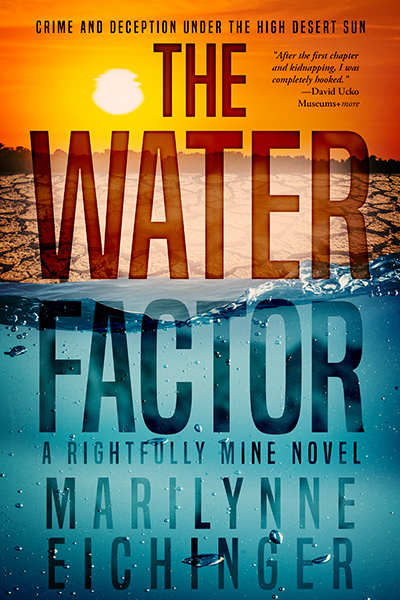
______________________________________________________________________________I wrote The Water Factor to show how water cartels take over public utility districts with lies about their efficiency and cost-effectiveness. The hero is a young man taken in by the glamor of getting rich by selling water. When his eyes are opened to the pain to the public caused by his company, he has to do something about it.

WaterFactor 400x600 1

The Water Factor is available in ebook, paperback, and audio formats. It can be purchased on AMAZON, Barnes and Noble, Annie Bloom Books, and Powell Books Online at https://www.powells.com/book/the-water-factor-9798869362940

and as an audiobook on Amazon, Audible, and iTunes. Ask your bookstore to order a copy from Ingram. Please leave a review.

With Fingers Crossed

Despite my anxiety over U.S. politics, I welcomed the New Year with fingers crossed. I hope the country’s anger will subside and neighbors become civil and caring. My New Year’s wish is for a peaceful resolution to war in the Middle East and Ukraine. At home, I hope women nationwide maintain control over their bodies, letting them decide about abortion and keeping them from being abused by the opposite sex. I want marginalized populations to be recognized for their contributions and self-righteous narcissists to stop shooting innocent schoolchildren and party revelers on the street.

January 1st’s shootings were wake-up calls not to be naive. It isn’t surprising that gun owners want to use them. Starting the year with horrendous murders is a testament to the anger and depravity that exists in our cities.  The land of the free is filled with people convinced they know what’s best for themselves and everyone else. Their unwillingness to compromise shows up in acts of violence. They kill rather than talk, having forgotten that discourse is the way to solve problems. Fighting leaves impressions that can last for generations.

The issues of the day revolve around who is in control. Anti-abortion believe they have a God-given right to control how women give birth.  Narcissists disparage the uneducated and use their wealth and influence to maintain control of the media. Militias on both left and right think a civil war is the only way to gain power and make the country great again. Great for whom? The billionaires?  Will they bring back slavery that incarcerates marginalized people and force them to work without pay?

Though the internet is lauded as a tool for communication, in the wrong hands, it’s a weapon for terrorists and malcontents.  Malicious rumors get spread with ease, seeding hatred and keeping people afraid. Businesses use it to manipulate customers into purchasing their products by inflating the benefits of using them. Talking heads on news channels discuss democracy without practicing it. Politicians ask for donations in their fight for social justice without believing everyone is deserving.  Neighborhood associations lost control of their neighborhoods. They can’t stop the noise pollution from leaf blowers and carpenters hammering seven days a week from dawn until dusk.

Despite the nation’s many problems, my fingers stay crossed. I hope people will look beyond their own interests to those of people they may not know. I hope they realize that no one is free unless everyone is free. My fingers are crossed that federal funding for social programs will not be cut and that my grandchildren will find living wage jobs with benefits that will see them through retirement. They are crossed in the hope that one else in my family will face an armed shooter.—two are enough. I hope never to see an angry motorist give me the finger for driving the speed limit.

We can choose to maintain the status quo or make changes for the better. This year could be a good one if we pay attention. Find out who profits from the information you’re fed online. Question why a one-pound package, nine inches long and six inches wide, costs $700 to send from Oregon to Nebraska overnight via FedEx? Isn’t it outrageous that water bills are 30 percent higher in municipalities that subcontract management to private companies? How is it possible that Purdue Pharma was able to start an opioid epidemic with Oxycontin?

The reason such things occur is that we don’t pay attention. We bury our heads, hoping someone mysterious benefactor would look out for our interests. It didn’t happen, folks.  A resolution to search for truth and not blindly accept the word of politicians and marketers would be a good one to add to your list. Whether or not you are religious, following the commandment to love thy neighbor as thyself would do wonders for the nation. Though worthwhile, it is hard to do, yet it’s why we must try.

_________________

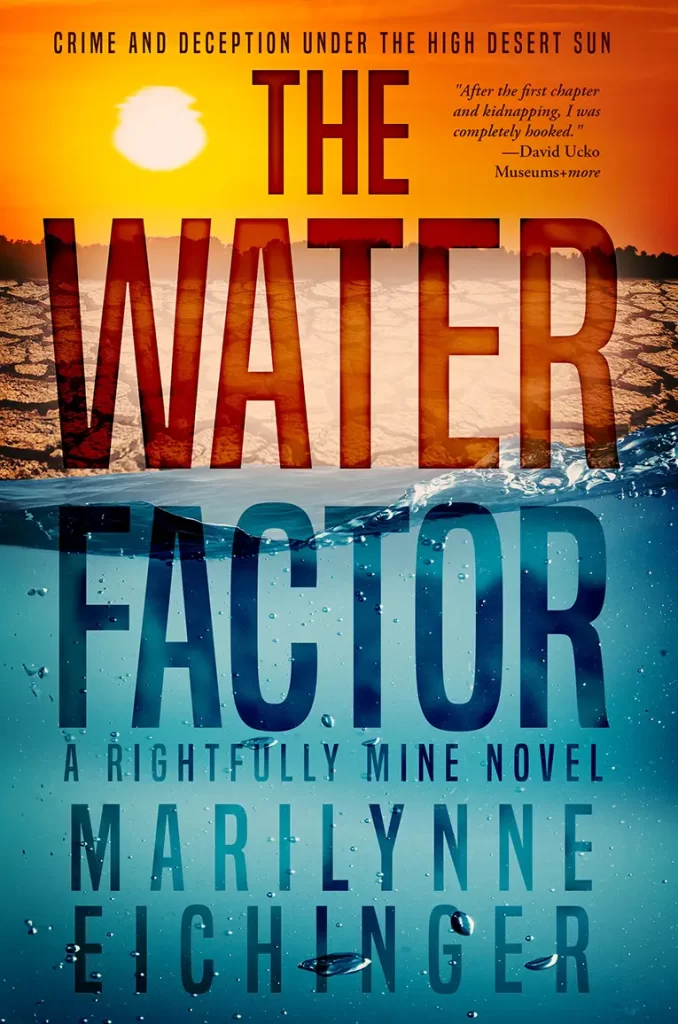
The Water Factor was written to demonstrate how companies profited by taking away their right to clean water. It shows the evolution of a young man whose eyes are opened to unfairness and who is determined to do something about it. It also follows a businessman profiting from selling water and how he gained a conscience, leading him to help the young man. Though a work of fiction, the novel is based on fact. Paying attention to how your community manages its utilities is the first step to taking back control.

WaterFactor 400x600 1

The Water Factor is available in ebook, paperback, and audio formats. It can be purchased on AMAZON, Barnes and Noble, and Powells Books Online at https://www.powells.com/book/the-water-factor-9798869362940

and as an audiobook on Amazon, Audible, and iTunes. Ask your bookstore to order a copy from Ingram. Please leave a review on Amazon.

What’s Up? is a 25” by 37” acrylic framed painting on Canvas. Available for $585, including shipping in the continental U.S. Order through my website at https://www.eichingerfineart.com/workszoom/1372915#/     For questions, contact me at marilynne@eichingerfineart.com

The Dark Of Night

We have reached the season of cold, long nights in a cycle luring us to slow down and conserve energy for the lengthening days ahead. The Solstice arrives with regularity, marking the change from fall to winter and ushering in the new year. The weather during the coming months will be less predictable than it was in past winters. Homeowners are planning for increased power outages, floods, mudslides, and trees falling on their houses and cars.

From childhood, I remember the good part of winter: the soft glow of the painted stars twinkling on my bedroom ceiling. I’d lie awake, waiting in the early darkness before sleeping. During snowy days, I’d sled on the hill by my house and make a snowman on the lawn. The nights I enjoyed most were the moonless nights, when the air was crisp, and the stars beckoned me outside.

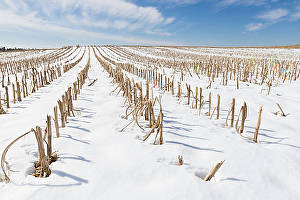
When I married and moved to Lansing Michigan,I was especially awed by the occasional displays of northern lights casting their spell over the renovated farmhouse I moved to after my fifth child was born.  With the snow was deep and my son soundly asleep, I’d cross-country ski through the of cut corn stalks left standing in a neighbor’s field. As I sped down the aisles, their bent shadows added mystery to the journey.  

Though the earth appeared peaceful, covered with snow, the night was never silent. The hoot of owls and the chirp of crickets created a cacophony of sounds that kept me alert. Frogs in the nearby wetland joined in their symphony with croaking harmony. As I continued skiing on deserted country roads, I’d be surprised by a field mouse scuttling by my feet or a bat flying too close for comfort. I froze in place the evening four luminous eyes watched me in the darkness. They belonged to a mother and faun that took off when I skied too close.

  I knew there were predators to watch out for, but I wasn’t scared, for they hid when I went by. But, after the house lights turned off, they weren’t afraid to climb the steps to our porch. I’d awaked to squawks from the cage protecting my daughter’s pet doves. I thought the birds were safe until the morning its door was unlatched, with one missing and the other dismembered in a pile of feathers. It could have been a raccoon, for they’re clever at opening simple latches with remarkable dexterity. It might have been a fox, for they eat birds whole but can’t digest the feathers. Perhaps it was a coyote, for an entire carcass was missing. These animals were known to live nearby.

 The house borders on forty miles of trails through forested parkland. With coyotes and owls in great abundance, I’m often awakened to hoots, howls, and local dogs barking their response. The coyotes appear fearless when they prance with their young ones down the street. The neighborhood was surprised five years ago when deer appeared in our yards. Due to their abundance since then, we’ve had to give up our vegetable gardens. A multiplying rabbit population doesn’t help. A deer ate my tomato plant and slept in my flower garden last summer, flattening the plants to the ground. Four elk were spotted exiting the trail by my house for the first time.

 During cold weather, my husband sets mouse traps to prevent mice from running between two-by-fours behind the drywall. Like the squirrels that find their way in, the mice can cause havoc by chewing on household wires. My husband catches at least one mouse daily trows in the woods for the coyotes. The Downey Woodpecker drilling holes in our siding is difficult to chase away. We left a stump tree in the yard for it to peck on.

Flying squirrels by night and grey squirrels by day empty the firs of pine cones. Hundreds of them land with a thud on our porch, leaving dobs of pitch that stick to shoes when we refill the hanging bird feeders. The pine cones weren’t a problem until the trees grew so tall that branches one hundred feet above spread over the deck. We’ve had to adapt to how these trees reproduce and to the squirrel’s need to collect pine cones, supplying food for the winter ahead.

Though surrounded by nature, I’m only fifteen minutes from Portland’s cultural center. I enjoy exploring its museums and the relish the holiday spirit while in its restaurants. The night sounds of the woods and the chatter of people on holiday-lit sidewalks remind me that I share the planet with others. Winter’s Solstice is a time to honor the coming season and remember to pay attention to the plants and animals that share the earth.

 References:

Website. (2024) Common Predators that Kill Chickens. Strombergs. Retrieved from https://www.strombergschickens.com/blog/the-common-predators-that-kill-chickens/?

  Books and art make great holiday gifts. Go to

https://www.secretsofamuseumjunkie.com for a selection.  For questions, contact me at marilynne@eichingerfinearat.com

Mobile Addiction

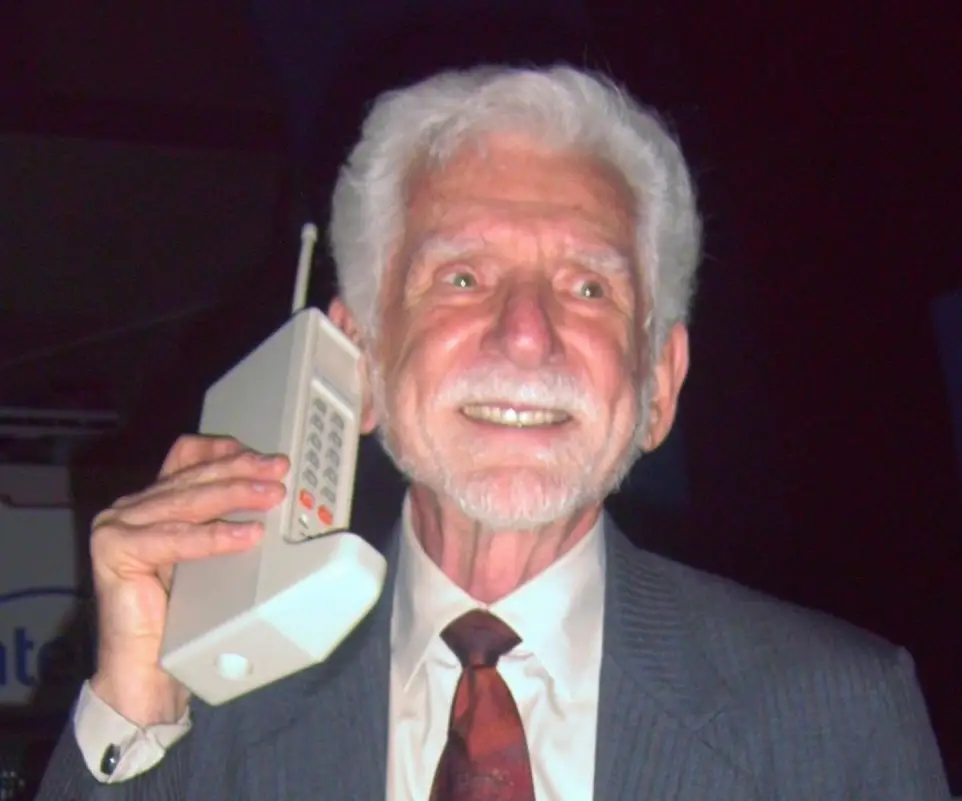
MOTOROLA’ S   DYNATAC

IBM’s  SIMON

Seeing how my nine and thirteen-year-old grandchildren are attached to their cell phones has me concerned. The sophisticated miniature computers they text with have taken over their lives. They spend hours playing games and communicating with friends they’ve never met. The phone keeps them up until the early morning hours and affects their school work and my interaction with them since they sleep till one or two in the afternoon. I wish Vancouver schools would ban their use during classes like districts are doing nationwide.

Mobile phones were invented in the early 1940s by AT&T engineers as two-way radios that allowed taxi drivers and emergency services to communicate. William Rae Young at Bell Labs was the first to suggest the concept behind the cellular mobile phone system through cell towers. By 1947, there was cell phone service between New York and Boston, but it was a failure due to interference. The first mass-produced handheld phone was sold in 1973, but it wasn’t until the Motorola DynaTac in 1985, known as “the brick,” ushered in a new era of handheld communication devices. Their invention was exciting.

Nine years later, engineers and administrators from eleven European countries gathered to consider whether a digital cellular phone system was technically and politically possible. Their conference laid the foundation for an international standard. IBM’s Simon Personal Communicator hit the market in 1994 with a touchscreen that allowed consumers to call and receive faxes and emails. With a price tag of $1,099, it sold 50,000 units in its first six months. But it wasn’t until 1997 that the term smartphone was coined, and mobile gaming was introduced with a game called Snake. Today’s gaming industry is worth over $152 billion.

The ringtone, launched in 1998 in Finland, was the first downloadable content sold to mobile phone users. Emojis were invented in Japan a year later, the same year the Blackberry was unveiled. Blackberry was famous for its easy-to-use e-mail service. That’s when I got into the market, feeling a need to have it for my business. It kept me connected to the office and my employees like never before. The Blackberry may have instigated the addiction to mobile phones today.

Technological changes evolved rapidly. By 2000, the Nokia 3310 had sold 126 million units. In 1999, the first commercially available camera phone was launched in Japan, with restrictions that it was only used in the country. Sharp introduced one in 2000, but the images could have been clearer. The phone and camera were two separate devices in the same housing. When the first 3G network appeared in 2001, mobile phones connected to the internet, it might surprise you to hea Nepal was one of the early Asian countries to launch 3G services in 2003.

When Apple’s iPhone debuted 2007 for $499, Nokia executives said it wouldn’t dent its market share. But it was revolutionary with its touch screen, ability to download apps, GPS, camera, iPod, and internet access and became a turning point for the smartphone industry. T-Mobile, the first Android phone with Google’s operating system, hit the market the following year. Android systems were cheaper than iPhones, opening the market to more customers. These innovations were followed by WhatsApp in 2009, which allowed customers to send and receive calls and messages over the internet. Today’s WhatsApp messaging system has 1.2 billion users sending over 10 billion messages daily.

Progress continued. 4G was introduced in 2009, and a year later, Samsung’s Galaxy S smartphone usurped former Android giants. Though text messages arrived in 2012, using them took a while. Then, the Pokemon Go app launched worldwide, a game that used a smartphone camera to show Pokemon characters in the real world. The totem pole beside my house became a site for frequent visitors.

In 2017, the Nokia 331 was equipped with basic web browsing, a colorful screen, and a camera. Its super-long battery life made it one of the year’s biggest hits. That same year, Apple eliminated the physical home button. The first 5G phones and fifth-generation network debuted in 2019, allowing smartphones to have 198MP cameras.

Nowadays, people are glued to their phones wherever they go. They put them on the table while dining in restaurants. They surf the web researching products and services, read the news, and purchase gifts with their phone. To exist in the world requires you to be mobile savvy. The question in my mind is, at what price? Over three billion people worldwide use cell phones. What do they give up by becoming addicted, and how do you know if you are one of them?

When a person uses their cell phone most of the time and cannot cut back on its use, it’s a problem. The cause is often an indication of boredom, anxiety, or depression. National Institute of Health studies show that when the phones of addicted people are out of reach, their behavior becomes stressful. This is especially true with adolescents, where it is associated with sleep deprivation and has many of the same results as alcohol addiction. The Surgeon General says teens who spend more than three hours a day on social media double the risk to their mental health. Dysfunctional usage of cell phones is associated with low emotional stability, chronic stress, anger, and depression. Communication suffers. Texting short replies doesn’t promote deep discussions or tell you the emotional condition of the messenger.

Mobile phones emit low radiation levels, though whether it causes cancer or promote accelerated growth of existing tumors remains questionable. When held against your ear, it heats a localized area of your face and brain, though not by much of a problem if its use isn’t extensive. If you are concerned about radiation, keep mobile phone calls short, use a hands-free kit, don’t carry the phone close to your body when switched on, use a landline when possible, and choose a model with a low absorption rate. Driving while using a mobile device, however, significantly increases the risk of a traffic accident.

More research is needed on cell phone use and its effect on society. Since it’s known that obsessive use can cause physical and psychological damage, be cautious, especially with children. Cell phones should never be used as a substitute for a babysitter, physical activity, or face-to-face communication.

Are cell phones a problem in your home? Are they allowed at the dining room table? Please share your experience on my blog site. (http://%20www.echingerfineart.com/blog)

Art is always for sale. For information about Static Interference, contact me at marilynne@eichiungerfineart.com (mailto:marilynne@eichiungerfineart.com).

front 15

Murder, deceit, kidnappings, robberies. Read what happens when corporate greed sets terrible things in motion, and it takes a hero to set things right.

Available online at Amazon (https://www.amazon.com/Books-Marilynne-Eichinger/s?rh=n:283155,p_27:Marilynne%20Eichinger%20), Barnes and Noble (https://www.barnesandnoble.com/w/the-water-factor-marilynne-eichinger/1145541899), Powells Books (https://www.powells.com/searchresults?keyword=The%20Water%20Facator%20by%20Marilynne%20Eichinger), and locally at Annie Blooms Bookstore in Multnomah Village.a

References:

Alli, R. (2023) History of mobile phones and the first mobile phone. Uswitch. Retrieved from https://www.uswitch.com/mobiles/guides/history-of-mobile-phones/

website.( 2024) Tracking the most important innovations in mobile phone technology. PUrplegator. Retrieved from https://purplegator.com/blog/mobile-phone-history/

Twenge, J. (2017) Have smartphones destroyed a generation? The Atlantic. REtrieved from https://www.theatlantic.com/magazine/archive/2017/09/has-the-smartphone-destroyed-a-generation/534198/

McNutt,R. (2019) Cell phone addiction and psychological a physiological health in adolescents. National Institute of Health. Retrieved from https://pmc.ncbi.nlm.nih.gov/articles/PMC6449671/

Bah Humbug

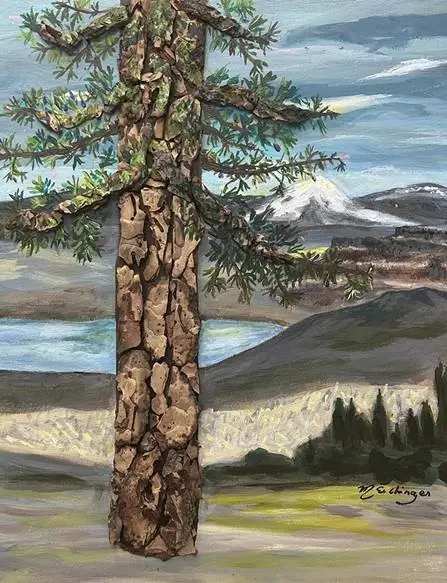
Ponderosa Pine by Eichinger
acrylic painting or canvas print

Will a small pine tree be part of your Christmas celebration?

Love it or hate it? The winter holidays have always been joyful for me, though less so now that my family is dispersed throughout the country. I used to look forward to decorating a tree and watching children tear into their gifts on Christmas day. When I talk to older friends, more of them say these memories of happier times make them sad, so they avoid holiday celebrations. Humbugs have different reasons for not liking Christmas. Some don’t like being forced to listen to the same chipper songs repeated or see red, green, and gold everywhere they travel. Others think children become greedy during the holidays and that people are insincere in their expressions of love. They empathize with poor families whose children expect Santa to reward them for good behavior.

Younger acquaintances say they’re exhausted by having to interact with their dysfunctional families and despise the pressure to act happy when they’re with them. Gift-giving poses a special burden. With five children, eight grandchildren, and two adopted families, it’s a problem I relate to. Not only is the holiday expensive, but giving gifts during the holiday is less rewarding than gift-giving when your package is not among a pile that will make yours appear insignificant. Your gift is more likely to be appreciated when opened at an off time of the year.

But then again, there is much to like about the holidays. I look forward to celebrating the Winter Solstice on December 21st and joining friends for drinks. I like lighting Hanukkah candles for eight consecutive nights. The first night this year is on Christmas Day, December 25th. I’m uplifted by the festive food, treats, and decorated homes lighting our city during the darkest nights of the year. I anticipate snowfalls and look forward to sledding on the hill by my house and having a good snowball fight. There’s nothing better than getting warm by the fire afterward. I admit that finding the perfect gift for a relative does make me feel good. And, though I erected smaller Christmas trees than I used to, they are still fun to decorate.

So, I embrace the spirit of the season. Why feel down instead of joyful? There is enough bad news in the world to make me pleased to have a diversion. The parties I attend that ask guests to bring white elephant gifts, I find fun, especially when it is a book. Giving presents that connect my kids to me after I am gone feel like the right thing to do.

Last week, I took my two adopted granddaughters to see Beauty and the Beast on stage. Today, I helped them make gingerbread houses. I will participate in a book sale on Sunday at the Historical Museums’ annual Holiday Fair. I’ll be among dozens of local authors sharing their latest novels, and I look forward to sharing my thriller, The Water Factor. Keeping busy makes me come alive.

My smile is genuine, not pasted. It is good to have reason to think of others’ needs rather than my own. There is much to look forward to in a season that is joyful for many. I find it rewarding to embrace traditional celebrations rather than be a humbug and fight them.

Christmas-love it or hate it? Please share what you will do during the holidays. Is it the solstice, Christmas, Hanukkah, or Kwanza that adds meaning to your life? or none of the above. Comment at www.eichingerfineart.com/blog

The last day of the 30% off sale for original paintings is Sunday, December 8th. 16″ by 20″ canvas prints are available for $99 delivered to your address. Order now to arrive for the holiday. Explore art at https://www.eichingerfineart.com/works

The Quest for Justice

Soaring

Women have the Suffragettes to thank for being allowed to vote in national elections. After the 19th amendment was passed, many activists participated in the Civil Rights Movement and the fight for the Equal Rights Amendment, which remains one state short of success.

Though The Water Factor demonstrates how corporations steal water and raise rates, the book asks you to consider what moves a person to action. It follows the awakening of a non-political eighteen-year-old playboy and the experiences that turned him into a fighter for social justice. But after seeing the Broadway musical Suffs in New York, I was impressed by how long it takes to bring about change. The road is usually rocky, with proponents forming factions around opposing tactics.

The story inspiring the play was the seventy-two-year fight to give women the vote. From the beginning, there were two rival organizations. Elizabeth Cady Stanton and Susan B. Anthony formed the National Woman Suffrage Association (NWSA) in 1869. It was a conservative group that included men in leadership positions. NWSA was focused on changing state laws. The territory of Wyoming was the first to do so, allowing women to vote in all elections.

Lucy Stone, Julia Ward Howe, and Thomas Wentworth Higginson started the American Woman Suffrage Association (AWSA) that same year. The AWSA advocated for a constitutional amendment and addressed other political issues, including divorce laws and temperance. Its message was spread through its publication, The Revolution, and organized lecture circuits promoting women’s rights to education, divorce, work equality, governance, and voting. AWSA spurred the formation of the National Association of Colored Women in 1896 to ensure that the amendment included equality for women of color.

In 1890, the two factions merged to form the National American Woman Suffrage Association (NAWSA). (After the 19th Amendment was ratified, it became the League of Women Voters.) As a child, Alice Paul joined her Quaker mother at NAWSA rallies. In her twenties, she decided the organization was too conservative and slow to take action. Desiring more militant tactics, she organized a groundbreaking parade in Washington, D.C., in 1913, and a half-million people attended, giving her the impetus to establish The National Women’s Party three years later. Paul led followers who were willing to take risks in the fight for equal rights. Though arrested seven times and jailed three times, the group’s response was non-violent, with acts that included boycotts, picketing the White House, and hunger strikes. After women gained the right to vote in 1924, Alex Paul returned to college for a law degree and lobbied to pass the Equal Rights Amendment.

Though united for a cause, activists are often divided on how to get the job done. The Civil Rights Movement that started in 1954 was a drawn-out fight to abolish legalized Jim Crow laws and fight racial segregation, discrimination, socioeconomic inequality, and disenfranchisement. Still alive, Alice Paul was instrumental in adding protection for women in the Civil Rights Act of 1964. Like the women’s movement, it, too, had factions. Nonviolent resistance and civil disobedience tactics espoused by Martin Luther King formed the basis of the early marches, bus rides, restaurant counter sit-ins, school integration, etc. His work spurred the more militant Black Power movement of the 1960s and 70s. Malcolm X, Stokely Carmickan, and Angela Davis were among those leading the way. The Black Lives Matter Movement started in 1913 and was created by three female Black organizers. However, its decentralized leadership continues to carry the torch for racial equality.

I mentioned the Civil Rights Movement and the Suffragettes partly because 2024 is the 100th anniversary of the Women’s Movement and partly because both movements inspire me to consider what type of person becomes an activist. Civil disobedience takes courage, resolve, and patience. Marching, lobbying, and lecturing takes time. Some people are naturally empathetic to the plight of those experiencing injustices. Their situation doesn’t align with their notion of democracy. Others feel guilty about being born privileged while others suffer. More than a few are personally affected or have witnessed harm done to others. Fear also drives the fight for change, as seen by those experiencing fires, hurricanes, and floods that wipe out communities. Experiencing temperature and weather extremes has added fuel to the Environmental Movement. To impact the nation, however, a charismatic leader has to step forth, who can overcome hesitancy and rally voters to the cause.

When you read The Water Factor, consider why Hokama Byrne formed an underground group of activists. Do you think he has gone too far or not done enough to return water rights to their original owners?

WaterFactor 400x600 1

I look forward to your comments below.

According to the UN, water is at the center of the climate crisis. THE WATER FACTOR, A RIGHTFULLY MINE NOVEL, is your chance to peer into the near future to a time of water scarcity controls by corporate criminals. The story is a gripping tale of water scarcity and corporate wrongdoing. It is available in ebook, paperback, and audio formats. It can be purchased on AMAZONBarnes and Noble, and as an audiobook on Amazon, Audible, and iTunes

Art is always for sale.  Soaring is mixed media on canvas. It is a 38” x 49” framed painting, available for $895. For further information, contact marilynne@eichingerfineart.com

References:

Website of American Bar Association. Women’s Suffrage Timeline. Retrieved from https://www.americanbar.org/groups/public_education/programs/19th-amendment-centennial/toolkit/suffrage-timeline/

The Library of Congress website. The Civil Rights Movement. retrieved from https://www.loc.gov/classroom-materials/united-states-history-primary-source-timeline/post-war-united-states-1945-1968/civil-rights-movement/

Website of National Archives. African American Heritage: Black Power. retrieved from https://www.archives.gov/research/african-americans/black-power#:~:tex

SPLC website. Seeking justice: Timeline of Landmark Cases. retrieved from https://www.splcenter.org/seeking-justice

Website of The Commons: Social Change Library. retrieved from https://commonslibrary.org/what-motivates-us-to-engage-in-activism/#:~:text

Love,Love,Love-It aint’ Easy

All You Need is Love was introduced by TheBeatles during the Summer of Love. The song was broadcast via satellite in June 1967 to 400 million people in 26 countries. John Lennon and Paul McCartney wrote the lyrics and music, expressing an idealism that resonated with young people who wanted to change the world through love and peace. To most people, it’s a clear message saying that love is everything, though some view it to mean that to achieve the impossible, all you need is love. A line in the song says there’s nothing in the realm of doing that can’t be done if you have love. Others interpret it to say you don’t have to be great and shouldn’t feel the need to do anything special. All that’s needed for a fulfilled life is love.

My Unitarian minister always ends a service by saying, “Go in peace, practice love.”  I understand the peace part; I can be peaceful.  But she makes me wonder how love can be a practice. The Bible says to love thy neighbors as thyself. I don’t know many people who follow that commandment. If there were more, there probably wouldn’t be wars in Gaza, Sudan, or the Ukraine. The Beetles sing “It’s Easy,” but is it?

,

Webster’s Dictionary defines love as intense, deep affection involving warmth, tenderness, intimacy, fondness, and attachment. Religious gurus add devotion to the list, while K-pop fans add obsession.

Some consider love to be the most important of the human emotions. Yet other people use it to describe almost anything. OMG, I love this Bing cherry ice cream! Your cooking is fantastic; I love the way you made the potatoes!  Couples in long-term relationships are strong on the loyalty and commitment side of the definition, while young adults in their first real relationship find love messy and complicated. Their love may be based on infatuation or short-lived passion. Unrequited love can break a person’s spirit, sending them into a tailspin.

When told to practice love, what am I supposed to do? Psychologists say love is influenced by both biology and culture. Numerous research studies say romantic love exists in all cultures, indicating a strong biological component. Yet culture influences how individuals think about, experience, and express romantic love.

I’ve become addicted to Korean Netflix series where parents will go to great lengths to help their adult children find a compatible mate. This includes going to matchmakers and arranging their dates. When someone decides to take the next step, they courageously say, “I like you.” This is usually followed with, “Would you like to date?” or “I’d like to date you with the object being marriage.”  Parents and relatives have great sway at this point.  The word “love” is only expressed after the couple has gone through and survived the ups and downs of their relationship.

There isn’t a single way to practice love. Every relationship is unique, and each person has their own history and needs.  I was surprised when I found suggestions to show and develop loving relationships. Cultivating a lasting relationship is marked by trust, commitment, and intimacy. It means communicating to meet your and your loved ones’ needs. It involves tackling conflicts in a healthy way that moves the relationship forward. Some people try loving-kindness meditation, which promotes self-acceptance and reduces stress. At the same time, you concentrate on warm feelings toward the person you care about and your desire for them to be happy.

  • Be willing to be vulnerable.
  • Be willing to forgive.
  • Do your best, and be willing to apologize for mistakes.
  • Let the person know that you care.
  • Listen to what they have to say.
  • Prioritize spending time with the person.
  • Reciprocate loving gestures and acts of kindness.
  • Recognize and acknowledge their good qualities.
  • Share things about yourself.
  • Show affection.
  • Make it unconditional.

Love impacts mental health. Loving relationships are linked to lower risk of heart disease, diabetes, depression, stress levels, better health habits, and increased longevity. When love is practiced conscientiously, it can turn into the emotion we call love, providing a sense of security and well-being. Being in a loving relationship makes it easier to take the occasional risks necessary for achieve your goals.  Do I think love is easy, as the song says? Not really. It is a practice that must be nurtured again and again.  Having such a wonderful result is worth the effort. 

The holiday season is an excellent time to think about love. With this blog,All You Need is Love was introduced by TheBeatles during the Summer of Love. The song was broadcast via satellite in June 1967 to 400 million people in 26 countries. John Lennon and Paul McCartney wrote the lyrics and music, expressing an idealism that resonated with young people who wanted to change the world through love and peace. To most people, it’s a clear message saying that love is everything, though some view it to mean that to achieve the impossible, all you need is love. A line in the song says there’s nothing in the realm of doing that can’t be done if you have love. Others interpret it to say you don’t have to be great and shouldn’t feel the need to do anything special. All that’s needed for a fulfilled life is love.

My Unitarian minister always ends a service by saying, “Go in peace, practice love.”  I understand the peace part; I can be peaceful.  But she makes me wonder how love can be a practice. The Bible says to love thy neighbors as thyself. I don’t know many people who follow that commandment. If there were more, there probably wouldn’t be wars in Gaza, Sudan, or the Ukraine. The Beetles sing “It’s Easy,” but is it?

,

Webster’s Dictionary defines love as intense, deep affection involving warmth, tenderness, intimacy, fondness, and attachment. Religious gurus add devotion to the list, while K-pop fans add obsession.

Some consider love to be the most important of the human emotions. Yet other people use it to describe almost anything. OMG, I love this Bing cherry ice cream! Your cooking is fantastic; I love the way you made the potatoes!  Couples in long-term relationships are strong on the loyalty and commitment side of the definition, while young adults in their first real relationship find love messy and complicated. Their love may be based on infatuation or short-lived passion. Unrequited love can break a person’s spirit, sending them into a tailspin.

When told to practice love, what am I supposed to do? Psychologists say love is influenced by both biology and culture. Numerous research studies say romantic love exists in all cultures, indicating a strong biological component. Yet culture influences how individuals think about, experience, and express romantic love.

I’ve become addicted to Korean Netflix series where parents will go to great lengths to help their adult children find a compatible mate. This includes going to matchmakers and arranging their dates. When someone decides to take the next step, they courageously say, “I like you.” This is usually followed with, “Would you like to date?” or “I’d like to date you with the object being marriage.”  Parents and relatives have great sway at this point.  The word “love” is only expressed after the couple has gone through and survived the ups and downs of their relationship.

There isn’t a single way to practice love. Every relationship is unique, and each person has their own history and needs.  I was surprised when I found suggestions to show and develop loving relationships. Cultivating a lasting relationship is marked by trust, commitment, and intimacy. It means communicating to meet your and your loved ones’ needs. It involves tackling conflicts in a healthy way that moves the relationship forward. Some people try loving-kindness meditation, which promotes self-acceptance and reduces stress. At the same time, you concentrate on warm feelings toward the person you care about and your desire for them to be happy.

  • Be willing to be vulnerable.
  • Be willing to forgive.
  • Do your best, and be willing to apologize for mistakes.
  • Let the person know that you care.
  • Listen to what they have to say.
  • Prioritize spending time with the person.
  • Reciprocate loving gestures and acts of kindness.
  • Recognize and acknowledge their good qualities.
  • Share things about yourself.
  • Show affection.
  • Make it unconditional.

Love impacts mental health. Loving relationships are linked to lower risk of heart disease, diabetes, depression, stress levels, better health habits, and increased longevity. When love is practiced conscientiously, it can turn into the emotion we call love, providing a sense of security and well-being. Being in a loving relationship makes it easier to take the occasional risks necessary to achieve your goals.

 Do I think love is easy, as the song says? Not really. It is a practice that must be nurtured again and again.  Having such a wonderful result is worth the effort. The holiday season is an excellent time to think about love. With this blog, I found meaning to the advice to “Go in peace, practice love.”

I look forward to reading your comments.

References:

K, MSEd, (2024) Do You  Know What Love Really Is? Verywell Mind. Retrieved from https://www.verywellmind.com/what-is-love-2795343#:~:text

Website. American Psychological Association. APA Dictionary of Psychology.

Teo AR, Choi H, Valenstein M. Social Relationships and Depression: Ten-Year Follow-Up from a Nationally Representative Study.

Wong CW, Kwok CS, Narain A, et al. Marital status and risk of cardiovascular diseases: a systematic review and meta-analysis

Winston R, Chicot R. The importance of early bonding on the long-term mental health and resilience of children.

Lyrics

Love, love, love

Love, love, love

Love, love, love

There’s nothing you can do that can’t be done

Nothing you can sing that can’t be sung

There is nothing you can say, but you can learn

How to play the game

It’s easy

Nothing you can make that can’t be made

No one you can save that can’t be saved

Nothing you can do, but you can learn

How to be you in time

It’s easy

All you need is love

All you need is love

All you need is love, love

Love is all you need

Love, love, love

Love, love, love

Love, love, love

All you need is love

All you need is love

All you need is love, love

Love is all you need

Nothing you can know that isn’t known

Nothing you can see that isn’t shown

There’s nowhere you can be that isn’t where

You’re meant to be

It’s easy

All you need is love

All you need is love

All you need is love, love

All you need is love

Available on Amazon and Barnes and Noble.

References:

K, MSEd, (2024) Do You  Know What Love Really Is? Verywell Mind. Retrieved from https://www.verywellmind.com/what-is-love-2795343#:~:text

Website. American Psychological Association. APA Dictionary of Psychology.

Teo AR, Choi H, Valenstein M. Social Relationships and Depression: Ten-Year Follow-Up from a Nationally Representative Study.

Wong CW, Kwok CS, Narain A, et al. Marital status and risk of cardiovascular diseases: a systematic review and meta-analysis

Winston R, Chicot R. The importance of early bonding on the long-term mental health and resilience of children.

Lyrics

Love, love, love

Love, love, love

Love, love, love

There’s nothing you can do that can’t be done

Nothing you can sing that can’t be sung

There is nothing you can say, but you can learn

How to play the game

It’s easy

Nothing you can make that can’t be made

No one you can save that can’t be saved

Nothing you can do, but you can learn

How to be you in time

It’s easy

All you need is love

All you need is love

All you need is love, love

Love is all you need

Love, love, love

Love, love, love

Love, love, love

All you need is love

All you need is love

All you need is love, love

Love is all you need

Nothing you can know that isn’t known

Nothing you can see that isn’t shown

There’s nowhere you can be that isn’t where

You’re meant to be

It’s easy

All you need is love

All you need is love

All you need is love, love

All you need is love

Available on Amazon and Barnes and Noble.

Distraught about “Distraught”

5654722x800

EMERGING

It may appear chaotic, but if you look carefully, form emerges where least expected.

Distraught About “Distraught”

Last week’s post was shared with neighbors on Nextdoor. It had 5,000 viewers and generated over 250 responses before it was removed. Very few comments were related to the article. My first response was from someone who grabbed onto the word distraught, using it for a bait-and-switch opportunity to crow about Trump winning the election. From there, it was downhill, with vitriolic comments for and against his victory.

I desired to share the excitement of completing a video trailer for The Water Factor after several false starts. Though only a minute and a half long, seeing my words put into action was amazing. It was a good week. I was also happy to have received a Literary Titan Award for best thriller, giving me hope that my novel would influence the public to pay closer attention to managing their water system. Though it’s not a very sexy topic, it is an essential one. For romance and adventure, you have to read the book. If I can’t share good tidings with friends and neighbors, who can I share them with?

Last week’s article encouraged people to pay more attention to their neighbors rather than waste time hating them. Your neighbor will likely be the first responder to your needs in a crisis. Their children are the ones to befriend yours. They form carpools and arrange for playdates that make parental life easier.

There’s an advantage to taking a morning walk or having an afternoon coffee with someone living nearby. They understand your complaint about potholes, gas-powered leaf blowers, and drivers who speed down your street. Neighbors are also the ones to join in bringing about change-getting those potholes repaired, lobbying for a go-slow street sign, and seeking better access to public transportation. There are many local and state issues to solve without party politics getting in the way. What’s needed is a willingness to listen and compromise on solutions.

I used The Water Factor as an example of an issue that affects us all. We all need clean water piped into our homes at a reasonable price. The novel shows what happens when people don’t pay close enough attention to oversight committees. Though written as a thriller, the book is based on published events.

When water and waste management is subcontracted to a private company, allegiance shifts from the public to shareholders who want to reap a profit. They devise ways to make transparency difficult. Complicated bookkeeping makes expenses and payments challenging to monitor and makes graft harder to detect. Subcontractors are why water bills have become so high that people can’t pay them. More families are being thrown into poverty. Added to rising costs is the theft of water sold illegally without public knowledge.

A central California water manager was recently imprisoned for stealing over $25 million worth of water from a federal irrigation canal and selling it to farmers and other water districts. If that happened in your town, would you know? My city has an oversight committee that makes recommendations but doesn’t have the power to implement them. Andrew Selsky, a Salem, Oregon correspondent, revealed that illegal marijuana growers take water in uncontrolled amounts by draining wells and aquifers and breaking into water lines used by farmers and landowners and that overstretched law enforcement can do little about it. These are problems that could be solved if neighbors paid attention and worked together for solutions to keep such things from occurring.

Local issues matter. But if neighbors can’t find common ground and act civilly to solve problems, why should we expect more from the nation’s leaders? The political divide is a myth that makes ordinary people contribute their hard-earned dollars to never-ending campaigns. I’ve already received requests for contributions to the 2026 election.

Find ways to improve your community rather than gloat or mourn about the past election. Get personally involved in local issues and give money to national organizations that lobby for issues that matter to you. Do unto others as you would have them do unto you, are wise words to follow.

With reason to celebrate, I was pleased to share the results of four years of hard work. The trailer, audiobook, ebook, and paperback versions are available. Letting friends and neighbors into my life feels good, inviting them to celebrate achievements and life’s passages. I am also thankful they are there to provide comfort when I fail and offer help during bad times. I feel honored when they share happy occasions and hold them in my heart when they fail or fall ill.

Art is always for sale. Emerging is a 31″ by 48″ acrylic painting on canvas. It is available for $895, which includes shipping within the continental U.S. To make arrangements, Contact me at marilynne@eichingerfineart.com.

Please comment on my blog site at www.eichingerfineart.com/blog

front 15

Available in ebook, paperback, and audio formats. It can be purchased on AMAZONBarnes and Noble, and as an audiobook on Amazon, Audible, and iTunes.

According to the UN, water is at the center of the climate crisis. THE WATER FACTOR, A RIGHTFULLY MINE NOVEL, is your chance to peer into the near future to a time of water scarcity controls by corporate criminals. The story is a gripping tale of water scarcity and corporate wrongdoing. An International Firefly Award winner for best dystopian novel. A Literary Titan recpient for best thriller.

TO VIEW TRAILER GO TO MY AUTHOR’S WEBSITE AT springgreen-penguin-970219.hostingersite.com/