Letting Go

A Masked View

There were times during my years of raising children and caring for elders when letting go felt impossible.

When my babies were born, I vowed to protect and care for them. I survived the terrible twos—those chaotic years when they wanted to explore everything and screamed when I wouldn’t let them cross the street alone. As they grew older and began walking, climbing jungle gyms, and learning to ride bikes, I made sure the ground was soft if they fell and insisted on helmets for safety. I did my best to ensure they weren’t bullied and that their teachers paid attention.

I may have been a hovering mom, and for a while, that served us well. But then came the teen years, and they developed minds of their own.

Guiding teens is always a challenge, but today it feels more complicated than ever. Parents now face an array of new concerns, including cell phones, social media, overstimulation, sleep deprivation, safety concerns, and financial uncertainty. Yet the heart of the challenge remains the same—parents must eventually let go, often sooner than they expect. High school flies by, and suddenly, our children are stepping into a complex, competitive world.

Strangely, though, our culture sends mixed messages. Teens are told to be responsible, avoid drugs, alcohol, and sex, while popular media normalizes the very behaviors we warn against. It’s no wonder they feel confused.

Helping our kids navigate this minefield starts with trust. Support their growing independence by helping them identify what they like and don’t like. Let them make choices that aren’t harmful, even when they aren’t the ones you would make. For me, that began with small decisions, like clothing and hairstyles. I loved dressing them when they were young, but as teens, they chose baggy pants and dyed hair, styles that made me cringe.

Still, I let it go. They had good friends, were actively involved in positive school activities, and earned decent grades. I came to see those style choices as harmless forms of self-expression. I talked with them about their decisions—not to override them, but to understand their reasoning. I wanted them to feel heard, not corrected.

Their independence also meant discovering purpose. I wanted them to feel that what they did mattered. That’s something I tried to nurture through daily life. The experts I consulted agreed it’s important. Here are some research-based ways parents can support their teens in developing autonomy and identity:

  1. Help them understand they matter. Show them that their ideas, actions, and presence make a difference.
  2. Celebrate unevenness. Not every teen excels at everything. Help them discover and lean into what they love.
  3. Have small, frequent conversations. Ask open-ended questions like, “What do you think your best qualities are?”
  4. Model a purposeful life. Show your own love of learning, joy, and fulfillment.
  5. Encourage exploration. Invite them to step outside their comfort zone now and then.
  6. Support volunteer work. Helping others fosters purpose and identity, especially when it aligns with their interests.
  7. Be patient. Let them move at their own pace. Provide stimulation and space for reflection—both are necessary.

My own parents followed similar principles. By the time I left home at eighteen, independence had become a natural part of me.  I didn’t experience the giddy relief some of my college classmates felt at escaping home. I also noticed something: the students whose parents maintained the tightest control often rebelled the hardest, engaging in parties, drinking, and risky behavior.

Letting go of my own children was still emotionally hard. The ache of the empty nest hit me each time one of them entered eleventh grade, when the end of our daily life together came into view. I feared our relationship would change. I’d miss their presence, their energy, the sound of their footsteps. And yes, I did. But their departure also gave me the space to rediscover who I was without them at the center of everything.

Today, I remain close with my children, even though distance makes it harder to form the kind of relationship I’d hoped for with their own children. Still, it’s rewarding to see them doing well, and they are resourceful, thoughtful, and adaptable in a rapidly changing world. They are problem solvers, grounded and resilient. And I like to think that my letting go helped them get there.

Remember the words of Hodding Carter Jr., civil rights activist and former Assistant Secretary of State for Public Affairs under Jimmy Carter. “There are two lasting bequests we can give our children. One is roots, the other is wings.”

Please share your thoughts on parenting and grandparenting to help the youngsters in your life prepare for adulthood. Share on my BLOGSITE. https://www.eichingerfineart.com/blog/202070/letting-go

References:

Website: Guiding Teens into Adulthood in the Modern World. Focus Family. Retrieved from https://www.focusonthefamily.com/family-qa/guiding-teens-into-adulthood-in-the-modern-world/

Website Guiding Teens Towards Finding Purpose. CHC Resource Library. Retrieved from https://www.chconline.org/resourcelibrary/guiding-teens-towards-finding-purpose-in-life/

website. Guiding Teens on Life’s Highway. Parenting today’s teens. Retrieved from https://parentingtodaysteens.org/articles/guiding-teens-on-lifes-highway//

Art is always for sale. A Masked View is a 30” by 24” acrylic painting on deep canvas. Purchase through my website at:  https://www.eichingerfineart.com/workszoom/4504055/a-masked-view#/    Questions? Contact me at marilynne@eichingerfineart.com

____________________________________________________________________________

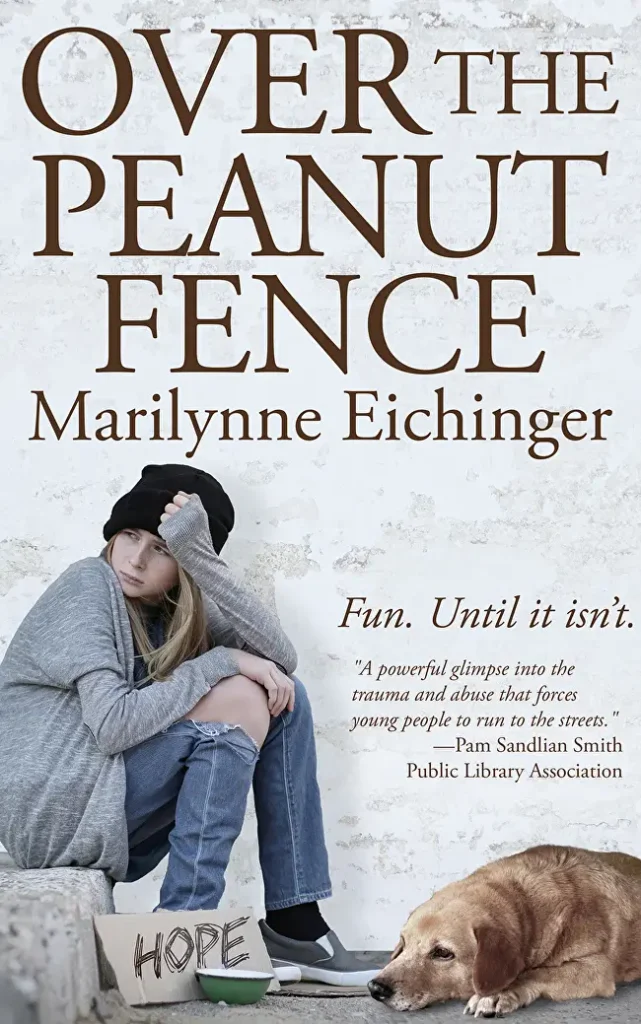
Parenting is an art. Unfortunately, some parents don’t realize this and fail to fulfill their obligations to their children and society. Too many of these children end up homeless, surviving on the streets of our cities. 

Over the Fence describes what it is like for those young adults and the people who try to help them find their purpose.  It can be purchased on Amazon, Barnes & Noble. If your bookstore doesn’t carry it, ask them to purchase a copy from  Ingram Sparks.

What a Jazz Band Taught Me About The Web of Life

114 Degrees Fahrenheit

The painting above serves as a poignant reminder of how our disregard for scientific information about climate change has contributed to rising temperatures and the destruction of homes and forests.

This week’s reflection comes from a place of both urgency and hope.

Al Gore once said, “Political will is a renewable resource.” He was speaking about our collective power in a democracy to act-especially in the face of the climate crisis. When we unite around shared values, we can transform systems. The potential is there. We just have to tap it.

This idea echoes a Unitarian Universalist principle I embraced in my youth:
“Respect for the interdependent web of all existence of which we are a part.” It’s a beautiful reminder that we are not isolated beings. We are part of a vast, delicate network of people, ecosystems, histories, and futures. The way we treat the planet and one another matters deeply.

Why This Matters to Me

Interdependence:
Every action ripples. Even small ones. Dropping a tissue on the road may seem harmless, but it could contribute to pollution or spread disease. A single careless moment can reverberate in ways we don’t immediately see.

Environmental Reality:
Years ago, I traveled up the Dnieper River in Ukraine and saw people fishing in a thick, algae-covered, foul-smelling current. It broke my heart. That catch might have been the only food some families had. Sadly, similar conditions exist here in the U.S., where fish runs are disappearing and clean water is no longer a given. All living creatures have a right to unpolluted water, food, and air needed to stay alive. We survive together, or not at all.

Social Justice:
As a child, I learned about immigrants who built this country-Pilgrims fleeing persecution, Irish families escaping famine, African slaves picking cotton, and Chinese laborers laying tracks across the West. Many were met with hostility, despite their contributions. Their hurt stays with me, along with the good they brought to the melting pot experiment we call the United States. We may look different, but beneath our skin we share the same blood, bones, and dreams. How we treat one another shapes who we become as a society.

Beyond Individualism:
We are social beings. I once saw a music teacher form a high school jazz band filled with prodigies. Each student was gifted, but when the group first came together, it was a chaotic scene. Only when they stopped trying to outshine each other and started listening to the conductor did they create something beautiful. Harmony overcame ego, and community became more important than self.

The principle, a respect for the interdependent web, is more than a belief. It’s a way of being.

It is a constant reminder that our fates are woven together, that no action is too small, and that we each hold a thread in the tapestry of change. It’s what gives me hope, even in difficult times. If political will is renewable, then our compassion, courage, and collective strength are, too.

Id love to hear from you:
Have you had a moment that reminded you we’re all connected?
Share your story on my Blog Site—or forward this to a friend who might need a little hope today.

Until next time,

Marilynne

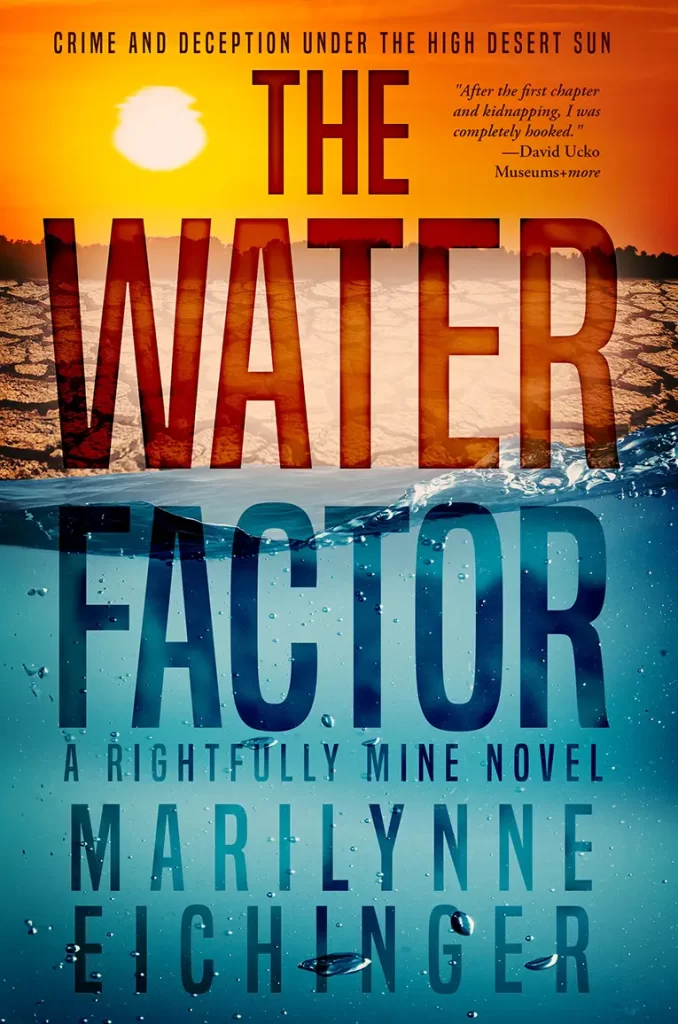
The Water Factor is a Firebird International Award winner for best dystopian novel and a Literary Titan recipient for best thriller.  It is available in ebook, paperback, and audio formats. It can be purchased on AMAZON, Barnes and Noble, and as an audiobook on Amazon, Audible, and iTunes. Ask your bookstore to order a copy from Ingram. Please leave a review. 

My art is always for sale. I painted 114 Degrees Fahrenheit during an intolerable heat wave two years ago. I ran to my studio with sweat dripping from my forehead, compelled to capture the feeling that I, too, was burning up. You can purchase directly from my site, FAHRENHEIT, or contact me at marilynne@eichingerfineart.com

Blog site

https://www.eichingerfineart.com/blog/201972/political-will-and-the-independent-web-of-life

XXXXXXX  a mailchimp version.

Political Will and the Interdependent Web of Life

“Political will is a renewable resource.” – Al Gore

That quote sticks with me. Why? Because it’s a reminder that our shared willpower—the energy to change systems and protect our planet—is not finite. It grows when we act together.

It also reminds me of a Unitarian Universalist principle I’ve carried with me since my youth:

Respect for the interdependent web of all existence of which we are a part.”

This belief helps me navigate the world with more care, humility, and hope.

🧵 What This Looks Like in Real Life

💧 Interdependence

Even something as small as tossing a tissue on the ground creates ripple effects—pollution, germs, a disregard for our shared environment. Every action matters.

🐟 Environmental Wake-Up Call

I once traveled up the Dnieper River in Ukraine and saw families fishing in a foul, algae-choked current. That water was toxic, but they had no choice.
I see echoes of that here in the U.S.—where fish runs are disappearing, and clean water is becoming less certain. We survive together—or not at all.

🫶 Justice and Connection

As a child, I learned about immigrants who built this country—Pilgrims, the Irish during the Potato Famine, Chinese railroad workers. Many faced cruel treatment despite their sacrifices.
Their stories shaped my values. Beneath our differences, we share the same blood, bones, and dreams.

🎷 The Jazz Band Lesson

A teacher formed a jazz band full of talented high school musicians. But instead of music, they created noise—everyone soloing, no one listening.
Only when they slowed down and learned to play with one another did the music emerge. Harmony requires collaboration.

🌱 Why I Keep Writing

The interdependent web isn’t just poetic—it’s deeply practical. It reminds me that every choice has meaning, and every person has a role.

If political will is a renewable resource, then so is our compassion, our resilience, and our sense of shared purpose.

Let’s keep renewing them.

💬 Id love to hear from you:
Have you had a moment that reminded you we’re all connected?
Just hit reply and share your story—or forward this to a friend who might need a little hope today.

Until next time,
🌾 [Your Name]

[Share this Newsletter] | [Forward to a Friend] | [Subscribe Here]

XXXXX

 Interdependent Web and the Renewable Resource of Political Will

Al Gore famously said, Political will is a renewable resource.” He emphasized that democratic systems can amplify our ability to take action on the climate crisis—and that, by coming together, we can drive meaningful change.

This idea echoes a Unitarian Universalist principle I embraced as a young woman: Respect for the interdependent web of all existence of which we are a part.” It’s a principle that emphasizes our profound connection to the environment—and to each other. It calls us to recognize that our actions ripple outward and that we bear responsibility not only for ourselves, but for the entire living world.

Yet this idea goes beyond environmentalism. It warns against the dangers of unchecked individualism and systemic oppression. It speaks to the balance between personal freedom and collective well-being, reminding us that no one truly thrives unless we all do. We are woven into each other’s fates.

Interdependence in Action

I think of this web every time I act, even in small ways. If I toss a tissue on the ground, it’s not just litter—it could carry germs, feed rats, clog drains, or, in a worst-case scenario, contribute to public health risks. Every careless act has consequences.

The concept also became vivid for me while traveling up the Dnieper River in Ukraine. I saw families fishing in foul, algae-choked waters—among the most polluted I’d ever seen. They had no other source of food. That moment underscored the human cost of environmental neglect. I couldn’t help but think of communities here in the U.S. where fish runs have dwindled and clean water is no longer a guarantee. Water is not a luxury; it is a right.

Justice and Belonging

The interdependent web also shapes my view of social justice. As a child, I was raised with a deep belief in fairness and compassion. I learned about the Pilgrims fleeing religious persecution, the Irish who escaped famine, and Chinese laborers who built the railroads—people whose contributions were essential to America’s growth but who were often met with cruelty.

What struck me then—and still moves me now—is that our shared humanity transcends differences in appearance or origin. Beyond the melanin in our skin, we all have the same blood, bones, and breath. We belong to one another, whether we act like it or not.

Beyond Individualism

While individuality is important, excessive individualism can become toxic. We weren’t built to go it alone. We thrive in community, in relationships, in shared purpose.

I once watched this lesson unfold through music. A teacher at an affluent high school formed a jazz band, assuming that the students—many of whom had years of private lessons—would naturally sync. Instead, chaos ensued. Each student was too busy showcasing their talent to listen to the others. It wasn’t until the teacher brought them back to basics—teaching them to listen and harmonize—that they began to make music. By year’s end, their concerts were a joy to behold.

The lesson? We don’t succeed just by being talented individuals. We succeed by learning to work together.

The interdependent web is more than a metaphor. It’s a way of seeing the world that grounds me in both humility and hope. It challenges me to notice how my smallest choices matter and to believe that change is possible when we act together. Political will, like a renewable resource, grows when we tap into our shared purpose—and when we remember that none of us are separate from the whole.

XXXXXX

Al Gore famously said, “Political will is a renewable resource.” He emphasized that democratic systems can enhance the capacity to mobilize action addressing the climate crisis. And that by coming together, we can foster effective change.

A Unitarian principle that I embraced as a young woman tells us to have  “Respect for the interdependent web of all existence of which we are a part.” It emphasizes the interconnectedness of all living things in the environment, encouraging a sense of responsibility towards the planet and all its inhabitants.

Upon closer examination, the statement extends beyond an environmental focus by addressing the dangers of individualism and oppression. It promotes a balance between individual and collective needs  we are interconnected and therefore dependent upon one another.  

What it means to me and how it affects my life is better understood when I delve deeper into the statement.

  • Interdependence: Since everything is connected and the actions I take have consequences for the whole ecosystem.  If I throw a Kleenex on the road, not only will it make the roadway look trashy, but it could also spread germs that may be the start of the next pandemic.

  • Environmental Focus:  Caring for the Earth and all its creatures is important for survival. We stay alive together or not at all. When I traveled up the Dnieper River in Ukraine, I saw people fishing in what was the most polluted, algae-topped, smelly waterway I had ever traveled on. I felt so sorry for the families that rely on the day’s catch. This is occurring in our own country, where fish runs have dwindled. Clean water is a precious right needed by all living things.

  • Social Justice:  I find peace by embracing the interconnectedness of all people. Justice, equity, and compassion have been embedded in my psyche since I was a child learning in school what America stands for. I studied the Pilgrims and why they left Europe, learned about the Potato Famine in Ireland, and the poverty in China that brought men to the West Coast to build the railroads. That we didn’t always treat these immigrants well saddened me, for they were what made America great.    How we act and speak to one another matters. Aside from the melanine in our skin, were have the same blood, muscles, and bones that will one day feed the earth.
  • Beyond Individualism: Though individuals are important, I find a danger in excessive individualism. Our forefathers revolted against King George for the unfair practices levied on ordinary people. We are a social species that thrives by belonging to something larger than ourselves. I learned early through music that the whole is greater than the sum of its individual parts. A teacher organized a high school jazz band in an affluent neighborhood where children had private music lessons since childhood. With such accomplished student musicians, he thought all they had to do was come together to play and improvise. Instead of music, however, he would up with bedlam. He had to take the group back to basics, teaching them to play harmoniously before they could add their individual expressions. By year’s end, their performances were well attended.
  • The interdependent web of life is more than a scientific truth.  It provides a source of meaning and purpose, and encourages individuals to dedicate themselves to looking beyond the obvious in their daily actions. It is what gives me hope and motivation—that together we can solve problems. Each person’s difficulties and actions have ramifications affecting the greater society.

Wade in: How Water Became the Heart of My Fiction

With so many urgent social justice issues facing us today, rising inequality, attacks on healthcare, threats to reproductive rights, I’m often asked why I chose water as the central theme of my novel. At first, I wasn’t sure how to answer. Perhaps it began with my water billing—$500 seems outrageous for three people. But deeper than cost, there’s a growing unease in our household. Ray only drinks bottled water, paying 2000 times more than if he drank it from a tap.  I filter mine through a PUR system, even though officials say there’s no lead risk because our home has plastic pipes. Still, I hesitate to trust what comes out of the tap.

 That distrust was reinforced last week when I spoke with a man who manages the water system for a medium-sized town just north of Portland. To my surprise, he said he doesn’t drink Bull Run water. I was always told Portland had one of the cleanest water sources in the country. The repeated detection of Cryptosporidium, a parasite that is particularly dangerous to those with compromised immune systems, casts a shadow over our so-called “pristine” water. Knowing that there are rusting pipes in various locations throughout the city added to my anxiety. as does the industrial waste and auto runoffs that pollute the water people swim in.Officials insist our water is safe–for most people. 

 But does that include me as I age and my immune system weakens? The long-delayed filtration project, intended to address this issue, is now postponed until at least 2027. It faces significant cost overruns that are likely to affect me through added taxes or higher water rates. Seniors on fixed incomes and low-income households will continue to be hit the hardest.

 Reading Blue Gold by Maude Barlow and Tony Clarke was a turning point. The book revealed how multinational corporations met behind closed doors and declared that water should no longer be a basic right, but a commodity. They pushed to privatize public systems, bottle and sell water for profit, and even trade water futures on the Stock Market.

 That knowledge was chilling. As I dug deeper, I uncovered stories of energy companies acquiring water rights, of family farmers being pushed off their land, and of groundwater being diverted to enrich already wealthy investors. Across the globe, millions are displaced or left to suffer due to water scarcity. In the Middle East, water has become a weapon that’s used to control, subjugate, and destroy.

 Drinking water is essential for survival. It comprises approximately 60% of the human body. We can survive only a few days without it. Despite knowing this, we’ve allowed greed to dictate access to this most essential resource. I believe, fiercely, that clean, accessible water is a human right.

 That belief drove me to write The Water Factor, a fact-based thriller that aims to wake readers up. In the first chapter, I imagined a community forced to rely on trucked-in water. I assumed it was fiction-until I discovered it’s a reality in many places, even in water-rich states like Hawaii. The more I researched, the more plausible and alarming my plot became.

 Learning about water isn’t easy. Utilities often dodge transparency laws. But there are nonprofits in most communities working to uncover the truth. I urge you: read The Water Factor, then dig into how your own water system works. Ask questions. Demand transparency. Because the right to water may be slipping through our fingers, and we need to act before it’s too late. 

 Cool Water was a Cowboy Song,written by Bob Nolan in 1924 that became popular during the Dust Bowl and the Great Depression. This song was originally posted on protestsonglyrics.netI.  I used to hear it occasionally when I was a kid. It goes like this.

All day I’ve faced a barren waste,
without the taste of water, cool water.
Old Dan(2) and I with throats burnt dry,
And souls that cry for water,
Cool, clear water.
This song was originally posted on protestsonglyrics.net


(CHORUS:)
Keep a-movin’, Dan,
Don’t you listen to him, Dan,
He’s a devil not a man,
And he spreads the burning sand with water.
Dan, can you see that big green tree,
Where the water’s running free,
And it’s waiting there for me,
And you?

The nights are cool and I’m a fool,
Each star’s a pool of water, cool water.
But with the dawn, I’ll wake and yawn,
And carry on to water,
Cool, clear water.
This song was originally posted on protestsonglyrics.net
(CHORUS)

The shadows sway and seem to say,
“Tonight we pray for water,
Cool water.”
And way up there He’ll hear our prayer,
And show us where there’s water,
Cool, clear water.

(CHORUS)

Dan’s feet are sore, he’s yearning for,
Just one thing more than water,
Cool water.
Like me, I guess, he’d like to rest,
Where there’s no quest for water,
Cool, clear water.

____________________

The Water Factor is a Firebird International Award winner for best dystopian novel and a Literary Titan recipient for best thriller. Though fun to read, it carries a severe message about water scarcity. It is available in ebook, paperback, and audio formats. It can be purchased on AMAZON, Barnes & Noble, Powell’s Books, and as an audiobook on Amazon, Audible, and iTunes. Ask your bookstore to order a copy from Ingram or buy from Annie Bloom’s Books in Multnomah Village.

Private Worlds, Shared Worries

View from A Bridge
I can only guess at the secrets hidden behind the doors.

When the weather is good, I take long walks through my neighborhood, passing door after door, each one different. I often wonder what life is like behind them. What are the people inside thinking? How are they coping in a country fractured by social and political discord? These musings bring to mind Anatole France’s words: “Even a little dog is the center of his own universe.” Each person in each house lives in a private world of their own making. Lately, I’ve become curious about my neighbor’s state of mind now that the pandemic has subsided

One afternoon, I knocked on the door of an elderly woman. She told me she struggled to stay balanced on the emotional seesaw created by the daily news. She missed seeing her family and scolded herself for once believing the world was on a path toward peace. “I really thought the United Nations would help solve global problems through dialogue instead of war,” she said, her voice breaking with grief. I felt her pain as she choked back a cry.

A few houses down, I passed a mother of young children leaning against her doorjamb. During the pandemic, she had grown used to working from home. Now, back in the office, she struggles to juggle childcare, doctor visits, soccer games, and gymnastics. It’s remarkable she manages to keep her job while raising a family. Evenings bring more stress; housework and dinner leave her drained. She confessed that she wishes for a hybrid arrangement that would let her work from home a few days a week. She gave me a sheepish look as she admitted, “I hate myself for letting the kids spend so much time on their phones, but it’s the only way I can get a break and cook dinner in peace.”

Behind another door lives a furloughed father who lost his job with NOAA during Musk’s downsizing efforts. Oregon’s four National Weather Service offices saw staff cuts of 25% to 60% affecting meteorologists, hydrologists, and technicians.

This man fears for his own future, wondering if he’ll ever find another job as a meteorologist. He also expressed concern for the integrity of climate reporting, with global warming seemingly struck from the weather forecast vocabulary. He spends his days watching endless newscasts and sleeping twelve hours a day. His depression is severe. Though he jogs daily, he avoids his friends and won’t consider reaching out for professional help.

A few blocks away, I passed the home of a couple who married just before the last election. They’ve postponed having children, unwilling to bring a baby into such uncertain times. The husband, a doctor in the Oregon National Guard, fears he might be deployed if conflict arises. He dreads the thought of harming innocent people or witnessing their suffering. Their long-anticipated trip to Arches National Park is also in doubt due to budget cuts to the country’s Monuments and Parks and fears of overcrowding. For now, the future, including whether to have children, remains unspoken.

Then there’s the family that calls me “Grandma.” I’ve known them for seven years-an African-American couple with two children, ages ten and fourteen. I helped the father earn his commercial driver’s license, enabling him to become a truck driver and support his family, and I take the children on outings as I did with my grandchildren.They immigrated to escape violence, became citizens, and have a deep love for this country. But today’s headlines unsettle them, reminding them of the instability they left behind.

Down the street from my house is a door I pass often. It opens to the home of a doctor whose hours have increased due to ongoing budget cuts.Oregon’s public health system is overwhelmed, understaffed, and struggling with burnout and a lack of resources. The result? Longer wait times and reduced access to care. He worries now not just for his patients, but for his own mental and physical health. His latest fear, though, is changes to Medicaid. That may have an opposite effect on his work life, causing him to lose his job due to patients losing their insurance. He finds it difficult to plan for the future.

My own door opens to a universe that, in many ways, remains unchanged from before the pandemic and the shift in administration. I still exercise daily, write, read, paint, and serve as a lay minister with the Unitarian Church. Ray and I continue to talk, argue, make up, and, above all, remain grateful for each other.

 Welcome Home

These days, I’m more mindful, more deliberate in how I drive and how I interact with people on the street. I’m encouraged by the peaceful protests and inspired by young people who are stepping up to demand change in a country that too often burdens the poor. In this charged and energized atmosphere, I feel a deep sense of hope. Our youth, with their fresh eyes and open hearts, are embracing diversity and envisioning new possibilities. Through their determination, I believe the world truly can be transformed for the better.

________________________________________________________

I look forward to your comments. Do your neighbors share their concerns? Comment on my blog site. https://www.eichingerfineart.com/blog/201573/private-worlds-shared-worries

Art is always for sale. View from the Bridge is a 32″ by 22″ multimedia 3D sculpted painting available for sale on my website for $795, which includes shipping. Questions? Contact me at  Marilynne@eichingerfineart.com. To purchase online, go to https://www.eichingerfineart.com/workszoom/1534176/view-from-a-bridge#/

________________________________________________________________________According to the UN, water is at the center of the climate crisis. THE WATER FACTOR, A RIGHTFULLY MINE NOVEL, is your chance to peer into the near future to a time of water scarcity controlled by corporate criminals. Why do some people step up to the challenge while others don’t?

The story is a gripping tale of water scarcity and corporate wrongdoing, and the people who fight for their rights. The Water Factor is a Firebird International Award winner for best dystopian novel and a Literary Titan recipient for best thriller. It is available in ebook, paperback, and audio formats. It can be purchased on AMAZON, Barnes & Noble, Powell’s Books, Annie Bloom’s Books, and as an audiobook on Amazon, Audible, and iTunes.

Spinning in All Directions—And Loving It

Years ago, I bought a painting in China for my office wall that captured my life perfectly: a woman pulled in all directions, spinning in circles. It made me laugh because it was true. I was launching a new business while driving children to countless events, shopping, cooking, doing laundry, cleaning the house, and trying to look at least somewhat presentable for my husband. It wasn’t easy—at times it felt nearly impossible—but I rarely complained. Like the swing carousel in an amusement park, it was exciting.

Working mothers don’t have it easy. According to CBS, the job requirements for motherhood include, but aren’t limited to:

  • Must be able to work 135+ hours a week
  • Ability to work overnight, depending on needs
  • Willingness to forgo any breaks
  • Work mostly standing up and/or bending down
  • Must be able to lift up to 75 lbs. regularly
  • Ph.D. in psychology—or real-life equivalent
  • Unlimited patience
  • Understanding of finance and medicine
  • Selflessly driven
  • Valid driver’s license, CPR certification, and Red Cross membership

Does that sound familiar to you?

Now, with children and grandchildren grown and scattered across the West Coast, and with my business sold, I assumed life would slow down. I thought I’d finally have time to relax, reflect, and focus.  But that’s not so.

Apparently, I’m hardwired to keep that wheel spinning. I now travel further to visit family. My time is filled with painting, writing, volunteer work, political activism, and caring for two local grandkids. The laundry, housework, exercise routines, and daily check-ins with my husband still remain, as they always did.

So, what does it all add up to? I don’t have time to be bored or to obsess over things beyond my control. My life remains full. Even in my later years, I still feel that I have something meaningful to contribute. I’ve learned to communicate across generations, share history and stories as an elder, and hold onto a strong sense of purpose.

In my counseling work, I often meet younger people who struggle with that very thing: purpose. Many feel unmoored, unsure of their direction in life. But purpose isn’t something handed to you. It’s something you build, bit by bit, through action, reflection, and connection.

And it’s never too late to find it.
___________________________________________________________________________”Painting is not for sale. I like too much.

Please share the times in your life when you felt like it was spinning out of control.

___________________________________________________________

Building and managing a museum was particularly exciting. Science museum directors do much more than put on exhibits. They operate gift stores, planetariums, large-format theaters, and educational programs both within and outside the building. They offer camping experiences, manage restaurants, tour exhibits internationally, and organize fundraising events. Managing such a diverse and varied program might drive some people crazy, while for others, it is what life is about.  Enjoy a fun-packed read that takes you behind the scenes of science and art centers.

Available in e-book and paperback at Powell’s Books, Amazon, and  Barnes & Noble.

Afraid, Frozen, Yet Still Moving Forward

Emerging Sunlight

Get rid of the fear, the chaos, and let the sun shine through

Years ago, a student came into my college counseling office, pale and shaking. Paralyzed by overwhelming fear, he couldn’t get out of his car to cross the street and enter a building. His phobia was interfering with his life.

A phobia is an irrational, persistent fear of an object, situation, or activity, so powerful it can trigger a full-blown panic attack. Physical and emotional symptoms surface even in the absence of real danger. According to Johns Hopkins Medical Center, phobias often begin between the ages of 15 and 20. While both men and women experience them, men are more likely to seek treatment. The root causes remain unclear but are thought to involve a mix of genetic and environmental factors. Fortunately, phobias can be treated.

I don’t know what triggered that young man’s fear, but I do know what sparked one of my own. After a childhood accident on a roller coaster, I avoided them for decades. Then, in my seventies, I found myself at a Universal theme park, watching my granddaughter ride them with ease. When I saw young children laughing as they exited, something shifted in me. Bored of watching from the sidelines, I gave it another try—and discovered the rides weren’t so terrifying after all (though I still avoid the ones with loops!).

My grandson also chose to face his fear. After falling from a horse several times, he was understandably wary. But years later, he joined me on a trail ride, jaw clenched, eyes wide with apprehension. With a gentle guide and some encouragement, he ended the day confidently trotting on his own. I admired his bravery.

The student I worked with eventually found relief through cognitive-behavioral therapy. During our sessions, I’d turn off the lights and guide him through a visualization exercise, asking him to picture each step of the feared activity. Over time, the anxiety loosened its grip.

Overcoming irrational fear takes real courage. When phobias interfere with daily life, therapy—especially gradual exposure techniques—can be highly effective. Breathing and relaxation exercises can also help reduce the body’s physical response to stress.

I bring this up now because I see a different kind of fear spreading: social and political anxiety. It’s more than the fear of public speaking or social awkwardness. It’s a deep, persistent dread, fueled by media and political rhetoric, that causes people to withdraw from conversation, stop watching the news, and avoid friends and family with differing views. But avoidance doesn’t ease the fear; it often amplifies it.

One woman told me she bursts into tears when she reads about people starving in Gaza or being taken from their homes by masked ICE agents. She imagines herself in their place and becomes so overwhelmed that she can’t leave her own home.

Unchecked, this kind of fear, like any phobia, can interfere with work, relationships, and even sleep. It can leave people frozen, unable to act, think clearly, or take meaningful steps toward relief. Some turn to substance abuse to self-medicate; others lash out in anger or direct their fear toward imagined enemies.

Avoidance doesn’t solve fear. Facing it calmly and gradually can.

Fear and hope are powerful, opposing forces. Fear can ignite wars, silence dissent, and erode human rights. But while fear may be paralyzing, it isn’t permanent. Just as my student learned, overcoming fear requires effort and courage, but the reward is the freedom that comes with it.

We may not be able to change the world overnight, but we can change how we respond to it. That means staying informed without getting overwhelmed, setting boundaries with media consumption, and engaging in conversations, especially hard ones, with compassion and curiosity.

Whether it’s roller coasters, horses, or challenging conversations, facing fear step by step helps us grow. We don’t have to let politicians or media sensationalism dictate how we live. With courage and by supporting each other, we can reclaim our voice, our peace, and our place in the world.

________________________

I look forward to your comments.

Art is always for sale. Emerging Sunlight is a  16″ by 20 ” acrylic painting on canvas. It can be purchased for $295 through my website at https://www.eichingerfineart.com/workszoom/6123537/emerging-sunlight#/

For additional questions, contact me at marilynne@eichingerfineart.com

_____________________

References:

Website (2025) Phobias. Cleveland Clinic. Retrieved from https://my.clevelandclinic.org/health/diseases/24757-phobias

Podcast. Ramadan  H. Shants, J. (2016). Manufacturing Phobias: The Political Production of Fear in Theory and Practice. University of Toronto Press. ISBN978-1-4426-25884-7

Understanding and overcoming phobias: Martin Antony, PhD. American Psychological Association. Retrieved from https://www.apa.org/news/podcasts/speaking-of-psychology/overcoming-phobias  Why would a playboy twenty-year-old become a social activist, willing to put his life on the line to reclaim his tribe’s right to water? The Water Factor presents a powerful example of what can occur when people become so disenchanted with corporate greed that they overcome their fears and take action. The book is a Firebird International Award winner for Best Dystopian Novel and a Literary Titan recipient for Best Thriller. It is available in ebook, paperback, and audio formats. It can be purchased on Amazon, Barnes & Noble, Powell’s Books, and Annie Bloom’s Books, as well as in other national stores, and on audiobook platforms such as Amazon, Audible, and iTunes.

front 15

Why Art Matters

DON’T DRAIN THE SWAMP

As Washington continues to defund the arts, you might find yourself asking: Why not? Last year, the National Endowment for the Arts (NEA) distributed nearly $36.9 million through 1,474 grants across the country. Meanwhile, funding for the Institute of Museum and Library Services (IMLS) was severely slashed in an effort to dismantle the agency altogether.

These cuts may seem negligible, just 0.0046% of the federal budget, but the stakes are high. Museums alone contribute over $50 billion annually to the U.S. economy. Under the previous administration, sweeping proposals were aimed at eliminating the NEA, NEH, and IMLS entirely. As a result, thousands of grants that supported research, theaters, arts and science education, museums, artists, conservation efforts, community programs, and jobs have vanished. So, who cares?

I do.

I spent more than twenty-five years running museums, and I’ve seen firsthand how the arts enrich lives and communities. As the American Alliance of Museums puts it:

“Museums are vital community anchors serving all Americans. Museums are not only centers for education and inspiration but also economic engines creating jobs, driving tourism, and strengthening local economies.”

But beyond the economics, the arts are essential to our humanity. They foster creativity, empathy, and beauty. They bring people together, enhance our mental well-being, and create career opportunities for millions. In fact, the nonprofit arts and culture sector is a $1.1 trillion industry that supports 5.2 million jobs-4.3% of the U.S. economy.

Arts organizations drive local business revenue, unify neighborhoods, and offer a powerful antidote to stress and isolation. Students who participate in the arts earn higher GPAs and standardized test scores, and they receive a more well-rounded education.

Creativity and innovation-skills highly sought after in today’s workforce-are nurtured through the arts. According to Americans for the Arts, a University of Pennsylvania study found that cities with a high concentration of arts organizations experience greater civic engagement, stronger social cohesion, better child welfare, and lower poverty rates. Healthcare providers increasingly recognize the healing power of the arts in patient care.

Personally, I’ve found solace in painting. I began during one of the most stressful periods of my career-relocating the Oregon Museum of Science and Industry. Painting offered a meditative escape and helped me stay clear-headed and focused as a leader.

Working in museums has been one of the greatest joys of my life. I’ve watched children explore alongside their parents, couples share inspiration on a date, and seniors enrich their twilight years with curiosity and connection. These moments are not luxuries. They are vital to a meaningful life. The arts are not a frill. They are a foundation for a vibrant, resilient, and compassionate society.

Contact your congressional delegation to see that arts and humanities remain funded.

I look forward to your comments.

Art is always for sale. Cypress Tree is an acrylic on canvas framed painting, 30″ by 24″ It can be purchased online at https://www.eichingerfineart.com/workszoom/4119523/dont-drain-the-swamp-cypress-tree#/ 

For further information, contact me at marilynne@eichingerfineart.com

References:

arts.gov website,( 2025_National Endowment for the Arts Supports the Arts with Nearly $36.8 Million in Funding Nationwide. Retrieved from https://www.arts.gov/news/press-releases/2025/national-endowment-arts-supports-arts-nearly-368-million-funding-nationwide

Art News website (2025) trump Administration Threatens Extreme Cuts to the National Endowment for the arts and the Humanities. Retrieved from https://www.artnews.com/art-news/news/trump-administration-threatens-extreme-cuts-to-the-national-endowment-for-the-humanities-1234737588/

Art website (2025) What trumps dismantling of the institute of museum & library services means for US art. Retrieved from https://www.designboom.com/art/donald-trump-dismantling-institute-museum-library-services-us-art-culture-03-20-2025/

Veltman, C.(2025)  Sweeping suits hit NEA after Trump administration call to eliminate the agency.NPR Website. Retrieved from https://www.npr.org/2025/05/03/nx-s1-5385888/sweeping-cuts-hit-nea-after-trump-administration-calls-to-eliminate-the-agency

Website (2-25) Top 10 Reasons to support the Arts. Americans for the Arts. Retrieved from https://www.americansforthearts.org/by-topic/advancing-arts-locally/top-10-reasons-to-support-the-arts

_____________________________________________________________________________A surprising behind-the-scenes look at the trials faced by people who started museums and the professionals who keep them going. Available on Amazon, Barnes & Noble, and at Powell’s Books.

71uc7qYZ40L. SL1500

Perseverance: The Power to Keep Going

THREE MEN DANCING

It does not matter how slowly you go as long as you do not stop.” – Confucius

Whenever I was asked about founding the Impression 5 Museum in Michigan or building the Oregon Museum of Science and Industry in Portland, the first question was always the same: Whats the secret to your success?” My answer never changed—passion and perseverance. Passion for engaging children through interactive learning. And perseverance when others told me it couldn’t be done.

It always seems impossible until its done.” – Nelson Mandela

Through the years, I’ve spoken with countless entrepreneurs, scientists, writers, leaders, and parents. Each of them—despite different paths—has emphasized one common trait: perseverance. They kept learning, stayed flexible through challenges, and never gave up. Their determination was rooted in optimism—a belief that the future holds promise.

Optimism is the faith that leads to achievement. Nothing can be done without hope and confidence.” – Helen Keller

Success is rarely smooth. The road is filled with potholes—setbacks, failures, rejection. Nine out of ten startups don’t make it. But those who succeed don’t let failure stop them. They adapt, learn, and keep going. They see adversity not as the end, but as a puzzle to solve.

Believe in yourself! Have faith in your abilities! Without a humble but reasonable confidence in your own powers, you cannot be successful or happy.” – Norman Vincent Peale

Confidence and hope often begin at home. Parents are a child’s first role models. When they demonstrate how to persevere through difficulty, they’re teaching resilience. When they support a child who’s bullied, struggling, or afraid, they help shape a future adult who believes in themselves. Optimism doesn’t mean ignoring challenges—it means believing they can be overcome.

The only thing standing between you and your goal is the story you keep telling yourself as to why you cant achieve it.” – Jordan Belfort

Not everyone grows up in a nurturing home. But the good news is, perseverance and optimism can be learned. It starts with a simple shift: the willingness to try. And if that try fails, the determination to try again. Psychologist Lewis Lee found that optimists sleep better, have fewer strokes, and live longer than pessimists. Why? Because optimism builds resilience.

The only person you are destined to become is the person you decide to be.” – Ralph Waldo Emerson

Changing your mindset isn’t always easy—but it’s possible. One of my early counseling clients was taught to snap a rubber band on his wrist whenever he caught himself thinking negatively. That small gesture became a powerful tool for awareness and change. Lee also suggests journaling—set goals, track your thoughts, and write down what you’re grateful for. Reflect on the best version of yourself. Recognize when negativity creeps in, and learn to see it as temporary—not permanent. Just like going to the gym strengthens your body, these mental exercises can rewire your brain.

Like many, I sometimes feel disheartened by today’s world. The kindness, decency, and open conversations I grew up with feel harder to come by. Too many are afraid to speak the truth. And yet—I remain hopeful. I believe that beneath the noise and fear, most people are still good. They care. And when the time comes, they’ll do what’s right.

Because they, too, have the power to persevere.

Please comment below.

Resources:

front 15

White. P. (2007) The Role of Perseverance in Success: Appreciation at Work Retrieved from https://www.appreciationatwork.com/blog/the-role-of-perseverance-in-success/?

Landowski,A.  (2023) The Importance of Persevance & Optimism in Business. Ceo-review.Retrieved from  https://www.ceo-review.com/the-importance-of-perseverance-optimism-in-business

Perton, V. ( 2025). Perseverance is Underpinned by Optimism. Optimism. Retrieved from

https://www.centreforoptimism.com/blog/perseverance-is-underpinned-by-optimism

_______________________________________________________________________

I have a passion for writing, but find marketing my books less enjoyable. However, since writing is pointless if the books aren’t read, I persevere and reach out to new audiences, hoping that my words will resonate with someone.

The Water Factor is a Firebird International Award winner for best dystopian novel and a Literary Titan recipient for best thriller. Although enjoyable to read, it carries a severe message about water scarcity. It is available in ebook, paperback, and audio formats. It can be purchased on AMAZON, Barnes & Noble, and as an audiobook on Amazon, Audible, and iTunes. Ask your bookstore to order a copy from Ingram Sparks.

The Transformative Power of Art in a Fractured World

THREE SUNS 

I painted this picture to alert people to the devastation caused by global warming, with the hope that society will curb its use of carbon-producing products.

“Numerous scientific works have established that human connections to natural environments stimulate curiosity and foster flexibility and imagination. The spark of purpose—the feeling that we are meant to add to the total of humanity—has been called many things, but none more appropriate than creativity. Our drive to create makes the human species unique and unparalleled in all of nature. We are born with an impulse to bring something into existence that wasn’t there before.”

Years ago, I copied this quote without noting the author. Still, the sentiment has stayed with me—it speaks directly to my soul. I, too, feel the deep inspiration that nature offers, a pull toward creativity that finds form in painting and writing. In times of increasing ecological crisis and political distraction, creativity becomes more than self-expression—it becomes a lifeline.

Now, more than ever, art must come to the forefront. In moments of upheaval, artists, musicians, filmmakers, and writers become not just storytellers, but truth-tellers. Art speaks for those who are silenced. It transcends language, culture, and geography. It can express grief, joy, and the deep emotional undercurrents that often lie hidden beneath the surface of daily life.

Writers, in particular, are uniquely positioned to shift paradigms. They pose difficult questions and offer new ways of seeing the world. During dark times, they illuminate paths forward. Consider Mark Twain, whose The Adventures of Huckleberry Finn challenged the racial and moral conscience of 19th-century America. Or Dostoyevsky, whose Crime and Punishment delved into the psychological complexity of guilt and redemption. Charles Dickens exposed the injustices of Victorian England’s slums. George Orwell foresaw the perils of totalitarianism. The Autobiography of Malcolm X, as told to Alex Haley, reshaped how many view race, identity, and justice in America. More recently, The Kite Runnerbrought the struggles of Afghanistan’s people into global consciousness.

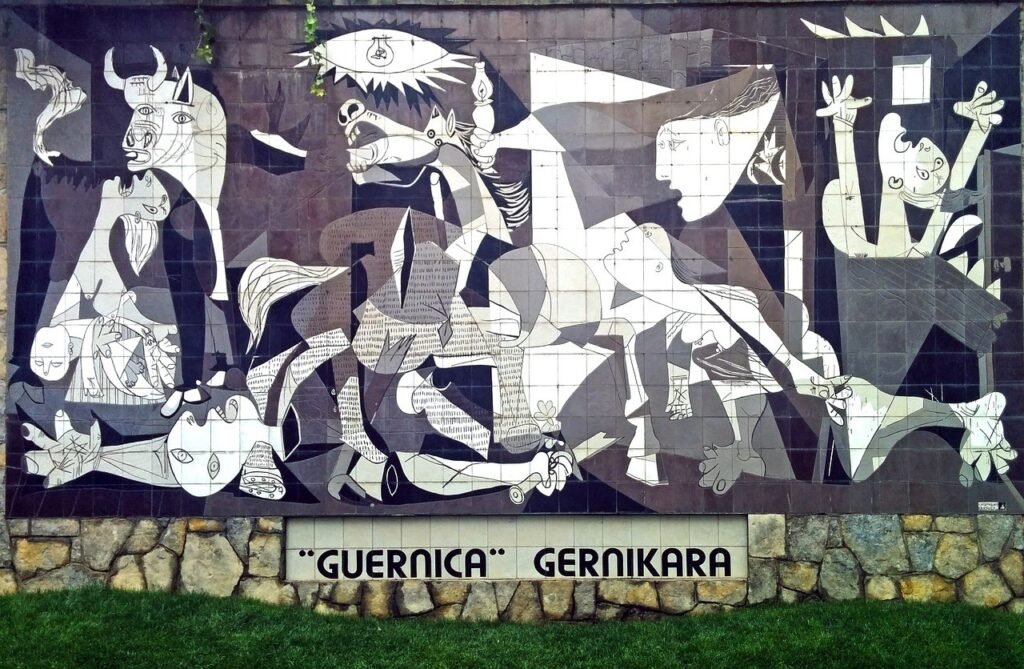
The same power extends to other art forms. Pablo Picasso’s Guernica, painted in response to the bombing of a Spanish town, became a searing symbol of anti-war sentiment. Contemporary Chinese artist Ai Weiwei uses his work to challenge government oppression and advocate for human rights. Television, too, can serve as a powerful platform: Orange Is the New Black brought attention to the realities of mass incarceration and marginalized women in America.

Musicians have long played a pivotal role in protest and progress. From the folk songs of Woody Guthrie and Joan Baez to Bob Dylan’s anthems of change, music has helped shape the course of history. The legacy continues today with songs like “Put the Gun Down” by Indonesian heavy metal trio Voice of Baceprot, “Tariffic” by Jesse Welles—an indictment of economic policy—and “Post American” by Dead Pioneers, which protests the whitewashing of Indigenous history. And still, “We Shall Overcome” remains a timeless anthem for civil rights.

In his book Biophilia, Edward O. Wilson described the innate human tendency to focus on life and living systems. His work on biodiversity, extinction, and ecological interdependence has helped many around the world better understand the fragile balance of our environment. By the end of his life in 2021, Wilson called for a new Enlightenment—one that reunites science and the humanities to heal our fractured world.

Art is that bridge. It affirms our humanity, expands our awareness, and awakens the courage to envision change. Where injustice, inequality, and environmental devastation persist, art is not a luxury—it is a necessity. It’s time for creators of all kinds to rise, using their voices, brushes, instruments, and cameras to challenge the status quo and help shape a better future.

                                                            By Pablo Picasso

Resources:

Website(2022) E.O.Wlson, Biodiversity Foundation. Retrieved from https://eowilsonfoundation.org/about-us/e-o-wilson/

Fortune, JK.  (2020) In the darkest of times, Art is not an indulgence. https://janfortune.medium.com/in-the-darkest-of-times-art-is-not-an-indulgence-1bd01e687546

Website, (2025) Top 10 Writers that Changed the World. Digital Book.io. Retrieved from https://www.digitalbook.io/blog/top-10-influential-writers-that-changed-the-world/

Down, L. (025) . Artists as Agents of Social Change Past and Present. Arts, Artists, Artwork. Retrieved from https://artsartistsartwork.com/artists-as-agents-of-social-change-past-and-present/

The Ongoing History of Protest Music. 50 Best Protest songs of 2024Retrieved from https://www.ongoinghistoryofprotestsongs.com/2024/01/05/50-best-protest-songs-of-2023/

Kirsch, S. (2025) Unveiling the Power of Art to Create Social Change. Harvard Advanced Leadership Initiative Social Impact Review. Retrieved from https://www.sir.advancedleadership.harvard.edu/articles/unveiling-power-of-art-create-social-change

I look forward to hearing from you in the comment section of my BLOG SITE.https://www.eichingerfineart.com/blog/200866/the-transformative-power-of-art

Art is always for sale. Three Suns is an acrylic on canvas 36” x 24” painting, available for $685 shipped free within the continental United States. Purchase online at https://www.eichingerfineart.com/workszoom/1656739/three-suns#/or contact me at marilynne@eichingerfineart.com with questions.

The Rightfully Mine Series is written to inform, change minds, and inspire people to activism. Access to clean water cuts to the core of democracy. It is being weaponized, pilfered, polluted, traded, and sold at astronomical prices that poor people can’t afford. Water should be considered a human right and not a commodity.

The Water Factor is a Firebird International Award winner for best dystopian novel and a Literary Titan recipient for best thriller. Though fun to read, it carries a severe message about water scarcity. It is available in ebook, paperback, and audio formats. It can be purchased on AMAZONBarnes and Noble, and as an audiobook on Amazon, Audible, and iTunes. Ask your bookstore to order a copy from Ingram. Please leave a review on Amazon after reading. Purchase while you can and invite me to Zoom into your book club discussion.

Why Boys are Struggling

Life Rolls With Hope

Male and female role models have the power to inspire children to succeed and thrive or to fail and despair.

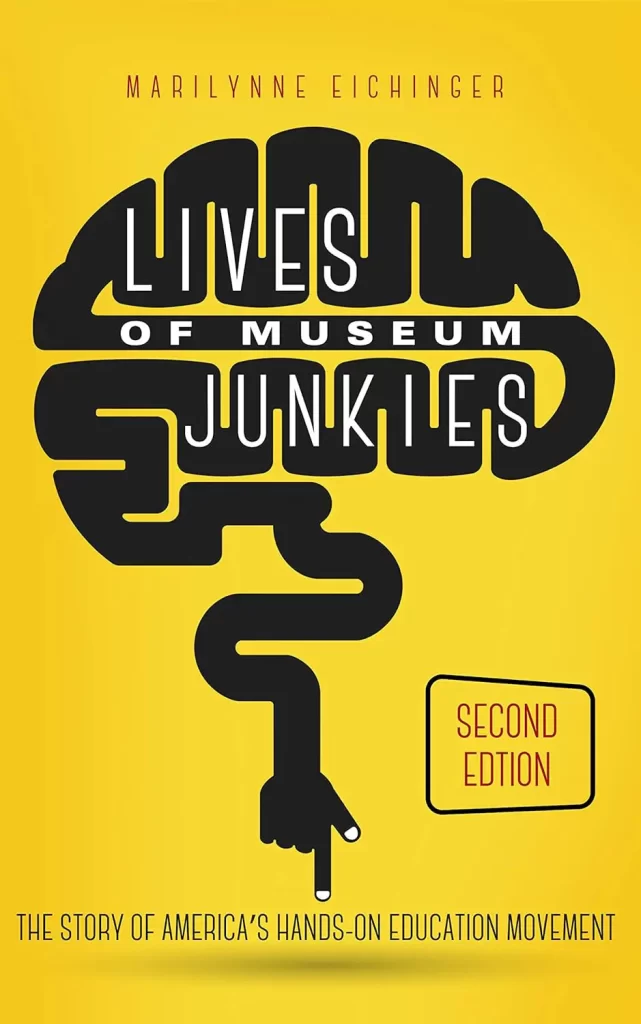
During the book launch party for Lives of Museum Junkies, I was asked what could be done to attract more women to the sciences. I responded that I was more concerned with what was happening to boys than to girls. Girls were advancing in academia. The follow-up question was: why?

The answer starts with how the education system and modern family structure fails boys. Psychologist Dr. Leonard Sax notes that the boys he sees in his practice lack passion for real-world activity. “They disdain school because they disdain everything.”

According to the National Education Association (NEA), girls exhibit superior social and behavioral skills to boys at every grade level. Two-thirds of high school students ranked in the top 10 percent of their class by GPA are girls. They not only earn better grades, they are more likely to pursue advanced training after high school. In 2022, there were 2.5 million more female than male undergraduates on U.S. campuses. Fifty-four percent of the women graduated, compared to only 43 percent of men.

It’s not that girls are more intelligent than boys, but that they tend to work harder. More girls than boys are enrolled in advanced placement classes and serve as valedictorians. Though some of the gender discrepancy can be attributed to financial factors, a record number of girls receive college scholarships, making it easier for them to continue their education

Young men tend to be more cautious than women about taking on student loans, and they’re more likely to enter the job market without a degree. The initial pay scale for men at the non-degree level is higher than that of women. However, the consequences of not completing college are severe over a lifetime: a diploma or certificate is increasingly necessary to secure a well-paying job. Those without degrees are twice as likely to be unemployed and are often the first to be laid off during a recession.

Researchers DiPrete and Buchmann found that girls are more persistent and have greater self-control than boys at every stage. Girls derive more satisfaction from performing well and don’t struggle with the internal conflicts many boys have about masculinity. In poor neighborhoods, girls are more likely to climb out of poverty than boys. Men between 25 and 31 years are 66 percent more likely than women their age to be living with their parents.

With the rise of affirmative action, organizations like the Girl Scouts, along with parents and teachers, began telling girls they could succeed in any field. They were encouraged, empowered, and held to high expectations. The stigma around science that existed when I was in high school and was one of only two girls in my physics class has all but disappeared. Today, strong science curricula attract equal numbers of male and female students.

For boys, it is mainly in sports where they are encouraged to excel without being labeled a nerd or geek. On the field, they’re urged to push and tackle, while in the classroom, they’re told to sit still and be quiet. Rules and restrictions often suppress their natural drive to explore, and they limit their freedom. Girls are praised for sitting still and being attentive, while boys, fueled by high testosterone levels, are punished for moving around–some even wear their visits to the principal’s office as a badge of honor.

Both sexes benefit from growing up in stable, married households. Though children in female-headed single-parent families suffer more, boys are especially affected by the absence of a father. Without a male role model, many boys struggle to find purpose. This is particularly true in Black families, where 60 percent of households lack a male presence, leaving children to be raised by mothers, grandmothers, and aunties.

The decline in manufacturing and agricultural jobs requiring physical strength hasn’t helped. Men also lead lonelier lives than women, which affects their emotional health and ability to stay optimistic. One in five fathers doesn’t live with his children, and 15 percent of men say they have no close friends. David Brooks writes, “Men account for close to three out of every four ‘deaths of despair’ due to suicide and drug overdoses. For every 100 middle-aged women who died of COVID-19 up to mid-September 2021, there were 184 middle-aged men who died.”

Suggestions to Improve the Lives of Boys:

  • Start boys in school at age eight rather than five. The prefrontal cortex and cerebellum, which regulate self-control, mature earlier in girls.
  • Encourage fathers to mentor their sons, attend parent-teacher conferences, and participate in activities beyond just sports.
  • Attract more men to the teaching profession to increase the number of male academic role models.
  • Introduce children to handyman skills. In previous generations, kids learned by helping their dads fix cars, repair leaks, and tackle home improvement projects. Today, with more families living in apartments, few children witness such work. A Kiplinger report notes that high-paying jobs for plumbers, welders, electricians, mechanics, and carpenters are in demand but go unfilled.
  • Include more information about gender differences in teacher training programs, helping educators understand hormonal and brain development variations. Boys have a greater need to move and seek excitement.
  • Design classrooms for a broader range of learning styles, including kinesthetic, auditory, and tactile—not just linguistic learners.
  • All high schools should offer apprenticeships and courses in shop, home economics, the arts, music, vocational training, and financial literacy. Kids should graduate with a passion for a hobby and a clear direction for a career.
  • Praise achievement rather than punish failure. My husband and I mentored a young man in Job Corps. He was recognized for small accomplishments with certificates and public praise. He left the program with an inch-high stack of certificates and asked me to frame every one.

A 25 to 30 percent high school dropout rate is unacceptable. Fifty-four million illiterate adults in a democratic society is intolerable. We can do better. We must do better.

References:

Brooks,D. (2022) The Crisis of Men and Boys. New York Times. https://www.nytimes.com/2022/09/29/opinion/crisis-men-masculinity.html

Rose, J.(2025) How American Boys and Men are Falling Behind.Top of Mind podcast. https://www.byuradio.org/top-of-mind-how-american-boys-and-men-are-falling-behind-and-what-we-can-do?

Website. (2022) Why Girls are Outperforming Boys in school. The Economisst.  http://neatoday.org/2013/03/05/why-girls-are-outperforming-boys-in-school-2/

Why are boys doing badly at school? The Economist. https://www.economist.com/the-economist-explains/2022/11/23/why-are-boys-doing-badly-at-school?

Website. Degrees of Difference: Male College Enrollment and Completion

(AIBM) American Institute for Boys and Men. Retrieved from https://aibm.org/research/male-college-enrollment-and-completion/\

Larson, W. (2024). Why Are Boys Struggling Academically and What Can We Do About It? The Epoch. Times. htpps://www.theepochtimes.com/bright/why-are-boys-struggling-academically-and-what-can-we-do-about-it-5768846?\

Fioriello, P.(2025). Surprising Facts about How Boys are Treated in Schools.  Retrieved from http://drpfconsults.com/surprising-facts-about-how-boys-are-treated-in-school/

Life Rolls with Hope is a 16” x 20 “ acrylic on canvas painting. available for purchase for $295. Go to https://www.eichingerfineart.com/workszoom/3633607/life-rolls-with-hope#/

 Contact me at marilynne@eichingerfineart.com with questions.

I would like to hear your thoughts about the subject. Please share your thoughts on my blog site at https://www.eichingerfineart.com/blog/200781/why-boys-are-struggling