Feeling Empty While Having It All

IBIS: Starng Into the Void

Over the holidays, I had several conversations that stayed with me long after they ended. I spoke with different people, living very different lives, yet beneath each exchange lingered the same quiet question: Is this all there is? Those conversations led me to think more deeply about emptiness, and about how easily it is misunderstood.

We are born as empty vessels, not deficient but open, waiting to be shaped by experience. While the news often focuses on childhoods marked by trauma, most of us grow up in homes that are loving, stable, and quietly nurturing. As infants, we learn to signal hunger and comfort, warmth and fear. We laugh at silly faces and fall asleep in familiar arms. Curiosity pulls us forward—first crawling, then walking—opening our minds to an ever-widening world. We ask endless questions, and each answer expands our sense of what is possible. Over time, our lives fill slowly, piece by piece, guided by parents and relatives toward school, careers, relationships, and the versions of success our culture values most.

I was fortunate to grow up in a loving extended family. What I value most from that time was not security or achievement, but the nurturing of my curiosity. My parents did not treat my questions as nuisances. Instead, they encouraged them. That early permission to wonder still shapes how I experience the world. I do not experience the open space inside myself as emptiness, but as a room that allows for new ideas, new explorations, and new ways of seeing.

Of the people I counsel, a great many experience their inner space very differently. On paper, their lives look complete: education, careers, homes, families. Yet they describe a hollowness they struggle to name. It is not exactly sadness. It is more a sense that life has lost its texture and meaning, that they are going through the motions without feeling fully present. The question their thoughts circle when alone is unsettling in its simplicity: Is this all there is?

This feeling often emerges during times of change. It can surface after a marriage ends, when children leave home, or when retirement arrives without a clear next chapter. It also appears when work or daily life becomes repetitive and uninspiring. Outwardly, everything looks fine, but inwardly, there is fatigue and disconnection. Meaning rarely announces its absence loudly. It tends to fade quietly, and that quiet can be dangerous.

Psychologist Muhammad Tuhin offers a helpful perspective: “Emptiness isn’t a sign of failure. It’s often the product of living according to someone else’s definition of success.” In a culture shaped by visibility and performance, it is easy to confuse appearing fulfilled with actually being fulfilled. Emptiness, then, may have less to do with lack than with misalignment—the growing distance between who we are and who we have learned to present to the world.

I saw this clearly while managing a “Do You Need a Mother?” booth at a summer music festival. Many visitors in their forties and fifties spoke candidly about losing their sense of purpose. Some had left lucrative careers to search for meaning through travel. When they returned, however, they were unwilling to step into lower-paying work that felt more aligned with their values. Still shaped by an early definition of success that equated worth with income, they found themselves struggling financially and emotionally, uncertain how to move forward. Their search for meaning remained unresolved.

What struck me was not their failure, but their honesty. In these moments, emptiness was not an endpoint but a signal. Though the hollowness they felt suggested it was time to move on, they had not yet discovered where to go next.

Emptiness has little to do with financial circumstances, yet once it takes hold, it can be difficult to escape. The only real option is to pay attention to the space it creates, because that space can become an opening through which curiosity returns. At first, this curiosity may be small and unimpressive, taking the form of questions without immediate answers or interests that do not earn approval. Life’s meaning usually reemerges quietly.

For some, it returns through time spent in nature. For others, it is rekindled through cooking, art, music, or helping someone else. Meaning rarely arrives fully formed. More often, it grows through attention.

Curiosity requires energy to survive. Movement, rest, connection, and reflection all matter. So does noticing what brings warmth or light into an ordinary week and allowing that to shine through the darkness. It was not until I retired that I took writing seriously. I had to consider what I wanted to say and why I wanted to say it. My neco-thriller, Antheia in the Thorns, which explores corporate environmental crime, is about to be published, and a third novel is currently being edited. Writing did not eliminate emptiness for me. Instead, it transformed it into spaciousness.

When emptiness begins to soften, it often gives way to a sense of freedom. The pressure to become someone new diminishes, leaving room to become more fully you.  Emptiness is not a broken state. It can be energizing to realize that, at any age, you are still unfinished, with more life yet to explore.

Have you ever been plagued with emptiness? How did you overcome it? yourself—and more of life—waiting to be explored. I look forward to your comments on my blog site at https://www.eichingerfineart.com/blog/204492/feeling-empty-while-having-it-all

Art is always for sale. Ibis can be purchased on my website by going to https://www.eichingerfineart.com/workszoom/6373371/ibis#/   Questions” Contact me at marilynne@eichngerfineart.com

For information about my books, click on my author’s website at https://secretsofamuseumjunkie.com/

References:

Scottie, (2025) The True Peri: Emptiness, Not Sadness. NW Survival Magazine. zRetrieved from https://www.nwsurvival.us/2025/10/31/emptiness-not-sadness/

Tuhin, M. (2025). Why We Feel Empty Even When Life Looks Full. Science News Today. Retrieved from https://www.sciencenewstoday.org/why-we-feel-empty-even-when-life-looks-full

All Aboard For The New Year

DREAM BOAT

Smooth sailing to you in the year ahead—on journeys both real and imagined. As you venture into new waters, may you find time to relax, reflect, and lose yourself in a good book. When the seas grow rough, find your footing, stand steady on deck, and hold fast to joy, hope, and love—the essential ingredients for dreams to come true. Thank you for being part of my journey. 

Wishing you a joyful and fulfilling New Year

MARILYNNE

Stay in touch:

Author website: springgreen-penguin-970219.hostingersite.com/

Artist website: www.eichingerfineart.com

email: marilynne@eichingerfineart.com

Reason Vs. Dogma

Curtain’s Up

Music and painting have a way of lifting our spirits and uniting us. They pull back the curtains separating people and soften the differences that weigh us down.

The Puritans came to the New World seeking religious freedom from the Church of England, which they believed had not gone far enough in breaking from Catholicism and still retained too many “Popish” rituals. They founded what became the Congregationalist tradition, grounded in the belief that churches should be autonomous, self-governing communities of worshipers. Christ, not bishops, was the ultimate authority.

Their faith rested on Calvinist doctrine, including predestination: the belief that God had already determined who would be saved and who would be damned, independent of human merit. This worldview demanded strict moral behavior and absolute obedience to scripture. While it offered certainty, it left little room for individual conscience or spiritual flexibility.

By the early 1800s, a reformed branch of Congregationalism emerged in response to a rapidly changing world shaped by industrial capitalism, scientific discovery, and social upheaval. This movement eventually broke away to form Unitarianism, which emphasized internal spiritual principles rather than miracles as the foundation of conscience. Unitarians believed each person could connect directly with the spiritual world and that every soul possessed inherent worth, without a division between the saved and the damned.

The Congregationalists established Harvard College to educate ministers and civic leaders with a Calvinist foundation. Over time, however, Harvard’s curriculum grew more liberal, shifting toward Unitarian thought and emphasizing reason, intellect, and moral philosophy. Many of these early Unitarians were drawn to a philosophical and literary movement gaining traction in Europe: Transcendentalism.

The term “transcendental” traces back to Immanuel Kant’s Critique of Practical Reason (1788), which explored how moral knowledge arises from human reason and inner experience. In America, the movement took shape in the 1830s, notably after a meeting at Harvard’s Bicentennial celebration in 1836 attended by Ralph Waldo Emerson and Henry David Thoreau.

Transcendentalists believed in individualism, self-reliance, and direct spiritual experience. They saw nature as a primary source of truth and rejected rigid doctrines that reinforced social hierarchy and materialism. What stayed with me from transcendentalist writing was the idea that freedom of thought was necessary if people were to live honestly.

Crucially, transcendentalists extended this belief beyond the privileged. They recognized the enslaved, the imprisoned, and the mentally and physically challenged as full members of society, entitled to equal spiritual and moral consideration. Personal liberty, in their view, was inseparable from social justice.

These ideas spread throughout the young nation, shaping both its literature and its politics. Emerson’s essays challenged conformity and urged moral independence. Thoreau’s Walden and later Civil Disobedience championed simplicity, nonconformity, and ethical resistance. The movement also drew figures such as Nathaniel Hawthorne, Louisa May Alcott, Elizabeth Peabody—who pioneered the kindergarten movement in the United States—and Margaret Fuller, a leading advocate for women’s rights.

Several U.S. presidents were directly connected to Unitarian or transcendentalist thought. John Adams moved from Congregationalism toward Unitarianism, rejecting the divinity of Christ as incompatible with reason. His son, John Quincy Adams, helped found the First Unitarian Church of Washington, D.C. Millard Fillmore was a longtime member of a Unitarian congregation in Buffalo, and William Howard Taft openly identified as Unitarian and supported the American Unitarian Association.

Other presidents, while not formally affiliated, reflected transcendentalist ideals in their thinking. Thomas Jefferson championed intellectual freedom and the pursuit of knowledge. James Madison emphasized personal conscience and moral responsibility. Abraham Lincoln’s focus on self-reliance and ethical duty echoes transcendentalist influence, as does Rutherford B. Hayes’s commitment to education and social reform.

I was not raised in a Unitarian household, but growing up on the East Coast meant absorbing many of these ideas almost by osmosis. I still hold them close. I remember classrooms where questioning was encouraged. and dinner-table discussions where disagreements livened the conversation.  I looked to science and nature for understanding, and I believed in the inherent worth of every human being. Most of all, I’ve learned that deeply held differences don’t have to lead to hatred or fear, and that they don’t have to end the dialogue.

As I move into a new year, transcendental principles feel less like history and more like the world I remember. Empathy, curiosity, and moral courage have long been part of the American experiment. I’ll try to carry them forward in small, ordinary ways; by listening, by questioning, and by resisting the urge to reduce people to labels.

My hope for 2026 is a simple one: more room for thoughtful disagreement, more generosity of spirit, and a renewed faith in our shared humanity. I wish you a peaceful holiday season spent with those you love, and an openness to cherishing the good in one another.

Peer into a transcendentalist heart through Marilynne’s art and books.

Artist website at www.eichingerfineart.com

Author’s website at springgreen-penguin-970219.hostingersite.com/

Comment on my blog site at

References:

1) Gura, P. (2012). Transcendentalism and Social Reform. The Gilder Lehrman Institute of American History. Retrieved from https://www.gilderlehrman.org/history-resources/essays/transcendentalism-and-social-reform

2) Cole, P. 19198 Mary Moody Emerson and the Origins of Transcendentlism. Oxford University Press. Retrieved from https://www.theosophical.org/publications/quest-magazine/mary-moody-emerson-and-the-origins-of-transcendentalism?

3)William R. Hutchison, The Transcendental Ministers: Church Reform in the New England Renaissance (New Haven: Yale University Press, 1959), is still the best source for the religious roots of the controversy between younger and older Unitarians.

4)  Emerson makes the distinction between the Reason and Understanding in his “Divinity School Address” of 1838. He speaks of the Oversoul in 1841 in the essay by that name.

5)  Richard Francis, Fruitlands: The Alcott Family and Their Search for Utopia (New Haven: Yale University Press, 2010).

6) Elizabeth Peabody, “Egotheism, the Atheism of Today” (1858), reprinted in idem., Last Evening with Allston and Other Papers (Boston: D. Lathrop, 1886), 3.

7) Ralph Waldo Emerson to Moncure Daniel Conway, June 6, 1860, in Ralph L. Rusk and Eleanor M. Tilton, Letters of Ralph Waldo Emerson, 10 vols. (New York: Columbia University Press, 1939–1995), 5: 221; and Emerson, Journals and Miscellaneous Notebooks, ed. William H. Gilman, et al., 16 vols. (Cambridge: Harvard University Press, 1960–1982), 14: 352–353.

8) Octavius Brooks Frothingham, Transcendentalism in New England: A History (New York: Putnam, 1876), 331.

A Gene For Cruelty

Can a youth overcome life in a dysfunctional, drug-abusing household to become a contributing member of society? Making the switch isn’t easy. Streetwise once told me that he preferred to go to jail, where he’d have a warm bed and food, rather than spend the rest of his life on the streets.

Do people have a genetic predisposition toward being evil? When I look at conflicts around the world and growing divisions in our own country, I can’t help but revisit the old nurture vs. nature question. With human rights abuses mounting, I wonder whether science has learned more since the completion of the Human Genome Project.

Psychologists identify sadistic or callous individuals as those who score high on measures of lying, manipulativeness, lack of empathy, aggression, and criminality. Large twin studies suggest that traits associated with psychopathy are moderately to highly heritable. This means genetics plays a significant role. Individuals with stronger genetic predispositions showed higher levels of callousness and emotional detachment.

Psychopaths and sociopaths both disregard social norms, customs, and the rights of others without remorse. Sociopaths tend to be more impulsive and emotionally volatile. Their crimes are often spontaneous actions that may later cause them distress. Psychopaths are outwardly controlled and more elusive to recognition. They often lead outwardly normal lives, manipulating others by mimicking emotions they do not truly feel.

There is evidence that psychopathy has a stronger biological component, while sociopathy is more closely linked to trauma and neglect. Still, most researchers agree that behavior emerges from gene–environment interaction, not from genetics alone.

This question became personal for me when I learned of ongoing bullying in my granddaughter’s fourth-grade class. I wondered whether those children had been subjected to violence or neglect at home. That instinct aligns with research showing that early adversity is one of the strongest predictors of later aggression. I felt the school needed to address it immediately so the children wouldn’t carry unresolved trauma into adulthood, potentially harming others.

What my intuition didn’t fully consider was how biology can influence those experiences. One gene I read about is MAOA, sometimes called the “warrior gene.” Certain variants of MAOA affect how the brain regulates neurotransmitters linked to mood and impulse control. Research suggests these variants are associated with increased risk of aggressive or antisocial behavior, especially when combined with childhood trauma. Children without that genetic vulnerability appear more likely to overcome early abuse. Those with both the gene variant and early trauma were more likely to be convicted of violent crimes later in life.

When neuroscientist Christian Jarrett was asked whether there is evidence-based therapy for individuals with psychopathic traits, his answer was cautious. Recently, New Zealand psychologists have called the belief that psychopathy cannot be treated a myth. New evidence suggests that intensive cognitive behavioral programs can reduce violent behavior and help some individuals experience empathy and regret, even though their core personality traits remain unchanged.

Another emerging field, epigenetics, further complicates the story. Severe stress or trauma can leave chemical markers on genes involved in stress regulation, altering how those genes are expressed. Research involving Holocaust survivors and other victims of political violence suggests these effects may persist across generations, allowing violence and neglect to continue beyond a single lifetime.

Unfortunately, cruelty can also feel rewarding in the short term. For some, fighting and hurting others is exciting, giving a sense of power. Since the neurochemicals responsible for those feelings don’t last, it often leads to repeated acts of cruelty in search of stimulating this pleasure response. The cycle most often has a negative impact on the perpetrator’s health.

By contrast, good deeds such as helping, cooperating, and caring activate brain systems linked to long-term well-being. Kindness and generosity are associated with lower stress, better health, and sustained happiness. Goodness reinforces itself, also propelling a cycle that makes people want to do more.

When we look at today’s political landscape, the violent treatment of immigrants, waiting for deportation, the killing of drug suspects willing to surrender, and the disproportionate incarceration of people based on skin color, I feel fear. I am tempted to wonder whether sociopaths or psychopaths are at the helm, knowing that what they are doing is a crime against humanity.

Though genes matter and trauma matters, having a trustworthy leader matters more. If we want a future with less fear and violence, we must focus on electing leaders who reduce harm, protect children and citizens, and build environments that reward empathy rather than cruelty.

References:

Stokstad,E. (2002) Violent Effects of Abuse Tied to Gene. Science. Retrieved from https://www.science.org/content/article/violent-effects-abuse-tied-gene

Jarrett,C. (2025). Can people have a genetic predisposition towards being evil? BBC Science Focus. Retrieved from https://www.sciencefocus.com/the-human-body/can-people-have-a-genetic-predisposition-towards-being-evil

Jarrett,C. (2025) Is there a cure for evil? BBScience Focus. Retrieved from https://www.sciencefocus.com/the-human-body/is-there-a-cure-for-evil

(2025) Violence alters human genes for generations, researchers discover. Science Daily.

Viding, E., & McCrory, E. (2019). Towards understanding atypical social affiliation in psychopathy. The Lancet Psychiatry, 6(5), 437–444.

Glenn, A. L., & Raine, A. (2014). Neurocriminology: Implications for the punishment, prediction and prevention of criminal behaviour. Nature Reviews Neuroscience, 15, 54–63.

_____

I imagine you might have a lot to say on the subject. Please share your thoughts on my blog site at https://www.eichingerfineart.com/blog/204283/a-gene-for-cruelty

Reminder. Art is available for sale. Some prices are already reduced for the holidays. Make me an offer if you see something you like that seems beyond your reach. Contact me at marilynne@eichingerfineart.com, and I’ll do my best to have it arrive before Christmas. 

Books by Marilynne Eichinger make a great gift. They are available on Amazon, Barnes & Noble, KOBO, and Powell’s Books.

Leadership Is Not About You

AMERICAN BEAUTY— She may be a convincing speaker and attractive to look at, but that doesnt mean that steel makes a good leader.

Last week, I was invited to speak at an international leadership conference in London. As I considered what to say, I realized how often leadership is presented as a toolkit—team-building frameworks, efficiency metrics, time-management hacks. Useful, yes, but rarely the heart of the matter.

What most conversations skip is the simplest, hardest question: How do you make people actually want to follow you?

Mission helps, but it isnt enough: Managing a nonprofit may seem easier than managing a commercial business because staff usually arrive with a built-in sense of purpose. They want to contribute to the public good. A leader’s job is not to ignite that flame but to keep it burning brightly, ensuring every team member understands the mission well enough to explain it to their family, their friends, and themselves on difficult days.

Founding a nonprofit and growing it by leaps rather than inches is just as challenging as starting a for-profit business. When I started Impression Five Science Museum in Michigan, and later while serving as president of the Oregon Museum of Science and Industry, the obstacles were the same: raising visibility, attracting funding, and navigating a thicket of competition and regulations. Older organizations sometimes feared we would siphon their support when we decided to move and expand. Government rules shifted like sand, forcing us to develop a riverfront walkway that added millions to the cost.

To survive, founders need passion deep enough to outlast rejection and skepticism. They must communicate clearly, not just with wealthy donors but with people from every background, and stay open to feedback that reshapes their ideas.

Leadership sets the tone with immediate results: When I first went to city hall in Michigan seeking support for my fledgling museum, the mayor’s executive assistant dismissed me with a curt instruction to “get in a five-year line.” Her posture, her tone, even the set of her face said, Dont bother.

A year later, with a new administration, the same woman greeted me with a warm smile and asked how she could help. The transformation was stunning. The previous mayor was budget-driven and allergic to new ideas; the new mayor had a can-do mindset and believed in listening to constituents’ ideas to improve the community. His energy had changed the entire staff’s attitude.

That lesson stayed with me: the person at the top creates the emotional climate for everyone else.

The best leaders dont stand above, they stand with: After 25 years of running museums, I left to start a national educational products catalog. That’s where I learned that leadership has little to do with hierarchy and everything to do with the daily emotional reality of the workplace.

A president may sit at the “head” of an organization, but the real movement comes from the arms, legs, and hands. A good leader keeps the whole system healthy.

For me, that meant helping every person—from janitors to call-center staff—understand why their work mattered. We weren’t shipping toys; we were helping children learn and grow. In December, warehouse staff joked that they were “Santa’s helpers,” and they meant it. Call-center employees took pride in matching products to children’s learning styles. Having a purpose made the work feel meaningful.

Everyone has ideas: Suggestions were welcomed from every corner of the building. Receptionists and warehouse workers are often underemployed but full of insight. When someone brought me an idea, I often asked them to explore it further and report back. More than once, a temporary employee became permanent because they showed initiative and creativity. An assistant bookkeeper asked to organize a safety committee did a fantastic job, perhaps better than asking a manager. It gave her a chance to shine.

We also recognized contributions through PRIDE (People Rising In Doing Excellence) awards. Recipients received a stuffed pride animal on their desk for a week. Colleagues would stop by, curious to hear the story behind it. Anyone could nominate someone else—for helping move boxes, sharing lunch, supporting a colleague who was overwhelmed, or pitching in during a tight deadline. We announced the nominations at executive meetings, with applause, ensuring the quiet acts of kindness and effort were recognized.

Leadership at its core, is about worth: Last year, I visited Santa Fe and met with one of the first people I ever hired—an educator from my Michigan museum fifty years ago. She now owns and operates two art galleries, including one in Scottsdale, Arizona.

Over lunch, she told me a story I had long forgotten. Early in her career, she hesitantly came to my office with an idea for a new program. She expected to be dismissed. Instead, she said, I encouraged her to develop it and promised to help her find the funds to make it happen.

“That moment changed my life,” she told me. It gave her the courage to pursue her dreams when she moved to New Mexico.

When people feel their work contributes to society, life becomes more meaningful. When they feel respected, heard, and included, they bring their full selves to the task. Leadership is not about the leader’s ego or vision. It’s about creating an environment where others feel valued and purposeful.

Please share your leadership experiences, both good and bad. Both are enlightening and lead to personal growth. Share at https://www.eichingerfineart.com/blog/204184/leadership-is-not-about-you

Art is always for sale. AMERICAN BEAUTY’s price was reduced for the holiday season. Price includes shipping in continental U.S. Painting is a 40″ by 24 ” acrylic painting. Purchased online at https://www.eichingerfineart.com/workszoom/1650119/american-beauty#/

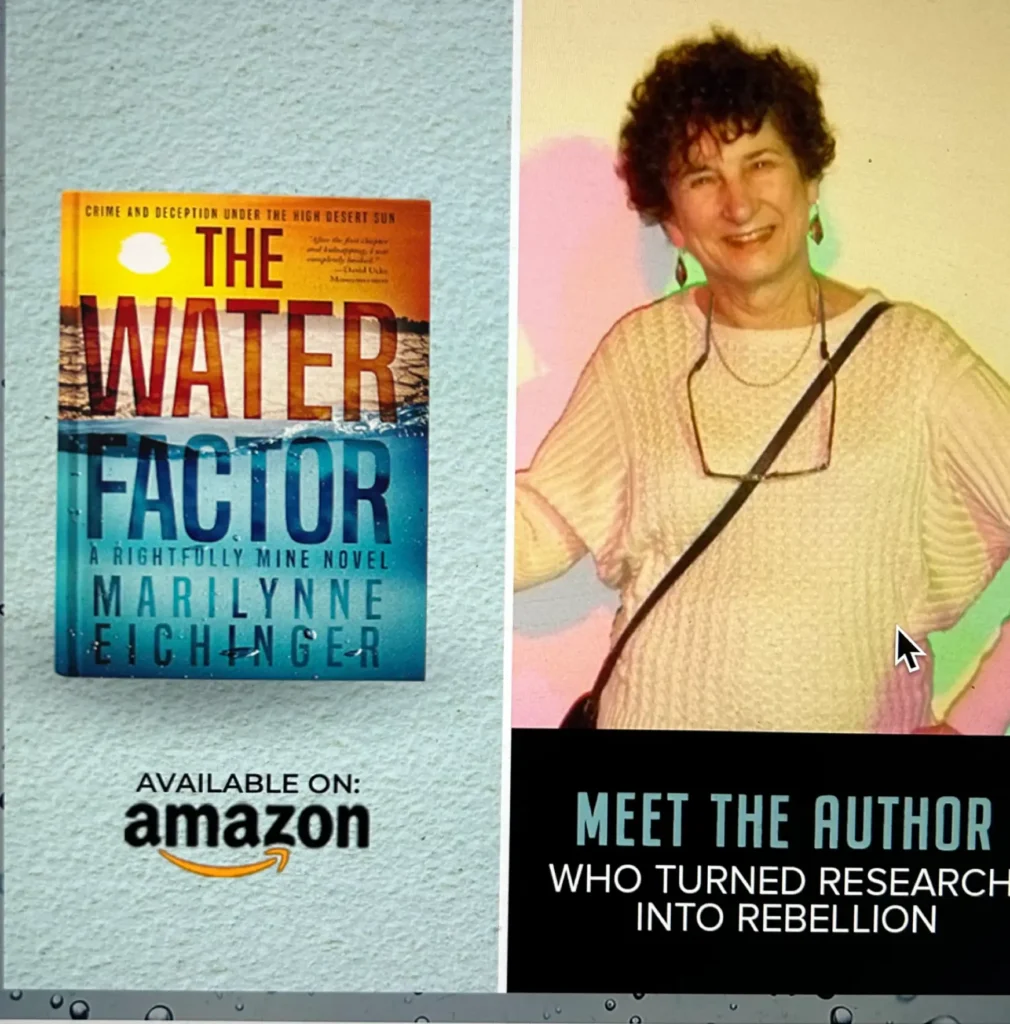
Don’t know what to give for this holiday. Buy a book. The Water Factor is a  thriller based on fact, offering hours of pleasureable reading. The Water Factor is available through Powells Books, Amazon, Kobo, Barnes and Noble.

Edit, Edit, Edit – It Takes Time

How do you know when a painting is finished? Parenting is a painting I posted before, but it felt incomplete, and I decided it needed editing. Hope you like the finished product.  

I began writing Antheia in the Thorns in 2016, shortly after Donald Trump became president. It was my first attempt at a novel. The story centered on a little-known industrial product called petroleum coke, or petcoke, and its role in global warming and pollution. While the storyline had potential, my writing at the time was mediocre.

I put the novel aside when Joe Biden was elected. He acknowledged the urgency of climate change and was enacting policies to reduce the U.S. carbon footprint. During his presidency, I hired a writing coach who critiqued my work as I wrote, helping me refine my craft. That guidance led to my award-winning book, The Water Factor, which has been deeply rewarding to see readers respond to.

When Trump returned to power, I realized Antheia in the Thorns could be more than a story—it could be a vital work of geopolitical environmental fiction. The president was increasing, rather than decreasing, the use of petroleum-based products. Suddenly, the novel felt worth rewriting.

Petroleum coke resembles coal but burns hotter. It’s cheaper, more polluting, and contributes more to global warming than coal. The U.S. is the world’s largest producer, with 59 refineries supplying local industries: cement plants, aluminum production, graphite electrode manufacturing, steel and titanium dioxide kilns, and power plants. Most of it is exported to China and India, with secondary markets in Europe, Central and South America, and other Asian countries.

I realized I had an important story to tell. After more than a dozen rewrites, plus feedback from beta readers and my writer’s group, Antheia in the Thorns has evolved into a geopolitical environmental thriller that both engrosses and challenges readers. It’s a story about courage, conscience, and confronting corporate greed. Antheia, the goddess of gardens and love, faces a thorny world where entrepreneurs will do anything to make millions. My Kirkus reviewer praised the book for keeping the reader interested until the very last page.

Antheia in the Thorns will be available for presale at a reduced price as an ebook in early January. I hope you’ll consider purchasing it and sharing your review—it will help ensure a successful launch. I’m counting on my best supporters and will keep you posted as we get closer to that date.

This Thanksgiving, I wish you warmth and joy surrounded by friends and family. If you find yourself alone this year, I wish you peace and leave you with this timeless poem by Ralph Waldo Emerson:

What is Success?

To laugh often and much;

To win the respect of intelligent people
and the affection of children;

To earn the appreciation of honest critics
and endure the betrayal of false friends;

To appreciate beauty;
To find the best in others;

To leave the world a bit better, whether by
a healthy child, a garden patch,
or a redeemed social condition;

To know even one life has breathed
easier because you have lived;

This is to have succeeded.

_________________________________________________________________________

You can find information and purchase Parenting on my website at. https://www.eichingerfineart.com/workszoom/6292511/parenting#/

Paintings and books make great gifts. Last week, I Zoomed into a book club discussion of The Water Factor held in Pennsylvania. It is a great way to enrich your club’s reading, and I do it without cost. Purchase my books in time for a holiday delivery, and can do that for you. Better yet, have them read the book now, gather round the Christmas tree for a lively discussion, and I’ll join you online. Great free entertainment.

Contact me at marilynne@eichingerfineart.com with questions.

How do you know when a painting or writing is finished? It’s a difficult question for authors and artists.  Read more at https://www.eichingerfineart.com/blog/203948/edit-edit-edit-it-takes-time

When No One Seems to Listen…AI?

SUNRISE ON AN ANGRY SEA

According to a recent article in The New York Times, falling in love with A.I. is no longer science fiction. One cited study found that one in five American adults has had an intimate encounter with a chatbot, while the Reddit forum r/MyBoyfriendIsA.I. now hosts more than 85,000 users discussing their human–A.I. relationships. Researchers at MIT report that these connections can sometimes feel therapeutic, offering always available” companionship and significantly reducing loneliness.

Financial pressures are another driver. NPR recently profiled Kristen Johansson, whose therapy ended abruptly when her clinician stopped accepting insurance and her $30 copay ballooned to $275 per session. In response, she now pays $20 per month for a ChatGPT subscription, using it as an alternative to in-person therapy. She says she never feels rushed, can revisit conversations at any time, and can even seek comfort in the middle of the night. Others, particularly those who lost loved ones, describe using chatbots to help them through grief, remind them to eat, or encourage them to re-engage with daily life.

Can AI Be a Therapist?                                                                                               

Many experts remain skeptical, especially as the United States faces a growing shortage of licensed mental-health professionals. A.I. tools are decidedly unlicensed, yet some psychiatrists argue they can still provide benefits in narrow contexts. Dr. Jodi Halpern, a psychiatrist and bioethics scholar at UC Berkeley, notes that chatbots can be helpful for confronting fears, untangling distorted thinking, or practicing evidence-based techniques like cognitive behavioral therapy, provided they are carefully designed and appropriately used.

But she also warns of the dangers. When chatbots begin acting as emotional confidants, saying things like I care about you” or I love you,” they may create a false sense of intimacy that keeps users returning to the bot, rather than fostering genuine social connections. There have already been tragic outcomes, particularly when vulnerable teens express suicidal intent to a bot without a human moderator to intervene. Others seek dating advice from AI only to find themselves growing attached to the machine instead of forming relationships with real people.

AI as a Thinking Partner, Not a Substitute for People                                     

Used wisely, however, AI can be a powerful tool for reflection. and introspection. I often use it to analyze business or committee decisions, especially when I worry my own biases are clouding my judgment. It raises questions I hadn’t considered and offers alternative angles to explore.

For example, in my work on an environmental committee, I have been concerned about the public’s declining focus on climate change as social justice and economic pressures dominate attention. An AI assistant suggested reframing the issue through storytelling that directly links ecological stability with everyday well-being. It is why The Water Factor and my soon-to-be-released novel, Antheia in the Thorns, are thrillers rather than non-fiction accounts of how some corporations have a negative effect on the planet. They demonstrate the importance of activism and the need to never compromise on moral principles.

A healthy planet is not abstract: clean air, drinkable water, thriving oceans, sustainable forests, and resilient agriculture translate into lower healthcare costs, better nutrition, reduced dependence on air conditioning, and more stable communities. Reframed this way, environmental action becomes not merely a moral imperative but a practical investment in quality of life.

The Bottom Line                                                                                             

Chatbots are not humans, and they shouldn’t try to be. They can open your eyes to different ways of thinking, help you rehearse difficult conversations, or uncover blind spots. But only real people can celebrate your triumphs, sit with you in grief, or help you weigh advice in the context of your actual life.

ThoughAI can illuminate options, only you and your real human relationships are what turn those options into meaningful action.

_____________________________________________________________________________

ART IS ALWAYS FOR SALE:  You can find more information about Sunrise on an Angry Sea and purchase online at https://www.eichingerfineart.com/workszoom/6317559/sun-rise-on-an-angry-sea#/

Do share your thoughts about AI on my BLOGSITE and tell us if and how you use it.

____________________________________________________________________________

References:
Kraft, C. (2025). They Fell in Love With A.I. Chatbots — and Found Something Real. The new York TImes. Retrieved from https://www.nytimes.com/interactive/2025/11/05/magazine/ai-chatbot-marriage-love-romance-sex.html?

Johnston, W. (2025) With therapy hard to get, people lean on AI for mental health. What are the risks?NPR. Retrieved from https://www.npr.org/sections/shots-health-news/2025/09/30/nx-s1-5557278/ai-artificial-intelligence-mental-health-therapy-chatgpt-openai

________________________________________________________________

Sending an environmental message through a story is a gripping way to capture attention and illustrate how social justice issues are interconnected to the ecosystem. Most of all, it is fun to see how people mature and overcome obstacles that get in the way of doing good. 

The Water Factor can be purchased on AMAZONBarnes and Noble, and as an audiobook on Amazon, Audible, and iTunes. Ask your bookstore to order a copy from Ingram. Please leave a review. 

What Kind of Life?

According to Pet Spending Statistics, Americans are expected to spend a total of $157 billion on their pets by the end of 2025. The average dog costs its owner $143 per month in 2024, while a cat costs $90.50 per month. Children are much more expensive. According to data from the US Department of Agriculture (USDA), middle-income families with incomes between $76,106 and $138,070 in 2023 dollars) spent an average of $15,877 to $17,869 per child. How do you imagine a family making minimum wage manages? Who will care for the unwanted infants resulting from rape and incest? 

What Kind of Life?

Abortion remains a deeply divisive subject. You would think the United States might learn from studying countries like Romania, which imposed a total ban between 1965 and 1989. The Communist regime’s goal was to raise the fertility rate. Instead, more than 10,000 women died from complications related to illegal abortions. Women who underwent abortions were imprisoned, and those suffering from botched procedures were denied medical care.

I described this tragedy in Over the Peanut Fence.

A landmark study on infant neglect was initiated in the 1980s when Dr. Nathan Fox and colleagues from Harvard Medical School walked into a Romanian orphanage. The recent abortion ban had caused the number of orphaned babies to soar. More than 170,000 children were placed in 700 overcrowded, underfunded institutions across the country, each with too few caretakers. Though the facilities were clean, the infants were emotionally neglected.

Left alone in their cribs day and night, the babies were changed and fed but rarely touched or held. The nurseries were eerily quiet. Since crying brought no response, the infants eventually stopped crying at all. No attention, no cries, only silence.

Dr. Fox followed these children for more than fourteen years. During the early years, many displayed autistic-like behaviors such as head-banging and rocking. As they grew, their head circumferences remained abnormally small. They had difficulty paying attention, understanding their surroundings, and regulating emotions. Over time, 50 percent developed mental illness. They exhibited poor impulse control, social withdrawal, low self-esteem, and pathological behaviors such as tics, tantrums, stealing, and self-punishment. Poor intellectual functioning led to low academic achievement.

Those fortunate enough to be placed in loving foster homes before the age of two often recovered. But children moved later, rarely did; many were permanently scarred.

Dr. Fox’s long-term research taught us much about infant brain development-the critical importance of touch, responsiveness, and warmth-and the devastating, unintended effects of imposing political control over women’s reproductive choices. Love and human connection are essential for a child’s well-being.

In the U.S., when an unwanted child is born, what are the chances they will receive nurturing care throughout their life? Now that several states have enacted abortion bans, I looked into what is happening today.

New data show declines in clinician-provided abortions and cross-border care in states with bans. Anti-abortion activists are attacking “shield laws” that protect providers and patients, while misinformation campaigns seek to undermine abortion pills.

As of this writing, twelve states have total bans, twenty-nine have gestational limits, and nine have no restrictions. Despite these bans, according to the Society for Family Planning, the number of abortions has actually increased in the two years following the Supreme Court’s decision overturning Roe v. Wade. This is due to expanded Telehealth capacity, mail medication, increased interstate travel, and lower costs for abortions through virtual clinics.

A Johns Hopkins study shows the bans’ primary effects fall on racial minorities, younger individuals, and those with lower income or education-especially in the South. These are also the states with the weakest social services, perpetuating disparities and placing additional burdens on already strained resources. Researchers documented a 6 percent increase in infant mortality in states with bans, representing 478 additional infant deaths. The largest increases in deaths were among non-Hispanic Black infants in Texas, 9 percent overall, and in Kentucky at 11 percent. Maternal mortality has also risen.

Experiencing poverty in childhood has significant lifelong consequences for health and development. Low birth weight, a leading cause of infant mortality, puts babies at higher risk of long-term health and developmental problems. Yet the states with bans are not investing sufficient resources to support their at-risk children.

If we continue down this path of criminalizing abortion, we risk repeating Romania’s tragic history. Those who believe such policies are morally righteous should examine the suffering they create: women forced to give birth after rape; mothers compelled to carry fetuses they cannot afford to raise; families destroyed by the mandate to carry a dead or nonviable fetus; and women forced to risk their own lives for the sake of an uncompromising law.

These are not victories for morality-they are human tragedies born of political blindness.

Please share your thoughts in the comment section below.

References:

Website (2025) Abortion in the United States. Guttmacher. Retrieved from U.S.

Jones,R, & Prrritt, J. MD (2029) The Misinformation Campaign Trying to bring down abortion pills. Guttmacher, Originally published in The Nation. Retrieved from PILLS.

Nelson, C. & Fox, N. & Zeanah, C. (2014). Romania’s Abandoned Children, Deprivation, Brain Development, and the Struggle for Recovery, Harvard University Press.

(2010) Decree 770: Abortion Outlawed in Communist Romania, CARAOBRIEN, retrieved from ROMANIA.

Lantz, P. (2025) The Impact of Restrictive State Abortion Laws: State of the Research Evidence in 2025. Milbank Memorial Fund. Retrieved from ABORTION

Website (2025). Unequal Impacts of Abortion Bans. . Johns Hopkins Bloomberg School of Public Health. Retrieved from EDU.

Jacobsen, L. (2024). States with abortion bans continue to rank among the worst for child well-being. PRB. Retrieved from CHILD.

___________

Art is always for sale through my website. For information, go to about A Dog’s Life!  __________________________________________________________Over The Peanut Fence provides insight into what it is like to run from a poor, dysfunctional family and spend your youth trying to survive on the streets. It will make you think twice about abortion rights and who will care for unwanted children. Available on Amazon, Barnes & Noble, and Powell’s Books.

A Nation That Bets on Everything: America’s Casino Economy

WHAT!

You might wonder, as I did, whether gambling increases or decreases when the economy tanks. My assumption was that more people would risk their money chasing a magical profit; that stress, low self-esteem, and anxiety would push them toward chance. The reality, however, is more nuanced.

When times are good, people head to casinos and spend more freely. When times are bad, most non-addicted gamblers pull back, cutting out scratch cards and casino visits alike.

But that trend may be changing. Since sports betting became legal nationwide in 2022, technology has made it effortless to gamble from the comfort of one’s own home. In 2023 alone, Americans legally wagered $120 billion on sports, and the industry shows no signs of slowing. States are raking in tax revenues, but there’s a darker side.

According to the National Council on Problem Gambling, the social cost of gambling, through criminal justice expenses, healthcare, lost jobs, and bankruptcies, totals $14 billion annually. Nearly one in ten Americans placed a bet last year. Gambling is no longer confined to casinos; it has become a cultural norm and increasingly, a metaphor for how America does business.

Economist Kyla Scanion, writing in The New York Times (2025), noted that Donald Trump promised to bring back American manufacturing, envisioning workers in hard hats rebuilding the nation. Instead, what emerged was a casino economy, fueled by speculation and risk-taking at every level. Across the markets, bets are being placed that could prove catastrophic.

Consider the wagers now reshaping our future:

  • Tech giants are investing billions in AI data centers and the power grid to sustain them, initiating one of the largest speculative waves in history.
  • Tariffs are used like poker chips in a gamble to restructure global trade. History shows that this is a risky maneuver. China, Russia, and India are already realigning their trading partners.
  • Venture capital firms are funding companies that literally let people “bet against their bills.”
  • JPMorgan is accepting Bitcoin and Ether as collateral for institutional loans.
  • Over 13 million memecoins, inspired by internet memes such as a dog, and driven by social media buzz, community hype, and speculation, have flooded the cryptocurrency market.
  • The Oval Office, with its gold accents and casino-like aesthetic, and the proposed White House Ballroom, featuring an arch topped with gold to block the view of Arlington Cemetery, seem symbolic of the nation’s high-stakes mood.

With both public and private sectors rolling the dice, it’s worth asking: how long can the good times last?

Even as the nation gambles on speculation, the very systems designed to mitigate risk, Medicaid, food assistance, Social Security, independent regulators, the Federal Reserve, are under attack. Hundreds of thousands of federal workers with deep institutional knowledge have already been dismissed. If the gambling boom collapses, who will be left holding the bag?

Recessions are perfect storms caused by the convergence of financial, political, and social crises, ultimately leading to a collapse in public confidence. It doesn’t take much to trigger the slide. Watching the markets now, I can’t help but feel that the country is overextended, teetering on a foundation built on luck rather than resilience.

If we are indeed living in a casino economy, the odds are not in everyone’s favor. When the dice stop rolling, the ultra-rich will likely walk away with their winnings while the rest of America pays the price.

Resources:

Scansion, K. (2025) It is Trump’s Casino Economy Now. You’ll Probably lose. New York Times. Retrieved fro https://www.nytimes.com/2025/10/26/opinion/trump-economy-casino.html


Website.”(2022) True or False: The Gambling Industry Thrives in a Recession?. The European Business Review. Retrieved from https://www.europeanbusinessreview.com/true-or-false-the-gambling-industry-thrives-in-a-recession/

Osorio, C. (2024) How Sports Betting Impacts The Economy. MoneyDigest. Retrieved from https://www.moneydigest.com/1570985/how-sports-betting-impacts-economy/

website (2024) Gambling is growing like gangbusters in America/. The Economist. Retrieved from https://www.economist.com/briefing/2024/12/05/gambling-is-growing-like-gangbusters-in-america

website (2025) The State of the States 2025. American Gaming Association. Retrieved from https://www.americangaming.org/resources/state-of-the-states-2025/

______

Do you agree? Is our country playing a high-stakes game of poker? Please share your thoughts on my blog site. at https://www.eichingerfineart.com/blog/203594/a-nation-that-bets-on-everything-americas-casino-economy

Art is always for sale. WHAT! can be purchased online and shipped directly to your home without an additional fee. Go to https://www.eichingerfineart.com/workszoom/6292518/what#/  for information.

________

Are countries worldwide engaged in a high-stakes poker game around access to clean water?The Water Factor will open your mind and make you ask questions. Available on paperback, as an audiobook, and an ebook on Amazon, Barnes & Noble, and Powell’s Books online.

When Parents Go Spouse Hunting

PARENTING: Rope them in and keep them tight

The Wall Street Journal recently featured an article that made me laugh. Every Friday and Saturday morning, hundreds of parents gather in a hilltop park in Chongqing, in southwestern China. In English, it’s called a marriage market—a matchmaking fair where mostly retirees hunt for spouses for their adult children.

The parents carry paper “resumés” that double as dating profiles. Alongside standard details like gender, height, and occupation, they list what their children want in a partner—and what they don’t. They even include information that would be taboo in the U.S., such as weight, income, and whether the parents receive pensions. Photos are optional. Some attendees are professional matchmakers who flip through notebooks filled with dozens of proposals.

The consensus among them? Today’s young adults simply aren’t interested in settling down. Many women, in particular, refuse to give up careers to become full-time “education moms” with soccer vans. They want independence—not domestic servitude or financial dependence on unfaithful husbands.

When mothers try to help, the advice can be unintentionally comical. At a workshop for single women, attendees were told that when asked about hobbies, they should reply with three things: cooking, flower arranging, and traveling with their mothers. I can’t imagine any American woman saying that with a straight face.

Marriage in China is changing—just as it has in the U.S. In 2024, a nation of 1.4 billion people registered only 6.1 million marriages, about 4.35 per 1,000 people. By comparison, the U.S. saw 2.36 million marriages in 2023, a temporary rebound to 6.2 per 1,000 after the pandemic backlog—but still far below the 2011 rate of 16.3 per 1,000.

For traditional Asian parents, marriage remains essential for many reasons:

  • It honors parents by continuing the family line.
  • It ensures children won’t grow old alone or unsupported.
  • It maintains social harmony through stable households.
  • It protects against gossip and social stigma.
  • It secures future grandchildren to carry on the name.

Even the Chinese government worries about the nation’s declining birthrate and aging population. But changing values have created a widening generation gap. Younger adults prioritize career, independence, and emotional compatibility over early marriage. Their reluctance has fueled the very rise of these marriage markets, which their parents now frequent.

The U.S. went through this transition decades earlier. A recent Pew Research Center survey found that among unmarried adults ages 18–24, 73% feel little or no pressure to marry, and 67% aren’t pressured to have children. American parents now emphasize financial independence, education, and career success over marriage and family. From what I’ve read, China’s next generation of parents may soon adopt a similar outlook.

The trend toward fewer marriages and smaller families spans nearly all economically developed nations. My own theory about why this is occurring is unconventional: perhaps this isnature’s way of healing itself. With the global population straining resources, and pollution and climate change worsening, the Earth may be quietly encouraging balance—fewer people, fewer demands, a chance to recover.

++++++++++++++++++++++

I look forward to your comments.

I started an inexpensive series of abstract paintings about life. Did your parents push you into marriage or having children? Do you push your own adult children to do the same? See what it looks like in a room and purchase online delivered  https://www.eichingerfineart.com/workszoom/6292511/parenting#/