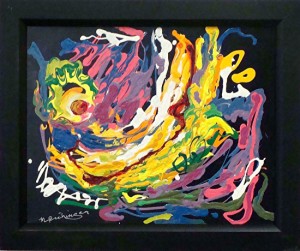
A Whirlwind Descends

Heaven-and-Beyond

Heaven and Beyond
The spinning universe brings a mixture of emotions to earth.
/ Acrylic on Canvas / 20” by 24 “/ $399

A Whirlwind Descends

Each December a whirlwind descends, causing most everyone to join in a helter-skelter flurry of activity. Love it? or hate it? Holidays bring out many emotions. I happen to thrive during the holidays, looking forward to large family gatherings of children and grandchildren. Chaos, noise, and mounds of dishes never bother me though my back often creaks by the end of the holiday visit. I spend weeks looking for the perfect gift for each person, happily wrapping them in my basement surrounded by ribbons and bows while listening to jazz.

My husband, on the other hand, dreads the holidays. The confusion and noise of my large family makes him want to retreat to a man cave. He prefers visits from one family at a time and cringes when all 22 people descend on our home. The cat also hides. Thank goodness he is tolerant. Part of my job at holiday time is to arrange quite places and times for one-on-one conversations so he feels comfortable.

A common emotion at holiday time is sadness. Thank goodness, there is no time for that with our large family, but I do know of many people who can not go home for the holiday to reconnect with friends and family. Holiday decorations and carols may remind them of a happier moment from their past, bringing back nostalgic memories that can never be duplicated.

As the winter solstice approaches and the nights become long, people throughout the ages have found reasons to celebrate. Religious as well as secular practices, remind people that life has cycles, the seasons change, the sun will return, there is hope for mankind and there are many fine reasons to celebrate. Festivities have always drawn people together, reinforcing a sense of community and shared values. It is also a time for remembrance of those who are sick, poor and lonely, those who need special attention. Giving swells hearts and people feel good thinking of others. It is why we see an increase in charitable donations, gift buying for the needy and invitations given to guests who are alone.

There isn’t really one way of approaching the holidays, but to embrace the season’s spirit it helps to take the feelings and needs of others into account. When purchasing a gift I ask myself if it really contributes to the growth and well-being of the recipient. Is it educational? Can it be shared? Is it green?

There are lots of opportunities to show love and affection so I enjoy activities that get everyone involved. The goal, of course, is to leave that warm feeling in the belly of everyone. One year each person in my extended family pulled a name out of a hat and was assigned the task of creating something special to honor that individual. One parent assembled photographs and published a book about her son, another wrote a short story. Several children contributed handcrafted items. One painted pottery and another made a potholder. My granddaughter wrote and sang a song while her younger sister played the harp. The youngest child made a picture for his Dad that looked something like a two-legged dinosaur. Our family sat around oohing and ahhing as the gifts were unveiled.

Play reading was another activity we got involved in during several gatherings. Parts were distributed and everyone joined in with their best acting voices. Imagine reading a Shakespeare comedy in plainspoken English that even young children can understand.Try it, it really is a good read!

Putting a 3-D puzzle together was an annual ritual in our household. As soon as the first person arrived at our home, the card table got cleared, a white board set up and a complex puzzle that takes days to assemble gets put together with everyone’s help. It has was quite challenge working on the New York 3 D puzzle.

With a bit of planning, it is easy to get the entire family to feel a welcomed part of the festivities. These moments become the new memories built on a holiday spirit that everyone can embrace.
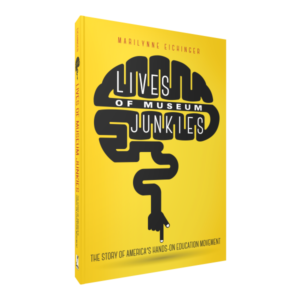
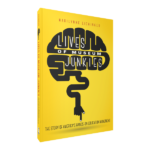
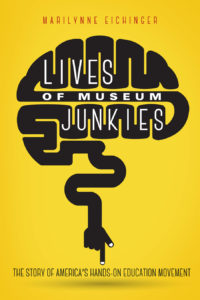
Lives of Museum Junkies Book

Lives of Museum Junkies: The Story of America’s Hands-On Education Movement
Available on Amazon, Powells and Borders Books

SAVE THE DATE: Annie Blooms Books, Multnomah Village, Portland, OR – Talk and signing for Lives of Museum Junkies. The event starts at 7 PM.
Still STEAMing!

1353607x240

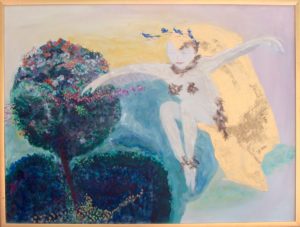
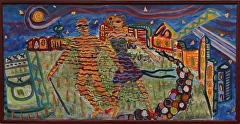
Walking on Air, by Marilynne Eichinger
Painting made after visiting Bath, England.

The following article was written by my son, Ryan Rosenberg for the Los Gatos Education Foundation. It is an appropriate follow-up to my blog about STEAM education. Thank you for the many comments and suggestions you made to that particular article. The only parts I changed were the pictures.

Study finds arts, music can be the “secret” to a successful tech career 9/26/2016

Successful tech entrepreneurs seem to have a surprising “secret” to their accomplishments – studying art, music, and hands-on creative activities (such as wood or metal working).

A study published in the journal Economic Development Quarterly (1) found that participation in artistic activities boosts the chance of entrepreneurial success in technical fields.

Researchers followed a group of Michigan State University honors college graduates from 1990 to 1994 who majored in science, technology, engineering or mathematics (STEM).

Graduates who were successful entrepreneurs — those who went on to found companies or produce patents — were significantly more likely to have had participation in art, music and hands-on creative activities than those who did not.

And it’s not just entrepreneurs who benefit from the arts; a strong link was found with STEM graduates overall. In fact, the STEM practitioners in this study were 62% more likely to have had classes in visual arts than the general population, 59% more likely to have been taught music, 39% more likely to have had dance instruction, and 38% more likely to have taken acting lessons.

So how does their music, arts, and hands-on creative experience help these engineers and scientists in the real world? It seems artistic thinking is crucial to their work.

The study asked participants to identify the types of tools they used for problem-solving and found, “as one would expect of science and engineering professionals, the vast majority reported using logic while doing their work…[but] an overwhelming majority also reported using ‘artistic’ styles of thinking: 95.3% reported using exploratory play as a method of problem solving; 80% reported using either intuition, imagination, or both; and about 80% reported using analogies. In other words, these successful STEM professionals use ‘artistic’ types of thinking at work just as often as they use stereotypical ‘scientific’ modes of thinking.”

In summary, researchers determined that “participation in various arts and crafts positively correlates with the production of patentable inventions and the founding of new companies, and can differentiate the entrepreneurs from less innovative individuals, even among a group of highly successful individuals such as Honors College STEM professionals.”

Reference:
Arts and Crafts: Critical to Economic Innovation
LaMore et al., Economic Development Quarterly, August 2013, 27 (3), p. 221

Guest Author – Ryan Rosenberg for the Los Gatos Education Foundation

artwork is always for sale. Contact me at marilynne@eihingerfineart.com.
Walking on Air -Acrylic on Canvas / 25.5” by 49.5” / $ 650

Did you find your passion?

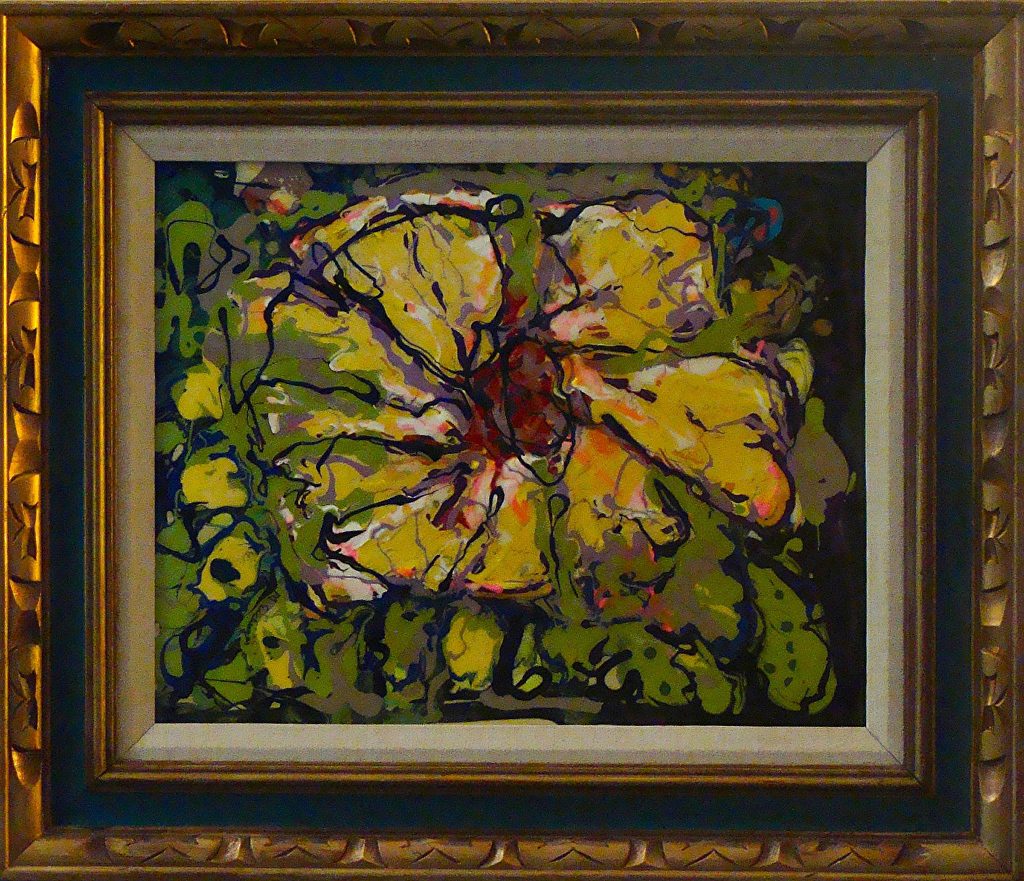
Grand Prize – Passion Flower

How did you find your passion?

This morning my NIA (non-impact Aerobics) teacher mentioned that 30 years ago at the height of the high impact aerobics craze she went to a conference where she participated in an exercise class with approximately 500 participants.  It wasn’t long before half the class left because, rather than stressing boom-boom, jump and twist movements, it stressed grace and centering practices that come from engaging in modern dance and practicing marshall arts. My teacher was ecstatic since  with a smaller crowd there was more room to stretch and move about. She said that by the end of the class she had tears in her eyes.  The zen-like program spoke to her. She had found her passion, her life’s ambition, and a career that still engages her after 30 years.

Her story made me consider how I discovered the focus that directed my life. It was not long before I realized it was accidental. When I speak of passion, I mean that can’t stop myself from pursuing an interest. I love and embrace activities that keep my mind challenged and engaged in the community. At the core of my being a few dramatic events changed the course of my life.  Eventually, they led to embracing science education wholeheartedly as a career.

The pivotal point, however, started at home. 

I have always been influenced by my children and now grandchildren.  They are the reason I became interested in educational psychology in the first place. They are why I started a museum in my basement and why I became involved in art.  You might ask, “Painting? What does that have to do with education.?” I painted because I believe a well-rounded person is versed in the arts, humanities, and science.  I also needed to relax from busy jobs as museum director and mother. Art provides an avenue to practice creativity but it is also meditative.  Painting slows my mind which struggles with a ‘to do” list that seems to go on and on.  It is impossible to put a dab of paint on a canvas or draw a line and think of something else. Art also set an example for my children by demonstrating that hobbies are as important for developing a sense of who you are as work.  

In retirement I continue to pour an equal about of energy into painting, writing and speaking about how people learn.   I am hopeful that the books I write will touch someone’s soul as much as those I have read have influenced me.  This week I was notified of a review to be published by the San Francisco Book Review.  It is presented here because the reviewer’s insight touched me. He grasped my passion and expressed it well. I especial like the last line and know that a great many of my readers are in similar positions to change the world.

Lives of Museum Junkies: The Story of America’s Hands-On Education Movement
By Marilynne Eichinger
Publisher-Inkwater Press, $19.95, 396 pages,  Available on Amazon, Powells Books, Barnes and Nobel and local bookstores. 
 
Picture a museum in your mind. Did you imagine exhibits, roped-off bits and bobs from history meant to inspire, amaze, and educate, but always out of reach? Even today, this idea of the museum as the look-but-don’t-touch institution persists. But there is another way. For decades, hands-on education has sought to break down the barriers between exhibits and visitors, allowing interested minds of all ages the opportunity to interact with exhibits, to learn firsthand by experiencing scientific principles in action. And Lives of Museum Junkies chronicles the long journey behind bringing science and museums to your fingertips.
 
Marilynne Eichinger uses her story — the story of how the Impression 5 Science Center in Lansing, Michigan, was brought to life — as the framework upon which to mount an encouraging, inspiring tale of dedicated people forging their own path and establishing something new and exciting for their community. This is the story of hard-working, generous, driven people starting from scratch and building something unique, valuable, and hands-on. From marketing and sharing one’s brand to expanding an idea on a national and international scale, the stories of Eichinger’s work at Impression 5 and the Oregon Museum of Science and Industry encompass all aspects of community building, starting a business, and shifting people’s perceptions of just what can be accomplished when creativity meets commitment. Readers also get to meet other key voices and entrepreneurs Eichinger has worked with, people who have inspired her and who have helped blaze new trails for hands-on learning. These profiles bolster Eichinger’s mission to lend credibility to the hands-on museum movement and show the many different paths one can take toward achieving success in ambitious charitable works.
 
Although the many benefits of this truly useful style of education are touted here, Eichinger refuses to paint a rosy picture of the process. The author never shies away from sharing the missteps, obstacles, and hard lessons encountered along the way, including a truly shocking revelation that typifies the gender politics at the time and the long legacy of gender bias in this country that still impacts us today. By pulling science and learning out from behind the glass and velvet ropes of traditional museums, Eichinger helped spark a revolution in understanding how we learn and how to engage (and re-engage) young minds in fundamental concepts of science. Lives of Museum Junkies is part tribute, part handbook, and part inspirational guide, reminding us once again that a small, dedicated group of people can change the world… because they’re the only ones who ever have.  – Reviewed by Glenn Dallas for the San Francisco Book Review

Lives of Museum Junkies Book

Book Launch Party, November 3rd at Marylhurst University, Marylhurst, Oregon – 7 PM, in the Old Library. Come join the fun.

Artwork is always for sale – Contact me at marilynne@eichingerfineart.com

Grand Prize – Passion Flower / acrylic on canvas / 24” by 28” / $ 499

Filled with STEAM

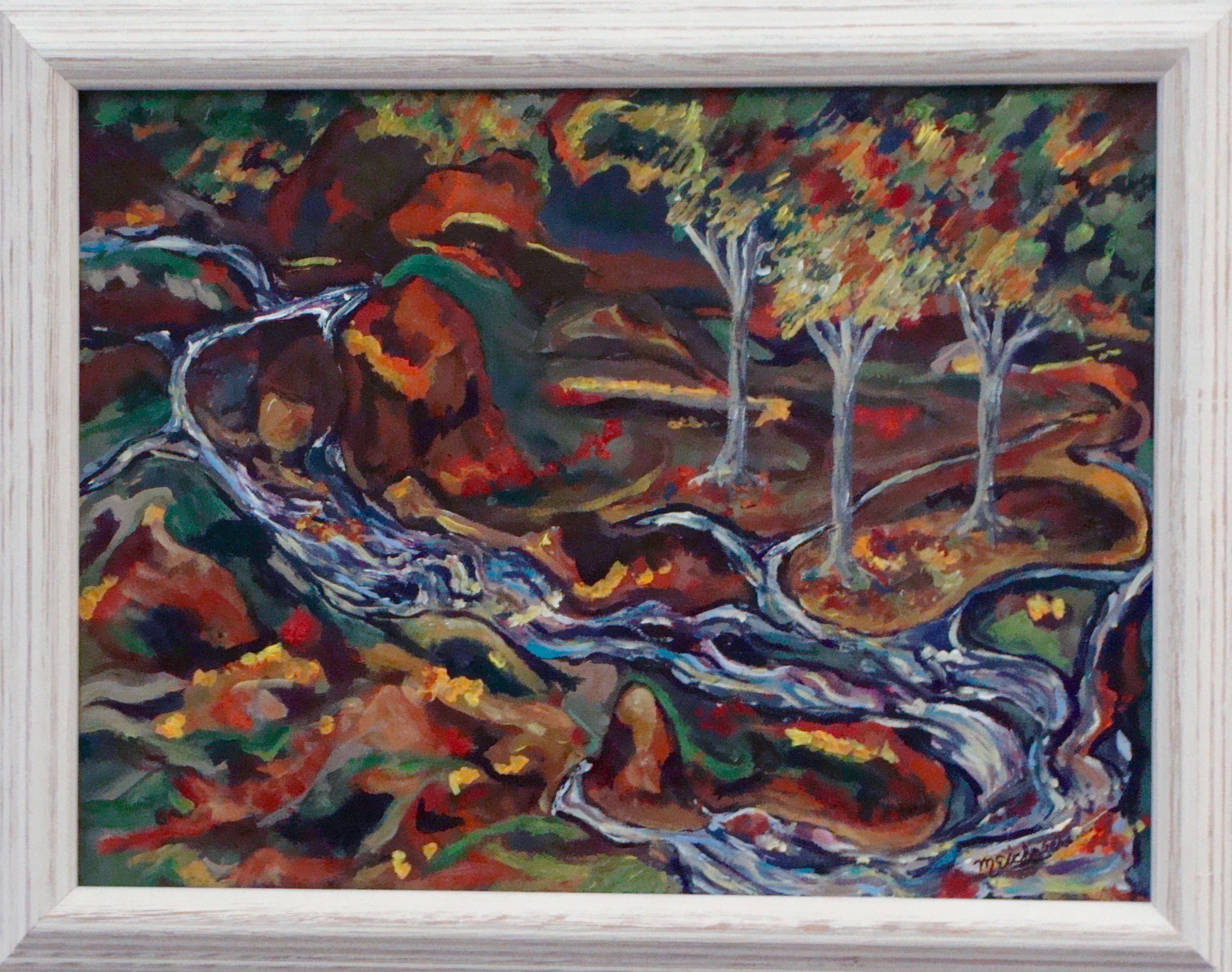
Autumn Breeze
Fall is a time of beauty that makes me consider the changing seasons, vibrant colors, and slow moving rivers in need of replenishing. It is science. It is art. It is comforting and it can be wild when rain and the wind batter the land.

Filled with STEAM

Many parents have heard STEM initiatives bandied about in education circles. Schools are now abuzz with programs that provide science, technology, engineering and math options to meet perceived needs for a technologically able workforce. This expanded curriculum has opened the way for more hands-on teaching. It is a good start.

STEM activities, however, fall short of addressing the needs of all students since they do not always engage those with a more humanitarian or artistic bent. To address this lack the formula is starting to change. By putting art (and design) into the acronym, some educators have given birth to STEAM.

The movement, championed by the Rhode Island School of Design among others, has also been fostered through festivals such as Burning Man where art and technology join in a burst of sensory stimulation. STEAM offers a way to reach those who claim disinterest or fear of science and math. Organizations like the National Science Foundation (NSF) are now collaborating with the arts and humanities by giving grants to multi-disciplinary proposals. NSF recognizes that people are needed to solve problems that deal with pollution, global warming, energy, bio-genetics and advanced technologies. Emotional appeals through the arts can lure those who are hesitant and reach new audiences.

I have many friends who claim they are only interested in the arts and humanities. “I have no head for numbers,” they say. Or, I don’t understand science and never read technical articles.” Yet, these same people may enjoy science fiction and are interested in history. They attend laser light shows, put shoes on their children with heels that flash when they walk and change cell phones regularly to own the latest technology. By tuning into their stated interests and working to entice them with fun approaches to learning, those who are hesitant can be drawn into wanting to understand science and mathematics.

Why bother with all this subterfuge you might ask? Because voters need to grapple with fracking, global warming, and genetically modified food if a democracy is to be maintained. Ignorance will allow technocrats, politicians, and economists to control our lives rather than the other way around. I see confusion regularly in people trying to understand statistics thrown at them from many sources. Numbers can be skewed and misunderstood if you do not have a basic understanding of statistics.

Science and art are intrinsically bound. The scientifically literate see nature through one lens while artists explore it through another. They meet in the middle. Understanding sound waves and how people hear has led to surround sound and improved speakers. Electronics enabled digital production methods to be integrated when producing concerts and films. Studies of gas led to neon sign artistry. Chemistry aides chefs develop seasoning blends and mixtures to tantalize our pallets. Steve Jobs understood that candy-colored sleek casings would shake consumers up and make his computers more popular than others. The interaction of biology and art on the public’s understanding of science is being explored by the Haseltine Foundation for Medical Science and the Arts and the New York Academy of Science.

Sesame Street also has joined the trend to use the arts promote STEM curriculums. “Elmo the Musical” is an interactive, fun-filled adventure created by Elmo and the child at home. With lots of singing and dancing, Elmo uses his imagination and math skills, such as enumeration, relational concepts, addition/subtraction, and geometric shapes to solve problems.” Other segments are being planned to combine the visual and performing arts with STEM.

I read of an anatomy professor who presents her beginning medical students with a CD of songs that help them memorize the various body systems The Nurses Medication song heard on YouTube aids nurses learn the names and uses of various commonly used of medications. For those with kinesthetic intelligence, Living AnatomME, was developed by two medical students in conjunction with the Director of Anatomyat Mt. Sinai School of Medicine in New York to teach musculoskeletal anatomy through yoga and Pilates.

The Cushman school in Florida is one of many embracing STEAM. Following is a sample of the type of curriculum they are offering. It is a good introduction to state of the art thinking.
“The implementation of our STEAM program allows students the opportunity to learn through real-life applications in the critical areas of Science, Technology, Engineering, the Arts and Math. Students become engaged in hands-on projects where problem-solving, collaboration, and the results of their efforts make the lessons more relevant than a textbook alone ever could. By creating real things that “matter,” STEAM, at its essence, is like the apprenticeship of a bygone era.  
 
Our new Innovation Center offers cutting-edge equipment in a free flowing workspace designed to encourage flexibility of thought and creative solutions applicable to today’s competitive marketplace. This active participation in society’s productivity helps students develop an entrepreneurial mindset and effectively prepares them to be leaders in the respective STEAM fields.

Our STEAM programming includes: 
 
• Artists-in-Residence program
• Architectural Design class using Revit
• Video Game Design using Alice software
• Music Composition using Propellerhead Reason (version 4) and Pro Tools 9
• Engineering and Robotics Clubs
• Lego and Vex Robotics
• Music Festival Series that brings professional bands to campus for concerts
• TD Bank – Financial Literacy 
• Common Threads – Teaching children how to cook wholesome, healthy meals through a professional led, curriculum-based program”

I am thrilled to see this type of effort going into education. It is similar to the message Science Centers have embraced for over the past 40 years. And it is a bandwagon worth you and your family joining.
Resources:

http://stemtosteam.org – What is STEAM

http://www.pbs.org/parents/education/music-arts/boost-memory-and-learning-with-music/ – boosting memory through music

http://www.cushmanschool.org/our-program/steam-initiative/ – Sample of a STEAM curriculum within a grade school.

http://www.nyas.org/Publications/Ebriefings/Detail.aspx?cid=1a6933bd-bdd8-422f-b5f8-815972a905aa Biology and Art, Two Worlds or One?

https://www.deepdyve.com/lp/wiley/living-anatome-teaching-and-learning-musculoskeletal-anatomy-through-xdok4g4KYB – Living Anatomy CD

Artwork is always for sale. Contact me at marilynne@eichingerfineart.com
Autumn Breeze – acrylic painting / 28” by 22” / $ 399.

For the Love of Learning

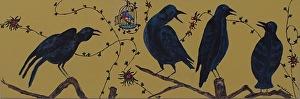
the gossips

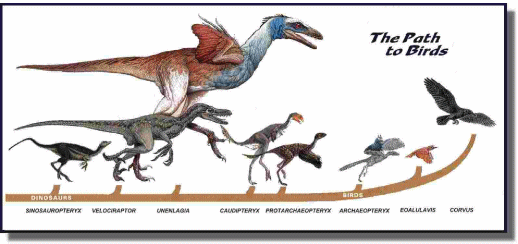
Are These Birds Dinosaurs?

dino_path_to_birdsThe Path to Birds
image from westcoastemiko.weebly.com

The Love of Learning

Last week I was in Tampa, Florida reliving my  life  as a museum junkie. Though I was ostensibly there to sell my book, I was  reunited with the passion for educating children I had when first starting a museum in my basement. Meeting past friends and enthusiastic staff at the beginning of their careers was invigorating. Once more I was comforted by the fact that there are good people ready to move our country forward towards better days.  Museum professionals are caring, tolerant and curious, all attributes I admire.

M During his chat, he called today’s birds dinosaurs. Apparently, there is evidence from over twenty dinosaur species that shows they had bird-like skin and feathers. Did you know that the Brontosaurus we studied as children had the skeleton one creature and the head of another that was unearthed in a nearby dig? Paleontologists in the late 18th century decided that the body was that of Apatosaurus and the head belonged to Camarasaurus. For years our favorite gentle vegetarian no longer existed in scientific circles. However, that changed recently. In 2015, just like Arnold Schwarzenegger, he returned. Paleontologists now think that Brontosaurus is different enough from the Apatosaur to be recognized on its own merits. Confused?

Discussions with colleagues ranged from issues around diversity to the latest brain research. We discussed drones, driverless cars and STEAM initiatives.  Practical matters such as fundraising, architecture, outreach programs and exhibitions were also on the agenda. I learned that museums built over 20 years ago like OMSI are facing major facility problems. Just like in a home, wall paint was peeling, roofs leaking, and carpets stained. Exhibitors struggled to keep out of order signs off of displays.

Money, money, money . . . what is to be done in a country that puts its resources into armaments rather than learning. Despite the fact that 92 million people visit science centers every year there is are inadequate resources going to support these institutions.   In second and third would countries the situation differs. China is building 250 well-equipped science museums in order to promote science literacy. Even Saudi Arabia has gotten on the bandwagon by building four, open to men on certain days of the week and women on others.

Most staff agreed that hands-on learning opportunities are not available to children as they were a generation ago. Noticing that kids are not permitted to play and problem-solve without hovering adults nearby was a  theme of many conversations. Moving in the ‘free-school’ atmosphere of a science center provides some relief. Yet  the experience could be improved with a larger variety of informal materials available to encourage more original thinking. Tinkering spaces are springing up to allow for more creative expression.

Tinkering space

It is difficult to serve the variety of learning styles and specialized needs of visitors.  But it is good to know that staff continues to try to understand their differences and understand how they learn.  Perhaps the day will come when as a nation we realize that there is nothing more important than educating children if they are to understand how to live in a technological environment that is also sustainable and inviting.  Maybe we will also realize that adults need to stay abreast of change if they are going to maintain a robust democracy that is fair to all.

references:
http://www.unmuseum.org/dinobront.htm – what happened to the Brontosaurus?

http://www.scientificamerican.com/article/the-brontosaurus-is-back1/ The Brontosaurus returns.

Art is aways for sale. Contact me at marilynne@eichingerfineart.com
The Gossips shown above is an acrylic painting, 12” by 36”, $ 350.

perf6.000x9.000.indd

To learn more about what goes on behind the scenes at museums read the newly released Lives of Museum Junkies available through Amazon, Barnes and Noble, Powells Books, Inkwater Press and many other local bookstores.

Dates to remember : Book reading/signing
October 11 – Broadway Books, NE Broadway, Portland
October 15 – Impression 5 -Lansing, Michigan – all day
November 3 – Marylhurst University, Old Library – 7 pm – Book Launch Party

Home as Museum

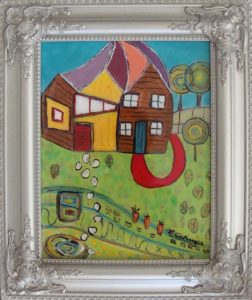
Coming Home /16” by 19” / acrylic with silver frame / $ 195

Open the door and what do you see? Is home an interesting reflection of you and do others enjoy it? Does it share your personality? Your history? Your curiosity about life?

The following excerpt is from my upcoming book Lives of Museum Junkies that is due out at the end of August. Look for information in upcoming blogs. I will be holding several book signings beginning in Tampa, Florida in September; Lansing, Michigan in October; and Portland, Oregon in November. Information will be forthcoming in the next few weeks. I look forward to seeing you at one of these events.

Home as Museum

“You can easily substitute home for museum and live in an environment made inspiring. Instead of exhibits, consider decorations, furniture and personal treasures. Architecture, use of space, selection and arrangement of furnishings, collections, and the way they are displayed all define you. How you move about your home, share treasures with friends and family, and teach your children to understand their cultural heritage becomes your way of passing on values.

Ray, my life partner, is a maker of totem poles and Northwest Coast masks. Outside of our home, there is a seventeen foot pole that has become a neighborhood marker. “Go to the totem pole and turn left,” is an oft heard direction given by acquaintances. The lower level of our house has both indoor and outdoor shop areas where carving and painting are pursued much to the enjoyment of nosey friends and those hiking an adjacent trail. Strangers who hear the tap, tap, tap of a hammer stop by wanting to know what is going on, and Ray gladly shows them his carvings, entertaining them with stories of Raven and Beaver.

Our home is filled with his carvings, my collections of pottery and masks, canvases that I paint, and art purchased while traveling. Our furnishings are arranged in a restful way, though presented as eye candy for our visitors. I enjoy living surrounded by the items Ray and I have either made or collected. Sharing them with friends lets them into our souls and initiates many conversations about culture, art, and even politics. Our friends often say when entering our home that it looks like a museum, only warmer and more welcoming.

Many children are first introduced to a cultural institution by visiting a children’s museum. These institutions are unique because the ingenuity they apply to educating the young is more than just exciting—it is engaging. Children spend hours engaged in activities such as playing in water (learning physics and hydrodynamics without realizing it), dressing up in period costumes (a study in history), constructing and plumbing buildings (engineering), and a host of other activities that involve physical as well as mental effort. Young visitors often are seen crying as their parents pull them from the building to go home. A secret to their success is that they are centered on the child and organize their spaces in a way that permits freedom of movement. Displays are built to withstand hard use. They encourage learning by using a variety of cleverly hidden techniques.

I encourage parents to think like a professional and start their own museum at home. What better place to inspire your own child than the relaxed environment of a play area or living room? According to The American Association of Children’s Museums, “A children’s museum is defined as an institution committed to serving the needs and interests of children by providing exhibits and programs that stimulate curiosity and motivate learning.” They encourage parents to interact with their children while in the museum in order to make the experience more meaningful.

That definition fit my family to a “T.” When we moved to Lexington, Massachusetts, a community without a hands-on museum, I decided that I could make my own home into one. The Boston Children’s Museum was much too far to travel to on a regular basis. Part of the challenge of my home operation was one of organization. I decided to set up my children’s basement playroom with a Montessori approach.”
_____________
Lives of Museum Junkies offers insight into how I went about doing this on a shoestring. I also encourage grandparents to consider their residences as their private museum. The accumulations from a life time of travel and just plain living can be organized and displayed in such a way as to fascinate friends and family alike. Perhaps you have thought similarly and share your treasures in a unique way. Do share on my blog site, eichingerfineart.com/blog.
_______________
Artwork is always for sale. Contact me at marilynne@eichingerfineart.com.
________________
For sale on Amazon by Marilynne Eichinger: The True Story of Streetwise, overcoming homelessness and beating the odds. Go to AMAZON .

Streetwise

The Importance of Touch

applauding-the-blues

       Applauding the Blues

Acrylic on canvas/ Gold Frame/ 23.5” by 19” / $ 495.00
Do you stop to look, touch or smell the flowers? Perhaps you even taste them.

The following excerpt is from my upcoming book, Lives of Museum Junkies. Due out in August it tells my story along with that of eleven other innovators who influenced the hands-on museum movement in the early 70’s. Publication information will be available in a few weeks.

The Importance of Touch
In 2012, a young social work student at the University of Rochester was featured in national publications as a most unusual entrepreneur. While studying brain and cognitive sciences as an undergraduate, Jacqueline Samuel became aware of the negative effects of living in a culture that does not sanction touch for its own sake. Throughout the world people are more willing to hold hands and hug friends and family than in the United States.

Adverse consequences of tactile isolation are known to be agitation, anxiety and aggression. Jacqueline decided that she would ameliorate the situation by opening a cuddle parlor she named the Snuggery. Her focus centered on bringing the healing power of touch to those who are tactilely isolated. The rules she and her employees devised were strict; staying clean, keeping clothing on and not engaging in any “funny business.” Her non-sexual touch emporium was singularly based on the platonic need for physical closeness. Business boomed, spurring copy-cat cuddle parlors throughout the country.

One even opened where I live in Portland, Oregon.
You might wonder what type of person needs to pay $60 for an hour hug? Clients come for a variety of reasons and include those on graveyard shifts returning home to empty beds, the physically handicapped and the chronically depressed. There are thousands of people, many elderly, others single or with a physical disability who are never touched, held, or hugged. Having a friend to talk to and being cuddled is important for overall emotional well-being.

Jacqueline’s insight is backed by volumes of research showing how touch reduces cortisol, the stress hormone that suppresses the immune system. The Touch Research Institute at the University of Miami is a center that concurs with Jacqueline’s concerns. They recently completed a study showing that teens who lack hugging are more likely to be aggressive than their peers who are regularly hugged. Elderly people who are touched are healthier and less likely to develop dementia. Premature babies who are stroked gain weight faster than those who are not and infants who lack adequate physical and emotional attention are more likely to have behavioral, emotional and social problems as they age. And now we see that tactile learning can also be highly effective.

Hands-on museums are cognizant of sensory research, and tactile solutions especially form the basis of many of their activities. Not only do people need physical contact with others but they also have a need to touch and play with objects. A friend of mine shared an insight that it was not just his auditory sense that made him enjoy playing the piano, but his tactile contact with the keys. . . . . .

My work in the museum field was influenced by an exercise I had to complete as a graduate student in psychology. One of my assignments was to write a paper imagining what it would be like to lose each of my senses. I was also directed to explore my feelings about loss of sexual sensitivity. To start the exercise I would sit for an hour in an easy chair imagining myself as a blind or deaf person. As I delved into the assignment, I was surprised to realize that losing my hands would be one of the most horrendous handicaps I could have. The hour spent with handless imagery was torturous, leaving me scared, almost frozen. What if I could not touch a door knob or wave my hands while talking? How horrible it would be to not be able to tousle my child’s hair. Touch was not the only sensation that affected me deeply. I quickly realized that losing my sight would be just as awful. As a visual and tactile person I am so fortunate to have both of these faculties.
Each of us is controlled by biological predilections and we are most happy when we allow daily activities to be guided by these predispositions. . . . .

Understanding a child’s sensory preference helps parents and teachers design appropriate educational programs. The visual learner may love reading books, but there are many children who are hesitant readers and need to be drawn into the learning process through an alternative sensory route. A history teacher might design a curriculum for tactile learners by challenging them to make dioramas. The process still requires the children to read in order to know what to include in their 3-D pictures, but their interest in the project will be internally motivated. . . . .

Parents, grandparents, friends and teachers please think twice before you tell a child not to touch. Your curious child might just need a little guidance to encourage safe and constructive activities that take advantage of his or her way of communicating. Remember, a broken glass can be dangerous but there are safe ways to turn broken glass into a mosaic . . . touch me, touch me not. . . . .

_______________________________

This summer is a good time to let your children wander and experiment by using the sensory mode they most prefer. A warm hug for effort will go a long way towards developing their passion for learning. And by the way, we parents and grandparents love hugs as well. They provide wonderful feelings of well being.

I look forward to your comments below.
Art work is always for sale. Contact me at marilynne@eichingerfineart.com

For sale on Amazon by Marilynne Eichinger: The True Story of Streetwise, overcoming homelessness and beating the odds. Go to http://www.amazon.com/dp/B01AAXMJOGThe

Streetwise

Exploding Emotions

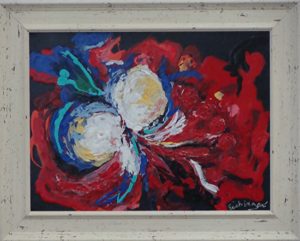
1662376l copyTwin Stars Exploding
Acrylic on Canvas / 16” by 20” / $ 299
Explosions are part of creation. When the product of emotions, they can get channeled for good as well as evil.

Exploding Emotions

Last week I wrote about passion. Due to the horrendous attacks in Orlando my thoughts turn towards anger because the two can be intimately intertwined and also because I need to understand why such things happen. Aggressive behaviors often result from a person passionately embracing a cause that was triggered by real or perceived injustice. Anger festers and churns  eventually became so violent that like a volcano it erupts in an explosion that does great harm to others in the name of passion for a cause.

A terrorist’s violence usually does little good to further his or her stated purpose. Instead, a common public reaction is to close down empathy, shut off communication and increase vows to retaliate. Horror, hatred, punishment and revenge are the overwhelming outcome and questions of why it happened in the first place take a back seat.

In the United States, most of us espouse change by law and not violence, yet a great many frustrated individuals resort to aggression when their way is not endorsed. People who are not heard may decide that the only way to get attention is to maim, kill or destroy property.

I was intrigued by a sentence in a book by Joy Kogawa about the plight of Japanese-Canadians during World War I I.  In ITSUKA she writes about a eulogy given at a funeral. “He praises his dead friend because he never complained, because he paid the price for harmony in a world of discord. He did not add to the din. He was obedient to the command to be meek, but he did not in the end, I am thinking, inherit the earth.”

What is the way forward? Is it better to be quiet and not make waves or to live in the wild west and take law into your own hands? Do we continue to interpret “the right to bare arms,” as permission to use assault weapons? If not to kill then why does anyone need such a lethal machine? It certainly is not for sportsmanlike hunting purposes.

Consider religious fanatics who burn abortion clinics and shoot their doctors. Most of those killers consider themselves to be religious practitioners following the teaching of God. Unfortunately in support of their actions, Christianity, Judaism and Muslim religions are replete with hateful statements about non-believers. Yet, there are also many passages that speak of love. The new testament says, “turn the other cheek” and the ten commandments include, “thou shalt not kill,” but self-righteous fanatics ignore those teachings and commit the very crime they abhor. How did they become radicalized and care so little for humanity?

According to an article by Jennifer Williams for Vox, there is no one religion that can shoulder the blame for violence. It is found among followers of all religions and of every political persuasion. But becoming “radicalized” is not the same as becoming a terrorist. Many individuals who follow extremist views are not violent. Of the 318 events identified in an FBI report only 7% were attributed to Islamic extremists.

The article mentions societal factors associated with a higher risk of radicalization;
• The presence of a large minority population that is socially, politically, and economically marginalized
• Treatment of certain groups as “suspect communities” that are subjected to invasive and overbearing counterterrorism efforts
• A cultural or political hostility toward religion in general or Islam in particular
• Unpopular foreign policies, such as support for repressive regimes or involvement in a military campaign, especially in a predominantly Muslim country (or several of them)
• The presence of preexisting recruitment networks

Following are a few of the individual risk factors;
• Personal ties to an already radicalized individual
• A sense of personal failure, often tied with a yearning to do something important and meaningful with one’s life
• A desire for adventure, rebellion, and life experience
• The need to belong
• Feelings of compassion and concern for the suffering of others with whom one feels some kind of personal connection, often (but not necessarily always) co-religionists
• And, of course, good old-fashioned teenage angst

And NPR reporter mentioned the possibility that the Orlando shooter was confused by his own sexual identity. For years he paid visits to the gay nightclub he massacred. There is no one path to radicalization but the most common either begin in prison or derive from the internet, social media and personal ties to friends and family. . According to Bruce Hoffman in The Daily Beast, terrorists are motivated by altruism, albeit misguided, feelings of self- defense, and a commitment to their faith with the belief that they are divinely commanded. They are difficult to locate in advance which makes dealing with them so difficult.

It is my opinion that we need to rethink our counterterrorism policies by diffusing individualized feelings and working to neutralize organizations that are a threat to our way of life. We need to find ways of changing people’s minds so terror will never be considered a way forward. To do so systems have to be in place that listen to both individual and organized group complaints so that people feel heard. Mental health services can be utilized to help confused, disgruntled people and criminal zealots who have lost their way.

I remember when an close acquaintance of mine allowed his 13 year old daughter to accompany a friend to an evangelical Christian summer camp. It took only one week for her to become brainwashed. Campers were required to stay up past midnight when they were exhausted and vulnerable in order to participate in mind altering services. They were even told how to deal with their parents upon returning home. My friend had to send is daughter to a psychologist who specialized in cult post-trauma recovery. I now understand how easy it is for a vulnerable person to be brainwashed and how difficult it is for that individual to renounce newly adopted beliefs.

There is much that can be done to combat terrorism. Politicians can pay special attention to all of their constituents, not just those with money or share their biases. For instance, many oppose Syrian immigration to the U.S., and though I am not one of them, it is important to listen, reach out and discuss various viewpoints and options before making a decision that affects the country. Citizens want to be heard and responded to with dignity. They have a right to feel comfortable in their homes, not afraid to travel freely and satisfied that their concerns are being addressed.

Government could help by responding more quickly to the needs of the growing army of ignored citizens, many of whom are poor and jobless. The press could be supportive by focusing less on inflammatory remarks and reporting on the news rather than sensationalism. What happened to programs by Edward R. Murrow, John Cameron Swayze, Huntley and Brinkley, Barbara Walters, Tom Brokaw, Peter Jennings, Dan Rather and Walter Cronkite? Where are the reporters who dig deeply for understanding? Who do you trust to report unadulterated news? When did news stations lose their independence?

Lastly, kindness and social awareness need to be taught as part of the school curriculum so violence and bigotry have a chance of being nipped in the bud. Bullies, terrorists and racists are not heroes. The melting pot envisioned by early Americans is a good one that can work to our benefit if we want it to.

http://www.vox.com/2015/11/20/9764078/paris-terrorist-radicalization – How ordinary people become terrorists.

http://www.thedailybeast.com/articles/2013/04/27/answers-to-why-people-become-terrorists.html – Why people become terrorists.

http://www.csj.org/studyindex/studyrecovery/study_trauma.htm – Cult Post-trauma recovery

Art work is always for sale. Contact me at marilynne@eichingerfineart.com

Do respond below with your thoughts.
___________________________
For sale on Amazon by Marilynne Eichinger: The True Story of Streetwise, overcoming homelessness and beating the odds. Go to AMAZON .

Soaring above the Crowd

DSC05258Soaring above the Crowd

It wasn’t until I was in my mid-fifties that I could fly freely. One by one my five children had left the nest and though I did miss them I also enjoyed being free from the responsibilities of parenthood. Days of carpooling and worry about college applications being submitted on time were left behind. I understood howimportant it was to balance work with play and especially looked forward to the play part.

And so I started a new business publishing the Museum Tour Catalog and looked forward to utilizing the knowledge gained from running two museums. Not worried about supporting anyone but myself, I was open to failing or succeeding through my own wits and effort. It was a terrifying, exciting time filled with opportunities in a field that was new to me. I loved every minute of every day even when balancing the budget became difficult. Annual buying trips to China, evaluating hundreds of educational toys, working with talented people and brainstorming w
ays to improve service were challenging and stimulating activities. I lived in the flow at the the top of my abilities , sailing through highs and lows with relative equanimity.

One year our company decided to promote the catalog on a billboard in Times Square. Flashing lights bearing our logo moved across a sign located adjacent to the Toys”R”Us store. I must have gone out of my way a hundred times during a February visit in order to stand and stare at the crowds as they passed under the bil2077484xllboard. My wings were spread and I was flying high.
That remembrance returned as I watched a newly hatched Great Horned Owl extending its wings for the fi
rst time. He (or she) was a puffball, looking twice its size while covered in soft white down. Periodically the fledgling shifted, testing his stance while Mom sat stoically on a rock nearby and Dad perched unmoving on an overhead wire. They were waiting for evening to supply food for their chick that demanded ten feedings a day. Owls are patient parents and excellent hunters that often go after prey that is too large for them to swallow. Using their strong beaks and talons they tear off pieces that can be swallowed by their young. Tasty morsels of rabbits, squirrels, snakes, possums and fish augment their diet.

It takes about 9-10 weeks before a hatched chick learns to fly and a bit longer to learn hunting techniques. For another two weeks nurturing continues continues before their offspring is left to fend for themselves. The owl family often stays in the same vicinity over the summer but by fall they disperse to live solitary lives until the next mating season. Each night they can be heard hooting and their shadows observed soaring through the sky as they dive silently for food. You’ve heard them,haven’t you? “hoo-hoo hoooooo hoo-hoo?” I love the sound.

It is now graduation season and my granddaughter, Sanna, is among the thousands of youth nationwide marking the end of childhood and moving on to embrace new experiences. Her parents provided a secure childhood and equipped her with wings to to survive in the adult world. As she arranges to move out of her home, I sit back and contemplate where her flight will take her.

I also think of the freedom my daughter will have when all three children leave home. Her wings have been clipped for a great many years. Will she embrace opportunity or be bothered by an empty house?

Psychology Today describes parenting as a long-term investment. “Be prepared to put far more into it than you get out of it, at least for some time.” they say. Because of the stress of American culture, their happiness factor decreases the minute they become parents. “And it gets worse before it gets better.” Happily, in the long run, parenting is one of the most rewarding jobs life provides.

Children in the United States are often nurtured until they are in their 30s. Rarely are they pushed from home and told that they are on their own. Once they do leave they return for vacations, when they lack money or when jobs turn sour. They appear at the door after devastating divorces or when they are just confused about life’s choices.

Yet as children reach maturity and parental pressures lesson many feel sad, get depressed and grieve. The time and energy previously spent as a caring, nurturing adult has ended and energy needs to be redirected. Even those with returning children create new ways of relating to them. Healthy liaisons evolve into peer relationships that provide space for both parties to move independently. Once new hobbies, careers, and leisure activities develop freedom becomes cherished most parents no longer want to be care givers to their children.

A period of rapid growth and contentment swept over me as I adjusted to an empty nest. I was often surprised that my wings grew stronger with each opportunity seized. I learned to soar to new heights by embracing different activities. Now I notice that though I still fly solo I often travel in flocks with those who have also have also reached this stage in life. Friendships deepened once I accepted my own foibles and realized that we all do the best we can. It is a good time to be alive.

References:

http://www.owlpages.com/owls/species.php?s=1220 – About great horned owls.

https://www.psychologytoday.com/basics/parenting – parenting today.

https://www.psychologytoday.com/conditions/empty-nest-syndrome – Empty Nest Syndrome

Art work is always for sale. Contact me at marilynne@eichingerfineart.com

Do respond below with your thoughts.
___________________________
For sale on Amazon by Marilynne Eichinger: The True Story of Streetwise, overcoming homelessness and beating the odds. Go to AMAZON .

Streetwise

State of Flow

Achieving FlowAchieving Flow

Acrylic on canvas / 18” by 24”/ $ 260
When are you the happiest?

Do you believe most people are happy? Are you? Take a moment to consider those moments you experienced pure joy, when glee and pleasure embraced you, and ask yourself what precipitated that feeling. No, I am not talking about sex, though that too can be satisfying. Instead remember more instances that provided extended contentment and comfort. Why do you think you felt so satisfied?

Was your pleasure dependent on money or was it caused by an activity you engaged in? Psychologist Abraham Maslow tried to understand what contributed to feelings of fulfillment. He started with a pyramid explaining motivation. With basic needs at the base and aesthetics at the peak, he claimed that survival needs have to be satisfied first. Only when basic concerns are met, like food, shelter and love, does a person become motivated enough to fill higher levels leading to self-actualization.

In my late 20’s I was comfortably situated with most of my basic needs met. I started playing the flute thinking I would attain a degree of excellence. Every day I practiced dutifully and even played with musicians who didn’t mind accompanying a novice. Eventually a few friends and I formed a chamber music group. Most of the players had learned their instruments as kids. They were good and relaxed at what they did and best of all tolerant my awkwardness. Though I played for eight years I never achieved a level of comfort. Playing the flute was always an effort in concentration and I found it impossible to lose myself in the music.

Painting is a different matter. No longer am I self-conscious about what I am doing. I picked up a brush over thirty years ago and gave myself over to the process even when completed canvases were marginal. I never thought about becoming a master artist but more about practicing so I could put the images in my mind on canvas. After a great many years, I executed a picture that appeared magically and effortlessly on my canvas. It was a mystical experience. I was immersed in pure creation with no thought of myself. It was a wonderful feeling that left me with an internal glow. What happened?

Hungarian psychologist, Mahaly Cxikszentmihalyi was fascinated by Maslow’s work and took his findings a step further. Mahalo provided a scientific explanation for peak experiences. After studying the happiness factor in thousands of people he developed a concept defined as a “state of flow.” It occurs to those who are so completely absorbed in an activity that they achieve a loss of self-consciousness. It is as though they are in an emotionless state yet total control of what they are engaged in. A monk might call it reaching Zen, a perfect state of equilibrium.

Dr. Csikszentmihalyi, founder of the positive psychology movement, began his research by studying artists and other creative people. His subjects found the process of creating more important than the finished work itself. During times of intense focus and innovation they entered a “flow” state in which Mahaly identified seven factors:

1 You’re completely involved in what you’re doing: you’re completely focused and concentrated.
2 There’s a sense of ecstasy–of being outside of everyday reality.
3 There’s a great inner clarity: you know what needs to be done and you get immediate feedback on how well you’re doing.
4 You know that the activity is doable, that you have the necessary skills to complete the task successfully.
5 You lose your sense of self and all of your worries and concerns drift away.
6 You lose track of time and you’re completely focused on the present moment.
7 There’s an intrinsic motivation—whatever produces flow becomes it’s own reward.

Not content to stop there Mahaly broadened his research base to encompass various socio-economic groups engaged in a wide variety of jobs, hobbies, and sporting activities. He analyzed those who involved in what he calls high-flow activities. Their goals required them to be motivated enough to practice in order to obtain skill and concentration. By being focused in their efforts they were more likely to develop long term happiness than those engaged in low-flow activities such as video games, internet surfing and socializing. In other words, hard work pays off while low-effort enterprises often contribute to depression and poor self-esteem.

In another study Mahaly worked with American teenagers. Social activities were rated and correlated to different levels of happiness. Being alone rated the lowest level while activities with friends rated highest. His colleagues were surprised to discover that those who spent more time pleasure reading had lower levels of happiness that those involved in social activities. They concluded that feeling good about the self, excited, proud, sociable, and active are necessary conditions for a flow experience and the strongest predictors of long-term happiness.

Why? Dr. Csikszentmaihalyi explained in a Ted Talk that the nervous system is incapable of processing more that 110 bits of information per second. Listening to someone speak involves processing 60 bits per second which explains why it is difficult to pay attention to two people talking at the same time. When completely involved in the process of creating you don’t have enough attention left over to monitor how your body feels, whether you are hungry or not, or thoughts about your next task. In other words, you become “zoned out.” You flow.

Flow is studied by psychologists world-wide and applied to all types of professions with similar findings. Streetwise, now a journeyman industrial painter, tells me what it is like to be on on the top of an eighty foot water tower. His sense self-awareness disappears as he expertly moves his brush back and forth without distraction. Work feels effortless even when hanging fearlessly over the edge. In those moments he is in a state of flow.

Developing goals, striving to achieve them, learning to focus and finally attaining competency is the formula for reaching a pure state of being, of living “in the zone.” Dr. Csikszentmihalyiu says that learning how to get there quickly so you can enter flow more often leads to the most productive and creative state of mind in which to work. It is a key to well being and an important component of happiness.

Are you one of the fortunate people who have experienced a state of flow? How long does the feeling last? Does it spill over to the rest of your life and make you happy?

Do share your story below.

References:
http://www.simplypsychology.org/maslow.html – Maslow’s hierarchy of needs.

https://daringtolivefully.com/how-to-enter-the-flow-state – How to enter the flow state

http://www.pursuit-of-happiness.org/science-of-happiness/getting-in-the-flow/ – about Mahaly Cxikszentmihalyi and a state of flow.

https://daringtolivefully.com/how-to-enter-the-flow-state – How to enter the flow state

Art work is always for sale. Contact me at marilynne@eichingerfineart.com.
___________________________
For sale on Amazon by Marilynne Eichinger: The True Story of Streetwise, overcoming homelessness and beating the odds. Go to AMAZON .