Freedom to Fail

Rock Creek AwakensRock Creek Awakens – Children need to be able to roam through rich environments like this acrylic landscape by Marilynne

Freedom to Fail!
One October day, while sitting in my museum office, I heard shouting and the sound of feet running towards my door. Needless to say, I was alarmed, and vaulted from my chair imagining that there had been an accident. Instead, I was greeted at the door by a mother and teacher who were extremely excited and wanted to share incredibly good news. A miraculous event had occurred during their visit; Jenny, a six year old autistic child, spoke for the first time.

The women had been exploring my small Lansing science center with their class of disabled students, but because they had several youngsters to oversee, their attention was turned elsewhere and the young girl had freedom to explore the exhibit hall on her own. She had stopped before an oscilloscope, picked up the microphone, and in order to see the wiggly voice patterns, started making sounds. Jenny became mesmerized with the moving lines and repeated several words over and over again. Without pressure to perform, the child had felt comfortable playing with the display in her own way. Eventually, the adults went to find her, and from a distance observed what was happening. They were so amazed and excited that they immediately ran to give me their wonderful news.

The teacher later shared that she had forgotten about the research that had been conducted with autistic children suggesting use of an oscilloscope to help patients vocalize. The day’s dramatic event reminded her of the study and she said that she planned to requisition a scope for her classroom in order to integrate it into a therapy approach with several other students.

The story does not end here, however. Mother, teacher and child returned to the museum several weeks later, and immediately dovetailed to the oscilloscope. The child was placed in front, handed the microphone, and told to talk into it, while the adults stood behind observing with high expectations of a repeat performance. Instead, they saw what some of you might expect . . . silence. And though they were disappointed in the child’s reaction, it fascinated me for it provided insight into human behavior that reinforced some of my assumptions about learning.

What did this incident teach me? First, it confirmed my belief that children need a rich variety of environments through which to roam. Secondly, it corroborated my opinion that youngsters need freedom to make choices away from the eyes of overly anxious adults.

What I like most about science centers and children’s museums is that they provide a safe environment for self-exploration. They are designed to enable visitors to learn in their own way on their own time scale. Parents do not need to hover over children and teachers are not charged with explaining what should be learned. A child exploring the interactive displays, experiments and forms his or her own conclusions. Very quickly the young visiter learns that it OK to be wrong, no one is watching or testing. I suspect that the right to fail is a gift that most of us would enjoy.

Montessori schools utilize a similar approach in their classrooms. Their educational materials and challenges are organized in such a way that the room becomes child, rather than teacher centered. When each student is ready to proceed to the next level, the teacher demonstrates how to use equipment, grapple with new concepts, and complete exercises, but then the child is left alone to experiment or not. Once the task is mastered, the child often becomes inventive and employs the material in personal ways. New subjects are only introduced as the youngster develops skill and knowledge of previously presented challenges. All materials that have been mastered can be used and reused as the child desires. This method gives students freedom to roam throughout the classroom, choosing to advance according to their own wishes and developmental time line.

I remember my daughter zipping through math manipulatives as fast as they were presented. She perceived them as detective problems to be solved and looked forward to ever more demanding puzzles. My son took a different approach than barreling through the material. Once he mastered the fraction and bead boards in a way that demonstrated understanding, he went on to construct high rise buildings and bridges with the pieces. Both approaches were encouraged within this open ended learning environment.

When my children were young, I did not have a museum or classroom at hand, so my home became a place where I developed a similarly organized education playground. Influenced by Montessori’s approach, our basement space was thoughtfully and purposefully arranged. Shelves were filled with toys and games selected to develop math and language competency and analytic abilities by engaging in a variety of activities. There was never a need to sit still for long periods of time so they did not get bored and tired of hearing a talking head. Since the children were always free to choose what they wanted to do, without realizing it they improved their analytic and conceptual abilities and small and large motor skills. Their explorations helped them become more creative people as they imagined new ways of using their toys. As a mother I was pleased because they also learned to care for their materials by returning them to the shelf before proceeding to another activity.

Children’s and science museums are conceived as large scale exploration centers, making them lots of fun to visit. They mimic schools by having an educational bent, but differ in that their philosophy promotes a hands-on pedagogical approach to learning. Unfortunately entrance fees are expensive and trips to museums are not always practical, so it is up to the caregiver to provide exciting educational opportunities for the children in their charge. Families who want to supplement institutional visits need to focus on ways of stimulating their children’s sensory awareness, feeding their intellect and evoking emotional responses around social issues. But possibilities surround us everyday. As Sesame Street’s Grover Monster says; all you need to do is open the door to everything in the whole wide world museum.

I would love to hear your thoughts about educating children. Please comment below.

Art work is always for sale. Contact me at marilynne@eichingerfineart.com.

Reference:
Grover and the Everything in the Whole Wide World Museum
by Norman Stiles, Daniel Wilcox, Joe Mathieu (Illustrator)

What Saith the Soothsayer?

Heaven-and-BeyondHeaven and Beyond by Marilynne Eichinger

What Saith the Soothsayer?
“If humanity is to survive long-term, it must find a way to get off planet Earth-and fast. In fact, human beings may have less than 200 years to figure out how to escape our planet,” claims famed physicist Stephen Hawking. “Otherwise our species could be at risk for extinction.”

Wow! Those words are are strong and make me wonder how to embrace ideas such as a mass exodus of earthlings from our planet to one in outer space. Though not my immediate concern, I do wonder about my great-grandchildren. What will their lives be like if they continue to live on land that is being increasingly degraded, or will they be first in line to board a space ship?

There are two potential manmade catastrophes of major concern to humanity. The first is climate change and the second, nuclear or biological warfare. (Genetically engineered monocultures are not far behind.) Every day newscasters present stories about pollution and its related sister, global warming. Pictures of rising coastal waters overspilling land in countries like Bangladesh and of polar bears fighting for their lives in search of ice bergs, give graphic examples of species in trouble. How can we continue to exponentially populate the earth, over-fish the waters, and build oasis houses in the desert? According to the United Nations, 7.3 billion people presently inhabit earth and that number is expected to be 11 billion by the end of the century, adding to the depletion of fresh water supplies and oil resources. This mega-population will also accelerate food scarcity and disease outbreaks caused by dense living-quarters. Earth’s inhabitants presently dump 713 million tons of waste annually and destroy habitat for many thousands of species, cutting 18 million acres of forests each year in competition for land. Clean, fresh water, a major cause of conflict in the Middle East and sub-Saharan Africa, is now part of the political wrangling in our own Southwestern states. There is no doubt that natural resources are running out at a much faster rate than they can be replaced.

What about nuclear war? Why aren’t citizens clamoring for more treaties like the one proposed with Iran? And why is it so difficult to reach an agreement about weaponry within our own boundaries? According to the Brookings Institute there are approximately 22,600 stockpiled nuclear weapons around the planet (10,600 in the U.S.). Why do we have them? Isn’t it time for an accord to end proliferation of weapons of mass destruction? Aren’t alternative ways available to coexist other than with the threat of military intervention? Why not make efforts to defuse, rather than arm waring factions?

History shows that when societies develop and stockpile weaponry, war is not far behind. In 1961 President Dwight Eisenhower gave the nation a warning that he labeled “a threat to democratic government.” He described the military-industrial complex as a union of defense contracts and the armed forces that had created a large arms industry. These ammunitions providers need war in order to thrive, and congress seems perfectly happy to feed their needs.
When there is no fighting, plenty of politicians are willing to step forward to devise a threat. The war in Iraq presents a clear example of how a cause for war can be invented for economic reasons. It is time to stop poking our noses into foreign conflicts as though we were God, creating enemies where none had previously existed?

Over the past fifty years you might wonder if there were any forecasters giving notice of the consequences of these political and economic actions. The answer is yes, soothsayers exist in every age. The destruction of our planet, and atomic weaponry that were part of yesterday’s predictions, now ring true. As early as 1940, well before we were part of WWII and the Manhattan project, in Solutions Unsatisfactory, Robert Heinlein postulated a world affected by Atomic weaponry would be one assured of destruction. And then came Hiroshima. The same year George Orwell wrote 1984, warning us of the surveillance state. And then came NSA and the Patriot Act. Shortly after, Aldous Huxley’s Brave New World predicted genetic engineered human beings. And then came test tube babies and cloned sheep. Stand on Zanzibar by John Brunner in 1969 predicted a country plagued with school shootings and terrorist attacks. And then came Colombine and the Twin Towers. William Gibson wrote Newuromacncer, describing what it would be like to live in a scarcity-driven future. Cities like Detroit were depicted as wastelands. And then came Detroit.

Today’s soothsayers are similarly posing questions about where to go from here and how to get there? Will the strain on earth’s resources make people more willing to live in space, and will scientific advancements allow for space-time travel? Scientists and science fiction writers ask us to put aside preconceived notions and embrace a flexible pantheon of ideas to help prepare us for what may eventually become reality. In a book by Philadelphia physicist, Paul Halpern, entitled Cosmic Wormholes, he discusses how to build and use a cosmic wormhole as a interstellar shortcut. Unless astro-physicists come up with ways of traveling to other galaxies at the speed of light, it is going to be difficult to transport a mass population to a livable environment. Yet scientists, such as Harold “Sonny” White of NASA’s Johnson Space Center, are claiming that a ring shaped warp drive device that propels a football-shaped starship even faster than light may be more feasible than previously thought.

Science Fiction writer Kim Stanley Robinson won a 2012 Nebula for Best Novel in his latest book 2312. In it he solves solar system problems by adapting asteroids for the task of housing people. He creates gravity by hollowing out the orbiting space rocks so that they cam be set on their axis to spin. He fills various asteroids with plants and animals from different parts of Earth, making a variety of pleasant environments. His early publication, Red Mars, was a foreshadowing of NASA’s goal of sending six astronauts to live on the planet. Kathleen Ann Goodman, published This Shared Dream in 2011. In it, Alima, a bio-architect, grows from a nanotech seed an engineered habitat for 250,000 people. Huge rotating space stations like the one shown in 2001: A Space Odyssey might be a solution closer to home. The station even houses a Hilton hotel for those using it as a transfer stop from Earth to deep space.

Given current technology and mindset, the billions of dollars needed to make habitats that hold large populations does not seem plausible to me — even one thousand years in the future. Yet, if life on earth gets too difficult, there are bound to be a small number of futurists who will be able to live out their dreams on a real space habitat. It is too bad that I won’t be able to come back from the dead to find out . . . or maybe I will, through advancements in cryogenics.

More realistically, the solution I wish for is that will change their mindset by acting immediately to limit population growth, halt deforestation, reduce trash, ban construction in watershed areas, and tackle pollution. These topics form the political issues of the day, and solving them can make a difference to the lives of our immediate descendants. We can have an impact, because each of us has the means of making a difference through personal conservation, and by electing environmentally savvy, committed legislators.

I do worry about our planet’s future even though I will be long gone. Life already seems more difficult for my children and grandchildren than it was for my generation. My California children are concerned about not having enough water for agricultural and recreational uses. They worry about how they are going to wash their cars. I was raised to believe that my role on earth was to leave it a better place than it was when I was born, but now, I am not sure that I and my peers have done that. I plan to do better, and I count on you think that way as well. Together we can be powerful agents for change.

If you find this is a subject worthy of discussion please comment below:

Art is always for sale. For information go to eichingerfineart.com or email me at marilynne@eichingerfineart.com.

Interested in learning more ?  References follow:

follow:http://www.theworldcounts.com/stories/consequences_of_depletion_of_natural_resources- About depletion of natural resources.

http://bigthink.com/dangerous-ideas/5-stephen-hawkings-warning-abandon-earth-or-face-extinction – Stephen Hawking’s ideas about expansion into space.

http://www.tested.com/tech/concepts/460223-futurists-were-right-10-predictions-made-sci-fi-writers-came-true/item/antidepressants/ and http://mashable.com/2014/07/23/sci-fi-books-the-future/ For Futurist Predictions that have come true.
http://www.livescience.com/41316-11-billion-people-earth.html- What Life would be like with 11 billion people.

http://www.brookings.edu/about/projects/archive/nucweapons/50 – Nuclear weapons

http://www.npr.org/2011/01/17/132942244/ikes-warning-of-military-expansion-50-years-later- Eisenhower’s warning about the military-industrial complex.

http://www.the-scientist.com/?articles.view/articleNo/12428/title/Cosmic-Wormholes–Where-Science-Meets-Science-Fiction/ – About wormholes and space travel. Book written by Paul Halpern a teacher of mathematics and physics at the Philadelphia College of Pharmacy and Science.

http://www.popsci.com/science/article/2013-06/dispatches-future- Predictions of the future from contemporary Science Fiction writers.

http://www.space.com/17628-warp-drive-possible-interstellar-spaceflight.html – Present scientific work with the concept of warp drive.

Humming in the Background

city-scaper

Changing City Scape- by Marilynne 

As wooded areas become high rise condominiums, noise levels and pollution escalate. Garbage, mail trucks and automobiles flow through residential areas from before dawn ‘till late at night. Music blasts from open windows, while rooftop parties contribute to the the din of carousing revelers.

Humming in the Background

In my house there is a running debate about background sounds. Thinker craves music or TV voices humming softly, filling the room’s silence, while Forceful prefers to live in a home devoid of extraneous noise. It is not that he does not like music, but when he listens to it he gives it complete attention. “If it is not quiet then I can not hear myself think,” he complains.

Geeker wants loud Metallica music playing throughout the house, claiming it is a necessary background sound for doing homework. Forceful, as you might imagine, threatens to move out if the noise stays booming . . . a problem easily solved with ear buds. So now Geeker wears them at what is probably ear damaging decibels.

Thinker is an artist and always paints with the radio on, tuning out her immediate surroundings, oblivious to the rest of the house with its extraneous noises. Forceful is also an artist but works without electronically produced sound. He is very sensitive to what is going on in the neighborhood…dogs barking, birds chirping, cars rolling by, people walking and talking, etc. He is always berating Thinker for not hearing things. Thinker thinks that Forceful is much too tuned into neighborhood happenings and gossip. “So what if the garbage truck goes by? Ignore it.” she advises.

Sleep-time presents other issues. Thinker’s daughter, Dreamer, turns on a fan or some artificially produced soothing sound to help her fall asleep. She also trained her children to go to bed listing to white noise. Thinker prefers to fall asleep hearing background voices that are so quiet that the words are indistinguishable. The TV or radio tuned quietly does not disturb her as long as the words don’t make sense. She has tried concert music but that keeps her awake because she pays too much attention to what is playing. Forceful, of course, wants silence so he can hear the owls and coyotes howling.

Audiologists have been complaining for some time that children are listening to music that is too loud. A generation of young adults is now dealing with severe tinnitus, vertigo and hearing loss. Did you know that wearing headphones over 2 hours a day can damage hearing according to recent study by the “Centers for Disease Control.” Loud music also has other ramifications? Because of loud music youth are less tuned into each other and the world around them. They are non-communicative at concerts and become isolated when tuned into their ear plugs. Now that cell phone texting has taken the place of telephone calls, life is more complicated, for children listen to music while sending messages at the same time. Trying to get the attention of someone who is listening to music on their ear phones or gazing at their smart phone is not easy.

I became curious about what decibels I hear in a typical walk-about-day. According to Marshall Chasen at the Center for Human Performance and Health, a normal conversation taking place between 3-5 feet is at 60-70 dB, piano practice is the same. The dial tone of a telephone is at 80 dB, a power saw at 110 dB. Pain begins at 125 dB which is at the level of a pneumatic riveter. A violin has a very high decibel rating at 84-95 dB. Symphonic music peaks at 120 dB but it does not usually last very long at that volume so the public is safe. However, musicians in the orchestra often experience hearing loss due to extended hours of playing. Amplified rock music at 4-6 ft is 120 dB and goes to a peak of 150 dB, a damaging number.

The environmental protection agency recommends that neighborhoods be no louder than 55 dB during waking hours. Prolonged exposure of 85 dB and higher will result in hearing loss so protection is advised. At 90 dB (example-lawn mower, router, snowmobile or hair dryer) you are taking a risk if listening to the sound for more than two hours, so ear plugs are advised. Rock concerts? According to the center for Disease Control and Prevention, exposure for more than 30 seconds can cause loss.

Chronic hearing loss is irreversible. Researchers recommend that noise canceling headphones be used instead of buds and that headphones not be used for more than one hour a day at levels below the 60% of maximum volume. This does create a problem for image conscious teens who find headphones a bit more costly, large and cumbersome.

You might be interested to know that nearly 13 percent of children have noise-induced hearing loss? To deal with this poor statistic some establishments are making changes to the noise level inside their pubs and restaurants. One recent response to painful and prolonged decibel defying sounds shows employers of dance halls handing out sound reducing headphones to staff. There are even concert venues that distribute ear plugs or, for a rental fee, ear buds that bring music directly to you, eliminating background sounds and enabling the concert to be heard at a lower decibel rate. However, beware! Because ear buds are placed directly into the ear they can boost the sound signal as much as six to nine decibels.

This summer when the concert series gets in full swing, be sure to pack your ear plugs. It only takes one hour of listening to a concert that is over 105 DB to damage your ears. Even MTV is telling people to “Turn it Down!” With a bit of foresight you can enjoy your summer and your favorite band and still be able to hear the birds in the forest the next day.

Please let me know your experience with hearing loss by responding to this blog.

Art work is always for sale at eichingerfineart.com.

If you want more information about the decibel level of both occupational and non-occupational sounds go to www.http://e-a-r.com/pdf/jhearingcons/noie_Naf.xls.

Living Vicariously

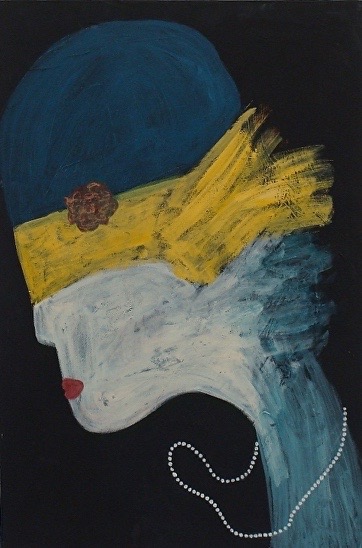
Girl with Pearls – Her eyes are covered as she goes through life unable to absorb the overlapping universes of each individual.

Living Vicariously at the Center of the Universe

Anatole France once said, “Even a little dog is the center of his own universe.” These words were posted on wall of my college dorm room challenging me to remember that everyone sees the world from their own perspective. The only way I could enter another’s universe was to live with them vicariously through imagination. A few of my favorite actors and actresses, like Meryl Streep and Tom Hanks, have strong empathetic personalities that make them able to slip inside another person’s skin, so why shouldn’t I try?

The first time I realized that I was truly living vicariously was when my first born was nine months old. As a spring baby, he had never experienced snow, so when the first flakes descended I bundled him up and went outside to introduce him to the falling flakes. At first he became very quiet, looking around the yard in awe, eventually reaching out to catch the elusive patterns with his chubby hands. It was then that I knew that with his birth an additional gift had been given to me. His existence was going to enable me to relive childhood and expand my own universe as he developed his.

I was fortunate in having six children, five biological and one adopted child in later life. With my oldest son I experienced strength and vigor. His fantasy world of Dungeons and Dragons held all of the intrigue of a hollywood spectacular and I became captured by the intensity that he and his friends exhibited when playing. His earnestness permeated his waking moments and carried on to other activities in later life. I remember visiting his first apartment at a time he was learning to play tennis. Signs were taped to his bathroom mirror that said things such as, “I am a winner. I focus and am not distracted.” Whether learning to fly a plane, play guitar or ride a bicycle, he does it with total physical and emotional involvement, and each time, though not an expert, he becomes competent. Through him I sensed what it is like to jump into the fray wholeheartedly.


Shortly after my son’s birth I had a daughter who inspired me with her feistiness and astute brain. She understands psychological spheres in great depth, yet sees humor in most situations she encounters, enabling her to gain perspective on life’s unexpected happenings. When she was only seventeen she left college for a year to accept a job as a purchasing agent for a bank and its numerous branches. Sales people would call on her with bribes of gifts and luncheon invitations. She would laugh about their offerings, and demonstrated to me what it takes to stand firm and act ethically in the face of shady business practices. She did this without damaging an ongoing working relationships.

My second daughter helped me to hear more clearly. She has perfect pitch and while practicing the violin I knew that I was listening to a pure note. When she sang there was a smile in her bearing and it was as though the windows opened to spring flowers even on a dark, dank day. Since I was born unable to carry a tune, she gave me insight into what it was like to have expansive auditory senses and experience pleasure from sound. Her access to the world was a path that was foreign to me, but I rode piggyback in order to feel the vibrations of her emotion.

Empathy and caring were gifts my fourth child carried into the birthing room. From a young age this daughter was able to see into the souls of animals. She bleeds inside when an creature is ill and spends hours working to help it survive. With her tales I feel happiness, anxiety and sorrow as she adopts various animals into her life. Her sensitivity produces strong emotions, for she has never erected a protective barrier between herself and the suffering of others. She enables me to see frailty in the animal kingdom and continuously demonstrates that it is important to pay attention to small cues.

Number five offspring, a son, once told me, “ You and Dad work too hard. I’m not going to be like that.” And he is not. He does work with fervor, but is equally engaged with friends in creative activities. He embraces playful endeavors that combine artistry with technology, making him a master tinkerer. My son welds, wires, creates electronic light and sound shows, and fixes engines when not programing computers. Through him I have learned the value of play and of being with friends, getting rid of the guilt that came from having a stubborn work ethic. I vicariously enjoy his ever expanding universe as his circle of friends and unusual projects continue to grow.

The sixth child is a young man who entered my life when he was nineteen. Having lived a difficult childhood, he overcame horrendous beginnings because of an innate desire to survive. He demonstrated that people of every socioeconomic background act in their own self-interest when placed in dire situations, but he also showed me that when given a chance, inner strength can overcome adversity. His appreciation for the assistance he received over the past years has made him generous to those less fortunate. This young man believes that everyone should have a chance to prove his or her self worth, and now so do I.

My family and friends are good models for the theory of an ever expanding cosmos. Each time I vicariously enter their centers to be surrounded by their universes, my understanding of the natural world swells. My blinders are continuously widened when imagining myself in their heads, trying to see through their eyes. My greatest gifts have come from those who over the years let me share the depths of their souls before climbing on their shoulders to look further afield.

Please share your own stories about those who have allowed you to visit the center of their universe.

Artwork is always for sale. Go to eichingerfineart.com for more information.

Epigenetics: Why Care?

NurturingNurturing 

Our environment does make a difference to the genetic makeup of the next generation.

Epigenetics: Why Care?

When my husband was asked why he found me attractive, his reply always was,
“ Because she has good genes.” To my ears it was not a very romantic answer, but he sincerely meant what he said. He told me that when he had decided to get married he started looking for a woman with characteristics that he hoped would carry on to the next generation. I suppose something carried on because several months ago my granddaughter circulated a picture of three generations of women in our family. It showed us all sporting big smiles topped with cascading dark curly hair. There was no doubt in anyone’s mind, we looked like family. I was never sure if it was the curly hair or something else that my husband found attractive.

Geneticists have been working for years to determine the statistical likelihood of your child turning out one way or another. The first words spoken by those visiting new parents are often, “Who does she look like?” The answer, “Oh, Aunt Bessie or Uncle Gary . . . just look at the resemblance!” Modified food, animal husbandry and plant biology have been in the news as targets of complex genetic research. Since the completion of the human genome study we are starting to learn a great deal more about our own condition.

Do you remember Mendel’s peas? When I was in school, genetics was a matter of identifying what would happen to the next generation after cross fertilizing peas. Now students learn of how their cells carry instructions formed on a double helix which hold nucleotide bases. They study that their DNA sequencing gives order to these bases passing on directions that affect growth and death. If you think this information is a lot to comprehend, just consider that there are 3 billion bases and over 20,000 genes making proteins that trigger the biological functions we call life.

So what is epigenetics? Remember the old question of what was more important, your environment or genetic makeup? My friends and I used to spend hours debating the issue, especially when we knew someone who had strange behaviors. “Were they born that way or was it the way they were raised?” we would ask. Well it turns out, the two are related and that certain environmental happenings can cause genes to be turned off and on. They can become dormant or active depending on where you live, what you eat, your sleep patterns, exercise regime, and even your friendships. It is these every day occurrences over time that turn the genetic toggle switch. Even diseases such as cancer or Alzheimer can be genes that have switched away from what was once a healthy state to something with more dire consequences. What is happening is that without changing DNA sequencing, chemical modifications leave marks on segments of the DNA or related proteins that control the off/on switch.

It is epigenetics that makes us unique, because it is the different combination of genes that are turned off and on that makes us enjoy spicy food, have a quiet contemplative or bubbly personality, or even be attracted to curly haired women. And it is this uniqueness of inherited genes, modified by environment, that scientists now believe can be carried on to the next generation. You might think that mapping every single cause and effect of every possible combination could help keep the good and get rid of the bad genes, to slow aging or stop obesity, but it is an impossible task as we know it today. No orchestra leader has stepped forward with a way to conduct this rich genetic music. Methods of control remain for science fiction writers to contemplate.

Why do we care? In an article written for Public Health Ethics, Michele Loi writes from Portugal that, “ Recent epidemiological reports of associations between socioeconomic status and epigenetic markers that predict vulnerability to diseases are bringing to light substantial biological effects of social inequalities.” She goes on to say that there are moral consequences of these findings due to inequality in health care. In my mind epigeneticist have issued a challenge to socially minded people and policy makers.

We now know that the epigenome is highly sensitive and responsive to environmental influences, including toxic exposures, dietary factors, and behavioral impacts. For example, stress and heart disease, intellectual disabilities, immune and psychiatric disorders are all potentially affected by epigenetic changes. Epigenetic effects are especially sensitive during fetal development and in newborn infants. A pregnant woman living in poverty without proper nutrition or medical care, could permanently affect the genetic makeup of her child. Smog, water quality and over populated crime ridden cities can carry forward epigenetic scars that have huge consequences for the rest of society.

The chain of connection between the social and natural or biological world is important to consider as we work to build the type of society we want. By not paying attention to early childhood development, environmental and health issues of all citizens we are accepting great risks to the human population as a whole.

Art work is always for sale. For information go to eichingerfineart.com

I enjoy your comments. Please respond to this blog below.

For a greater understanding of epigenetic and social consequences go to the following sites:

http://www.whatisepigenetics.com/fundamentals/

http://phe.oxfordjournals.org/content/6/2/142.full

http://www.ncbi.nlm.nih.gov/pmc/articles/PMC3034450/

Dealing with Bad News

Hope

hope, love, health, together we survive
painted when my son was first diagnosed with cancer

Dealing with Bad News
“It’s not what happens to you, but how you react to it that matters.”
attributed to Greek philosopher Epictetus.

None of us sails easily through life. At one time or another we will have to confront unpleasantries. It may be loss of a job, a natural disaster, divorce, illness or even death. How we deal with these occasions presents defining moments, and no matter how hard you try to prepare yourself, it will be difficult.

The first time I had to confront serious illness was when my son was diagnosed with Hodgkins disease. My initial reaction was visceral, a wildly beating heart, spiked adrenaline, sweaty hands and increased blood pressure. I then became angry. What I was hearing was not fair. “ Maybe the doctors have it wrong.” I thought. Luckily I knew enough not to drive a car immediately upon hearing the news, having once backed out of a doctor’s office into another vehicle after receiving a questionable test result. Taking a few deep breaths and waiting a half-hour calmed me down enough to participate with my husband in developing a plan of action. My original fight and flight response had worked well to motivate my next moves. The doctor continued by telling us that Hodgkins was a diagnosis for which there was a lot of research, and most people are fine after a grueling round of chemotherapy. We followed her directions, and fortunately all ended well for our son, though it had been difficult to sit in the waiting room during chemo sessions and speak to parents who were facing a less optimistic outcome. I became a supporter of the I Have a Wish Foundation.

Several years ago, when my own body rejected me, it came with a double whammy. The first news, a diagnosis of breast cancer, was later followed by words by my physician spoken at my final appointment. “You will not die of cancer, but you may die of heart failure because you have a leaky aortic valve. You need to see a cardiologist.” So, I went from one office visit to the next, and followed one surgery with another.

Throughout it all, though, I had the confidence of youth (at the age of sixty-eight). I felt healthy and did not believe anything bad would come of it. I laughed when my son presented me with a toy that mooed after a cow’s valve replaced my own. From that day on, I became more conscious of the need to appreciate each day as it comes, making the seconds of each day count. I also made a pact with myself to never worry twice. This meant, not to fret in anticipation of bad news, but to relax and get prepared for whatever the outcome.

How do I relax and keep my mind from racing? As I have mentioned in previous blogs, I am a meditator, and that helps— but not always. Another technique I use is to bury myself in reading a juicy, junkie book, one that I do not want to put down. When facing surgery the book goes with me until the last minute. I stop at a page that compels me to pick it up as soon as possible afterwards in order to discover the ending. Another remedy is to get the bad karma out of my body and on to canvas or in writing. The picture above was one I did when my son was first diagnosed. Once the news was delivered I immediately went to my studio to work it out in my mind.

There are those who employ prayer, perhaps even asking others to pray for them. They give their sorrows over to another entity and clear their body channels of pooled stress. They acknowledge that what will happen is not completely under their control, but on-the-other-hand they usually accept responsibility to confront and right the situation to the best of their ability. Step by step, little by little, friend with friend they progress on the path of living fully until the crisis is over.

Facing minor disasters, such as the tree that landed on my house, though not as critical as illness, is also stressful. In these situations, I have to slow down my go-go, get it done quickly attitude and work on patience. As I engage contractors and insurance agents, I look at it as a game to be played where worry has no place. “Overcoming ordinary problems is what makes life interesting,” I say to myself, “and practice in handling adversity with items that are not life threatening can help me learn to deal with more difficult situations. “

In the United States, we are fortunate not to be facing nightly bombing raids or mass executions like those that occur in Syria. Our run-of-the-mill life and death issues are expected as part of the cycle of life. One of the reasons family and friends are so important is that there are times when sharing bad news experiences not only provides practical information, but it helps you to realize that what you are going through is part of the human experience. It is important to remember that most people like to help others. It makes them feel good. So, when assistance is needed, the mask of I can do it myself has to come off and the cloak of good will by others must be worn with grace.

Please let me know your thoughts  by responding to this blog.

Art work is always for sale. Go to eichingerfineart.com for more information.

Great Expectations

SannaWill she be in control?

Great Expectations
My 13 year-old-daughter returned from two weeks in overnight camp with great anticipation. She later told me that during the car ride home she imagined running into the house and jumping onto the pillows of her favorite living room chair. Unbeknownst to her, while she was away, my husband and I had rearranged the furniture. When my daughter entered the room ready to make her leap, instead of the chair being in its familiar location, it had been moved across the room. She became disoriented and quite upset. “ What have you done to the room? Where is my chair? ” she shouted, blaming us for providing a chaotic and unanticipated homecoming. It was as though we had taken away her sense of belonging and safety from the place she called home.

Her reaction reminded me of a similar situation I experience in my childhood. In that instance I was entering my bedroom and discovered that the bureau was moved away from the wall. I did not notice my grandfather hidden behind the furniture trying to fix an electrical outlet. Instead of thanking Grandpa for helping with the repair, I too exploded in anger. Afterwards I was embarrassed by my behavior, and I still cannot think of the incident today without feeling remorseful.

Those two incidences of angry emotional reaction were singular, but as I aged there was one emotion, that of fear, that stayed with me to cause a great deal of trouble. Public speaking was part of my job as museum director yet for years I would get dizzy as soon as I started talking to a crowd. This dysfunctional reaction had started in fifth grade when I was asked to give a book report before the class. Three minutes into the talk I felt dizzy and my eyes would not focus. I had to sit down and put my head between my legs to avoid fainting.

Years later I considered these past experiences and wondered what triggered such fierce reactions, and asked myself how they could be better controlled. Curiosity led me to study the physiological makeup of the body in closer detail, especially the role of adrenaline.
I learned that the way a person reacts to a situation is commonly labeled as an emotional response (happy, sad, anger, fear etc.), and to create that emotion the body’s involuntary nervous system is at work. Several hundred years ago it was believed that body and brain were separate, but today the idea is accepted that they are connected. How our appendages are moved by thought is something most of us can comprehend, or at least accept, for we have control when using the voluntary part of our nervous system. Think about raising your arm and you can probably do it with ease. The involuntary or less conscious part of our sensorium is more complex, but it is where we need go in order to understand how emotional responses are triggered.

This part of our neurology causes so much havoc that I wanted to figure out why. The autonomic, involuntary or visceral nervous system is a part of the body that acts as a control system below the level of consciousness. Bundles of nerves deal with functions like heart rate, perspiration, glands, digestion and salivation, diameter of the pupils, urination, and sexual arousal. Often their effects are life saving, as when adrenaline jumps in dangerous situations, helping to focus attention and enable a fast reaction. At other times, especially under conditions of prolonged stress, the effect can lead to ulcers or heart disease.

I wondered if these involuntary emotional systems could be controlled? Pharmaceutical companies think so, and have developed a multi-billion dollar industry with pills like Prozac. Many monks and yogis are convinced that it is a learned response that can be possessed after years of practicing meditation. Drug dealers, taking advantage of society’s desire for short cuts, sell mind altering drugs like marijuana and cocaine in order to affect autonomic nerves.

When I was president of The Oregon Museum of Science and Industry we developed an exhibit that showed how the mind can learn to control the involuntary system. A visitor would go into a quiet booth and put two fingers on adjacent probes. The goal was to make one finger warmer than the other through mind control. When the finger temperatures differed by a degree, an electric train placed outside of the booth would be put in motion. A great many visitors were able to accomplish this feat though I never could.
Neurologists teach people how to do “hot hands” to treat migraine headaches. I had a doctor friend who used the process often when working in tense emergency medical situations. He learned a modern technique that used bio-feedback equipment to help speed up the meditative process. The goal of his therapist was to teach migraine sufferers how to make their blood flow from head to hands, opening the restricted vessels in their neck that often cause the pain.

My personal technique for controlling my autonomic reactions is meditation. I practice daily and after many years am able to slow my heart rate and keep adrenaline from spiking uncontrollably, enabling me to make a speech when called on to do so. I have friends who practice yoga or Pilates with similar intent, focusing their mind to control stress and other negative emotions.

As I age, I find it more important than ever to incorporate mind control activities into daily practice. It helps me gain a perspective when dealing with unexpected situations involving family, finances, and illnesses to name a few. My desire to stay completely calm in the face of unexpected situations will probably never be fully realized, but I am better than before. I also have perspective, and accept the fact that many things will go wrong, just as many times there will be pleasant surprises with better than expected outcomes. Watching my daughter embark on new new adventures, I see her taking risks based on dreams where she imagines a happy ending. I hope she has learned how to prepare both body and mind to react to unexpected events in order to emotional balance ups and downs that might get in the way. The knowledge that she has internal resources at her disposal may be all that is needed to provide enough courage for her to pursue ideas with great expectations.
Art work is always for sale. Go to www.eichingerfineart.com for more information.
I would love to hear your thoughts on my blog site. Click eichingerfineart.com/blog to respond.

Art work is always for sale. Go to eichingerfineart.com for more information.

Do you want to know more about the autonomic nervous system?

https://www.rarediseasesnetwork.org/ARDCRC/patients/learnmore/FAQ.htm – also discusses diseases and cures.

https://faculty.washington.edu/chudler/auto.html – great description, written for kids

http://www.drweil.com/drw/u/ART00466/Biofeedback-Dr-Weil-Wellness-Therapies.html – bio feedback and migraines “With practice, biofeedback can allow you to influence the part of the nervous system that regulates the dilation of blood vessels that contribute to migraine symptoms. Once you master this technique, it can be a tool you can use to abort a headache at the start of an attack.”

Unusual Family Vacation


Is this they habitat that Rhinos lived in during the Miocene?
Is this they habitat that Rhinos lived in during the Miocene?   The Painted Desert by Marilynne


Rhinos lived 14.5 million years ago but were not there when the dinosaurs roamed.
Rhinos lived 14.5 million years ago but were not there when the dinosaurs roamed. Rhinoceros by Marilynne

Bones, dem Bones, dem Dino Bones.

Today’s Rhinoceros are relatively new animals in the evolutionary chain of events but similar to those that lived during the Miocene era 14.2 million years ago.  Though old, they are much at the same now as they were then and more related to human being than dinosaurs.  Dinosaur’s lived over 167,000 million years ago so fully understanding how they lived is still a mystery. There is a great deal of new research being conducted about dinosaurs, with mounting  evidence showing that their ancestors may be related to birds rather than mammals. People visit Zoos to see Rhinos. Why not visit a dino-dig to find ancient fossil treasures?

Wouldn’t it have been exciting to be the teenager who found a Duck-billed Hadrosaur mummy in North Dakota in 2007? Imagine discovering a dinosaur with skin so that scientists don’t have to guess about the outer covering of this great extinct mammal.

Dinosaur explorations often change our view of history. I always imagined myself on a dig-team, becoming famous for finding a missing link. When my children were young I thought it would be fun to take them on a dig to the Dakotas or Texas as part of our family’s vacation. I never followed through though, so now I have to be satisfied by visiting museums and reading about interesting discoveries.

When my granddaughters were still in elementary school I once took them on an excursion to the Burke Museum in Seattle. The girls were excited by the prospect, grabbing notebooks and pencils along with a small reference book for the trip. Once in the museum they traveled from display to display, writing down information and drawing a pictures just as their research father might have done. This visit made me realize how fearless, curious and participatory young children are when given a chance to explore. They often lead the way to learning.

Pre-history is interesting for young and old alike. A while ago I learned of a fossil mammal found in Europe that is connected to South Dakota suggesting that there was a trans-Atlantic route about 66 million or so years ago. The keen eyes of paleontologist Frans Smet of St. Mary’s College in California discovered a tiny marsupial mammal tooth embedded in rock in Maastricht, Netherlands. When it was scanned in an electron microscope, the connection was made to North America and the historical timeline as the world knew it changed by 50+ million years.

Paleontologists now believe that T-Rex was a lean, mean, warm-blooded hunter who only attacked large prey and was not a scavenger as previously thought. He was agile and used a lot of energy, meaning that he needed a lot of food. Other research shows that most dinosaurs were vegetarian rather than meat-eaters and my oh my… they were sexy. It is thought that flying dinosaurs actually had more elaborate mating displays than modern-day peacocks. The fin-backed Pterosaurs and Pelycosaurs developed elaborate headrests and sails in order to attract a mate.

Did dinosaurs die 65 million years ago because of an asteroid impact? New research suggests that a bad climate caused by a series of volcanic eruptions was slowly killing off the mammals. “The [asteroid] impact was the coup de grace,” Paul Renne, a geologist at the University of California, Berkeley, said in a statement for National Geographic. USC earth scientist David Bottjer confirms that the earth “just got sick” during the Triassic-Jurassic extinction and food became scarce. By looking at rare development of aragonite crystals on the ocean floor, he postulates that the slow dying period had something to do with the ocean’s chemistry. The coral reefs of that period are related to those in our oceans today and by understanding why they died we might learn more about the death that is now occurring in reef populations around the world. Is our earth getting “sick”? Will mankind die out as did the dinosaurs?

There are several dinosaur extinction theories but the most prevalent speaks of five major mass extinctions, the largest occurring 250 million years ago in the Permian-Triassic era. Almost 95% of all species were eradicated at that time. Some scientists say a comet or asteroid collided with earth, others postulate that a flood volcano causing oxygen loss in the seas was the reason. Some investigators have had theories about thinning atmospheric oxygen levels and now even this theory is questioned. Such are the twists of science where each discovery causes a new hypothesis to be made.
Can understanding geology and paleontology help us with current issues of global warming? Scientists look at these ancient creatures and how they lived, at changes in land mass and atmospheric and oceanic conditions for clues that can help in predicting the fate of the earth over the next millennium.

According to Peter Dodson at the University of Pennsylvania, there are great times ahead for dinosaur hunters. He claims that paleontology will be a good career because new discoveries are increasing by 10-20% a year. So…if those visits to museums, digging for dino-bones in toys, and reading books spark an interest in your child or grandchild, you may want to fan the flame. With summer quickly approaching, participating in a excavation might be the perfect vacation.

Art work is always for sale. Go to eichingerfineart.com for more information.
Want to know more? Go to:
http://www.sciencedaily.com/news/fossils_ruins/dinosaurs/ – for the latest research about dinosaurs.
http://www.ucmp.berkeley.edu/tertiary/miocene.php -Miocene era.
http://news.nationalgeographic.com/news/2013/13/130212--chicxulub-asteroid-dinosaurs-volcano-mass-extinction-environment-science/ – about dinosaur extinction.
https://www.museumofwesternco.com/dino-digs/ – for family expeditions in Colorado.
http://www.paleoadventures.com/dinosaur-dig-site-tours.html – for family expeditions in South Dakota.
http://www.wyodino.org/dig-site-tours/ – for family expeditions in Wyoming.
http://www.smithsonianmag.com/science-nature/dinosaurs-living-descendants-69657706/?no-ist=&page=4 – Dinosaur connection to birds.

Smiling Anger – a disconnect

First Fight First Fight by Marilynne Eichinger

Smiling Anger

When I was younger, I went to a counselor who asked me, “Why do you always smile when you are angry or sad?” I did not realize that I had such a disconnect between my emotions and expression of them. After observing myself over time, I started to see that I even giggled occasionally when I had to express a negative opinion. My smile was a way of taking back the argument that expressed my feelings because I was afraid of the reaction I would get. The result was that whoever I was talking to did not believe the intensity of my words, thinking I was joking, and therefore discounted my effort at honest communication. This disconnect between verbal and non-verbal cues made it difficult for even the most empathetic individual to interpret my intent.

It is only since the mid-1960s that non-verbal communication has come under academic scrutiny. The relation between these two emotional processes, the display and the perception of affect via verbal and non-verbal cues, are skills related to emotional intelligence according to an article written for the Journal of Personality and Social Psychology. This type of intelligence includes the ability to identify, use, understand, and manage emotions.

The capacity to display and perceive emotions is learned in childhood by those who are fortunate enough to have parents who are accurate perceivers and clear expressers of feelings. As part of their parenting responsibilities they teach their children the expressive skills. Unfortunately a great many parents act in an opposite manner and train their offspring to inhibit emotional expression. Though not demonstrative, their children may still be able to understand others and relate to subtle displays of emotion. For example, if a child observes abusive parents, he or she may be acutely attune to what is going on because his or her life depends on it. Since these children learn to be stoic and hide their emotions, they are not quite as successful at communicating their message to others.

Children raised in a highly expressive environment often do not need to hone their perception skills to the same level as others. The psychology article gives as a metaphor the following example, “If everyone is shouting then one does not need to hear very well to get the message, but if everyone is whispering then one needs to develop excellent hearing.”

Ideas and theories about perception and communication are quite complex and confusing. The intensity, implications and applications of the impassioned situation all play a part. My sister has severe emotional problems. She now faces a life threatening disease but is not upset or willing to acknowledge the seriousness of her situation. She does become angry at the young doctors whom she thinks are just out to get money or experience in the operating room. In some ways I envy her because her lack of fear is calming, her mood is positive. However, talking with her to discuss a medical plan of action is extremely difficult, and she becomes angry and even lies if anyone takes away her ability to make decisions. Independence is something that she is not willing to give up easily. She is reluctant to have anyone not see her in a weakened state.

There is a dilemma in how to interact with a person who is not in tune with their situation or able and willing to speak honestly of their concerns. Those who grow up being taught to live in a dispassionate manner have a handicap to overcome when older. Every person, at one time or other, will have a need to lean on another’s shoulder. Illness and aging are part of life’s processes that can be accommodated when systems are in place to deal with them. Building relationships based on giving and accepting a helping hand take a long time to develop. Those not internally aware and able to express their own emotions find this type of friendship difficult to obtain. Being able to voice concerns is making a statement that says, “ I am comfortable with myself at this moment in time, and not afraid to share my true feeling.” Overall happiness depends as much on emotional intelligence as it does on intellect.

Art work is always for sale at eichingerfineart.com.

Do you want to know more?

http://apps.olin.wustl.edu/faculty/elfenbeinh/ElfenbeinEisenkraft2010.pdf– Displaying and perceiving Nonverbal Cues.

http://www.helpguide.org/articles/emotional-health/emotional-intelligence-eq.htm – on Emotional Intelligence.

Tattoo Taboo

i-thought-i-knew-you

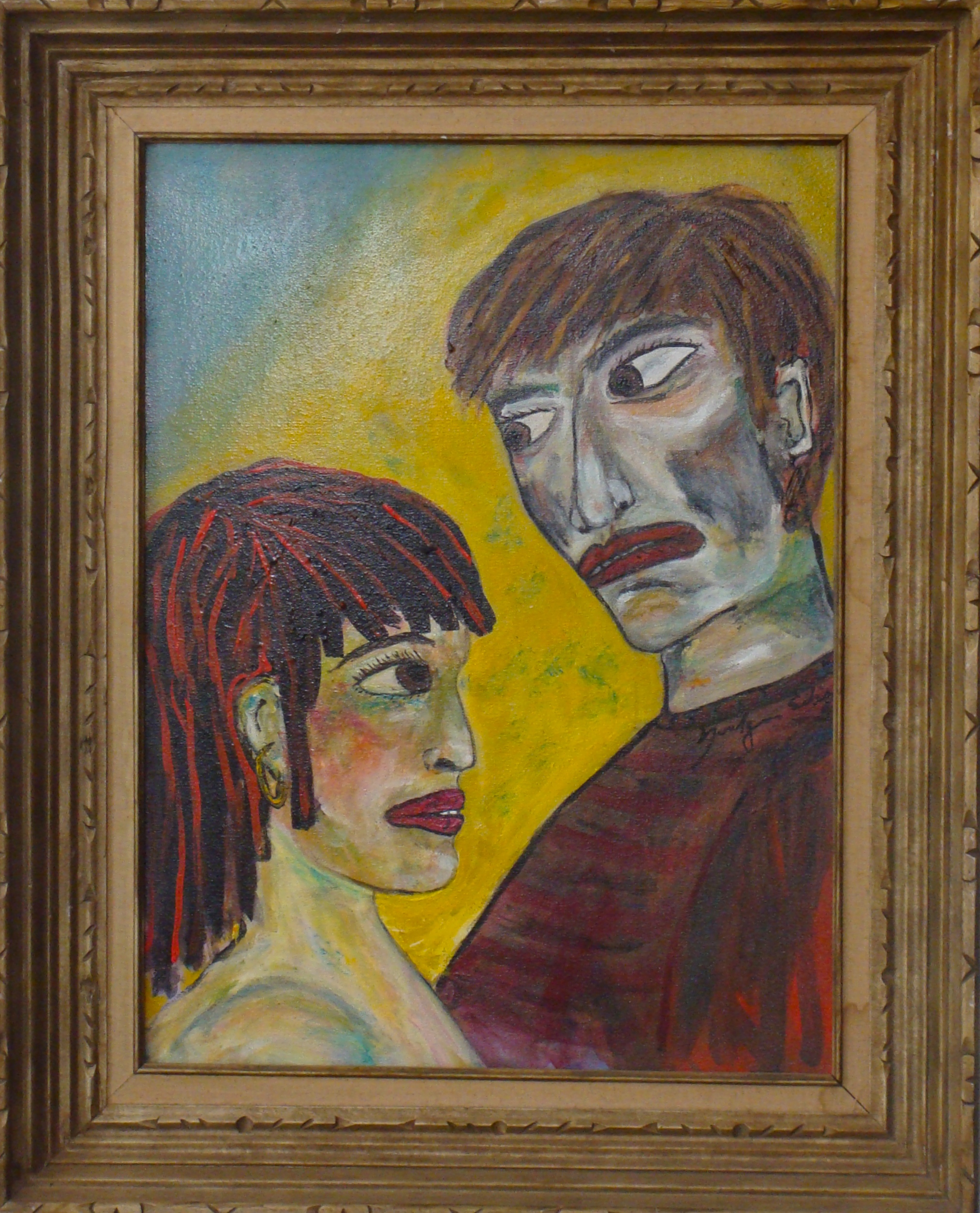
I Thought I Knew You: a contemporary totem by Marilynne Eichinger

Beaver TotemBeaver tattoo

                Beaver Totem by Ray Losey                                           Beaver Tattoo outline

Tattoo Taboo

Last year Ray made a totem pole for an Oregon sports club whose mascot was the beaver. One of their members was so impressed with the sculpture that he decided to have a tattoo of Ray’s design inked on the back of his calf. Above photos show the pole and the leg that will be colored over the next several months.

Though we felt honored by this gesture, tattoos represent quite a generational disconnect to me. As a child, my friends and I were fascinated by photographs in National Geographic displaying body art on Polynesian people. Those images were a curiosity that spoke of the exotic, but were labeled by my peers as belonging to a primitive culture, not to be duplicated. The process appeared to be agonizing and made us wonder why anyone would want to mar their body in that way.

Today, with new and less painful technology, many people wear tattoos. They are often quite artistically executed, but I continue to wonder why anyone would want such permanent body art. I prefer the option of being able to change my selections whenever I desire. I choose jewelry and scarfs to accompany my mood and clothing. Paintings on my walls are juxtaposed with nearby furniture in order to show the art off to its best advantage. Their attractiveness depends on placement, good lighting, and coordinated colors.

Body art needs be displayed with the same holistic approach as a painting, yet it is rare that clothing enhances the tattoo. I recently watched a bride walk across the far side of a hotel lobby wearing a beautiful white satin gown. Her bare arms were covered with blue/black tattoos. From a distance she looked dirty, and I wanted to wash away the smudges so she could glow. I wondered how she was going to enjoy her body in fifty years. Sagging, flappy old age skin will change the appearance of her carefully executed youthful designs. I questioned whether she will join the 60,000 people the American Society for Aesthetic Plastic Surgery say had tattoos removed in 2012.

Tattooing is an ancient art. There is evidence that it existed during the bronze age five thousand years. A frozen body known as otzi, the ice man discovered in the Alps was covered with fifty-seven tattoos. On every continent of the world there are examples of ancient people adorned with some form of body markings. In North American the Chickasaw decorated outstanding warriors, Iroquois tattoos were a recognition of rank, and Inuit women’s chins were decorated to indicate marital status.

Tattooing (known as tatau) in Polynesia began over 2000 years ago, and represents some of the finest work of its type. Rank and title were reflected by the tafutga (tattoo artist) who spent long hours perfecting designs. The pain of being tattooed was extreme carrying with it a high risk of infection. A person who aborted the process was considered incomplete and a coward.

It is Polynesian body art that has had the greatest effect on contemporary society. In the mid-1700s, explorers brought back reports about it from their travels. They described the elaborate body designs that made men look as though they were fully clothed. Their descriptive accounts fascinated the public, and the practice took hold on sailors and society’s fringes.

The practice declined, however, with the influx of Christian missionaries from the west. They vilified the custom as inhumane, barbaric and unholy. In most mission schools youth were forbidden to wear tattoos. Over time the missionaries did relax their attitude.

In the United States the first permanent tattoo shop was opened in 1846 in New York City. The practice grew with patriotic fervor as military men were drawn into body decorations during the World War II era. By the 1950s tattoos were more widely accepted, though they continued to be generally disdained by upper society. Today tattooing is considered an legitimate art form that appeals to both sexes. 21% of Americans have one or more tattoos according to a Harris Poll conducted in 2012. People get tattooed for social, political, and religious reasons. Some are applied as recognition of group affiliation, others are expressions of love, while many are forms of self-expression or fashion statements.

I find it interesting that 86% of tattooed people say they have never regretted getting it while those without tattoos hold strong opinions against the custom. One-quarter of those polled say that tattooed people are less intelligent, healthy or spiritual. 50% consider them to be rebellious, and two out of five think they are less attractive and less sexy.

People are more likely to get tattoos if their friends and family have them, and as the custom has grown it became better accepted by society. Even though I continue to stare with curiosity, I am no longer horrified. There are increasingly more people getting their tattoos removed. Though many are artistically executed there are a also great many mistakes . . . even by well paid professionals. Other reasons for removal are that the individual longer finds the design relevant, it is not perceived as appropriate for professionals, or it does not project the current image a person has of his or her self.

I would love to hear what you think of tattoos. Do respond on my blog.

Art work is always for sale. Go to eichingerfineart.com to learn more.

Want to know more ?

http://www.smithsonianmag.com/history/tattoos-144038580/?no-ist=&page=5 – history of tattoos

http://www.pbs.org/skinstories/history/ – history of tattoos

http://www.designboom.com/history/tattoo_history.html – history of tattoos

http://time.com/2826644/you-better-have-a-good-reason-for-that-tattoo/ – tattoos and regret

http://www.usatoday.com/story/news/nation/2014/05/21/tattoo-removal-laser-treatment/8892601/ – love/hate relationship with tattoos
http://www.vanishingtattoo.com/tattoo_facts.htm – tattoo facts.