A Writer’s Passion

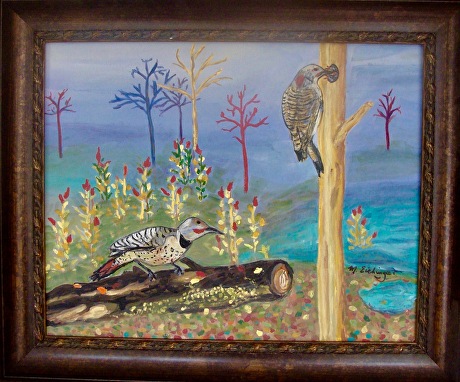
Flickers Caring for Their Young

Access to food and clean water is necessary for the survival of all living species. We need to be diligent about preserving nature’s gifts to humanity. 

A Writer’s Passion

While president of OMSI, I collaborated with Dr. Marion Diamond, my counterpart at the Lawrence Hall of Science in Berkeley. Before assuming its directorship, she was one of the founders of modern neuroscience and the first to demonstrate that the brain improves with experience and enrichment. Though known for her studies of Einstein’s brain, her rat studies showed that an enriched environment (toys and companions) beneficially changed the brain’s anatomy. In contrast, an impoverished environment lowered the capacity to learn. By showing the plasticity of the brain, she shattered past beliefs of the brain as static and unchangeable, degenerating as we age.

Dr. Diamond advised me to stay active after retirement by changing my daily activities, interests, exercise routine, and readings. Doing so, she said, would develop new synapses to keep me vibrant and engaged throughout my senior years. To grow and continue learning throughout my life would keep me relevant and give life purpose.

So…when I retired at seventy-three, I followed her advice. Instead of remaining a consultant to the corporate world, I divested myself of boards, committees, and fundraising activities, choosing to spend my time with individual endeavors instead. Community activities took on a counseling aspect with singular individuals rather than leading groups. I spent hours engrossed in my art. But of all the undertakings, writing is the one I focused on most. I had always been an idea person, but when I put my thoughts on paper, I relied on others to make my thoughts well composed. My retirement goal was to learn how to write. I joined a writers’ group, so what I put down is critiqued before distribution.  The best way to become a writer is to write every day without fail. Sending out a weekly blog keeps me on course, but most of my effort goes towards my books.

Lives of Museum Junkies and Over The Peanut Fences were non-fiction, partly biographical endeavors. The first explored my early involvement with science museums and hands-on learning, how I learned to manage large institutions, and the people who helped the profession grow. The second accounts for the days spent mothering a previously unsheltered youth and getting to know the staff and volunteers of organizations that help young adults heal.

As I watched the environment suffer due to global warming and pollution, I decided it was time to write a novel, a thriller to capture the public’s imagination and to encourage governments to improve their care of life-affirming resources.”

Capturing attention with the written word requires dedication, a nuanced knowledge of the English language, and an understanding of people’s emotions. My first attempt at an environmental novel was focused on petcoke, a little-known petroleum by-product that resembles coal. When I wrote the last chapter, I realized it could have been better, but I needed to figure out what was wrong. I found a teacher who had me flush out character descriptions in the middle of the night when my mind wasn’t sharp. I was advised not to begin my story before I understood how each looked, walked, talked, was raised, and felt. I had to live in the head of each individual and worry about their families and friends.

After three years of research and writing, I completed The Water Factor, a thriller about the corporate takeover of water. It should be in bookstores and online by late spring. Though set in the future, everything I write about has already occurred.  Access to clean drinking water is in peril and will affect everyone’s life in the future. I was shocked to learn that the World Water Forum of 1998 and 2000 led to water being declared a commodity and not a right. This opened the way for it to be traded on Wall Street and privatized by corporations that charge 2000 times more by bottling it than letting it flow through a tap. Backing from the World Bank and the International Monetary Fund followed, giving a handful of international corporations license to take over the management of public water services aggressively, leading to higher water and sanitation rates.

The United Nations recognizes access to water and sanitation as a human right fundamental to everyone’s health, dignity, and prosperity. Unfortunately, well over billions of people today live without water being safely managed. The plot moves from rural Oregon to Ethiopia to a Native American reservation, showing what can happen when corporate interests take over access to clean water.

My purpose in writing The Water Factor is to bring this issue to the forefront so communities can do something about it. The first of the  Rightfully Mine series, the novel shows the depths of manipulation and deceit people will engage in for money. It’s a page-turner to stimulate your brain, though I hope it will do more. The book is a call to action for citizens to monitor how their water and sewage systems are managed. Northwest Natural, an investor-owned gas company in Oregon, has begun purchasing small water companies in Oregon, Idaho, and Washington. The company is positioning itself to buy municipal water systems as it expands. It is time to ask if we want our water to be privatized.

Communities need to take heed of water issues. Lives depend on it. Who is selling, and who is purchasing local water rights? How will this affect your family in the future? I hope you get actively involved. Your effort is bound to stimulate new brain synapses and be a meaningful endeavor. 

References:

United Nations website. Human Rights to Water and Sanitation. Retrieved from https://www.unwater.org/water-facts/human-rights-water-and-sanitation#:

Burtka, A. & Montgomery, W. (2018) A water right—Is water a human right or a commodity? ERB Institute University of Michigan. Retrieved from https://erb.umich.edu/2018/05/30/a-right-to-water-is-water-a-human-right-or-a-commodity

Green, E. (2018)NW Natural is buying water utilities. Should Oregonians be concerned about privatized water? Street Roots. Retrieved from https://www.streetroots.org/news/2018/08/10/nw-natural-buying-water-utilities.

Art is always for sale. Flickers Caring for Young is a 22” x 25” framed acrylic on canvas painting. It is available for $425 and shipped free in the continental U.S.A. For information or to answer questions, contact marilynne@eichingerfineart.com

I look forward to reading your comments below.

Wading through Complexity

The Oregon Museum of Science and Industry
The riverfront museum I spearheaded opened thirty years ago.
 Impression 5, in Michigan, celebrated its fiftieth year.  It is hard to believe.

Wading Through Complex Thoughts

Analyzing your way through complex situations is not easy. On a rainy day in 1972, I was in Lansing, Michigan with four rowdy children and challenged with keeping them from tearing the house apart. So, I started a science museum in my basement. At the time there were only twelve science centers in the United States. Exhibits were push-button displays that mixed chemicals and asked yes and no questions. Fanciful walk-through hearts on Oregon, descent in into the depths of a coal mine in Chicago, fighter jets, and locomotives in Philadelphia covered the floors. What they lacked were interactive activities that called on visitors to experiment and think. A white paper was written pointing fingers at how the Chicago Museum of Science and Industry was a pawn of corporate America.

Public education was also under attack for the way children were held hostage for hours each week. Being pinned to their seats and made to memorize historical facts and formulas was not the way to inspire minds to greatness.John Holt, Howard Gardner, Piaget, and A.S. Neil were among those promoting child-centered ways, age-appropriate ways of teaching.

The table-top exhibits built in the basement of my home with my son recognized that children were not little adults but instead were youngsters with unique ways of learning. Science, engineering, and psychology professors at Michigan State University contributed exhibits and guided me through the learning process. The scientific method became my platform for conceiving interactive displays. 

Scientists approach problems through a seven-step process: make an observation, ask a question, from a hypothesis or testable explanation, make a prediction based on the hypothesis, test the prediction, and use the results to make new hypotheses or predictions. It is the way research progresses.

This way of thinking made sense to me and today is embedded in my psyche as a way to tackle life’s problems and idiosyncrasies. When ASTC, the Association of Science and Technology Centers started, science centers exploded throughout the world. I suddenly had company and reached out to seven small museums, including OMSI and the Pacific Science Center to secure a National Science Foundation grant to study visitor interaction with displays that required them to solve problems. We built exhibits that traveled to each other’s sites. Our staffs met to study hands-on education philosophies and to critique how  we tackled interactive construction techniques. 

We, and the other science centers introduced visitors to computers, technological innovations, and discoveries in genetics, and bio-engineering. What we learned by experimenting with hands-on learning techniques, was incorporated into the teacher education and outreach programs. Our museums became a model for the free school movement. They were places where visitors moved freely through displays, learning in their own way, at their own pace.  

You might ask, why I am saying something about this now. I am still involved with the education of young children and am more concerned than ever. The reliance on the computer for teaching has gone ballistic. Children no longer see that moss prefers to grow on North-facing surfaces. They don’t know how to use a hammer and nails to build a birdhouse. They don’t know how to change the oil in their car or sew a seam that burst on a dress. They don’t have the patience to build a balloon-powered card using cardboard and bottle caps to see how far it will go. They are too hyper to start a grow box and watch the way seeds turn into plants. They would rather play computer games than construct a solar oven to cook marshmallows while exploring thermal energy, reflection, and convection. 

All of our activities were designed to help young experimenters question and think. They require patience, dexterity, and a willingness to try and at times fail.  These are basic needs that adults as well as children need as they conduct their lives. 

When I moved to Oregon to run a science museum with greater resources, I was more determined than ever to show visitors how the scientific method is useful when tackling everyday problems. We built a new waterfront museum where people could satisfy their curiosity by conducting experiments on the floor of our exhibit halls. When designing Busy Town for young children, for example, we included a component for parents that focused them on observing their children so they could question their preconceived ideas about the way they learned.

As the world grapples with environmental change, economic challenges, and pandemics, we need clear minds, and a citizenry willing to dig into issues and think problems through. Analyzing these issues can be great fun if we put our heads to it. It calls for more feet on the ground stomping through communities and parks—putting more hands on binoculars, hammers, saws, needles, and thread as a complement to eyes on the computer screen. It requires reading, discussing, arguing, and coming to conclusions you are willing to test. The scientific method provides a way to proceed. Practice solving little problems so the large ones will fall into place.

For a behind-the-scene look at science centers and how they influenced education read Lives of Museum Junkies.

Art is always for sale. Check out my new cart-enabled website eichingerfineart.com to purchase the painting of OMSI or any other that tickles your fancy. 

Please share your thoughts below. What do you do when you escape the computer and remember that the physical world is filled with beauty?

Steve Johnson – Hopscotching Through the Age of Bots

The Estate (NFS) 
While I created homes on my easel, Steve Johnson built structures on his computer. Our hobbies evolved and we began selling our creations.

Steve Johnson – Hopscotching Through the Age of Bots

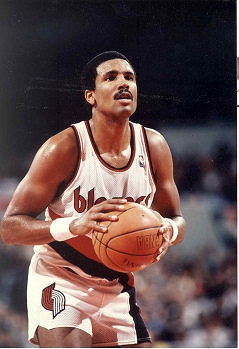
He discovered his passion, not once, not twice, but many times over the course of his 62  years. What fascinates me is how Steve Johnson, former NBA All-Star, grabbed on to his dreams and turned enthusiasm into paying ventures.  

Being the third of six children in a family headed by a disabled vet on disability and a school bus driving Mom was not easy. Poverty led them to a cinderblock  apartment house in Watts, California, with bars on the windows and the sound of gunshots outside the front door. Fortunately, they moved to San Bernardino one year before the Watts riots. 

Mom was a Seventh Day Adventist who insisted the children attend private Adventist schools and attend prayer meetings several evenings a week. Dad buried himself in their garage practicing for hours in his music studio though, according to Steve, he never managed to play one song all the way through.  He insisted the children play an instrument and though Steve could play several horned instruments by ear, unlike his brother, he never took to it. He had other things on his mind, especially after discovering his first passion.

At the age of fourteen, his father took him to watch his cousin in a practice basketball game in L.A.  At the end of the session he was introduced to the man who later become his coach. That evening his cousin joined the family for dinner. The boys went to a playground afterwards to shoot baskets. His cousin showed him a few moves and advised him to learn the hook shot, advice that made him unstoppable on the court. By the end of that eventful day, Steve knew what his future would be. 

Academically he was an underachiever. School didn’t interest him so he struggled. But, he was a thinker and a planner capable of developing goals in his early teens. They were;

  1. Get to a public school
  2. Get noticed in high school and receive a scholarship to college
  3. Become an All American
  4. Be a first round NBA draft pick
  5. Become an All Star.

His first goal was the most difficult to achieve. Since Adventists didn’t play team sports, he had to battle his parents over leaving school for an out of district public education. He ran away several times hoping to establish residency but failed repeatedly. He wasn’t successful until the summer before his senior year when the high school coach introduced him to a man who let him stay in a condemned house he owned.  Steve used a coat hanger to enter. To eat, he pilfered food and other items he could sell for cash. He avoided prostitutes and the gambling room at the back of his house, and convinced the board of education to let him transfer in despite a ruling that kept seniors from doing so.

That fall, without ever having played on a team, the coach took a risk and let the 6’10” athlete join. Half way through the season, the starting center was hurt. Steve played in his place, made 25 points, and earned a permanent spot in the game. During the rest of the season he stacked up enough points for six colleges were interested in giving him a scholarship. He chose Oregon State University and played basketball for four years under Naismith Hall of Fame coach, Ralph Miller. There, as a record breaking athlete, he became All-American and PAC-10 Player of the Year in 1981, eventually being inducted into the Oregon Sports Hall of Fame.

Playing for the Blazers

Upon graduation, Steve was the seventh pick in the first draft of the NBA. Over the course of his career he played for Kansas City Kings, The Chicago Bulls, San Antonio Spurs, Seattle Supersonics and The Portland Trail Blazers. Ten years later Steve was ready to retire after living with the pain caused by years of wear and tear on his feet.

In retirement he undertook several entrepreneurial ventures, that flourished and sputtered in the recession of 2008. He remained self-confident and driven and stayed focused on the idea of being successful-this time, as a businessman. His present undertaking fascinates me for it shows what a person can do who is willing to take a calculated risk and embrace change. His passion started with a computer came he played for fun. He became as absorbed in this new hobby as he did playing basketball.

Not a strong reader, Steve relies on YouTube Videos to teach him what he wants to know. He sees himself as a self-taught natural problem solver who knows how to mine and analyze social media for data. He is a planner and a goal setter who doesn’t give up.

The Sims is a computer game that allows players to explore a digital world where they buy property, design and build houses, and furnish them to their taste. When the game became internet connected, players could communicate and share information but The Sims had drawbacks. Steve’s son introduced him to Second Life, a more sophisticated game offering better tools and a marketplace for players to sell their designs. One day, with the help of his Avatar, Steve took a world tour and discovered a man building virtual boats. Rather than pay $40 to purchase the design, Steve started building his own yacht. When the president of Christensen Yachts discovered similarities to their boats, Steve was given permission to use their name. His virtual yachts sold for $175.

Millions of dollars are spent and made on  simulation games. Some players move on to well paying jobs in the real world. Virtual players become racers, drone and robot operators, marketers and fashion designers. Many tech companies are attracted to entry-level job candidates who cite playing or developing video games as a hobby. According to Ashley Deese of the Smithsonian Institution’s science education center in D.C., “They (gamers) tend to be problem solvers, organized, and adaptable.”  Law student Aylmer Wang, said gaming taught him “leadership, entrepreneurialism, dedication and organization.” Gamers are motivated and determined says Christopher McKenna, head of a student recruiting for the law firm Bennett Jones LLP.

During the 2008 recession Steve realized that when the economy returned, yachting would not be the same. New customers with money would come from high tech, yet they were unaware of yachting. Rather than purchase boats, Steve imagined them more willing to charter them. The going rate to charter a 100 to 160 foot yacht is between $100,000 and 300,000 a week, plus expenses. There was money to be made and he wondered how to turn his hobby into a lucrative business in the real world.

Under the name of Monaco Yachts, Steve created virtual experiences for potential customers by placing them on yachts and take them to places they might visit on a chartered boat. Final contracts are often signed at yachting conventions taking place around the world. His web site, yachtinglifestyle365 is basically a marketing brochure–a very successful one that writes about the yachting lifestyle.

Steve’s story is an example of why our current system of education needs to be improved to help students survive in the age of bots. Workers of the future will need to be flexible, team oriented, determined and confident of their ability to learn on their own. They will skills that enable them to adapt to change and hopscotch across occupations.

A goal of the education system should be to help students find their passion. To do so, vocational options, exercise, crafts, the arts, and computer games need to be blended with academics to insure graduates develop meaningful leisure time activities. High school students should leave with enough self-esteem to enable them to shift confidently as the economy changes. Letting students pursue activities they passionately embrace, teaches them what is involved in setting goals, acquiring skills, and achieving a modicum of success.

Resources:

Needleman S. (2019) When a Passion for Videogames Helps Lad a Job. Wall Street Journal. retrieved from https://www.wsj.com/articles/when-a-passion-for-videogames-helps-land-that-job-11551888001

Molloy,D.(2019) How playing video games could get you a better job. BBC News. retrieved from https://www.bbc.com/news/business-49317440

#PersonalSpace

The amount of open-space we need, differs from person to person and culture to culture. We form bubbles around ourselves that make us feel nervous when punctured. People who grow up in heavily populated cities in Pakistan are much more tolerant of being touched and having people stand close beside them, than those raised in wide-open spaces.

Continue reading

#InfantAbuse

The following segment is taken from my latest book, “Over the Peanut Fence.” I am sharing it, because of the move to outlaw abortions without fully understanding the consequences. We can look to Romania, between 1965 and 1989, when contraception and abortions were strictly forbidden. Thousands of unwanted infants were sent to overcrowded, sterile orphanages. Communist leadership hoped to increase the fertility rate of the country but instead nearly 10,000 women died due to complications arising from illegal abortions and thousands of unwanted infants were sent to overcrowded orphanages where brain development was thwarted. Those who had abortions were sent to prison, and those suffering from complications due to seeking an illegal abortion, were turned away from healthcare. 

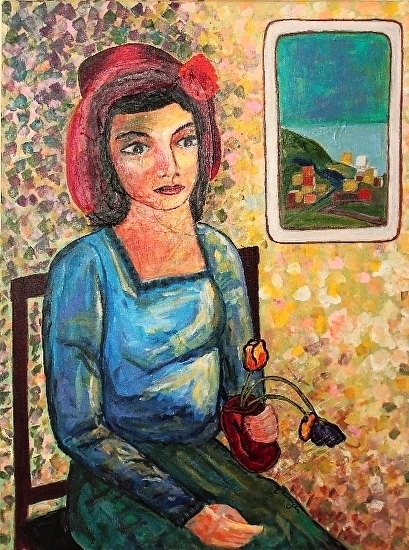
EvaWhy does she cry? She has to face a decision that has no right answer. It is not easy.

From chapter on Lovelessness: “Over the Peanut Fence”

“The majority of us are fortunate for we are surrounded by affectionate parents and relatives. As infants, we were held and cherished us and as adults, we find partners and form bonds based on fondness and mutual respect. But what happens to children who are never caressed or told they are special? What are the long-term effects of never having been touched or cuddled? What befalls those who are abandoned, left on door steps or placed in cribs and not attended to when they cry, or when their diapers need to be changed? 

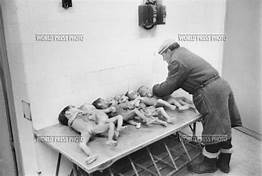
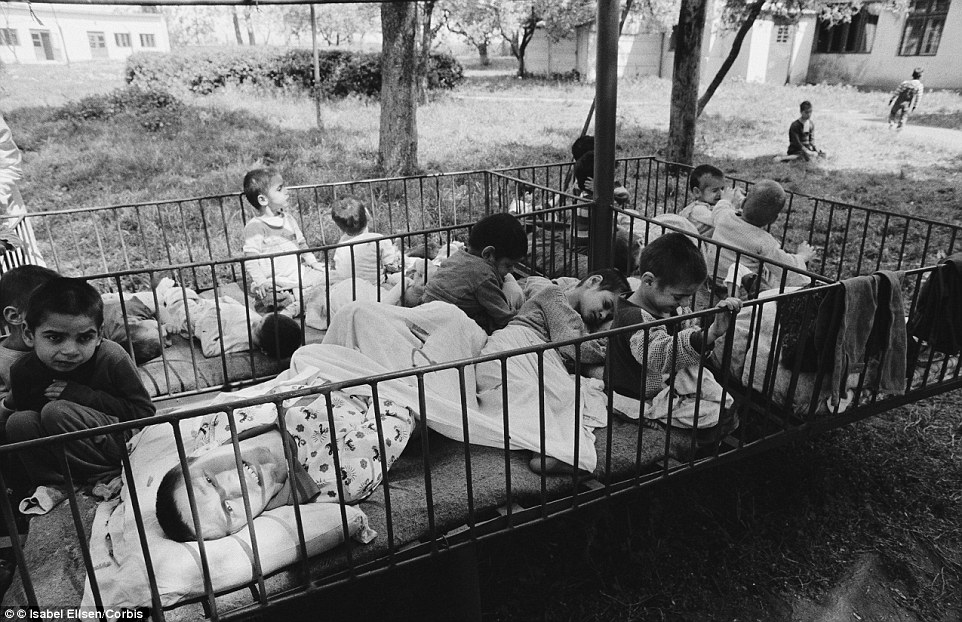
A cornerstone study about infant neglect was initiated in the 1980s when Dr. Nathan Fox and colleagues from Harvard Medical School, walked into an orphanage in Romania. Due to a recent ban on abortion, the number of orphan babies had soared. 170,000 children were placed in 700 overcrowded and impoverished facilities across the country, staffed with an insufficient number of caretakers.  Though the facilities were clean, the infants were emotionally neglected.  Left day and night in their cribs, the babies were changed periodically and fed without being held. The nurseries were eerily quiet places. Since crying infants were ignored, they stopped making sounds.  No attention—no cries—only silence.

Dr. Fox followed the children for over fourteen years.  During the early years, autistic-like behaviors such as head-banging and rocking were common.  As the children aged, their head circumferences remained unusually small. They had difficulty paying attention and comprehending what was going on around them.  Over time, 50 percent of the children suffered from mental illness. They displayed poor impulse control, were socially withdrawn, had problems coping and regulating emotions, and handicapped by low self-esteem.  They manifested pathological behaviors such as tics, tantrums, stealing and self-punishment. Poor intellectual functioning caused them to have low academic success.  

Those youngsters fortunate enough to be put in a caring foster home before the age of two were able to rebound. Those who entered foster care at a later age were not so lucky and many became permanently damaged.”

We know for sure that warmth and love are crucial for a child’s well-being. Dr. Fox’s study continued for thirteen years teaching us much about infant brain development, the need babies have to be touched and responded to when they cry, and the unforeseen effects of imposing a political will on the right of a woman to choose. Abortion is currently legal in abortion. 

Understaffed Romanian Orphanage

In 1965 Romania’s population was 19.4 million.The population of the United states is currently 327.9 million, approximately 16.9 times larger. These laws will likely cause 169,000 deaths due to illegal abortions.  If we use Romania’s numbers and multiply them by 16.9, the U.S. will find itself with 2,873,000 unwanted infants over a ten year period. Most will not get adopted. Many of will become brain damaged due to lack of love and attention for we are not set up to care for them. We will have to care for them the rest of their lives. The average cost of raising a child to seventeen is $ 233,610. Total amount needed for ten years of unwanted infants will be more than $671,161,530,000. Who will pay for these children’s care? Is it better to have a child who will most likely be brain damaged and need care throughout his or her life or to abort?

References:

Nelson, C. & Fox, N. & Zeanah, C. (2014) Romania’s Abandoned Children, Deprivation, Brain Development, and the Struggle for Recovery, Harvard University Press.

(2010) Decree 770: Abortion Outlawed in Communist Romania, CARAOBRIEN,retrive from https://caraobrien.tumblr.com/post/352715826/decree-770-abortion-outlawed-in-communist-romania

Furedi,A ( 2013) On aabortion, we should study Romanian history. The Guardian. retrieved from    https://www.theguardian.com/commentisfree/2013/jan/15/abortion-romanian-history

Population of the United States. (2019) Population of the World. retrieved from https://www.livepopulation.com/country/united-states.html

Ganjanan, M (2017) The Cost of Tasing a Child Jumps to $ 233,61. Money. retrieved from   https://search.yahoo.com/yhs/search?hspart=pty&hsimp=yhs-pty_email&param2=5f96e1b7-3733-4d

Art Work is always for sale. Contact MARILYNNE EVA/ Acrylic on Canvas / 40” by 30”

Available as an ebook and in paperback at booksellers nationally.

Finding Your Passion

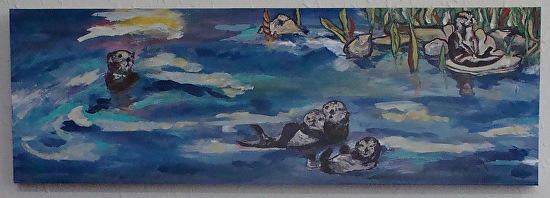
Otters at Play/ NFS

Discovering what you love to do will lead towards a #passionatelife.

Several weeks ago I met an orchestra conductor who grew up on a kibbutz, a communal farm in Israel.  When he was a teenager, the commune decided it needed a bee keeper and assigned him that job. He toiled at beekeeping for three years before leaving the kibbutz to follow his passion which lay in music. Fortunately his dreams, talent, and perseverant personality lead him towards a successful career. Yaacov Bergman served for years as Music Director of the Colorado Springs Symphony and The New York Heritage Symphony and 92nd St. Y Orchestras in New York City. He now conducts regularly in Oregon, Washington, and Idaho and makes frequent guest appearances across the globe. 

Finding a career that provides purpose and passion is not limited to youth. It is a reoccurring theme in most people’s lives. High school and college graduates look for meaningful careers they can embrace throughout their lives. Some become dedicated workers, buying into their employer’s goals. Yet, it’s is not unusual for them to become frustrated in their forties and fifties. Others who spend their early careers chasing after wealth, find it to be a goal that is no longer satisfying. Many discover that their bodies are no longer able to do tasks required for their success. Models became wrinkled,  gymnasts lose flexibility, and rock climbers fear falling. Those who followed goals set by their parents begin to wonder how they got talked into their present careers. They may have been pushed to become lawyers, doctors, jewelers, actors, fishermen or financiers and now, as adults, wonder why they spent so many years following their parent’s dreams. And so, the search to find themselves and for meaningful employment begins. 

Middle age, however, is not likely to be the last time they confront questions of meaning and purpose in daily toil. Active retirees face similar dilemmas of passing their hours purposefully and productively. They search for engagement in meaningful activities, though they may not be as physically strenuous as ones pursued when younger.

Questioning the purpose for being and spending hours in fruitful pursuits continues throughout life.  Happily, finding what you are meant to be and do at each juncture in life is definitely doable. Following are a few thoughts of how to go about it. 

  • Know who you are. Sound easy? It’s not. We do change over time and need to gauge who we are at the particular moment we start our search. Life’s occurrences can alter the way we think and act. As you seek a new direction, appraise your skills and consider what you love to do. What type of books do you read over and over again without getting bored? What did you enjoy doing as a child  If money wasn’t a consideration, what would you be willing to do for free? What are your hobbies?
  • What you are mediocre at? Is it worth spending time (money) to increase your skills? Are you willing to return to school, attend workshops or find a master to apprentice yourself to? In my twenties, I taught dancing to elementary school children. Surprisingly, my worst student was the only one to become a professional dancer. She was inspired and put in hours of practice to get where she wanted to go.  
  • Accept that passion and purpose don’t have to be the same as your job. Many people have repetitive work situations they do for a paycheck. Their purpose is found outside of their employment. Some interests and hobbies will never make you wealthy. Yet, these activities can provide richness and color to living and they may move you in the direction of a career. For example, Jane loved to draw and paint, but to earn a living, required training in computer aided design, marketing,  and other business skills. These added proficiencies enabled her to fuel an emerging passion.
  • List what you hate doing and eliminate those activities from you search. Then ask yourself if there’s something you wish you had been doing for the last twenty years? What would it take to start?
  • Though some people have immediate insight into what they want their future to be, most do not. Finding purpose and passion is like digging for gold. You need discipline and have to be willing to try over and over again, accepting failures as you go. Visualization is a technique I use from time to time to help me solve problems. Imagine dressing quickly because you‘re looking forward to leaving home on a sunny day for a job you like. Where are you going? What will you be doing?

As an employer, during interviews, I always asked people to describe themselves. I was particularly interested in what they did outside of work. Watching them light up as they passionately described their hobbies was often the reason I offered them a job. I wasn’t looking for perfection, but I wanted to know that they were willing to learn and were capable of feeling intensely about something they loved to do. People with a zest for life made our workplace a creative exciting place to be. 

References:

Alex. (2019) Eight ways to find the true passion in life that has eluded you. THeTelegraph. retrieved fromhttps://www.telegraph.co.uk/finance/jobs/11499695/Eight-ways-to-find-the-true-passion-in-life-that-has-eluded-you.html 

Gordon-Barnes,C. (2019). 6 Fresh Ways to Find Your Passion. The Muse, Career Paths. retrieved from https://www.themuse.com/advice/6-fresh-ways-to-find-your-passion

Webb, M.( 2015) How to Find Passion In Your Work. Forbes. retrieved from https://www.forbes.com/sites/maynardwebb/2015/09/22/how-to-find-passion-in-your-work/#19754a826cfd

Seeking Community

Family Outing

Millennials and Gen Zs are more interested in experiences than possessions. The great outdoors beckons them with freedom, health and companionship. 

acrylic on deep canvas /20” x 16” /   $ 399.

F

Seeking Community in a Time of Change

In past blogs, we explored social change and the pressure it puts on people to adapt. We looked at why young adults marry later and birth fewer children. And, at the other end of the age spectrum, we saw what happens to elders when family and friends move out of town or die, leaving them without support. Lastly, we examined technologically savvy teens who replace face-to-face interactions with social media. Adapting to change is difficult, leaving people feeling isolated and frightened. I listen to many of them during counseling sessions and feel their pain. Yet, despite all I hear, I have great hope for the future. The young adults I meet are loving, compassionate, active and community minded.

The need to adapt to change can be troublesome, for it sneaks up to surprise us. To transition from old ways of thinking, a person has to accept that there’s a need to do so. For instance, the need people have for community is the same as it was in previous generations, but the way younger people go about it today, differs greatly. Since lives no longer center around families who reside in stable neighborhoods, ways to communicate on the computer were invented to help us find meaningful relationships.

The flight from small towns and farms to cities initiated change in the way we live. Seeking better employment and more exciting places to roost required newcomers to be aggressive and outgoing when searching for companionship. Finding others with shared interests and values is time consuming. It can take years before acquaintances turn into deep friendships.

Adapting to social change requires forethought, patience and a willingness to practice new ways of interacting. The front porch rocker is no longer the place to go for a chat. It’s been replaced by sitting isolated for hours before a computer. At the same time, the computer is like a friend, for it is now the usual way to be introduced to those with share interests. 

The World Wide Web opens doors to companionship. Walking through the door, however, takes a certain amount of courage. At some point it’s necessary to get off your chair and step outdoors. Following are a few paths people take to find community. Some are firmly embedded in the new reality, while others are becoming more so. 

1) Used by millions of people, Computer dating services quickly became the norm. Websites like eharmony, Silver Singles, Match.com, and Zoosk sieve members through algorithms that match personal attributes. Those seeking love and companionship no longer wait for introductions from friends, family or matchmakers. As with many internet based services, however, caution has to be taken, for it’s possible to be victimized by scoundrels.

2) Meetups offer adults ways to connect through interest groups. There are gatherings for hiking, dog-lovers, photographers, artists, writers, readers and singers. Those who crave physical challenges band together for volleyball, camping and hiking. There are groups watch ingJapanese Movies, holding Forgiveness Discussions, coping with disability, and even participating in Oil Education sessions. A great many gatherings form around eating, drinking, talking and laughing. 

Some of these associations lead to close relationships, but not all. It’s fairly common to attend weekly sessions without befriending the person sitting next to you. Friendships require effort and the participant has to take the next step. It involves a willingness to do meet for coffee or engage in activities with new acquaintances. Close relationships require trust and being open to discussing hopes, dreams and fears. 

3) Maker groups come in many flavors, bringing people who like to create together in interest specific groups. Gatherings run the gamut from Digital Fabrication, 3D printing, Tinkering, Data Science to Movie Making. There’s a group called Coffee, Art, and Music and one named Sewing, Craft, DIY. There’s a Wine & Wineries Socializing Group, Hardware Startups, a Healthy-Tech-Think-Tank and even a Rainbow Duct Tape group. Some makers get involved in music festival projects while others form around making Pizza. Think it and you can probably find it as a subset of Meetup.

4) Co-housing: Throughout history, people lived in villages and small co-dependent communities. Not impeded by doors and fences, they helped neighbors needing food and childcare. They joined hunting parties, farmed and prayed. Today, few of us have neighbors who will come running when we need help. According to the 2010 Census Bureau, the average number of people living next door to you is three. They reside in self-sufficient units and take pride in being independent. Yet, private accommodations drain money and time and they don’t contribute to building community.

Today’s young adults are choosing to live communally in dwellings that combat loneliness and isolation. Co-housing is a distinct, yet American, way to reside, for it brings together strangers who value individualism and privacy, yet desire community. Co-housing combines private space with common areas to share meals, gardens, physical workouts, tools, and craft activities. Co-housing is not the same as the hippie communes of the 1960s where finances, cooking, social activities and ownership was shared by all, though it does offer ways to increase social interaction. 

Co-housing, began in Denmark in the 1960s and was introduced to the U. S. in the 1990s. They vary in design and size with some being restricted by age while others are intergenerational. How often residents dine together and the extent of their shared facilities varies. Larger developments often employ a community manager to organize events, volunteer activities, and dinners. 

Last summer I visited an eco-village composed of twelve houses with footprints limited to 1,200 sq. ft. Each structure was an experiment in energy efficient construction. One had solar heating panels while another used a heat pump. My friend built her house with thick walls that she and volunteer college students insulated with a slurry composed of mud and grass. Property owners share workshops, gardens and communal dining facilities. The compound’s layout makes it easy for people to interact. 

Another co-housing development I toured consisted of twenty-four condominiums. Each was constructed with kitchen windows facing the compound’s playground. The founders wanted residents to feel like they belonged to a loving extended family. Seniors are encouraged to share their time and wisdom with children living in their community. Neighbors help each other with everything from home maintenance to childcare, cooking and shopping. All residents buy into the development’s land and participate in maintaining its property. 

Home ownership is not a requirement for co-housing to be successful. Apartment buildings are being similarly built around shared amenities to encourage relationships that keep loneliness at bay. I’m impressed by Roam, a fairly new global community of co-living and co-working spaces where dwellers sign a single lease and live in sites worldwide for a week or a lifetime. Since so many people work from home, roaming the world and taking advantage of global housing while earning a living is enticing.

5) Shared living and work spaces are growing trends among Millennials, Gen-Zs and even some Baby Boomers. Unrelated  adults join to purchase homes or rent rooms in houses where expenses and upkeep are shared. Living with housemates is more affordable and less lonely than being alone, and it allows money to be saved and used for travel. Sharing is part of the minimalist movement sweeping the country. Status is gained by having few posessions, getting by as a one-car or zero-car family and using services like Uber, Lyft, Smart Cars or CarGo. 

Businesses are adapting to societal changes by incorporating ways to promote community into their planning. For example, Capital One Cafes turned traditional banking into a place where customers (and non-customers) can get coffee, work, chat with friends and receive help with banking needs. Rather than provide services, many businesses are using data to facilitate transactions for people when and where they want them. Bicycle and scooter rentals, Airbnb, apartment/home lending, WeWork, talent-sharing are a but few. Tools are borrowed through sharing resources like “Neighborgoods” and tool lending libraries, and fashionable clothing can be rented through stores serving black tie events.

Notions of what constitutes success is being redefined. Rather than measuring the size of their house or bank account, younger generations see success as purposeful work and meaningful relationships. According to Blake Morgan Self-sufficient Americans live in homes and apartments behind closed doors. of Forbes magazine, “Companies (like Capital One) that can transfer to become more experience-focused are the ones that will succeed in the changing world.”

I agree with her assessment but go a step further. The time is ripe for redefining our relationship to the land, not just to people. The “relational worldview” model, seeking harmony among competing factors may offer insight in how to do this-but that’s another story.

References:

Morgan, B . ( 2019) NOwnership, No Problem: An updated Look at Why Millennieals Value Experiences Over Owning Things. Forbes. retrieved from    

https://www.forbes.com/sites/blakemorgan/2019/01/02/nownership-no-problem-an-updated-look-at-why-millennials-value-experiences-over-owning-things/#7da0e97d522f

Mairs, J. (2016) Millennials want experiences not possessions, say co-living entrepreneurs. deZeen. retrieved from https://www.dezeen.com/2016/04/05/co-living-shared-collective-accommodation-housing-millennials-trend-common-wework/

Goodhart,S. (2018) Shared housing— millennial or Baby Boomer trend?  The Washington Blade retrieved from https://www.washingtonblade.com/2018/11/30/shared-housing-millennial-trend/

Roam, An international network of co-living spaces. Retrieved from website at www.roam.com.

Marr,B.(2016) The Sharing Economy- What IT Is, Examples, and How Big Data, Platforms and Algorithms Fuel IT. Forbes. retrieved from https://www.forbes.com/sites/bernardmarr/2016/10/21/the-sharing-economy-what-it-is-examples-and-how-big-data-platforms-and-algorithms-fuel/#6e8b58037c5a

Dance to Life


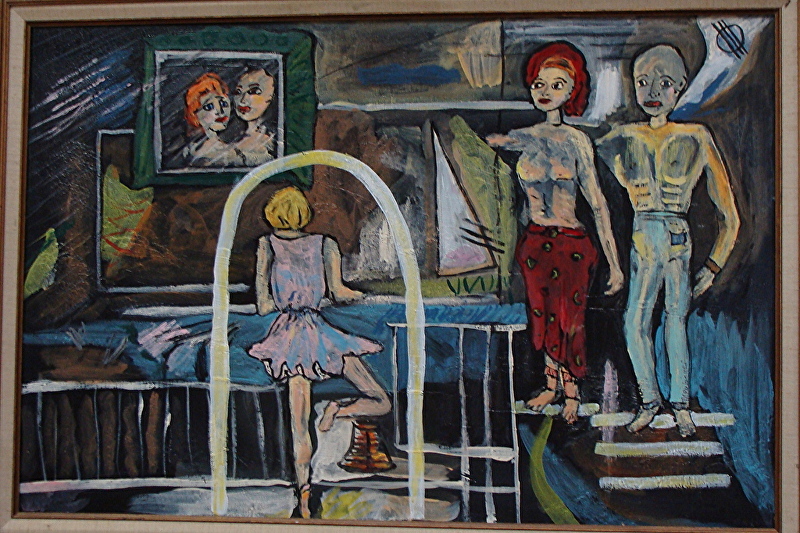
                                                                                 The Studio                                                                                                                                               Acrylic on canvas/ $ 399 / framed                                                               “It’s not enough to have lived. We should be determined to live for something.” ―Winston S. Churchill

Dance to Life

When four-years-old, Mother took me to my first dance class. She enrolled me young because I tripped over my feet when walking. She thought my clumsiness would be helped by engaging in an activity that stresses balance. Mom never realized that those classes would teach me a great deal more than dance.  Though I still have a difficult time balancing, dance lessons guided me through the years.

As a mother of five with a full time job, I was, as the saying goes, “up to my ears in alligators.” I dealt with one challenge after another at work and at home. My daily diet was responding to situations like, “So-and-so hit me. What’s for dinner?” to “Earnings are down. Should we lay people off?”  Following is how dance guided me.

BALANCE: To manage a demanding schedule stress-free, I had to make sure that work and playtime were balanced. This was not always easy to accomplish, for I often wanted to bury myself in what I work or artistic endeavors.  Instead, I carved out time to spend with for friends and family, to take flute lessons, and to vacation with and without children. I retreated to a quiet place to meditate daily and get away from noise and chaos. Today, my situation is reversed, for in retirement, I’m able to vacation year-round if I want to. But that is boring so I’ve added a bit of chaos by volunteering, painting and writing.

GRACE:  Dancers learn to move with grace, a skill that guides daily interactions. The way I connect with others is important for developing friendships, creating business collaborations and insuring loving relationships. Graceful people understand the struggles between good and evil, yes and no, kindness and hostility and ignorance and knowledge.  They use their knowledge to waltz, tango and spin through illnesses, conflicts, anger and loss. Moving gracefully requires a calm, firm center that can glide delicately through the mist.

FLEXIBILITY: Body and mind become expansive when limber and stretchable. Flexibility is required when facing challenges that can’t be overcome by ordinary means. Its opposite, rigidity can turn you into an uncompromising has-been who may as well be dead. Flexibility allows for adaptation to change upon change. One truth I value knowing is that society and individuals are in constant states of transformation.

“The only way to make sense out of change is to plunge into it, move with it, and join the dance.”  ― Alan Wilson Watts

PRACTICE:  “Try again until you get it right,” was a mantra drilled into me as a child. Without developing the gifts we are born with, our talents may as well not be there. Once you discover what they are, they have the potential of providing great joy. It takes effort to overcome inertia and requires energy to train. Dancers prepare by practicing for hours each day—as do doctors, artists, basketball players, teachers, plumbers and many more. Perfected skills enable them to perform their craft with competency, ease and grace.

CONCENTRATION: Staying focused, being mindful and remaining centered reduces stress. Dancers whose minds wander while executing a leap or turn may get hurt. Those who can’t memorize their routines are unable to perform. When fully engaged in what you are doing, there is little room for worry. When in control of your mind, you are able to turn off unwanted thoughts and fears. Learning to concentrate in the moment, is an acquired skill that enables relaxation when walking through storms.

PERSEVERANCE:  Muscles and toes ache from hours of practice. Not giving up and remaining committed are difficult when in pain. When a ballerina falls, she is taught to get up and finish the performance. Similarly, mishaps occur throughout life, yet we must continue on. Failure becomes a teaching moment when it is accepted as a lesson in how to improve and not make the same mistake twice.  Perseverance requires overcoming embarrassment, remembering the goal and acknowledging small steps taken in the right direction.

STRENGTH: Moving effortlessly requires strength and stamina. Dancers learn to be aware of the weak parts of their bodies and to work diligently to make them stronger. Strength does not happen overnight. Recognizing faults is the first step towards growth. The second involves hours of hard work to overcome them. With strength comes the ability and courage to make clear headed decisions even in the face of opposition.

RISK: Dancers accept that there is a certain amount of risk in their art. Though not as bad as football, where players are prone to getting concussions, ballerinas get bloody, misshapen toes, and suffer from sprains, broken bones and back injuries that may last a lifetime. But, life is uncertain and, at times, dangerous. Walking across a street, riding a bicycle, putting money in the stock market, purchasing a house, starting a new business, getting married, accepting a challenging job, though risky, are also full of possibility.  Risk needs to be analyze, understood, and consciously accepted. Dance thought me not to be foolish and leave life to chance.

When balance, flexibility, concentration, gracefulness and strength come together,  dancers say they are “in the flow” or “in the zone.” It’s a moment of full engagement directed towards purpose and provides feelings of unabashed joy and wellbeing. Flow is motivating for it awakens a desire to achieve the next level of excellence. Once a person experiences what it is like to be ”in the zone,” a craving develops to be there again.

Several times during over the course of my life, I was fortunate enough to experience “flow.” In my twenties and thirties, when my body was young and under my control, strength, flexibility, concentration, grace and balance allowed me to dance with rapture. Another time was when I was exiting a supermarket with four children bouncing around my cart. For some reason, when I looked at them that day, an overwhelming feeling of contentment enveloped me. I was a supermom assure of my purpose at the moment. More recently, the feeling of being in the zone occurs when painting or writing.  There are times I become so engrossed in what I am doing that the outside world fades away. Being at one with my art is like being struck with lightning. I am lit and alive with aspiration, peacefulness and contentment.

Studying dance has taught me how to live. Yet, there is much more to know and I remain a willing student.

“The heart of human excellence often begins to beat when you discover a pursuit that absorbs you, frees you, challenges you, or gives you a sense of meaning, joy, or passion.” ―Terry Orlick

______________________________________________________________________

““`Annual  HOLIDAY ART SALE ““`

30 % off works of art thru December 21st     

All paintings – find what you want on  eichingerfineart.com

Contact marilynne@eichingerfineart.com to arrange for payment and shipping

Fearing Fear Itself

                                                                                                                                     Last Night’s Dream                                                                                        Fear can fill dreams with chaotic thoughts and worrisome images, producing                                                                           lasting feelings of disquiet.

                                acrylic on canvas/ 32” x 26 “/ gold painted wood frame/ $498

Fear Itself

In his first inaugural address, President Roosevelt said, “The only thing we have  to fear is fear itself.”  This comment holds true today when the public is frightened by those using fear as a method of control. Their system is working. Last week I heard an elderly woman say she was afraid to leave her house because of mass shootings and immigrant terrorists.  Churches, synagogues, mosques and schools are moved to develop active shooter plans.

The U.S. does have a staggeringly high number of active and mass shooter incidents compared to other developed nations. In 2017 there were 29 such events. Andy, yes, the number of incidents has risen steadily since 2000 when there were four. Once again a record. will be set in 2018. This week’s tragedy brings the horror of terrorism to the surface.  However, as terrible as these incidents are, they are nothing compared to the number of fatalities on our highways. And, though 37,133 people were killed in motor vehicle traffic crashes in 2017, driving does not elicit the same fear as imagining yourself as the next victim of a mass shooting. Why do you think that is?

We are told that illegal immigrants commit more crimes than American born citizens. Yet, when Alex Nowrasteh with the Cato Institute analyzed Texas Data to make a comparison he found that “The arrest rate for illegal immigrants was 40 percent below that of native-born Americans” and the homicide arrest rate for native-born Americans was “about 46 percent higher than the illegal immigrant homicide arrest rate.” National statistics were similar. ” Illegal immigrants are 47 percent less likely to be incarcerated than natives and even less likely to be in jail or prison.” Other studies reported in the Journal of Criminology supports these finding as well.

Interesting statistics.

  • You are  35,079 times more likely to die from heart disease than a terrorist attack.
  • You are 4,706 times more likely to drink yourself to death than from terrorism.
  • You are 2,059 times more likely to kill yourself than die at the hand of a terrorist.
  • You are 452 times more likely to die from risky sexual behavior than terrorism.
  • You are more likely to die of lightning than a terrorist attack and 6,000 more likely to    die from a fall.

The list goes on and on.  So why the hype? Why the fear?

It might may one wonder about the exorbitant amount of money spent on protecting ourselves from unlikely scenarios. Funds would be better spent on monitoring highways  and heart research.

In 2016, Donald Trump said “People are scared.” He got that right, for they are. According the the Atlantic, Americans are afraid of crime, though rates are down, of a terrorist attacks,  and of frightened unarmed immigrants. Politicians are masters at invoking fear in abstract ways to improve their chances of winning.

The Atlantic goes on to say that according to social scientists, “It (fear) makes people hold more tightly to what they have and regard the unfamiliar more warily. They crave protection. The fear reaction is a universal one to which everyone is susceptible. History shows it has the power to bring people to the polls to vote out of their usual way.  I see  fearful people  as people looking for  “Daddy” a strong individual who promises security though there is no threat. And, I see politicians as a play actors protecting their flock from the imaginary giants they created in the first place.

I witnessed this behavior pattern when I was president of OMSI.  One year we brought an animated dinosaur exhibit to the museum that frighted some of our younger visitors. Many parents, rather admit their child was too young for the exhibit, held them in their arms and forced them face the monsters saying,”Don’t worry, I’ll protect you. No need to be afraid.”  Through some children were terrorized, their parents thought their fear to be cute and funny.  It gave them an opportunity to be protectors who saved their youngsters from imaginary demons. 

“The Politics of Fear” by  Frank Fured  begins, “Fear is the most powerful enemy of reason. Both fear and reason are essential to human survival, but the relationship between them is unbalanced. Reason may sometimes dissipate fear, but fear frequently shuts down reason.” 

Fear has often been employed for political gains. After 9/11 fear was used to rally support for the illegal invasion of Iraq, and to sanction use of waterboarding. In the 1990’s Clinton didn’t want to be called soft on crime so he spoke of “super-predator”criminals, stirring a fear fueled by sensational media which pushed mass incarcerations. McCarthy incited fear over communism that caused thousands of innocent people to lose their jobs.

This past year, however, we have seen the use of fear tactics elevated to epic proportions to scare people into submission. The latest one is about citizenship. The idea that children born in the United States to immigrant families will be denied citizenship is ludicrous. If we take that idea back far enough, the only remaining people left to populate our country will be Native Americans.

During the mid-term election, ads called Kyrsten Senima in Arizona “soft on prostitution.” Where did that come from?  Numerous advertisements claimed their opponents were dealing in drugs, the cause of crime waves and the spread of gangs such as MS-13.  We are told to fear black people , proud people, Muslims, and gay people. We should fear Jews, violent crimes ( a quarter of what it was in the 1990’s). Democrats should fear Republicans and  long time neighbors if they are Democrats’ And, oh yes, we should all fear the media.

Unfortunately, fear is used so often and in such a Machiavellian way that it’s destroying the fabric of our country.I am surprised people don’t see through these fear tactics and ask themselves who benefits by your fear. Who maintains power? Who becomes wealthy?

This blatant a bid for power keeps people trembling until they fall in line. Followers will do the fear monger’s bidding like approve tax cuts for billionaires, ruin the environment for the benefit of oil and timber companies. They will put up with bad air quality, poor water and polluted oceans. They will cut entitlement programs and health care for middle and low income people. They’ll permit the sale of ammunitions to our enemies, makings millions more for the billionaires.

Whatever happened to “Love they neighbor as thyself?”  When did we stop believing in the common good, the melting pot, an American dream for all?  It is time to ignore  divisive rhetoric and return to rational thinking and behavior. When you hear fear talk, ask yourself who benefits because you are afraid?

Let’s heed Roosevelt’s words and stop fearing fear itself.

References:

University of Alabama (2016) Pubic Mass Shooters and Firearms: A Cross-National Study of 171 Countries. PubMed. Retrieved from https://www.ncbi.nlm.nih.gov/pubmed/26822013.

Alertfind (2018) Active shooters in 2018: Key Stats and Facts. Disaster Recovery Journal. retrieved from https://www.drj.com/myblog/active-shooters-in-2018-key-stats-and-facts.html

Traffic Safety Facts (2018) 12017 Fatal Motor Vehicle Crashes: Overview.  U.S. Department of Transportation. retrieved from https://crashstats.nhtsa.dot.gov/Api/Public/ViewPublication/812603

Farley, R. (2018) Is Legal Immigration Linked to More or Less Crime? FactCheck.org a project of the Annenberg Public Policy Center.  retrieved from  https://www.factcheck.org/2018/06/is-illegal-immigration-linked-to-more-or-less-crime/

McClatchy, (2011)  The Terrorism Statistics Every American Needs to Hear. Center for Research on Globalization. retrieved from http://www.globalresearch.ca/the-terrorism-statistics-every-american-needs-to-hear/5382818

Ball, M. (20116) Donald Trump and the Politics of Fear. The Atlantic. retrieved from https://www.theatlantic.com/politics/archive/2016/09/donald-trump-and-the-politics-of-fear/498116/

Abramsky, S.(2018) Trump’s GOP is running harder than ever on the politics of fear. Los Angeles Times. retrieved from http://www.latimes.com/opinion/op-ed/la-oe-abramsky-trump-politics-of-fear-midterms-20180923-story.html