Why Love Feels Like Madness

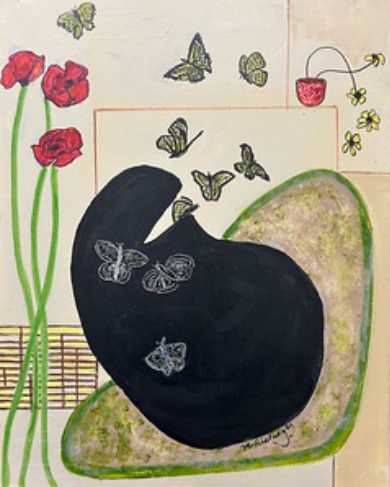
WELCOMING SPRING

Spring has sprung
Out come garden tools
Butterflies fly free
Love creates new fools

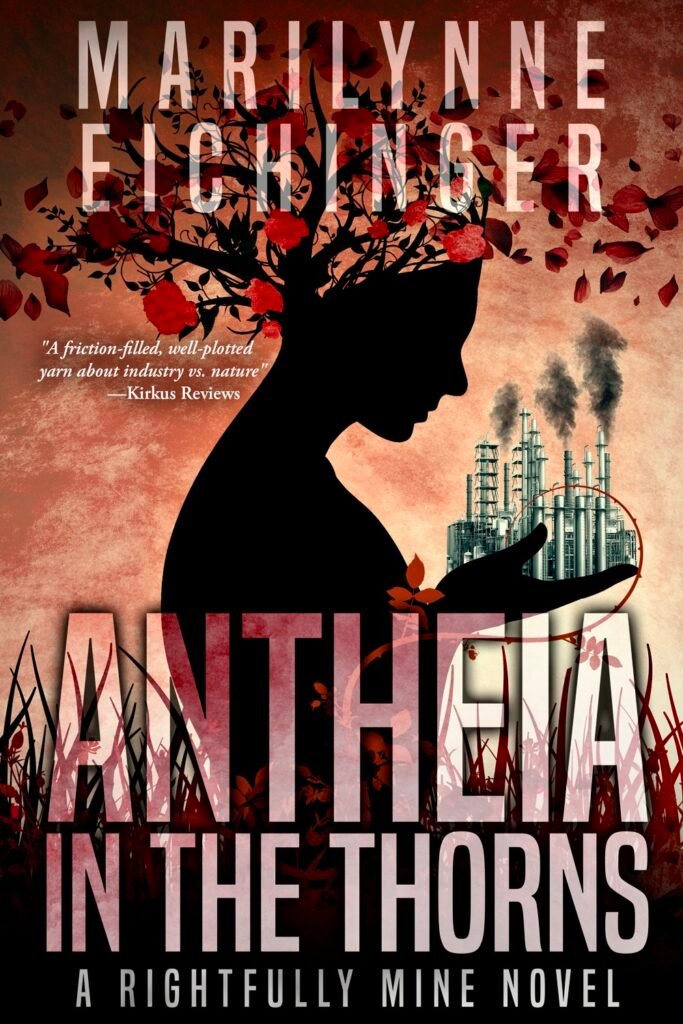
In Antheia in the Thorns, after the loss of her baby, Jennifer Russo falls into a deep depression that leads to the destruction of her marriage. Grief leaves her emotionally numb, isolated, and unable to imagine a future worth wanting. Over time, however, she finds reasons to live again—a social justice cause, meaningful work, and eventually, someone new to love.

As I wrote her journey, I became curious about what might actually be happening inside her body. Why does love feel so powerful? Why does heartbreak feel physically painful? Why can the loss of love leave someone feeling as if they are unraveling?

Social, economic, biological, and psychological forces all shape human relationships. Romantic love is deeply studied, yet it remains one of the least understood human behaviors. Researchers Richard Schwartz and Jacqueline Olds spent years examining how love begins, how it changes, and why it sometimes collapses.

One of the best-known brain imaging studies of romantic love, led by biological anthropologist Helen Fisher and her colleagues, used MRI scans to study people who described themselves as intensely in love. The scans showed increased activity in dopamine-rich regions of the brain associated with reward, motivation, and focused attention—particularly the same neural systems involved in pursuing food, pleasure, and survival.

Dopamine is often called the brain’s “reward chemical,” but it is really more about motivation than happiness. It pushes us to pursue what we desire. In early romantic love, that desire becomes intensely focused on another person.

This reward circuit is ancient. It has always linked humans with pleasure and survival behaviors such as eating, bonding, and reproduction. Just as now, when they fell in love, the brain flooded with chemicals that triggered emotional and physical responses: racing hearts, sweaty palms, flushed cheeks, excitement, anxiety, and obsessive thoughts.

During the early stage of romantic love, the body also behaves a little like it is under stress. Cortisol, the stress hormone, often rises, while serotonin levels may lower, shifting in ways that bring on the obsessive thinking seen in infatuation. This helps explain the intrusive thoughts taking over during early love, the constant replaying of conversations, wild hopes, and the fear of rejection that can make it feel both exhilarating and exhausting.

This may be why people say love is blind: in deep attachment, we often soften our critical judgment and feel emotionally safer with the person we love. Yet, as relationships deepen, chemicals such as oxytocin help strengthen feelings of trust, calm, and attachment. The intense panic experienced at first usually settles into something quieter but stronger.

If all goes well, a lasting pair bond forms. Passion does not necessarily disappear, but the emotional chaos of early romance usually calms. Cortisol returns to normal. The brain no longer treats love like a crisis. Instead, the relationship itself becomes a buffer against stress.

Long-term love is different from infatuation once the fireworks quiet. Couples may become distracted by work, children, aging parents, and ordinary life, yet affection and desire can still be reawakened. A weekend away together, uninterrupted conversation, or renewed intimacy can reactivate the same reward pathways that first drew them together.

Pair bonding is not limited to one cultural model. Some bonds begin with sudden romantic attraction, while others grow slowly through compatibility, trust, and shared life. Even arranged marriages, without an initial romantic spark, can develop into strong emotional partnerships if affection, respect, and intimacy grow over time.

But when love breaks, the pain is real. Though some say they have a broken heart, their heartbreak is a neurological not a heart event. Brain imaging shows that rejection activates some of the same regions involved in physical pain, craving, and addiction. The attachment system does not simply switch off. The part of the brain that still longs for connection remains active, even when the relationship is over.

That is why breakups can feel unbearable. People replay memories, crave contact, and struggle with withdrawal much like addiction. The emotional pain can feel physical because, in many ways, the brain processes it that way.

With the honeymoon phase fading and the pressures of real life returning, bonding hormones such as oxytocin may lessen, and the brain becomes less idealizing. The small quirks once seen as charming can begin to feel irritating. People stop focusing only on their partner and begin thinking more about their own unmet needs, frustrations, and goals.

Some relationships survive that shift. Others do not.

The hopeful part is that the brain can heal. Neural pathways change. Grief softens. New joy becomes possible. Therapy, friendship, purpose, and time all help rebuild the nervous system’s sense of safety and connection. Most people do not recover by waiting passively. Healing usually begins with small acts—getting out of bed, answering the phone, taking a walk, saying yes to help.

Jennifer Russo moves through all of these stages: grief, emotional collapse, a dissolving marriage, and eventually the renewal of life through love and action. She does not recover by staying home in a catatonic state. She heals because she pushes herself forward, even in tiny steps, and because someone cares enough to walk beside her.

Love may begin as chemistry, but recovery is often a choice.


I look forward to hearing your stories of love in the comment section of my blog at https://www.eichingerfineart.com/blog/206245/why-love-feels-like-madness

Art is always for sale through my website. Welcoming Spring is a 20″ by 16″ acrylic painting on canvas. To purchase, go to https://www.eichingerfineart.com/workszoom/6493159/welcoming-spring#/


Resources


The Rightfully Mine Series will help you better understand this world and how humans care for it. They are fact-based thrillers that will keep you page-turning.

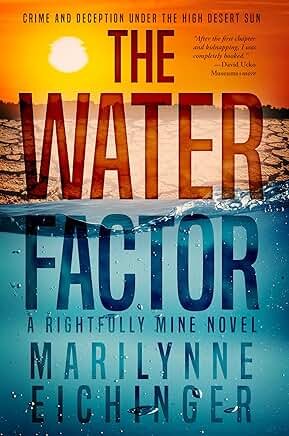
  • The Water Factor follows the plight of a Native American Reservation that contracted with a corporation that steals their water, and the young man who takes it upon himself to do something about it.
  • Antheia in the Thorns follows a woman who emerges from depression after the loss of her child, fighting for the right to clean air and an unpolluted ocean.

Eichinger books are available on AMAZON.
Are We Wiser Than Our Ancestors?

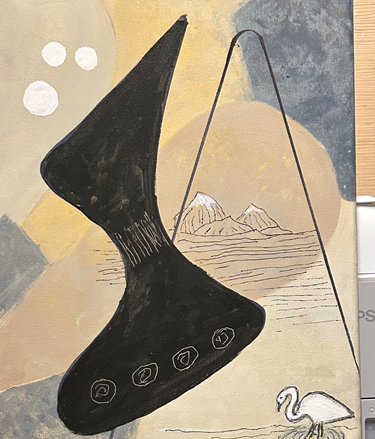
OPUS


Given all that humanity has learned and discovered, one might expect the world to be in a better place. We have unprecedented access to knowledge, technological advancements capable of transforming entire societies, and a global awareness of crises like climate change, economic inequality, and political instability. Yet progress in information has not consistently led to progress in wisdom.

Perhaps the question is not whether we are smarter than our ancestors, but whether we are better at applying what we know. Sophocles, who wrote in the 5th century BCE, endures not because he offered solutions, but because he revealed patterns of human behavior that repeat across time.

We still see Antigone’s dilemma play out when individuals challenge unjust laws or systems—whistleblowers exposing corporate misconduct, journalists risking their careers to bring truth to light, and environmental activists placing themselves in harm’s way to protect forests, water, and communities. Protests over pipelines, old-growth logging, and land use continue across North America, as communities push back against decisions they believe prioritize short-term profit over long-term stewardship. The question remains the same: when authority demands silence, what does conscience require?

We see Oedipus in our relentless pursuit of knowledge without always considering its consequences. Artificial intelligence advances faster than the ethical frameworks needed to guide it. Social media platforms, designed to connect us, are also used to spread misinformation, deepen division, and influence elections. We gather vast amounts of data about human behavior, yet often use it to manipulate attention rather than promote understanding. Like Oedipus, we seek answers—sometimes only to discover that knowledge alone does not protect us from harm.

Philoctetes lives on in those society casts aside—the unhoused in our cities, the workers displaced by automation or global supply chains, and the communities left to deal with polluted land and water long after industries have moved on. In places affected by industrial runoff or abandoned extraction sites, residents often carry the burden of contamination for generations. His story asks whether we are capable not just of recognizing suffering, but of responding to it with empathy and responsibility.

And Ajax is present wherever pride overrides judgment. We see it in political leaders who refuse to concede mistakes, in corporations that deny environmental damage despite mounting evidence, and in public discourse that rewards certainty over reflection. Pride fuels polarization, making compromise feel like defeat and dialogue feel impossible.

These patterns are not distant or theoretical. They appear in legislative gridlock where urgent issues, like climate policy, infrastructure resilience, or wildfire management, stall amid partisan conflict. They are visible in the widening gap between scientific consensus on climate change and the pace of meaningful action, even as wildfires intensify across the American West, drought reshapes agricultural regions, and coastal communities face rising seas. They show up in continued debates over fossil fuel expansion even as renewable alternatives become more viable.

We are not lacking in knowledge. We are struggling with judgment, with humility, and with the will to act on what we already understand.

This tension—between knowledge and action, between power and responsibility—sits at the heart of my Rightfully Mine series. Through these stories, I explore the same enduring questions Sophocles raised centuries ago: What do we owe the earth that sustains us? When does obedience become complicity? How do we confront injustice when it is embedded within powerful systems?

The characters in these novels navigate environmental degradation, corporate overreach, and the quiet moral compromises that allow both to continue. Like Antigone, they must decide when to stand against authority. Like Oedipus, they confront truths that are unsettling and transformative. Like Philoctetes, they wrestle with abandonment and the possibility of healing. And like Ajax, they face the consequences of pride—both their own and that of the world around them.

If Sophocles teaches us anything, it is that wisdom is not a natural byproduct of time or progress. It must be chosen—through justice, through humility, and through compassion. It requires us not only to ask difficult questions, but to live with the answers.

That was true in ancient Greece. It is true now. And it may be the most important challenge we face: not how much we know, but what we are willing to do with it.


References


P.S. — For Those Who Like the Classics

A reminder of Sophocles’ plots:

Antigone: After a civil war, King Creon declares that one of Antigone’s brothers, labeled a traitor, must remain unburied as punishment. Antigone defies the order, believing divine law and moral duty outweigh human authority. She buries her brother and accepts the consequences, even death. The play explores the conflict between individual conscience and state power, asking when it is right to resist unjust laws. Like Antigone, who chose conscience over compliance, we are still confronted with moments when doing what is right means standing against authority. Antigone’s defiance reminds us that justice is not always defined by law—and that moral courage often comes at a cost.

Oedipus at Colonus: An older, blind Oedipus, once king of Thebes, wanders in exile after discovering he unknowingly killed his father and married his mother. In this final stage of his life, he reflects on suffering, fate, and responsibility. Rather than a story of downfall, this play is about transformation: Oedipus gains wisdom through hardship and ultimately finds a kind of peace and redemption. It emphasizes that true understanding often comes late and at great cost. Oedipus’s journey suggests that knowledge alone is not wisdom; it is what we do with hard truths that defines us. In Oedipus, we see the danger of pursuing answers without reflection—and the possibility of growth when we finally confront them.

Philoctetes: Philoctetes, a skilled archer, is abandoned by his fellow Greeks on a remote island because of a foul-smelling, unhealed wound. Years later, the Greeks realize they cannot win the Trojan War without him and return to retrieve him, initially through deception. The play centers on pain, betrayal, and moral choice, ultimately arguing that honesty and compassion are more powerful than manipulation or expedience. Philoctetes reminds us how easily society abandons those who suffer, and how essential compassion is to restoring what has been broken. His story asks whether we will choose expedience or empathy when faced with another person’s pain.

Ajax: Ajax, a great warrior of the Trojan War, feels dishonored when another soldier is awarded Achilles’ armor. Consumed by rage and wounded pride, he plans revenge but is driven into madness by the gods. When he regains his senses and realizes what he has done, he is overwhelmed by shame and takes his own life. The tragedy examines the destructive power of pride and the danger of tying identity too tightly to status and recognition. Ajax stands as a warning that pride, when left unchecked, can undo even the strongest among us. In Ajax, we see how the refusal to admit failure can lead not to strength, but to collapse.


I look forward to your comments on my blog site at https://www.eichingerfineart.com/blog/206367/are-we-wiser-than-our-ancesters

Art is always for sale. OPUS 4 is part of a series that goes easy on your pocketbook. To purchase and have it delivered without cost in the continental U.S., visit: https://www.eichingerfineart.com/workszoom/6505490/opus-4#/


The Rightfully Mine Series will help you better understand this world and how to care for it. They are thrillers based on facts that will keep you page turning.

  • The Water Factor follows the plight of a Native American Reservation who contracted with a corporation that steals their water, and the young man who takes it upon himself to do something about it.
  • Antheia in the Thorns follows a woman who emerges from depression after the loss of her child, fighting for the right to clean air and an unpolluted ocean.

Eichinger books are available on AMAZON.